Summary
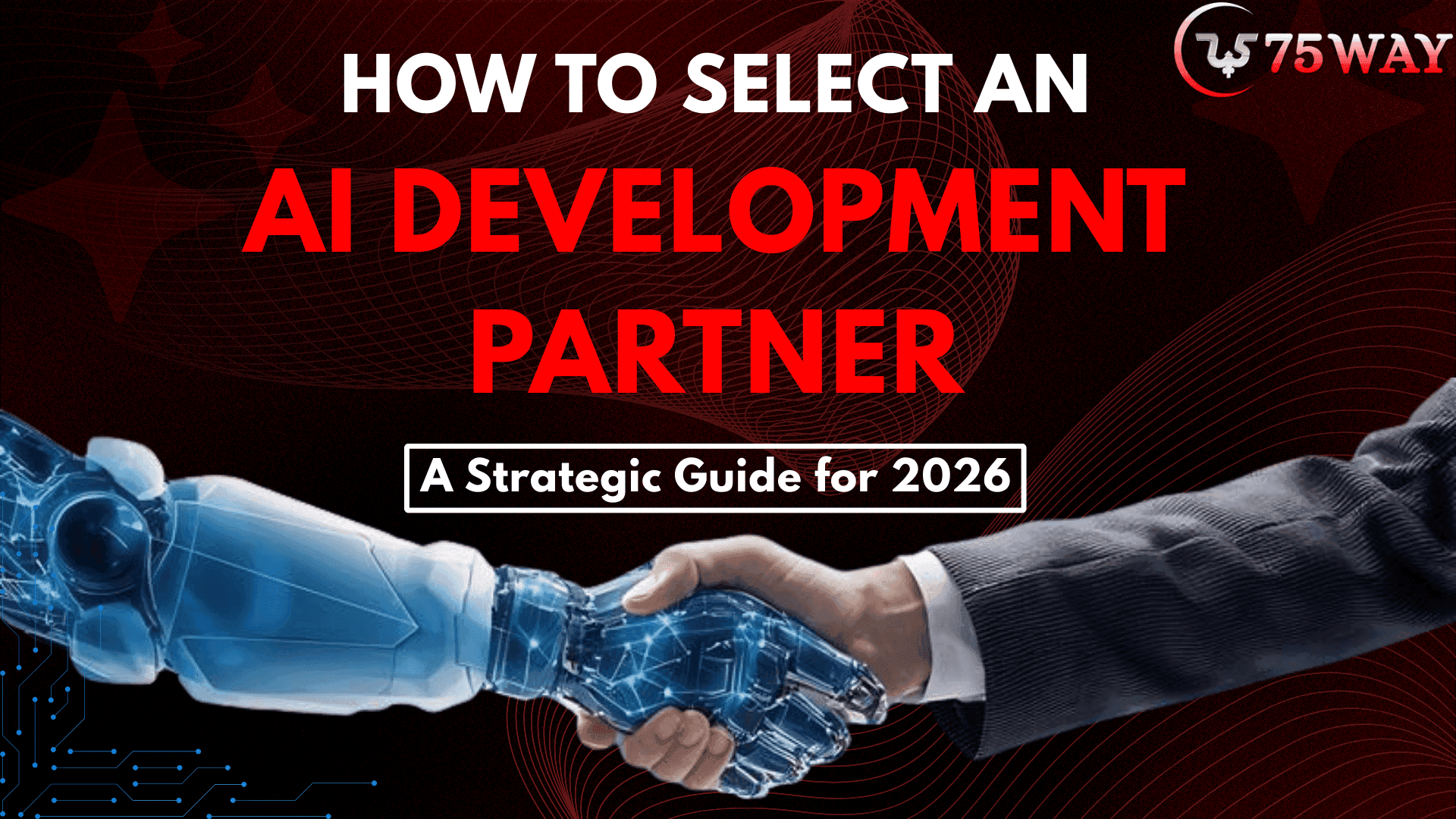
This strategic guide helps startups and founders evaluate partners based on expertise, industry experience, AI/ML & LLM capabilities, security, and ROI. It includes a comprehensive 7-step evaluation checklist, a first 90-day engagement roadmap, and insights on typical project costs, ensuring informed, cost-effective, and high-impact AI collaborations.
Quick Overview:
- Choosing the right AI development partner drives the success of AI solutions.
- 85% of AI projects fail without the right development partner.
- Hiring an experienced AI partner typically costs $50,000–$150,000 per project.
- Data security and compliance must be prioritized from project inception.
- Prototype and MVP development reduces risks and accelerates AI adoption.
- Regular monitoring, iteration, and scaling maximize AI solution performance and ROI.
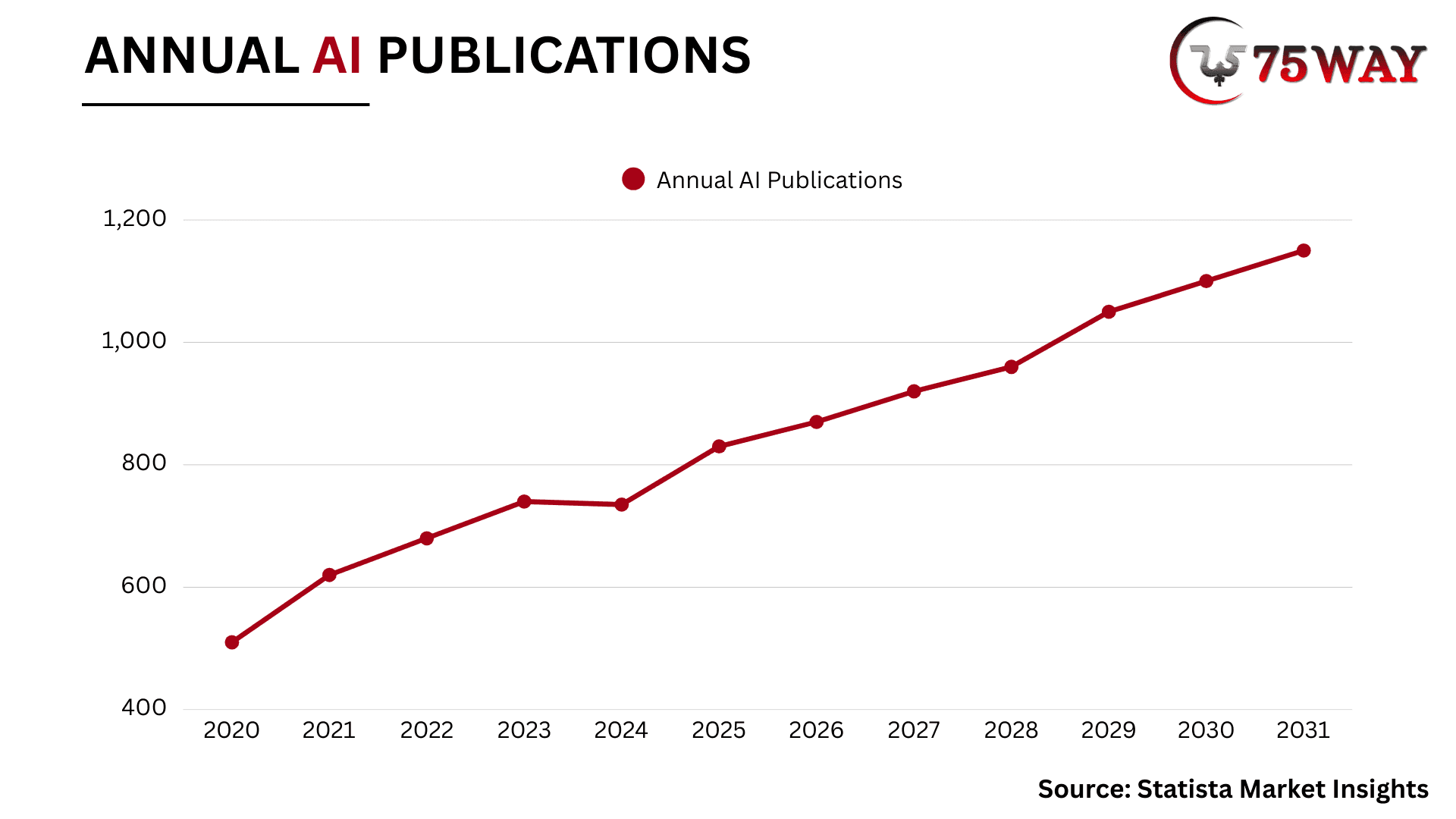
Want to build and launch an artificial intelligence solution for real business growth? Choosing the wrong AI partner can lead to delayed projects, wasted budgets, and strategic setbacks that slow growth. The global artificial intelligence (AI) market is growing at an exceptional pace to more than $1.8 trillion by 2030, with some forecasts projecting over $3 trillion by 2033, at a CAGR of 30%–37%.
In such a fast-growing landscape, choosing the right partner is not optional. It is essential. The ideal AI development agency brings not just technical skills, but proven experience in AI, agentic AI, ML, enterprise AI, AI chatbots, and LLM/GPT solutions, combined with strong security practices and measurable ROI. This guide walks you through the key factors, practical evaluation steps, and first 90-day engagement roadmap to ensure your AI products succeed and scale efficiently.
What Is an AI Development Partner?
An AI development partner is a technology collaborator that designs, builds, and deploys intelligent systems to meet business objectives. These agencies bring expertise in machine learning (ML), artificial intelligence (AI), generative AI, large language models (LLMs), and automation frameworks. Their role extends beyond code delivery to build AI apps and software solutions that are scalable, secure, and aligned with business KPIs.
These partners can support businesses through the entire AI lifecycle, from data collection and preprocessing to model training, deployment, and monitoring. They often provide ongoing maintenance, compliance management, and performance optimization, helping companies extract maximum value from AI automation and modern technologies.
Types of Partners: Agencies Vs. Freelance AI Developers Vs. Offshore Companies
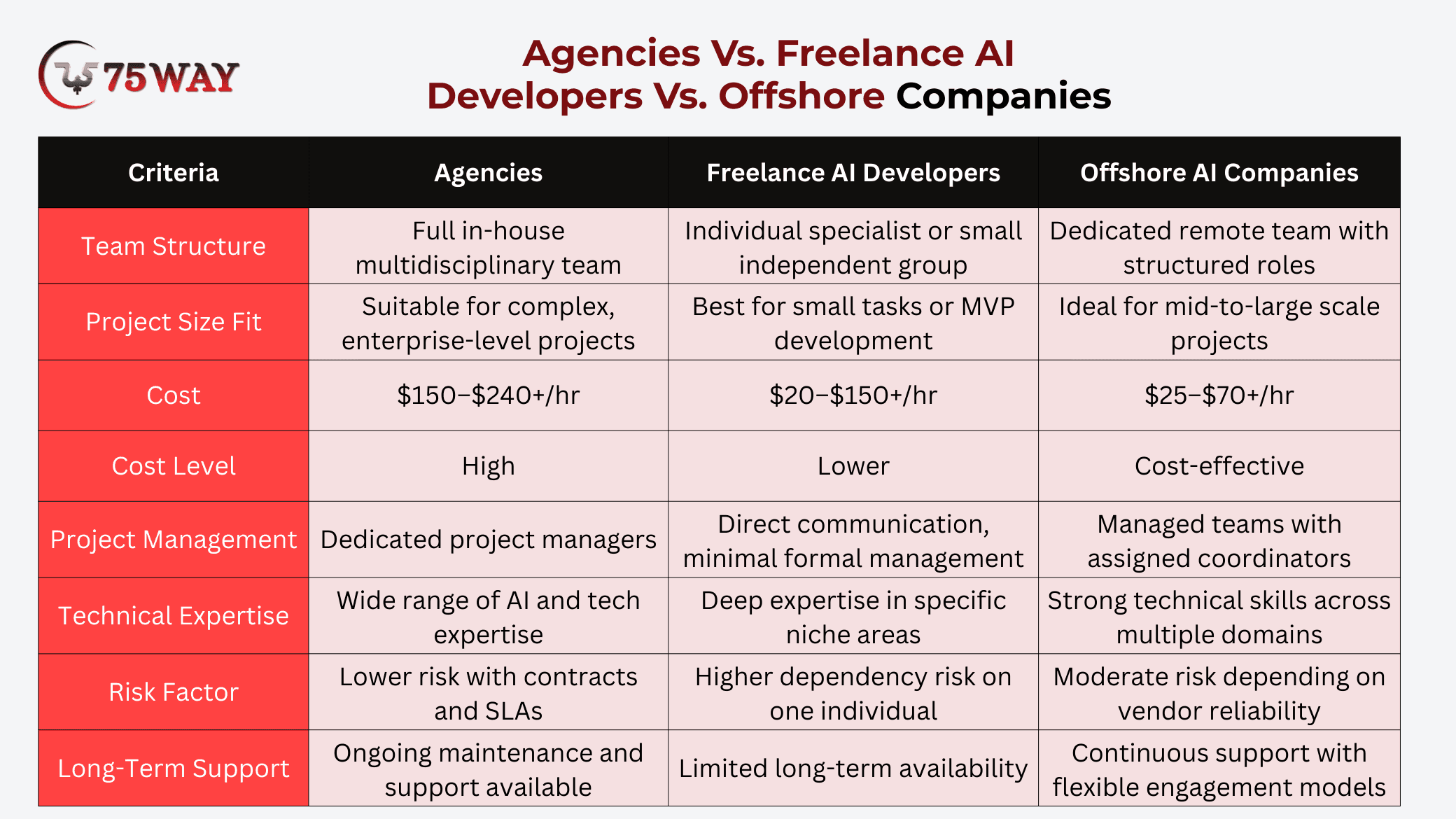
AI development solutions can be delivered through several types of partners, each bringing distinct strengths, limitations, and cost implications. You can select the right type depending on your project complexity, budget, timeline, and long-term goals. A deep understanding of how agencies, freelance AI developers, and offshore companies differ can help you make an informed choice and reduce risk.
AI Development Agencies: These firms typically offer end-to-end AI services from AI software to AI voice agents and AI chatbots. They handle complex projects, provide structured timelines, and often include post-deployment support. While costs may be higher, agencies are ideal for businesses seeking reliability, quality assurance, and strategic guidance.
Freelance AI Developers: You can hire AI developers who provide specialized skills at a lower cost and with greater flexibility. These freelancers are suitable for smaller projects, prototypes, or specific AI components, such as model fine-tuning or data preprocessing. However, freelancers may lack resources for full-scale deployment, project management, or ongoing maintenance.
Offshore AI Companies: The offshore artificial intelligence development companies have scalable teams at competitive rates. They can handle larger projects and provide around-the-clock development, but differences in time zones, communication styles, and quality standards may introduce challenges. Careful vetting and clear contracts are essential for successful collaboration.
Read More: How AI Agents Automate Sales, Support & Operations in US Companies
What to Look For When Choosing an AI Partner?
The process to select a reliable AI partner starts with understanding their core capabilities, experience, and alignment with your business goals. The right partner not only reduces risk but also ensures projects are delivered on time, within budget, and with measurable ROI. Several key factors can help you make a confident choice.
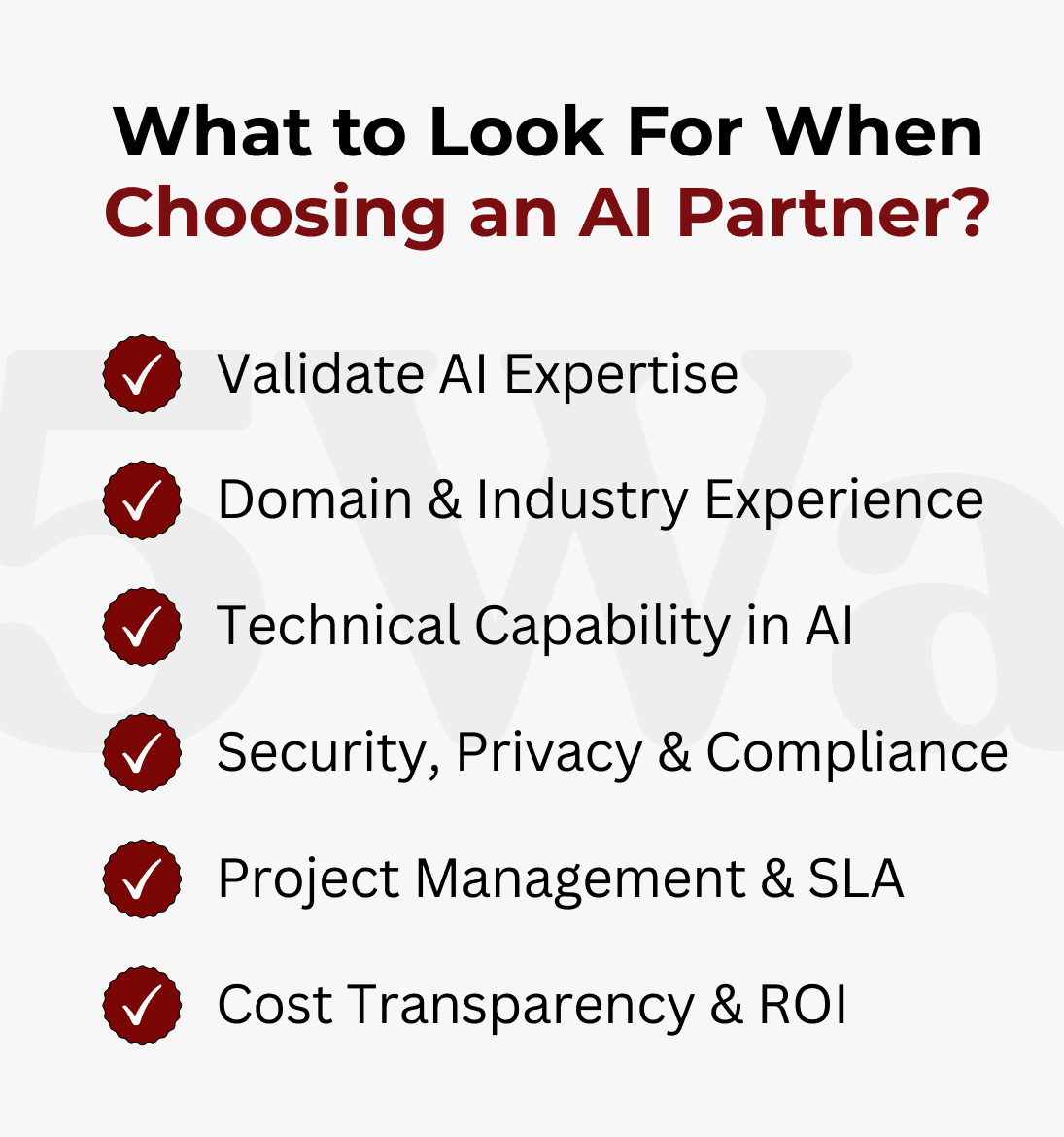
Validate AI Expertise & Proof: The initial stage is to review certifications, client references, and case studies. You must look for tangible work in LLMs, AI SaaS platforms, and custom AI applications. Partners with proven outcomes, clear reporting, and real-world success stories demonstrate the capability to deliver solutions that work in practice, not just on paper.
Domain & Industry Experience: Industry-specific knowledge can dramatically shorten deployment time and increase solution relevance. A partner familiar with your sector understands regulatory requirements, data sensitivities, and operational challenges, making them better equipped to create AI solutions that fit seamlessly into your workflows.
Technical Capability in AI: After that, you must assess their proficiency in machine learning, NLP, computer vision, LLM integration, and GPT-based applications. Your partner must be able to manage the full AI development lifecycle from data preprocessing to model training, evaluation, and continuous monitoring to guarantee robust and reliable solutions.
Privacy & Security Compliance: Data privacy and regulatory compliance cannot be overlooked. Choose partners who follow industry-standard protocols, implement strong encryption practices, and actively mitigate bias. Protection of sensitive business information should be a top priority throughout development and deployment.
Project Management & SLA: Next, you can examine their project methodology, communication approach, and SLA commitments. Clear timelines, defined deliverables, and regular checkpoints foster accountability, minimize delays, and keep everyone aligned on objectives and progress.
Cost Transparency & ROI: Transparent pricing models tied to measurable outcomes help prevent budget surprises. Compare cost structures against projected ROI and scalability potential to ensure your investment delivers tangible value while supporting future growth.
Know More: How AI Development Help US Companies Scale Faster
Comprehensive Strategic AI Partner Evaluation Checklist
A well-structured evaluation checklist helps ensure that every aspect of a potential AI partner is assessed systematically. It provides a clear framework to compare capabilities, minimize risks, and make informed decisions. By reviewing technical expertise, project experience, security measures, and support offerings, businesses can select a partner who delivers reliable, scalable, and high-impact adaptive AI solutions.
Verify Previous AI Project Experience: Confirm the partner has successfully delivered AI projects similar in scope and complexity, with measurable outcomes and satisfied clients.
Assess Technical Skillset in AI Tools: Evaluate their expertise in machine learning, natural language processing, computer vision, and AI model deployment.
Examine Team Composition and Roles: Ensure the partner has dedicated data scientists, engineers, and project managers aligned with your project requirements.
Validate Compliance and Security Protocols: Ensure adherence to industry standards, encryption practices, and bias-mitigation strategies to protect sensitive data.
Evaluate SLA and Project Management Capabilities: Review methodology, communication rhythm, and deliverables to ensure accountability and timely delivery.
Review Cost Structure Versus Expected ROI: Analyze transparency in pricing and assess whether the projected outcomes justify the investment.
Confirm Support and Maintenance Options: Verify post-deployment support, monitoring, and model retraining services to ensure long-term success.
Quick Insights: How Much Does Dating App Development Cost in 2026?
Questions to Ask Before You Hire AI Developers?
Before onboarding an AI partner, it’s crucial to clarify expectations, project scope, and deliverables. Asking targeted questions about their experience, technical capabilities, data handling, compliance measures, project management approach, and post-deployment support helps identify the right fit, mitigate risks, and ensure your AI initiatives succeed efficiently.
- What experience do you have with projects similar to ours?
- Which AI technologies, LLMs, or GPT frameworks do you specialize in?
- How do you handle data privacy, security, and compliance requirements?
- What is your approach to model training, testing, and deployment?
- How do you ensure ongoing support, monitoring, and maintenance?
- What project management methodology and communication process do you follow?
- How do you measure success and evaluate ROI for AI projects?
Get More Insights: How to Build IoT Apps in 2026: A Guide for Startups, Founders & Business Owners
First 90 Days AI Partner Engagement Roadmap
A strategic roadmap sets the foundation for AI project success, ensuring alignment, measurable progress, and risk reduction. By following a structured plan, businesses can accelerate development, validate solutions early, and scale confidently while keeping stakeholders informed and expectations realistic.
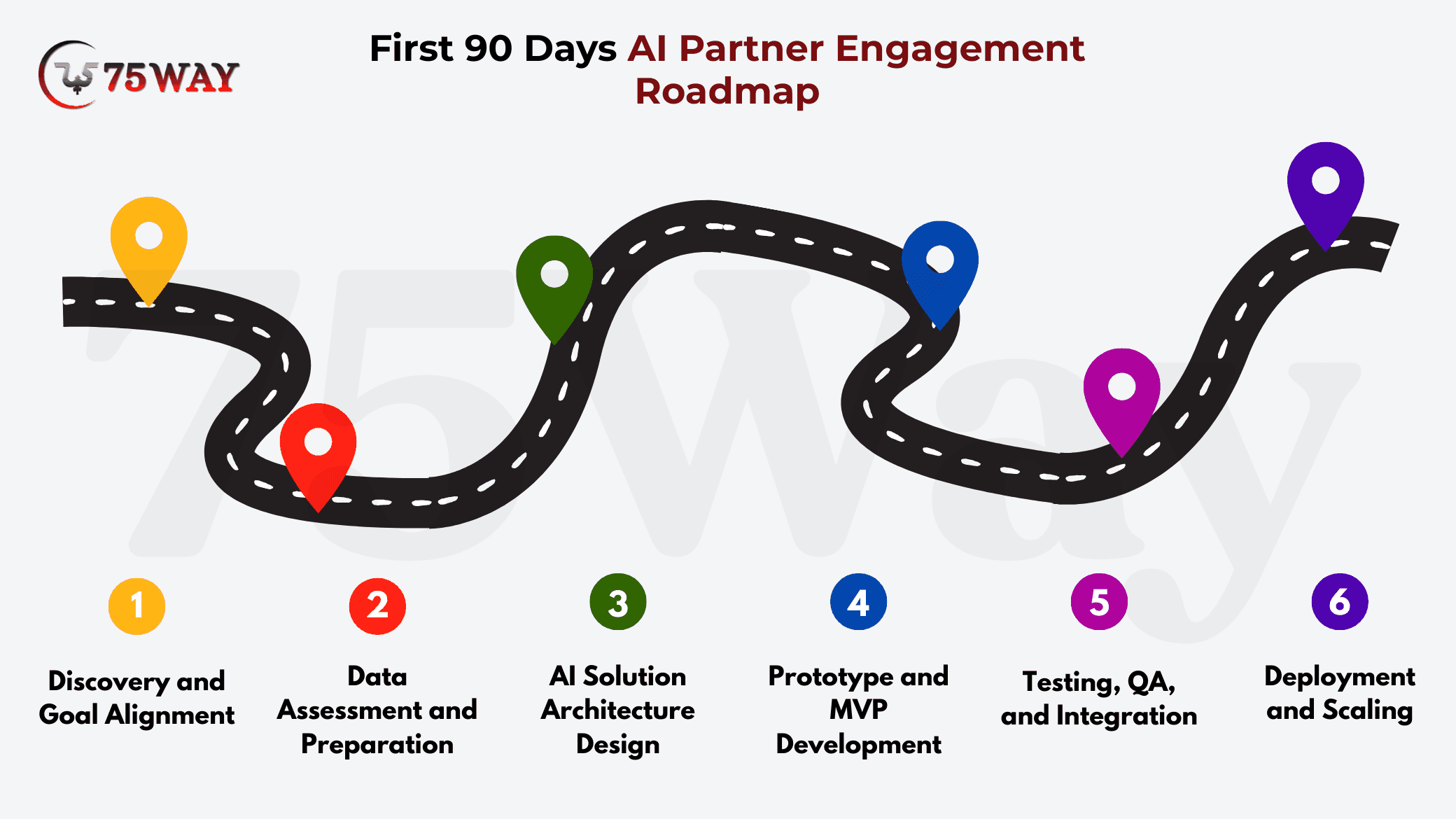
Discovery and Goal Alignment: The team defines business objectives, AI opportunities, and success metrics. Clear goal setting ensures all stakeholders understand expectations and provides a baseline for evaluating project performance. Establishing KPIs early demonstrates accountability and allows measurable progress tracking.
Data Assessment and Preparation: At this stage, data engineers audit the quality, sources, and availability of datasets. Proper data preparation, cleaning, and governance ensure models are trained on reliable, compliant, and bias-free information, which is critical for trustworthy AI outputs.
AI Solution Architecture Design: Design the overall AI framework, including model structure, infrastructure, advanced analytics, and LLM workflows. You must prioritize scalability, security, and integration to ensure that the solution aligns with enterprise standards and supports future growth.
Prototype and MVP Development: You can create a minimum viable product to validate assumptions and test model performance. Iterative testing after MVP development refines outputs and identifies potential limitations early, reducing risks before full-scale deployment.
Testing, QA, and Integration: When you develop an MVP, it is time to conduct rigorous testing, error analysis, and validation of AI models. Proper AI integration with existing systems ensures functionality in real-world scenarios and demonstrates reliability and technical competence.
Deployment and Scaling: The final stage is to launch the artificial intelligence solution with continuous monitoring, retraining, and performance optimization. Scaling across departments or geographies ensures consistent quality and ROI, while maintaining security and compliance standards.
Quick Snapshot: How to Build an App Like SpicyChat AI From Scratch
How AI Partners Drive ROI for Businesses?
AI development agencies help businesses accelerate growth by combining technical expertise, strategic insight, and operational efficiency. Partnering with experienced AI teams reduces risk, optimizes investment, and offers solutions that deliver measurable value across short- and long-term objectives.
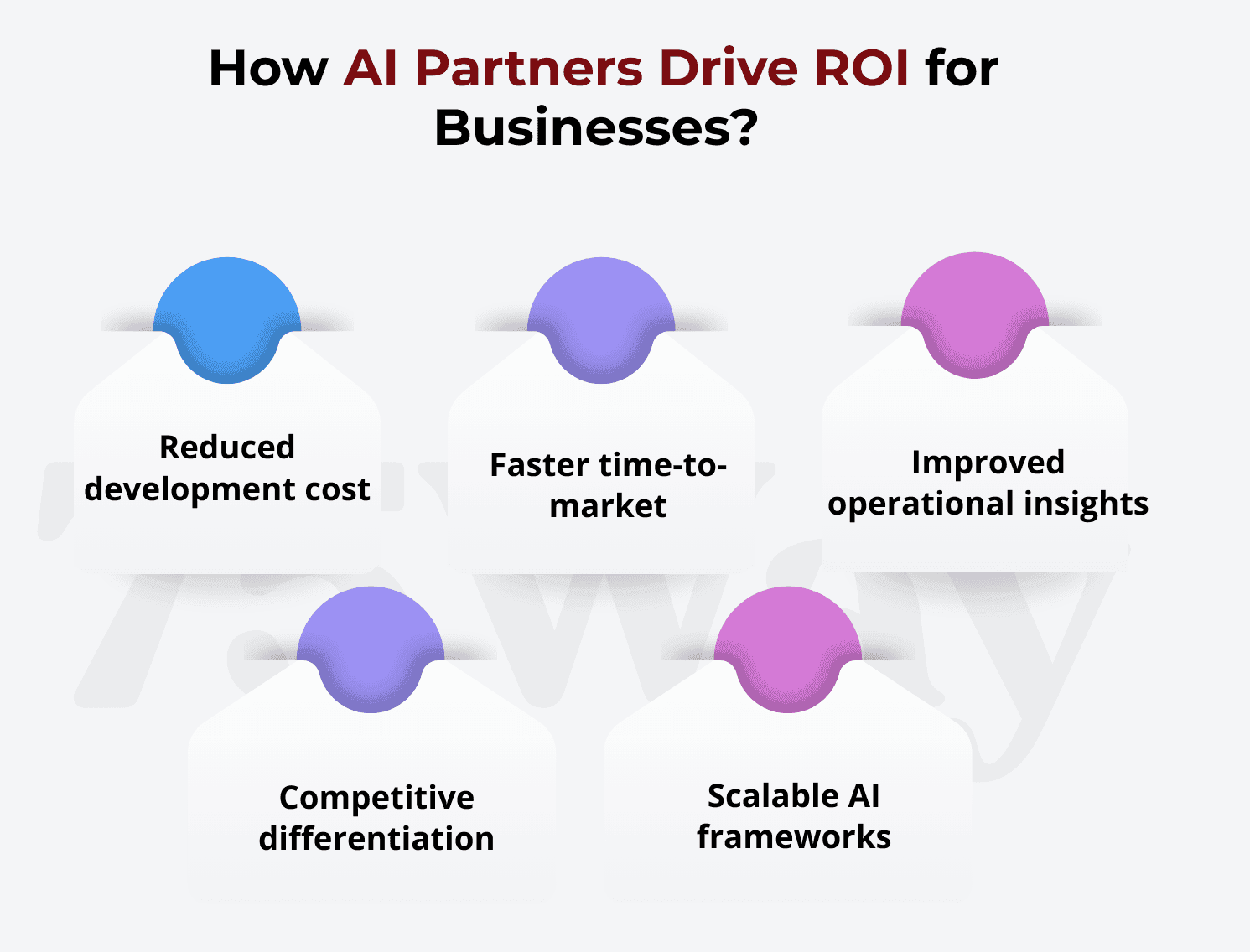
Reduced Development Cost: AI partners optimize resource allocation, lowering the total cost of building AI solutions compared to in-house teams. By leveraging pre-built frameworks, reusable models, and expert talent, businesses avoid unnecessary hiring, training, and infrastructure expenses.
Faster Time-To-Market: Experienced AI teams streamline development and deployment, enabling businesses to adopt solutions more quickly. Faster implementation leads to early realization of benefits, revenue generation, and the ability to respond to market changes effectively.
Improved Operational Insights: AI partners design systems that deliver actionable data for better decision-making, forecasting, and process optimization. Accurate insights reduce inefficiencies and enable evidence-based strategies, directly impacting productivity and profitability.
Competitive Differentiation: Leveraging AI through a skilled partner enables unique products, services, and business models. Companies can innovate faster, offer enhanced customer experiences, and maintain an edge over competitors in rapidly evolving markets.
Scalable AI Frameworks: Your partner must develop solutions that are scalable, maintainable, and adaptable to evolving technologies. Scalable frameworks allow businesses to expand AI capabilities across teams, departments, or regions without compromising performance or quality.
Also Read: How to Build an AI-Driven Anonymous Messaging App?
Conclusion
The right AI development partner is crucial for achieving long-term business success. Careful assessment of technical expertise, domain experience, project management practices, and ROI potential helps businesses minimize risks and maximize outcomes. Structured checklists, targeted questions, and a 90-day engagement roadmap provide alignment and measurable results. A partner that combines technical depth with strategic insight drives innovation, scalability, and operational excellence. For organizations ready to implement AI solutions effectively, collaboration with a trusted AI development comapny represents a decisive step toward sustainable growth.
Frequently Asked Questions (FAQs)
What’s The Typical Cost Of Hiring An AI Partner?
The cost of hiring an AI development partner varies based on project complexity, technology stack, and team expertise. Small-to-medium projects typically range from $50,000 to $150,000, while large-scale AI initiatives with custom LLM or GPT integration can exceed $250,000. Transparent pricing and ROI-focused planning help businesses maximize value.
How Long Does An AI Project Take?
AI project timelines depend on scope, data readiness, and solution complexity. A typical MVP or proof-of-concept can take 8–12 weeks, while full-scale deployments with integration, testing, and scalability planning may require 4–6 months or more. Clear milestones and a structured roadmap ensure predictable delivery.
What Level of Data Maturity Do I Need?
AI solutions perform best when organizations have structured, clean, and accessible data. High data maturity accelerates deployment and improves accuracy, while partners can assist lower-maturity organizations through data preparation and governance frameworks.
Can Small Startups Benefit From AI Partners?
Yes, startups gain access to specialized expertise, scalable AI infrastructure, and faster time-to-market without high upfront hiring costs. Properly scoped partnerships allow small teams to implement high-impact AI solutions.
Should I Hire In-House Or Outsource AI?
Yes, you can. Outsourcing provides flexibility, access to experienced talent, and cost savings for short-term or specialized projects. In-house teams are better for long-term, ongoing AI strategy, but combining both approaches can optimize expertise, scalability, and budget.