Summary
Building a powerful streaming app requires strategic planning, the right technology stack, and an expert development team. From market research to deployment, each phase contributes to performance, scalability, and user experience. Addressing challenges like cost, security, and content licensing is essential. By adopting modern development practices and continuous improvements, businesses can create high-quality, scalable streaming platforms that meet evolving user expectations and remain competitive in the digital landscape
Quick Overview
- Expert teams ensure seamless streaming performance with scalable and reliable app architectures.
- Choosing the right technology stack improves speed, security, and overall app efficiency.
- User-friendly UI UX design enhances engagement and increases retention rates significantly.
- MVP development approach reduces risks and validates ideas before full-scale deployment.
- Cloud infrastructure and CDNs ensure smooth streaming with minimal buffering issues.
- Continuous testing and updates maintain performance and ensure long-term application success
In today’s digital-first world, streaming apps have transformed how users consume content, making performance, scalability, and user experience more critical than ever. A video streaming app development team plays a vital role in turning innovative ideas into powerful, feature-rich platforms that can handle millions of users seamlessly. From selecting the right tech stack to designing intuitive interfaces and ensuring smooth playback, expert teams focus on every detail that impacts user engagement.
They integrate advanced features like adaptive streaming, real-time analytics, and secure content delivery to enhance performance and reliability. Moreover, these professionals follow agile methodologies, enabling faster development cycles and continuous improvements. By combining technical expertise with user-centric design, an experienced app development team ensures that streaming platforms not only meet current market demands but also stay future-ready in an increasingly competitive digital landscape.
What is Streaming App Development?
Streaming app development is the process of creating applications that deliver audio or video content to users in real time over the internet without requiring full downloads. These apps are designed to provide seamless playback, high-quality streaming, and interactive user experiences across devices. When planning such platforms, understanding the cost to develop a mobile app of video streaming is essential, as it depends on factors like features, scalability, UI/UX design, and backend infrastructure. Developers also integrate technologies like cloud storage, content delivery networks (CDNs), and adaptive bitrate streaming to ensure smooth performance and reliability for users worldwide.
Things To Consider While Hiring App Developers To Build Streaming App
When hiring developers for a streaming app, it’s important to evaluate their experience with scalable architectures, real-time streaming technologies, and UI/UX design. Reviewing past projects helps ensure they can handle performance optimization and security requirements. Many businesses prefer partnering with established mobile app development companies that offer end-to-end services, including design, development, and maintenance. Additionally, consider their communication process, use of modern tech stacks, and ability to meet deadlines to ensure a smooth and successful development journey.
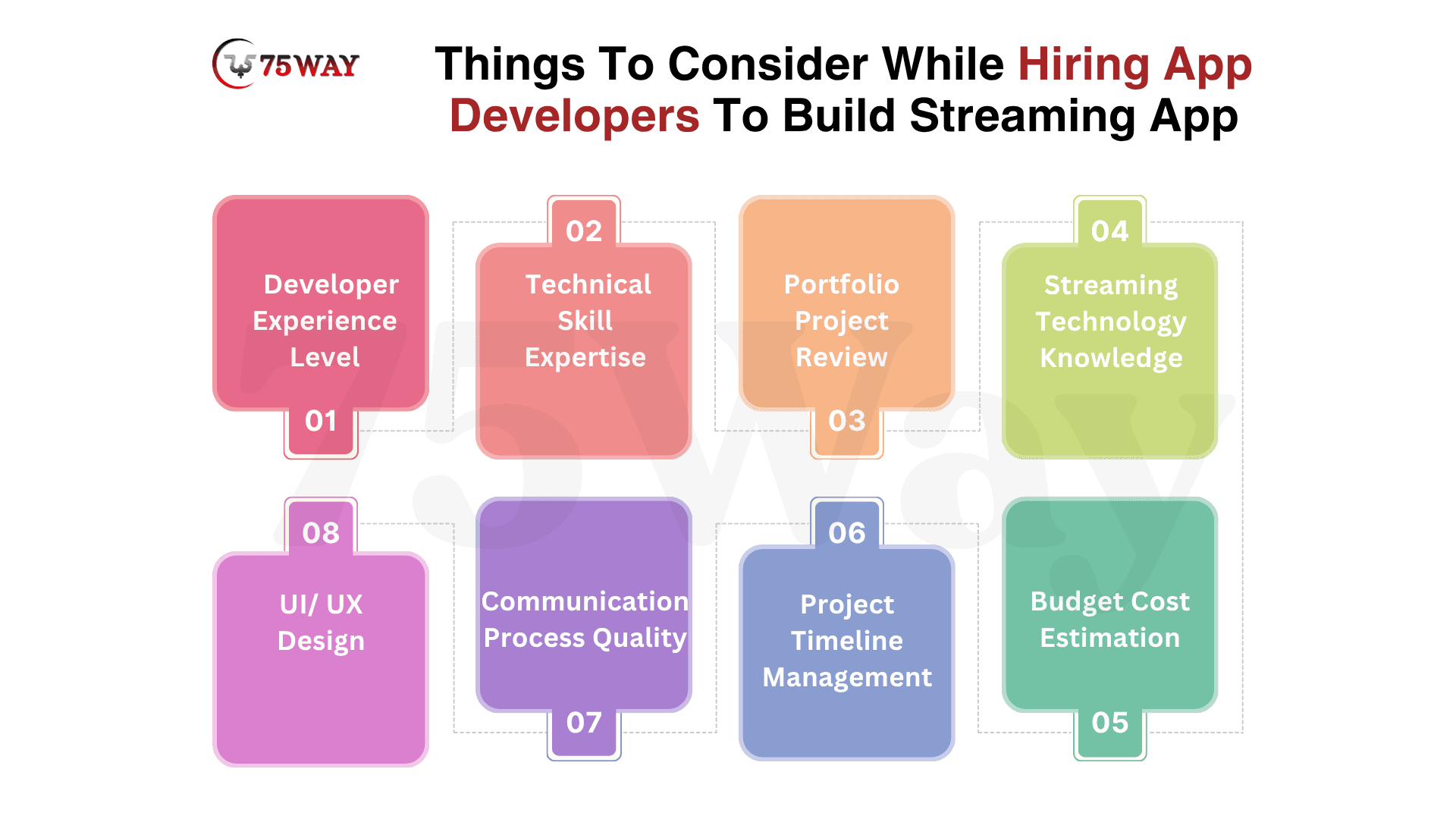
Developer Experience Level: Choosing developers with proven experience in building streaming apps ensures better project outcomes. Experienced professionals understand scalability, performance optimization, and real-time data handling. They can anticipate challenges and provide effective solutions quickly. Their familiarity with industry standards helps deliver a reliable app that meets user expectations and functions smoothly across different devices and platforms.
Technical Skill Expertise: A strong technical skill set is essential for developing high-performing streaming applications. Developers should be proficient in relevant programming languages, frameworks, and tools. Knowledge of cloud services, APIs, and database management is also important. Skilled developers can implement advanced features like adaptive streaming and ensure seamless performance, security, and compatibility across various devices.
Portfolio Project Review: Reviewing a developer’s portfolio provides insights into their capabilities and past work quality. It helps assess their experience with similar projects, design standards, and technical execution. A strong portfolio showcases successful streaming applications and innovative solutions. This evaluation ensures that the developer can meet your expectations and deliver a high-quality, user-friendly streaming app.
Streaming Technology Knowledge: Developers must understand streaming protocols, codecs, and content delivery networks to build efficient apps. Knowledge of technologies like HLS, DASH, and real-time streaming ensures smooth playback and minimal buffering. This expertise allows them to optimize video quality and performance, providing users with a seamless viewing experience across different internet speeds and devices.
UI UX Design: User interface and user experience design play a crucial role in a streaming app’s success. Developers should focus on creating intuitive navigation, attractive layouts, and smooth interactions. A well-designed UI/UX enhances user engagement and retention. It ensures that users can easily browse content, play videos, and enjoy a seamless and enjoyable streaming experience.
Communication Process Quality: Effective communication is key to successful project execution. Developers should provide regular updates, understand requirements clearly, and be responsive to feedback. A transparent communication process helps avoid misunderstandings and ensures alignment between both parties. It also enables quick problem resolution, making the development process more efficient and collaborative.
Project Timeline Management: Timely delivery is crucial for launching a streaming app successfully. Developers should follow structured workflows and agile methodologies to meet deadlines. Proper timeline management includes setting realistic milestones, tracking progress, and addressing delays promptly. This ensures the project stays on schedule and allows businesses to plan launches and marketing strategies effectively.
Budget Cost Estimation: Understanding the budget and cost estimation is vital before starting development. Developers should provide clear pricing based on features, complexity, and timeline. Transparent cost estimation helps avoid unexpected expenses and ensures financial planning. It allows businesses to allocate resources efficiently while ensuring they receive a high-quality streaming app within their budget.
Steps to develop video streaming apps
Developing a streaming app involves a structured approach, starting with market research, feature planning, and UI/UX design. Businesses aiming to develop a mobile app of video streaming like Netflix, Amazon Prime Video, and Disney+ must focus on selecting the right tech stack, integrating secure payment systems, and ensuring scalable backend infrastructure. The process also includes implementing streaming protocols, testing performance, and launching with continuous updates. Proper planning and execution help create a reliable, high-quality streaming platform that meets user expectations and market demands.
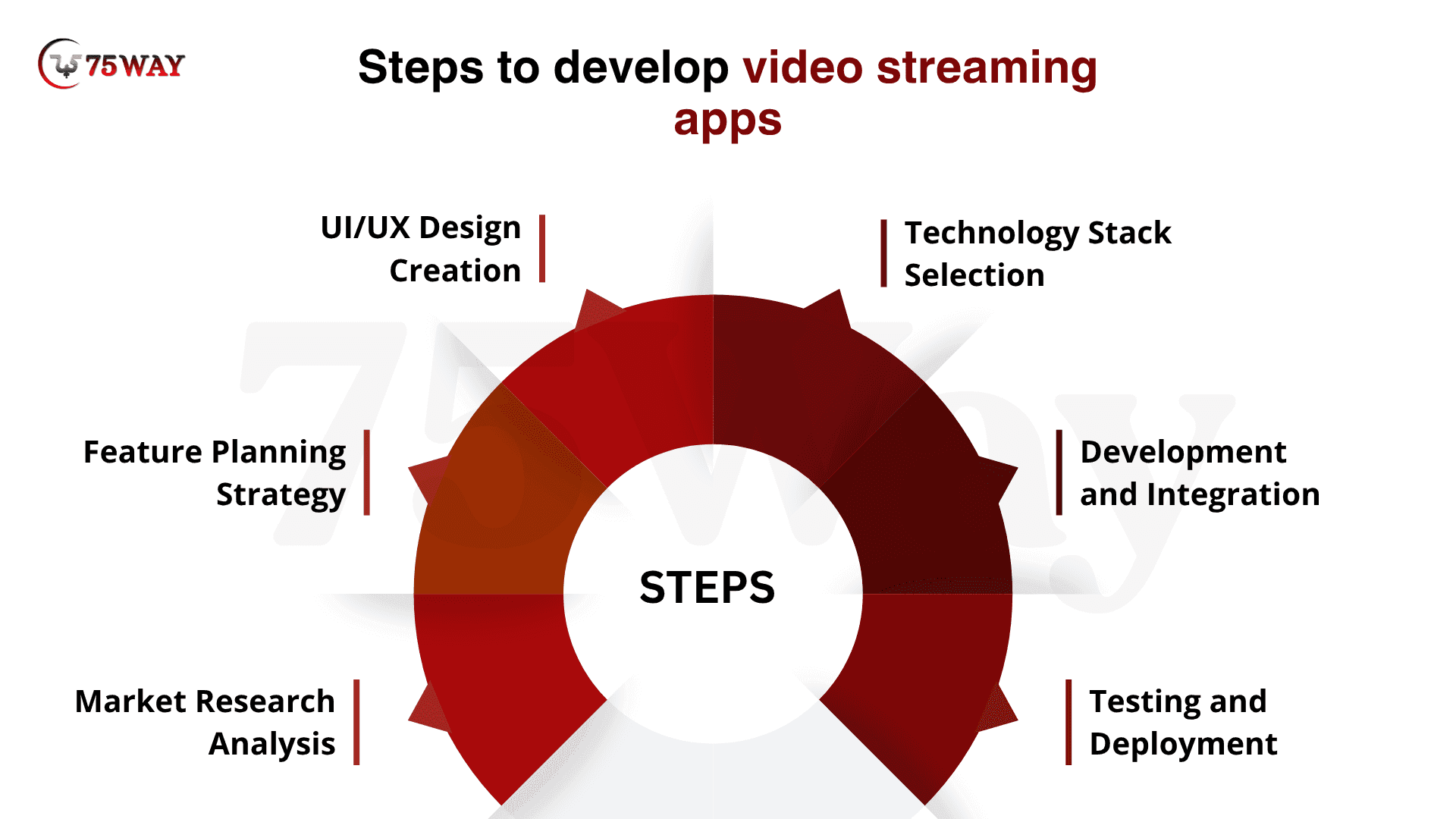
Market Research Analysis: Begin by analyzing target audiences, competitors, and industry trends. Understanding user preferences helps define app features and content strategy. This step ensures your streaming platform meets market demands and offers unique value compared to existing apps.
Feature Planning Strategy: Identify essential features like user profiles, search functionality, recommendations, and payment integration. Prioritizing features ensures efficient development. A clear roadmap helps teams focus on building a user-friendly app that delivers seamless streaming and engagement.
UI UX Design Creation: Design an intuitive and visually appealing interface that enhances user experience. Focus on easy navigation, responsive layouts, and engaging visuals. A well-crafted design ensures users can quickly access content and enjoy smooth interactions within the app.
Technology Stack Selection: Choose the right frontend, backend, and cloud technologies to support scalability and performance. Integrate streaming protocols and CDNs for efficient content delivery. The right tech stack ensures reliability, security, and smooth streaming across multiple devices.
Development and Integration: Develop the app by combining frontend and backend systems while integrating APIs, payment gateways, and streaming services. This phase ensures all features function properly. Continuous testing during development helps maintain quality and performance.
Testing and Deployment: Thoroughly test the app for bugs, performance issues, and compatibility across devices. After testing, deploy the app on platforms like iOS and Android. Regular updates and maintenance ensure long-term success and improved user satisfaction.
Technology Stack for Streaming App Development
A robust technology stack is essential for building a high-performance streaming app. It includes frontend frameworks for seamless user interfaces, backend technologies for data processing, and cloud services for scalability. Integrating CDNs ensures fast content delivery, while databases manage user data efficiently. Implementing the right mobile app development strategies helps optimize performance, security, and user experience. Choosing scalable and flexible technologies enables streaming platforms to handle high traffic and deliver uninterrupted, high-quality content across multiple devices and network conditions.
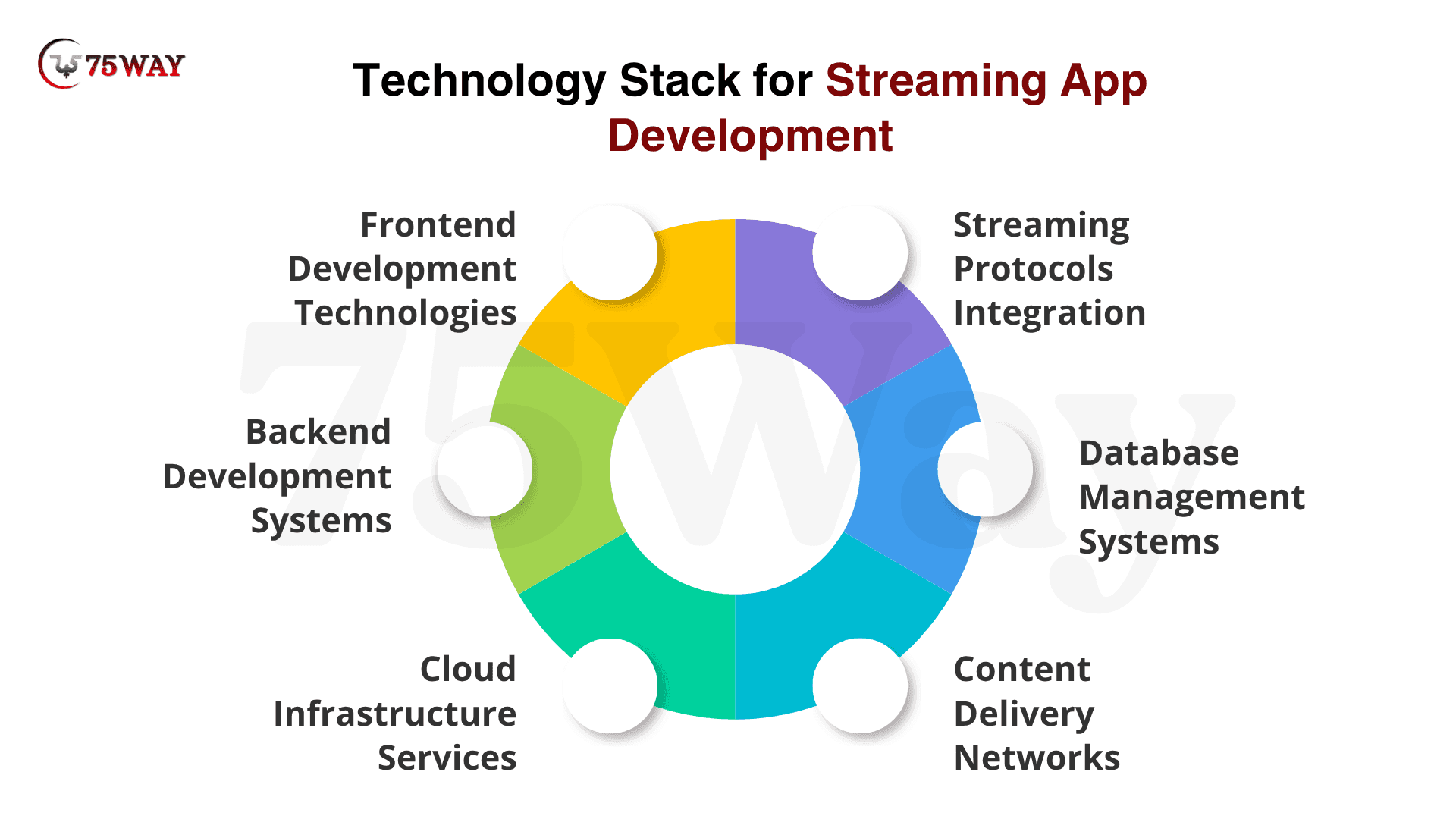
Frontend Development Technologies: Frontend technologies focus on building responsive and interactive user interfaces. Frameworks like React Native or Flutter help create smooth cross-platform experiences. A well-structured frontend ensures easy navigation, fast loading, and an engaging viewing experience for users.
Backend Development Systems: Backend systems manage data processing, authentication, and server-side logic. Technologies like Node.js or Python ensure scalability and efficiency. A strong backend supports real-time streaming, handles user requests, and maintains performance even during high traffic loads.
Cloud Infrastructure Services: Cloud platforms like AWS or Google Cloud provide scalable infrastructure for streaming apps. They support storage, computing power, and content distribution. Cloud services ensure flexibility, reliability, and the ability to scale resources based on user demand.
Content Delivery Networks: CDNs help deliver video content quickly by caching data across global servers. This reduces latency and buffering issues. Using CDNs ensures users receive high-quality streaming experiences regardless of their location or internet speed.
Database Management Systems: Databases store user data, content information, and app activity. Systems like MongoDB or MySQL ensure efficient data handling. A well-optimized database improves performance, supports personalization, and ensures secure data management within the streaming platform.
Streaming Protocols Integration: Streaming protocols like HLS and MPEG-DASH ensure smooth video playback across devices. They adapt video quality based on network conditions. Proper integration of these protocols enhances user experience by reducing buffering and maintaining consistent streaming performance.
Limitations and Considerations in Streaming App Development
Streaming app development comes with challenges like high infrastructure costs, content licensing issues, and performance optimization. Ensuring low latency and seamless playback across devices requires advanced technologies. Adopting MVP development helps reduce risks by launching with core features first, allowing testing, user feedback, and gradual scaling while managing costs and improving overall app performance efficiently.
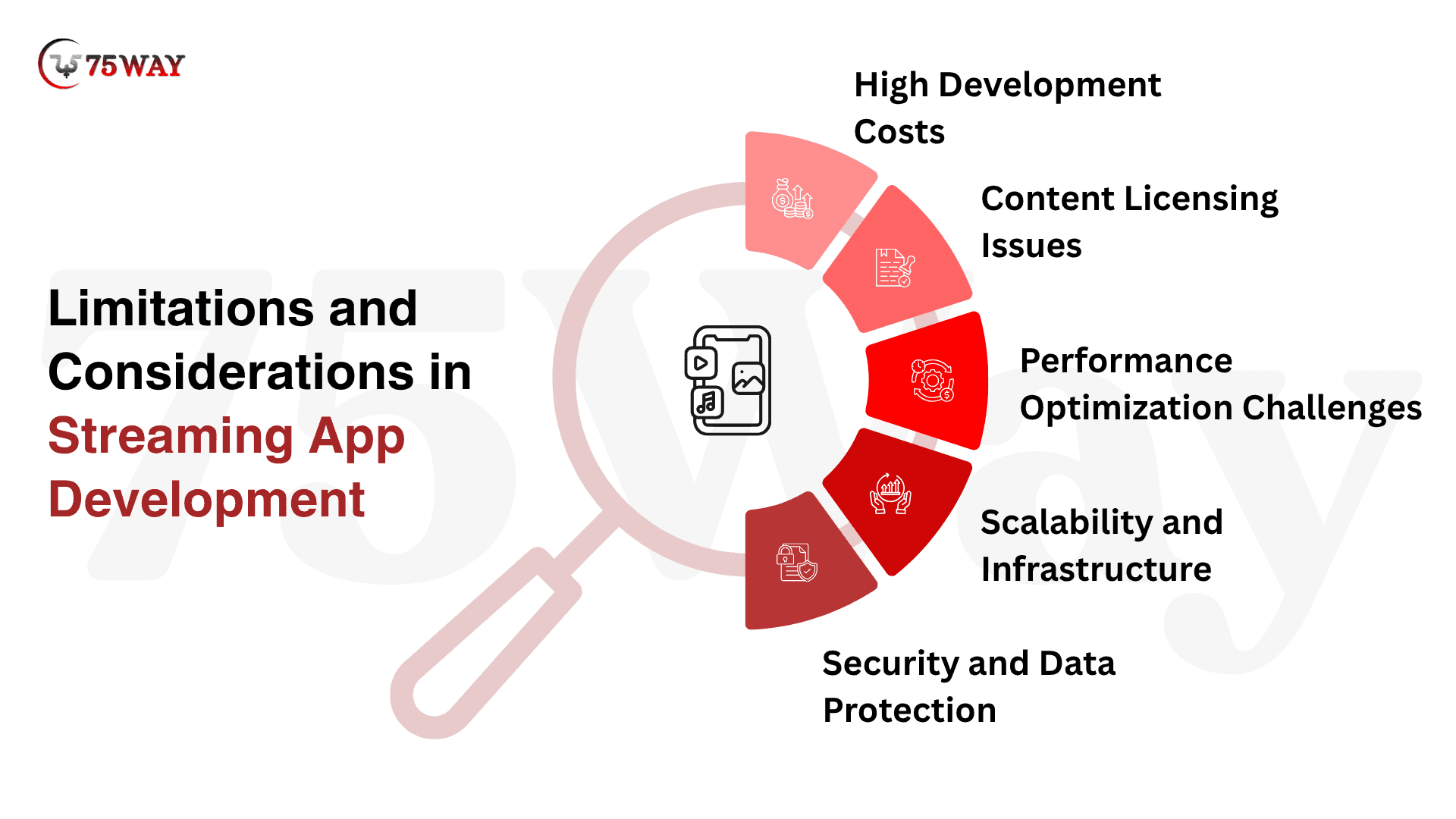
High Development Costs: Building a streaming app requires significant investment in infrastructure, development, and maintenance. Costs increase with advanced features, scalability requirements, and third-party integrations like payment gateways and content delivery networks.
Content Licensing Issues: Securing legal rights for streaming content can be complex and expensive. Licensing agreements vary by region, and failure to comply with regulations can lead to legal complications and restrictions.
Performance Optimization Challenges: Maintaining smooth playback with minimal buffering is challenging, especially under heavy traffic. Developers must optimize video compression, adaptive streaming, and server response times to ensure consistent user experience.
Scalability and Infrastructure: Streaming apps must handle large user bases and sudden traffic spikes. Scalable cloud infrastructure and load balancing are essential to maintain performance, prevent crashes, and deliver uninterrupted streaming services.
Security and Data Protection: Protecting user data and content from piracy is critical. Implementing encryption, secure authentication, and DRM technologies helps safeguard sensitive information and ensures a secure streaming environment for users.
Conclusion
In conclusion, building a successful streaming app requires a strategic blend of advanced technology, user-focused design, and scalable infrastructure. From planning and development to deployment and optimization, every stage plays a crucial role in delivering a seamless experience. Businesses must carefully address challenges like performance, security, and content licensing while leveraging modern tools and frameworks. By adopting the right approach and continuously improving based on user feedback, companies can create powerful streaming platforms that stand out in a competitive market and deliver long-term value to users
Frequently Asked Questions (FAQs)
What makes a streaming app development team expert?
An expert team combines skills in backend architecture, frontend development, DevOps, and quality assurance. They understand streaming protocols, scalability, and performance optimization. Evaluating their portfolio of successful streaming apps is crucial, as real-world experience ensures they can build reliable and high-performing platforms tailored to user needs.
How long does developing a streaming app take?
The timeline depends on features and complexity. A basic streaming app may take 3–4 months, while advanced platforms with live streaming, offline viewing, and AI recommendations can take 6–12 months. Phased development and launch strategies often lead to better performance and scalability.
What is the cost of building a streaming application?
The cost varies based on features, technology stack, and scalability requirements. Basic apps may cost around $60,000, while advanced platforms can exceed $300,000. Ongoing expenses like cloud hosting, CDN usage, and maintenance also significantly impact the total investment over time.
Which technologies are used in streaming app development?
Streaming apps use technologies like React Native or Flutter for frontend, Node.js or Python for backend, and cloud platforms like AWS. CDNs, adaptive bitrate streaming, and databases are also essential to ensure smooth playback, scalability, and efficient content delivery.
How do streaming apps ensure smooth video playback?
Streaming apps use adaptive bitrate streaming, CDNs, and optimized video compression to deliver content smoothly. These technologies adjust video quality based on internet speed, reducing buffering and ensuring a seamless viewing experience across different devices and network conditions.
What are the biggest challenges in streaming app development?
Major challenges include high infrastructure costs, content licensing, scalability, and maintaining low latency. Ensuring security and preventing piracy are also critical concerns. Developers must use advanced technologies and strategies to overcome these challenges and deliver a reliable platform.