Are you running an e-commerce business in USA? If so, you definitely know the pressure of managing orders, inventory, payments, and marketing simultaneously. It’s 2026, and customers expect a real-time shopping experience at home. So, an AI-powered ecommerce app development solutions are required in every retail business.
Even 33% of B2B e-commerce agencies in USA have adopted AI tools. And you know what the reason is. Manual processes obviously, that fail to scale. But don't worry! A simple solution is here: n8n.
Now you may be thinking, "What is n8n?" "How can it make AI automation in my ecommerce business in 2026?" To answer all your queries, we have prepared a detailed guide that explains practical automation in ecommerce business with n8n tool, its benefits, measurable outcomes, implementation steps, and market growth insights to enhance long-term scalability and revenue stability. Whether you are a startup, an SMB owner, or a giant industry leader, this guide is the perfect roadmap to grow your retail business.
What is n8n?
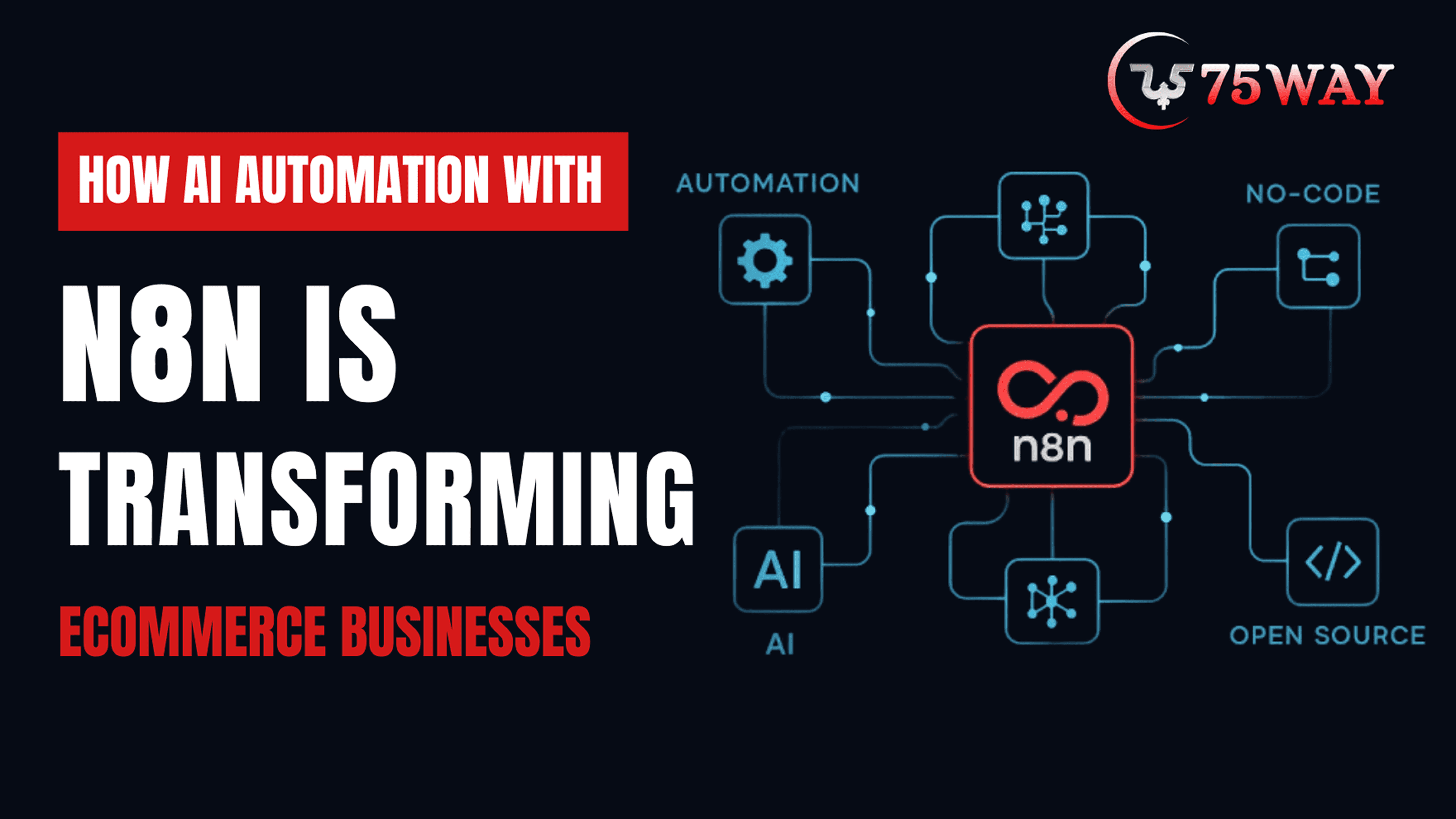
n8n is an open-source workflow automation platform that connects applications, databases, and APIs through logic-driven workflows. You do not need any prior coding knowledge to launch this platform. This tool allows ecommerce systems to exchange data, trigger actions, and make decisions without dependency on rigid rule-based tools. Its visual workflows allow customization that suits complex operational models used by modern online businesses.
Retail and ecommerce businesses often rely on n8n to develop marketplace apps and online stores that integrate sellers, buyers, payments, and logistics into a single operational flow. It also provides native support for APIs and webhooks. Hence, you can exchange ecommerce data across platforms without manual intervention and maintain scalability and operational control.
Read More: How AI Agents Automate Sales, Support & Operations in US Companies
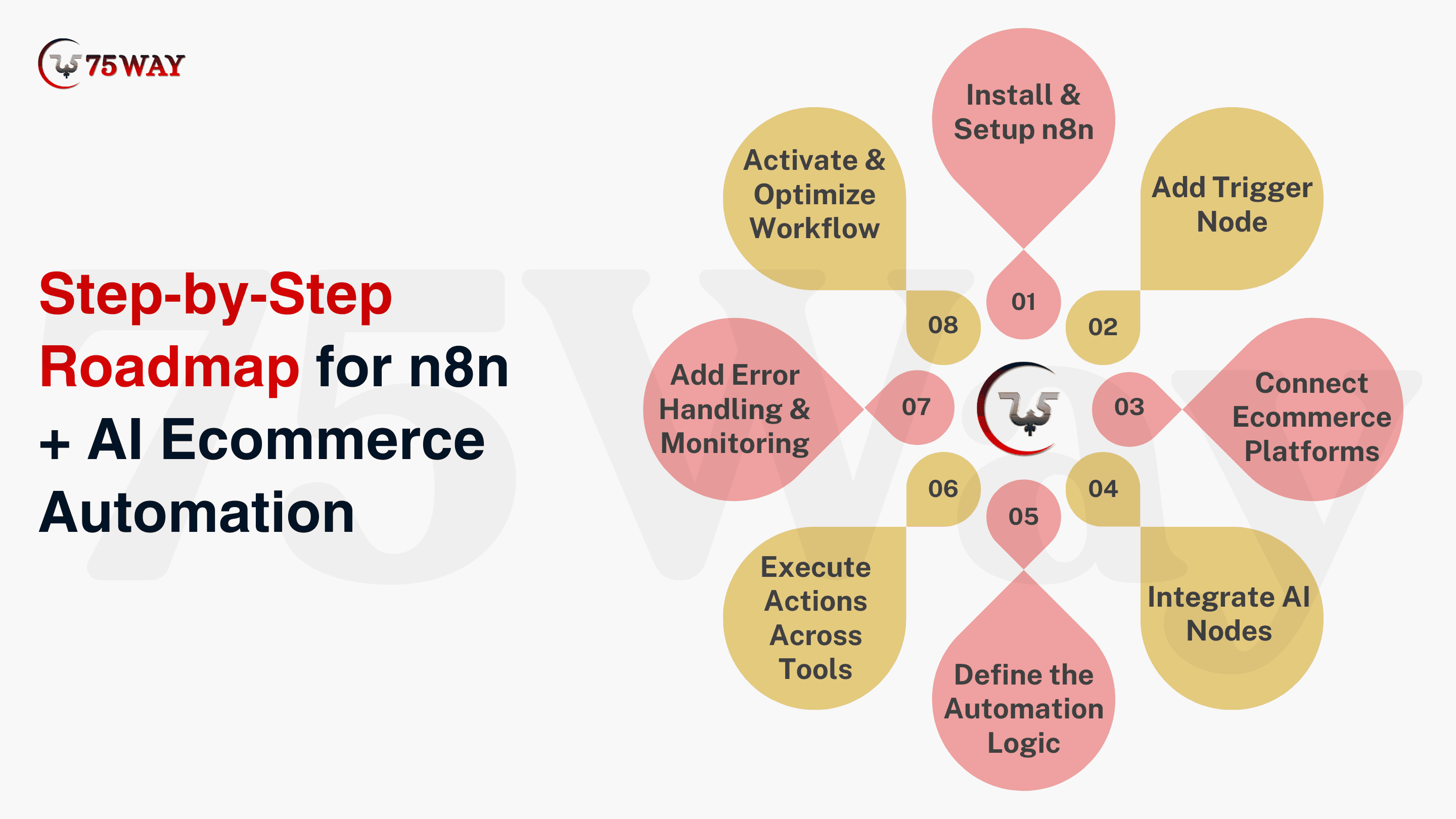
Step‑by‑Step Roadmap for n8n + AI Ecommerce Automation
AI-powered ecommerce automation using n8n follows a structured roadmap that integrates platforms, intelligence layers, and business logic into a single operational system. Each step builds toward an automation ecosystem capable of adapting to customer behavior, operational data, and revenue objectives.
Install & Setup n8n
Everything starts with a stable setup. n8n runs either in a secure cloud environment or on a self-hosted server, depending on data ownership, compliance needs, and long-term scaling plans. This phase describes how AI automation performs as transaction volume increases and workflows become more complex.
A proper setup also prepares ecommerce systems to communicate. You can connect platforms such as Shopify and WooCommerce using verified credentials and securely transfer data between tools. This setup offers automation reliability and prevents disruptions once workflows go live.
- Select a deployment method based on business size and compliance needs
- Configure the hosting environment with secure access controls
- Create admin accounts and role permissions
- Connect ecommerce platforms using API keys or OAuth
- Validate data access for orders, products, customers, and payments
- Test execution to confirm platform communication stability
Add Trigger Node
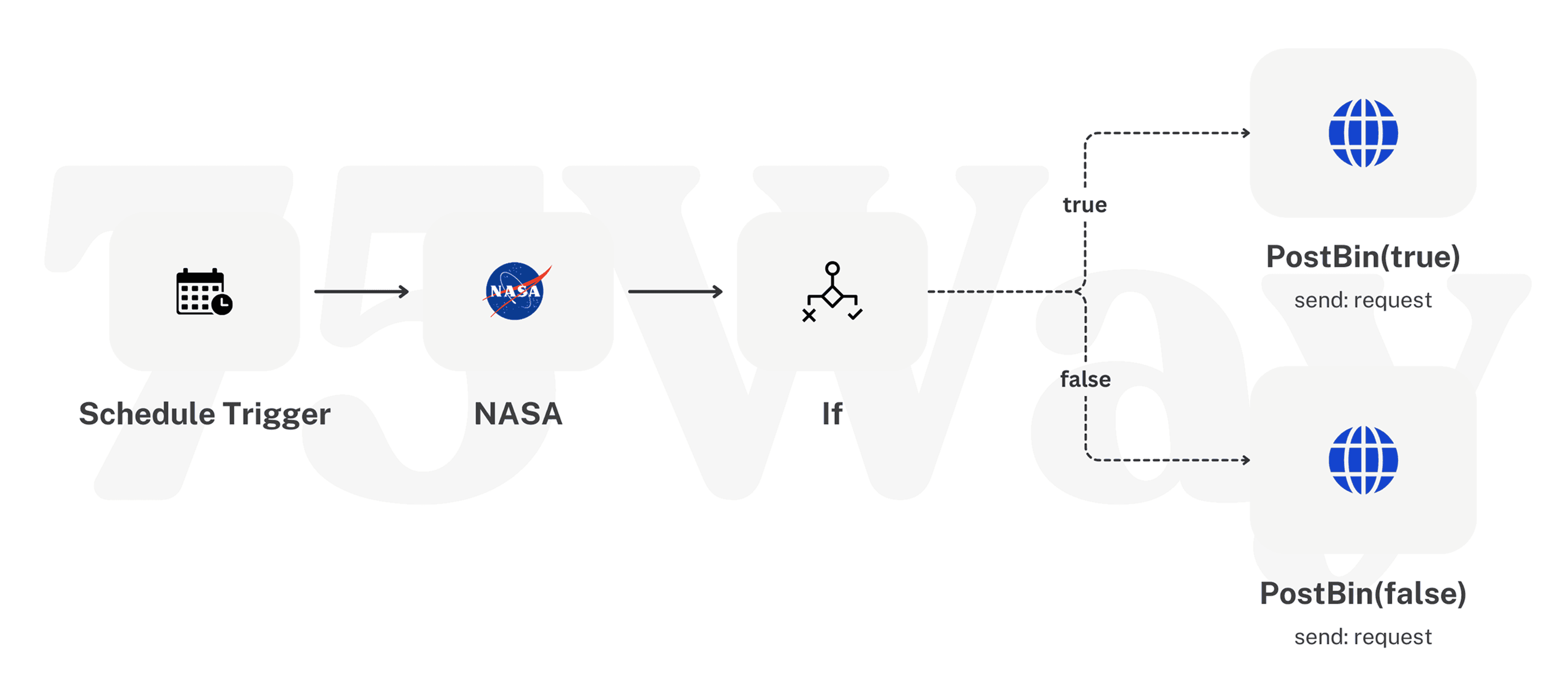
In n8n, AI automation requires a clear trigger. For this purpose, trigger nodes define the signal by determining when a workflow should begin. In ecommerce operations, that moment often connects to real activity such as a new order, a customer action, or a scheduled system check.
Trigger setup begins inside the n8n workflow editor. A new workflow opens with an empty canvas, where a trigger node is selected first. Various options are available, including webhook triggers for instant events, schedule triggers for timed execution, and platform-based triggers for actions such as new orders or customer updates. Each trigger type connects directly to a business event rather than running continuously.
After selection, trigger configuration defines the event details. Webhook triggers generate a unique URL linked to ecommerce platforms. Schedule triggers allow time and frequency selection. Platform triggers connect through authenticated accounts to listen for specific actions. Once configured, a test run confirms that the trigger captures live data correctly and passes it forward into the workflow.
A properly added trigger keeps automation relevant. Execution happens only when meaningful activity occurs, keeping workflows stable and aligned with real ecommerce operations.
Connect Ecommerce Platforms
AI Automation in n8n delivers measurable results only when the systems are connected smoothly, and live data is transferred. Different ecommerce platform integrations allow n8n to receive live ecommerce data and transmit it across workflows without manual intervention. Orders, payments, customer updates, and inventory movements flow into automation once these links are in place.
Secure APIs and webhooks from ecommerce platforms such as Shopify and WooCommerce, as well as from payment systems, are required for integration. Authentication confirms data access rights and protects sensitive business information. Once connected, platforms function as active data sources rather than isolated tools.
- Link APIs for ecommerce platforms such as Shopify, WooCommerce, Stripe, and payment gateways using secure authentication methods.
- Generate API keys or OAuth tokens from each platform dashboard to authorize data access.
- Configure webhook URLs to receive real-time events such as new orders, customer updates, or payment confirmations.
- Map incoming data fields, including order ID, product details, customer information, and transaction status within n8n nodes.
- Validate webhook payloads to confirm accurate data structure and completeness.
- Test platform connections by triggering sample events and verifying successful data transfer into workflows.
These steps provide uninterrupted data flow between ecommerce systems and automation workflows. Reliable connections allow AI-driven logic to operate on live business data instead of delayed or partial information.
Integrate AI Nodes
While developing ecommerce workflows with n8n, AI nodes such as OpenAI, Gemini, and LangChain add an intelligence layer to ecommerce platform. These nodes process incoming data to identify intent, categorize requests, generate customer-facing messages, and evaluate sentiment from interactions. Business logic gains depth through contextual understanding instead of fixed conditions.
Ecommerce operations benefit from adaptive responses based on order value, customer history, and behavioral signals. Personalized communication, smart routing, and decision-based actions become possible across sales, support, and marketing systems. AI-driven interpretation allows automation workflows to respond dynamically to real-world commerce scenarios rather than following static instructions.
Define the Automation Logic
This is where the workflow starts thinking instead of just moving data around. Automation logic decides what happens next, why it happens, and who or what gets involved when conditions change. At this stage, workflows are designed as connected logic chains that guide data from input to outcome.
- Apply AI processing nodes to evaluate customer intent, purchase patterns, or message tone before taking action.
- Insert IF or Filter nodes to create decision paths based on conditions like abandoned carts, high cart value, or low inventory levels.
- Segment customer data into categories such as repeat buyers, first-time shoppers, or high-risk churn users.
- Control execution flow by defining which actions run immediately and which are delayed or conditional.
- Validate logic paths by testing different scenarios to confirm correct branching and outcomes.
Well-structured logic ensures ecommerce operations react differently to different situations. Instead of one-size-fits-all automation, workflows respond with precision, relevance, and timing that match real business conditions.
Execute Actions Across Tools
Once automation logic is defined, workflows move into execution. This stage activates real business outcomes across ecommerce, operations, and marketing systems. Actions run automatically, while AI continuously fine-tunes timing, personalization, and prioritization based on live customer and transaction data.
Update Inventory: Inventory levels update automatically when orders are placed, returned, or canceled. Stock data syncs across ecommerce platforms, warehouses, and fulfillment systems in real time. Automated thresholds trigger restock alerts or supplier workflows before inventory gaps impact revenue.
Send Customer Notifications: Customer notifications are triggered instantly based on order status, delivery events, or behavioural signals. AI personalization adjusts message content, tone, and timing based on customer history and engagement patterns, improving response rates and the overall customer experience.
Log Data to Slack, Sheets, CRM: Order events, customer actions, and operational updates are logged in real time to Slack, Google Sheets, and CRM systems. Teams gain immediate visibility into workflows, enabling faster decision-making and coordinated responses across departments.
Trigger Marketing Campaigns: Marketing campaigns activate automatically in n8n based on customer behavior such as abandoned carts, repeat purchases, or high-value transactions. AI-driven segmentation ensures campaigns deliver relevant offers at optimal times across email, SMS, and ad platforms.
Add Error Handling & Monitoring
The error handling module in n8n improves stability across automation workflows as transaction volumes increase. Failure points such as API timeouts, data mismatches, or third-party outages receive immediate attention through structured monitoring layers.
Include Error Capture Nodes: Error nodes intercept failed executions and prevent silent workflow breakdowns. Each failure routes to a defined recovery or notification path instead of stopping the automation.
Activate Notifications: Alerts deliver real-time updates through Slack, email, or incident tools when workflows fail or slow down. Teams respond before customer experience or revenue becomes affected.
Enable Execution Logs: Execution logs and audit trials record every workflow run, data exchange, and system response. Historical visibility supports debugging, optimization, and compliance across ecommerce operations.
Monitor Workflow Performance Trends: Performance tracking highlights recurring issues, bottlenecks, or API limits. Continuous monitoring supports long-term scalability without adding operational overhead.
Activate & Optimize Workflow
Workflow activation is where automation starts generating real impact. Once live, tasks run automatically across connected ecommerce systems, managing orders, customer interactions, inventory updates, and marketing triggers in real time. This eliminates manual effort and ensures smooth, consistent operations.
- Switch the workflow to active mode inside n8n so all triggers and nodes start functioning.
- Verify that triggers are firing correctly by placing a test order, updating inventory, or submitting a sample customer action.
- Monitor workflow execution logs for errors, delays, or failed nodes. Use these logs to understand how data flows across your automation.
- Adjust timing or conditions based on test outcomes, such as speeding up abandoned cart notifications or refining AI decision thresholds.
- Review KPI alignment by comparing workflow outputs against business metrics like order processing speed, revenue impact, and customer engagement.
- Iterate continuously by implementing small improvements based on live data to maintain efficiency as transaction volume grows.
If you follow these steps to adopt AI automation in ecommerce business with n8n ensures reliability and scalability aligned with business goals. Continuous observation and refinement help the system evolve into a scalable, revenue-driving engine.
Quick Snapshot: Top 10 AI Consulting Companies in 2026
Why Invest in AI-Powered Ecommerce App Development in 2026?
Investment in ecommerce app development increases as digital commerce competition intensifies across the United States. Businesses adopt intelligent platforms to manage omnichannel sales, customer personalization, and operational consistency. AI-powered ecommerce platforms support faster response times, predictive decision-making, and improved customer engagement.
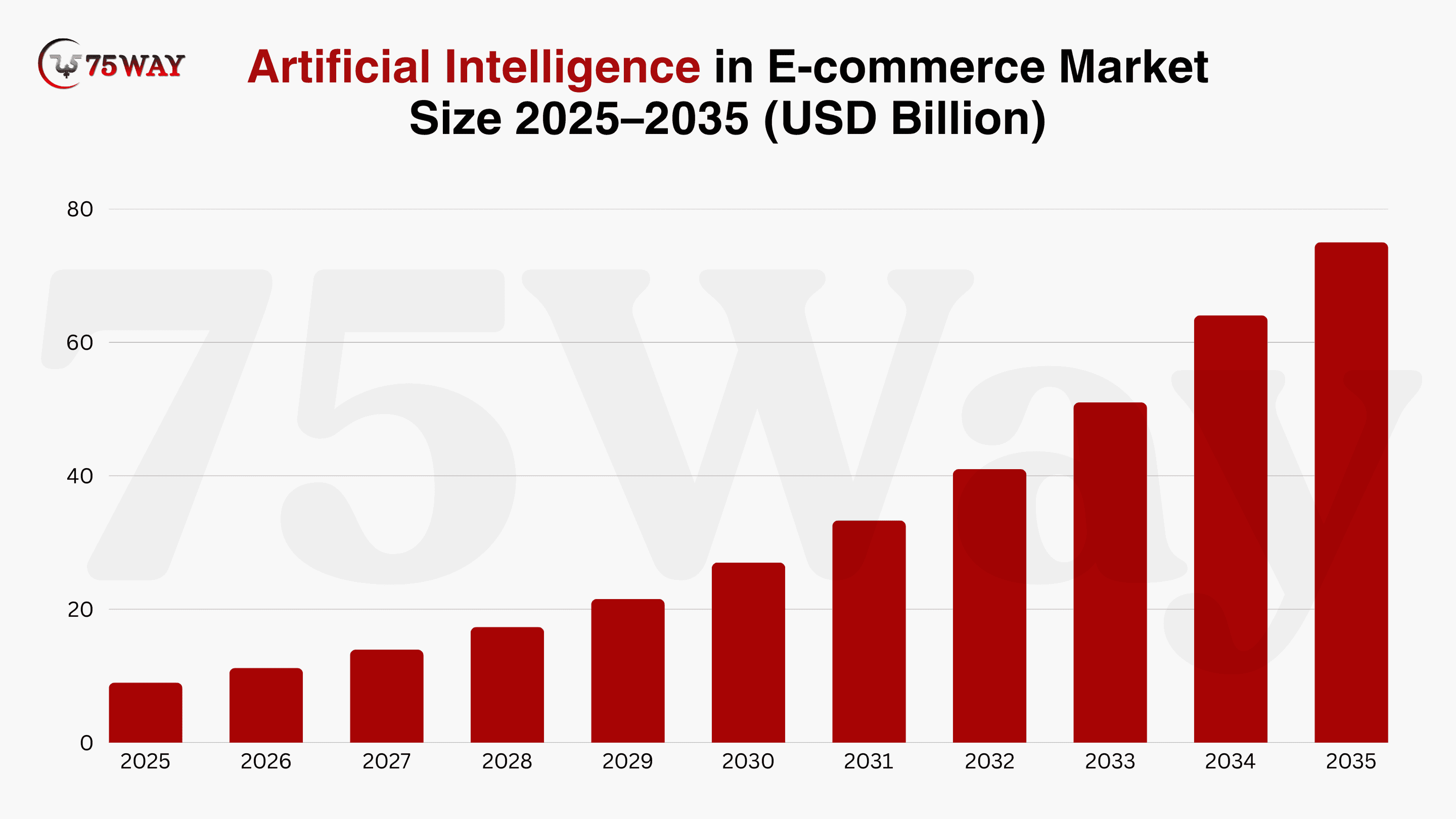
- According to a report by Precedence Research, the global AI-driven e-commerce market is valued at approximately USD 9.01 billion in 2025. The market is expected to grow to USD 11.21 billion in 2026 and surge to nearly USD 74.93 billion by 2035, reflecting a strong compound annual growth rate (CAGR) of 23.59% between 2026 and 2035.
- Around 22% of consumers prefer AI-powered voice assistants like Alexa for product search and purchases.
- AI adoption among Amazon sellers shows 34% using it for listing optimization, followed by 14% for marketing content and 7% for keyword analysis.
- Organizations implementing AI have seen an average revenue growth of 10–12%, driven by improved personalization and operational efficiency.
Core Benefits of n8n Automation for Ecommerce
AI-driven automation through n8n supports ecommerce and retail businesses by connecting operational data, customer interactions, and revenue workflows into a single execution framework. Each benefit contributes directly to scalability, cost control, and measurable performance improvements.
Streamline Order Processing: Order handling automation in n8n routes transactions seamlessly across fulfillment, inventory, and customer communication systems. Manual intervention drops to speed up processing and improve delivery accuracy. Every order flows through the system automatically to reduce errors and provide timely updates to users from checkout to delivery.
Automate Inventory Management: In n8n, you can automate inventory synchronization across platforms to prevent overselling and stock mismatches. Real-time updates give teams accurate visibility of product availability, while customers always see correct stock information. AI Automation in ecommerce business ensures inventory levels trigger alerts when thresholds are low, supporting proactive restocking and smooth operational flow.
Recover Abandoned Carts: Behavior-based automation triggers personalized follow-ups via email, SMS, or messaging apps. AI adjusts content and timing according to customer behavior, purchase history, and engagement patterns, increasing cart recovery rates and helping retain revenue that might otherwise be lost.
Integrate Multiple Platforms: Unified automation connects ecommerce platforms, CRMs, marketing tools, and analytics systems into a single workflow. Data flows continuously between systems, eliminating silos, improving reporting accuracy, and keeping operations consistent. Teams can make faster, better-informed decisions without juggling multiple dashboards.
Enhance Customer Engagement: Automated messaging and AI-powered support workflows respond to customers quickly and accurately. Personalized communication improves relevance, resolves queries faster, and enhances the overall shopping experience. Automation builds loyalty by maintaining consistent and timely interactions across channels.
Optimize Marketing Campaigns: Marketing campaigns run automatically in n8n with segmentation, timing, and performance tracking handled by AI. Content adapts based on customer behavior and engagement, improving conversion rates. Campaigns launch automatically, freeing teams to focus on strategy and creative improvements.
Reduce Operational Costs: AI automation with n8n for ecommerce platforms lowers dependency on manual labor and reduces operational errors. Repetitive tasks, reporting, and cross-system coordination are handled automatically, generating cost savings that scale with the business's growth. Resources can be reallocated to growth initiatives, making automation a direct contributor to profitability.
Key KPIs to Track for n8n Ecommerce Automation
Performance measurement validates automation investments and highlights areas for improvement. You can track the right KPIs in n8n e-commerce platform to achieve measurable results across operational efficiency, customer experience, and revenue growth. Each metric provides insights to refine automation for maximum business impact.
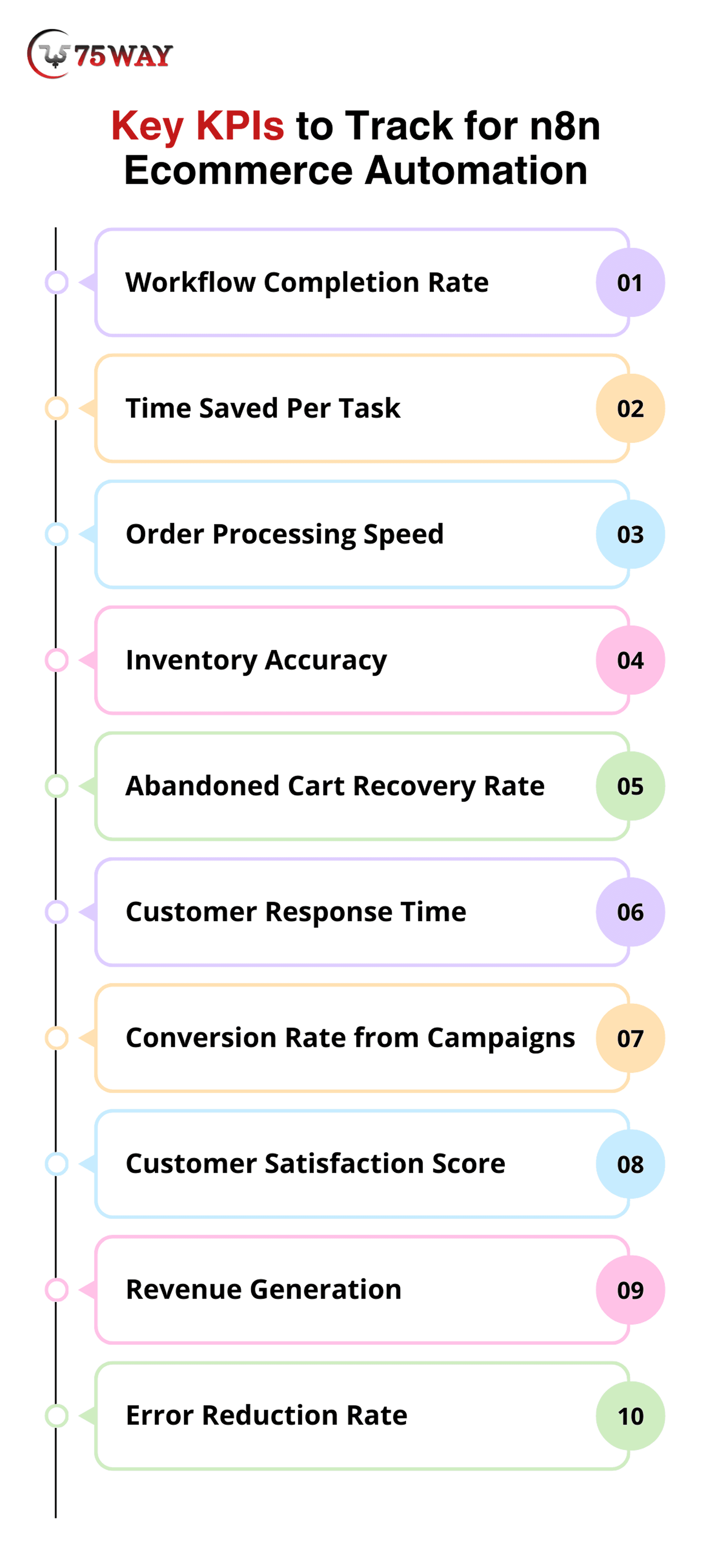
Workflow Completion Rate: Completion metrics indicate how reliably automation executes across all operational scenarios. A high completion rate indicates that workflows process orders, notifications, and system updates without failures or interruptions, providing confidence in the consistency of automation.
Time Saved Per Task: This KPI measures productivity improvements by comparing manual versus automated task durations. Time saved per task highlights operational efficiency gains and helps teams focus on strategic activities instead of repetitive processes.
Order Processing Speed: Tracking processing duration shows how quickly orders move from placement to fulfillment. Faster processing improves customer satisfaction, reduces errors, and supports a scalable order volume without increasing operational load.
Inventory Accuracy: Accuracy rates reflect how well inventory levels stay synchronized across ecommerce platforms and warehouses. Maintaining precise inventory data prevents overselling, reduces stockouts, and supports reliable customer experiences.
Abandoned Cart Recovery Rate: Recovery metrics measure how effectively automation retrieves lost revenue through follow-ups and personalized messaging. Higher recovery rates indicate that behavior-driven workflows are successfully engaging potential buyers.
Customer Response Time: This KPI tracks the interval between customer inquiries or actions and automated responses. Faster response times improve engagement, satisfaction, and trust, especially during high-volume periods or promotions.
Conversion Rate from Campaigns: Campaign-driven conversions show how effectively marketing automation translates into actual sales. It validates segmentation, timing, and AI-driven content personalization for ongoing optimization.
Customer Satisfaction Score (CSAT): CSAT reflects overall service quality supported by automation. This metric ensures that AI workflows enhance the shopping experience rather than just speeding up tasks.
Revenue Generation: This metric links automated workflows directly to financial outcomes. You can monitor revenue to identify which automation strategies deliver the highest return on investment.
Error Reduction Rate: Error metrics reveal improvements in operational stability and accuracy. Fewer errors mean smoother order handling, inventory updates, and customer interactions, creating a reliable foundation for scaling ecommerce operations.
Learn More: How to Start a Taxi Business? Guide for Beginners
n8n vs Other Ecommerce Tools
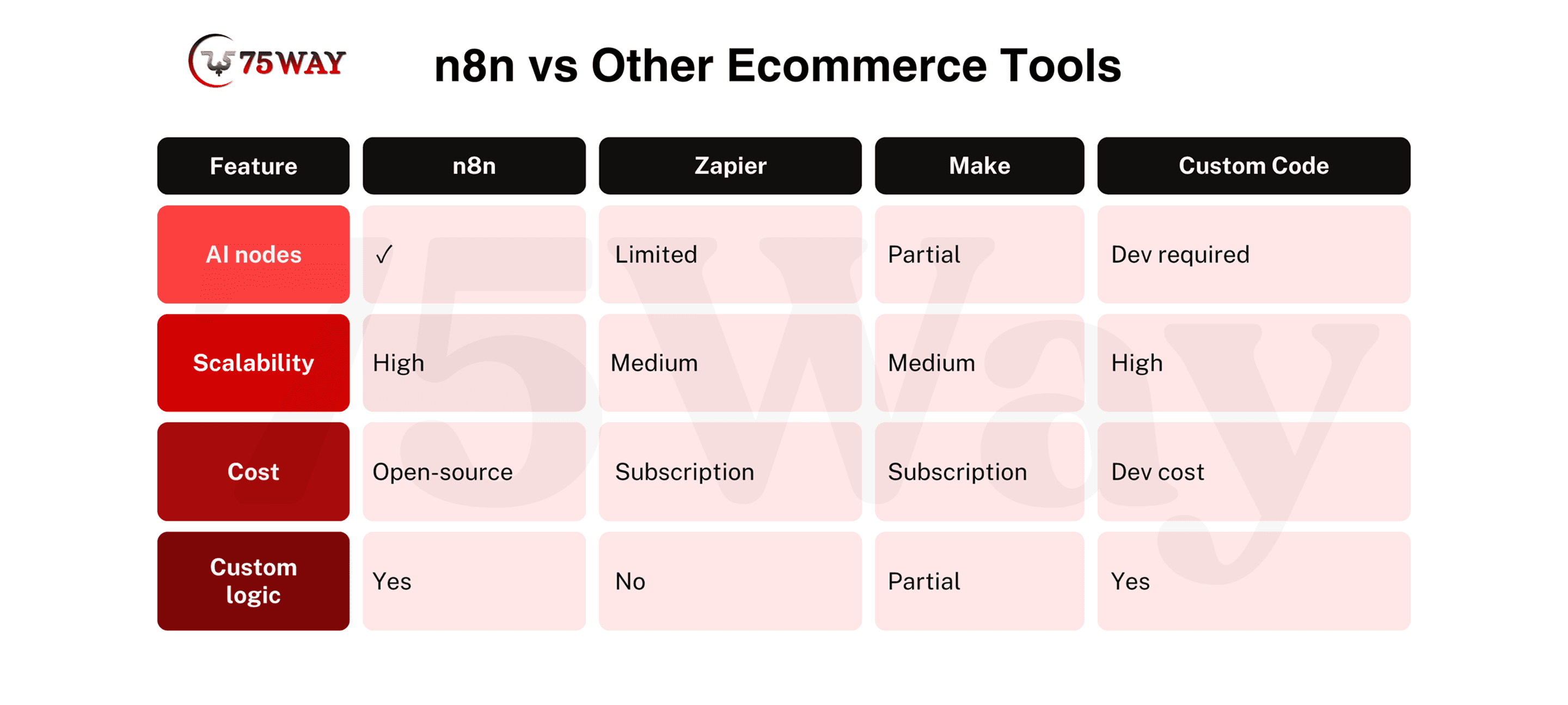
Automation tool selection influences long-term scalability and customization capacity. n8n provides flexibility and control that traditional automation tools struggle to match, particularly for ecommerce environments with complex workflows and AI integration requirements.
Subscription-based tools often limit logic depth, execution volume, and customization. Custom code offers flexibility but increases development overhead and maintenance risk. n8n balances adaptability, cost control, and AI readiness for ecommerce businesses operating in competitive US markets.
Final Thoughts
To conclude, AI automation with n8n provides a solid foundation for ecommerce businesses that are aiming to scale, build resilience, and achieve measurable growth. Connected workflows replace fragmented systems and reduce dependency on manual tasks, while intelligent decision layers improve accuracy across sales, marketing, and customer experience operations. Businesses must track KPIs consistently to ensure every workflow contributes to long-term profitability and smooth, predictable operations. Across the United States, AI-driven automation continues to grow as ecommerce competition is maximized. The decision you make today to choose a suitable platform for automation tools and workflows can shape your market position for years to come. Take the next step and partner with an AI-powered ecommerce app development company in USA to unlock intelligent automation and accelerate your business growth.
FAQs
What Is n8n Used For In Ecommerce?
n8n automates ecommerce workflows by connecting platforms, customer data, inventory, and marketing tools into a single system. Businesses use it to process orders, update inventory, send personalized customer notifications, trigger campaigns, and integrate AI decision-making, all without manual intervention.
How Does AI Automation Increase Sales?
AI automation analyzes customer behavior, purchase history, and engagement patterns to personalize communication, optimize timing, and trigger targeted campaigns. This increases conversion rates, recovers abandoned carts, improves cross-selling, and ensures revenue opportunities are captured consistently.
Does n8n Require Boding?
No, n8n is designed for flexibility with basic workflows and requires no coding, as drag-and-drop nodes handle most automation. Advanced logic, AI integration, or custom API connections may require minimal coding, but even complex setups remain easier than fully custom-coded solutions.
Can n8n Automate Shopify & WooCommerce?
Yes, n8n connects directly with Shopify, WooCommerce, and other ecommerce platforms via APIs and webhooks. It automates order processing, inventory updates, customer notifications, and marketing workflows, creating real-time, synchronized operations across multiple platforms.
How Much Time Can Ecommerce Automation Save?
AI Automation can save teams hours per day by handling repetitive tasks such as order processing, notifications, inventory updates, and campaign triggers. Time savings grow as workflow complexity and transaction volumes increase, freeing teams to focus on strategy, growth, and customer experience.