Summary
A mobile app development company can manage design, development, and ongoing maintenance when structured as a full product engineering partner. This guide explains how each phase connects, why integration matters, and how founders benefit from unified execution. It highlights real lifecycle thinking, scalability planning, and long-term product success strategies.
Quick Overview
- Full lifecycle ownership improves product stability and scalability
- Design impacts user behavior and business outcomes directly
- Development builds architecture supporting long-term growth systems
- Maintenance ensures continuous performance, security, and compatibility updates
- Integrated teams reduce cost, delays, and communication gaps
There is a moment in every founder's journey when a product idea feels sharp, promising, and full of possibility. Then, a bitter reality enters. The idea must become a design. The design must become a working system. The system must survive users, updates, competition, and time.
At this stage, one question becomes central.
“Can a mobile app development company handle design, development, and ongoing maintenance?” Or, “Does a founder need multiple teams for each stage of the journey?”
The answer is yes, but the value lies in how they do it and in the structure of their internal ecosystem. A well-established development company does not function as a single-role team. It operates as a coordinated system of UI/UX designers, developers, testers, and support engineers working together across the entire product lifecycle.
But how? This guide will answer your questions with a complete breakdown of the comprehensive process, its working process, and why it matters for business success.
What Is An End-to-End Mobile App Development Model?
It is a complete, structured approach where a single development team or company manages the entire application lifecycle. This includes initial discovery, UI/UX design, development, testing, deployment, and ongoing maintenance. Instead of working with multiple vendors for each phase, businesses rely on one integrated team that ensures consistency, faster execution, and better alignment with business goals.
The app development model typically begins with understanding the business idea, target users, and technical requirements. The team then moves into designing wireframes and user interfaces that define how the app will look and feel. Once approved, mobile app developers build the frontend and backend systems, followed by rigorous testing to ensure performance, security, and usability across devices and platforms before launch.
After deployment, the same team continues to support the application through regular updates, bug fixes, performance improvements, and new feature additions. This ongoing involvement ensures the app remains stable, scalable, and competitive in a changing market, while reducing the business's long-term operational complexity.
How App Development Companies Manage the Full App Lifecycle?
The mobile app development companies follow a structured lifecycle that transforms an idea into a fully functional product. From design to deployment and maintenance, each stage ensures performance, scalability, and user satisfaction while aligning with business goals and long-term growth objectives.
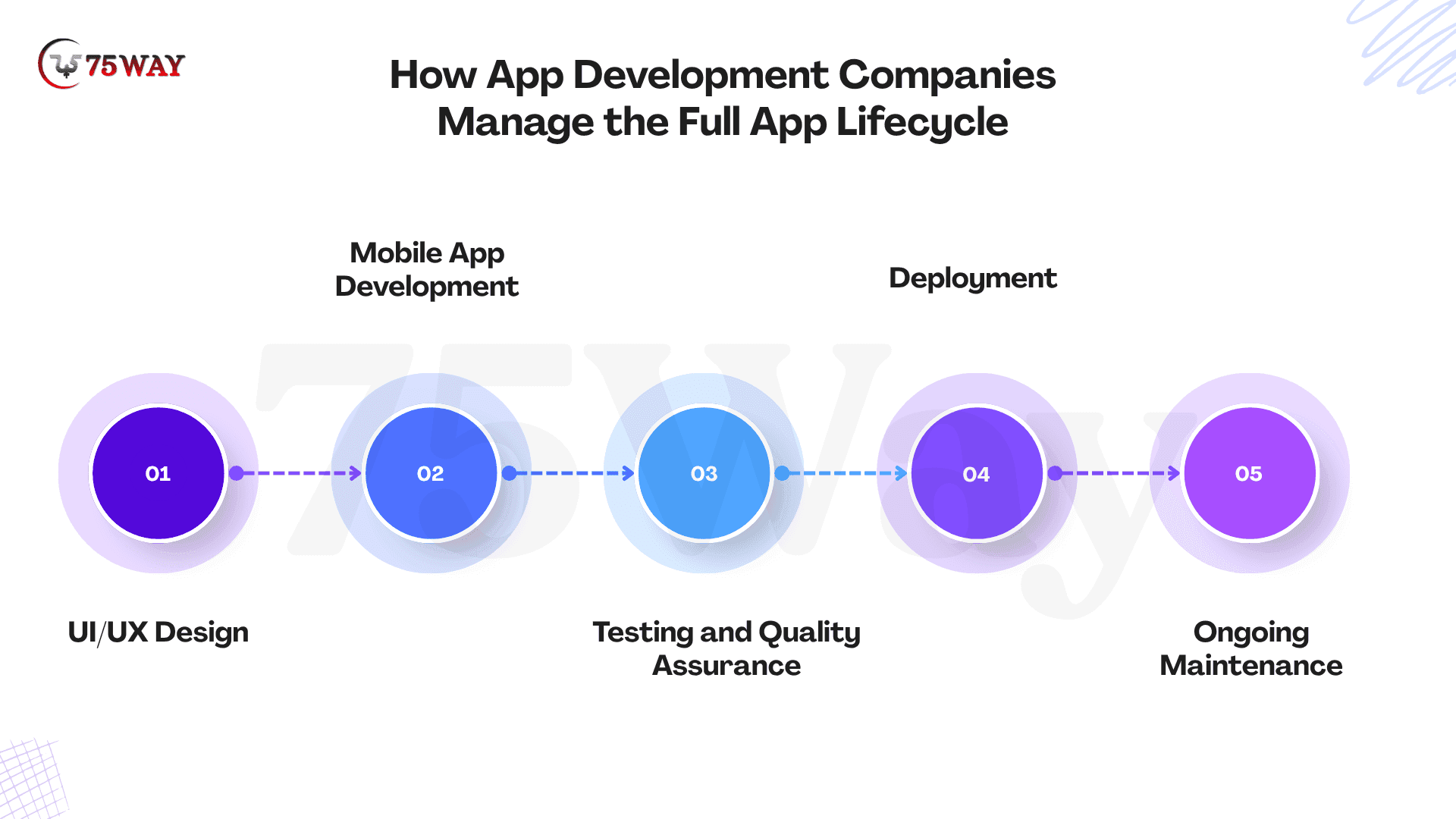
Step 1: UI/UX Design: Where User Experience Begins
Design is the foundation of any successful mobile application. A professional development company begins by understanding user behavior, business goals, and market expectations before creating any interface.
- User-Centered Research Approach: UI/UX design experts conduct research to understand how users interact with similar applications. This helps in defining navigation flow, feature placement, and interaction patterns that feel intuitive and natural.
- Wireframing and Prototyping: Before actual development begins, wireframes and prototypes are created to visualize the app's structure. This step reduces risk by validating ideas early and ensuring alignment between stakeholders.
- Visual Design and Branding: Design teams then create high-quality UI elements that maintain brand identity consistency. Colors, typography, spacing, and interaction elements are carefully selected to improve engagement and usability.
Step 2: Mobile App Development: Turning Design Into Functionality
Once the design is finalized, development teams transform it into a fully functional application. This phase involves both frontend and backend engineering.
- Frontend Development for User Interaction
Frontend developers ensure that the visual design becomes interactive and responsive across devices. Smooth animations, fast transitions, and intuitive navigation are key focus areas.
- Backend Architecture and Logic
Backend systems manage databases, APIs, authentication, and server-side logic. A strong backend ensures scalability, security, and performance even under high user loads.
- Cross-Platform and Native Development
Depending on business needs, companies choose between native development (iOS/Android) or cross-platform frameworks. This decision affects speed, performance, and cost efficiency.
Step 3: Testing and Quality Assurance: Ensuring Reliability
Before any application reaches users, it goes through rigorous testing to ensure performance and stability.
- Functional Testing: Every feature is tested to ensure it works exactly as intended. This includes login systems, payment gateways, user flows, and integrations.
- Performance Testing: Applications are tested under various load conditions to ensure they can handle traffic spikes without crashing or slowing.
- Security Testing: Security checks ensure user data protection, secure transactions, and compliance with modern data standards.
Step 4: Deployment: Launching the Application Successfully
Once testing is complete, the application is prepared for deployment on platforms like app stores or enterprise systems. This stage includes:
- App store optimization setup
- Server configuration
- Final performance validation
- Release management
A structured deployment process ensures a smooth launch without downtime or critical issues.
Step 5: Ongoing Maintenance: Keeping the App Relevant and Stable
Maintenance is one of the most critical yet often underestimated phases of app development. A reliable mobile app development company continues supporting the product even after launch.
- Bug Fixes: Post-launch issues are normal. Maintenance teams monitor performance and fix bugs quickly to ensure an uninterrupted user experience.
- Feature Enhancements: As user behavior evolves, new artificial intelligence and agentic AI features are added to keep the application competitive and valuable.
- OS and Device Updates: Mobile operating systems frequently update. Maintenance ensures the app remains compatible with new versions of iOS and Android.
Why Businesses Prefer End-to-End App Development Companies?
Organizations choose end-to-end mobile application development partners because they streamline execution, strengthen cross-team coordination, and maintain uniform product quality across every stage. This integrated approach improves delivery speed, minimizes operational friction, and enables sustainable scalability aligned with long-term business objectives.
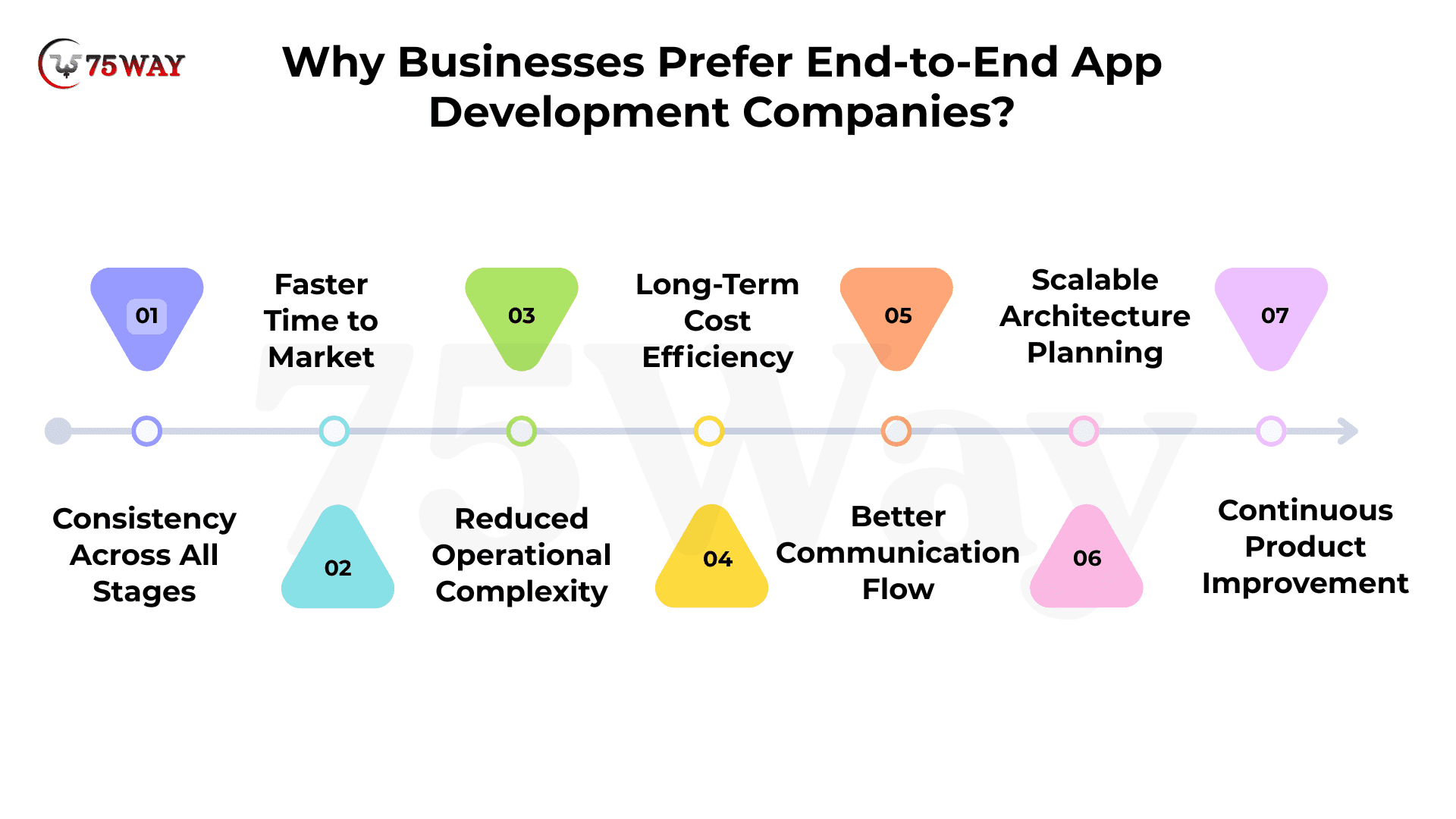
- Consistency Across All Stages: Unified teams ensure every phase of product creation stays connected and aligned. This eliminates gaps between design, engineering, and support while delivering a smooth, consistent user experience across the entire product journey from concept to long-term operation.
- Faster Time to Market: Internal collaboration within a single team accelerates decision-making and execution speed. This allows businesses to launch digital products faster, respond quickly to market demand, and gain a competitive advantage before slower development cycles affect opportunities.
- Reduced Operational Complexity: Working with a single partner eliminates the need to manage multiple vendors and communication channels. It simplifies project oversight, reduces coordination effort, and allows businesses to focus on growth and strategic priorities rather than on technical management issues.
- Long-Term Cost Efficiency: A unified development approach prevents expensive rework and integration problems later. It ensures systems are built correctly from the start, reducing maintenance burden and improving financial predictability throughout the entire product lifecycle.
- Better Communication Flow: Centralized teams create smoother communication between designers, developers, and stakeholders. This reduces misunderstandings, speeds up feedback cycles, and improves execution accuracy across all stages of product development and delivery.
- Scalable Architecture Planning: Development teams design systems with future expansion in mind from the beginning. This allows applications to handle increasing users, features, and workloads without requiring major structural changes or expensive redevelopment later.
- Continuous Product Improvement: Post-launch support ensures applications evolve with user needs and market trends. Ongoing updates, performance monitoring, and feature enhancements keep the product relevant, secure, and competitive in a constantly changing digital environment.
How to Select the Right Mobile Application Creation Partner?
Selecting an ideal development partner directly impacts product performance, scalability, and long-term success. Careful evaluation of expertise, delivery approach, and growth readiness ensures stronger collaboration and reliable digital outcomes.
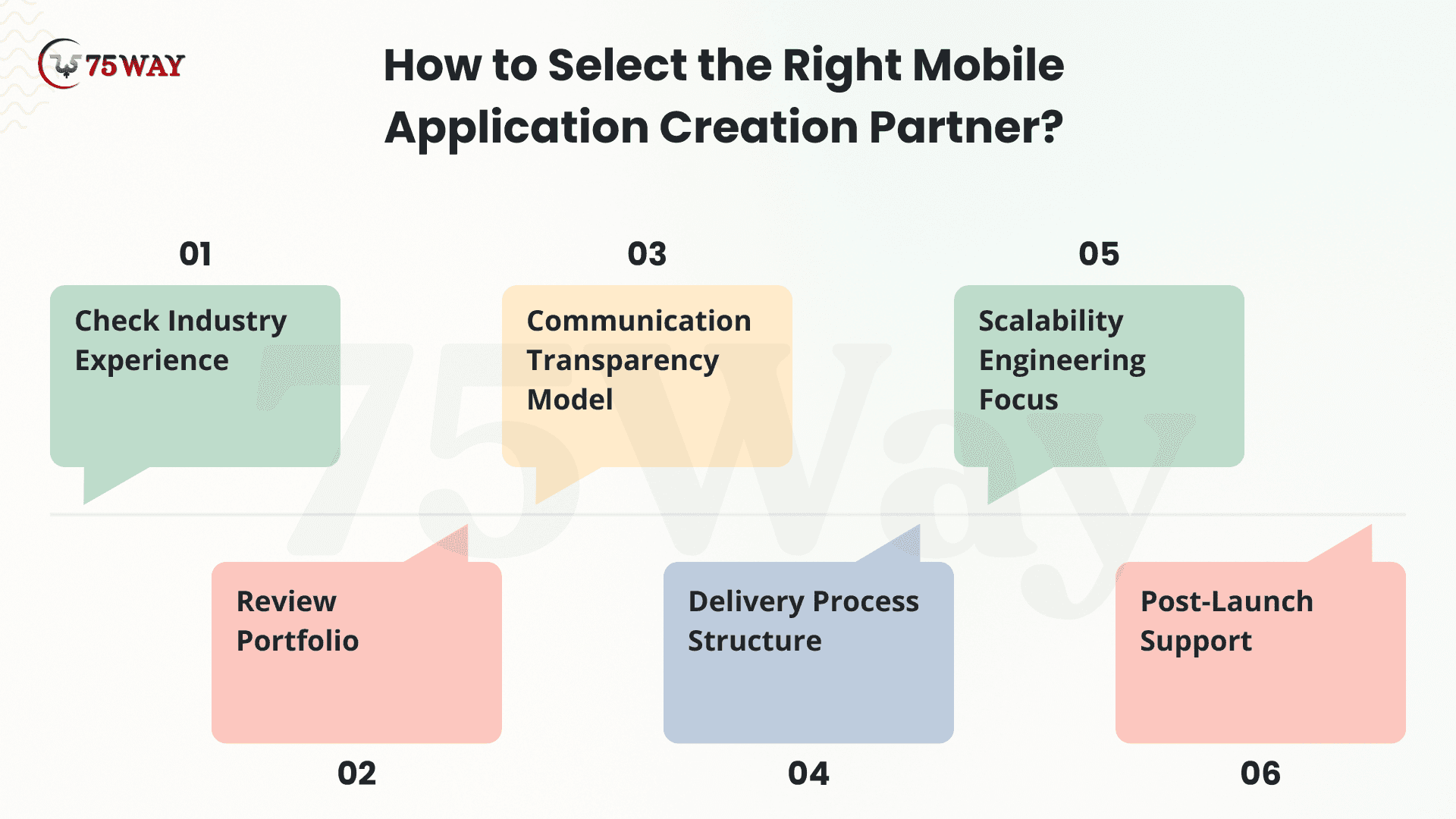
- Check Industry Experience: Evaluate whether the team has delivered production-grade mobile applications across diverse business domains. Real-world execution experience ensures they understand scalability challenges, technical risks, and performance expectations effectively.
- Review Portfolio: Analyze completed applications, live deployments, and measurable business outcomes. Strong portfolios reflect consistent delivery quality, technical depth, and the ability to support complex digital products over extended operational cycles.
- Communication Transparency Model: Assess how clearly the team communicates during project execution. Structured updates, documented progress, and predictable feedback cycles ensure alignment between stakeholders and development teams throughout the entire lifecycle.
- Delivery Process Structure: A defined engineering workflow ensures predictable execution from planning to deployment. Standardized processes improve accountability, reduce delays, and maintain consistent output quality across all development stages.
- Scalability Engineering Focus: Ensure the architecture is designed to support future growth without disruption. Scalable systems handle increased traffic, additional features, and evolving business requirements without requiring major redevelopment efforts later.
- Post-LaunchSupport: Confirm their availability for continuous maintenance after product deployment. Ongoing monitoring, issue resolution, and performance upgrades ensure long-term stability, security, and user satisfaction in changing market conditions.
Business Impact of Full-Cycle App Development
A well-structured mobile app development company does more than build apps; it builds digital ecosystems that support business growth. Businesses can benefit from:
- Higher user retention
- Better product stability
- Faster innovation cycles
- Improved customer experience
- Long-term competitive advantage
This integrated model is especially valuable for startups aiming to scale quickly without operational bottlenecks.
Final Thoughts
To summarize, yes, a mobile app development company can handle design, development, and ongoing maintenance. But the real value lies in how seamlessly these phases are integrated. Businesses that choose full-cycle development partners gain not just an app, but a continuously evolving digital product built for long-term success.
What truly differentiates strong development partners is their ability to think beyond delivery and focus on product evolution. Instead of treating the app as a one-time build, they continuously refine performance, enhance user experience, and align features with changing market expectations and business growth.
If you're looking to build a scalable, high-performing mobile application with end-to-end execution support, connect with a reliable app development agency today.
Frequently Asked Questions (FAQs)
Can A Single Company Really Handle Full App Development?
Yes, mature development firms operate with dedicated teams for UI/UX, engineering, testing, and support. This structured setup ensures smooth execution across every stage without losing quality or consistency throughout the product lifecycle.
Is It Affordable To Use One Company For Everything?
In many cases, working with a single partner reduces overall costs by avoiding coordination delays, repeated revisions, and integration issues. It also improves efficiency, which lowers long-term development and maintenance expenses.
What Happens After The App Is Launched?
After launch, development teams continue to monitor performance, fix issues, and release updates. This ensures the application remains stable, secure, and aligned with changing operating systems and user expectations over time.
Do Design And Development Teams Work Separately?
They function as connected units within the same workflow. Designers create user experience frameworks, while developers convert those designs into functional, scalable mobile applications through continuous collaboration.
How Important Is Maintenance For Mobile Apps?
Maintenance plays a critical role in ensuring long-term stability and performance. It helps fix bugs, improve speed, enhance security, and keep the application compatible with evolving devices and system updates.
Can Startups Benefit From Full-Service Development?
Yes, growing businesses can gain significant advantages by reducing operational complexity and speeding up product launches. It also ensures the app is built with a scalable architecture from the beginning, supporting future growth.
How Do Companies Ensure App Quality?
Quality is maintained through structured testing processes, including functionality checks, performance evaluation, and security validation. These steps ensure the final product is reliable, stable, and ready for real-world usage.
What Should I Look For In A Development Partner?
Focus on proven delivery experience, strong portfolio evidence, clear communication systems, and long-term support capability. These factors determine whether the partner can handle both execution and product evolution effectively.