Summary
Hiring mobile app developers is essential for building scalable, secure, and user-friendly digital products. This blog explains hiring models, process, benefits, skills, cost factors, engagement options, and industry-specific solutions offered by 75way Technologies. It helps businesses choose the right developers and development approach for long-term success and digital transformation goals.
Quick Overview
- Hiring skilled developers improves app performance, scalability, and user experience.
- Choosing the right hiring model reduces cost and accelerates development speed.
- Cross-platform development saves time while reaching a wider audience.
- The average cost of hiring mobile app developers ranges from $15–$60 per hour
- Clear project requirements ensure faster development and reduced misunderstandings.
A single mobile app can decide whether a business grows fast or gets ignored in today’s digital-first world. From ordering food to managing finances, users expect seamless, fast, and reliable mobile experiences, and they rarely give a second chance if an app fails. That is why businesses today are not just building apps. They are carefully choosing the right talent for mobile app development.
At 75way Technologies, we understand that hiring mobile app developers is no longer just a technical task, but a strategic business decision. Skilled application engineers bring the right mix of creativity, engineering, and problem-solving to build Android, iOS, and cross-platform applications that actually perform in real-world conditions. This guide will cover hiring models, benefits, skills, cost factors, and how to choose the right mobile app developers for your business.
Why Hire Mobile App Developers?
Hiring professional mobile app developers ensures that your application is built with the right architecture, performance standards, and user experience principles. They bring technical expertise, industry experience, and scalable development practices to develop a mobile app that reduces risks and improves product success.
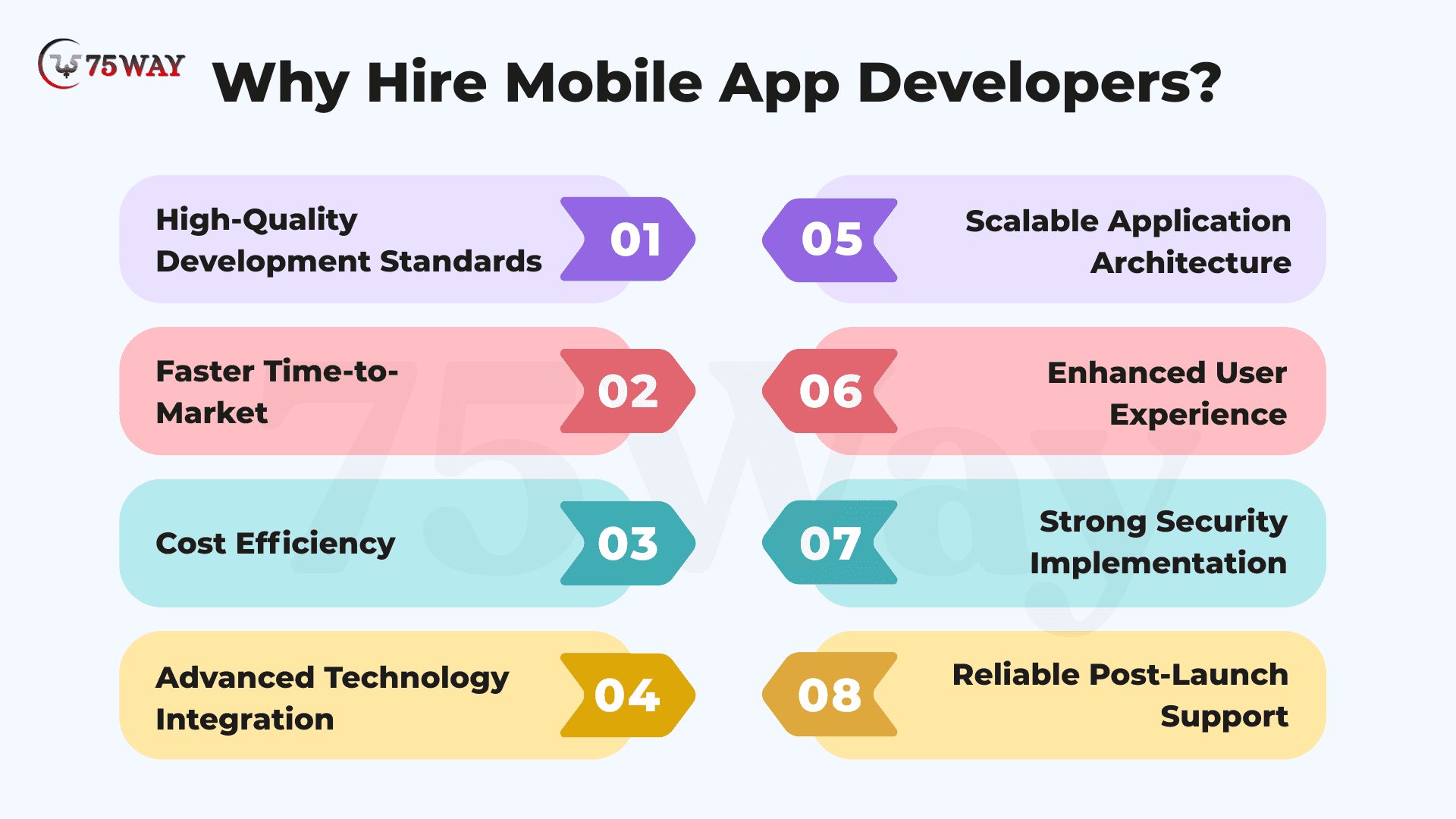
- High-Quality Development Standards: Experienced developers ensure clean coding practices, optimized architecture, and stable application performance. This results in scalable apps that are easier to maintain, upgrade, and expand without major technical issues or system failures over time.
- Faster Time-to-Market: Professional development teams follow agile mobile app development methodologies and structured workflows to accelerate delivery. This helps businesses launch their applications quickly, gain early users, and stay competitive in fast-moving digital markets without unnecessary delays.
- Cost Efficiency: Hiring a skilled app engineer reduces development errors, rework, and long-term maintenance costs. Efficient coding practices ensure better use of time and resources throughout the project lifecycle, improving overall return on investment.
- Advanced Technology Integration: App programmers integrate modern technologies such as AI, Internet of Things (IoT), AR/VR, blockchain, and cloud computing to meet business needs. This enhances application capabilities, improves user engagement, and ensures future-ready digital transformation for competitive advantage.
- Scalable Application Architecture: Expert developers design apps with scalability in mind from the beginning. This allows businesses to handle an increased user base, data, and features smoothly, without performance degradation or system instability during growth phases.
- Enhanced User Experience: Professional developers focus on intuitive design, smooth navigation, and fast response times. This improves user satisfaction, increases retention rates, and encourages long-term engagement with the mobile application across different devices.
- Strong Security Implementation: Experienced developers implement advanced security protocols to protect user data and prevent cyber threats. This ensures compliance with industry standards and builds trust among users interacting with the mobile application.
- Reliable Post-Launch Support: Dedicated developers provide continuous maintenance, bug fixes, and performance optimization after deployment. This ensures the application remains updated, functional, and compatible with evolving operating systems and user expectations over time.
Types of Mobile App Developers You Can Hire
Mobile app development requires specialized developers for different platforms, technologies, and project complexities. Each developer type brings unique expertise in coding languages, frameworks, and system architecture to build efficient, scalable, and high-performing mobile applications tailored to specific business needs.
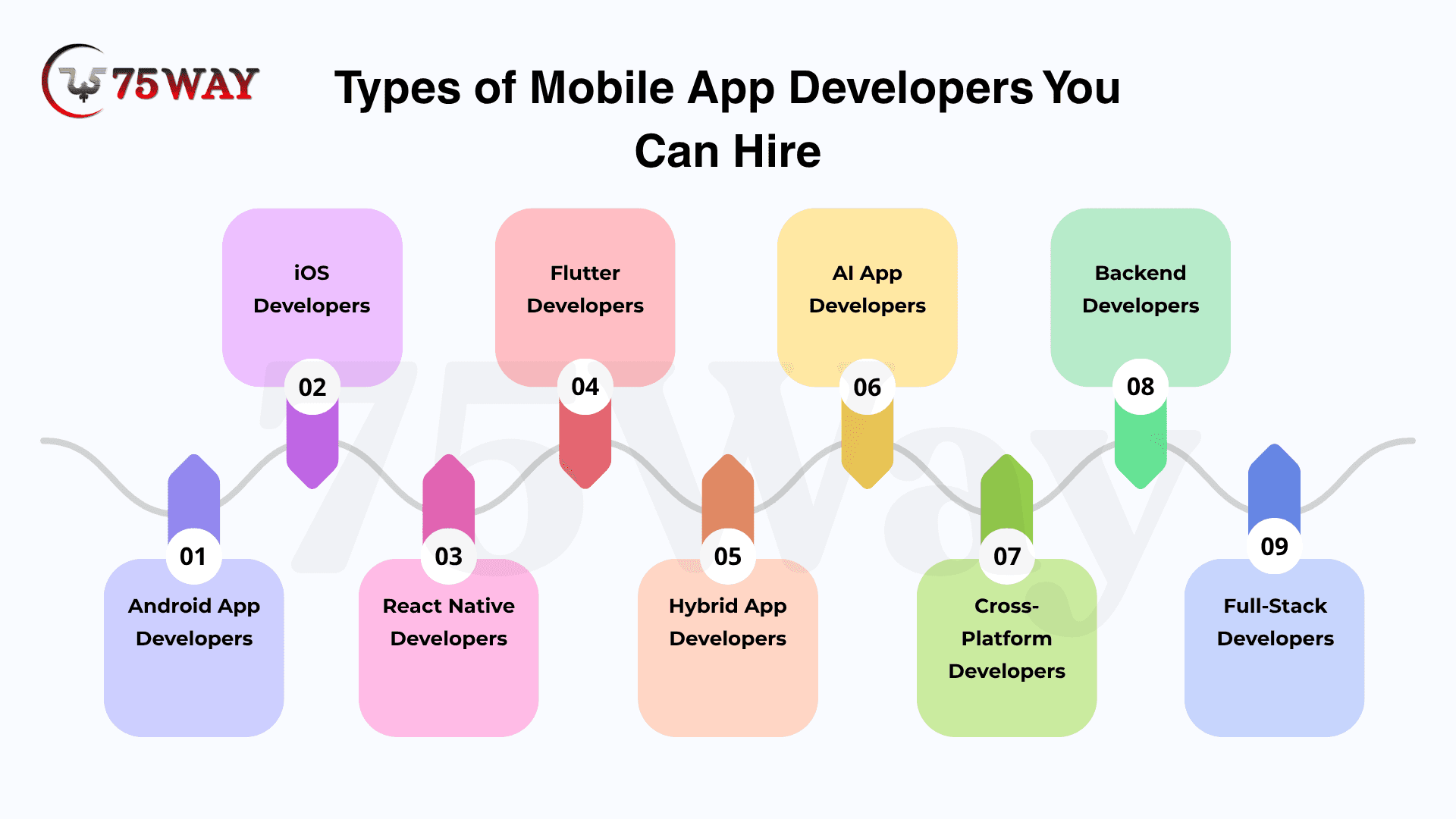
- Hire Android App Developers
Android app developers specialize in building Android applications using Java, Kotlin, and Android Studio. They focus on performance, UI design, and compatibility across multiple Android devices. These developers ensure smooth functionality, security, and scalability for apps published on the Google Play Store.
- Hire iOS Developers
iOS developers create iPhone mobile applications for Apple devices using Swift and Objective-C. They work with Xcode and Apple frameworks to deliver high-performance, secure, and user-friendly apps. While building iOS apps, their focus is on seamless UI/UX, App Store compliance, and optimized performance across iPhones, iPads, and other Apple devices.
- Hire React Native Developers
React Native developers build cross-platform applications using JavaScript and the React framework. They enable a single codebase to run on both Android and iOS. These developers focus on faster development cycles, reusable components, and cost-effective app solutions with near-native performance and smooth user experience.
- Hire Flutter Developers
Flutter developers use Dart programming language and Google’s Flutter framework to create visually rich, high-performance mobile applications. They build cross-platform apps with a single codebase, enabling faster development, expressive UI design, and smooth animations across Android and iOS.
- Hire Hybrid App Developers
Hybrid app developers create applications using web technologies like HTML, CSS, and JavaScript combined with frameworks such as Ionic or Cordova. The hybrid mobile apps run across multiple platforms, offering cost efficiency and faster deployment while maintaining decent performance for standard business applications.
- Hire AI App Developers
AI app developers integrate artificial intelligence technologies such as machine learning, NLP, and predictive analytics into mobile applications. They use Python, TensorFlow, and AI APIs to build intelligent AI-powered apps that automate processes, enhance user experience, and deliver data-driven insights for businesses.
- Cross-Platform Developers
Cross-platform developers use frameworks like Flutter and React Native to build apps that work on both Android and iOS using a single codebase. They focus on efficiency, reduced development time, and consistent performance across multiple platforms.
- Backend Developers
Backend developers manage server-side logic, APIs, databases, and application architecture. They use technologies like Node.js, Python, PHP, and Java to ensure smooth data flow, secure operations, and reliable communication between frontend and backend systems for mobile applications.
- Full-Stack Developers
Full-stack developers handle both frontend and backend development, offering complete end-to-end solutions. They work with technologies like JavaScript, React, Node.js, and databases to build fully functional, scalable, and efficient mobile applications with seamless integration between all components.
Flexible Hiring Models To Build Your Mobile App
Choosing the right hiring model is essential for balancing cost, flexibility, and project control in mobile app development. These models help businesses align development resources with project complexity, timeline expectations, and long-term product goals.
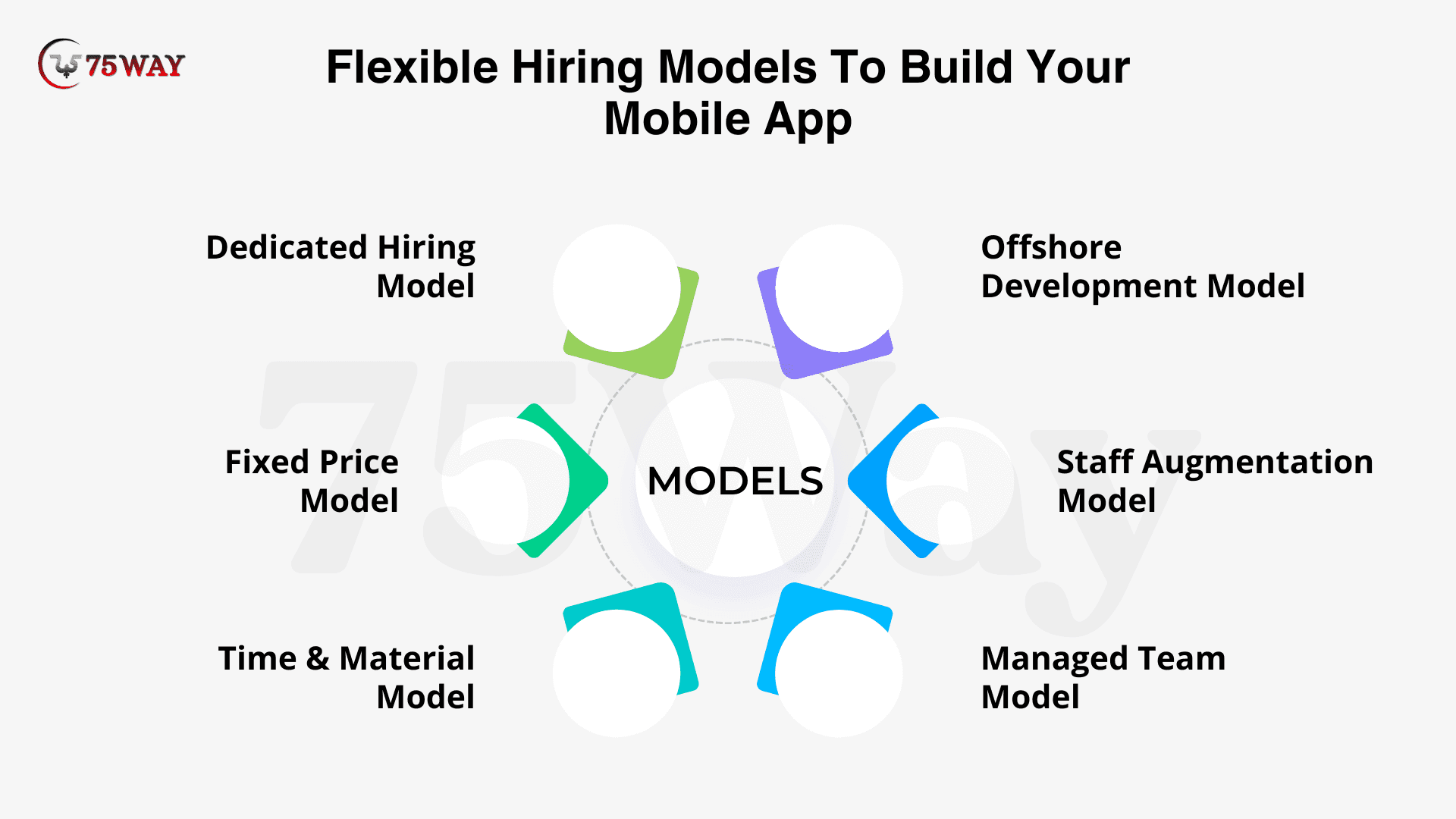
- Dedicated Hiring Model: Developers work exclusively on your project as an extended part of your in-house team. It provides complete control over tasks, ensures direct communication, and maintains consistent productivity throughout the development cycle, making it ideal for long-term and scalable application development.
- Fixed Price Model: The project scope, timeline, and budget are clearly defined before development begins. It works best for projects with stable requirements, offering predictable costs, structured milestones, and assured delivery without frequent changes or additional financial adjustments during execution.
- Time & Material Model: Billing is based on actual hours worked and resources used during development. This model is suitable for dynamic projects where requirements evolve over time, allowing flexibility, continuous improvements, and adaptive development without restricting scope changes or innovation.
- Offshore Development Model: Development work is assigned to skilled teams located in different countries to reduce costs while maintaining quality standards. It offers access to global talent, faster scaling, and efficient execution without geographical limitations or high operational costs.
- Staff Augmentation Model: External developers are temporarily added to your existing team to fill skill gaps or increase capacity. It helps businesses scale quickly, improve productivity, and maintain control over projects without the long-term commitments of full-time hiring.
- Managed Team Model: A fully organized development team is provided and managed by a service provider. They handle planning, execution, and delivery, allowing businesses to focus on strategy while ensuring end-to-end project management and consistent quality output throughout development.
Skills to Look for in Mobile App Developers
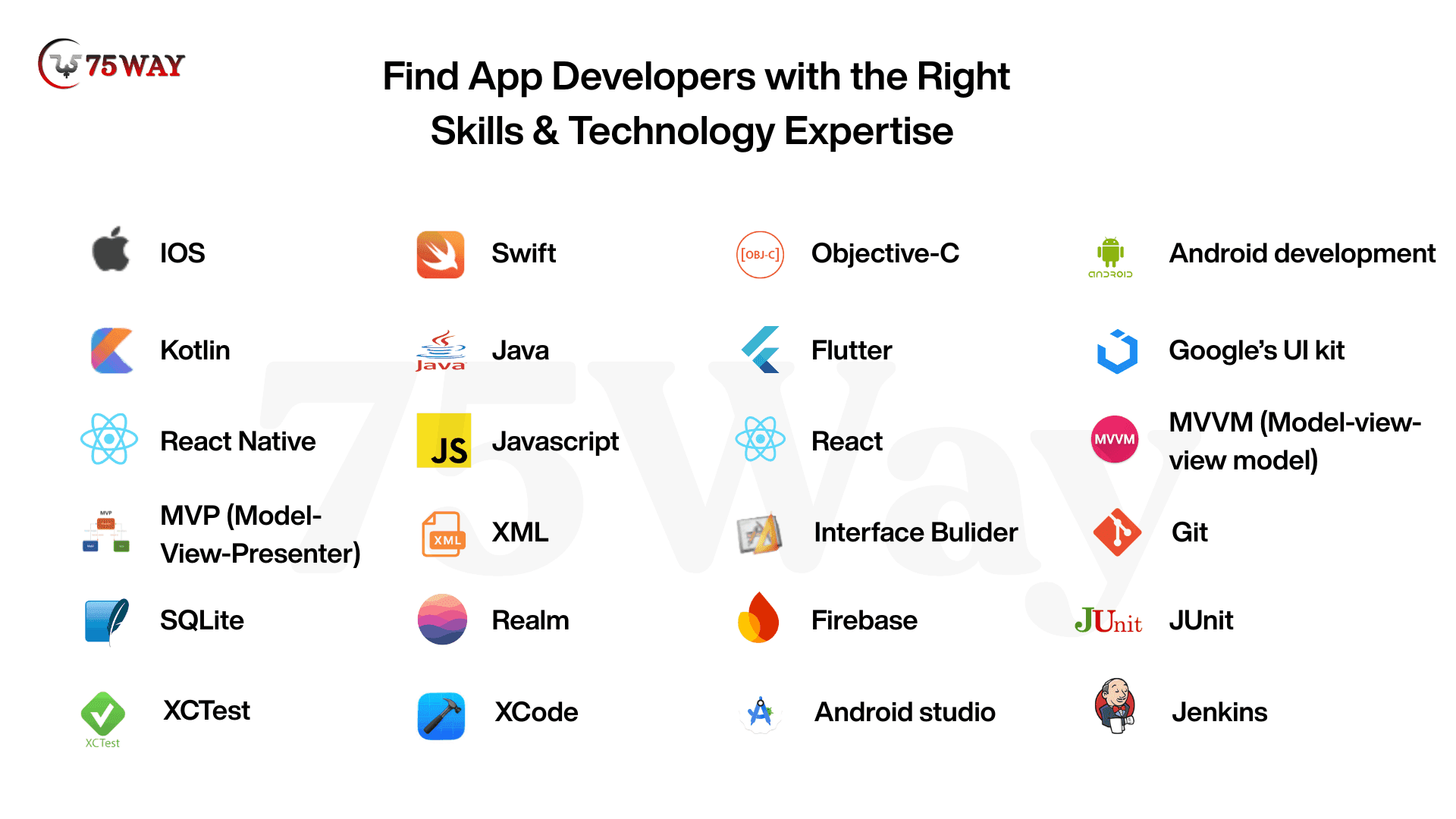
App experts consistently use both foundational and advanced technologies to deliver solutions that give your business a strong competitive advantage. The success of any dedicated development team depends on deep knowledge and expertise across a wide range of technologies, ensuring reliable and high-quality project outcomes.
Core Skills Include:
- Proficiency in Java, Kotlin, Swift, Dart
- Experience with Flutter, React Native
- API integration knowledge
- UI/UX understanding
- Database management skills
- Debugging and testing expertise
Solutions Mobile Developers Can Help You With
Mobile app developers at 75way Technologies deliver complete end-to-end solutions that cover the full product lifecycle. From planning and design to deployment and long-term support, these solutions focus on scalability, performance, security, and real business impact across industries.
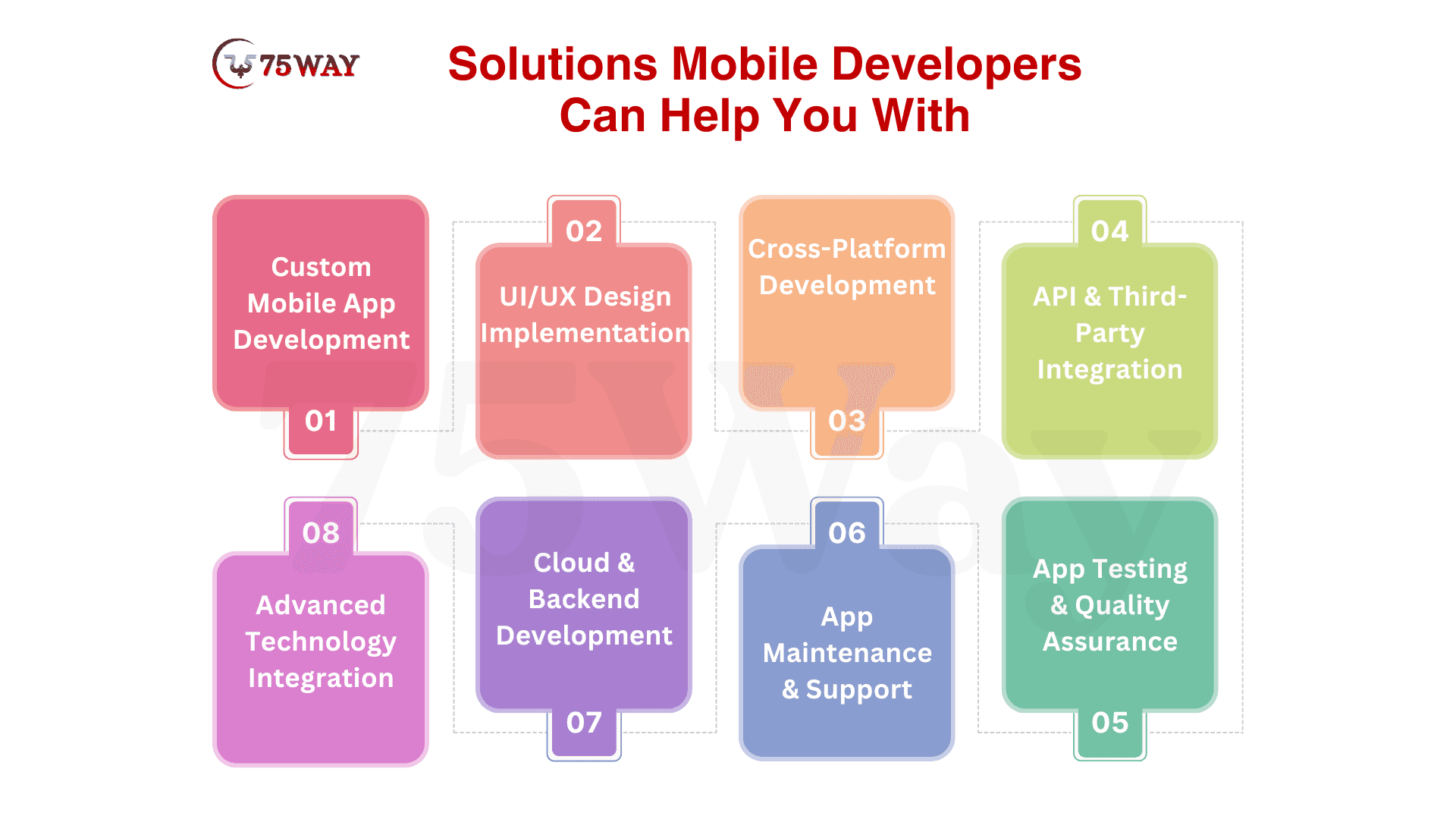
- Custom Mobile App Development: Developers create fully customized mobile applications tailored to specific business goals, workflows, and industry challenges. Each solution is built with a scalable architecture, ensuring long-term flexibility, high performance, and alignment with user expectations and evolving market demands.
- UI/UX Design Implementation: User experience is prioritized through intuitive layouts, clean interfaces, and seamless navigation. Designers and developers collaborate to ensure applications are visually engaging, easy to use, and optimized for higher user retention and satisfaction across different devices and platforms.
- Cross-Platform Development: Using frameworks like Flutter and React Native, developers build applications that run smoothly on both Android and iOS. This approach reduces development time, lowers costs, and ensures consistent performance and design across multiple operating systems.
- API & Third-Party Integration: External services such as payment gateways, CRM systems, cloud platforms, and analytics tools are seamlessly integrated into applications. This enhances functionality, improves automation, and enables businesses to extend app capabilities without having to build everything from scratch.
- App Testing & Quality Assurance: Before deployment, applications undergo rigorous testing, including functional, performance, security, and usability checks. This ensures bug-free operation, stable performance under load, and a reliable user experience across all devices and operating conditions.
- App Maintenance & Support: Post-launch support includes regular updates, bug fixes, performance monitoring, and feature enhancements. This ensures the application remains compatible with new OS versions, continues performing efficiently, and adapts to changing business and user requirements over time.
- Cloud & Backend Development: Robust backend systems and cloud infrastructure are developed to handle data processing, storage, and scalability. This ensures secure communication between frontend and backend, smooth performance, and the ability to handle growing user traffic.
- Advanced Technology Integration: Modern technologies like artificial intelligence, IoT, AR/VR, and automation are integrated into mobile applications to enhance functionality. These innovations help businesses deliver smarter user experiences, improve operational efficiency, and stay competitive in rapidly evolving digital markets.
How to Hire Mobile App Developers?
Hiring a mobile app creation team follows a structured process including requirement analysis, talent sourcing, technical evaluation, interviews, onboarding, and project alignment. This ensures businesses select skilled developers who match technical expectations, project goals, and long-term product development needs.
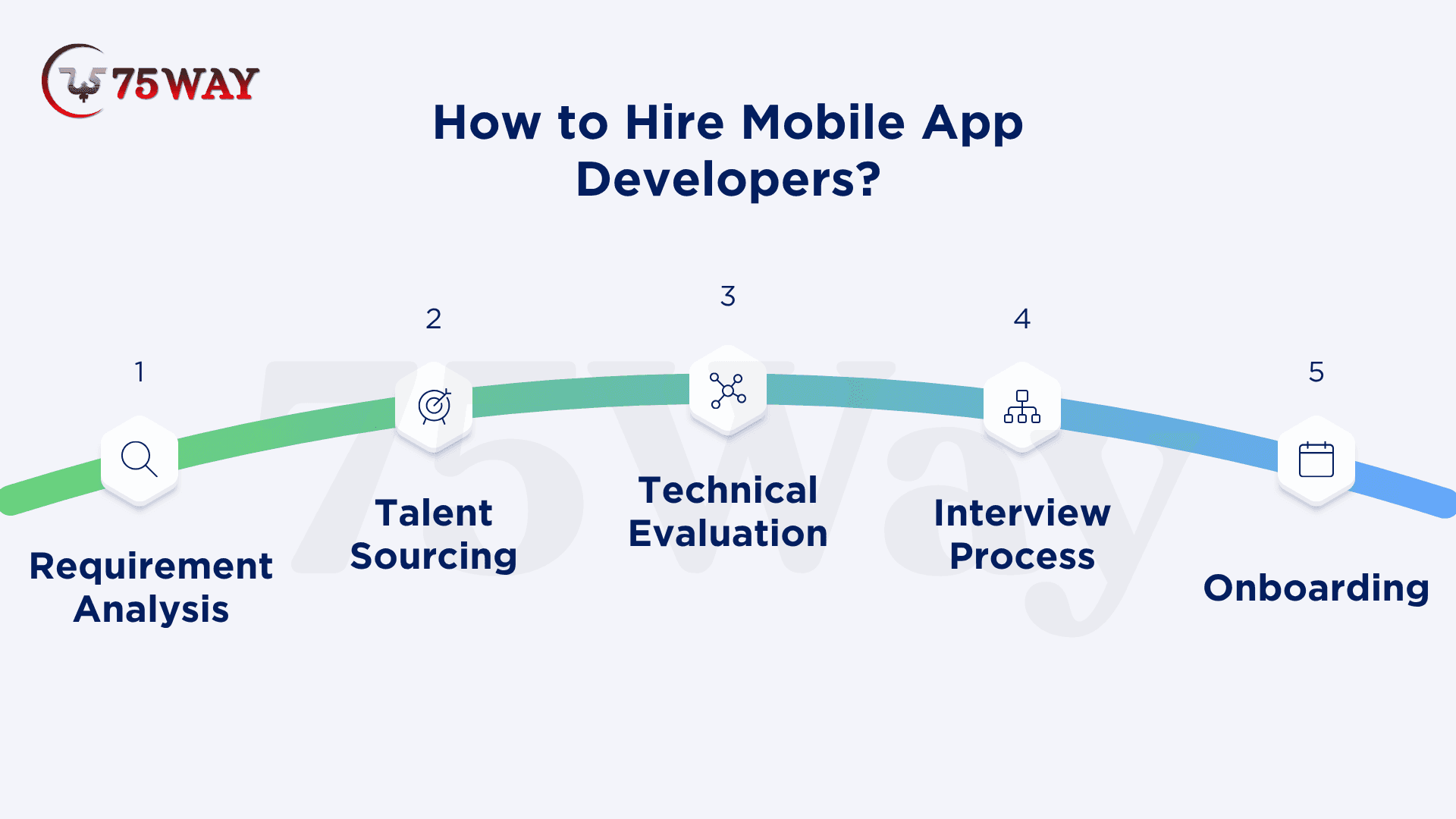
Step 1: Requirement Analysis
This first step lays the foundation by clearly defining the app's goals, features, platform, and target audience. It ensures that all future hiring decisions align with business expectations and prevent mismatches in developer selection during later stages of the process.
Step 2: Talent Sourcing
Building on defined requirements, the next step is to identify suitable developers through agencies like 75way Technologies or hiring platforms. This ensures only relevant candidates with matching skills and experience are shortlisted for further evaluation in the hiring process.
Step 3: Technical Evaluation
After sourcing the right candidates, their coding skills, framework knowledge, and problem-solving abilities are assessed in detail. This step ensures that shortlisted developers are technically capable of meeting project requirements and can deliver scalable mobile app solutions.
Step 4: Interview Process
Following the technical evaluation, structured interviews are conducted to assess communication skills, teamwork ability, and cultural fit. This step ensures that the developers not only meet technical standards but can also collaborate effectively within the project environment and team structure.
Step 5: Onboarding
After successful selection, developers are integrated into the project with access to tools, systems, and documentation. This final step ensures a smooth transition from hiring to execution, enabling immediate productivity and alignment with project workflows and development goals.
Industries Mobile App Experts Successfully Serve
Mobile app experts deliver tailored solutions across diverse industries, including healthcare, fintech, e-commerce, education, logistics, and social networking. Each application is designed to address specific industry challenges, ensure compliance, and support scalability for long-term digital growth and business ROI.
- Healthcare apps for patient management, telemedicine, and digital health records
- Fintech apps for secure payments, banking solutions, and digital transactions
- E-commerce apps for online shopping, product catalogs, and order tracking
- Education apps for e-learning, virtual classrooms, and online assessments
- Logistics apps for fleet tracking, delivery management, and route optimization
- Social media apps for messaging, content sharing, and community engagement
- Real estate apps for property listings, virtual tours, and lead management
- Travel apps for booking, itinerary planning, and real-time travel assistance
Cost of Hiring Mobile App Engineers in 2026
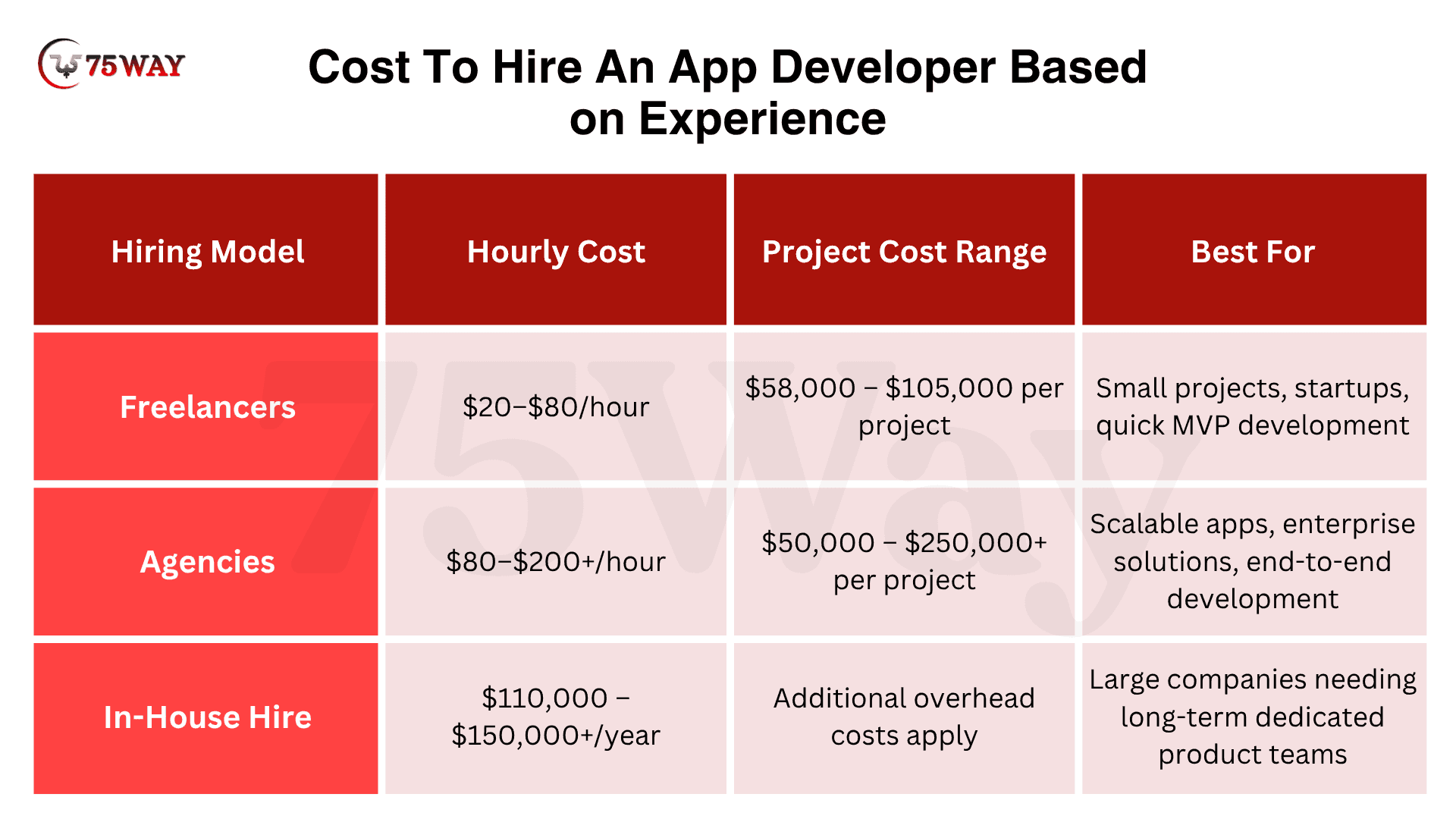
The cost of hiring mobile app developers varies widely depending on experience level, geographic location, chosen technology stack, and overall project complexity. More advanced applications that require integrations, scalability, and custom features naturally demand a higher investment. On average, mobile app developers charge between $20–$200+ per hour, depending on expertise and engagement model.
Key Factors Affecting Cost To Hire An App Developer
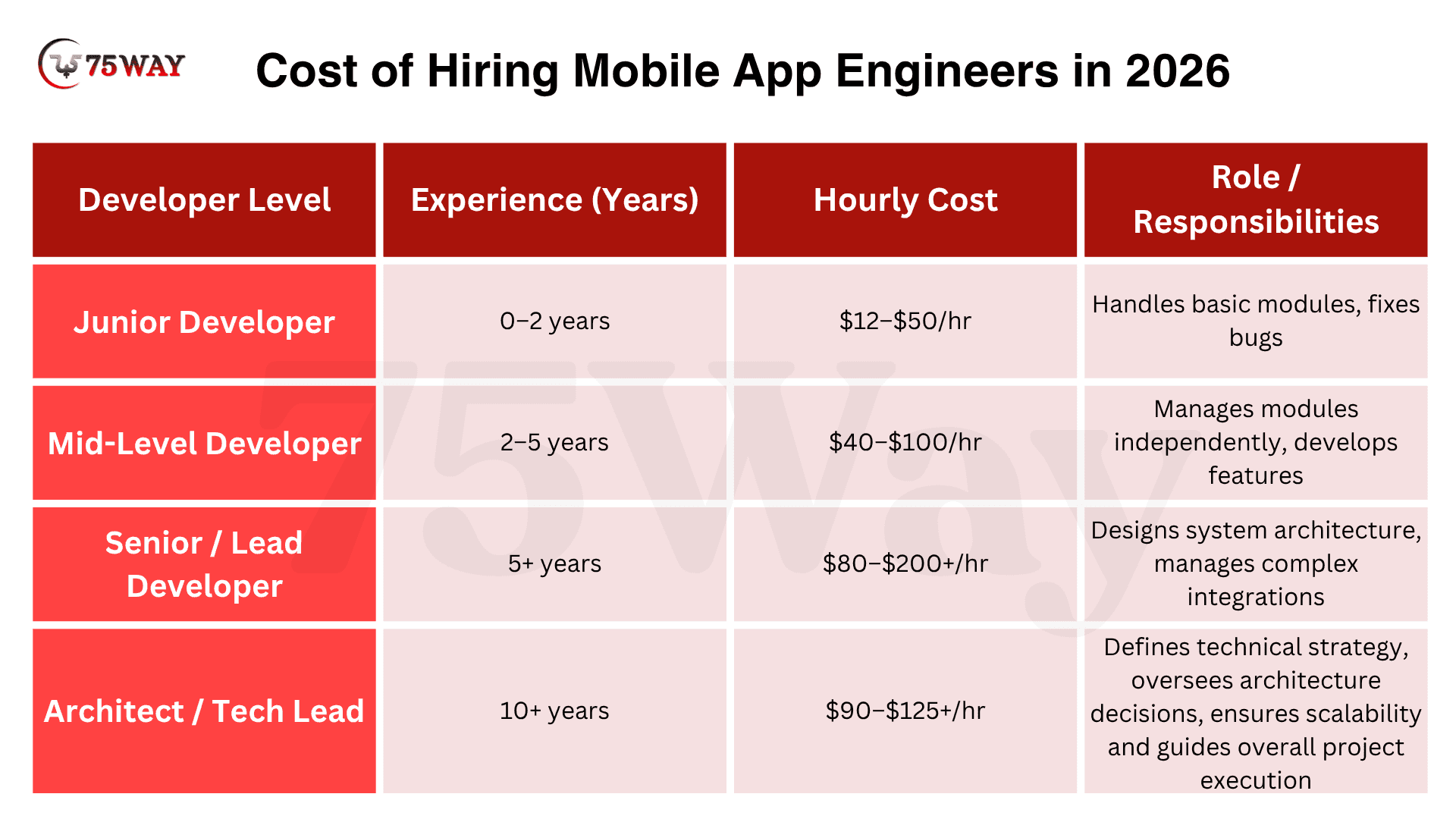
1. Developer Experience Level: More experienced developers charge higher rates due to advanced skills, faster delivery, and reliable problem-solving capabilities.
- Junior (0–2 years): $12–$50/hr
Handles basic modules, bug fixes, and supports development tasks under supervision.
- Mid-Level (2–5 years): $40–$100/hr
Independently builds modules, manages APIs, and contributes to feature development.
- Senior/Lead (5+ years): $80–$200+/hr
Designs complex systems, manages integrations, and leads development teams.
- Architect/Tech Lead (10+ years): $90–$125+/hr
Defines overall system architecture, ensures scalability, and guides technical strategy.
2. App Complexity: Complex applications with advanced features, integrations, and scalability requirements significantly increase overall development time, effort, and cost.
- Simple App: $5,000 – $40,000
Built with basic features to quickly validate your idea and test market demand within 2–4 months.
- Moderate App: $15,000 – $100,000
Includes standard functionality like authentication, APIs, and core features, typically delivered in 4–8 months.
- Complex App: $100,000 – $300,000+
Advanced, high-performance applications with real-time features, scalability, and enterprise-level architecture usually have an 8+ month development cycle.
3. Platform Selection: Choosing Android, iOS, or cross-platform development impacts cost, as each platform requires different tools, expertise, and effort.
4. Engagement Model: Freelancers, agencies, and dedicated teams have different pricing structures that directly influence total project development cost and flexibility.
5. Project Duration: Longer development timelines require sustained resources, increasing overall expenses due to extended developer involvement and ongoing maintenance needs.
6. Location of Development Team: The geographical location of developers significantly impacts hiring cost, as rates vary across countries and regions.
- North America (USA, Canada): $80 – $150+/hr | Silicon Valley/Seattle: $150–$300/hr
Premium talent with cutting-edge expertise, ideal for complex and high-scale projects.
- Western Europe (UK, Germany): $60 – $150/hr
High-quality development with strong compliance and modern tech standards.
- Eastern Europe (Poland, Ukraine): $30 – $70/hr
Cost-effective solutions with skilled developers and solid technical expertise.
- Latin America (Brazil, Argentina, Mexico): $25 – $55/hr
Affordable development with convenient time zone alignment for global clients.
- India & Southeast Asia (Vietnam): $10 – $40/hr
Budget-friendly services with a vast talent pool and flexible scalability.
Why Hire Mobile App Experts From 75way Technologies?
75way Technologies offers experienced mobile app developers who deliver end-to-end solutions from planning to deployment. Our focus is on quality, scalability, security, and innovation. We ensure:
- Dedicated Development Teams: We provide 150+ expert mobile app developers working exclusively on client projects with full commitment and accountability.
- Agile Development Methodology: Our teams follow agile practices, enabling faster iterations, continuous improvements, and flexible adaptation to changing project requirements.
- Transparent Communication: We maintain clear communication channels with regular updates, ensuring clients stay informed about progress, milestones, and deliverables.
- Cost-Effective Hiring Models: Flexible engagement options help businesses hire skilled developers within budget while maintaining high-quality development standards and performance.
- Post-Launch Support and Maintenance: We provide continuous updates, bug fixes, and performance optimization to ensure long-term stability, security, and app success.
Conclusion
Hiring mobile app developers is a strategic decision that directly influences the success, scalability, and performance of your digital product. From choosing the right hiring model to understanding cost factors, skills, and industry-specific solutions, every step plays a crucial role in building a strong mobile presence.
With the right development team, businesses can accelerate innovation, reduce risks, and deliver seamless user experiences that drive long-term growth. At 75way Technologies, our experienced developers focus on building secure, scalable, and future-ready mobile applications tailored to your business needs, ensuring lasting digital success in a competitive market.
Frequently Asked Questions (FAQs)
How Do I Decide Which Mobile App Developer To Hire?
Choosing the right developer depends on project requirements, technical expertise, portfolio quality, communication skills, and experience in similar apps. Always evaluate problem-solving ability and understanding of your business goals before making a final hiring decision for long-term success.
Is It Better To Hire Freelancers Or Dedicated Developers?
Freelancers are suitable for small tasks or short-term needs, while dedicated developers are better for long-term projects. Dedicated teams provide consistency, better collaboration, scalability, and accountability, making them ideal for complex and evolving mobile application development projects.
How Do I Ensure Quality When Hiring Mobile App Developers?
Quality can be ensured by reviewing past work, checking client feedback, conducting technical interviews, and assigning test tasks. Working with experienced companies like 75way Technologies further ensures structured processes, code quality standards, and reliable project delivery outcomes.
Can I Hire Developers For A Short-Term Mobile App Project?
Yes, developers can be hired for short-term projects using fixed-price or hourly models. This is ideal for MVPs, prototypes, or feature-specific development where limited time engagement is required without long-term commitment or ongoing resource allocation.
What Should I Prepare Before Hiring Mobile App Developers?
Before hiring, clearly define your app idea, target audience, required features, budget, and timeline. Proper documentation helps developers understand requirements better, reduces misunderstandings, and ensures smoother development with faster execution and improved final product quality.
What Happens After The Mobile App Is Developed?
After development, the app goes through testing, deployment, and launch on app stores. Post-launch support includes bug fixes, updates, performance monitoring, and feature enhancements to ensure long-term stability, user satisfaction, and continuous improvement of the application.