Summary
ChargePoint-like apps function as enterprise EV infrastructure systems connecting charging networks, fleets, and energy grids. These solutions integrate IoT hardware, cloud orchestration, AI-driven load balancing, and payment ecosystems. Modern EV platforms optimize energy distribution, support large-scale fleet electrification, and enable smart grid coordination while delivering scalable mobility and energy intelligence solutions.
Quick Overview
- ChargePoint-style systems are infrastructure platforms, not simple consumer apps.
- Energy load balancing is critical for scalable EV charging networks.
- Fleet electrification drives enterprise demand for charging ecosystems.
- OCPP enables hardware-to-cloud interoperability across networks.
- Cost to build a ChargePoint-like app ranges between $30,000-$250,000+
- EV platforms increasingly integrate with smart grid and energy markets.
The EV industry is evolving beyond transportation into a fully connected energy ecosystem where vehicles, charging stations, and power grids interact intelligently. Apps like ChargePoint have evolved into more than just mobile applications.
Unlike simple EV charger locator apps, ChargePoint-like platforms operate at the intersection of mobility, energy management, and cloud computing. Modern EV charging location app development solutions rely heavily on IoT connectivity, OCPP communication standards, cloud orchestration layers, AI-based energy forecasting, and real-time monitoring systems. These technologies enable smart load balancing, predictive maintenance, dynamic pricing, and seamless integration with renewable energy sources and smart grids.
This guide explains how to build a ChargePoint-like EV charging platform in 2026 from an infrastructure-first perspective, focusing on architecture design, energy intelligence systems, enterprise features, scalability strategies, monetization models, and development cost structure.
What Is ChargePoint App? How It Works?
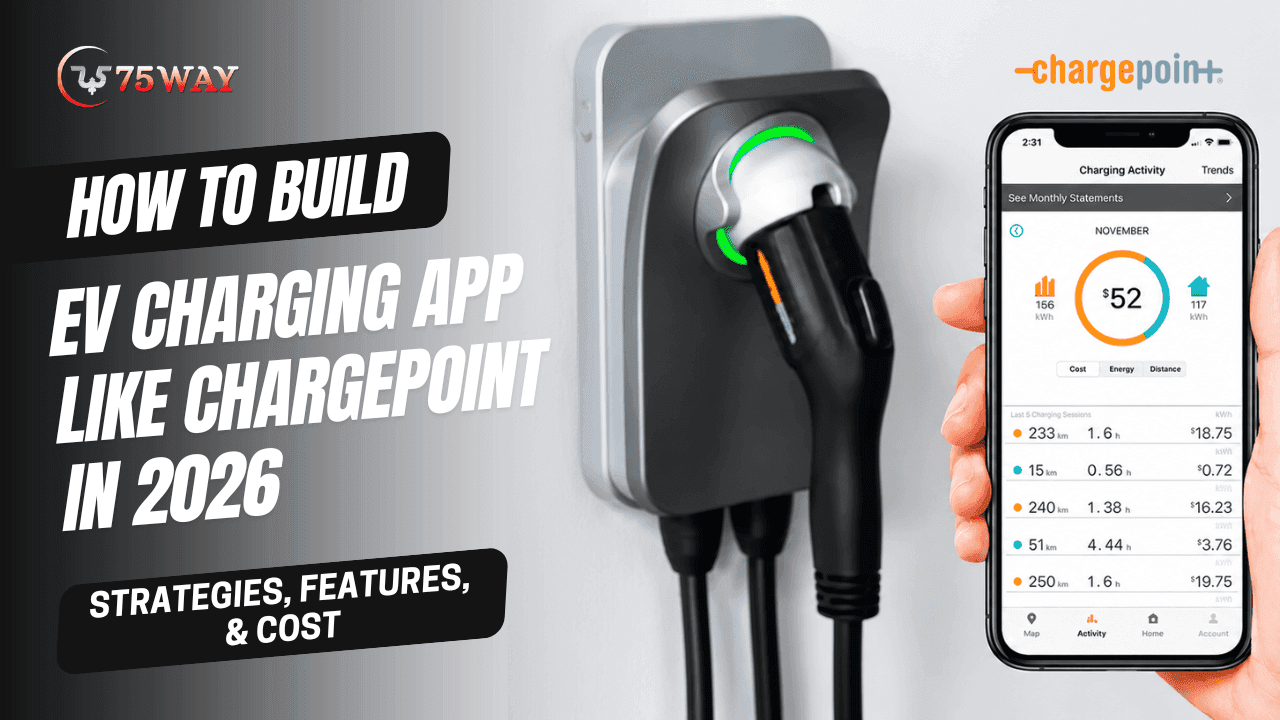
ChargePoint is not just a mobile application; it is a full-scale EV charging network platform that connects drivers, charging stations, and energy systems through a unified digital ecosystem. It enables real-time charging access, station discovery, payment processing, and energy coordination across large-scale electric mobility infrastructure.
1. User Interaction Stage
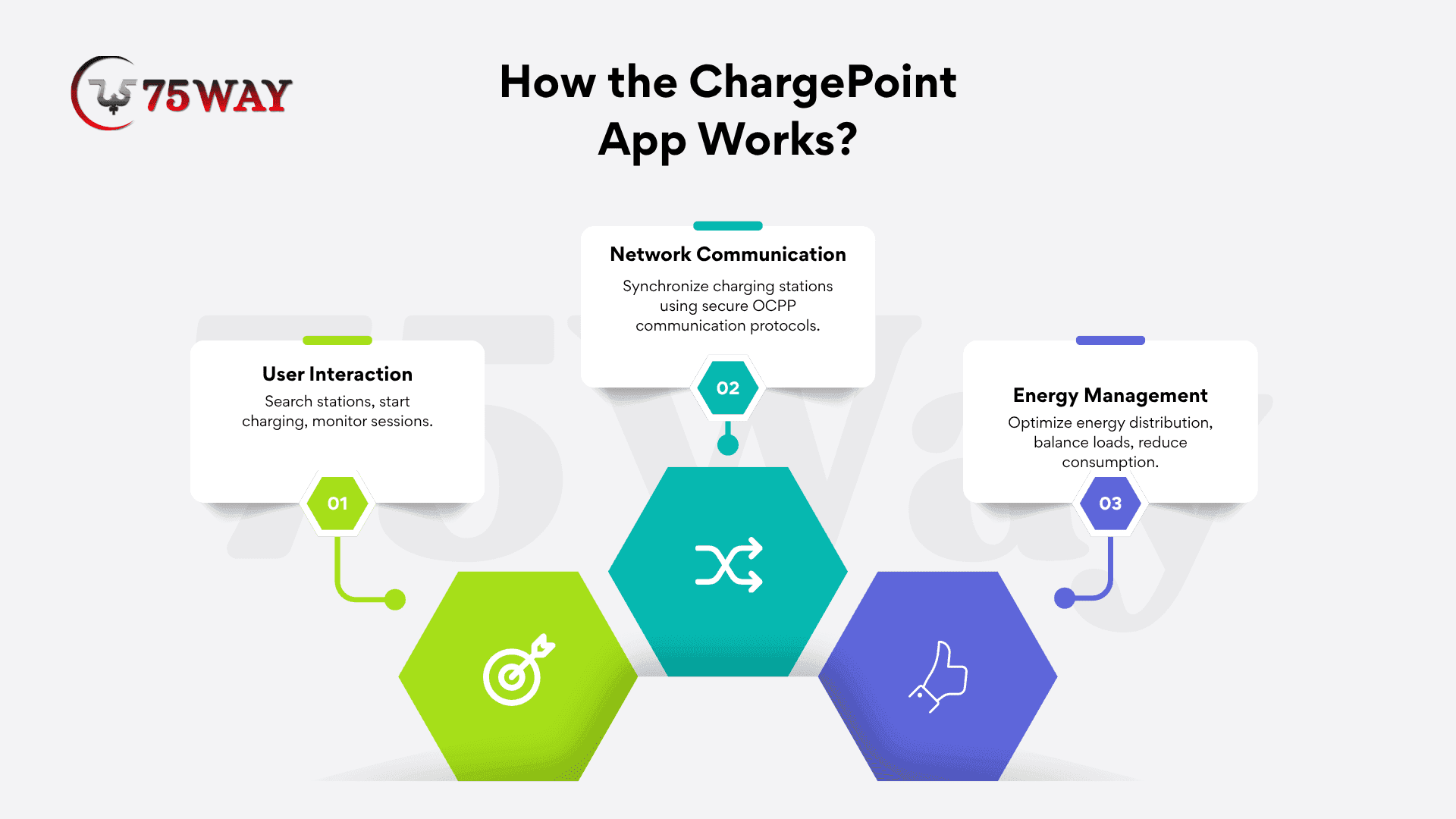
EV drivers use the mobile app or fleet dashboard to search charging stations, view availability, start charging sessions, make payments, and monitor real-time charging progress through a simple and intuitive interface.
2. Network Communication Stage
Charging stations communicate with the central platform using OCPP protocols, enabling authentication, session initiation, status updates, and real-time synchronization between hardware systems and backend servers for accurate operational control.
3. Energy Management Stage
The system interacts with energy grids to manage load distribution, optimize electricity usage, balance demand, and integrate utility pricing models for efficient and stable charging across large-scale EV infrastructure networks.
Core Functional Modules of ChargePoint-Like Platforms
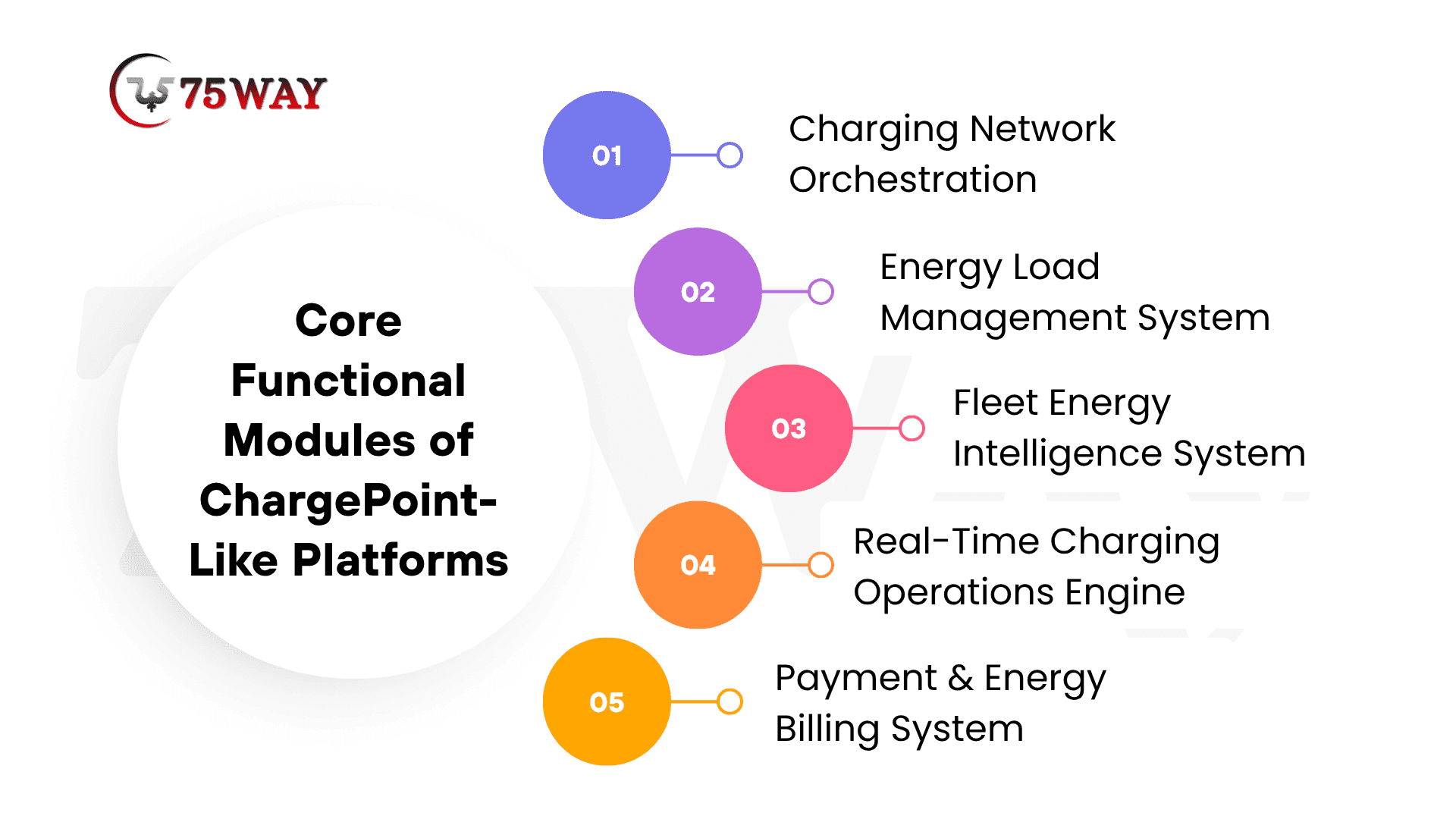
ChargePoint-style EV charging platforms operate through multiple interconnected modules that manage hardware networks, energy distribution, billing systems, and fleet intelligence in real time. Each module plays a critical role in ensuring seamless coordination between charging stations, users, energy grids, and enterprise-level operations across large-scale EV ecosystems.
1. Charging Network Orchestration
This layer acts as the central control system that manages thousands of charging stations across different regions. It ensures chargers are properly onboarded, monitored in real time, updated remotely, and maintained through automated fault detection systems.
- Station onboarding
- Remote monitoring
- Firmware updates
- Fault detection
2. Energy Load Management System
This module is responsible for balancing electricity demand across charging stations to prevent grid overload. It intelligently distributes power during peak hours and ensures efficient energy utilization across multiple charging locations.
- Distribute electricity demand
- Prevent grid overload
- Optimize peak-hour usage
- Balance multi-station load
3. Fleet Energy Intelligence System
Designed specifically for enterprise fleets, this system provides structured energy planning, cost forecasting, and charging optimization. It helps organizations manage vehicle charging schedules and reduce overall operational energy expenses. It includes:
- Vehicle charging schedules
- Depot optimization
- Energy cost forecasting
- Usage analytics
4. Real-Time Charging Operations Engine
This module manages live charging activities, including session initiation, authentication, power flow control, and billing triggers. It ensures every charging session is accurately tracked and executed without delays. It handles:
- Active charging sessions
- Power flow control
- Session authentication
- Billing triggers
5. Payment & Energy Billing System
Unlike traditional apps, this system calculates billing based on energy consumption and charging duration. It supports multiple pricing models:
- kWh-based pricing
- Time-based billing
- Subscription energy plans
- Fleet invoicing
Why Invest in EV Charging Locator App Like ChargePoint?
Investing in an EV charging locator app like ChargePoint is highly profitable due to rapid EV adoption, growing charging infrastructure demand, and recurring revenue models. These platforms offer scalable opportunities through subscriptions, energy transactions, fleet services, and data monetization, making them strong long-term digital infrastructure investments.
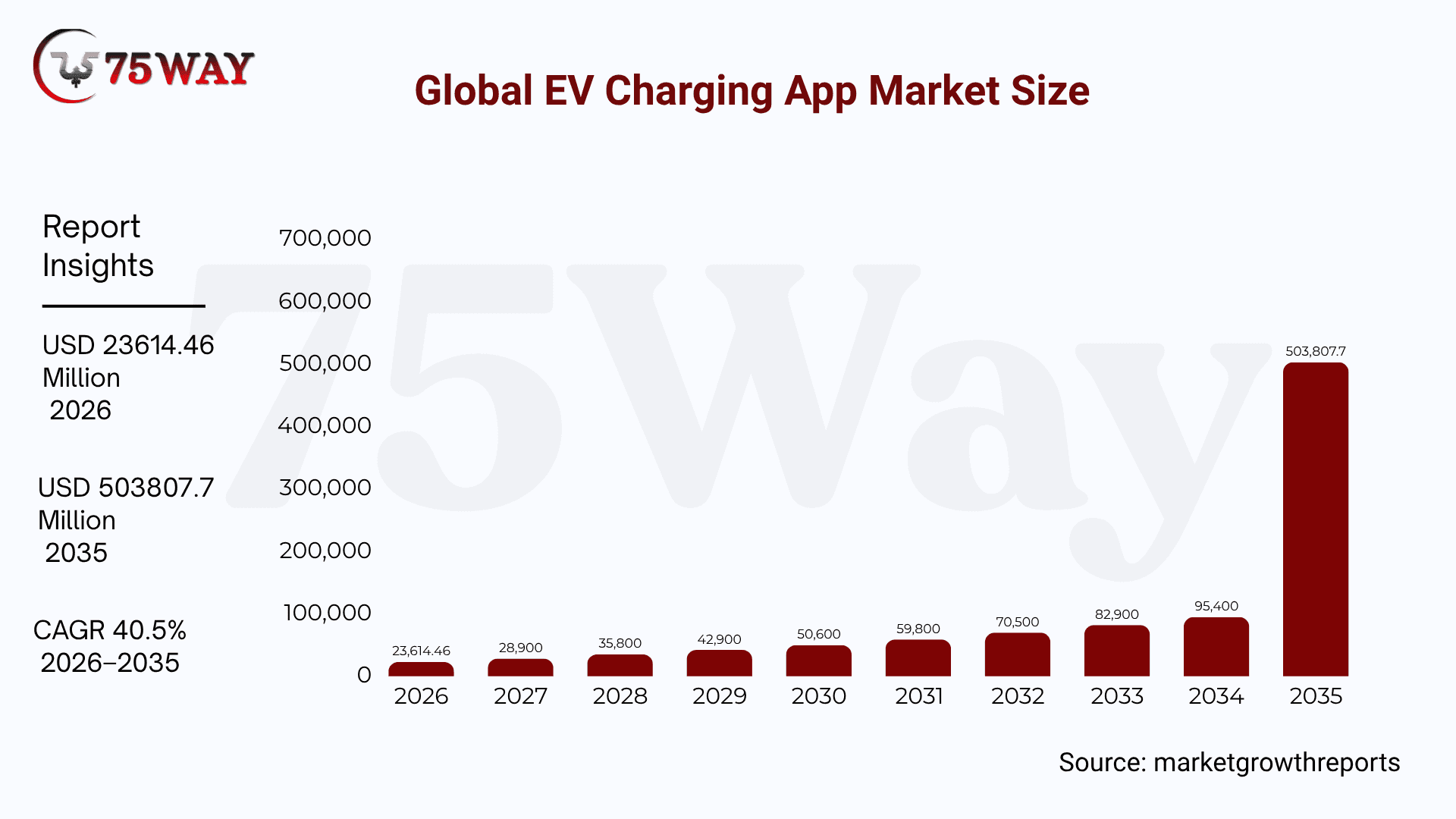
- The EV charging app market is expected to grow from USD 23,614.46 million in 2026 to nearly $503,807.7 million by 2035, expanding at a CAGR of 40.5%.
- The market is forecasted to increase from USD 28.47 billion in 2025 to USD 76.31 billion by 2032, registering a CAGR of 15.1%.
- Industry projections estimate the market will rise from USD 28.47 billion in 2025 to USD 76.31 billion by 2032, with a steady annual growth rate of 15.1%.
Comprehensive Strategy To Build A ChargePoint Clone App
Building a ChargePoint-like EV charging platform requires a structured, multi-layered development strategy that combines hardware integration, cloud infrastructure, AI intelligence, and scalable application design. Each phase plays a critical role in ensuring real-time charger communication, energy optimization, seamless user experience, and long-term system reliability. From infrastructure planning to final deployment, every step must align with high-performance EV ecosystem requirements and future-ready mobility standards.
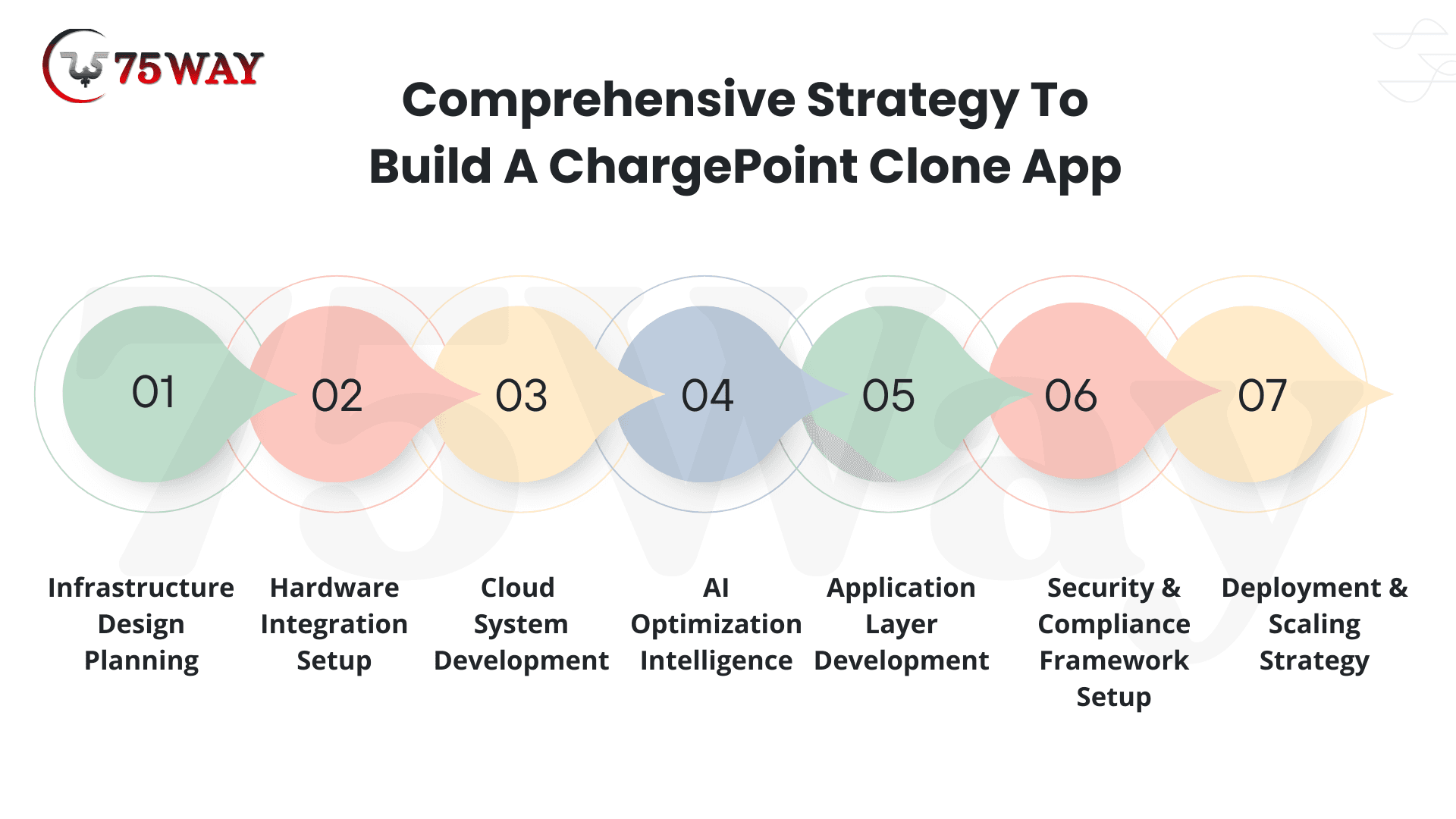
Phase 1: Infrastructure Design Planning System
This phase focuses on defining the foundational architecture of the EV charging ecosystem. It includes designing charging network structure, energy distribution flow, scalability planning, and system dependencies. A strong infrastructure ensures smooth coordination between chargers, users, cloud systems, and energy providers while supporting future expansion across regions and high-demand environments.
Phase 2: Hardware Integration Setup Process
This stage focuses on connecting physical charging stations with the digital platform using standardized protocols. It ensures OCPP compatibility, seamless charger onboarding, firmware synchronization, and secure device communication. Proper hardware integration enables real-time interaction between chargers and backend systems, allowing accurate monitoring, control, and management of charging sessions across multiple networks.
Phase 3: Cloud System Development Layer
This phase involves building a scalable cloud infrastructure that handles real-time data processing, energy distribution, and system coordination. It includes deploying high-performance servers, database systems, and energy analytics engines. Cloud systems ensure uninterrupted communication between chargers, users, and applications while supporting large-scale EV charging operations with reliability and low latency.
Phase 4: AI Optimization Intelligence
This stage integrates artificial intelligence to improve system efficiency through predictive analytics and smart decision-making. It includes load prediction, energy demand forecasting, and optimization algorithms for balancing electricity usage. AI enhances operational intelligence by reducing grid stress, improving charging efficiency, and enabling adaptive responses to changing user behavior and energy conditions.
Phase 5: Application Layer Development
This phase focuses on building user-facing applications including mobile apps, fleet dashboards, and admin control panels. It ensures smooth navigation, real-time charger visibility, payment integration, and operational control. The application layer connects users, operators, and system administrators, providing a unified interface for managing all charging-related activities.
Phase 6: Security & Compliance Framework Setup
This stage ensures data protection, secure transactions, and regulatory compliance across the entire EV charging ecosystem. It includes encryption protocols, user authentication systems, payment security standards, and adherence to regional energy and data regulations. A strong security framework builds trust, prevents breaches, and ensures safe operation of large-scale charging networks.
Phase 7: Deployment & Scaling Strategy
This final phase focuses on launching the platform and scaling it for global usage. It includes performance optimization, load testing, infrastructure expansion, and continuous monitoring. The system is refined based on real-world usage data, ensuring stability, reliability, and readiness for high-volume EV charging operations across multiple geographic regions.
Advanced Features To Build EV Charging Locator App Like ChargePoint
Modern EV charging locator apps are evolving into intelligent mobility platforms that go far beyond simple station search. Advanced features now focus on real-time energy intelligence, predictive analytics, automation, and seamless integration with vehicles, grids, and payment systems. These capabilities help users find chargers faster, optimize travel routes, reduce waiting time, and manage charging costs more efficiently while improving overall reliability of EV infrastructure networks.
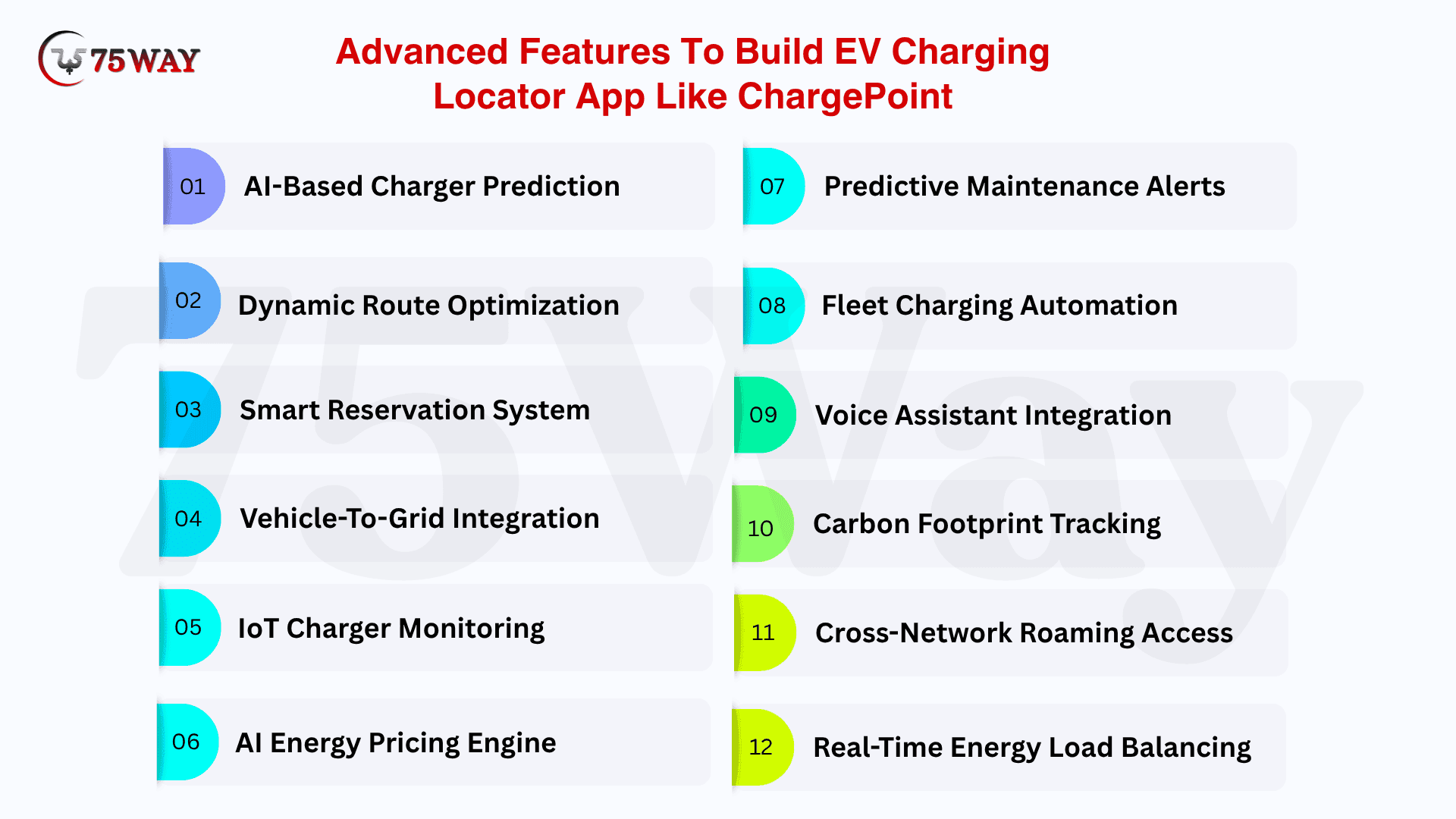
- AI-Based Charger Prediction: Uses machine learning to predict charger availability, waiting times, and occupancy patterns based on historical and real-time usage data.
- Dynamic Route Optimization: Automatically adjusts EV travel routes based on battery level, traffic conditions, charger status, and energy consumption patterns.
- Smart Reservation System: Allows users to book charging slots in advance, reducing queue time and improving station utilization efficiency.
- Vehicle-To-Grid Integration: Enables bi-directional energy flow where EVs can supply stored energy back to the power grid during peak demand.
- IoT Charger Monitoring: Continuously tracks charger health, performance status, and faults using connected IoT sensors for real-time diagnostics.
- AI Energy Pricing Engine: Adjusts charging prices dynamically based on demand, grid load, time of day, and electricity supply conditions.
- Predictive Maintenance Alerts: Detects potential charger failures early using performance analytics and sends maintenance notifications before breakdowns occur.
- Fleet Charging Automation: Automates scheduling, charging allocation, and energy optimization for large enterprise EV fleets.
- Voice Assistant Integration: Enables users to search chargers, start sessions, and get navigation updates using voice commands while driving.
- Carbon Footprint Tracking: Calculates and displays CO₂ savings per charging session to encourage sustainable driving behavior and green energy adoption.
- Cross-Network Roaming Access: Allows users to access multiple charging networks through a single app without switching platforms or accounts.
- Real-Time Energy Load Balancing: Distributes electricity demand across multiple stations dynamically to prevent overload and improve grid stability.
Advanced Technologies Behind ChargePoint-Style App Development
ChargePoint-style EV charging platforms are built on a multi-layered technology ecosystem that connects physical charging hardware with cloud intelligence, energy systems, and AI-driven analytics. These technologies work together to enable real-time monitoring, intelligent energy distribution, predictive decision-making, and seamless communication between EV chargers, users, and power grids at scale.
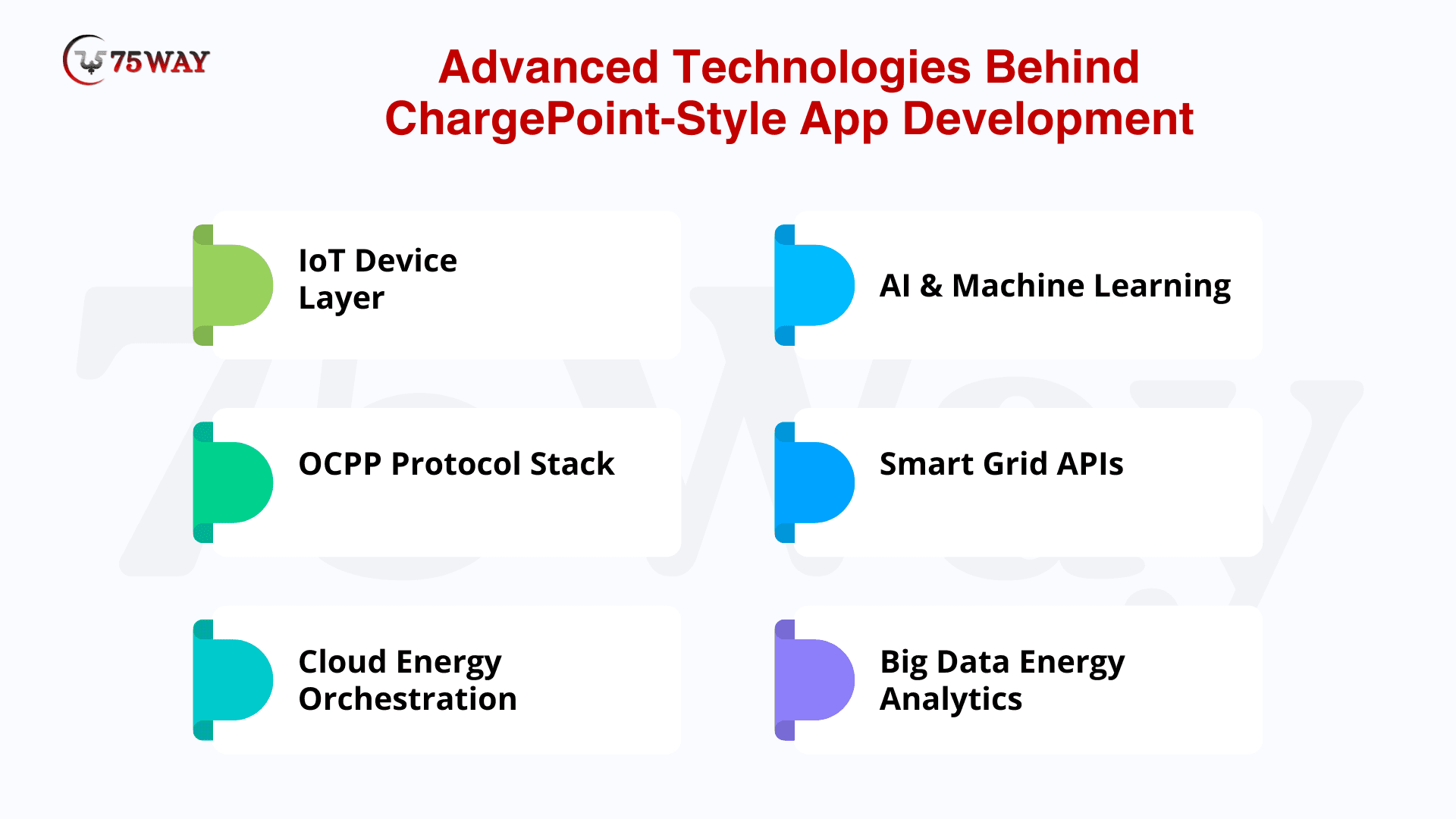
1. IoT Device Layer
The IoT layer connects physical EV chargers with cloud systems to enable continuous communication and monitoring. It ensures real-time visibility into charger status, energy flow control, remote diagnostics, and hardware-level performance tracking across distributed charging networks.
2. OCPP Protocol Stack
The OCPP layer standardizes communication between EV chargers, backend platforms, and energy management systems. It enables secure data exchange for authentication, session control, firmware updates, and charging transaction coordination.
3. Cloud Energy Orchestration
This layer manages large-scale distributed computing infrastructure that supports real-time load balancing, system scalability, and efficient energy distribution across multiple charging stations and geographic regions.
4. AI & Machine Learning
AI systems analyze charging behavior, predict energy demand, forecast station usage, and generate insights for optimized charging operations, helping improve efficiency and reduce grid stress during peak demand periods.
5. Smart Grid APIs
Smart grid APIs connect EV charging platforms with utility providers to enable dynamic energy pricing, demand response management, and coordinated electricity distribution between charging networks and power grids.
6. Big Data Energy Analytics
This layer processes massive volumes of charging data, including consumption patterns, user behavior, and grid demand cycles, to generate actionable insights for infrastructure planning and energy optimization strategies.
Monetization Models To Make Money From ChargePoint-Like Platform
Modern EV charging platforms generate revenue through multiple interconnected streams that combine energy usage, enterprise software services, infrastructure access, and data intelligence. These monetization models ensure long-term profitability while supporting scalable EV ecosystem growth, utility partnerships, and smart energy distribution across charging networks.
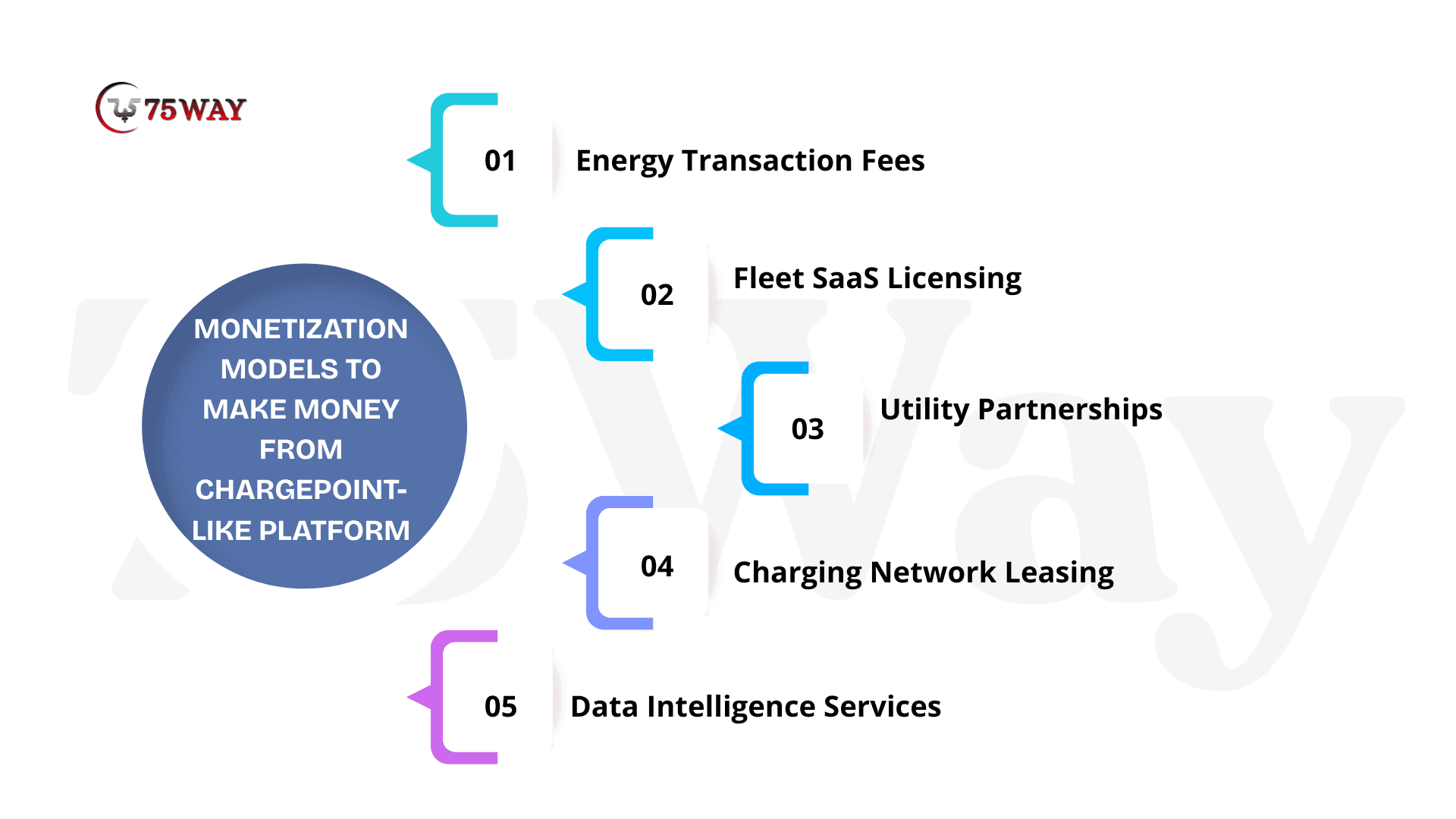
- Energy Transaction Fees: Platforms earn revenue by charging a fee on every kilowatt-hour consumed through the network. This model scales directly with user charging activity and overall energy consumption across stations.
- Fleet SaaS Licensing: Enterprise fleet operators subscribe to SaaS-based charging management systems. These contracts include dashboards, scheduling tools, analytics, and centralized control for managing large EV vehicle fleets.
- Utility Partnerships: Charging platforms collaborate with electricity providers to optimize grid usage. Revenue is shared through demand response programs, peak load balancing, and smart energy distribution initiatives.
- Charging Network Leasing: Infrastructure owners lease charging stations as white-label solutions. Businesses use existing networks under their branding while platform owners earn recurring leasing and operational service income.
- Data Intelligence Services: Aggregated energy consumption data is monetized through analytics reports. Cities and utilities use this data for planning infrastructure, forecasting demand, and improving energy distribution strategies.
Cost To Build ChargePoint-Like Application in 2026
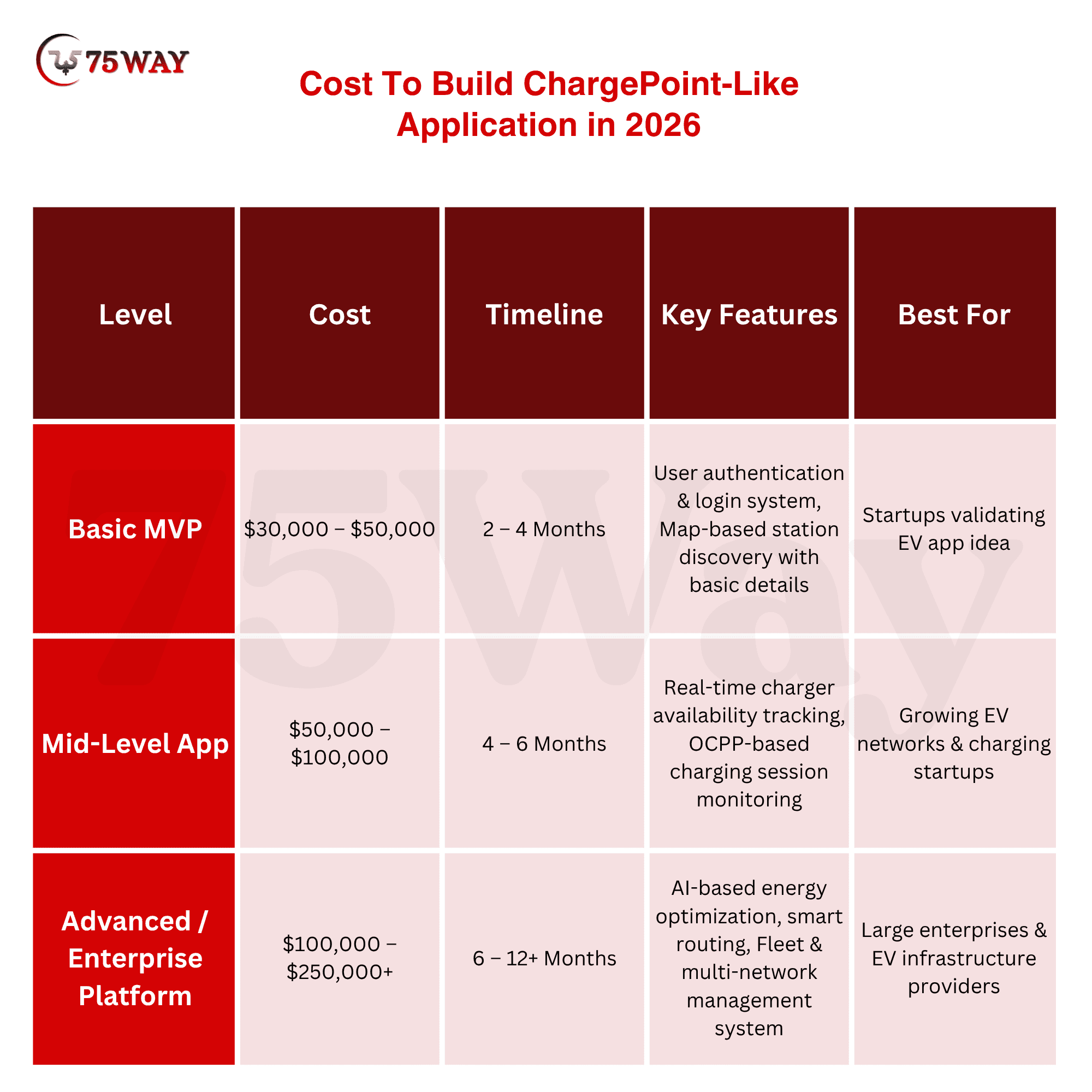
Building an EV charging application depends heavily on feature complexity, real-time infrastructure needs, hardware integration, and scalability requirements. Below is a structured breakdown of cost and timeline across different development levels.
1. Basic MVP (Minimum Viable Product)
- Estimated Cost: $30,000 – $50,000
- Timeline: 2 – 4 Months
A Basic MVP focuses on validating the idea and launching a simplified version of the EV charging platform with essential user-facing features.
2. Mid-Level EV Charging App
- Estimated Cost: $50,000 – $100,000
- Timeline: 4 – 6 Months
A mid-level application introduces real-time functionality, hardware connectivity, and improved user engagement features, making it suitable for growing EV networks. This stage transforms the app from a basic locator into a functional EV charging management platform.
3. Advanced / Enterprise EV Charging Platform
- Estimated Cost: $100,000 – $250,000+
- Timeline: 6 – 12+ Months
An enterprise-grade EV charging system is designed for large-scale networks, fleet operators, and energy providers requiring high reliability, scalability, and infrastructure-level intelligence.
Final Thoughts
ChargePoint-like platforms represent the future of EV infrastructure, operating beyond mobile applications into full-scale energy orchestration systems. These platforms connect charging networks, electric vehicles, utility grids, and enterprise fleets into a unified intelligence ecosystem powered by IoT, AI, and cloud computing. Building such a system in 2026 requires strong architectural planning, energy optimization logic, and real-time data orchestration capabilities. Businesses investing in EV infrastructure platforms can unlock long-term opportunities in energy markets, fleet electrification, and smart mobility ecosystems. Partner with a trusted e-mobility solution provider to build scalable, intelligent, and future-ready EV energy platforms that drive innovation and global adoption.
Frequently Asked Questions (FAQs)
What Makes EV Charging Apps Profitable In 2026?
EV charging apps generate revenue through charging commissions, subscription plans, fleet management services, and data monetization. Growing EV adoption and infrastructure expansion further increase long-term profitability opportunities for platform owners globally across mobility ecosystems.
How Do EV Charging Apps Handle Payment Security?
These applications use encrypted payment gateways, tokenization, and PCI-DSS compliant systems to secure transactions. Sensitive user data is protected using multi-layer authentication and secure cloud storage across all charging and billing operations.
Can EV Charging Apps Support Multiple Countries?
Yes, modern EV charging platforms support multi-country operations through scalable cloud systems, currency conversion, and region-based charging network integrations. Localization features help adapt pricing, languages, and compliance rules for global EV markets effectively.
How Do Charging Apps Manage Real-Time Data Accuracy?
Real-time accuracy is maintained using IoT sensors, cloud synchronization, and API integrations with charging stations. Continuous data updates ensure users receive correct availability, pricing, and session status without delays or inconsistencies during usage.
What Challenges Do EV Charging Apps Face During Scaling?
Scaling challenges include hardware integration issues, network fragmentation, high data traffic, and real-time synchronization complexity. Strong backend architecture and cloud infrastructure help manage growth and maintain performance across large charging networks efficiently.
How Important Is User Experience In EV Charging Apps?
User experience is critical because EV drivers rely on fast navigation, clear maps, and instant charger information. Simple interfaces improve adoption, reduce confusion, and increase retention rates across mobility and energy platforms.