Summary
Blockchain in finance is transforming how banks, insurers, and financial institutions manage transactions, compliance, and data sharing. This guide highlights blockchain applications in finance, its role in trade finance, credit insurance, banking systems, regulatory frameworks, and global financial innovation shaping 2026.
Quick Overview
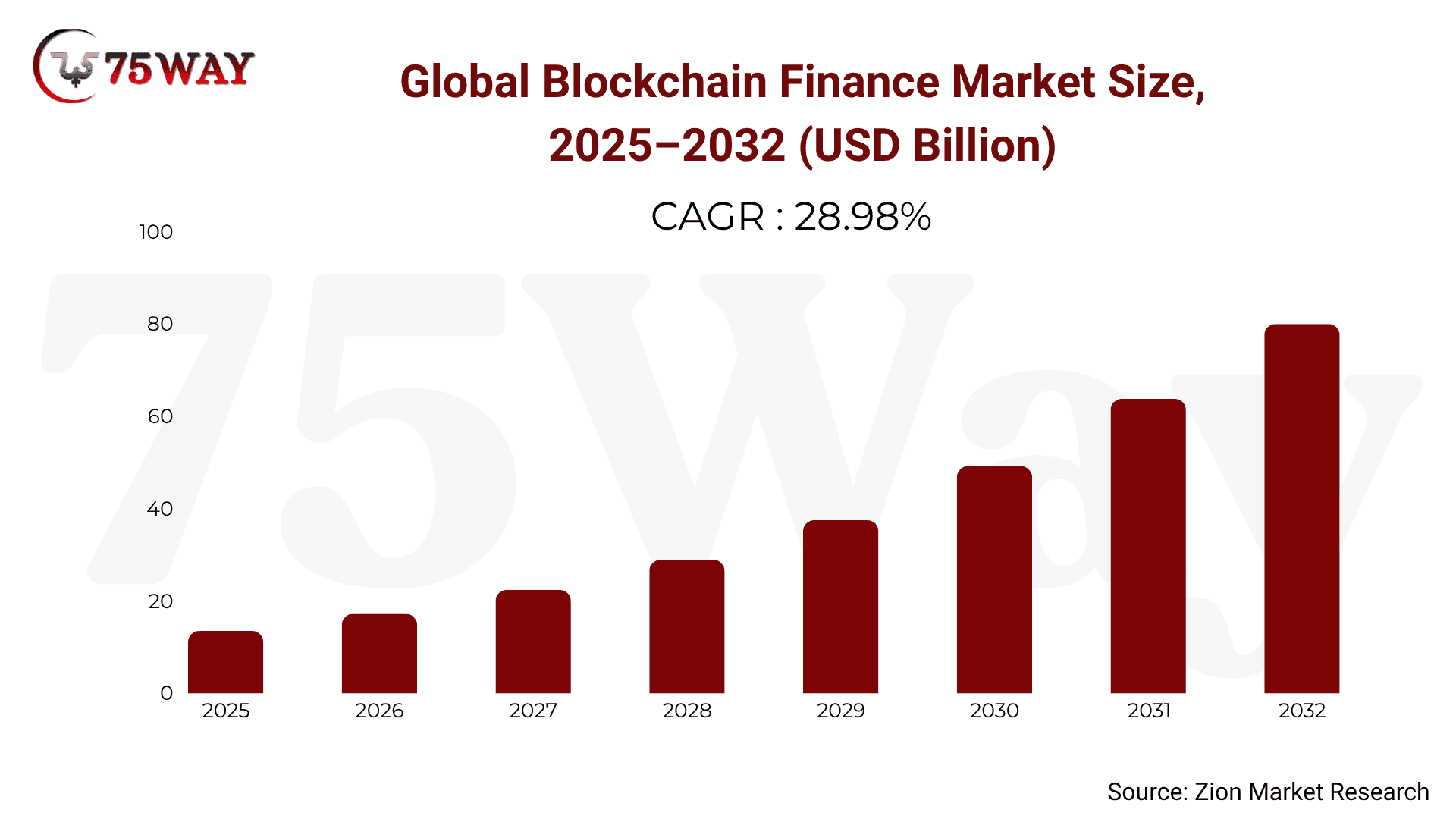
- Blockchain finance market is projected to reach $80.02 billion by 2032 at 28.98% CAGR.
- Banking systems are shifting from centralized to distributed models
- Trade finance becomes faster and more secure using blockchain
- Financial institutions reduce fraud and reconciliation errors
- Regulatory frameworks are evolving for blockchain adoption
- Blockchain enhances trust in global financial ecosystems
Security in financial transactions has always been a growing concern, especially in digital payments and cross-border transfers. Even today, financial institutions face risks such as data breaches, fraud attempts, reconciliation errors, and a lack of real-time transparency into transaction flows.
So, several fintech organizations adopt Blockchain platforms, a new way of handling financial data by distributing transaction records across a secure network. That’s why banks, insurance companies, and global financial networks are actively exploring and adopting blockchain-based fintech applications.
Even, the blockchain in the finance market is projected to reach $80.02 billion by 2032, growing at a CAGR of nearly 28.98%. It shows the quick growth towards a more secure and transparent financial infrastructure.
Instead of relying on a single centralized database, it ensures every transaction is verified, traceable, and extremely difficult to alter without consensus. So some questions arise here, how ready are traditional financial systems to fully adapt to this shift? How are institutions actually implementing it? What challenges still exist? And where is this all heading in 2026 and beyond?
In this guide, we’ll explore blockchain in finance applications, benefits, challenges, real-world use cases, regulatory frameworks, and future trends shaping the next generation of financial ecosystems.
What Is Blockchain Technology In Finance?
Blockchain technology in finance is a decentralized digital ledger system that records financial transactions securely, transparently, and immutably across distributed networks. Unlike traditional databases controlled by centralized institutions, blockchain ensures that every transaction is verified by multiple participants before being recorded.
In simple terms, blockchain in finance is a special way of keeping money records on computers so that everyone can see them, but nobody can secretly change them. It works like a digital system in which every financial transaction is stored across multiple connected computers simultaneously.
Imagine a school canteen where every student gets a magic badge. Whenever someone buys a snack, the badge automatically records it. Not just one badge, but every student’s badge records the same purchase at the same time. If someone tries to change their badge, others will still show the correct snack record, so cheating becomes impossible.
In finance, banks and companies use this system to track payments and transfers. It helps send money faster, reduces mistakes, and makes financial records more trustworthy because everyone shares the same secure information.
Why Adopt Blockchain Solutions In Finance Sector Innovations In 2026?
Blockchain adoption in finance is increasing as institutions focus on transparency, speed, and security in financial operations. Growing digital transactions and regulatory demands are pushing banks to modernize systems and improve efficiency across global financial networks.
- Cross-Border Payments: Financial institutions use blockchain to speed up international money transfers, reduce costs, and increase transparency. This reduces delays and improves settlement efficiency across global banking systems.
- Real-TimeSettlement: Banks adopt blockchain to enable instant transaction settlement without the traditional processing delays. This improves liquidity management and enhances overall financial transaction speed.
- Compliance Efficiency Needs: Blockchain helps automate regulatory reporting and ensures transparent financial record-keeping. This reduces manual compliance workloads and improves audit process accuracy.
- Fraud Prevention Systems: Financial organizations use blockchain to secure transactions and prevent unauthorized data manipulation. This strengthens trust and reduces financial fraud risks across digital systems.
- Digital Banking Growth: Banks integrate blockchain into digital platforms to improve customer experience and transaction reliability. This supports faster banking services and modern financial product innovation.
- Cost Reduction: Blockchain reduces operational costs by eliminating intermediaries and automating financial workflows. This helps institutions optimize expenses and improve profitability margins.
- Trade Digitization Expansion: Global trade systems use blockchain to digitize documentation and payment verification processes. This improves transparency and reduces paperwork in international trade operations.
How Blockchain Works In Financial Systems?
Blockchain in financial systems operates through a decentralized network that records, verifies, and secures transactions across multiple nodes. This structure ensures transparency, data integrity, and trust in all financial operations.
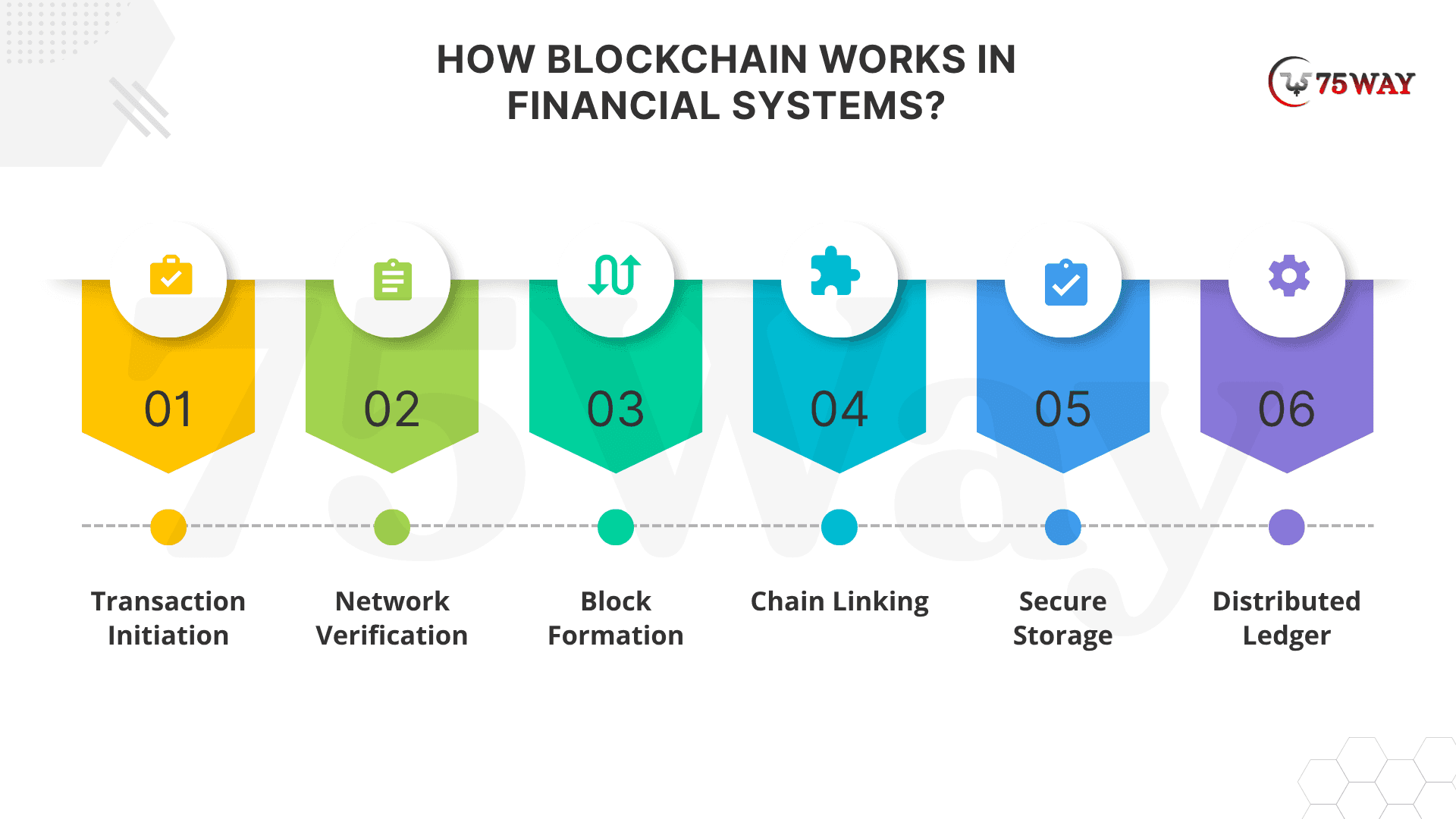
- Transaction Initiation: A user or financial institution initiates a transaction by requesting a transfer or financial action. This request enters the blockchain network for verification and processing.
- Network Verification: Multiple network participants validate the transaction using consensus mechanisms. This ensures accuracy, prevents fraud, and confirms legitimacy before approval.
- Block Formation: Verified transactions are grouped together into a structured block. Each block contains transaction data and a unique identifier for tracking purposes.
- Chain Linking: Newly created blocks are connected to previous blocks in chronological order. This linking forms a secure and unbreakable chain of financial records.
- Secure Storage: Once added, transaction data becomes permanent and cannot be modified or deleted. This ensures transparency, accountability, and long-term data reliability.
- Distributed Ledger: All network participants maintain synchronized copies of transaction records across systems. This improves trust, reduces central dependency, and enhances system resilience.
How Blockchain Applications In Finance Improve Transaction Security?
Blockchain technology is widely used across financial services to improve the speed, transparency, and security of transactions. The decentralized finance apps automate fintech processes, reduce fraud risks, and enhance efficiency in global financial operations.
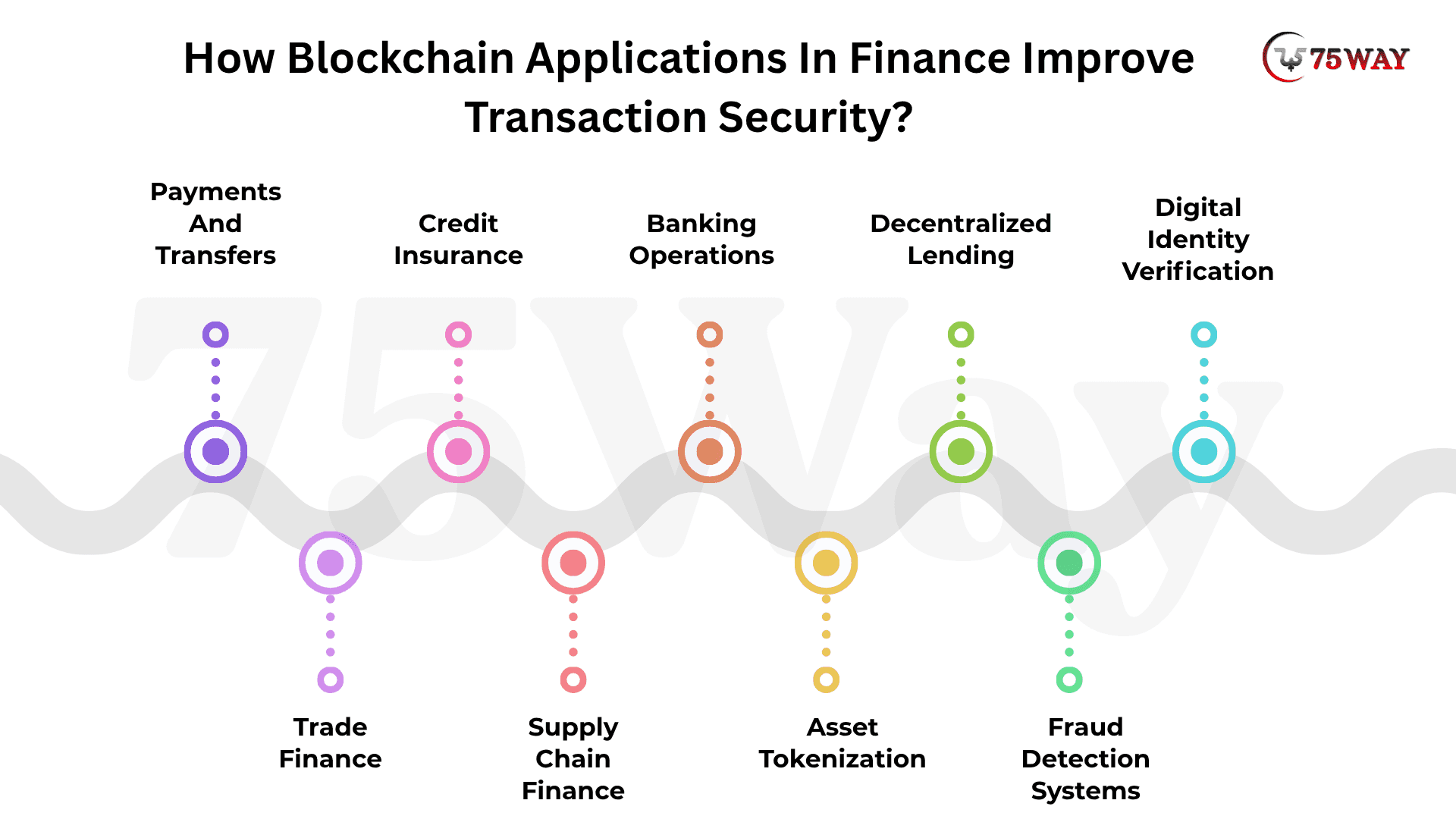
- Payments And Transfers: Blockchain enables fast, low-cost international money transfers with reduced intermediaries. This improves transaction speed, reduces fees, and increases transparency in cross-border financial operations.
- Trade Finance: Financial institutions use blockchain to automate documentation, verification, and settlement in global trade processes. This reduces paperwork, minimizes delays, and improves trust between trading partners.
- Credit Insurance: Blockchain enhances risk evaluation and claim processing transparency for insurance providers. It ensures accurate data sharing, reduces fraud risks, and improves claim settlement efficiency across systems.
- Supply Chain Finance: Blockchain improves visibility into supplier payments, financing cycles, and transaction tracking. This increases trust between stakeholders, reduces delays, and enhances financial coordination in supply chains.
- Banking Operations: Banks use blockchain to streamline KYC processes, compliance checks, and transaction management systems. This improves operational efficiency, reduces manual errors, and enhances regulatory transparency.
- Asset Tokenization: Physical assets such as real estate and commodities are converted into digital tokens. This enables fractional ownership, easier trading, and improved liquidity in financial markets.
- Decentralized Lending: Blockchain platforms enable peer-to-peer lending without traditional banking intermediaries. This reduces borrowing costs, improves access to credit, and increases lending efficiency across financial ecosystems.
- Fraud Detection Systems: Blockchain records help identify suspicious transactions through transparent and immutable data trails. This strengthens financial security, reduces fraud risk, and improves real-time monitoring accuracy.
- Digital Identity Verification: Blockchain securely stores digital identities, enabling faster, safer customer verification. This reduces identity fraud, improves onboarding speed, and enhances compliance in financial services.
Blockchain In Finance Market Size 2026
The blockchain in the finance market continues to expand rapidly due to global digital transformation. Financial institutions are investing heavily in blockchain-based modernization strategies.
- Fintech companies are leading blockchain adoption with a rate of 68.9%, while traditional banks have seen adoption grow by 47.3%.
- Blockchain integration has reduced transaction costs by 42.6% and lowered security incidents by 56.2%.
- Blockchain-powered real-time gross settlement systems have processed transactions exceeding $3 trillion.
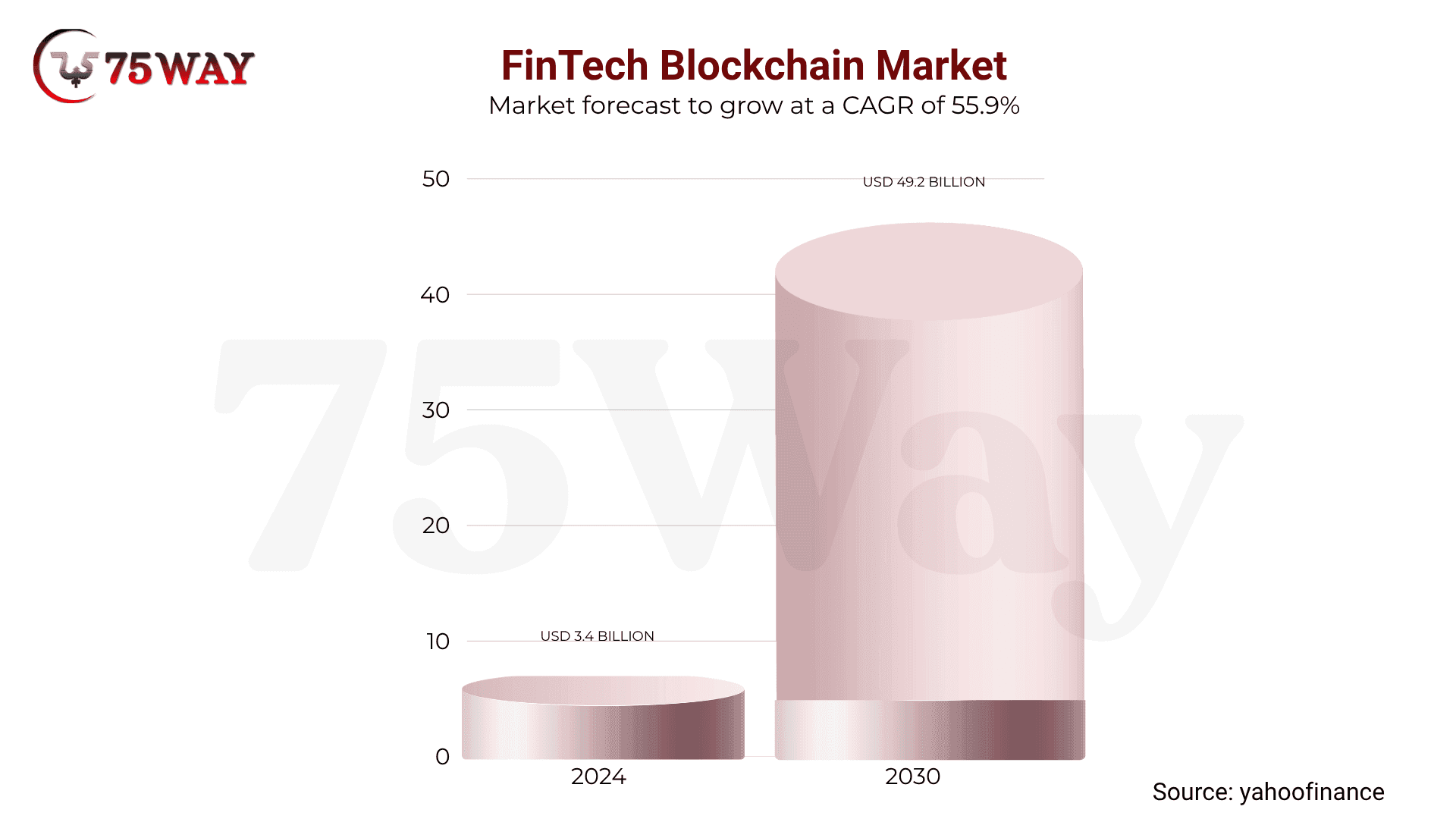
- The global FinTech blockchain market is expected to reach US$49.2 billion by 2030, growing at a CAGR of 55.9%.
How To Build Blockchain-Based Fintech App?
Building a blockchain-based fintech application requires a structured approach where every development stage connects logically to the next. Each phase focuses on security, scalability, compliance, and real financial use cases. This ensures the final platform delivers reliable performance, transparent transactions, and seamless user experience across financial operations.
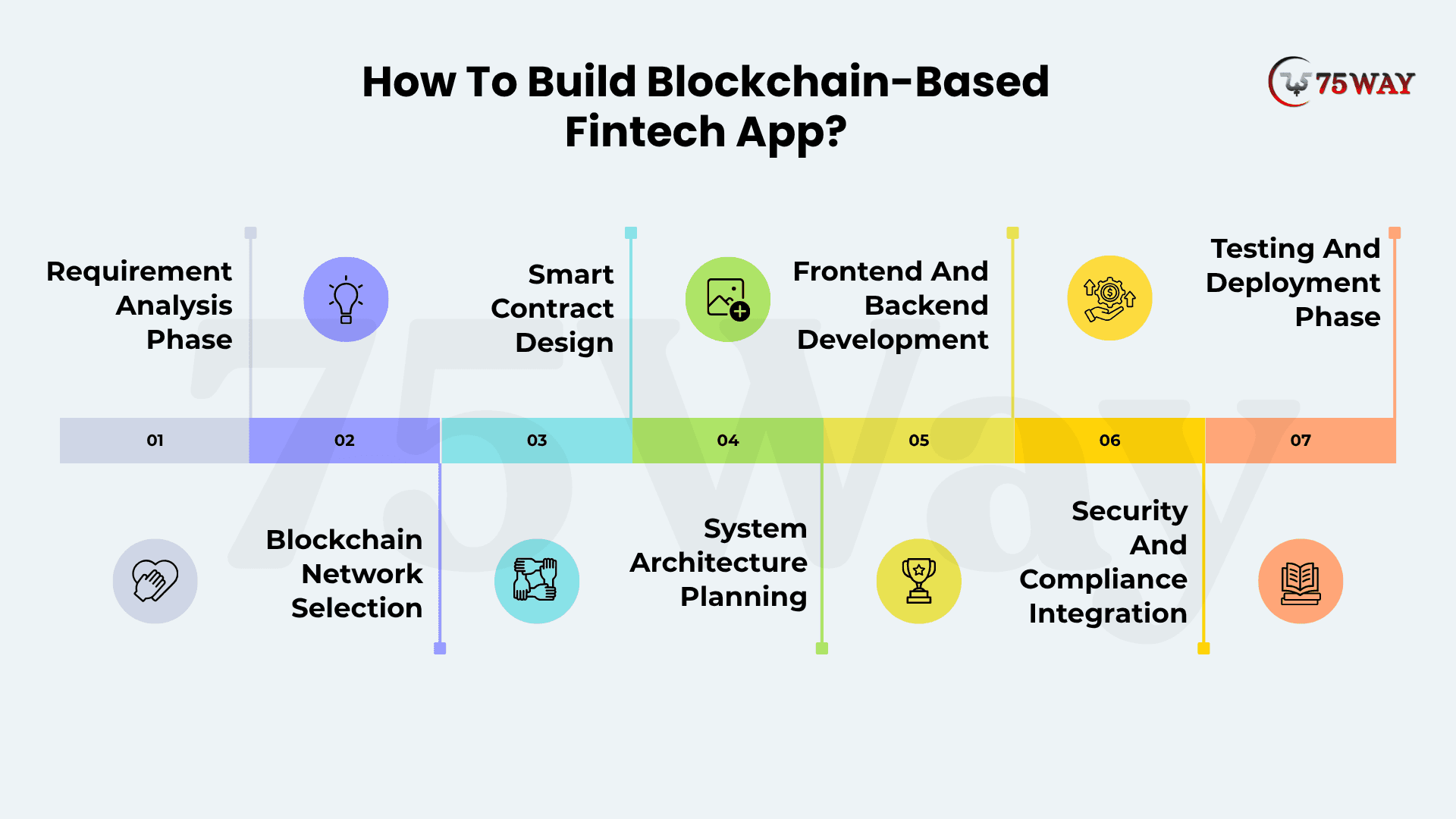
Step 1: Requirement Analysis Phase
Businesses first define financial goals, user needs, and regulatory requirements before development begins. This step identifies key use cases such as payments, lending, or trading. Clear requirement mapping reduces development risks and ensures alignment with compliance standards. It also helps create a strong foundation for system design. Proper planning improves long-term platform success.
Step 2: Blockchain Network Selection
Developers select a suitable blockchain type, such as public, private, or hybrid, depending on business needs. Each option offers different levels of scalability, cost efficiency, and security. The choice impacts transaction speed and data transparency. This decision ensures the platform meets financial performance expectations. It also influences future system expansion and integration possibilities.
Step 3: Smart Contract Design
Smart contracts are created to automate financial transactions without manual intervention or intermediaries. These contracts execute predefined rules securely and accurately through smart contract development services. They reduce errors and increase trust in financial operations. Developers carefully define conditions and logic for execution. Smart contracts also integrate with blockchain infrastructure to ensure seamless workflow automation across financial systems.
Step 4: System Architecture Planning
The system architecture defines how blockchain, databases, APIs, and financial modules interact together. It ensures smooth data flow across different components. A strong architecture supports scalability and high transaction volumes. Developers design secure communication layers for system reliability. This phase ensures the platform can handle enterprise-level financial operations efficiently without performance issues.
Step 5: Frontend And Backend Development
User interfaces are developed to allow customers to interact easily with financial services. Backend systems manage authentication, transactions, and data processing securely. Both layers work together to deliver smooth user experiences. Developers ensure real-time synchronization between frontend actions and backend logic. This stage focuses on usability, performance, and secure financial interactions.
Step 6: Security And Compliance Integration
Security systems are implemented using encryption, authentication, and access control mechanisms. Compliance frameworks ensure adherence to financial regulations and legal standards. These measures protect sensitive user and transaction data. Continuous monitoring helps detect suspicious activity. This stage builds trust, reduces risks, and ensures safe financial operations across the entire platform.
Step 7: Testing And Deployment Phase
The platform undergoes rigorous testing to check performance, scalability, and security. Developers identify and fix bugs before launch. Stress testing ensures system stability under heavy usage. Once validated, the platform is deployed on cloud infrastructure. Continuous monitoring ensures smooth operations and long-term reliability of the blockchain-based fintech system.
Benefits of Blockchain In Trade Finance
Blockchain improves trade finance by making global transactions faster, more transparent, and more secure. It reduces dependency on manual documentation and intermediaries while increasing trust between importers, exporters, banks, and financial institutions across international trade ecosystems.
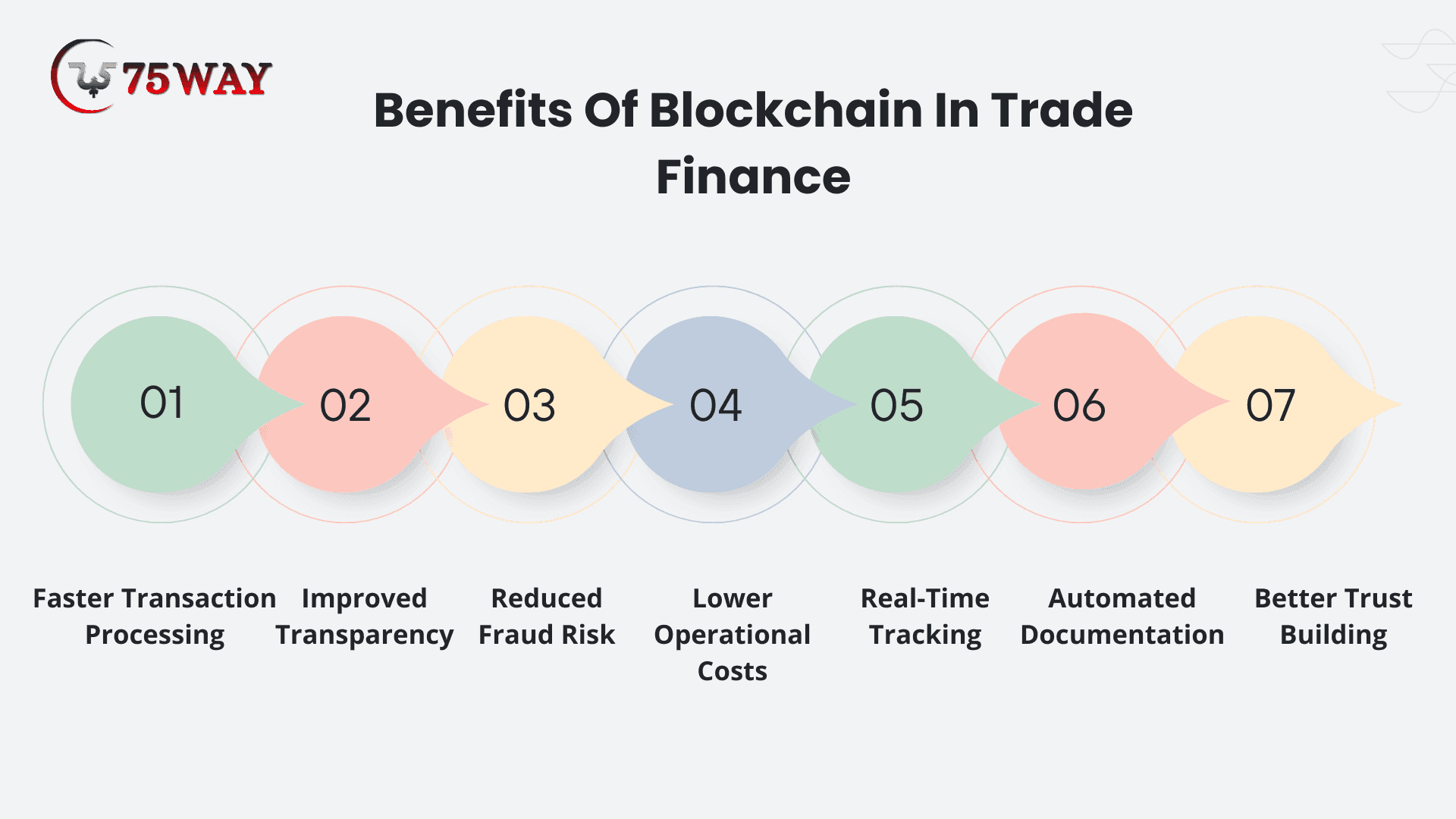
- Faster Transaction Processing: Blockchain enables quick verification and settlement of trade transactions across multiple financial parties. This reduces delays, improves cash flow, and enhances efficiency in global trade operations.
- Improved Transparency: All trade-related documents and transactions are recorded on a shared distributed ledger. This increases visibility, reduces disputes, and builds stronger trust between trading partners worldwide.
- Reduced Fraud Risk: Blockchain secures trade data using immutable records that cannot be altered or manipulated. This helps prevent document fraud, duplicate financing, and financial manipulation in trade systems.
- Lower Operational Costs: Automation reduces dependency on intermediaries, manual documentation, and administrative processes. This significantly decreases operational expenses and improves cost efficiency in trade finance workflows.
- Real-time Tracking: Trade transactions and shipment details can be monitored using blockchain systems. This improves supply chain visibility and ensures better coordination among all stakeholders involved.
- Automated Documentation: Smart contracts automate verification and approval of trade documents digitally. This reduces paperwork, speeds up processing, and minimizes human errors in financial operations.
- Better Trust Building: Shared blockchain networks create a single source of truth for all participants. This improves confidence among banks, exporters, and importers in global trade finance systems.
Role of Blockchain In Trade Finance And Credit Insurance
Blockchain plays an important role in improving efficiency, transparency, and security in trade finance and credit insurance. It simplifies complex financial processes by reducing dependency on manual documentation and enabling real-time data sharing across multiple stakeholders in global financial ecosystems.
In trade finance, blockchain digitizes documents, automates verification processes, reduces fraud risks, and improves visibility across transactions. These improvements help banks and businesses streamline cross-border trade operations, reduce delays, and increase trust between international trading partners through secure and transparent record-keeping.
In credit insurance, blockchain enables insurers to access real-time risk data, validate claims instantly, reduce processing delays, and improve underwriting accuracy. This results in faster claim settlements, reduced operational costs, and more reliable risk assessment across insurance systems.
How Blockchain In Banking And Finance Systems Improves Security?
Blockchain platforms improve financial systems by enabling secure and efficient transaction processing across institutions. It reduces dependency on intermediaries while improving speed, accuracy, and trust in global financial operations.
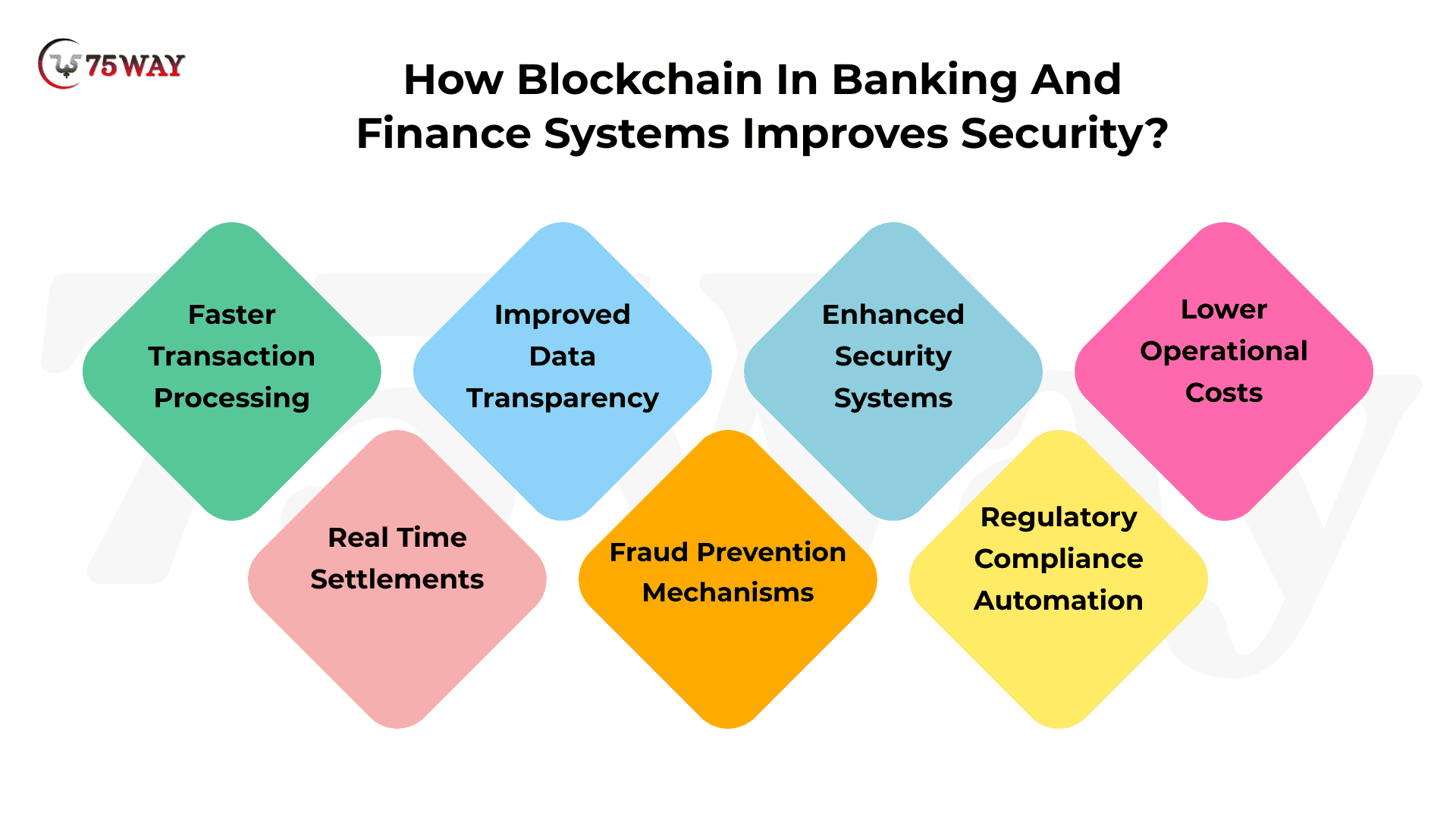
- Faster Transaction Processing: Blockchain enables quick validation and settlement of financial transactions across distributed networks. This reduces processing time, improves liquidity flow, and enhances overall banking performance.
- Improved Data Transparency: Shared ledger systems provide real-time visibility of all financial transactions across institutions. This increases trust, reduces discrepancies, and strengthens accountability in banking operations.
- Enhanced Security Systems: Cryptographic protocols protect financial data from unauthorized access and tampering. This improves system integrity and reduces risks of fraud in digital banking environments.
- Lower Operational Costs: Blockchain eliminates intermediaries and automates financial processes to reduce operational expenses. This improves profitability and allows banks to optimize resource allocation.
- Real Time Settlements: Transactions are processed instantly without traditional clearing delays across banking networks. This improves financial efficiency and enhances customer experience in global banking systems.
- Fraud Prevention Mechanisms: Immutable records prevent unauthorized modifications and detect suspicious financial activities. This strengthens security frameworks and reduces financial fraud risks across institutions.
- Regulatory Compliance Automation: Blockchain simplifies audit processes by maintaining accurate and traceable transaction records. This reduces compliance workload and improves reporting accuracy for financial institutions.
Regulatory Framework For Blockchain In Finance
Regulatory frameworks play a critical role in shaping how blockchain is adopted within financial institutions worldwide. These rules ensure that innovation in digital finance remains secure, compliant, and aligned with legal standards while reducing risks related to fraud, privacy, and financial crime.
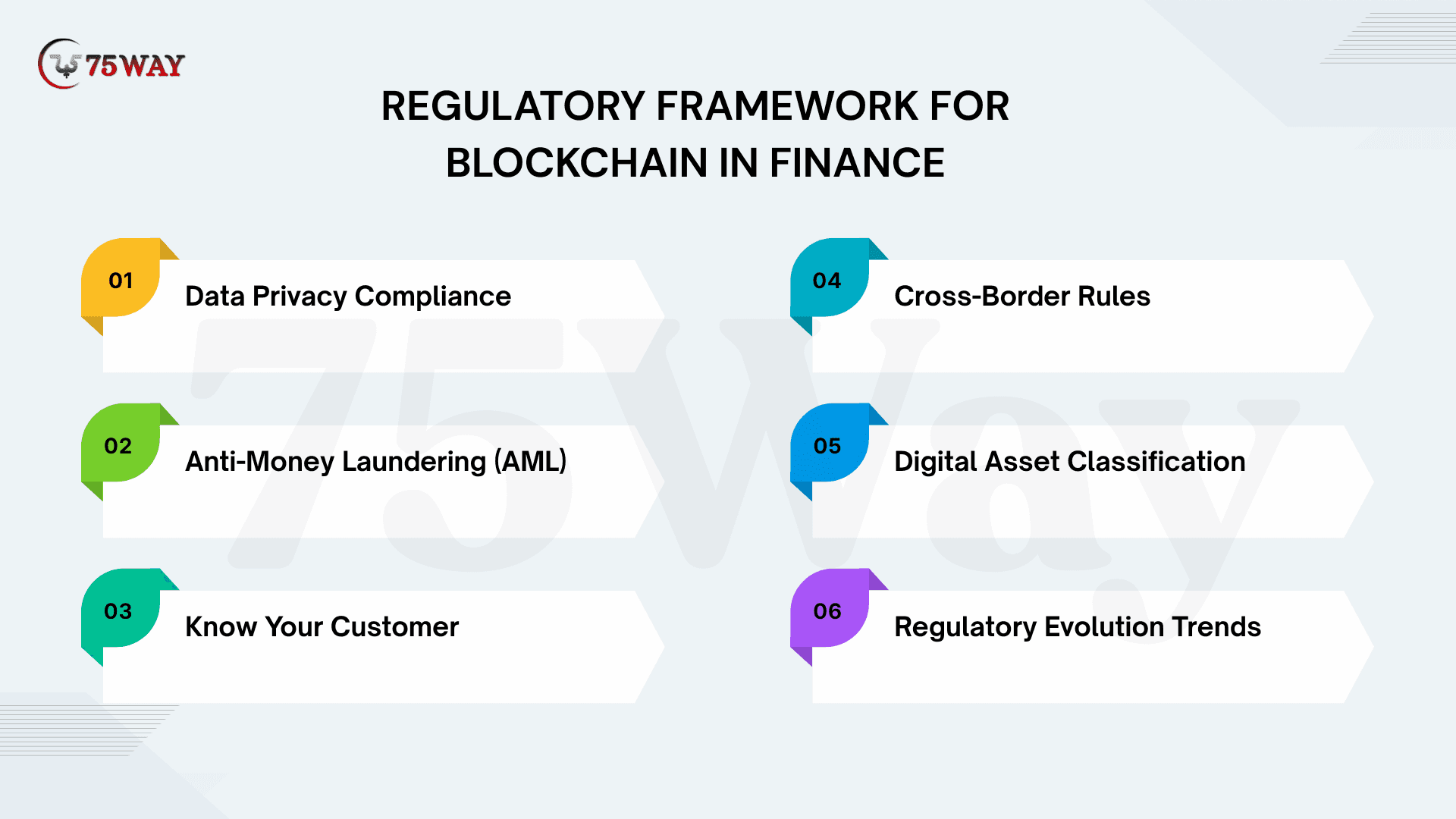
- Data Privacy Compliance: Regulations ensure blockchain systems protect sensitive financial data and user information securely across digital platforms.
- Anti-MoneyLaundering (AML): AML standards help financial institutions detect suspicious transactions and prevent illegal financial activities by leveraging blockchain transparency.
- Know Your Customer: KYC requirements ensure proper customer identity verification before allowing access to financial blockchain services securely.
- Cross-Border Rules: International laws govern blockchain transactions between countries, ensuring legal compliance and smooth global financial operations.
- Digital Asset Classification: Regulators define clear categories for digital assets, helping institutions manage blockchain-based financial products.
- Regulatory Evolution Trends: Financial regulations continuously adapt to balance blockchain innovation with risk management and system stability.
Future Trends of Blockchain In Finance
The future of blockchain in finance is moving toward highly automated, transparent, and decentralized financial ecosystems. Emerging technologies will improve speed, security, and efficiency while enabling smarter financial operations and fully digital transaction environments across global banking systems.
- Fully Digital Banking: Banking systems will operate completely in digital environments without traditional manual processes or paperwork. This improves accessibility, reduces operational costs, and enhances customer convenience across financial services.
- Smart Contract Finance: Financial agreements will be executed automatically using smart contracts without intermediaries or manual verification. This increases transaction accuracy, reduces delays, and strengthens trust in financial operations.
- Tokenized Assets Growth: Real-world assets such as property, stocks, and commodities will be converted into digital tokens. This improves liquidity, enables fractional ownership, and expands investment opportunities globally.
- Real-Time Settlements: Financial transactions will be processed instantly, without waiting for traditional clearing systems. This improves cash flow, reduces delays, and enhances efficiency in global payment networks.
- AI & Blockchain Integration: Artificial intelligence will work with blockchain systems to improve decision-making and fraud detection. This combination enhances predictive analytics, automation, and overall financial system intelligence.
- Automated Compliance Systems: Regulatory compliance processes will be fully automated using blockchain-based verification systems. This reduces manual effort, improves accuracy, and ensures continuous adherence to financial regulations.
- Decentralized Financial Ecosystems: Financial systems will shift toward decentralized models with reduced dependence on central authorities. This improves transparency, security, and user control over financial assets and transactions.
Wrap Up
Blockchain in finance is reshaping global banking systems by improving transparency, reducing operational inefficiencies, and enabling secure financial transactions across industries. From trade finance and credit insurance to banking operations and corporate finance, blockchain applications are redefining how financial systems operate in 2026. As financial institutions continue modernizing legacy infrastructure, blockchain adoption will become a core requirement for scalability, compliance, and global competitiveness.
Businesses exploring blockchain transformation should evaluate implementation strategies carefully to ensure security, compliance, and long-term operational efficiency. To build scalable and secure financial blockchain solutions, partnering with a reliable blockchain development company can help organizations design future-ready financial systems aligned with global innovation standards.
Frequently Asked Questions (FAQs)
What Is Blockchain In Supply Chain Finance?
Blockchain in supply chain finance is a distributed system that records transactions between buyers, suppliers, and financiers. It improves transparency, reduces delays, and ensures secure data sharing across the entire supply chain ecosystem.
How Does Blockchain Trusted Data Sharing Work In Supply Chain Finance?
Blockchain-enabled trusted data sharing enables all supply chain participants to access verified, synchronized financial data in real time. It reduces disputes, improves invoice accuracy, and strengthens trust between stakeholders.
How Does Blockchain Integration In Finance Improve Banking Systems?
Blockchain integration in finance connects traditional banking systems with decentralized ledgers, improving transaction speed, data accuracy, and operational transparency across financial institutions and enterprise workflows.
What Are The Benefits Of Blockchain Adoption In Finance Investment?
Blockchain adoption in finance investment improves transparency, reduces intermediaries, and enhances security in financial transactions. It also enables faster settlement cycles and better tracking of investment assets.
What Are Common Problems In Trade Finance And Credit Insurance Solutions Using AI And Blockchain?
Common challenges include document inefficiencies, fraud risks, slow verification processes, and lack of system interoperability. AI and blockchain together help reduce errors, improve automation, and increase operational efficiency across trade finance and credit insurance systems.