Summary
Hiring an app development company helps businesses build scalable, secure, and user-friendly mobile applications with expert guidance. It improves speed, reduces risks, and enhances customer experience across multiple industries. From healthcare to ecommerce, professional teams deliver tailored solutions that drive engagement, boost efficiency, and support long-term digital transformation and business growth.
Quick Overview
- Expert teams deliver faster development with reduced technical risks overall
- Outsourcing saves costs compared to building and maintaining in-house teams
- Scalable architecture supports future growth and feature expansion seamlessly
- Better UI UX design improves customer engagement and retention rates
- App companies provide ongoing maintenance and long-term technical support
- Industries like healthcare, ecommerce, and finance benefit most from mobile apps
There is a moment in every growing business when ideas stop being just ideas and start demanding execution. That moment is exciting, but also overwhelming. You might have a powerful concept for a mobile app that could transform customer experience, increase revenue, and build long-term brand loyalty.
Yet between that vision and a successful digital product lies a complex world of design decisions, technical architecture, user experience challenges, testing cycles, and constant updates. Many businesses underestimate how demanding app development truly is until they are already deep into it. Deadlines stretch, costs rise, and the final product often falls short of expectations.
In contrast, businesses that partner with an experienced app development company move faster, avoid costly mistakes, and build scalable solutions that actually perform in real markets. This guide explores why hiring an app development company can be a turning point for your business growth, efficiency, and long-term success.
Growing Importance of Mobile Apps in Modern Business
Mobile applications have become a central part of how customers interact with brands, services, and products. From ordering food to managing finances, apps now shape everyday behavior. Businesses that adapt to this shift gain direct access to users’ attention, while those that ignore it risk becoming invisible in a mobile-first world.
Apps are no longer just digital tools. They are business ecosystems that support engagement, retention, and revenue generation. A well-built app can automate services, personalize user experiences, and create seamless communication between customers and brands.
At the same time, user expectations are higher than ever. Slow performance, poor design, or security issues can lead to instant abandonment. This makes professional development not just useful, but essential for survival in competitive markets.
Why Businesses Struggle With In-House App Development?
Many companies initially try to build apps internally to save costs or maintain control. However, this approach often leads to unexpected challenges that slow down progress and reduce quality.
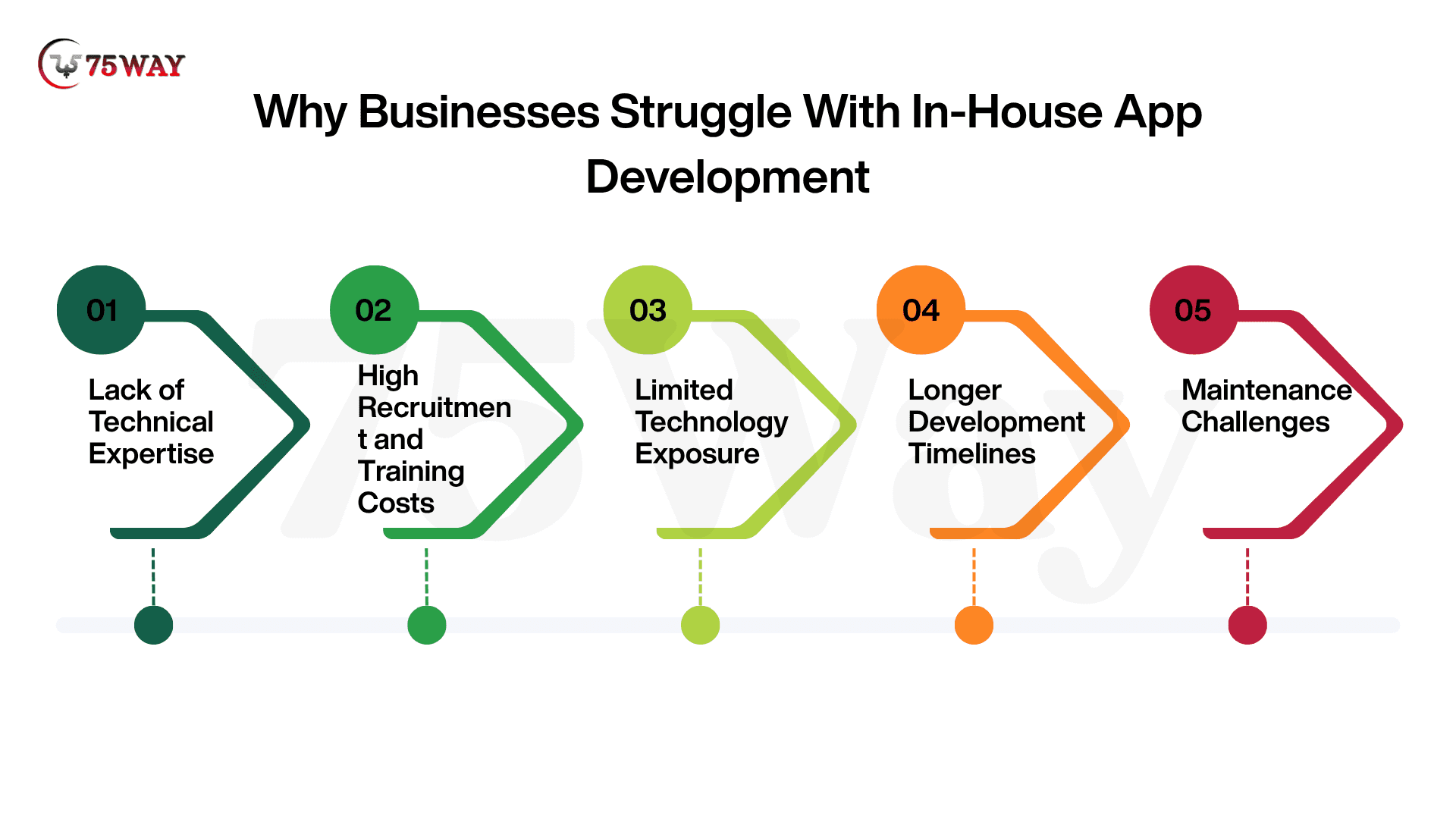
- Lack of Technical Expertise
In-house teams may not have deep knowledge of mobile frameworks, backend systems, or scalability planning, leading to inefficient development cycles and technical limitations.
- High Recruitment and Training Costs
Hiring skilled developers, designers, and testers requires significant investment. Training them further increases both time and financial burden on the organization.
- Limited Technology Exposure
Internal teams usually work with a restricted set of tools, while development companies constantly evolve with new frameworks, languages, and industry practices.
- Longer Development Timelines
Without streamlined workflows, internal projects often face delays due to multitasking, unclear priorities, or a lack of specialized roles.
- Maintenance Challenges
Post-launch support becomes difficult when internal teams are not fully prepared to handle updates, bug fixes, and scaling requirements.
Key Benefits of Hiring an App Development Company
Hiring an app development company gives businesses access to expert skills, structured processes, and advanced technologies for building high-quality mobile applications. It reduces risks, improves efficiency, and ensures scalable solutions aligned with business goals and long-term digital growth.
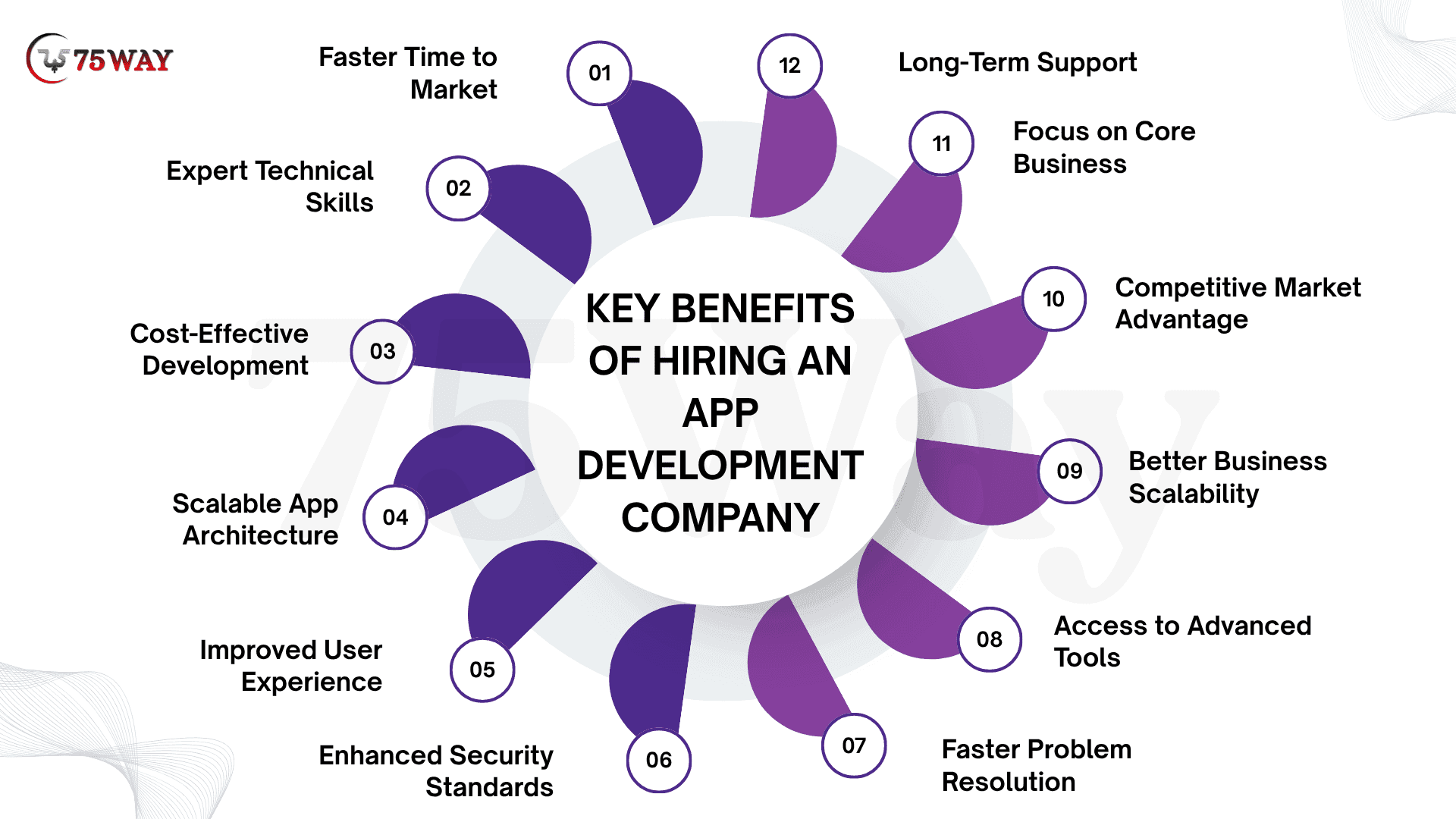
1. Faster Time Market
App development companies streamline the entire development cycle using agile methodologies, experienced teams, and pre-built frameworks, significantly reducing the time required to design, build, test, and launch mobile applications efficiently.
This faster time-to-market allows businesses to quickly reach customers, respond to market trends, and gain a competitive advantage before competitors introduce similar digital solutions in their industry.
2. Expert Technical Skills
App development companies employ skilled developers, designers, and testers with deep knowledge of programming languages, frameworks, and architecture, ensuring robust, secure, and high-performing mobile applications tailored to business needs.
They continuously upgrade their expertise with the latest technologies, enabling businesses to benefit from modern solutions like AI integration, cloud computing, and cross-platform app development strategies efficiently implemented. AAs AI features become common in apps, an ai detector for students helps education platforms verify AI-assisted work and strengthen user trust.
3. Cost-Effective Development
Outsourcing app development reduces costs associated with hiring full-time employees, infrastructure setup, training, and ongoing maintenance, making it a financially efficient option for businesses of all sizes overall.
Companies also prevent costly mistakes by relying on experienced professionals who follow best practices, ensuring fewer bugs, reduced rework, and optimized resource utilization throughout the project lifecycle, with high quality.
4. Scalable App Architecture
Development companies build apps with scalable architecture that supports increasing users, features, and data load without performance issues, ensuring long-term stability and seamless expansion as the business grows.
This scalability ensures businesses do not need to rebuild applications from scratch, saving time, reducing costs, and enabling continuous improvement and feature integration based on evolving customer needs.
5. Improved User Experience
App development companies focus heavily on user experience design, ensuring intuitive navigation, attractive interfaces, and smooth interactions that enhance user satisfaction and engagement across all devices optimized performance and usability.
Good user experience increases customer retention, reduces app abandonment rates, and builds strong brand loyalty, ultimately contributing to higher conversions and long-term business success in competitive markets.
6. Enhanced Security Standards
Professional development companies implement strong security protocols, encryption methods, and compliance standards to protect sensitive user data and prevent unauthorized access or cyber threats across all application layers securely.
They continuously monitor vulnerabilities, update systems, and use automated patch management software to deploy security updates and address vulnerabilities, ensuring long-term protection in digital environments.
7. Faster Problem Resolution
Experienced development teams quickly identify and resolve technical issues using structured debugging processes, minimizing downtime and ensuring smooth application performance across all platforms efficiently and systematically every time.
This ensures businesses face fewer disruptions, maintain operational continuity, and provide users with stable, high-quality digital experiences without unexpected technical failures or delays, improving overall reliability and satisfaction efficiently.
8. Access Advanced Tools
App development companies use advanced tools, frameworks, and development environments that improve productivity, code quality, and application performance significantly during the entire development process, from planning to deployment stages.
These tools allow faster prototyping, better collaboration among teams, and efficient handling of complex functionalities, resulting in higher-quality applications delivered in shorter timeframes with improved consistency and accuracy.
9. Better Business Scalability
App development companies design solutions that support business expansion, allowing seamless integration of new features, services, and user demands without disrupting existing systems while maintaining system performance stability.
This flexibility enables businesses to grow rapidly in competitive markets while maintaining performance, efficiency, and customer satisfaction at every stage of growth for sustainable business success.
10. Competitive Market Advantage
Professional app development companies help businesses create innovative applications that stand out in the market, offering unique features and superior performance compared to competitors in highly competitive digital environments.
This competitive advantage increases brand visibility, attracts more customers, and strengthens market position, helping businesses achieve long-term success and industry leadership through continuous innovation and strategic execution.
11. Focus Core Business
Outsourcing app development allows businesses to focus on their core operations while experts handle technical development, design, testing, and deployment processes efficiently without distraction from complex technical challenges.
This improves overall productivity, resource allocation, and strategic decision-making, enabling businesses to scale faster without being burdened by technical complexities or development challenges across multiple operational levels.
12. Long-Term Support
App development companies provide ongoing maintenance, updates, and technical support to ensure applications remain functional, secure, and compatible with evolving technologies and platforms over extended periods of usage reliably.
This long-term support helps businesses adapt to changing market needs, fix issues quickly, and continuously improve user experience without rebuilding applications from scratch, ensuring sustained digital performance growth.
Industries That Benefit From App Development Companies
App development companies support multiple sectors by delivering tailored digital solutions that solve operational challenges, improve customer engagement, and streamline services. These solutions help organizations modernize processes, increase efficiency, and stay competitive in rapidly evolving technology-driven markets across global ecosystems.
- Healthcare
Healthcare apps support teleconsultation, patient record management, appointment scheduling, and diagnostic access systems. They connect doctors and patients through real-time communication channels. Medical platforms also improve care coordination, reduce delays in treatment, and expand healthcare access across remote and urban regions.
- Ecommerce & Retail
Ecommerce apps support product browsing, secure payment processing, inventory tracking, and personalized shopping experiences. They help businesses analyze customer behavior and improve engagement. Retail platforms also manage loyalty programs, promotional campaigns, and order fulfillment processes to increase customer retention and sales performance.
- Education
Education apps support virtual classrooms, online courses, interactive lessons, and student assessment systems. They enable teachers and learners to communicate, share resources, and track academic progress. These platforms also improve access to education, offer flexible learning schedules, and enhance students' knowledge retention.
- Finance & Banking
Finance apps support digital payments, account management, investment tracking, and budgeting tools. They allow users to monitor transactions, manage savings, and plan financial goals. These platforms also provide real-time financial insights, secure data handling, and simplified banking experiences for individuals and businesses.
- Logistics & Supply Chain
Logistics apps support shipment tracking, fleet management, route optimization, and inventory monitoring systems. They help companies manage deliveries, reduce transportation delays, and improve coordination between supply chain teams. These platforms also provide real-time visibility into operations and improve overall delivery performance.
- Real Estate Industry
Real estate apps support property listings, virtual tours, client communication, and lead management systems. They connect buyers, sellers, and agents for faster transactions. These platforms also enhance property discovery, improve market reach, and simplify communication throughout the buying and selling process.
- Travel & Hospitality
Travel apps support flight booking, hotel reservations, itinerary planning, and navigation assistance systems. They provide users with real-time travel updates and personalized recommendations. These platforms also improve trip planning convenience, enhance accessibility, and create smoother travel experiences for users globally.
- Consumer Goods
Consumer goods applications support inventory management, online shopping, marketing campaigns, and customer engagement systems. They help businesses understand customer preferences and improve targeting strategies. These platforms also strengthen brand loyalty, increase sales performance, and enhance personalized shopping experiences for users.
Final Thoughts
Hiring an app development company is a strategic move that helps businesses turn ideas into powerful digital products without unnecessary complexity. Businesses gain access to scalable solutions that evolve with market demands while maintaining strong performance and user experience.
Instead of managing technical challenges internally, companies can focus on growth, innovation, and customer relationships. Professional developers ensure that every stage, from design to deployment, aligns with business goals and industry standards. This approach reduces risks, improves efficiency, and delivers long-term value. Partner with a trusted mobile app development company to build scalable and high-performance digital solutions today.
Frequently Asked Questions
Why Is Mobile App Development Important For Modern Businesses?
Mobile app development helps businesses connect directly with users, improve engagement, and deliver personalized experiences that strengthen brand loyalty and increase long-term revenue opportunities across digital platforms.
How Does App Development Impact Customer Experience?
Well-designed apps improve navigation, speed, and usability, allowing customers to interact smoothly with services while receiving personalized content, faster responses, and more convenient access to business offerings anytime.
What Makes Professional App Development Different From Freelancers?
Professional companies offer structured processes, dedicated teams, advanced tools, and long-term support, while freelancers may lack scalability, consistent quality control, and comprehensive project management capabilities for complex applications.
Can Small Businesses Benefit From Mobile Applications?
Small businesses gain visibility, improved customer interaction, and increased sales through mobile apps, helping them compete with larger companies by offering accessible and convenient digital services to users.
How Do App Development Companies Ensure Application Security?
They implement encryption, secure coding practices, regular vulnerability testing, and compliance standards to protect user data, prevent breaches, and maintain trust across digital platforms and application environments.
What Factors Influence App Development Timelines?
Timelines depend on app complexity, features, design requirements, technology stack, and testing phases, with larger projects requiring more development cycles compared to simpler applications with basic functionality.
Why Is Ongoing Maintenance Necessary After App Launch?
Maintenance ensures apps remain compatible with updates, fix bugs, improve performance, and add new features, keeping applications relevant, secure, and aligned with evolving user expectations and market changes.
How Do Mobile Apps Support Business Growth?
Mobile apps support growth by increasing customer engagement, streamlining operations, improving accessibility, and creating direct communication channels that help businesses scale faster and strengthen market presence.