Summary
B2B sales app development helps businesses organize sales processes, track customer interactions, and manage pipelines in one system. It supports better coordination between teams and improves visibility across deals. This guide explains strategic benefits, practical use cases, and long-term value for companies looking to improve sales operations and revenue planning.
Quick Overview
- Sales apps help organize complex enterprise sales processes into structure.
- Teams gain clearer visibility into deals and customer interactions daily.
- Automation reduces repetitive tasks and supports faster internal coordination cycles.
- Better tracking improves understanding of customer needs and buying patterns.
- Centralized systems help leadership review performance and plan revenue growth.
Sales today is not just about conversations or relationships. It depends on how well information flows between teams, how quickly decisions are made, and how clearly opportunities are tracked across the pipeline. Many businesses still rely on scattered tools.
A B2B sales application development solution brings structure to this environment. It brings leads, customer data, communication history, and performance tracking into one place where teams can work with clarity. Instead of searching through multiple systems, sales teams get a clear view of every deal and every interaction.
This guide explains how B2B sales app development supports business growth, improves sales coordination, and gives leadership teams better control over revenue planning. It also covers real use cases and long-term value for organizations aiming to improve their sales operations.
What Is B2B Sales App?
A B2B sales app is a digital system designed to help businesses manage and organize their sales activities when they sell to other businesses. It brings together lead tracking, customer communication, deal management, and sales reporting into one structured platform so teams can work with clarity and consistency.
Instead of handling sales through spreadsheets, emails, and disconnected tools, a B2B sales app gives sales teams a single place to manage the entire customer journey—from first contact to final deal closure.
Key Benefits: How B2B Sales App Development Improves Sales Efficiency?
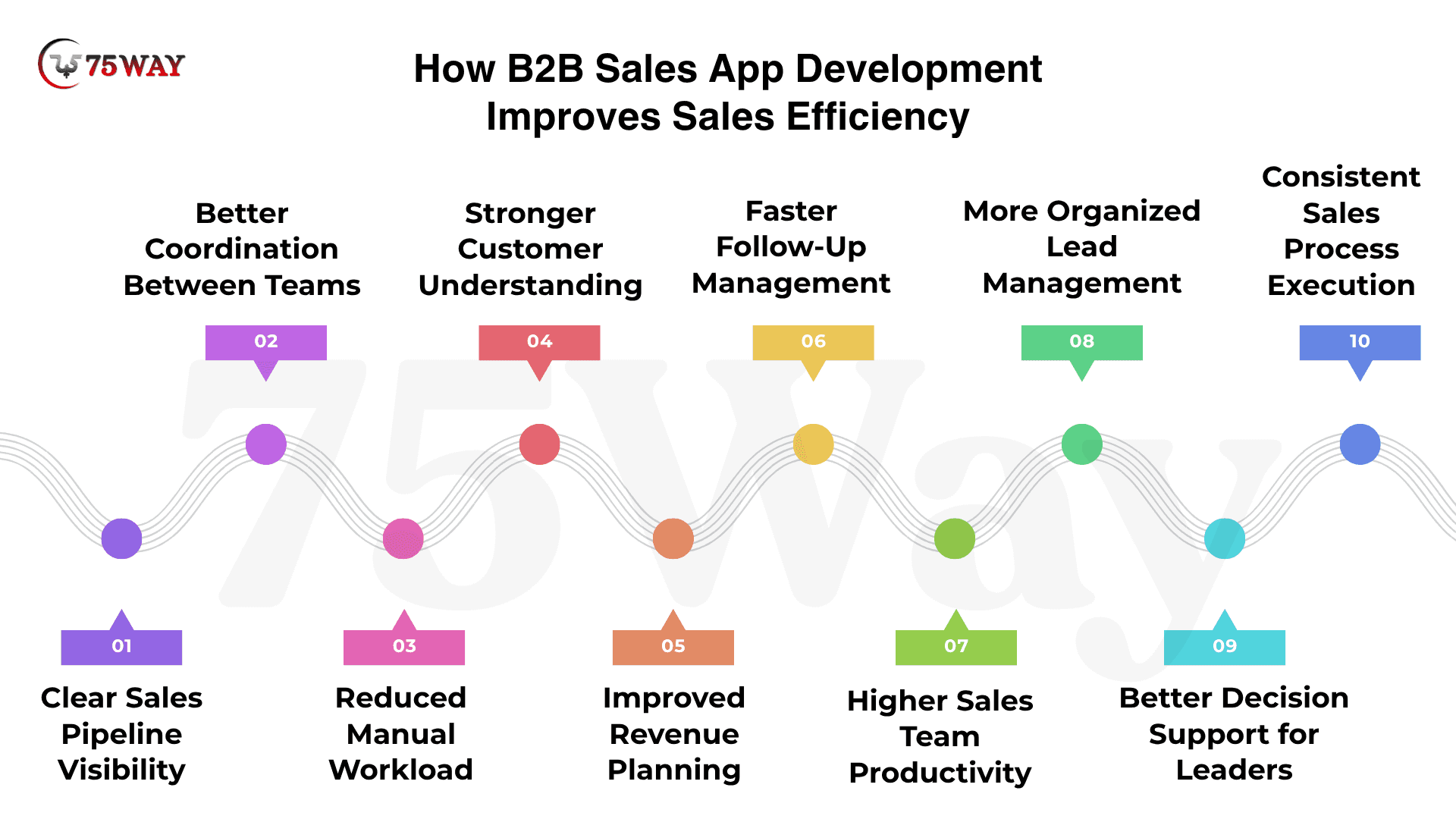
B2B sales app development helps businesses organize complex sales activities into a structured system that enables teams to track leads, manage customer interactions, and monitor deals in one place.
1. Clear Sales Pipeline Visibility
A B2B sales app provides a structured view of every deal in the pipeline, showing exactly which stage each opportunity is in. Instead of relying on manual updates or assumptions, sales teams can monitor progress in real time. This helps identify stalled deals early and allows managers to take timely action where attention is needed most.
With clearer visibility, decision-makers can understand overall pipeline health without digging through multiple reports. It becomes easier to track movement across stages like lead qualification, negotiation, and closure. This clarity supports better forecasting and helps teams prioritize high-value opportunities with more confidence.
2. Better Coordination Between Teams
A sales app allows sales, marketing, and support teams to work from the same customer data. Everyone can access updated information about leads, conversations, and deal progress. This reduces confusion caused by disconnected tools or incomplete communication between departments during customer handling.
When all teams operate on a shared system, coordination becomes smoother. Marketing can see lead quality, sales can view campaign sources, and support can access customer history. This alignment improves response quality and helps create a more consistent customer experience across every stage of interaction.
3. Reduced Manual Workload
Sales teams often spend significant time entering data, updating spreadsheets, and preparing reports. A sales app reduces this effort by automating repetitive tasks such as activity logging, follow-up reminders, and basic reporting. This lowers the need for manual effort in daily sales operations.
As routine tasks become automated, sales professionals gain more time to focus on meaningful customer conversations. This shift allows teams to spend energy on relationship building and closing deals rather than administrative work, improving overall productivity across the sales function.
4. Stronger Customer Understanding
A B2B sales app stores all customer interactions in one place, including emails, calls, meeting notes, and past conversations. This creates a complete record of each client’s journey, making it easier for teams to understand behavior patterns and preferences.
With this structured information, sales representatives can respond more thoughtfully to customer needs. They no longer rely on memory or scattered notes. Instead, they can review the complete interaction history before engaging, which helps build stronger and more relevant customer relationships.
5. Improved Revenue Planning
Sales applications provide structured data on deal progress, conversion rates, and pipeline health. Leadership teams can use this information to understand expected revenue and identify performance trends across different sales stages.
This clarity supports more grounded planning for future growth. Instead of relying on estimates, decision-makers can base strategies on actual pipeline data. It also helps in allocating resources more accurately and setting realistic sales targets for teams across the organization.
6. Faster Follow-Up Management
Sales apps include reminder systems that track follow-up activities and upcoming tasks. This helps teams stay on top of communication with prospects and reduces the chance of missing important interactions during the sales cycle.
Timely follow-ups play a key role in closing deals. With structured reminders and task tracking, sales representatives can engage prospects at the right moments. This improves response timing and supports smoother movement through the sales pipeline.
7. Higher Sales Team Productivity
By reducing manual updates and repetitive administrative work, sales apps allow teams to spend more time on customer engagement. Sales professionals can focus on meaningful conversations instead of routine data entry or reporting tasks.
This shift leads to better use of working hours and improves overall output from the same team size. It also helps sales teams handle more opportunities without increasing workload pressure, supporting sustainable performance improvement.
8. More Organized Lead Management
Sales applications categorize and prioritize leads based on defined criteria such as industry, interest level, or deal size. This helps teams focus on high-value opportunities instead of randomly managing incoming prospects.
With a structured lead organization, sales teams can follow a clearer approach to outreach and engagement. This reduces confusion, improves response prioritization, and helps ensure that strong opportunities are not missed during busy sales cycles.
9. Better Decision Support for Leaders
Leadership teams gain access to real-time dashboards showing performance across deals, teams, and pipelines. This helps them understand what is working and where adjustments are needed in sales strategy or execution.
With clearer visibility into actual performance data, decisions become more grounded. Managers can guide teams more effectively, adjust targets when needed, and plan improvements based on real activity rather than assumptions.
10. Consistent Sales Process Execution
A sales app introduces a structured flow for managing deals from start to finish. Every team member follows the same stages, reducing variation in how opportunities are handled across the organization.
This consistency improves overall reliability in sales outcomes. It also makes it easier to train new team members and maintain standard practices across different departments, ensuring smoother execution of sales activities over time.
How B2B Sales Applications Support Daily Sales Work?
A B2B sales application brings structure to daily sales activities by organizing tasks, tracking customer interactions, and keeping all deal-related information in one place. Instead of switching between multiple tools or relying on memory, sales teams can focus on clear priorities, planned follow-ups, and active opportunities. This helps create a more controlled workflow where every action is visible and easy to manage throughout the day.
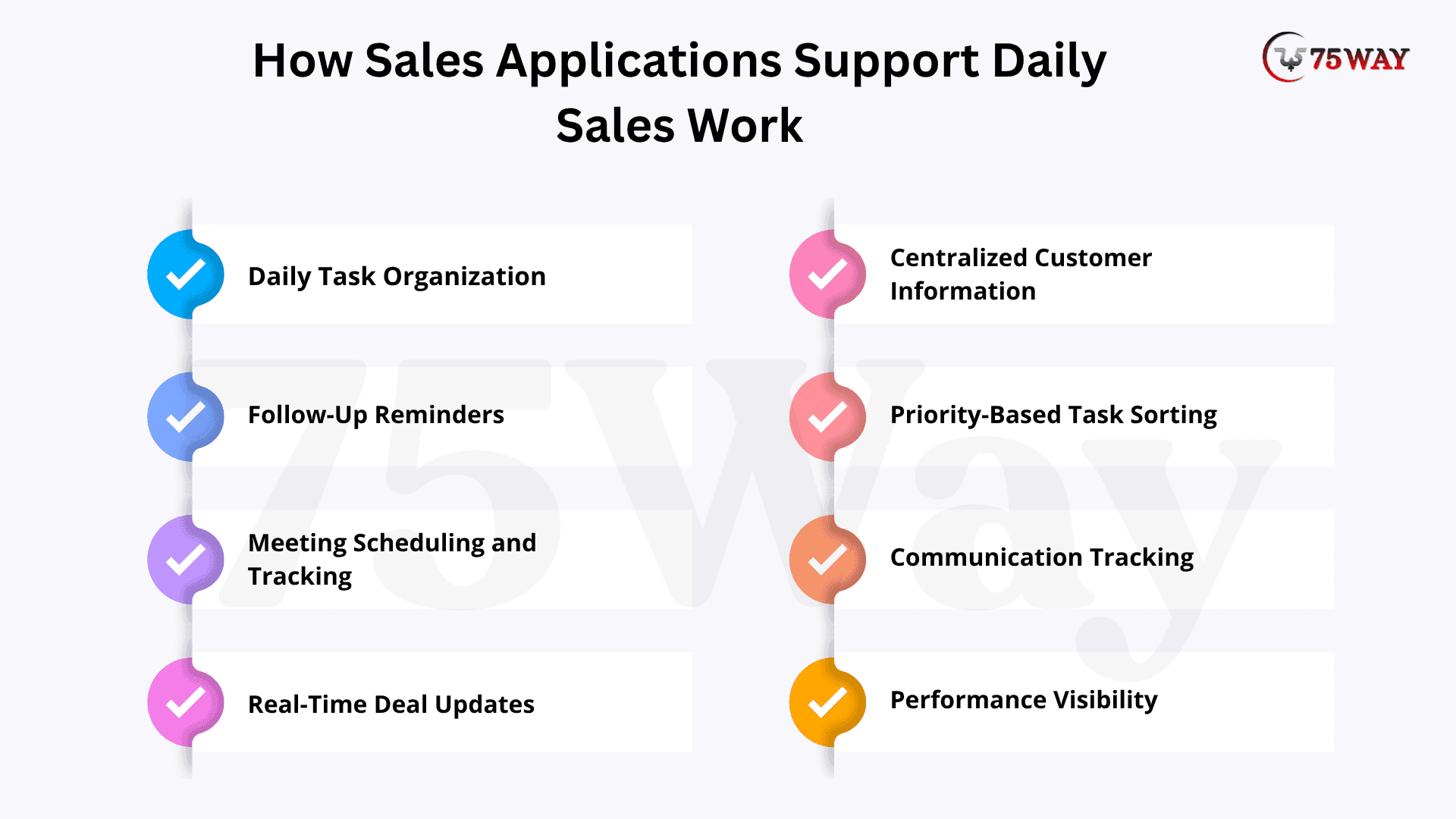
- Daily Task Organization: Sales apps list all assigned tasks in one dashboard, helping representatives see exactly what needs attention each day. This reduces confusion and helps structure daily work without missing important activities.
- Follow-Up Reminders: Automated reminders help sales teams track upcoming follow-ups with leads and customers. This ensures timely communication and reduces the chances of losing potential opportunities due to missed contact.
- Meeting Scheduling and Tracking: Sales applications allow users to schedule meetings and log them within the system. This keeps all appointment details organized and easily accessible for future reference or preparation.
- Real-Time Deal Updates: Sales teams can update deal progress instantly, which allows everyone involved to see the current status. This improves awareness of ongoing opportunities throughout the day.
- Centralized Customer Information: All customer data, including past conversations and notes, is available in one place. This helps sales representatives prepare better before reaching out to clients or attending meetings.
- Priority-Based Task Sorting: Sales apps often highlight high-priority leads or deals. This helps teams focus their energy on opportunities that are more likely to close or require immediate attention.
- Communication Tracking: Every email, call, or message related to a client is recorded in the system. This creates a clear history of interactions, helping teams avoid repeated or missed communication.
- Performance Visibility: Sales representatives and managers can review daily activity summaries, helping them understand progress and adjust efforts where needed for better results.
How Sales Apps Influence Buyer Decision Journey?
Sales apps guide buyer decisions by organizing communication, tracking interactions, and sharing timely information. They help sales teams respond faster, maintain clarity, and support buyers through each stage of their decision journey with structured engagement.
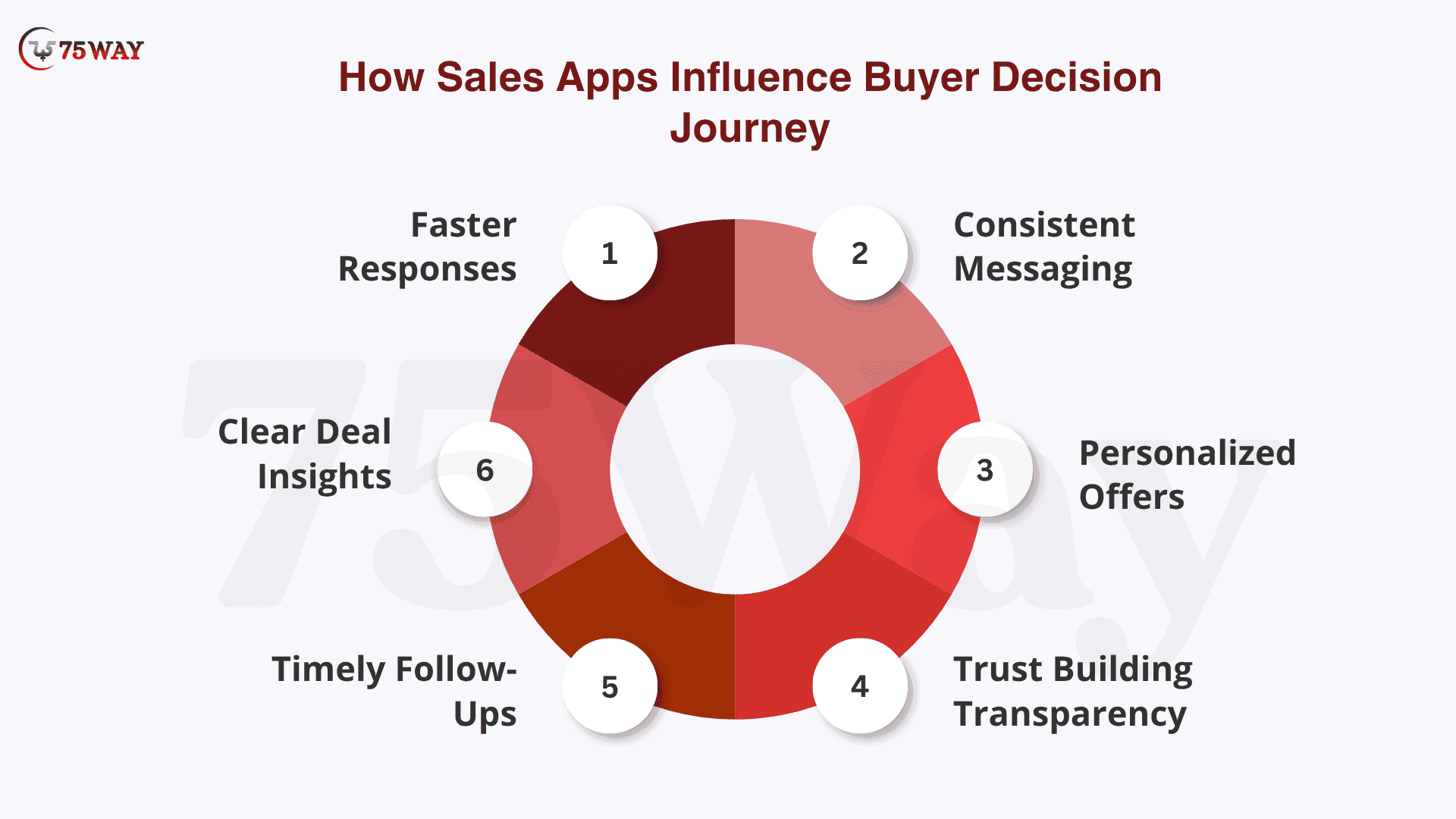
- Faster Responses: Sales apps help teams reply to buyer questions quickly by giving instant access to customer history and deal context. This reduces waiting time during decision-making. Buyers feel more confident when responses are timely and relevant.
- Consistent Messaging: Sales apps record every interaction across emails, calls, and meetings in one system. This keeps communication aligned across all touchpoints. Buyers receive clear and unified information throughout their evaluation process without mixed messages or confusion.
- Personalized Offers: Sales apps store detailed customer preferences and interaction history. This helps teams create tailored proposals based on specific needs. Buyers engage more when solutions match their exact requirements and business priorities during evaluation stages.
- Trust Building Transparency: Sales apps maintain complete records of discussions and commitments. This creates clarity in every interaction between buyer and seller. Buyers develop stronger trust when they can see consistent updates and transparent communication throughout the process.
- Timely Follow-ups: Sales apps send reminders for follow-up actions at key stages. This keeps communication active during the buyer journey. Buyers stay engaged because they receive consistent attention without delays or missed contact points from the sales team.
- Clear Deal Insights: Sales apps provide structured visibility into deal progress for both teams and buyers. This makes it easier to understand the current status and next steps. Buyers make informed decisions when they see clear progress and direction.
Integration With CRM, ERP, and Marketing Systems
Sales applications become more valuable when they connect with existing business systems like CRM, ERP, and marketing platforms. This integration allows customer data, sales activity, inventory details, and campaign performance to flow between systems without manual entry. It creates a connected environment where teams can access updated information without switching between tools.
When integrated with CRM systems, sales apps provide a complete view of customer interactions, lead history, and deal progress. This helps sales teams understand context before engaging with prospects. It also reduces duplication of data and keeps customer records consistent across the organization.
Integration with ERP and marketing systems adds another layer of value. ERP connectivity supports access to pricing, billing, and inventory data during sales discussions, while marketing integration helps track lead sources and campaign performance. Together, these connections help teams coordinate better and make decisions based on complete business information.
ROI Measurement From Sales Applications
Sales applications help businesses track financial and operational returns clearly. They provide structured data on performance, conversions, and cost savings. This allows leadership teams to understand value generated from sales activities and technology investment decisions more accurately over time.
- Increased conversion rates through better lead tracking systems
- Reduced operational costs by automating repetitive sales tasks
- Improved sales team productivity through organized workflows daily
- Faster deal closure due to streamlined communication processes
- Better forecasting accuracy using real-time sales performance data
- Higher revenue visibility through structured pipeline reporting systems
Conclusion
B2B sales app development assists businesses in managing complex sales cycles with greater structure and clarity. It helps teams track leads, organize customer interactions, and follow deal progress in a single system, reducing confusion caused by scattered tools. This creates better alignment between sales, marketing, and support functions while giving leadership a clearer view of revenue movement and pipeline health. With consistent access to updated data, teams can respond more quickly to opportunities, maintain stronger customer communication, and plan sales activities with greater confidence. To build a solution that fits your sales structure, you can collaborate with a reliable app development company.
Frequently Asked Questions (FAQs)
Can A Sales App Support Remote Sales Teams?
Yes, sales applications support remote teams by providing cloud-based access to customer data, tasks, and communication history. Sales representatives can manage leads, update deals, and collaborate with colleagues from any location, ensuring continuous workflow without dependency on physical office systems or centralized infrastructure.
How Does A Sales App Support Customer Retention?
A sales app supports customer retention by keeping a complete interaction history in one place, helping teams understand past issues, preferences, and engagement patterns. This allows businesses to maintain consistent communication, respond faster to concerns, and build stronger relationships that encourage repeat business and long-term customer loyalty over time.
Can A Sales App Improve Cross-Selling Opportunities?
Yes, a sales app highlights customer purchase history and behavior patterns, making it easier to identify related product or service opportunities. Sales teams can use this information to recommend relevant solutions at the right time, increasing cross-selling potential while improving customer satisfaction through more personalized engagement.
How Does A Sales App Support Decision-Making?
A sales app supports decision-making by providing real-time data on pipeline status, deal progress, and team performance. Leaders can review accurate reports instead of relying on assumptions. This helps in setting priorities, adjusting strategies, and planning resources based on actual business activity and sales trends.
What Challenges Can Occur During Implementation?
Challenges may include data migration issues, team adaptation, and integration with existing systems. Businesses may also face resistance from employees used to manual processes. Proper onboarding, phased rollout, and clear training programs help reduce disruption and support smoother adoption across all departments using the system.
How Often Should A Sales App Be Updated?
Sales applications should be updated regularly to improve performance, fix issues, and add new features. Updates may depend on business needs, but continuous improvement ensures better usability, security, and alignment with changing sales processes, customer expectations, and internal operational requirements over time.