Summary
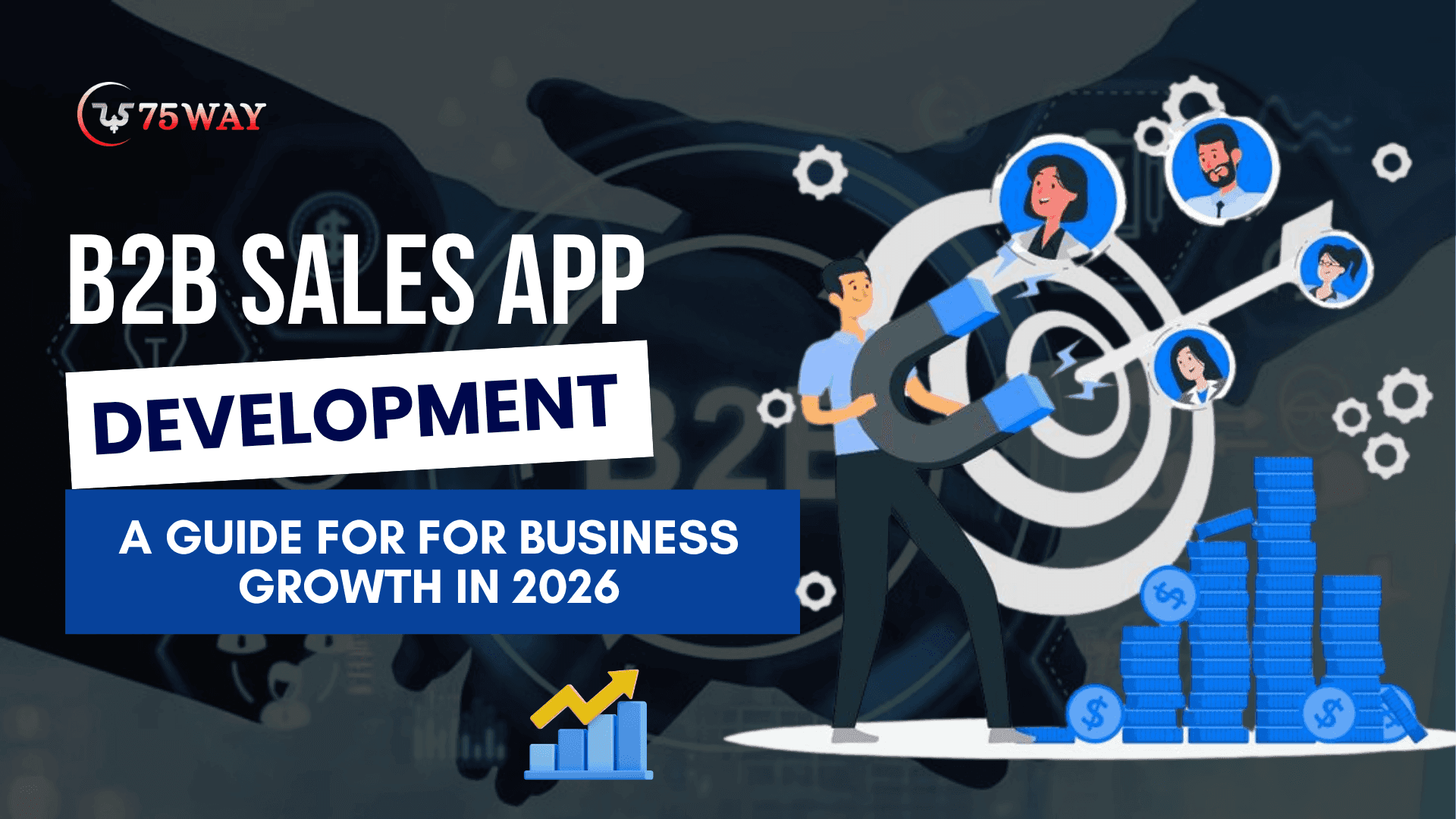
B2B sales app development enables organizations to streamline sales operations, manage pipelines efficiently, and improve decision-making through real-time data access. These applications integrate CRM systems, analytics, and automation tools to enhance productivity. This guide explores architecture, features, benefits, and implementation strategies that help businesses scale revenue and improve sales performance effectively.
Quick Overview
- B2B sales apps streamline complex enterprise sales processes efficiently
- Real-time data improves decision-making across sales teams significantly
- Automation reduces manual effort and increases productivity levels
- Average B2B sales app development cost ranges from $25,000 to $500,000+
- Scalable architecture supports long-term business growth and expansion
Selling in a B2B environment is no longer a predictable sequence of steps. Buyers today move across multiple channels, compare solutions silently, and make decisions long before a sales conversation even begins.
Traditional tools were designed for record-keeping. Modern sales environments demand intelligence, automation, and real-time decision support. This is where B2B sales app development becomes a strategic necessity rather than a digital upgrade.
A well-built sales application does not just store data. It connects signals, predicts outcomes, prioritizes actions, and aligns teams around revenue outcomes. Instead of relying on memory or fragmented updates, sales teams operate through real-time visibility, knowing what to do, when to do it, and what’s already been done.
Now you have a question: how to develop a B2B sales app? This guide explores B2B sales app development, architecture, features, benefits, and strategic business impact. It also helps leaders understand how to turn sales operations into a scalable, data-driven growth engine.
The Shift From Manual Selling to Intelligent Sales Systems
B2B sales have moved from intuition-based decision-making to system-driven execution. Sales teams are no longer evaluated only by effort but by precision, timing, and conversion efficiency. Several reasons are there:
- Increasing deal complexity
- Longer buying cycles
- Multi-stakeholder decision processes
- Higher expectations for personalization
- Data-driven procurement models
In this environment, relying on spreadsheets and disconnected tools creates friction. Sales teams lose visibility, follow-ups become inconsistent, and opportunities slip through gaps. B2B sales apps solve this by centralizing intelligence and operational flow into one structured system.
What Is B2B Sales App Development?
B2B sales app development refers to building digital platforms that manage the entire sales lifecycle, from lead capture to deal closure and post-sale engagement. Unlike generic CRM tools, modern sales apps are customized ecosystems designed around business logic, industry workflows, and revenue goals. They typically combine:
- Workflow automation
- Customer intelligence systems
- Pipeline management
- Communication tracking
- Predictive analytics
Development Roadmap: How To Develop B2B Sales Application?
Building a high-performance B2B sales application requires an end-to-end approach where each stage contributes to the system's long-term efficiency. This roadmap ensures smooth execution from initial planning to continuous optimization in real business environments.
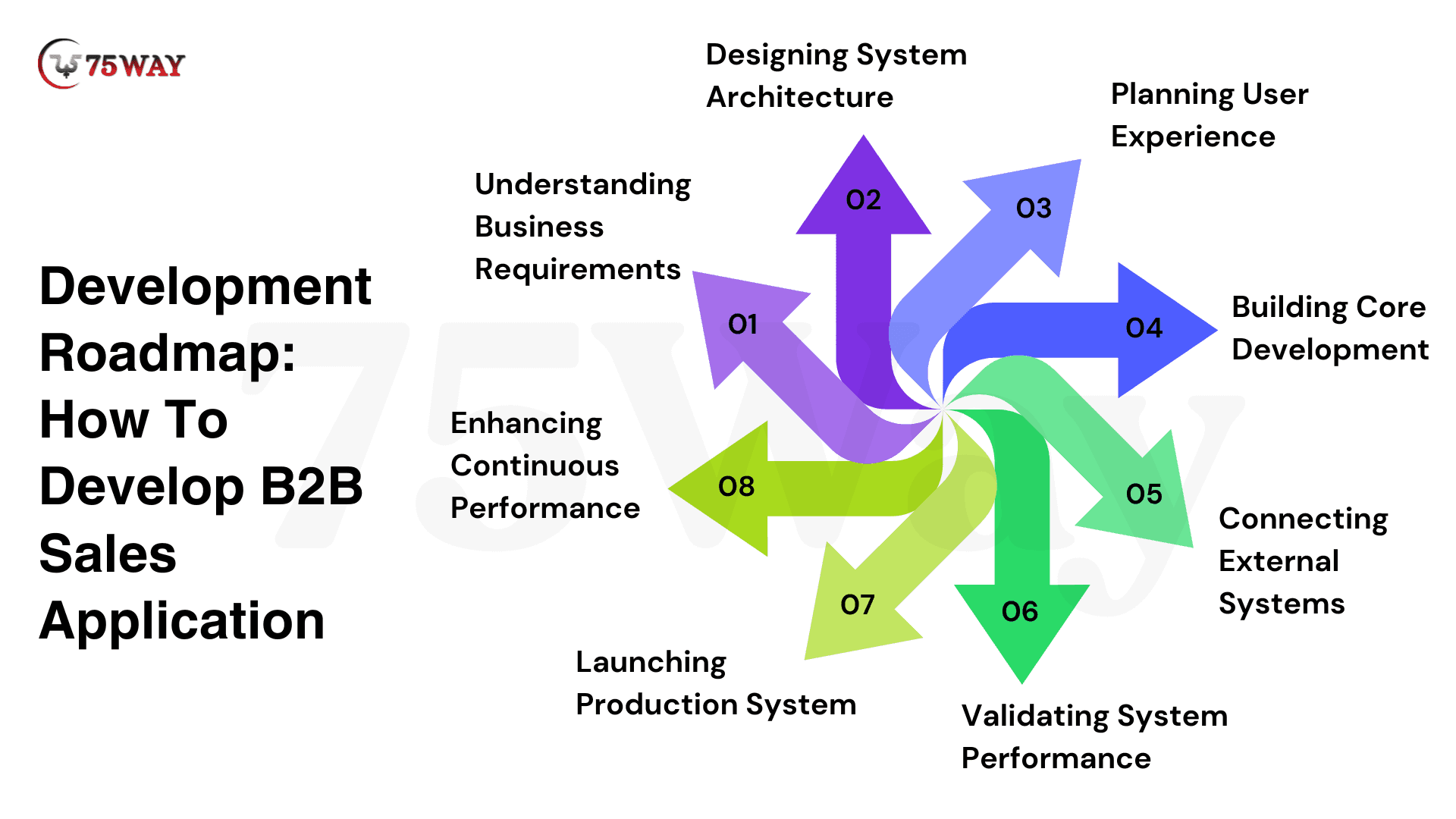
Step 1: Understanding Business Requirements
This stage focuses on understanding business objectives, sales workflows, target users, and customer journey mapping. It helps identify core requirements, define pain points, and establish a clear foundation for system development. Proper discovery ensures the final product aligns with business goals and user expectations.
It also involves competitor analysis and market research to identify gaps and opportunities. Clear documentation of requirements at this stage reduces development risks and ensures that all stakeholders share a unified vision before moving into technical planning.
Step 2: Designing System Architecture
After defining requirements, the next step focuses on creating a structured system architecture. This ensures all components, including modules, databases, and workflows, are properly planned for scalability and performance.
It also defines how different system components will interact, including data flows, integration points, and backend logic. A strong architecture ensures long-term stability and easier future enhancements.
Step 3: Planning User Experience
In the following system architecture, user experience planning focuses on designing intuitive interfaces for sales teams. The goal is to simplify navigation and support faster decision-making during daily sales activities.
This phase also includes wireframing dashboards, pipelines, and reporting screens. A well-designed UX reduces friction, improves adoption rates, and ensures users can efficiently manage leads and customer interactions.
Step 4: Core Development
Once design planning is complete, the development phase begins by building frontend interfaces, backend systems, and core intelligence modules. This brings the conceptual design into a working application.
Developers also implement business logic, APIs, and data processing systems during this stage. The focus remains on creating a stable, scalable, and performance-driven sales application environment.
Step 5: Connecting External Systems
After core development, integration begins by connecting the application with external platforms like CRM, ERP, and communication tools. This ensures seamless data flow across business systems.
It also enables real-time synchronization of customer data, sales records, and communication history. Proper integration improves operational efficiency and ensures a unified view of all sales activities.
Step 6: Validating System Performance
Once integration is complete, testing ensures the system performs accurately under real-world conditions. This includes checking functionality, performance, security, and usability across different scenarios.
Any issues identified during testing are resolved to improve stability and reliability. This phase ensures the application is fully optimized before it is made available for live business operations.
Step 7: Launching Production System
After successful testing, the application is deployed into a live environment for real-time usage. This marks the transition from development to active business operations.
Deployment also includes configuring servers, ensuring system stability, and enabling user access. A smooth launch ensures minimal disruption and allows teams to begin using the system effectively.
Step 8: Enhancing Continuous Performance
Following deployment, continuous optimization begins based on real usage data and user feedback. This ensures the system evolves with changing business needs.
Improvements include performance tuning, feature enhancements, and workflow optimization. Ongoing updates help maintain system efficiency, improve user experience, and support long-term business scalability.
How B2B Sales Application Works?
A high-performing B2B sales application operates through a layered architecture where each layer plays a specific role in managing data, improving decision-making, and supporting sales execution. Together, these layers create a unified system that enhances efficiency, visibility, and performance across the entire sales lifecycle.
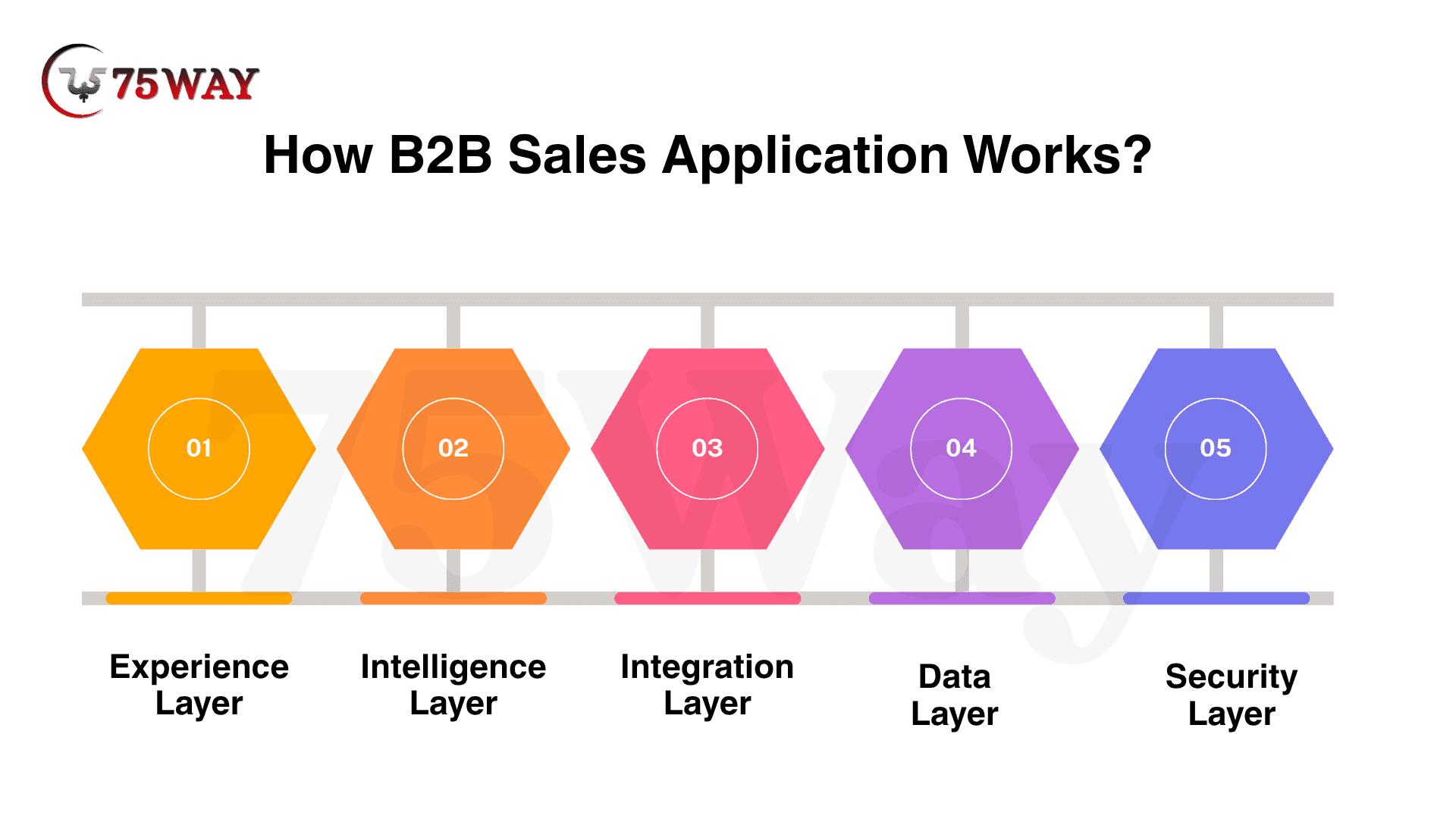
- Experience Layer: This layer serves as the primary interface for sales teams, focusing on usability, speed, and clarity. It includes dashboards, pipelines, and customer views that help teams manage leads, track progress, and take quick actions in real time.
- Intelligence Layer: It processes sales data to generate insights, predict outcomes, and prioritize leads. Machine learning models and analytics engines work together to support lead scoring, forecasting, and decision-making accuracy for sales teams.
- Integration Layer: It connects the sales application with external systems such as CRMs, email platforms, marketing tools, ERP systems, and communication channels. It ensures seamless data flow and unified operations across all business tools.
- Data Layer: Store structured and unstructured sales data while enabling fast access and advanced analytics. It supports reporting, trend analysis, and historical data evaluation for better business decisions.
- Security Layer: This layer ensures complete protection of sensitive sales and customer data through encryption, role-based access control, compliance management, and continuous monitoring of all system interactions.
Together, these layers form a fully integrated B2B sales execution environment that improves efficiency, enhances decision-making, and drives scalable revenue growth.
High-Impact Features For Creating B2B Sales Mobile Apps
Modern B2B sales applications are designed to simplify complex sales processes by combining automation, intelligence, and real-time visibility. These features help sales teams manage leads, track performance, and improve decision-making efficiency across the entire sales pipeline, resulting in higher productivity and better revenue outcomes.
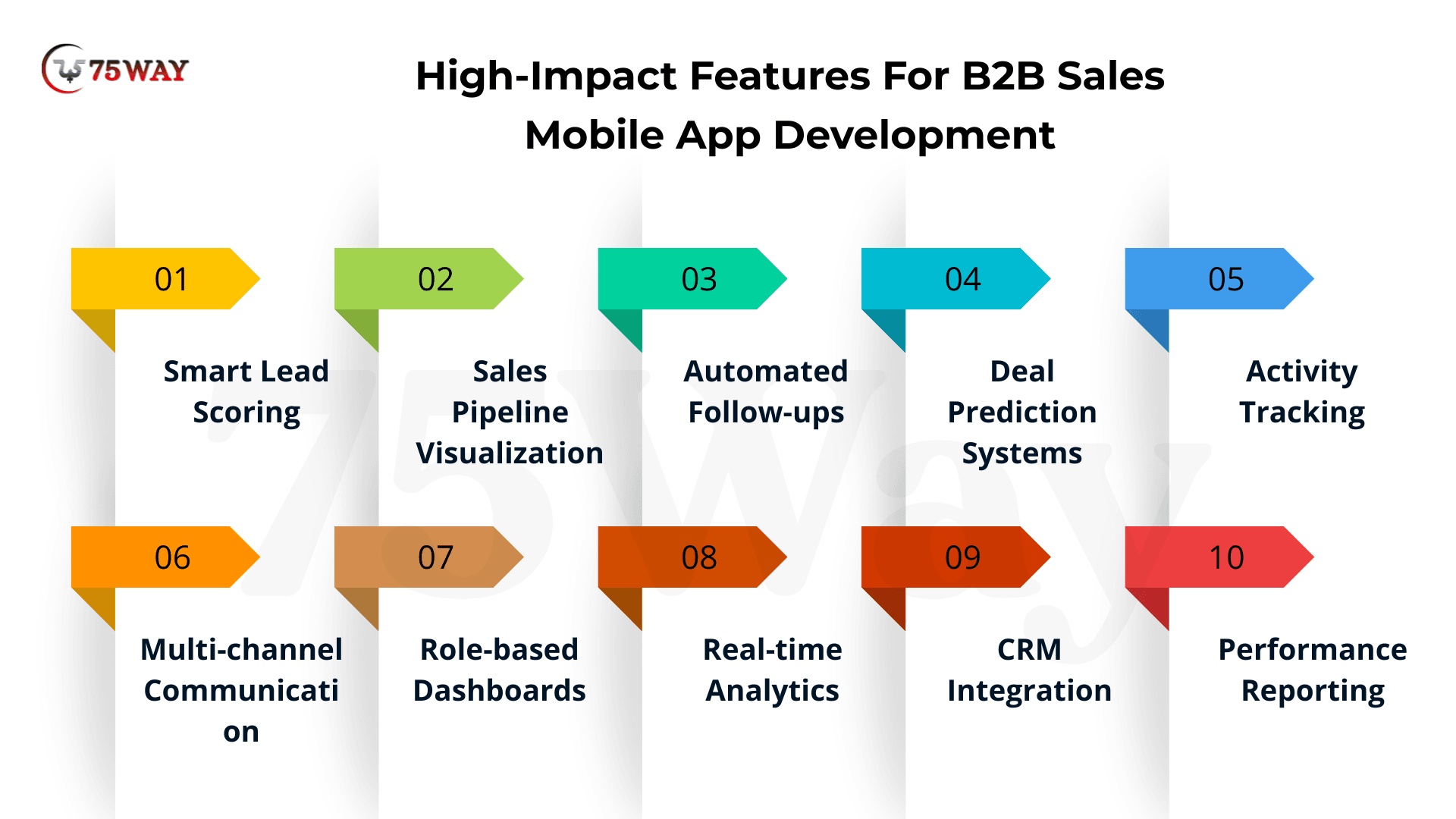
- Smart Lead Scoring: Automatically rank leads using behavior patterns, engagement levels, and intent signals for prioritization accuracy.
- Sales Pipeline Visualization: Display real-time deal progress and bottlenecks to improve visibility and faster decision-making across sales stages.
- Automated Follow-ups: Send timely reminders and messages to ensure consistent communication and prevent missed sales opportunities effectively.
- Deal Prediction Systems: Forecast deal closure probability using historical data, engagement trends, and customer behavior analysis models.
- Activity Tracking: Record every customer interaction to improve accountability, performance analysis, and sales team productivity insights.
- Multi-channel Communication: Integrate email, calls, messaging, and CRM notes into a unified communication workflow for seamless coordination.
- Role-based Dashboards: Provide customized dashboards based on user roles to deliver relevant insights and improve operational efficiency.
- Real-time Analytics: Analyze live sales data to support faster decisions and improve forecasting accuracy across teams.
- CRM Integration: Connect external CRM systems to ensure unified data flow and improved customer relationship management.
- Performance Reporting: Generate detailed reports on sales activities to track progress and optimize team performance.
Strategic Benefits of AI-Driven Sales App for Modern Businesses
The real strength of artificial intelligence-powered B2B sales applications lies in enabling structured, scalable, and predictable growth rather than simple task automation. These systems improve decision-making, enhance sales execution, and create measurable business impact by aligning technology with revenue-focused outcomes.
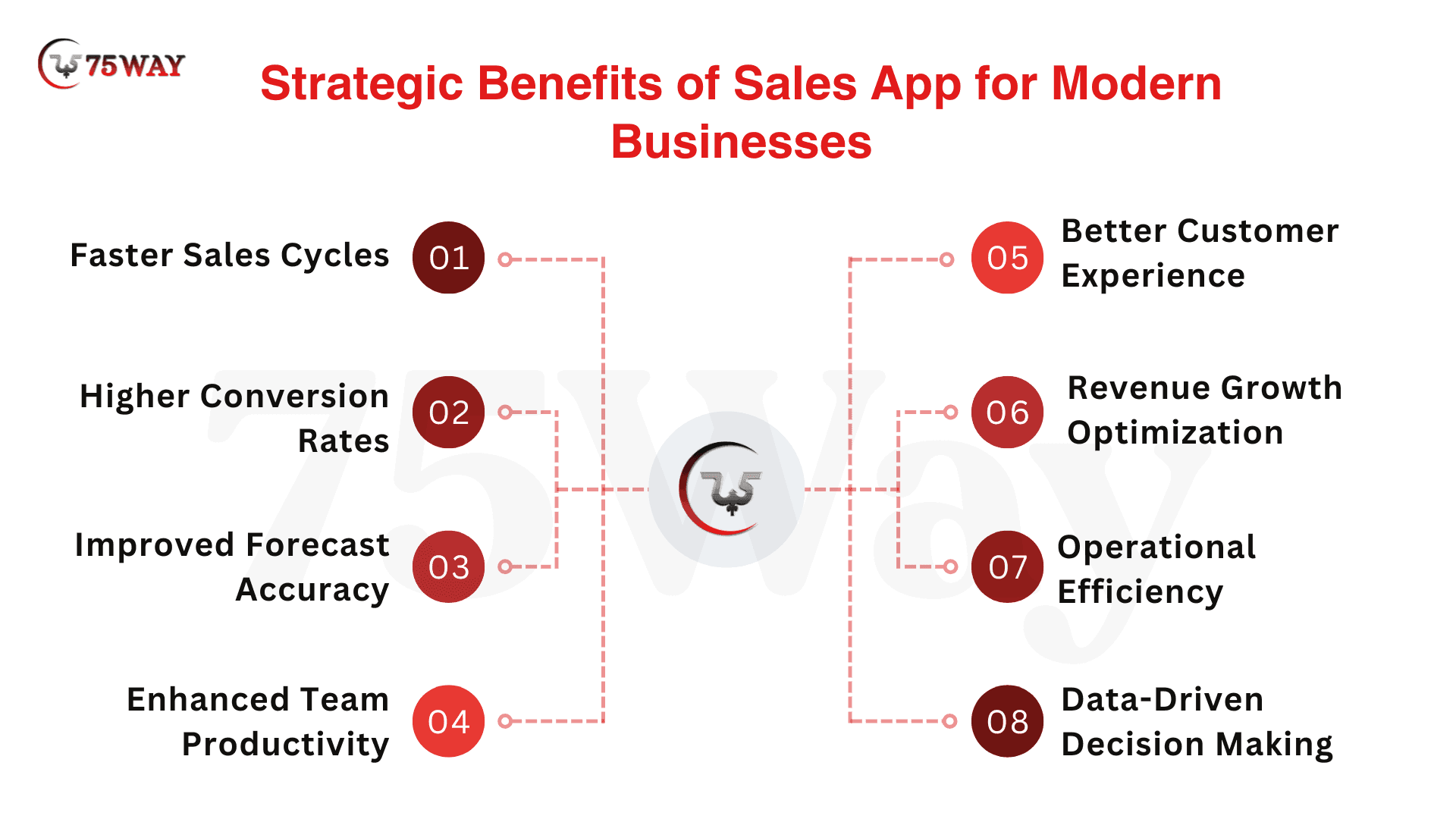
- Faster Sales Cycles: Reduce manual delays and streamline lead prioritization, enabling quicker deal movement and shorter overall sales timelines.
- Higher Conversion Rates: Improve targeting accuracy and engagement quality, resulting in stronger lead nurturing and increased deal closure success.
- Improved Forecast Accuracy: Use predictive analytics to support leadership in making reliable and data-driven revenue forecasting decisions.
- Enhanced Team Productivity: Allow sales teams to focus on high-value activities by reducing administrative workload and repetitive manual tasks.
- Better Customer Experience: Deliver faster responses and personalized interactions that improve trust, satisfaction, and long-term customer retention.
- Revenue Growth Optimization: Align sales processes with data-driven insights to maximize revenue generation opportunities across pipelines.
- Operational Efficiency: Streamline workflows and reduce process friction, improving overall execution speed and organizational performance.
- Data-Driven Decision Making: Enable leadership to rely on real-time analytics and insights for strategic business planning and execution.
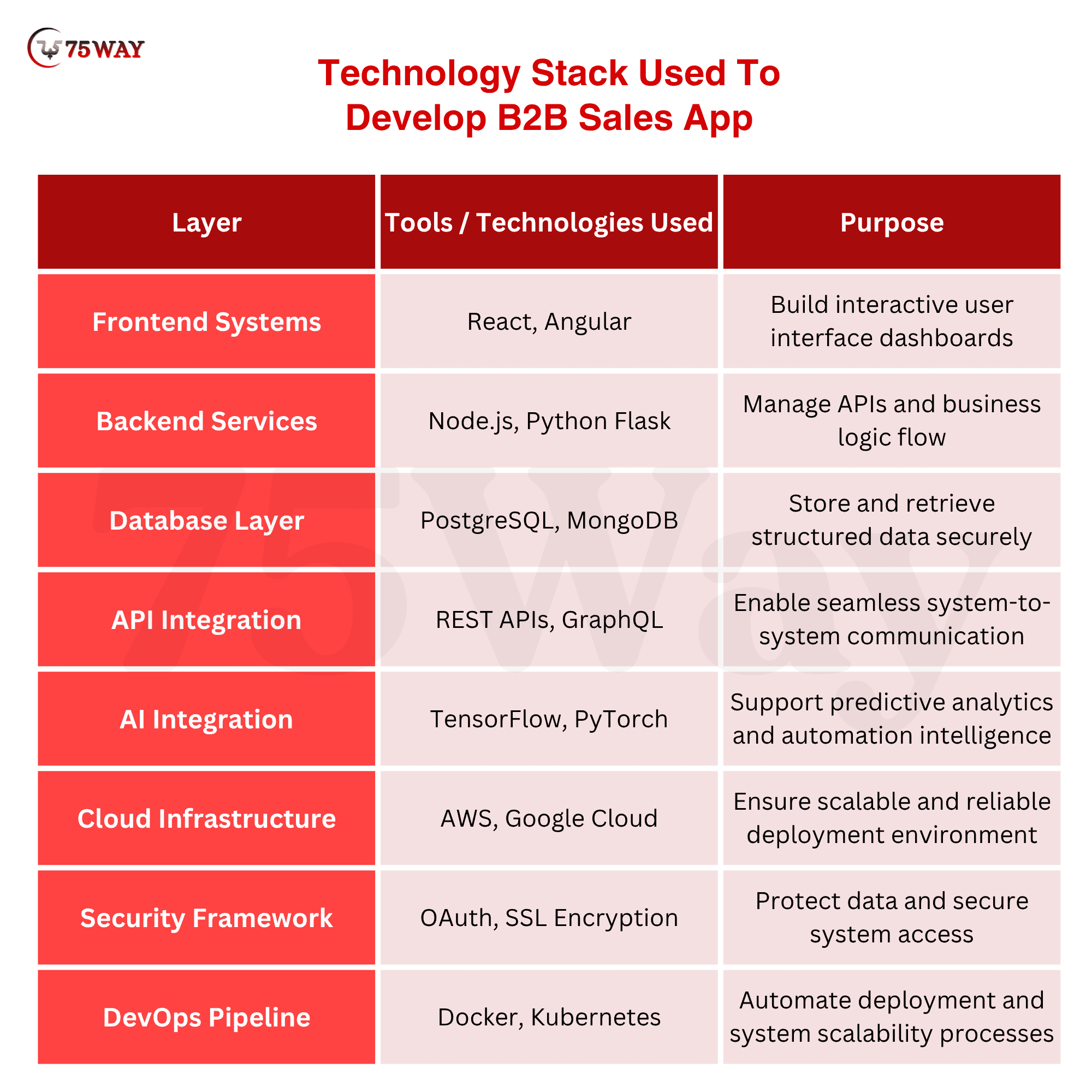
Technology Stack Used To Develop B2B Sales App
Selecting the right technology stack plays a critical role in ensuring performance, scalability, and long-term system stability. Each layer of the stack contributes to building a robust sales application that supports real-time data processing, intelligent insights, and seamless user experiences across enterprise environments.
- Frontend Systems: Build interactive dashboards using React and Angular to deliver fast, responsive, and user-friendly sales interfaces for teams.
- Backend Services: Develop scalable APIs using Node.js and Python Flask to manage data flow, business logic, and system communication efficiently.
- Database Layer: Store structured and unstructured data using PostgreSQL and MongoDB for reliable access, security, and high-performance queries.
- API Integration: Connect external systems using REST APIs and GraphQL to enable smooth data exchange between CRM, ERP, and communication platforms.
- AI Integration: Implement predictive intelligence using TensorFlow and PyTorch to enhance lead scoring, forecasting, and sales decision-making accuracy.
- Cloud Infrastructure: Deploy applications on AWS and Google Cloud to ensure scalability, high availability, and flexible resource management across operations.
- Security Framework: Protect data using encryption protocols and OAuth systems to maintain compliance and secure user access across all modules.
- DevOps Pipeline: Automate deployment and monitoring using Docker and Kubernetes to improve system reliability, scalability, and continuous delivery efficiency.
Common Mistakes in Sales App Development & How To Resolve
Many businesses fail to achieve expected results from sales applications due to avoidable planning, design, and execution errors. These mistakes often reduce usability, limit adoption, and negatively impact overall sales performance.
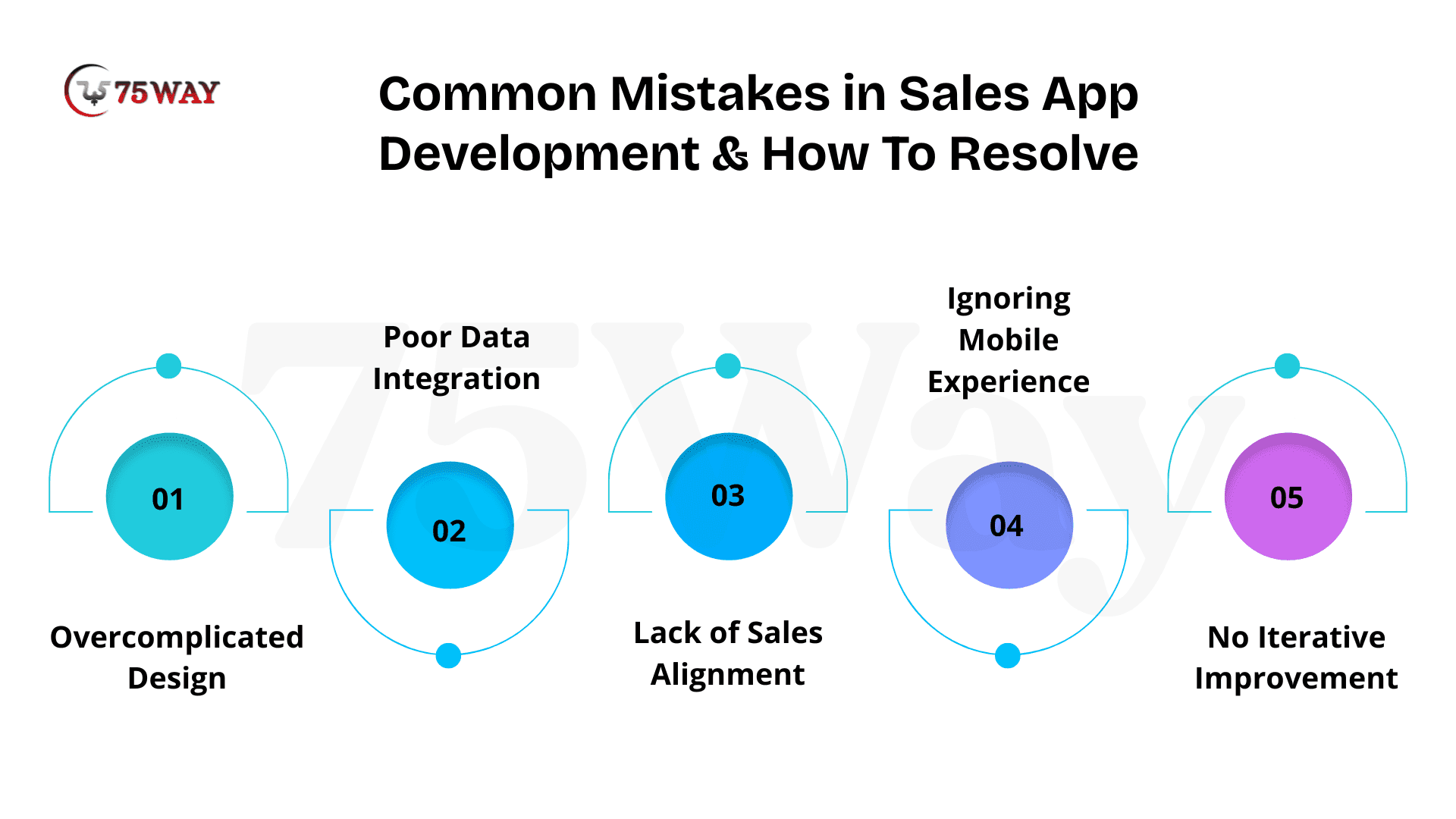
- Overcomplicated Design
Too many features reduce usability and adoption. Simplifying interfaces with role-based dashboards improves clarity and increases user engagement.
- Poor Data Integration
Disconnected systems create inconsistent insights. Establishing unified API-driven data pipelines ensures accurate and real-time information flow across platforms.
- Lack of Sales Alignment
Apps built without sales team input often fail in real usage. Involving end users during design ensures practical workflows and higher adoption rates.
- Ignoring Mobile Experience
Modern sales teams require access across devices. Implementing responsive design and mobile-first architecture improves accessibility and field productivity.
- No Iterative Improvement
Static systems quickly become outdated. Continuous updates based on user feedback and analytics ensure long-term system relevance and performance.
Real-World Scenario: Structured Sales Transformation
At 75way Technologies, a client organization was struggling with fragmented lead management spread across spreadsheets, emails, and disconnected tools. Sales managers had limited visibility into deal progress, and forecasting accuracy was consistently unreliable.
We develop and launch an advanced B2B sales mobile app with the integration of an AI sales agent. After implementing a structured B2B sales application:
- Leads are automatically scored
- Sales pipeline becomes transparent
- Follow-ups are system-driven
- Deal progress is measurable
Within months, the organization experiences an improved conversion rate by 25X and reduced sales cycle delays by 70X.
What’s B2B Sales App Development Cost?
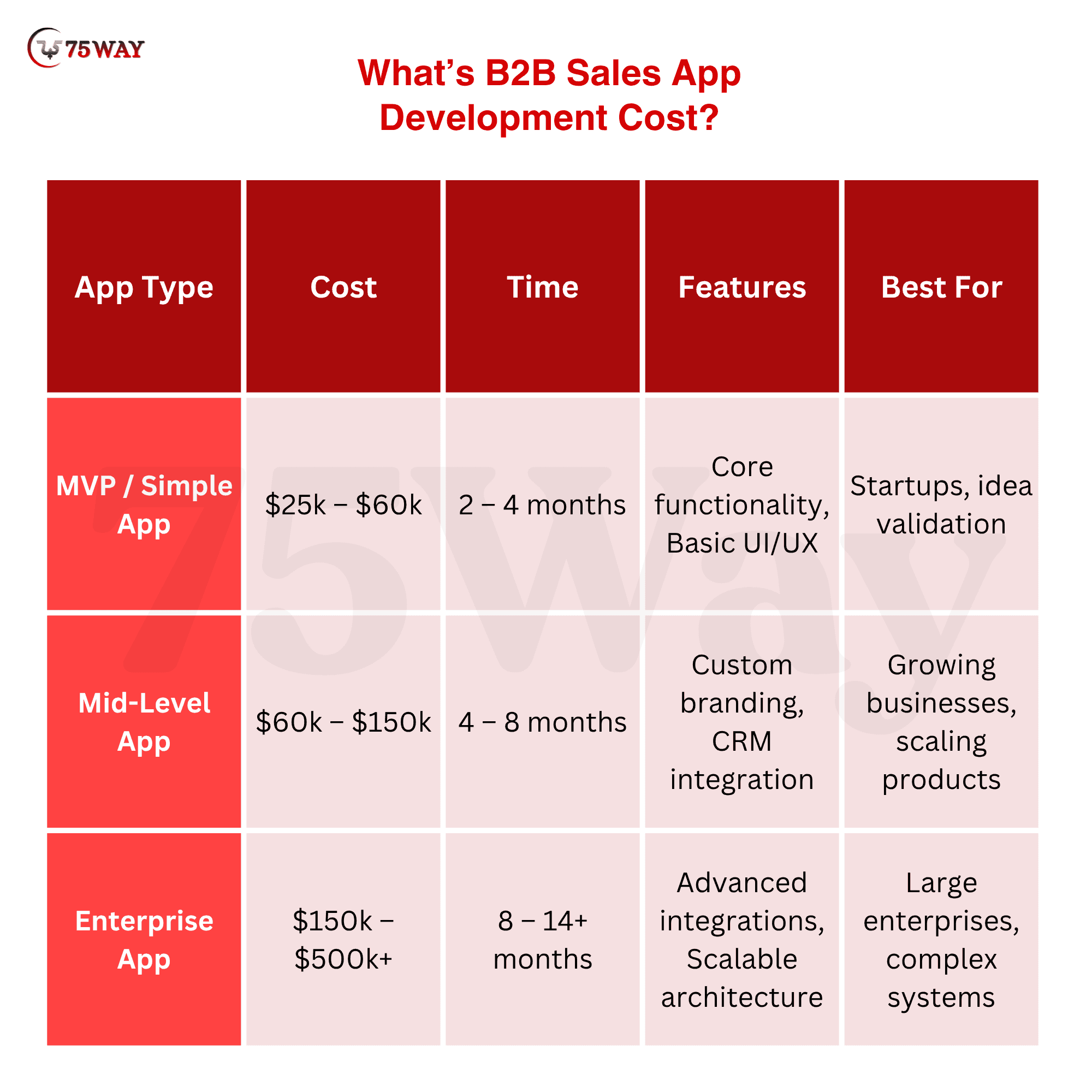
The cost of B2B sales app development varies significantly based on features, complexity, integrations, scalability requirements, and the level of intelligence built into the system. On average, B2B sales app development costs range from $25,000 – $500,000+, depending on whether the solution is a basic application, mid-level platform, or a fully enterprise-grade intelligent sales ecosystem.
- MVP/Simple B2B Sales App Cost: $25,000 – $60,000
Delivered within 2–4 months with core features to quickly launch and validate your idea.
- Mid-Level B2B Sales App Cost: $60,000 – $150,000
Developed over 4–8 months with advanced features, integrations, and improved scalability.
- Enterprise B2B Sales App Cost: $150,000 – $500,000+
Built within 8–14+ months as a fully scalable solution with complex features and custom integrations.
Cost To Develop B2B Sales Mobile App Based on Development Phases
The cost of developing a B2B sales mobile app varies across different development phases. Each phase contributes differently to the overall budget based on complexity, features, technology stack, and level of customization required for enterprise-grade performance.
- Discovery & Planning: $2,000 – $8,000
- UI/UX Design: $5,000 – $25,000
- Frontend Development: $6,000 – $35,000
- Backend Development: $8,000 – $45,000
ROI Metrics That Matter in B2B Sales Applications
Businesses evaluate the success of a B2B sales application through measurable financial and operational outcomes. These ROI metrics help organizations understand how effectively the system improves efficiency, revenue generation, and overall sales performance.
- Sales Cycle Time Reduction: Measure pipeline speed improvement by comparing previous and current deal durations
(Old Cycle Duration − New Cycle Duration) ÷ Old Cycle Duration × 100
- Conversion Rate Increase: Track the percentage of leads successfully converted into paying customers
(Converted Leads ÷ Total Leads) × 100
- Forecast Accuracy: Evaluate alignment between predicted revenue and actual business performance outcomes
1 − |Forecast − Actual| ÷ Actual × 100
- Deal Size: Measure the increase in average transaction value across completed sales deals
(New Average Deal Size − Old Average Deal Size) ÷ Old Average Deal Size × 100
- Operational Overhead: Calculate cost savings achieved by reducing operational expenses over time.
(Old Operational Cost − New Operational Cost) ÷ Old Operational Cost × 100
Future Trends of B2B Sales App Development
The future of B2B sales applications is shifting toward fully autonomous, intelligence-driven ecosystems where systems not only support sales teams but actively participate in decision-making, forecasting, and customer engagement strategies. This evolution is redefining how businesses approach revenue generation and client relationships.
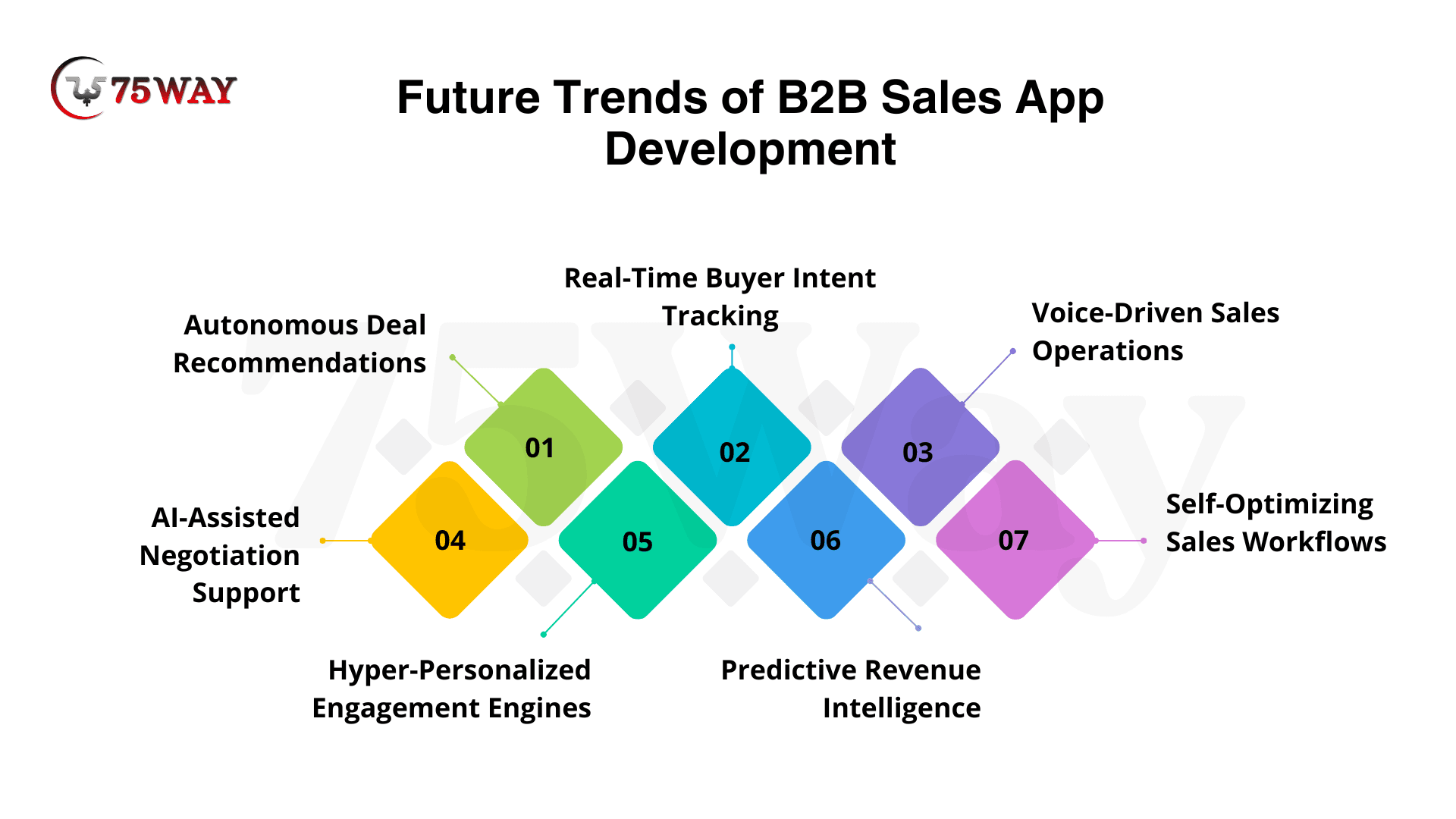
- Autonomous Deal Recommendations:Agentic AI in sales suggests optimal deals and next-best actions based on real-time pipeline data and buyer behavior patterns.
- Real-Time Buyer Intent Tracking: Identify and analyze customer intent signals instantly to prioritize high-probability conversion opportunities across sales funnels.
- Voice-Driven Sales Operations:AI voice agents enable sales teams to manage pipelines, update records, and retrieve insights using voice-based commands for faster execution.
- AI-Assisted Negotiation Support: Provide data-backed recommendations during deal negotiations to improve pricing decisions and closing success rates.
- Hyper-Personalized Engagement Engines: Deliver highly tailored communication and offers based on deep behavioral analytics and customer segmentation models.
- Predictive Revenue Intelligence: Forecast revenue outcomes using advanced predictive models that analyze historical and real-time sales data patterns.
- Self-Optimizing Sales Workflows: Continuously adjust sales processes based on performance metrics and automated system learning loops for improved efficiency.
Conclusion
B2B sales app development has become a critical foundation for organizations that aim to scale predictable revenue systems. As sales environments grow more complex, relying on fragmented tools creates inefficiencies that directly impact growth potential. Modern sales applications solve this by bringing structure, intelligence, and automation into a single unified ecosystem.
Businesses that invest in building intelligent sales platforms position themselves for stronger pipeline control, improved forecasting accuracy, and sustainable revenue growth. In a landscape driven by speed and data, structured sales systems are no longer optional; they are foundational to long-term success. To implement these advanced capabilities, a reliable enterprise mobile app development company can help you build intelligent, scalable sales systems tailored to your needs.
Frequently Asked Questions (FAQs)
What Industries Benefit Most From Sales Applications?
Industries such as SaaS, manufacturing, finance, healthcare, and retail benefit the most from sales applications. These sectors rely heavily on structured pipelines, lead tracking, and customer engagement systems to manage complex sales cycles and improve revenue predictability across large-scale operations.
How Do Sales Apps Improve Team Collaboration?
Sales applications improve collaboration by centralizing customer data, communication history, and task assignments in one platform. Teams can access shared dashboards, update deal progress in real time, and coordinate activities efficiently, reducing miscommunication and improving overall sales execution alignment.
What Role Does Data Play In Sales Applications? Data plays a critical role by providing insights into customer behavior, sales performance, and market trends. It helps businesses make informed decisions, prioritize high-value leads, and optimize strategies for better conversion rates and improved revenue outcomes across sales pipelines.
Are Sales Applications Suitable For Small Businesses?
Yes, sales applications are highly suitable for small businesses as they help streamline operations, organize leads, and automate repetitive tasks. Even with limited resources, small teams can improve efficiency, track performance, and scale their sales processes effectively using these tools.
How Do Sales Apps Support Remote Teams?
B2B Sales applications support remote teams by providing cloud-based access to data, communication tools, and real-time updates. This ensures that distributed sales teams can collaborate effectively, monitor progress, and manage customer interactions without being dependent on physical office environments.
What Security Measures Do Sales Applications Use?
Sales applications use encryption, secure authentication, role-based access, and continuous monitoring to protect sensitive business data. These measures ensure that customer information, financial records, and internal communications remain secure and compliant with industry standards and regulations.