Summary
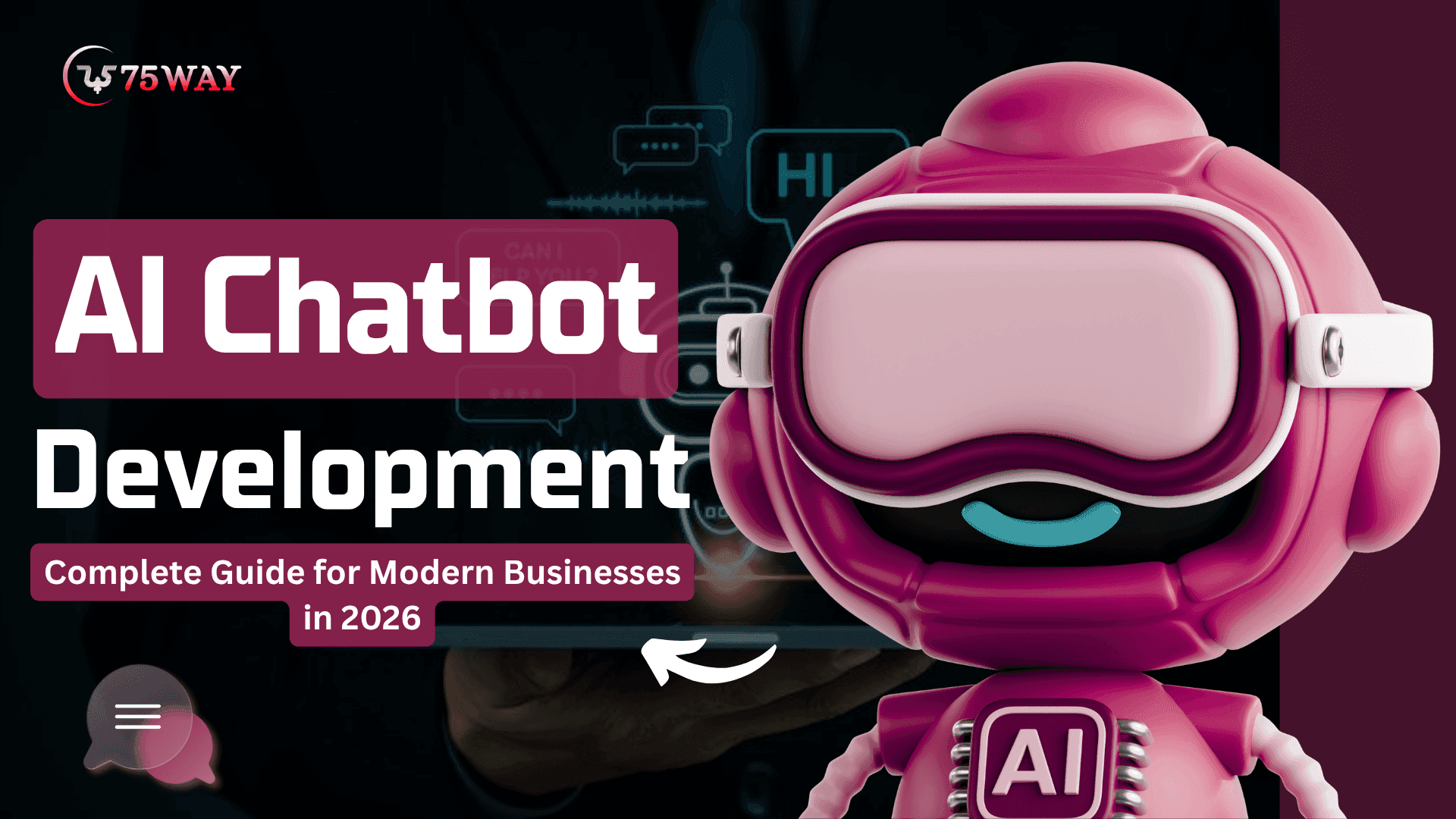
AI chatbot development enables businesses to automate conversations, enhance customer experience, and improve operational efficiency. Modern systems combine natural language processing, machine learning, and contextual intelligence to deliver human-like interactions. This guide explains architecture, implementation strategy, and business applications, helping organizations build scalable communication systems that support growth, conversions, and long-term customer relationships.
Quick Overview
- AI chatbots improve customer engagement through real-time intelligent responses
- Businesses reduce operational costs while increasing communication efficiency significantly
- Context-aware systems deliver more human-like conversational experiences consistently
- Average AI chatbot development cost ranges between $5,000 and $500,000+.
- Chatbot market expected to reach $1,339 billion by 2030, showing massive growth.
- Proper strategy ensures measurable ROI from chatbot implementation efforts
There is a moment in every business journey when customer expectations quietly change before leadership fully notices it. Due to the emergence of artificial intelligence solutions, conversations that once waited hours now demand instant responses. And the worst part is? Businesses that fail to respond begin losing customers and revenue. So, how to deal with such a situation? How to provide quick responses 24/7 and retain customers? The answer is AI chatbot development solutions. In fact, the AI chatbot market is expected to reach $1,339 billion by 2030, growing from $214 billion in revenue, according to Forbes.
The AI chatbot creation process has moved beyond being a support tool. It has become a structured intelligence layer that defines how companies interact, sell, and retain customers. But, how to build an AI chatbot for startups and large enterprises? What’s the core architecture?
This guide explains how modern businesses are building AI chatbots that are not just functional but commercially impactful and strategically aligned with growth goals. It also defines why businesses are investing in AI chatbots in 2026, use cases, and end-to-end development process.
What Is AI Chatbot Development?
AI chatbot development refers to the process of building intelligent systems capable of interacting with users in natural language. Unlike traditional rule-based bots, modern chatbots rely on machine learning models that understand context, intent, and conversational flow.
Businesses are no longer deploying chatbots just to answer FAQs. They are building digital representatives capable of handling sales conversations, onboarding users, resolving technical issues, and guiding customers through complex decisions.
At the core, these systems rely on three major components:
- Natural language understanding
- Machine learning models
- Conversation orchestration logic
The combination of these elements allows chatbots to evolve over time, improving accuracy and relevance with every interaction.
How To Develop AI Chatbot? A Step-By-Step Process
If you are building a business-centric AI chatbot, you require a strategic approach that aligns business objectives with user expectations. Each stage plays a critical role in shaping the performance, accuracy, and scalability of the final solution. From planning and design to integration and deployment, the process ensures that the chatbot delivers context-aware interactions across different use cases while continuously improving through real-world usage data and optimization cycles.
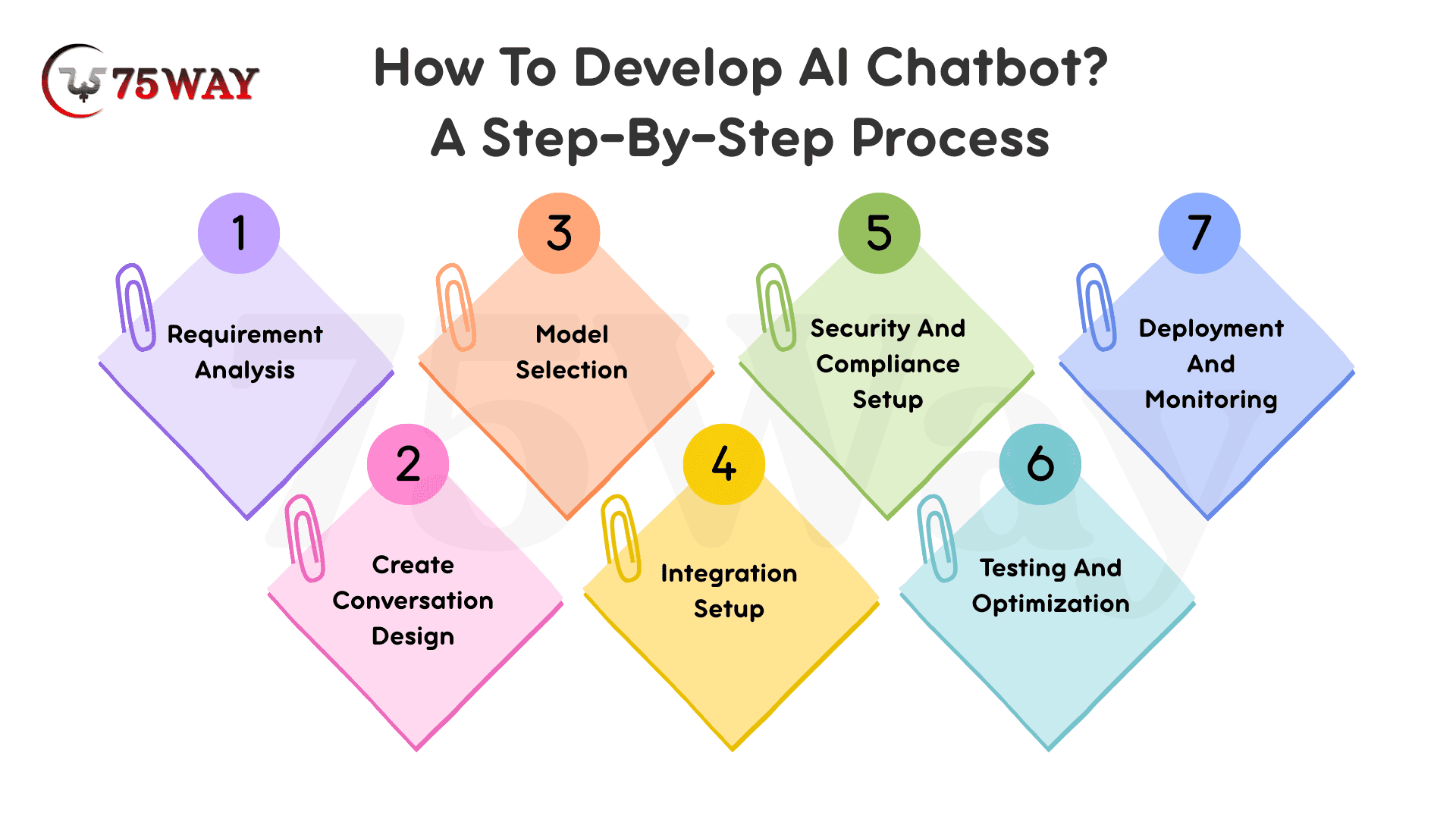
Step 1: Requirement Analysis
Requirement analysis defines the foundation of chatbot development by identifying business objectives, user expectations, and functional outcomes. This stage ensures clarity in scope, aligns technical direction with goals, and reduces development risks through structured planning and a detailed understanding of system needs.
- Define business objectives clearly
- Identify target user requirements
- Analyze expected chatbot outcomes
- Study existing communication gaps
- Determine key functional features
- Map success performance metrics
Step 2: Create Conversation Design
When you decide on your needs, the next stage is to develop an intuitive design before building your conversational AI bot. Conversation design focuses on structuring how users interact with the chatbot to ensure smooth, intuitive, and goal-oriented communication. It defines the flow of dialogue, response patterns, and interaction logic so users can easily achieve desired outcomes without confusion or friction during conversations.
This phase also involves designing natural language paths, handling multiple user intents, and maintaining contextual relevance throughout the interaction. A well-planned conversation structure improves engagement quality, reduces drop-offs, and ensures the chatbot delivers consistent, human-like communication across different scenarios.
Step 3: Model Selection
After designing conversation flows, selecting the right AI model becomes essential to ensure accurate understanding, response generation, and system performance. This stage determines how well the chatbot interprets user intent, handles complexity, and scales across different interaction scenarios.
- Simple Rule-Based Model: These models follow predefined rules and decision trees, suitable for basic FAQs and structured user queries with limited variability.
- Machine Learning Model: The machine learning models learn from data patterns, improving response accuracy over time by analyzing user interactions and conversational behavior.
- NLP Model: These models process natural language to understand intent, context, and meaning behind user messages in conversations.
- Deep Learning Model: These models use neural networks to handle complex language tasks and deliver more human-like conversational responses.
- Transformer-Based Model: These models power advanced conversational AI systems by understanding long-context dependencies and generating highly accurate responses.
- Hybrid Model: These models combine rule-based logic and AI capabilities to balance control, flexibility, and conversational intelligence.
Step 4: Integration Setup
Integration setup focuses on connecting the chatbot with existing backend systems, APIs, and databases to ensure smooth data flow and real-time communication. This stage enables the chatbot to access relevant information and perform actions within business systems efficiently.
It also ensures seamless connectivity with CRM platforms, payment gateways, and enterprise applications. Proper integration allows the chatbot to deliver accurate responses, update records instantly, and execute tasks without manual intervention, improving overall operational efficiency.
A well-structured integration layer ensures scalability and system stability as usage grows. It also reduces technical conflicts between platforms and supports consistent performance across all user interactions in real-world business environments.
Step 5: Security and Compliance Setup
Security and compliance setup ensures chatbot systems handle sensitive data safely while meeting regulatory standards. This stage focuses on protecting user information, preventing unauthorized access, and maintaining trust through strong encryption, governance policies, and continuous monitoring across all interactions.
- Implement end-to-end data encryption protection
- Configure role-based access control systems
- Ensure compliance with industry regulations and standards
- Monitor system activity for suspicious behavior
- Secure API connections across all integrations
- Maintain audit logs for transparency and tracking
Step 6: Testing and Optimization
After ensuring secure and compliant integration, testing becomes essential to validate chatbot performance in real-world conditions. This stage focuses on evaluating response accuracy, conversational flow, and system reliability while continuously refining outputs to improve user experience and operational effectiveness across scenarios.
- Functional Testing: Validates chatbot features and workflows by checking whether all intended functions perform correctly under different user inputs and conditions.
- Performance Testing: Measures system speed, response time, and stability under high traffic loads to ensure consistent operational efficiency during peak usage.
- Accuracy Testing: Evaluates response correctness by comparing chatbot outputs with expected answers across various user queries and conversation patterns.
- User Experience Testing: Assesses conversational flow, clarity, and engagement quality to ensure users find interactions smooth, natural, and intuitive.
- Edge Case Testing: Identifies system behavior under unusual or unexpected inputs to improve robustness and prevent failures in real scenarios.
- Continuous Optimization: Refines models and responses based on feedback and analytics to enhance performance, relevance, and long-term system intelligence.
Step 7: Deployment and Monitoring
After successful testing and optimization, the AI chatbot is deployed into live environments where it begins interacting with real users across business channels. This stage ensures the system is properly launched within production infrastructure, integrated with operational workflows, and made accessible to end users without disruption to existing services.
Once deployed, continuous monitoring becomes essential to track performance, user behavior, and system stability. Real-time usage data helps identify areas for improvement, refine responses, and enhance conversational accuracy. Ongoing updates ensure the chatbot evolves with user needs, maintains reliability, and delivers consistent value across all interactions.
Why Businesses Are Rapidly Adopting AI Chatbots?
The adoption of AI chatbots is not driven by technology curiosity. It is driven by business pressure. Customer expectations have shifted toward instant response cycles. Delays often translate into lost opportunities. Businesses operating across multiple channels struggle to maintain consistent engagement without automation.
AI chatbots address this gap by serving as always-available communication channels. They ensure that no customer interaction is missed, regardless of time or volume. Key reasons for adoption include:
- Reduced dependency on human support teams
- Faster response times across channels
- Improved lead qualification processes
- Scalable customer interaction handling
- Consistent communication quality
The most significant shift is not operational efficiency alone, but the ability to maintain engagement at scale without degrading experience quality.
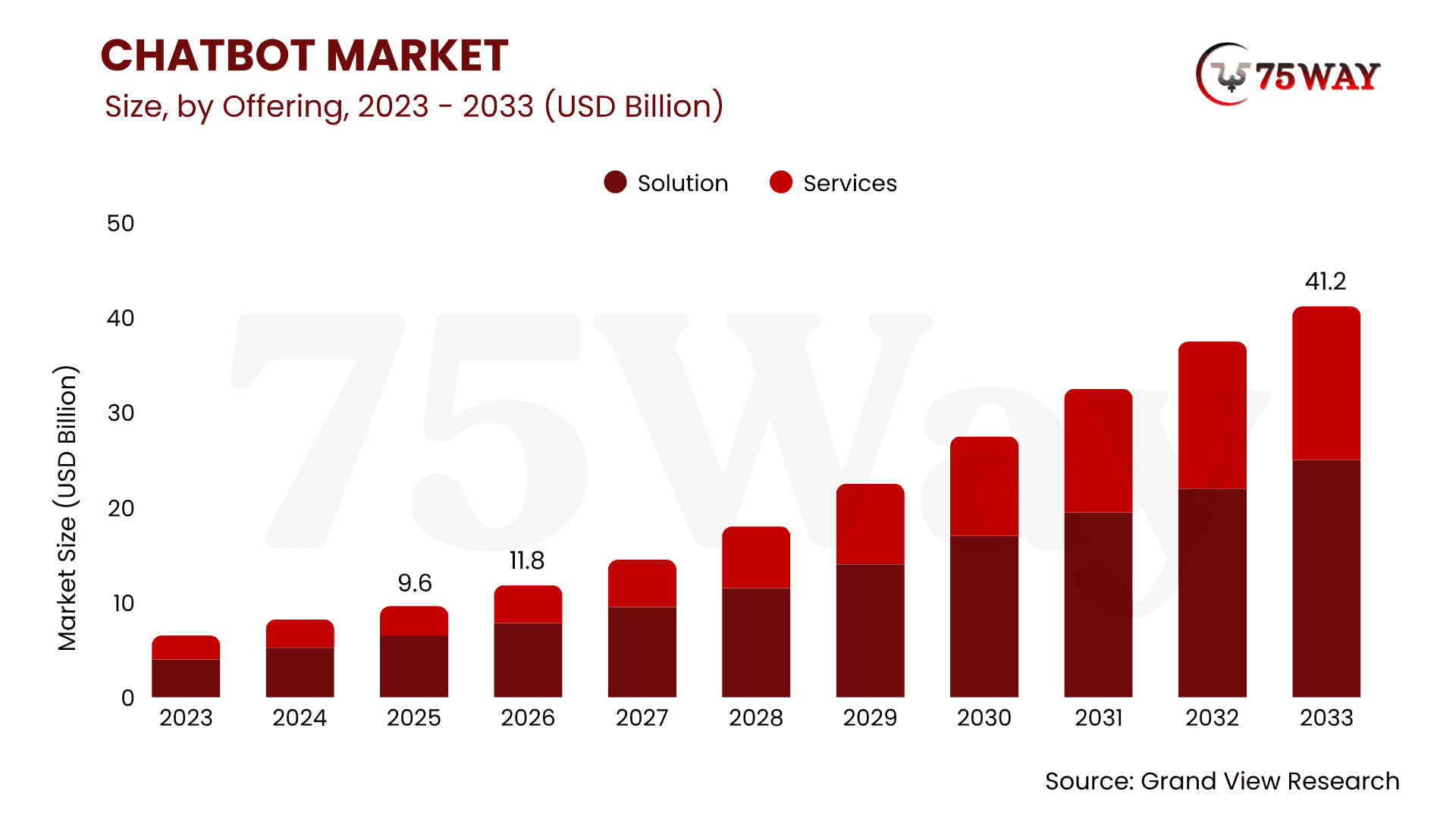
- The global chatbot market is projected to reach $41,244.2 million by 2033, at a CAGR of 19.6%.
- North America is anticipated to hold over 31.27% of the global chatbot market share.
- Businesses report a 33–45% reduction in average handling time using chatbots.
- Around 80% of consumers have interacted with a chatbot at least once.
- The generative AI chatbot market is expected to grow from $12.98 billion in 2026 to $113.35 billion by 2034, with a CAGR of 31.11%.
Core Architecture of AI Chatbot Systems
Understanding architecture is essential before development begins. A well-structured chatbot system is built across multiple layers.
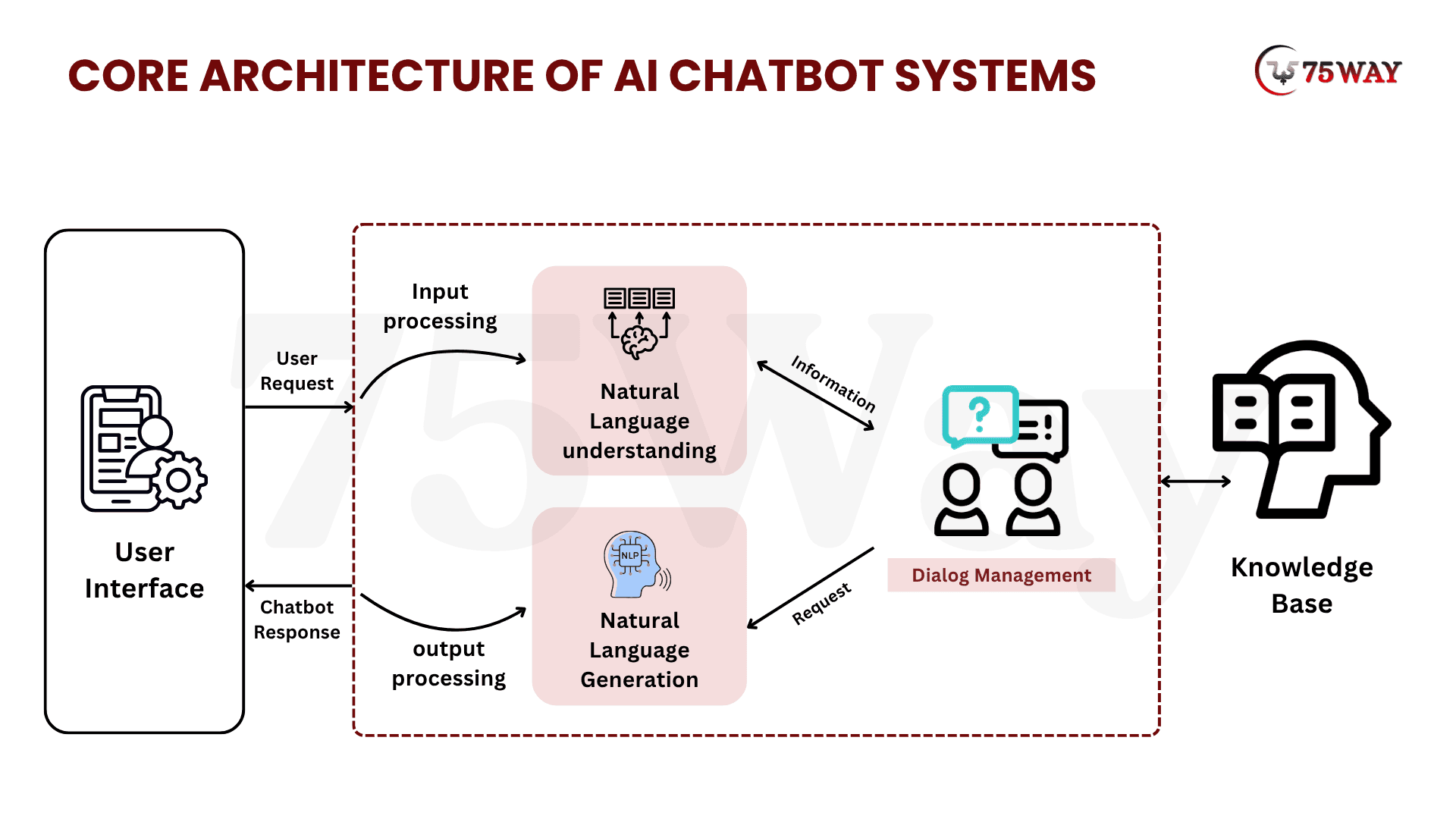
- Input Processing Layer: This layer captures user input and converts it into structured data. It includes text parsing, voice recognition, and intent extraction mechanisms.
- Natural Language Understanding Layer: This is where the system interprets meaning, identifies intent, and detects context. It ensures that user messages are not just read but understood.
- Dialogue Management Layer: This layer controls conversation flow. It decides how the chatbot should respond based on intent, history, and business logic.
- Knowledge Integration Layer: This connects the chatbot with databases, CRMs, APIs, and enterprise systems to retrieve accurate information.
- Response Generation Layer: This layer constructs meaningful responses using predefined logic or generative models.
Together, these layers create a system capable of dynamic, context-aware interaction.
Types of AI Chatbots Businesses Can Adopt
Businesses adopt different chatbot types depending on automation needs, customer interaction complexity, and scalability goals. Each type offers unique capabilities ranging from simple rule-based responses to advanced generative intelligence that supports natural conversations and complex query handling across digital platforms.
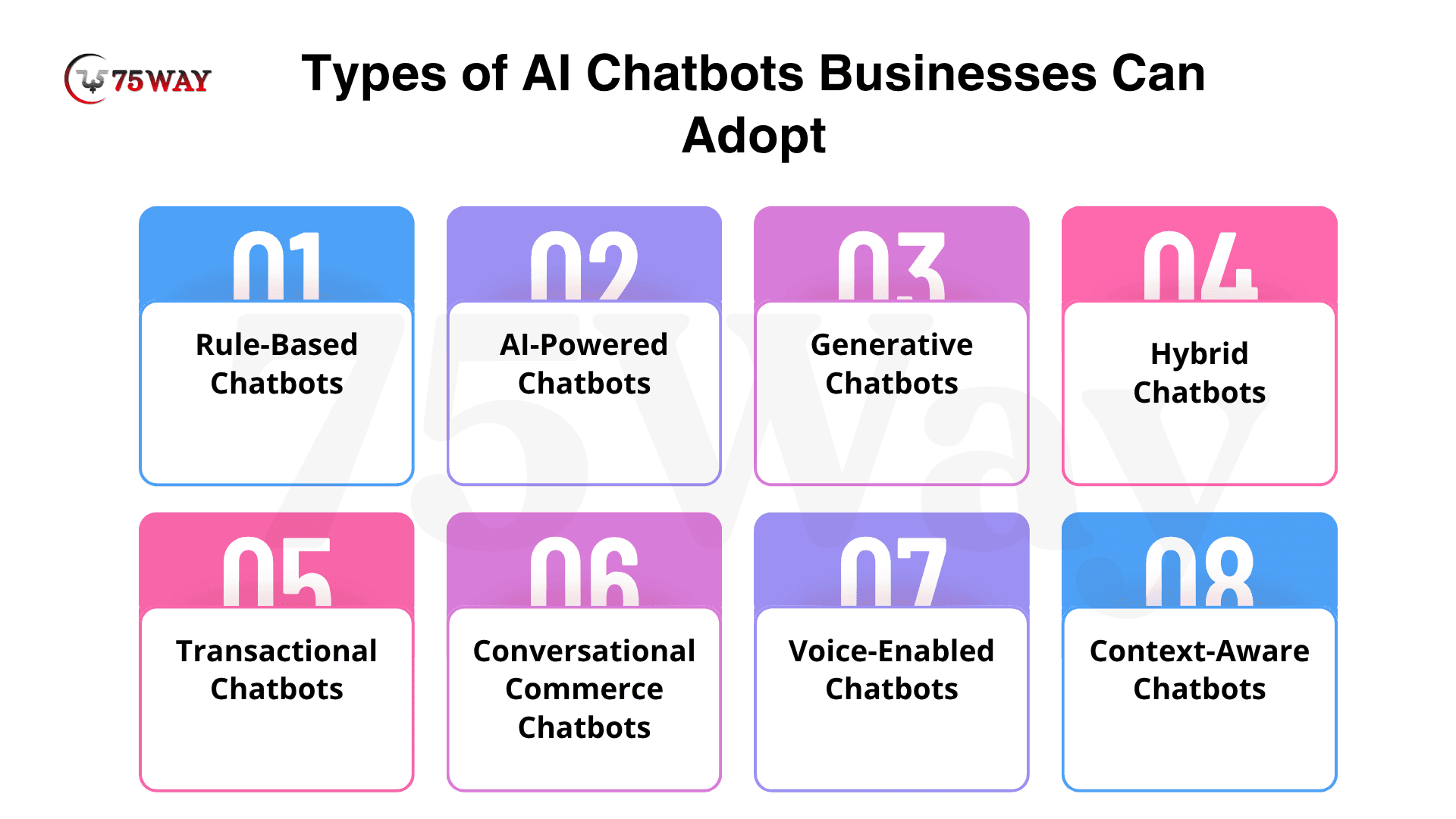
- Rule-Based Chatbots: Operate using predefined decision trees that follow fixed scripts to respond to user queries. These systems work well for basic FAQs and structured workflows, but lack flexibility when handling complex or unexpected user inputs.
- AI-Powered Chatbots: Leverage machine learning models to understand user intent and improve responses over time. These systems adapt to interactions, making them suitable for customer support, lead management, and dynamic business communication.
- Generative AI Chatbots: Use advanced language models to create human-like responses in real time. Generative AI chatbots handle complex conversations, generate contextual replies, and provide highly natural interactions across customer engagement channels and digital platforms.
- Hybrid Chatbots: Combine rule-based logic with AI-driven intelligence to balance control and flexibility. Businesses use them to manage structured workflows while still enabling adaptive responses for more complex user interactions and support scenarios.
- Transactional Chatbots: Focus on completing actions such as bookings, payments, and order processing. These bots streamline customer journeys by reducing manual steps and enabling faster execution of business transactions across platforms.
- Conversational Commerce Chatbots: Assist users in product discovery, recommendations, and purchasing decisions. Conversational AI bots improve sales performance by guiding customers through personalized shopping experiences and reducing friction in the buying process.
- Voice-Enabled Chatbots: use speech recognition and natural language processing to interact with users through voice commands. These systems are widely used in mobile apps, call centers, and smart devices for hands-free communication.
- Context-Aware Chatbots: remember previous interactions and user history to deliver more personalized and relevant responses. They enhance customer experience by maintaining conversation continuity across multiple sessions and touchpoints.
Business Use Cases of AI-Powered Chatbot Solutions
AI chatbots operate across multiple business functions to automate communication, improve efficiency, and enhance user experience. These conversational AI assistants support customer engagement, sales processes, internal operations, and commerce activities through intelligent, real-time interactions that reduce manual effort and improve scalability.
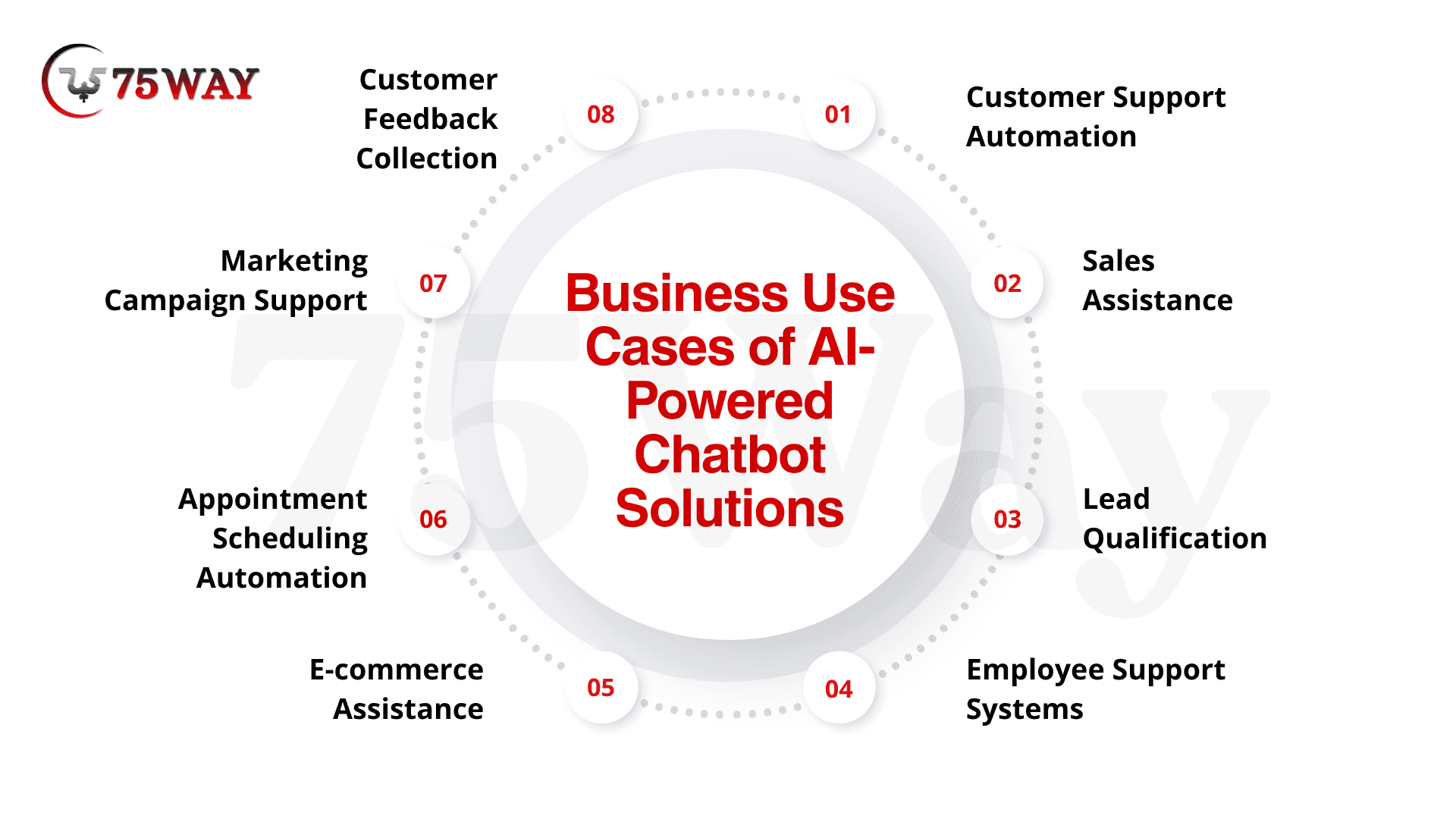
- Customer Support Automation: Handle repetitive customer queries and reduce ticket volume. Instant response delivery improves service speed across multiple channels while maintaining consistent quality and reducing dependency on human support teams.
- Sales Assistance: Guide users through product selection and resolve purchase objections. Timely recommendations strengthen decision-making and increase conversion rates throughout the buying journey.
- Lead Qualification: Filter incoming leads based on intent and behavior patterns. Better sales focus becomes possible as only high-quality prospects move forward to teams.
- Employee Support Systems: Assist internal teams with HR, IT, and operational queries. Faster resolution improves productivity while reducing workload on support departments.
- E-commerce Assistance: Help users discover products and compare available options. Personalized suggestions improve purchase decisions and simplify online shopping experiences.
- Appointment Scheduling Automation: Manage booking requests and schedule meetings efficiently. Reduced manual coordination improves operational flow and time management across teams.
- Marketing Campaign Support: Engage users with personalized messages and promotional content. Higher interaction rates support better campaign performance and audience engagement outcomes.
- Customer Feedback Collection: Gather user reviews and opinions after interactions or purchases. Structured insights help improve services and enhance overall customer satisfaction levels.
Benefits of Conversational AI Bot Development Solutions
The benefits of chatbot systems extend beyond basic automation and directly impact business efficiency, customer engagement, and long-term scalability. These systems help organizations streamline operations while improving service quality and decision-making through continuous data-driven interactions.
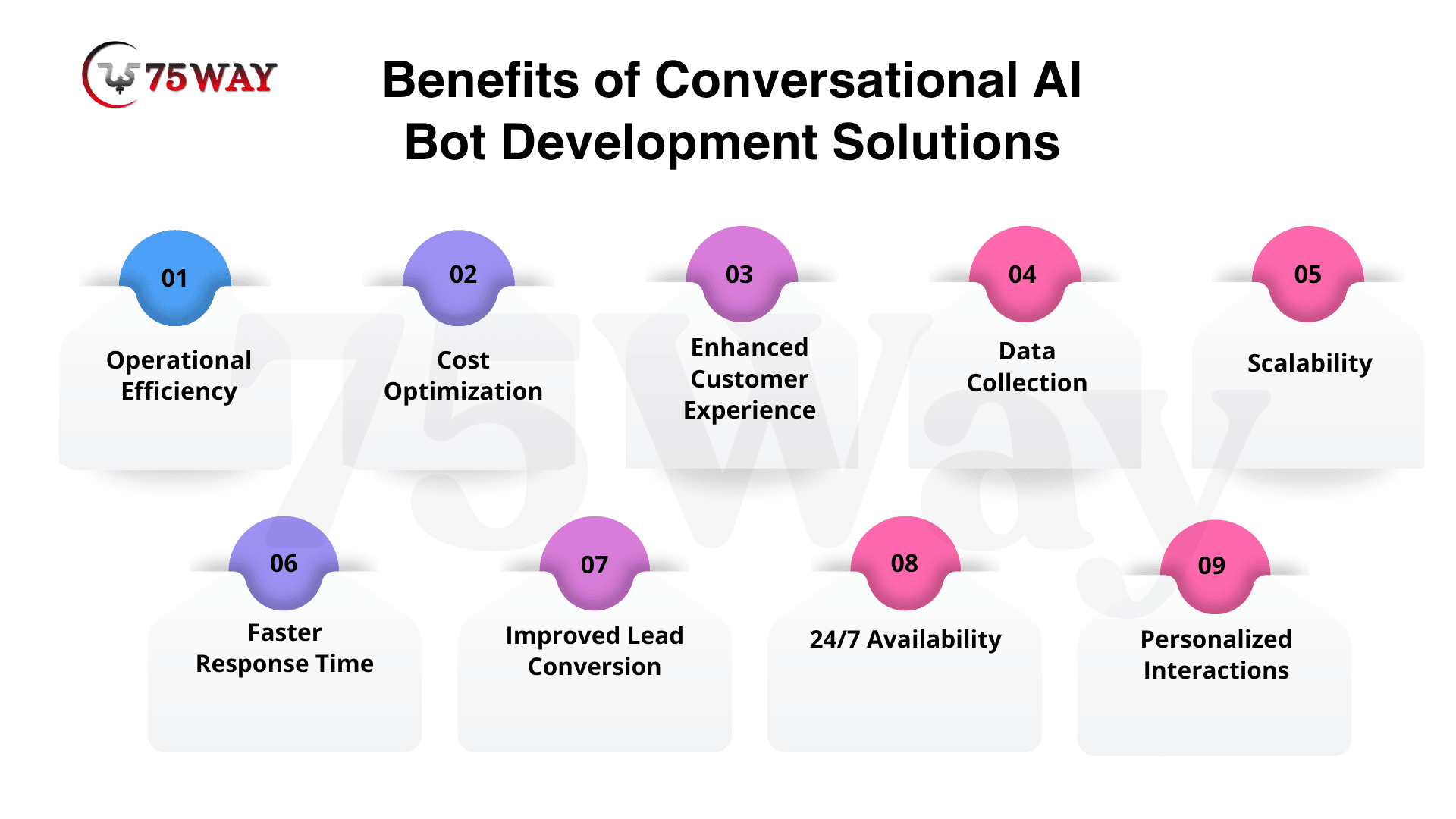
- Operational Efficiency: Chatbots handle large volumes of queries without fatigue or delay. This allows businesses to maintain consistent service performance even during peak interaction periods.
- Cost Optimization: Reduced need for large customer support teams. This helps organizations lower operational expenses while maintaining high-quality customer service delivery.
- Enhanced Customer Experience: Instant responses improve satisfaction and retention. Faster communication creates smoother user journeys and strengthens overall brand trust.
- Data Collection: Every interaction generates insights for business improvement. These insights help organizations understand customer behavior and optimize future strategies.
- Scalability: Systems can handle growth without proportional resource expansion. This enables businesses to manage increasing demand without increasing operational complexity.
- Faster Response Time: Queries receive immediate handling without waiting in queues. This improves user satisfaction and reduces frustration during customer interactions.
- Improved Lead Conversion: Conversations guide users toward decision-making effectively. This increases the chances of turning prospects into paying customers.
- 24/7 Availability: Support remains active at all hours without interruption. This ensures continuous engagement across different time zones and customer segments.
- Personalized Interactions: Responses adapt based on user behavior and history. This creates more relevant conversations and improves engagement quality.
Key Challenges in Building AI Chatbot & Solutions
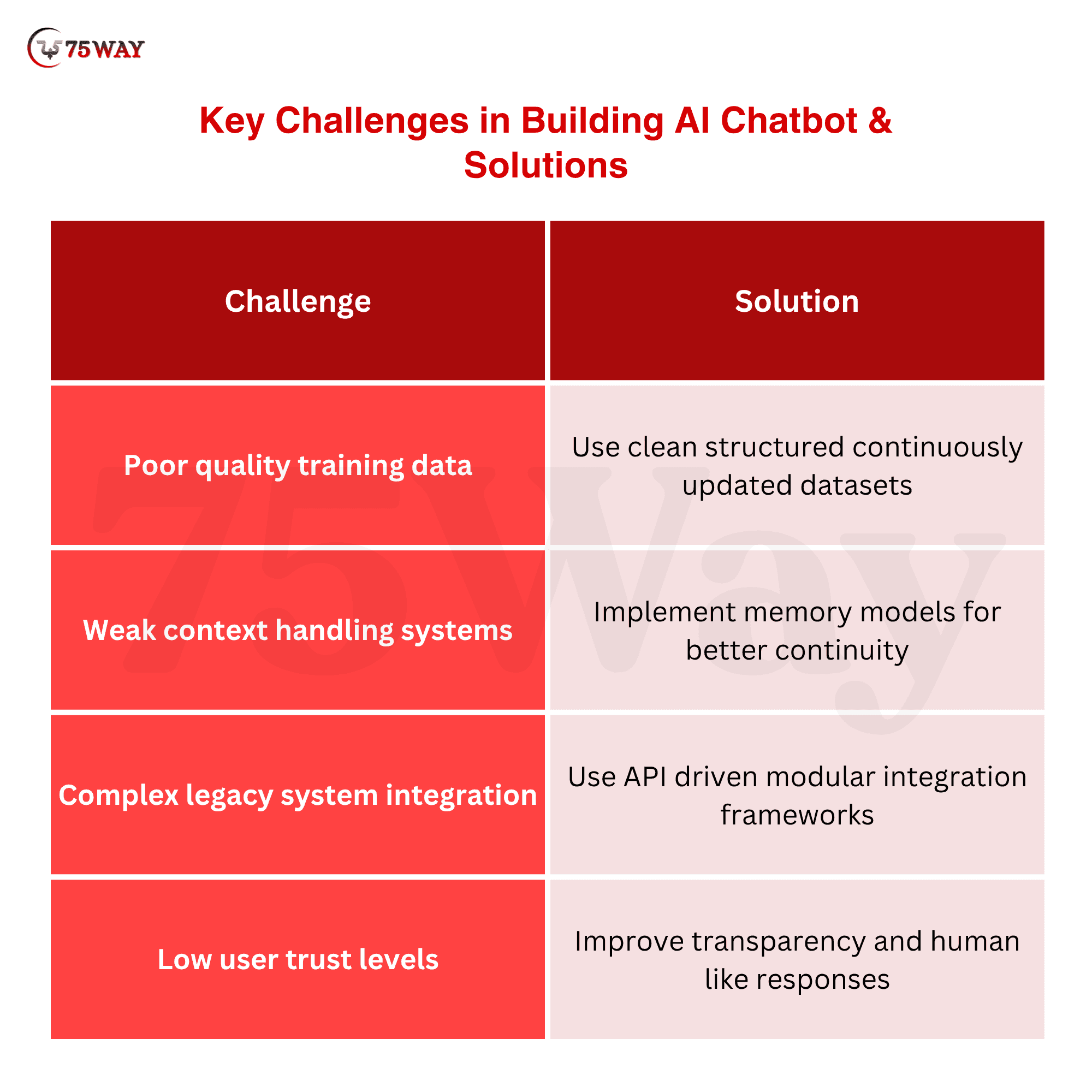
Despite strong advantages, chatbot adoption often faces technical and operational challenges that impact performance and user experience. These issues mainly arise from data quality, system limitations, integration barriers, and user perception, which must be addressed to ensure reliable and scalable implementation.
- Poor Training Data
Low-quality datasets lead to inaccurate responses. Better results emerge when organizations use clean, structured, and continuously updated datasets for model training and improvement.
- Lack of Context Handling
Many systems fail to maintain conversational continuity. Improved memory-based architectures and context tracking models help maintain natural and coherent conversations.
- Integration Complexity
Connecting with legacy systems requires careful architecture planning. Smooth connectivity becomes possible through API-driven frameworks and modular integration layers.
- User Trust Issues
Poorly designed bots reduce user confidence in automation systems. Transparent communication and human-like response quality help build stronger user trust over time.
What’s The Cost To Develop An AI Chatbot?
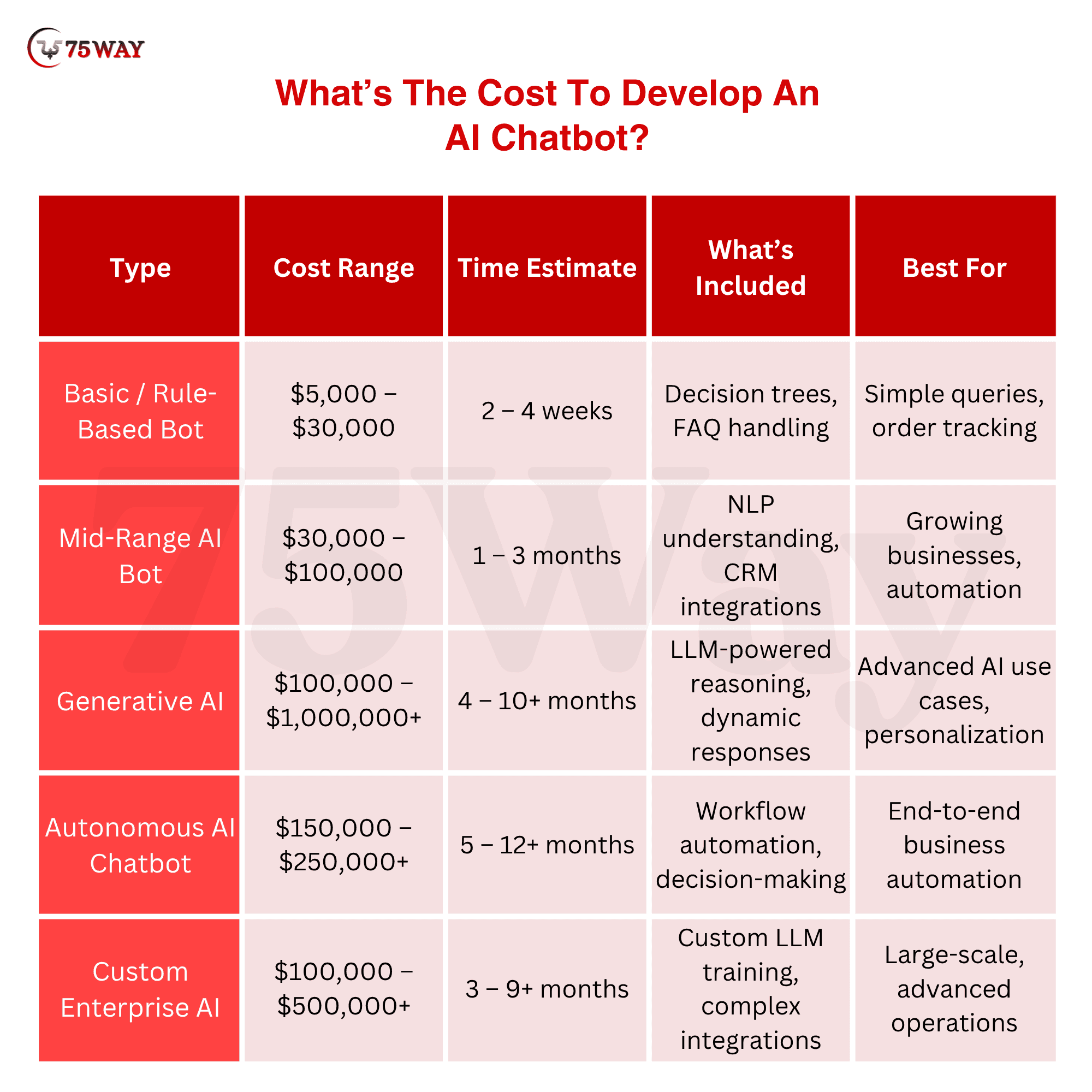
The cost to develop an AI chatbot varies widely depending on complexity, features, integrations, and the level of intelligence required. On average, AI chatbot development costs range from $5,000 – $500,000+, depending on whether the solution is basic, mid-level, or enterprise-scale with advanced conversational capabilities.
- Basic AI Chatbot Cost: $5,000 – $30,000
Handles simple queries and basic automation with limited AI capabilities.
- Mid-Range AI Chatbot Cost: $30,000 – $100,000
Supports advanced features like NLP, integrations, and contextual responses.
- Generative AI Chatbot Cost: $100,000 – $1,000,000+
Builds advanced AI systems for content creation, automation, and intelligent decision-making.
- Autonomous AI Chatbot Cost: $150,000 – $250,000+
Develops self-operating agents capable of executing tasks, learning, and making decisions independently.
- Custom Enterprise AI Chatbot Cost: $100,000 – $500,000+Delivers highly scalable, intelligent systems with deep integrations and custom AI models.
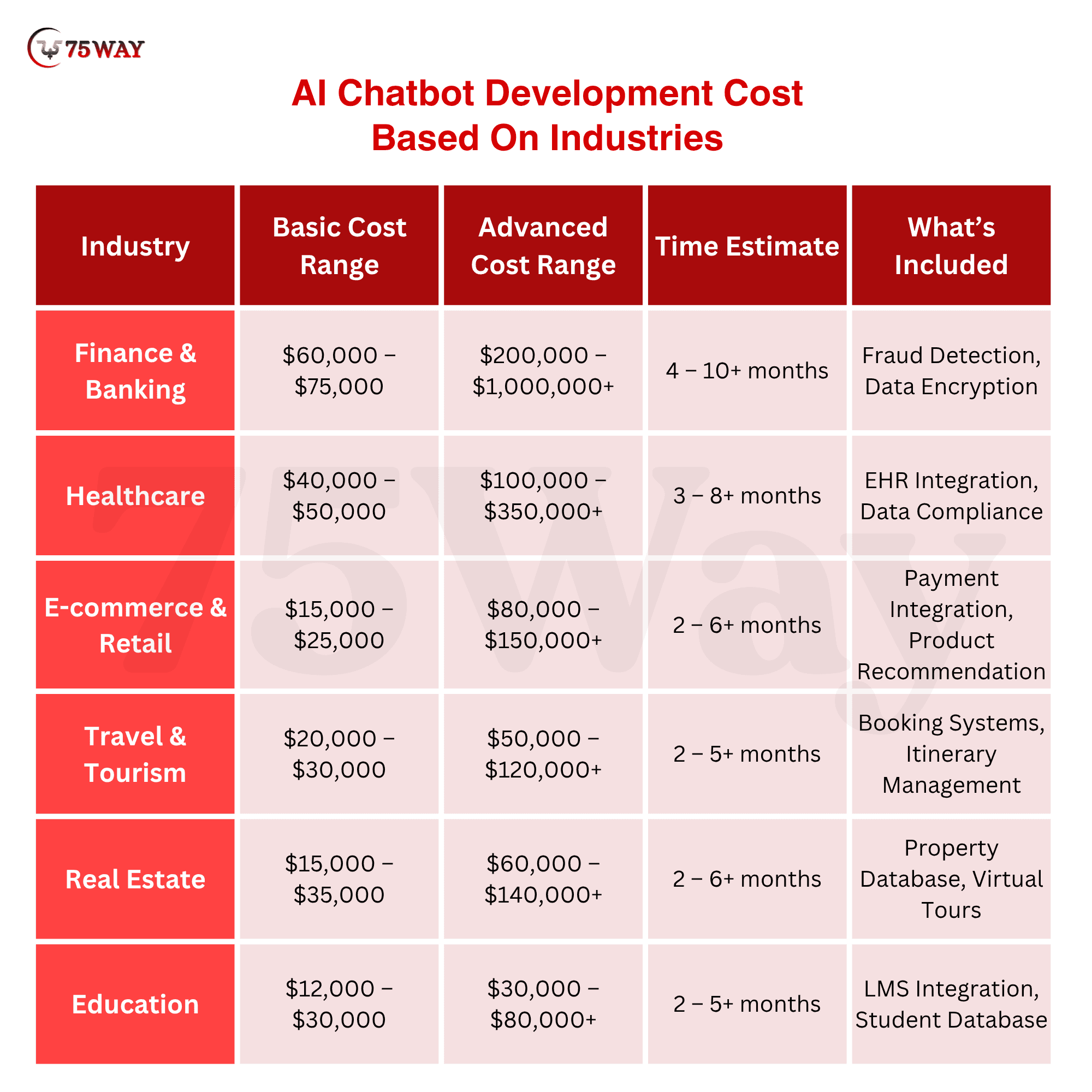
AI Chatbot Development Cost Based On Industries
The cost to create an AI chatbot varies across industries depending on complexity, compliance requirements, integration depth, and automation needs. Sectors like healthcare, finance, ecommerce, and SaaS require more advanced systems, while simpler use cases in retail or education may need lower investment levels with basic conversational capabilities.
- Finance & Banking AI Chatbot Cost
$60,000 – $75,000 (Simple) / $200,000 – $1,000,000+ (Enterprise)
Simple bots handle basic queries, while enterprise solutions include security, compliance, and advanced automation.
- Healthcare AI Chatbot Cost
$40,000 – $50,000 (Simple) / $100,000 – $350,000+ (Enterprise)
Basic systems manage patient interactions, while enterprise solutions ensure compliance and deep integrations.
- E-commerce & Retail AI Chatbot Cost
$15,000 – $25,000 (Simple) / $80,000 – $150,000+ (Enterprise)
Simple bots assist with orders, while enterprise systems enable personalization and full-scale automation.
- Travel & Tourism AI Chatbot Cost
$20,000 – $30,000 (Simple) / $50,000 – $120,000+ (Enterprise)
Basic bots handle bookings, while advanced solutions provide real-time assistance and integrations.
- Real Estate AI Chatbot Cost
$15,000 – $35,000 (Simple) / $60,000 – $140,000+ (Enterprise)
Simple bots manage inquiries, while enterprise systems offer CRM integration and lead automation.
- Education AI Chatbot Cost
$12,000 – $30,000 (Simple) / $30,000 – $80,000+ (Enterprise)
Basic bots support learning queries, while enterprise solutions enable adaptive learning and integrations.
Future of AI Chatbot Development
The future is moving toward autonomous conversational systems that operate with minimal human intervention. Emerging trends include:
- Emotion-aware responses
- Multimodal interaction systems
- Deep personalization engines
- Voice-first conversational interfaces
- Autonomous decision-making agents
Businesses adopting these advancements early will hold a significant competitive advantage.
Final Thoughts
AI chatbot development is no longer a supporting technology layer. It has become a strategic necessity for businesses that aim to stay relevant in a fast-moving digital environment. As customer expectations continue shifting toward instant, accurate, and personalized communication, organizations that rely solely on traditional interaction models will struggle to maintain engagement and efficiency.
Modern AI chatbots are transforming how companies operate by combining intelligence, automation, and contextual understanding into a single communication system. They reduce operational pressure, improve customer satisfaction, and enable scalable growth without proportional cost increases.
To implement these capabilities effectively, partnering with a trusted AI chatbot development company can help businesses design scalable, intelligent, and high-performance conversational systems tailored to their goals.
Frequently Asked Questions (FAQs)
What Programming Languages Are Used In Chatbot Development?
Chatbot development commonly uses Python, JavaScript, Java, and Node.js, depending on system architecture and integration needs. These languages support machine learning frameworks, API connectivity, and backend processing, enabling developers to build scalable, intelligent, and efficient conversational systems across various platforms and business applications.
How Do Chatbots Understand Human Language?
AI Chatbots understand human language using natural language processing techniques that break down sentences, detect intent, and analyze context. Machine learning models help improve understanding over time by learning from user interactions, allowing systems to respond more accurately and naturally in conversations.
Can Chatbots Work Without Artificial Intelligence?
Yes, basic chatbots can function without artificial intelligence by using rule-based scripts and decision trees. However, these systems are limited in flexibility and cannot understand complex queries or adapt to user behavior, unlike AI-powered chatbots that offer more dynamic interactions.
What Is The Difference Between Chatbots And Virtual Assistants?
AI Chatbots are designed for specific tasks like customer support or lead generation, while virtual assistants handle broader functions such as scheduling, reminders, and personal tasks. Virtual assistants generally use more advanced AI capabilities and provide more personalized user experiences.
How Do Chatbots Improve Business Productivity?
Chatbots improve productivity by automating repetitive tasks, handling customer queries instantly, and reducing manual workload for teams. This allows employees to focus on higher-value activities, increases response efficiency, and helps businesses operate more smoothly across multiple communication channels.
Are Chatbots Suitable for Non-Technical Users?
Modern chatbot platforms are designed with user-friendly interfaces that allow non-technical users to manage conversations and workflows easily. However, advanced customization or complex integrations may still require technical expertise or developer support for optimal performance and scalability.