Summary
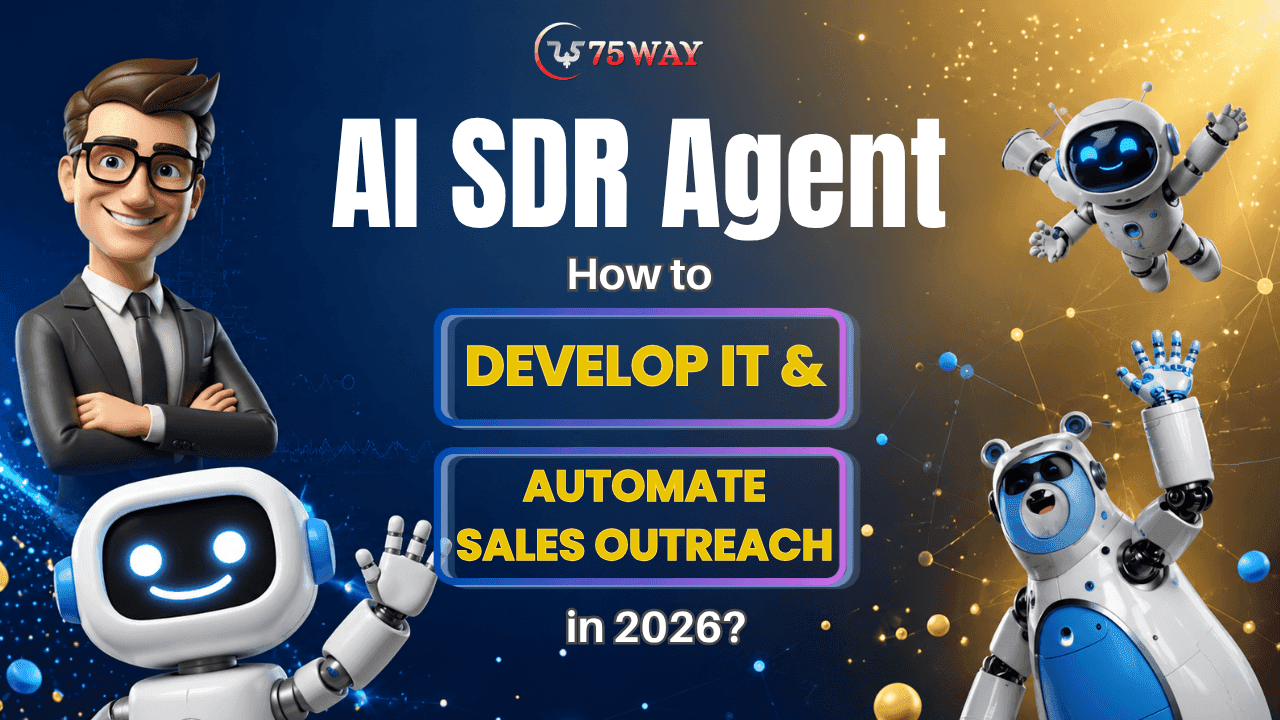
AI SDR agents automate outbound sales processes, including lead generation, email outreach, qualification, follow-ups, and CRM updates. In 2026, businesses use them to replace manual sales development tasks, reduce costs, and scale pipeline growth. This guide explains the architecture, features, development process, tech stack, and business benefits of AI-powered sales automation.
Quick Overview
- AI SDR agents automate end-to-end sales outreach workflows
- Businesses reduce dependency on manual SDR teams
- AI improves lead qualification accuracy and speed
- Personalized outreach increases conversion rates at scale
- CRM integration enables fully automated pipeline management
Sales development has traditionally been one of the most resource-intensive functions in B2B organizations. Teams of Sales Development Representatives (SDRs) spend hours identifying prospects, sending cold emails, following up with leads, updating CRMs, and qualifying opportunities. While effective, this manual process is slow, expensive, and difficult to scale.
In 2026, a new shift is transforming this landscape: the rise of AI SDR Agents.
An AI SDR agent is an autonomous system designed to replicate and enhance the role of a human SDR. This AI sales agent can research prospects, generate personalized outreach messages, send emails or LinkedIn messages, follow up automatically, qualify leads based on intent signals, and update CRM systems, all without constant human involvement.
Unlike traditional sales automation tools that only schedule emails, AI SDR agents use advanced reasoning models, data analysis, and workflow automation to execute entire sales processes end-to-end.
In this guide, you will learn how to develop an AI SDR agent, how it works, key features, system architecture, tech stack, cost structure, monetization models, and how businesses are using it to automate outbound sales in 2026.
What Is An AI SDR Agent?
An AI SDR (Sales Development Representative) agent is an intelligent automation system designed to replicate and enhance the core responsibilities of a human sales development representative. It uses artificial intelligence to identify prospects, initiate conversations, and manage early-stage sales interactions with minimal manual effort. This technology helps businesses scale outreach while maintaining consistency and speed across sales pipelines.
It performs tasks such as lead discovery, contact data enrichment, personalized message creation, automated email or chat outreach, follow-up sequencing based on user behavior, lead scoring, and CRM updates. Essentially, it functions as a digital sales employee operating 24/7, ensuring continuous engagement with potential customers and improving conversion opportunities without downtime or human limitations.
How AI SDR Agent Works?
An AI SDR agent operates as an automated sales engine that streamlines lead generation, outreach, and qualification processes using artificial intelligence. It continuously analyzes data, interacts with prospects, and executes sales tasks across multiple channels without manual intervention. This creates a faster, more efficient, and scalable sales pipeline for modern businesses.
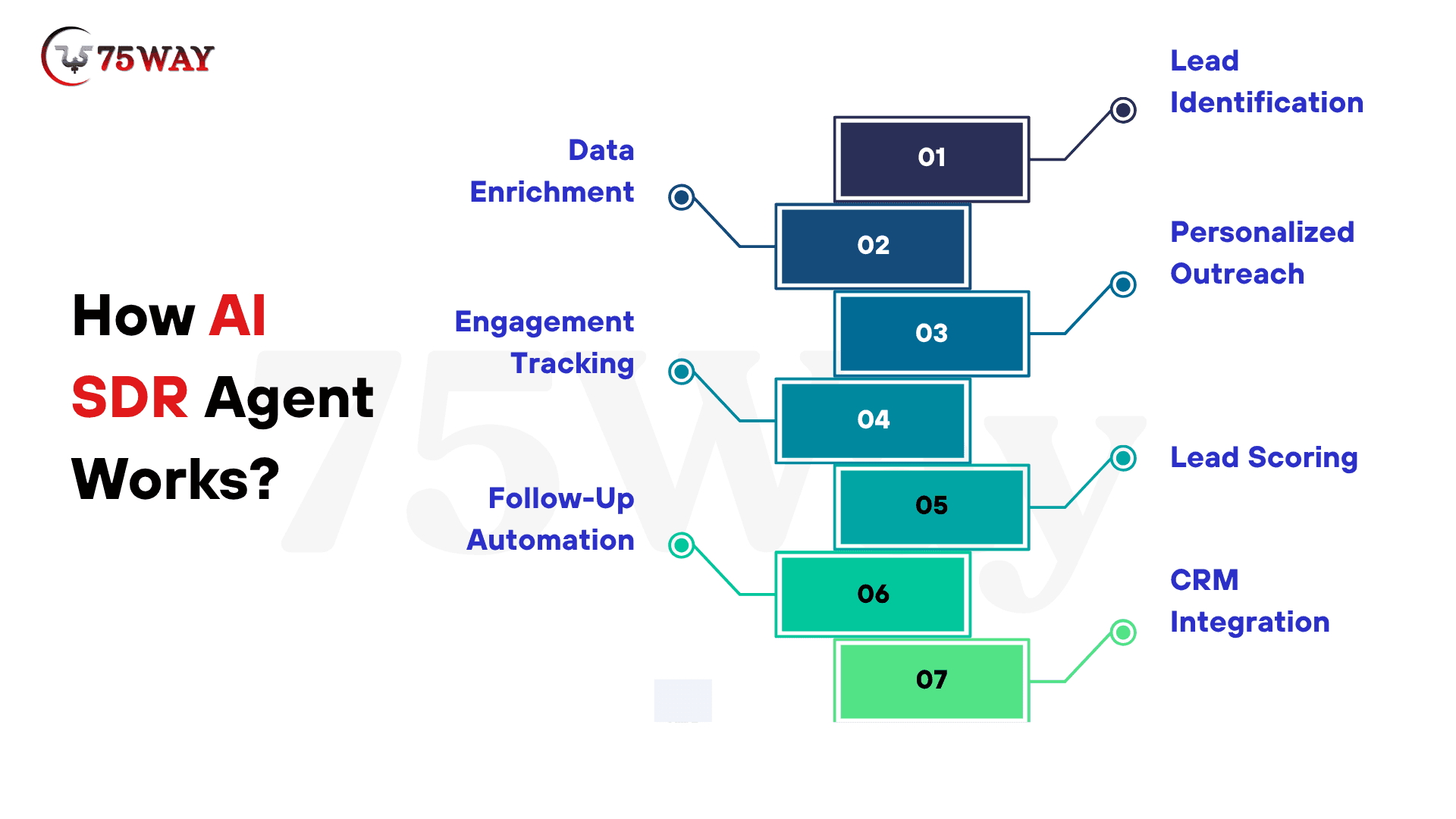
- Lead Identification: Scans databases, websites, and CRM systems to discover potential customers based on predefined targeting criteria.
- Data Enrichment: Collects and enhances prospect information using multiple sources to build complete and accurate lead profiles.
- Personalized Outreach: Generates tailored messages and emails based on user behavior, preferences, and engagement history.
- Engagement Tracking: Monitors responses, clicks, and interactions to understand prospect interest and intent levels.
- Lead Scoring: Evaluates and ranks leads based on conversion probability using AI-driven predictive models.
- Follow-Up Automation: Sends timely reminders, messages, and follow-ups based on user activity and engagement signals.
- CRM Integration: Updates sales pipelines automatically with real-time data synchronization for better sales team visibility.
Why Businesses Are Adopting AI SDR Agents In 2026?
Businesses are rapidly shifting to AI SDR systems due to increasing pressure on sales efficiency and cost optimization. Key drivers include:
- Rising cost of human SDR teams
- Need for scalable outbound pipelines
- Demand for hyper-personalized outreach
- Low conversion rates from generic cold emails
- CRM automation requirements
- Competitive pressure in SaaS markets
Companies are now prioritizing automation-first sales strategies.
Must-Have Features For Building An AI SDR Agent
An AI SDR agent combines automation, data intelligence, and personalized communication to streamline modern sales processes. It helps businesses reduce manual workload, improve lead quality, and accelerate conversion rates through continuous engagement and smart decision-making capabilities across multiple sales channels.
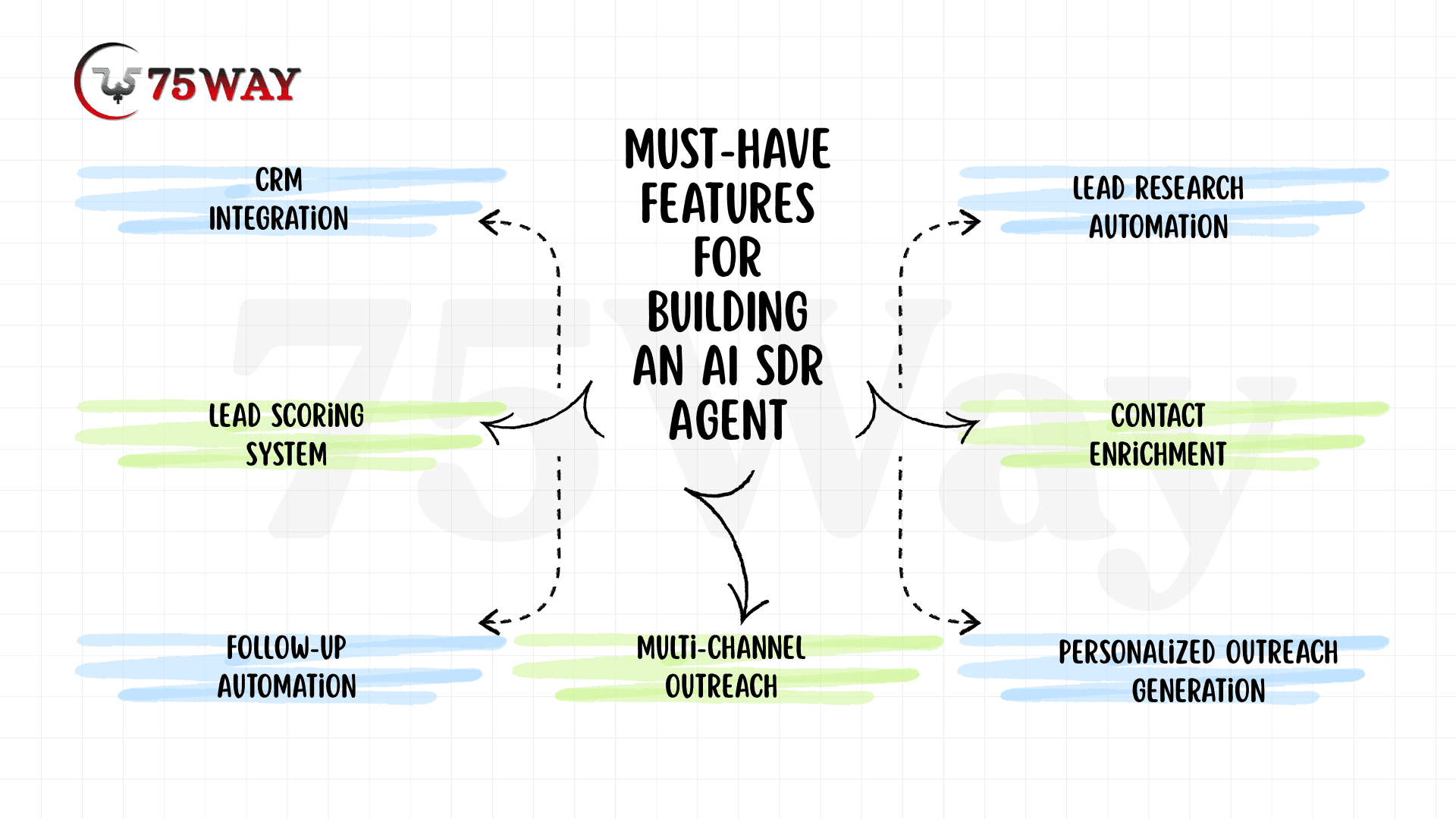
- Lead Research Automation: AI gathers prospect data from LinkedIn, websites, and databases. It also filters high-quality prospects based on predefined business targeting criteria.
- Contact Enrichment: Enhance lead profiles with email, company size, role, and intent signals. It also improves data accuracy for better targeting and segmentation.
- Personalized Outreach Generation: Create tailored cold emails and messages for each prospect. It also adapts tone and content based on user behavior and engagement patterns.
- Multi-Channel Outreach: Support email, LinkedIn, and CRM-based communication. It also ensures consistent messaging across all customer interaction platforms.
- Follow-Up Automation: Automatically schedule and send follow-ups based on engagement. It also increases response rates by maintaining timely communication cycles.
- Lead Scoring System: Rank leads based on behavior and conversion probability. It also helps sales teams prioritize high-intent prospects.
- CRM Integration: Sync with tools like HubSpot, Salesforce, and Zoho CRM. It also ensures real-time data updates for better pipeline visibility and management.
How To Develop An AI SDR Agent In 2026
Developing an AI SDR agent in 2026 requires a structured approach that combines data engineering, machine learning, automation systems, and CRM integration. The goal is to build an intelligent sales system that can independently research leads, communicate with prospects, and optimize conversions. Each stage contributes to creating a scalable and high-performing AI-driven sales pipeline for modern businesses.
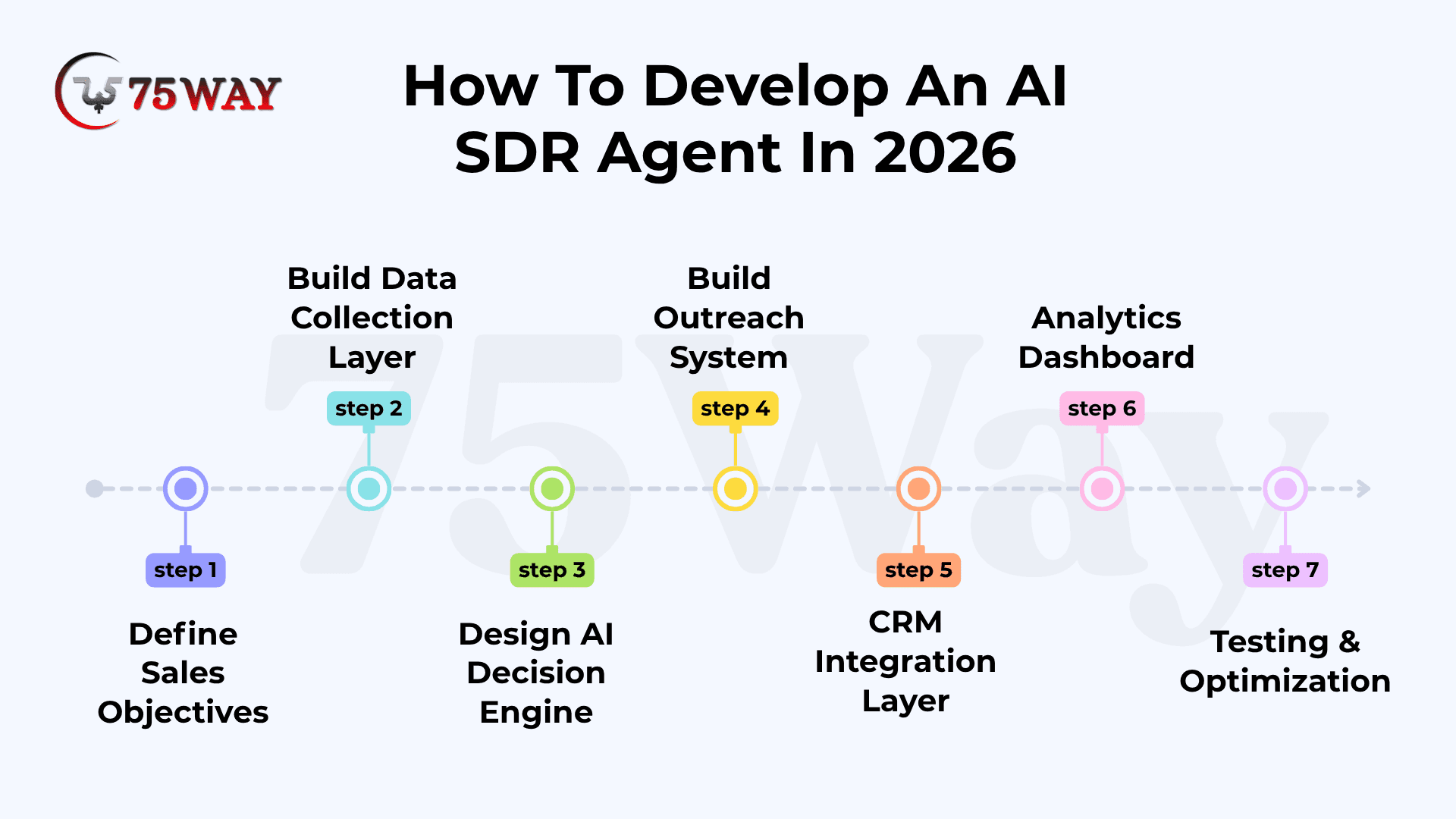
Step 1: Define Sales Objectives
Clear business goals determine how the AI SDR agent will function within the sales ecosystem. It also aligns system design with revenue targets and lead generation strategy.
Decide whether the agent will focus on:
- Cold outreach
- Lead qualification
- Appointment booking
- Pipeline generation
Clear objectives shape architecture design.
Step 2: Build Data Collection Layer
This layer ensures continuous access to high-quality prospect data from multiple sources. It also improves targeting accuracy and lead discovery efficiency.
The system must gather data from:
- LinkedIn APIs
- Company websites
- B2B databases
- CRM systems
Step 3: Design AI Decision Engine
This is the core intelligence layer that drives decision-making across the SDR workflow. It also improves personalization and prioritization of sales activities.
It handles:
- Lead scoring logic
- Message personalization
- Outreach timing decisions
Step 4: Build Outreach System
The outreach system manages communication across multiple channels and ensures consistent engagement. It also automates repetitive sales communication tasks.
Includes:
- Email automation
- LinkedIn messaging system
- Sequence scheduling engine
Step 5: CRM Integration Layer
This layer connects the AI SDR agent with existing sales management tools for seamless workflow synchronization. It also ensures real-time pipeline visibility.
Connect with:
- Salesforce
- HubSpot
- Zoho CRM
For real-time pipeline updates.
Step 6: Analytics Dashboard
The analytics dashboard provides insights into campaign performance and sales effectiveness. It also helps optimize outreach strategies using data-driven decisions.
Tracks:
- Open rates
- Reply rates
- Conversion rates
- Campaign performance
Step 7: Testing & Optimization
This stage improves system accuracy, messaging quality, and overall performance before full-scale deployment. It also ensures the agent adapts to real-world sales behavior.
Optimize:
- Message quality
- Delivery timing
- Lead scoring accuracy
Use Cases: AI SDR Agent Transforming Modern Sales Across Industries
AI SDR agents are reshaping how businesses approach outbound sales by automating lead generation, qualification, and engagement at scale. These intelligent systems help organizations reduce manual effort, improve targeting accuracy, and accelerate pipeline growth. From startups to enterprise sales teams, AI SDR agents are becoming essential tools for driving predictable revenue and scalable customer acquisition.
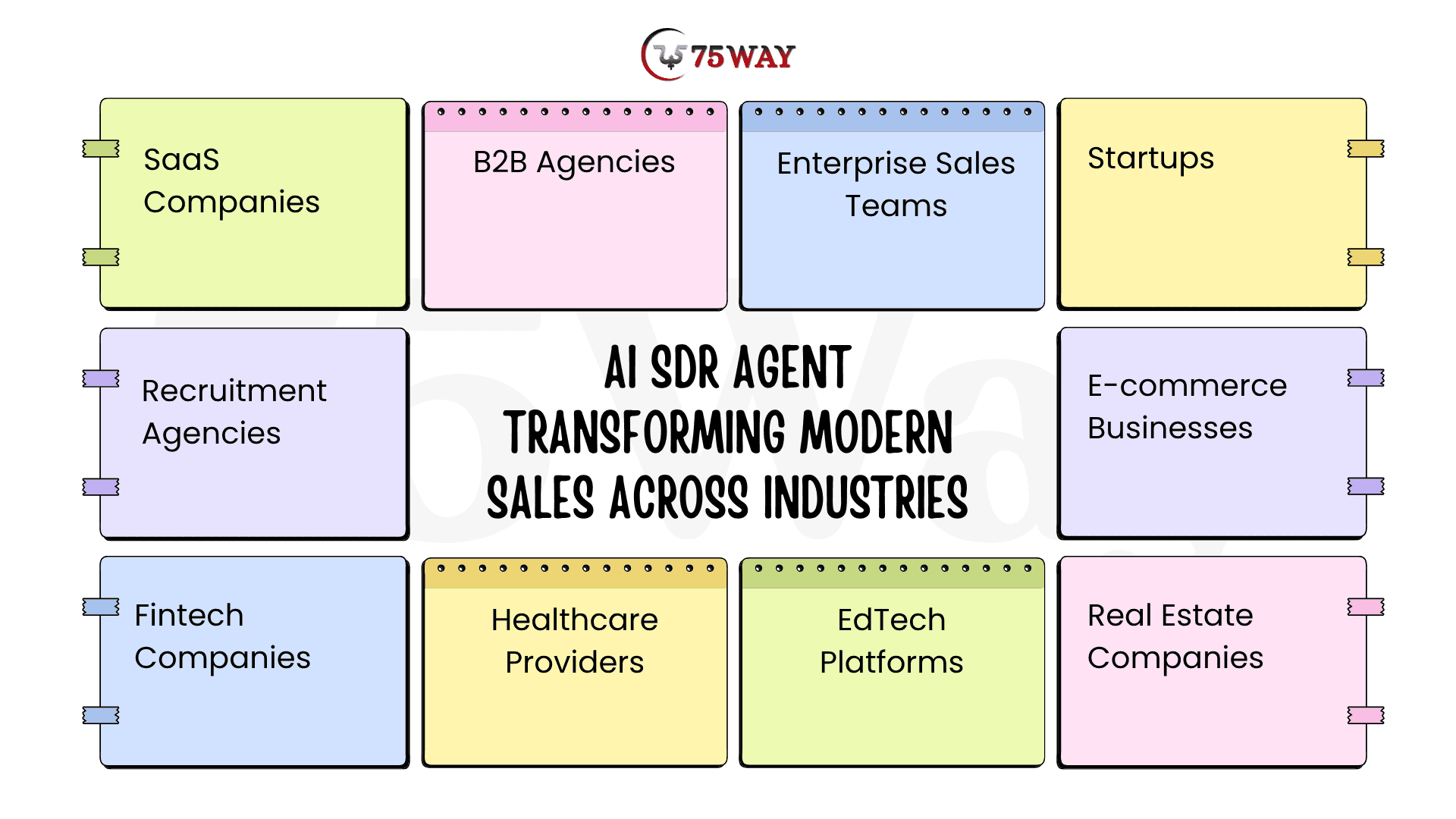
1. SaaS Companies: Automate outbound demos and trial conversions. It also improves product adoption rates through targeted outreach campaigns.
2. B2B Agencies: Generate qualified leads at scale. It also reduces dependency on manual prospecting and improves client acquisition efficiency.
3. Enterprise Sales Teams: Reduce SDR headcount while increasing pipeline output. It also enhances productivity through automated lead engagement workflows.
4. Startups: Launch outbound sales without hiring large teams. It also enables faster go-to-market execution with minimal operational cost.
5. E-commerce Businesses: Engage potential merchants and vendors automatically. It also increases partnership opportunities through AI-driven outreach systems.
6. Real Estate Companies: Automate property lead generation and buyer engagement. It also improves conversion rates through personalized follow-ups.
7. EdTech Platforms: Reach students and institutions through automated campaigns. It also boosts course enrollments using targeted messaging strategies.
8. Healthcare Providers: Connect with patients and healthcare partners efficiently. It also streamlines appointment booking and service promotion workflows.
9. Fintech Companies: Acquire users for digital payment and investment products. It also enhances customer onboarding through automated sales engagement.
10. Recruitment Agencies: Source and qualify candidates at scale. It also improves hiring efficiency through automated outreach and screening processes.
Key Benefits Driving AI SDR Agent Adoption Today
AI SDR agents are transforming modern sales operations by automating repetitive outreach tasks and improving lead quality through intelligent decision-making systems. Businesses use these agents to reduce manual workload, increase engagement speed, and achieve more predictable revenue growth. By combining data analysis, personalization, and automation, AI SDR systems create a scalable sales engine that operates continuously and adapts to customer behavior in real time.
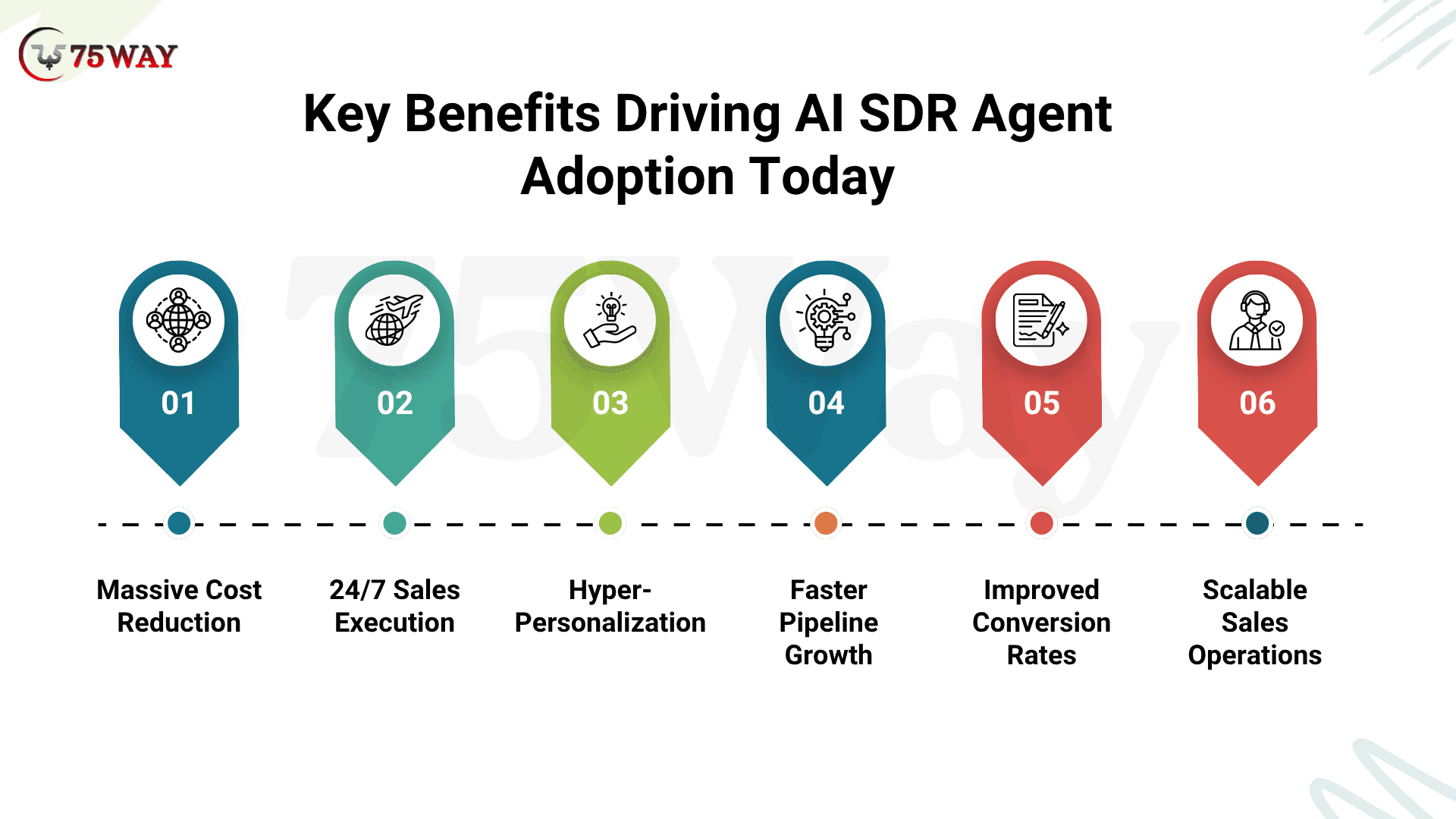
- Massive Cost Reduction: AI SDR agents reduce dependency on large sales teams by automating outreach, follow-ups, and lead qualification processes. This significantly lowers hiring and operational costs for businesses. It also allows companies to allocate resources more efficiently.
- 24/7 Sales Execution: AI SDR systems operate continuously without breaks or downtime. This ensures prospects are engaged across different time zones instantly. It improves lead capture opportunities at all hours of the day.
- Hyper-Personalization: AI SDR agents analyze user behavior, intent signals, and demographics to create tailored messages. This increases engagement and response rates from prospects. It also builds stronger customer relationships through relevant communication.
- Faster Pipeline Growth: AI-driven outreach enables businesses to contact a higher volume of qualified leads in shorter timeframes. This accelerates pipeline development and improves overall sales velocity. It also ensures faster movement of prospects through each stage of the buying journey.
- Improved Conversion Rates: AI SDR agents enhance lead qualification accuracy and targeting precision. Sales teams can focus on high-intent prospects with better engagement potential. This leads to stronger conversion outcomes across campaigns.
- Scalable Sales Operations: AI SDR systems allow businesses to expand sales operations without proportional hiring. Outreach capacity and lead handling scale automatically with demand. This maintains efficiency while supporting long-term business growth.
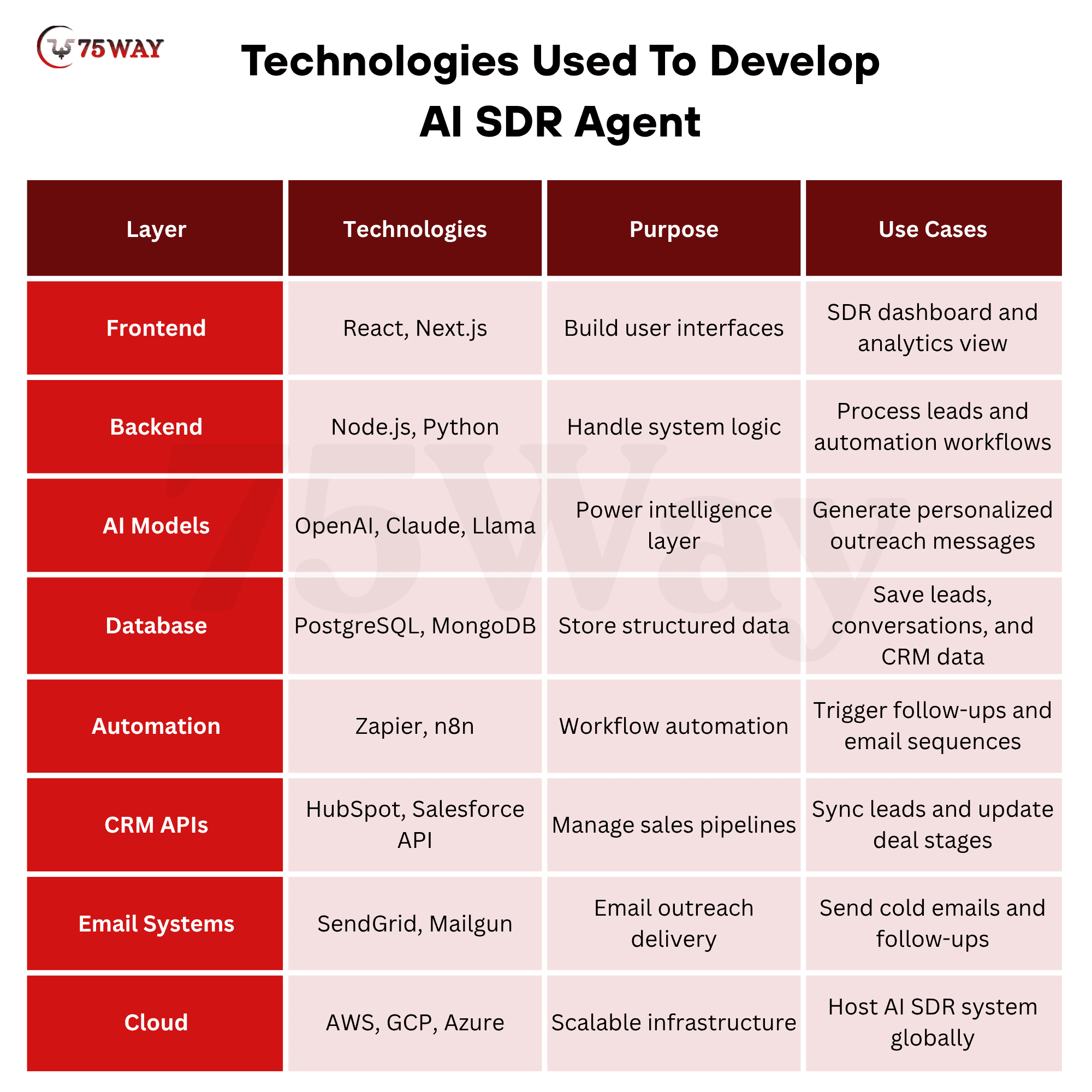
Tools & Technologies Used To Develop AI Sales Development Representative (SDR) Agent
Building an AI SDR agent requires a powerful combination of frontend interfaces, backend systems, AI models, automation tools, and CRM integrations. Each layer plays a crucial role in enabling intelligent lead generation, personalized outreach, and seamless sales workflow automation. Together, these technologies create a scalable system capable of handling large volumes of prospects while maintaining accuracy and performance.
The architecture typically includes multiple integrated components such as user interfaces, AI engines, databases, automation pipelines, and cloud infrastructure. These systems work together to process data, generate insights, execute outreach campaigns, and synchronize with CRM platforms in real time.
Cost To Build AI SDR Agent: Development Price Breakdown
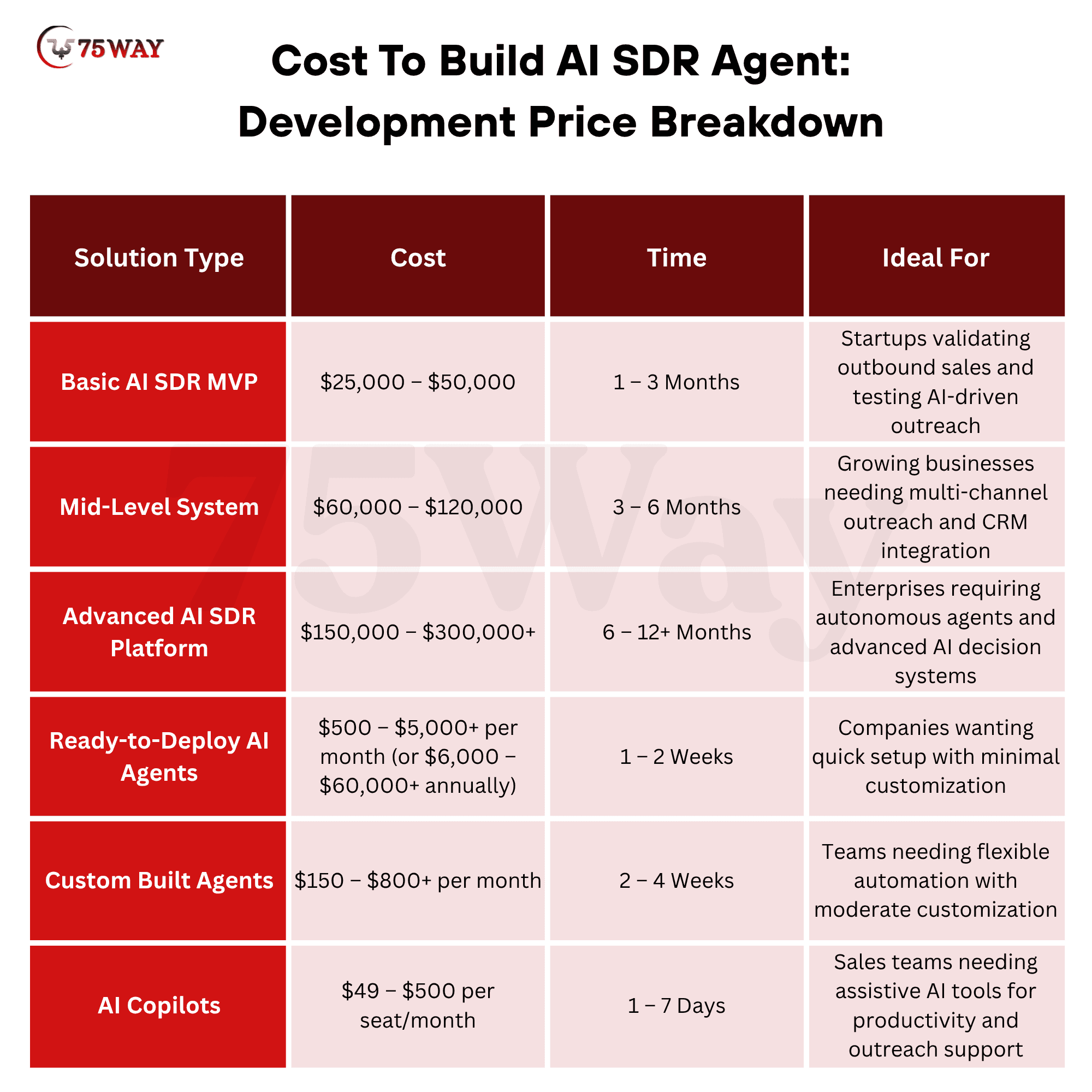
The average cost to build an AI SDR agent ranges between $25,000 – $300,000+, depending on customization level, AI sophistication, and enterprise-scale requirements. The development cost of an AI SDR agent depends on factors such as feature complexity, AI model integration, automation depth, and scalability requirements. Advanced systems with multi-channel outreach, CRM integrations, and intelligent lead scoring typically require higher investment due to increased engineering and infrastructure needs.
- Basic AI SDR MVP: $25,000 – $50,000
Core outreach, basic CRM, simple AI messaging.
- Mid-Level System: $60,000 – $120,000
Multi-channel outreach, lead scoring, integrations.
- Advanced AI SDR Platform: $150,000 – $300,000+
Autonomous agents, advanced AI reasoning, analytics.
- Ready-to-Deploy AI Agents: $500 – $5,000+ per month (or $6,000 – $60,000+ annually)
Quick deployment with minimal setup required.
- Custom Custom-Built Agents: $150 – $800+ per month
Flexible automation tailored to business needs.
- AI Copilots: $49 – $500 per seat, per month.
Enhances sales productivity with assistive intelligence.
Cost of Building AI SDR Agents Based On Development Stages
- UI/UX Design: $5,000 – $15,000
- AI Engine: $15,000 – $50,000
- Backend System: $10,000 – $40,000
- Integrations: $10,000 – $30,000
- Automation Layer: $10,000+
Monetization Models: How to Generate Profitable Business Income?
Monetization models define how AI SDR platforms generate consistent revenue by converting usage, features, and outcomes into structured pricing systems. These approaches combine flexibility and scalability to support startups, SMEs, and enterprise customers while maximizing long-term profitability.
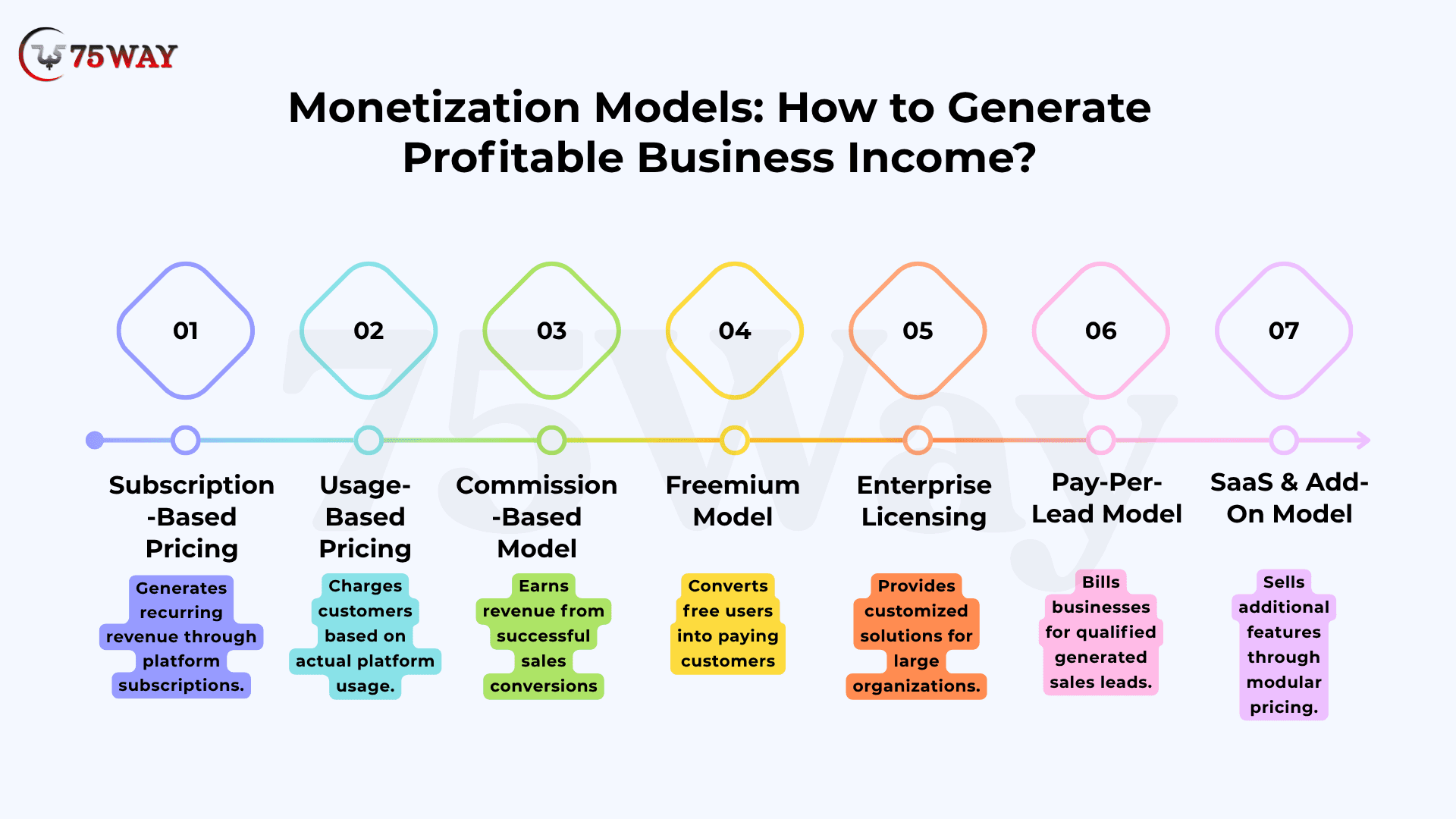
- Subscription-Based Pricing: Businesses pay recurring monthly or yearly fees to access AI SDR platforms with automation tools, integrations, and premium sales intelligence features. This model ensures predictable revenue streams for providers while offering users consistent access to evolving platform capabilities.
- Usage-Based Pricing: Customers are charged based on actual usage such as leads processed, emails sent, or campaigns executed through the AI SDR system. This flexible approach allows companies to scale costs in alignment with their sales activity and operational demand.
- Commission-Based Model: Platforms earn a percentage from successful conversions or deals generated through AI-driven outreach and lead qualification workflows. This performance-based structure directly aligns revenue with measurable sales outcomes and encourages higher conversion efficiency.
- Freemium Model: Basic AI SDR features are offered free to attract users while advanced automation, analytics, and integrations require paid upgrades. This strategy helps platforms build large user bases while converting active users into paying customers over time.
- Enterprise Licensing: Large organizations pay customized licensing fees for full-scale deployment, advanced customization, and dedicated infrastructure support. This model is designed for enterprises requiring high security, scalability, and tailored AI SDR capabilities.
- Pay-Per-Lead Model: Businesses are billed for each qualified lead generated by the AI SDR system through automated outreach and scoring mechanisms. This ensures companies only pay for verified sales opportunities with measurable business value.
- SaaS & Add-On Model: The core SDR platform is offered as SaaS with optional paid add-ons like CRM integrations, AI enhancements, and analytics dashboards. This modular pricing approach allows businesses to customize features based on their operational needs.
Challenges In AI SDR Development & How To Overcome Them
AI SDR development involves multiple technical, operational, and data-driven challenges that directly impact performance, deliverability, and sales outcomes. Building a reliable system requires balancing AI accuracy, integration complexity, and communication effectiveness across multiple channels and platforms. These challenges must be addressed carefully to ensure consistent lead generation and conversion performance.
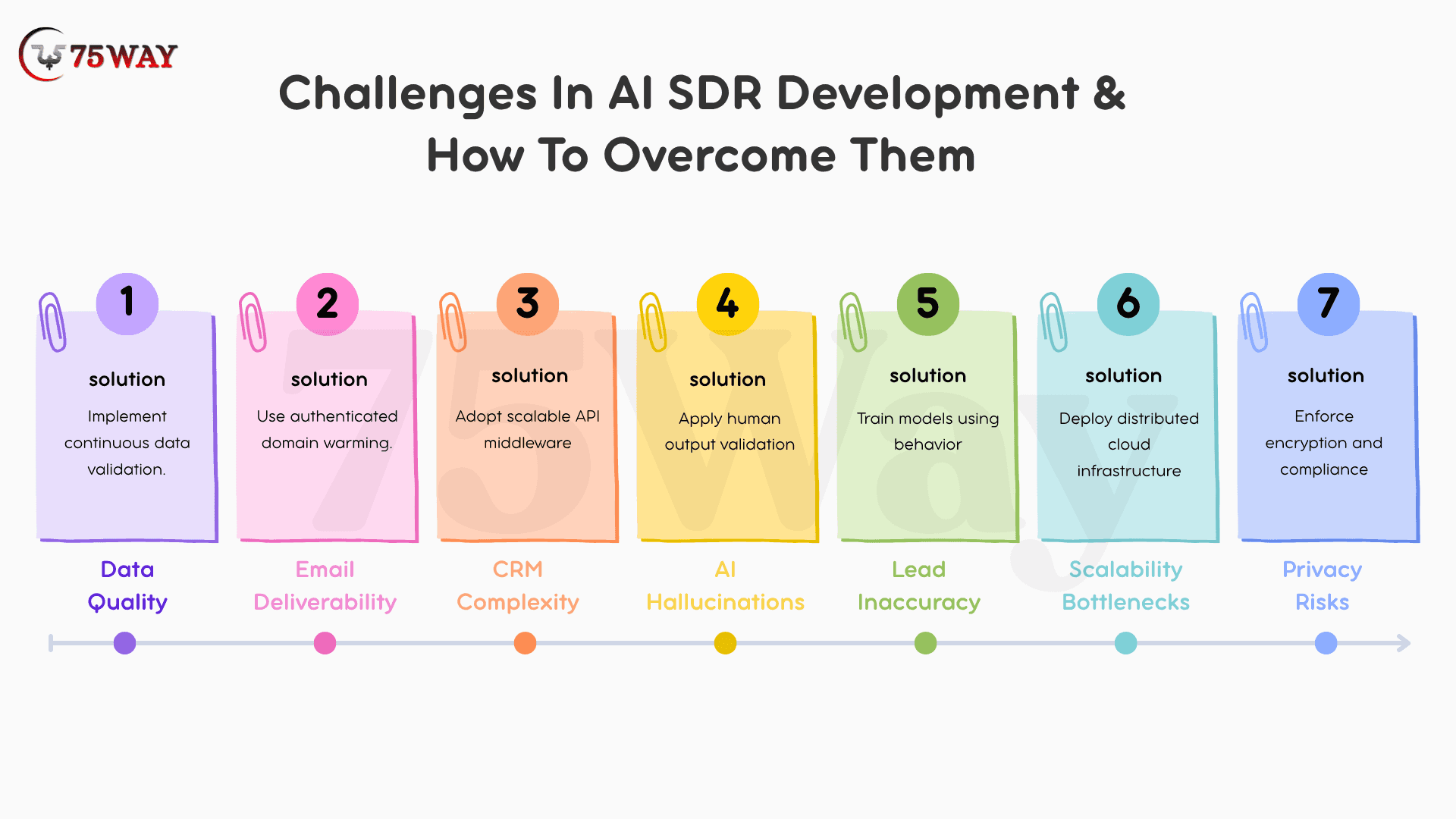
- Data Quality Issues: Poor-quality or incomplete data reduces outreach effectiveness and leads to irrelevant targeting. This directly impacts conversion rates and campaign performance. Improve results by implementing data validation pipelines and continuous enrichment from trusted sources.
- Email Deliverability: Spam filters often block outreach campaigns, reducing message visibility and engagement rates. This affects overall sales efficiency and lead response rates. Increase deliverability by using domain warming, authentication protocols, and clean sending practices.
- CRM Integration Complexity: Different CRM systems require custom APIs and complex integration workflows. This increases development time and maintenance effort. Simplify integration using standardized APIs, middleware tools, and scalable connector frameworks.
- AI Hallucinations: AI models may generate incorrect or misleading sales messages during automation. This can damage brand credibility and reduce trust. Control outputs by using prompt constraints, validation layers, and human-in-the-loop review systems.
- Lead Scoring Inaccuracy: Incorrect scoring models may prioritize low-quality leads over high-intent prospects. This reduces sales efficiency and conversion potential. Improve accuracy using continuous model training and real-time behavioral data analysis.
- Scalability Bottlenecks: High-volume outreach can overload system infrastructure and reduce performance speed. This affects response time and campaign stability. Solve this by adopting cloud-native architecture and distributed processing systems.
- Compliance And Data Privacy Risks: Handling sensitive customer data introduces regulatory and privacy challenges across regions. This can create legal and operational risks. Ensure compliance by implementing GDPR standards, encryption, and secure data governance policies.
Final Remarks
AI SDR agents represent a major transformation in B2B sales automation. By replacing manual outreach with intelligent autonomous systems, businesses can scale lead generation, improve conversion rates, and reduce operational costs. In 2026, companies that adopt AI SDR technology early will gain a strong competitive advantage by building faster, more efficient, and highly scalable sales pipelines. This shift is not just automation. It is the evolution of sales execution into intelligent systems that operate independently. To build a powerful AI SDR system for your business, reach out to a prominent AI development company to design and deploy custom AI SDR agents that automate your entire sales outreach process, increase pipeline velocity, and drive predictable revenue growth in 2026.
Frequently Asked Questions (FAQs)
Can AI SDR Agents Integrate With Existing Sales Tools?
Yes, AI SDR agents integrate with popular sales platforms and CRM systems. They synchronize prospect data automatically. This creates a connected sales workflow without disrupting existing processes.
What Data Does An AI SDR Agent Need To Operate Effectively?
AI SDR agents require prospect information, company data, and engagement signals. Quality data improves personalization. Better inputs generally lead to stronger outreach performance and qualification accuracy.
Can AI SDR Agents Personalize Outreach At Scale?
Yes, AI SDR agents analyze prospect information before generating messages. Each outreach sequence can be customized. This improves engagement while maintaining high outreach volumes simultaneously.
How Do AI SDR Agents Qualify Leads Automatically?
They evaluate prospect behavior, engagement activity, and predefined scoring criteria. Leads receive qualification scores automatically. Sales teams can prioritize opportunities with stronger conversion potential.
Are AI SDR Agents Suitable For Enterprise Sales Processes?
Yes, enterprise organizations use AI SDR agents for large-scale prospecting activities. They support complex workflows. Integration capabilities help align with enterprise sales operations and systems.
What Should Businesses Consider Before Developing An AI SDR Agent?
Businesses should define goals, target audiences, and sales processes first. Data availability is important. Clear objectives help create a more effective and scalable AI SDR solution.