Summary
Travel safety technology has gained major importance across tourism and mobility services. Mobile applications now support emergency alerts, location monitoring, and traveler assistance across regions. Business owners recognize strong demand for digital protection platforms. Strategic mobile development allows travel companies to build trusted services, expand revenue models, and strengthen traveler confidence across modern travel ecosystems worldwide.
Key Overview
- Travel security platforms require strong planning, reliable infrastructure, and trusted safety-focused mobile architecture.
- The global tourism application market value may reach nearly $3.5 trillion by 2034.
- Travel security mobile app development cost ranges from $10,000 to $250,000, but varies based on requirements.
- Startup founders unlock revenue opportunities through subscriptions, enterprise services, and strategic travel partnerships.
- Advanced features such as AI alerts and GPS tracking strengthen traveler protection systems.
Traveler safety concerns receive increasing attention across tourism, corporate travel programs, and international mobility services. Digital technology now supports stronger protection through location monitoring, alert systems, and communication tools. Therefore, travel app development gains strategic importance for companies aiming to support secure journeys and trusted travel services.
In fact, the travel and tourism app industry may grow at an 18.5% compound annual growth rate and reach nearly $3.5 trillion in value by 2034. Such growth indicates a strong opportunity for startups and digital product builders.
So, what are the key strategies to develop a mobile app for travel security businesses in 2026? What is the cost to develop a mobile app for travel security agencies? This guide will highlight all. We have described major travel security app categories, strategic travel mobile app development approaches, essential features, investment considerations, and emerging technologies shaping digital travel safety platforms.
What Is A Travel Security Mobile App?
A travel security mobile app represents a digital safety platform designed to protect travelers during trips through real-time alerts and location monitoring services. Such applications support both leisure travelers and corporate travel programs across international destinations.
Travel safety platforms connect travelers with emergency contacts, risk alerts, and support resources through a single interface. Security notifications, route monitoring, and communication channels allow travelers to remain connected during unexpected events.
Travel companies, corporate travel managers, and tourism platforms often integrate these applications into broader digital ecosystems. Thus, traveler protection becomes a service layer within travel platforms, helping businesses strengthen traveler trust and maintain responsible travel support systems.
Types of Travel Safety Apps In The Market
Travel safety apps fall into several categories depending on the type of protection service offered to travelers. Each category focuses on a specific risk scenario, such as medical emergencies, disaster alerts, or personal safety monitoring. Travel businesses often combine multiple categories within a single platform to deliver complete traveler protection.
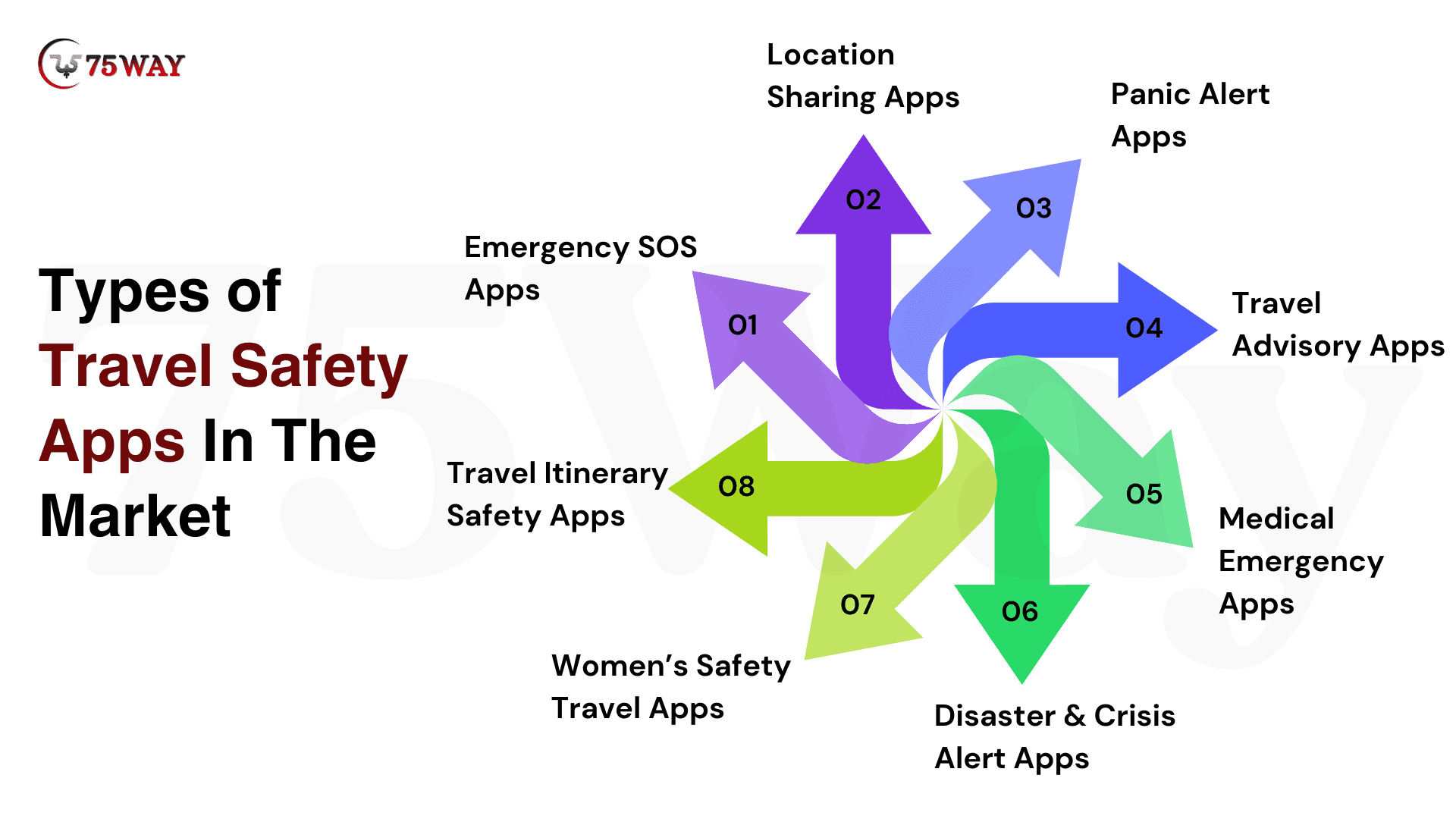
Emergency SOS Apps: Emergency SOS applications provide immediate assistance access during dangerous situations. A single button sends alerts to emergency contacts, security teams, or nearby services. GPS data allows responders to identify the traveler's location quickly. Travel companies integrate SOS features to strengthen traveler protection during unexpected incidents.
Location Sharing Apps: These mobile applications allow travelers to transmit real-time location information to trusted contacts or travel managers. Continuous location updates assist family members, travel coordinators, and security teams in monitoring traveler movement across unfamiliar regions during trips.
Panic Alert Apps: Panic alert travelling apps provide rapid emergency signaling during threatening situations. Immediate alerts reach predefined contacts or monitoring teams. Travel security providers integrate panic alerts with location data and communication tools to support faster response and traveler assistance.
Travel Advisory Apps: Travel advisory mobile applications provide security notifications regarding political unrest, weather threats, or safety risks across destinations. Travel companies use these platforms to inform travelers about regional conditions before or during travel journeys.
Medical Emergency Apps: These apps help travelers facing health issues abroad. Digital access to medical contacts, hospital information, and emergency services helps travelers obtain faster treatment during unfamiliar situations in foreign destinations. Additional medical guidance and nearby pharmacy details also assist travelers during urgent health situations.
Disaster & Crisis Alert Apps: Disaster and crisis alert platforms distribute warnings regarding natural disasters, civil disturbances, or emergencies. Early notifications allow travelers to adjust plans and contact emergency support services before conditions escalate. Continuous alert updates also help travelers remain informed about developing risks in surrounding areas.
Women’s Safety Travel Apps: Women-focused safety applications provide additional protection features for female travelers. Safety alerts, route monitoring, trusted contact lists, and secure communication tools assist women during solo travel or unfamiliar destinations. Dedicated safety tools within these apps support greater confidence during independent travel experiences.
Travel Itinerary Safety Apps: Travel itinerary safety applications monitor planned routes and travel schedules. Location monitoring combined with itinerary data allows travel managers or family contacts to track traveler movement and identify delays or unexpected route changes. Travel coordination features also assist organizations that manage employee travel programs.
Mobile App Development Strategies for Travel Security Businesses
A structured travel app mobile development strategy allows travel security platforms to support traveler protection, service reliability, and scalable digital growth. Technology decisions, security architecture, and user experience planning play major roles in building trusted travel safety platforms.
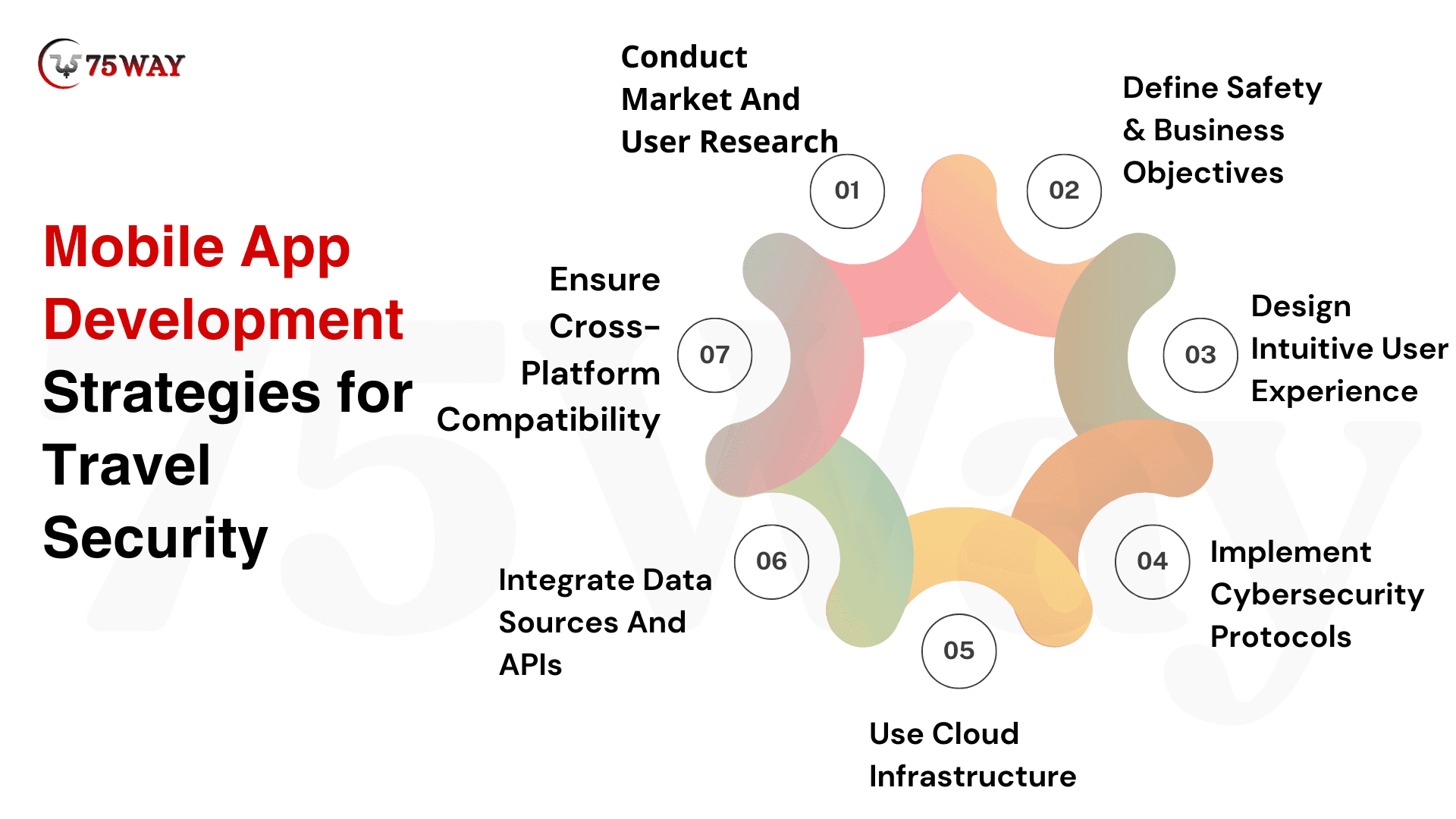
Conduct Market And User Research
Comprehensive research reveals traveler safety concerns, regional risks, and digital behavior patterns across different travel segments. Business founders examine traveler demographics, travel frequency, and common safety incidents before defining product development direction. Research insights guide feature planning, market positioning, and long-term service value within travel security mobile platforms.
- Traveler surveys reveal personal safety concerns, preferred digital services, and emergency expectations during international trips and unfamiliar destinations.
- Competitor analysis highlights feature gaps, pricing models, and technology approaches within existing travel safety mobile platforms.
- Travel incident data reveals common risks such as theft, medical emergencies, transportation disruptions, and regional security warnings. Traveler behavior analysis identifies mobile usage patterns, app interaction habits, and emergency response expectations across frequent travelers.
- Tourism industry reports provide insights into travel growth trends, safety concerns, and digital adoption across travel services.
Define Safety & Business Objectives
Research insights guide the next step of defining clear safety and business goals. Organizations identify the problems the platform will address and the travelers who will rely on the service. Defined objectives help align product features with business strategy and traveler protection priorities.
- Business leaders identify primary users, including leisure travelers, corporate travel teams, tourism operators, and global mobility coordinators.
- Safety priorities include emergency communication systems, traveler location monitoring, health assistance access, and regional risk notification capabilities.
- Revenue planning evaluates subscription services, enterprise travel security solutions, and premium safety feature packages for travelers.
- Product vision connects traveler protection services with scalable digital platforms designed for global travel safety solutions.
Design Intuitive User Experience
After defining platform objectives, UI/UX design translates those goals into a practical mobile experience. Travelers often interact with safety tools during stressful situations. A simple interface allows faster access to assistance tools, alerts, and emergency contacts.
- Emergency alert buttons remain visible across the interface so travelers can request assistance during urgent situations instantly.
- Navigation menus organize safety tools, alerts, and contacts logically for faster access during stressful travel situations.
- Location sharing controls allow travelers to activate tracking features quickly when visiting unfamiliar destinations.
- Visual alert notifications highlight urgent warnings such as regional threats, disasters, or nearby safety risks.
Implement Cybersecurity Protocols
Travel security platforms store sensitive data, including traveler identity details and real-time location records. Strong digital protection frameworks guard this information against unauthorized access and cyber threats. Thus, security architecture becomes a central element of application development.
- Data encryption protects traveler location data, emergency contacts, and identity records across mobile application systems.
- Multi-factor authentication reduces unauthorized access risks during account login and emergency contact configuration processes.
- Secure database architecture protects traveler information from data leaks, cyber attacks, and unauthorized system access.
- Security monitoring systems detect suspicious activities across the application infrastructure and notify administrators about possible threats.
- Regular vulnerability testing identifies system weaknesses before malicious actors exploit travel safety application infrastructure.
Use Cloud Infrastructure
Travel security services operate across multiple regions and time zones. Thus, reliable infrastructure becomes necessary for continuous service availability. Cloud-based systems allow applications to manage large user activity and deliver real-time safety notifications globally.
- Distributed cloud servers store traveler data securely and maintain application availability across international travel regions.
- Real-time alert distribution allows travelers to receive safety notifications without delay across mobile networks.
- Scalable infrastructure manages rising traveler activity during peak tourism seasons and large international events.
- Backup storage systems protect traveler data against accidental loss, cyber incidents, or server outages.
- Centralized monitoring tools track platform performance across different regions and maintain stable service availability.
Integrate Data Sources And APIs
A well-connected platform collects information from transportation networks, weather intelligence systems, and emergency service directories. This combined data allows travelers to receive alerts related to disruptions, regional risks, or safety incidents that may affect their journeys.
- Weather intelligence services provide notifications about storms, extreme temperatures, floods, or severe environmental conditions affecting travel routes.
- Government travel advisory portals publish regional warnings related to security concerns, public disturbances, or health advisories across destinations.
- Emergency response directories connect travelers with nearby hospitals, police stations, and rescue centers during urgent situations abroad.
- Airline and transportation systems share updates related to flight changes, airport disruptions, and delays across rail or road networks.
- Digital mapping services supply route intelligence, nearby services, and location awareness during travel across unfamiliar areas.
Ensure Cross-Platform Compatibility
Application compatibility across different operating systems expands user reach and allows travel companies to serve wider traveler groups. Stable performance across devices also strengthens user confidence during emergencies when fast access to safety tools becomes critical.
- Mobile applications operate across widely used smartphone systems such as Android and iOS, used by global travelers.
- Device adaptability allows applications to function properly on both modern smartphones and older mobile devices.
- Familiar interface structure across platforms helps travelers access safety features without confusion during urgent situations.
- Wider device compatibility increases adoption among travelers, tourism services, and corporate travel management programs.
Why Businesses Should Invest in Travel Security App Development?
Traveler protection services create strong value across tourism platforms, corporate travel programs, and digital travel ecosystems. Digital travel platforms increasingly include security features as core service components. Organizations adopting travel safety technology often gain a competitive advantage across global travel markets. Long-term digital transformation within tourism includes travel security platforms as essential infrastructure. Businesses also gain new revenue channels through safety subscriptions, partnerships, and enterprise travel management services.
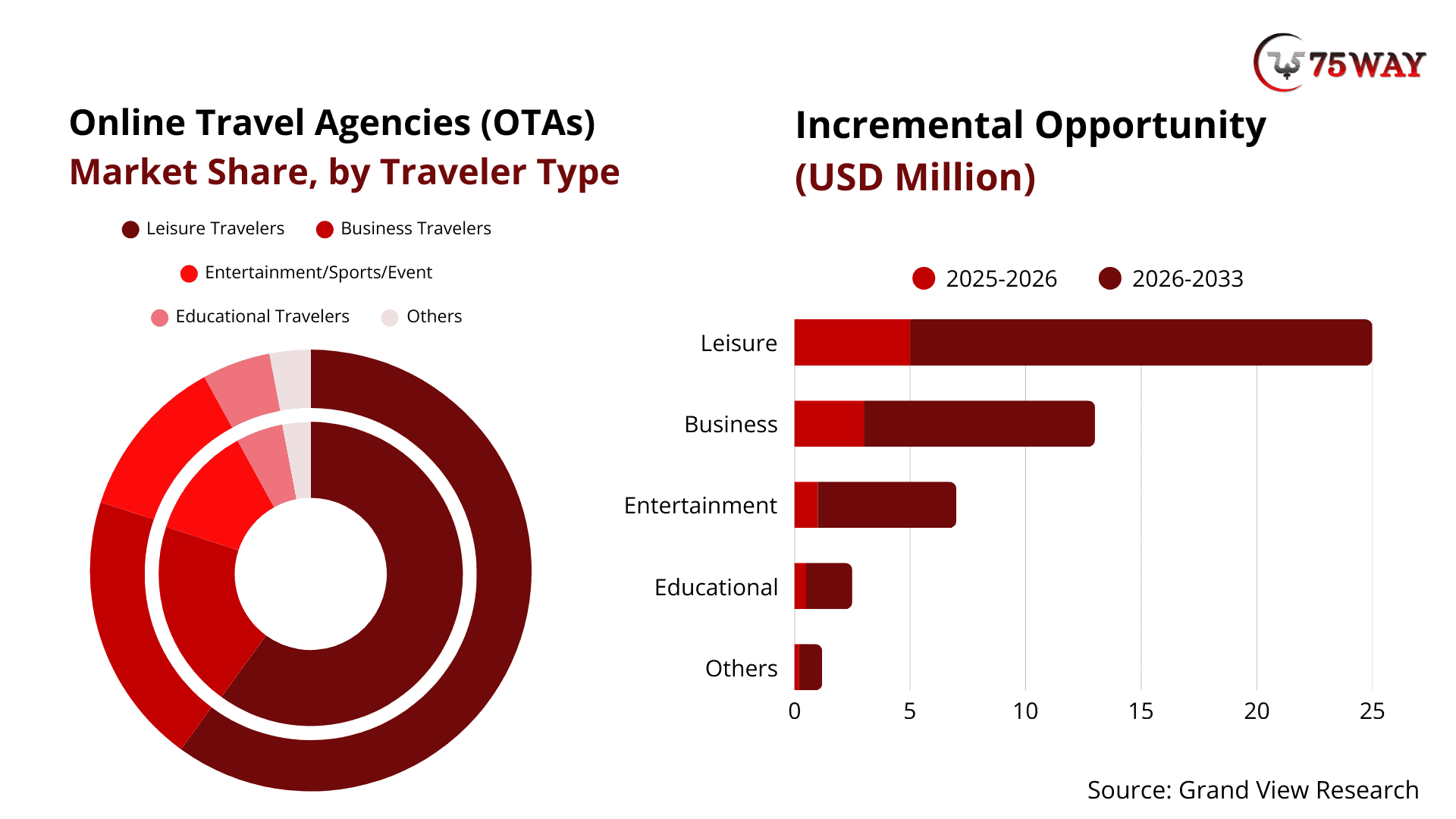
- The global travel and tourism apps market is projected to reach approximately $3,552.7 billion by 2034, expanding at a CAGR of 18.50% during the forecast period, according to a MarketsandMarkets report.
- North America currently dominates the market with over 35.6% share, supported by strong growth, which is expected to expand at a 16.5% CAGR.
- Overall, the travel and tourism app industry is anticipated to grow at a 18.5% compound annual growth rate, reaching nearly $3.5 trillion in global value by 2034.
- The online travel agencies (OTA) market worldwide is expected to achieve $316.67 billion by 2033, advancing at a 9.0% CAGR, according to Grand View Research.
- Within this segment, Europe holds a significant position, accounting for about 31.72% of total OTA market revenue.
- Travelers generally use around 7–8 apps while planning or managing trips, with mapping tools used by 52% of users, weather apps by 51%, and airline service apps by 50%
Step-by-Step Development Process for Travel Security Apps
Travel security mobile applications follow a structured development methodology that converts safety concepts into functional digital products. Each stage builds upon the previous step, so the platform gradually evolves from an idea into a reliable travel safety solution. A systematic process allows businesses to build stable, scalable, and user-focused security applications.
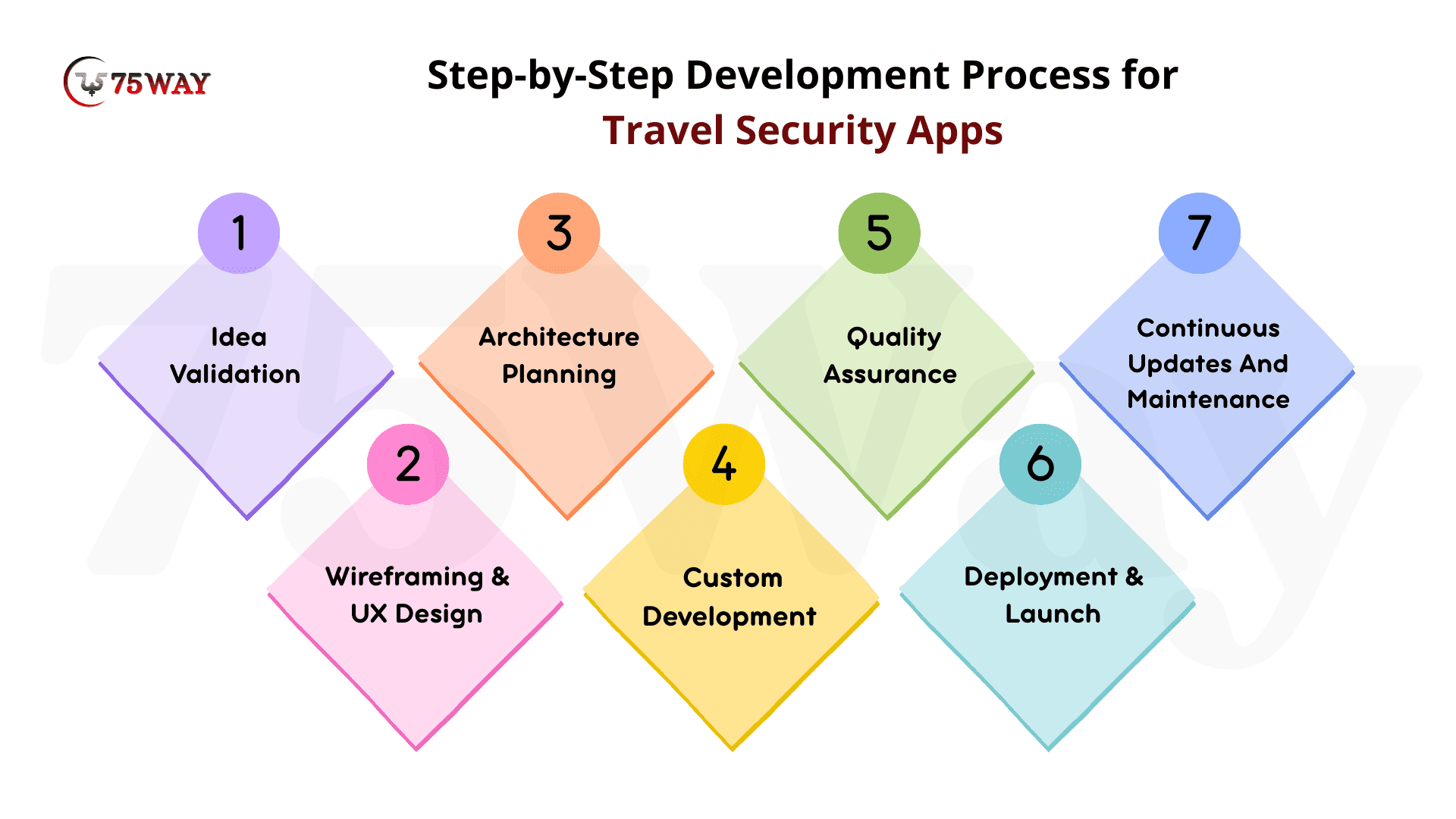
Idea Validation: A strong development process begins with validation of the travel safety concept. Product teams examine traveler risks, safety needs, and service demand across tourism and corporate travel sectors. Validation confirms product relevance and allows founders to proceed with development planning confidently.
Wireframing & UX Design: After concept validation, design planning converts product ideas into visual structures. Wireframes outline application layout, navigation flow, and emergency feature placement. Thoughtful user experience design allows travelers to access alerts, contacts, and safety tools quickly during unfamiliar travel situations.
Architecture Planning: Application architecture defines the technical structure supporting the platform. Development teams plan database systems, security layers, and integration points required for travel safety services. Strong architecture allows stable performance across large user activity and continuous real-time alert delivery.
Custom Development: This phase converts technical architecture into functional software. Engineers build platform modules such as traveler profiles, location tracking systems, alert notifications, and communication features. This stage gradually transforms the design framework into a working travel safety application.
Quality Assurance: When you develop a travel security app, the next stage is to check whether it performs well or not. Testing processes evaluate application reliability before public release. Quality assurance teams review system stability, security protection, and feature performance across devices. Careful quality assurance helps identify technical issues and protects travelers from service disruptions during emergencies.
Deployment & Launch: Successful testing prepares the platform for public availability. Deployment places the application on mobile platforms so travelers and travel companies can access safety services. Launch activities also introduce the product to the travel ecosystem and early user communities.
Continuous Updates & Maintenance: Application growth continues after launch through regular system improvements. Maintenance activities address security updates, performance improvements, and feature enhancements. Continuous development keeps the platform aligned with evolving travel risks, technology upgrades, and traveler safety expectations.
Key Features of a Successful Travel Security Mobile App
A travel security mobile application delivers value through features designed to protect travelers during uncertain situations. These capabilities connect users with emergency assistance, safety alerts, and location intelligence during trips. A strong feature set allows businesses to provide reliable travel safety services and build trust among travelers.
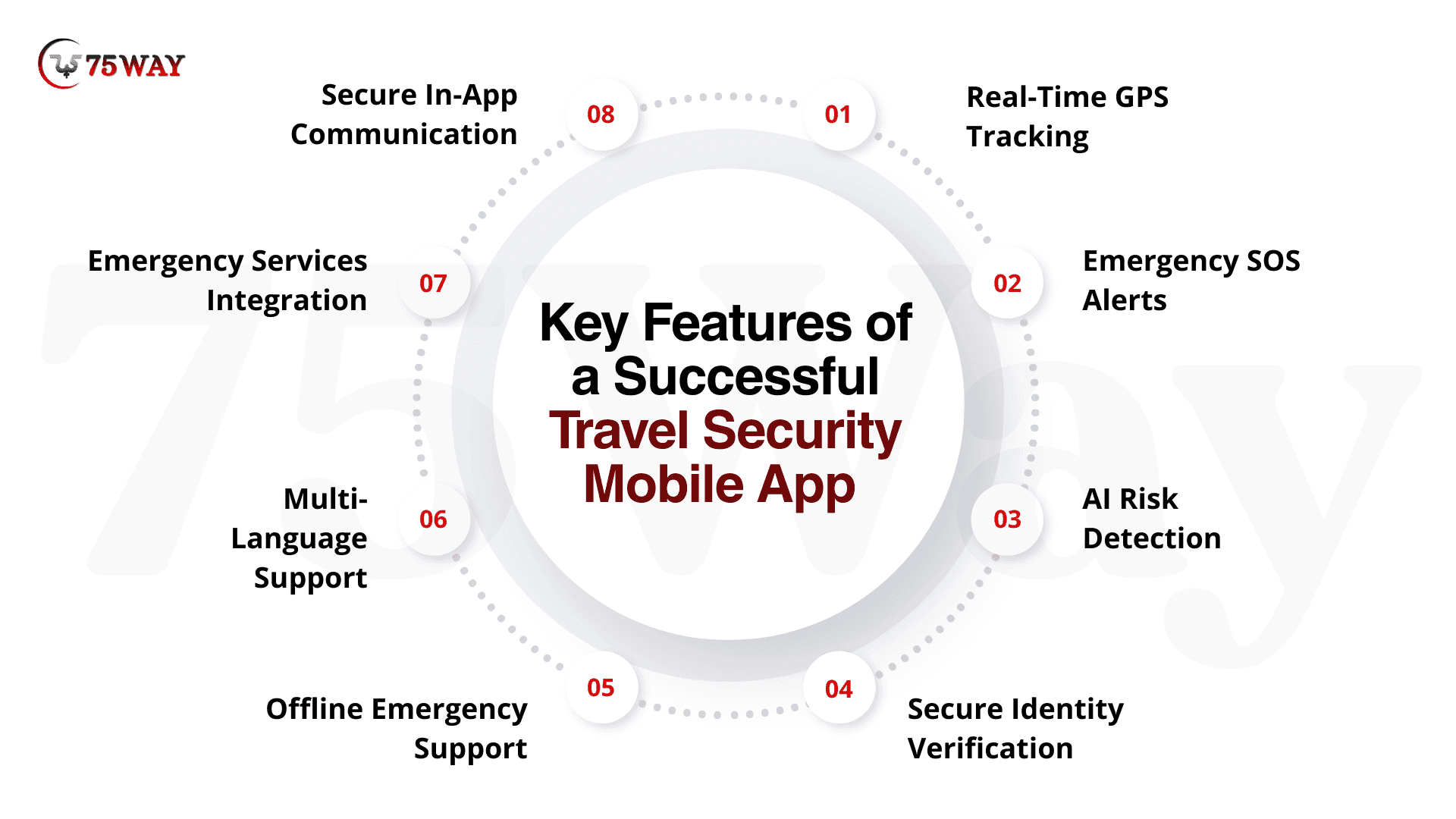
Real-Time GPS Tracking: It allows travel safety platforms to monitor traveler movement across destinations. Continuous location updates allow trusted contacts or travel managers to follow travel routes and identify unusual location changes. This feature also assists emergency responders when immediate traveler assistance becomes necessary.
Emergency SOS Alerts: This feature provides travelers with immediate assistance during dangerous situations. A single tap activates a distress signal that sends location details and alert notifications to trusted contacts or support centers. Rapid alert communication helps travelers receive assistance during theft attempts, accidents, or personal safety incidents.
AI Risk Detection: Artificial intelligence systems analyze travel data and regional intelligence to detect possible safety risks. Automated analysis identifies patterns related to weather hazards, transportation disruptions, or security incidents. This technology delivers timely alerts that allow travelers to adjust routes or seek safer locations.
Secure Identity Verification: Your app must protect traveler accounts and prevent unauthorized access within safety applications. Authentication layers verify user identity before accessing location data or emergency services. Strong identity protection also safeguards personal records and maintains trust within digital travel safety platforms.
Offline Emergency Support: Travelers frequently encounter limited internet connectivity during trips. Offline emergency features allow essential safety tools to remain accessible without active data connections. Stored contact information, emergency instructions, and local assistance directories remain available when travelers cannot access mobile networks.
Multi-Language Support: Global travel involves communication across different languages and regions. Multi-language functionality allows safety platforms to deliver alerts, instructions, and emergency information in multiple languages. Travelers receive safety guidance that remains understandable even in unfamiliar international environments.
Emergency Services Integration: Travel safety applications connect users with local emergency services during critical situations. Integrated directories link travelers to nearby hospitals, police departments, and rescue teams. Direct communication channels allow travelers to contact authorities quickly when facing accidents, medical issues, or personal threats.
Secure In-App Communication: You must integrate safe communication tools while developing your travel security app, so travelers can share messages and location updates with trusted contacts through encrypted channels. Private messaging protects sensitive information during emergencies. Such communication systems allow travelers to remain connected with family members, travel coordinators, or assistance teams during trips.
Monetization Strategies for Travel Security Mobile Apps
Travel security applications protect travelers, yet they also create meaningful revenue opportunities for digital businesses. A well-planned monetization model allows you to deliver valuable safety services while building long-term income streams. The right approach balances traveler protection with practical services that users are willing to pay for during their journeys.
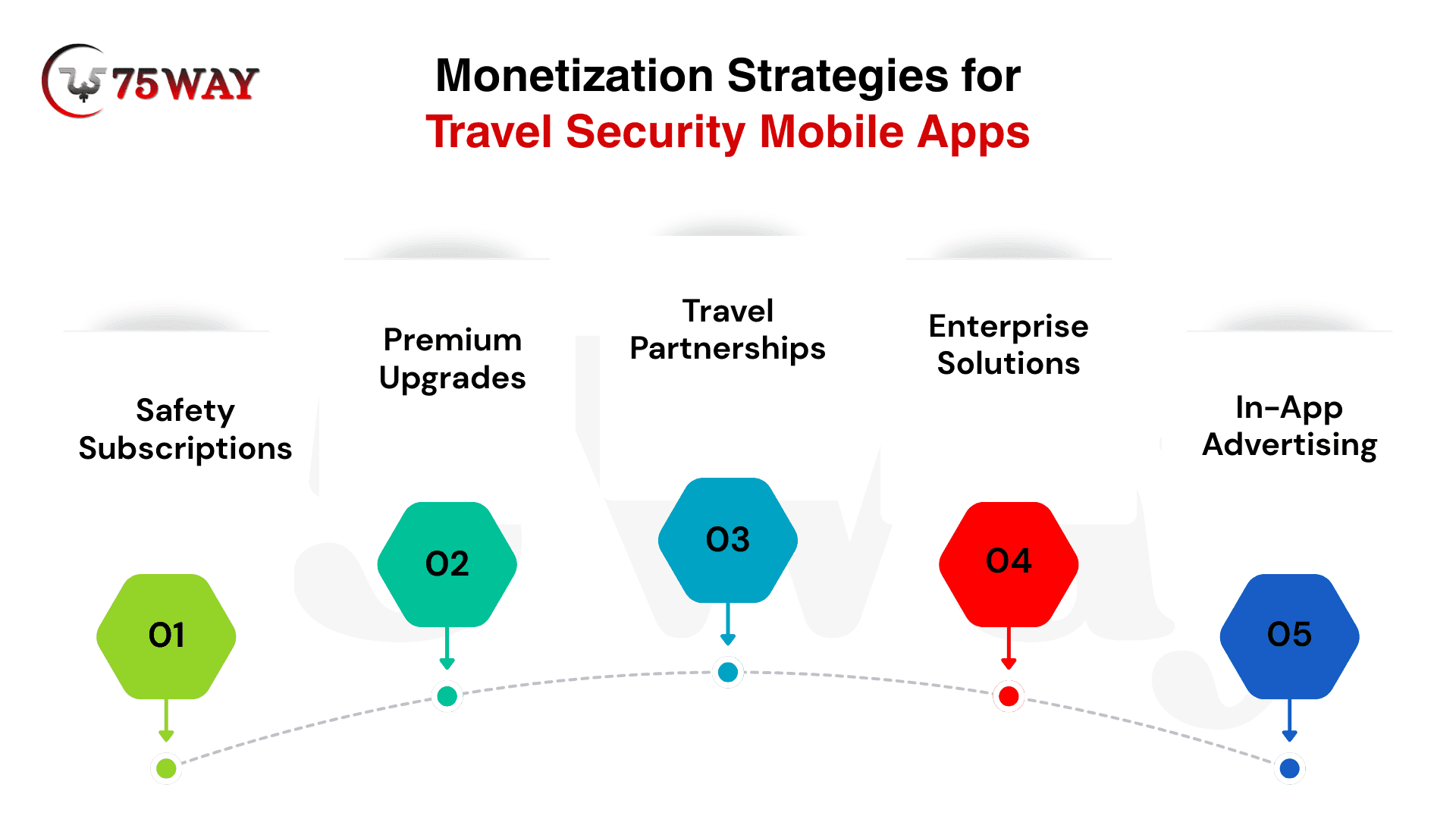
Safety Subscriptions: Many travelers prefer ongoing protection throughout their trips. Subscription plans allow you to provide continuous access to safety alerts, location monitoring, and emergency assistance services. Monthly or annual memberships also create stable revenue while giving travelers confidence that protection remains active during every journey.
Premium Upgrades: Basic safety tools attract first-time users, yet advanced features often encourage upgrades. Premium packages may include global risk alerts, extended emergency assistance, or advanced traveler monitoring capabilities. These upgrades allow you to increase revenue while still keeping essential safety features available for all users.
Travel Partnerships: Travel services rarely operate in isolation. Partnerships with airlines, travel agencies, insurance providers, and booking platforms expand the reach of safety applications. Through collaboration, you can introduce security features within existing travel ecosystems and generate shared revenue through bundled travel services.
Enterprise Solutions: Corporate travel programs frequently require digital safety tools for employees visiting different destinations. Enterprise solutions allow organizations to track employee locations, receive risk notifications, and manage travel policies through a centralized platform. This model creates long-term business contracts and consistent revenue for travel security platforms.
In-App Advertising: Active travelers often search for useful services during their trips. Carefully placed advertisements introduce relevant offerings such as travel insurance, accommodation services, or transportation providers. When implemented thoughtfully, this approach generates additional revenue without interrupting the traveler’s safety experience.
Cost To Develop Travel Security Mobile App
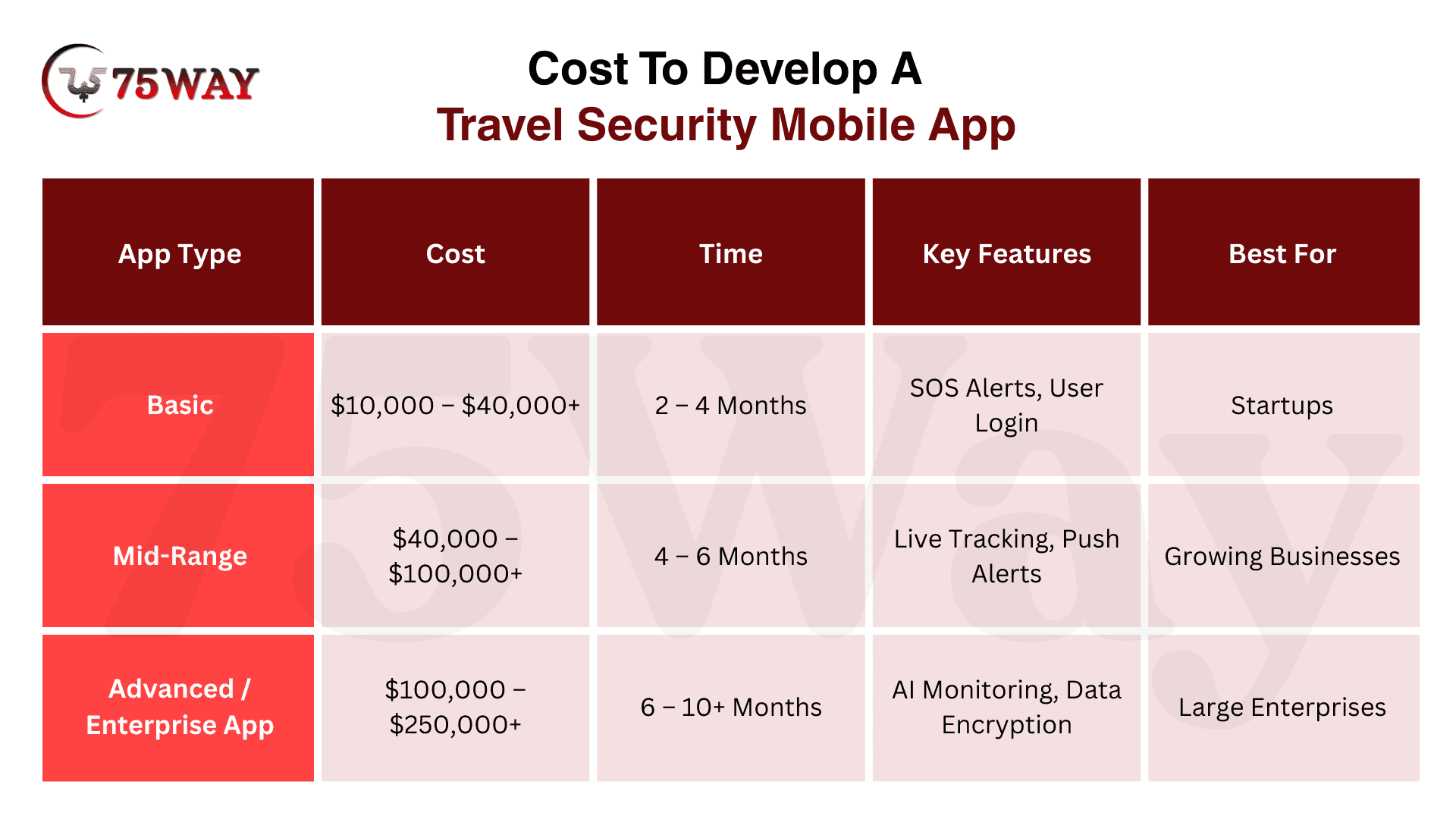
Travel security mobile app development cost varies according to feature complexity, technology infrastructure, and platform capabilities. Businesses planning a safety-focused application usually evaluate development scope, timeline, and required integrations before estimating investment. A well-planned budget helps you choose the right feature set and development approach for your travel security platform.
Basic Travel Security App Cost: $10,000 – $40,000+.
A basic travel security application includes essential safety features that allow travelers to request assistance quickly. This version allows startups to launch an initial product and measure traveler interest before adding advanced safety tools
Moderate Travel Security App Cost: $40,000 – $100,000+.
A moderate travel security application introduces additional safety and monitoring features. Businesses often include live GPS tracking, push notifications, travel advisory alerts, and improved user dashboards. This stage allows you to deliver a more complete safety experience for travelers and travel service providers.
Advanced Travel Security App Cost: $100,000 – $250,000+.
The enterprise-level travel security platforms include intelligent monitoring systems, AI chatbots, and enterprise-grade protection features. Development at this level may include AI risk analysis, encrypted traveler data systems, global alert integrations, and corporate travel monitoring capabilities designed for large organizations and travel enterprises.
Future Trends in Travel Security Mobile Applications
Travel security technology continues to evolve as digital innovation improves traveler protection. New technologies allow safety platforms to detect risks earlier, connect travelers with assistance faster, and deliver more intelligent alerts. Businesses investing in travel security apps increasingly adopt advanced systems and AI voice agents that strengthen traveler safety and improve real-time response during emergencies.
Predictive AI Security: Artificial intelligence-based advanced analytics systems analyze travel patterns, historical incident data, and regional risk signals to identify possible threats before they occur. This capability allows travel safety platforms to notify users about potential dangers and recommend safer routes or travel adjustments during trips.
Smart IoT Safety: Internet-connected devices expand the safety ecosystem for travelers with IoT apps for traveling. Smart wearables, connected luggage trackers, and location-enabled devices share safety data with mobile applications. Such wearable apps allow travelers to remain monitored and reachable even when mobile devices are not actively used.
Blockchain Identity Verification: Blockchain technology introduces stronger protection for traveler identity data. Decentralized digital identity records reduce risks related to identity theft or unauthorized access. Secure verification also simplifies authentication when travelers access safety services, airport systems, or travel documentation platforms.
AR Emergency Navigation: Augmented reality navigation assists travelers during emergency situations by displaying directional guidance directly on mobile screens. Visual navigation overlays help travelers locate safe exits, nearby hospitals, police stations, or shelters when traditional map navigation becomes difficult during urgent incidents.
Global Threat Monitoring: Advanced monitoring systems collect intelligence from multiple global sources such as government advisories, weather systems, and regional security reports. Continuous monitoring allows travel safety applications to provide real-time alerts related to disasters, conflicts, or environmental risks affecting traveler safety.
Final Thoughts
Traveler safety continues to influence digital innovation across the global travel industry. Mobile technology now plays an important role in helping travelers stay informed, connected, and protected during their journeys. Businesses entering this space gain opportunities to build trusted digital services that travelers rely on during uncertain situations. A strong app development strategy that includes reliable infrastructure, user-focused design, and advanced safety technologies can create long-term value for both users and service providers. Companies planning to build safety platforms should therefore evaluate features, development processes, and future technologies before launching their product. If you are looking to build a secure travel safety platform, connect with a trusted travel app development company
Frequently Asked Questions
Who Benefits The Most From Travel Security Mobile Apps?
Frequent travelers, corporate travel teams, tourism companies, and solo travelers often gain the most value from travel security applications. These platforms provide safety alerts, emergency contact access, and travel risk updates that help users stay informed and protected during their journeys.
Can Travel Security Apps Assist During International Trips?
Yes, travel security applications often provide global coverage through integrations with international safety data providers. Travelers can receive regional alerts, medical assistance contacts, and emergency notifications that remain relevant across different countries and travel destinations.
Do Travel Security Apps Work During Network Disruptions?
Yes, many travel safety applications include limited offline capabilities. Stored emergency contacts, basic safety instructions, and previously downloaded travel data may remain accessible when mobile connectivity becomes unstable during remote travel situations.
Are Travel Security Apps Suitable For Corporate Travel Management?
Yes, corporate travel managers often rely on security applications to monitor employee travel activity and receive risk notifications. These platforms help organizations stay informed about employee locations and provide immediate assistance if unexpected incidents occur during business trips.
How Do Travel Security Apps Improve Traveler Confidence?
Access to safety alerts, location sharing, and emergency communication tools provides reassurance during unfamiliar travel situations. Travelers often feel more confident exploring new destinations when reliable digital safety tools remain available on their mobile devices.
Can Travel Security Apps Integrate With Other Travel Services?
Yes, many travel safety platforms connect with mapping services, travel booking platforms, airline systems, and emergency data providers. Such integrations allow travelers to access safety information alongside travel schedules, transportation updates, and location services.