AI Summary
AI-powered medical supply chain platforms help healthcare businesses tackle stockouts, expired inventory, and supplier delays. This guide explores essential features, practical AI use cases, integrations, and compliance. It also explains development steps, estimated costs, and success metrics for informed investment decisions.
Key Takeaways
- AI-powered platforms improve medical inventory forecasting, procurement, and supply chain visibility.
- The global AI-based healthcare supply chain management market targets $10.56 billion by 2031.
- Medical supply chain platform development costs range from $12,000 to $500,000+.
- Reliable data, system integrations, and security controls support effective healthcare supply chain automation.
- Measurable KPIs help healthcare businesses evaluate platform performance and investment value.
A medical distributor might have thousands of products in its catalog and still struggle to answer one simple question: will the right supplies reach the right facility on time? Orders change, demand rises unexpectedly, and a delay from one supplier can throw off plans for several healthcare customers.
For US healthcare businesses, managing these moving parts with disconnected systems can become an expensive headache. Thus, a well-built AI-based medical supply chain management platform can learn from historical orders, flag unusual demand, identify potential stock shortages, and help purchasing teams decide when to reorder. It won’t solve every supply chain problem on its own, but it can give people better information before they make costly decisions.
That’s what makes healthcare logistics software development planning so important. Before investing in an AI-powered medical supply chain management platform, you need to understand the users, the data, the integrations, and the features worth paying for. This guide walks through those decisions with the needs of the US healthcare market in mind.
What Is An AI-Powered Medical Supply Chain Management Platform?
An AI-powered medical supply chain management platform is software that helps healthcare organizations plan, purchase, track, store, and distribute medical products using connected data and intelligent automation.
Unlike a basic inventory application, it can analyze historical usage, supplier lead times, seasonal demand, expiry dates, and shipment information to identify potential problems before they become urgent.
For example, a hospital group may use the platform to identify that several facilities will need the same surgical supplies during an upcoming period. The system can forecast demand, flag products at risk of running out, and recommend replenishment quantities for authorized staff to review.
A complete platform may support:
- Hospitals, clinics, and multi-location health systems.
- Pharmaceutical manufacturers and wholesale distributors.
- Medical device companies and equipment suppliers.
- Healthcare procurement and third-party logistics providers.
- Medical supply marketplaces and healthcare technology startups.
The scope depends on the business model. A pharmaceutical distributor may prioritize product traceability and order fulfillment, while a hospital network may focus on stock availability, purchasing controls, and inventory transfers.
How To Develop An AI-Powered Medical Supply Chain Management Platform
Every healthcare business has different supply chain needs, so a one-size-fits-all platform rarely works. The right development approach depends on your users, existing systems, data sources, and the AI capabilities you want to include. Here’s what building the platform involves, along with the prices outlined below.
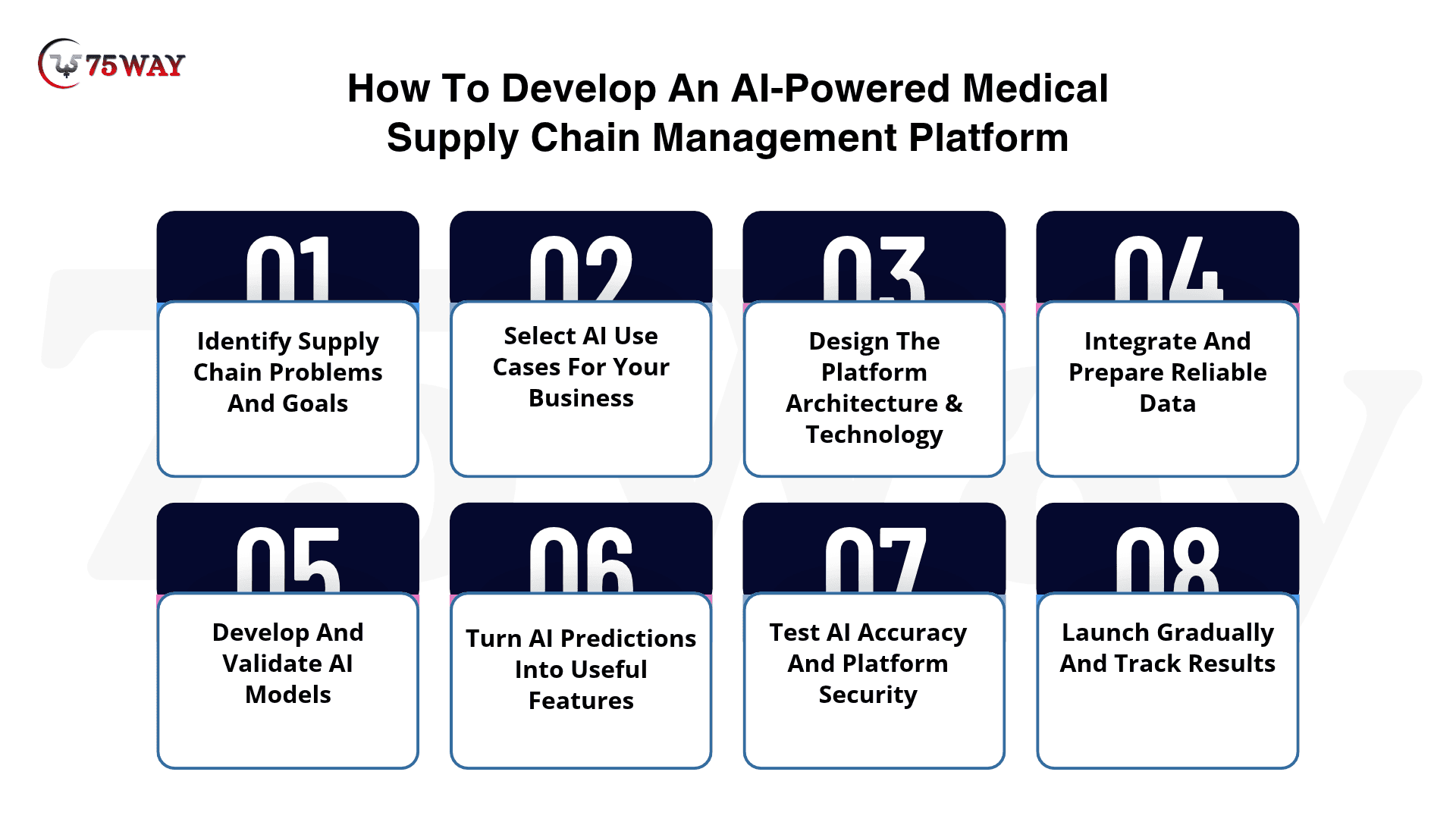
Step 1: Identify Supply Chain Problems And Goals
Every successful platform starts with a problem healthcare teams face regularly. A hospital may struggle to predict medication requirements, while a distributor may lose money because products expire before reaching customers.
These differences determine which processes need attention and where AI could make a meaningful difference. Clear goals, such as reducing stockouts or minimizing expired inventory, also give the team a way to measure progress.
Step 2: Select AI Use Cases For Your Business
Once the main challenges are clear, the next decision is where AI can help most. Demand forecasting may suit organizations with unpredictable purchasing patterns, while supplier risk analysis may benefit businesses dealing with frequent delivery delays.
Inventory optimization can help determine how much stock to maintain at each location. Rather than building every feature at once, businesses should prioritize use cases that address urgent problems and have enough usable data to support development.
Step 3: Design The Platform Architecture & Technology
Those priorities provide the blueprint for the platform's architecture. For example, a demand forecasting feature needs historical order and inventory records, while a supplier risk tool may require delivery histories and supplier performance data.
The architecture must connect these sources with databases, backend services, user dashboards, and AI models. Early decisions about cloud infrastructure, APIs, access permissions, and scalability can also prevent expensive redesigns as the platform grows.
Step 4: Integrate And Prepare Reliable Data
Even a well-designed platform cannot produce useful predictions from incomplete or inconsistent records. Product names may differ across systems, stock quantities may use different units, and historical orders may contain missing values.
Integrations with ERP, warehouse, procurement, supplier, and logistics systems bring the necessary information together. Data cleaning and standardization then make those records suitable for analysis, giving AI models a stronger foundation for learning from past demand and supply patterns.
Step 5: Develop And Validate AI Models
With reliable data available, developers can begin training models for the selected use cases. A demand forecasting model, for instance, can learn from historical sales, seasonal patterns, stock movements, and supplier lead times to estimate future requirements.
Separate validation data helps reveal whether its predictions are dependable beyond the examples used during training. Comparing results with simpler forecasting methods is equally important because a complex AI model is only useful when it offers a measurable improvement.
Step 6: Turn AI Predictions Into Useful Features
Accurate predictions alone will not prevent a shortage if staff cannot act on them. The platform must present AI insights in ways that fit daily purchasing and inventory decisions.
Forecasts can support replenishment recommendations, unusual demand can trigger alerts, and supplier risk scores can help purchasing teams assess potential delays.
Features such as live inventory dashboards, expiration notifications, purchase order tracking, and role-based access connect these insights with the people responsible for acting on them.
Step 7: Test AI Accuracy And Platform Security
Before launch, the team needs to establish whether the complete system works under challenging conditions. Tests should cover sudden demand increases, delayed supplier deliveries, missing records, integration failures, and inaccurate inventory updates.
AI models also need checks for prediction errors and unreliable recommendations. Alongside these scenarios, security testing, access controls, audit trails, and recovery procedures help protect operational data and keep essential workflows running when problems occur.
Step 8: Launch Gradually And Track Results
A limited rollout gives the organization a chance to see how the platform performs in everyday operations before expanding across multiple facilities. Teams can compare stockout rates, forecast accuracy, expiration-related losses, inventory costs, and order fulfillment times against their original baselines.
Staff feedback may also expose problems that technical testing missed. These findings guide improvements to workflows and AI models, while ongoing monitoring helps the platform adapt as demand and supply conditions change.
Tools & Technology Stack For Building Custom AI Healthcare Supply Chain Platform
The right technology stack depends on the platform’s integrations, transaction volumes, security requirements, and growth plans. Each technology serves a specific purpose, from managing inventory records to processing AI predictions and connecting healthcare systems.
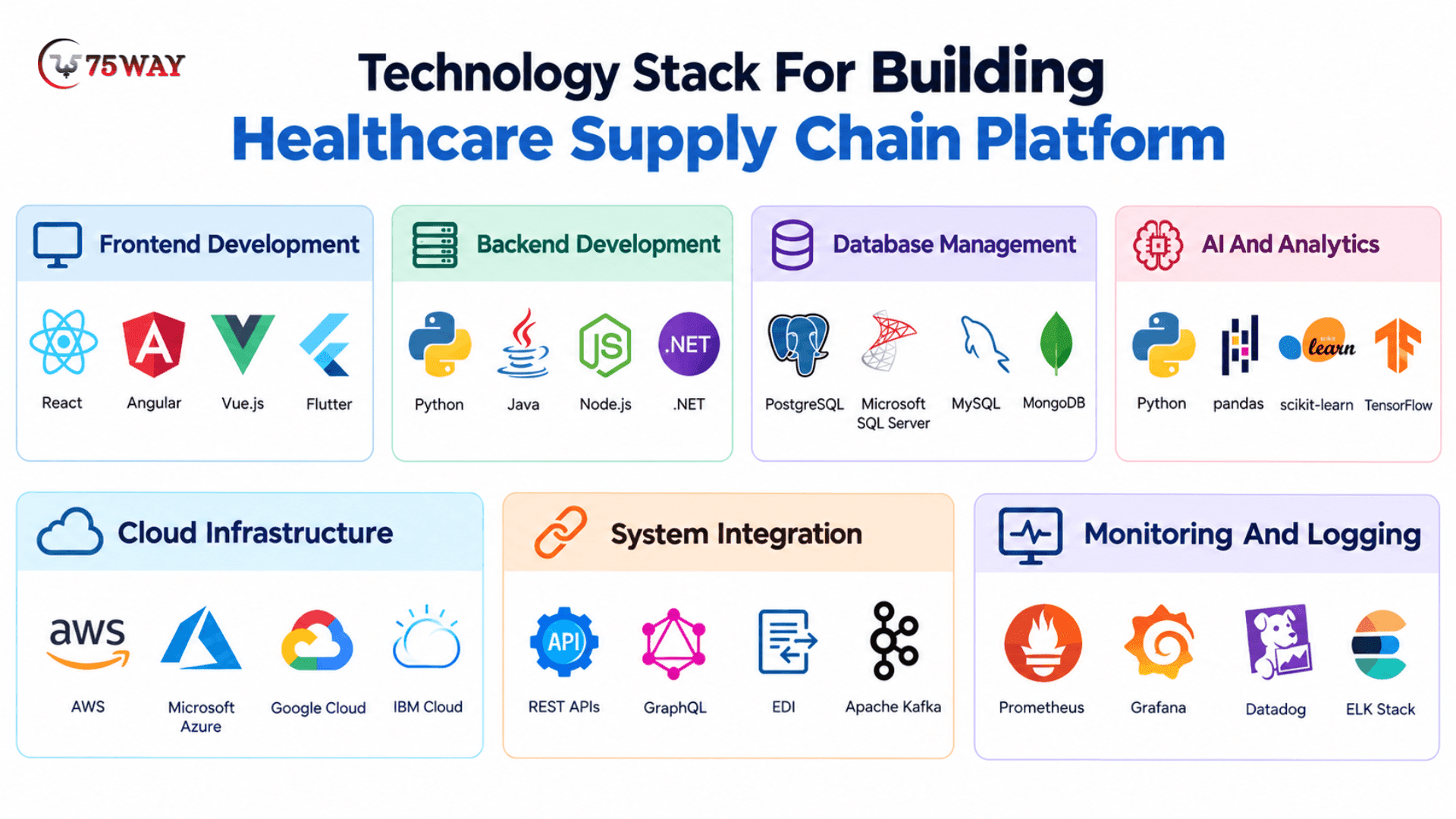
- Frontend Development: React and Angular support web dashboards for procurement teams, warehouse staff, and suppliers, while Flutter helps businesses build mobile applications for inventory updates and delivery tracking.
- Backend Development: Python, Java, Node.js, and .NET support business logic, APIs, transactions, and workflow automation.
The best choice depends on system complexity, integration requirements, and the development team's expertise.
- Database Management: PostgreSQL and Microsoft SQL Server store structured records, including inventory levels, supplier details, purchase orders, and transaction histories.
Reliable database design helps maintain accurate records across connected workflows.
- AI And Analytics: Python, pandas, and scikit-learn support data preparation, demand forecasting, anomaly detection, and model evaluation.
These tools help developers turn historical supply chain data into actionable predictions.
- Cloud Infrastructure: AWS, Microsoft Azure, and Google Cloud provide hosting, data storage, scalable computing, deployment, and monitoring services.
The final choice should reflect security needs, existing infrastructure, integration requirements, and projected workloads.
- System Integration: REST APIs, event-driven messaging, and Electronic Data Interchange (EDI) enable data exchange between the platform and external systems.
These technologies help synchronize inventory, purchasing, supplier, and logistics information across the supply chain.
- Monitoring And Logging: Cloud monitoring services and centralized logging tools help teams track application performance, identify errors, review security events, and detect operational issues.
These insights support faster troubleshooting and more reliable platform operations.
A relational database is often suitable for core inventory and order transactions because these records need clear integrity rules. A separate analytical environment may support forecasting and historical reporting without placing unnecessary load on operational workflows.
Must-Have Features For Creating Healthcare SCM Platform
A medical supply chain platform needs features that solve everyday problems, not just display inventory numbers on a screen. Healthcare teams need to know what’s in stock, what’s running low, and whether orders will arrive on time. Here are the key features to consider when developing a platform for healthcare supply chain management.
1. Admin Panel
The admin panel provides centralized control over platform operations, users, suppliers, and supply chain activities. These features help administrators monitor transactions, manage permissions, and maintain operational oversight.
- Centralized Dashboard: Monitor platform activities, inventory levels, orders, suppliers, and overall supply chain performance.
- User Management: Create user accounts, assign roles, manage permissions, and control access to sensitive information.
- Supplier Verification: Review supplier profiles, validate credentials, and approve businesses before enabling platform participation.
- Inventory Oversight: Track stock availability, product movements, expiry dates, and inventory discrepancies across facilities.
- Order Management: Monitor purchase orders, fulfillment progress, cancellations, and delivery statuses across connected departments.
- Reports & Analytics: Generate operational reports covering procurement, inventory turnover, supplier performance, and fulfillment metrics.
- Compliance Management: Maintain audit trails, product records, and applicable regulatory documentation for review.
- Notification Management: Configure alerts for stock shortages, delayed shipments, expiring products, and unusual transactions.
2. Supplier Panel
The supplier panel enables vendors to manage product listings, purchase orders, inventory updates, and customer transactions. It also improves coordination with healthcare facilities through centralized communication and order tracking.
- Supplier Profile: Manage company information, contact details, certifications, product categories, and business documentation.
- Product Catalog: Upload medical supplies, product descriptions, specifications, availability, and applicable batch information.
- Order Management: Receive purchase orders, confirm quantities, update fulfillment progress, and manage order changes.
- Inventory Updates: Maintain current stock availability, product quantities, replenishment status, and expiry information.
- Quotation Management: Submit product quotations, negotiate pricing, and respond to procurement requests from healthcare facilities.
- Shipment Coordination: Share dispatch details, expected delivery dates, tracking references, and shipment documentation.
- Invoice Management: Generate invoices, review payment statuses, and maintain transaction records for reconciliation.
- Performance Analytics: Review order acceptance rates, delivery timelines, fulfillment accuracy, and buyer feedback.
3. Healthcare Facility Panel
The healthcare facility panel helps hospitals, clinics, and medical centers manage supplies and coordinate procurement. Its features support inventory visibility, purchasing decisions, and timely replenishment of essential medical products.
- Inventory Tracking: Monitor medical supplies, stock quantities, batch numbers, expiry dates, and storage locations.
- Demand Forecasting: Analyze historical consumption and demand patterns to support replenishment and purchasing decisions.
- Purchase Requisitions: Create supply requests, specify quantities, and route orders through authorized approval workflows.
- Supplier Comparison: Compare supplier pricing, product availability, delivery estimates, and purchasing terms before ordering.
- Order Tracking: Monitor purchase order status, supplier confirmations, dispatch updates, and expected delivery dates.
- Expiry Management: Identify products approaching expiration and prioritize appropriate stock rotation or transfers.
- Usage Analytics: Review consumption trends, purchasing patterns, stockout frequency, and inventory expenditure across departments.
- Internal Stock Transfers: Request and track medical supply transfers between departments, facilities, or approved storage locations.
4. Warehouse Panel
The warehouse panel supports receiving, storing, picking, packing, and dispatching medical supplies. It helps warehouse teams maintain accurate stock records, organize product movements, and fulfill orders correctly.
- Goods Receiving: Record incoming shipments, verify quantities, inspect products, and document discrepancies against purchase orders.
- Storage Management: Assign products to suitable storage locations based on category, handling requirements, and available space.
- Barcode Scanning: Scan product labels to record receipts, stock movements, picking activities, and dispatch transactions.
- Batch Tracking: Maintain batch numbers, lot details, expiry dates, and relevant product traceability records.
- Stock Reconciliation: Compare recorded inventory with physical counts and investigate discrepancies before updating stock balances.
- Picking & Packing: Generate picking lists, verify selected products, and prepare orders for accurate dispatch.
- Returns Management: Record returned supplies, inspect product conditions, and update inventory according to return policies.
- Warehouse Analytics: Monitor storage utilization, picking accuracy, order processing times, and stock movement trends.
5. Logistics Panel
The logistics panel manages the movement of medical supplies from suppliers and warehouses to healthcare facilities. Its features improve shipment visibility, delivery coordination, and monitoring of transportation conditions where required.
- Shipment Scheduling: Plan dispatch dates, assign deliveries, and coordinate transportation according to order priorities.
- Route Optimization: Recommend suitable delivery routes based on distance, traffic information, vehicle capacity, and delivery deadlines.
- Real-Time Tracking: Monitor shipment locations and delivery progress through compatible GPS and carrier integrations.
- Delivery Management: Record delivery confirmations, proof of delivery, recipient details, and reported shipment discrepancies.
- Temperature Monitoring: Track readings from compatible sensors and trigger alerts when monitored products exceed configured temperature limits.
- Fleet Management: Maintain vehicle details, driver assignments, maintenance schedules, and transportation availability.
- Delay Notifications: Alert relevant stakeholders about shipment delays, route disruptions, and missed delivery milestones.
- Logistics Analytics: Analyze delivery times, transportation costs, shipment exceptions, and carrier performance to identify improvement opportunities.
Advanced Features of AI-Powered Medical Supply Chain Management Platform Development
Advanced features help healthcare businesses improve forecasting, automate workflows, and gain better supply chain visibility. These capabilities use AI, connected systems, and analytics to support smarter operational decisions.
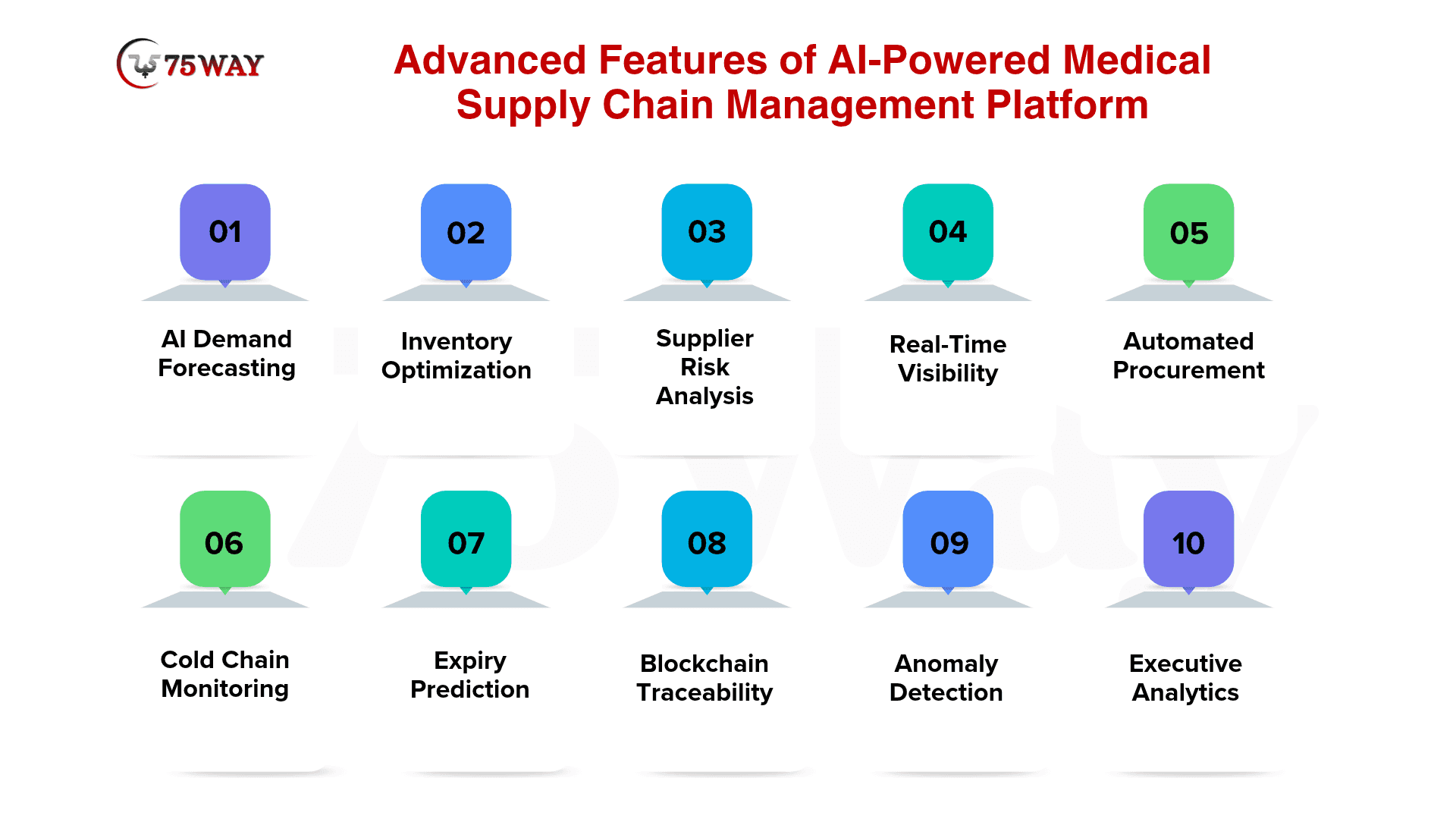
- AI Demand Forecasting: Predict medical supply needs using historical consumption, seasonal trends, and demand patterns.
- Inventory Optimization: Recommend stock levels and replenishment quantities to reduce shortages and expiry-related waste.
- Supplier Risk Analysis: Evaluate supplier reliability, delivery delays, and fulfillment history to identify potential disruptions.
- Real-Time Visibility: Track inventory, orders, shipments, and warehouse activities across multiple healthcare facilities.
- Automated Procurement: Generate purchase recommendations, route approvals, and automate routine purchasing workflows.
- Cold Chain Monitoring: Use connected sensors to monitor temperatures and flag storage or transportation deviations.
- Expiry Prediction: Identify products nearing expiration and recommend suitable stock transfers between healthcare facilities.
- Blockchain Traceability: Maintain tamper-evident transaction records to support product tracking and supply chain verification.
- Anomaly Detection: Flag unusual inventory movements, purchasing patterns, and stock discrepancies for investigation.
- Executive Analytics: Display operational KPIs, forecast accuracy, procurement trends, and supply chain performance metrics.
Key Integrations That Make Supply Chain Platforms More Connected
An AI-enabled platform becomes valuable when it can work with the systems healthcare organizations already use. Replacing every existing application is often unnecessary and can increase implementation risk. Prioritize integrations based on the business workflow:
- ERP Systems: Synchronize purchasing, finance, supplier records, and product master data.
- Electronic Health Records & Hospital Information Systems: Use approved operational signals, such as relevant procedure schedules or aggregated utilization data, when they are necessary for forecasting.
- Warehouse Management Systems: Exchange stock balances, receiving events, picking records, and transfers.
- Supplier And Procurement Systems: Share catalog information, purchase orders, confirmations, and delivery updates.
- Carrier And IoT Systems: Receive shipment milestones, location information, and temperature readings from compatible devices.
- EDI And Trading Partner Networks: Exchange standardized business documents where partners and existing processes support them.
Each integration needs clear ownership of the source data. For example, if the ERP is authoritative for purchase orders but the warehouse system owns physical stock movements, the platform must reconcile those responsibilities instead of treating every incoming record as equally reliable.
Why Invest in AI Medical Supply Chain Management Platform Development?
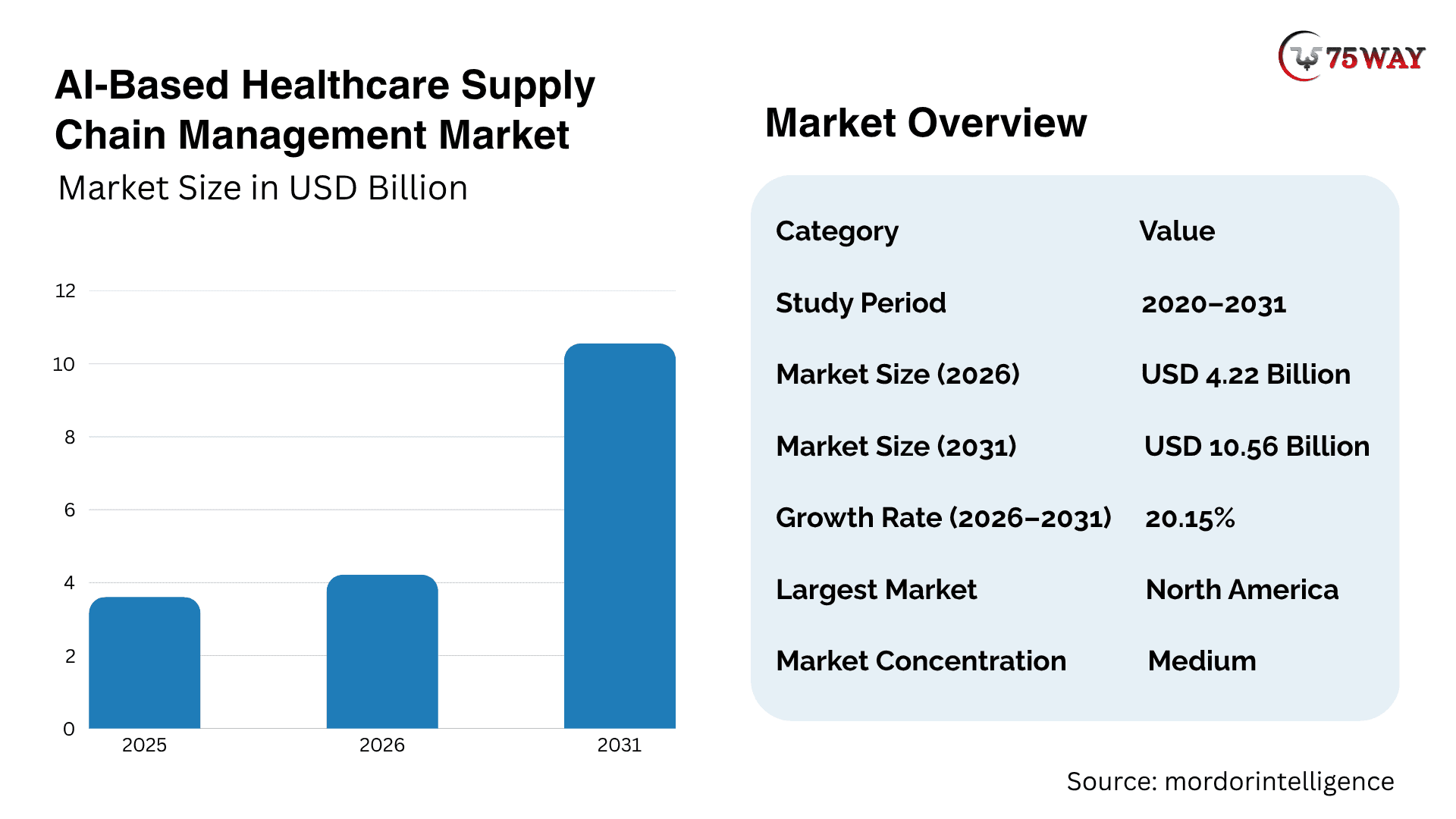
The global AI-based healthcare supply chain management market is projected to grow from $4.22 billion in 2026 to $10.56 billion by 2031, at a CAGR of 20.15%. This growth creates opportunities for businesses developing platforms that address procurement delays, inventory shortages, and supply chain visibility.
1. Improve Procurement And Supplier Management
With a projected 24.59% CAGR through 2031, procurement and supplier management presents a significant opportunity for AI adoption. Platforms can help healthcare organisations compare suppliers, analyse purchasing trends, and identify delivery delays before they disrupt medical supply availability.
2. Scale Healthcare Operations With Cloud
Cloud deployment accounted for 54.33% of market revenue in 2025 and is projected to grow at a CAGR of 22.84% through 2031. Cloud-based platforms give healthcare teams shared access to inventory, order, and supplier data across multiple locations.
3. Address Pharmaceutical Supply Chain Needs
The pharmaceutical and biotechnology segment is projected to grow at a 22.41% CAGR through 2031, creating demand for specialised supply chain solutions. AI platforms can support batch tracking, expiry monitoring, temperature-sensitive inventory management, and demand forecasting.
4. Reduce Inventory Waste And Costs
The overall market is projected to grow at a 20.15% CAGR between 2026 and 2031, reflecting rising demand for AI-driven supply chain solutions. Predictive analytics can help healthcare providers anticipate stock requirements, reduce overordering, and minimise expiry-related losses.
5. Explore North American Market Opportunities
North America accounted for 40.11% of the global market in 2025, making it an important region for platform providers. Businesses can address demand for predictive inventory planning, supplier coordination, system integration, and healthcare data security.
8 Use Cases Reshaping Healthcare Logistics With Supply Chain Software
A late shipment can leave a hospital scrambling, while excess stock can tie up money in supplies that may expire before use. Healthcare supply chain software helps tackle both problems by improving inventory visibility, demand planning, and delivery coordination. Let’s look at how healthcare providers and medical distributors are putting these tools to work.
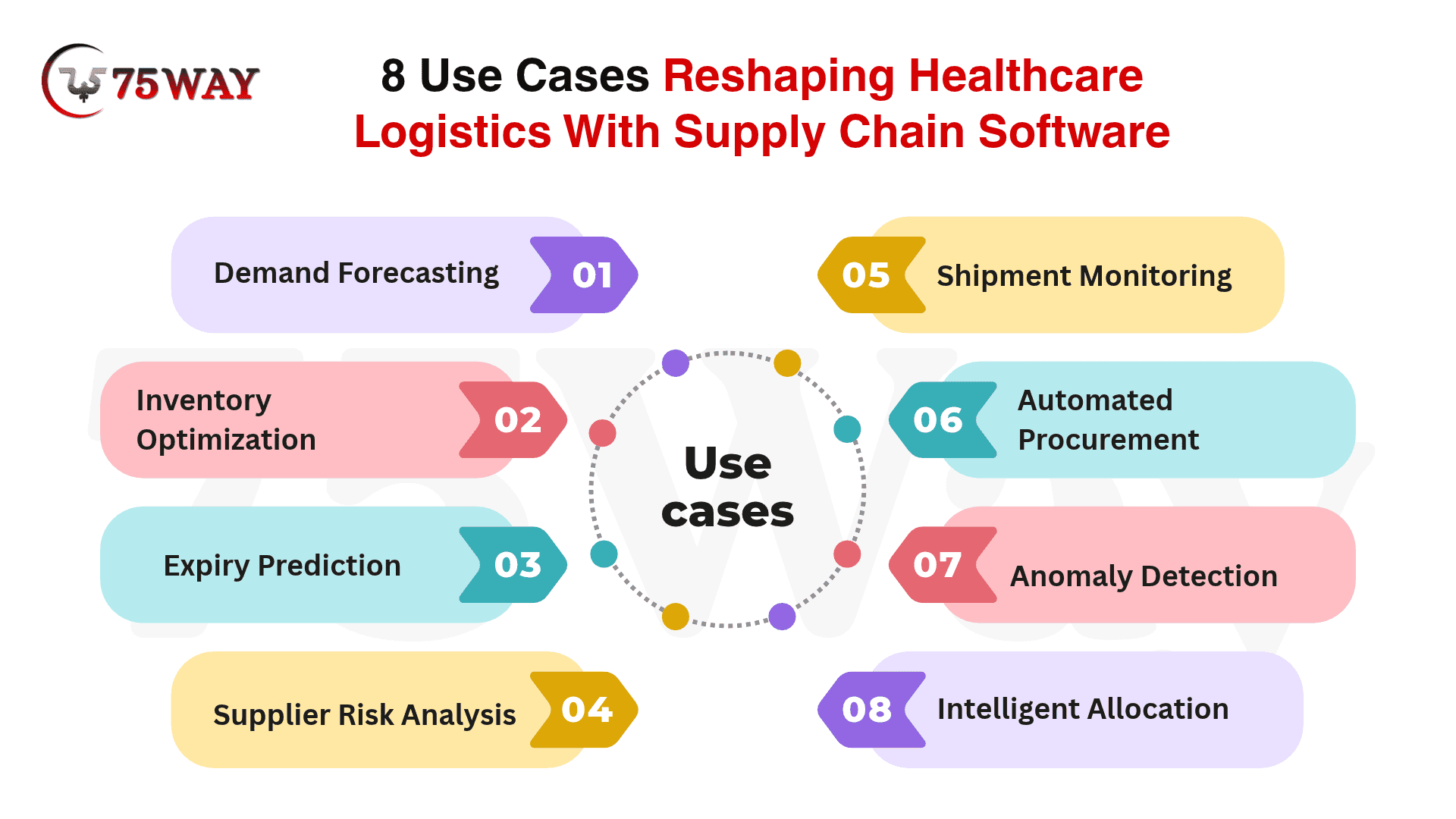
- Demand Forecasting: Estimates future consumption using historical usage and relevant demand signals.
- Inventory Optimization: Recommends replenishment quantities and safety stock based on demand and lead-time variability.
- Expiry Prediction: Identifies products at risk of expiring before expected consumption.
- Supplier Risk Analysis: Flags unusual delivery delays, changing lead times, and potential supplier concentration risks.
- Shipment Monitoring: Detects delays or temperature excursions when connected tracking data is available.
- Automated Procurement: Drafts purchase orders and routes them through configured approval workflows.
- Anomaly Detection: Identifies unusual usage, transaction patterns, inventory discrepancies, or purchasing activity.
- Intelligent Allocation: Recommends stock transfers across facilities according to demand, availability, and business rules.
Consider a practical scenario: a hospital network stores the same high-use supplies across several locations. One facility has excess stock, while another is approaching its reorder threshold. Instead of immediately purchasing more units, the platform can recommend an internal transfer after checking expiry dates, transport requirements, and minimum stock levels.
Compliance And Data Security Requirements To Build Healthcare Supply Chain System
Compliance and data security are essential when building a healthcare supply chain system because the platform handles sensitive business information, inventory records, and potentially protected health data. These requirements help safeguard information and support applicable regulatory obligations.
- HIPAA Compliance: Protect electronic protected health information through appropriate administrative, physical, and technical safeguards when HIPAA applies.
- Data Encryption: Encrypt sensitive information during transmission and storage to reduce the risk of unauthorized access.
- Access Controls: Implement role-based permissions and strong authentication to ensure users access only the information required for their responsibilities.
- Audit Trails: Maintain detailed records of inventory changes, procurement approvals, user activities, and product transactions to support accountability and audits.
- Regulatory Traceability: Support applicable FDA DSCSA requirements for prescription drug tracing, verification, and electronic information exchange based on the platform's role and scope.
Major Advantages of Supply Chain Management (SCM) In The Healthcare Industry
A hospital cannot afford to discover that essential medicines or surgical supplies are missing when patients need them. Strong supply chain management helps healthcare teams track stock, plan purchases, and reduce avoidable delays. The benefits go beyond inventory control, affecting costs, daily operations, and patient care.
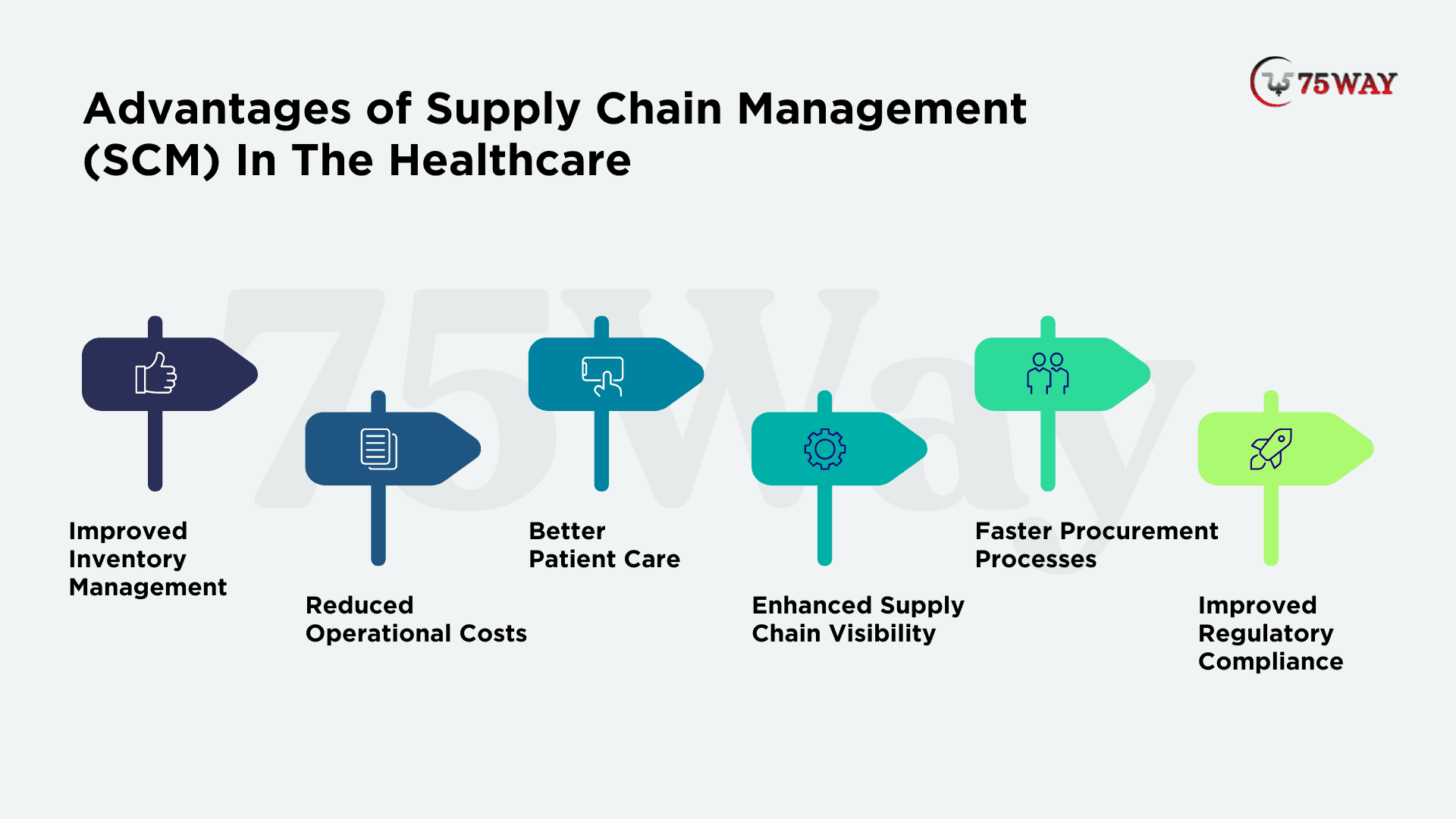
- Improved Inventory Management
Real-time inventory tracking helps healthcare facilities maintain optimal stock levels, reduce shortages, and prevent excess medical supplies from expiring.
- Reduced Operational Costs
Automated procurement, better demand planning, and optimized storage help healthcare organizations control purchasing expenses and minimize inventory waste.
- Better Patient Care
Timely access to medicines, medical devices, and essential supplies helps healthcare professionals deliver treatment without avoidable supply-related delays.
- Enhanced Supply Chain Visibility
Centralized dashboards provide clear insights into inventory levels, supplier performance, order status, and shipment movements across healthcare facilities.
- Faster Procurement Processes
Digital purchasing workflows simplify order creation, supplier coordination, approvals, and replenishment, reducing manual work and administrative delays.
- Improved Regulatory Compliance
Accurate inventory records, batch tracking, expiry monitoring, and audit trails help healthcare organizations meet applicable regulatory and product traceability requirements.
What’s Medical Supply Chain Management Platform Development Cost
The average cost of medical supply chain management platform development ranges from $12,000 to $500,000+, depending on features, AI capabilities, integrations, and business size. The following breakdown explains the estimated costs and timelines for different platform types.
1. Simple Platform Cost: A basic platform covers essential inventory tracking, procurement workflows, and limited integrations for smaller healthcare businesses.
Custom Build: $12,000–$45,000
Pre-Built: $200–$500/month per user
Timeline: 2–4 months
2. Mid-Level Platform Cost: A moderate platform adds AI forecasting, supplier analytics, advanced reporting, and multiple system integrations for growing healthcare operations.
Custom Build: $45,000–$300,000+
Pre-Built: $1,200–$4,000/month per small-to-mid facility bundle
Timeline: 4–8 months
3. Enterprise Platform Cost: An enterprise platform supports multi-facility operations, complex integrations, advanced AI capabilities, and comprehensive security controls.
Custom Build: $300,000–$500,000+
Timeline: 8–12+ months
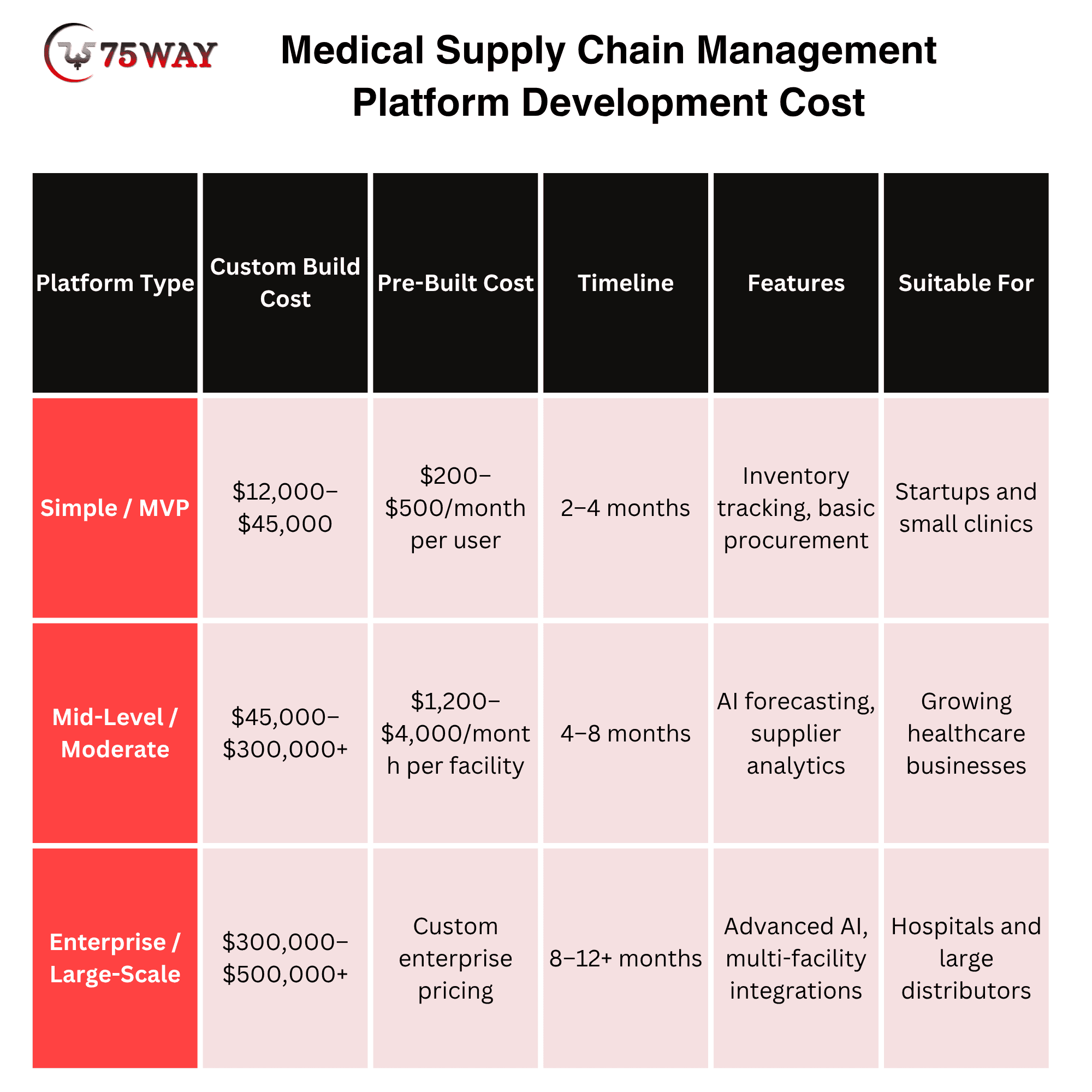
The final cost to create a healthcare supply chain management platform may vary significantly by vendor location, project complexity, and required assurance activities. Hardware, enterprise software licenses, cloud usage, third-party integration fees, and ongoing support may be additional.
Factors Influencing Cost To Build AI Healthcare Supply Chain Management Platform
- AI Complexity: A model using clean historical inventory data costs less to develop than a forecasting system combining multiple external signals, supplier behavior, and changing operational constraints.
- Integration Requirements: Legacy ERP systems, proprietary supplier interfaces, and inconsistent product catalogs can require substantial discovery and engineering.
- Compliance And Security: Requirements for validation, auditability, risk management, and security documentation affect the engineering and testing effort.
- Deployment Scale: A platform for one warehouse differs from a system serving many facilities, external suppliers, and distribution partners.
- Data Readiness: Missing stock movements, inconsistent product identifiers, and unreliable historical records increase preparation and validation work.
For an early-stage business, the practical approach is to scope one valuable workflow, establish a baseline, and validate its results before funding a larger platform.
Final Remarks
To sum up, AI-powered medical supply chain management platform development offers healthcare businesses a practical way to improve inventory visibility, strengthen procurement decisions, and identify supply risks earlier.
However, results depend on more than AI models. Reliable data, well-designed integrations, appropriate security controls, measurable objectives, and user adoption determine whether the platform delivers business value.
Start with the most expensive or disruptive supply chain problem, validate a focused solution, and expand only when operational evidence supports the investment. This approach gives founders and healthcare executives a clearer path from software development to measurable results.
Want to create a healthcare supply chain platform? You can contact a reliable logistics software development firm to assess your workflows, integration requirements, AI opportunities, and a realistic project roadmap.
Frequently Asked Questions (FAQs)
How Is AI Used In Healthcare Supply Chain Management?
AI can forecast product demand, identify expiry risks, flag unusual inventory movements, analyze supplier delays, and recommend stock allocation. Its reliability depends on data quality, model validation, and operational controls.
How Much Does It Cost To Develop Medical Supply Chain Software?
A focused MVP may cost approximately $40,000–$90,000, while more complex AI-enabled and enterprise systems may cost substantially more. Actual pricing depends on features, integrations, data readiness, and compliance requirements.
How Long Does It Take To Build An AI-Powered Medical Supply Chain Platform?
A focused MVP may take three to six months. Enterprise platforms with extensive integrations, advanced analytics, and additional validation requirements can take six to twelve months or longer.
Does Medical Supply Chain Software Need To Be HIPAA Compliant?
HIPAA obligations depend on the organization, its role, and whether the platform creates, receives, maintains, or transmits protected health information. Applicable covered entities and business associates must implement required safeguards.
Can AI Prevent Medical Supply Shortages Completely?
No. AI can help identify risks and improve planning, but it cannot eliminate every shortage caused by manufacturing disruptions, unexpected demand, transportation failures, or supplier constraints.