AI Summary
Explore profitable taxi clone app ideas that US entrepreneurs can evaluate for 2027. Compare popular platforms, revenue models, and growth indicators. Discover specialized transportation opportunities. Learn how to validate demand before investing in taxi app development.
Key Takeaways
- Choose taxi clone app ideas based on demand, margins, and differentiation.
- Compare established US platforms before selecting your business model.
- Evaluate revenue streams, operating costs, and customer acquisition requirements.
- Validate local demand before investing in full-scale app development.
- Use niche transportation services to address underserved customer needs.
A taxi app can attract thousands of downloads and still lose money if rides are expensive to fulfill, drivers are difficult to retain, or customers book only once. For US founders and startups, the better opportunity in 2027 is to build a taxi business around a specific customer need, a workable revenue model, and a market where the service can compete.
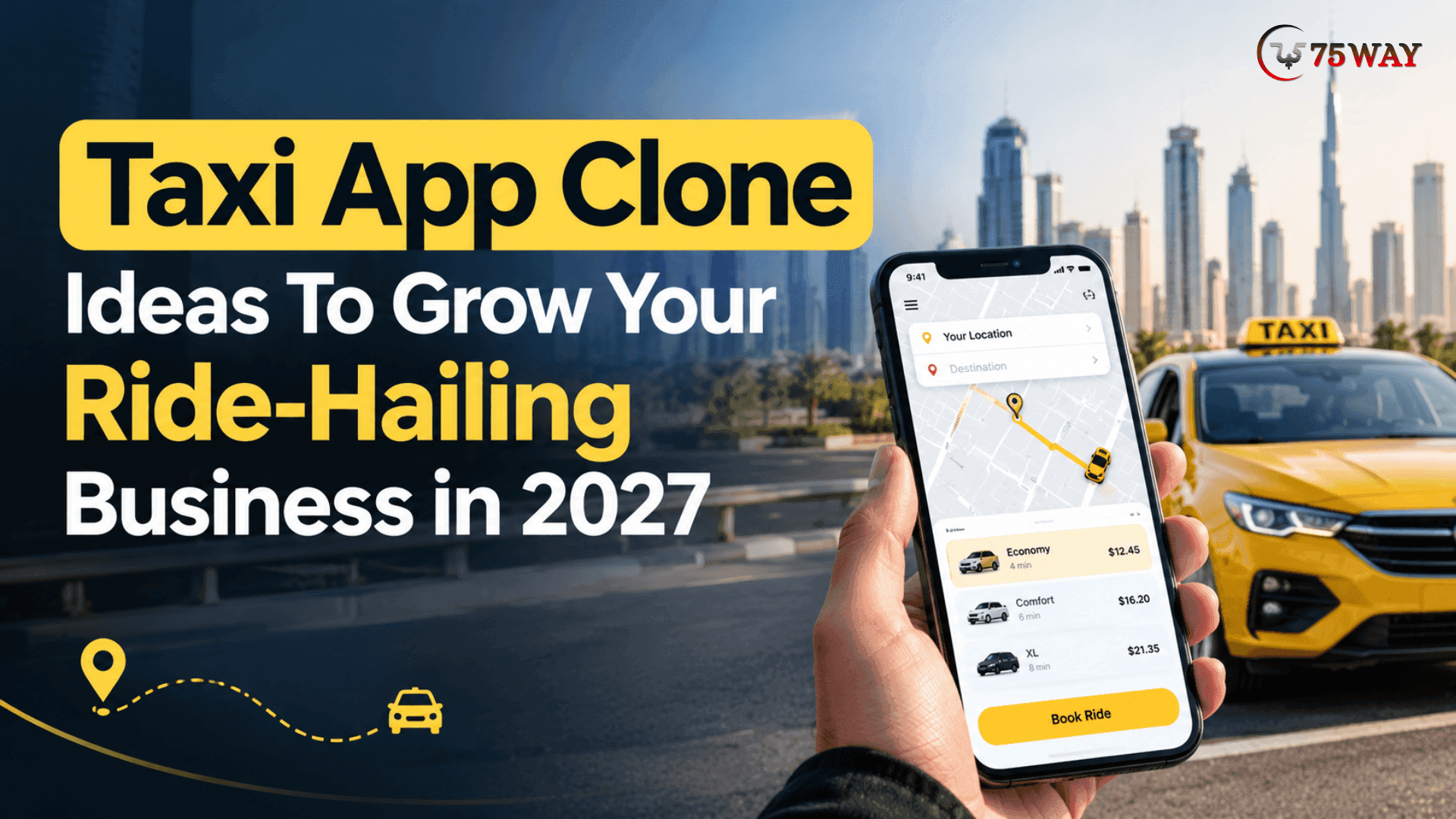
A taxi clone app provides a starting point for building a branded ride-booking platform inspired by an established business model. However, profitability depends on what you change, whom you serve, and how you manage the economics behind every ride with your taxi booking app development solution.
This guide explores 10 taxi clone app ideas, their revenue opportunities, operational challenges, and the factors to evaluate before investing in taxi clone development.
What Is a Taxi Clone App?
A taxi clone app is a customizable ride-booking application built around an existing service model, such as on-demand rides, scheduled transportation, or chauffeur bookings. It can include passenger and driver apps, an administrative dashboard, payment processing, trip management, and location tracking.
The objective is not to copy another company's branding, proprietary design, or protected technology. It is to use a familiar business model as a foundation for building a differentiated service.
For example, a local transportation company could develop an Uber-inspired app for scheduled airport transfers, corporate accounts, or premium rides. The underlying booking workflow may be familiar, but its customers, pricing, service commitments, and operations can be different.
The key decision: Choose a business model based on a customer problem you can solve profitably, rather than selecting an app simply because a competitor is successful.
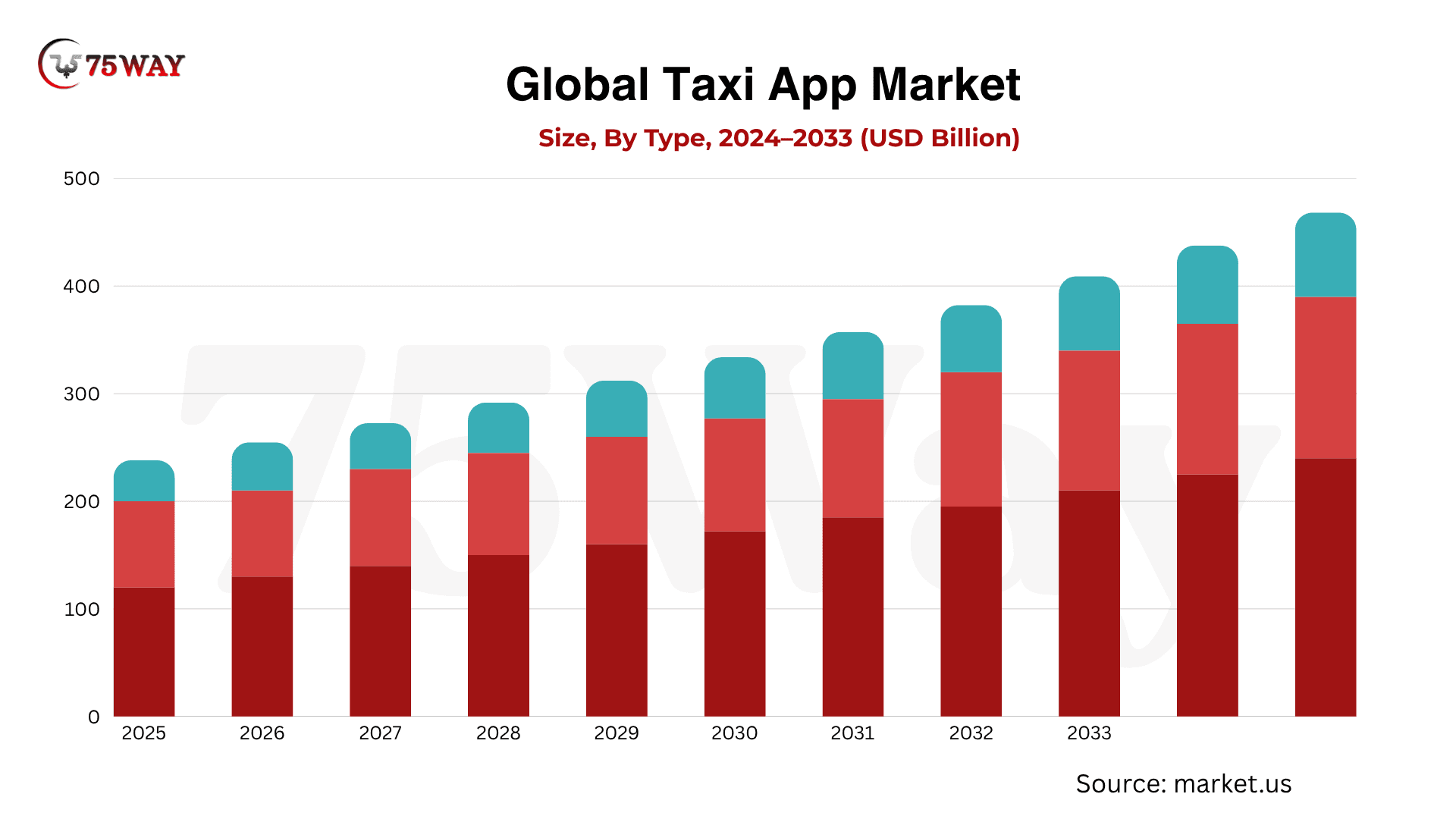
Taxi App Growth & Market Size in USA: Why Invest in Taxi Clone
Millions of people rely on app-based rides for airport trips, daily commutes, and nights out, making convenient transportation an ongoing business opportunity across the US. Market growth, changing travel habits, and the potential to serve niche audiences explain why this business model deserves a closer look.
Top Taxi Clone App Ideas With Strong Business Potential In USA
The US ride-hailing market offers room for more than another Uber-style app, especially for businesses that solve specific transportation problems. Here are 10 taxi clone app ideas worth exploring for their target audience, revenue opportunities, and business potential.
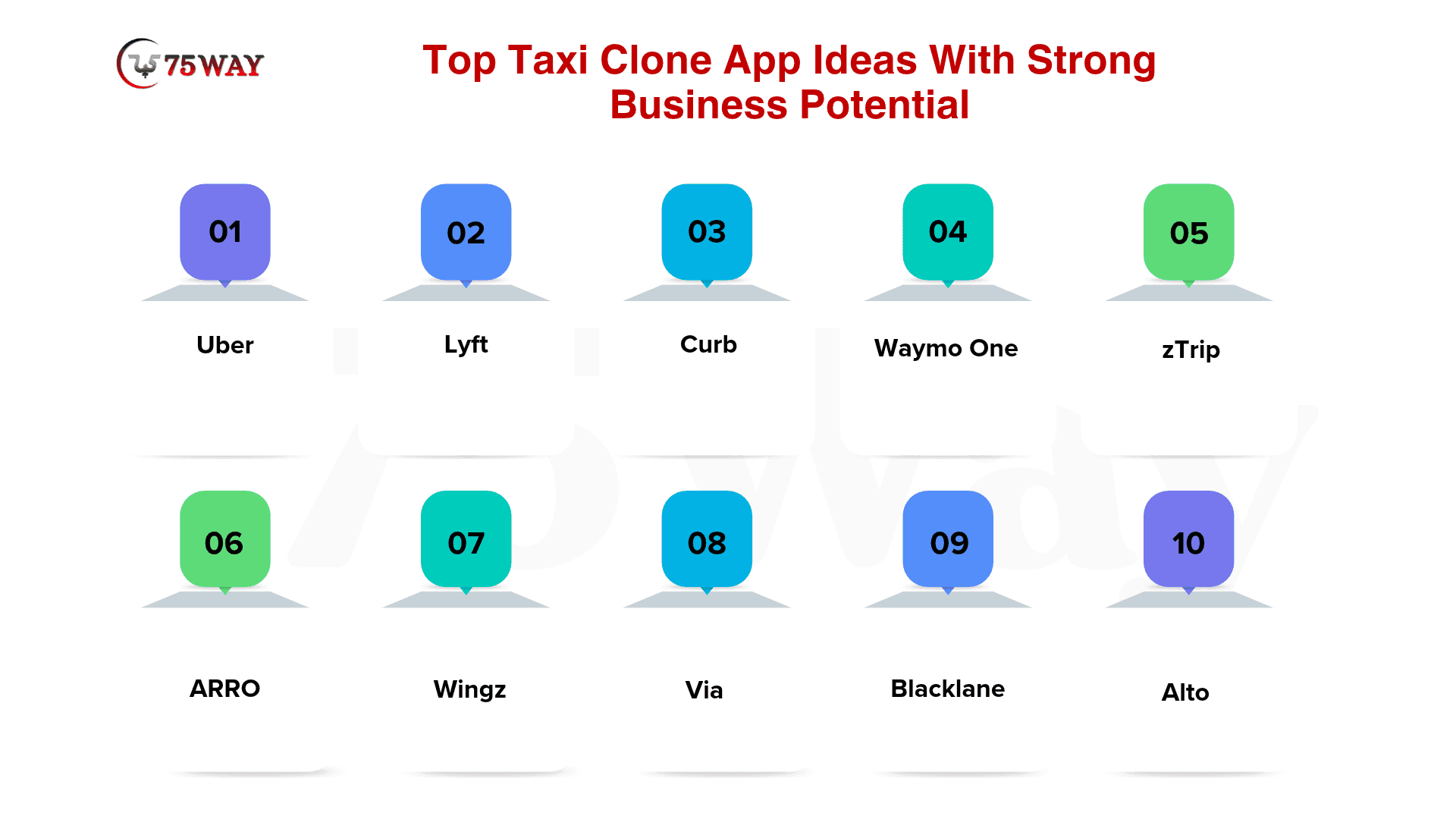
1. Uber
An Uber clone app recreates core ride-hailing workflows with custom branding, pricing, and features. It supports on-demand rides, scheduled bookings, driver management, and multiple transportation categories.
Founded: 2009
Revenue Growth: 18% year-over-year in 2025, with total revenue reaching $52.0 billion.
Active Users: 208 million monthly active platform consumers globally in Q2 2026.
Benefits of Building an Uber Clone App
- Launch branded ride booking with familiar passenger workflows.
- Generate commission revenue from completed rides and bookings.
- Expand service categories without rebuilding the entire platform.
- Use trip analytics to improve fleet and driver utilization.
- Support geographic expansion through configurable service areas and pricing.
2. Lyft
A Lyft clone app recreates ride-hailing workflows with custom branding, pricing, and features. It supports on-demand rides, scheduled bookings, driver management, and passenger payments.
Founded: 2012
Revenue Growth: 9% in 2025
Active Users: 29.2 million active riders in Q4 2025
Market Growth: 18% active rider growth in Q4 2025
Benefits of Building a Lyft Clone App
- Launch branded ride booking with familiar passenger workflows.
- Generate commission revenue from completed passenger trips.
- Offer scheduled rides for commuters and regular customers.
- Improve driver retention through incentives and performance tracking.
- Expand into new locations with configurable pricing options.
3. Curb
A Curb clone app connects passengers with licensed taxi drivers through digital booking and payment services. It helps taxi operators modernize dispatch, fleet management, and passenger experiences.
Founded: 2007
Revenue Growth: 10 million+ monthly trips across its network
Active Users: 100,000+ drivers on its network
Market Growth: 10 million+ trips per month
Benefits of Building a Curb Clone App
- Connect passengers with existing licensed taxi operators.
- Simplify dispatch and digital payments for taxi businesses.
- Generate revenue through booking fees and fleet partnerships.
- Improve passenger access to convenient taxi-booking services.
- Expand through partnerships with established local taxi fleets.
4. Waymo One
A Waymo One-inspired app focuses on booking autonomous rides through a digital passenger interface. It can support automated reservations, trip tracking, and fleet availability management.
Founded: 2009
Revenue Growth: 900% growth in weekly paid rides from May 2024 to March 2026
Active Users: 500,000 paid rides per week across 10 US cities
Market Growth: 10 US cities served in March 2026
Benefits of Building a Waymo-Inspired App
- Explore autonomous ride-booking opportunities as technology advances.
- Automate passenger reservations and trip-status notifications.
- Integrate vehicle availability with digital dispatch systems.
- Develop partnerships for emerging autonomous transportation services.
- Prepare flexible booking interfaces for future mobility technologies.
5. zTrip
A zTrip clone app combines digital ride booking with taxi and black-car services. It supports advance reservations, immediate pickups, and different transportation categories.
Founded: 2012
Revenue Growth: 1,000+ cities and communities served
Active Users: 3+ million annual rides; use only if confirmed by a current company source.
Market Growth: Multiple US markets served
Benefits of Building a zTrip Clone App
- Combine taxi bookings with premium vehicle reservations.
- Offer immediate and advance ride-booking options.
- Connect digital dispatch with professional driver networks.
- Serve customers seeking different vehicle categories and services.
- Build partnerships with established local transportation operators.
6. ARRO
An ARRO clone app enables passengers to book licensed taxis and pay digitally. It helps traditional taxi businesses connect their fleets with customers through mobile booking services.
Founded: 2014
Revenue Growth: Nearly 1 million app downloads reported historically
Active Users: Millions of potential taxi passengers in supported markets
Market Growth: Multiple metropolitan taxi markets served
Benefits of Building an ARRO Clone App
- Simplify taxi bookings through a passenger-friendly mobile interface.
- Support digital payments for app-booked taxi journeys.
- Reduce dependence on manual booking and dispatch processes.
- Offer convenient booking options for licensed taxi services.
- Improve passenger access to participating taxi fleets.
7. Wingz
A Wingz clone app specializes in scheduled transportation, particularly airport transfers. It allows customers to reserve rides in advance and manage pickup details digitally.
Founded: 2011
Revenue Growth: $25 million–$50 million estimated annual revenue in 2026
Active Users: 20,000+ active users reported in 2016
Benefits of Building a Wingz Clone App
- Generate advance bookings for airport and business transportation.
- Offer transparent fares for eligible scheduled routes.
- Encourage repeat bookings through preferred-driver options.
- Improve planning with scheduled pickup and drop-off workflows.
- Build partnerships with hotels and travel service providers.
8. Via
A Via-inspired app focuses on shared transportation, demand-responsive transit, and fleet management. It can connect passengers with scheduled or dynamically assigned shared rides.
Founded: 2012
Revenue Growth: 27% in H1 2025
Active Users: 30+ countries with transportation technology deployments
Market Growth: 30+ countries served
Benefits of Building a Via-Inspired App
- Support shared rides for compatible passenger routes.
- Offer transportation management tools to institutional customers.
- Improve dispatch planning through demand-responsive booking workflows.
- Generate recurring revenue through software and service contracts.
- Develop partnerships with employers and public transportation agencies.
9. Blacklane
A Blacklane clone app targets premium chauffeur services, airport transfers, and business travel. It emphasizes advance reservations, professional drivers, and premium transportation experiences.
Founded: 2011
Revenue Growth: 500+ cities served globally
Active Users: 60+ countries with service availability
Market Growth: 500+ cities across 60+ countries
Benefits of Building a Blacklane Clone App
- Target executive travel and premium transportation customers.
- Offer advance reservations for airport and city transfers.
- Develop corporate accounts with recurring booking requirements.
- Add hourly chauffeur services and multi-stop itineraries.
- Differentiate through professional service and booking reliability.
10. Alto
An Alto clone app follows a managed-fleet rideshare model with professional drivers and company-controlled vehicle operations. It emphasizes service standards, fleet coordination, and passenger convenience.
Founded: 2018
Revenue Growth: 700% in 2021, a historical company-reported figure
Active Users: Multiple US metropolitan markets served
Market Growth: 6+ major US metropolitan areas
Benefits of Building an Alto Clone App
- Manage driver standards through a centralized fleet model.
- Coordinate vehicle availability and driver schedules from one dashboard.
- Offer a more controlled passenger-service experience.
- Track vehicle utilization and operating costs across locations.
- Develop premium transportation packages for repeat customers.
Taxi App Ideas To Explore in USA For Profitable Ventures In 2027
Not every taxi app needs to compete with Uber or Lyft for everyday rides. Specialized services can offer a more focused way to enter the market, particularly when founders have access to an existing fleet, local customers, business partnerships, or a clearly defined service area. Here are taxi app ideas worth evaluating in 2027.
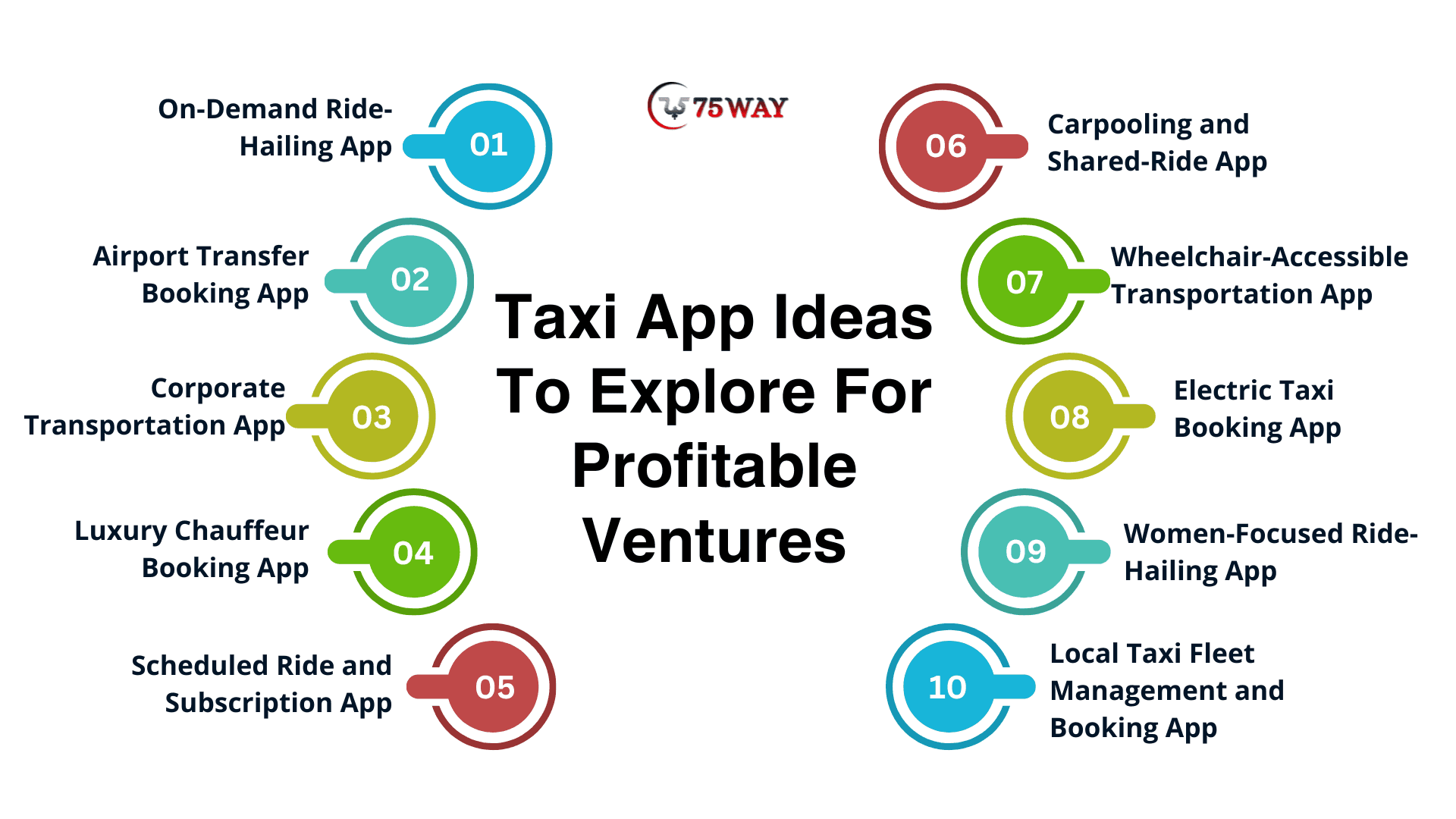
1. On-Demand Ride-Hailing App
An on-demand ride-hailing app connects passengers with nearby drivers for immediate pickups. It follows the familiar booking model used by mainstream ride-hailing platforms.
Revenue opportunities:
- Charge a commission on completed rides.
- Offer optional driver subscriptions or access plans where legally and commercially appropriate.
- Generate additional revenue through cancellation fees and clearly disclosed service charges.
What makes it commercially viable?
The business needs enough available drivers and passenger demand in the same locations and time windows. If customers regularly wait too long or drivers spend too much time without passengers, the model becomes difficult to sustain.
Best Fit: Startups with a focused launch area, a driver acquisition strategy, and sufficient funding to build local demand.
2. Airport Transfer Booking App
An airport transfer app specializes in scheduled pickups and drop-offs between airports, hotels, homes, and business locations. Unlike a purely on-demand model, it can allow customers to reserve rides in advance.
Airport transportation is worth evaluating because it supports planned bookings, fixed-route pricing, and partnerships with hotels or travel businesses. Uber's 2025 annual filing reported that airport trips accounted for 15% of its Mobility gross bookings, illustrating the significance of this use case within a large existing platform. This figure describes Uber's business, not the potential market share of a new startup.
Revenue opportunities:
- Charge per transfer.
- Offer premium vehicles and meet-and-greet services.
- Secure recurring bookings through hotels, travel agencies, and corporate accounts.
What to validate: Airport pickup rules, commercial permits, driver availability during flight delays, waiting-time policies, and customer acquisition costs.
Best Fit: Fleet operators, chauffeur companies, and startups with access to airport transportation partners.
3. Corporate Transportation App
A corporate taxi app helps businesses arrange employee transportation, client pickups, airport transfers, and other work-related trips through a managed booking system.
Instead of depending entirely on individual customers, the business can pursue company accounts with recurring transportation requirements.
Revenue opportunities:
- Negotiate corporate transportation contracts.
- Charge per ride or offer agreed service packages.
- Provide monthly invoicing, expense reports, and centralized account management as part of a paid business plan.
For example, a company could give authorized employees access to rides within approved locations, hours, and spending limits. The transportation provider receives consolidated billing and a clearer view of account usage.
The main challenge: Corporate customers may require background checks, service-level commitments, reporting, insurance documentation, and reliable support.
Best Fit: Existing transportation companies and founders with business-to-business sales capabilities.
4. Luxury Chauffeur Booking App
A luxury chauffeur app connects customers with premium vehicles and professional drivers for executive travel, private events, hotel transfers, and special occasions.
This model competes on service quality, vehicle standards, reliability, and booking convenience rather than simply offering the lowest fare.
Revenue opportunities:
- Charge premium rates for completed trips.
- Offer hourly chauffeur bookings and multi-stop itineraries.
- Develop packages for executives, weddings, conferences, and private events.
A useful feature is an advance-booking system that captures pickup details, vehicle preferences, special instructions, and waiting-time requirements.
What to validate: Vehicle ownership or leasing costs, chauffeur compensation, insurance, service expectations, and the demand for premium transportation in the selected market.
Best Fit: Chauffeur businesses, premium fleet operators, and entrepreneurs with access to high-value customers.
5. Scheduled Ride and Subscription App
A scheduled ride app serves customers who need transportation at predictable times. These may include commuters, shift workers, students, or people who regularly travel between the same locations.
Unlike an on-demand app, this model emphasizes advance reservations and recurring transportation plans.
Revenue opportunities:
- Sell prepaid ride packages.
- Offer monthly commuting plans.
- Negotiate recurring transportation agreements with employers or other organizations.
For example, a customer might reserve rides for specific weekdays and receive consolidated billing. A business could also arrange scheduled pickups for employees working early or late shifts.
Important consideration: A subscription should not promise unlimited rides without carefully calculating driver capacity, trip costs, cancellation patterns, and expected usage.
Best Fit: Businesses serving repeat customers in a limited geographic area.
6. Carpooling and Shared-Ride App
A carpooling app connects passengers travelling in similar directions so that they can share transportation costs. Depending on the operating model, the service may support commuters, campus travel, or planned intercity trips.
Revenue opportunities:
- Charge a booking or service fee.
- Offer employer-sponsored commuter programs.
- Provide paid tools for organizations managing shared transportation.
The central challenge is matching passengers whose routes, schedules, pickup points, and willingness to share a ride align. Too few participants can make the service inconvenient, while excessive detours can undermine the value proposition.
Founders should also distinguish between a genuine cost-sharing arrangement and a commercial passenger transportation service, which may be subject to different rules.
Best Fit: Founders with access to commuter communities, employers, universities, or established travel corridors.
7. Wheelchair-Accessible Transportation App
A wheelchair-accessible taxi app helps customers locate and book vehicles equipped to accommodate their mobility requirements. It can also support caregivers and organizations arranging transportation for eligible passengers.
The US Bureau of Transportation Statistics has documented transportation barriers experienced by people with disabilities, including reduced day-to-day travel. This makes accessibility an important problem to investigate, although it does not establish demand or profitability for any particular app.
Revenue opportunities:
- Charge for completed transportation services.
- Develop contracts with organizations arranging eligible passenger trips.
- Offer scheduled transportation and account management for repeat customers.
Features worth considering:
- Vehicle accessibility information.
- Advance booking and pickup instructions.
- Driver training and service verification.
- Options to communicate specific passenger requirements.
What to validate: Accessible vehicle availability, local transportation requirements, insurance, driver training, and potential partnerships. Do not assume that all healthcare-related transportation is covered by the same payment rules.
Best Fit: Specialized transportation providers and founders with access to accessible vehicles and relevant community partnerships.
8. Electric Taxi Booking App
An electric taxi app connects passengers with drivers using electric vehicles. The service can position itself around electric mobility, fleet management, and transportation partnerships.
However, an electric fleet is not automatically more profitable. The economics depend on vehicle acquisition, charging costs, electricity rates, charging access, maintenance, utilization, and the distance drivers travel between paid rides.
Revenue opportunities:
- Earn commissions on completed rides.
- Secure corporate transportation contracts with relevant fleet requirements.
- Offer premium or scheduled electric transportation services where customers value those options.
Features worth considering:
- Vehicle range and charging status for fleet operations.
- Driver assignment based on vehicle availability.
- Charging-location information.
- Fleet utilization and operating-cost reports.
Best Fit: Existing fleets transitioning to electric vehicles or startups with access to charging infrastructure and suitable operating conditions.
9. Women-Focused Ride-Hailing App
A women-focused ride-hailing app can prioritize passenger preferences, driver verification, trip transparency, and support processes designed around safety concerns.
Its value proposition must go beyond marketing. Founders need to determine which service policies customers want and how those policies can be implemented without creating operational bottlenecks.
Revenue opportunities:
- Earn commissions on completed rides.
- Offer pre-booked transportation.
- Pursue partnerships with employers, event organizers, or communities that need reliable transportation options.
Potential features include verified driver profiles, trip-sharing controls, emergency assistance workflows, and clear incident-reporting procedures.
The business must also review applicable federal, state, and local anti-discrimination requirements before implementing eligibility restrictions or driver and passenger matching policies.
Best Fit: Founders with a credible safety strategy, a clearly researched customer segment, and the operational capacity to support the promised service.
10. Local Taxi Fleet Management and Booking App
A fleet-focused taxi app helps existing taxi operators manage bookings, assign drivers, monitor trips, and coordinate dispatch from a single platform.
This model can be attractive to entrepreneurs who already have relationships with local operators because it may avoid the need to build a large passenger marketplace from scratch.
Revenue opportunities:
- Charge fleet operators a monthly software subscription.
- Offer tiered plans based on vehicles, dispatch volume, or reporting needs.
- Charge separately for optional integrations, onboarding, or advanced management features.
For example, a taxi company with an existing customer base could use branded booking software to manage direct reservations while retaining its established driver network.
What to validate: The number of vehicles each customer manages, current dispatch costs, willingness to pay, support requirements, and the complexity of integrating existing systems.
Best Fit: B2B software entrepreneurs, taxi dispatch providers, and technology businesses targeting established fleets.
Quick Glance of Taxi App Startup Business Models For New Market Opportunities
There is no universally most profitable taxi app model. The right choice depends on your available resources, customer access, local competition, and ability to manage transportation operations. Use this comparison to narrow your options.
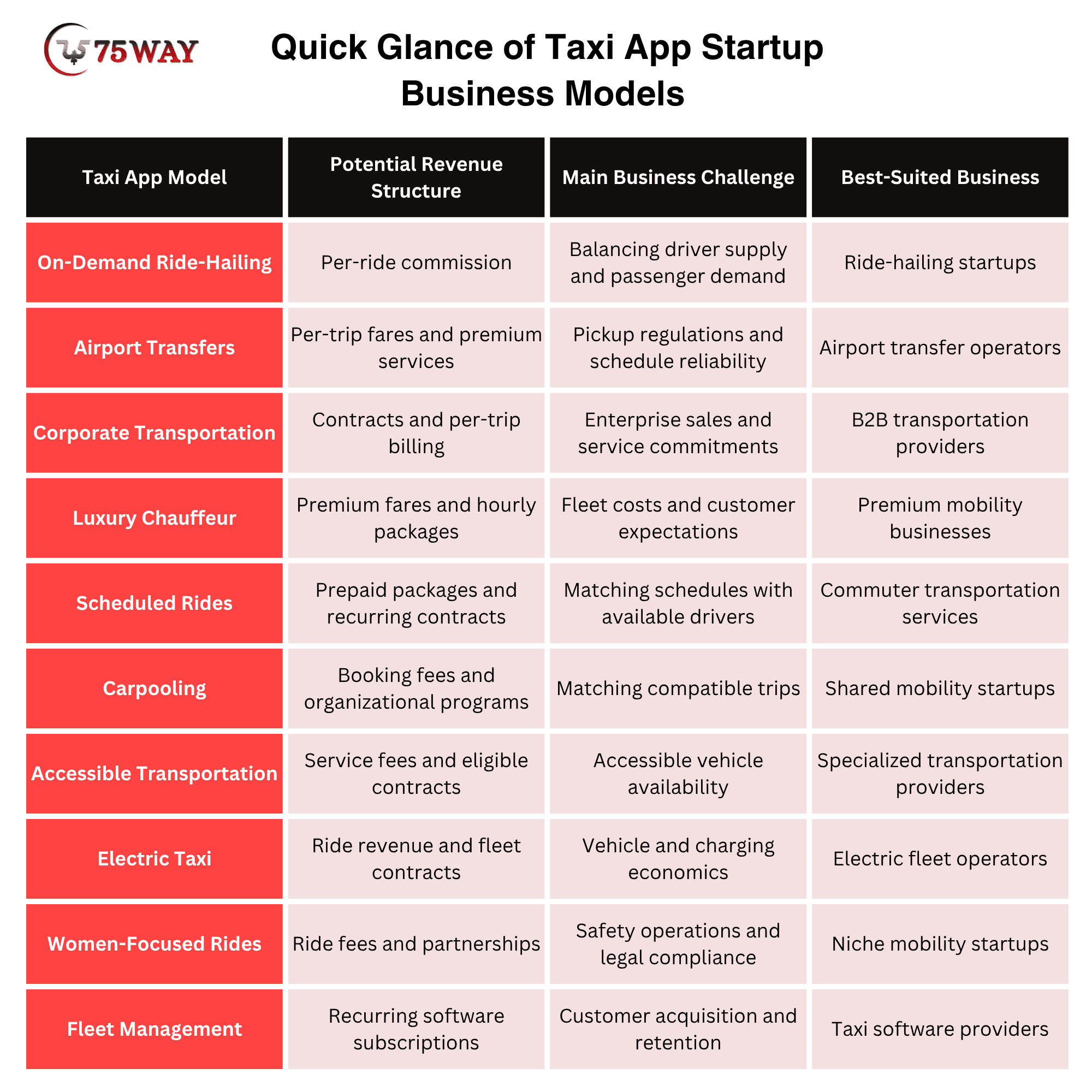
If you already operate a taxi fleet, fleet management or airport transfers may let you build on existing resources. If you have strong corporate relationships, business transportation may be worth testing. If you have neither a driver network nor established customer demand, validate those constraints before committing to a large ride-hailing marketplace.
These are strategic recommendations, not a measured ranking of industry profitability.
How to Evaluate Taxi App Profitability Before Development
A revenue forecast is not a profitability analysis. Before building your app, model the costs associated with delivering and supporting each booking.
Consider this illustrative example.
Assume a taxi platform completes 5,000 rides per month, with an average fare of $25 and a platform commission of 20%.
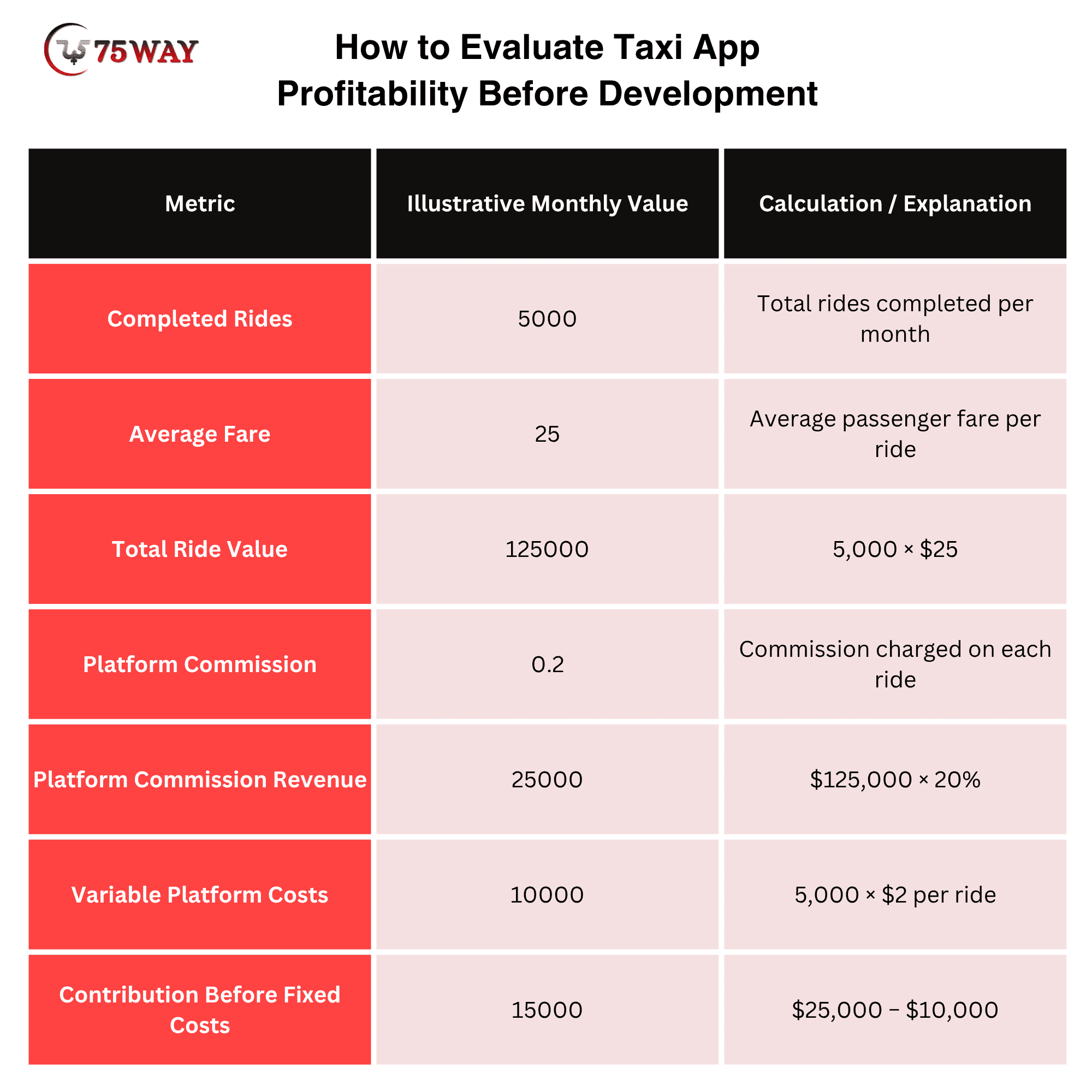
The figures above are assumptions, not industry benchmarks. They exclude other possible revenue and expenses, including refunds, promotions, payment-related costs not included in the variable-cost assumption, customer support, insurance obligations, salaries, software development, and taxes.
The $15,000 remaining is not net profit. It is the illustrative contribution available to cover fixed operating costs and other excluded expenses.
This distinction helps prevent a common planning mistake: treating total ride value or commission revenue as the business's profit.
Before investing, estimate:
- Customer Acquisition Cost: How much do you spend to acquire a paying passenger or fleet customer?
- Repeat Booking Rate: How often do customers return after their first trip?
- Driver Utilization: How much of a driver's working time generates paid rides?
- Contribution Per Ride: What remains after the costs directly associated with completing a booking?
- Break-Even Volume: How many rides or subscriptions are required to cover fixed costs?
Test conservative, expected, and optimistic scenarios. If the business only works under optimistic assumptions, the model needs further validation.
Advanced Features To Include In Taxi Clone App
Competing with established ride-hailing apps takes more than copying their booking and payment features. US customers may also value accurate arrival estimates, flexible payment options, accessible ride choices, and quick support when something goes wrong. These advanced features can help you build a taxi clone app that offers practical value to passengers, drivers, and fleet operators.
Passenger App
- Account creation and profile management.
- Pickup and destination selection.
- Fare estimates and clear pricing.
- Immediate or scheduled booking.
- Live trip status and driver details.
- Payment processing, receipts, and booking history.
- Ratings, feedback, and support access.
Driver App
- Registration and document verification workflows.
- Availability and ride-request management.
- Navigation and pickup information.
- Trip status updates.
- Earnings summaries and payment records.
- Support and incident-reporting options.
Admin and Fleet Dashboard
- Driver and vehicle management.
- Booking assignment and dispatch controls.
- Fare and commission configuration.
- Payments, refunds, and reconciliation.
- Service-area and operating-rule management.
- Customer support tools and trip reports.
Additional capabilities should reflect the niche. For example, corporate transportation may need consolidated invoicing, while an airport transfer app may need flight-related scheduling workflows.
Build the minimum feature set needed to test the business model. Add advanced automation only when evidence shows it will solve a real operational problem.
US Regulations and Operational Risks to Check Before Launch
A viable app does not automatically make a viable transportation business. Requirements can vary by state, city, service category, and operating arrangement.
Before launch, investigate:
- Licensing And Permits: Determine which transportation, vehicle, and business permits apply.
- Insurance: Confirm the required coverage for your service model and operating locations.
- Driver Screening: Establish applicable background checks, driving-record checks, and eligibility procedures.
- Airport Operations: Verify airport-specific commercial pickup, staging, and fee requirements.
- Accessibility: Assess applicable accessibility obligations and the capabilities of your service.
- Privacy and Security: Protect location information, account details, payment data, and trip records.
- Pricing and Consumer Protection: Review fare disclosures, cancellation policies, refunds, and other relevant requirements.
Seek advice from qualified legal and insurance professionals for your intended operating market. Do not assume that compliance in one city automatically authorizes operations elsewhere.
How to Validate Your Taxi Clone App Idea Before Spending on Development
A taxi app idea may look profitable on paper, but building it before confirming demand can leave you with expensive software and few bookings. Before investing in development, you need to know who will use your app, what existing services fail to offer, and whether customers will pay for your solution. These validation steps can help you test your idea in the US market before committing your budget.
Step 1: Choose One Customer Segment
Define exactly whom you want to serve, such as airport travelers, corporate accounts, premium passengers, or local fleet operators. A narrower initial audience makes it easier to test demand.
Step 2: Research the Local Competition
Review competing services, pricing, booking availability, customer complaints, service coverage, and existing transportation alternatives. Look for a specific unmet need rather than assuming that a large market guarantees an opportunity.
Step 3: Speak With Potential Customers
Interview prospective passengers, fleet operators, or corporate buyers. Ask how they currently arrange transportation, what frustrates them, what they pay, and what would persuade them to switch.
Step 4: Test the Economics
Estimate customer acquisition costs, revenue per booking, direct operating costs, and the volume required to break even. Validate the assumptions with quotes, interviews, and early commercial commitments wherever possible.
Step 5: Launch a Limited Pilot
Start in a defined service area or with a small group of business customers. Track completed bookings, cancellations, repeat usage, driver availability, support costs, and contribution per ride.
Step 6: Expand Based on Evidence
Increase coverage, fleet size, or marketing spend only when the pilot provides evidence that the service can meet demand and support its operating costs.
Final Remarks
The best taxi clone app idea for 2027 is the one that solves a specific transportation problem and supports a realistic path to profitability. Airport transfers, corporate rides, fleet management, scheduled transportation, and other specialized models each offer different opportunities and operating challenges.
For US founders, the next step is to validate customer demand, calculate the economics, review local requirements, and select an app development approach that supports the business model.
If you are planning to launch a taxi booking app in 2027, you can discuss your project requirements with a professional taxi app development company, compare suitable development approaches, and plan a taxi app around your target customers and business goals.
Frequently Asked Questions (FAQs)
What Is The Most Profitable Taxi Clone App Idea In 2027?
There is no single most profitable idea for every business. Corporate transportation, airport transfers, luxury chauffeur services, and fleet management can suit different founders depending on customer access, operating costs, and local demand.
How Do Taxi Clone Apps Generate Revenue?
Taxi platforms can earn revenue through ride commissions, subscriptions, booking fees, corporate contracts, premium services, or software licensing. The appropriate model depends on whether the business operates transportation services or sells software to operators.
Is A White-Label Taxi App Suitable For Startups?
A white-label solution may suit startups that want to launch a branded service using an established software foundation. Evaluate customization limits, recurring costs, scalability, integrations, ownership terms, and vendor support before making a decision.
Can I Launch A Taxi Clone App In One US City First?
Yes. A city-level pilot can help you test demand, driver availability, operating costs, and repeat bookings before expanding. You must still meet the relevant transportation and business requirements for the location.
What Features Should A Taxi Clone App Include?
A typical platform includes passenger booking, driver management, payments, trip tracking, dispatch, notifications, and an admin dashboard. Specialized services may also need corporate billing, advance reservations, accessibility information, or fleet reporting.
How Can I Make My Taxi App Different From Uber or Lyft?
Focus on a specific audience, service area, or unmet transportation need. Differentiation could come from corporate account management, reliable scheduled rides, specialized vehicles, premium service, or tools designed for local fleet operators.