Summary
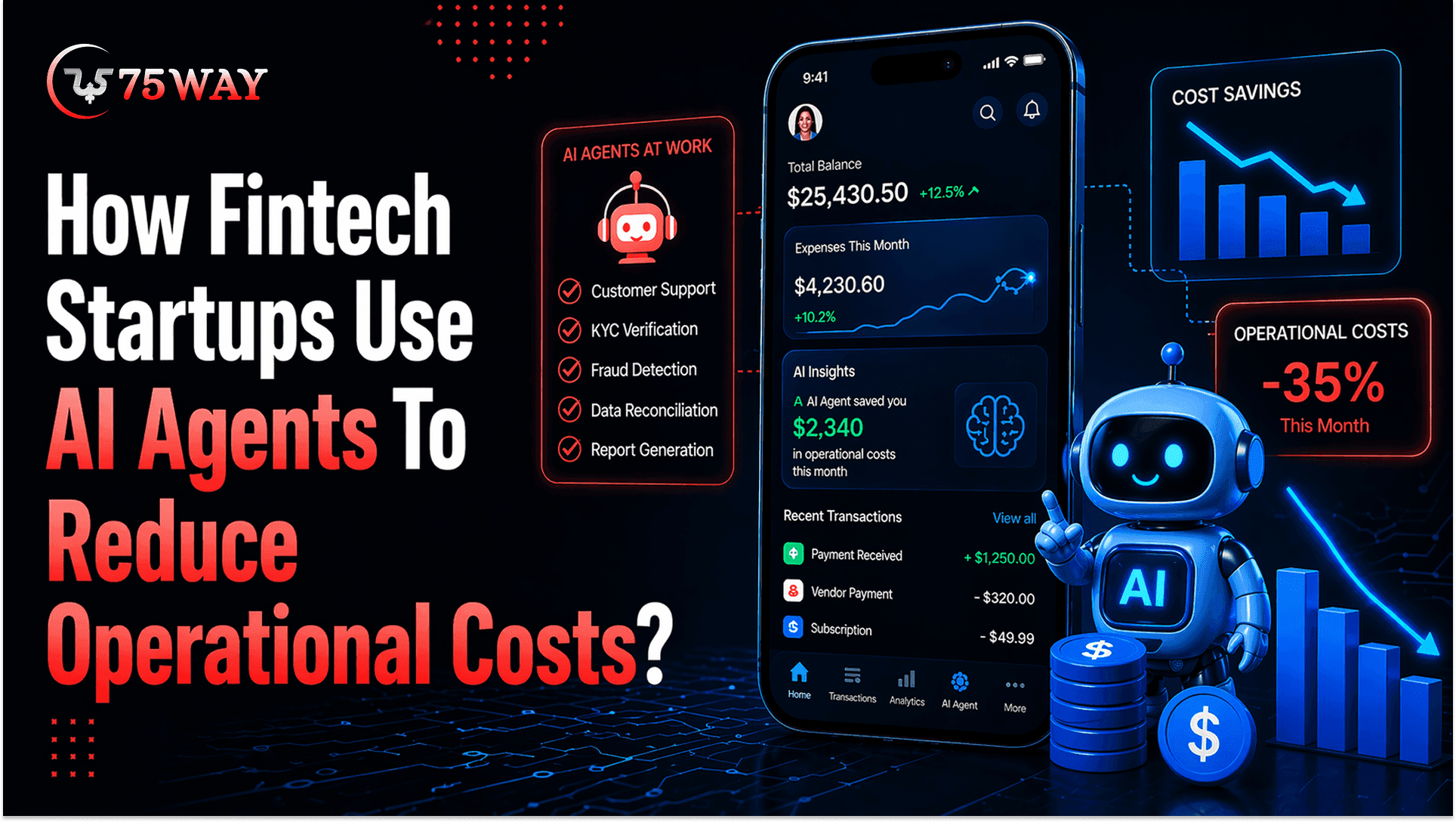
Fintech startups are leveraging AI agents to reduce operational costs by automating repetitive processes, improving accuracy, and enhancing efficiency across key functions. This guide explores how intelligent automation transforms customer support, compliance, fraud detection, and internal workflows, helping startups scale faster while maintaining cost control and delivering better financial services.
Quick Overview
- AI agents reduce fintech operational costs through automation and process optimization
- They improve customer support speed, accuracy, and overall service consistency
- Fraud detection becomes faster with real-time data analysis and pattern recognition
- Compliance tasks are automated to reduce manual effort and regulatory risk
- Average finance AI agent development cost ranges from $10,000 to $250,000
- Fintech startups scale faster using AI agents without proportional team expansion
Fintech startups operate in an environment where every decision directly impacts survival. Tight budgets, growing compliance requirements, and rising customer expectations create constant pressure to deliver more with fewer resources. Hiring large teams is not always sustainable, yet operational demands continue to expand as the business grows.
This is where finance AI agents begin to reshape how fintech companies function. Instead of adding more people to handle repetitive tasks, startups are turning to intelligent systems that can manage conversations, process data, and execute workflows with precision. These agents do not just assist. They actively reduce the cost burden while improving speed and accuracy.
This guide explains how fintech startups strategically deploy AI agent development solutions to reduce operational costs, streamline core functions, and build scalable systems that support sustainable growth.
Why Cost Efficiency Matters in Fintech?
Cost efficiency remains critical for finance startups aiming to sustain growth, manage limited resources, and maintain compliance while delivering reliable services in a competitive and fast-evolving financial ecosystem.
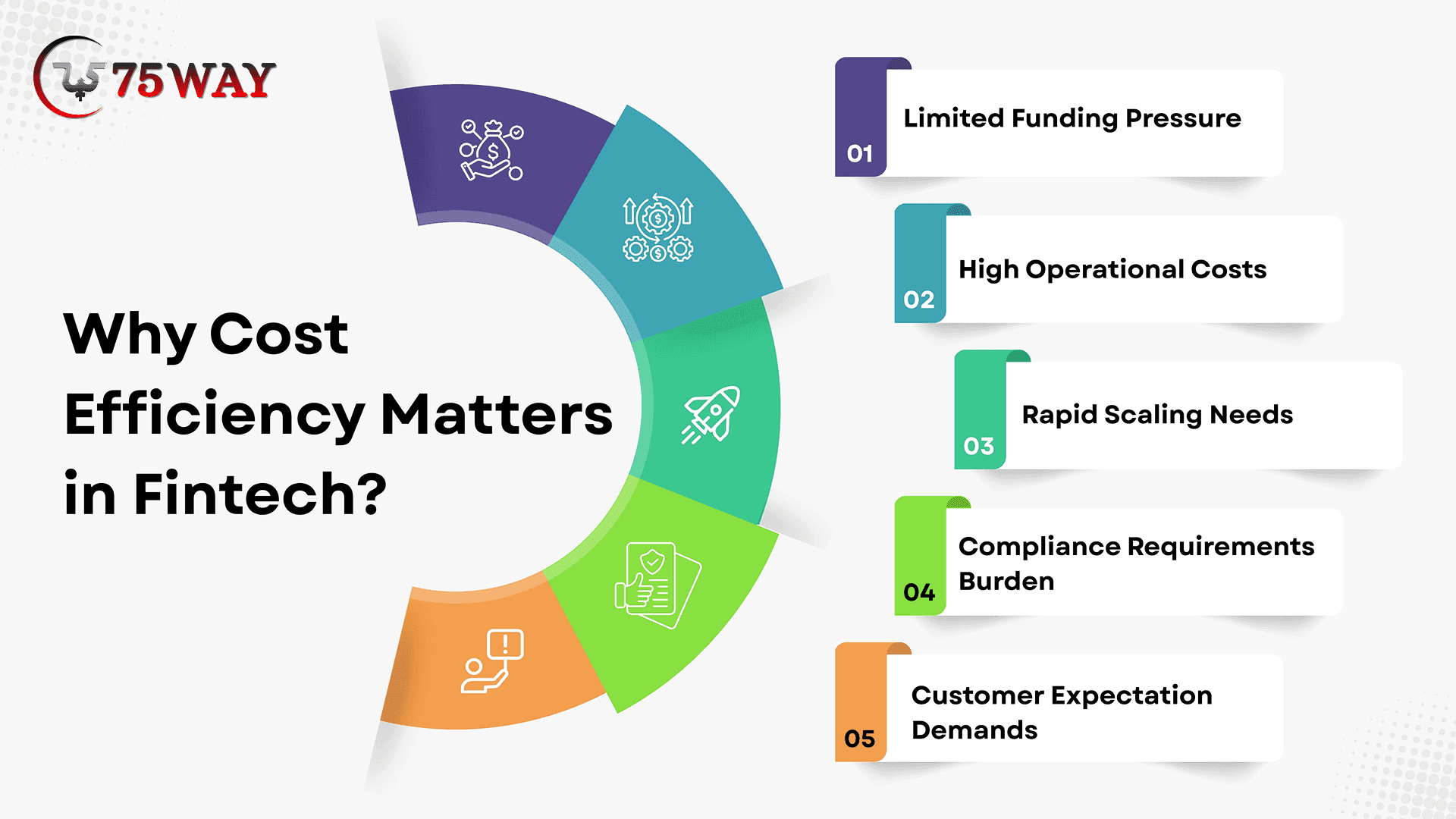
- Limited Funding Pressure: Startups operate with limited capital, requiring careful resource allocation to sustain operations and extend their financial runway.
- High Operational Costs: Daily processes, infrastructure, and compliance requirements increase expenses, making cost control essential for maintaining financial stability.
- Rapid Scaling Needs: Growth demands quick expansion of systems and services, which can significantly raise costs without efficient operational strategies in place.
- Compliance Requirements Burden: Regulatory standards require continuous monitoring, documentation, and reporting, adding complexity and cost to everyday business operations.
- Customer Expectation Demands: Users expect fast, reliable, and seamless experiences, pushing startups to invest more in support, technology, and service delivery.
Key Areas Where AI Agents Reduce Operational Costs
Fintech startups face rising operational pressure as processes scale with growth and compliance demands increase. AI agents reduce cost burdens by automating high-effort functions, minimizing errors, and enabling faster execution across critical business areas without requiring large teams.
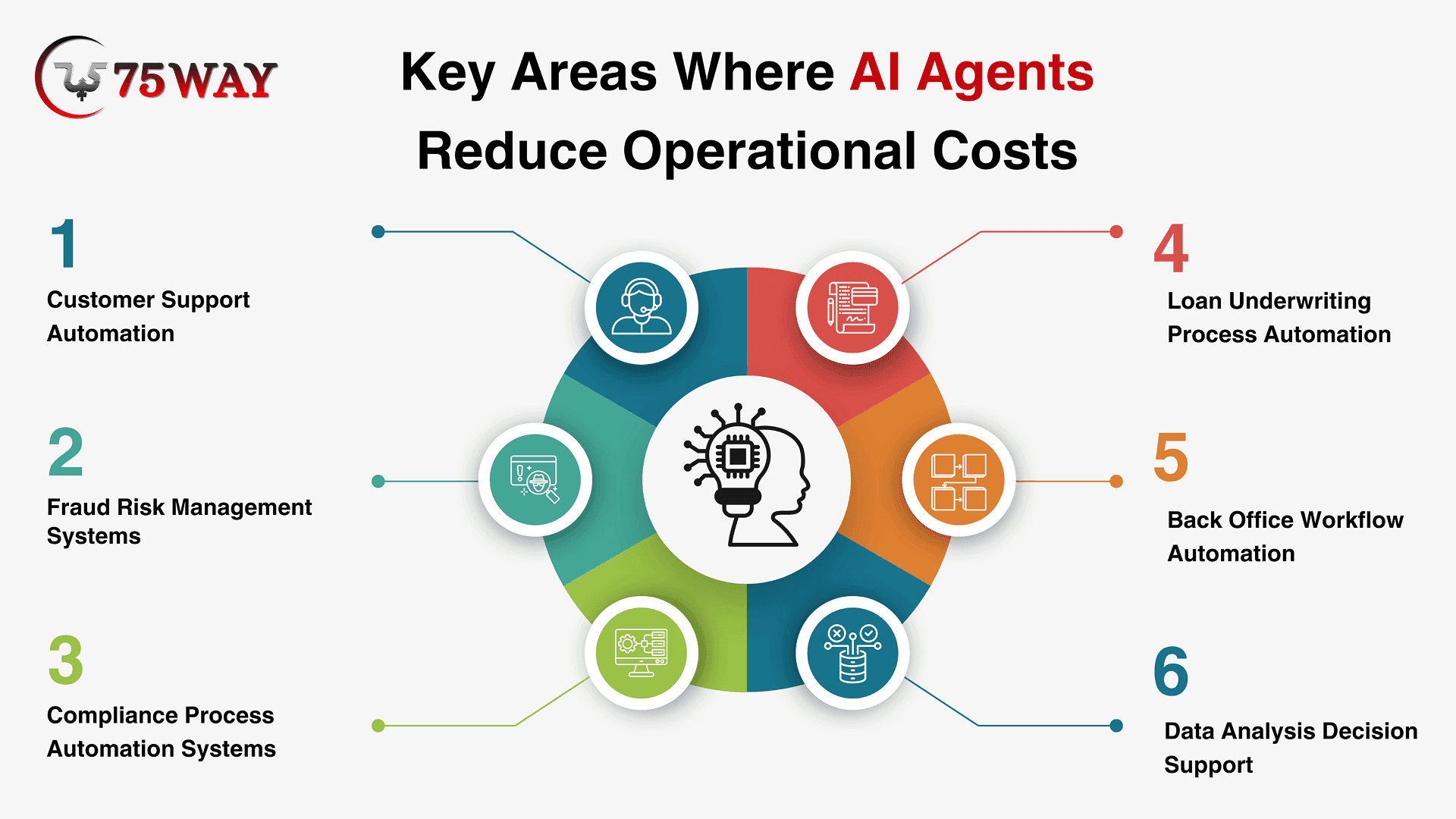
Customer Support Automation
High volumes of customer inquiries often strain support teams and increase operational costs. Intelligent systems handle repetitive queries instantly, allowing teams to focus on complex issues.
Consistent responses across channels improve customer satisfaction while reducing dependency on large support teams. Faster resolution times contribute to better user experiences and lower overall service costs.
Fraud Risk Management Systems
Financial transactions generate vast amounts of data that require constant monitoring to detect suspicious activities. Advanced systems analyze patterns in real time to identify potential fraud risks.
Early detection reduces financial losses and limits exposure to fraudulent activities. Improved accuracy lowers false alerts, saving time and resources spent on unnecessary investigations.
Compliance Process Automation Systems
Regulatory requirements demand continuous monitoring, documentation, and reporting, increasing operational burden for fintech startups. Automated systems handle verification tasks and track compliance requirements with higher precision.
Reduced manual involvement lowers the risk of errors that can lead to penalties. Efficient processes help maintain regulatory standards while controlling overall compliance-related expenses.
Loan Underwriting Process Automation
Evaluating loan applications manually takes time and requires significant human effort across multiple stages. Intelligent systems assess applicant data quickly, enabling faster, more accurate decision-making.
Shorter processing cycles improve customer experience and increase approval efficiency. Reduced manual workload helps lower operational costs while maintaining consistency in risk assessment.
Back Office Workflow Automation
Routine administrative tasks often consume time and resources without directly contributing to business growth. Automated workflows streamline data entry, reconciliation, and reporting, improving accuracy and consistency.
Reduced manual effort allows teams to focus on strategic initiatives. Streamlined operations lead to faster execution and lower costs across back-office functions.
Data Analysis Decision Support
Large volumes of financial data require structured analysis to support effective decision-making processes. Intelligent systems process datasets quickly, identifying patterns and trends that inform business strategies.
Accurate insights help leaders make informed decisions without relying on time-consuming manual analysis. Improved efficiency supports cost reduction while enhancing overall operational performance.
Benefits of Finance AI Agents Beyond Cost Reduction
Finance AI agents deliver value beyond cost savings by strengthening operations and supporting better decisions. These systems improve workflow performance and service quality. Organizations gain flexibility, precision, and stronger control over expanding operational demands across financial environments.
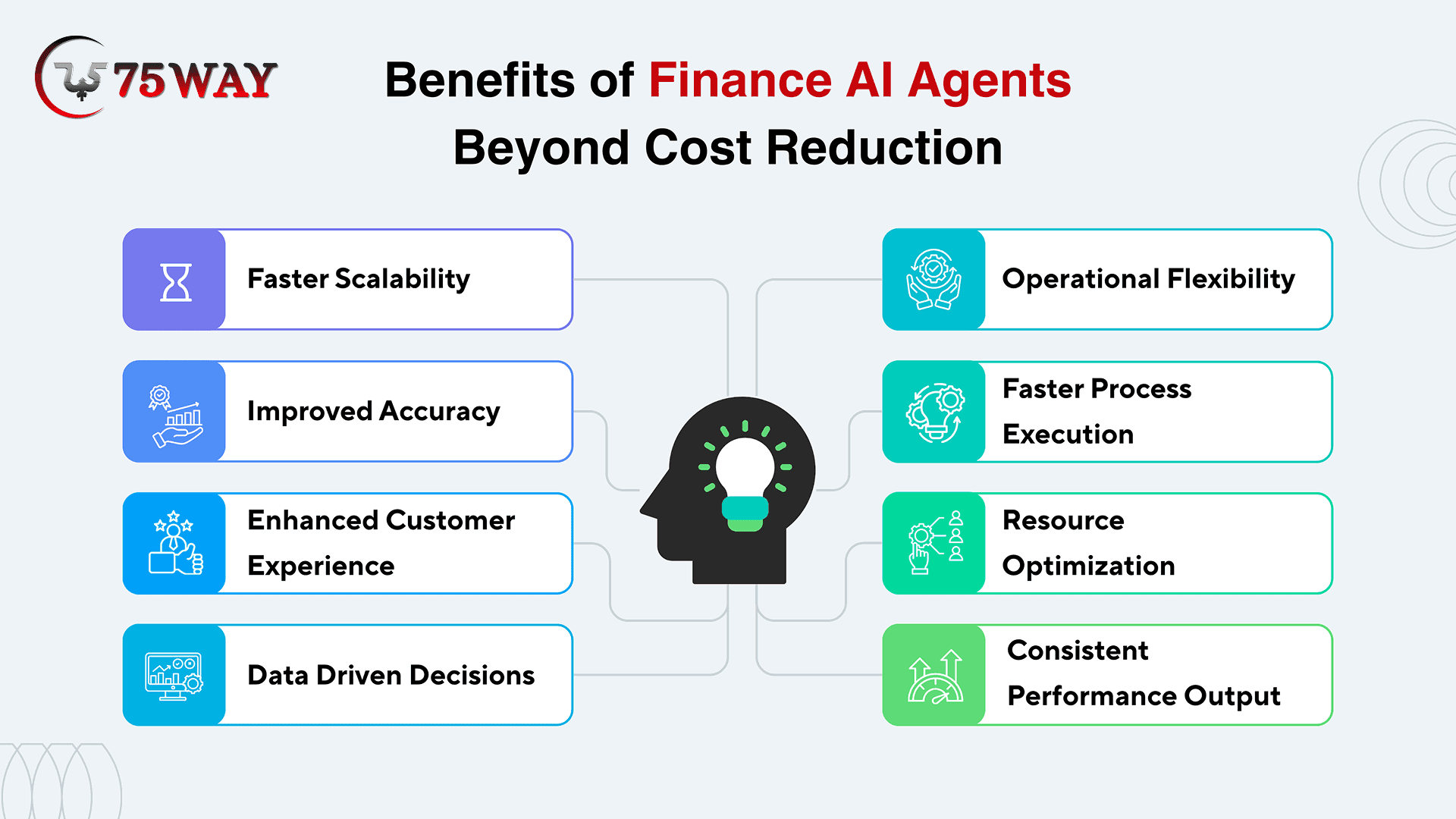
- Faster Scalability: Handle growing workloads without hiring more staff, support expansion, maintain stable operations, and manage increasing demand across business functions.
- Improved Accuracy: Reduce human errors across processes, deliver reliable outputs, maintain data consistency, and avoid costly mistakes within financial operations.
- Enhanced Customer Experience: Deliver instant responses, personalize interactions, improve engagement, build trust, and strengthen long-term relationships across multiple customer touchpoints.
- Data Driven Decisions: Analyze large datasets quickly, uncover patterns, support planning, and improve decision quality across various financial and operational activities.
- Operational Flexibility: Adapt workflows based on changing demand, support multiple processes, and maintain smooth operations across evolving business requirements.
- Faster Process Execution: Complete tasks rapidly across workflows, reduce delays, and improve turnaround time for critical financial operations and services.
- Resource Optimization: Use available resources wisely, reduce unnecessary workload, and maintain productivity without increasing operational overhead across teams.
- Consistent Performance Output: Maintain stable system behavior across tasks, deliver reliable outcomes, and support predictable performance under varying operational conditions.
Real-World Impact of AI Agents in Fintech
Many fintech startups have reduced operational costs after integrating AI agents into core systems. Lower support expenses, faster processing, and stronger compliance workflows show measurable improvements across daily operations.
At 75way, a custom finance AI agent, FinCore AI Agent, was developed to handle transaction queries, automate compliance checks, and streamline support workflows for a growing fintech platform.
Within three months of deployment, the system reduced customer support workload by 45 percent and improved response time across queries. Automated compliance checks lowered manual effort, while faster data processing helped the client manage higher transaction volumes without expanding operational teams.
How to Implement Agentic AI in Finance Successfully?
Agentic AI in finance requires a structured approach that aligns technology with business goals. Success depends on clarity, system integration, and continuous refinement. Each stage builds on the previous one, creating a connected process that supports scalable, reliable, and outcome-driven implementation across financial operations.
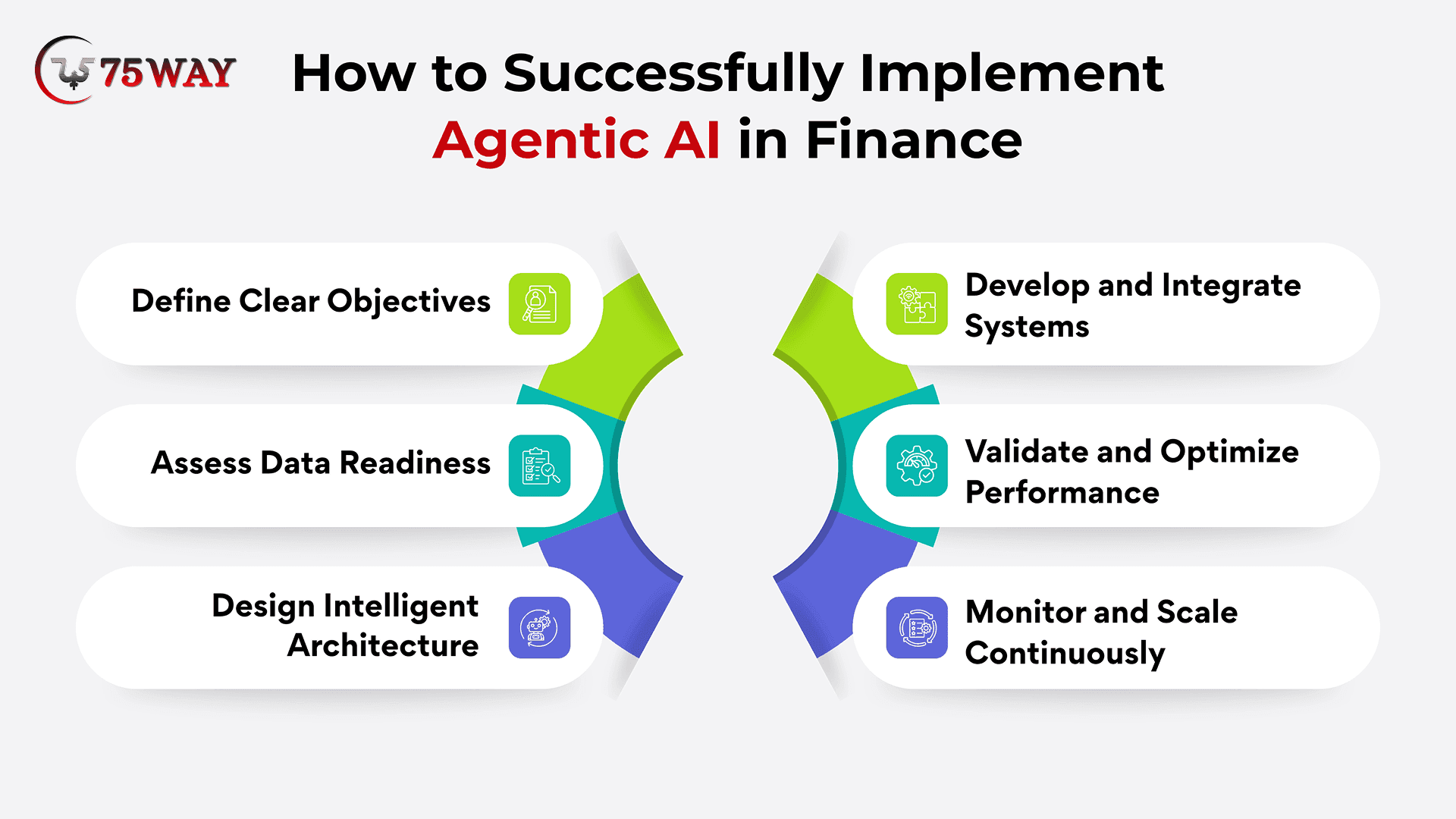
Stage 1: Define Clear Objectives
A strong foundation begins with clarity around business goals and operational challenges. Leaders identify areas where automation can have an impact, such as support, compliance, or transaction workflows, shaping the direction of implementation.
Clear objectives guide decision-making in later stages. Defined outcomes help teams prioritize features, allocate resources, and ensure the AI agent development solution delivers measurable value aligned with financial and operational targets.
Stage 2: Assess Data Readiness
Once goals are defined, attention shifts to data quality and availability. Financial systems generate large datasets, but structure and accuracy determine how effectively AI models perform in real scenarios.
Reliable data support model training and decision accuracy. Clean datasets, proper formatting, and secure handling lay a strong foundation for the next stage, where intelligent systems begin to take shape.
Stage 3: Design Intelligent Architecture
With data readiness established, system architecture defines how components interact. Engineers plan workflows, integration layers, and processing logic to support smooth operations across financial platforms.
A well-structured design allows flexibility and future expansion. Modular architecture ensures that updates, additional features, or scaling efforts can take place without disrupting existing workflows or system stability.
Stage 4: Develop And Integrate Systems
Following the design, the next stage is to build an AI agent into functional form. Models are built, trained, and connected with financial systems such as payment gateways, databases, and internal tools.
Integration ensures the agent operates within existing environments. Smooth connectivity allows real-time data flow and task execution, preparing the system for testing under realistic financial scenarios.
Stage 5: Validate And Optimize Performance
After AI integration, validation checks system behavior across different conditions. Testing focuses on response accuracy, workflow execution, and performance under varying loads within financial operations.
Insights from testing guide improvements. Refinement at this stage strengthens reliability and prepares the AI agent for deployment, ensuring it performs effectively in live environments without disruption.
Stage 6: Monitor And Scale Continuously
Deployment introduces the AI agent into daily financial operations. Continuous monitoring tracks performance, identifies gaps, and supports ongoing improvements based on real interaction data.
As usage grows, scaling becomes essential. Regular updates and optimization help the system adapt to changing demands, ensuring long-term performance and alignment with evolving financial business requirements.
What’s The Cost To Build A Finance AI Agent?
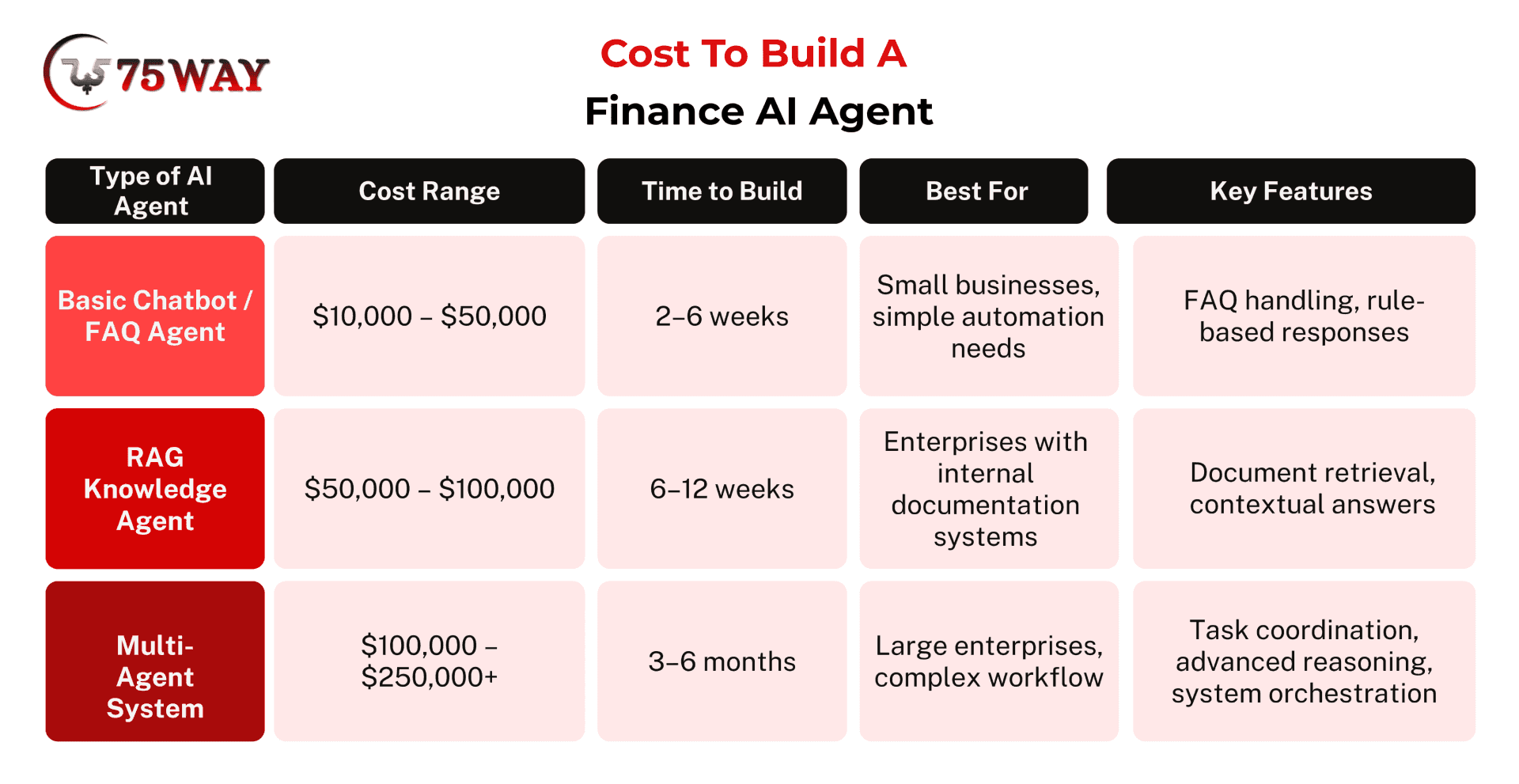
The cost to develop an AI agent in finance may vary based on complexity, data handling, and the level of intelligence required. The average finance AI agent development cost ranges between $10,000-$250,000+. Simple fintech AI agent systems focus on basic automation, while advanced multi-agent setups manage complex workflows, integrations, and decision-making across enterprise environments.
- Cost of Basic Chatbot / FAQ Agent in Finance: $10,000 – $50,000
Handles simple queries and automated responses for customer support and basic tasks.
- RAG Knowledge Agent Cost: $50,000 – $100,000
Integrates internal documents to deliver context-aware and accurate responses.
- Finance Multi-Agent System Cost: $100,000 – $250,000+
Deploys multiple intelligent agents collaborating for complex workflows and advanced automation.
Other Cost Factors for Financial AI Agent
AI agent development cost in finance also depends on data complexity, system integrations, security requirements, customization level, scalability needs, compliance standards, and ongoing maintenance requirements across evolving financial operations.
- Complexity & Scope
- Simple Fintech AI Agent Cost: $20,000 – $60,000
- Advanced Fintech AI Agent Cost:$250,000 – $800,000+
Basic automation agents are affordable, while complex multi-agent systems require significant investment.
- AI Agent Integration & Data Cost: $20,000 – $50,000
Connecting with banking systems, APIs, and databases increases functionality and overall cost.
- Compliance & Security Cost for Finance AI Agent: $70,000 – $200,000+
Strict financial regulations and security standards significantly raise development and maintenance costs.
- Operational Costs: $2,000 – $20,000/month
Ongoing expenses for model inference, monitoring, and system maintenance.
Challenges Fintech Startups Face When Implementing Conversational AI Agents
Fintech startups face several challenges when adopting conversational AI in banking, including complex systems, strict regulations, and evolving operational demands. Careful planning, technical expertise, and strategic execution help overcome these barriers and support successful, scalable AI implementation across financial environments.
- Data Quality Issues: Inaccurate or unstructured data limits AI performance, leading to unreliable outputs and reduced effectiveness across financial operations.
- Integration Complexity: Connecting AI agents to legacy systems requires careful technical planning to ensure smooth data flow and system compatibility.
- Initial Investment Requirements: Development, infrastructure, and talent costs create upfront financial pressure before long-term efficiency gains begin to appear.
- Regulatory Compliance Pressure: Strict financial regulations demand careful implementation, documentation, and monitoring to avoid penalties and maintain operational trust.
- Limited Technical Expertise: Shortage of skilled AI professionals slows development progress and impacts the quality of implementation across complex financial systems.
- Change Management Resistance: Internal teams may hesitate to adopt new systems, requiring training and clear communication to support a smooth transition.
- Data Security Risks: Handling sensitive financial data increases exposure to security threats, requiring strong safeguards and access control mechanisms.
- Scalability Constraints Early: Poor initial planning can limit future expansion, making it difficult to handle growing workloads and evolving business requirements.
Future of AI Agents in Fintech
AI agents are expected to become more advanced, offering stronger analytical capabilities and improved decision-making support across financial operations. Their ability to process complex data in real time will reshape how fintech companies manage workflows, customer interactions, and risk assessment.
As technology evolves, integration across financial ecosystems will become smoother and more intelligent. Systems will work together with minimal friction, allowing businesses to connect payments, compliance, and analytics within a unified operational structure that supports faster execution and better visibility.
Early adoption will play a major role in competitive positioning. Fintech startups that implement AI agents ahead of others will achieve higher efficiency, reduce operational pressure, and scale faster while maintaining control over costs and performance quality.
Final Thoughts
AI agents are transforming how fintech startups manage operations by reducing costs while improving efficiency and accuracy. By automating customer support, compliance, fraud detection, and back-office processes, these intelligent systems eliminate repetitive work and minimize errors that lead to financial losses. The ability to scale operations without increasing headcount makes AI agents a strategic asset for growing startups. While implementation requires careful planning and investment, the long-term benefits outweigh the initial effort.
Fintech leaders who adopt AI-driven automation position their businesses for sustainable growth, better resource utilization, and a stronger competitive advantage. Partnering with a reliable AI development company ensures successful implementation and maximizes return on investment through tailored, scalable solutions.
Frequently Asked Questions (FAQs)
How Do AI Agents Reduce Operational Costs In Fintech?AI agents automate repetitive tasks, reduce manual intervention, and improve accuracy in processes like customer support, compliance, and fraud detection. This lowers staffing needs, minimizes errors, and speeds up operations, resulting in significant cost savings for fintech startups.
Are AI Agents Secure For Financial Operations?AI agents can be highly secure when developed with proper encryption, compliance standards, and access controls. Fintech startups must ensure their AI systems follow regulatory guidelines and implement strong security measures to protect sensitive financial data effectively.
Can Small Fintech Startups Afford AI Agent Implementation?Yes, many AI solutions are scalable and can be tailored to fit different budgets. Startups can begin with specific use cases and expand gradually, allowing them to manage costs while still benefiting from automation and improved efficiency.
What Is The ROI of Using AI Agents In Fintech?The return on investment comes from reduced operational costs, improved efficiency, and faster processes. AI agents also enhance customer experience and reduce errors, contributing to higher retention rates and long-term profitability.
What Are The Risks of Using AI In Fintech?Risks include data privacy concerns, integration challenges, and potential biases in AI models. These can be mitigated by using high-quality data, following compliance standards, and working with experienced developers.
How Can Fintech Startups Get Started With AI Agents?Start by identifying processes that require automation, defining clear objectives, and partnering with skilled AI developers. A phased approach ensures smooth implementation and allows startups to scale their AI capabilities effectively.