AI Summary
Gym apps can help fitness businesses attract members, simplify operations, increase engagement, and improve retention. The right features connect members, trainers, payments, bookings, and business data in one platform. This guide covers essential features that support sustainable gym growth.
Key Takeaways
- The right gym app features can improve member engagement and retention.
- Automated memberships and payments simplify recurring revenue management.
- Booking tools make classes and trainer sessions easier to manage.
- Personalized fitness features create more valuable member experiences.
- Business analytics help gym owners make informed growth decisions.
A gym app becomes a growth tool when members continue using it after they leave the facility. Instead of functioning as another digital convenience, it can become part of the member relationship and keep your brand connected to customers throughout their fitness journey.
That ongoing interaction can matter commercially because stronger engagement gives gyms more opportunities to support members, encourage continued participation, and build longer-lasting relationships. For the business, the gym app development solution can also bring member activity and operational information into a more connected digital experience.
The goal, therefore, is not to pack the app with every available capability. You have to integrate essential features that can genuinely support gym business growth and create a stronger member experience.
But which are the key features that are required to build a gym app in 2027? How to prioritize essential features? This blog covers the powerful gym app features that can help businesses create a stronger member experience while supporting engagement, retention, revenue, and day-to-day operations.
Top Gym App Features That Boost Business Performance
A complete gym management platform typically includes three connected interfaces: a User App for members, a Trainer App for fitness professionals, and an Admin Panel for owners and managers. Each panel serves a different purpose while sharing relevant data to create a connected gym management experience. The right feature set can encourage regular engagement, improve member relationships, and create additional opportunities for revenue. The key gym app features that can strengthen overall business performance are discussed below.
Module 1: Key Gym App Features In The User Panel For Better Member Management
The user app should make every part of a member’s fitness journey easier, from joining the gym and booking sessions to tracking progress and staying connected with trainers. Instead of forcing members to depend on front-desk staff for routine tasks, the app gives them convenient access to important gym services from their phones.
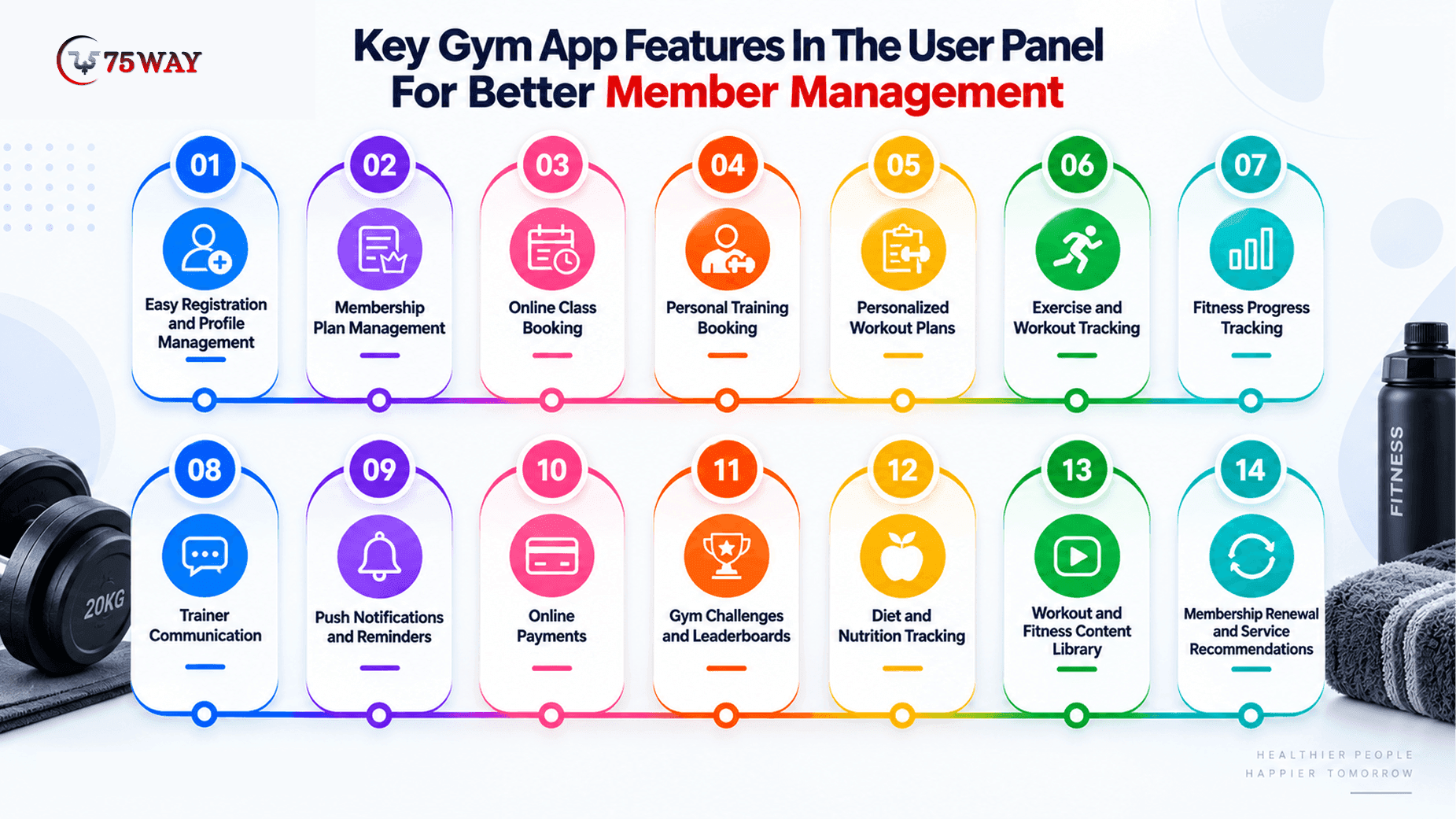
1. Easy Registration and Profile Management
The app should allow new members to create their accounts quickly and build a personal fitness profile. They can add information such as age, fitness goals, workout preferences, experience level, and other relevant details.
A well-organized profile gives members control over their information while providing the foundation for more personalized workouts, recommendations, communication, and fitness experiences throughout their membership.
2. Membership Plan Management
Members should be able to explore available membership plans, view their current subscription, check validity, and understand what their plan includes without contacting gym staff.
The feature can also support upgrades, renewals, plan changes, and membership-related notifications. This makes subscription management more convenient for members while creating additional opportunities for gyms to promote suitable plans.
3. Online Class Booking
Class booking allows members to discover available sessions, check schedules, select preferred classes, and reserve their spots directly through the app.
Real-time availability can make the booking experience easier while helping members plan workouts around their schedules. It can also encourage greater participation by making popular classes easier to discover and access.
4. Personal Training Booking
Members looking for one-to-one guidance can use the app to explore trainers, view available slots, and book personal training sessions.
The feature removes unnecessary back-and-forth communication and makes premium training services easier to access. For gyms, it can create a convenient digital pathway for promoting and selling personal training packages.
5. Personalized Workout Plans
The app can give members access to workout routines created according to their fitness goals, experience, preferences, and trainer recommendations.
Instead of relying on memory or printed workout sheets, members can view exercises, sets, repetitions, instructions, and assigned routines directly from their phones. This makes workouts easier to follow and gives members a more personalized fitness experience.
6. Exercise and Workout Tracking
Members can record completed exercises, repetitions, weights, workout duration, and other relevant performance information through the app.
Seeing previous workout data can help members understand their progress and stay motivated toward their goals. It also creates useful information that trainers can review when adjusting future workout plans.
7. Fitness Progress Tracking
Progress tracking can bring important fitness milestones into one easy-to-understand view. Depending on the app's scope, members can monitor measurements, weight, workout performance, attendance, goals, and other relevant indicators.
Visual progress reports can make improvements easier to recognize and give members a stronger reason to remain engaged with their fitness routine and the gym's digital platform.
8. Trainer Communication
Members should have a convenient way to communicate with their assigned trainers through the app. They can ask workout-related questions, receive instructions, share updates, or discuss upcoming sessions.
Keeping communication within the app can make trainer support more accessible while helping members feel connected between physical visits. It also strengthens the relationship between the member and the fitness professionals supporting their goals.
9. Push Notifications and Reminders
Timely notifications can remind members about upcoming classes, personal training sessions, membership renewals, payments, workout schedules, challenges, and important gym announcements.
Notifications should remain relevant rather than excessive. Personalized reminders can help members stay active while giving the gym a direct channel for maintaining engagement throughout the membership lifecycle.
10. Online Payments
Members can use the app to purchase memberships, renew plans, pay for personal training, book paid classes, or purchase other available services.
A secure in-app payment experience reduces the need for manual transactions and makes purchasing more convenient. It can also help gyms create smoother digital sales journeys for memberships and additional services.
11. Gym Challenges and Leaderboards
Fitness challenges can encourage members to participate more actively by giving them specific goals and milestones to work toward.
Leaderboards, badges, achievements, and rewards can introduce a social and motivational element to the experience. Gyms can create challenges around attendance, workouts, steps, or other suitable activities to encourage participation and community engagement.
12. Diet and Nutrition Tracking
For gyms that provide nutrition support, the app can allow members to access meal plans, nutrition guidance, food logs, or recommendations from qualified professionals.
Keeping fitness and nutrition information within the same platform can create a more complete wellness experience. It also gives gyms an opportunity to offer nutrition programs as an additional service.
13. Workout and Fitness Content Library
A content library can give members access to exercise videos, workout guides, educational content, stretching routines, and other fitness resources.
This allows the gym to remain useful even when members are away from the facility. Regularly updated content can also encourage members to open the app more frequently and explore additional fitness services.
14. Membership Renewal and Service Recommendations
The app can notify members when their membership is approaching expiration and make renewal straightforward. It can also present relevant services based on their existing membership or interests.
For example, a member interested in strength training could discover a suitable personal training package or specialized class. When recommendations remain relevant, the app can support both member engagement and additional revenue opportunities.
Module 2: Must-Have Gym Trailer App Features You Must Include
A gym trailer app can become a useful business tool when its functionality supports the way customers actually discover, book, and engage with fitness services. A well-planned product can also give the business greater control over everyday interactions and customer engagement. The essential features that can make a gym trailer app more useful and competitive are covered below.
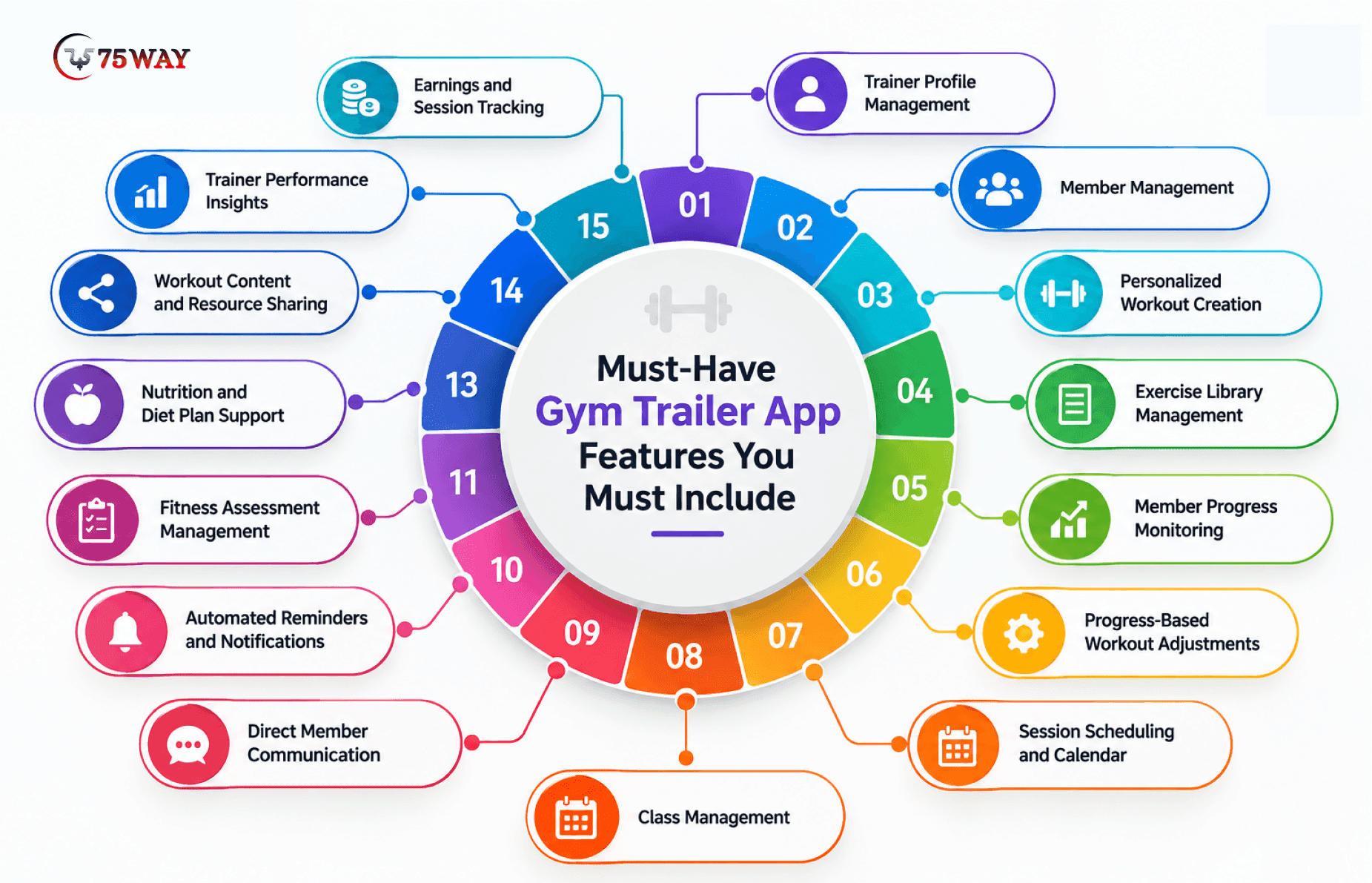
1. Trainer Profile Management
Trainers can manage their professional profiles, including specialties, experience, certifications, availability, and personal training information. This helps members understand each trainer's expertise before selecting services. Updated profiles also help gyms present their fitness professionals professionally and improve trainer discoverability across the platform.
- Add certifications and professional experience easily
- Update specialties based on training expertise
- Manage availability for member session requests
- Display achievements to build member confidence
- Edit profile information whenever business needs
- Showcase training approaches and fitness expertise
2. Member Management
The trainer app allows fitness professionals to view assigned members and access relevant information from one place. Trainers can better understand individual goals, workout histories, and current plans. This organized access helps them deliver more relevant guidance while managing multiple members efficiently every day.
- View assigned members from one dashboard
- Access member goals before planning workouts
- Review training histories for better guidance
- Monitor active and inactive assigned members
- Organize members according to training requirements
- Manage multiple client relationships more easily
3. Personalized Workout Creation
Trainers can create customized workout plans based on each member's fitness goals, abilities, experience, and progress. They can structure exercises, sets, repetitions, durations, and schedules digitally. This makes personalized training easier to deliver while reducing reliance on manual workout sheets.
- Create workouts for individual fitness goals
- Add exercises with sets and repetitions
- Build structured daily and weekly routines
- Modify plans as member needs change
- Assign workouts directly through the application
- Reuse suitable workout templates when needed
4. Exercise Library Management
An exercise library gives trainers quick access to organized workout content when creating member plans. They can select exercises and include relevant instructions within routines. A centralized library saves preparation time while helping trainers maintain greater consistency across personalized workout programs and sessions.
- Access exercises from one organized library
- Search movements by fitness category quickly
- Add instructions for proper exercise performance
- Include suitable variations for different abilities
- Save commonly used exercises for convenience
- Build better workouts without repetitive preparation
5. Member Progress Monitoring
Trainers can monitor workout completion, performance, attendance, and other relevant progress indicators through the app. Regular visibility helps them understand whether members are following assigned programs. They can then adjust routines, provide feedback, and offer support based on each member's development.
- Track completed workouts and training activities
- Review performance across different workout sessions
- Monitor attendance and overall member consistency
- Identify progress toward individual fitness goals
- Recognize members needing additional training support
- Adjust programs using recorded performance insights
6. Progress-Based Workout Adjustments
The app helps trainers update workout plans when a member's performance, goals, or requirements change. Instead of following outdated routines, trainers can make timely adjustments. This supports a more responsive training experience and helps members continue receiving guidance that reflects their current fitness journey.
- Modify routines according to recent progress
- Increase difficulty as member abilities improve
- Adjust exercises when goals change significantly
- Update repetitions based on current performance levels
- Respond quickly to changing training requirements
- Keep workout plans relevant and personalized
7. Session Scheduling and Calendar
Trainers can manage personal training appointments, class schedules, and availability through a centralized calendar. Clear scheduling reduces booking conflicts and makes daily planning easier. Trainers can review upcoming sessions while keeping their schedules organized across individual training and other assigned responsibilities.
- View upcoming sessions from one calendar
- Set available times for member bookings
- Manage personal training appointment schedules easily
- Avoid overlapping sessions and booking conflicts
- Review daily and weekly training commitments
- Update availability when schedules change unexpectedly
8. Class Management
Trainers can view and manage the classes assigned to them, including schedules, participant details, and session information. This helps them prepare before each class begins. Organized class management also gives trainers better visibility into attendance and their responsibilities throughout the working day.
- View assigned classes and upcoming schedules
- Access participant details before each session
- Check attendance for completed group classes
- Review class capacity and booking information
- Prepare sessions using available participant insights
- Manage responsibilities through organized class schedules
9. Direct Member Communication
Built-in communication allows trainers to stay connected with members between scheduled sessions. They can answer questions, share instructions, provide feedback, and discuss workout updates directly. This improves accessibility while helping trainers maintain meaningful support throughout each member's ongoing fitness journey.
- Answer member questions without scheduling sessions
- Share workout instructions and important updates
- Provide feedback after completed training activities
- Discuss changing goals and training concerns
- Send relevant guidance between gym visits
- Maintain stronger trainer-member relationships digitally
10. Automated Reminders and Notifications
Trainers can receive notifications about upcoming sessions, new bookings, member messages, cancellations, and important updates. Automated reminders help them stay informed without constantly checking schedules. This reduces the risk of missed activities while supporting better daily organization and more responsive member service.
- Receive alerts for upcoming training sessions
- Get notified when members send messages
- Track cancellations and schedule changes promptly
- Receive updates about new member bookings
- Stay informed about assigned class activities
- Reduce missed appointments through timely reminders
11. Fitness Assessment Management
The trainer app can help professionals record and review fitness assessments for members at different stages of training. Information such as goals, measurements, performance levels, and assessments can support planning. This gives trainers a clearer starting point when creating personalized fitness programs and tracking improvements.
- Record initial member fitness assessment details
- Review measurements and performance information easily
- Compare results across different assessment periods
- Identify suitable starting points for training
- Track improvements throughout the fitness journey
- Use assessments when planning personalized programs
12. Nutrition and Diet Plan Support
Trainers can share approved nutrition guidance or coordinate relevant diet plans through the app when such services are part of the gym's offerings. Members can access recommendations conveniently. This helps trainers support broader fitness goals while keeping workout and nutrition-related guidance organized within one platform.
- Share approved meal plans with members
- Provide nutrition guidance alongside workout programs
- Update recommendations when fitness goals change
- Organize diet-related information in one place
- Support broader wellness and fitness objectives
- Coordinate nutrition services through the platform
13. Trainer Performance Insights
The app can provide trainers with insights into sessions completed, member engagement, attendance, and other relevant performance indicators. These insights help professionals understand their workload and service activity. They can also support gyms in evaluating trainer performance and identifying opportunities for improvement.
- Track completed sessions across selected periods
- Monitor member engagement with assigned programs
- Review attendance across training appointments regularly
- Understand workload through organized performance data
- Identify areas requiring improved trainer support
- Measure service activity using relevant insights
14. Workout Content and Resource Sharing
Trainers can share exercise videos, instructional resources, fitness guides, and other useful content directly with members. This extends guidance beyond in-person sessions. Members can revisit shared resources when needed, while trainers can provide additional support without repeating the same explanations repeatedly.
- Share exercise videos with assigned members
- Provide instructional guides for workout routines
- Send useful fitness resources when needed
- Help members revisit trainer guidance independently
- Support learning beyond scheduled training sessions
- Reduce repetitive explanations through shared resources
15. Earnings and Session Tracking
For gyms that manage trainer compensation digitally, the app can help trainers track completed sessions and related earnings information. Clear records improve transparency around their work. Trainers can review completed activities while understanding the information used for performance monitoring or applicable compensation calculations.
- Track completed sessions across selected periods
- Review recorded personal training activities easily
- Monitor relevant earnings information when available
- Understand completed work through organized records
- Check session history for greater transparency
- Support accurate tracking of trainer activities
Module 3: Major Admin Panel Features For Successful Gym App Management
A member-facing gym app may create the experience customers see, but the admin panel controls much of what happens behind it. Strong administrative functionality can give gym owners and staff better visibility over operations while making everyday management easier to monitor and control. The essential admin panel capabilities for managing a successful gym app are covered below.
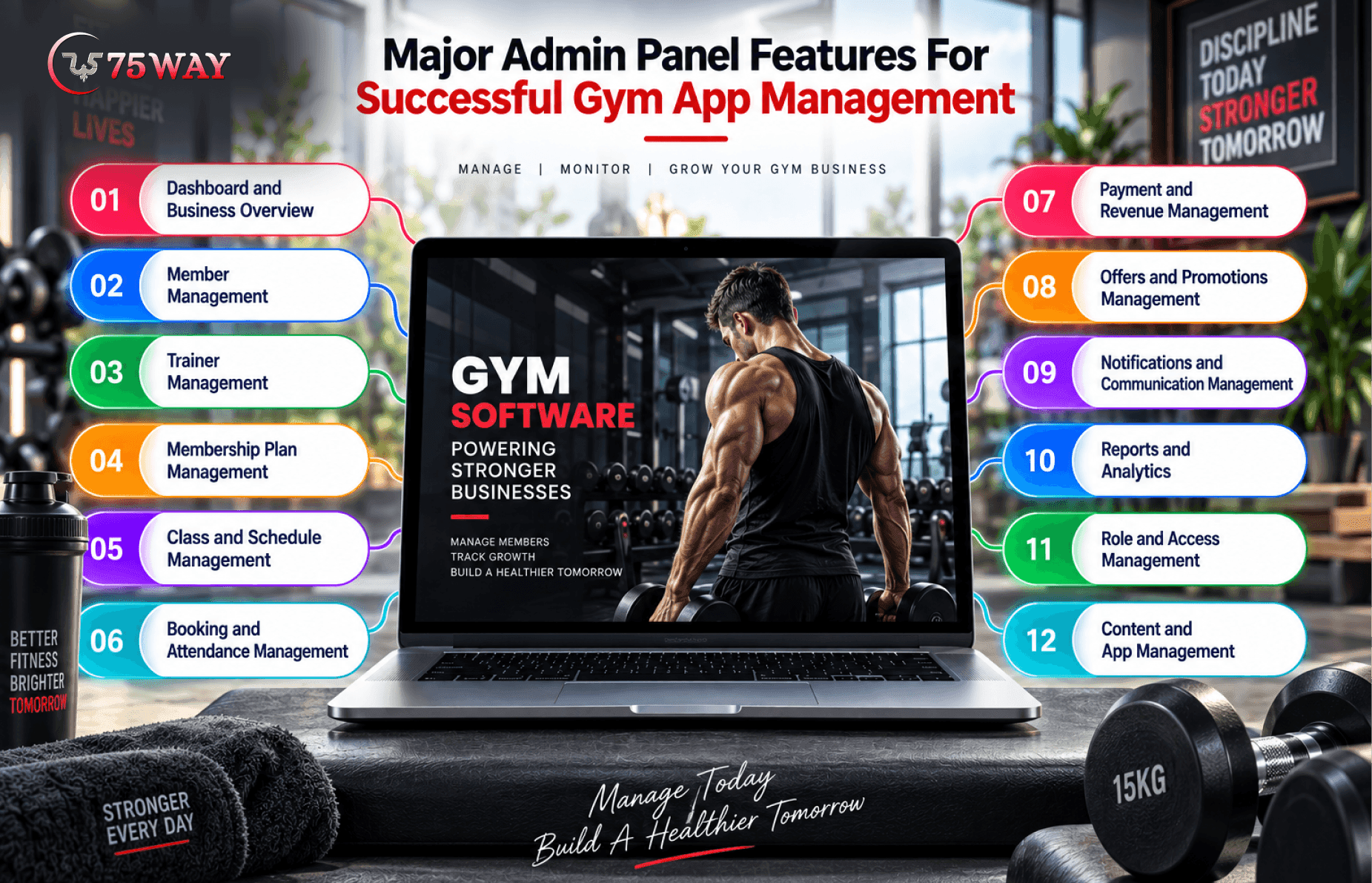
- Dashboard and Business Overview
The admin dashboard gives gym owners a centralized view of important business activities. It can display memberships, registrations, bookings, attendance, payments, trainers, and other operational metrics in one place.
This overview helps management understand what is happening across the business without checking multiple systems. Clear reporting can also support faster decisions around member engagement, revenue, and daily operations.
- Member Management
Admins can manage member profiles, memberships, fitness information, booking history, payment activity, and account status from the panel. This creates a centralized record for managing the entire member base.
The system can also help staff identify active, inactive, expired, or upcoming-renewal memberships. This makes routine member management easier while supporting timely engagement and retention activities.
- Trainer Management
The admin panel allows gym management to create trainer profiles, assign members, manage specialties, monitor availability, and oversee training schedules. Administrators can maintain important trainer information from one centralized interface.
Management can also review trainer activities, completed sessions, and relevant performance information. This provides better visibility into trainer workloads and helps distribute responsibilities according to business requirements.
- Membership Plan Management
Admins can create and manage different membership plans according to the gym's pricing and service structure. They can define plan duration, pricing, included services, renewal terms, and other applicable conditions.
The panel can also support membership upgrades, renewals, cancellations, and plan status management. This gives the business greater control over its subscription offerings and revenue-generating programs.
- Class and Schedule Management
Administrators can create fitness classes, assign trainers, define schedules, set capacities, and manage available sessions through the panel. Changes can then be reflected across the relevant user and trainer interfaces.
Centralized scheduling helps reduce conflicts and gives management better control over facility resources. It also makes it easier to adjust class availability according to member demand and operational requirements.
- Booking and Attendance Management
The admin panel provides visibility into class bookings, personal training appointments, cancellations, and member attendance. Staff can review participation records and manage booking-related activities from one location.
Attendance data can also help management identify participation patterns. For example, declining attendance may indicate members who could benefit from targeted engagement or retention efforts.
- Payment and Revenue Management
Admins can monitor membership payments, renewals, transactions, refunds, and other applicable financial activities through the panel. Centralized payment records make it easier to understand transaction activity across the business.
Revenue insights can help management evaluate membership performance and identify valuable services. Integrating payment information with membership records can also reduce manual administrative work.
- Offers and Promotions Management
Gym owners can create and manage promotional campaigns, membership discounts, referral offers, and special packages through the admin panel. These offers can be targeted toward specific member groups or business objectives.
Promotional management can support acquisition campaigns while helping gyms encourage renewals, upgrades, referrals, and purchases of additional services. Admins can control offers without requiring development changes.
- Notifications and Communication Management
Admins can create and manage announcements, push notifications, membership reminders, promotional messages, and important updates from one interface.
This gives gyms a direct communication channel with members and trainers. Management can use relevant notifications to share information, encourage participation, and keep users informed about important changes.
- Reports and Analytics
The reporting system can provide insights into memberships, revenue, attendance, bookings, trainer activity, cancellations, and other important business metrics. Admins can use these reports to understand operational and financial performance.
Instead of relying only on assumptions, management can use available data to identify trends and areas requiring attention. These insights can support planning, resource allocation, and growth decisions.
- Role and Access Management
The admin panel can allow gym owners to create different staff roles and control which parts of the system each person can access. This is useful when multiple employees manage different business functions.
For example, front-desk staff may need member and booking access, while financial staff may require payment information. Role-based permissions can help maintain organized and controlled system access.
- Content and App Management
Admins can manage relevant app content such as workout resources, exercise information, announcements, banners, FAQs, and other business-specific materials through the panel.
A centralized content management system makes updates easier without requiring technical changes for every modification. This helps the gym keep its digital experience current as services, programs, and information evolve.
Advanced Gym App Features To Deliver Personalized Experiences
Once the core experience is established, gyms can introduce advanced features based on their audience and business model. Advanced functionality can help the app respond better to individual needs while giving gym owners more opportunities to improve engagement and differentiate their services. The advanced features that can take a gym app further are covered below.
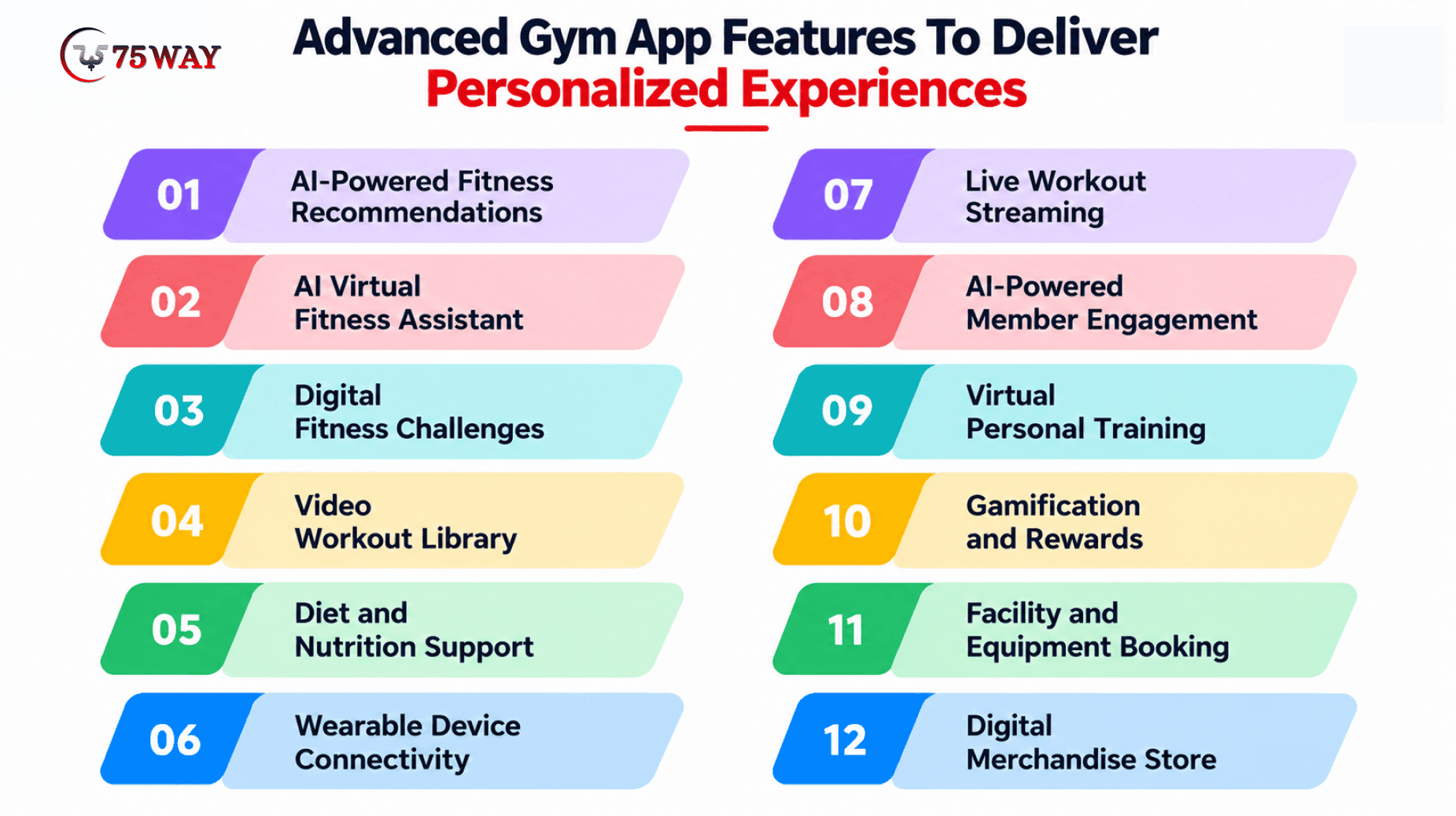
- AI-Powered Fitness Recommendations
AI gym agent can analyze relevant member information and recommend workouts, classes, or fitness activities based on defined goals and preferences.
- AI Virtual Fitness Assistant
A virtual assistant for the gym can answer common questions, provide general workout guidance within defined boundaries, explain app functions, and direct members to appropriate services.
- Digital Fitness Challenges
Challenges can encourage participation through goals, milestones, leaderboards, badges, or rewards.
- Video Workout Library
A video library can provide members with guided workouts that they can access inside or outside the gym.
- Diet and Nutrition Support
Gyms offering nutrition services can add meal planning, nutrition tracking, or consultations as part of a broader wellness platform.
- Wearable Device Connectivity
Fitness device integrations can provide additional activity information and create more personalized digital experiences.
- Live Workout Streaming
Gyms can offer live workout sessions through the app, allowing members to participate remotely when they cannot visit the facility. Trainers can conduct scheduled classes, answer questions, and maintain engagement beyond in-person sessions.
- AI-Powered Member Engagement
AI can analyze relevant engagement patterns and trigger personalized reminders, workout suggestions, or re-engagement messages. This can help gyms reconnect with inactive members and encourage them to return to their regular fitness routines.
- Virtual Personal Training
Members can attend one-on-one training sessions remotely through integrated video functionality. Trainers can guide exercises, review progress, and provide personalized instructions, allowing gyms to expand their services beyond members who regularly visit the facility.
- Gamification and Rewards
Gamification can turn everyday fitness activities into motivating experiences through points, badges, achievement levels, streaks, and rewards. Gyms can use these mechanisms to encourage participation, recognize member milestones, and create stronger engagement with the app.
- Facility and Equipment Booking
Members can reserve specific facilities, courts, studios, or equipment through the app when the gym offers these services. This helps manage capacity while giving members greater control over how they plan their visits.
- Digital Merchandise Store
A built-in store can allow gyms to sell branded clothing, accessories, supplements where legally and appropriately offered, equipment, and other products. Integrating purchases into the app creates another convenient channel for generating revenue from the existing member base.
Gym App Feature Prioritization: What Should You Build First?
Not every gym needs to launch every feature from day one. Prioritizing features based on business goals, member needs, development complexity, and expected value can help you build a useful app without unnecessary costs.
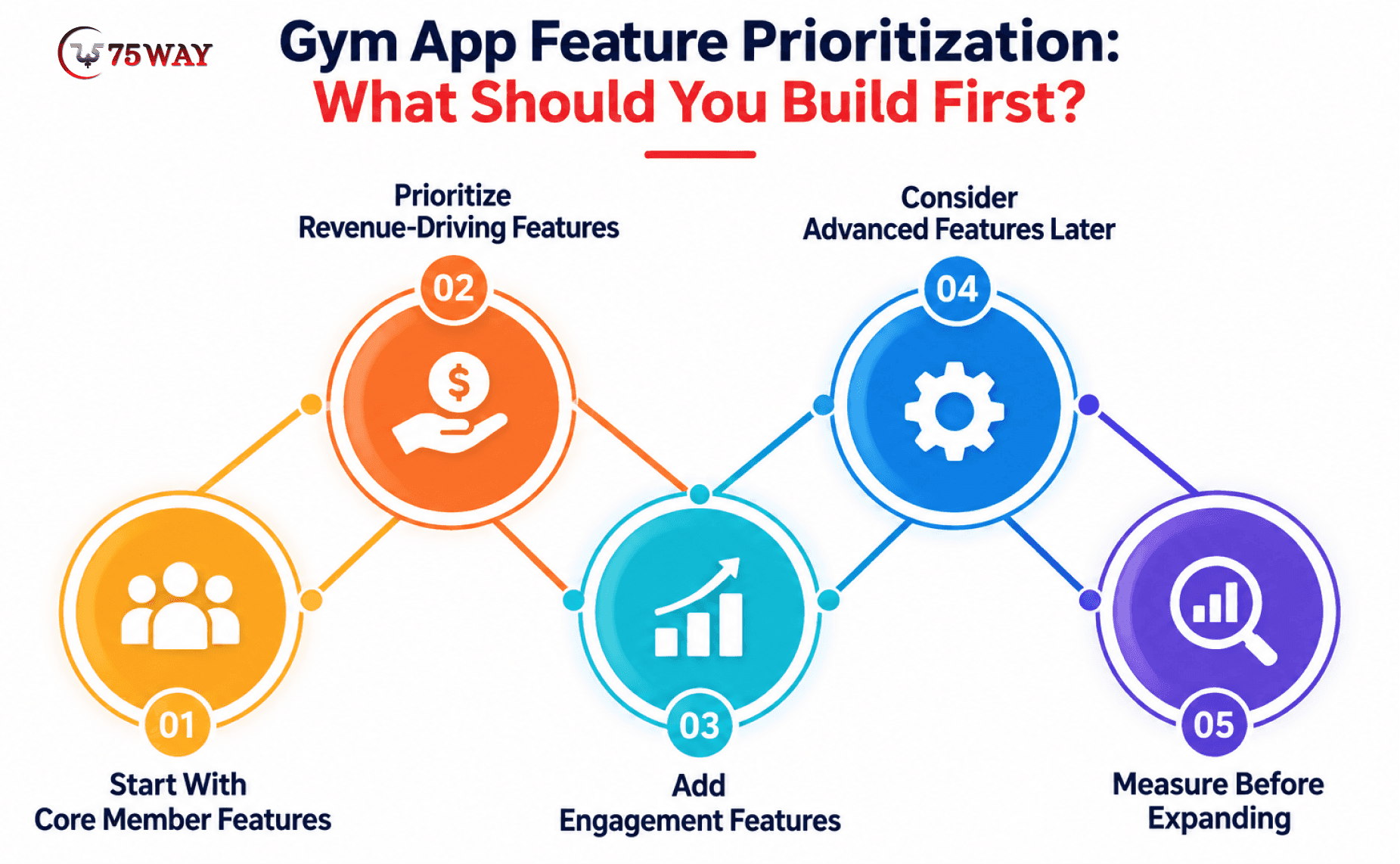
1. Start With Core Member Features
Begin with features that directly support everyday member activities, such as registration, profiles, membership management, class booking, payments, notifications, and trainer communication.
2. Prioritize Revenue-Driving Features
Next, focus on capabilities that directly support revenue, including membership renewals, subscription management, personal training bookings, premium programs, referrals, and in-app purchases.
3. Add Engagement Features
Once the core experience is established, introduce features that encourage members to use the app regularly. Progress tracking, workout plans, challenges, reminders, and trainer interactions can support ongoing engagement.
4. Consider Advanced Features Later
AI recommendations, wearable integrations, nutrition tools, advanced analytics, and other sophisticated capabilities can be added as your business grows and customer requirements become clearer.
5. Measure Before Expanding
Track metrics such as app engagement, membership renewals, bookings, purchases, retention, and feature usage. Use these insights to determine which capabilities deserve further investment.
A practical prioritization approach is core operations first, revenue opportunities second, engagement third, and advanced technology based on proven demand. This keeps development focused while leaving room for the app to evolve with your fitness business.
How Gym Apps Can Increase Member Retention
Member retention depends heavily on the ongoing value customers receive from a gym. A mobile app can help extend that value beyond physical visits.
For example, members can access workout plans, communicate with trainers, monitor progress, book classes, receive reminders, and manage their memberships from one place.
The app can also help gym teams recognize engagement changes. A member who suddenly stops booking classes or attending workouts may need a timely reminder, personalized outreach, or a different service recommendation.
This makes the app part of the retention strategy rather than simply another communication channel.
How Gym Apps Create New Revenue Opportunities
A well-designed gym app can support more than membership sales. Fitness businesses can use it to promote and sell additional services such as personal training, specialized classes, nutrition programs, digital workout plans, merchandise, workshops, and premium memberships.
For example, a gym could offer a basic membership alongside a premium plan that includes personalized workouts, trainer communication, progress tracking, and exclusive classes.
The app then becomes a platform for presenting these services and making purchases easier.
How to Choose the Right Features for Your Gym App?
Start by identifying the biggest problems affecting your members and staff. If your team spends significant time handling bookings, prioritize scheduling. If renewals are a challenge, focus on membership management and retention workflows.
Consider these questions before finalizing your feature set:
- What problems do members face most often?
- Which administrative tasks consume the most staff time?
- Which services generate the highest revenue?
- Where are members dropping out of the customer journey?
- Which features could improve retention?
- What information does management need to make better decisions?
- Which features can support future revenue streams?
This approach helps prevent unnecessary development costs and keeps the app aligned with actual business goals.
How 75way Technologies Can Help Build a Feature-Rich Gym App
75way Technologies helps businesses develop custom mobile applications designed around their operational requirements and customer journeys.
For a gym or fitness business, the development approach can include member management, subscriptions, class scheduling, trainer communication, payments, workout programs, notifications, progress tracking, analytics, and other business-specific capabilities.
The objective is to create an app that does more than provide a digital presence. It should connect member experiences with the operational and revenue goals of the fitness business.
Conclusion
A successful gym app should do more than let members check schedules or book classes. The right combination of membership management, payments, personalized fitness tools, communication, retention features, and business analytics can create a stronger member experience while supporting measurable business growth.
The best feature set depends on the gym's target audience, operating model, revenue strategy, and growth priorities. Starting with high-value features and expanding based on member needs can create a more practical and scalable digital fitness platform. To build a gym app designed for business growth, connect with a fitness app development company to create a feature-rich fitness solution tailored to your goals.
Frequently Asked Questions (FAQs)
What Are The Most Important Features of A Gym App?
Member management, memberships, class booking, payments, workout plans, notifications, trainer communication, progress tracking, and business analytics are among the most useful core features.
Can A Gym App Help Increase Member Retention?
Yes. Features such as personalized workouts, progress tracking, reminders, booking tools, trainer communication, and renewal notifications can encourage ongoing engagement and support retention strategies.
Can Gym Apps Support Recurring Memberships?
Yes. Gym apps can support subscription plans, recurring payments, renewal reminders, membership upgrades, and other workflows depending on the payment and membership systems used.
Should A Gym App Include AI Features?
AI can be valuable when it solves a specific member or business problem, such as personalized recommendations, automated support, lead engagement, or member communication.
Can A Gym App Generate Additional Revenue?
Yes. Gyms can use apps to promote personal training, premium memberships, paid classes, nutrition services, digital programs, merchandise, and other offerings.
How Long Does It Take To Develop A Gym App?
Development time depends on the number and complexity of features, platforms, integrations, design requirements, testing, and customization involved.