Summary
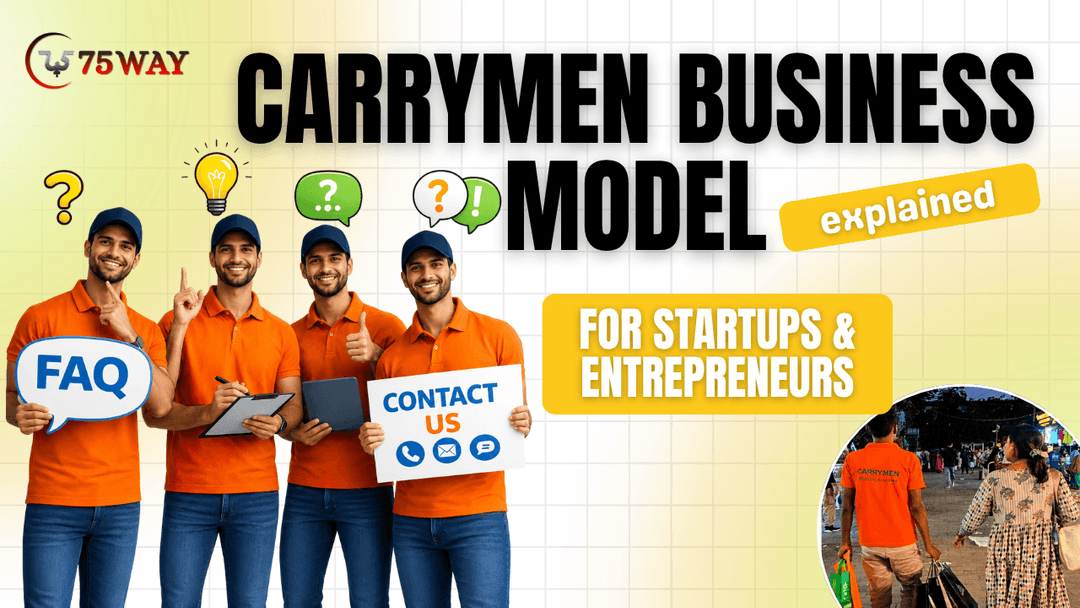
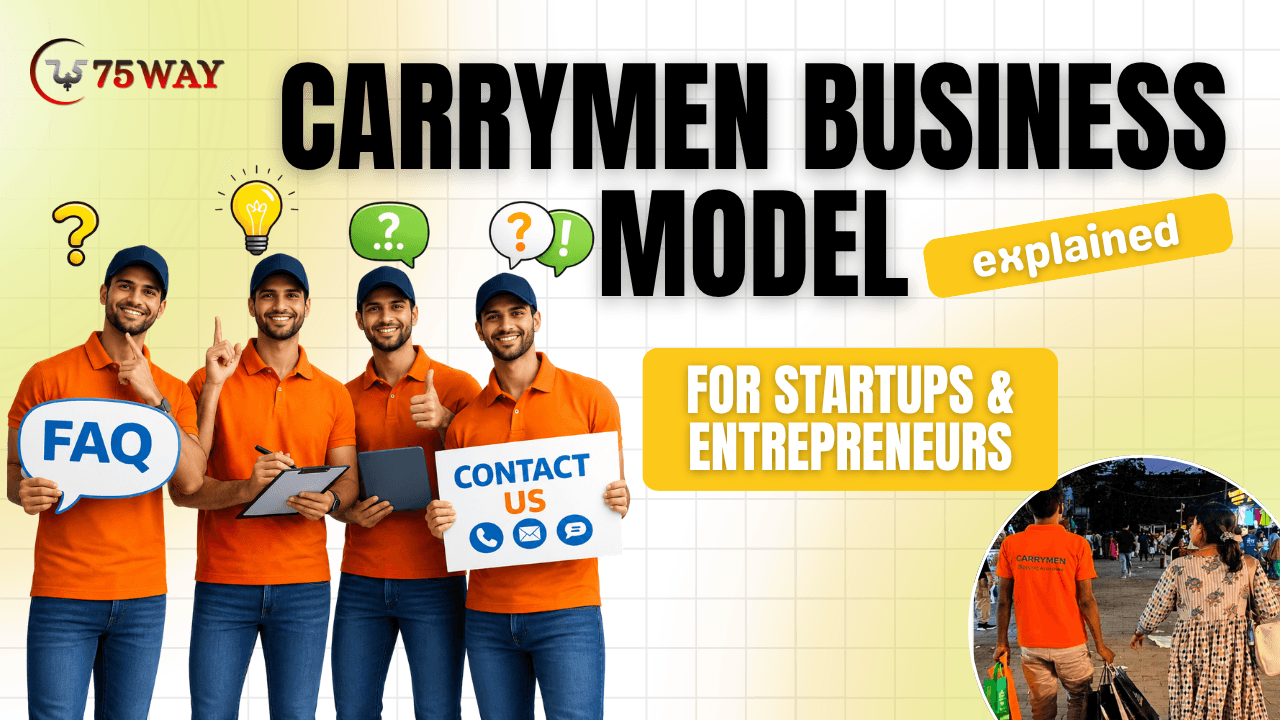
CarryMen is a hyperlocal shopping assistance platform emerging from crowded Delhi markets. The startup connects customers with trained assistants who support physical shopping experiences inside busy retail zones. Its rapid adoption highlights strong demand for convenience-based offline services, revealing new opportunities in India’s service economy, urban mobility gaps, and gig-driven workforce ecosystems.
Quick Overview
- Hyperlocal demand drives new offline service economy in urban Indian markets
- CarryMen monetizes convenience through hourly paid shopping assistance services
- Crowded retail environments create a strong demand for physical shopping support systems
- Gig workforce integration enables a scalable, low-asset operational expansion model
- Startup success depends heavily on location-based execution and trust building
- Offline service innovation is becoming the next big startup opportunity in India
India’s startup ecosystem has largely focused on digital-first innovations like food delivery, fintech, and e-commerce platforms. However, a new category of hyperlocal offline service startups is emerging rapidly, reshaping how people experience traditional markets.
One such example is CarryMen, a Delhi-based startup offering shopping assistance services inside crowded marketplaces like Lajpat Nagar. Instead of delivering groceries or products, this business model focuses on enhancing the physical shopping experience itself, just like advanced AI shopping assistant solutions.
The idea is simple but powerful: customers shop freely while trained assistants help carry bags, manage queues, navigate crowded lanes, and reduce physical stress during market visits. This service is priced on an hourly basis, making it flexible and accessible for different customer needs.
CarryMen is gaining attention not just as a convenience service but as a reflection of changing urban behavior in India, where time, comfort, and mobility are becoming valuable economic factors.
This blog provides a complete breakdown of CarryMen’s business model, revenue structure, operational system, growth drivers, and startup lessons. It also highlights why such hyperlocal service startups are becoming a new frontier for entrepreneurs and how businesses build similar scalable hyperlocal on-demand apps and platforms.
What Is CarryMen?
CarryMen is a Delhi-based startup that offers on-demand shopping assistance services in crowded local markets like Lajpat Nagar. Users can book trained helpers who carry shopping bags, assist in queues, and support customers during their shopping experience.
CarryMen was founded by Ritu Bhandari Srivastava and Kanishka Malhotra, entrepreneurs who built the platform based on real-life challenges faced while shopping in busy Delhi markets.
The service of this platform is currently active in high-density shopping areas of Delhi, especially Lajpat Nagar, where foot traffic is extremely high and navigating markets can be physically exhausting. The core problem it solves is not product delivery, but shopping experience overload. Customers often face challenges such as:
- Carrying heavy shopping bags
- Waiting in long billing queues
- Navigating crowded market lanes
- Finding parking or rest points
CarryMen positions itself as a “physical shopping support layer” between customers and retail markets.
The Purpose Behind Launching the CarryMen Platform
CarryMen was launched to solve a very real, everyday problem faced by shoppers in crowded Indian markets, especially in cities like Delhi. Traditional local market shopping often becomes physically exhausting due to heavy bags, long walking distances, congestion, and lack of assistance, particularly for women, elderly people, and families.
The core purpose of the platform is to make offline shopping more comfortable and accessible by providing on-demand shopping assistants who help carry bags, navigate crowded streets, and support customers throughout their shopping journey. This transforms a tiring experience into a more organized and manageable activity.
Another key motivation behind CarryMen was to create local employment opportunities for individuals who can assist shoppers on an hourly basis. It also helps bridge the gap between traditional retail shopping and modern convenience-driven services without replacing the local market ecosystem.
Overall, CarryMen aims to enhance the shopping experience by combining convenience, support, and affordability while improving accessibility in busy marketplace environments.
How The CarryMen Platform Works?
The service operates through hourly bookings, where trained staff are assigned to shoppers based on their needs. It is currently active in Delhi markets and focuses on convenience for elderly customers, families, and heavy shoppers.
In short, CarryMen is a “you shop, we carry” assistant model that turns traditional market shopping into a managed, stress-free experience.
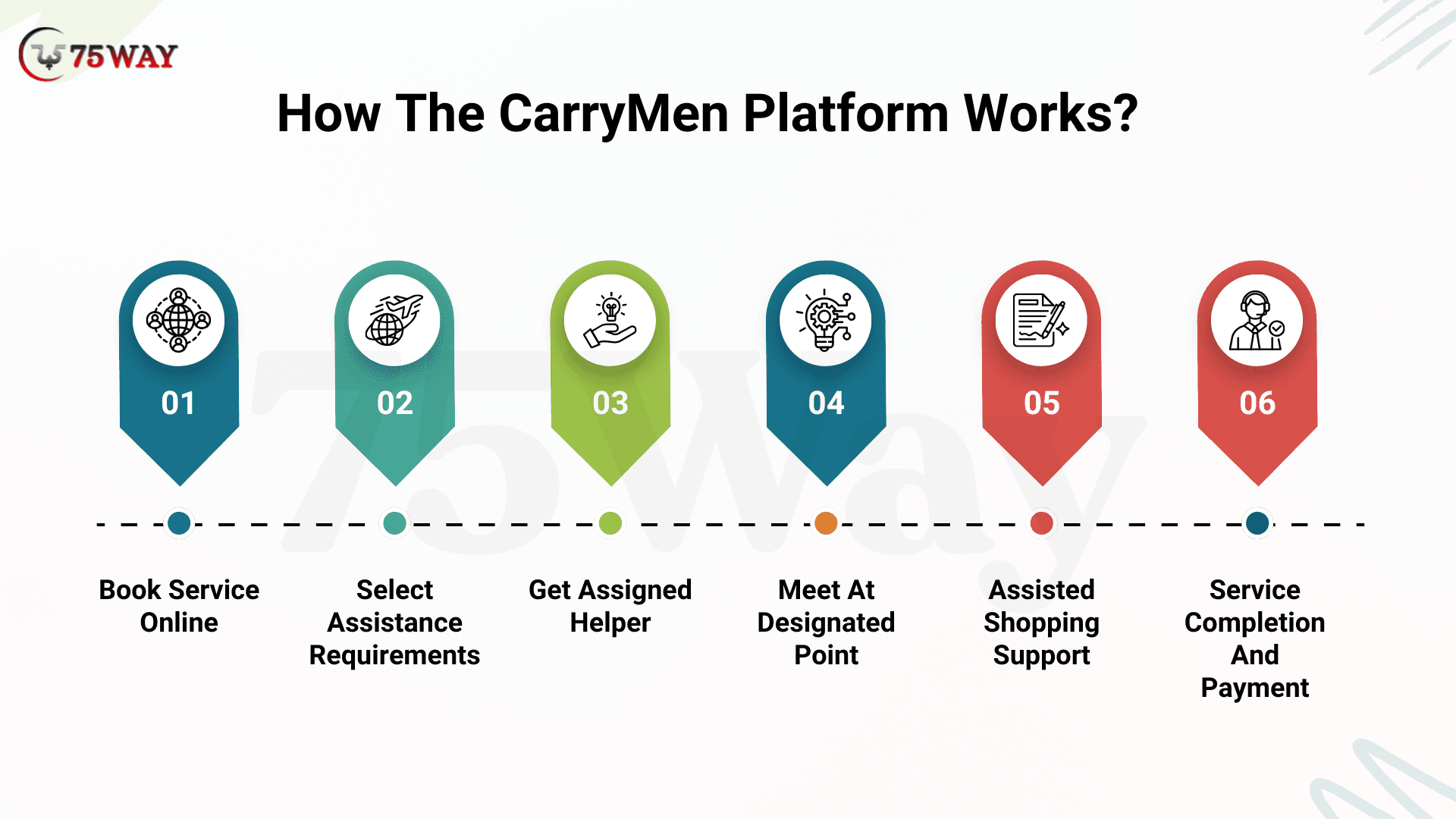
Step 1: Book Service Online
Customers start by booking a CarryMen assistant through the platform, selecting a location, time, and duration based on their shopping needs.
Step 2: Select Assistance Requirements
Users specify their requirements, such as bag carrying, market navigation, waiting in queues, or general shopping support, for better service allocation.
Step 3: Get Assigned Helper
A trained shopping assistant is assigned based on availability and location to ensure timely arrival at the selected market.
Step 4: Meet At Designated Point
The customer meets the assigned helper at a predefined market location where the service officially begins.
Step 5: Assisted Shopping Support
The helper assists throughout the shopping process by carrying bags, managing items, and helping navigate crowded market areas.
Step 6: Service Completion And Payment
After the shopping session ends, the service is completed, and payment is processed based on the booked hourly duration.
CarryMen Business Model Explained In Detail
The CarryMen business model is designed around hyperlocal convenience, connecting shoppers with on-demand assistants in busy marketplaces. It combines gig economy principles with service-based pricing to deliver flexible support while maintaining scalability and low operational overhead for efficient market operations.
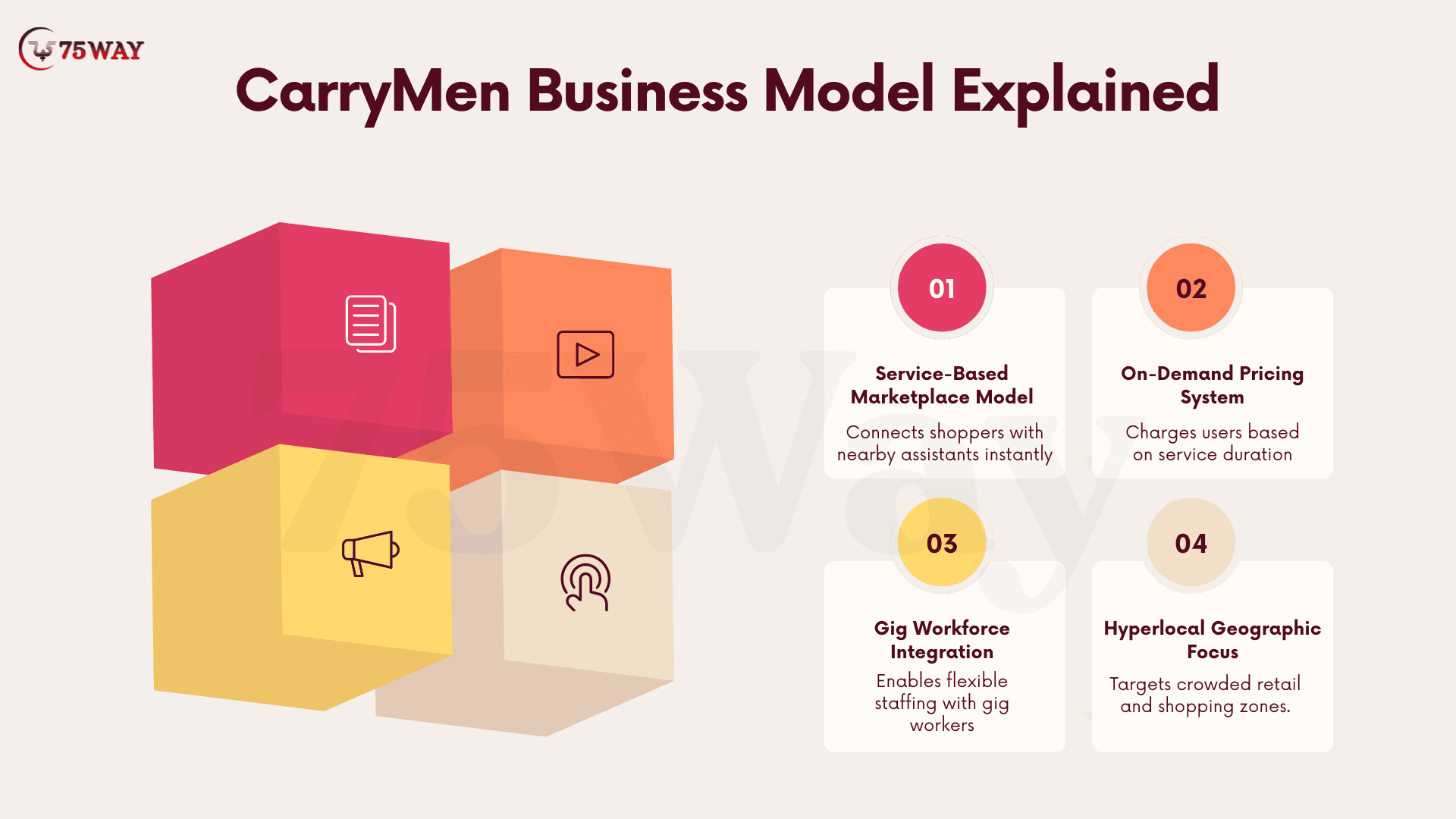
1. Service-Based Marketplace Model
CarryMen acts as an intermediary between:
- Customers (who need assistance)
- Shopping assistants (gig workers)
The platform connects both sides through booking slots, typically hourly. This model creates a structured digital marketplace where demand from shoppers is matched with available gig workers in real time. It ensures smooth coordination, reduces waiting time, and enables efficient service allocation through an organized booking system.
2. On-Demand Pricing System
Customers pay based on time usage:
- Hourly booking model
- Flexible service duration
- Pay-per-use convenience system
This keeps the entry cost low and adoption easier. The pricing structure is designed to offer maximum flexibility for users by charging only for the time they utilize the service. It helps make the platform affordable while encouraging more users to try on-demand shopping assistance.
3. Gig Workforce Integration
Assistants are independent workers who:
- Carry bags
- Assist navigation
- Wait in queues
- Provide on-ground support
This reduces fixed operational costs for the startup. The gig-based workforce model allows CarryMen to scale operations efficiently without maintaining a permanent staff structure. It provides employment flexibility to workers while ensuring service availability based on real-time customer demand in different locations.
4. Hyperlocal Geographic Focus
Operations are concentrated in:
- Specific markets
- High footfall retail zones
- Dense urban clusters
This ensures higher efficiency per assistant. The hyperlocal approach ensures that services are delivered quickly and efficiently within targeted geographic zones. By focusing on crowded retail areas, the platform reduces travel time, improves response speed, and maximizes the productivity of each assistant.
Monetization Strategies: How CarryMen Generates Revenue?
CarryMen follows a multi-stream monetization strategy designed to generate revenue from service usage, demand fluctuations, and platform-based commissions. This structure ensures scalable income generation while maintaining affordability and flexibility for customers using on-demand shopping assistance services.
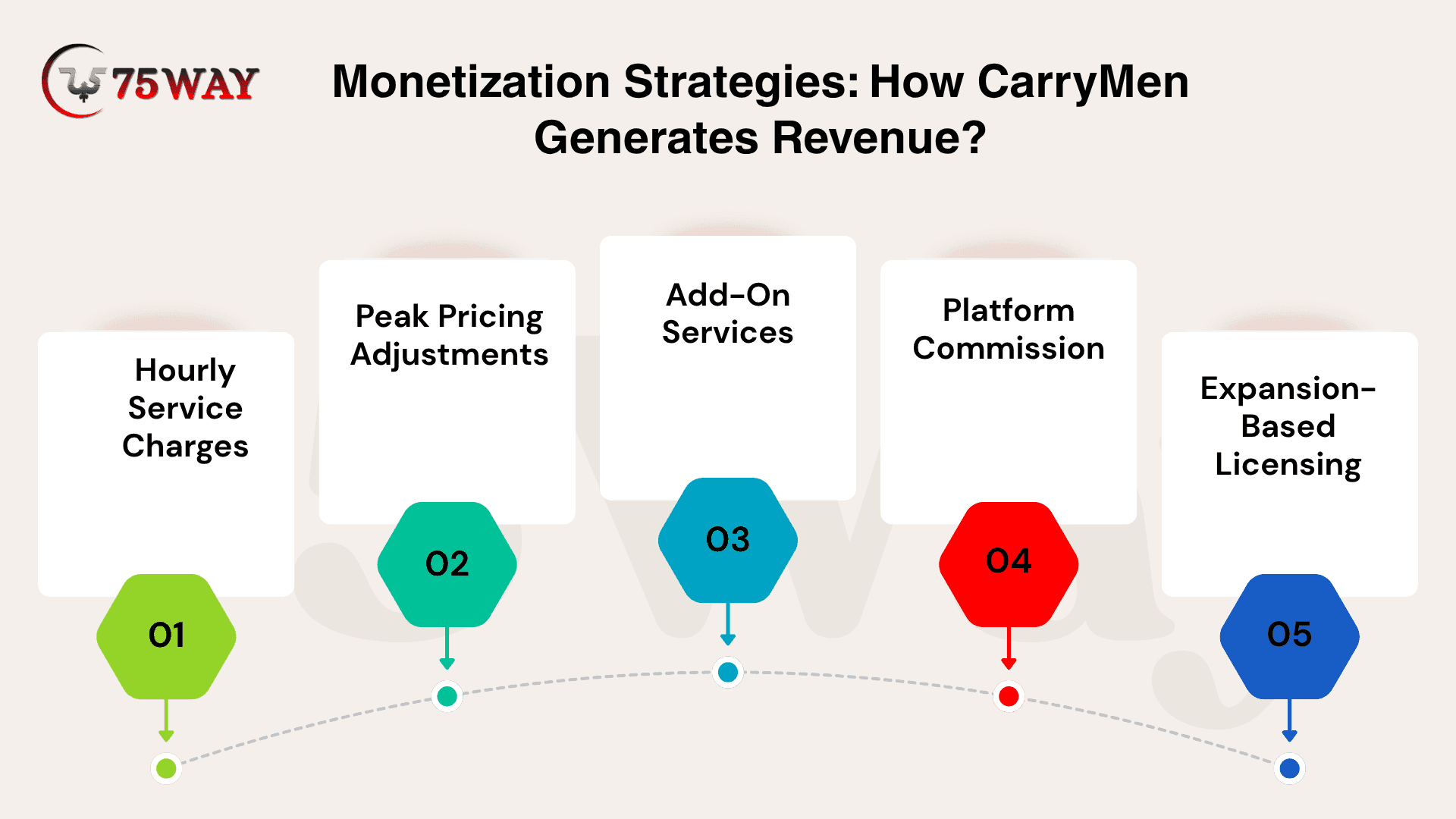
1. Hourly Service Charges
Primary income comes from hourly and duration-based bookings. CarryMen charges customers based on selected time slots, starting at approximately ₹79 for 30 minutes, ₹149 for 1 hour, and up to ₹399 for a 4-hour package. This model ensures predictable revenue while directly linking cost to service usage.
2. Peak Pricing Adjustments
During high-demand periods, pricing adjusts dynamically to reflect increased service utilization. This helps balance supply and demand while maximizing revenue during peak shopping hours and crowded market conditions. Rates may increase during:
- Weekends
- Festive seasons
- High crowd density periods
3. Add-On Services
CarryMen generates additional income by offering premium add-on services that enhance customer convenience. These optional features provide flexibility and improve the overall shopping experience while increasing platform profitability. Extra revenue through:
- Stroller Or Pram Rentals: Provides baby stroller and pram rental services for families shopping with infants, ensuring comfort, safety, and convenience throughout crowded market visits.
- Umbrella Assistance Service: Offers umbrellas during rain or extreme sunlight, helping customers continue shopping comfortably while protecting them from weather-related disruptions in outdoor markets.
- Portable Seating Support: Provides foldable chairs for resting during long shopping trips, improving customer comfort and reducing fatigue in crowded marketplace environments.
- Mobile Charging Facility: Supplies portable power banks for charging mobile devices, ensuring customers stay connected and can complete digital payments or communication during shopping.
- Extended Service Booking: Allows customers to extend assistant service duration beyond the initial booking time, ensuring continuous support throughout longer shopping sessions without interruption.
4. Platform Commission
The platform earns a fixed percentage commission from each completed booking between customers and shopping assistants. This ensures a consistent revenue stream while keeping operational costs low and allowing scalable growth without heavy infrastructure dependency.
5. Expansion-Based Licensing
Future expansion includes franchise and city-level licensing models, enabling local partners to operate CarryMen services in new regions. This strategy supports rapid geographical growth, stronger market penetration, and long-term revenue scalability across multiple cities.
Why CarryMen Business Is Growing So Fast?
India’s hyperlocal services market is expected to grow from USD 4.94 billion in 2024 to USD 14.6 billion by 2033, reflecting strong demand for on-demand, location-based convenience solutions. CarryMen is growing rapidly within this ecosystem due to strong urban demand, emotional value, affordability, and scalable gig workforce availability.
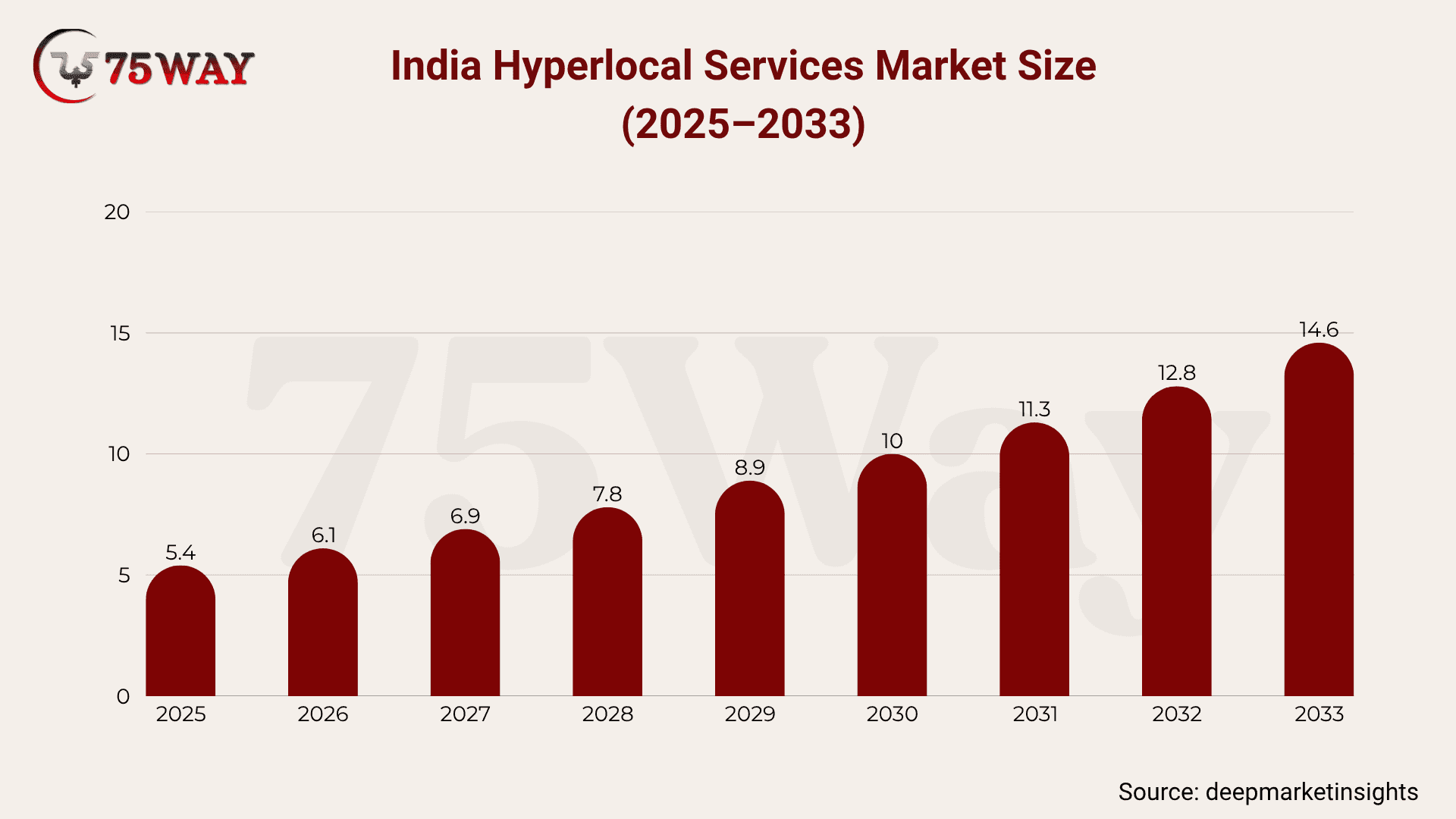
Several structural factors are driving rapid adoption.
- Strong Urban Problem Statement: Delhi markets are highly crowded, making shopping physically exhausting and time-consuming for customers across all age groups.
- Emotional Convenience Factor: Users are not only paying for assistance but also for comfort, reduced stress, and a smoother shopping experience.
- Viral Social Media Attention: The unique concept attracts strong online discussions, organic sharing, and media attention, increasing brand visibility rapidly.
- Affordable Pricing Model: The ₹149/hour pricing makes the service accessible to middle-class users, encouraging frequent usage and adoption.
- Gig Economy Availability: A large pool of available gig workers enables easy scaling of operations across multiple busy market locations.
- Hyperlocal Market Fit: CarryMen operates directly within dense local shopping areas, ensuring instant availability of assistants and faster service delivery across targeted urban zones.
How CarryMen Operational Model Drives Business Growth?
The operational model of CarryMen is structured to ensure smooth coordination between customers, gig workers, and platform systems. It focuses on efficient booking, real-time allocation, and seamless in-market service delivery to maintain reliability and customer satisfaction across busy shopping environments.
1. Customer Booking Layer
Users initiate service requests through the platform or offline booking points, selecting time slots and assistance requirements. This layer captures demand, processes booking details, and ensures customers are registered for smooth service activation.
- Booking request creation and submission process
- Customer service requirement selection system
- Confirmation and scheduling of the service slot
2. Assistant Allocation System
The platform assigns nearby gig workers based on demand zones, availability, and proximity to the customer. This ensures faster response times and efficient utilization of available assistants within targeted market areas.
- Location-based worker assignment mechanism
- Real-time availability tracking of assistants
- Demand zone optimization for allocation
3. Market Execution
Assigned assistants accompany customers during real shopping trips, providing support such as carrying bags, navigating markets, and managing queues. This layer focuses on the real-world execution of services in crowded retail environments.
- On-ground shopping assistance and support delivery
- Real-time customer interaction during shopping
- Physical execution of assigned service tasks
4. Real-Time Support System
The platform continuously monitors operations, manages communication, and resolves issues between customers and assistants. It ensures smooth coordination, quick problem resolution, and uninterrupted service delivery throughout the shopping experience.
- Live monitoring of service operations
- Instant issue resolution and coordination support
- Continuous communication between platform users and workers
Technology That Works Behind CarryMen Model
Even though CarryMen operates as an offline-assisted service, its backbone relies on digital technologies that ensure smooth booking, coordination, payments, and real-time service execution across crowded market environments.
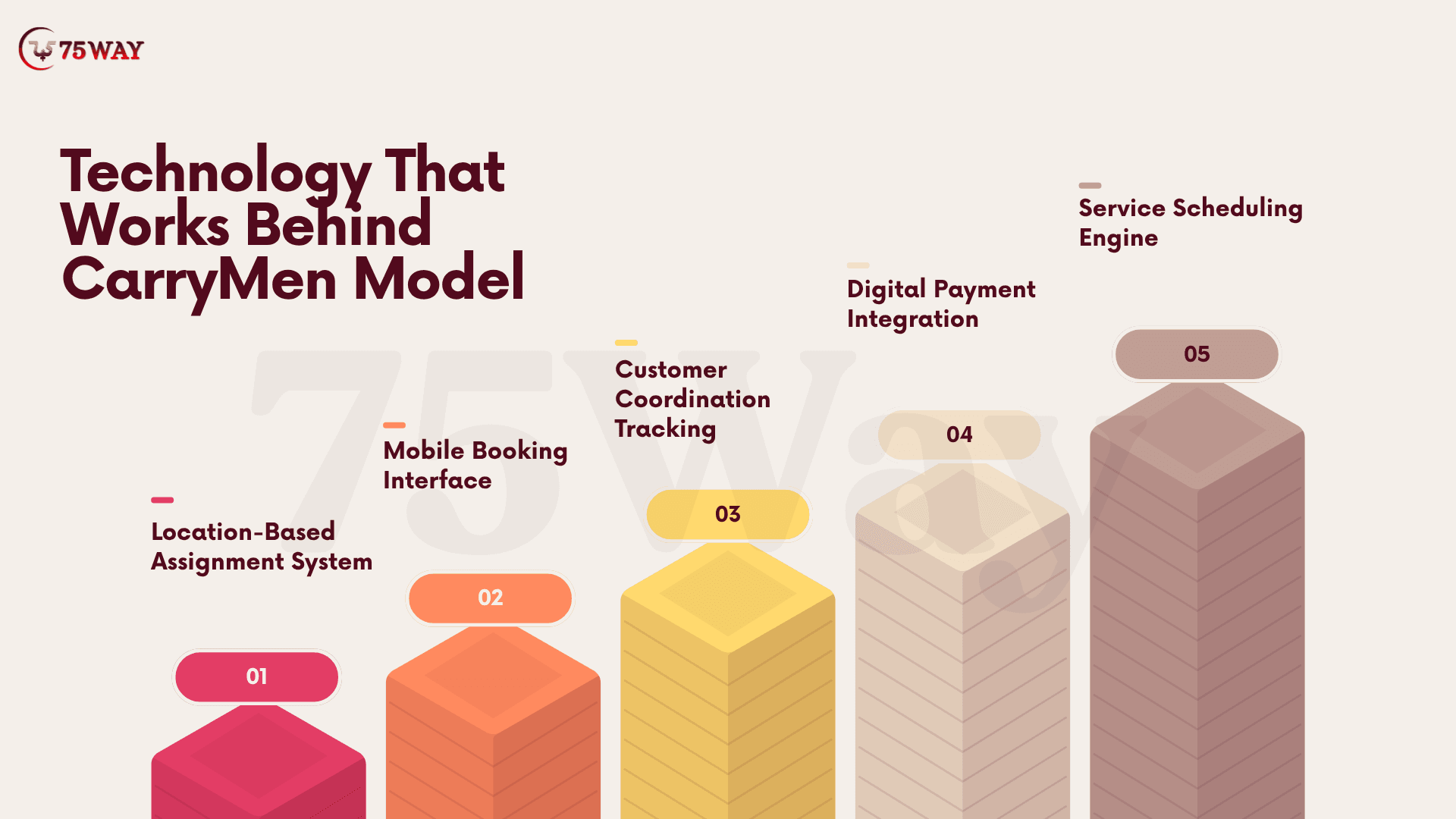
- Location-Based Assignment System: Uses GPS tracking to instantly match nearby assistants with customers, reducing waiting time and improving efficiency across crowded markets. It ensures accurate allocation, faster response, and optimized assistant utilization in real time.
- Mobile Booking Interface: Provides a user-friendly app or web platform where customers can easily book assistants, choose time slots, and manage their service requirements. It simplifies access and enhances overall user convenience.
- Customer Coordination Tracking: Continuously monitors service progress, assistant location, and customer interaction flow to ensure smooth execution. It helps maintain real-time visibility and improves communication between all involved parties.
- Digital Payment Integration: Supports secure transactions through UPI, cards, and wallets, ensuring fast, cashless, and transparent payment processing. It enhances trust and simplifies financial operations for completed services.
- Service Scheduling Engine: Automatically manages bookings, assigns time slots, and allocates assistants based on availability and demand. It ensures efficient scheduling, reduces conflicts, and maintains uninterrupted service delivery.
Lessons From CarryMen Every Founder Should Know
Entrepreneurs can learn valuable insights from CarryMen’s growth model, especially around solving real-world problems, building hyperlocal services, and creating scalable business models. These lessons highlight how practical convenience-driven innovation and hybrid offline-online systems can drive strong adoption in dense urban markets.
- Solve Real-World Physical Problems: Successful startups address everyday physical challenges like crowded markets, convenience gaps, and mobility issues rather than focusing only on digital solutions.
- Hyperlocal Models Scale Faster: Businesses operating in dense urban areas can expand quickly by targeting specific locations where demand and usage are consistently high.
- Service-Based Startups Scale Efficiently: Service platforms can grow without heavy infrastructure by relying on gig workers and flexible operational structures.
- Convenience Becomes Monetizable Product: Modern users willingly pay for comfort, time savings, and ease, making convenience a strong revenue driver.
- Offline + Online Hybrid Models Rise: Combining digital platforms with physical service delivery creates scalable, efficient, and user-friendly business ecosystems.
Wrap Up
CarryMen represents a new generation of Indian startups focusing on real-world, hyperlocal service innovation. Instead of replacing traditional shopping, it enhances it by reducing physical effort and improving convenience. Its rapid adoption in Delhi shows a clear demand for offline service innovation, especially in crowded urban environments. For entrepreneurs, this model highlights a massive opportunity space in service-based gig economy startups that bridge digital coordination with physical execution. Looking to build scalable hyperlocal platforms like CarryMen or enter the on-demand service economy? Partner with a leading on-demand app development company to design AI-enabled and location-based applications that transform real-world services into high-growth digital businesses.
Frequently Asked Questions (FAQs)
Why Are Hyperlocal Service Startups Growing In India?
Hyperlocal startups are growing due to increasing urban congestion, time scarcity, and rising demand for convenience-based services. Customers prefer assistance that reduces physical effort during daily tasks, especially in crowded cities like Delhi, Mumbai, and Bengaluru, where mobility challenges are common.
Why Do People Use Shopping Assistance Services Like CarryMen?
People use such services to avoid physical strain during shopping in crowded markets. These assistants help carry bags, manage movement, and reduce waiting time, making traditional market visits more comfortable, especially for elderly individuals and families with children.
Why Is The Gig Workforce Important For Such Models?
Gig workers allow flexible scaling without fixed employment costs. Platforms can increase or decrease the workforce based on demand, improving operational efficiency while maintaining low overhead expenses and enabling faster geographic expansion in urban markets.
Why Is CarryMen Getting Attention In Startup Ecosystem?
CarryMen is gaining attention because it solves a real offline problem using a simple yet innovative model. Its combination of gig economy structure and hyperlocal execution makes it an interesting case study for modern service-based startups.
Why Do Hyperlocal Startups Face Scalability Challenges?
These startups face challenges due to dependency on physical presence, limited geographic demand, and high operational coordination. Unlike digital platforms, scaling requires consistent workforce availability and strong on-ground management systems.
Why Is Convenience Becoming A Major Business Opportunity?
Urban consumers increasingly value time and comfort over cost savings. Businesses that reduce effort in daily activities are gaining strong traction because convenience is now considered a premium service rather than an additional benefit.
Why Do Offline Market Solutions Still Have Demand In India?
Despite digital growth, many consumers still prefer physical markets for bargaining, product variety, and a tactile shopping experience. This creates opportunities for hybrid service models that enhance offline shopping instead of replacing it.
Why Should Startups Study Models Like CarryMen?
Studying such models helps startups understand emerging service gaps in urban ecosystems. It provides insights into customer behavior, gig workforce utilization, and hyperlocal demand generation, which are critical for building sustainable service-based businesses.