
Summary
Medical billing software development allows you to automate claims processing, payment workflows, and revenue cycle management. Modern systems integrate AI, cloud infrastructure, and compliance frameworks to improve accuracy and efficiency. These software solutions reduce billing errors and support scalable healthcare operations.
Quick Overview
- Medical billing apps automate revenue cycle management and claim processing workflows
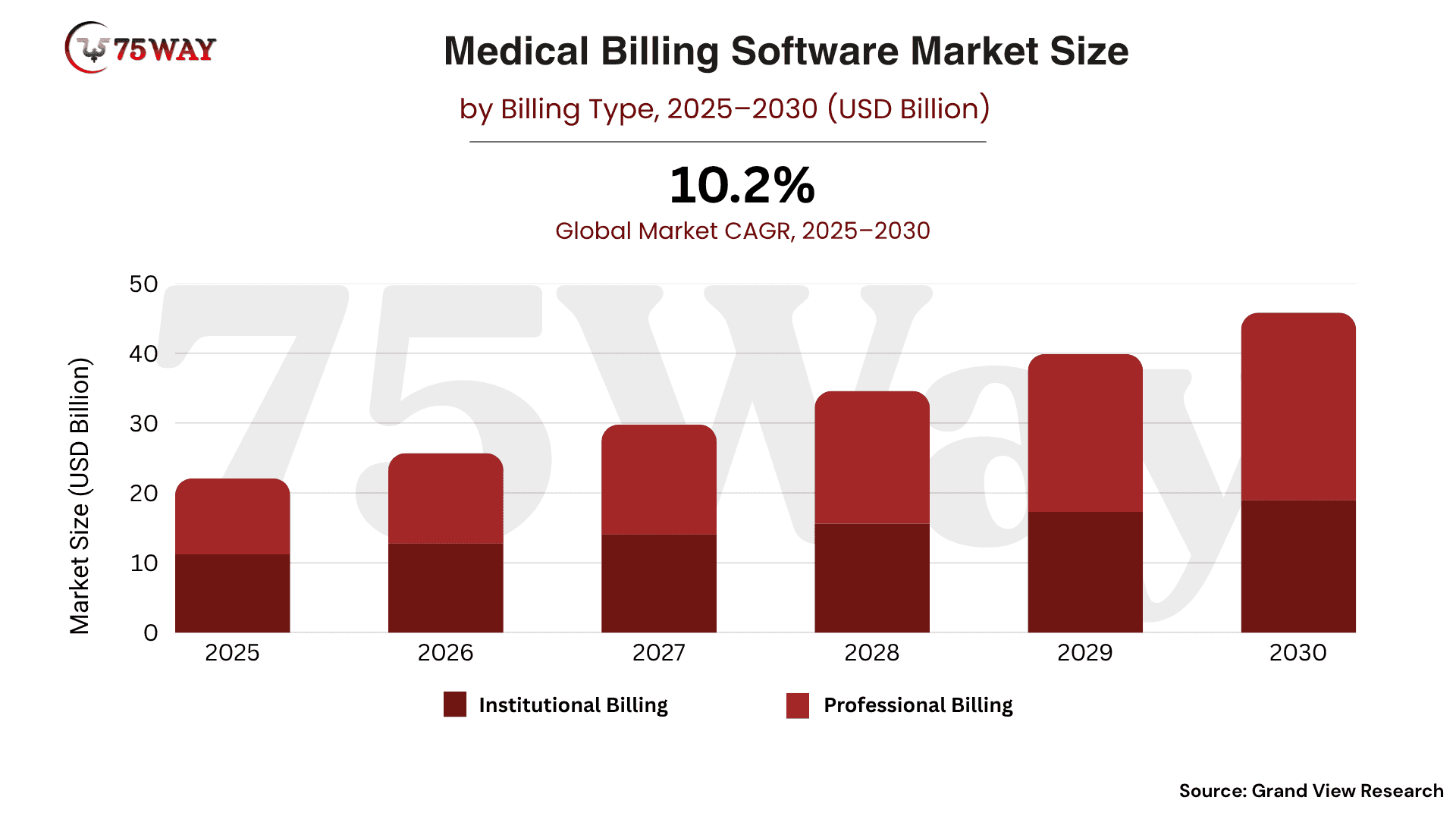
- The global medical billing software market is projected to reach $32.18 billion by 2030.
- AI improves billing accuracy, fraud detection, and financial forecasting capabilities
- Cloud-based systems enhance scalability and real-time financial data access
- Compliance frameworks ensure secure and regulated healthcare financial operations.
- An average cost to build medical billing software is $30,000 – $300,000+
Claim rejections, delayed reimbursements, and manual billing errors slow down your healthcare revenue cycle. Isn’t it? That is the reality many hospitals, clinics, and healthcare providers are dealing with in 2026. Medical billing has become far more complex than just generating invoices.
At the same time, patients now expect faster billing updates, transparent payment breakdowns, and digital payment options without long delays. So, in 2026, if your billing systems are outdated, they directly impact cash flow and overall patient experience.
That is exactly why medical billing software development has become a core part of healthcare digital transformation. The scale of this shift is already visible in the market numbers. The global medical billing software industry is projected to grow from around $16.95 billion in 2025 to nearly $37.68 billion by 2033, expanding at a strong CAGR of 10.5%.
Modern billing systems are no longer just accounting tools. With artificial intelligence solutions, automation becomes standard in 2026. Billing platforms are also getting smarter, detecting anomalies, improving accuracy, and reducing manual workload with AI billing agents and tools.
So how do you actually build a medical billing application that is scalable, compliant, and efficient in today’s healthcare ecosystem? Let us break it down step by step in this guide.
What Is Medical Billing Software?
Medical billing software is a digital system designed to manage healthcare financial transactions, insurance claims, patient billing, and revenue cycle operations. It automates the process of generating invoices, submitting claims, tracking payments, managing reimbursements, and reducing manual errors in healthcare financial workflows.
Unlike traditional accounting tools, medical billing software is specifically built for healthcare environments and integrates with clinical systems such as EHR and EMR to ensure seamless data flow between medical services and financial operations. It also supports coding standards like ICD and CPT to ensure accurate claim submission and faster insurance approvals.
Major healthcare institutions like the Cleveland Clinic and Mayo Clinic use advanced billing systems to handle large-scale patient billing, reduce claim denials, and improve revenue cycle efficiency. This ensures faster payments, better financial transparency, and smoother patient experience across healthcare operations.
Medical Billing Software Market Size, Share & Adoption Rate
Real-world digital adoption is proving the impact of medical billing software. Waterbury Hospital, for example, implemented Cerner’s Electronic Health Record (EHR) system integrated with TigerText’s communication solution and reported savings of over $2,200 per patient, showing how automation directly improves financial efficiency in healthcare operations.
- The global medical billing software market is projected to reach $32.18 billion by 2030, growing at a CAGR of 10.2%.
- North America holds the largest market share, accounting for 39.4% of total revenue.
- The U.S. medical billing software market contributes the highest revenue share within North America.
- More than 90% of healthcare providers in the U.S. use specialized medical billing systems or Electronic Health Records (EHR).
- AI technologies can automate nearly 50% to 75% of traditional medical billing tasks.
Why Healthcare Businesses Need AI-Powered Billing Software In 2026?
Healthcare organizations face increasing financial complexity due to insurance policies, compliance requirements, and multi-channel payment systems. Thus, they need AI-powered billing software in 2026 due to increasing financial complexity. These advanced systems improve accuracy, speed, and revenue cycle efficiency.
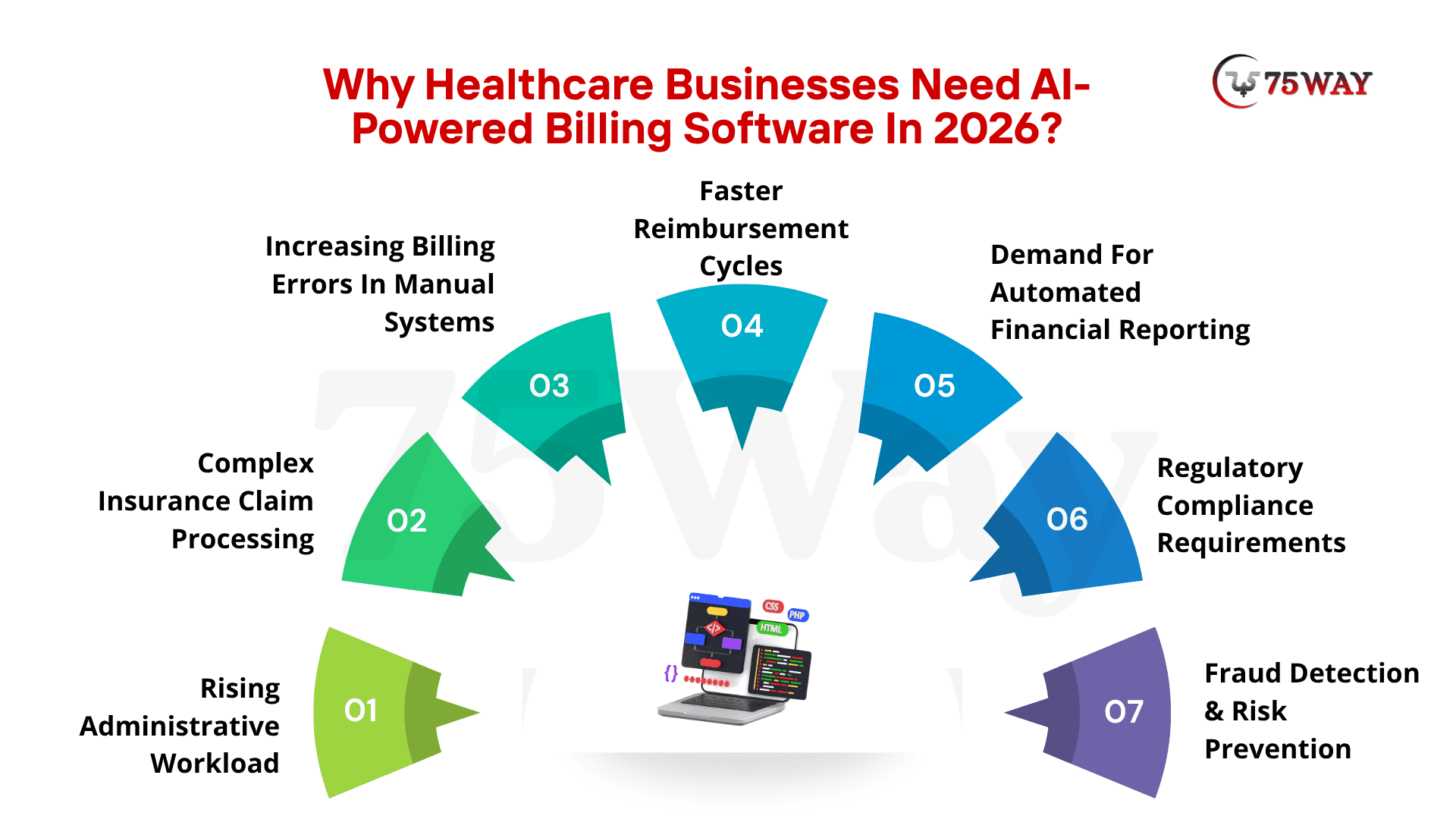
- Rising Administrative Workload: Healthcare organizations manage large volumes of patient data, billing entries, and insurance documentation daily. AI-powered billing software automates repetitive administrative tasks, improves operational speed, and allows staff to focus more on patient care delivery.
- Complex Insurance Claim Processing: Insurance claims involve multiple validation steps, coding accuracy, and policy checks that create operational challenges. AI billing systems streamline claim validation, detect missing information, and improve submission accuracy.
- Increasing Billing Errors In Manual Systems: Manual billing processes often lead to coding mistakes, duplicate entries, and calculation errors that impact revenue cycles. AI-powered billing software minimizes human error through automation.
- Faster Reimbursement Cycles: Delayed reimbursements affect healthcare cash flow and financial stability. AI-driven billing systems accelerate claim processing, improve approval timelines, and ensure quicker payment settlements by optimizing documentation accuracy.
- Demand For Automated Financial Reporting: Healthcare providers require real-time financial insights for better decision-making and performance tracking. AI billing platforms generate automated reports, revenue analytics, and payment summaries. These software solutions monitor financial health, identify gaps, and improve strategic planning efficiently across operations. Healthcare and pharmaceutical organizations can also leverage MR Reporting Software to monitor medical representative activities, generate real-time field reports, track sales performance, and improve data-driven decision-making alongside their billing and reporting systems.
- Regulatory Compliance Requirements: Healthcare billing must comply with regulations like HIPAA, ICD standards, and insurance guidelines. AI billing systems ensure compliance by validating codes, securing patient data, maintaining audit trails, and reducing regulatory risks across healthcare financial operations and transactions.
- Fraud Detection & Risk Prevention: Healthcare billing systems face risks of fraudulent claims and unauthorized transactions. AI-powered platforms detect anomalies, flag suspicious activities, and analyze billing patterns to prevent fraud.
Types of Medical Billing Software That Improve Healthcare Revenue
Medical billing software comes in different forms depending on healthcare organization size, operational complexity, and integration needs. Each system offers unique capabilities for managing billing workflows, claims processing, and financial reporting. Different types of medical billing software are:
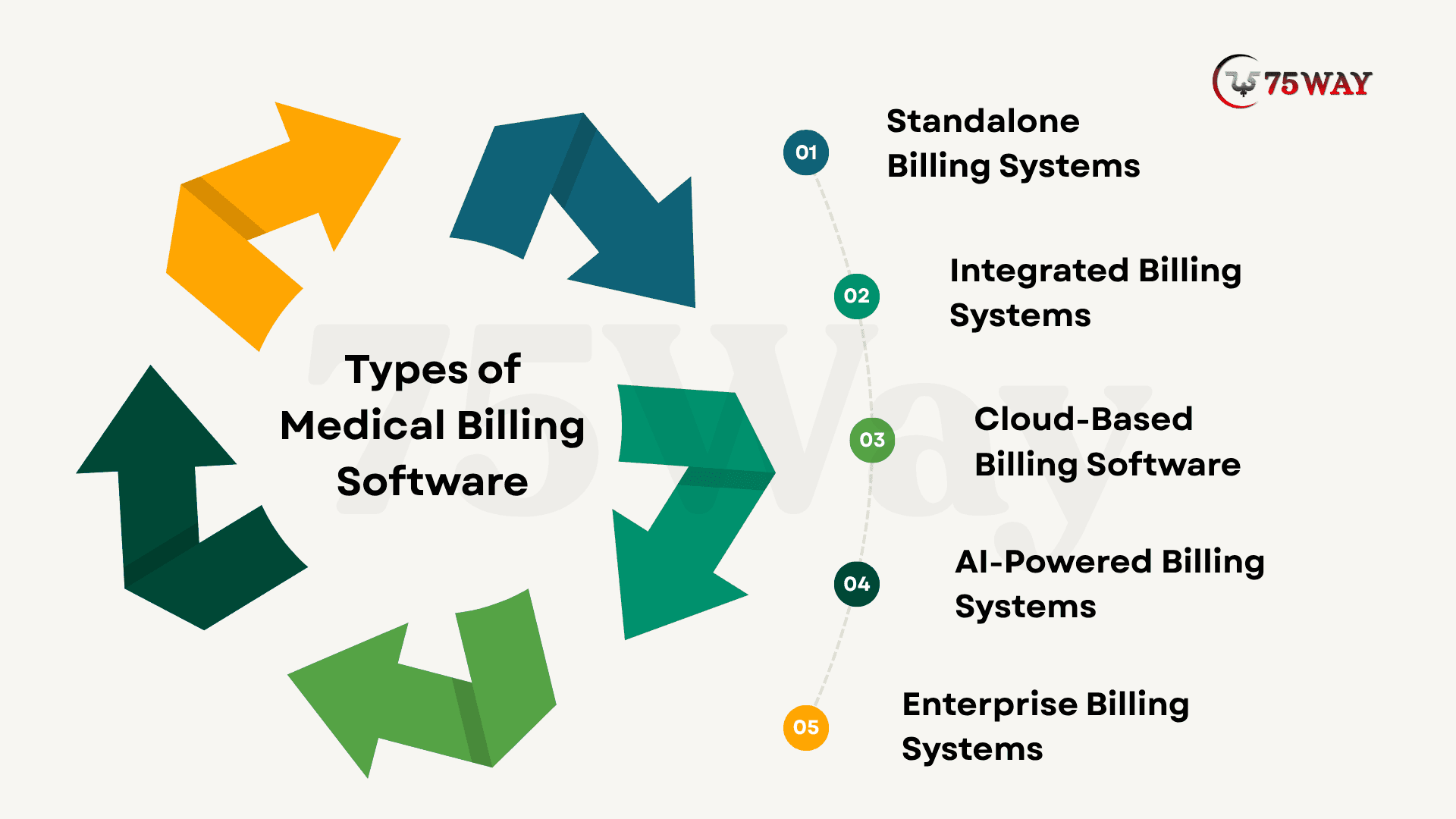
- Standalone Billing Systems
Standalone billing systems are independent platforms used solely for managing billing operations and revenue cycle activities without integration with clinical systems. These solutions handle invoicing, claims submission, payment tracking, and reimbursement processes efficiently. Different types of medical billing software are often categorized, starting with standalone solutions due to their simplicity. DPC (Direct Primary Care) practices use membership-based payment models, so medical billing software can help manage recurring payments, membership records, invoices, and patient billing efficiently.
- Integrated Billing Systems
Integrated billing systems are connected with EHR, EMR, and hospital management platforms to ensure unified healthcare workflows across clinical and financial operations. These systems synchronize patient records, treatment data, and billing information in real time for improved accuracy. Different types of medical billing software are also classified based on integration capabilities. They are widely used in hospitals requiring seamless coordination between medical services and financial management systems.
- Cloud-Based Billing Software
Cloud-based billing software operates on remote servers, allowing healthcare providers to access billing data from anywhere with internet connectivity. These systems support real-time updates, automatic backups, and scalable infrastructure for growing healthcare organizations. Different types of medical billing software include cloud-based solutions due to their flexibility and accessibility. They are popular among multi-location healthcare providers seeking cost-effective and scalable billing management systems.
- AI-Powered Billing Systems
AI-powered billing systems use machine learning and automation to improve claim accuracy, detect fraud, and optimize revenue cycle performance. These systems analyze billing patterns, predict claim outcomes, and reduce manual errors significantly. Different types of medical billing software increasingly include AI-driven platforms for intelligent automation. They are ideal for healthcare organizations aiming to improve efficiency, reduce claim denials, and enhance financial decision-making processes.
- Enterprise Billing Systems
Enterprise billing systems are large-scale solutions designed for hospitals, healthcare networks, and multi-specialty organizations handling high patient volumes. These platforms manage complex billing workflows, multi-department coordination, insurance claims, and financial reporting across multiple facilities. Different types of medical billing software also include enterprise-grade systems for large healthcare operations. They provide advanced scalability, compliance support, and centralized financial management for complex healthcare ecosystems.
How Is Medical Billing Software Development in 2026?
Medical billing software development follows a structured engineering lifecycle to ensure accuracy, compliance, and financial efficiency across healthcare systems. Each stage plays a specific role in building secure, scalable, and high-performing billing solutions that reduce errors and optimize revenue cycle management for healthcare organizations.
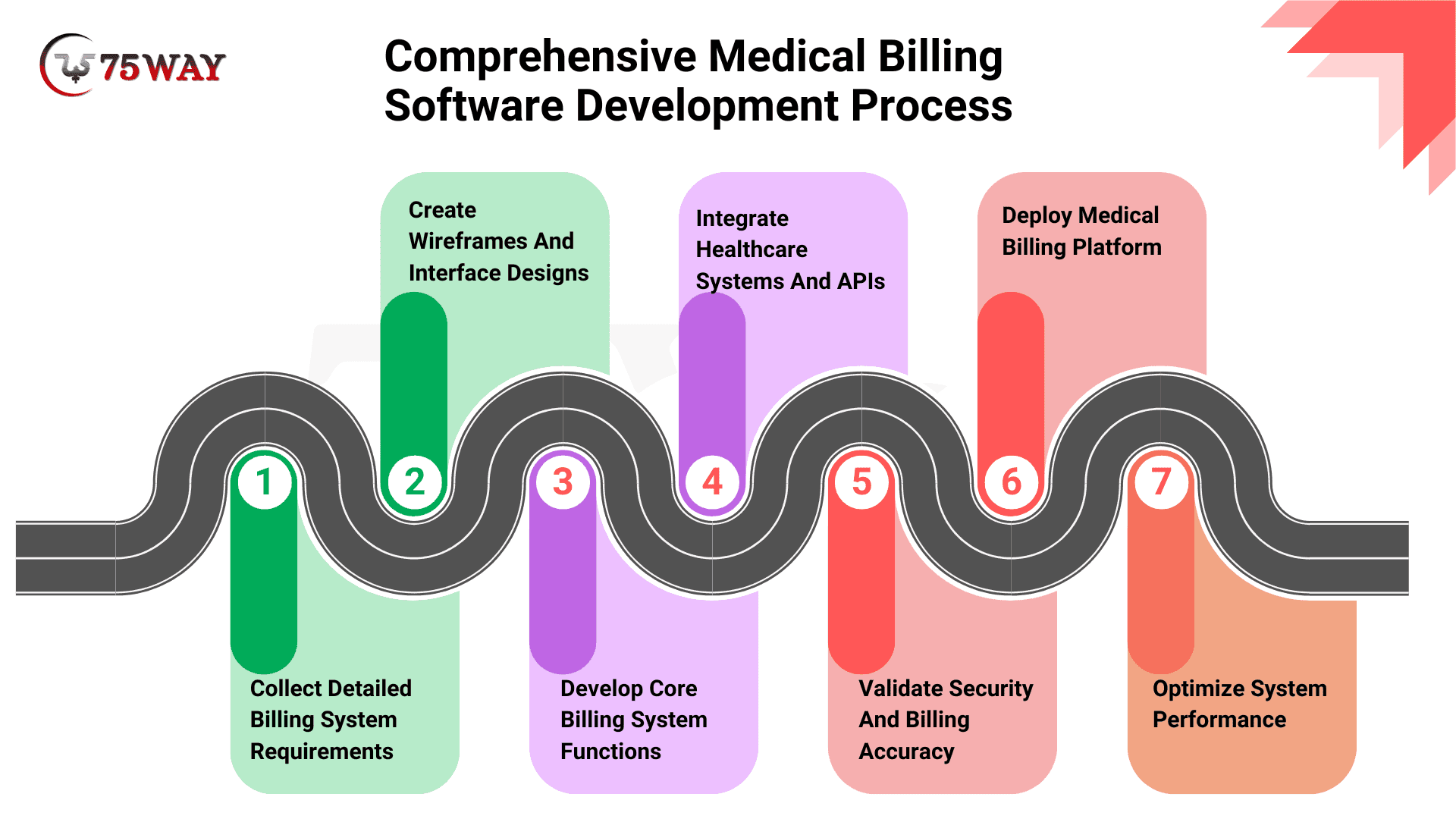
1. Collect Detailed Billing System Requirements
Requirement analysis focuses on understanding healthcare billing workflows, insurance processes, compliance regulations, and financial objectives. Teams analyze hospital operations, revenue cycle gaps, and user expectations. This stage defines functional and technical requirements clearly, ensuring the system aligns with real-world medical billing needs and reduces development risks early.
- Identify billing workflow and process structures clearly
- Gather insurance rules and compliance requirements
- Analyze hospital revenue cycle and user expectations
2. Create Wireframes And Interface Designs
Wireframing and design involve building user-friendly layouts, dashboards, and interface structures for billing staff and healthcare administrators. Designers focus on usability, simplicity, and workflow efficiency. This stage ensures intuitive navigation, improved user experience, and reduced operational complexity while handling medical billing tasks.
- User Flow Design: Designers map the complete user journey for smooth navigation across billing dashboards and medical financial workflows efficiently.
- Dashboard Layout Planning: Structured dashboards are created to display billing data, claims status, and financial insights clearly for users.
- Interface Simplicity Focus: Interfaces are designed with minimal complexity for easy understanding by healthcare staff and administrative billing teams.
- Responsive Design Approach: Designs are optimized for mobile, tablet, and desktop for a consistent user experience across all devices.
3. Develop Core Billing System Functions
Development involves building backend logic, APIs, payment processing modules, and automated billing workflows. It ensures secure data handling, accurate calculations, and efficient revenue cycle automation. This stage forms the core system functionality that powers medical billing operations across healthcare organizations.
- Billing Logic: Handles calculation of charges, insurance rules, and invoice generation for accurate financial processing across healthcare systems.
- API Development: Enables secure communication between the billing system, EHR platforms, insurance providers, and external healthcare applications seamlessly.
- Payment Processing Module: Manage digital transactions, payment verification, and reimbursement handling for smooth financial operations in healthcare billing.
- Claim Processing System: Support insurance claim creation, validation, submission, and tracking for faster approval and reduced rejection rates.
- Workflow Automation Engine: Control billing sequences, approvals, and task routing to reduce manual intervention and improve efficiency.
- Data Security Handling: Protect sensitive financial and patient data using encryption, authentication, and controlled access mechanisms across systems.
4. Integrate Healthcare Systems And APIs
Integration connects EHR systems, EMR platforms, insurance providers, and payment gateways with billing software. It enables real-time data exchange, automated workflows, and synchronized healthcare operations. This stage reduces manual entry errors and improves billing accuracy across multiple healthcare systems.
- Enable secure EHR data synchronization across systems
- Connect insurance APIs for claim validation processes
- Support payment gateway integration for the transaction flow
- Ensure real-time data exchange between healthcare platforms
5. Validate Security And Billing Accuracy
Testing ensures system security, billing accuracy, performance stability, and compliance with healthcare regulations. QA teams identify bugs, validate workflows, and verify data integrity. This stage guarantees reliable, error-free performance before the software is deployed in live healthcare environments.
Security and accuracy validation also includes penetration testing, encryption checks, and verification of access controls across all system modules. It ensures that sensitive patient and financial data remains protected while maintaining correct billing calculations and seamless workflow execution under real-world usage conditions.
6. Deploy Medical Billing Platform
Launch and deployment involve installing the system in live environments, configuring servers, migrating data, and onboarding users. It ensures a smooth transition from development to production while maintaining system stability and accessibility for healthcare staff and administrators.
- Configure production servers and hosting environment setup
- Migrate existing healthcare billing and patient data securely
- Train staff and onboard users for system usage
7. Optimize System Performance
Optimization focuses on improving system speed, scalability, security, and user experience after deployment. It includes monitoring performance, fixing issues, updating features, and refining workflows. This stage ensures long-term efficiency and adaptability of medical billing software in evolving healthcare environments.
- Speed Optimization: Use caching, optimize database queries, reduce server load, and implement performance monitoring tools for faster response times.
- Scalability Enhancement: Adopt cloud scaling, load balancing, microservices architecture, and resource optimization to handle growing users and data.
- Security Improvements: Conduct audits, apply encryption, update patches, enforce access controls, and monitor vulnerabilities continuously across all modules.
- Workflow Refinement: Analyze user behavior, remove bottlenecks, simplify steps, automate repetitive tasks, and improve interface usability regularly.
Core Features Required In Building Medical Billing Software
Medical billing software includes essential features that streamline financial workflows, improve accuracy, and enhance healthcare revenue cycle efficiency across organizations. These features help hospitals manage billing operations, claims processing, payments, and compliance with improved transparency and control.
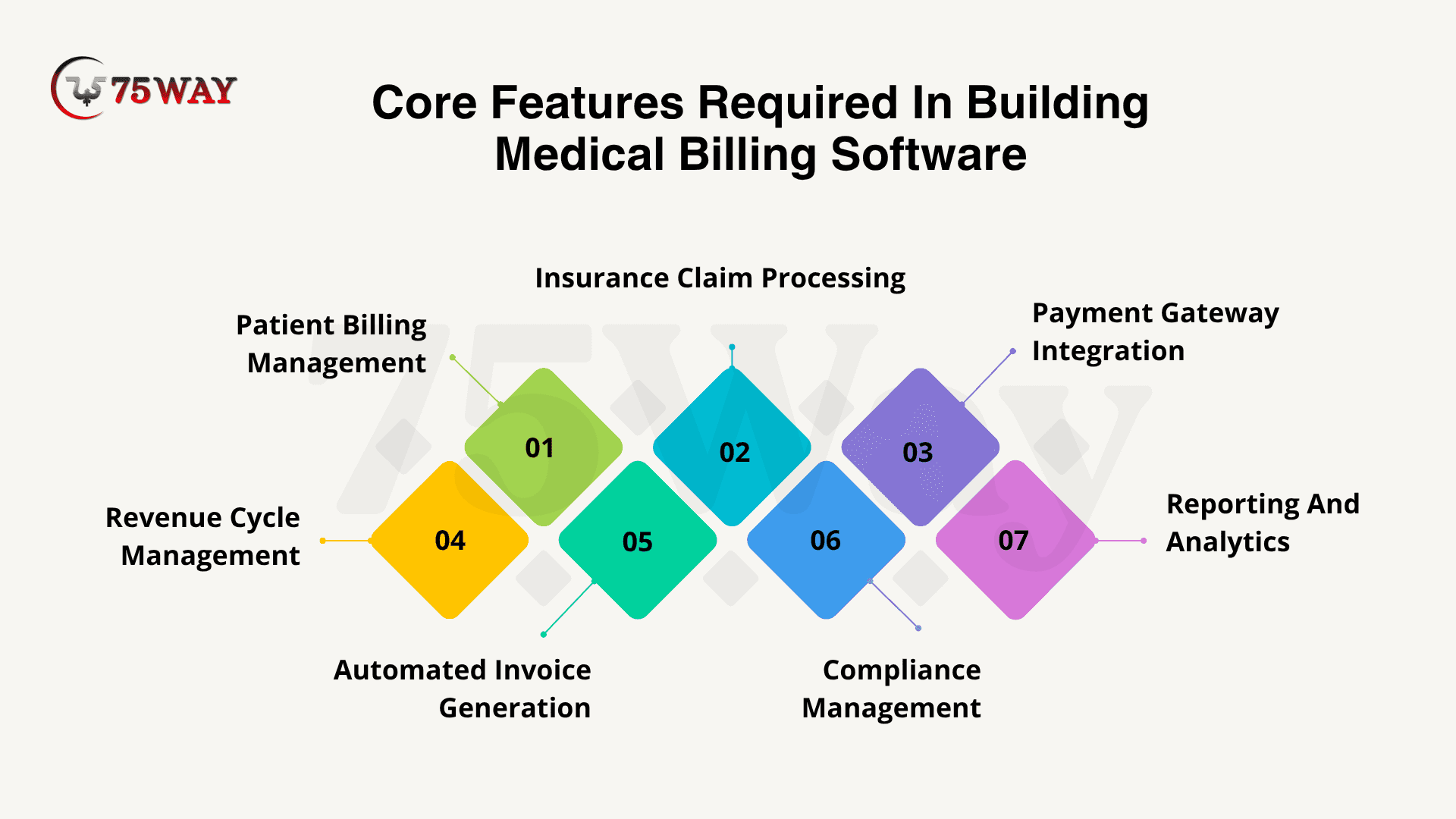
- Patient Billing Management: Patient billing management handles invoices, payment records, and billing history within a centralized system for healthcare organizations. It reduces manual errors and improves financial transparency across patient transactions.
- Insurance Claim Processing: Insurance claim processing automates claim creation, validation, and submission to insurance providers for faster approvals. It reduces delays, improves accuracy, and accelerates reimbursement cycles across healthcare systems.
- Payment Gateway Integration: Payment gateway integration enables secure digital payments through credit cards, debit cards, and online methods for patients. It ensures fast transactions, improved convenience, and secure financial processing.
- Revenue Cycle Management: Revenue cycle management tracks the entire financial journey from patient registration to final payment collection in healthcare organizations. It improves cash flow visibility and reduces revenue leakage significantly.
- Automated Invoice Generation: Automated invoice generation creates accurate bills based on treatments, procedures, and healthcare services provided to patients. It eliminates manual errors and ensures faster billing operations.
- Compliance Management: Compliance management ensures healthcare billing systems follow HIPAA regulations, billing standards, and data protection rules strictly. It protects sensitive patient data and reduces legal risks.
- Reporting & Analytics: Reporting and analytics provide financial insights, revenue tracking, and performance reports for healthcare organizations. It helps identify trends and supports better financial decision-making processes.
How Medical Billing Software Development Solutions Improve Operational Efficiency?
Medical billing software development provides healthcare organizations with improved financial accuracy, faster operations, and better revenue cycle control. It reduces manual workload, enhances compliance, and improves patient satisfaction. These benefits help hospitals, clinics, and healthcare providers manage billing processes.
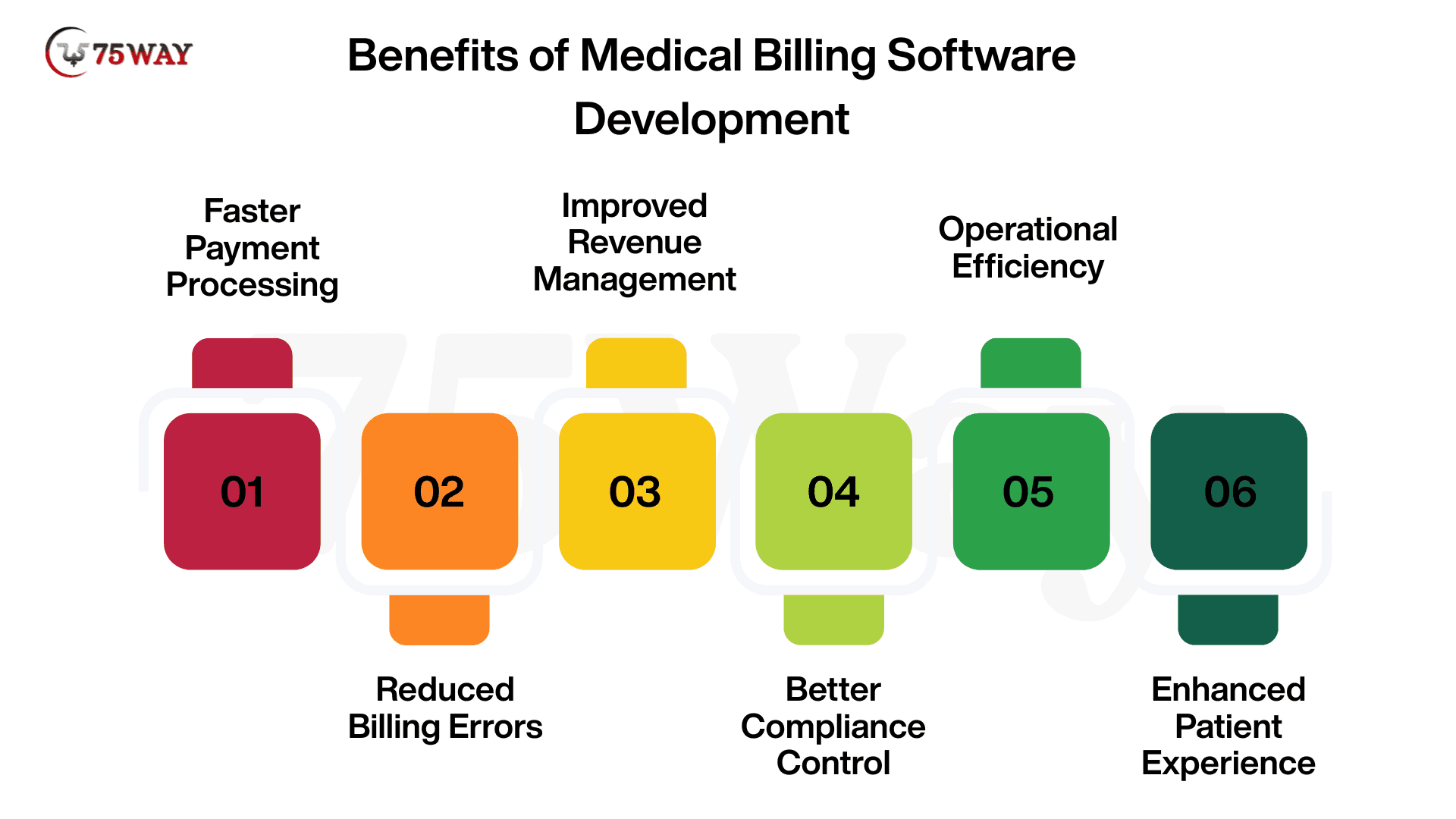
- Faster Payment Processing: Medical billing software automates claim submission, validation, and tracking, which significantly reduces reimbursement delays. It ensures faster payment cycles and improves cash flow for healthcare organizations. This helps providers maintain financial stability and smoother revenue operations across billing systems.
- Reduced Billing Errors: Automation minimizes manual data entry mistakes in invoices, coding, and insurance claims. It improves billing accuracy and reduces claim rejections caused by human errors. This leads to more reliable financial reporting and better overall revenue cycle performance in healthcare systems.
- Improved Revenue Management: Medical billing systems provide real-time financial visibility and streamline revenue cycle operations. They help healthcare organizations track payments, pending claims, and overall financial performance effectively. This improves decision-making and strengthens long-term financial planning and stability.
- Better Compliance Control: Billing software ensures adherence to healthcare regulations such as HIPAA and insurance guidelines. It maintains secure data handling, audit trails, and standardized billing processes. This reduces legal risks and ensures safe financial operations across healthcare organizations.
- Operational Efficiency: Medical billing automation reduces administrative workload and eliminates repetitive manual tasks. It improves staff productivity and allows healthcare teams to focus more on patient care. This leads to smoother workflow management and improved organizational efficiency.
- Enhanced Patient Experience: Transparent billing systems and easy payment options improve patient satisfaction. Patients can access invoices, make payments online, and track billing status easily. This creates a smoother financial experience and builds stronger trust between patients and healthcare providers.
Technologies Used To Develop Medical Billing Software
Medical billing software development relies on a combination of modern technologies for scalability and high-performance financial operations. Choosing the right technology stack is essential for building reliable and efficient billing solutions.
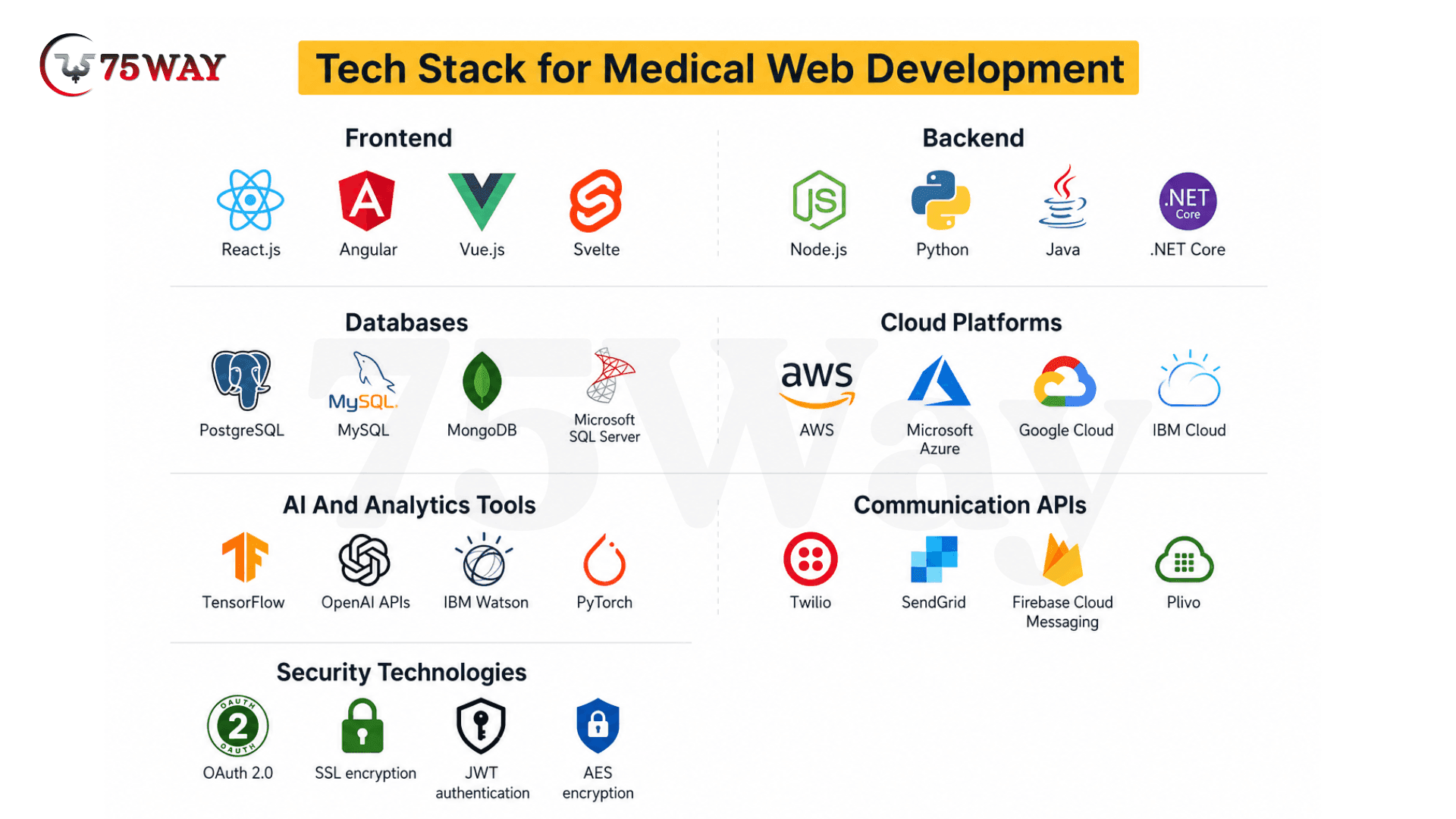
- Frontend: Modern frontend frameworks like React.js, Angular, Vue.js, and Svelte are used to build responsive billing dashboards and interactive user interfaces. These technologies improve usability by enabling fast navigation and financial management.
- Backend: Server-side technologies such as Node.js, Python, Java, and .NET Core manage billing logic, APIs, authentication, and secure financial transactions. They ensure system stability, high performance, and reliable processing of healthcare billing operations.
- Databases: Data management systems, like PostgreSQL, MySQL, MongoDB, and Microsoft SQL Server, store billing records, invoices, claims, and payment history securely. They enable fast retrieval, structured storage, and efficient handling of complex healthcare financial data.
- Cloud Platforms: Leading cloud infrastructure providers like AWS, Microsoft Azure, Google Cloud, and IBM Cloud support scalable hosting and secure data storage. They ensure high availability, remote access, and uninterrupted billing operations for healthcare organizations.
- AI & Analytics Tools: Advanced AI frameworks such as TensorFlow, OpenAI APIs, IBM Watson, and PyTorch power automation, predictive analytics, and fraud detection in billing systems. They enhance decision-making accuracy and optimize healthcare financial performance.
- Communication APIs: Communication systems like Twilio, SendGrid, Firebase Cloud Messaging, and Plivo enable automated billing alerts, payment reminders, and real-time notifications. They improve coordination between healthcare providers, billing departments, and patients.
- Security Technologies: Security protocols, such as OAuth 2.0, SSL encryption, JWT authentication, and AES encryption, protect sensitive healthcare and financial data. They ensure compliance with healthcare regulations and prevent unauthorized system access.
Developing Secure Medical Billing Software: Key Considerations For Healthcare Payers
Healthcare payers require highly secure medical billing software to manage sensitive financial data, insurance claims, and patient information while maintaining regulatory compliance and operational accuracy. Security becomes a critical priority as billing systems handle large volumes of confidential transactions across multiple healthcare stakeholders.
One of the most important considerations is data protection through strong encryption, secure authentication, and role-based access control to prevent unauthorized access. Healthcare payers must also ensure compliance with regulations such as HIPAA, GDPR, and other regional healthcare data standards to avoid legal and financial risks.
Another key factor is secure integration with external systems like EHR platforms, insurance networks, and payment gateways. These integrations must use standardized APIs and secure communication protocols to ensure safe data exchange without vulnerabilities.
Scalability and system reliability are also essential, as payers handle high transaction volumes and complex claim processing workflows. Cloud-based infrastructure, real-time monitoring, and automated backup systems help maintain uninterrupted operations and data integrity.
Finally, continuous security testing, audit trails, and fraud detection mechanisms ensure long-term system safety. These measures help healthcare payers build trust, reduce financial risks, and maintain efficient billing operations in a highly regulated environment.
Challenges In Creating Medical Billing Software & How To Solve Them?
Medical billing software development involves several technical, regulatory, and operational challenges that impact system performance and implementation. These challenges arise due to complex healthcare workflows, strict compliance requirements, and integration needs across multiple platforms. Different kinds of challenges are described below to understand key development obstacles.
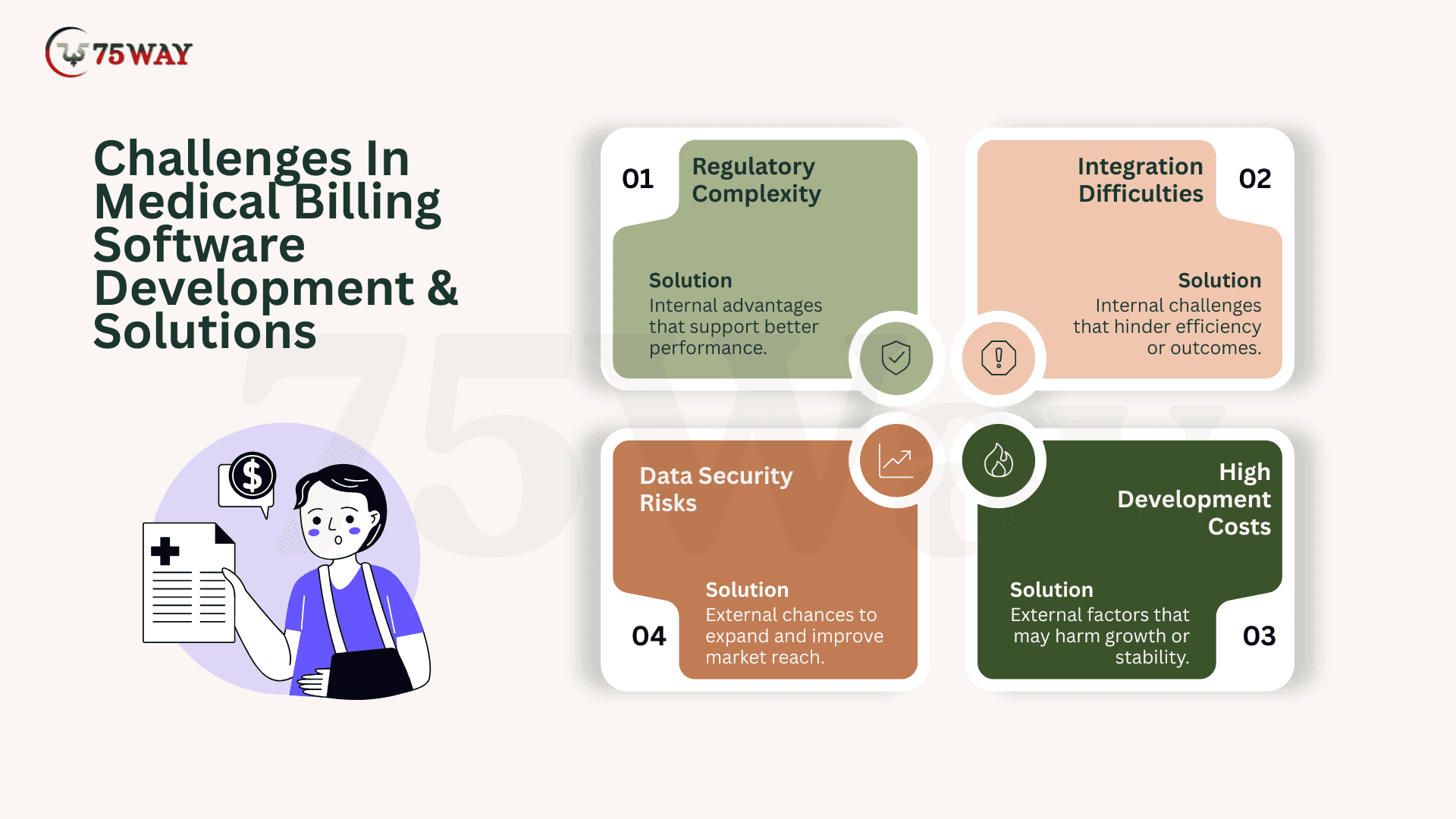
1. Regulatory Complexity
Healthcare billing regulations differ across countries, states, and insurance providers, making compliance difficult to manage.
Solution: Regulatory complexity can be managed by building flexible compliance frameworks within the system. Regular updates, automated rule validation, and region-based configuration help maintain accuracy. This ensures adherence to multiple healthcare regulations while reducing legal risks and operational disruptions.
2. Integration Difficulties
Medical billing systems must connect with EHR, EMR, insurance platforms, and payment gateways, which increases technical complexity.
Solution: Integration challenges can be reduced by using standardized APIs, middleware solutions, and interoperability frameworks. Proper system architecture ensures smooth data exchange between platforms. This improves connectivity, reduces manual errors, and enhances overall workflow efficiency.
3. Data Security Risks
Medical billing systems handle sensitive patient and financial data, making them vulnerable to cyber threats. Unauthorized access or data breaches can lead to serious consequences.
Solution: Data security risks can be addressed through encryption, authentication systems, and role-based access controls. Regular security audits and compliance with healthcare standards strengthen protection. This ensures safe handling of sensitive information across all billing operations.
4. High Development Costs
Advanced medical billing systems require significant investment due to complex features, integrations, and compliance requirements.
Solution: High development costs can be managed by adopting modular development approaches and cloud-based solutions. Prioritizing essential features and scalable architecture reduces initial investment. This allows healthcare organizations to build efficient systems within controlled budgets.
Medical Billing Software Development Cost Breakdown
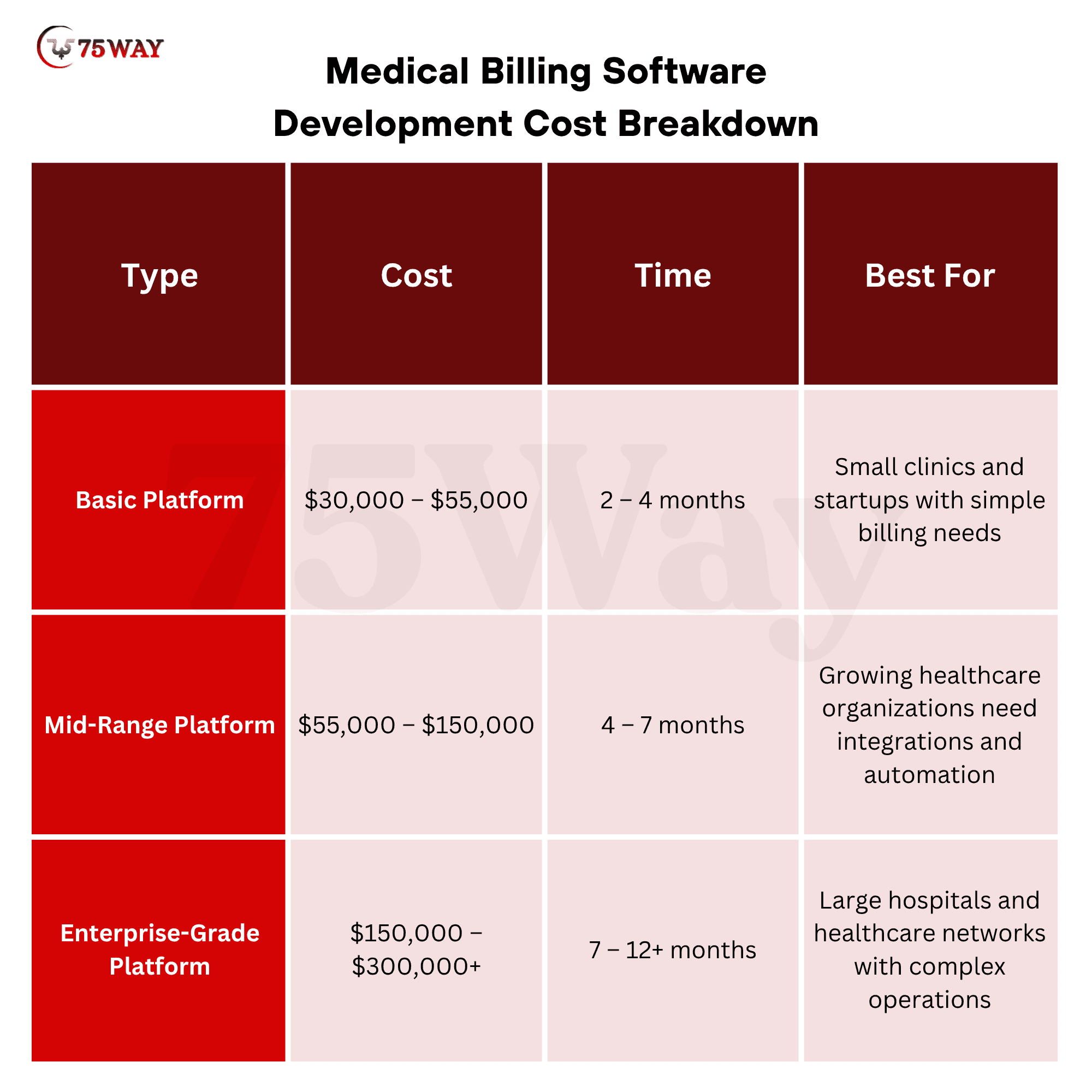
The cost of developing medical billing software varies depending on features, complexity, integrations, compliance requirements, and scalability needs. On average, development costs range from $30,000 to $300,000+, depending on whether the solution is basic, mid-range, or enterprise-grade. Below is a clear breakdown of different pricing categories.
- Basic Medical Billing Software: $30,000 – $55,000
This level includes essential features such as patient registration, claim generation and submission, and basic payment tracking. It is best suited for small clinics and startups with limited operational requirements and simple billing workflows.
- Mid-Range Medical Billing Software: $55,000 – $150,000
This version includes advanced capabilities like insurance eligibility checks, denial management, EHR/EMR integration, and patient billing portals. It is ideal for growing healthcare organizations that require better automation and workflow efficiency.
- Enterprise-Grade Medical Billing Software: $150,000 – $300,000+
This category offers advanced analytics, multi-location support, AI-powered automation, and high-level security compliance features. It is designed for large hospitals and healthcare networks managing complex, high-volume billing operations.
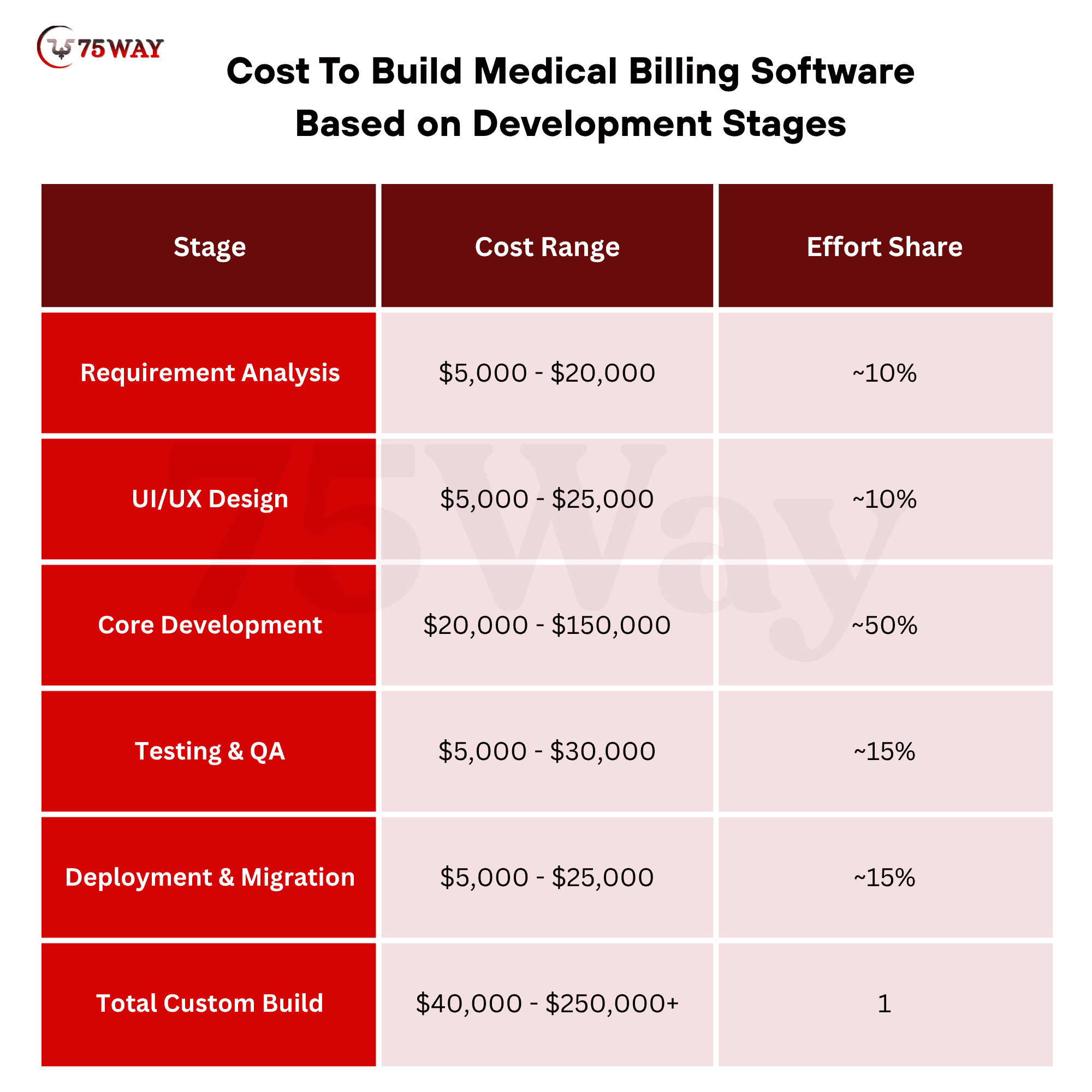
Cost To Build Medical Billing Software Based on Development Stages
The cost of medical billing software development depends on complexity, features, integrations, compliance requirements, and scalability. Below is a detailed breakdown of development stages with cost distribution.
- Requirement Analysis: $5,000 - $20,000
This stage involves workflow analysis, system architecture planning, UI/UX wireframing, and HIPAA risk assessment.
- UI/UX Design: $5,000 - $25,000
This stage focuses on creating intuitive and accessible dashboards for administrators, providers, and patients.
- Core Development: $20,000 - $150,000
This phase includes frontend and backend development, API integrations, and EHR system connectivity.
- Testing & QA: $5,000 - $30,000
It ensures system reliability, security, and error-free performance before deployment in healthcare environments.
- Deployment & Migration: $5,000 - $25,000
This phase includes data migration, cloud setup, staff training, and system launch.
Next-Gen Future Trends To Be Followed In Medical Billing Software
Medical billing software is rapidly evolving with advanced technologies that improve automation and financial forecasting in healthcare systems. These innovations are transforming traditional billing processes into intelligent, fully automated revenue cycle ecosystems.
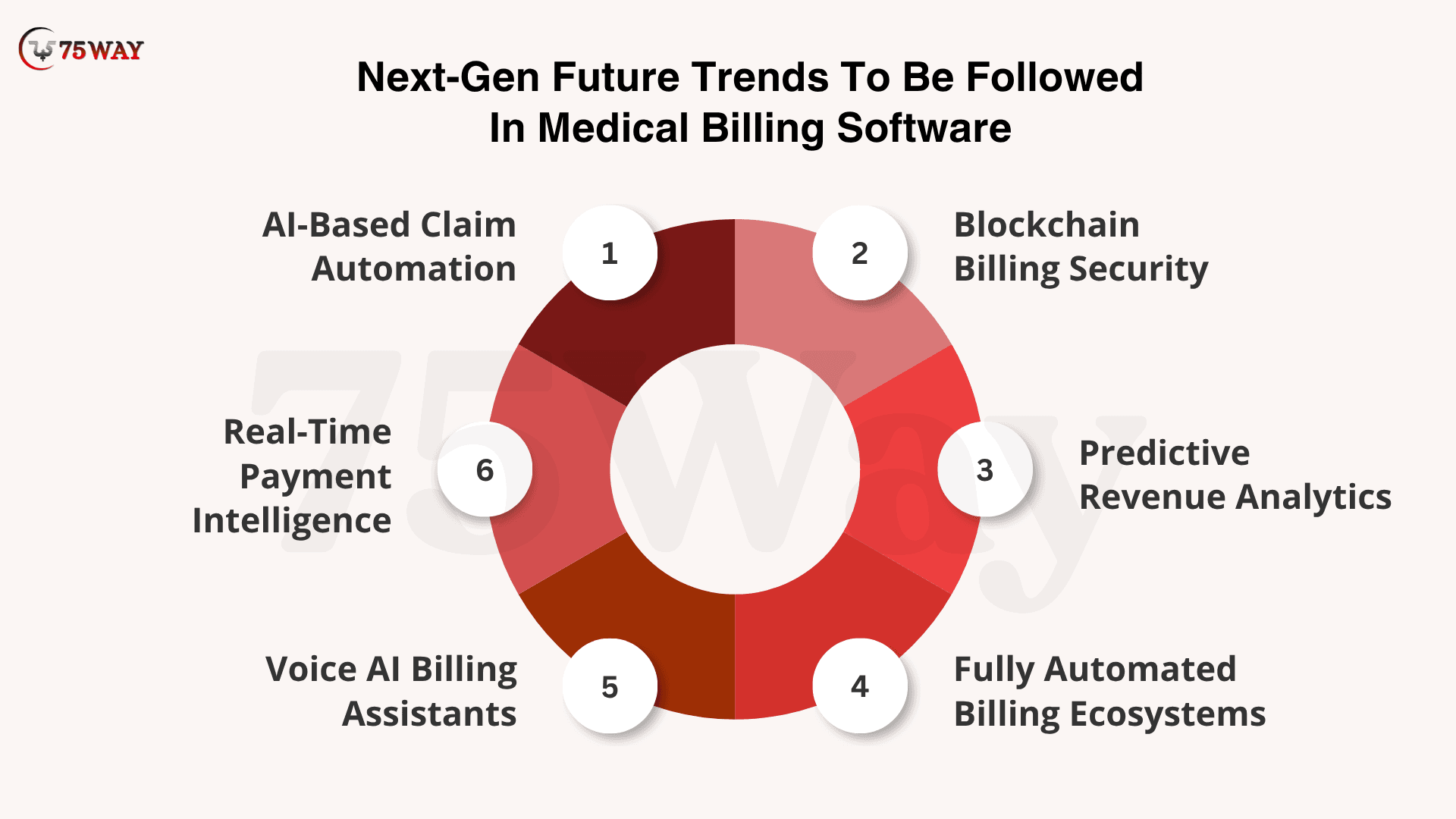
- AI-Based Claim Automation: Smart AI systems automatically process insurance claims, reducing manual effort, speeding approvals, and improving billing accuracy.
- Blockchain Billing Security: Blockchain enhances transparency, prevents fraud, and secures healthcare transactions through tamper-proof decentralized financial record management systems.
- Predictive Revenue Analytics: Predictive analytics forecasts revenue trends, payment delays, and financial performance, helping healthcare organizations make informed decisions.
- Fully Automated Billing Ecosystems: End-to-end automation integrates billing, claims, payments, and reporting into one seamless system with minimal human intervention required.
- Voice AI Billing Assistants: Voice-enabled AI assistants help staff manage billing queries, claims status, and payment updates through conversational voice interactions.
- Real-Time Payment Intelligence: Real-time systems track payments instantly, reduce delays, and provide instant financial insights for better revenue cycle visibility.
Final Thoughts
To end up, medical billing software development follows a structured process from requirement analysis to continuous optimization. These steps collectively help organizations build reliable billing platforms that streamline revenue cycles, reduce manual errors, and improve financial transparency. As healthcare complexity increases, adopting intelligent billing solutions becomes essential for sustainable growth and operational efficiency. Partnering with a prestigious software development company enables healthcare organizations to design future-ready healthcare billing systems that enhance reimbursements, improve workflow automation, and accelerate overall healthcare financial performance.
Frequently Asked Questions (FAQs)
Who Can Use Medical Billing Software?
Medical billing software can be used by hospitals, clinics, diagnostic centers, and healthcare practitioners managing patient billing and insurance claims. It supports both small practices and large healthcare enterprises. Administrative and finance teams rely on it for daily billing operations.
Is Medical Billing Software Secure?
Yes, medical billing software is designed with strong security measures, like encryption, authentication, and role-based access controls. It protects sensitive patient and financial data from unauthorized access. Compliance standards like HIPAA ensure secure handling of healthcare billing information.
Does Medical Billing Software Support Insurance Claims?
Yes, medical billing software supports automated insurance claim generation, submission, tracking, and reimbursement processing. It reduces claim rejection rates through validation checks. Healthcare providers benefit from faster approvals and improved coordination with insurance companies.
Can Medical Billing Software Reduce Errors?
Yes, medical billing software significantly reduces manual billing errors through automation and validation systems. It ensures accurate invoice generation and claim processing. This improves financial accuracy and reduces revenue leakage in healthcare organizations.
Is Cloud Medical Billing Better?
Cloud-based medical billing software offers better scalability, remote access, and real-time data synchronization. It reduces infrastructure costs and improves system flexibility. Healthcare organizations prefer cloud solutions for better performance and accessibility.
Can It Integrate With Other Systems?
Yes, medical billing software can integrate with EHR systems, hospital management systems, payment gateways, and insurance platforms. This ensures smooth data flow and operational efficiency. Integration helps reduce manual data entry and improves workflow coordination.