Summary
House cleaning apps simplify booking, scheduling, and management of professional cleaning services through digital automation. This guide explains development stages, features, technology stack, monetization strategies, and operational workflows behind apps like Pronto. Businesses will explore customer management systems, AI-driven automation, and scalable marketplace architecture for modern on-demand service ecosystems.
Quick Overview
- The house cleaning app market is valued at $0.33 billion and is forecasted to expand at a CAGR of 7.8% through 2033.
- House cleaning apps automate booking, scheduling, and customer management
- Marketplace architecture connects customers, cleaners, & administrators in one place
- AI-powered automation improves service matching and scheduling
- Subscription plans and commissions generate recurring revenue
People no longer want to spend hours searching for local cleaners or manually managing appointments. Modern house cleaning apps simplify the entire process with faster bookings, transparent pricing, and on-demand service access.
Thus, businesses are moving beyond traditional service management models and adopting scalable on-demand home services marketplace solutions. These house cleaning mobile apps, like Pronto, integrate AI automation, AI-powered scheduling, real-time tracking, and digital payment systems.
This guide explains how to build a house cleaning app like Pronto, covering business models, features, development stages, technology stack, and monetization methods.
What Is A House Cleaning App Like Pronto?
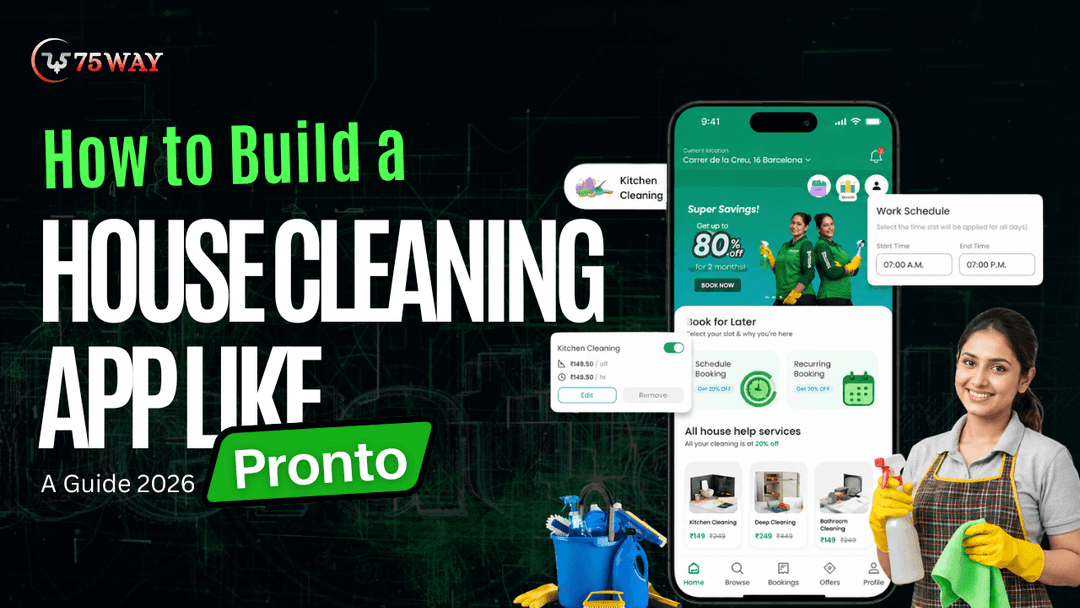
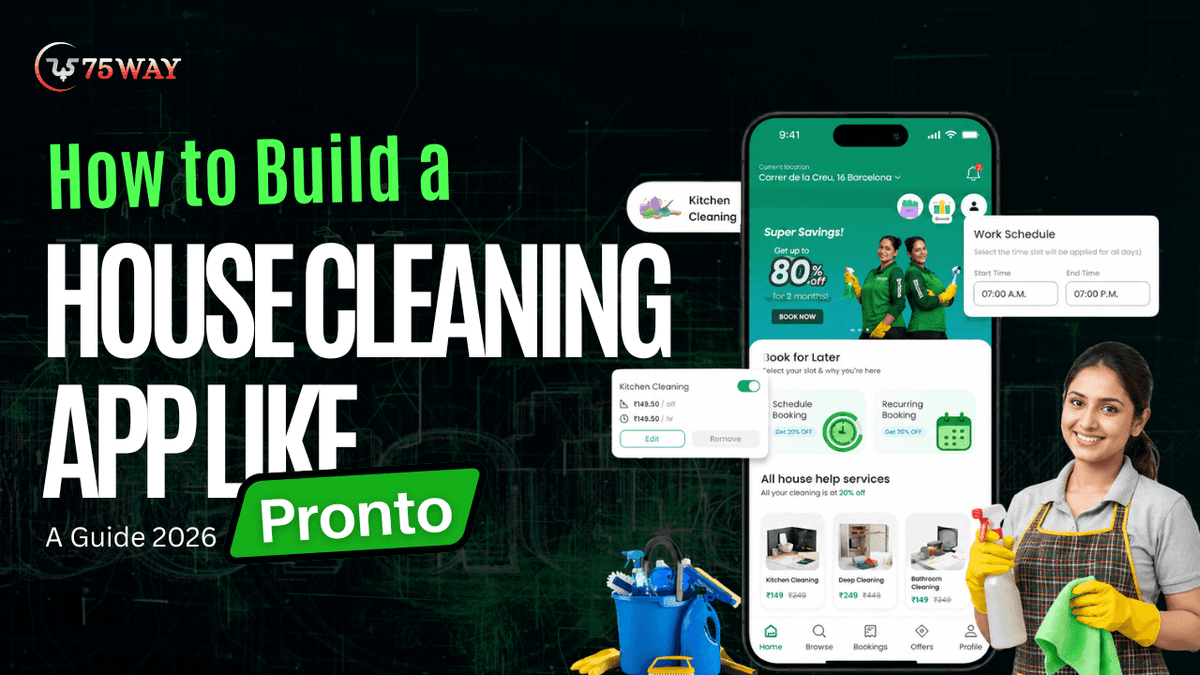
A house-cleaning mobile app like Pronto is an on-demand service marketplace that connects customers with professional cleaning service providers via mobile and web applications.
These house cleaning app development solutions automate service booking, cleaner assignment, scheduling, payments, communication, and customer support through centralized digital systems. Customers can select cleaning services, schedule appointments, track cleaners, and complete secure payments directly in the application.
Unlike traditional cleaning businesses that rely heavily on manual coordination, modern house cleaning apps streamline operations through automation and real-time service management technologies.
Why House Cleaning Apps Are Growing Rapidly In 2026?
Consumer preferences continue moving toward app-based convenience services across daily household activities and home management routines. Customers now prefer booking cleaning professionals digitally instead of managing traditional phone-based scheduling processes manually. Faster booking experiences, transparent pricing, and real-time service tracking improve customer convenience significantly across modern urban lifestyles.
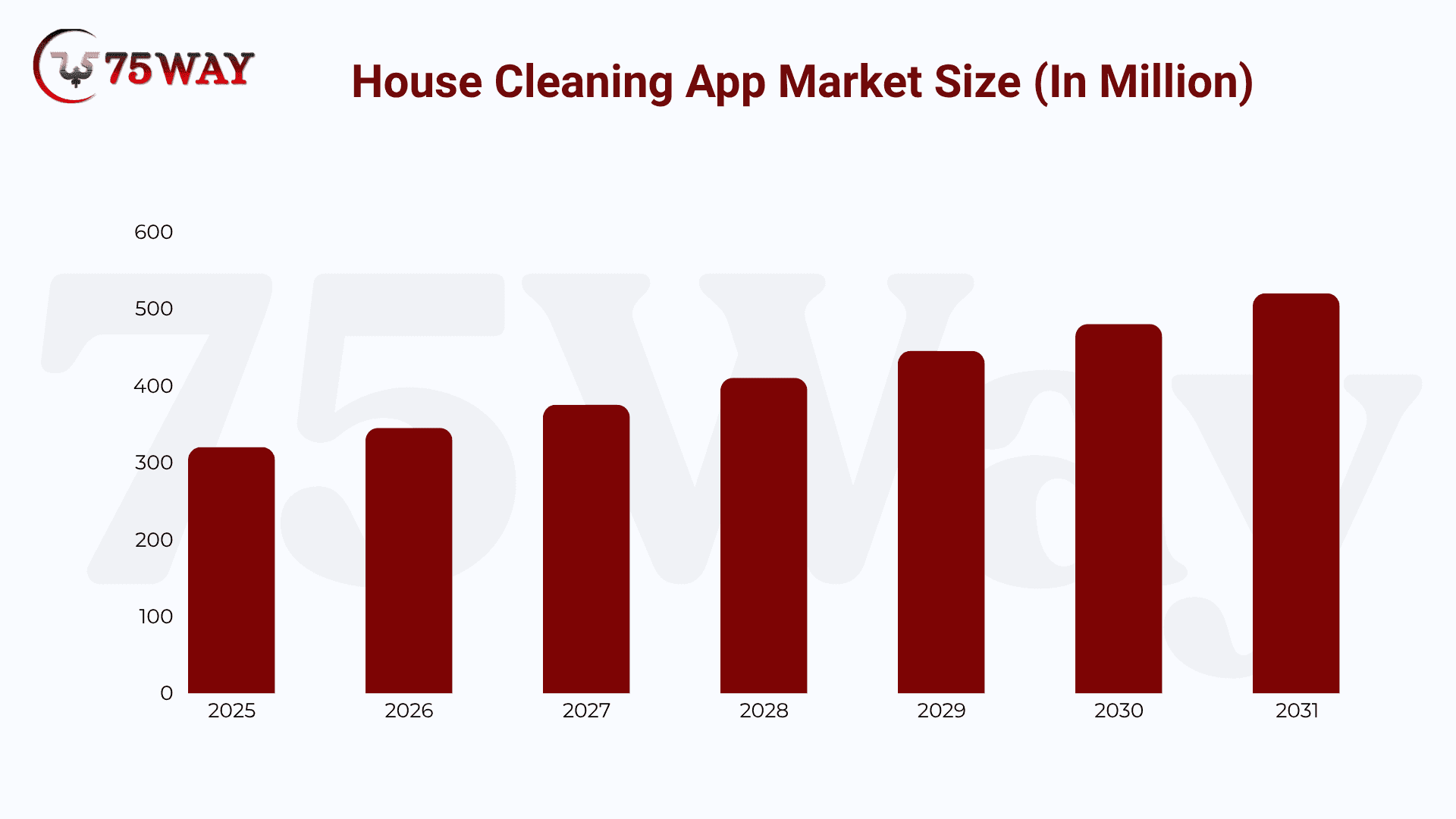
Several market factors are expected to accelerate demand for house-cleaning applications globally in 2026.
- The market size is estimated at $0.33 billion and is expected to grow at a CAGR of 7.8% through 2033.
- North America dominates the global cleaning services market with the largest revenue share of 31.85%.
- The global cleaning services market is projected to reach $770.76 billion by 2033, growing at a CAGR of 7.3%.
- Around 41% of households rely on recurring, app-based cleaning service plans.
- The broader on-demand home services market is expected to reach $14.7 billion by 2030.
- The use of cleaning service apps has grown significantly, increasing from 15% of urban customers to nearly 40% who now rely exclusively on mobile and web platforms for bookings.
How To Build A House Cleaning App Like Pronto: Step-By-Step Process
Building a house cleaning app like Pronto requires a structured development approach that combines market understanding, business planning, design thinking, and advanced technology integration. Each stage connects with the next to form a complete product lifecycle, starting from research and ending with scalable deployment.
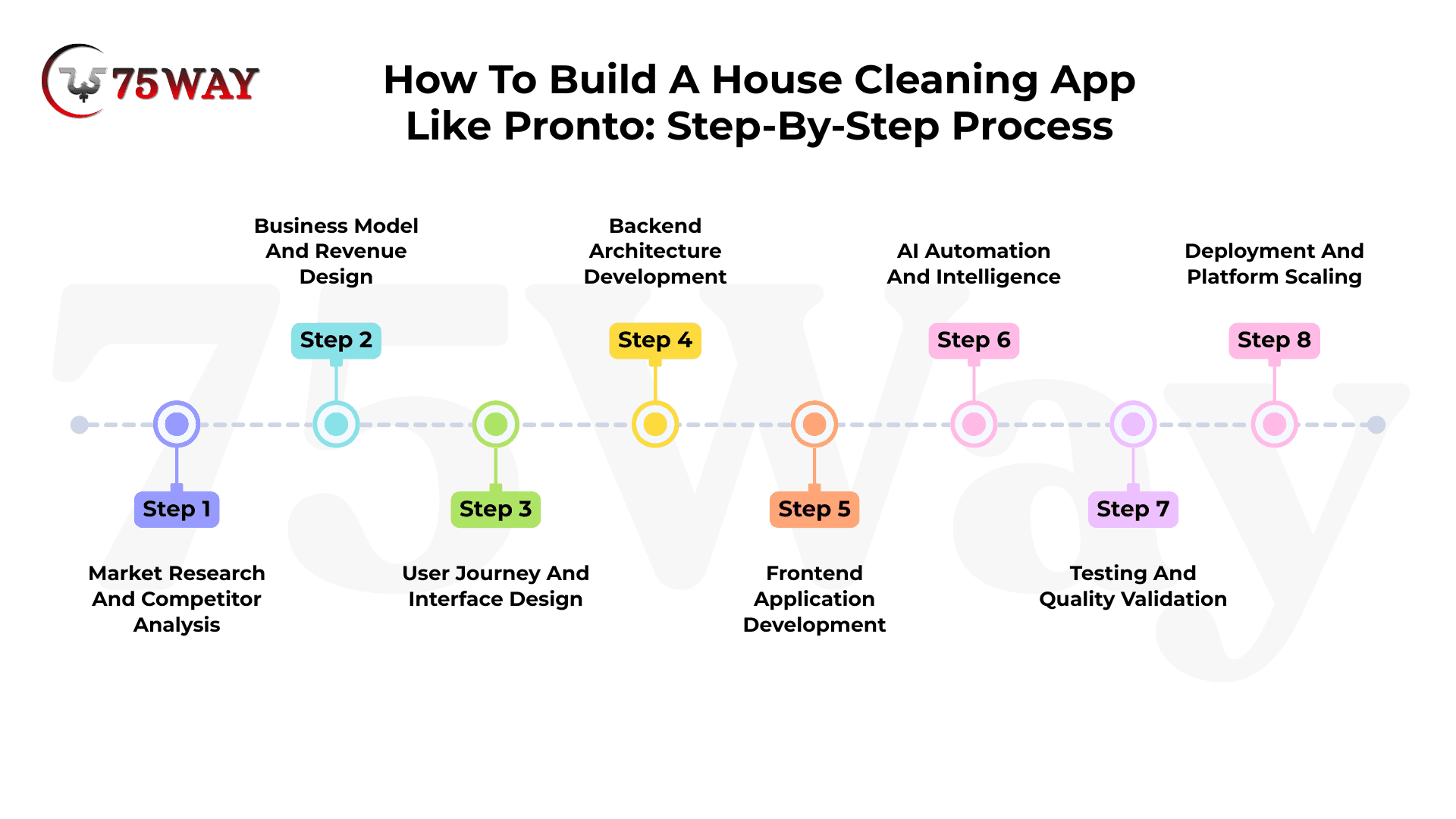
Step 1: Market Research And Competitor Analysis
Market research starts by examining how cleaning service apps currently operate and where users experience friction. Most existing platforms struggle with pricing clarity, service delays, and inconsistent cleaner quality. Customer behavior patterns reveal that users prefer faster booking and transparent service workflows. These gaps define the real opportunity for a better solution.
These findings directly shape what the product must solve before anything else is built. Instead of adding features randomly, priorities come from real user pain points. Competitor weaknesses become input for planning structure and business direction. This naturally leads into deciding how the business model should function.
Step 2: Business Model And Revenue Design
Revenue structure is defined after understanding what users lack in the current cleaning platforms. Businesses evaluate commission-based earnings, subscription plans, and service charges based on demand patterns. Cleaning categories and package pricing are organized to match user expectations identified earlier. Each revenue decision connects directly to user behavior insights.
Once monetization is clear, operational rules begin taking shape around it. Payment handling, cancellation policies, and service flow logic are aligned with revenue strategy. This ensures financial structure and platform operations remain consistent. From here, attention shifts toward how users will actually interact with the system.
Step 3: User Journey And Interface Design
User interaction design begins by translating business logic into simple booking experiences. The focus stays on reducing steps needed to search, select, and confirm cleaning services. Cleaner workflows are also considered so both sides operate within a single connected system. Every screen is designed around real user actions, not assumptions.
After mapping customer journeys, cleaner-side interactions are aligned with the same flow structure. This ensures both users and service providers stay connected through consistent actions. Design decisions are validated before development begins. These finalized journeys become the base for backend system creation.
Step 4: Backend Architecture Development
Backend development starts once user journeys are fully defined and validated. APIs are built to manage bookings, payments, authentication, and cleaner assignments. Databases store structured information, including users, services, and transaction records. Business rules control how each request moves through the system.
As backend modules connect, they form the operational core of the platform. Booking requests flow through system logic before reaching assigned cleaners. Payment processing and updates are handled within controlled workflows. This backend structure prepares integration with frontend applications.
Step 5: Frontend Application Development
Frontend development begins after backend systems are ready for integration. Mobile and web interfaces are created for customers and cleaners to interact with the platform. Booking, tracking, and payment screens are designed for smooth navigation. Each action is connected directly to backend services in real time.
Once users interact with the interface, system responses reflect instantly across screens. Customers can track bookings while cleaners receive job updates simultaneously. Both experiences remain connected through live data exchange. This sets the foundation for adding intelligence through AI systems.
Step 6: AI Automation And Intelligence Layer
AI integration begins after core system workflows are stable and connected. Machine learning models analyze booking patterns, user behavior, and service demand trends. Chat systems manage customer queries and booking requests without manual involvement. Cleaner assignment becomes data-driven based on availability and performance signals.
As intelligence layers activate, system decisions begin adapting to real-world usage. Pricing adjusts based on demand conditions and service timing. Recommendations improve booking relevance for users. This creates a responsive system that connects data with action.
Step 7: Testing And Quality Validation
Testing begins once all system modules are fully integrated. Functional testing checks booking, payment, and tracking flows across different scenarios. Security checks validate data protection across user and transaction layers. Performance testing evaluates system behavior under high traffic conditions.
When issues appear, fixes are applied across the frontend and backend systems together. Real user scenarios are simulated to validate complete journeys. System stability is confirmed across devices and environments. This ensures readiness for live deployment.
Step 8: Deployment And Platform Scaling
Deployment begins after successful validation of all system components. The application is launched on cloud infrastructure, where real users start interacting with it. Monitoring tools track system performance and user behavior. Early usage data highlights improvement opportunities.
As adoption increases, infrastructure scales to handle higher demand and new regions. Feature updates are introduced based on real user activity. The platform gradually expands from launch into a scalable service ecosystem.
What is Hub And Spoke Model To Develop House Cleaning App Like Pronto?
The hub-and-spoke model organizes cleaning operations through centralized local hubs that manage nearby service requests. Each hub controls a specific geographic area to ensure cleaners are always positioned close to customers. This structure improves service availability, reduces travel time, and stabilizes operational flow. It becomes the foundation for achieving fast and predictable service delivery in on-demand cleaning platforms.
- Hub Structure And Function: A hub works as a local coordination point where cleaning professionals gather before assignments. Instead of traveling from distant locations, workers are dispatched from the hub to nearby customer locations. This reduces delays and improves job allocation efficiency. The hub also acts as a waiting and scheduling space between completed and upcoming tasks.
- Location Planning Strategy: Hub locations are selected based on residential density and demand concentration. Areas with high household clusters generate consistent booking flow for sustainable operations. Accessibility for cleaners is also considered to minimize travel time between hub and service locations. Proper placement ensures balanced workload distribution across the service zone.
- Work Shift Management System: Cleaner schedules are managed into short shifts instead of full-day availability. This better aligns customer demand peaks with workforce availability. Morning and evening hours receive higher staffing to match booking patterns. Shift-based allocation also provides flexibility for workers and improves reliability during peak service hours.
- Hub Expansion Approach: Expansion begins with a single operational hub in a high-demand area. Performance is measured based on service speed, order volume, and operational stability. New hubs are added only after the existing hub reaches consistent capacity levels. Controlled expansion ensures the system remains stable while scaling across multiple neighborhoods.
How A House Cleaning App Like Pronto Works?
House cleaning marketplace platforms connect customers, cleaners, scheduling workflows, payments, and operational management through integrated digital systems.
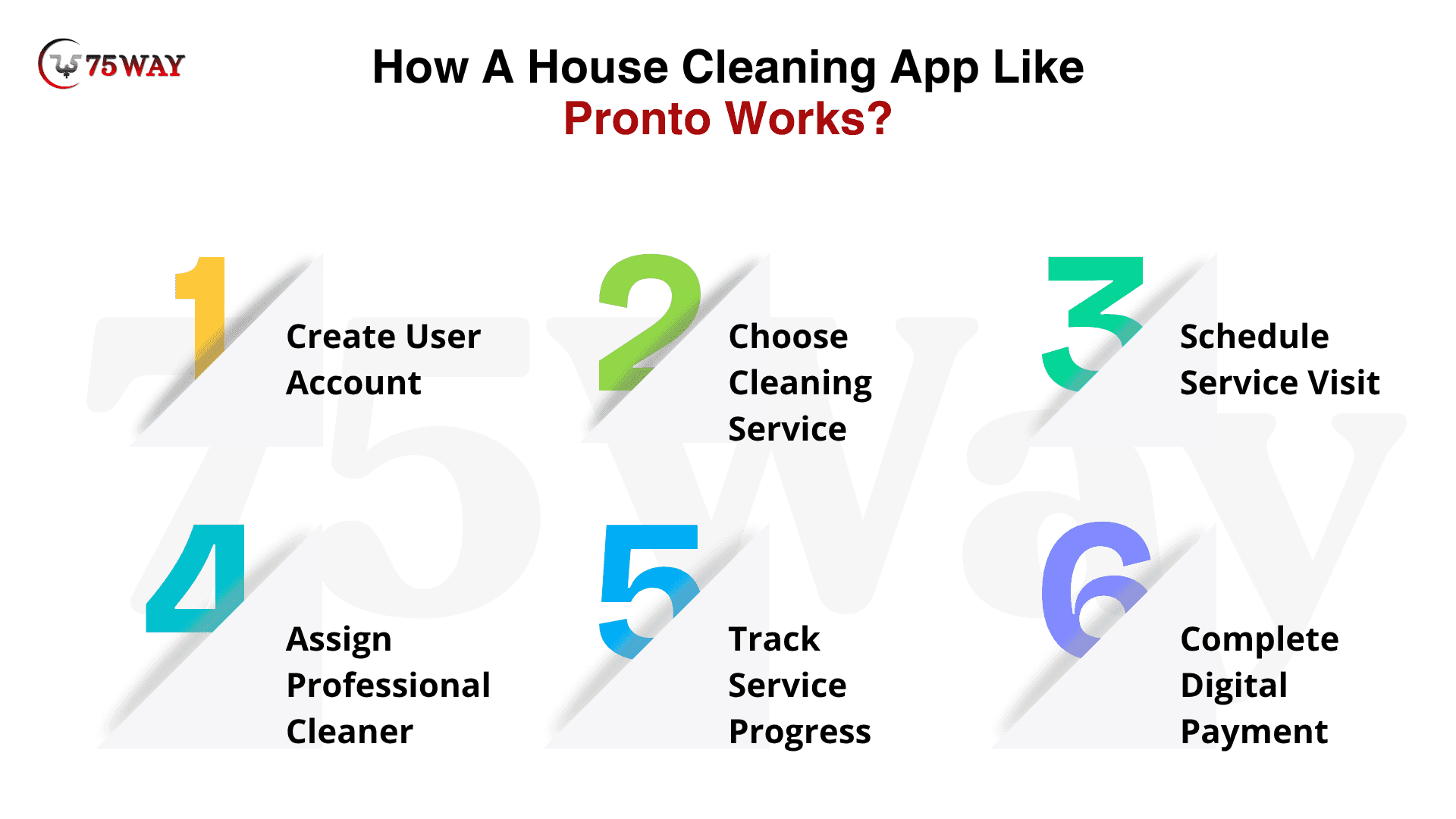
1. Create User Account: Register customer profiles using email, mobile numbers, or social authentication for personalized booking management and service accessibility.
2. Choose Cleaning Service: Browse cleaning categories, including deep cleaning, office cleaning, kitchen sanitization, carpet cleaning, and apartment maintenance solutions.
3. Schedule Service Visit: Select preferred dates, property size, cleaning duration, and custom requirements through intelligent booking management workflows.
4. Assign Professional Cleaner: Match cleaning professionals using location proximity, availability status, customer ratings, and specialized service capabilities.
5. Track Service Progress: Monitor cleaner location, arrival timing, and task progress through GPS-powered real-time tracking functionality throughout bookings.
6. Complete Digital Payment: Process transactions using cards, digital wallets, subscriptions, and automated invoicing for smooth payment management experiences.
Core Components of Pronto Like On-Demand House Cleaning App Development
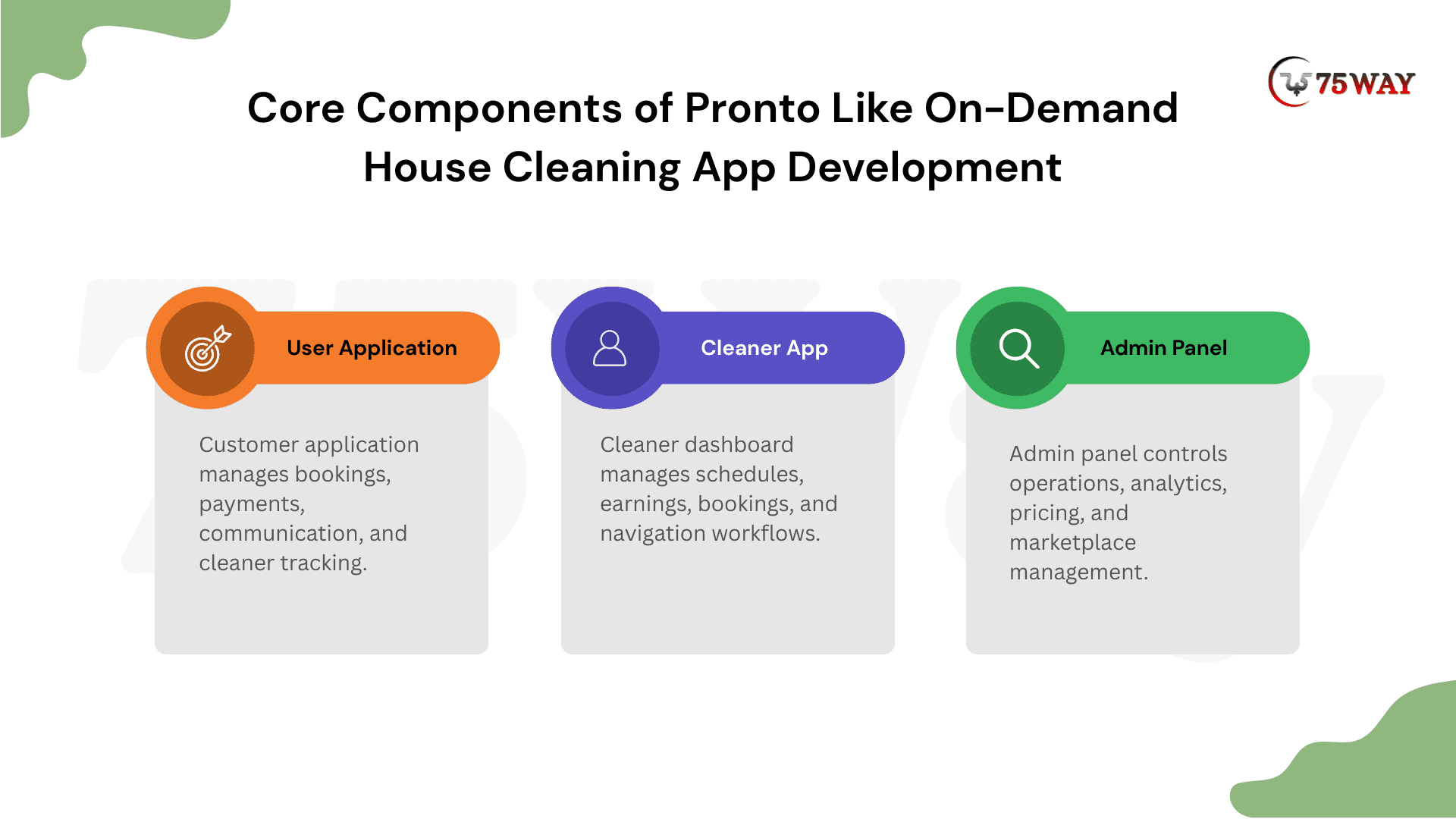
Modern on-demand apps for house cleaning combine customer management, cleaner coordination, booking systems, and payment workflows inside one platform. These features improve operational management and booking experiences. Businesses build scalable marketplace ecosystems using interconnected mobile application panels and intelligent automation systems.
1. User Application
The customer application plays a major role in improving booking convenience and user engagement across house cleaning platforms. Customers manage bookings, payments, communication, and cleaner tracking with mobile interfaces. A well-designed customer panel improves retention rates, booking frequency, and overall platform experience across service marketplaces.
- Easy Registration: Create customer accounts with mobile numbers, email addresses, or social authentication for faster onboarding.
- Service Booking: Schedule cleaning appointments based on preferred timing, service categories, property size, and availability requirements.
- Live Tracking: Monitor cleaner location, arrival timing, and booking progress with GPS-powered, real-time tracking.
- Secure Payments: Process transactions using cards, wallets, subscriptions, and digital invoicing across integrated payment management systems.
- Ratings And Reviews: Share customer feedback regarding cleaner professionalism, booking experiences, and completed service quality after appointments.
- Push Notifications: Receive booking updates, cleaner arrival alerts, payment confirmations, and promotional notifications through automated messaging systems.
2. Cleaner Mobile App
The cleaner application helps service professionals manage schedules, bookings, earnings, and navigation workflows with a single operational dashboard. Cleaner-focused functionality improves workforce coordination across marketplace ecosystems. Advanced cleaner management systems strengthen operational productivity, booking acceptance rates, and overall service quality throughout cleaning platforms.
- Profile Management: Manage availability, work schedules, service areas, and cleaning preferences through centralized professional dashboards.
- Booking Acceptance: Accept or reject customer booking requests based on timing, workload, and service availability preferences.
- Earnings Dashboard: Track completed bookings, payment history, incentives, and total income through real-time earnings visibility systems.
- Navigation Support: Access integrated maps for route guidance, customer locations, and optimized travel management during service visits.
- Work Schedule Control: Update working hours, unavailable dates, and holiday preferences for flexible service management across booking operations.
- Customer Communication: Interact with customers regarding booking updates, arrival timing, and special cleaning instructions through in-app messaging.
- Performance Insights: View customer ratings, completed jobs, and service feedback for improving cleaner performance and booking opportunities.
3. Admin Panel
The admin panel manages platform operations, pricing structures, customer workflows, cleaner activities, and business analytics with management systems. Administrative visibility improves marketplace coordination and revenue management. Strong backend administration tools help businesses monitor performance and optimize operational workflows across cleaning service ecosystems.
- Service Management: Admins control cleaning categories, pricing rules, service areas, and operational workflows from a centralized dashboard system.
- User Management: Manage customer accounts, cleaner profiles, access permissions, and verification processes across the entire platform securely.
- Analytics Dashboard: Monitor bookings, revenue performance, service demand, and operational trends through detailed reporting and insights tools.
- Commission Management: Configure commission structures, subscription plans, payout rules, and revenue sharing models across service transactions.
- Coupon And Offers: Create promotional discounts, referral programs, and seasonal offers to improve customer acquisition and retention rates.
- Dispute Resolution: Handle customer complaints, payment disputes, and service issues through structured resolution workflows and case tracking systems.
- Platform Security Control: Monitor system activity, fraud detection, data protection, and access control across all platform operations.
Advanced AI Features To Develop Home Cleaning App Like Pronto In 2026
AI-driven capabilities are transforming cleaning marketplace platforms by improving scheduling accuracy, customer engagement, pricing intelligence, and operational coordination. These systems analyze real-time data to streamline service delivery.
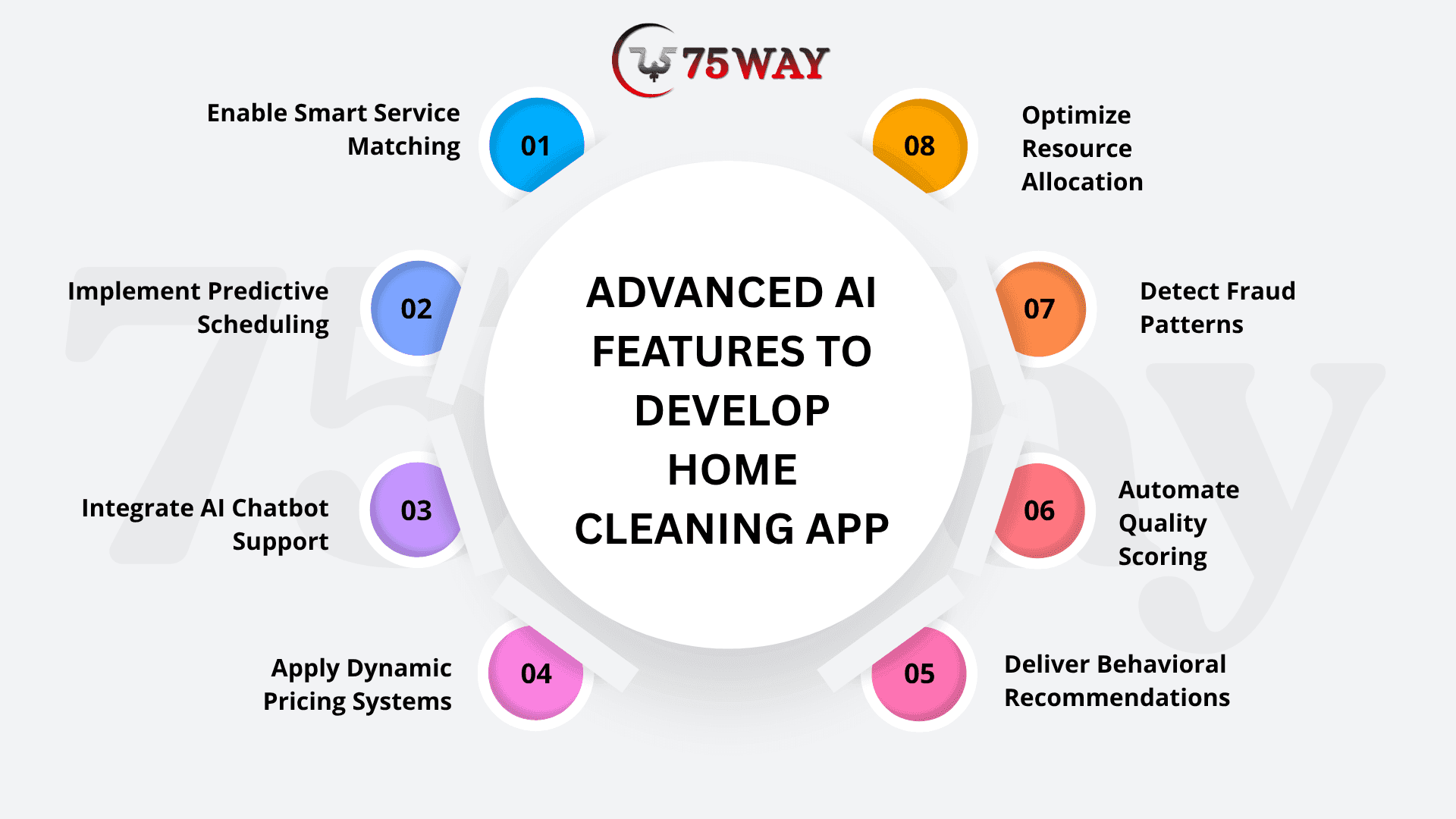
- Smart Service Matching: AI assigns cleaners based on customer preferences, location proximity, ratings, availability, and service specialization requirements.
- Predictive Scheduling: Machine learning analyzes demand patterns and allocates cleaning staff during peak booking periods for balanced workforce utilization.
- AI Chatbot Support: Conversational AI chatbots handle booking inquiries, customer questions, service updates, and support requests through instant digital communication.
- Dynamic Pricing Systems: AI systems adjust service prices based on demand fluctuations, urgency levels, location factors, and cleaner availability trends.
- Behavioral Recommendations: The platform suggests cleaning packages using customer booking history, preferences, and past service interaction patterns.
- Automated Quality Scoring: AI evaluates service quality using customer feedback, ratings, and post-service behavior analysis for performance improvement.
- Fraud Detection System:Machine learning identifies suspicious booking patterns, payment risks, and abnormal user behavior across platform transactions.
- Smart Resource Allocation: AI distributes cleaners across regions based on demand forecasts, traffic conditions, and service priority levels.
Technology Stack For House Cleaning App Development Like Pronto
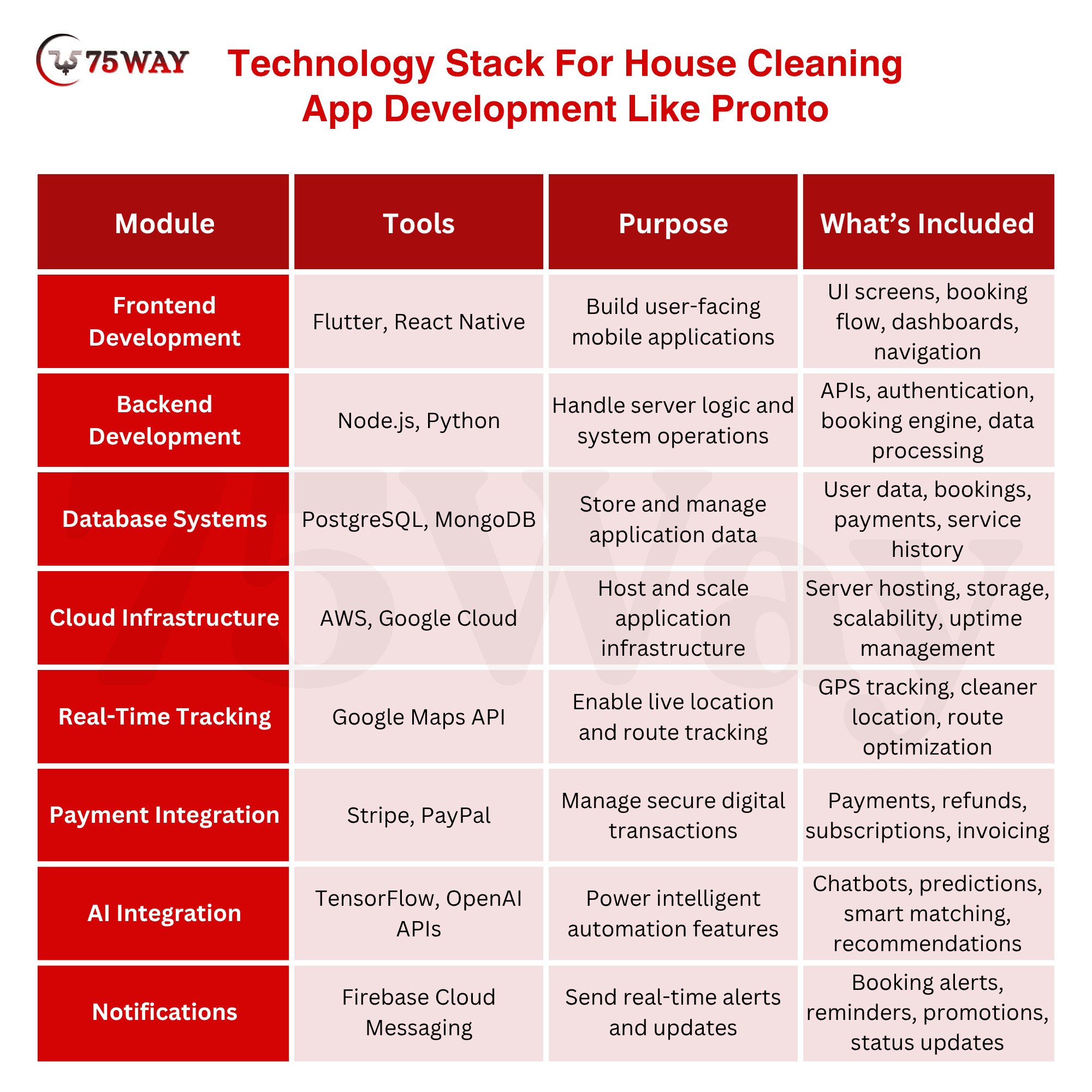
Choosing the right technology stack plays a key role in building scalable, secure, and high-performance house cleaning applications. Each layer supports specific functionalities that improve user experience, operational efficiency, and system reliability across the platform.
- Frontend Development: Flutter and React Native help build cross-platform mobile applications with smooth UI performance and faster development cycles for both Android and iOS apps. These frameworks reduce development time while maintaining user experience across devices.
- Backend Development: Node.js and Python handle server-side logic, API management, and business workflows for cleaning marketplace platforms. They support scalable architecture for managing bookings, users, and real-time operations.
- Database Systems: PostgreSQL and MongoDB store structured and unstructured data, including user profiles, bookings, and transaction history. These databases ensure fast data retrieval and flexible schema management for growing platforms.
- Cloud Infrastructure: AWS and Google Cloud provide scalable hosting, storage, and computing resources for cleaning applications. These services maintain platform uptime and handle increasing user traffic across regions.
- API Integration: Google Maps API enables GPS-based cleaner tracking, route optimization, and live location updates during service delivery. It improves transparency and enhances customer trust during booking execution.
- Payment Integration: Stripe and PayPal manage secure digital payments, subscriptions, and automated billing processes for cleaning services. These gateways support multiple currencies and smooth transaction experiences.
- AI Integration: TensorFlow and OpenAI APIs power intelligent features like smart scheduling, chatbot support, and predictive recommendations. They enhance automation and improve decision-making across platform operations.
- Notifications: Firebase Cloud Messaging sends real-time alerts for booking confirmations, cleaner updates, and promotional messages. It improves user engagement through timely communication across devices.
How House Cleaning Apps Drive Customer Retention?
Customer retention plays a vital role in house cleaning apps like Pronto because recurring services depend on long-term user relationships rather than one-time bookings. When users feel continuity in service delivery and value, they are more likely to return regularly and increase lifetime usage of the platform.
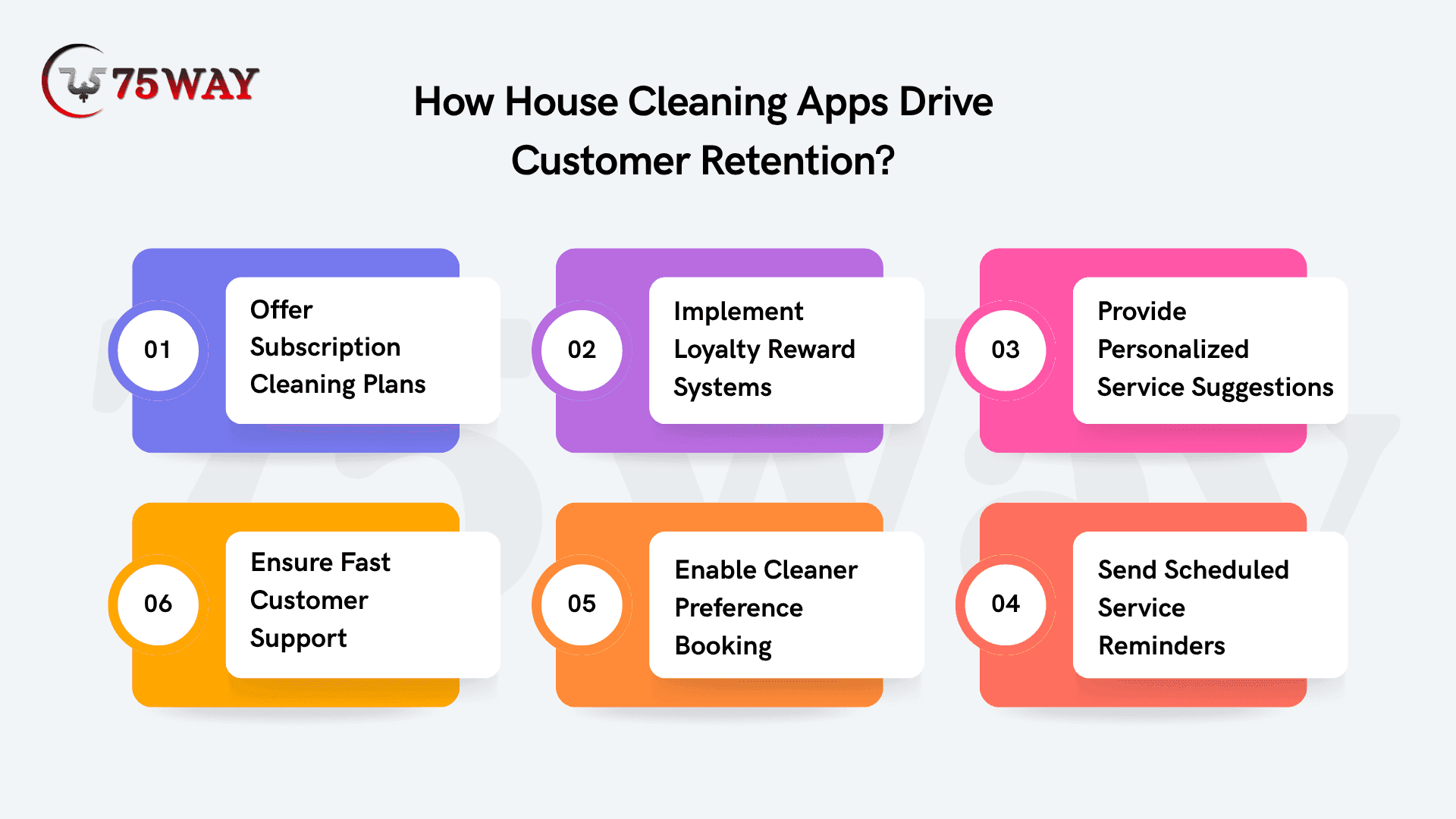
- Subscription Cleaning Plans: Monthly and weekly cleaning packages encourage repeat bookings by offering predictable scheduling and cost savings. Customers prefer ongoing services that reduce effort in repeated booking decisions.
- Loyalty Reward Systems: Reward programs provide discounts and benefits for frequent users, increasing long-term engagement. These incentives motivate customers to continue using the platform instead of switching to competitors.
- Personalized Service Suggestions: AI-driven recommendations suggest relevant cleaning services based on past bookings and user behavior. This makes service discovery easier and increases repeat purchase likelihood.
- Fast Customer Support: Instant support channels resolve booking issues, payment queries, and service concerns quickly. Quick responses build trust and improve overall customer satisfaction across interactions.
- Cleaner Preference Booking: Allowing customers to select preferred cleaners creates familiarity and service comfort. Returning to known cleaners improves trust and strengthens long-term platform usage patterns.
- Scheduled Service Reminders: Automated reminders notify customers about upcoming cleaning appointments and renewal options. These reminders reduce missed bookings and maintain consistent service engagement over time.
Business Model of House Cleaning App Like Pronto: Monetization Strategies
Apps like Pronto operate using multi-layered marketplace monetization strategies supporting recurring revenue generation.
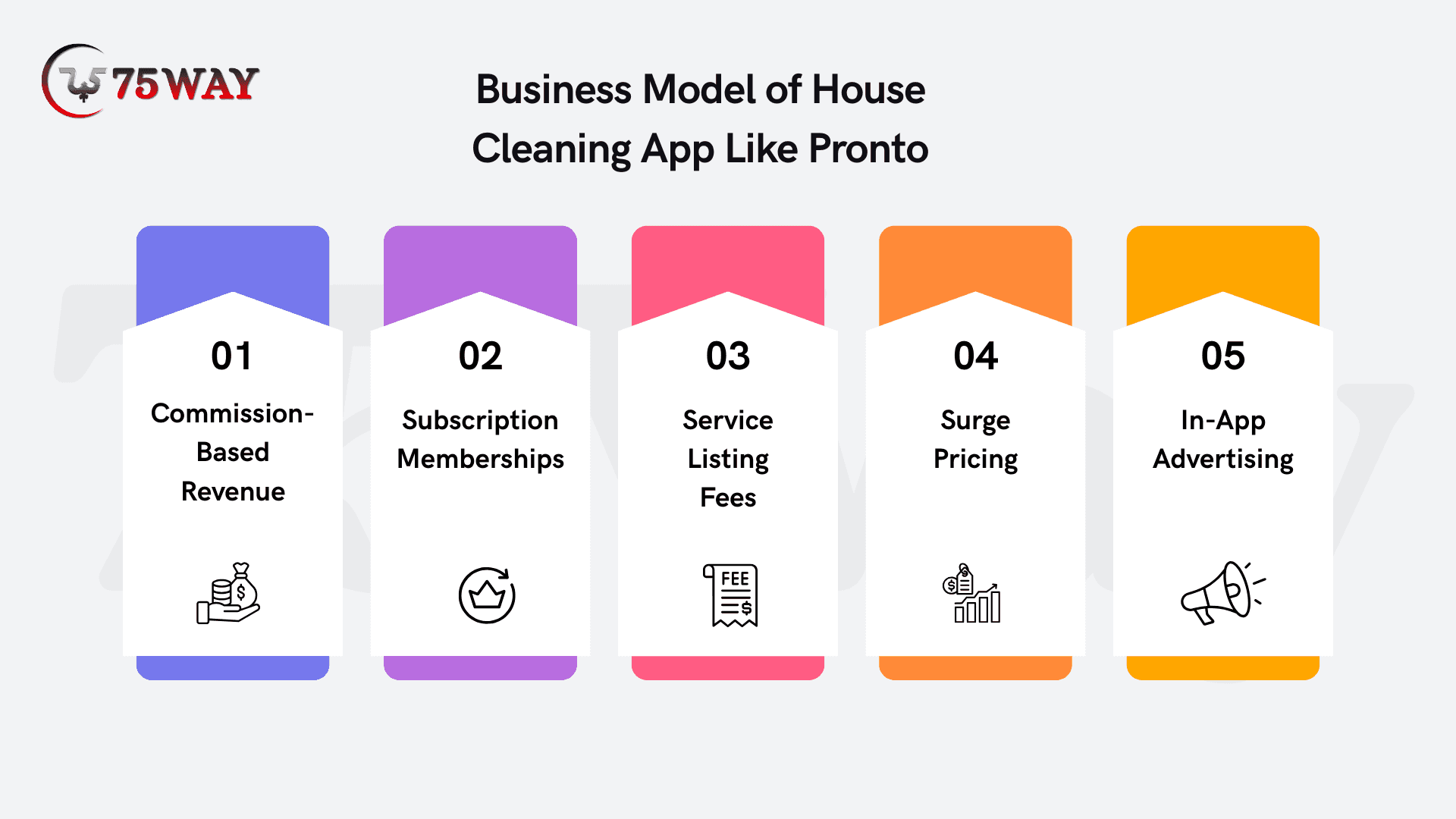
- Commission-Based Revenue: House cleaning platforms earn income by charging service providers a percentage fee on every completed booking. This model aligns platform growth with transaction volume and service activity. Higher bookings naturally increase revenue generation across the marketplace ecosystem. It remains the primary earning structure for most on-demand cleaning apps.
- Subscription Memberships: Customers purchase recurring plans that include priority booking, discounted services, and scheduled cleaning access. These memberships encourage long-term engagement through predictable service usage. Users prefer subscription options for convenience and cost control. This model strengthens recurring revenue while improving customer loyalty.
- Service Listing Fees: Cleaning businesses pay to appear in featured positions within the app marketplace. Premium visibility increases their chances of receiving more bookings from active users. This creates an additional income stream beyond transaction commissions. It also improves competition among service providers on the platform.
- Surge Pricing: Prices increase during high-demand hours or urgent booking requests within the platform. Dynamic pricing adjusts based on cleaner availability and service urgency. This helps balance supply and demand in real time. It also increases profitability during peak operational periods.
- In-App Advertising: Local brands and service companies promote products directly inside the cleaning platform. Advertisements target users actively engaging with home-related services. This creates an additional monetization channel without affecting core services. It also increases platform revenue through targeted marketing partnerships.
What’s The Cost To Build A House Cleaning Mobile App Like Pronto
App development cost for house cleaning may vary depending on features, scalability requirements, AI integration complexity, and operational goals. On average, the cost to build an on-demand house cleaning app like Pronto lies between $15,000-$250,000+.
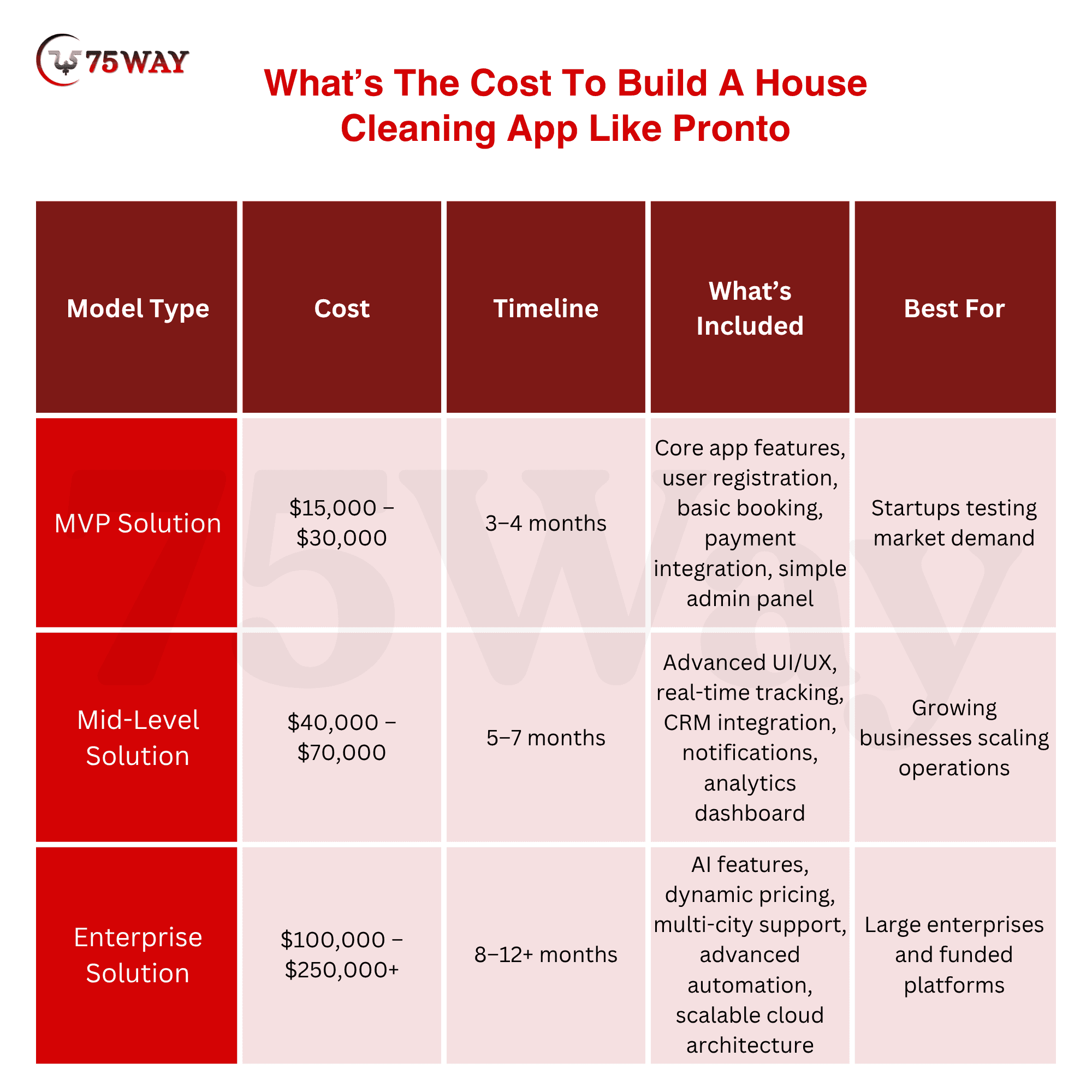
Stage-Wise Cost of House Cleaning App Development like Pronto
- UI/UX Design: 150–250 hrs | $5,000 – $10,000
Creates intuitive and engaging interfaces with a strong focus on user experience and usability.
- Customer App (iOS & Android): 400–600 hrs | $15,000 – $25,000
Builds a seamless user-facing application with booking, tracking, and core functionality.
- Cleaner App (iOS & Android): 400–600 hrs | $15,000 – $25,000
Develops a dedicated app for service providers to manage tasks, schedules, and updates.
- Backend & Database Setup: 300–400 hrs | $15,000 – $25,000
Handles system architecture, APIs, data storage, and overall application logic.
- Admin Panel (Management): 150–250 hrs | $5,000 – $10,000
Provides a centralized dashboard to manage users, services, and operations.
Custom Vs White-Label House Cleaning App Development: What To Choose?
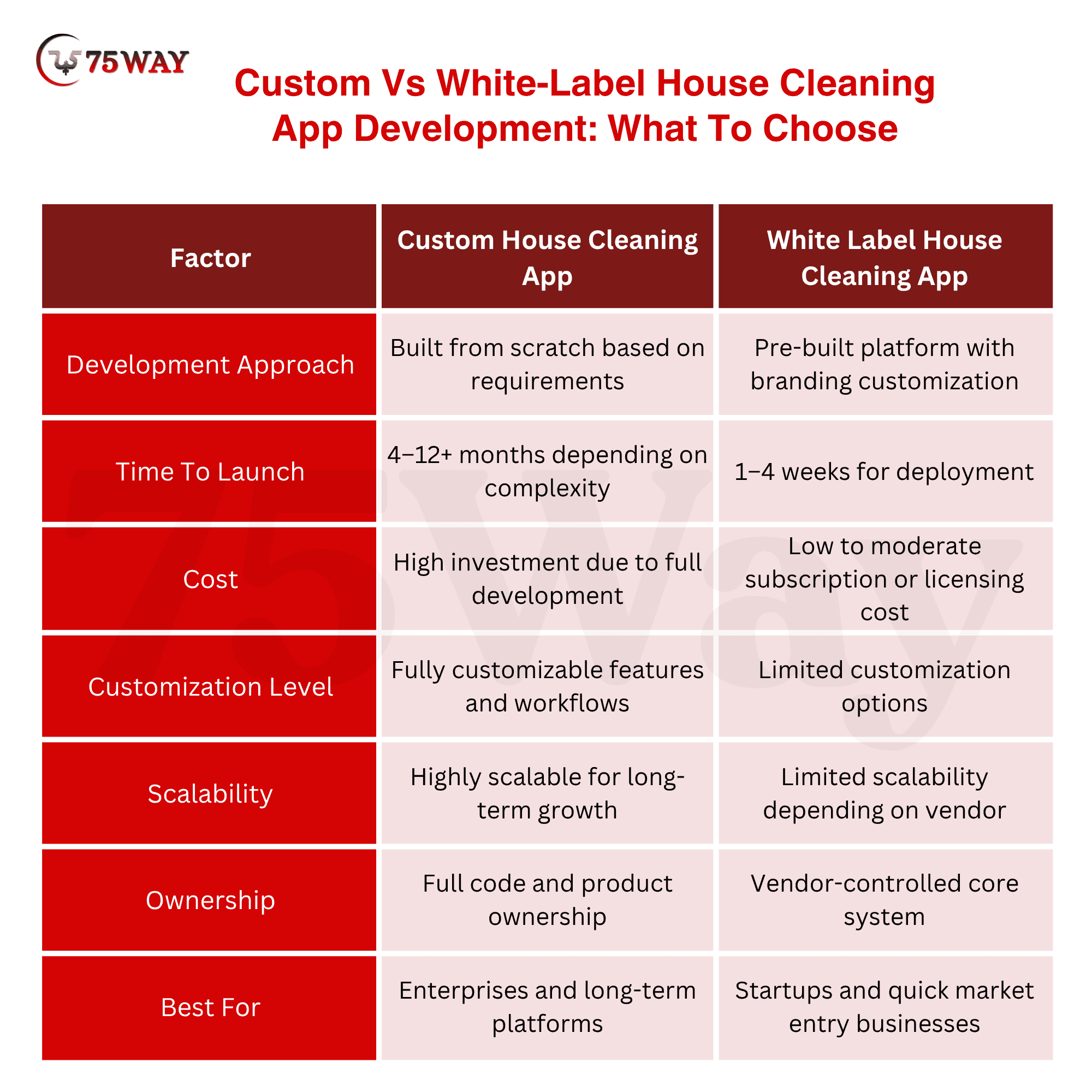
House cleaning app development generally follows two approaches: custom-built solutions and white-label platforms. Custom development creates a fully tailored system designed around specific business needs, features, and workflows. On the other hand, white-label solutions provide ready-made platforms that can be quickly branded and launched. Both approaches serve different goals depending on budget, timeline, and long-term scalability requirements.
The main difference lies in control and speed. Custom apps offer flexibility and full ownership of features, while white-label apps focus on faster deployment with limited customization. Businesses choose based on whether they want long-term differentiation or quick market entry. This decision directly impacts growth strategy, cost structure, and product scalability.
How 75way Technologies Helps You Build On-Demand House Cleaning App Like Pronto?
75way Technologies helps businesses develop on-demand house cleaning apps by building scalable marketplace platforms similar to Pronto. The focus stays on creating seamless customer booking experiences, cleaner management systems, and real-time service coordination. From planning to deployment, the development approach aligns with operational goals, ensuring the platform supports both customer convenience and service provider efficiency.
The development process includes designing user-friendly mobile and web applications along with robust backend systems for bookings, payments, tracking, and notifications. Advanced features such as AI-based scheduling, automated dispatching, and CRM integration can also be implemented based on business requirements. This ensures that the platform is not only functional but also capable of handling growing user demand and multi-city expansion.
Along with development, 75way Technologies supports businesses in building long-term scalability through cloud infrastructure, artificial intelligence, performance optimization, and continuous upgrades. The solutions are structured to support subscription models, dynamic pricing, and marketplace growth strategies. This helps businesses launch faster, operate smoothly, and evolve into a fully automated cleaning service ecosystem.
Future Trends In On-Demand Cleaning Apps
The cleaning service marketplace industry continues evolving through intelligent automation and digital transformation. Businesses adopting automation early gain stronger operational advantages in increasingly competitive digital markets. Key future trends include:
- AI-powered service recommendations
- Voice-enabled booking systems
- Autonomous scheduling workflows
- IoT-enabled home service integration
- Subscription-based household ecosystems
- Predictive workforce management
- Hyper-personalized cleaning experiences
Final Thoughts
House cleaning apps like Pronto continue shaping the future of on-demand home service marketplaces through automation, real-time scheduling, AI-driven workflows, and scalable digital customer experiences. Businesses investing in modern cleaning service platforms gain opportunities to streamline operations, improve customer retention, and generate recurring revenue across rapidly expanding urban service ecosystems. From intelligent service matching and secure payments to subscription models, modern cleaning apps now operate as complete digital business ecosystems rather than simple booking platforms. Planning to launch a scalable house cleaning marketplace platform in 2026? Partner with an experienced on-demand home services app development company to build an AI-powered on-demand app development company.
Frequently Asked Questions (FAQs)
What Business Opportunities Exist In House Cleaning Service Apps?
House cleaning service apps create strong opportunities through recurring household demand, subscription models, and marketplace expansion. Startups can generate revenue through commissions, listings, and premium service features while scaling across multiple cities efficiently.
Can Cleaning Apps Support Small Local Businesses?
Yes, cleaning apps help local service providers reach more customers without heavy marketing costs. They provide digital visibility, automated booking systems, and payment processing, enabling small businesses to compete with larger service providers.
How Do Cleaning Apps Improve Customer Experience?
Cleaning apps improve customer experience by offering instant booking, transparent pricing, service tracking, and flexible scheduling. Users gain convenience through mobile access, quick communication, and reliable service provider matching within minutes.
Are Cleaning Apps Suitable For Franchise Models?
Cleaning apps support franchise expansion by centralizing bookings, payments, and service management. Franchise owners can manage multiple locations under one system while maintaining standardized service quality and operational control across regions.
What Payment Options Do Cleaning Apps Usually Support?
House cleaning apps typically support multiple payment methods, including credit cards, debit cards, digital wallets, UPI, and subscription billing. These options make transactions seamless for customers across different regions and financial preferences.
How Do Home Cleaning Apps Handle Service Quality Issues?
Home cleaning apps manage service quality through rating systems, customer feedback, dispute resolution workflows, and replacement service options. These mechanisms help maintain platform trust and ensure consistent service standards across providers.
Can Cleaning Apps Be Used For Commercial Spaces?
Yes, cleaning apps are widely used for offices, retail stores, and commercial buildings. They allow businesses to schedule professional cleaning services, manage recurring maintenance, and ensure workplace hygiene through digital booking systems.
What Makes Cleaning Apps Scalable For Startups?
Cleaning apps scale easily due to low infrastructure dependency, flexible workforce models, and digital-first operations. Startups can expand geographically without owning assets while leveraging technology for automation and customer acquisition.