AI Summary
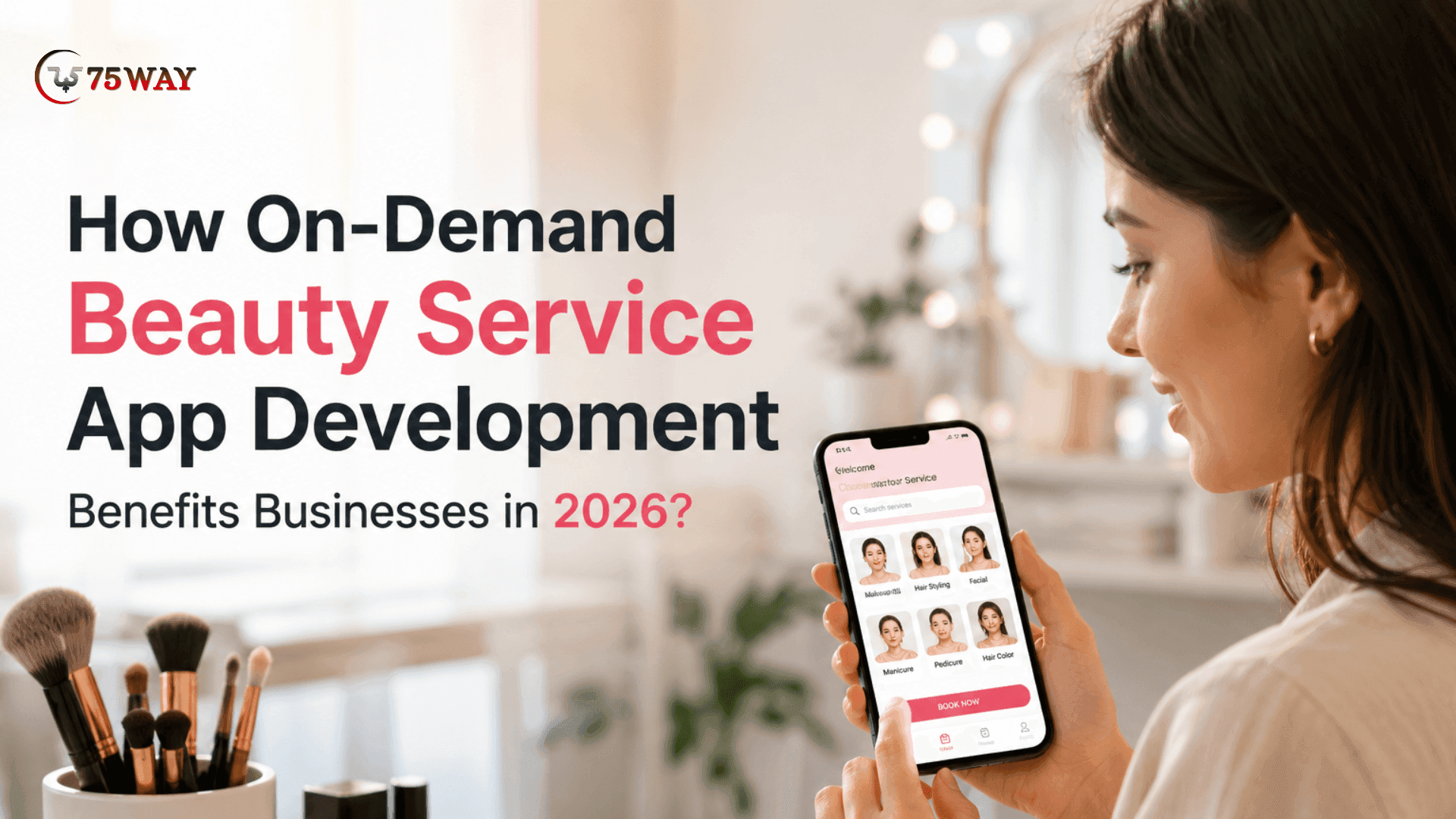
On-demand beauty apps are reshaping how customers discover, book, and pay for beauty services. This guide explores their business benefits, investment drivers, essential features, development costs, revenue opportunities, personalization, and scalability. It also explains how businesses can use these platforms to improve customer relationships and operations.
Key Takeaways
- Understand how on-demand beauty apps improve bookings and business operations.
- Explore why salons, startups, and beauty brands are investing in these platforms.
- Discover key app features required for customers, professionals, and administrators.
- Learn how personalization can increase engagement, retention, and repeat beauty bookings.
- See how digital payments, memberships, and subscriptions create additional revenue opportunities.
For a beauty business, an empty chair at 4 PM is not just unused capacity. It is revenue that cannot be recovered later. On-demand apps give businesses a way to capture last-minute demand, fill available slots, and turn more first-time customers into repeat bookings.
At the same time, customers have become less willing to call salons, wait for callbacks, or depend on uncertain availability. They want to see what is available, compare services, check pricing, and book when it suits them. When that experience is difficult, they can move to another provider before the business gets a chance to win them over.
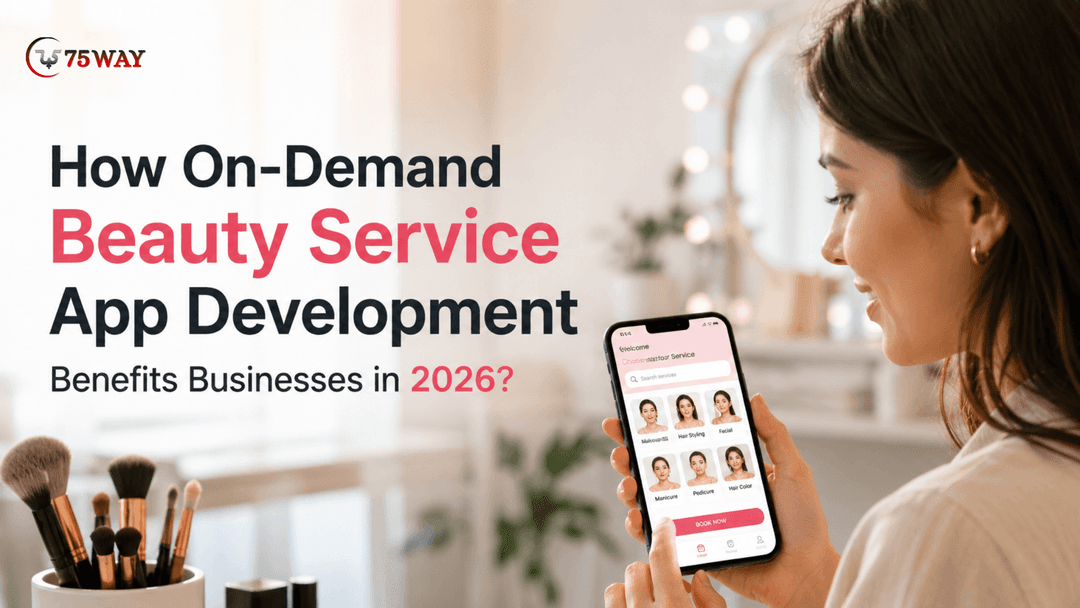
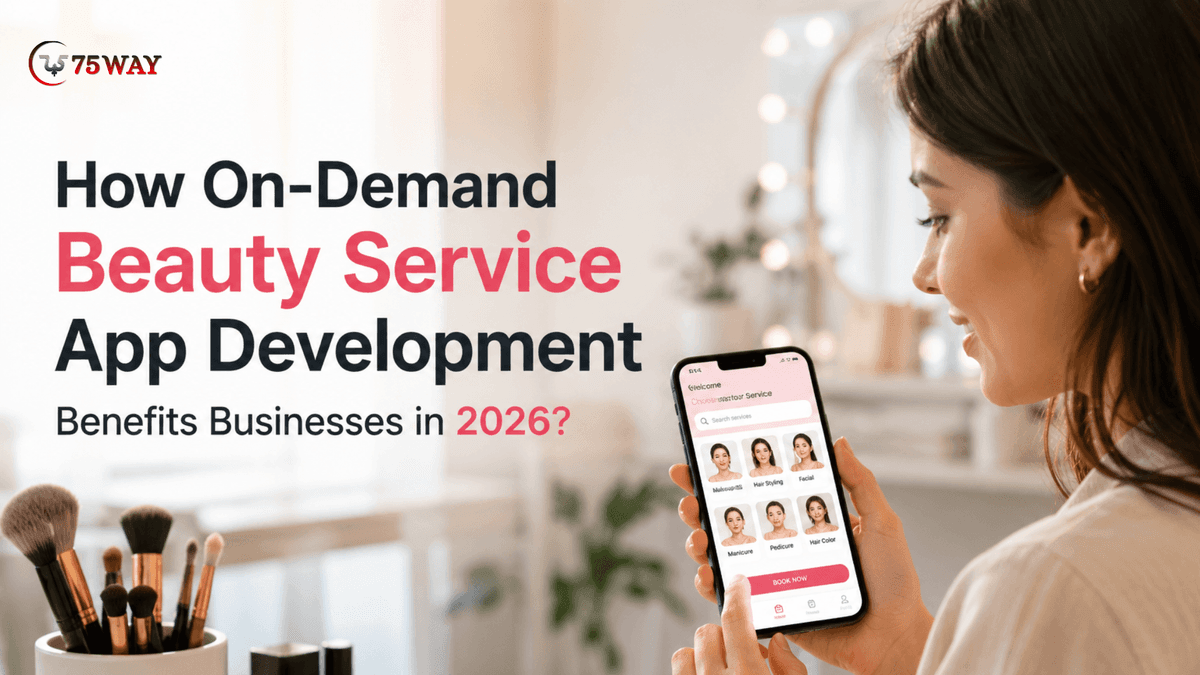
This is where on-demand beauty service app development becomes more than a booking tool. It creates a direct channel between the business and its customers while giving owners greater visibility into appointments, professional availability, demand patterns, promotions, and repeat visits.
The result is a stronger business case for digital investment: fewer idle slots, more booking opportunities, better customer retention, and a revenue stream that becomes easier to plan. This guide explores the key benefits that make on-demand beauty app development a worthwhile consideration for businesses in 2026.
Why Are Businesses Investing In On-Demand Beauty Salon Apps?
The traditional beauty business often depends on phone calls, walk-ins, social media messages, manual calendars, and staff coordination. Those channels can work at a small scale, but they become harder to manage as bookings and customers increase.
An app creates a direct digital channel between the customer and the business.
More importantly, customers increasingly expect services to be as convenient to book as other on-demand experiences. A business that makes availability, pricing, booking, payment, and communication easier can remove friction before the customer even reaches the salon or professional.
For founders, the bigger opportunity lies in owning the customer relationship and booking journey rather than depending entirely on third-party marketplaces or social platforms.
Advantages of Building An On-Demand Beauty Service App
An on-demand beauty app can help businesses turn scattered bookings into a more direct, trackable customer channel. The real advantage lies in improving capacity use, repeat sales, and customer reach. These business benefits are examined below.
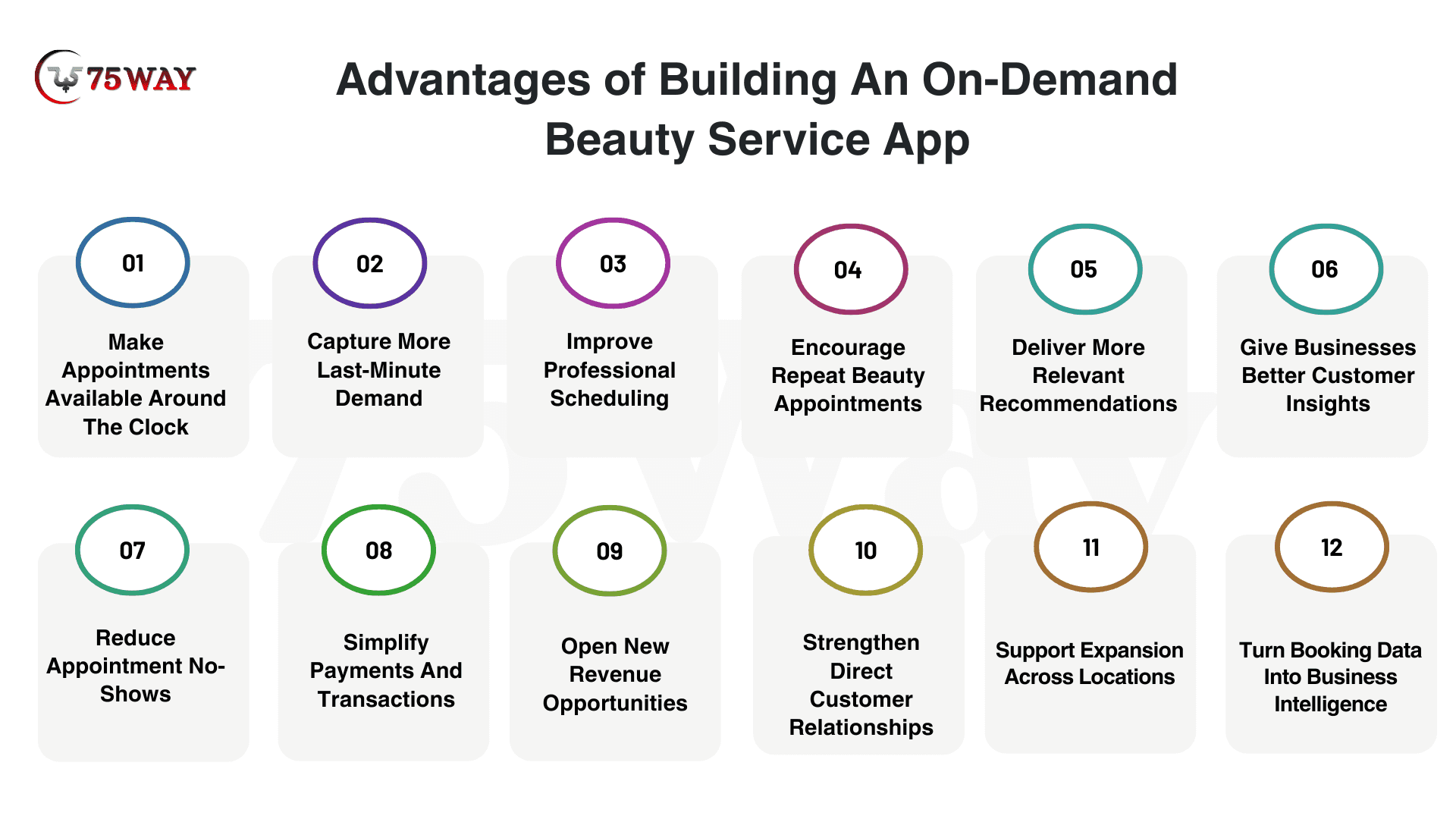
1. Make Appointments Available Around The Clock
Customers do not always decide to book a beauty service during business hours. A mobile app allows them to explore services, check availability, and confirm appointments whenever they are ready.
For example, someone who remembers they need a haircut late at night can complete the booking without waiting for the salon to open.
Business impact: Always-available booking can capture demand that may otherwise be lost because staff cannot respond immediately.
2. Capture More Last-Minute Demand
Beauty businesses can lose revenue when appointment slots remain vacant after cancellations. Real-time availability gives customers a way to discover those openings and book them quickly.
This becomes particularly useful for home-service platforms where professionals can accept nearby bookings based on their schedules and locations.
Business impact: Better visibility of available slots can help businesses generate revenue from capacity that might otherwise remain unused.
3. Improve Professional Scheduling
Managing professionals manually becomes difficult when each person has different working hours, skills, services, and availability. A centralized app can make these details visible while assigning bookings according to predefined scheduling rules.
Managers can also view upcoming appointments and identify scheduling gaps before they affect daily operations.
Business impact: Better coordination can reduce scheduling conflicts and help businesses make greater use of their professional workforce.
4. Encourage Repeat Beauty Appointments
Beauty services often depend on repeat visits rather than one-time purchases. A mobile platform can remind customers about upcoming appointments, suggest relevant services, and make rebooking easier.
For instance, a customer who regularly books a facial every few weeks could receive a reminder based on their previous appointment pattern.
Business impact: Easier rebooking can support customer retention and increase lifetime value.
5. Deliver More Relevant Recommendations
Customer preferences can differ significantly across beauty services. A platform can use booking history, selected services, preferred professionals, and purchase behavior to make recommendations more relevant.
A customer who frequently books hair coloring, for example, might see related maintenance services or suitable follow-up appointments instead of unrelated offers.
Business impact: Relevant recommendations can improve service discovery and create opportunities for additional bookings.
6. Give Businesses Better Customer Insights
A dedicated application can generate first-party data around bookings, service preferences, purchasing behavior, cancellations, and engagement. Business owners can use these insights to understand what customers actually want.
The information can also reveal patterns such as popular services, high-demand time slots, frequently booked professionals, and customers who have stopped returning.
Business impact: Better visibility supports more informed decisions around marketing, staffing, pricing, and service offerings.
7. Reduce Appointment No-Shows
A missed appointment affects both the customer and the professional whose time was reserved. Automated confirmations, reminders, cancellation policies, and rescheduling options can make appointment commitments clearer.
Businesses can also introduce advance payments or deposits where appropriate to reduce the financial impact of no-shows.
Business impact: Better appointment communication can protect professional capacity and reduce avoidable revenue loss.
8. Simplify Payments And Transactions
Customers expect convenient payment options when booking digital services. An integrated payment system can support online payments, deposits, refunds, digital receipts, and transaction records within the same platform.
For a marketplace, the payment system can also manage commissions and professional payouts according to the business model.
Business impact: A connected payment experience reduces friction for customers while giving businesses clearer transaction visibility.
9. Open New Revenue Opportunities
A beauty app does not have to depend entirely on service bookings. Businesses can use the platform to introduce memberships, prepaid packages, subscriptions, beauty products, premium services, and promotional offers.
A salon could, for example, sell a monthly beauty membership that combines selected services with product discounts.
Business impact: Additional revenue streams can increase the earning potential of the platform and reduce dependence on individual appointments.
10. Strengthen Direct Customer Relationships
Third-party marketplaces can bring customers to a beauty business, but the business may have limited control over the overall customer experience. A branded application creates a direct channel for communication, bookings, promotions, loyalty programs, and customer support.
Customers can interact with the business without moving between multiple platforms.
Business impact: Direct customer access can strengthen brand loyalty and give businesses greater control over the customer journey.
11. Support Expansion Across Locations
A growing beauty business may eventually operate multiple salons, branches, or home-service territories. Managing separate booking processes for each location can create unnecessary complexity.
A centralized platform can support different locations while maintaining their individual services, professionals, schedules, pricing, and availability.
Business impact: Centralized operations can make multi-location management and geographic expansion easier to coordinate.
12. Turn Booking Data Into Business Intelligence
Every appointment generates information that can help the business understand its performance. Analytics can show which services generate the most bookings, when demand peaks, which promotions perform well, and how frequently customers return.
These insights become more valuable when combined with sales, customer, and professional performance data.
Business impact: Data-backed decisions can help owners improve staffing, promotions, pricing, and service planning with greater confidence.
Which Businesses Can Benefit From An On-Demand Beauty Service App?
An on-demand beauty app can support far more than traditional salons. Any business that manages beauty services, professionals, appointments, or at-home treatments can use the model to create a more convenient digital booking and service experience.
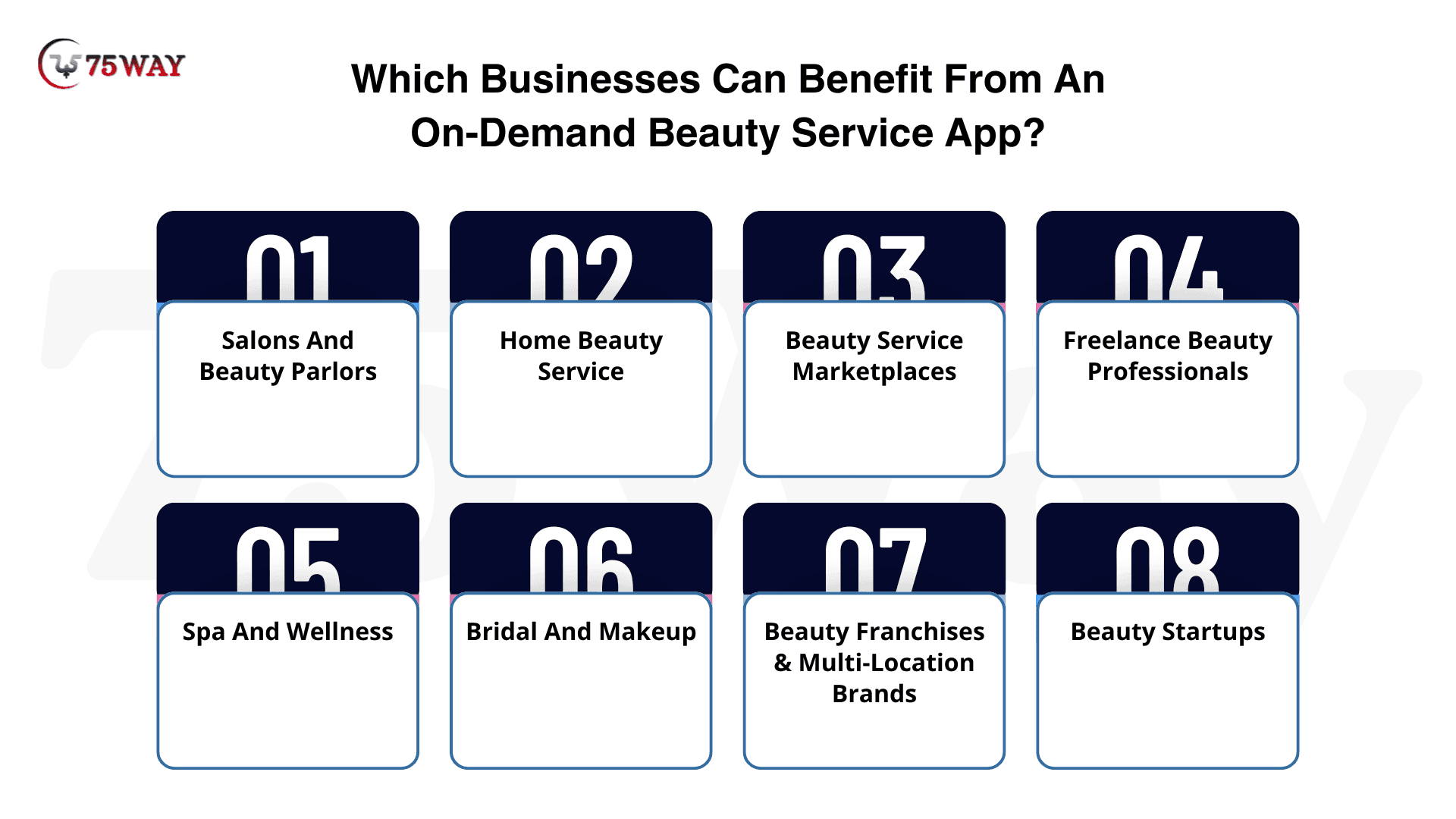
- Salons And Beauty Parlors: Salon chains and independent parlors can use the app for online appointments, professional scheduling, payments, customer retention, and service promotions.
- Home Beauty Service: At-home beauty providers can connect customers with professionals based on location, availability, service type, and preferred appointment time.
- Beauty Service Marketplaces: Marketplace businesses can bring multiple salons and independent professionals onto one platform, earning through commissions, service fees, subscriptions, or promoted listings.
- Freelance Beauty Professionals: Makeup artists, hairstylists, nail technicians, beauticians, and other independent professionals can use the platform to showcase services, manage bookings, and build direct customer relationships.
- Spa And Wellness: Spas and wellness centers can use on-demand booking for massages, facials, body treatments, wellness packages, and recurring appointments.
- Bridal And Makeup: Bridal makeup studios and freelance artists can manage consultations, bookings, packages, schedules, and event-based beauty services through a dedicated platform.
- Beauty Franchises & Multi-Location Brands: Growing beauty brands can centralize customer management while allowing individual branches to manage their own services, professionals, schedules, and availability.
- Beauty Startups: Startups can build a specialized marketplace around a niche such as mobile beauty services, luxury treatments, quick beauty appointments, or premium beauty memberships.
The business model can be adapted according to how services are delivered. A salon may need appointment management, while a marketplace requires professional onboarding and commissions, and a home-service business may need location-based matching and route planning.
Final Thoughts
On-demand beauty service app development can give businesses much more than a digital booking channel. The right platform can improve customer acquisition, increase booking opportunities, strengthen retention, simplify operations, support new revenue models, and turn customer behavior into actionable business intelligence.
The most valuable app is not necessarily the one with the largest feature set. A platform built around a clearly defined beauty audience, convenient service experience, reliable professionals, strong customer relationships, and measurable business outcomes has a stronger foundation for sustainable growth.
For businesses entering this space in 2026, the opportunity is to build a complete digital beauty ecosystem rather than another appointment-booking app. If you are planning to build a beauty service app, connect with a trusted on-demand app development firm that can help you turn your business model into a scalable, user-focused digital platform.
Frequently Asked Questions (FAQs)
Which Businesses Can Benefit From An On-Demand Beauty Service App?
Salons, beauty parlors, home-service providers, spas, freelance beauty professionals, bridal makeup businesses, beauty marketplaces, franchises, and beauty startups can benefit from this app model.
How Does An On-Demand Beauty App Help Increase Bookings?
Real-time availability, 24/7 booking, personalized recommendations, reminders, promotions, and easy payments can reduce booking friction and help businesses capture more appointment opportunities.
Can An On-Demand Beauty App Support Home Beauty Services?
Yes. Location-based professional matching, availability management, service selection, scheduling, payments, and notifications can support customers booking beauty professionals at home.
What Features Should An On-Demand Beauty Service App Include?
The core experience generally requires service discovery, professional profiles, availability, booking, payments, notifications, reviews, customer management, professional management, and an administrative dashboard.
How Can An On-Demand Beauty App Generate Revenue?
Businesses can use service commissions, booking fees, subscriptions, memberships, premium listings, product sales, advertising, or partnerships depending on their business model.
How Can AI Improve An On-Demand Beauty Service App?
AI can support personalized service recommendations, conversational booking, customer support, intelligent scheduling, beauty discovery, automated marketing, and business analytics.