Summary
White-label app development enables businesses to launch fully functional applications under their own brand without building from scratch. This guide explains architecture, cost structure, business models, and real-world use cases. It helps entrepreneurs and agencies understand how to scale faster, reduce development risk, and create long-term digital revenue systems efficiently.
Quick Overview
- White-label app development allows faster product launches with lower efforts
- Businesses can scale revenue without building a complete software infrastructure
- Multi-tenant systems allow multiple brands to use the same core platform
- Average white-label app development cost ranges from $1,000 to $70,000+
- Strategic use of white-label apps reduces market entry barriers
There are moments when businesses realize that speed matters more than perfection. The idea is ready, the demand is visible, but building everything internally starts slowing progress.
This is where many established companies think about ready-made app solutions. Instead of building every digital product from scratch, they adopt white-label app development to launch pre-built applications faster in competitive markets.
This approach is now being adopted far beyond enterprise-level organizations. Startups, agencies, and fast-growing businesses are using white-label solutions powered by artificial intelligence to validate ideas faster, reduce technical dependency, and enter new markets with lower upfront investment.
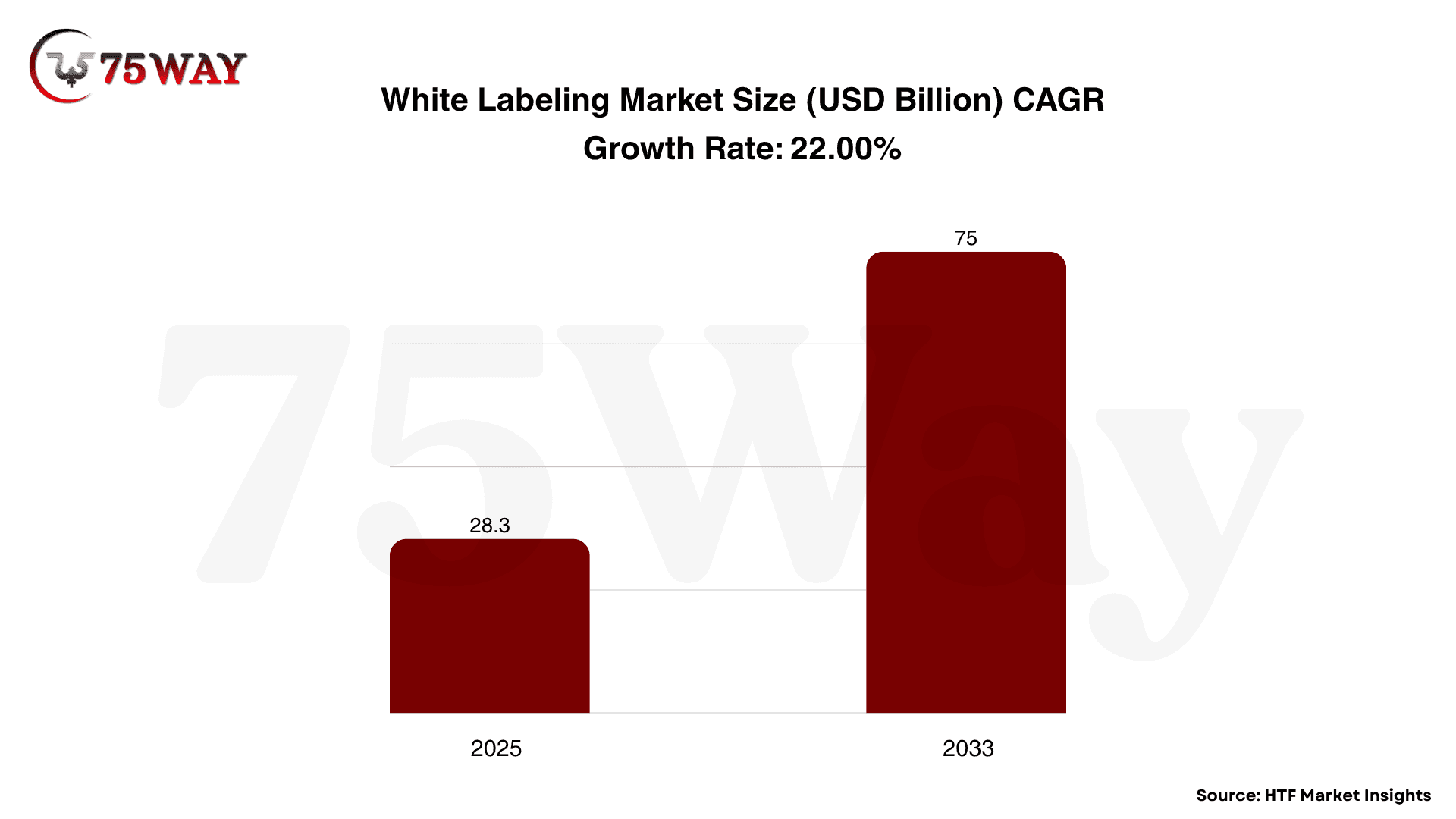
In fact, the white labeling industry is expected to grow to $75 billion by 2033, expanding at a compound annual growth rate of 22%. This reflects a clear shift in how businesses are choosing flexibility over traditional development-heavy approaches.
Here, a question arises, “How to build a white label app with AI integration?” “What’s the cost of white-label app development?” To resolve all your queries, we have prepared this guide for you. You will learn the complete process of white-label app development, its benefits and use cases, the cost breakdown, and the challenges businesses should consider before incorporating it into their growth strategy.
What Is White Label App Development?
White label app development is a process where a fully developed app is created by one company and then rebranded, customized, and sold by another business as its own product. Instead of building software from the initial stage, businesses use a ready-made application framework and modify its branding, design, and sometimes features to match their own identity.
In simple word, white label app development is similar to re-designing a house. For instance, a construction company builds a well-furnished house with a complete structure, plumbing, electricity, rooms, and interiors. Now, instead of building a new house from scratch, another person comes in and simply changes the paint, furniture style, decorations, and branding elements like nameplate and exterior look.
To outsiders, it feels like a completely different house, but the foundation, structure, and core construction remain the same. Similarly, in white-label app development, one company builds the complete software “house,” and other businesses simply customize its appearance and branding to launch it as their own product quickly, without spending time and money on rebuilding the core system.
White label app development can be seen in many ride booking apps like Uber, and ecommerce apps like Amazon, used in everyday life.
When White Label Solutions Make Sense for Your Business
Businesses should consider white label solutions when they need to launch a product quickly without building a full technical infrastructure internally. It is especially useful when speed, cost efficiency, and market testing are more important than developing a completely unique system from scratch.
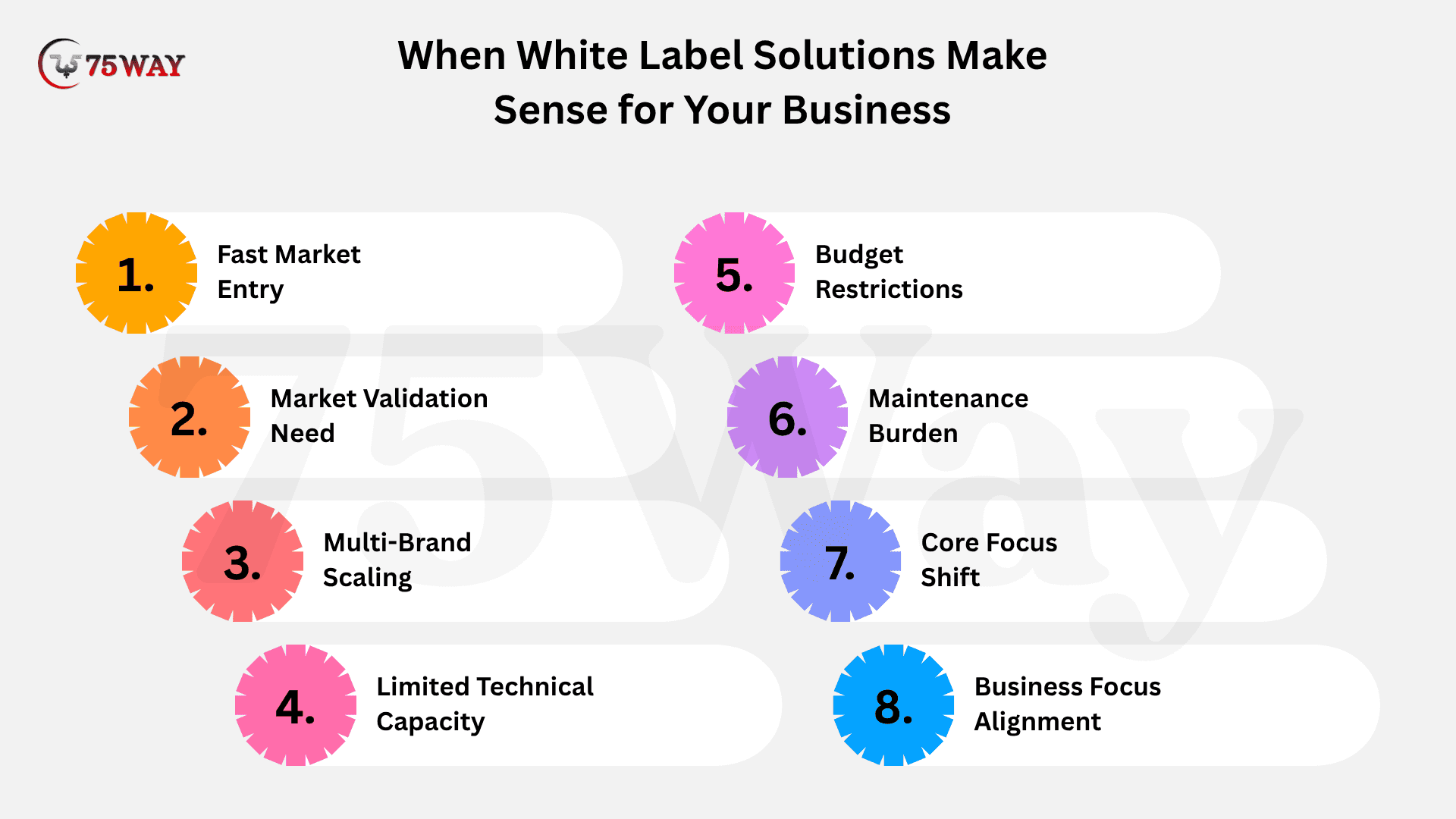
1. Fast Market Entry: Speed can define success in competitive industries. Even a strong idea loses impact if competitors launch first and capture attention.
White label app solutions allow businesses to enter the market quickly using pre-built applications. Instead of waiting through long development cycles, companies can focus on branding, positioning, and customer outreach while launching faster than traditional development would allow.
2. Market Validation Need
Launching a new idea always carries uncertainty. Investing heavily in custom development without knowing market response increases financial risk.
Ready-made application development solutions provide a practical way to test ideas quickly. Businesses can launch a working product, gather real user feedback, and refine their strategy before committing to large-scale development investments.
3. Multi-Brand Scaling
Some businesses manage multiple products, services, or brands across different markets. Building separate systems for each one can become expensive and inefficient.
White-label platforms allow one core system to support multiple branded versions. This makes it easier to expand offerings, enter new segments, and scale operations without duplicating development efforts.
4. Limited Technical Capacity
Many businesses have capable teams but lack deep expertise in complex systems like payments, automation, or scalable backend architecture. Hiring and training specialists takes time, and building everything internally often slows execution.
White label solutions solve this gap by offering ready-built systems that already include tested functionality. Businesses can use these platforms immediately instead of spending months solving technical challenges from scratch.
5. Budget Restrictions
Custom software development often requires a large upfront investment in engineering, design, testing, and maintenance. For startups and growing businesses, this level of spending can delay or even block product launches.
White label solutions significantly reduce this burden. Since the core system is already built, businesses only pay for customization and branding, allowing them to allocate more budget toward marketing, operations, and growth.
6. Maintenance Burden
Software is not a one-time build; it requires continuous updates, security improvements, and performance optimization. Managing this internally can become a long-term operational challenge.
With no-code app development solutions, maintenance responsibilities are handled by the provider. This ensures the system stays updated and secure while businesses focus on growth instead of technical upkeep.
7. Business Focus Alignment
Every business has its core strength, whether it is sales, customer engagement, or domain expertise. When too much time is spent on technical development, it diverts attention from these key areas.
The ready-to-deploy app development solutions allow companies to shift focus back to what matters most. The technical foundation is handled externally, while internal teams concentrate on building relationships, acquiring customers, and scaling revenue.
How White Label App Systems Work?
White label app systems are built in a way that separates the core technology from the visible brand experience. This makes it possible for multiple businesses to use the same underlying system while presenting it as their own unique product. The result is faster deployment, easier scaling, and consistent performance across different users and industries.
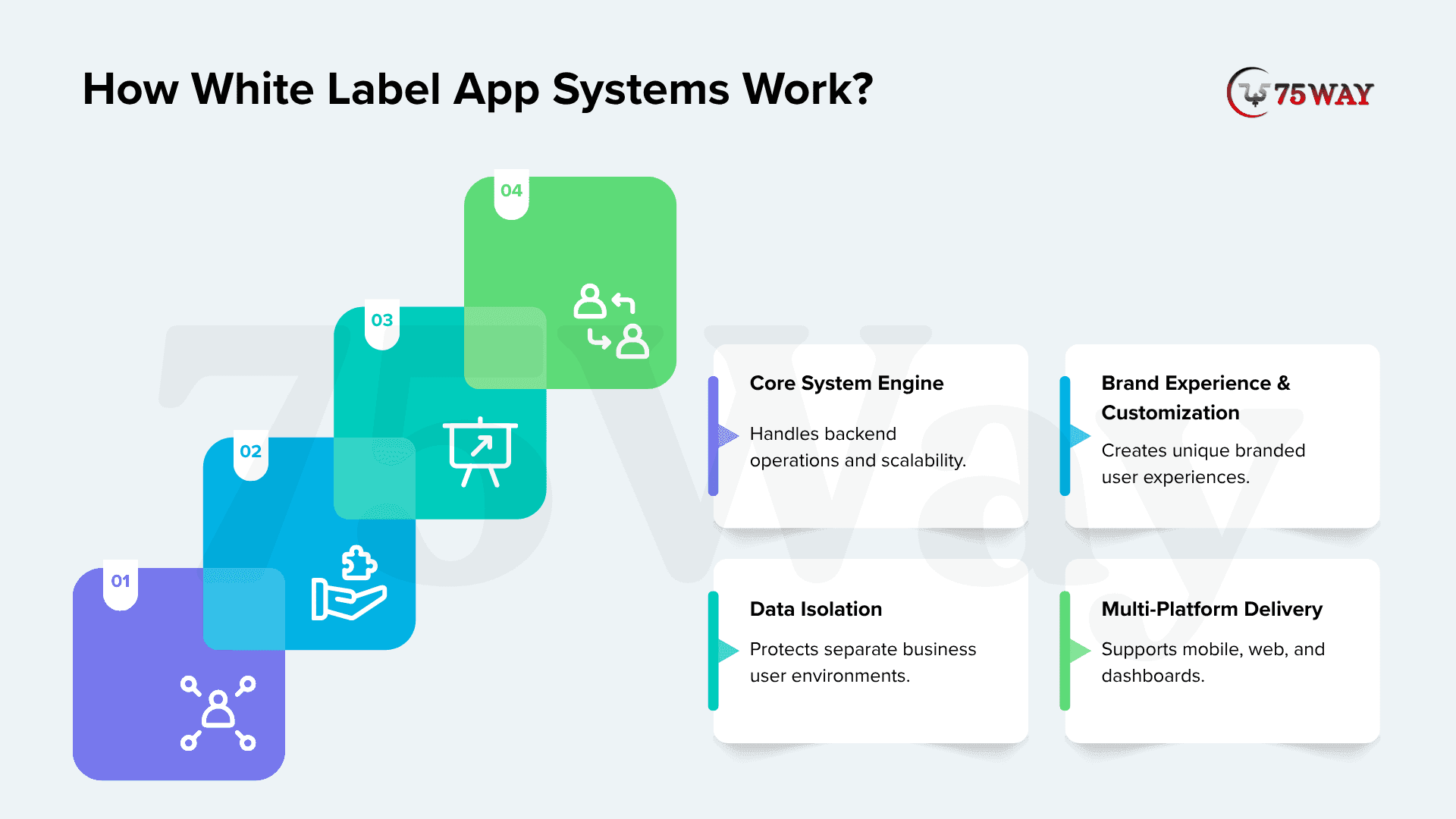
Stage 1: Core System Engine
This is the foundation that powers everything behind the application, handling the essential logic that keeps the system running smoothly at scale. It manages how data moves through the system, how features interact with each other, and how performance is maintained under different user loads. Without this layer, the application would not function reliably or consistently across different businesses.
- Backend logic
- Business rules
- API infrastructure
- Data processing system
Stage 2: Brand Experience & Customization
This stage focuses on how the application looks and feels for each individual business using the system. It allows companies to customize the visual identity so their customers see a product that matches their brand, even though the core technology remains the same. This helps create a strong, unique presence in the market without rebuilding the entire system.
- Logo and identity
- Color schemes
- UI customization
- App naming
Stage 3: Data Isolation
This stage ensures that every business using the system operates in a completely separate environment.
Even though the system is shared, each business has its own private space where data, users, and settings remain fully isolated. This separation is what makes the system secure, scalable, and reliable for multiple clients at the same time.
- Separate user data
- Isolated dashboards
- Independent configurations
Stage 4: Multi-Platform Delivery
This final part handles how the application is delivered and accessed across different devices and platforms.
It ensures that each branded version of the app performs whether it is used on mobile, web, or internal dashboards. While the experience looks different for each business, the underlying system remains the same and is managed.
- Mobile platforms
- Web systems
- Admin panels
Step-by-Step White Label App Development Process
White label app development follows a structured journey where each stage builds on the previous one to ensure stability, scalability, and long-term usability. The goal is not just to create an application, but to design a system that can be reused, rebranded, and scaled across multiple businesses without rebuilding from scratch.
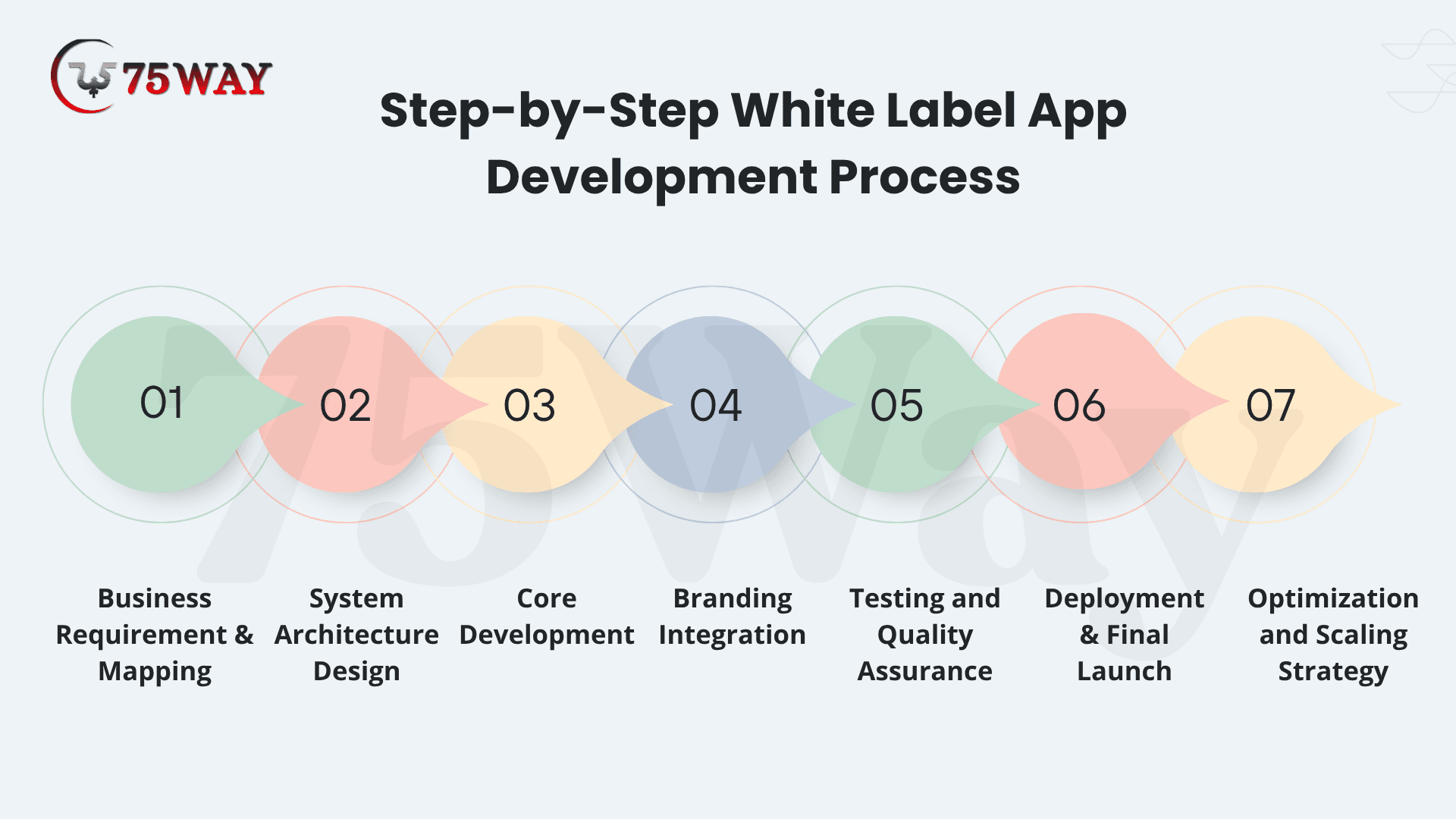
Step 1: Business Requirement & Mapping
Before any technical work begins, it is essential to clearly understand what the business is trying to achieve and who the final users will be. This step ensures the product direction is aligned with real market needs rather than assumptions or incomplete planning.
This phase focuses on defining the application's purpose, identifying user expectations, and translating business ideas into structured feature requirements. A well-defined requirements stage prevents misalignment later and ensures the final product solves a real market need rather than just delivering features.
- Identify target users
- Define business objectives
- Document required features
- Analyze market demand
- Study competitor solutions
- Prioritize feature importance
Step 2: System Architecture Design
Once the requirements are clear, the next step is designing how the system will function at a structural level. This phase involves planning how the application's components will interact, how data will flow, and how the system will scale as multiple businesses adopt it. A strong architecture ensures the application remains stable even as usage grows and new features are added over time.
Step 3: Core Development
At this stage, the actual engineering work begins, focusing on building the foundation of the application. Developers create backend systems, APIs, and core functionalities that power the entire platform. This is where the application's logic takes shape, ensuring that all essential features work reliably and efficiently in real-world conditions.
- Backend Development: This involves creating server-side architecture that manages data flow, system logic, and overall application performance across different user interactions.
- API Creation: This focuses on building communication bridges between frontend interfaces and backend systems for smooth and secure data exchange.
- Feature Development: Implement core functionalities that define how users interact with the application and complete essential actions.
- System Logic: Execute all business rules properly within the application, maintaining accuracy, consistency, and operational stability across workflows.
Step 4: Branding Integration
After the core system is stable, customization capabilities are added so different businesses can apply their own identity. This stage ensures that the same application can appear completely unique for each brand without altering the underlying system. It bridges the gap between technical functionality and customer-facing identity.
- Assign logos, colors, fonts, brand identity
- Modify layouts, spacing, components, and interface behavior
- Define business rules, permissions, and client separation
- Organize visual assets, logos, icons, and media
- Create a design system, enabling consistent UI
- Align backend and frontend, ensuring brand consistency
Step 5: Testing and Quality Assurance
Before the system goes live, it undergoes a structured testing process designed to ensure that every component performs reliably under real-world usage conditions. This stage focuses on evaluating how the application behaves under different loads, environments, and user interactions to confirm overall system stability.
Every feature is carefully examined to detect technical issues such as bugs, performance bottlenecks, or security vulnerabilities that could impact user experience. The goal is to ensure the system remains consistent, responsive, and secure even when multiple clients and users are accessing it simultaneously across the platform.
Step 6: Deployment & Final Launch
Once testing is complete, the application is prepared for launch across different platforms. This involves setting up cloud infrastructure, publishing applications on relevant platforms, and ensuring that the system is accessible to end users without performance issues. Proper deployment ensures a smooth transition from development to real-world usage.
- Configure cloud infrastructure
- Launch mobile applications
- Activate web platforms
Step 7: Optimization and Scaling Strategy
After the application is successfully deployed, the focus gradually shifts from building and launching to improving, expanding, and strengthening the system for long-term growth. This stage ensures the platform remains stable while new businesses, users, and workloads are continuously added over time.
As adoption increases, the system must be able to handle higher traffic and usage without affecting speed or performance. This phase is centered around maintaining consistent reliability while supporting business expansion across multiple clients and markets.
Along with growth, continuous improvements are made to enhance system efficiency and responsiveness. This includes optimizing performance, refining infrastructure, and preparing the platform for future feature upgrades and scalability demands as the ecosystem evolves.
Key Benefits of White Label App Development for Businesses
White-label app development is widely used for building scalable digital products faster without heavy engineering effort. It allows companies to launch branded applications using ready-made systems while focusing on growth, customers, and market expansion instead of technical complexity.
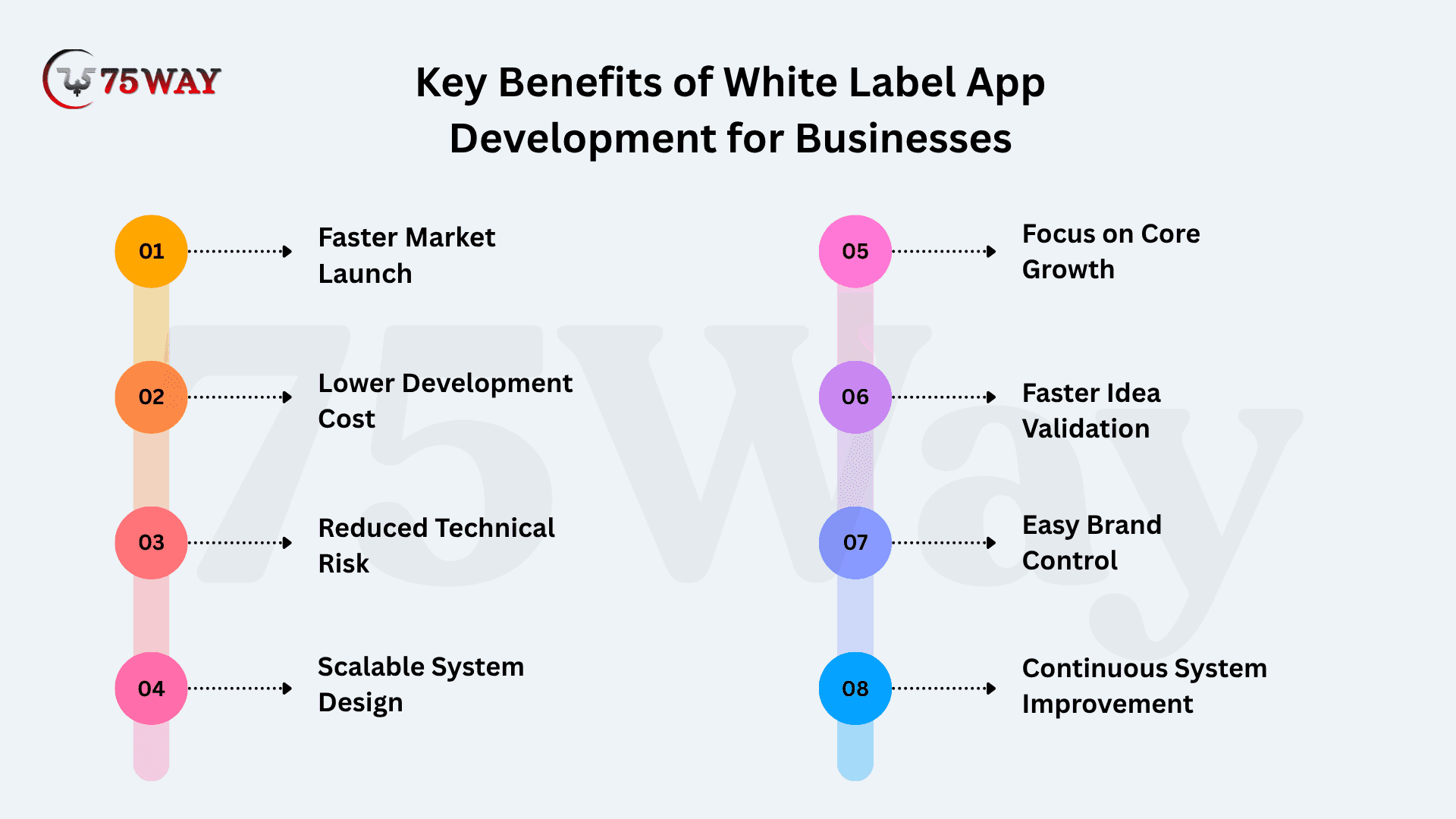
- Faster Market Launch: Pre-built systems remove the long waiting cycle of custom development and allow products to go live much faster. Development, testing, and deployment happen in a streamlined flow rather than stretched timelines. As a result, new products can enter competitive markets while demand is still fresh.
- Lower Development Cost: Building from scratch often requires large teams, long timelines, and continuous investment. White-label systems reduce this pressure by offering a ready foundation. Budgets can then shift toward marketing and user acquisition instead of heavy engineering expenses.
- Reduced Technical Risk: Since the core system is already tested across real use cases, the chances of major technical failures drop significantly. Stability is not something that needs to be proven from day one. That creates a safer environment for launching and scaling.
- Scalable System Design: White-label platforms are designed to support multiple clients and growing user demand without rebuilding the base system. As usage increases, the architecture adapts rather than breaks. This makes expansion smoother and more predictable over time.
- Focus on Core Growth: Instead of spending energy on development challenges, teams can concentrate on customers, branding, and revenue-building activities. Technical complexity is handled by the platform provider, allowing internal focus to stay on business expansion.
- Faster Idea Validation: New ideas can be launched quickly to understand how the market responds in real conditions. Early feedback reduces uncertainty and helps refine direction before large investments are made. This makes decision-making far more practical.
- Easy Brand Control: Applications can be customized with brand identity elements without changing the underlying system. Logos, colors, and interface styles help create a unique user experience. The product feels original even though the foundation is shared.
- Continuous System Improvement: Ongoing updates and improvements are handled at the system level, reducing maintenance pressure. Performance and security upgrades keep the platform stable over time. This ensures long-term reliability without constant manual effort.
White Label Vs Custom Development Comparison
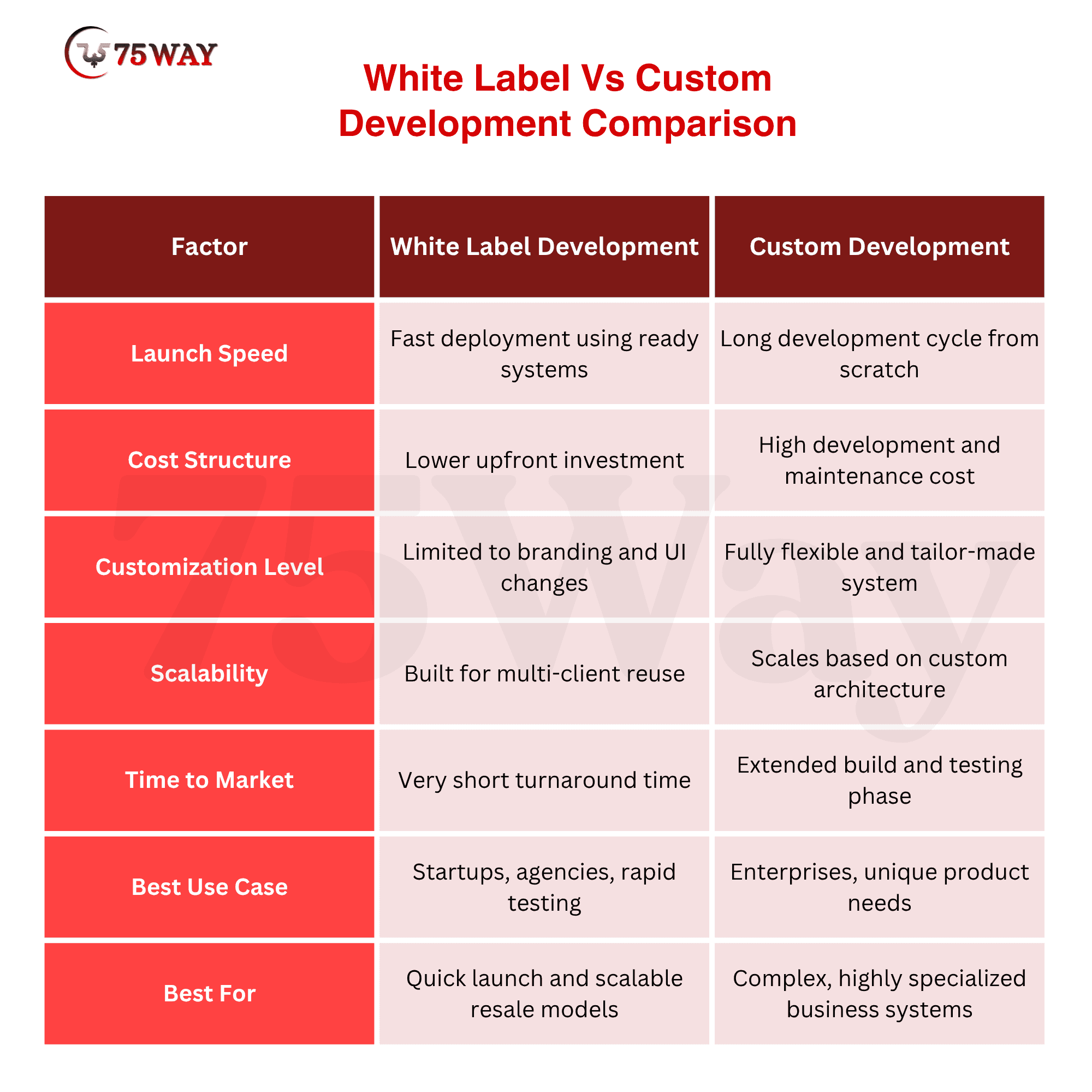
White-label and custom development differ mainly in speed, cost, flexibility, and scalability. White label app development solutions use pre-built systems that can be branded quickly, while custom development involves building everything from scratch based on specific business requirements. The right choice depends on how fast a business wants to launch versus how unique and flexible the product needs to be.
White-labeling works best for faster market entry and lower upfront costs, making it suitable for startups and agencies testing ideas or scaling quickly. Custom app development, on the other hand, is designed for long-term uniqueness, deeper control, and highly specific functionality, but it requires more time, investment, and technical resources.
White Label Application Development Solutions Driving Growth Across Industries
White label applications are transforming how modern businesses build and deliver digital experiences. Instead of investing heavily in building software from scratch, organizations across different sectors now rely on ready-made platforms that can be customized to match their brand identity and operational needs. This approach helps reduce time to market, lower development costs, and improve service delivery across industries where speed and customer experience matter most. Below are key industries where white-label solutions are driving strong adoption and measurable impact.
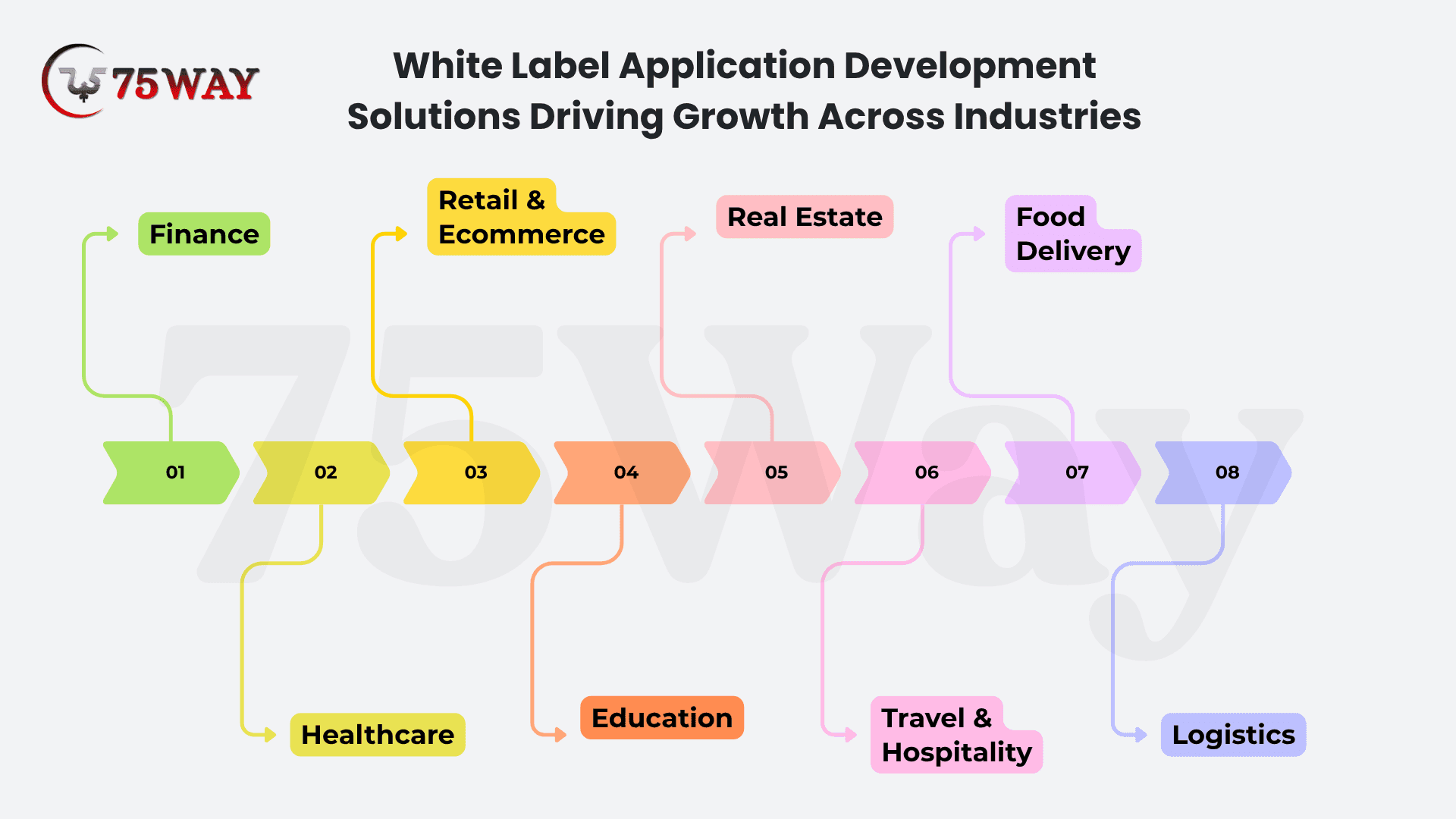
- Finance
Banking and fintech industries are increasingly adopting white-label fintech apps to deliver secure, fast, and user-friendly digital services. These systems support essential functions such as payments, account access, and financial tracking while maintaining strict security and compliance standards. Institutions benefit from faster deployment and improved customer convenience without building complex systems internally.
- Healthcare
Hospital and medical service providers use white-label healthcare apps to streamline patient interactions and improve accessibility to medical services. These platforms support features such as virtual consultations, appointment scheduling, and secure access to health records. The focus remains on improving patient care while ensuring data privacy and operational efficiency.
- Retail & Ecommorce
Retail businesses leverage white-label apps like Amazon to enhance digital shopping experiences and improve customer engagement. These ready-made ecommerce apps often include product catalogs, secure checkout systems, and personalized recommendations that help increase conversions. Businesses can focus on merchandising and customer experience while relying on a stable technical foundation.
- Education
Educational institutions are using white-label educational apps and e-learning software to deliver online learning, virtual classrooms, and skill development programs. These platforms make it easier to reach students remotely and manage course content efficiently. Institutions gain flexibility to expand their offerings without building complex learning systems from the ground up.
- Real Estate
Property businesses use white-label vacation rental apps to simplify property listings, virtual tours, and buyer-agent interactions. These real estate applications improve how users explore properties and make informed decisions remotely. The process of buying, selling, and renting becomes more efficient and accessible through digital tools.
- Travel & Hospitality
Hotels and travel-related businesses use white-label travel apps to manage bookings, reservations, and guest services more efficiently. These platforms help streamline operations while offering users a smooth experience for planning and managing stays. Customer engagement improves through faster service and simplified booking systems.
- Food Delivery
Food service businesses adopt white-label food delivery applications to manage online ordering, delivery tracking, and table reservations. These systems improve order accuracy and customer convenience while reducing operational complexity. Businesses can focus more on food quality and service rather than on technology management.
- Logistics
Logistics companies rely on white-label logistics software development solutions to track shipments, manage deliveries, and improve communication across supply chains. These systems enhance visibility and operational control while reducing manual coordination efforts. Efficiency increases as real-time updates and tracking become easier to manage.
Core Development Approaches For White-Label Apps
White-label mobile app development typically follows two primary approaches that define how systems are built, customized, and delivered to different businesses. Each approach balances speed, flexibility, and scalability depending on the level of customization required.
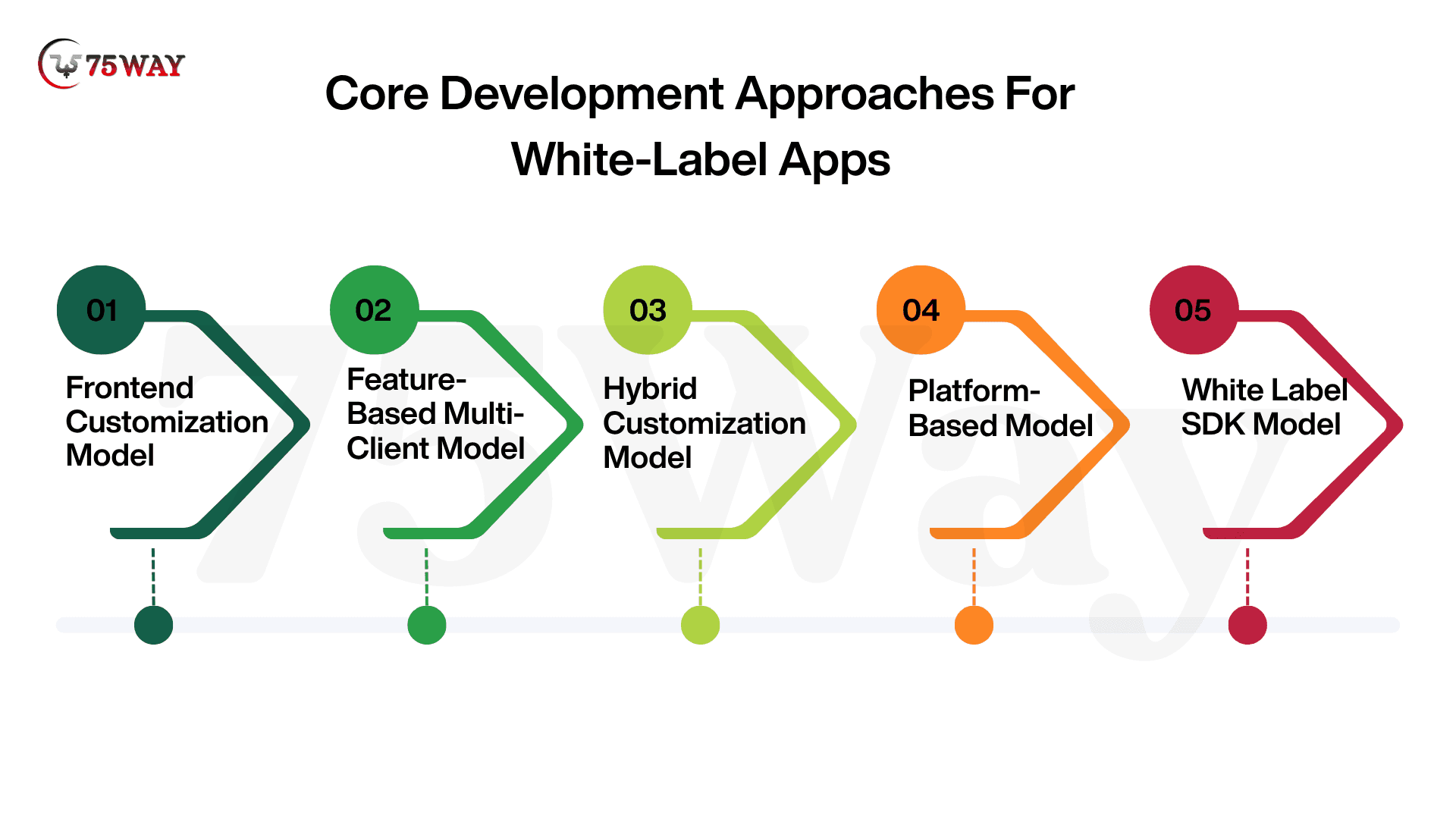
- Frontend Customization Model
In this approach, the backend system remains shared and unchanged while the frontend is adapted for each business. Developers modify visual elements such as colors, layouts, navigation, and branding to create a unique user experience for every client. The core functionality stays stable, ensuring reliability across all applications using the same system.
This model allows faster product launches since the main technical infrastructure is already built and tested. Businesses benefit from a quick turnaround time while still delivering a branded experience to their users without compromising system performance.
- Feature-Based Multi-Client Model
In this model, the application is developed with a fixed set of features that can be used by multiple businesses under different configurations. Each client receives the same functional framework, but the system allows controlled variations based on their operational needs and target audience.
This approach ensures consistency across deployments while maintaining flexibility in how features are utilized. It is particularly effective for scaling products across multiple markets where uniform performance and predictable behavior are important for long-term growth.
- Hybrid Customization Model
Some projects combine both shared backend systems and selectively custom-built modules. Instead of strictly reusing everything or fully customizing the frontend, developers choose which parts should remain standard and which parts should be flexible.
This approach is common when different clients need slightly different workflows or feature sets. It maintains development speed while still allowing controlled customization where required.
- Platform-Based Model
In this approach, a complete platform is built once and then extended to support multiple applications or brands. Instead of modifying each app individually, businesses operate through a central system that manages users, features, and configurations.
This model is widely used in scalable SaaS-style products where multiple businesses operate under one infrastructure but maintain separate identities and data environments.
- White Label SDK Model
Some providers offer software development kits (SDKs) that allow companies to build applications on top of a pre-built core system. Developers integrate these SDKs into their own apps and extend functionality as needed.
This method gives more flexibility than standard white-label apps while still reducing the time and complexity of building core features from scratch.
How to Find a Trusted White Label App Development Partner?
A strong white-label app development partner directly influences product quality, launch speed, and long-term scalability. The right team reduces development costs, improves execution efficiency, and ensures consistent branding across platforms. This decision strengthens technical performance while supporting sustainable growth and smoother digital expansion.
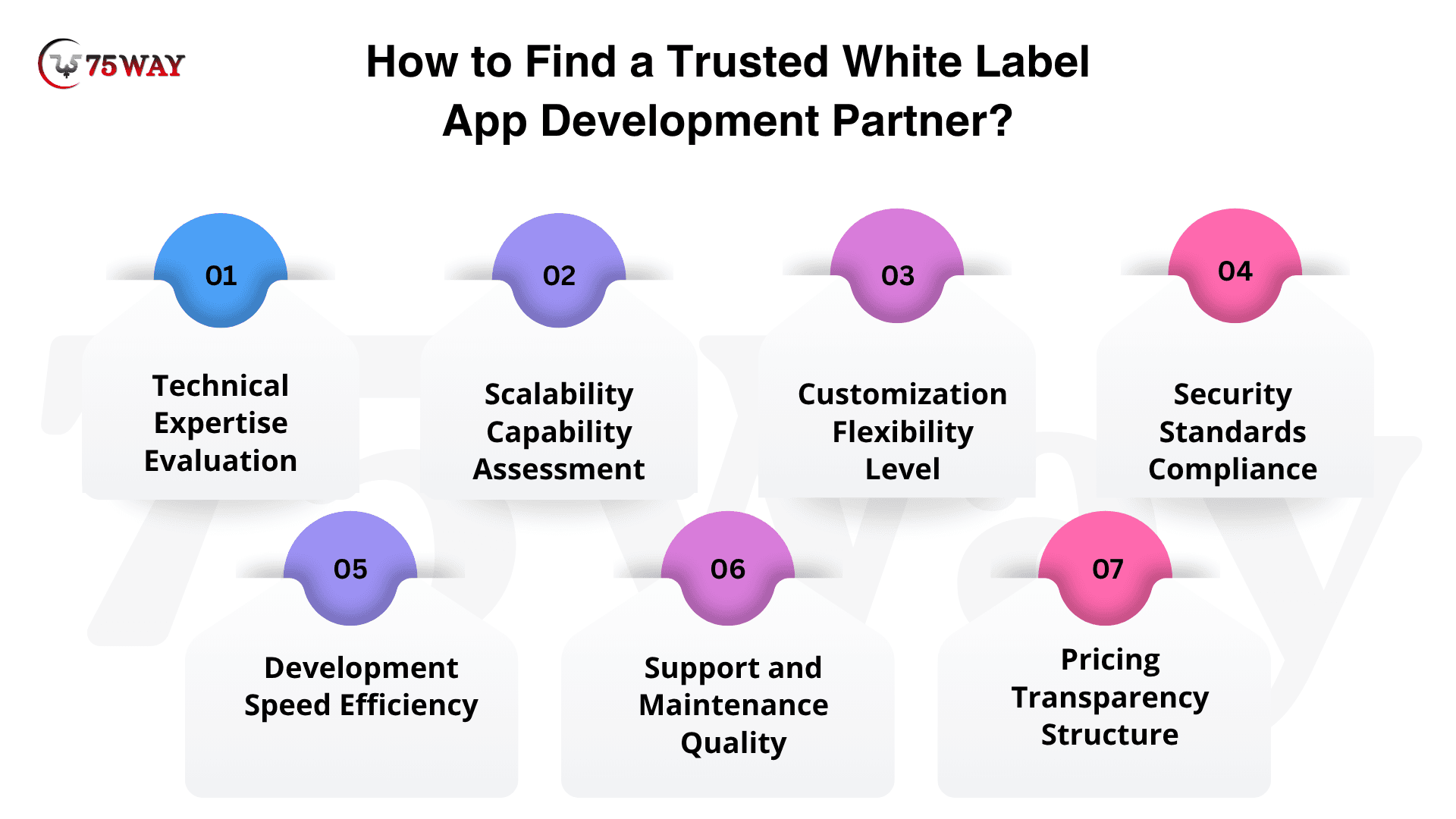
- Technical Expertise Evaluation: A capable partner demonstrates strong knowledge of backend systems, APIs, and scalable architecture design. Experience with complex applications reduces development errors and improves execution quality. Skilled teams can anticipate technical challenges early and build stable solutions that perform consistently across different usage environments and business models.
- Scalability Capability Assessment: Scalability determines how well a system performs as user demand grows over time. A strong partner builds infrastructure that supports expansion without performance issues. Proper planning allows seamless handling of multiple clients, higher traffic, and increasing data loads while maintaining system speed and reliability.
- Customization Flexibility Level: Each business requires unique branding and functional adjustments to stand out in the market. A flexible partner provides customization options for UI, features, and workflows without affecting core stability. This balance helps maintain system reliability while allowing businesses to create distinct user experiences.
- Security Standards Compliance: Strong security practices protect sensitive data, transactions, and user interactions across the platform. A professional partner follows encryption protocols, secure coding standards, and industry compliance requirements. This reduces vulnerability risks and builds trust for businesses operating in regulated or high-security environments.
- Development Speed Efficiency: Fast execution plays an important role in competitive markets where timing affects success. A well-structured partner uses optimized workflows and reusable components to speed up delivery. This allows businesses to launch products faster while maintaining acceptable quality and system performance standards.
- Support and Maintenance Quality: Post-launch support keeps the system stable, updated, and optimized for long-term use. A dependable partner provides regular maintenance, bug fixes, and performance improvements. This reduces operational disruptions and helps the application evolve smoothly as new requirements and features are introduced.
- Pricing Transparency Structure: Clear pricing models help businesses plan budgets without uncertainty or hidden costs. A transparent partner defines costs based on features, customization, and support levels. This clarity improves financial planning and allows better decision-making when evaluating long-term value versus short-term investment.
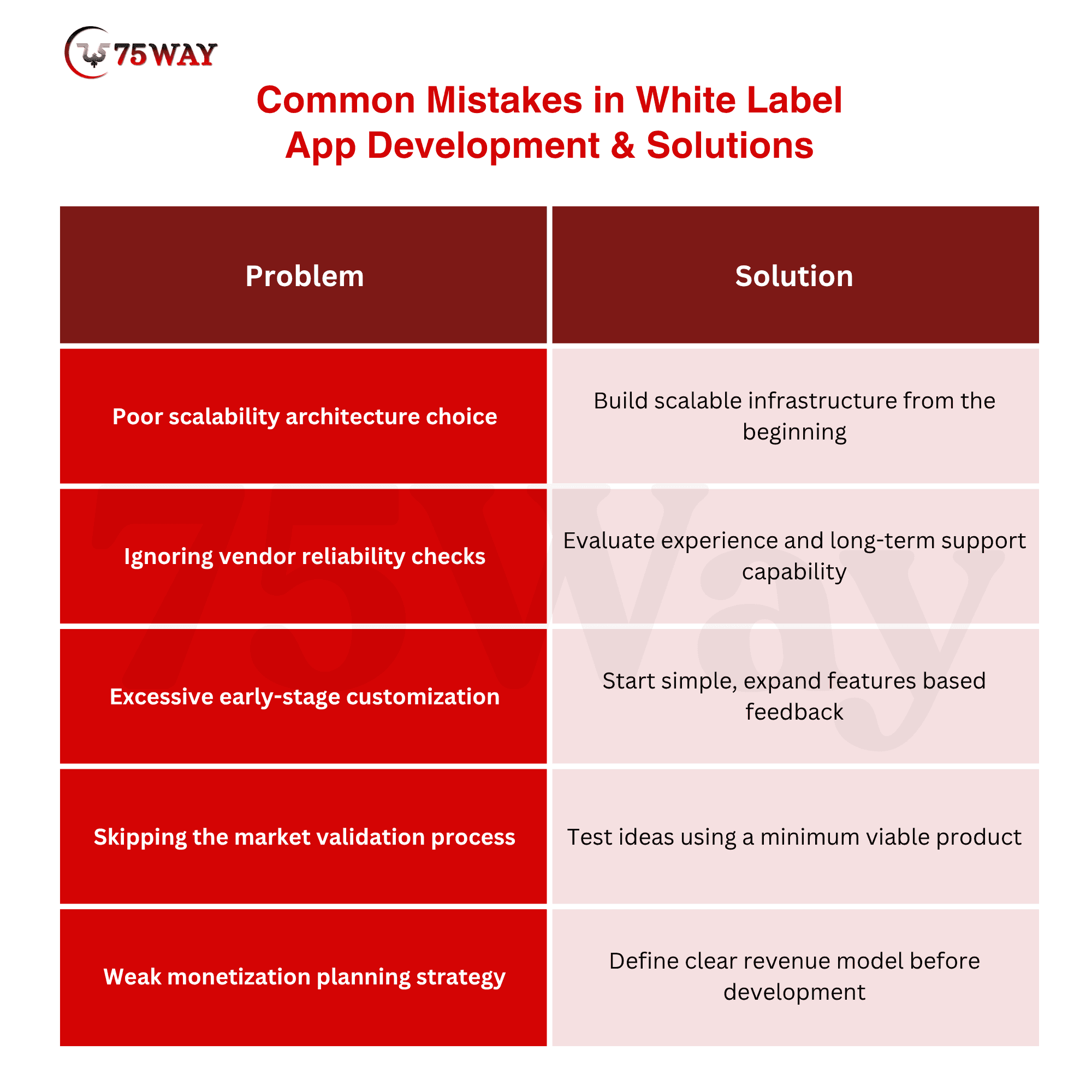
Common Mistakes You Must Avoid While Building White-Label Apps
Many white-label projects fail not because of the model itself, but due to avoidable execution mistakes. Poor planning, weak validation, and short-term thinking often lead to scalability issues and wasted investment. Understanding these mistakes early helps improve decision-making and increases the chances of building a stable, profitable digital product.
- Poor Scalability Architecture: Many businesses choose systems that work well initially but fail when user demand increases. A weak architecture cannot handle growth in traffic, data, or multiple clients. This leads to slow performance and system breakdowns over time. The solution is to prioritize scalable infrastructure from the beginning, even if initial requirements seem small.
- Ignoring Vendor Reliability: Some decisions are made based only on cost or speed without evaluating the reliability of the development partner. This often results in poor support, delayed updates, or unstable systems. The right approach is to assess experience, past work, and long-term support capability before finalizing any vendor relationship.
- Excessive Early Customization: Heavy customization at the early stage can slow down development and create unnecessary complexity. It often leads to unstable systems that are difficult to upgrade later. A better strategy is to start with a stable base product and introduce controlled customization gradually based on real user feedback.
- Skipping Market Validation: Launching a product without validating actual market demand increases the risk of failure. Many solutions are built based on assumptions rather than user needs. This leads to low adoption and poor engagement. The solution is to test ideas early using minimum viable versions and real user feedback before full-scale development.
- Weak Monetization Planning: A strong product can still fail if there is no clear revenue model. Many businesses focus only on building features without planning how the product will generate income. This results in unsustainable growth. Defining monetization strategy early helps align product design with long-term business goals.
Future Trends in White Label App Development & Beyond
The future is moving toward automation, modular ecosystems, and highly scalable digital platforms that reduce development complexity.
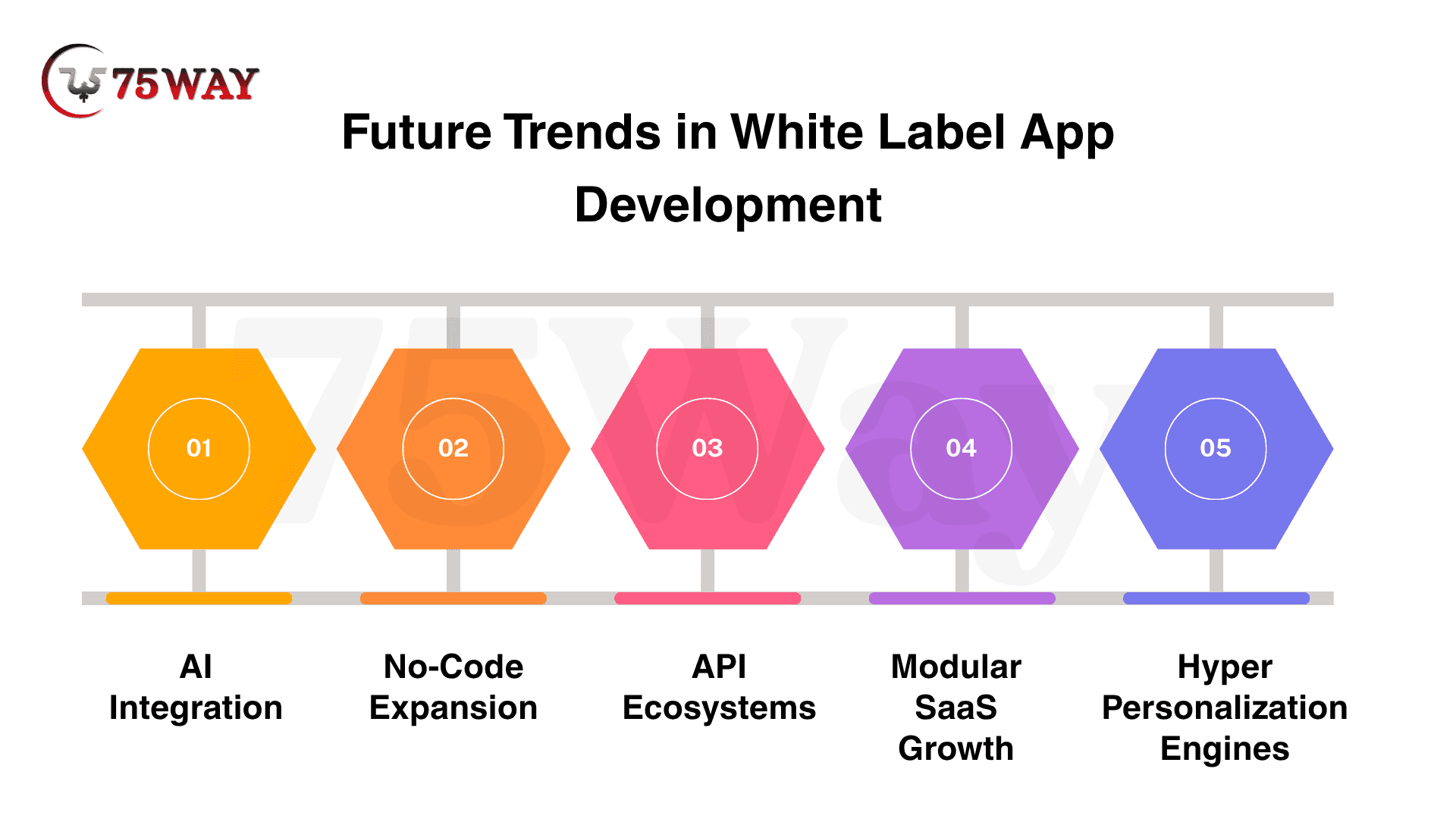
- AI Integration: Artificial intelligence will enhance white-label systems with automation, predictive analytics, and smarter decision-making capabilities. It reduces manual effort and improves operational efficiency.
- No-Code Expansion: No-code platforms will enable faster application creation without great technical skills or engineering dependency. Businesses gain flexibility while reducing development time and costs.
- API Ecosystems: API-driven ecosystems will connect applications with external tools and services. This improves integration, expands functionality, and supports flexible system growth.
- Modular SaaS Growth: Modular SaaS systems will replace rigid applications with flexible, plug-and-play components. Businesses can scale faster and customize features based on demand.
- Hyper Personalization Engines: Advanced systems will personalize user experiences based on behavior and interaction data. This increases engagement, retention, and relevance across digital platforms.
What’s The Cost of White Label App Development in 2026?
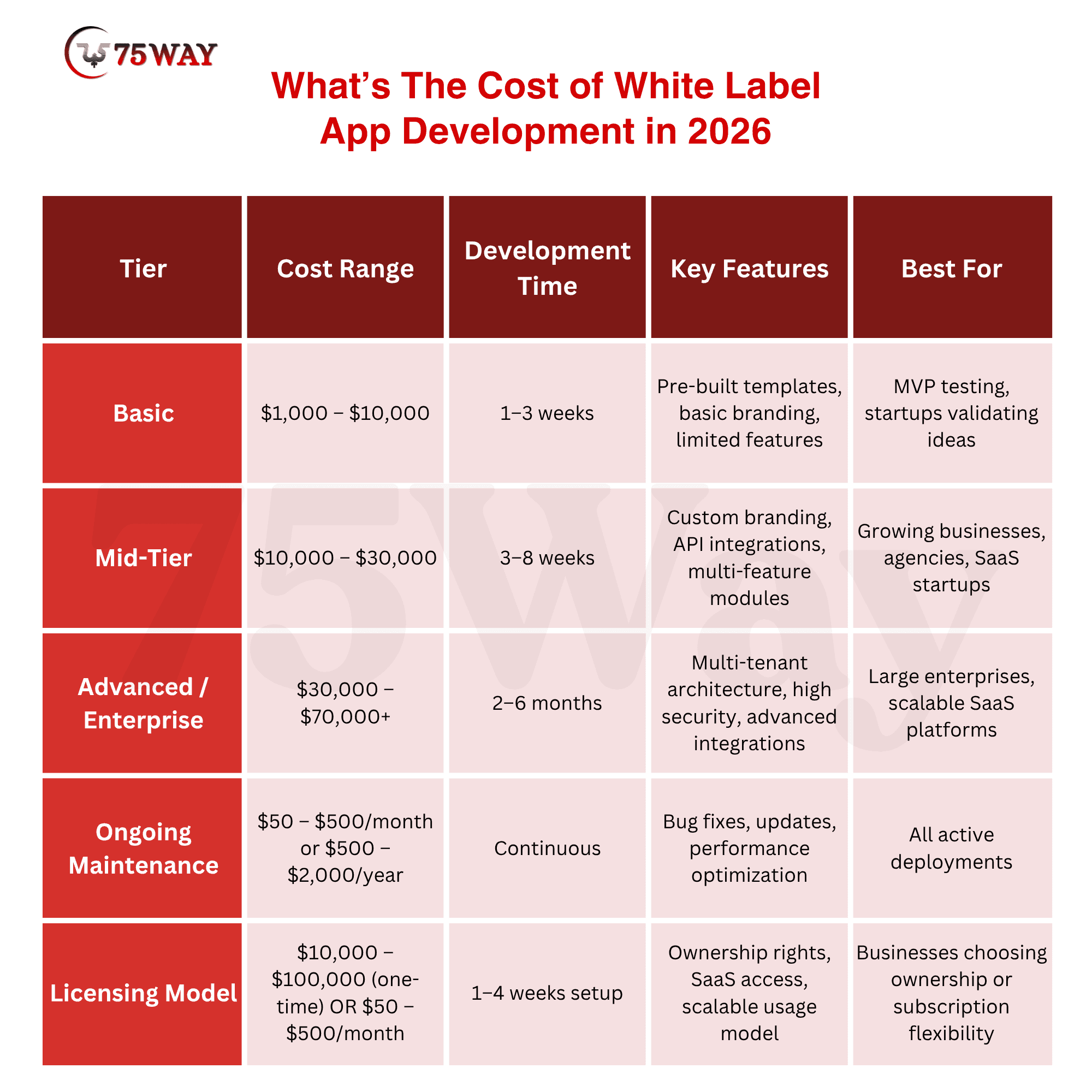
The cost of white-label app development varies significantly based on feature depth, scalability requirements, customization level, and infrastructure complexity. However, pricing still depends on whether the product is a basic branded solution or an enterprise-grade multi-tenant platform. On average, businesses spend between $1,000 and $70,000+ on setup, depending on scope, while ongoing maintenance and licensing can range from $50 to $2,000 per month or year, depending on the provider and service model.
- Entry-level Solutions: $1,000 – $10,000
Suitable for startups or MVP-stage products needing basic functionality and quick market entry.
- Mid-range Platforms: $10,000 – $30,000
Ideal for growing businesses requiring better customization, performance, and user experience features.
- Enterprise Systems: $30,000 – $70,000+
Built for large-scale organizations needing advanced scalability, integrations, and high-security architecture.
- Maintenance & Support: $50 – $500 monthly or $500 – $2,000 yearly
Covers updates, bug fixes, performance monitoring, and ongoing system stability after deployment.
- Licensing Models: One-time $10,000 – $100,000 or subscription $50 – $500 monthly
Allows businesses to choose between full ownership or flexible recurring access based on budget strategy.
How 75way Helps Businesses with White-Label App Development?
75way Technologies supports businesses in building scalable AI-driven white-label applications by providing ready-to-deploy digital frameworks that reduce app development time and complexity. Instead of starting from scratch, companies receive a strong technical foundation that can be customized and branded to meet their specific market needs. This approach helps businesses move faster from idea to execution while maintaining stability and performance.
The platform focuses on delivering a flexible architecture that supports multiple industries and use cases. Businesses can integrate features, modify user experiences, and align the product with their brand identity without affecting the core system. This balance between customization and reliability allows teams to launch professional-grade applications with lower risk and higher efficiency.
Along with AI app development support, 75way also helps in long-term scalability and maintenance. The systems are designed to handle growth, additional users, and evolving feature requirements without performance loss. Continuous optimization, updates, and technical support ensure that businesses can focus on expansion while the platform manages the underlying complexity.
Final Thoughts
White-label app development offers a practical and cost-efficient path for businesses aiming to launch digital products quickly without building everything from scratch. It reduces development time, lowers upfront investment, and enables scalable growth across multiple industries. Whether you are a startup testing an idea or an enterprise expanding digital offerings, choosing the right model directly impacts long-term success and profitability. The key lies in selecting a reliable partner who understands scalability, security, and customization needs. If you are ready to build or scale your digital product, partnering with a trusted on-demand app development company can help you move faster and smarter.
Frequently Asked Questions (FAQs)
Can White-Label Apps Be Completely Rebranded?
Yes, most white-label applications support full rebranding, including logos, colors, and app identity. However, the core system usually remains unchanged. This ensures stability while still allowing businesses to present a unique brand experience.
How Scalable Are White Label Applications For Growing Businesses?
White-label applications are designed with scalability in mind, especially multi-tenant systems. They can handle an increased user base, data volume, and features without major structural changes. Proper architecture ensures smooth expansion as business demand grows.
Do White Label Platforms Support Third-Party Integrations?
Yes, modern white-label platforms often support integrations with payment gateways, CRM tools, analytics systems, and communication APIs. These integrations enhance functionality and help businesses create more complete digital ecosystems for users.
Is Technical Expertise Required To Manage White Label Apps?
Not always, as most platforms include user-friendly dashboards for non-technical users. However, technical knowledge helps during customization and scaling. Support teams usually assist with setup, updates, and maintenance processes.
What Are The Main Risks In Using White Label Software?
The main risks include limited customization, dependency on the provider, and potential competition using similar systems. Choosing a reliable vendor helps reduce these risks. Proper planning also ensures long-term business stability.
Can White Label Apps Support Multiple Business Models?
Yes, they can support various models such as subscription-based services, transaction fees, or hybrid monetization systems. This flexibility allows businesses to adapt pricing strategies according to market demand and customer behavior.