Summary
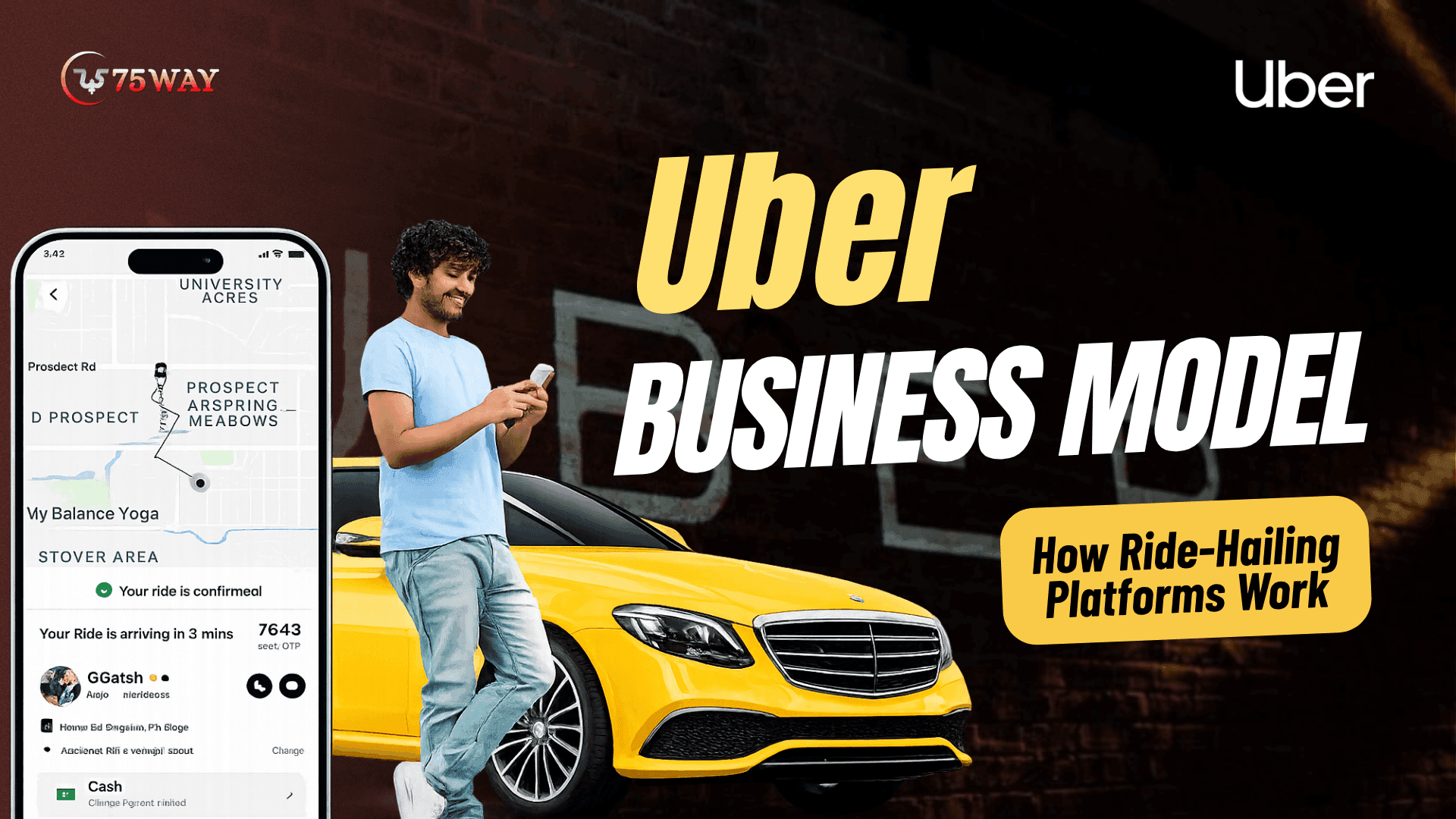
Uber operates a two-sided marketplace connecting riders and drivers through a digital platform. It earns through commissions, surge pricing, delivery services, and subscriptions. This guide explains Uber’s business model, revenue streams, platform strategy, scalability factors, and how it evolved into a global multi-service ecosystem beyond ride-hailing.
Quick Overview
- Uber runs a scalable two-sided marketplace model
- Revenue comes from commissions, pricing, and services
- An asset-light structure enables global expansion quickly
- Data and algorithms drive pricing and matching decisions
- Uber evolved into a multi-service digital ecosystem
Uber is often misunderstood as just a taxi booking app. In reality, it is one of the most powerful marketplace platforms ever built, reshaping how transportation, delivery, logistics, and even local commerce operate at scale.
What started with a simple idea to connect riders with nearby drivers through a mobile app has evolved into a multi-layered business ecosystem. Now, this ride-sharing app’s ecosystem is powered by data, algorithms, and network effects.
Today, Uber is not just competing in transportation. It is competing in logistics, food delivery, enterprise mobility, and even digital services.
To understand its dominance, you need to go beyond the surface-level explanation and examine the architecture of its business model. You must learn how it creates value, captures revenue, and scales globally without owning physical assets.
This guide breaks down Uber’s business model in a way that is useful for founders, investors, and enterprise leaders studying platform-based growth systems.
What Is Uber’s Business Model?
Uber operates as a two-sided digital marketplace that connects:
- Riders who need transportation
- Drivers who provide transportation services
Uber does not own most vehicles or directly employ drivers. Instead, it provides the technology platform that enables transactions between both sides.
This model is known as an asset-light platform business, where Uber acts as an intermediary, matching demand and supply in real time using algorithms. At its core, Uber’s business model is built on three pillars:
- Marketplace connectivity
- Commission-based revenue
- Data-driven optimization
How Uber Works as a Platform System?
Uber’s system is designed to function as a real-time coordination engine between users and drivers.
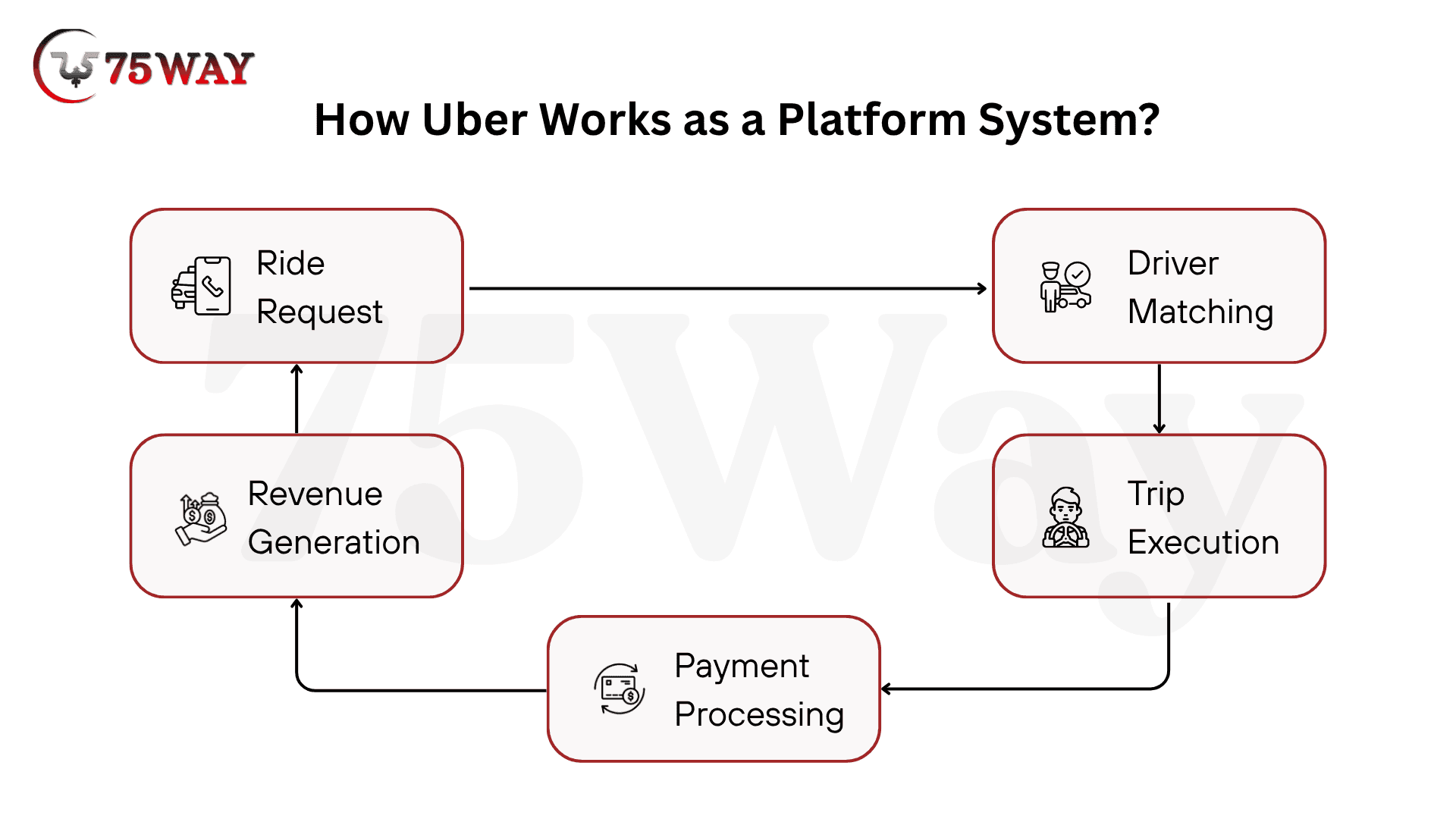
Step 1: Ride Request
A user requests a ride through the app, creating demand in the system.
Step 2: Driver Matching
Uber’s algorithm identifies the nearest available driver based on location, traffic, and pricing conditions.
Step 3: Trip Execution
The driver accepts the request and completes the ride.
Step 4: Payment Processing
Payment is processed digitally through the platform, ensuring frictionless transactions.
Step 5: Revenue Generation
Uber takes a commission from the total fare before transferring earnings to the driver.
This entire process is powered by real-time data infrastructure and machine learning systems that continuously optimize pricing and matching.
Core Components of Uber’s Business Model
Uber’s business model is built on a tightly connected system of components that work together to create a scalable, real-time marketplace. Each component plays a specific role in ensuring smooth operations, efficient matching, and continuous revenue generation.
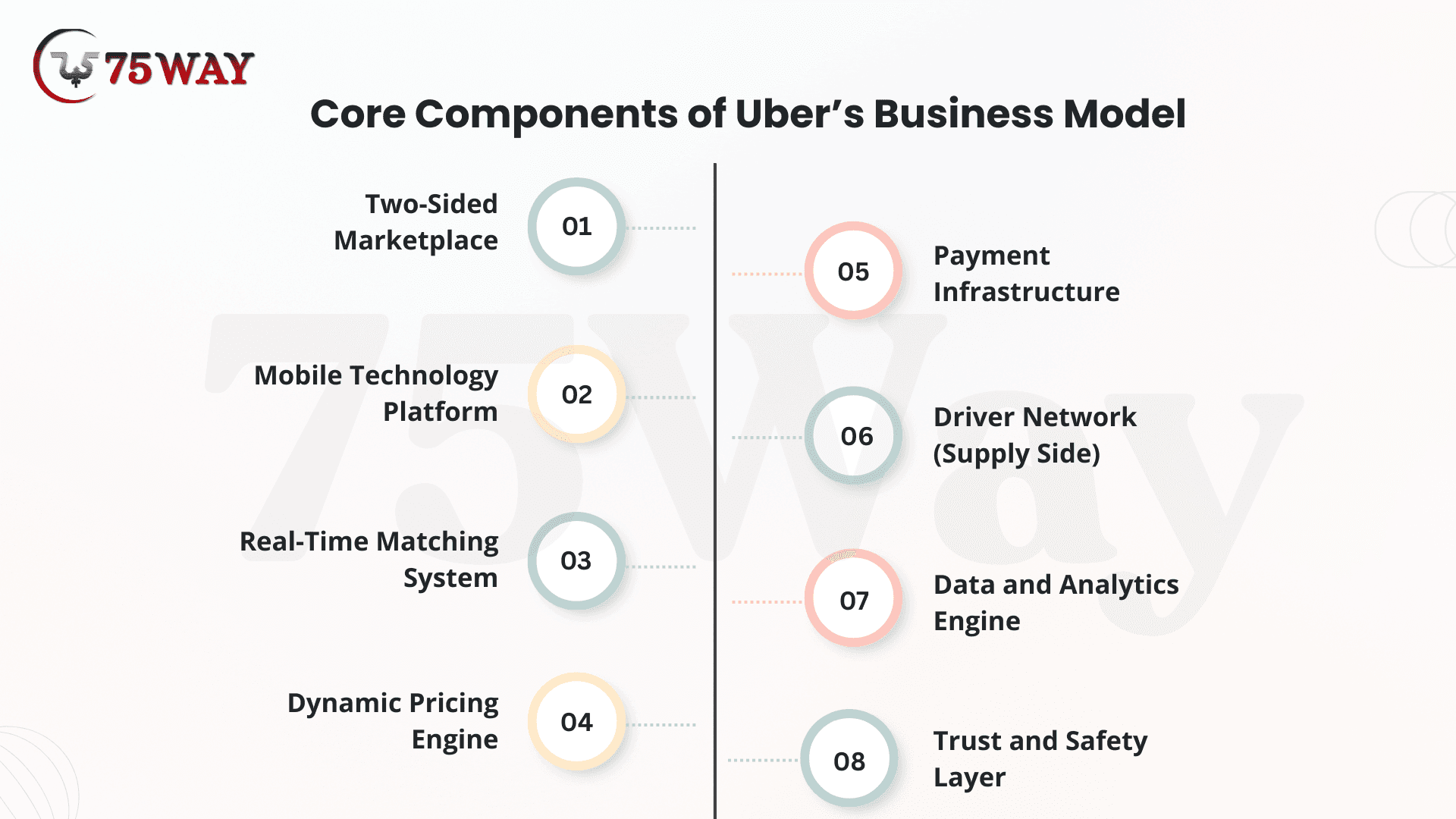
- Two-Sided Marketplace
Uber operates a dual-network system connecting riders (demand side) with drivers (supply side). The platform ensures real-time matching between both sides, enabling seamless transportation services without owning physical assets.
- Mobile Technology Platform
The mobile app acts as the core interface where users request rides, track drivers, make payments, and provide feedback. It serves as the central access point for all platform activities.
- Real-Time Matching System
Uber uses algorithm-driven matching to connect riders with nearby drivers based on location, traffic conditions, availability, and estimated arrival time, ensuring optimized service efficiency.
- Dynamic Pricing Engine
The pricing system automatically adjusts fares based on demand and supply conditions. During peak hours or high demand, prices increase to balance availability and improve service.
- Payment Infrastructure
A fully digital payment system handles fare collection, driver payouts, and transaction processing, ensuring a cashless, frictionless experience for both users and drivers.
- Driver Network (Supply Side)
Independent drivers form the supply backbone of Uber’s ecosystem. They are onboarded through verification systems and operate as flexible service providers within the platform.
- Data & Analytics Engine
Uber collects and analyzes massive real-time data from trips, user behavior, traffic patterns, and demand trends to optimize routing, pricing, and operational decisions.
- Trust & Safety Layer
The platform includes ratings, reviews, identity verification, and safety protocols to build trust between riders and drivers and maintain service quality across global markets.
Major Revenue Streams: How Uber Earns Profit?
Uber’s revenue model is more complex than simple ride commissions and is built on multiple scalable income channels across mobility, delivery, subscriptions, and enterprise services.
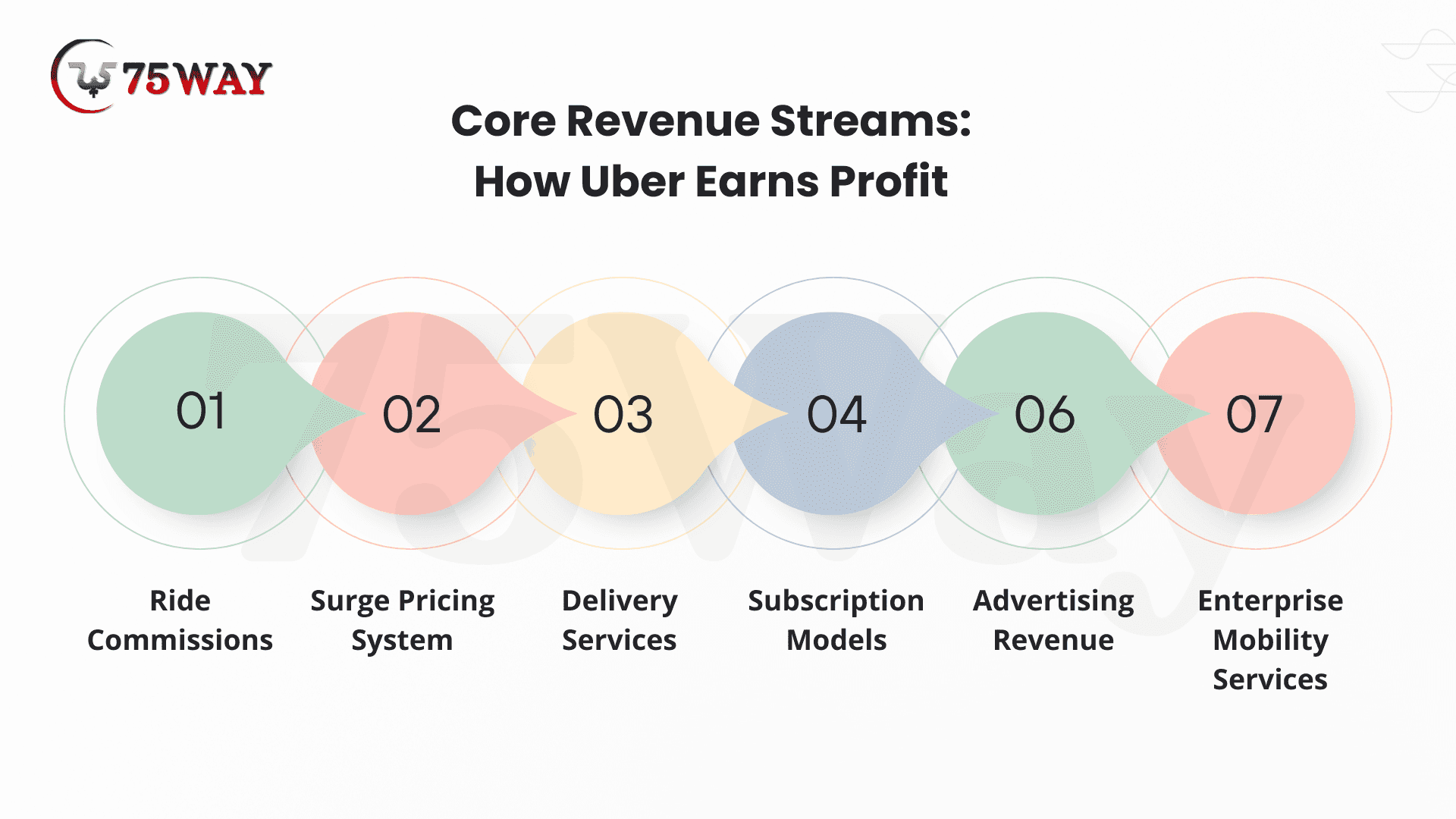
- Ride Commissions: Uber takes a percentage (typically 15%–30%) from every completed ride. This commission is applied automatically through the platform after each trip is finished. It remains the core earning mechanism for Uber’s ride-hailing business, generating consistent income across global markets while scaling with trip volume and usage demand.
- Surge Pricing System: Prices increase dynamically during high demand, improving supply-demand balance and maximizing revenue efficiency. Fare adjustments happen in real time based on rider demand and driver availability in specific locations. This mechanism not only increases earnings during peak hours but also helps balance platform supply by encouraging more drivers to become active.
- Delivery Services: Uber Eats generates revenue through food delivery commissions and merchant fees. Restaurants pay a percentage of each order placed through the platform, along with additional service and delivery-related charges. This segment expands Uber’s revenue beyond mobility, creating a strong presence in the growing on-demand food and grocery delivery market.
- Subscription Models: Users pay for premium services like Uber One, offering discounts and faster delivery options. These subscriptions generate recurring monthly or yearly revenue while encouraging frequent platform usage. In addition to steady income, this model increases customer retention and strengthens user loyalty across both ride-hailing and delivery services.
- Advertising Revenue: Brands pay to promote services within Uber’s app ecosystem. Advertisements are displayed to users based on location, behavior, and engagement patterns, ensuring targeted visibility. This creates a secondary revenue stream that monetizes user attention without disrupting core transportation or delivery experiences.
- Enterprise Mobility Services: Corporate travel and logistics solutions generate additional high-value revenue streams. Businesses use Uber’s platform to manage employee transportation, travel expenses, and mobility coordination. This segment provides predictable, contract-based revenue while serving organizations that require scalable and centralized transport solutions.
Why Uber’s Business Model Scales So Fast?
Uber’s success is not just operational. It is structural.
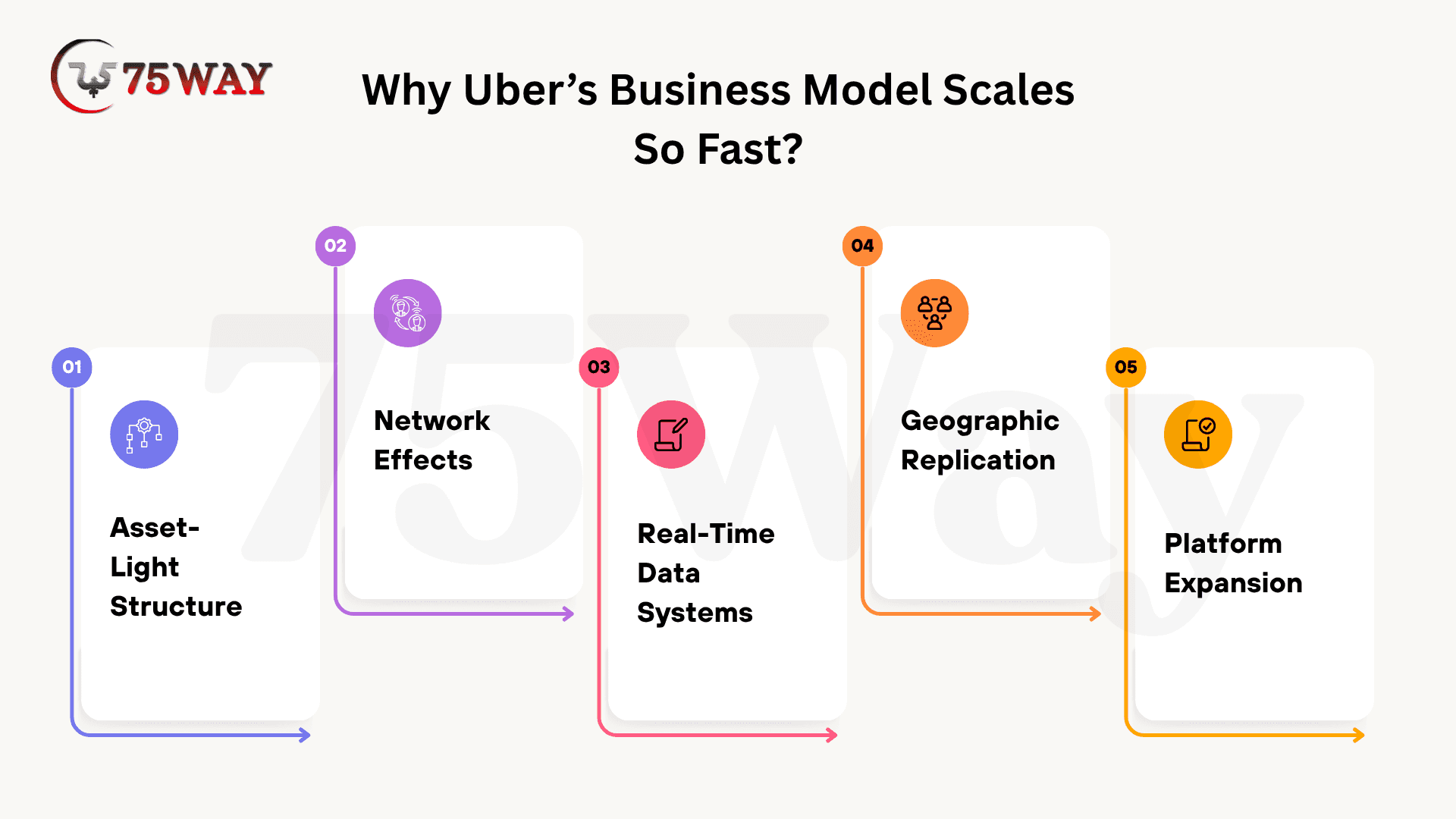
- Asset-Light Structure: Uber does not own cars, which reduces capital requirements and increases scalability.
- Network Effects: More riders attract more drivers, and more drivers improve service quality, creating a self-reinforcing loop.
- Real-Time Data Systems: Every trip generates data that improves routing, pricing, and efficiency.
- Geographic Replication: Once the model works in one city, it can be replicated globally with minimal changes.
- Platform Expansion: Uber continues to expand into new verticals, such as food delivery and freight logistics.
How Uber Creates Value Across Users and Businesses?
Uber creates value by simplifying transportation and delivery through a single digital platform. It connects riders, drivers, and businesses in a way that improves access, reduces friction, and enables scalable operations without traditional infrastructure.
1. On-Demand Mobility Experience for Riders
Riders benefit from a system designed for convenience, speed, and transparency.
- On-demand transportation without owning a vehicle
- Transparent pricing shown before ride confirmation
- Real-time tracking for better trip visibility
- Cashless payment system for seamless transactions
- Faster access to rides in urban and suburban areas
2. Flexible Earnings Model for Drivers
Drivers gain income opportunities through a flexible, independent system.
- Ability to work based on personal schedule
- No fixed employment structure or long-term commitment
- Access to high-demand ride requests throughout the day
- Earnings are linked directly to completed trips
- Opportunity to work across different locations
3. Scalable Growth Platform for Businesses
Businesses use Uber to extend services without building logistics infrastructure.
- Delivery expansion without owning fleet systems
- Access to a large and diverse customer base
- Reduced operational setup costs for delivery services
- Easy scaling across new locations and markets
- Integration with existing business operations
Diverse Market Segments Across the Platform
Uber operates across multiple interconnected user groups rather than serving a single type of audience. Each segment has distinct needs, usage patterns, and value expectations, yet all are connected through a unified digital ecosystem that enables mobility, delivery, and business operations at scale.
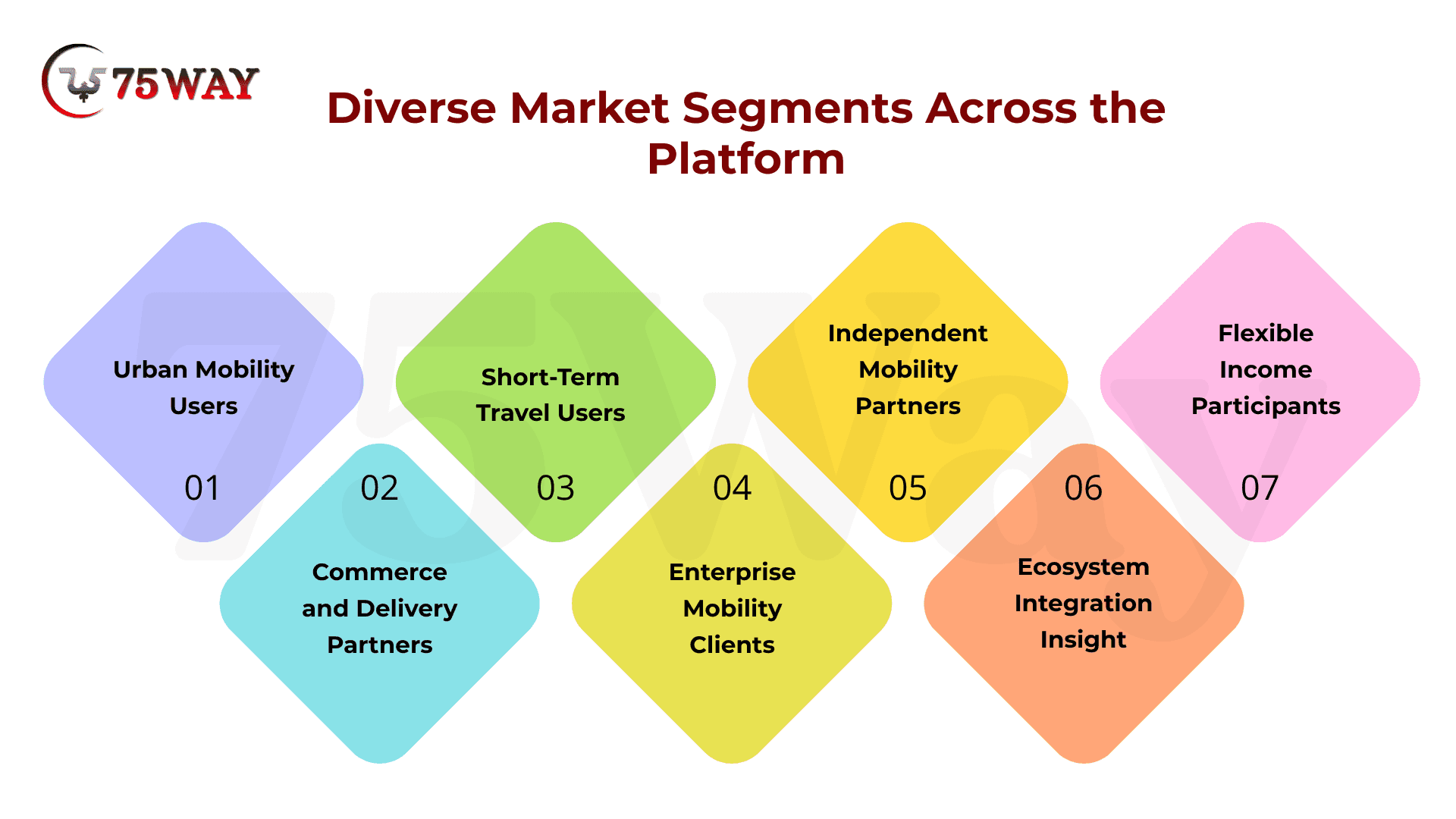
- Urban Mobility Users: Urban commuters rely on the platform for fast, reliable transportation in densely populated areas. The system helps reduce dependence on personal vehicles while offering quick access to point-to-point travel with real-time availability and predictable service flow.
- Short-Term Travel Users: Travelers use the platform for temporary mobility needs in unfamiliar locations. It provides easy access to transportation without requiring local navigation knowledge, ensuring convenience, flexibility, and consistent service quality during short-term stays.
- Independent Mobility Partners: This segment includes individuals and fleet operators who provide transportation services through the platform. They operate independently, manage their own schedules, and contribute to the supply network that supports continuous service availability across regions.
- Flexible Income Participants: Part-time participants use the platform as a flexible earning opportunity. They engage based on availability, contributing to service fulfillment during peak demand periods while maintaining control over working hours and commitment levels.
- Commerce and Delivery Partners: Restaurants and retail businesses use the platform to extend their reach through delivery services. This enables them to access a wider customer base, improve order fulfillment capabilities, and expand revenue channels without building their own logistics systems.
- Enterprise Mobility Clients: Corporate organizations use the platform to manage employee transportation and travel requirements. It helps streamline mobility expenses, improve coordination, and provide structured transport solutions for business operations across different locations.
- Ecosystem Integration Insight: Each segment interacts with the platform differently, yet all are connected through a shared infrastructure that supports mobility, delivery, and enterprise services within a single coordinated system.
Uber as a Multi-Platform Ecosystem
Uber is no longer a single-service company. It has evolved into a super-platform ecosystem that integrates mobility, delivery, logistics, and digital services into one connected system. It has evolved into a super-platform ecosystem that includes:
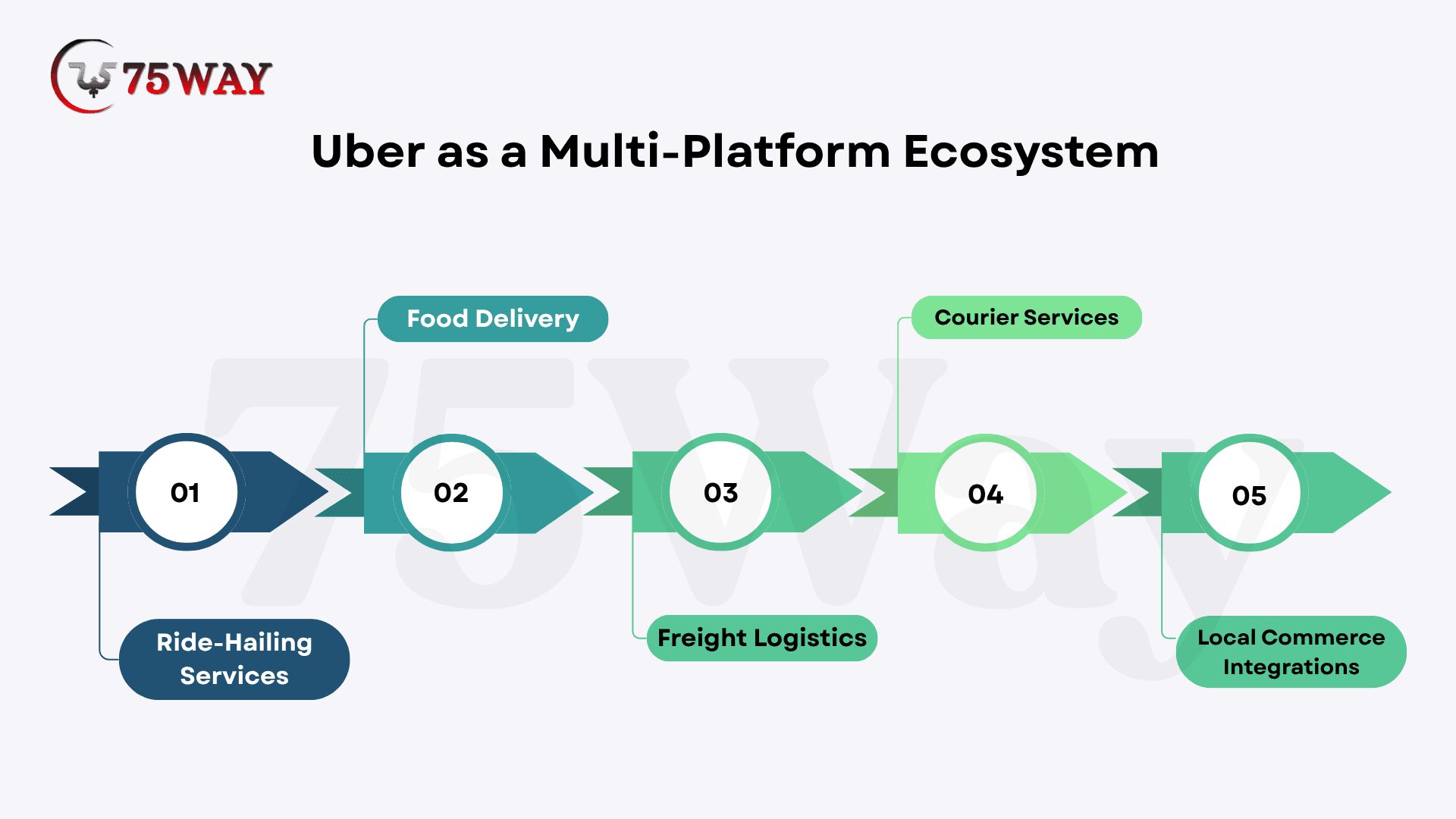
- Ride-Hailing Services
Ride-hailing services connect passengers with nearby drivers through a real-time digital platform. Users can book transportation instantly, track arrivals, and complete cashless payments. This system focuses on convenience, speed, and accessibility, making urban travel easier while efficiently matching demand with available driver supply across different locations.
- Food Delivery
Uber Eats enables users to order food from local restaurants and receive doorstep delivery through partner couriers. Restaurants gain access to a larger customer base, while customers enjoy convenience and variety. The system integrates ordering, tracking, and payment into a seamless digital experience across devices.
- Freight Logistics
Freight logistics services support businesses in moving goods efficiently using digital coordination and carrier networks. Uber connects shippers with transportation providers for medium and large-scale deliveries. This segment focuses on optimizing supply chain movement, improving delivery timelines, and offering flexible logistics solutions for enterprise-level operations.
- Courier Services
Courier services handle small parcel deliveries through a network of independent delivery partners. Users and businesses can send documents or packages quickly within cities. The system prioritizes fast pickup, real-time tracking, and reliable delivery, making it suitable for time-sensitive personal and business shipment needs.
- Local Commerce Integrations
Local commerce integrations connect Uber’s platform with nearby businesses, enabling discovery, ordering, and service access through a single interface. This allows users to interact with restaurants, retail stores, and service providers directly within the app, creating a unified ecosystem for everyday local transactions and purchases.
Recent updates even show Uber expanding into travel bookings, shopping assistance, and AI-powered personal services, moving toward a unified digital assistant model.
Technology Stack That Works Behind Uber’s Growth
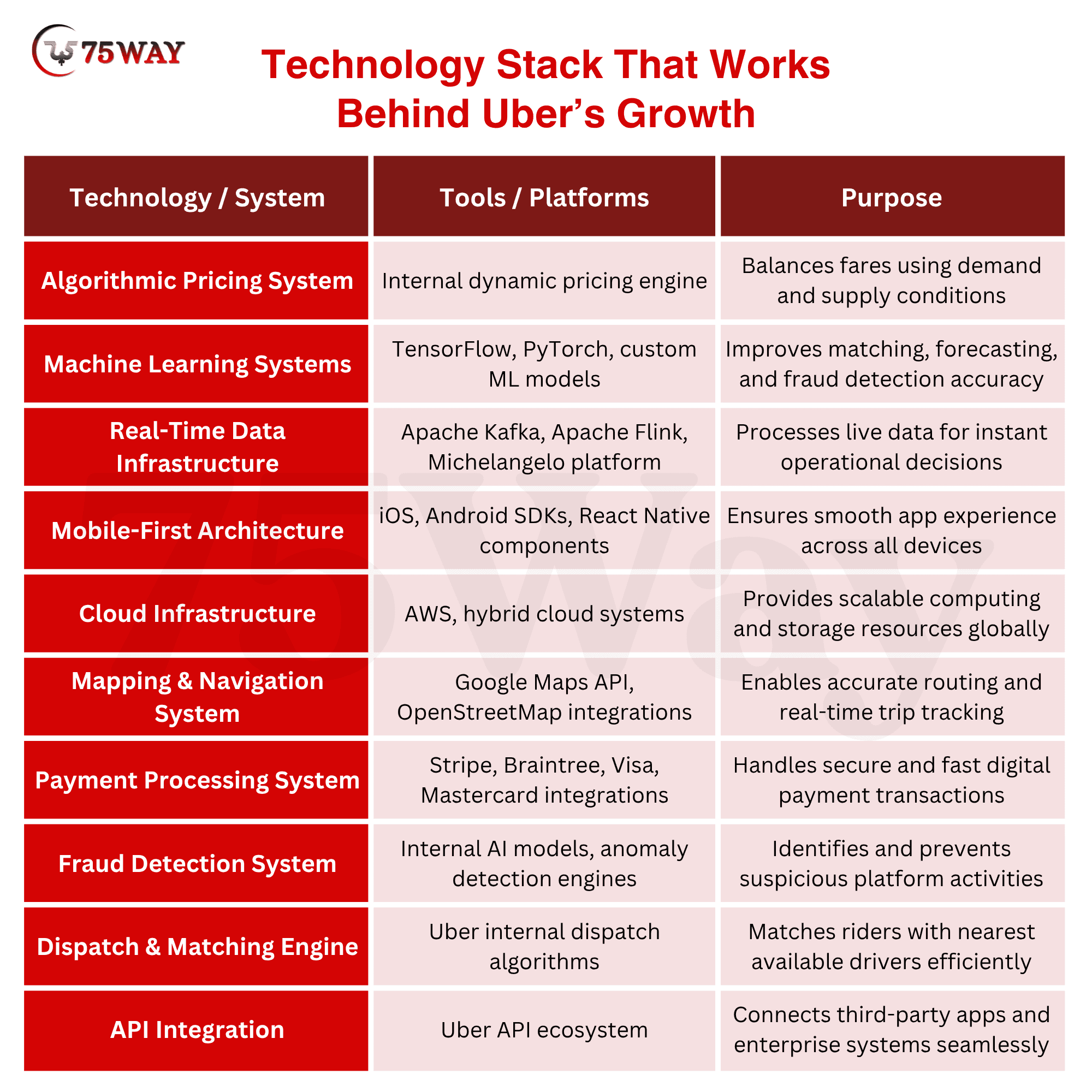
Uber’s expansion is driven by a strong technology backbone that powers real-time decision-making, scalability, and seamless user experience across global markets. Below is a structured view of the key technologies used in Uber’s ecosystem.
- Algorithmic Pricing System: Uber uses dynamic pricing logic to adjust fares based on live demand, driver availability, distance, and traffic conditions. This ensures efficient balance between supply and demand during peak and off-peak hours.
- Machine Learning Systems: Machine learning models process historical and real-time datasets to improve operational intelligence. These AI models support ride matching, demand prediction, fraud detection, and route optimization.
- Real-Time Data Infrastructure: Uber operates on a high-speed data processing framework that handles millions of events per second. This infrastructure supports instant decision-making for ride allocation, pricing updates, and system monitoring.
- Mobile-First Architecture: The entire ecosystem is designed around mobile usage, ensuring seamless interaction for both riders and drivers. The architecture supports fast booking, live tracking, and instant communication across Android and iOS devices.
- Cloud Infrastructure: Uber’s operations rely on scalable cloud systems that provide computing power, storage, and global reliability. This infrastructure supports peak traffic loads during high-demand periods while maintaining system uptime. It enables rapid scaling of services without disruption to ongoing operations.
- Mapping & Navigation System: Location intelligence is powered through integrated mapping technologies that support real-time routing and trip optimization. The system provides accurate ETAs, live traffic updates, and efficient path selection for drivers.
- Payment Processing System: The payment architecture supports secure, multi-currency transactions across global markets. It enables seamless digital payments between riders, drivers, and enterprise users. Encryption and compliance layers ensure financial data security and transaction reliability at scale.
- Fraud Detection System: Fraud prevention is managed through AI-driven anomaly detection models that monitor behavioral patterns. The system identifies suspicious activities such as fake trips, payment misuse, and account irregularities.
- Dispatch & Matching Engine: A real-time matching system connects riders with nearby drivers based on location, availability, and demand conditions. The engine optimizes allocation efficiency to reduce waiting times and improve trip completion rates.
- API Integration Layer: Uber’s platform connects with external systems through a secure API layer that enables third-party integrations. This supports enterprise tools, partner platforms, and service extensions.
Multi-Channel Access and Platform Connectivity Model
Uber operates through multiple digital and enterprise access points to ensure seamless connectivity for different user groups. This structure enables consistent service availability across mobile, web, enterprise, and integrated partner systems within a unified ecosystem. Its primary channels include:
- Mobile applications for riders and drivers
- Web-based platforms for limited booking functions
- Enterprise solutions for corporate travel management
- API integrations for partner ecosystems
This ensures accessibility across consumer, business, and institutional segments.
Final Thoughts
Uber’s business model demonstrates how platform-driven ecosystems can scale globally without owning physical assets. Connecting supply and demand through intelligent algorithms, it creates efficiency, speed, and consistent value across transportation, delivery, and digital services. Its strength lies in real-time data usage, network effects, and continuous optimization of user experience. Over time, it has evolved into a multi-service platform influencing modern digital commerce strategies. For founders and enterprises, it serves as a reference model for building scalable marketplace businesses. To build a similar high-performance platform, connect with a trusted Uber clone app development company to turn your idea into a scalable digital solution.
Frequently Asked Questions (FAQs)
Why Is Uber Considered A Platform Based Business Model?
Uber does not own physical transportation assets; instead, it connects users and service providers through a digital platform. This structure allows scalable operations, reduced infrastructure dependency, and continuous expansion by facilitating transactions between two or more user groups.
How Does Uber Ensure Pricing Consistency Across Different Locations?
Uber applies dynamic pricing models that adjust fares based on demand, distance, traffic, and availability. This ensures pricing remains responsive to real-world conditions while maintaining balance between affordability for users and earnings for service providers.
What Makes Uber’s Model Different From Traditional Transportation Services?
Unlike traditional services that rely on owned fleets, Uber operates through independent service providers connected via a digital system. This reduces operational overhead, increases scalability, and enables rapid expansion into new markets without heavy infrastructure investment.
How Does Uber Handle High-Demand Periods?
During high-demand periods, Uber uses surge pricing and predictive systems to encourage more service availability. This helps balance supply gaps while ensuring users can still access services even during peak usage times.
What Role Does Technology Play In Uber’s Business Model?
Technology acts as the core foundation of Uber’s operations, enabling real-time matching, pricing adjustments, navigation, and payments. Advanced algorithms and data systems ensure efficiency, reliability, and continuous optimization of platform performance.
How Does Uber Generate Trust Between Users & Service Providers?
Uber builds trust through rating systems, verified profiles, and secure payment mechanisms. These features create accountability on both sides of the platform, improving service quality and reducing operational risks.
Why Is Uber’s Model Difficult For Competitors To Replicate?
Uber’s advantage comes from its large network effect, advanced data systems, and global operational scale. Replicating this requires not only technology but also user density, trust systems, and market penetration, making direct competition challenging.