Summary
Modern startups require rapid market validation before large-scale investment. Minimum Viable Product (MVP) development helps startups and entrepreneurs launch focused digital products, collect user feedback, and scale their business. This guide covers validation frameworks, features, development stages, budgeting, technology decisions, launch planning, scaling strategies, and an approach to attract investors for sustainable digital product success.
Quick Overview
- MVP development validates business idea with early-stage digital product launches.
- Focused feature prioritization improves customer validation and faster market entry.
- User feedback drives smarter product iterations and scalable business growth.
- Lean development strategies reduce unnecessary engineering expenses during validation.
- Average MVP development cost lies between $3,000-$180,000.
- Market-driven product decisions increase investor confidence & startup sustainability.
Around 20% of startups fail within their first year, and almost 50% shut down within five years, as per the U.S. Bureau of Labor Statistics report. Do you know what’s one of the biggest reasons? Businesses often spend too much time and money building products people do not actually need.
So, what’s the solution? Obviously, it must be a cost-effective solution for MVP development. It becomes one of the smartest startup strategies in 2026. Instead of launching a fully loaded product with dozens of features, you must focus on building a minimum viable product (MVP), a simplified version designed to test real market demand quickly.
If you are a startup or an entrepreneur, this strategy helps you validate business ideas, collect user feedback, reduce development risks, and avoid wasting resources before scaling further.
And honestly, this approach is no longer limited to startups only.
Enterprises, SaaS companies, healthcare apps, fintech platforms, AI solutions, and e-commerce businesses are all using MVP development to launch faster and adapt based on real customer behavior.
The goal is simple: build what users actually want before investing heavily into large-scale development. Well, how do you actually build a successful MVP in 2026? Which features should you include first? How much does MVP development cost, and what mistakes should you avoid during the process?
In this complete guide, we will break down everything you need to know about Minimum Viable Product development, including stages, technology stack, costs, frameworks, challenges, and strategies for launching scalable digital products successfully.
What Does MVP Mean?
A Minimum Viable Product represents the basic functional version of a digital product, whether it is a service, mobile app, or software. It is designed with essential features to solve a specific customer problem. The primary objective focuses on validating business assumptions using minimum development investment while collecting valuable market feedback from real users.
In simple language, MVP development is similar to opening a new restaurant. At first, you just sell three popular dishes instead of launching a huge menu immediately. This helps you understand what customers actually like before spending more money and time. After real feedback, you include more dishes in the menu. In the same way, startups build MVPs to validate ideas, collect feedback, and reduce development risks early.
Unlike prototype models or proof-of-concept (PoC) systems, an MVP functions as a usable product available for real-world interaction. Users can engage with core functionalities while businesses measure customer interest, usage behavior, monetization potential, and operational performance.
The MVP approach does not mean launching incomplete or low-quality software. Instead, it emphasizes strategic simplicity. Product teams prioritize only essential capabilities directly contributing toward customer value and validation objectives.
For example:
- A food delivery startup may launch restaurant listings, ordering systems, and payment gateways without advanced loyalty programs.
- A fintech startup might release peer-to-peer transfers before adding investment modules.
- A SaaS company may begin with core dashboard functionality while postponing automation integrations.
This focused development philosophy helps businesses reduce unnecessary engineering workloads while accelerating market entry.
Why MVP Development Matters in 2026?
Digital competition continues to expand across every industry. Customers expect faster innovation cycles, personalized experiences, and continuously improving applications. Businesses unable to validate products rapidly often lose market opportunities to agile competitors. MVP development plays a critical role because it supports:
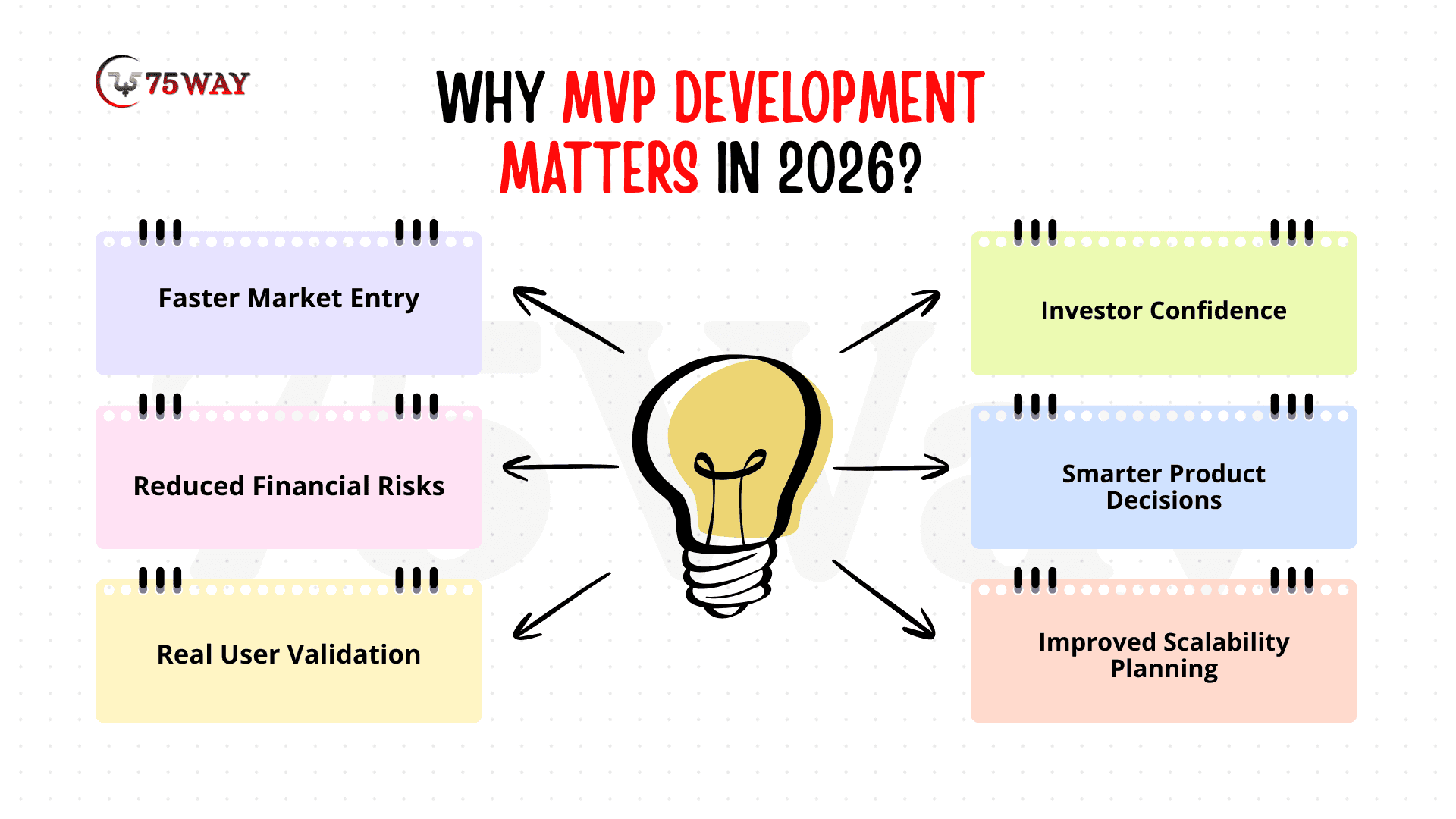
- Faster Market Entry: Businesses can launch products within months instead of waiting years for full-scale development completion.
- Reduced Financial Risks: Focused feature sets reduce engineering expenses, operational complexity, and unnecessary infrastructure investments.
- Real User Validation: Organizations collect behavioral insights directly from active users rather than relying entirely on assumptions.
- Investor Confidence: Validated traction metrics strengthen funding opportunities and demonstrate measurable product potential.
- Smarter Product Decisions: Analytics and customer feedback reveal which features deserve future investment priorities.
- Improved Scalability Planning: Technical teams identify infrastructure requirements using actual usage patterns instead of speculative forecasting.
Types of MVP Development Models Every Startup Should Understand
Before you start building an MVP, you need to understand which MVP model fits your idea best. Not every startup validates products the same way, and choosing the wrong MVP approach can waste both time and budget really fast.
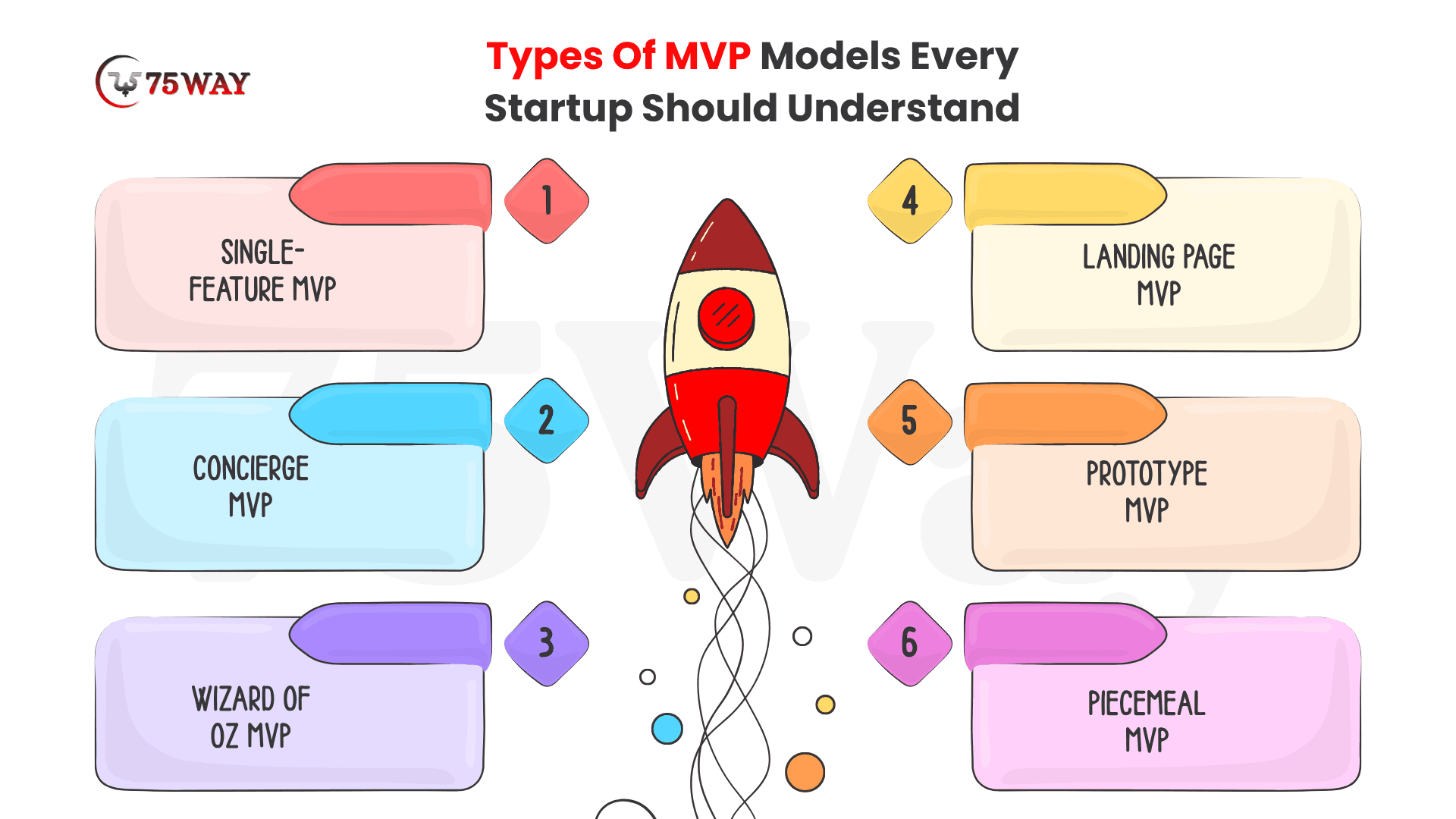
- Single-Feature MVP
A single-feature MVP focuses on solving one specific customer problem using one core feature only. Instead of launching a fully loaded application, you validate your idea with minimal functionality first. This approach helps you reduce development costs, launch faster, and understand real customer behavior early. Many successful startups started small, improved gradually, and scaled only after market validation.
- Concierge MVP
A concierge MVP allows you to manually deliver services while users experience a structured workflow. Instead of building complete automation immediately, you personally handle operations behind the scenes. This model helps you understand customer expectations, identify pain points, and validate your business idea faster. It also reduces early development expenses while giving you direct insights into real customer behavior and preferences.
- Wizard of Oz MVP
A Wizard Of Oz MVP looks fully automated to users, but backend processes are actually managed manually. Customers interact with a polished interface while your team handles operations internally. This strategy helps you test market demand without investing heavily in technology. You can validate workflows, improve user experiences, and identify operational challenges before building expensive automation or AI systems later.
- Landing Page MVP
A Landing Page MVP helps you validate product demand before development even starts. You create landing pages, advertisements, signup forms, or waitlists to measure customer interest and engagement. This approach helps you test market potential quickly without spending heavily on development. It also provides valuable audience insights, helping you refine messaging, positioning, and product strategies before investing in complete application development.
- Prototype MVP
A Prototype MVP helps users and investors visualize your product experience before actual engineering begins. Instead of building a working platform immediately, you create interactive designs, wireframes, or clickable simulations demonstrating workflows clearly. This strategy helps you collect feedback early, reduce product confusion, and improve development planning. It also supports better investment discussions before committing resources toward full-scale product development.
- Piecemeal MVP
A Piecemeal MVP combines existing third-party tools and platforms instead of building everything from scratch. You use ready-made services to validate your product idea faster while minimizing development costs. This approach helps you launch quickly, test customer demand efficiently, and understand operational requirements early. Once validation succeeds, you can gradually invest in custom infrastructure, advanced features, and scalable product development.
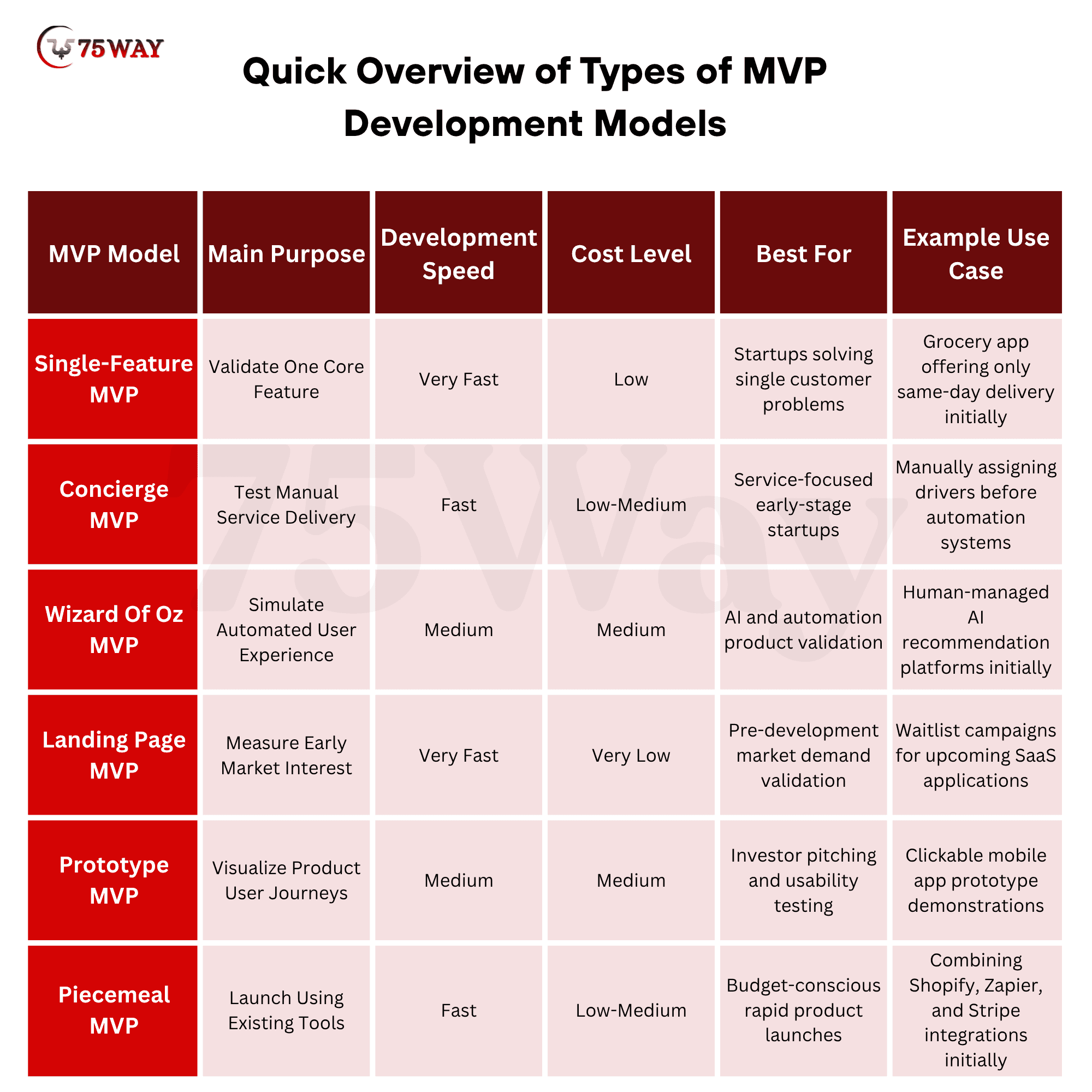
Quick Overview of Types of MVP Development Models
MVP Development Process: A Comprehensive Roadmap For 2026
MVP development follows a structured process that helps you validate product ideas with lower risks and faster market entry. Instead of building everything at once, you launch strategically, test real customer behavior, improve continuously, and scale only after validating actual market demand successfully. Here is an end-to-end methodology you can implement to build a minimum viable product.
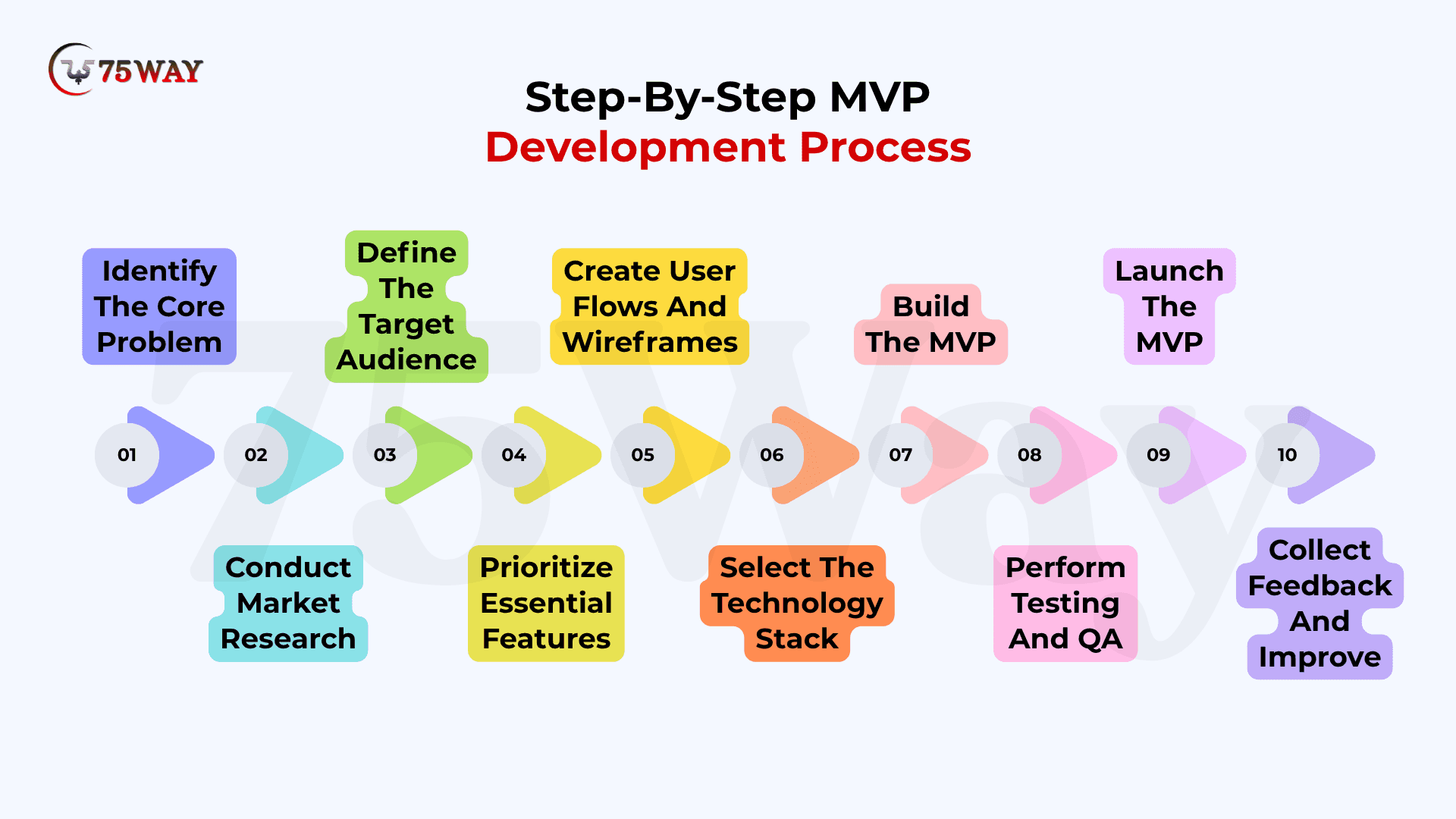
1. Identify The Core Problem
Every successful MVP starts with one thing: a real problem people already want solved. If your product does not address a meaningful customer pain point, even advanced features and a beautiful design will struggle to create traction. That is why the first stage of MVP development focuses entirely on understanding the actual problem before writing a single line of code.
At this stage, you need to identify:
- What frustrates your target audience daily
- Where existing solutions fail
- What customers truly expect from a better solution
Many startups fail because they build products based on assumptions instead of real market demand. An MVP should never begin with features first. It should begin with customer problems first. The clearer your problem statement becomes, the easier product decisions become later. You can collect these insights through:
- Customer Interviews
- Competitor Analysis
- Online Communities
- Support Tickets
- Surveys
- Industry Reports
- App Reviews
For example, if users complain about delayed grocery deliveries, complicated checkout experiences, or poor delivery tracking, those frustrations become valuable MVP opportunities. Now you are solving something people already care about.
This stage also helps you avoid unnecessary development costs. Why build ten features when customers only need one strong solution right now? A clearly identified problem creates stronger product direction, faster validation, and better long-term product-market fit.
2. Conduct Market Research
Once you identify the core problem, the next step is validating whether enough people actually care about solving it. That is where market research becomes extremely important. Without proper research, you may build a product people find interesting but never truly need.
At this stage, you should carefully analyze:
- competitor platforms already serving the market
- customer reviews highlighting common frustrations
- emerging industry and technology trends
- pricing models customers already accept
- target audience demographics and behaviors
- user adoption patterns across similar applications
Market research helps you understand what is already working, what customers dislike, and where opportunities still exist. It also prevents you from entering oversaturated markets blindly without differentiation.
3. Define The Target Audience
Your MVP cannot solve problems for everyone, and honestly, it should not try to. One of the biggest startup mistakes is building products for overly broad audiences. The more clearly you define your target users, the easier it becomes to build features people actually need. At this stage, you should identify:
- Age groups most likely to use your product
- Geographic markets with stronger demand potential
- Income segments affecting purchasing behavior
- Industry-specific habits and expectations
- Customer buying patterns and decision triggers
- Preferred devices, platforms, and digital behaviors
Understanding your audience helps you make smarter product decisions early. Different customer groups behave differently, spend differently, and expect different user experiences. A feature valuable for enterprise users may feel unnecessary for smaller startups or local customers.
For example, younger mobile-first users usually expect faster navigation, simplified onboarding, and seamless payment experiences. Enterprise users, however, may prioritize reporting dashboards, integrations, and operational control features instead.
4. Prioritize Essential Features
Feature prioritization remains one of the most important MVP stages. Businesses should divide features into:
- Must-Have Features: Core functionalities required for usability.
- Nice-To-Have Features: Secondary improvements supporting future releases.
- Future Features: Long-term scalability enhancements reserved for later versions.
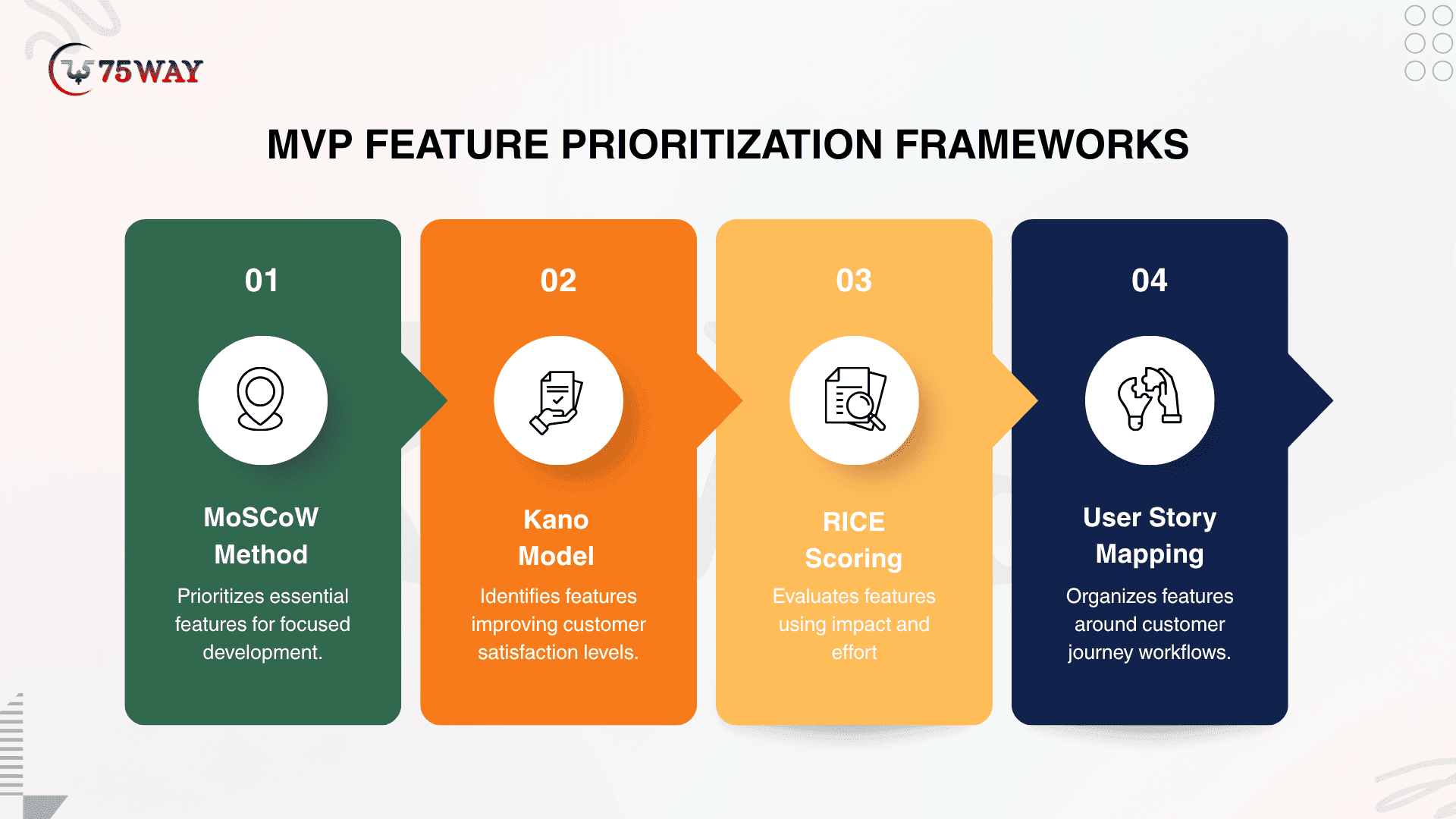
Popular feature prioritization frameworks in MVP development include:
- MoSCoW Method: The MoSCoW Method prioritizes features into Must-Have, Should-Have, Could-Have, and Won’t-Have categories. It helps you focus development resources on essential functionalities first while avoiding unnecessary feature expansion during early MVP stages.
- Kano Model: The Kano Model helps you identify which features increase customer satisfaction most effectively. It separates basic expectations, performance-driven features, and excitement-based functionalities, helping you create better user experiences without overspending on unnecessary product development.
- RICE Scoring: RICE Scoring prioritizes features using four factors: Reach, Impact, Confidence, and Effort. This framework helps you evaluate development priorities objectively, ensuring your MVP focuses on high-value features delivering stronger business and customer outcomes efficiently.
- User Story Mapping: User Story Mapping organizes product features around actual customer journeys and interactions. It helps you visualize user experiences clearly, identify essential workflows faster, and build MVP structures aligning closely with customer expectations and operational usability requirements.
5. Create User Flows And Wireframes
Before actual development begins, you need a clear visual structure showing how users will interact with your product. Wireframes and user flows help you organize screens, features, and customer journeys logically before investing in coding. This stage reduces confusion, improves development clarity, and helps teams identify usability issues much earlier.
- Navigation Structures: Clear navigation structures help users move smoothly between product sections without confusion or frustrating experiences later.
- Screen Layouts: Organized screen layouts improve visual clarity, readability, and user engagement across different devices and interface environments effectively.
- User Interaction Flows: Structured interaction flows guide users naturally through important actions, improving usability, speed, and customer satisfaction.
- Functional Mapping: Functional mapping connects product features with user goals, helping development teams understand workflows, priorities, and operational dependencies.
- Information Architecture: Strong information architecture organizes product content logically, improving discoverability, navigation efficiency, and overall customer experience consistency across applications.
6. Select The Technology Stack
Your technology stack directly affects product performance, scalability, development speed, maintenance costs, and long-term flexibility. Choosing the wrong technologies early can create expensive rebuilding challenges later. That is why MVP technology decisions should focus on scalability, development efficiency, security, and future business growth instead of simply following trends.
- Frontend Technologies: Frontend frameworks like React, Flutter, Vue.js, and Angular improve responsiveness, interface consistency, and cross-platform user experiences significantly.
- Backend Technologies: Backend technologies, including Node.js, Python, Laravel, and Ruby on Rails, support scalable infrastructure, faster processing, and smoother application performance.
- Database Solutions: Database platforms like PostgreSQL, MongoDB, and Firebase manage product data efficiently while supporting scalability, security, and operational reliability requirements.
- Cloud Platforms: Cloud services, including AWS, Google Cloud, and Microsoft Azure, improve infrastructure flexibility, scalability, and long-term operational stability.
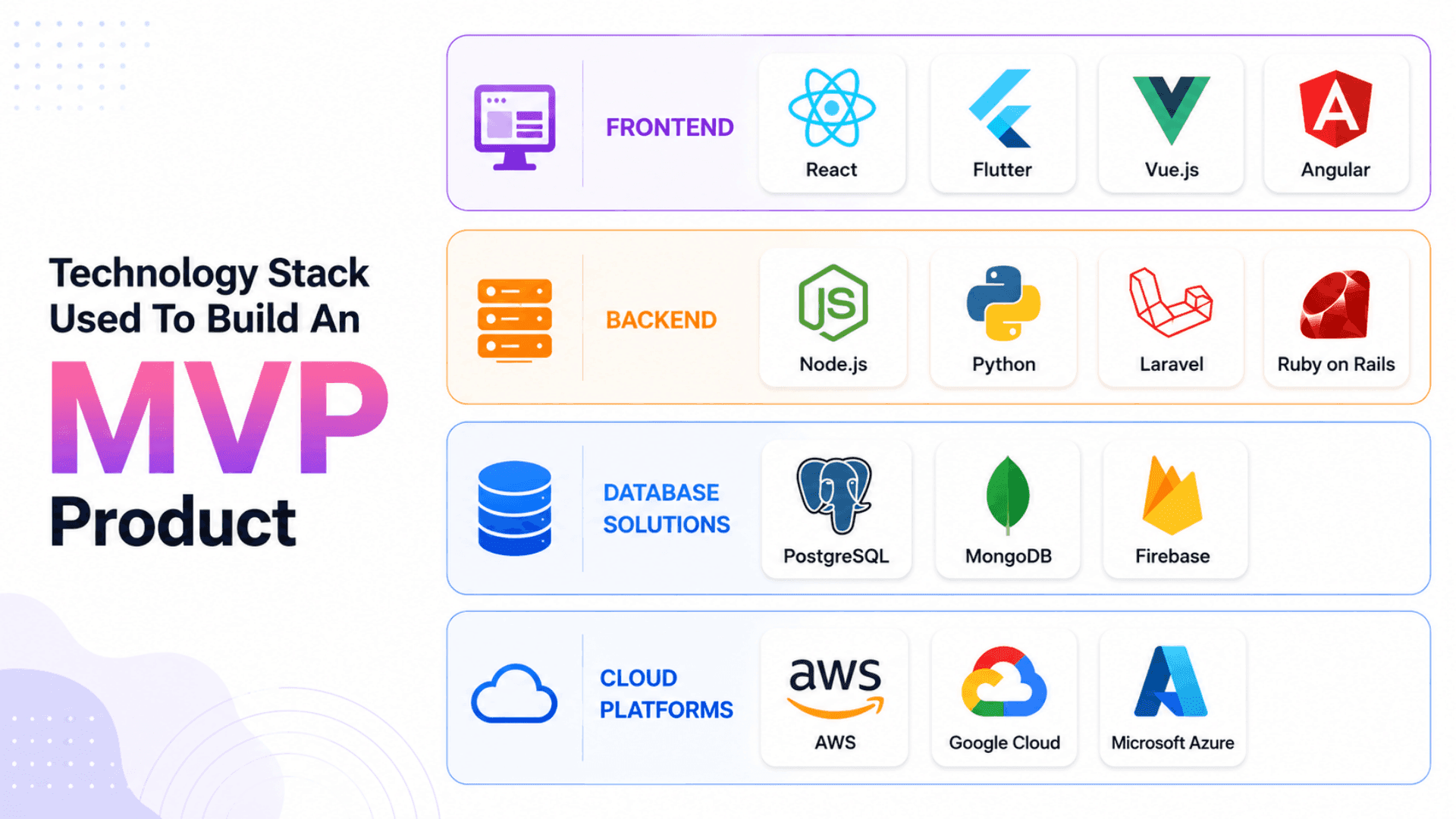
Technology selection should always align with your scalability goals, product complexity, development timelines, integration requirements, and expected customer growth from the beginning.
7. Build The MVP
Once planning, research, and wireframing are completed, actual MVP development finally begins. At this stage, teams focus only on essential features supporting core product functionality while maintaining lean, scalable, and flexible application architecture for future improvements and faster iteration cycles.
- Frontend Development: Frontend development builds responsive interfaces helping users interact smoothly with product features across devices efficiently.
- Backend Engineering: Backend engineering manages server operations, business logic, authentication systems, and application functionality behind user interfaces securely.
- API Integrations: API integrations connect third-party services, payment gateways, communication tools, and external platforms within applications seamlessly.
- Database Configuration: Database configuration organizes application data securely while improving accessibility, scalability, reliability, and operational performance significantly.
- Security Implementation: Security implementation protects user information, application infrastructure, transactions, and backend systems from potential cyber threats.
- Performance Optimization: Performance optimization improves application speed, responsiveness, stability, and overall user experience across different operating environments.
8. Perform Testing And QA
Launching an MVP without proper testing can damage user trust immediately. Even if your product has limited features, users still expect smooth functionality, fast performance, and secure experiences from the very beginning. That is why testing and quality assurance play a critical role before product launch. This stage helps you identify bugs, usability issues, security risks, and performance problems early, before they affect customer satisfaction or business credibility later.
- Functional testing
- UI/UX testing
- Security testing
- Performance testing
- Compatibility testing
- Load testing
Even minimal products require reliable, stable, and frustration-free user experiences to build customer confidence and encourage long-term product adoption successfully.
9. Launch The MVP
After testing is completed, your MVP should launch strategically instead of targeting massive audiences immediately. Controlled launches help you monitor user behavior, identify operational issues early, collect feedback efficiently, and improve product stability before expanding aggressively into larger competitive markets later.
- Beta Launches: Beta launches provide early access to selected users before public availability.
- Limited Geographic Releases: Geographic releases test product performance within smaller markets before large-scale expansion efforts.
- Waitlist Campaigns: Waitlist campaigns generate anticipation while measuring genuine customer interest before official product launches.
- Community Testing Groups: Community testing groups provide valuable feedback from active users during early product stages.
- Influencer Collaborations: Influencer collaborations increase product visibility, credibility, engagement, and early customer acquisition opportunities.
10. Collect Feedback And Improve
Launching an MVP is not the final step. It is the beginning of continuous product improvement. Real customer feedback helps you understand what users actually value, where friction exists, and which features require optimization for stronger engagement, retention, and long-term business growth.
- User Retention: User retention measures returning customers using products consistently after initial onboarding experiences. You can find the exact user retention rate with the given method:
((Customers End Period − New Customers) ÷ Starting Customers) × 100
- Feature Engagement: It tracks frequently used functionalities, generating higher customer interaction and product value. The formula to calculate the feature engagement is:
(Feature Active Users ÷ Total Active Users) × 100
- Conversion Rate: This metric calculates users completing targeted actions like purchases, signups, or subscriptions. The formula to evaluate the conversion rate is:
(Total Conversions ÷ Total Visitors) × 100
- Session Duration: It measures the average time users actively spend inside product environments daily. You can find the session duration using the following formula.
Total Session Time ÷ Total Number Of Sessions
- Churn Rate: Churn rate identifies customers discontinuing product usage during specific operational timeframes. The method to compute churn rate is:
(Customers Lost During Period ÷ Total Customers Start Period) × 100
- Customer Reviews: Customer reviews reveal satisfaction levels, frustrations, improvement areas, and overall product experience quality. The formula to calculate customer reviews is:
Total Review Ratings ÷ Total Number Of Reviews
Core Benefits of Building And Launching An MVP Product
MVP creation helps you validate ideas faster, reduce product risks, and launch with smarter investments. Before building a complete product, understanding these advantages can help you make better development and business decisions from the beginning.
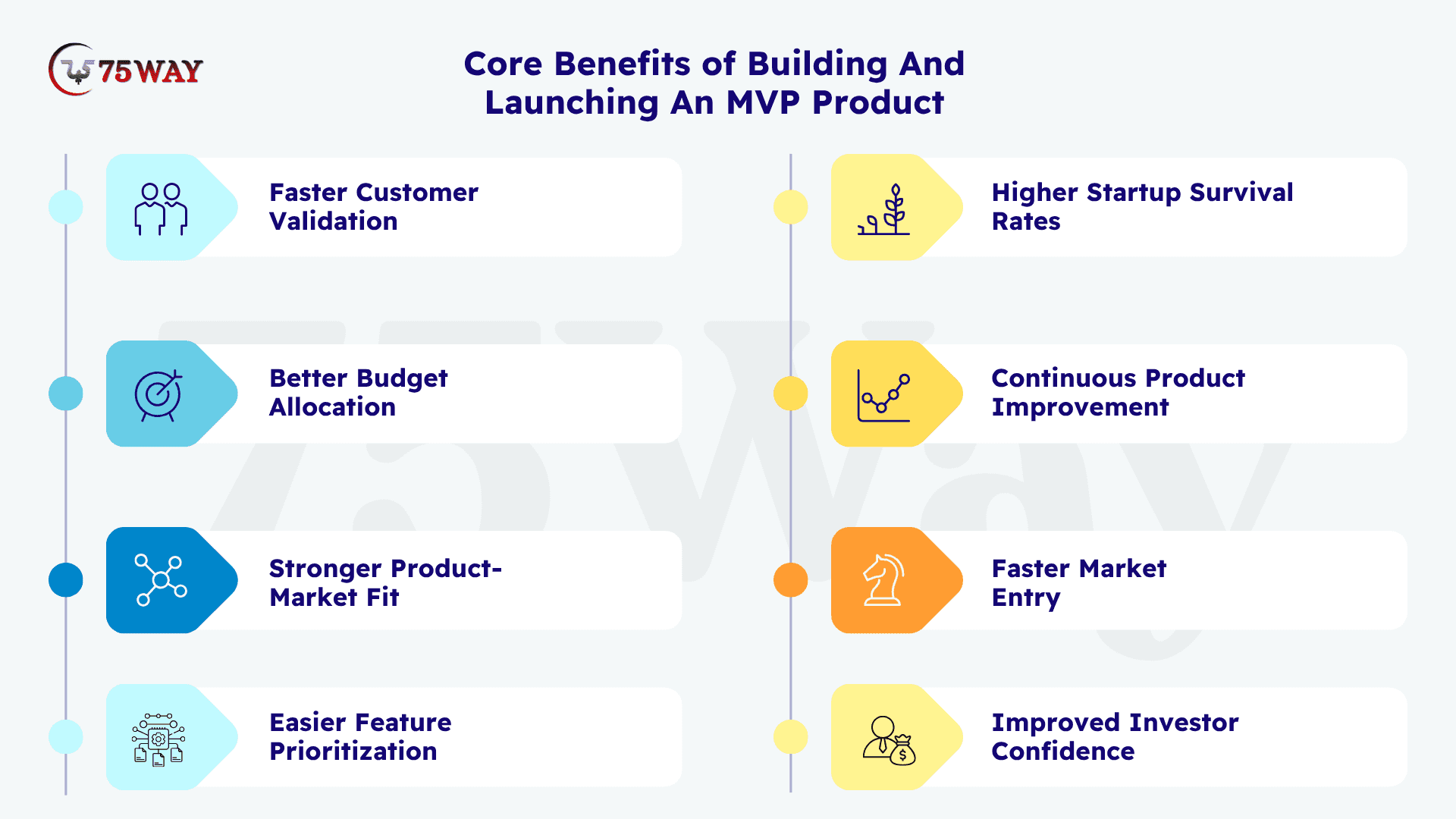
- Faster Customer Validation: An MVP product helps you understand whether people actually need your product. Early user feedback reduces unnecessary development efforts and market uncertainty significantly.
- Better Budget Allocation: You avoid spending heavily on features customers may never use. This approach keeps development investments focused, practical, and financially manageable during early growth stages.
- Stronger Product-Market Fit: Early customer insights help you align product functionality with real market expectations. Better alignment increases customer satisfaction, engagement, and long-term retention rates naturally.
- Easier Feature Prioritization: User behavior helps you identify which features truly matter most. Instead of relying on assumptions, you make smarter product decisions using real customer interactions.
- Higher Startup Survival Rates: Lean MVP strategies reduce financial pressure during the early startup phase. Lower risks and controlled spending improve operational stability and business sustainability significantly.
- Continuous Product Improvement: This approach supports gradual improvements based on customer feedback and changing market trends. You continuously optimize experiences without rebuilding the entire product infrastructure repeatedly.
- Faster Market Entry: Launching an MVP allows you to enter competitive markets much earlier. Faster launches help you attract users, investors, and market attention before competitors scale aggressively.
- Improved Investor Confidence: Investors prefer products showing real customer interest and market validation already. MVP development provides measurable data, reducing uncertainty around future scalability and revenue potential.
What’s Exact MVP Development Cost: Cost Breakdown
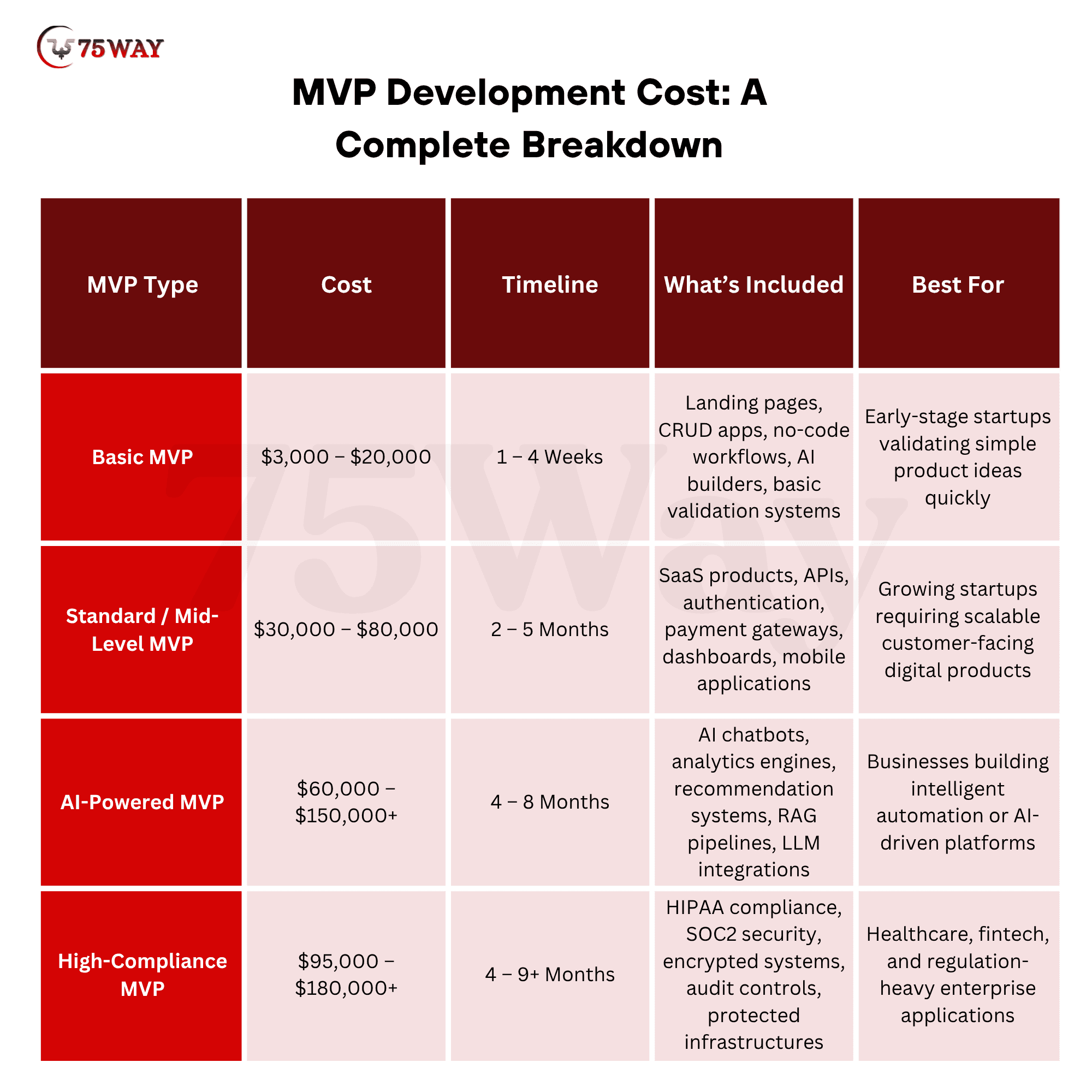
MVP development costs depend on product complexity, technology stack, integrations, security requirements, UI/UX expectations, development approach, and scalability goals. On average, MVP development can cost anywhere between $3,000-$180,000 for AI-powered enterprise mobile applications.
- Basic MVP Cost: $3,000 – $20,000
Basic MVPs help you validate ideas quickly using minimal features, no-code platforms, or lightweight application architectures.
- Standard / Mid-Level MVP Cost: $30,000 – $80,000
Standard MVPs support scalable customer-facing platforms requiring custom workflows, APIs, payment systems, and structured backend infrastructures.
- AI-Powered MVP Cost: $60,000 – $150,000+
AI-powered MVPs include intelligent automation, recommendation systems, conversational AI, analytics, and advanced machine learning integrations.
- High-Compliance MVP Cost: $95,000 – $180,000+
High-compliance MVPs focus heavily on security, regulatory compliance, encrypted infrastructure, and protected customer data management systems.
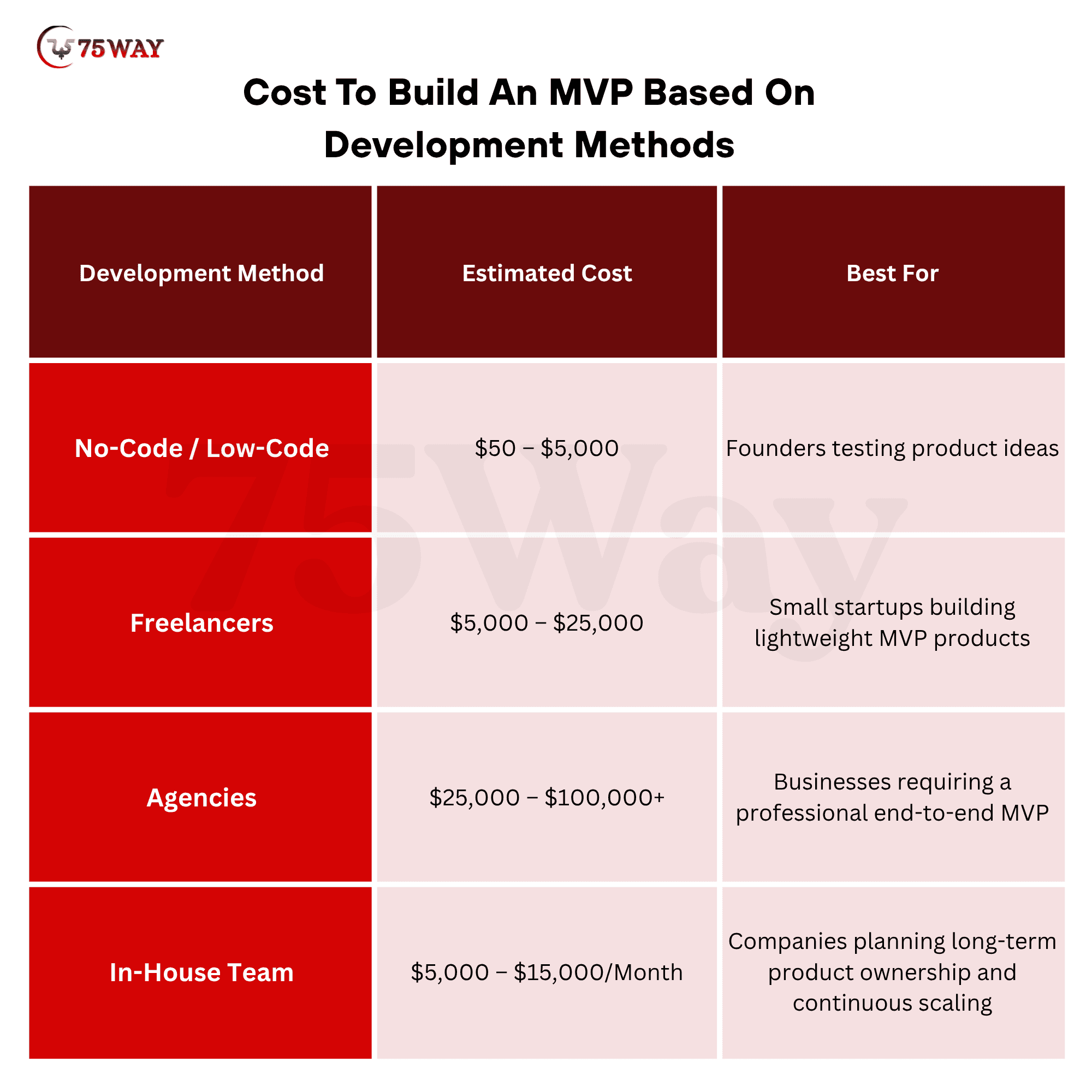
Cost To Build An MVP Based On Development Methods
- No-Code / Low-Code Development Cost: $50 – $5,000
No-code and low-code development help you validate ideas rapidly without investing heavily in custom engineering or technical infrastructure.
- Freelancer-Based MVP Development Cost: $5,000 – $25,000
Freelancer development offers affordable MVP creation for startups needing limited functionality, lean operations, and smaller development budgets.
- Agency-Based MVP Development Cost: $25,000 – $100,000+
Development agencies provide complete MVP services, including strategy, UI/UX design, coding, testing, deployment, and ongoing technical support.
- In-House Team Development Cost: $5,000 – $15,000/Month
In-house teams provide dedicated product ownership, long-term scalability, faster collaboration, and stronger control over development operations.
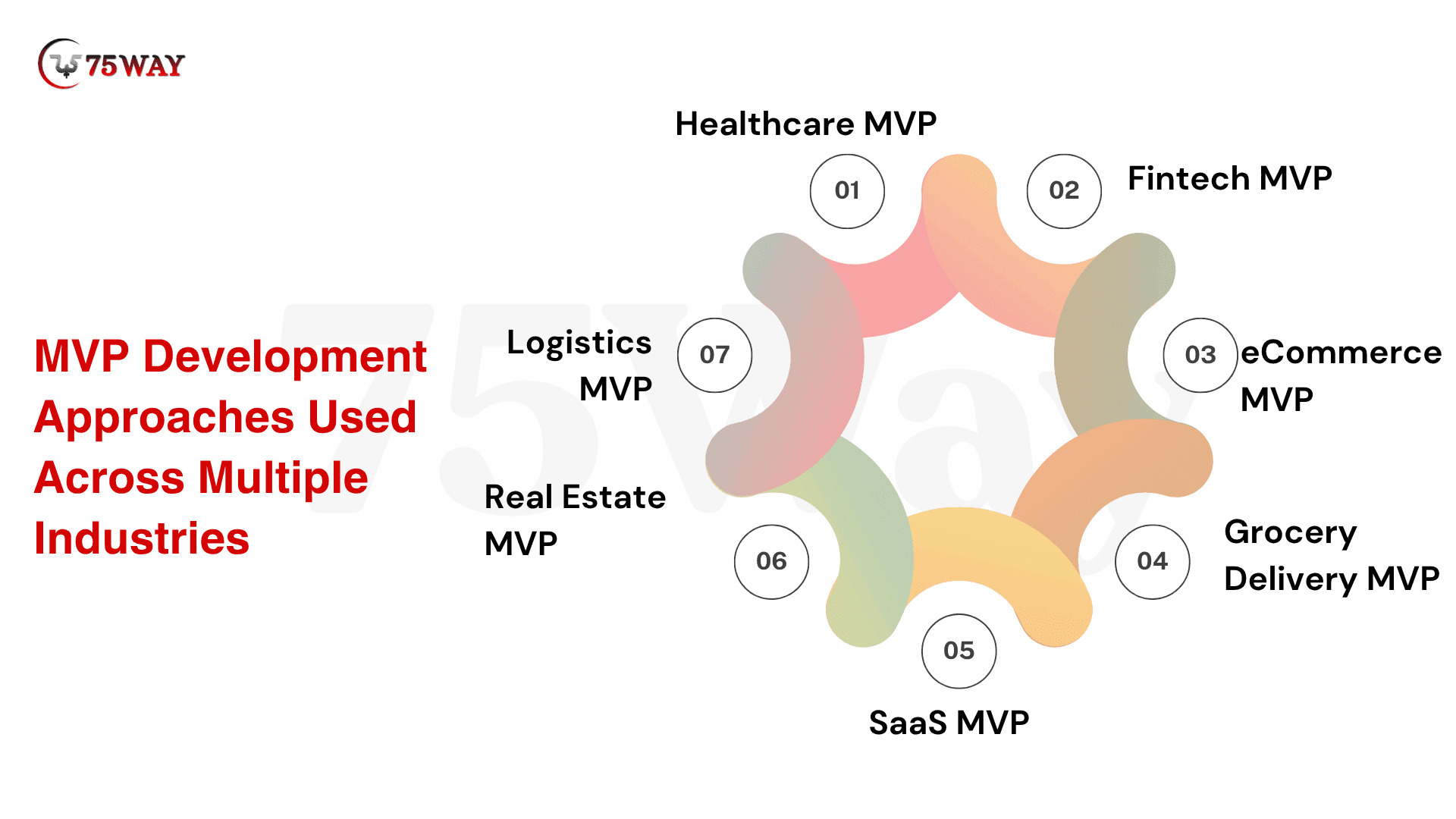
MVP Development Approaches Used Across Multiple Industries
MVP development strategies vary across industries because every business solves different operational and customer challenges. Below, we have explained how multiple industries use MVP approaches.
1. Healthcare MVP Development
Healthcare MVPs focus heavily on security, compliance, accessibility, and patient experience from the beginning. Most healthcare startups prioritize stable communication systems, protected medical data handling, and simplified healthcare service accessibility.
- HIPAA compliance
- Appointment systems
- Telemedicine features
- Patient dashboards
2. Fintech MVP Development
Fintech MVPs require secure financial infrastructure, compliance-focused workflows, and seamless transaction experiences for users. Early fintech products usually prioritize payment reliability, fraud prevention, and customer trust-building functionalities first.
- Payment integrations
- Fraud prevention
- Banking APIs
- KYC verification
3. eCommerce MVP Development
eCommerce MVPs mainly focus on simplifying online shopping experiences and improving purchasing convenience for customers. Most early-stage ecommerce platforms prioritize product visibility, smooth checkouts, and inventory management systems.
- Product listings
- Checkout systems
- Order management
- Inventory tracking
4. Grocery Delivery MVP Development
Grocery delivery MVPs prioritize operational efficiency, fast ordering experiences, and real-time delivery coordination features. These applications usually focus heavily on customer convenience, local delivery management, and seamless ordering workflows.
- Store listings
- Cart management
- Delivery tracking
- Payment systems
- Push notifications
5. SaaS MVP Development
SaaS MVPs are designed to solve repetitive business challenges using scalable subscription-based digital platforms. Most SaaS startups focus on workflow simplification, user accessibility, automation, and operational efficiency improvements.
- Subscription models
- User dashboards
- Analytics
- Workflow automation
6. Real Estate MVP Development
Real estate MVPs help users discover properties, connect with agents, and manage property inquiries efficiently. Most platforms focus on listings visibility, communication systems, and location-based property browsing experiences.
- Property listings
- Virtual property tours
- Agent communication
- Location filters
- Lead management
7. Logistics MVP Development
Logistics MVPs mainly optimize shipment management, delivery coordination, and operational tracking across transportation networks. Early logistics platforms prioritize route visibility, fleet monitoring, and real-time operational efficiency improvements.
- Shipment tracking
- Route optimization
- Fleet management
- Warehouse coordination
- Delivery notifications
Strategies To Scale MVP Product After Validation
Once your MVP starts generating positive customer feedback, stronger retention, and consistent engagement, the next step is scaling. Growth should happen carefully, because rapid expansion without proper planning often creates operational issues, performance problems, and customer experience disruptions later.
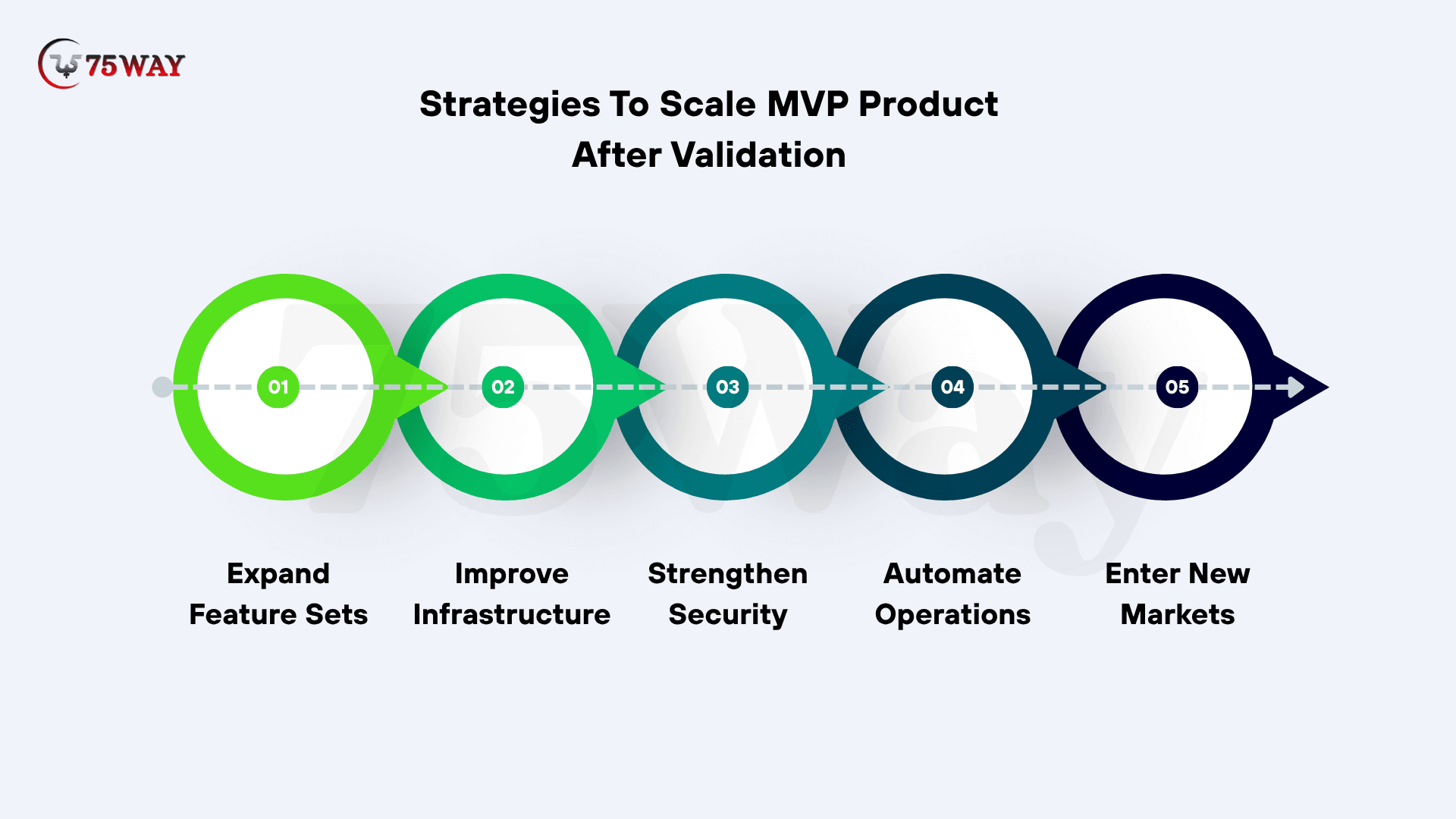
- Expand Feature Sets: After validating your core product successfully, start adding features customers repeatedly request through reviews, analytics, and behavioral insights. Expanding strategically improves engagement, customer satisfaction, retention rates, and competitive positioning without introducing unnecessary product complexity or development inefficiencies during scaling phases.
- Improve Infrastructure: Growing user bases require stronger infrastructure supporting higher traffic, faster processing, and improved operational reliability continuously. Upgrading servers, databases, cloud environments, and deployment systems helps maintain stable product performance while supporting long-term scalability and increasing customer activity.
- Strengthen Security: As customer numbers and data volumes increase, stronger security frameworks become critically important for operational stability. Advanced authentication systems, encryption protocols, compliance measures, and monitoring solutions help protect user information while maintaining trust, platform reliability, and long-term business credibility.
- Automate Operations: Manual workflows eventually slow operational efficiency during rapid product growth and customer expansion phases significantly. Automating support systems, onboarding processes, analytics tracking, notifications, and backend operations reduces bottlenecks, improves scalability, and allows teams to focus on strategic business improvements.
- Enter New Markets: Once your MVP achieves stable validation within existing markets, expansion opportunities become much easier to evaluate strategically. Geographic growth, industry diversification, localization improvements, and customer segment expansion help increase revenue potential while strengthening long-term business scalability and overall market positioning.
Emerging MVP Trends In 2026 Driving Product Innovation
MVP development in 2026 focuses heavily on speed, automation, and smarter infrastructure decisions, helping startups validate products.
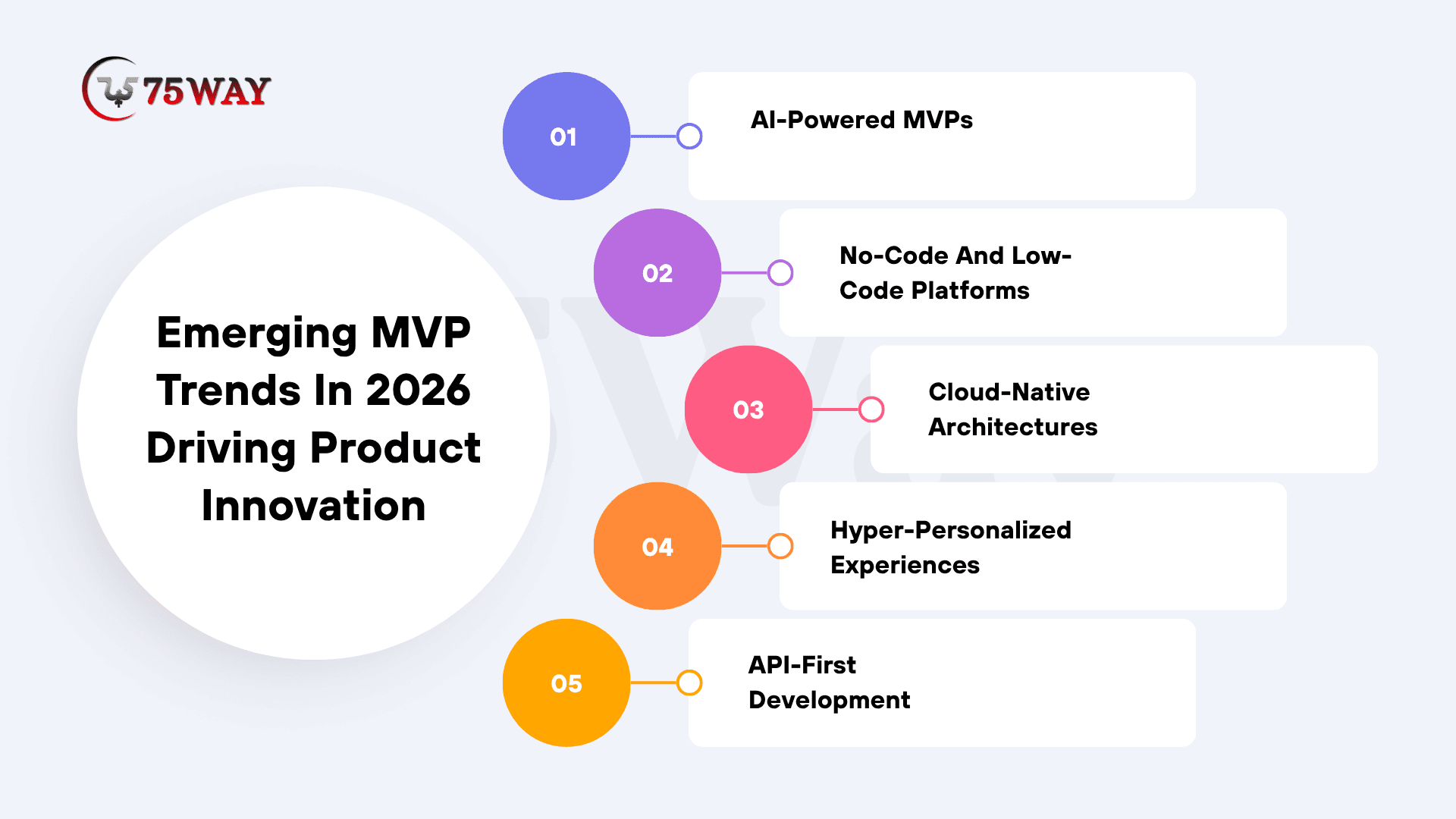
- AI-Powered MVPs: AI-powered MVPs automate workflows, improve customer experiences, and accelerate smarter product validation processes. Startups increasingly integrate conversational AI, analytics, and recommendation systems early.
- No-Code And Low-Code Platforms: No-code platforms help startups launch products faster without requiring large engineering investments. These tools accelerate validation, prototyping, workflow automation, and iterative improvements.
- Cloud-Native Architectures: Cloud-native MVPs improve scalability, operational flexibility, deployment efficiency, and infrastructure reliability. Startups increasingly prefer cloud environments supporting rapid growth and expansion.
- Hyper-Personalized Experiences: Personalized experiences improve customer engagement, retention, satisfaction, and long-term platform loyalty effectively. Startups increasingly use behavioral insights to create customized product journeys for users.
- API-First Development: API-first development improves integration flexibility, scalability, and future platform expansion opportunities. Modern startups prioritize modular architectures supporting seamless third-party service connectivity.
Real-World Examples of Well-Known Products That Started With MVP
Successful global startups didn’t begin as complex platforms. They started with simple MVPs, tested real user demand, validated behavior, and only then scaled into massive ecosystems. Today, these companies serve billions of users and generate multi-billion-dollar revenues, showing how powerful MVP-driven development can be.
Instagram began as a simple MVP focused only on photo sharing and filters. The goal was not to build everything at once, but to test whether users actually enjoyed quick image-based sharing. Instagram has around 3 billion monthly active users, and its advertising ecosystem generates tens of billions of dollars annually (estimated around $60B+ revenue range in recent years). What started as a basic MVP is now one of the most dominant social platforms in the world.
- Airbnb
Airbnb started with a very basic MVP where the founders manually rented out air mattresses during a local conference. Everything was handled manually at first, just to validate whether people would trust staying in someone else’s home. At present, Airbnb has 150M+ active users globally, and the platform generates around $9–10 billion in annual revenue. That simple MVP idea completely transformed the global travel and hospitality industry.
- Dropbox
Dropbox began with an extremely lightweight MVP in the form of a simple explainer video showing how file syncing would work. Instead of building a full product, they first tested user interest. Dropbox has hundreds of millions of users worldwide (700M+ registered users estimated) now and generates over $2.5 billion in annual revenue, proving how early validation can drive massive long-term success.
- Uber
Uber launched as a small MVP in a limited market, connecting users with black car drivers through a simple app. The focus was only on solving one problem, easy ride booking. Today, Uber serves 150M+ monthly active users globally and generates around $50+ billion in annual revenue, expanding far beyond rides into delivery and mobility services worldwide.
How To Select The Right MVP Development Partner?
Choosing the right MVP development partner directly impacts product quality, scalability, and launch success. Not every agency understands startup challenges. The right team helps you validate ideas faster while avoiding expensive development mistakes later.
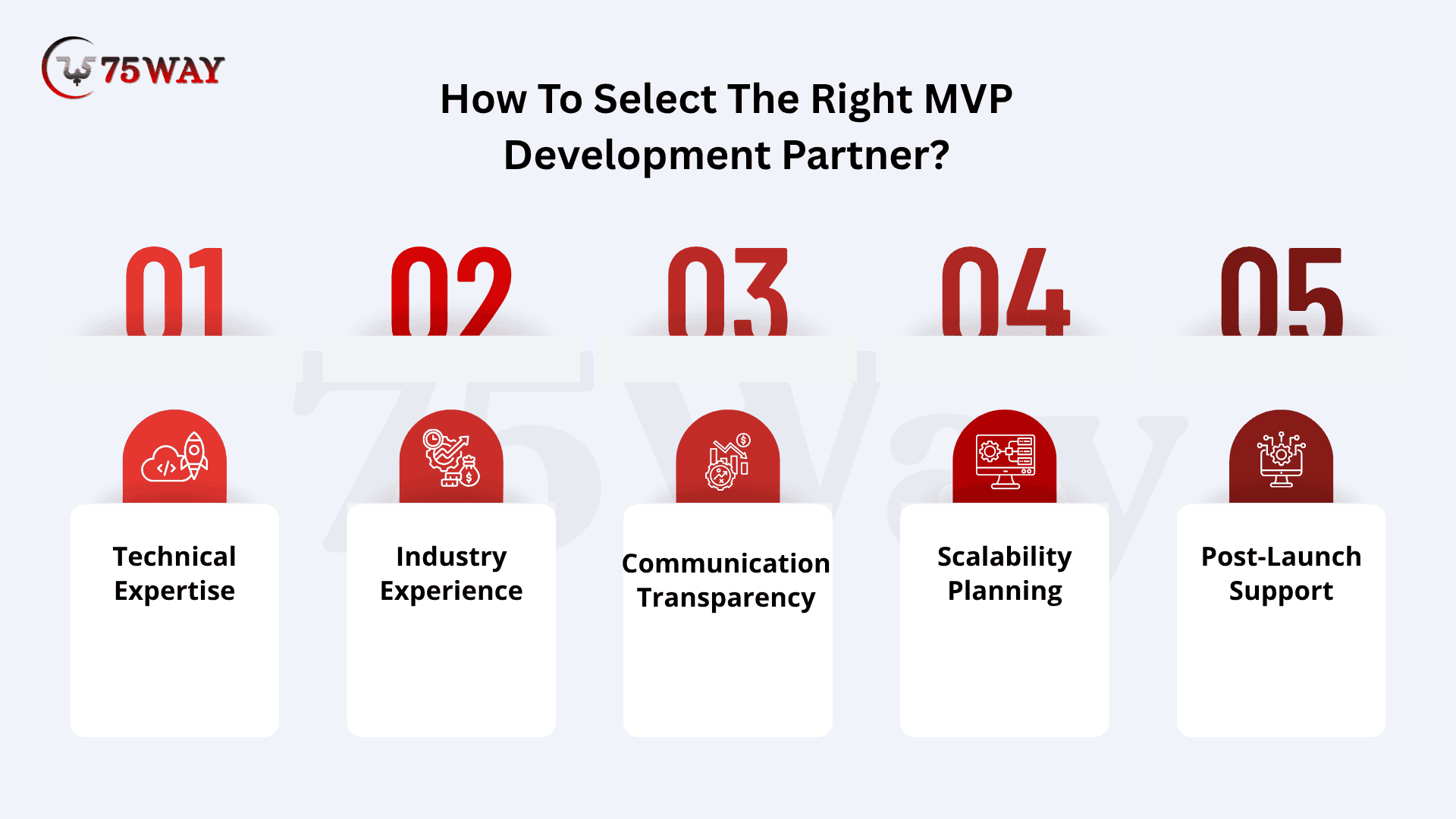
- Technical Expertise
Strong engineering capabilities help your MVP remain secure, scalable, and operationally reliable during future growth stages. Experienced developers solve technical challenges faster. They also recommend technologies matching long-term business requirements.
- Industry Experience
Deep market understanding improves decision-making across workflows, compliance requirements, customer expectations, and operational structures significantly. Experienced agencies recognize industry-specific risks earlier. They also build products aligned better with market realities and customer behaviors.
- Communication Transparency
Clear collaboration processes improve development visibility, project coordination, and execution quality throughout product creation stages consistently. Transparent teams share updates regularly. They also minimize misunderstandings, delays, and unnecessary operational confusion during development workflows.
- Scalability Planning
Future-focused architectures help products manage increasing users, integrations, traffic volumes, and expanding feature requirements smoothly. Proper scalability planning reduces rebuilding costs later. It also supports sustainable long-term operational and business growth.
- Post-Launch Support
Reliable maintenance services improve application stability, security updates, technical monitoring, and operational continuity after deployment phases. Ongoing support reduces downtime risks. It also helps resolve technical issues before they affect customer experiences negatively.
How To Attract Investors Towards Your MVP Product?
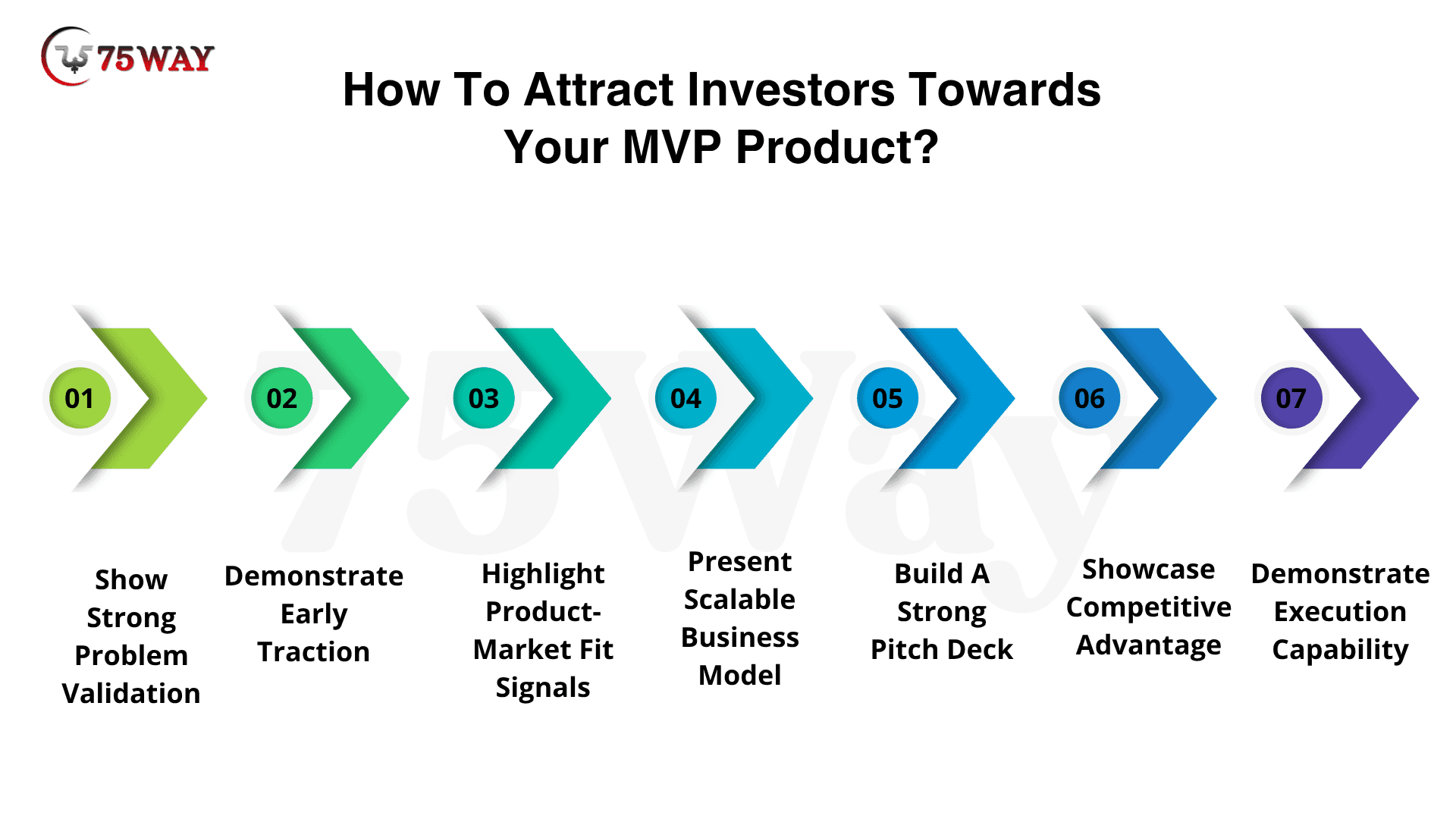
Attracting investors toward your MVP requires clear validation, strong market demand signals, and a scalable business vision. Investors look for traction, problem clarity, user growth, and a product that shows real future revenue potential early.
1. Show Strong Problem Validation
Investors invest in problems, not just products. Clearly demonstrate that your MVP solves a real, painful customer issue backed by interviews, surveys, and early user behavior showing consistent demand and urgency.
2. Demonstrate Early Traction
Traction proves your idea is not just theoretical. Show user signups, engagement metrics, retention rates, or pilot customers actively using your MVP to validate growing market interest and product relevance.
3. Highlight Product-Market Fit Signals
Product-market fit shows your MVP aligns with real customer needs. Share feedback loops, repeat usage patterns, and customer satisfaction indicators proving users genuinely find value in your solution consistently.
4. Present Scalable Business Model
Investors want growth potential. Clearly explain how your MVP can scale revenue through subscriptions, commissions, or enterprise models, ensuring long-term profitability without exponential cost increases during expansion stages.
5. Build a Strong Pitch Deck
A compelling pitch deck simplifies your vision. Include problem, solution, market size, traction, revenue model, and roadmap to clearly communicate how your MVP evolves into a scalable business opportunity.
6. Showcase Competitive Advantage
Highlight what makes your MVP different from competitors. It could be technology, speed, pricing, user experience, or niche targeting that creates a strong market position and defensible business edge.
7. Demonstrate Execution Capability
Investors invest in teams as much as ideas. Show your ability to execute through prototypes, development progress, technical expertise, and consistent delivery, showing you can actually build and scale the product successfully.
Key Sourcing Models To Develop A Minimum Viable Product (MVP)
Choosing the right sourcing model for MVP development plays a crucial role in cost, speed, control, and scalability. Businesses can build products using internal teams, hybrid approaches, or fully external development partners, depending on their goals and resources.
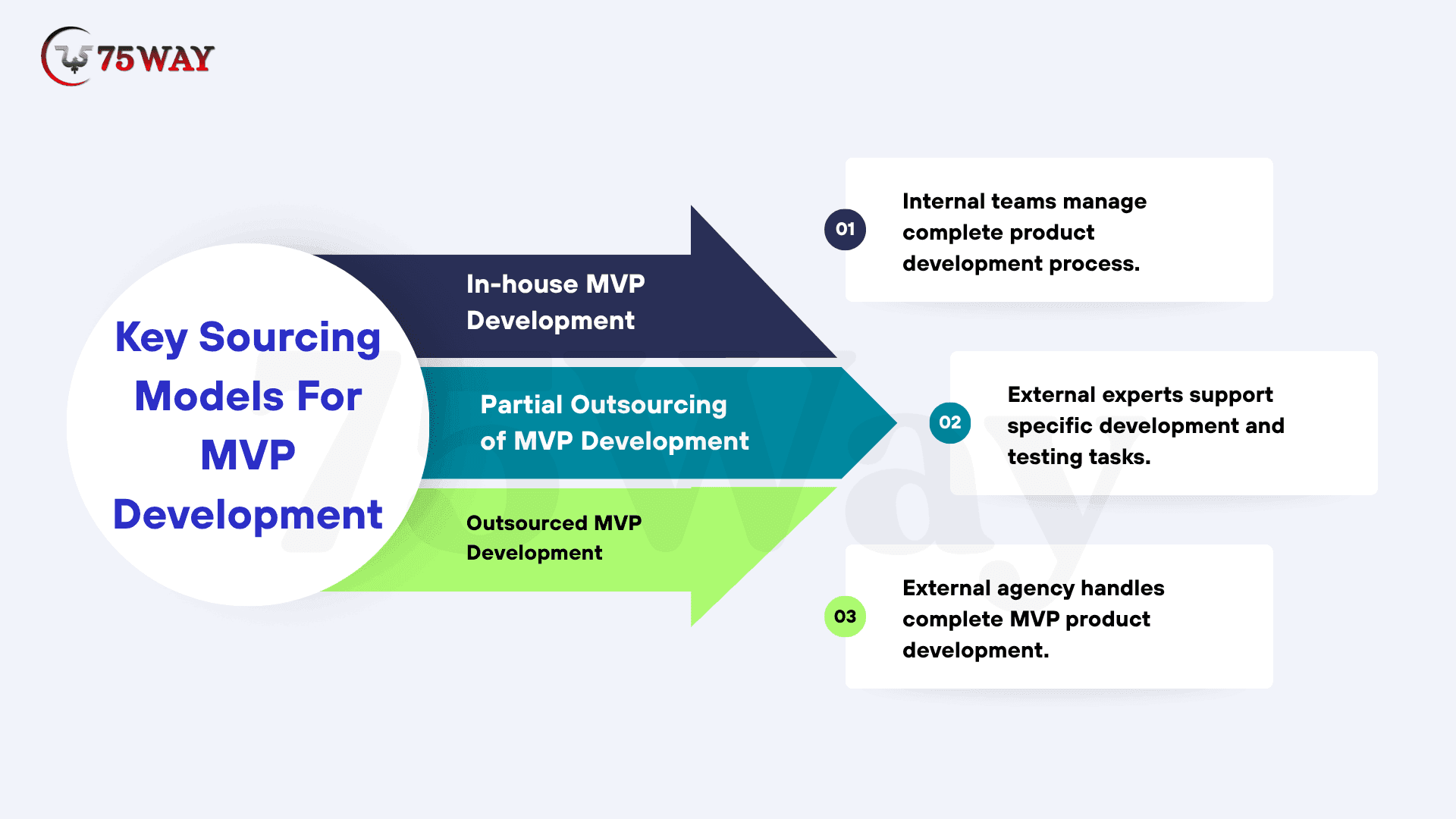
- In-house MVP Development
In this, you can build the MVP product using your internal team of developers, designers, and product managers. This model gives you full control over product decisions, development speed, and long-term technical ownership of the solution.
- Partial Outsourcing of MVP Development
Partial outsourcing combines internal efforts with external development support for specific tasks like design, backend, or testing. This approach helps businesses reduce workload while still maintaining strategic control over core product direction and decision-making processes.
- Outsourced MVP Development
Outsourced MVP development involves hiring an external agency or development partner to build the entire product. This model is ideal for faster launches, reduced hiring costs, and accessing specialized technical expertise without building an internal team.
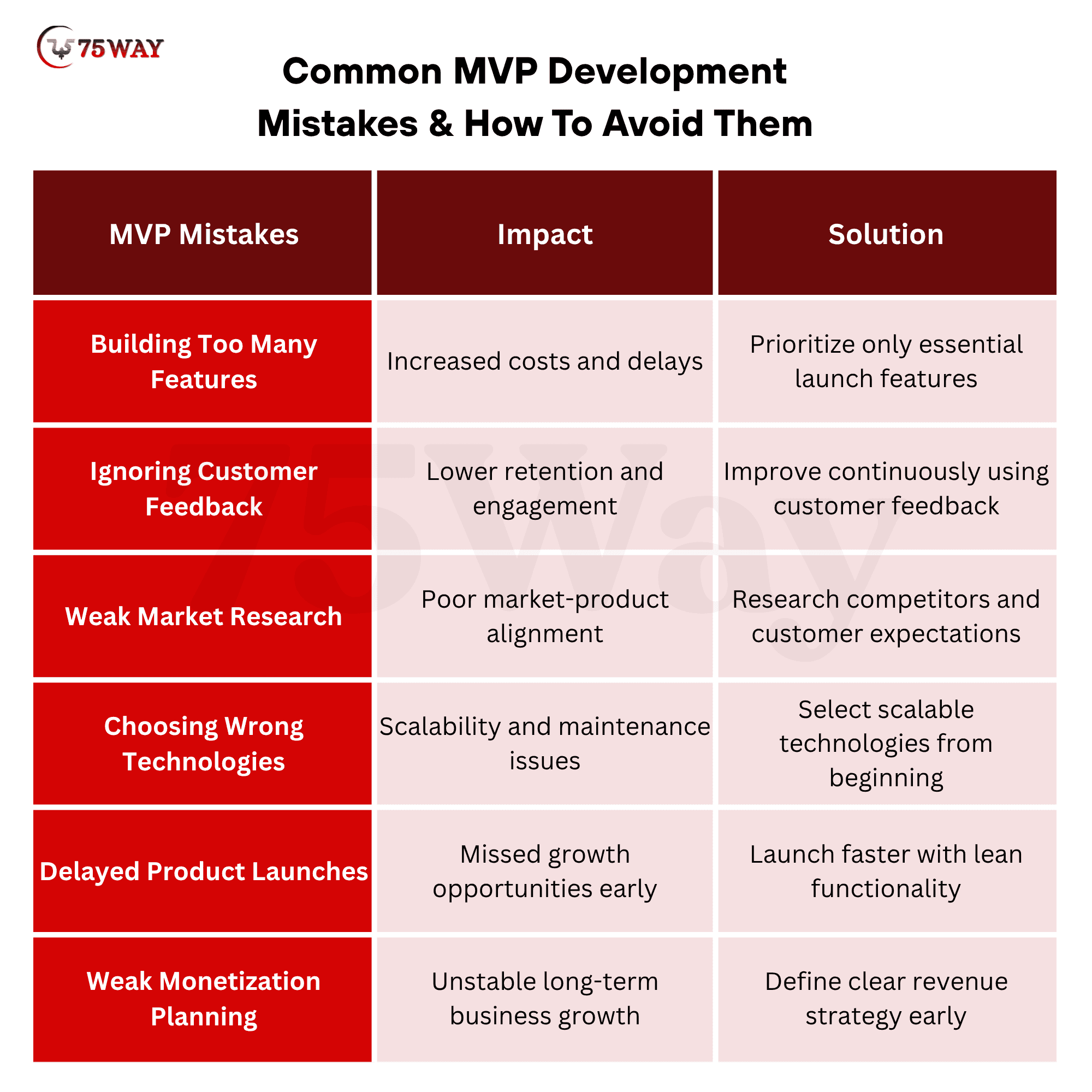
Common MVP Development Mistakes & How To Avoid Them
Even strong product ideas can fail because of poor MVP execution. Many startups spend months building unnecessary features, ignore customer feedback, or delay launches, trying to create “perfect” products that markets never actually requested.
1. Building Too Many Features
Adding excessive features during early development increases complexity, delays launches, and drains budgets quickly. Instead of solving one clear problem, products become overloaded and difficult for users to understand.
Solution: Focus only on core functionalities and solve immediate customer problems clearly. Prioritize validation, usability, and faster launches before expanding additional product capabilities later.
2. Ignoring Customer Feedback
Ignoring customer behavior and feedback creates products disconnected from real market expectations. When users feel unheard, retention rates, engagement, and customer satisfaction usually decline rapidly over time.
Solution: Continuously collect feedback through reviews, analytics, surveys, and direct customer conversations. Use real behavioral insights to improve product experiences.
3. Weak Market Research
Poor market research often leads to products nobody truly needs or understands. Without competitor analysis and audience validation, startups struggle with positioning, differentiation, and sustainable product-market alignment later.
Solution: Analyze competitors, customer frustrations, pricing strategies, and industry trends carefully before development. Strong research improves product direction, market fit, and long-term scalability.
4. Choosing Wrong Technologies
Unsuitable technologies create performance issues, security risks, scalability limitations, and expensive rebuilding challenges later. Many startups choose trendy technologies instead of selecting infrastructure matching actual business requirements.
Solution: Select technologies supporting scalability, security, operational flexibility, and future product growth. Always align technical decisions with long-term product goals and customer expectations.
5. Delayed Product Launches
Waiting too long to launch often causes missed opportunities and unnecessary development cycles. Perfection-focused strategies slow validation, increase expenses, and reduce competitive market advantages over time.
Solution: Launch faster with essential features instead of chasing unrealistic perfection. Early market feedback helps improve products more effectively than internal assumptions ever can.
6. Weak Monetization Planning
Products without clear monetization strategies struggle to achieve sustainable long-term growth. Even highly engaging applications eventually fail when revenue models remain unclear or operationally unrealistic from the beginning.
Solution: Define monetization models early using subscriptions, commissions, advertisements, or premium services strategically. Revenue clarity improves investment planning, scalability decisions, and long-term operational.
Why Businesses Prefer 75way To Build & Launch MVP?
Businesses prefer 75way Technologies for MVP development because it focuses on building fast, lean, and validation-driven products that reduce early-stage risk. Instead of overloading startups with unnecessary features, the approach is centered on solving real customer problems first and helping companies reach the market quickly with a clear, usable product.
Another key reason is the strong balance between strategy, design, and engineering execution. From market research and product planning to development and scaling architecture, the process is structured to support long-term growth. This helps businesses not only launch an MVP but also evolve it into a scalable digital product after validation.
Finally, businesses value the emphasis on communication, transparency, and post-launch support. Continuous feedback integration, performance improvements, and scalable infrastructure planning ensure that the product keeps improving even after launch. This makes it easier for companies to attract users, gain investor confidence, and build sustainable digital products.
Final Thoughts
To summarize, minimum viable product (MVP) development has become one of the most effective strategies for startups and enterprises launching digital products in competitive markets. Businesses no longer need massive upfront investments before validating ideas. Instead, MVP frameworks support faster launches, customer-driven innovation, controlled spending, and scalable product growth. From SaaS platforms and fintech applications to healthcare systems and grocery delivery solutions, MVP development now drives modern digital transformation strategies globally. Startups and entrepreneurs approaching a reliable MVP development company can reduce operational risks, strengthen customer engagement, and create scalable digital ecosystems aligned with evolving market expectations in 2026 and beyond.
Frequently Asked Questions (FAQs)
Can MVP Development Help Attract Investors?
Yes, investors prefer startups demonstrating market validation, active users, revenue potential, and measurable engagement metrics. MVP products provide proof that customers recognize value within the solution. Strong validation data improves investor confidence while reducing perceived business risks during early-stage funding discussions significantly.
Does MVP Development Work For Enterprise Businesses?
Large enterprises increasingly adopt MVP development for innovation initiatives, internal tools, customer applications, and digital transformation projects. MVP strategies help enterprises validate operational improvements, reduce technology investment risks, accelerate deployment cycles, and improve decision-making using real-world performance insights collected during controlled product releases.
Which Team Members Are Required During MVP Development?
Successful MVP projects commonly involve product managers, business analysts, UI/UX designers, frontend developers, backend engineers, QA specialists, DevOps professionals, and marketing strategists. Team structures vary depending on product complexity, development timelines, integrations, industry compliance requirements, and long-term scalability objectives across digital ecosystems.
Can Businesses Monetize Products During MVP Stages?
Yes, many startups generate early revenue during MVP launches through subscriptions, commission models, freemium upgrades, advertising systems, transactional fees, and service-based pricing structures. Early monetization validates business sustainability while providing valuable insights into customer purchasing behavior and pricing acceptance across target audiences.
Why Do Some MVP Products Fail Despite Launching Quickly?
Rapid launches alone do not guarantee success. MVP failures often result from weak customer research, unclear value propositions, poor user experiences, limited differentiation, unstable infrastructure, pricing misalignment, or lack of continuous product iteration. Strategic planning remains essential throughout validation and growth stages for sustainable adoption.
Which Platforms Should Businesses Prioritize For MVP Launches?
Platform selection depends on customer behavior, budget limitations, business objectives, and technical requirements. Many startups prioritize web applications or single-platform mobile releases before expanding toward Android, iOS, smart devices, or enterprise integrations after validating customer demand and operational scalability successfully across markets.
Is Outsourcing MVP Development Better Than Building Internal Teams?
Outsourcing often reduces hiring costs, accelerates development timelines, and provides access to experienced specialists immediately. Internal teams may offer stronger long-term operational control. Businesses usually choose outsourcing during early validation stages because it supports flexibility, faster execution, and lower infrastructure commitments for startup environments.
Can MVP Products Scale Into Full Enterprise Platforms?
Yes. Many globally recognized companies launched lean MVP versions before expanding into enterprise-grade ecosystems. Proper architecture planning, scalable infrastructure, modular coding practices, and customer-driven feature expansion allow MVP products to evolve into highly scalable digital platforms supporting millions of active users globally.