AI Summary
Cannabis app development helps dispensaries, retailers, delivery businesses, and startups create secure digital experiences for customers and operations. This guide explains essential features, compliance considerations, development stages, technology, integrations, costs, and business models. It also shows how businesses can plan scalable cannabis applications for different US markets.
Key Takeaways
- The US cannabis market may reach $320,772.68 million by 2034.
- Cannabis app development connects customers, dispensaries, delivery teams, and administrators through one platform.
- Compliance, age verification, payments, privacy, and location rules shape cannabis app development requirements.
- The cannabis mobile app development process can be organized into eight practical stages.
- Cannabis app development costs typically range from $20,000 to $250,000+, depending on scope.
Did you know? More than 51.6 million people in the U.S. live with chronic pain, and a January 2023 JAMA Network Open study found that nearly one-third of patients reported using cannabis to manage chronic pain.
That is not just a statistic. It tells you there is an audience looking for accessible ways to discover and purchase cannabis-related products. For a business, that means the digital experience around cannabis can serve a real and sizeable customer need.
But we would not recommend starting cannabis mobile app development by handing a team a long feature list. First, decide: what are you actually building? A dispensary app, delivery platform, telemedicine marketplace app, product discovery experience, loyalty system, or something more specialized. That decision will affect your compliance approach, integrations, user journey, technology, and development budget.
This guide takes you through those decisions before you commit serious money to on demand cannabis app development, so you can understand what your good weed apps should solve, what it will require behind the scenes, what’s the cost to build a custom cannabis app, and where the biggest business opportunities and risks sit in 2026.
What Is Cannabis App Development?
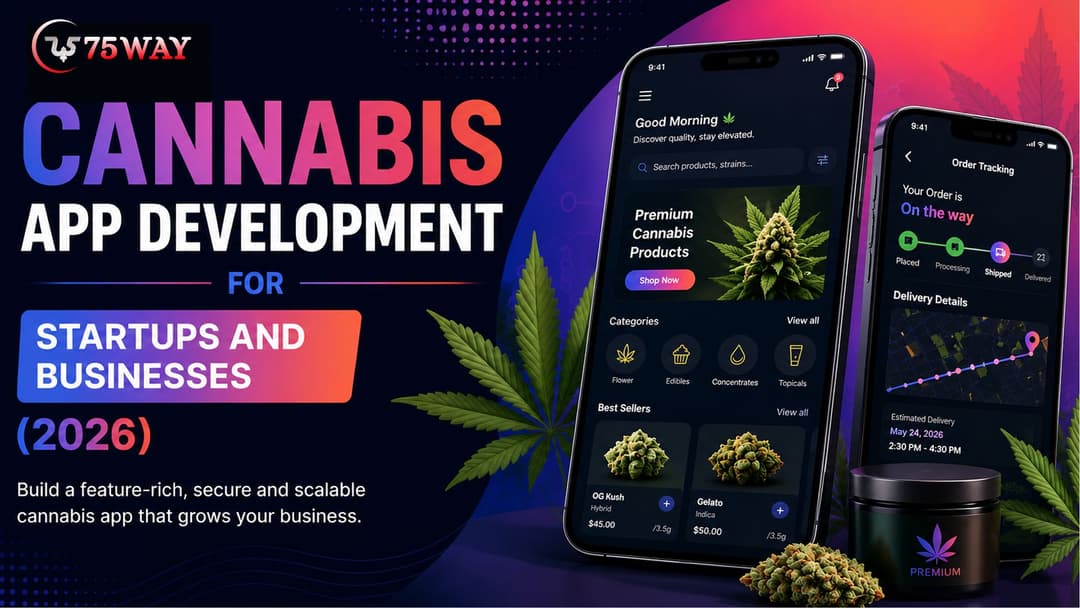
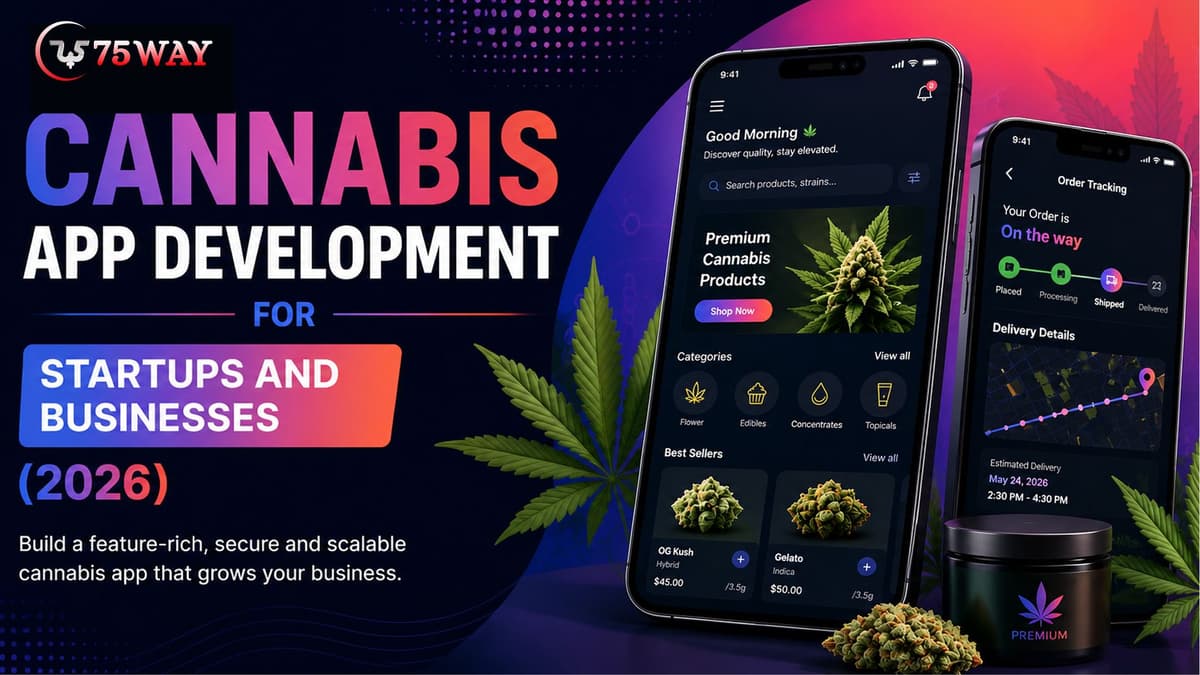
Cannabis app development involves designing and building mobile or web applications that support legal cannabis-related business operations, including product discovery, ordering, dispensary management, delivery coordination, customer engagement, and administration.
Depending on the business model and jurisdiction, the application may connect customers with licensed retailers, medical cannabis providers, delivery teams, or marketplace operators.
For businesses, the goal is not simply to create another ordering interface. A successful cannabis application needs to connect customer experience, inventory, order management, compliance, payments, delivery operations, and business administration within a reliable digital ecosystem.
The exact functionality should depend on the company's license, target market, operating model, and applicable state or local requirements. This makes requirements planning particularly important for businesses entering regulated cannabis markets.
Cannabis App Market Size & Insights in The United States
The U.S. cannabis market is already large enough to create serious digital opportunities for retailers, delivery providers, and cannabis technology businesses. The latest market figures and growth signals below show where that opportunity is heading.
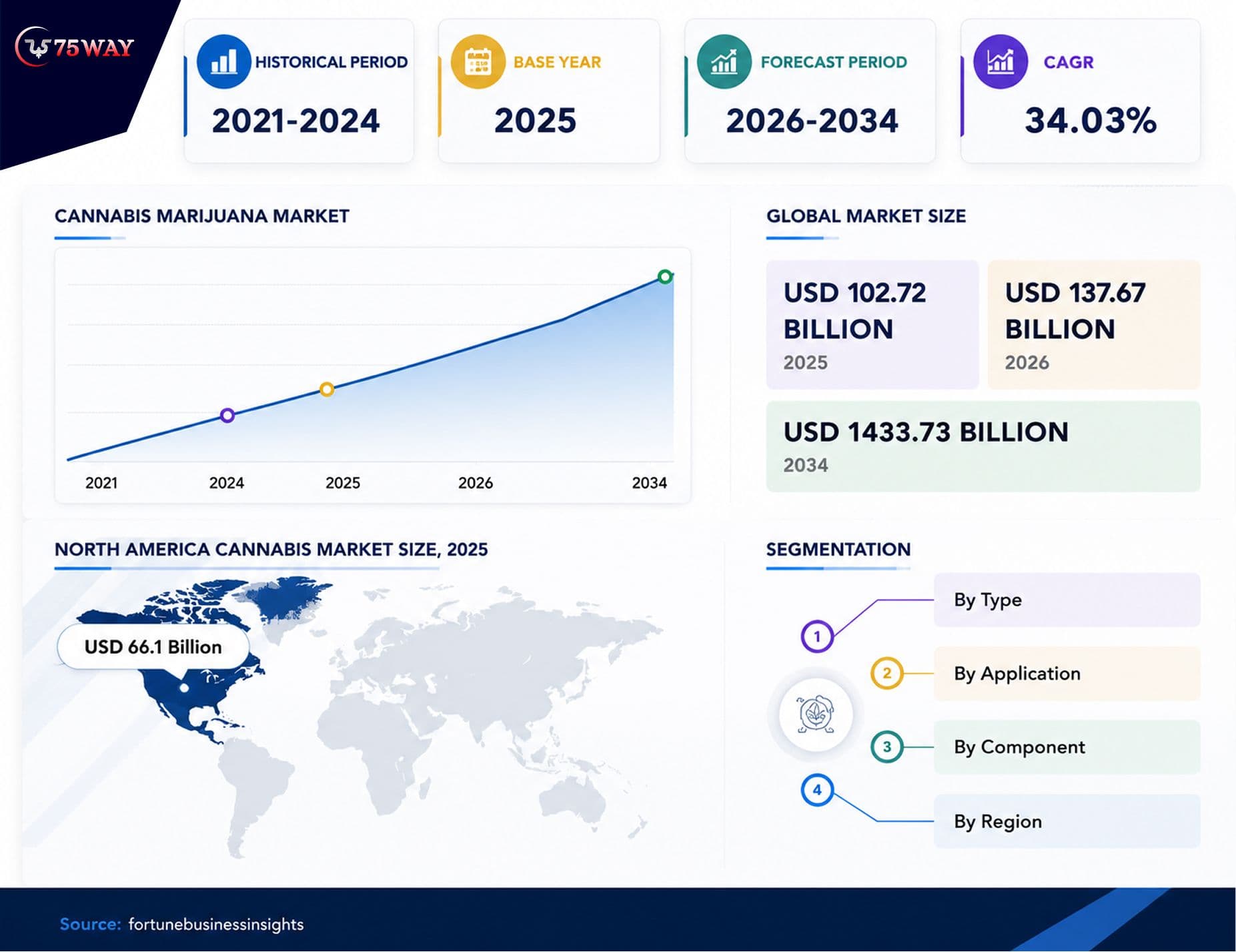
- Globally, cannabis app market may grow from $137.67 billion in 2026 to $433.73 billion by 2034, at a CAGR of 34.03%.
- North America dominates the global cannabis market, accounting for 83.82% of the market share.
- The U.S. cannabis market is projected to reach approximately $428.22 billion by 2032, supported by expanding medical and recreational legalization.
- By 2030, North American legal cannabis market is forecast to expand at a CAGR of 11.9%.
Why Are Businesses Investing In Cannabis Ordering & Delivery App Development?
The bigger opportunity for cannabis businesses is not simply selling products through another channel, but owning more of the customer relationship. A mobile app can support discovery, ordering, loyalty, and personalized engagement in one place. The business value behind this shift is explored below.
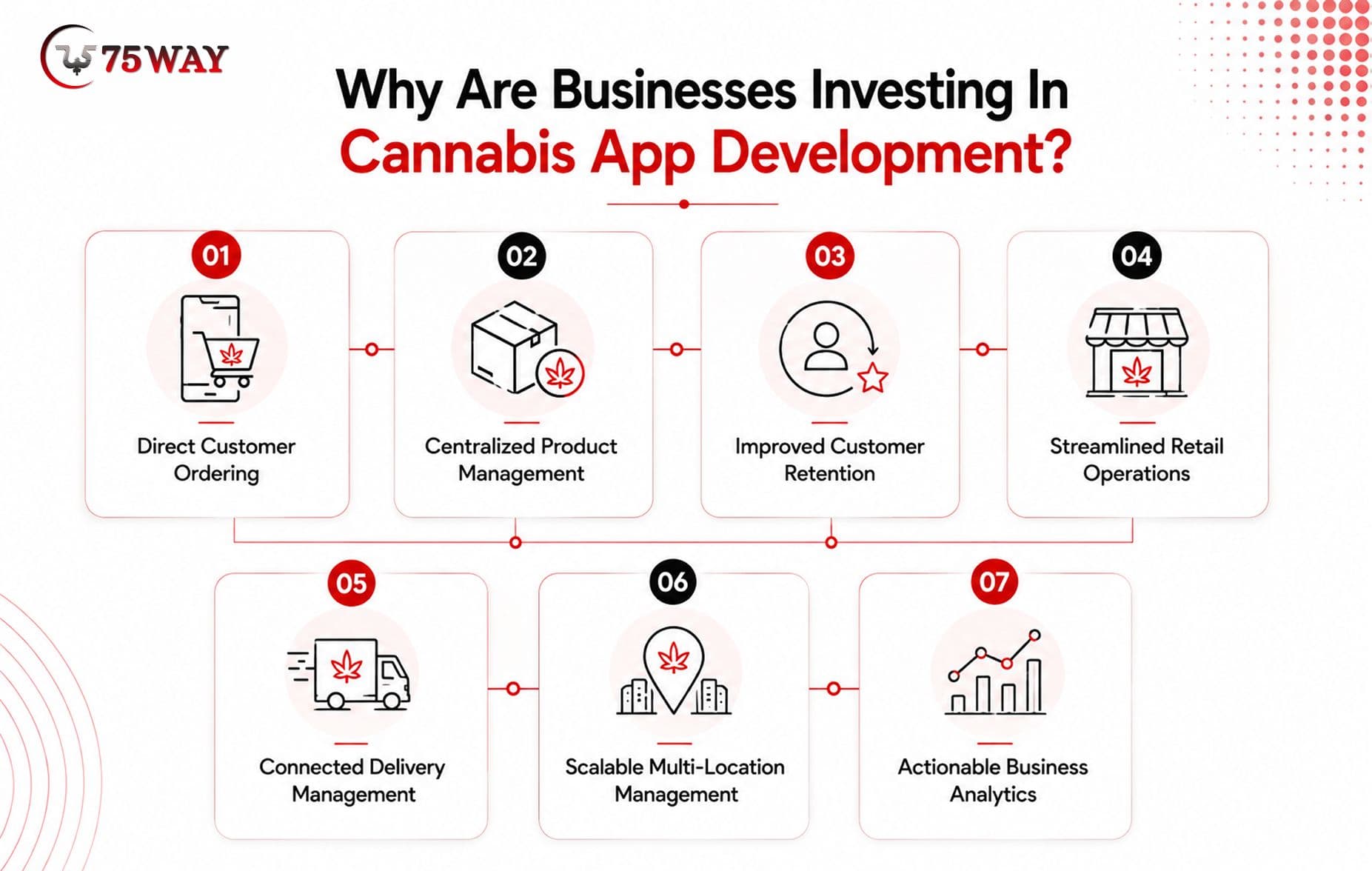
- Direct Customer Ordering
Instead of sending customers to third-party platforms, a branded app gives them a direct route to the business. They can explore available products, check relevant details, place eligible orders, and receive updates from one familiar place. This also gives the business greater control over the customer journey.
- Centralized Product Management
Customers quickly lose confidence when an app shows products that are no longer available. Connecting the app with inventory systems helps keep product information and availability up to date. Staff can also manage changes across connected sales channels without repeatedly updating listings by hand.
- Improved Customer Retention
The relationship does not have to end after an order is delivered. Customers can return to their account to view previous orders, manage preferences, access permitted loyalty benefits, and receive relevant updates. These small conveniences can make repeat interactions feel easier and more worthwhile.
- Streamlined Retail Operations
Orders should not stop at the customer's checkout screen. They can flow into connected retail workflows so staff can view requests, manage fulfillment, update order statuses, and coordinate inventory. This reduces unnecessary back-and-forth and gives managers a clearer picture of daily store activity.
- Connected Delivery Management
For businesses offering eligible delivery services, the app can connect customers, delivery personnel, and operations teams through one workflow. Customers can receive order and delivery updates, while staff can monitor progress and respond to delays. Route and status information can also make coordination easier during busy periods.
- Scalable Multi-Location Management
Growth becomes more complicated when a business operates several stores. A well-planned app can support location-specific products, inventory, operating areas, staff permissions, and order management while keeping administration centralized. This gives the business a common digital foundation without forcing every location to operate as a completely separate system.
- Actionable Business Analytics
Every order can provide useful information beyond its immediate transaction. Businesses can study product demand, order patterns, customer engagement, fulfillment times, and service performance through an analytics dashboard. These insights can reveal what customers prefer, where operations slow down, and which areas may deserve further investment.
Types of Cannabis Apps Businesses Can Build For Diverse Market Needs
Before discussing features, decide what job your cannabis app needs to perform for the business. A delivery platform has different priorities from a dispensary app or a product-discovery marketplace. The app models businesses can build around these goals are explored below.
- Cannabis Dispensary App: A branded dispensary app gives customers a convenient way to explore eligible products, check availability, review relevant information, and manage orders.
Retail teams can connect inventory, customer accounts, order processing, and store operations through the same digital ecosystem. A well-designed app can also create a direct customer relationship instead of relying entirely on third-party channels.
Estimated Cost: $40,000–$90,000+
- Cannabis Delivery App: A delivery-focused platform connects customers, licensed retailers, dispatch teams, and authorized delivery personnel through one workflow.
Customers can place eligible orders and receive relevant status updates, while operations teams can manage assignments, routes, and fulfillment. The final scope depends heavily on location tracking, dispatch logic, mapping, and local delivery requirements.
Estimated Cost: $50,000–$120,000+
- Medical Cannabis App: Medical cannabis platforms can support eligible patient and healthcare workflows based on applicable jurisdictional requirements.
Features may include provider interactions, appointments, patient information, product details, reminders, and compliant ordering capabilities. Additional security, privacy, healthcare integrations, and regulatory requirements can increase the development scope.
Estimated Cost: $60,000–$150,000+
- Cannabis Marketplace: A marketplace brings multiple eligible retailers or businesses together within one platform. Customers can compare participating businesses and available offerings, while administrators manage vendors, listings, orders, payments, commissions, and platform activity.
Multi-vendor architecture and separate workflows for customers, retailers, and administrators generally make this model more complex.
Estimated Cost: $80,000–$180,000+
- Cannabis Ordering App: This model focuses specifically on making digital ordering easier for a dispensary, retailer, or eligible cannabis business.
Customers can browse products, manage carts, place orders, and receive updates while staff handle fulfillment through connected systems. Inventory synchronization and POS integrations can significantly influence the overall development effort.
Estimated Cost: $35,000–$80,000+
- Cannabis Loyalty App: A loyalty application gives eligible businesses a dedicated way to manage permitted rewards and customer engagement programs.
Users can view available benefits, track eligible activity, and manage account preferences from their phones. Businesses can also connect loyalty functionality with customer accounts and purchasing systems where legally appropriate.
Estimated Cost: $30,000–$70,000+
- Cannabis E-Commerce App: An e-commerce-focused application creates a mobile storefront for eligible cannabis businesses with product discovery, customer accounts, compliant ordering, inventory synchronization, and order updates.
It can be particularly useful for retailers that want a stronger direct-to-customer digital experience. Integrations with existing commerce and retail infrastructure can affect the final price considerably.
Estimated Cost: $45,000–$100,000+
- Cannabis Inventory Management App: This type of application helps authorized businesses keep track of products across stores, warehouses, and sales channels.
Teams can monitor stock levels, product movement, availability, and location-specific inventory from a centralized interface. Integrations with POS, ERP, barcode, and reporting systems can make the solution more powerful but also increase development complexity.
Estimated Cost: $40,000–$100,000+
- Cannabis CRM App: A cannabis CRM solution organizes customer profiles, permitted preferences, interactions, communications, and engagement information in one place.
This data helps you understand customer relationships and create more relevant experiences within applicable privacy and marketing rules. Advanced segmentation, analytics, automation, and third-party integrations can expand the scope considerably.
Estimated Cost: $35,000–$90,000+
- Cannabis Business Management App: Larger operators may need a broader platform that brings locations, employees, inventory, orders, customer activity, reporting, and operational workflows together.
Management teams can use a centralized dashboard to monitor different parts of the business without relying on disconnected tools. Multi-location support, advanced permissions, analytics, integrations, and custom workflows can make this one of the more extensive app types.
Estimated Cost: $70,000–$160,000+
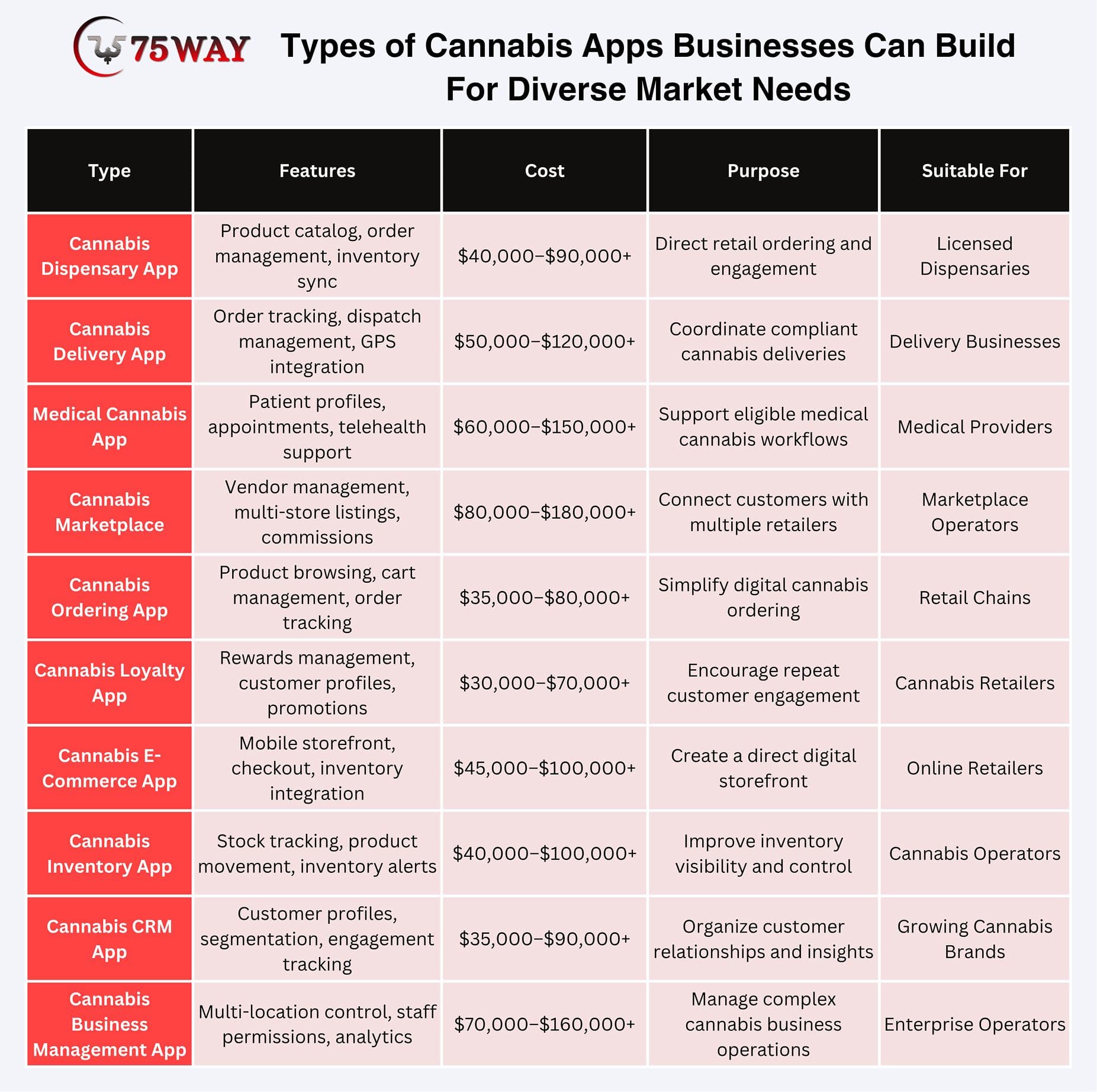
Note: These are development cost estimates, not fixed quotes. Actual costs vary based on platform choice, UI/UX complexity, number of user roles, integrations, security requirements, geographic scope, compliance needs, and whether the app is built as an MVP or a full-scale product.
How To Build The Cannabis App: Complete Development Process
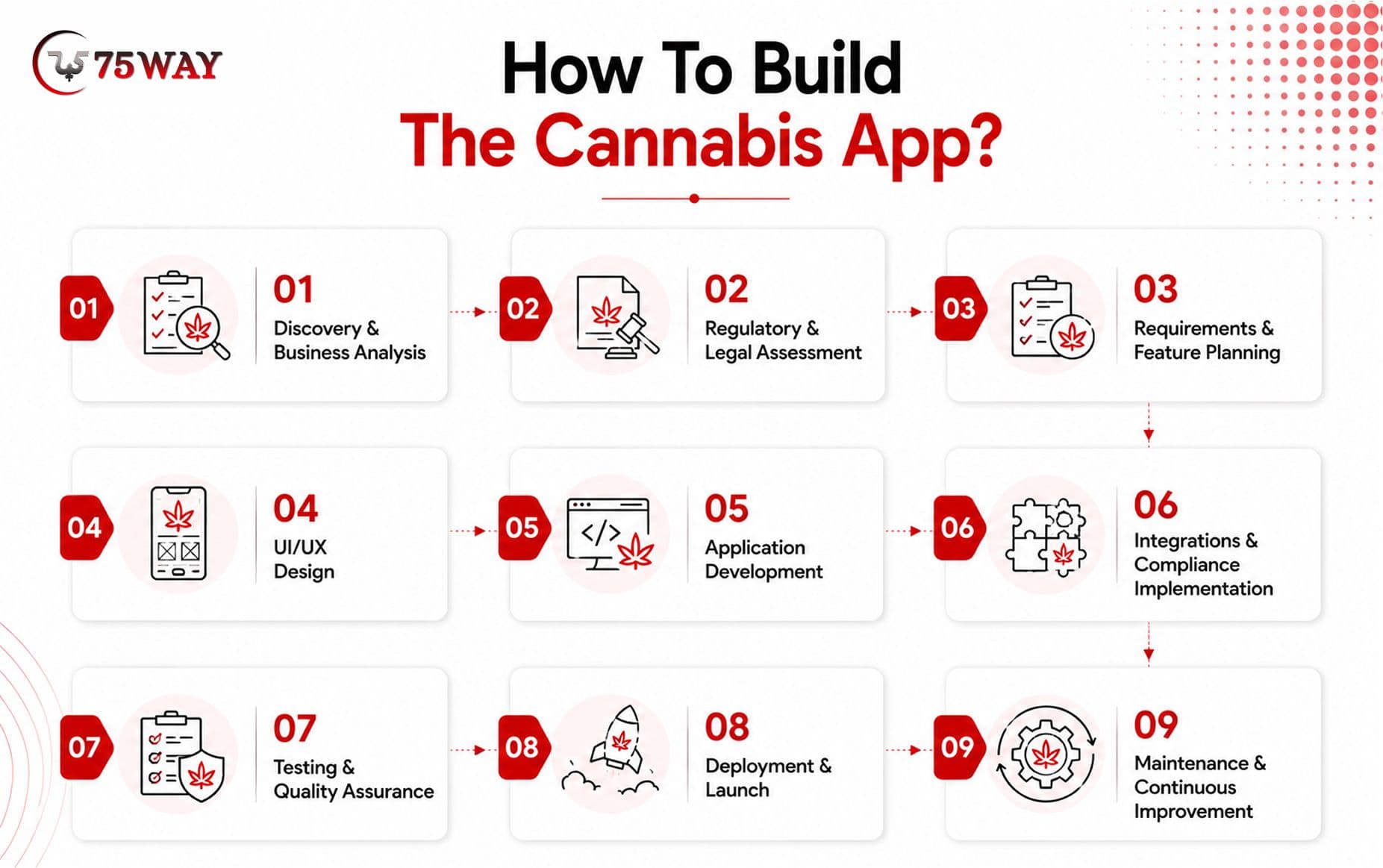
1. Discovery & Business Analysis
The first stage is about understanding the business behind the app. The development team looks at the target customers, business model, service locations, competitors, revenue strategy, existing operations, and the problem the application needs to solve.
This stage can answer questions such as:
- Target Users: Identify customers, dispensaries, delivery teams, administrators, or medical users requiring different application experiences.
- Business Model: Define whether the platform supports retail, delivery, marketplace, medical, or SaaS operations.
- Operating Locations: Determine target markets and jurisdiction-specific requirements affecting services, delivery, verification, and operations.
- Revenue Strategy: Establish permitted revenue sources, including sales, commissions, delivery fees, subscriptions, or memberships.
- Existing Operations: Review current POS, inventory, CRM, accounting, delivery, and business-management systems requiring integration.
- Competitive Positioning: Analyze competing platforms to identify customer expectations, market gaps, and potential differentiation opportunities.
- Product Scope: Convert business findings into prioritized features, user roles, technical requirements, and development milestones.
The outcome is a clearer product direction, initial scope, and development roadmap.
2. Regulatory & Legal Assessment
Before deciding what the app should do, the business needs to confirm whether its planned cannabis activities are legally permitted in each target market. Rules can affect product sales, delivery, advertising, age verification, medical use, payments, data handling, and where services can operate.
The team should review the applicable requirements for every intended location and identify which features need restrictions or additional controls. If cannabis activity is prohibited in a target market, the application should not be designed to facilitate that activity there.
This stage can cover:
- Market Eligibility: Determine whether the planned cannabis business model is permitted in each target jurisdiction.
- Licensing Requirements: Identify the licenses or authorizations required for retail, delivery, medical, or marketplace operations.
- Age & Eligibility Controls: Define appropriate verification requirements for customers and other users.
- Product Restrictions: Account for rules governing permitted products, quantities, labeling, and transactions.
- Delivery Restrictions: Establish where and under what conditions eligible deliveries can operate.
- Marketing Rules: Review restrictions around advertising, promotions, notifications, and customer communications.
- Data & Privacy Requirements: Identify applicable requirements for customer, payment, identity, and other sensitive information.
Important: Cannabis is not legal for the same activities everywhere. The development roadmap should therefore be based on the laws applicable to the specific markets the business intends to serve.
3. Requirements & Feature Planning
With the business direction and regulatory boundaries understood, the team can decide what the application actually needs. Customer, retailer, delivery, and admin workflows are mapped separately so every user role has the right tools.
- Map User Requirements: Identify what each user role needs.
- Define Core Features: Select functions required for initial launch.
- Prioritize MVP Scope: Focus first on high-value essential features.
- Plan Future Enhancements: Reserve advanced capabilities for later releases.
- Assess Technical Dependencies: Identify features requiring other systems beforehand.
- Estimate Development Effort: Evaluate complexity, resources, timelines, and costs.
Features are then divided according to priority, business value, technical complexity, and dependencies. The first release might focus on essential ordering and account workflows, while later versions can introduce advanced analytics, AI capabilities, loyalty programs, or deeper automation.
This prevents the common mistake of spending heavily on features that customers may not need at launch.
4. UI/UX Design For Cannabis App
Once the functionality is clear, designers turn the planned workflows into an actual user experience. They create user flows, wireframes, prototypes, and high-fidelity screens for each application role.
The focus should remain on clarity. Customers should be able to understand where to browse, verify eligibility, place orders, make payments, and track fulfillment without unnecessary steps.
Retailer and admin interfaces require a different approach. Their screens should prioritize operational information, order status, inventory, users, reports, and controls rather than simply copying the customer interface.
5. Cannabis App Application Development
Approved designs now move into development. The team builds the mobile application, backend, databases, APIs, authentication, dashboards, business logic, notifications, and other required components.
The technology stack depends on the project's requirements. A cross-platform solution may use Flutter or React Native, while native development may involve Swift or Kotlin. Cloud infrastructure, secure databases, modern APIs, and third-party services can be added according to the required architecture.
Development is usually divided into manageable releases. This allows the business to review working functionality rather than waiting for the completion of the entire application.
6. Integrations & Compliance Implementation
A custom cannabis application often needs to communicate with other systems. These connections allow information to move between the app and the business tools already used for operations.
Depending on the model, integrations may involve:
- Inventory and product systems
- CRM platforms
- Maps and location services
- Notifications
- Identity or age verification
- Analytics
- Approved payment services
- Delivery or logistics systems
The regulatory requirements identified earlier are also incorporated into relevant workflows. This may include eligibility checks, location restrictions, transaction limits, permissions, record-keeping, or other controls required for the intended market.
7. Testing & Quality Assurance
A working application is not automatically a reliable application. Before launch, every important workflow needs to be tested under normal and unexpected conditions.
Testing can cover functionality, usability, performance, security, APIs, integrations, devices, permissions, and notifications. Critical journeys should receive particular attention, including registration, eligibility checks, product availability, checkout, payments, order processing, delivery updates, and account access.
The team should also test failure scenarios. A declined payment, unavailable product, failed verification, disconnected API, or weak network connection should not leave users stuck without a clear next step.
8. Cannabis App Deployment & Launch
After testing is complete, the application is prepared for its production environment and intended distribution channels. The team configures hosting, databases, analytics, monitoring, security settings, notifications, and production access.
- Production Configuration: Configure servers, databases, APIs, analytics, notifications, security, and required production settings.
- Distribution Preparation: Prepare the application for approved distribution channels and required platform review processes.
- Controlled Rollout: Release gradually to monitor real-world usage and resolve unexpected launch issues.
- Operational Readiness: Prepare customer support, retailer onboarding, delivery teams, permissions, and escalation procedures.
- Launch Monitoring: Track crashes, performance, user activity, transactions, and critical workflows immediately after launch.
9. Maintenance & Continuous Improvement
Launching the application is only the beginning of its operational life. Real customers will reveal problems, preferences, and opportunities that may not have appeared during development.
The post-launch team can monitor crashes, performance, order activity, user feedback, conversion rates, support requests, and other relevant metrics. These insights can guide bug fixes, security updates, feature improvements, workflow changes, and future releases.
Regulatory monitoring is equally important for cannabis applications. When applicable laws, licensing requirements, market restrictions, or platform policies change, the application may need corresponding updates.
Over time, the product can expand with new locations, services, integrations, automation, analytics, or other capabilities based on validated business demand and the legal requirements of each market.
Features To Include In On-Demand Cannabis Mobile App Development
The success of an on-demand cannabis app depends on what happens on both sides of the order. Customers need a simple buying experience, retailers need control over fulfillment, and admins need visibility across the operation. The features that connect these three sides into one working platform are discussed below.
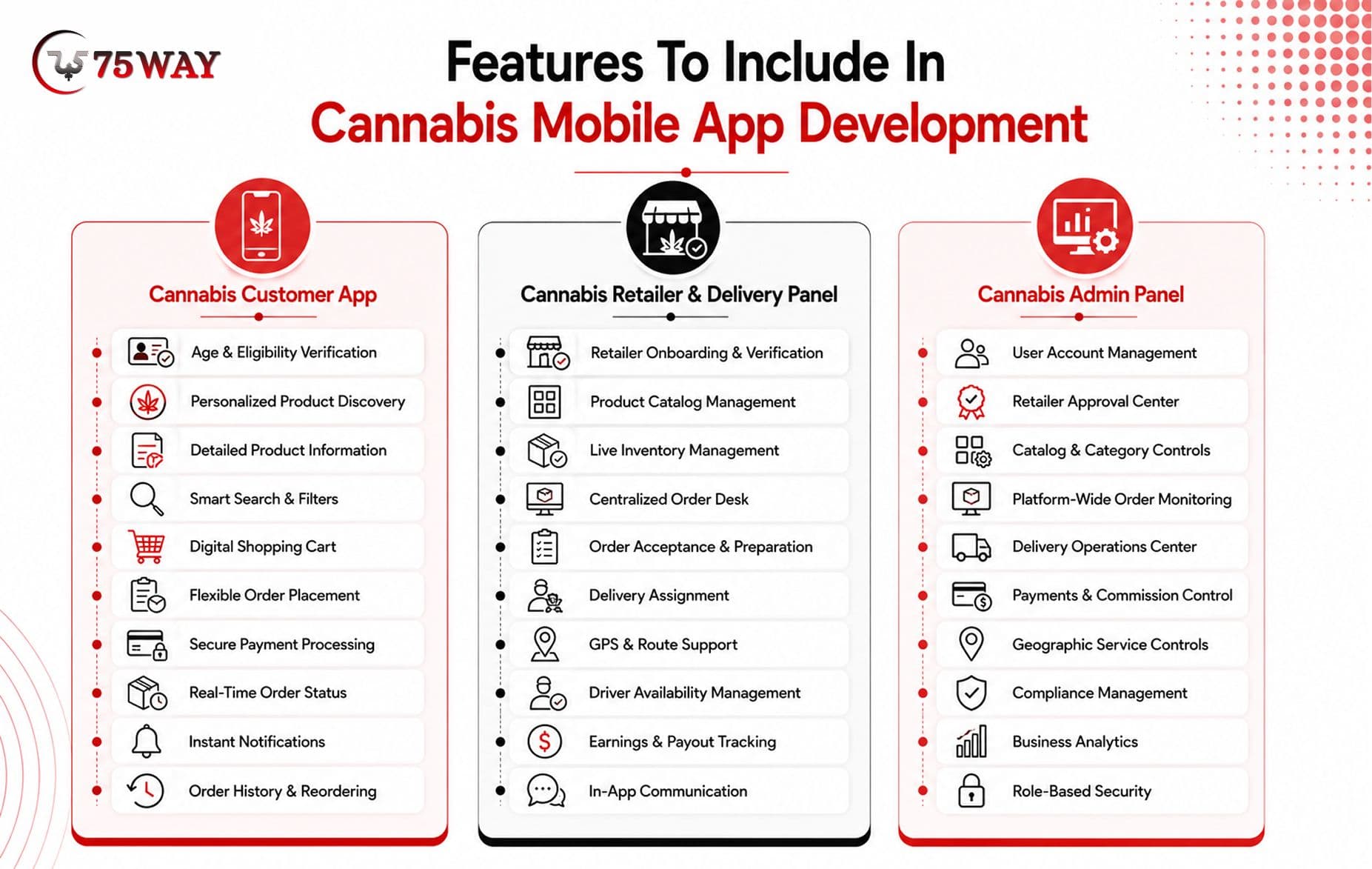
1. Cannabis Customer App
The customer module should answer one simple question: Can someone find what they need, place an eligible order, and stay informed without unnecessary effort? These features enhance the experience of customers who keep returning.
- Age & Eligibility Verification: Before customers can access certain services, the app can verify age or other eligibility requirements where local rules require it. A clear verification flow can make this process easier to understand without adding unnecessary friction.
- Personalized Product Discovery: Customers can explore eligible products through categories, search, filters, and relevant recommendations. A well-organized catalog helps users move from “What should I look at?” to a suitable product much faster.
- Detailed Product Information: Product pages can bring together pricing, availability, retailer information, specifications, and other permitted details. Clear information gives customers greater confidence before they add something to their cart.
- Smart Search & Filters: A large product catalog becomes frustrating when customers cannot find what they want quickly. Search and filtering can narrow results using relevant categories, attributes, price ranges, and availability.
- Digital Shopping Cart: Customers can review selected products before placing an order. The cart can clearly show quantities, prices, applicable charges, and other relevant information so there are fewer surprises at checkout.
- Flexible Order Placement: Once the customer is ready, the app can guide them through address, fulfillment, payment, and order confirmation steps. A short and clear checkout journey reduces the chances of customers abandoning an otherwise completed purchase.
- Secure Payment Processing: The app can connect with supported payment methods and keep payment information associated with the relevant transaction. Customers can also receive digital receipts and payment-status updates for easier record-keeping.
- Real-Time Order Status: Customers should not have to wonder whether an order was accepted, prepared, dispatched, or completed. Status updates can show what is happening at each stage and, where supported, provide appropriate delivery visibility.
- Instant Notifications: A quick notification can tell a customer that an order has been confirmed or that its status has changed. Timely updates reduce the need to repeatedly open the app or contact support.
- Order History & Reordering: Previous orders can remain available so customers can quickly review what they purchased and when. Where permitted and appropriate, reordering can make recurring shopping journeys considerably simpler.
2. Cannabis Retailer & Delivery Panel
Once an order arrives, the focus shifts from the customer experience to fulfillment. This module gives retailers and authorized delivery teams the tools they need to prepare orders, coordinate responsibilities, and keep customers updated without relying on scattered phone calls or messages.
- Retailer Onboarding & Verification
New businesses can submit their company information, licenses, credentials, and required documents through the platform. Admins can then review the submission before the retailer receives access to relevant marketplace or ordering functions.
- Product Catalog Management
Retailers can control the products they offer, including descriptions, pricing, images, and availability. Changes can be reflected across the customer-facing catalog so shoppers are less likely to encounter outdated information.
- Live Inventory Management
Stock levels can be updated as products are sold, received, or adjusted. A clearer inventory picture helps retailers avoid accepting orders for unavailable products and makes replenishment planning easier.
- Centralized Order Desk
Incoming orders can appear in one workspace instead of being scattered across different channels. Staff can review order details, update fulfillment stages, and quickly identify which requests need attention.
- Order Acceptance & Preparation
Retailers can review incoming requests and move accepted orders into preparation. Customers receive the corresponding status change, creating a clearer handoff between the storefront and fulfillment team.
- Delivery Assignment
Eligible delivery requests can be offered or assigned to authorized personnel based on factors such as availability, location, and service coverage. This can reduce the time dispatch teams spend deciding who should handle each request.
- GPS & Route Support
Mapping capabilities can help authorized delivery personnel navigate to approved destinations and view relevant route information. Operations teams can also use location data to understand delivery progress and respond when delays occur.
- Driver Availability Management
Delivery personnel can indicate whether they are available to receive another assignment. Dispatch teams then have a clearer picture of their active workforce instead of relying on manual status checks.
- Earnings & Payout Tracking
Authorized delivery personnel can see completed assignments, applicable earnings, commissions, and payout status from their account. Transparent financial information can make the relationship between completed work and received payments easier to understand.
- In-App Communication
Retailers, delivery personnel, and customers can exchange relevant order or delivery information through supported communication tools. Keeping those conversations connected to the order can make it easier to understand what happened when an issue arises.
3. Cannabis Admin Panel
The admin module sits behind the customer and retailer experiences. It gives the business a broader view of what is happening across users, orders, retailers, payments, deliveries, and platform activity, while providing controls for managing the operation.
- User Account Management: Admins can manage customer, retailer, delivery, and staff accounts from a central dashboard. They can review account details, adjust permissions, handle access issues, and take appropriate action when an account violates platform rules.
- Retailer Approval Center: New retailers can be reviewed before they become active on the platform. Admins can examine submitted documents, request missing information, approve eligible businesses, or flag applications that require additional review.
- Catalog & Category Controls: A central catalog area lets administrators manage categories and oversee marketplace product information. This creates a cleaner customer experience while still allowing approved retailers to manage their own offerings within defined permissions.
- Platform-Wide Order Monitoring: Admins can see orders across retailers instead of checking each business separately. This wider view helps them spot delayed orders, unusual cancellation patterns, fulfillment issues, or customer complaints that require intervention.
- Delivery Operations Center: Delivery assignments, active jobs, service areas, and status information can be viewed from one operational screen. When something goes wrong, the team can review the situation and take appropriate action rather than waiting for multiple parties to report it.
- Payments & Commission Control: Financial activity can be brought into one dashboard covering transactions, refunds, fees, commissions, and applicable payouts. This gives the business a clearer picture of money moving through the platform and makes reconciliation easier.
- Geographic Service Controls: Administrators can decide which locations, retailers, and delivery services are available within defined operating areas. These controls can help prevent orders from being accepted where the business is not authorized or equipped to fulfill them.
- Compliance Management: Cannabis businesses operate under rules that can vary considerably by jurisdiction. The platform can support configurable workflows for applicable eligibility, licensing, product, transaction, and delivery requirements, with the exact controls determined by the business's legal and regulatory environment.
- Business Analytics: Instead of relying on assumptions, administrators can examine order trends, product demand, customer activity, delivery performance, and revenue. These numbers can show where demand is growing, where operations are slowing down, and which areas deserve attention.
- Role-Based Security: Not every employee needs access to every part of the platform. Role-based permissions can limit sensitive information according to job responsibilities, while authentication and audit logs provide additional visibility into important administrative actions.
Business Models: Who Can Benefit From Custom Cannabis App Development?
Think about what you want the app to become before deciding how it should be built. A platform designed for direct sales will operate differently from one connecting dispensaries with customers or delivery providers. The business models below show where different cannabis companies can find their place in this market.
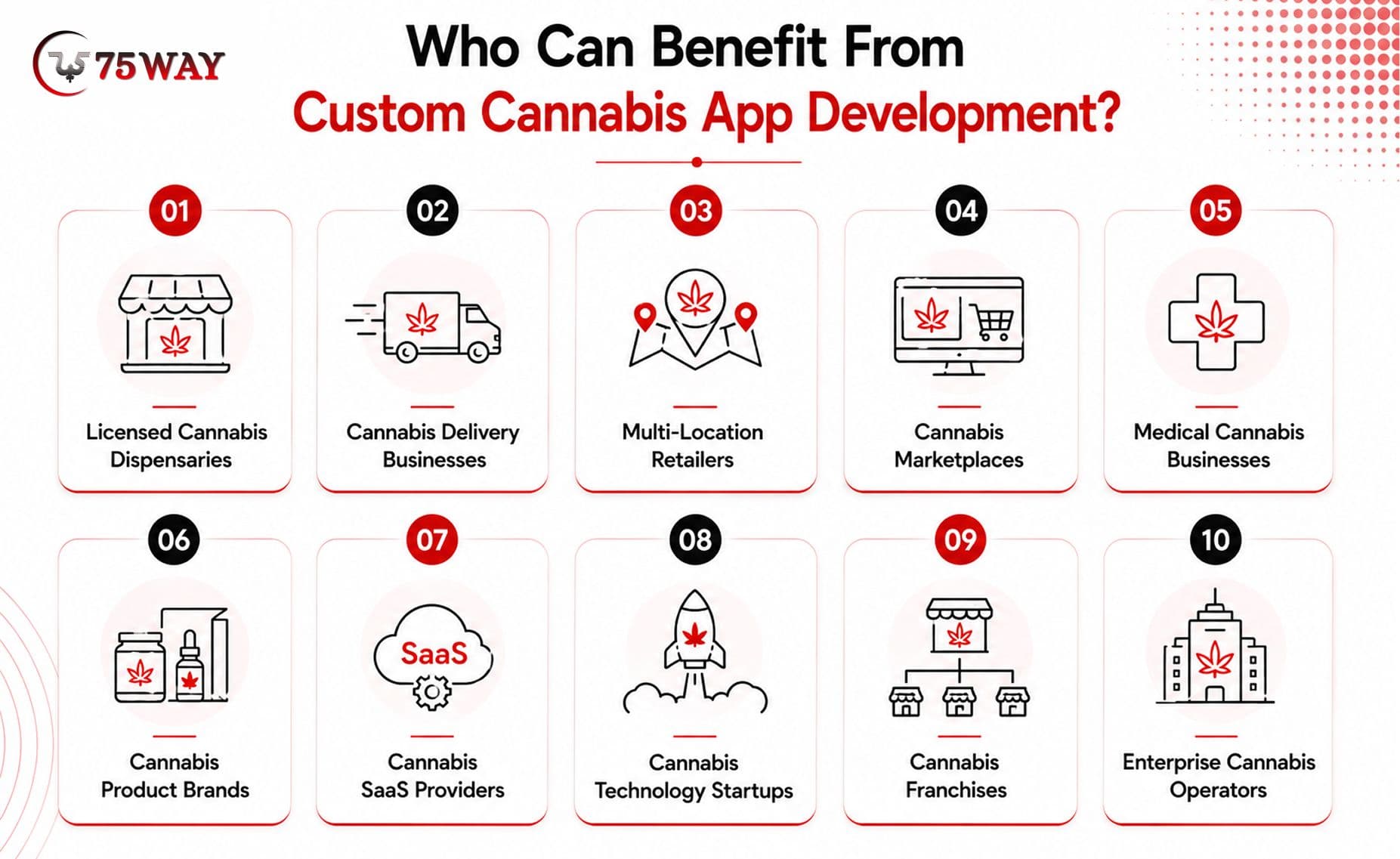
1. Licensed Cannabis Dispensaries
A dispensary can turn its existing retail experience into a branded digital channel. Customers can explore eligible products, manage accounts, place permitted orders, and receive relevant updates without depending entirely on third-party platforms.
2. Cannabis Delivery Businesses
Delivery operators can use custom apps to bring customer requests and fulfillment operations into one connected workflow. Dispatch, authorized delivery personnel, location services, order updates, and service-area controls can work together behind the scenes.
3. Multi-Location Retailers
Managing several stores through separate digital systems can quickly become difficult. A custom platform can connect locations while giving each store control over its inventory, staff, orders, and operating details.
4. Cannabis Marketplaces
A marketplace creates a digital meeting point for multiple eligible retailers and customers. The platform owner can manage vendor onboarding, listings, orders, payments, commissions, reviews, and other marketplace operations from a central system.
5. Medical Cannabis Businesses
Healthcare-focused businesses may need a more specialized digital experience than a standard retail app. Depending on local requirements, the platform can support eligible patient workflows, appointments, provider interactions, product information, reminders, and related services.
6. Cannabis Product Brands
Brands that want stronger direct customer relationships can create an app around their products and audience. The experience may focus on product education, brand engagement, customer accounts, permitted promotions, and other compliant customer-facing activities.
7. Cannabis SaaS Providers
Technology companies can build custom software and offer it to multiple cannabis businesses as a subscription service. One platform could provide tools for inventory, CRM, ordering, analytics, operations, or other specialized business requirements.
8. Cannabis Technology Startups
Startups can identify a specific gap in the cannabis ecosystem and build an app around it. The opportunity could involve retail operations, delivery coordination, inventory intelligence, customer engagement, or another specialized workflow.
9. Cannabis Franchises
Franchise networks need digital systems that maintain a common brand experience while supporting individual locations. A custom app can connect stores, customer accounts, inventory, promotions, staff access, reporting, and centralized administration.
10. Enterprise Cannabis Operators
Large operators often require deeper integrations and stronger operational controls than smaller businesses. Their platforms may connect multiple locations, inventory systems, customer applications, delivery operations, analytics, permissions, and existing enterprise software.
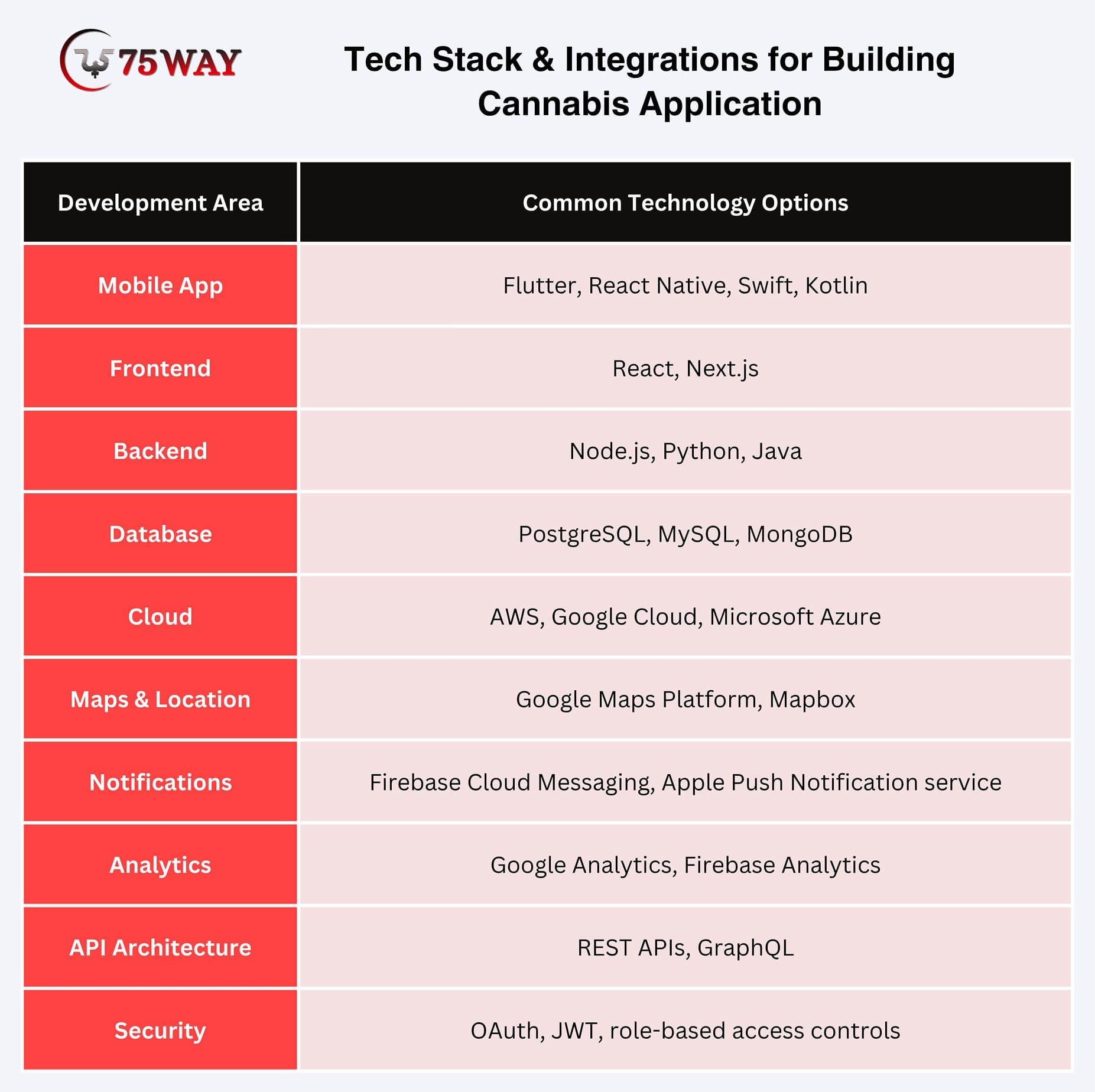
Tech Stack & Integrations for Building Cannabis Application
A cannabis app can have a polished interface and still fail if its underlying technology cannot support payments, location services, inventory, delivery, or compliance workflows. Your tech stack should be selected around how the business actually operates. The core technologies and integrations worth planning for are covered below.
Third-Party Integrations
Cannabis applications may require integrations with inventory systems, POS platforms, mapping services, identity or age-verification providers, CRM systems, analytics platforms, communication services, and other business software.
Payment integration requires particular care because cannabis-related transactions can face restrictions from financial institutions and payment providers. Businesses should verify that any proposed payment method is legally and commercially available for their specific business model and jurisdiction before selecting an integration.
What’s Cannabis App Development Cost: Pricing Breakdown
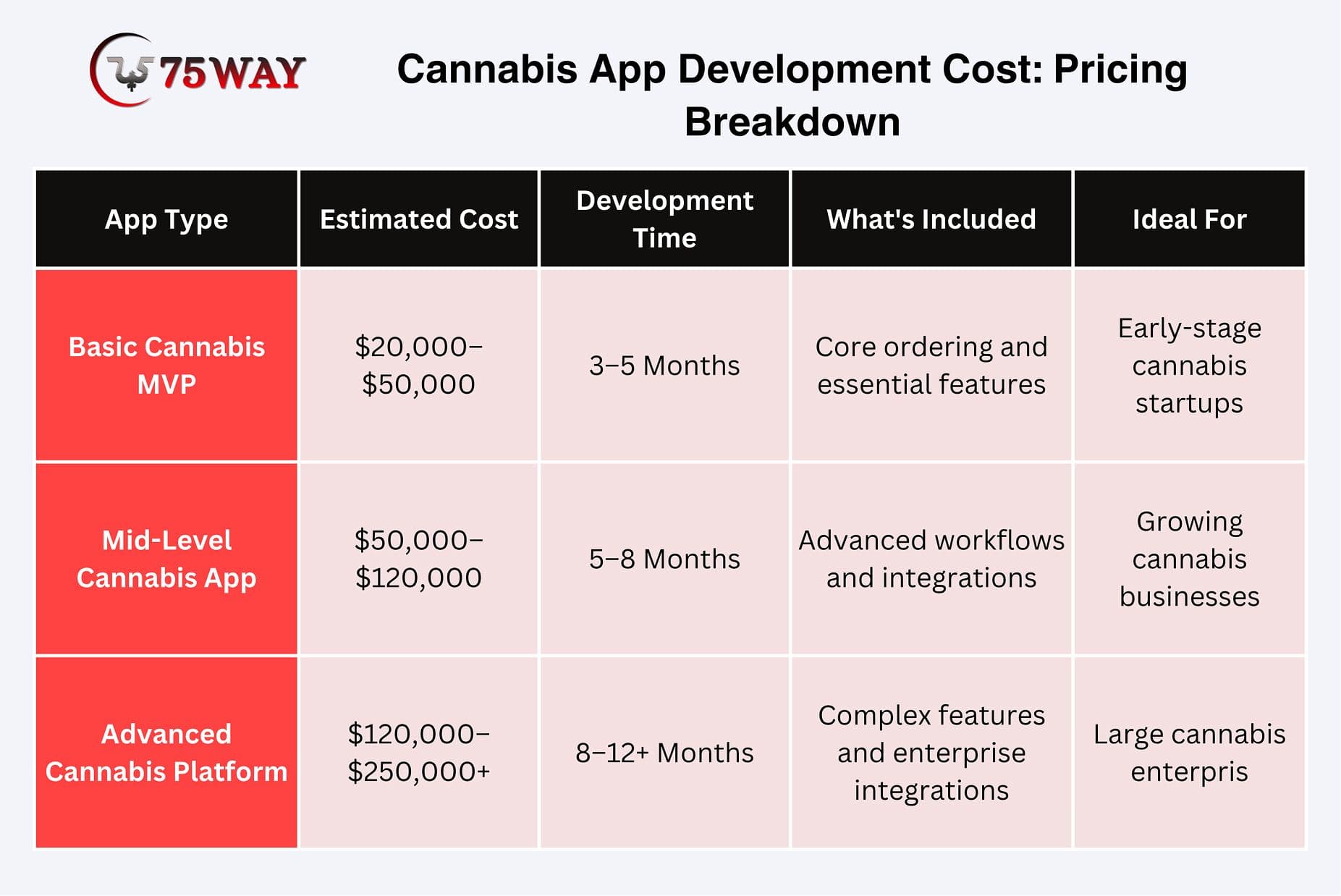
The average cannabis app development cost can range from $20,000 to $250,000+, depending on application complexity, number of platforms, features, integrations, compliance requirements, UI/UX complexity, development team location, and post-launch requirements.
Basic Cannabis MVP: $20,000–$50,000
A basic MVP may include customer registration, product browsing, basic ordering, profiles, notifications, and an administrative dashboard. This approach works for startups that want to validate their concept before investing in a broader ecosystem.
Mid-Level Cannabis App: $50,000–$120,000
A mid-level application can add advanced ordering, inventory synchronization, delivery workflows, location tracking, multiple user roles, analytics, integrations, and stronger administrative capabilities.
Advanced Cannabis Platform: $120,000–$250,000+
An enterprise-grade platform may support multiple applications, multi-location operations, advanced analytics, sophisticated integrations, complex compliance workflows, scalable architecture, and customized business functionality.
Cost To Make Cannabis Mobile App Based On Development Stages
- Discovery And Compliance Planning: This stage defines the business model, target market, user roles, regulatory requirements, security needs, age-verification workflows, and core application scope before development begins.
Estimated Cost: $3,000–$7,000
- UI/UX Design: Designers create wireframes, user journeys, prototypes, and polished interfaces for product discovery, ordering, checkout, delivery tracking, and administrative workflows.
Estimated Cost: $8,000–$15,000
- Frontend And Backend Development: Developers build the customer application, driver interface, admin dashboard, backend architecture, databases, APIs, GPS functionality, inventory management, and required payment integrations.
Estimated Cost: $30,000–$70,000
- Quality Assurance And Testing: The application undergoes functional, usability, performance, security, integration, and compliance-focused testing to identify defects and verify critical workflows before launch.
Estimated Cost: $5,000–$15,000
- Deployment And Maintenance: The final stage covers production deployment, infrastructure configuration, monitoring, bug fixes, security updates, regulatory changes, performance improvements, and ongoing feature enhancements.
Estimated Cost: $10,000–$20,000 annually
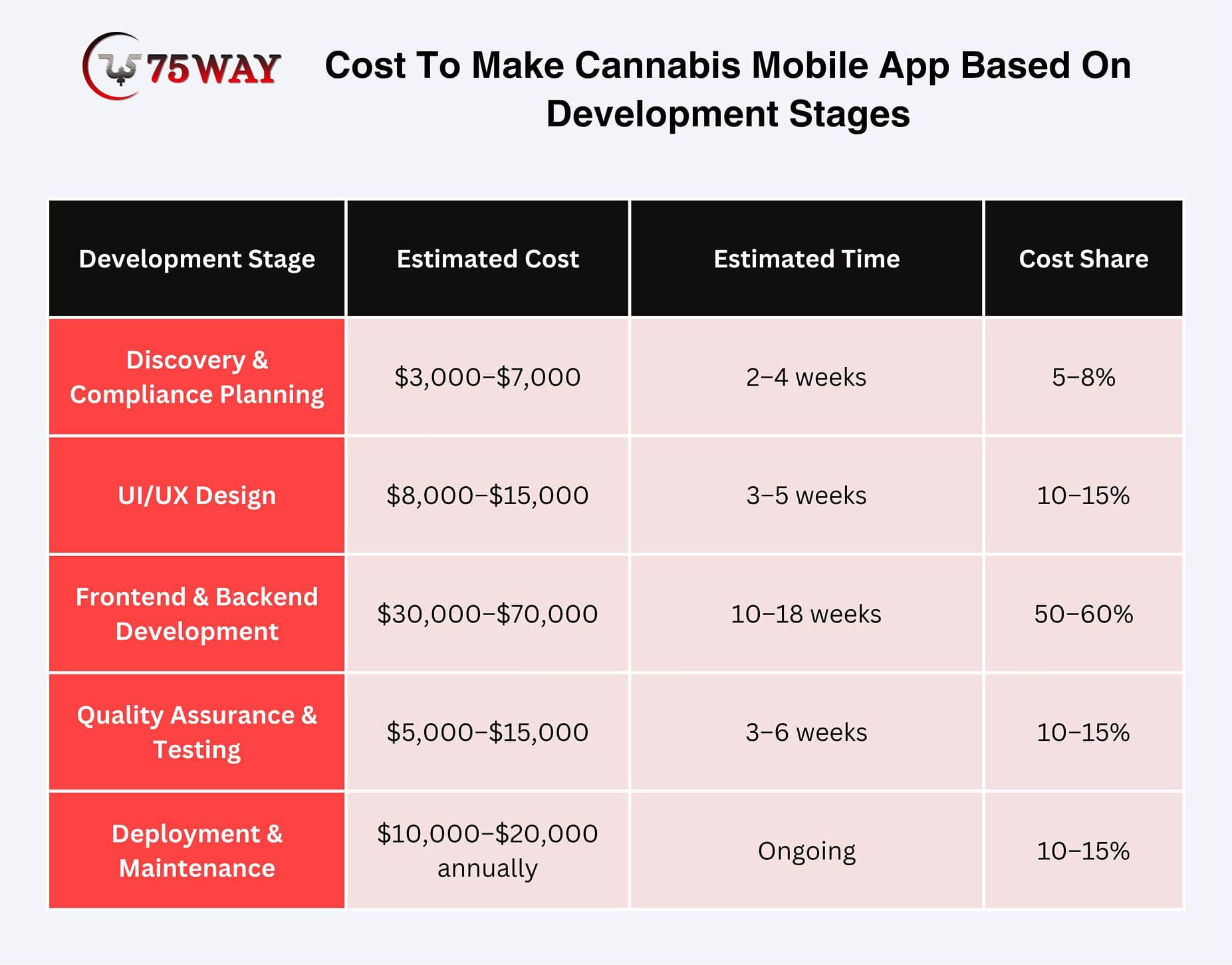
The percentages are approximate planning allocations because actual costs vary by feature scope, integrations, development team, compliance requirements, and project complexity.
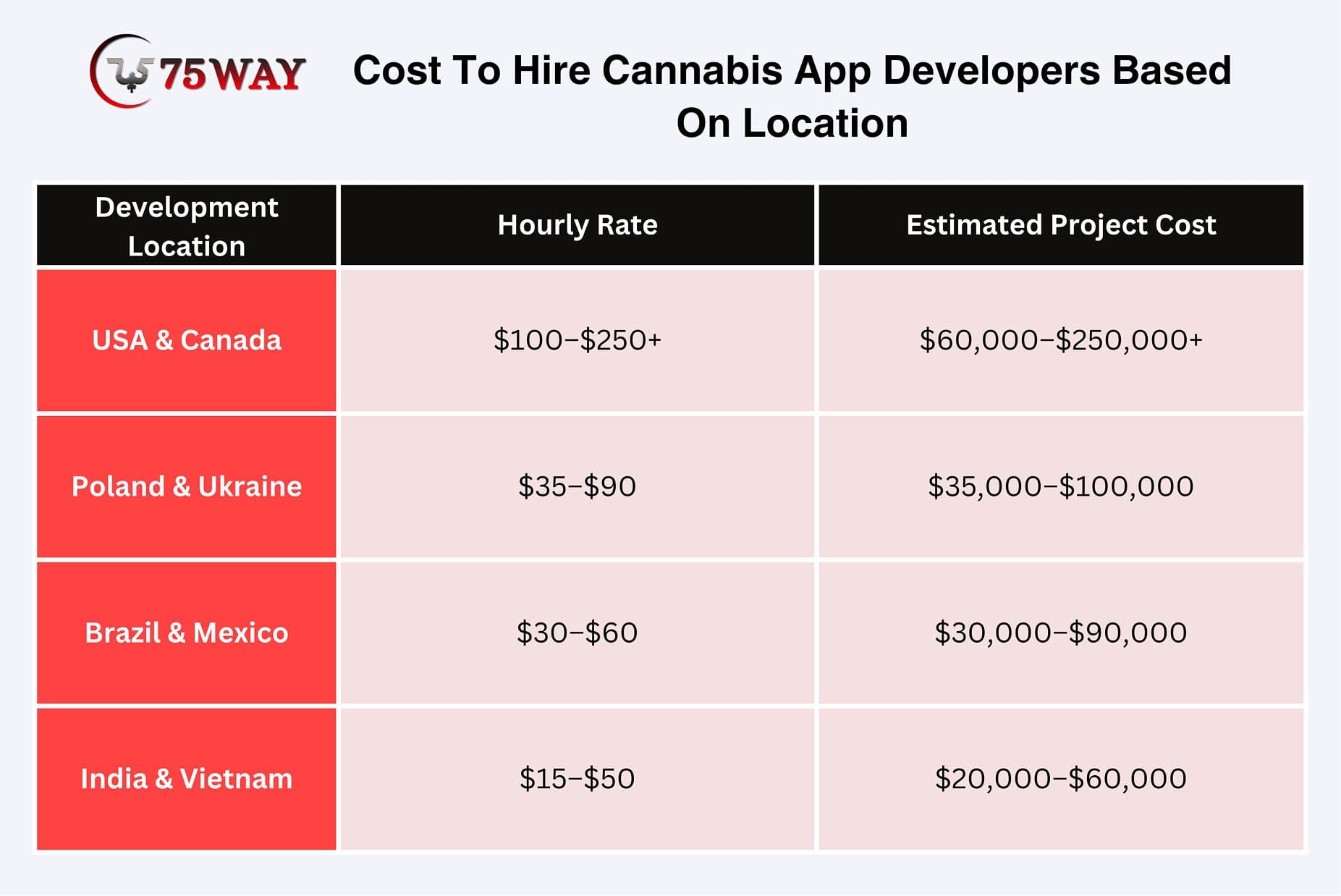
Cost To Hire Cannabis App Developers Based On Location
North America (USA/Canada): Development rates typically range from $100–$250+ per hour, with complete cannabis app projects often costing around $60,000–$250,000+ depending on complexity, compliance requirements, integrations, and platform scope.
Eastern Europe (Poland/Ukraine): Teams commonly charge $35–$90 per hour, while overall project costs can range from $35,000–$100,000. This region can offer a balance between technical expertise and development cost.
Latin America (Brazil/Mexico): Development rates generally fall between $30–$60 per hour, with project budgets ranging from approximately $30,000–$90,000 depending on functionality, integrations, and project duration.
Asia (India/Vietnam): Development rates can range from $15–$50 per hour, with total project costs commonly falling between $20,000–$60,000. This option can provide a lower development cost while supporting custom application requirements.
Factors Affecting Cannabis App Development Cost
- Feature Complexity: More advanced customer, retailer, driver, and admin capabilities increase development effort.
- Number of Platforms: Building separate native iOS and Android applications can require more resources than using a suitable cross-platform approach.
- Third-Party Integrations: Each integration requires implementation, testing, documentation, maintenance, and compatibility management.
- Compliance Requirements: Verification, privacy, access control, recordkeeping, and jurisdiction-specific workflows can add planning and development effort.
- UI/UX Complexity: Customized interfaces, multiple user journeys, prototypes, and usability testing increase design requirements.
- Backend Architecture: A scalable backend supporting multiple locations, users, orders, and integrations requires more engineering than a simple MVP.
- Development Team Location: Developer rates vary considerably across the United States, Western Europe, Eastern Europe, India, and other regions.
- Post-Launch Support: Maintenance, security updates, infrastructure, monitoring, bug fixes, and new features create ongoing costs after launch.
Cannabis App Development Cost Calculator: Know Your Estimated Cost
You can estimate your potential cannabis app development cost by multiplying the expected development hours by the team's hourly rate. This gives businesses a starting budget before receiving a detailed project quotation based on features, platforms, integrations, compliance requirements, and technical complexity.
Estimated Development Cost = Development Hours × Hourly Rate
For example, a cannabis app requiring 1,500 development hours at an average rate of $60 per hour would have an estimated development cost of $90,000.
The final budget can vary based on the number of platforms, user roles, compliance workflows, third-party integrations, custom features, design complexity, security requirements, and the development team's location. Use this calculator as an initial budgeting tool rather than a fixed project quotation.
How Long Does Cannabis Mobile App Development Take?
A basic cannabis application may take approximately 3–5 months, while a mid-level platform can require 5–8 months, and a complex enterprise solution may take 8–12+ months.
The timeline depends on the number of applications, feature complexity, integrations, compliance requirements, design scope, testing requirements, feedback cycles, and development team structure.
A phased approach can allow businesses to launch an MVP sooner while continuing development on advanced functionality in later releases.
Common Issues To Avoid During Custom Cannabis App Development
A cannabis app can look impressive on the surface and still create problems if important decisions are made too late. Regulatory requirements, payment limitations, user verification, integrations, and operational workflows can all affect the final product. Identifying these issues early can save development time, reduce unnecessary costs, and create a more reliable application.
1. Treating Regulations As An Afterthought
Cannabis laws differ across countries, states, and local jurisdictions. Building the application first and checking legal requirements later can force major changes to features, workflows, or market availability.
How To Resolve?
Define the applicable requirements before development begins. Each target market should be reviewed separately because permissions for retail, delivery, medical use, advertising, and other activities may differ.
2. Copying A Competitor’s Feature Set
A competitor may have dozens of features, but that does not mean your business needs the same product. Copying another application can increase development costs without addressing your customers' actual problems.
How To Resolve?
Start with your business model and user journey instead. Build the essential workflows first, then introduce features that have a clear purpose.
3. Ignoring Payment Limitations
Cannabis businesses can face payment restrictions that do not affect ordinary ecommerce businesses. Assuming that every familiar payment gateway will support cannabis transactions can create serious problems close to launch.
How To Resolve?
Payment requirements should be investigated during planning. The selected solution must align with the business model, operating markets, and applicable payment-provider policies.
4. Building Without A Clear User Journey
A customer should not have to figure out how to register, verify eligibility, find products, place an order, or track fulfillment.
How To Resolve?
Map the complete journey before designing individual screens. Customer, retailer, delivery, and admin workflows should connect logically so that information moves smoothly from one stage to the next.
5. Overloading The First Version
Adding AI, loyalty programs, advanced analytics, multiple integrations, and every possible feature to the first release can make the project expensive and difficult to manage.
How To Resolve?
A focused MVP can validate the core business idea first. Later releases can introduce advanced capabilities after customer behavior provides evidence that they are worth building.
6. Choosing Technology Without Considering Scale
The cheapest technology choice is not always the most suitable one. A platform that works for a small pilot may struggle when order volumes, locations, integrations, or user numbers increase.
How To Resolve?
The architecture should match the expected business scale. Flutter, React Native, Swift, Kotlin, cloud infrastructure, APIs, and database technologies should be selected according to actual project requirements rather than trends alone.
7. Underestimating Third-Party Integrations
An app rarely operates as a standalone system. Inventory, CRM, identity verification, maps, notifications, analytics, delivery, and other services may need to exchange information with the platform.
How To Resolve?
Integration requirements should be identified early. Delaying them until the final development stage can create unexpected technical work and disrupt planned workflows.
8. Neglecting Data Security
Cannabis applications may handle customer profiles, identity information, addresses, payment-related data, and other sensitive information. Weak access controls or poorly designed data handling can expose the business to unnecessary security and privacy risks.
How To Resolve?
Use appropriate authentication, encryption, role-based access, secure APIs, monitoring, and permission controls. Security should be part of the architecture rather than a final checklist item.
9. Forgetting Operational Workflows
A customer-facing app is only one part of the business. Someone still needs to manage orders, inventory, providers, deliveries, refunds, support requests, and exceptions.
How To Resolve?
Admin and operational dashboards should therefore be planned alongside the customer experience. A beautiful app will not solve much if employees still have to manage everything manually.
10. Skipping Real-World Testing
An application may work perfectly during a controlled demonstration but behave differently under real operating conditions.
How To Resolve?
Testing should include failed payments, unavailable products, rejected verification, poor connectivity, incorrect addresses, delivery delays, API failures, and high traffic. Real users and operational teams should also provide feedback before a wider launch.
Why 75way Is Preferred As Best Cannabis App Development Company?
A cannabis app cannot be treated like another shopping or delivery product. 75way Technologies brings experience in cannabis solutions, pharmacy software development, AI integration, and custom mobile applications, giving businesses a stronger foundation for building products around their specific market and operating model.
Think of the development process as connecting different pieces of the business into one digital system. A dispensary can bring ordering and inventory together, a delivery business can connect customers with fulfillment teams, while a medical cannabis platform can support patient-oriented workflows.
Our team can also bring AI-powered recommendations, intelligent automation, advanced analytics, APIs, and third-party integrations into the product when they have a clear business purpose.
The result is not simply an app filled with features. It is a platform designed around how the business intends to operate, serve customers, and grow. 75way can take the product from MVP planning to scalable development, while keeping future integrations, new services, additional locations, and evolving technology in view from the beginning.
Final Remarks
To conclude, cannabis app development gives dispensaries, retailers, delivery businesses, medical cannabis providers, and startups an opportunity to create dedicated digital experiences. However, success depends on more than attractive interfaces or extensive feature lists.
You need to consider their operating model, target jurisdiction, compliance requirements, integrations, payment options, security, scalability, and customer journey before development begins. A phased approach can help validate the concept through an MVP before introducing advanced functionality. If you want to build your cannabis application, talk to a trusted on-demand app development company to plan your product, features, technology, and development roadmap.
Frequently Asked Questions (FAQs)
Can Cannabis Businesses Build A Delivery App?
Yes, eligible businesses can develop delivery applications with ordering, fulfillment, location tracking, driver management, verification, notifications, and administrative workflows based on applicable jurisdictional requirements.
What Is The Best App-Based Ordering For Recreational Cannabis?
The best app-based ordering experience combines verified dispensaries, accurate menus, product search, secure ordering, pickup or delivery options, and clear order updates. Current platforms such as Weedmaps and Jane emphasize local dispensary discovery, menu browsing, product comparison, ordering, and availability that varies by jurisdiction.
How Does A Cannabis App Connect Customers With Dispensaries?
The application can display participating dispensaries, their available products, operating details, and fulfillment options. Customers can then select an eligible retailer and continue through that business's ordering process.
Can A Cannabis App Serve Multiple Retail Locations?
Yes. A multi-location application can show location-specific inventory, pricing, operating hours, fulfillment choices, and service areas while allowing business teams to manage operations.
Can A Cannabis App Be Expanded After The Initial Launch?
Absolutely. Businesses can launch with essential ordering and account functionality, then introduce capabilities such as advanced analytics, additional integrations, delivery management, personalization, or multi-location support as requirements grow.