Summary
Digital grocery commerce impacts retail purchasing behavior with marketplace-driven delivery ecosystems connecting consumers, shoppers, retailers, and consumer brands. Instacart, a grocery delivery app, built a scalable grocery infrastructure that supports millions of orders and drives omnichannel retail growth. This guide highlights the Instacart business model, how Instacart makes money, what Instacart sells, and nationwide grocery accessibility.
Quick Overview
- The Instacart business model combines marketplace, delivery logistics, and monetization.
- Its retail partnerships strengthened grocery digitization across independent stores.
- Advertising revenue became a major driver of profitability.
- Flexible shopper networks accelerated order fulfillment without maintaining expensive traditional delivery workforce structures.
- Grocery startups study Instacart’s marketplace structure to identify scalable ecommerce delivery platform development opportunities.
Traditional ecommerce mobile apps struggled to manage same-day grocery fulfillment while maintaining customer satisfaction. Instacart changed that perception by building a marketplace app. This multi-vendor grocery marketplace connects grocery retailers, shoppers, customers, and consumer packaged goods brands with one hyperlocal delivery platform.
This grocery delivery mobile app transformed from a startup experiment into one of the largest grocery delivery marketplaces in North America. Now, Instacart reaches 98% of households across USA and has powered more than 1.5 billion grocery orders with 30 billion ordered items since launch.
For startups, retail entrepreneurs, grocery chains, and investors, the Instacart business model represents far more than a delivery application. It demonstrates how platform-based commerce ecosystems generate recurring revenue through subscriptions, advertising, retailer services, delivery fees, data insights, and marketplace scalability.
This guide explores what the Instacart business model? How does Instacart make money? The challenges of the business model of Instacart, and growth opportunities shaping grocery ecommerce in 2026.
What Is Instacart?
Instacart is a technology-driven grocery delivery and retail marketplace platform connecting customers with local grocery stores, pharmacies, convenience retailers, and wholesale chains through mobile and web applications.
Founded in 2012, the company transformed traditional grocery shopping by enabling consumers to order products online and receive same-day delivery or curbside pickup from nearby retail stores. Instead of maintaining massive warehouses or owning grocery inventory directly, Instacart partners with retailers while using a network of independent shoppers to fulfill and deliver orders.
What Is The Instacart Business Model?
The Instacart business model operates as a multi-sided marketplace connecting grocery retailers, consumers, shoppers, and brands through a unified commerce platform. Rather than functioning only as a delivery application, Instacart combines:
- Grocery ecommerce marketplace infrastructure
- Last-mile delivery operations
- Retail technology solutions
- Advertising monetization systems
- Subscription services
- Data analytics and retail insights
- Omnichannel grocery enablement
This diversified ecosystem allows the company to generate revenue from multiple stakeholders simultaneously.
At the core of the marketplace is convenience. Customers gain rapid grocery access without visiting physical stores. Retailers expand digital sales channels without building delivery operations internally. Brands gain targeted advertising access. Shoppers access flexible income opportunities. Therefore, Instacart's grocery marketplace business model relies heavily on ecosystem expansion rather than exclusively on product markups.
Evolution of Instacart: A Detailed Overview
Instacart began its journey in 2012 when entrepreneur Apoorva Mehta partnered with Max Mullen and Brandon Leonardo to launch a digital grocery delivery platform focused on simplifying everyday shopping experiences.
The founders participated in the Summer 2012 startup accelerator program organized by Y Combinator, which helped the company secure early visibility, mentorship, and investor interest during its initial growth phase.
Instacart first gained momentum in San Francisco, where increasing consumer demand for convenient grocery delivery accelerated platform adoption. As order volumes expanded rapidly, the company scaled operations and workforce capacity to support growing customer expectations.
By April 2015, Instacart’s employee base had surpassed 200 team members, reflecting strong marketplace growth across multiple cities. During the same period, the company identified rising demand for flexible work opportunities among delivery shoppers.
To address this operational need, Instacart introduced a pilot initiative in June 2015, offering part-time shopper opportunities. The program initially launched in Chicago and Boston before gradually expanding into Atlanta, Miami, and Washington, D.C.
This flexibility-focused approach strengthened Instacart’s fulfillment capabilities while supporting faster geographic expansion across the United States.
How the Instacart Business Model Works in 2026?
Instacart operates as a multi-sided grocery delivery marketplace connecting customers, personal shoppers, retailers, and delivery partners through a centralized digital platform. Instead of managing its own inventory, the company partners with grocery stores and earns revenue by facilitating online grocery ordering, fulfillment, and delivery.
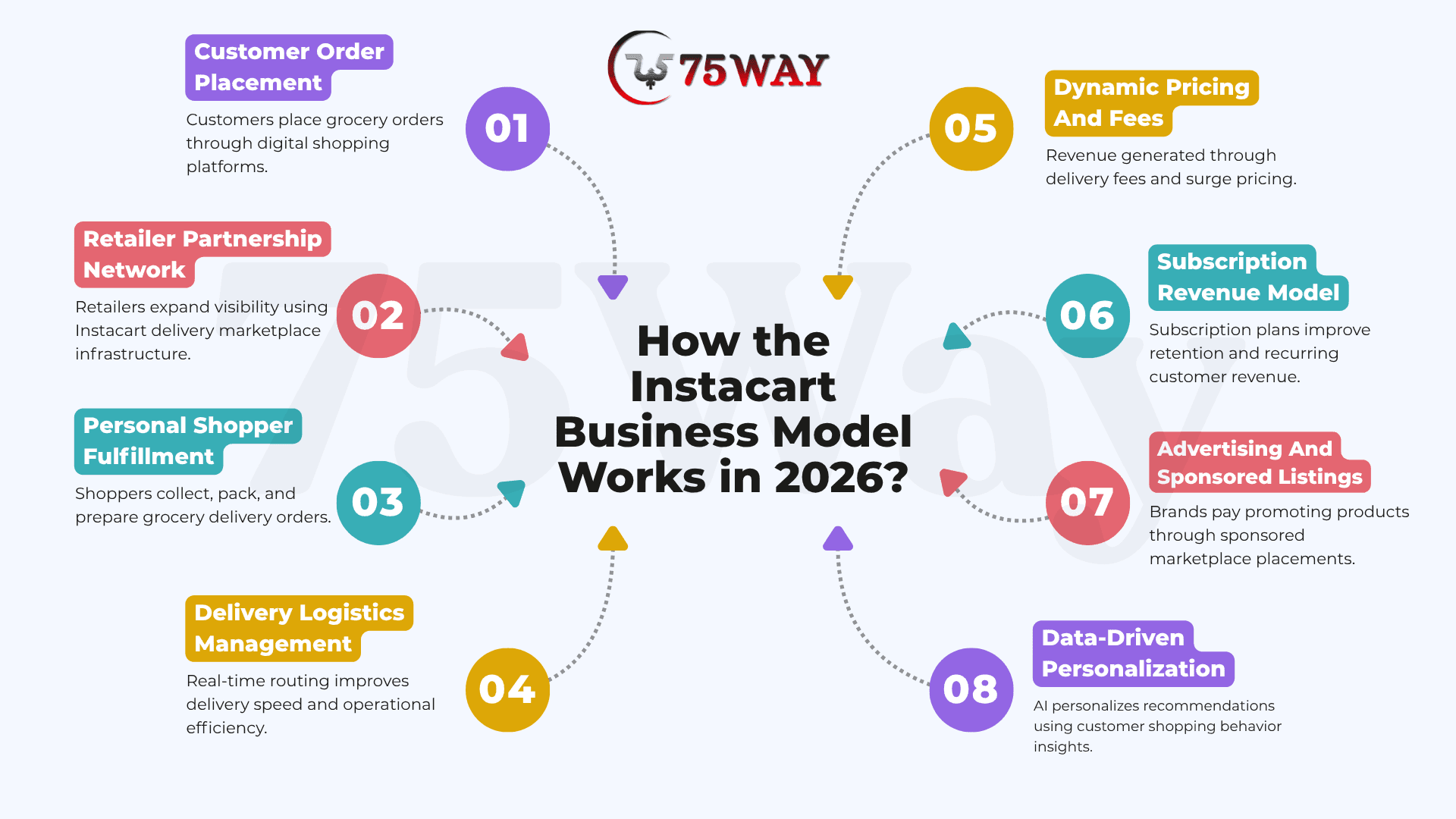
- Customer Order Placement: Customers browse products from nearby grocery stores through mobile apps or websites and place orders digitally. The platform allows users to select delivery timing, product preferences, and payment methods.
- Retailer Partnership Network: Instacart partners with grocery chains, supermarkets, and local stores to list their inventory on the platform. Retailers gain online visibility and access to a larger customer base without building their own delivery infrastructure.
- Personal Shopper Fulfillment: Once an order is placed, personal shoppers receive shopping requests through the platform and collect items directly from partnered stores. They manage product selection, replacements, and packing before delivery dispatch begins.
- Delivery Logistics Management: The system assigns delivery tasks based on location, availability, and estimated delivery efficiency using real-time operational data. This ensures faster order fulfillment and optimized delivery routing across regions.
- Dynamic Pricing And Fees: Revenue is generated through delivery fees, service charges, surge pricing, subscriptions, and retailer partnerships. Pricing often changes depending on demand, order size, and delivery urgency.
- Subscription Revenue Model: The platform offers subscription plans, such as Instacart+, that offer reduced delivery fees and exclusive benefits for recurring customers. This creates predictable recurring revenue and improves customer retention rates.
- Advertising & Sponsored Listings: Brands and retailers pay for sponsored product placements and promotional visibility within the platform search results. This advertising model generates additional high-margin revenue streams beyond delivery operations.
- Data-Driven Personalization: The platform uses customer behavior, purchase history, and shopping preferences to personalize recommendations and improve engagement. AI-driven analytics also help optimize inventory visibility and conversion rates.
Instacart’s Early Funding During Rapid Market Expansion
The funding journey of Instacart reflects the rapid rise of on-demand commerce and digital grocery delivery across global ecommerce markets. Here are some major milestones from Instacart’s funding and growth timeline.
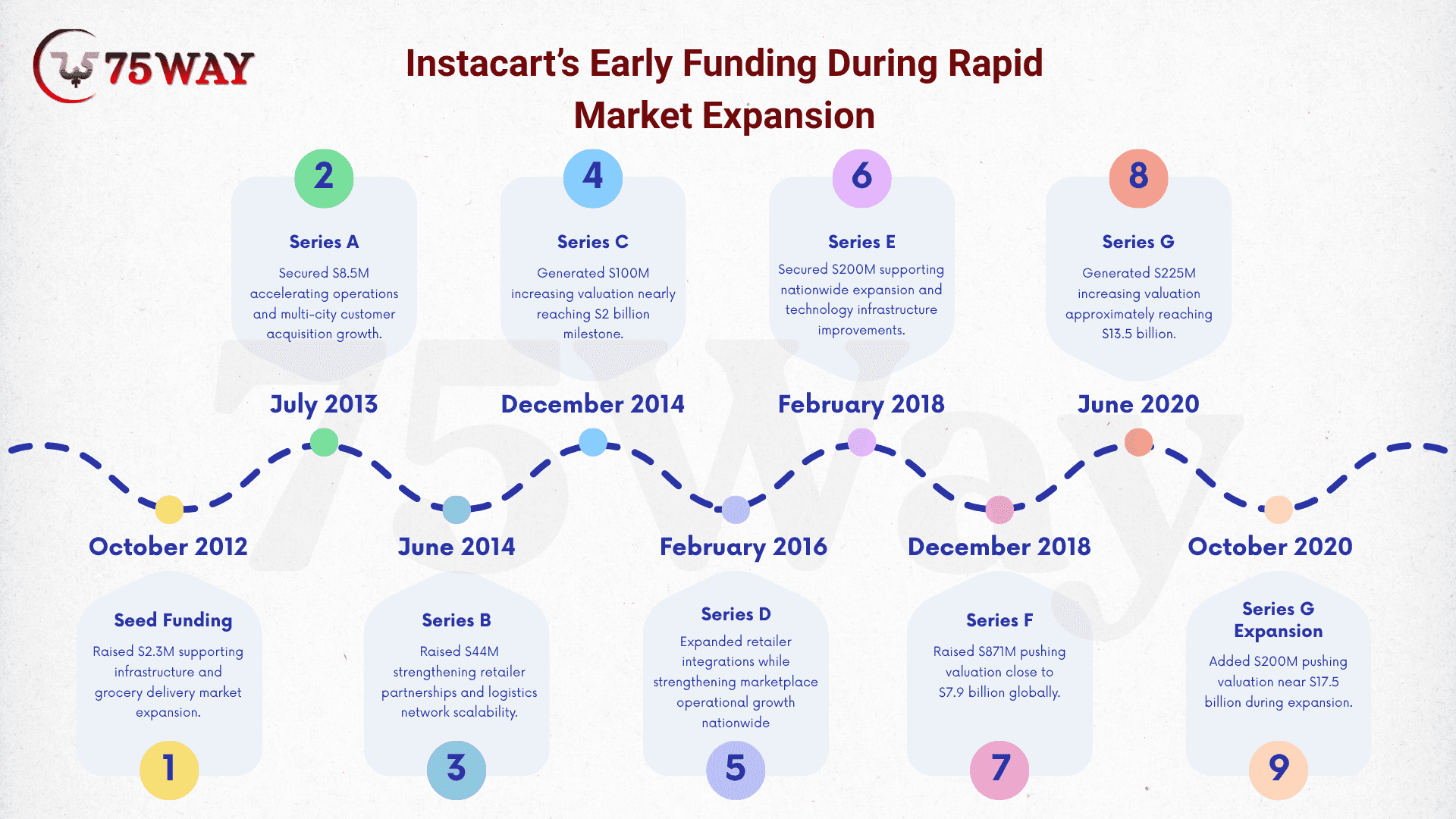
Seed Funding – October 2012
Shortly after launch, Instacart secured approximately $2.3 million in seed funding. This early investment helped the company establish its delivery infrastructure, strengthen product development, and enter competitive grocery commerce markets.
Series A – July 2013
The company raised nearly $8.5 million during its Series A round. This funding supported operational scaling, customer acquisition, and geographic expansion across additional U.S. cities.
Series B – June 2014
Instacart secured around $44 million in Series B funding to accelerate marketplace growth and strengthen partnerships with major grocery retailers. The investment also helped improve logistics coordination and fulfillment operations.
Series C – December 2014
The company raised nearly $100 million during Series C funding, pushing its valuation to approximately $2 billion. This milestone highlighted growing investor confidence in the future of grocery ecommerce and hyperlocal delivery platforms.
Series D – February 2016
Instacart completed another funding round in 2016, although the exact investment amount remained undisclosed publicly. The company continued strengthening retailer integrations and expanding marketplace reach during this phase.
Series E – February 2018
The platform secured roughly $200 million in funding to support nationwide expansion, technology upgrades, and increasing customer demand for digital grocery services.
Series F – December 2018
Instacart raised approximately $871 million in one of its largest investment rounds, increasing the company’s valuation to nearly $7.9 billion. This funding accelerated platform scalability and strengthened competitive positioning within grocery delivery markets.
Series G – June 2020
The company secured an additional $225 million during the rapid growth of online grocery ordering worldwide. This investment pushed Instacart’s valuation to approximately $13.5 billion.
Series G Expansion – October 2020
Instacart added another $200 million in funding, bringing its valuation close to $17.5 billion. This period marked one of the strongest growth phases in the company’s history.
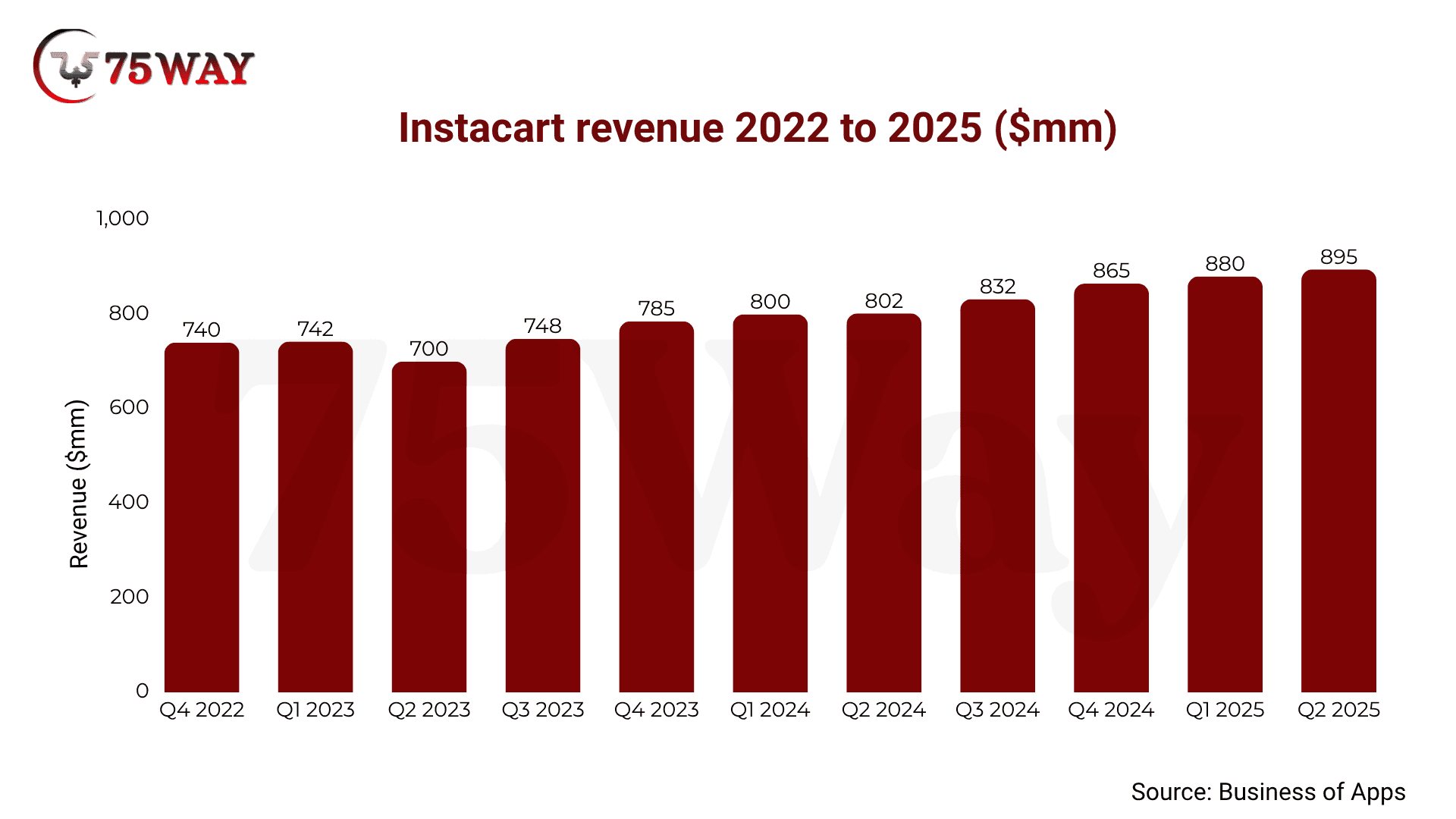
Instacart Revenue Growth And Market Expansion
Beyond funding milestones, Instacart’s operational growth demonstrates the increasing dominance of digital grocery commerce. According to recent company figures shared during its marketplace expansion phase:
- The platform supports more than 100,000 retail stores across North America.
- Instacart has powered over 1.5 billion grocery orders since launch.
- Customers purchased more than 30 billion products through the marketplace ecosystem.
- The platform reaches approximately 98% of households across the United States.
- Small grocery retailers generated more than $7 billion in additional revenue growth through the ecosystem.
- Grocery partners collectively added more than $22.5 billion in revenue since Instacart’s founding.
- The company helped create over 237,000 grocery-related jobs through retailer partnerships.
- Flexible shopper opportunities supported nearly 600,000 individuals, who collectively earned over $24 billion through the platform.
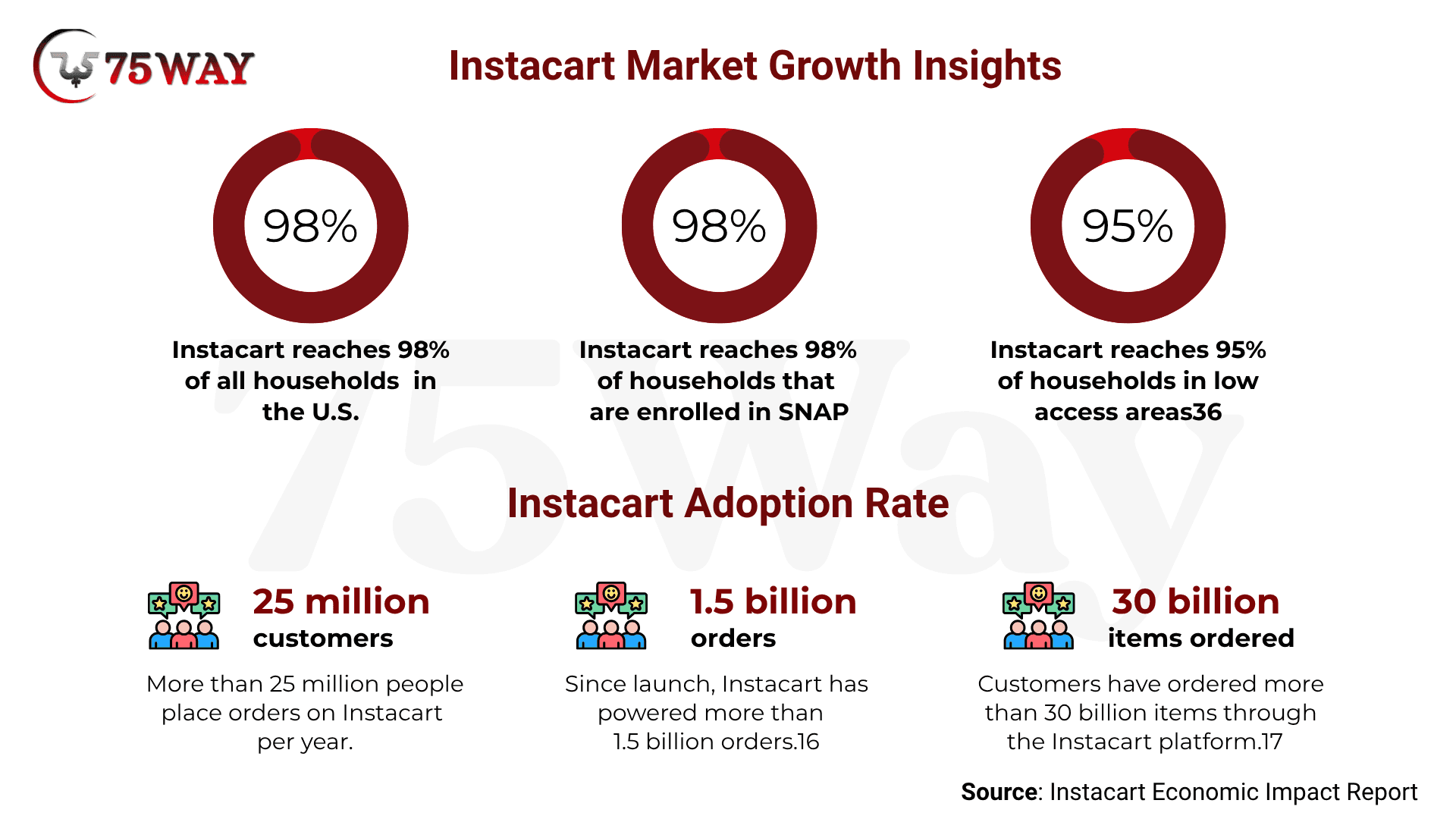
These growth indicators demonstrate why investors, retailers, and ecommerce founders continue studying the Instacart business model as a benchmark for scalable grocery marketplace development.
Instacart Business Model And Services
Instacart’s service ecosystem extends far beyond standard grocery delivery. The platform now supports multiple commerce solutions to help retailers digitize operations and improve omnichannel engagement.
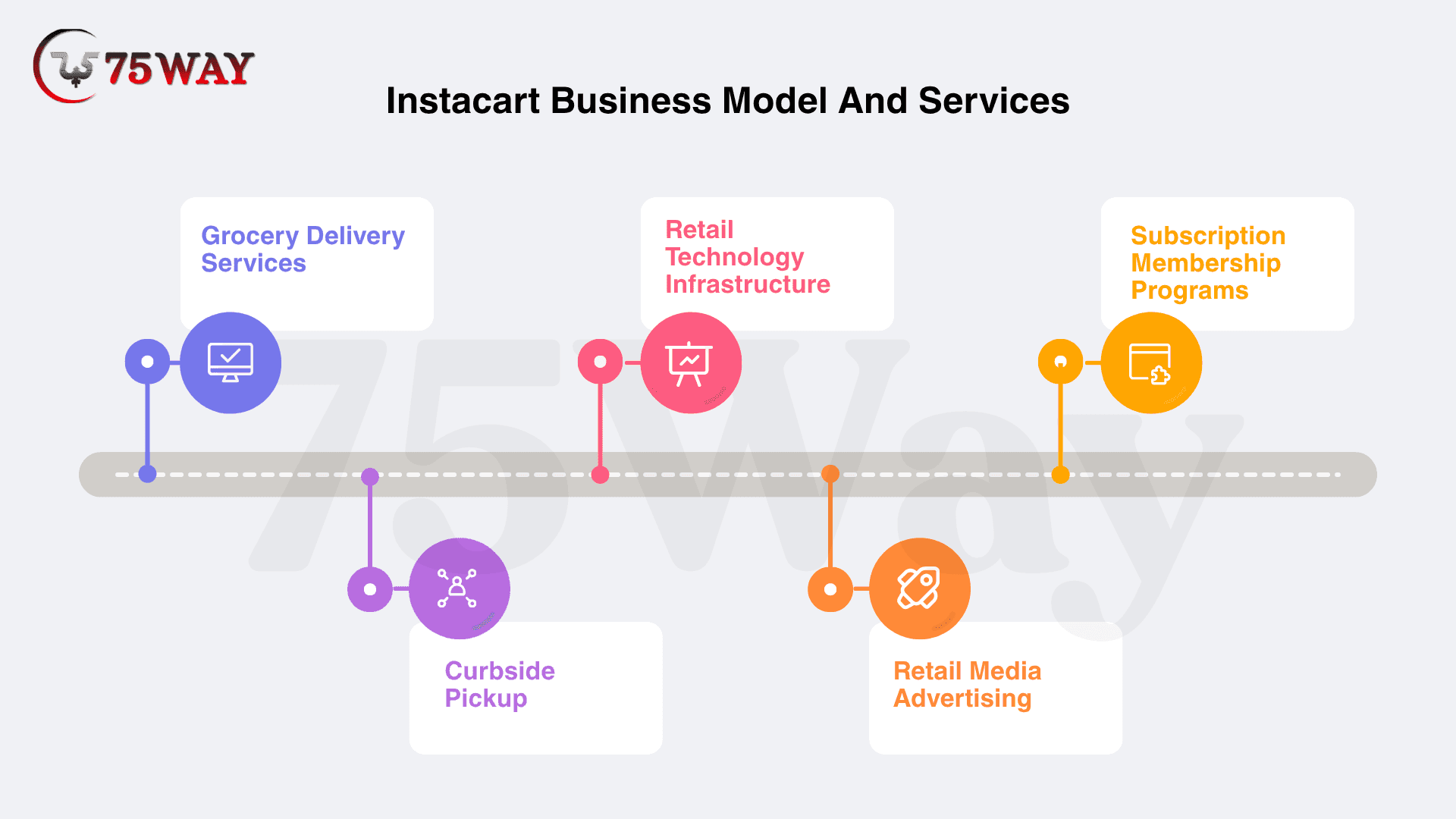
- Grocery Delivery Services: Instacart allows customers to order groceries from nearby retail stores through mobile and web applications. Users can schedule same-day, express, or contactless deliveries while accessing pharmacy items, household essentials, and multi-store shopping experiences.
This convenience-focused delivery ecosystem accelerated digital grocery adoption across urban and suburban consumer markets.
- Curbside Pickup: Instacart supports curbside pickup services for retailers seeking digital commerce accessibility without managing complex delivery logistics. Customers place grocery orders online and collect purchases from designated pickup areas at scheduled times.
This fulfillment model reduces delivery-related costs while maintaining convenience, operational flexibility, and faster order processing for retailers and shoppers.
- Retail Technology Infrastructure: Instacart provides retailers with advanced ecommerce infrastructure supporting omnichannel grocery commerce operations. The platform includes digital storefronts, inventory synchronization, loyalty integrations, order management systems, customer analytics dashboards, and fulfillment coordination tools.
These technologies help grocery businesses strengthen online visibility, customer engagement, and digital retail competitiveness across evolving ecommerce markets.
- Retail Media Advertising: Instacart’s retail advertising ecosystem enables consumer packaged goods brands to promote products directly inside grocery searches and storefront experiences.
Businesses invest in sponsored listings, personalized promotions, digital coupons, and shopper targeting campaigns to improve visibility and conversion rates. Retail media advertising became a major revenue driver supporting long-term marketplace profitability growth.
- Subscription Membership Programs: The Instacart+ subscription program improves customer retention through exclusive savings and convenience-focused membership benefits.
Subscribers receive lower delivery charges, reduced service fees, priority scheduling access, and special promotional discounts. Recurring membership revenue strengthens customer lifetime value while encouraging repeat grocery purchases and long-term engagement across the platform ecosystem.
Instacart Business Model: A Breakdown of Grocery Delivery Platform Success
Ever wondered why people use Instacart instead of visiting grocery stores themselves? The answer is simple. People want groceries delivered quickly without wasting time in traffic, long checkout lines, or crowded stores. Instacart solved this everyday problem by connecting customers, grocery stores, and delivery shoppers through one digital platform.
Instacart does not own most grocery products. It also does not operate thousands of supermarkets. Instead, it acts like a bridge between customers and local grocery stores. That is the core of the Instacart business model. Let’s understand it step-by-step.
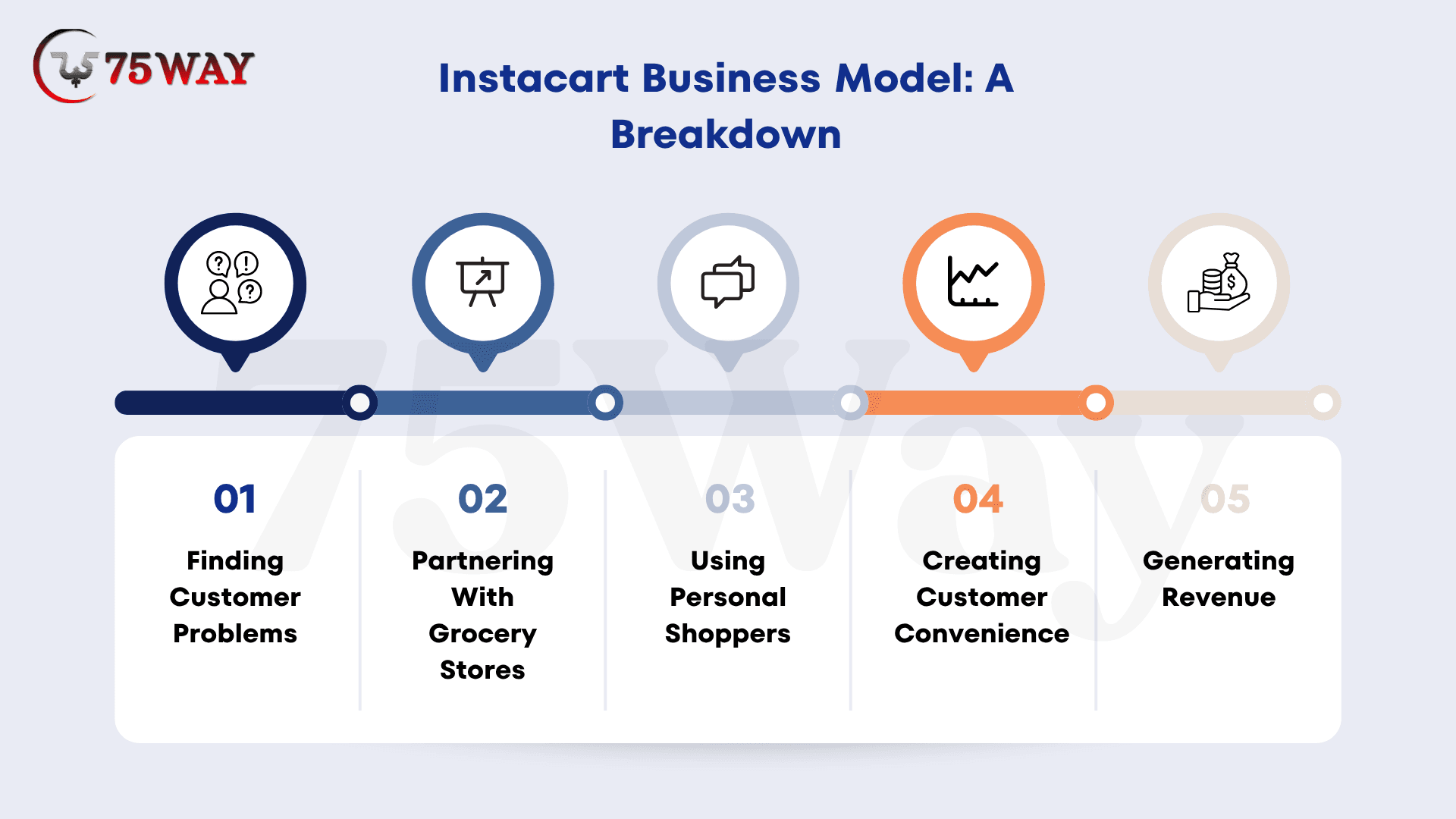
Stage 1: Finding Customer Problems
Instacart first identified a growing problem in modern lifestyles. Many people wanted grocery shopping convenience without physically visiting supermarkets every week. Different customer groups started using the platform for different reasons.
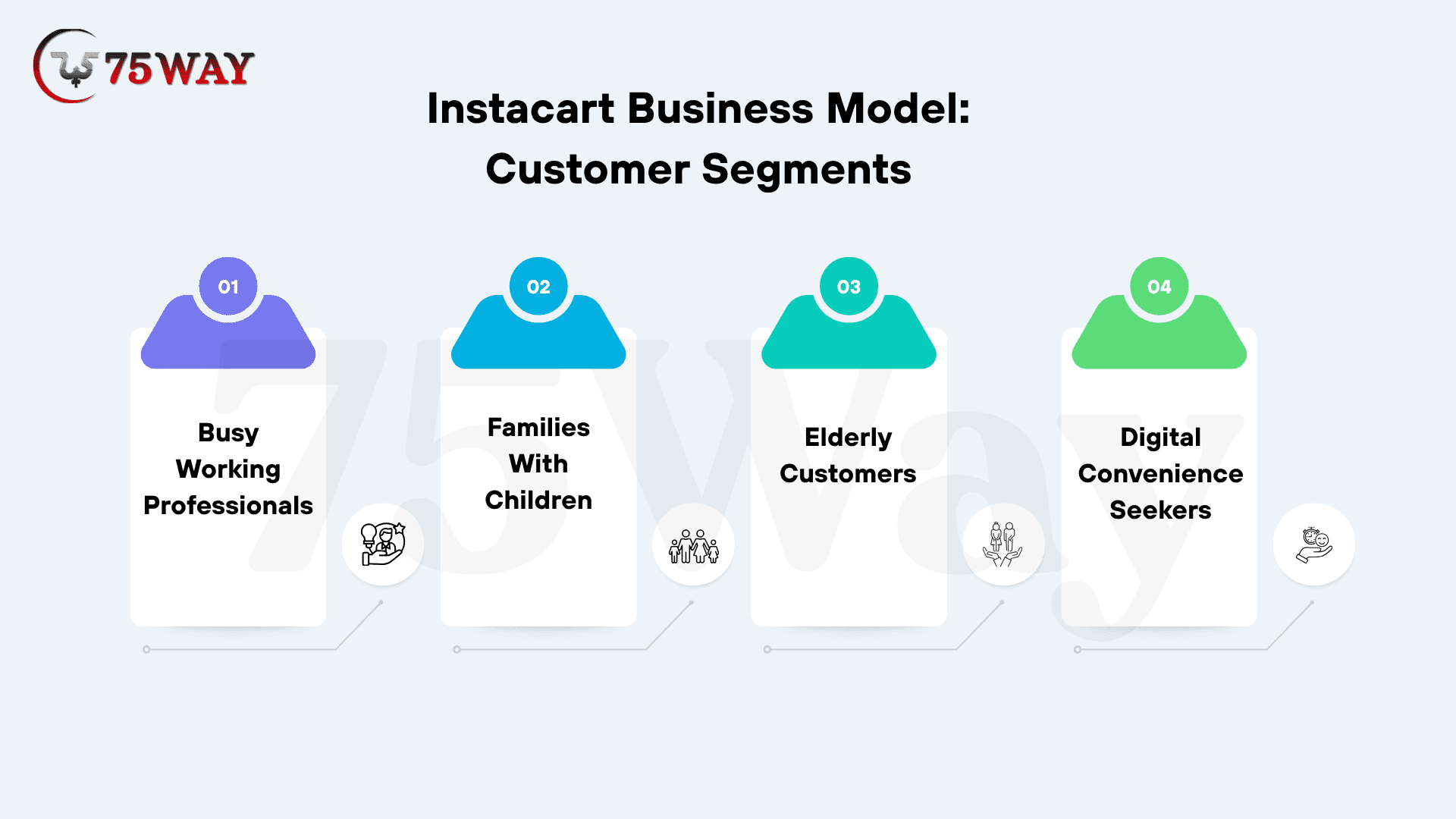
- Busy Working Professionals: Working professionals often lack time for grocery shopping after long office hours. Instacart helps them order essentials quickly from nearby stores through mobile applications.
- Families With Children: Parents managing households and children prefer scheduled grocery deliveries because they reduce shopping stress and save valuable weekly time.
- Elderly Customers: Senior citizens and people with mobility difficulties use grocery delivery platforms because doorstep delivery improves accessibility and convenience.
- Digital Convenience Seekers: Many consumers simply prefer mobile-based shopping experiences with real-time tracking, online payments, discounts, and faster order management systems.
This growing customer demand created strong opportunities for grocery delivery marketplaces.
Stage 2: Partnering With Grocery Stores
Now comes the smart part of the business model. Instead of opening its own supermarkets, Instacart partnered with existing grocery retailers already operating across cities. These stores provide:
- Grocery inventory
- Product availability
- Store infrastructure
- Local retail operations
Instacart helps them sell products online without building expensive delivery systems themselves. This partnership benefits both sides.
Retailers gain:
- More online customers
- Additional sales
- Digital visibility
- Ecommerce support
Meanwhile, Instacart expands faster without investing heavily in physical stores.
Stage 3: Using Personal Shoppers
After customers place orders, Instacart assigns independent shoppers to complete grocery purchases. These shoppers:
- Visit stores
- Collect products
- Confirm substitutions
- Pack groceries
- Deliver orders
This flexible shopper network allows Instacart to manage deliveries across thousands of locations without hiring massive full-time delivery teams.
It also creates earning opportunities for shoppers.
Stage 4: Creating Customer Convenience
Customers use the application to:
- Browse nearby stores
- Add products into carts
- Select delivery times
- Track orders live
- Receive doorstep delivery
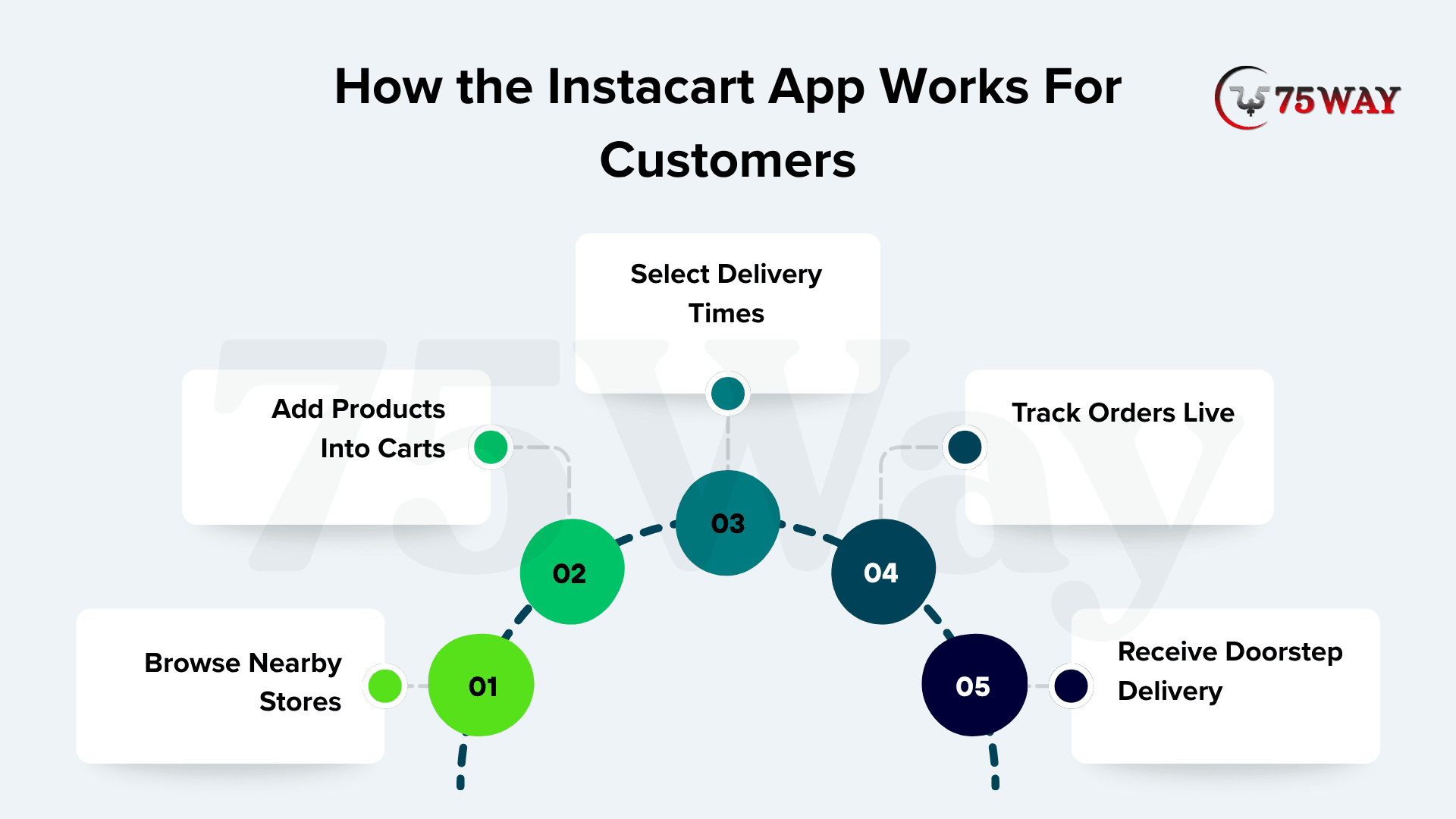
The entire process saves time and simplifies grocery shopping routines. That convenience keeps customers returning regularly.
Stage 5: Generating Revenue
So, how does Instacart make money? The platform earns revenue through multiple sources.
- Delivery Charges: Customers pay delivery fees depending on urgency, order size, and membership plans.
- Subscription Memberships: Instacart+ members pay monthly or annual subscription fees for discounts and delivery benefits.
- Retail Partnerships: Retailers pay for ecommerce technology and marketplace access.
- Advertising Revenue: Brands pay Instacart to promote products inside grocery searches and storefronts.
This advertising business became one of the company’s largest revenue drivers.
Why the Instacart Business Model Became Successful?
The success of Instacart comes from its ability to create value for every participant in the marketplace ecosystem. The interconnected structure of this last-mile delivery helped the platform expand rapidly across grocery ecommerce markets.
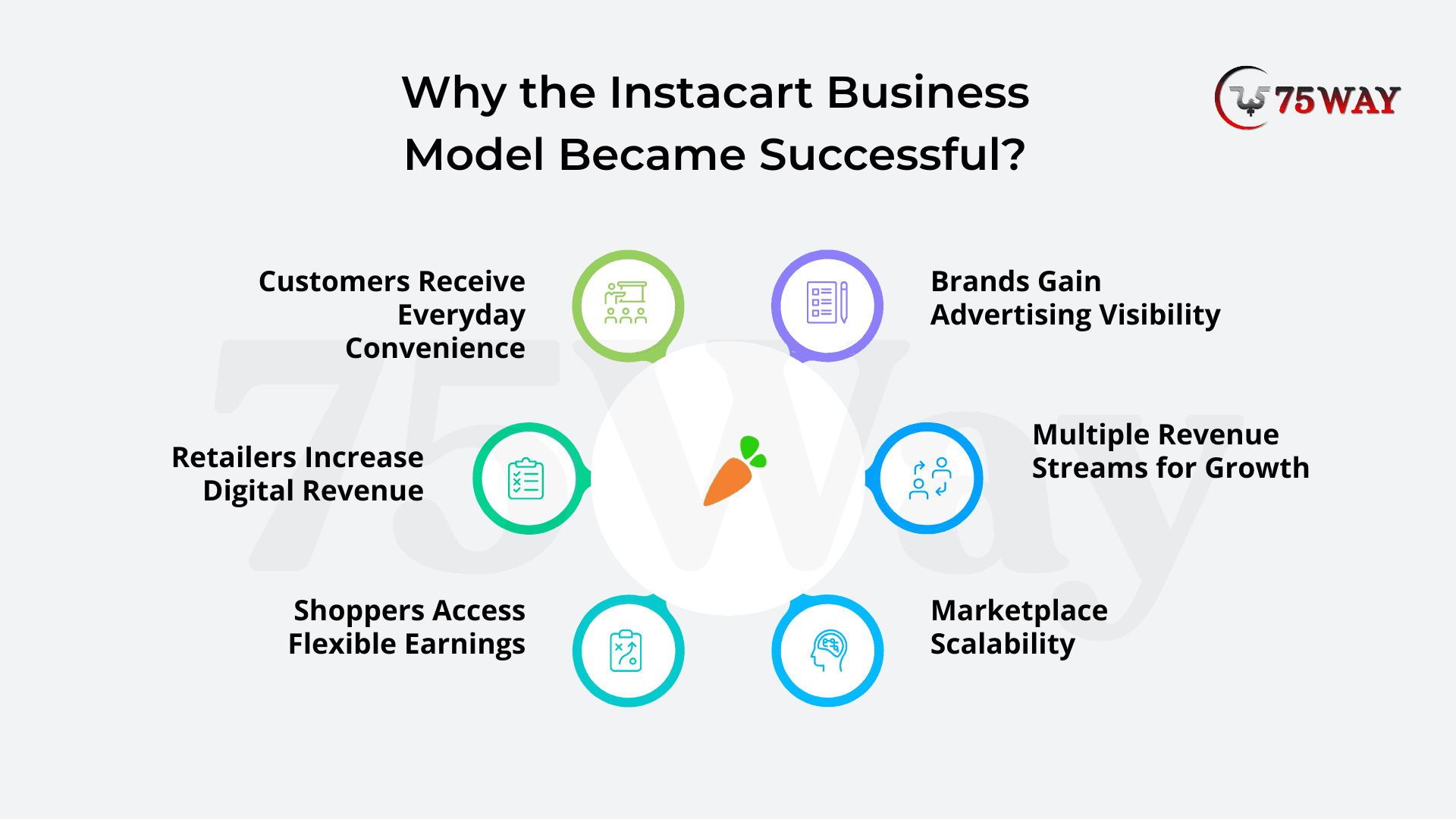
- Customers Receive Everyday Convenience
Modern consumers increasingly prioritize speed, flexibility, and convenience while purchasing household essentials. Instacart simplified grocery shopping by allowing customers to browse products online, schedule deliveries, track orders in real time, and avoid physically visiting crowded supermarkets. This convenience-driven experience strengthened recurring customer engagement and long-term platform adoption.
- Retailers Increase Digital Revenue
Many grocery retailers struggled to build ecommerce infrastructure independently because delivery logistics, mobile applications, and fulfillment systems required significant investment. Instacart solved this challenge by providing ready-made digital commerce capabilities. Retailers expanded online visibility, increased sales opportunities, and reached new customers without building delivery ecosystems from scratch.
- Shoppers Access Flexible Earnings
Instacart’s independent shopper network created flexible earning opportunities for hundreds of thousands of individuals. Shoppers could select working hours according to personal schedules while earning through grocery fulfillment and deliveries. This flexible workforce structure also helped the platform scale rapidly as order demand increased.
- Brands Gain Advertising Visibility
Consumer packaged goods brands use Instacart’s retail advertising infrastructure to improve product visibility across grocery searches and digital storefronts. Sponsored listings, personalized recommendations, and promotional campaigns help brands reach high-intent shoppers already searching for household products. This advertising ecosystem became a major driver of the platform's profitability.
- Multiple Revenue Streams for Growth
Unlike businesses depending on a single monetization model, Instacart generates revenue through delivery fees, subscription memberships, retail technology services, advertising solutions, and marketplace transactions. This diversified revenue structure improves financial stability while supporting long-term business scalability.
- Marketplace Scalability
The platform succeeded because it focused on marketplace coordination rather than inventory ownership. Instead of operating thousands of physical grocery stores, Instacart leveraged existing retailer infrastructure. It concentrates on technology, customer acquisition, fulfillment systems, and omnichannel commerce experiences. This asset-light strategy supported faster expansion across competitive grocery delivery markets.
How Does Instacart Make Money? Instacart Business Model Revenue Sources 2026
Understanding how does Instacart make money business model revenue streams requires examining the company’s diversified monetization strategy. Unlike traditional grocery businesses relying primarily on product sales, Instacart generates revenue across multiple operational layers. Let’s understand the major Instacart business model revenue streams in detail.
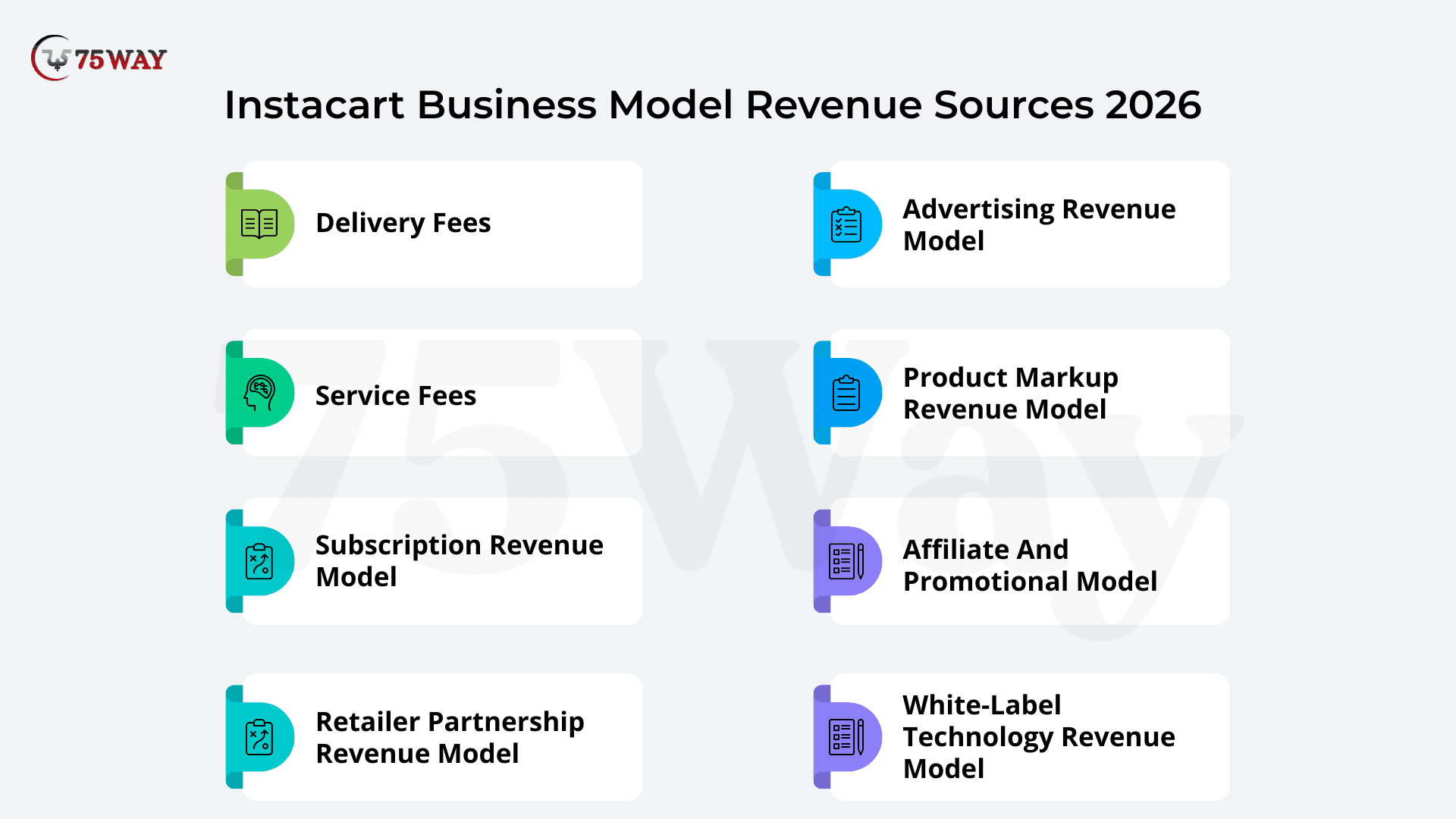
1. Delivery Fees
Delivery fees represent one of the most visible revenue streams. Customers pay delivery charges depending on:
- Order size
- Delivery urgency
- Geographic location
- Membership status
- Retail partner policies
Express and priority deliveries often generate higher margins.
2. Service Fees
Instacart applies service fees on orders to support platform operations, customer support, and fulfillment infrastructure. These charges contribute additional transaction-based revenue.
3. Subscription Revenue Model
Instacart+ memberships generate recurring monthly or annual subscription income. Subscription programs improve:
- Customer retention
- Order frequency
- Lifetime customer value
- Platform loyalty
Recurring revenue models also strengthen long-term financial stability.
4. Retailer Partnership Revenue Model
Retailers pay for ecommerce enablement, technology services, fulfillment support, and omnichannel commerce infrastructure. The platform helps grocery businesses expand digital revenue without building delivery ecosystems internally.
5. Advertising Revenue Model
Advertising became one of the most profitable segments within the Instacart business model revenue sources 2026 strategy. Consumer packaged goods brands invest heavily in retail media advertising because grocery shoppers already demonstrate strong purchase intent. Brands pay for:
- Sponsored placements
- Search visibility
- Product discovery campaigns
- Promotional targeting
- Personalized advertising
Retail media monetization continues to grow rapidly across ecommerce industries.
5. Product Markup Revenue Model
In certain cases, product pricing on Instacart may differ slightly from in-store pricing depending on retailer agreements and operational structures. These pricing differences create additional margin opportunities for the platform while supporting marketplace operations and fulfillment coordination. Although not the largest revenue source, product markups contribute incremental transaction-based earnings across high-volume orders.
6. Affiliate And Promotional Model
Instacart collaborates with brands and retail partners on promotional campaigns, loyalty offers, and sponsored product initiatives, generating additional marketing-based revenue opportunities.
Special promotional placements and featured product campaigns help brands increase product visibility while supporting incremental monetization across the marketplace ecosystem.
7. White-Label Technology Revenue Model
Instacart increasingly supports retailers through enterprise commerce technology solutions, allowing businesses to launch branded ecommerce experiences powered by Instacart infrastructure. These white-label commerce services include:
- Branded ordering systems
- Delivery integration tools
- Storefront technology
- Fulfillment management systems
- Retail analytics dashboards
This enterprise-focused technology model creates additional long-term revenue opportunities beyond grocery delivery operations alone.
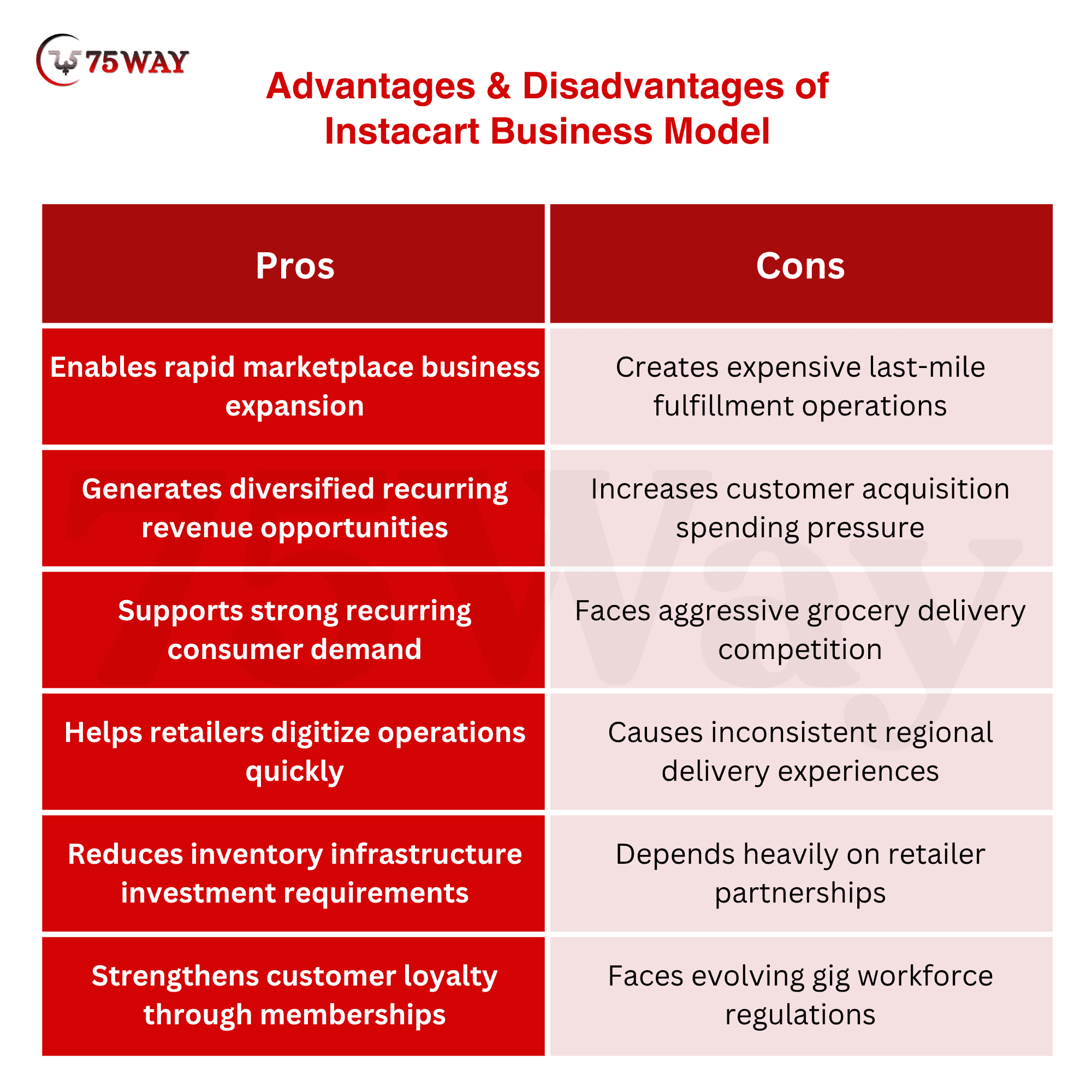
Instacart Business Model Pros & Cons
Understanding the Instacart business model helps startups evaluate scalability, profitability, operational flexibility, and long-term marketplace sustainability across grocery ecommerce markets.
Advantages of Instacart Business Model
- Fast Market Expansion: Marketplace partnerships support rapid geographic growth without requiring heavy investments in warehouses or physical grocery infrastructure systems.
- Multiple Revenue Streams: Grocery delivery charges, subscriptions, advertising, retailer services, and analytics diversify revenue generation across multiple marketplace operations.
- Strong Consumer Demand: Growing preference for convenience-based shopping increases recurring grocery delivery demand across urban and suburban consumer markets.
- Retail Digitization Support: Traditional grocery retailers quickly gain ecommerce capabilities through Instacart’s marketplace technology and omnichannel commerce infrastructure solutions.
- Asset-Light Operations: Instacart avoids large inventory ownership and warehousing expenses by leveraging existing retailer infrastructure and fulfillment ecosystems effectively.
- Subscription-Based Retention: Instacart’s memberships strengthen customer loyalty through discounts, priority delivery access, and recurring convenience-focused purchasing benefits.
Disadvantages of the Instacart Business Model
- Delivery Margin Challenges: Last-mile grocery fulfillment operations remain expensive because delivery logistics and shopper payments increase operational costs.
- High Customer Acquisition Costs: In competitive grocery markets, discounts, promotions, and marketing campaigns drive customer acquisition spending, increasing it over time.
- Intense Market Competition: Large ecommerce companies and grocery chains continue investing heavily into competing delivery and digital commerce ecosystems.
- Service Consistency Issues: Order accuracy and delivery experiences may vary depending on shopper performance and regional operational conditions across markets.
- Retailer Dependency Risks: The platform depends heavily on retailer partnerships for inventory access, product availability, and long-term marketplace stability.
- Regulatory Compliance Pressure: Changing gig economy labor regulations may increase operational complexity and future compliance-related business expenses across multiple regions.
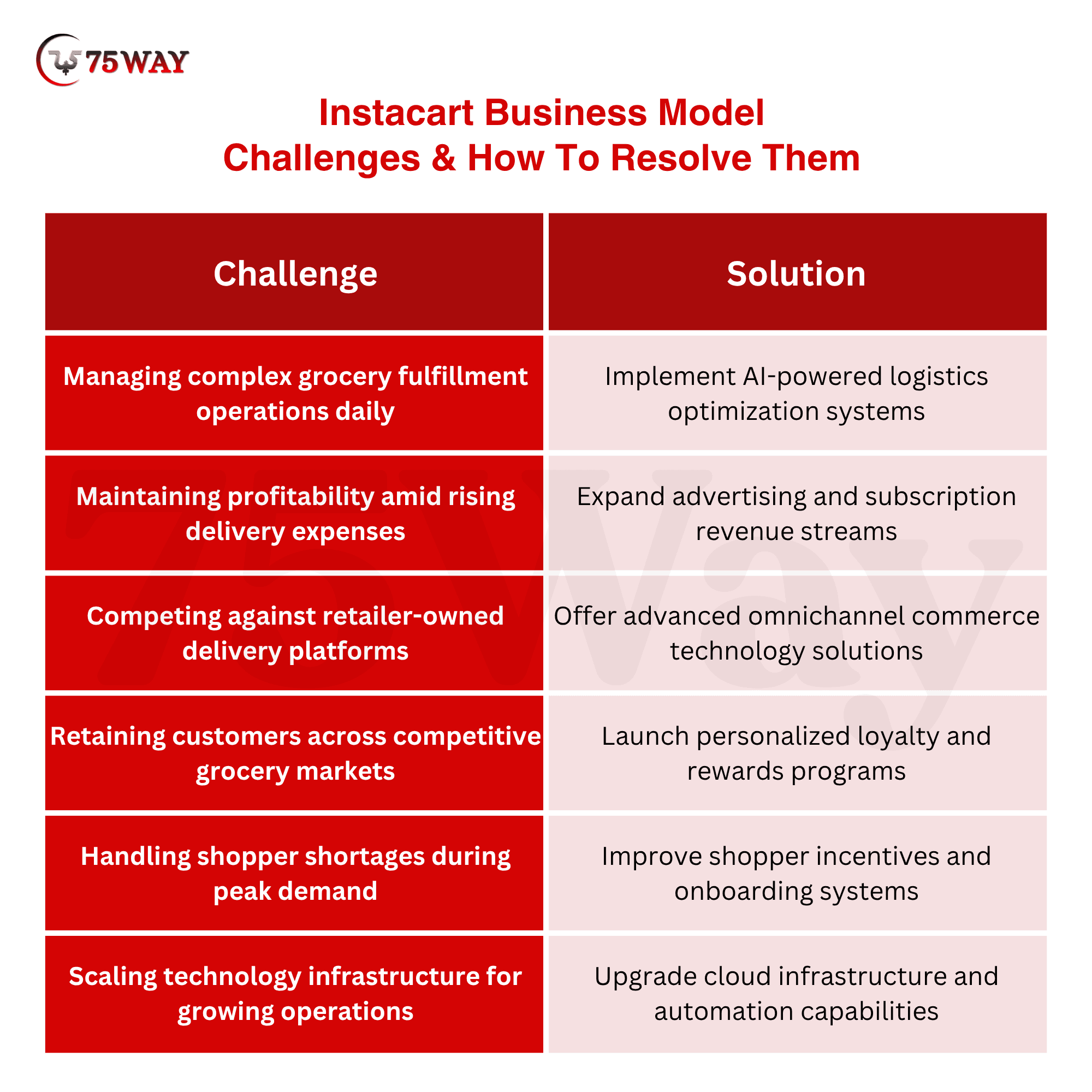
Instacart Business Model Challenges & How To Resolve Them
Although Instacart achieved massive marketplace growth, maintaining profitability, operational stability, and customer retention still requires solving several complex business challenges continuously.
- High Operational Complexity: Grocery delivery involves perishables, substitutions, inventory gaps, and delivery delays. These issues increase operational pressure daily. Instacart can reduce complexity using AI forecasting, route optimization, and real-time inventory synchronization systems for order accuracy and fulfillment coordination.
- Thin Profit Margins: Delivery operations often generate limited margins because labor, discounts, and customer acquisition costs remain high. Instacart can improve profitability through advertising revenue, subscription memberships, retail technology services, and automation systems, reducing operational expenses gradually across marketplace operations.
- Rising Retail Competition: Large grocery chains increasingly develop internal delivery systems and ecommerce platforms. This reduces third-party marketplace dependency gradually. Instacart can retain retailers with loyalty integrations, white-label technology, and omnichannel commerce infrastructure for long-term digital growth opportunities.
- Customer Retention Pressure: Customers expect faster deliveries, personalized offers, discounts, and seamless shopping experiences continuously. Retaining users becomes expensive across competitive markets. Instacart can improve retention by offering subscription benefits, AI-driven recommendations, reward programs, and enhanced delivery reliability.
- Shopper Availability Issues: Demand spikes during holidays and weekends can create shopper shortages and delayed deliveries. This affects customer satisfaction negatively. Instacart can solve this challenge by leveraging flexible incentives, faster onboarding systems, predictive workforce planning, and performance-based earning opportunities that support fulfillment stability.
- Technology Scalability Challenges: Growing marketplace traffic increases pressure on payments, inventory systems, order tracking, and application performance. Technical failures affect customer trust quickly. Instacart can strengthen scalability through cloud infrastructure and continuous platform optimization.
Competitive Landscape Surrounding Grocery Delivery App Like Instacart In 2026
The grocery delivery industry remains highly competitive because consumer demand for convenience continues rising globally.
- Amazon Fresh: Amazon leverages logistics infrastructure, Prime memberships, warehouse automation, and ecommerce dominance to strengthen grocery delivery expansion.
- Walmart Grocery: Walmart combines physical retail dominance with digital ordering systems, pickup infrastructure, and nationwide delivery capabilities.
- DoorDash & Uber Eats: Originally focused on restaurant delivery, these platforms expanded aggressively into grocery commerce.
Existing delivery infrastructure helped accelerate grocery market penetration. Despite rising competition, Instacart maintains strong positioning through retailer relationships, advertising infrastructure, omnichannel commerce solutions, and large-scale marketplace reach.
Lessons Startups Can Learn From The Instacart Business Model
Startup founders frequently analyze Instacart because the company demonstrated how marketplace ecosystems create scalable commerce infrastructure.
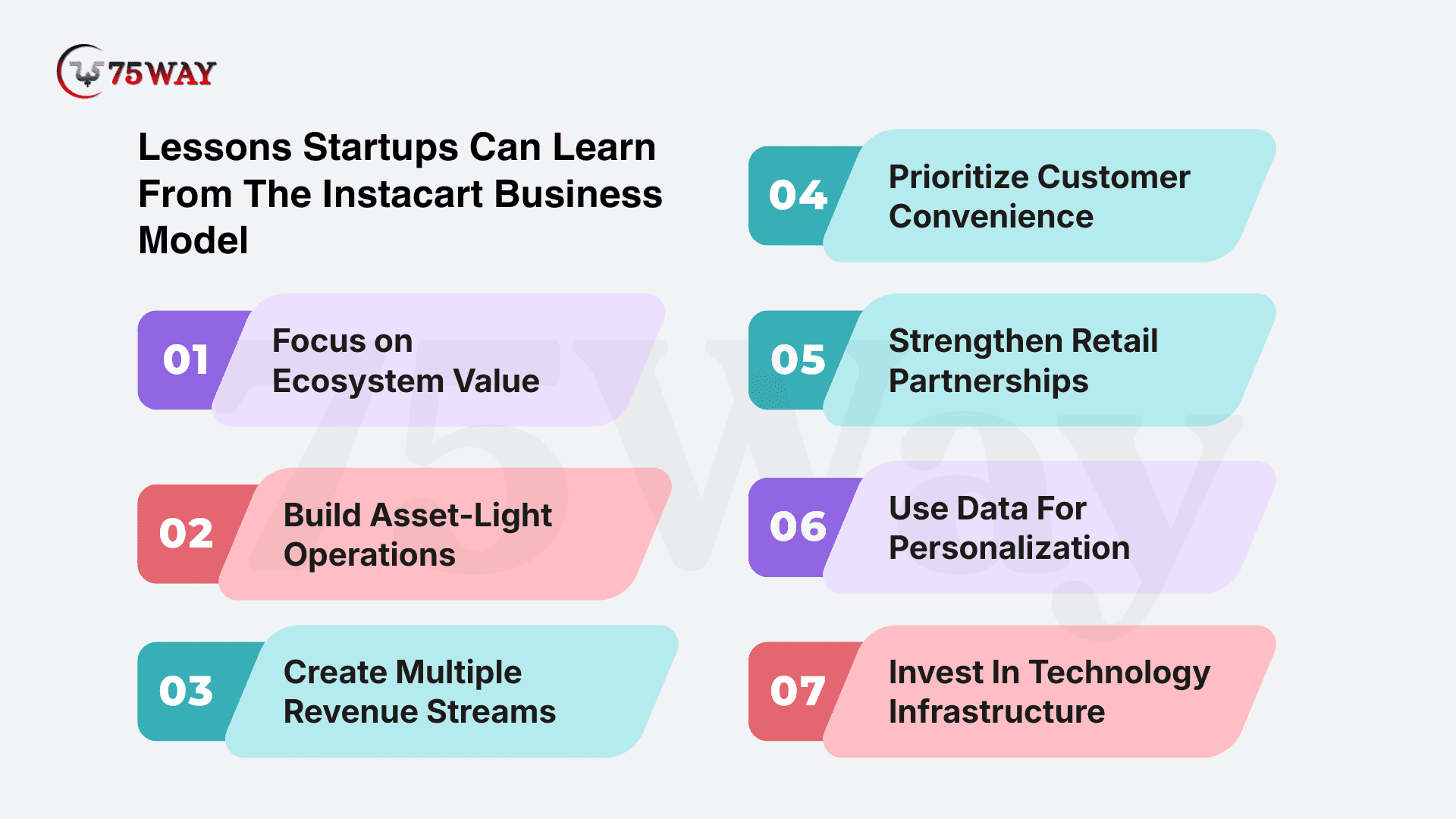
- Focus on Ecosystem Value: Successful marketplaces create benefits for customers, retailers, shoppers, and brands together. Multi-sided value creation strengthens platform growth and retention.
- Build Asset-Light Operations: Instacart avoided heavy inventory ownership and warehouse investments during expansion stages. Asset-light models improve scalability while reducing operational and financial risks.
- Create Multiple Revenue Streams: Relying on one monetization channel increases long-term business vulnerability during market fluctuations. Diversified revenue models strengthen profitability and financial sustainability.
- Prioritize Customer Convenience: Consumers increasingly prefer faster, simpler, and frictionless digital purchasing experiences across ecommerce platforms. Convenience-driven experiences improve engagement, retention, and recurring purchasing behavior.
- Strengthen Retail Partnerships: Strong retailer relationships accelerate marketplace growth and improve inventory accessibility across regions. Collaborative partnerships support long-term operational scalability and customer reach expansion.
- Use Data For Personalization: Customer purchasing insights help platforms deliver personalized recommendations and targeted promotional campaigns effectively. Data-driven experiences improve conversions, loyalty, and customer satisfaction rates.
- Invest In Technology Infrastructure: Scalable technology systems support marketplace growth, order management, and operational coordination efficiently. Strong infrastructure improves platform reliability, delivery performance, and customer experiences.
Wrap Up
The Instacart business model changes grocery delivery from a niche convenience service into a mainstream ecommerce infrastructure powering modern retail operations. Its marketplace ecosystem successfully connected retailers, customers, shoppers, and consumer brands through scalable technology, flexible fulfillment systems, and diversified monetization channels.
Businesses entering grocery commerce markets increasingly study these frameworks as they develop next-generation grocery delivery apps tailored to evolving consumer expectations. Want to launch a high-growth grocery delivery app and marketplace like Instacart? Partner with a trusted grocery delivery app development company to build a scalable grocery marketplace.
Frequently Asked Questions (FAQs)
Can Instacart’s Marketplace Model Work For Regional Grocery Startups?
Regional grocery startups can successfully adopt marketplace-driven delivery models when they focus on strong retailer relationships, localized fulfillment strategies, customer convenience, and scalable technology infrastructure. Smaller geographic markets often provide faster operational testing opportunities, stronger customer loyalty, and lower acquisition competition compared to nationwide expansion-focused delivery ecosystems.
Why Are Retail Media Networks Becoming Important Inside Grocery Platforms?
Retail media networks generate high-margin revenue because grocery shoppers already demonstrate purchasing intent while browsing products. Consumer brands invest heavily in sponsored placements, personalized promotions, and search visibility campaigns that influence purchase behavior directly within ecommerce marketplaces.
What Grocery Retail Categories Does The Instacart Business Model Support?
Instacart supports supermarkets, convenience stores, pharmacies, wholesale clubs, and specialty grocery retailers. Multiple retail categories strengthen customer retention, product availability, and recurring marketplace purchases.
How Does Instacart Support Merchants, Sellers, And Product Visibility?
Instacart helps merchants and sellers expand digital visibility by connecting products with millions of active grocery shoppers through its marketplace ecosystem. Retailers can showcase inventory, manage promotions, access customer insights, and improve product discovery using sponsored listings, personalized recommendations, and retail advertising solutions across multiple grocery retail categories.
How Does The Instacart Business Model Work For Retailers?
The Instacart business model helps retailers expand online grocery operations without building a complex delivery infrastructure independently. Grocery stores integrate inventory, pricing, and digital storefronts into the platform while Instacart manages customer ordering, fulfillment coordination, and delivery logistics. Retailers benefit from increased ecommerce sales, wider customer reach, omnichannel commerce capabilities, and retail advertising opportunities.
Why Do Consumers Prefer Grocery Marketplace Applications Over Traditional Shopping?
Consumers increasingly value convenience, flexible scheduling, digital payment options, personalized promotions, and time savings. Grocery marketplace applications simplify household purchasing routines while reducing travel requirements. Mobile ordering experiences also support busy professionals, elderly customers, families, and underserved communities seeking easier access to groceries nationwide.
Which Technologies Power Modern Grocery Delivery Ecosystems?
Modern grocery platforms rely heavily on AI-driven recommendations, real-time inventory synchronization, route optimization systems, predictive analytics, customer personalization engines, payment gateways, cloud infrastructure, and retail analytics tools. These technologies improve operational visibility, delivery coordination, customer retention, and purchasing experiences across omnichannel grocery commerce ecosystems.
Why Are Subscription Models Important For Grocery Delivery Businesses?
Subscription programs increase customer retention, purchasing frequency, and predictable recurring revenue generation. Members often place larger orders because delivery fees become less restrictive. Subscription ecosystems also strengthen long-term loyalty by encouraging customers to stay within a single digital grocery marketplace rather than switching between competing platforms.
Can Traditional Grocery Chains Compete Against Digital Commerce Platforms?
Traditional grocery chains remain highly competitive when they adopt omnichannel commerce strategies combining physical retail experiences with digital ordering capabilities. Partnerships with marketplace technology providers help retailers modernize operations rapidly while improving customer accessibility, delivery convenience, loyalty integration, and online purchasing experiences across evolving consumer shopping behaviors.
Why Are Investors Interested In Grocery Delivery Marketplace Businesses?
Investors recognize grocery commerce as a massive recurring consumer spending category with strong digital transformation potential. Marketplace delivery businesses also generate diversified revenue streams from subscriptions, advertising, retailer services, analytics, and transaction fees. Large household purchasing frequency further supports customer lifetime value and the growth of recurring platform engagement.