Summary
AI sales agents for travel agencies automate lead handling, customer interactions, itinerary planning, and booking processes. These intelligent systems improve conversion rates, reduce manual workload, and deliver personalized travel experiences. This guide explores development, features, technology stack, benefits, cost structure, and future trends of AI-driven travel automation platforms.
Quick Overview
- AI sales agents automate travel inquiries and bookings
- Travel agencies improve conversion rates significantly
- Personalized travel recommendations increase customer satisfaction
- Automation reduces dependency on manual sales teams
- AI systems handle 24/7 customer engagement efficiently
Travel agencies in 2026 are facing a very different kind of competition. It is no longer just about offering better packages or cheaper deals—customers now expect instant responses, personalized itineraries, and seamless booking experiences across every channel. If a travel inquiry is not answered quickly, potential customers often move on to another agency within minutes.
That is exactly where AI sales agents are becoming a major advantage for travel businesses.
Instead of relying only on human agents to handle inquiries, follow-ups, and bookings, AI-powered sales systems can now manage the entire customer journey. They can respond instantly to travel queries, suggest personalized destinations based on budget and preferences, generate itineraries, share pricing options, handle objections, and even assist with final bookings in real time.
In 2026, travel agencies across leisure, corporate travel, tour operations, and online booking platforms are increasingly adopting AI-driven sales automation to improve conversion rates and reduce manual workload. The result is faster responses, more personalized experiences, and significantly higher booking efficiency.
So how exactly can travel agencies build and deploy AI sales agents that actually increase conversions and automate bookings effectively? This guide explores how AI sales agents for travel agencies work, their benefits, development process, features, cost structure, and future opportunities in the evolving travel technology landscape.
What Is An AI Sales Agent For Travel Agencies?
An AI sales agent is an intelligent system designed to automate sales-related tasks in travel businesses by handling customer interactions, providing recommendations, and streamlining booking processes. It enhances customer engagement by offering instant responses and personalized travel assistance across digital channels. It can:
- Respond to travel inquiries
- Suggest destinations based on preferences
- Generate personalized itineraries
- Provide pricing and package details
- Handle booking requests
- Follow up with potential customers
It acts as a virtual travel consultant available 24/7, helping travel agencies improve response speed, increase conversions, and deliver a seamless customer experience at scale.
How AI Sales Agents Work In Travel Industry?
The workflow typically follows a structured automation system where user inputs are processed, analyzed, and converted into personalized travel actions. This ensures seamless end-to-end automation from inquiry to booking and post-travel engagement.
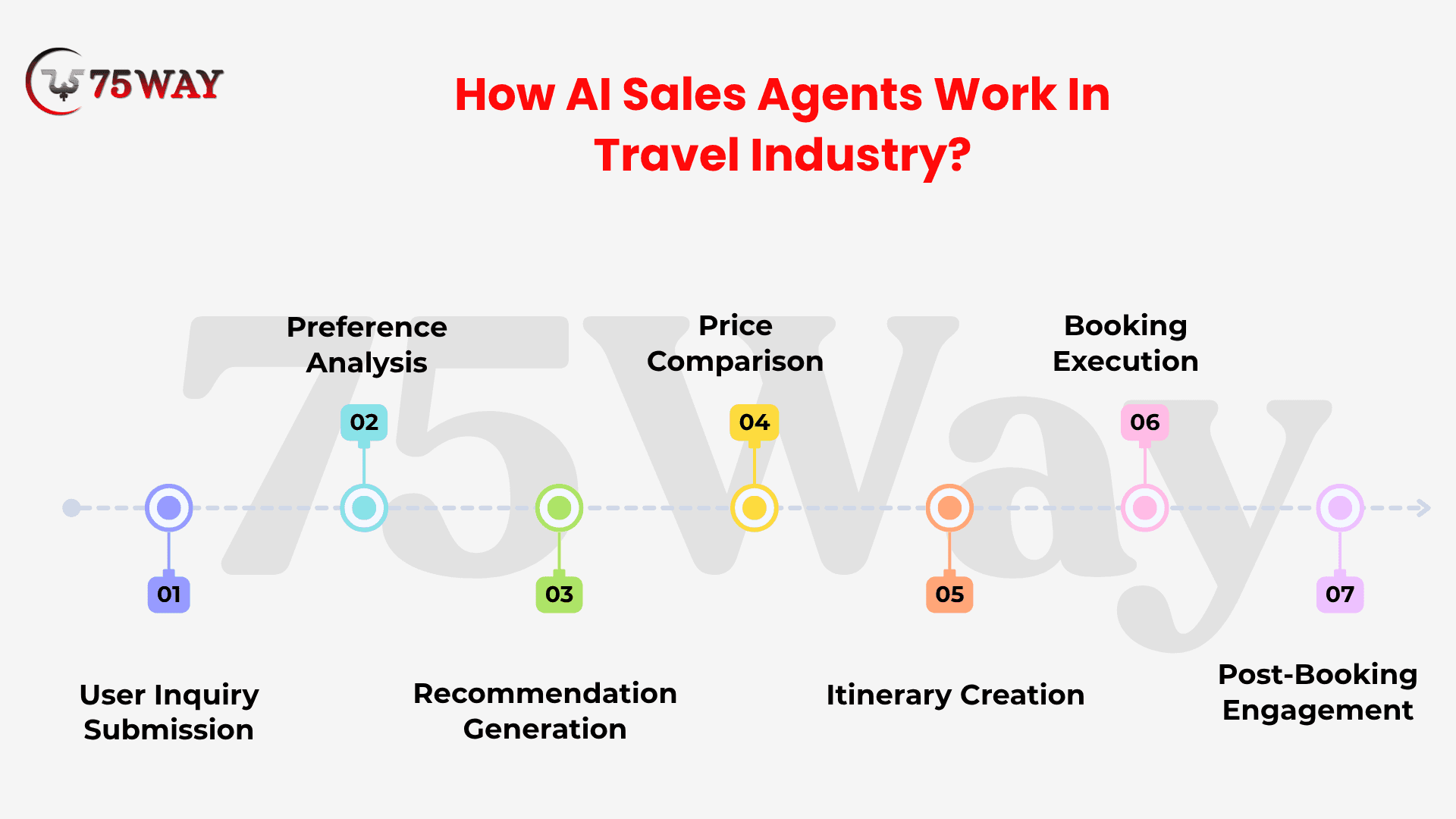
- User Inquiry Submission
Travelers submit requests through websites, apps, or chat platforms for destinations, pricing, or travel packages. This initiates the AI-driven sales workflow instantly.
- Preference Analysis
AI evaluates user inputs such as budget, destination, and travel dates to understand intent. This helps create more accurate and relevant travel suggestions.
- Recommendation Generation
Sales AI agent generates personalized travel options based on user preferences and historical behavior data. It ensures tailored suggestions that match customer expectations.
- Price Comparison
AI fetches real-time pricing from multiple travel APIs including flights and hotels. This helps users compare options and make informed booking decisions.
- Itinerary Creation
The system builds customized travel plans including transport, accommodation, and activities. It delivers structured and complete travel experiences for users.
- Booking Execution
AI completes bookings automatically or transfers high-value leads to human agents for final confirmation. This reduces manual effort and speeds up conversions.
- Post-Booking Engagement
The system sends updates, reminders, and travel assistance after booking completion. It improves customer satisfaction and encourages repeat bookings.
Why Travel Agencies Are Investing in AI Sales Agents In 2026?
Travel agencies face increasing pressure to respond quickly and personalize experiences. Key drivers include:
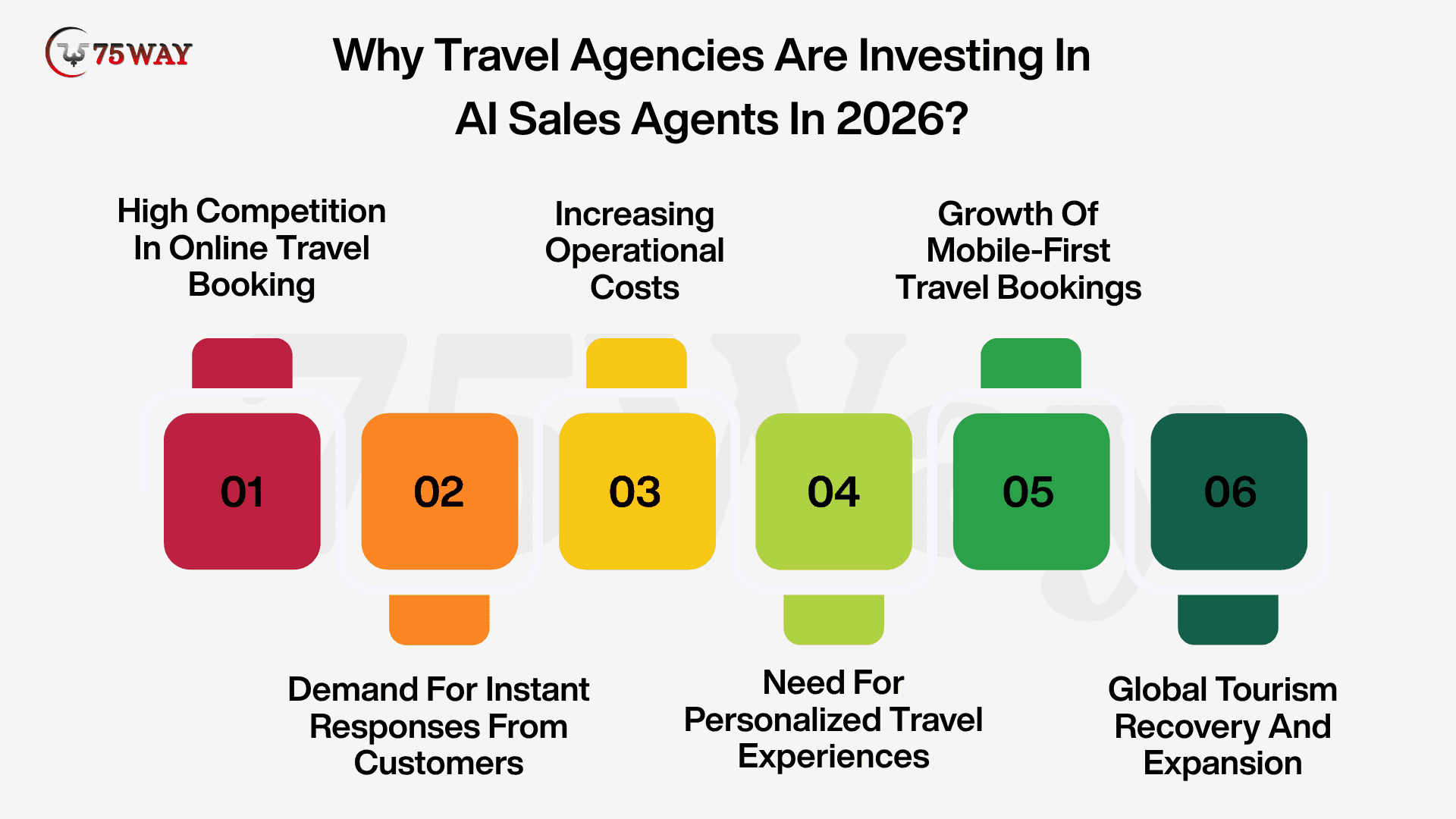
- High Competition In Online Travel Booking: Travel agencies face intense competition requiring faster responses and stronger digital differentiation strategies globally.
- Demand For Instant Responses From Customers: Customers expect immediate replies for bookings, pricing, and travel queries across all digital communication channels today.
- Increasing Operational Costs: Rising staffing and support costs push agencies toward automation and AI-driven sales efficiency solutions rapidly.
- Need For Personalized Travel Experiences: Travelers expect customized itineraries, recommendations, and offers tailored to preferences, budgets, and travel history insights.
- Growth Of Mobile-First Travel Bookings: Mobile devices dominate travel bookings, requiring optimized apps and instant engagement across smartphones and tablets globally.
- Global Tourism Recovery And Expansion: Increasing international travel demand creates new opportunities for scalable, automated, and AI-powered travel solutions worldwide.
Core Features of AI Sales Agents For Travel Agencies
AI sales agents for travel agencies are designed to automate customer engagement, streamline booking workflows, and enhance personalization across digital platforms. These features help agencies improve conversions, reduce response time, and deliver seamless travel planning experiences at scale.
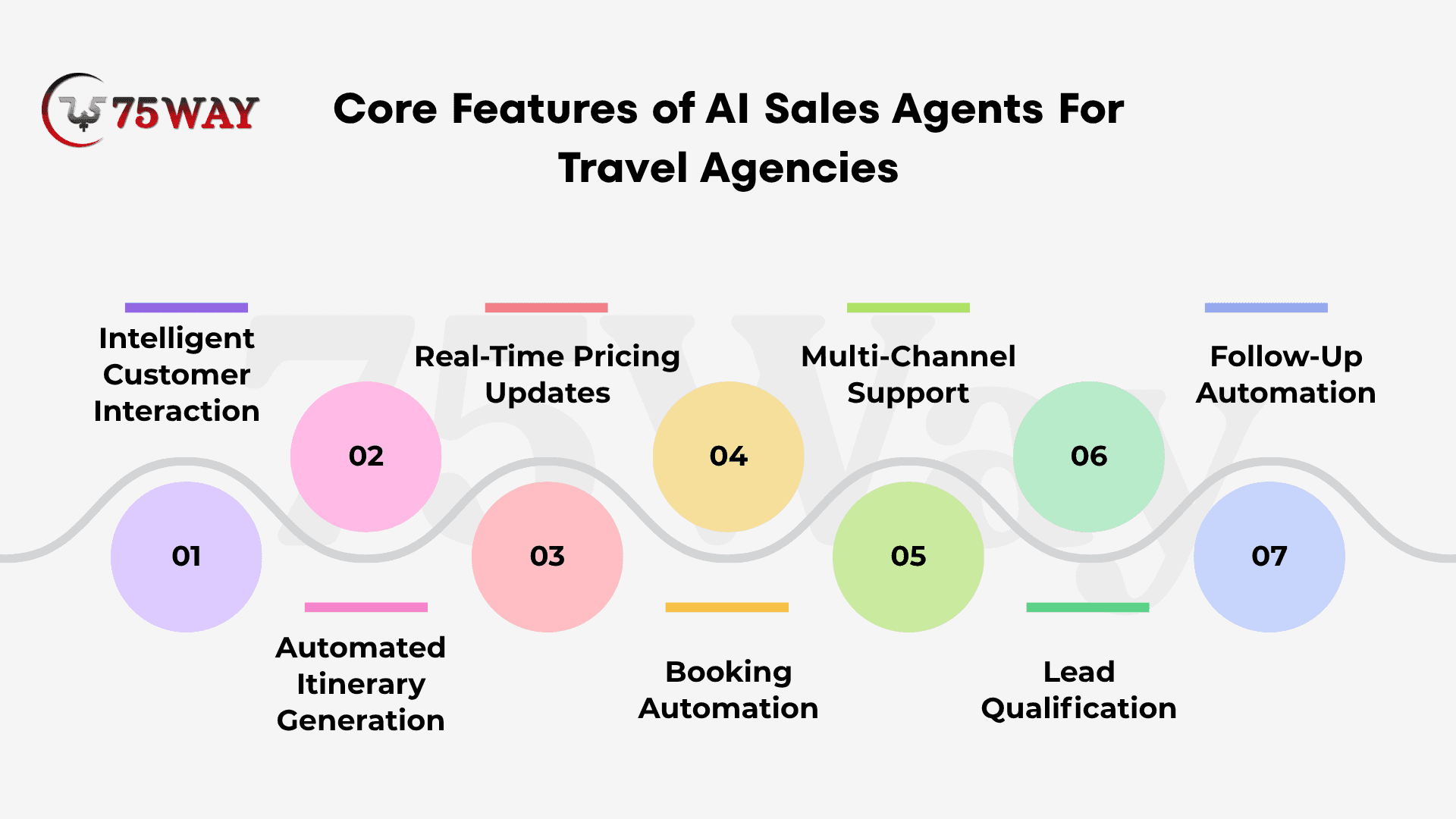
1. Intelligent Customer Interaction: Understands user travel preferences, budget, and intent through natural conversation flows. It responds instantly with relevant suggestions, improving engagement quality and helping customers feel guided throughout the travel planning journey effectively. This reduces dependency on human agents significantly.
2. Automated Itinerary Generation: Builds personalized travel itineraries based on destination, duration, interests, and budget inputs. It structures complete trip plans including activities, stays, and transport options. This saves planning time and enhances customer satisfaction through tailored travel experiences instantly.
3. Real-Time Pricing Updates: Pulls live data from airlines, hotels, and travel APIs to display updated pricing. It ensures customers always see accurate costs before booking decisions. This improves transparency and reduces confusion during travel selection and comparison processes.
4. Booking Automation: Automatically completes reservations for flights, hotels, and travel packages with minimal user input. It reduces manual effort and speeds up the booking process. This improves conversion rates by eliminating friction during final purchase steps significantly.
5. Multi-Channel Support: Operates across WhatsApp, websites, mobile apps, and social media platforms seamlessly. It ensures consistent communication regardless of channel. This helps travel agencies engage customers wherever they prefer interacting, improving accessibility and overall customer experience consistently.
6. Lead Qualification: Analyzes user behavior, preferences, and engagement patterns to identify high-intent travel customers. It prioritizes leads that are more likely to convert. This allows travel agencies to focus sales efforts on the most valuable prospects efficiently.
7. Follow-Up Automation: Reconnects with users who abandon bookings through reminders and personalized messages. It helps recover lost opportunities and keeps customers engaged. This increases conversion rates by encouraging users to complete their travel bookings without manual intervention.
How to Build AI Sales Agent for Travel: Step-by-Step Process
Building an AI-powered travel platform requires a connected development flow where each stage naturally feeds into the next. The process starts from defining the business foundation and gradually moves through system integration, intelligence building, automation, testing, and finally deployment. Every stage strengthens the next one, ensuring a smooth transition from idea to a fully functional travel ecosystem.
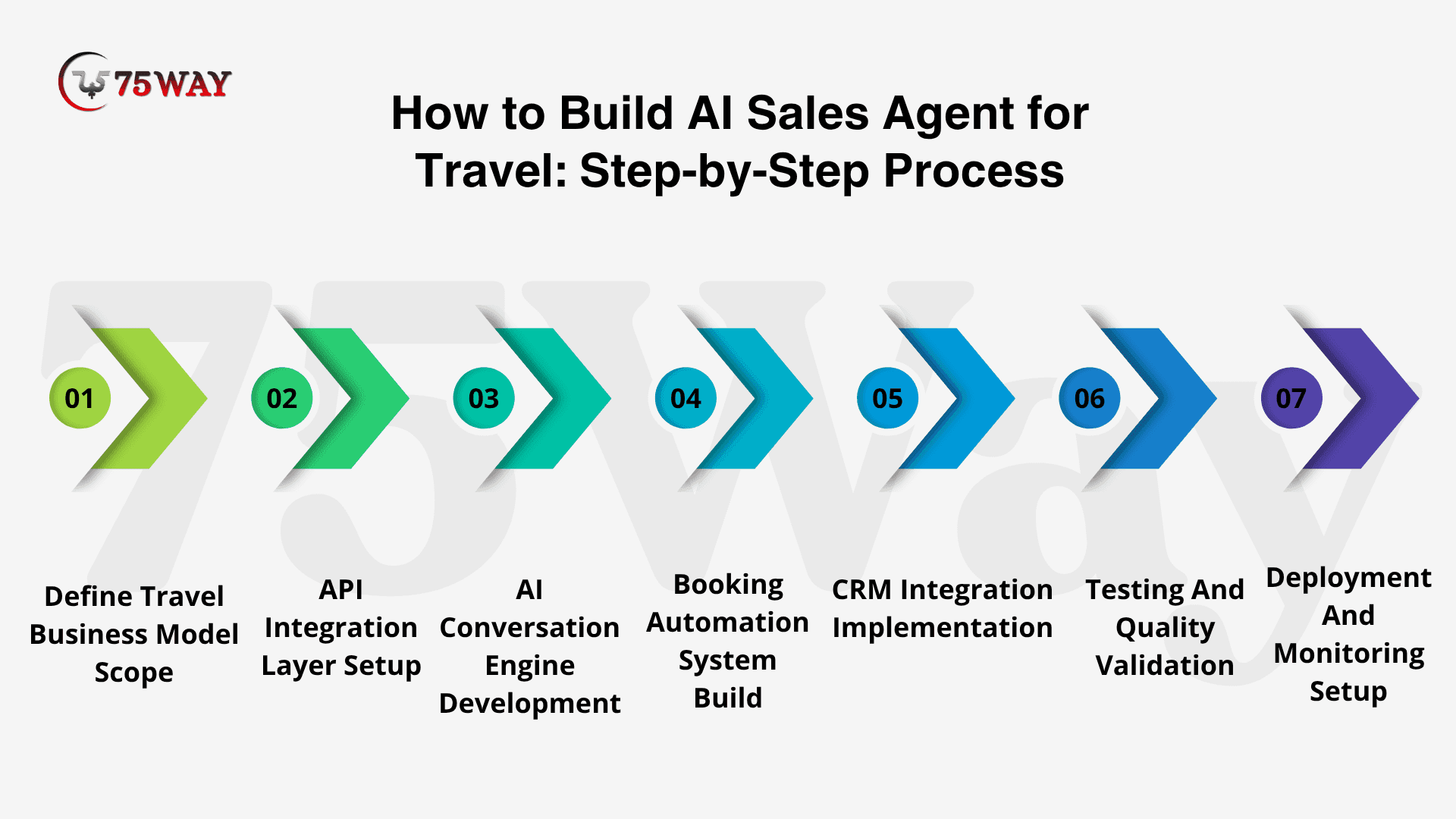
1. Define Travel Business Model Scope
This stage establishes the foundation of the entire platform by deciding whether the system will focus on flights, hotels, travel packages, or enterprise travel solutions. It shapes the core business direction and defines target users, monetization approach, and feature priorities.
All later technical decisions depend on this clarity, ensuring the product is built with a focused vision aligned to market demand and scalable growth opportunities.
2. API Integration Layer Setup
Once the business model is clear, the next step is connecting external travel data sources such as flight APIs, hotel systems, aggregators, and payment gateways. This creates the operational backbone of the platform.
It ensures real-time access to pricing, availability, and booking information, enabling all later features to function with accurate and updated travel data across the system.
3. AI Conversation Engine Development
After data connectivity is established, the system evolves into an intelligent layer that understands user intent and travel requirements. This engine processes natural language inputs and converts them into meaningful travel recommendations.
It acts as the communication bridge between users and backend systems, ensuring personalized responses that guide users toward suitable travel options.
4. Booking Automation System Build
With intelligence in place, the platform moves toward execution by automating booking workflows for flights, hotels, and travel packages. This stage reduces manual intervention in reservation processes.
It connects user decisions directly to booking engines, ensuring faster confirmations, fewer errors, and a smooth transition from selection to final ticket generation.
5. CRM Integration Implementation
As bookings and interactions increase, customer management becomes essential. This stage integrates CRM systems to centralize user data, booking history, and communication records.
It enables travel businesses to track leads, personalize engagement, and improve customer relationships using structured insights from every interaction within the platform.
6. Testing And Quality Validation
Before launch, the system undergoes rigorous testing to ensure accuracy in pricing, availability, recommendations, and booking flows. This stage validates the entire user journey.
It connects development with real-world expectations by identifying issues early, improving performance reliability, and ensuring consistent travel experiences across all devices and scenarios.
7. Deployment And Monitoring Setup
Finally, the platform is launched into a live environment with scalable infrastructure and optimized performance. This stage marks the transition from development to real user operations.
Continuous monitoring ensures system stability, detects issues early, and maintains smooth performance, completing the journey from concept to a fully operational AI travel platform.
How AI Sales Agents Boost Travel Agency Revenue Growth?
AI sales agents help travel agencies improve customer engagement, automate booking processes, and scale operations efficiently. These benefits directly impact revenue growth, operational efficiency, and overall customer satisfaction across digital travel platforms.
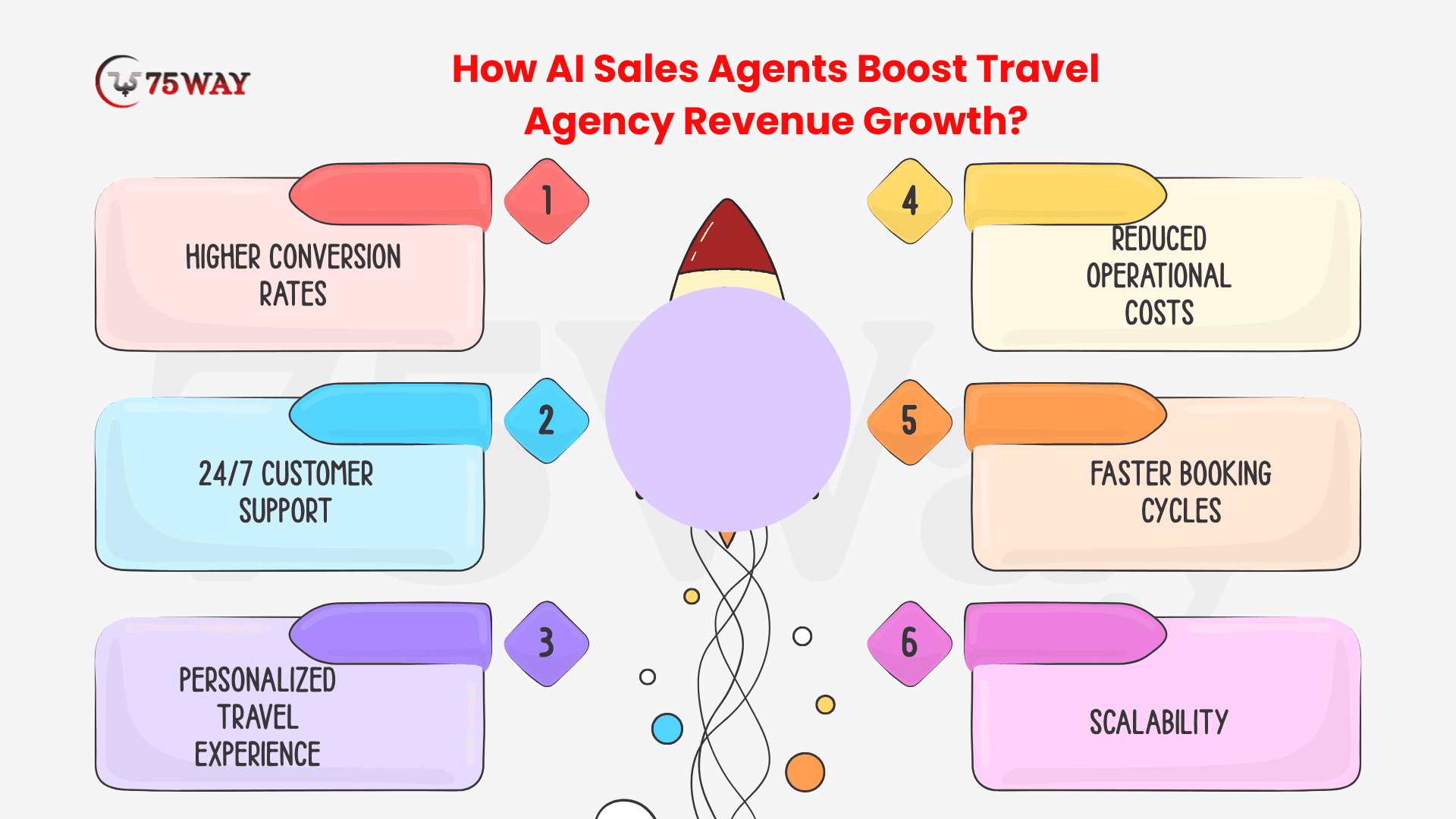
- Higher Conversion Rates: Faster response times increase booking likelihood and improve customer decision-making during travel inquiries significantly across platforms.
- 24/7 Customer Support: Continuous availability ensures customers receive instant assistance at any time without relying on human agents.
- Personalized Travel Experience: Tailored recommendations based on user preferences improve engagement and create more relevant travel planning experiences.
- Reduced Operational Costs: Automation minimizes the need for large sales teams and reduces overall customer support expenses.
- Faster Booking Cycles: Streamlined workflows reduce delays in reservations, confirmations, and ticket generation across travel booking systems.
- Scalability: Systems handle thousands of simultaneous inquiries, enabling travel agencies to grow without increasing operational complexity.
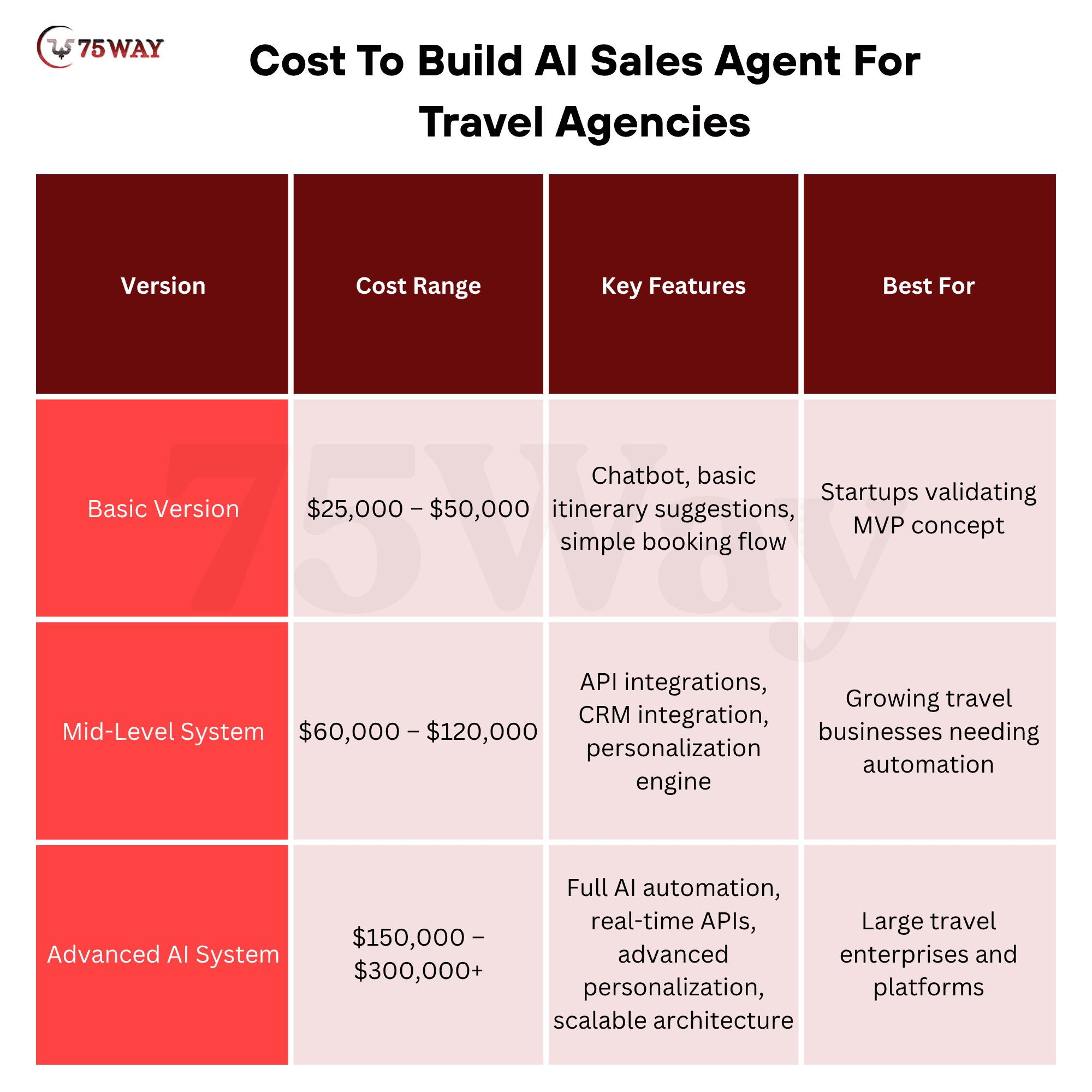
Cost To Build AI Sales Agent For Travel Agencies
The cost to build an AI sales agent for travel agencies typically ranges from $25,000 – $300,000+, depending on feature complexity, AI capabilities, integrations, and scalability requirements. Pricing varies based on whether businesses need a basic automation system or a fully advanced AI-driven travel sales platform.
- Basic Version: $25,000 – $50,000
Chatbot, basic itinerary suggestions, simple booking flow.
- Mid-Level System: $60,000 – $120,000
API integrations, CRM, personalization engine.
- Advanced AI System: $150,000 – $300,000+
Full automation, multi-agent system, predictive recommendations.
Final Thoughts
AI sales agents help travel agencies attract, engage, and convert customers by automating inquiries, personalization, and booking workflows. These systems enable faster response times, improved customer satisfaction, and streamlined operations across digital travel platforms. By reducing manual effort and enhancing decision-making through intelligent recommendations, travel businesses can operate more efficiently in highly competitive markets. Agencies that integrate these technologies will achieve higher conversions, lower operational costs, and stronger customer loyalty. As the travel industry continues to evolve, AI will remain at the core of modern sales strategies and digital customer experiences. So, you can connect with an AI development company to build intelligent AI sales agents for your travel business growth. You can also visit AI marketplaces like 75AI Agent Store to launch a ready-made AI agent.
Frequently Asked Questions (FAQs)
Can AI Sales Agents Handle Last-Minute Travel Bookings?
Yes, AI sales agents can process last-minute bookings by accessing real-time APIs for flights and hotels. They quickly compare availability and complete reservations instantly.
Do AI Travel Agents Work Across Multiple Countries?
Yes, AI systems support global travel operations using integrated APIs. They handle currency conversion, regional pricing, and multi-language communication for international customers.
How Do AI Agents Personalize Travel Recommendations?
AI agents analyze user preferences, search history, and budget details. They then generate customized travel suggestions tailored to individual needs and interests.
Do AI Travel Agents Support Group Bookings?
Yes, AI agents can manage group travel requests efficiently. They calculate pricing, availability, and coordinate multiple bookings simultaneously for large groups.
How Secure Are AI Travel Booking Systems?
AI travel systems use encryption, secure APIs, and authentication layers. These measures protect user data and ensure safe financial transactions.
Can Small Travel Agencies Use AI Sales Agents?
Yes, small agencies can deploy lightweight AI systems for automation. These tools help reduce workload while improving customer response time and conversions.