Summary
This guide explains how to build an Uber clone app, covering features, development steps, technology stack, monetization strategies, and challenges. It helps startups and businesses create scalable ride-hailing platforms with modern functionality. Development cost typically ranges from $30,000 to $130,000+, depending on complexity, features, and technology integration.
Quick Overview
- Uber clone apps enable fast entry into the growing ride-hailing market.
- Success depends on strong features, seamless UX, and real-time tracking systems.
- Choosing the correct tech stack ensures scalability, performance, and long-term app stability.
- Development includes planning, design, coding, testing, deployment, and continuous optimization stages.
- As per projections, the ride-hailing market is expected to reach $188.60 billion in revenue by 2026.
- Development cost typically ranges from $30,000 to $130,000+, depending on complexity and features.
What if the next big transportation revolution you build is sitting right in front of you? The on-demand mobility industry has completely reshaped how people commute, book rides, and experience everyday convenience, turning traditional transport into a seamless digital service. Today, ride-hailing and taxi booking apps collectively generate around $59.6 billion in revenue, proving the massive global demand for on-demand mobility solutions like Uber.
Apps like Uber have disrupted traditional taxi systems and opened the door for startups and enterprises to build scalable, profitable platforms in this space. If you are planning to build an Uber clone app, this guide will walk you through everything you need. You will know about the must-have features, technology stack, app development process, cost breakdown, and expert insights to launch a future-ready ride-hailing platform like Uber.
What Is an Uber Clone App?
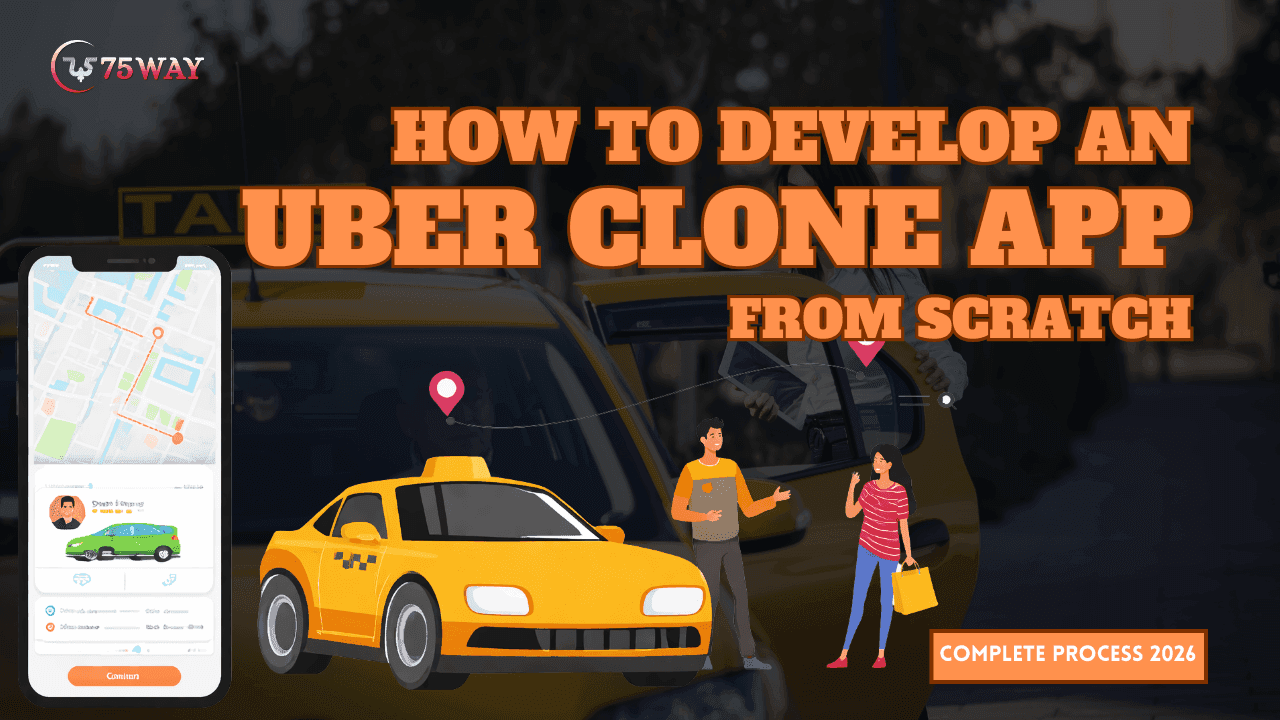
An Uber clone app is a ride-hailing software solution that replicates the core functionality of popular taxi-booking platforms. It connects passengers with nearby drivers in real time, allowing users to book rides instantly, track their driver’s location, and make secure digital payments through a mobile application. These apps feature advanced features such as GPS tracking, fare estimation, and automated dispatch systems to ensure smooth, efficient transportation services.
In modern digital mobility ecosystems, an Uber clone app goes beyond simple replication and acts as a customizable platform that businesses can tailor to their needs. It can be adapted for different models such as bike taxis, car rentals, or corporate transportation services. With scalable architecture and integrated admin control panels, it helps entrepreneurs launch their own ride-hailing business quickly while maintaining flexibility, performance, and user satisfaction.
Why Build an Uber Clone App in 2026?
The demand for smart mobility solutions continues to grow rapidly due to urbanization, smartphone penetration, and evolving consumer expectations. Businesses that invest early in scalable ride-hailing solutions gain a strong competitive advantage.
- Rising demand for on-demand transportation services
- Increased adoption of cashless and digital payments
- Expansion of smart city ecosystems
- Opportunities in niche ride services (bike taxis, EV rides, carpooling)
- Integration of AI-driven automation and route optimization
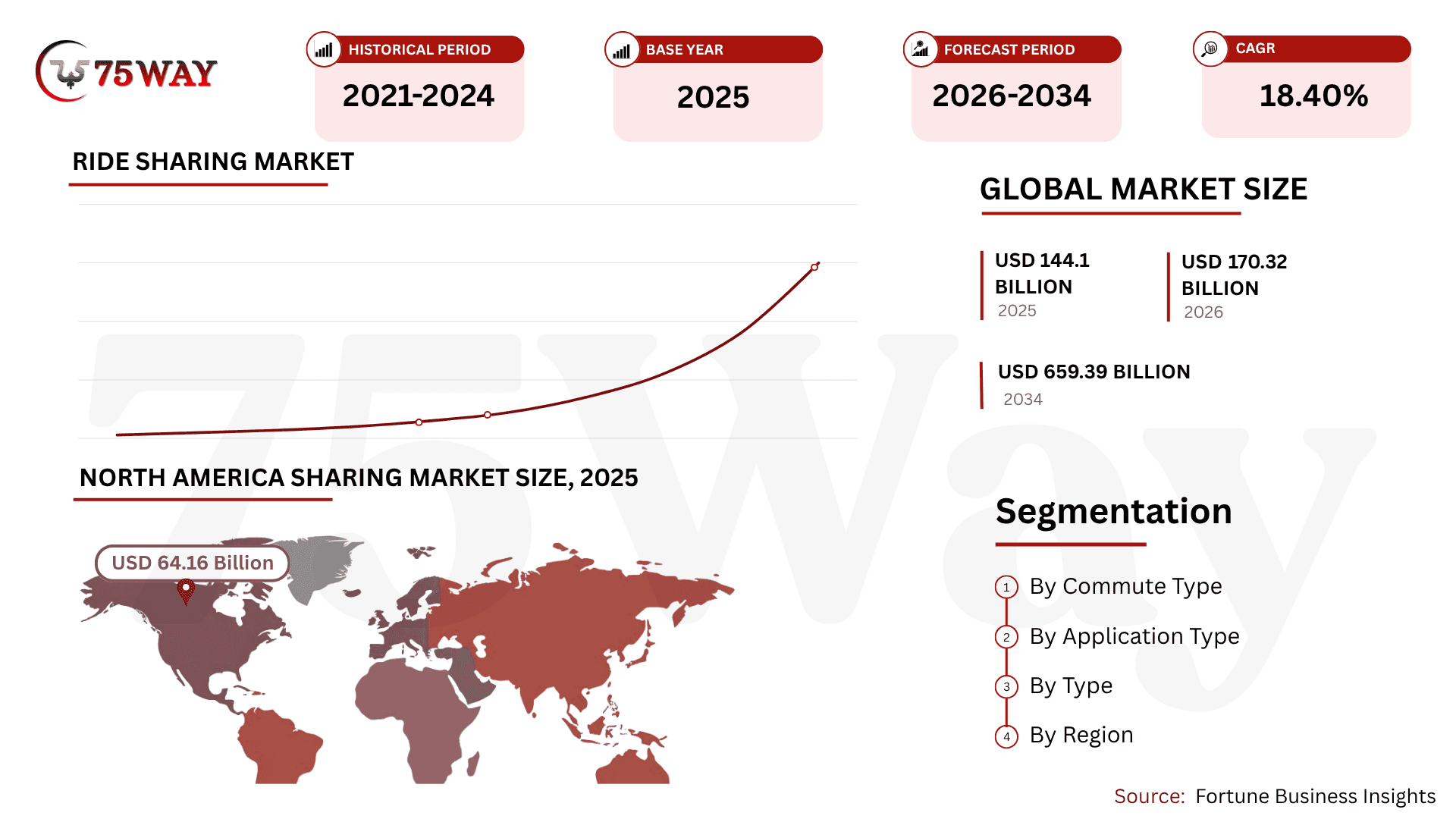
- As per projections, the ride-hailing market is expected to generate around $188.60 billion in revenue by 2026, according to Statista.
- The global ride-sharing industry is expected to expand from $170.32 billion in 2026 to nearly $659.39 billion by 2034, growing at a strong CAGR of 18.40%. North America currently leads the market with a 44.52% share.
- Uber dominates the U.S. ride-sharing space, capturing around 42% of total revenue and holding an impressive 76% market share.
- Taxi and ride-hailing applications are widely adopted, with approximately 425 million users worldwide.
- The e-hailing segment remains the top contributor, accounting for more than 58.4% of the total market share.
Types of Uber Clone Apps You Can Build
Choosing the right Uber clone app model is essential before development, as it defines your target audience, features, and overall business direction. It also helps you align revenue strategy and functionality with real market demand for better long-term success.
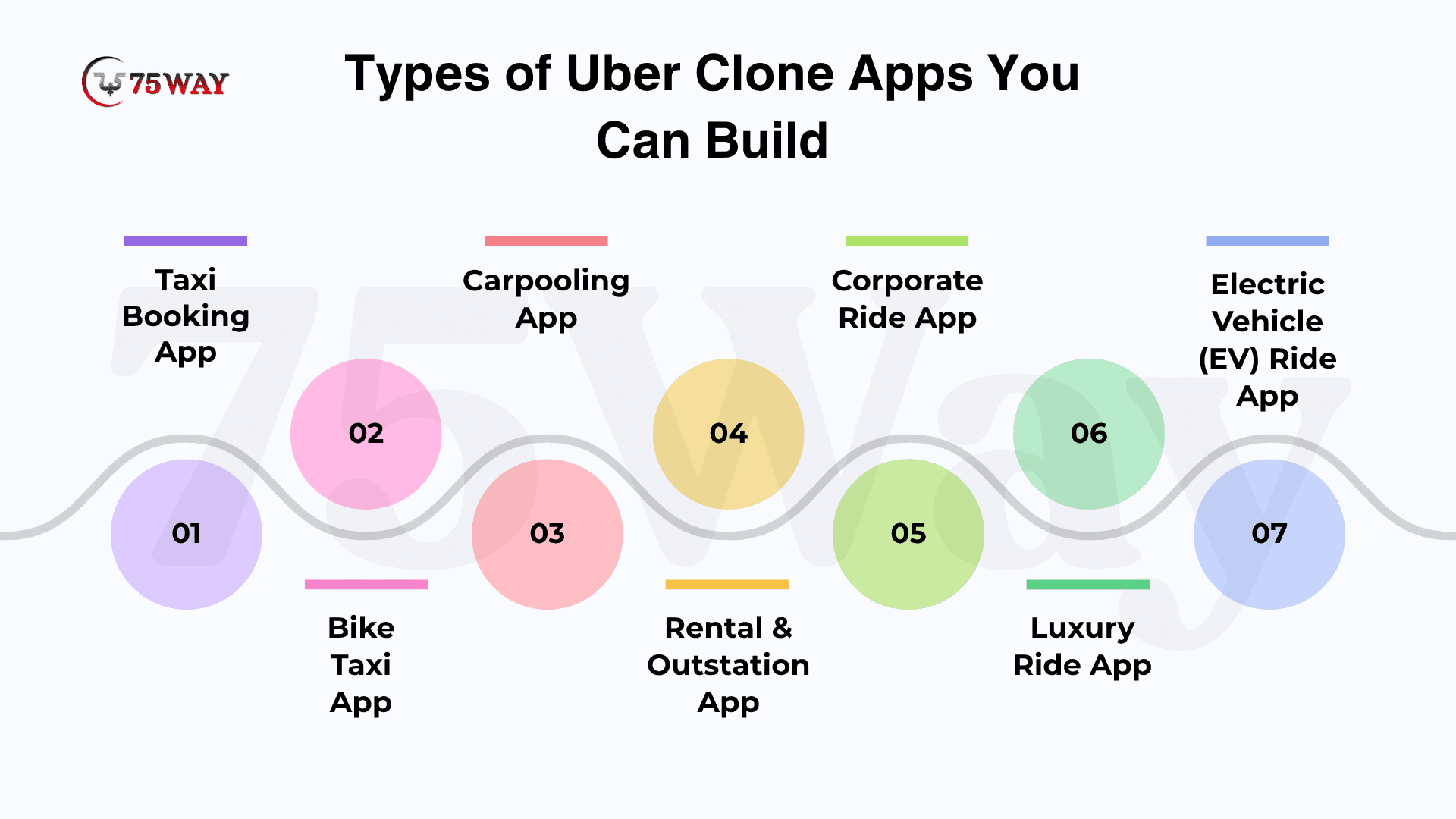
- Taxi Booking App: It is a standard ride-hailing solution that connects passengers with nearby drivers for quick and convenient transportation. It offers real-time booking, tracking, and payment features for smooth daily commuting experiences.
- Bike Taxi App: A bike taxi app offers affordable, fast transportation for short distances, especially in traffic-heavy urban areas. It helps users save time and money while ensuring quick pickups and efficient last-mile connectivity.
- Carpooling App: A carpooling app allows multiple passengers traveling in the same direction to share a single ride and split costs. It reduces travel expenses, lowers traffic congestion, and promotes eco-friendly transportation solutions.
- Rental & Outstation App: A rental and outstation app enables users to book vehicles for hourly rentals or long-distance travel outside the city. It is ideal for planned trips, business travel, and intercity transportation needs.
- Corporate Ride App: A corporate ride app is designed to help businesses manage employee transportation efficiently and professionally. It offers scheduled pickups, centralized billing, and safety tracking for seamless daily office commute management.
- Luxury Ride App: A luxury ride app offers premium transportation services with high-end vehicles and professional drivers. It focuses on comfort, exclusivity, and superior user experience for executives and high-income customers.
- Electric Vehicle (EV) Ride App: An app that connects users with EV-based ride services to promote eco-friendly transportation. It supports sustainable mobility while reducing carbon emissions and operational fuel costs for modern urban travel.
Core Features of an Uber Clone App
A successful ride-hailing app consists of three main panels: rider app, driver app, and admin panel. Each panel works together to ensure seamless booking, real-time tracking, efficient management, secure payments, and a smooth user experience.
Rider App Features for Uber-like App
The rider app is the core interface of an Uber-like platform, enabling users to book rides, track drivers, and manage trips seamlessly. It ensures a smooth, convenient, and secure transportation experience for everyday commuting needs.

- Profile Management: Allows users to securely create and update personal details, preferences, and contact information.
- Ride Booking: Enables users to quickly book instant or scheduled rides with just a few simple taps.
- Real-Time Driver Tracking: Provides live GPS tracking of the assigned driver for accurate arrival updates and safety.
- Fare Estimation: Calculates approximate ride cost before booking based on distance, time, and traffic conditions.
- Multiple Payment Options: Supports credit cards, digital wallets, UPI, and cash for flexible and secure transactions.
- Ride History: Stores past trips with details like routes, fares, and dates for easy reference and tracking.
- Ratings & Reviews: Let users rate drivers and share feedback to maintain service quality and trust.
- SOS/Emergency Button: Provides instant emergency access to alert authorities or seek support during unsafe situations.
- In-App Chat With Driver: Enables direct messaging between rider and driver for smooth coordination and updates.
- Favorite Locations: Allows users to save frequently used locations, such as home and work, for faster bookings.
Driver App Features In Uber Clone App Development
The driver app is a crucial component of an Uber clone platform, designed to help drivers manage ride requests, navigation, earnings, and availability. It ensures smooth coordination between riders and drivers while maximizing productivity and service quality.
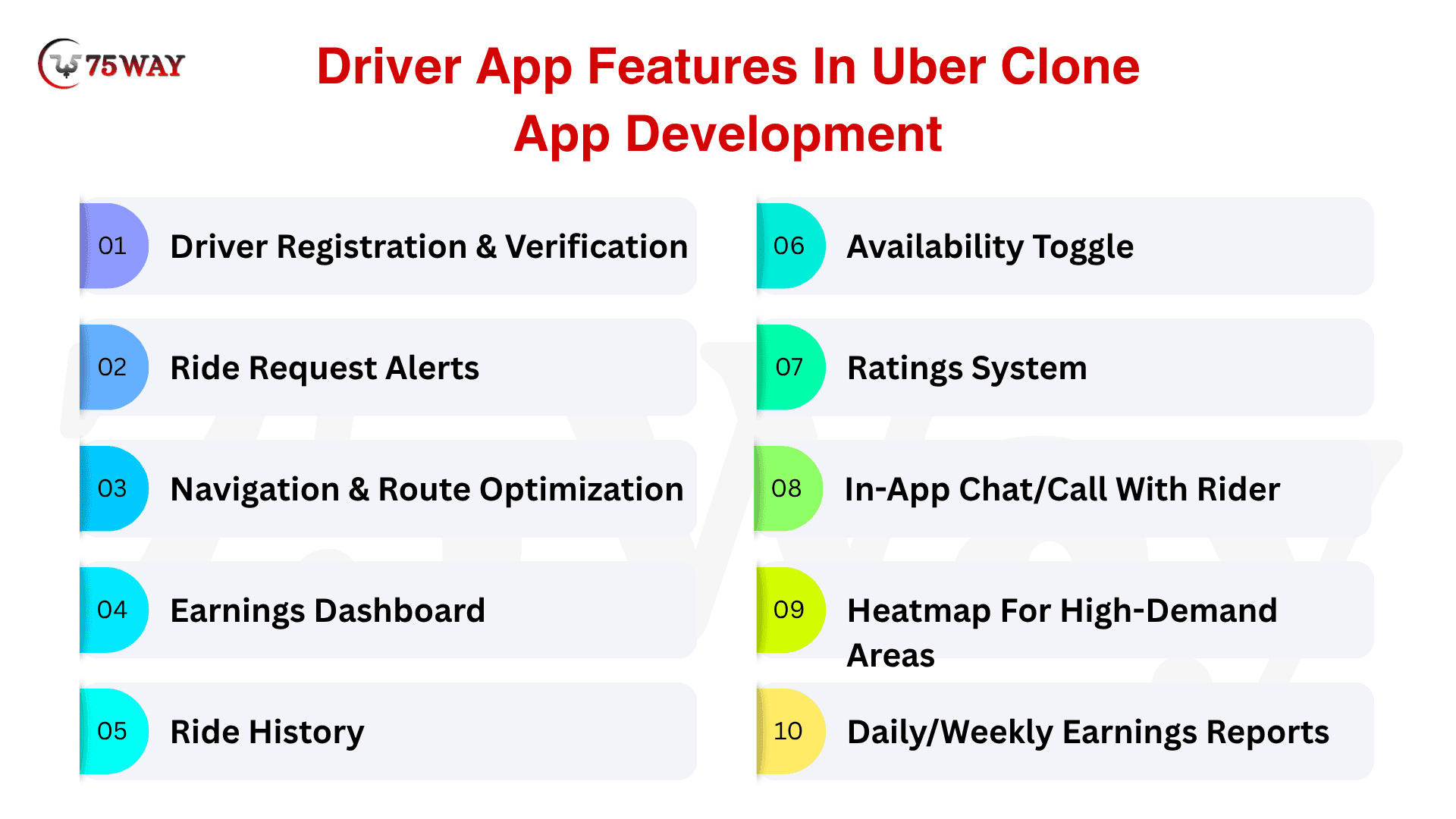
- Driver Registration & Verification: Register and verify driver identity through secure document upload, background checks, and an approval process.
- Ride Request Alerts: Receive instant notifications for nearby ride requests with accept or decline options for quick response.
- Navigation & Route Optimization: Navigate efficiently with GPS-based routing that suggests the fastest, traffic-free paths for every trip.
- Earnings Dashboard: Track daily, weekly, and monthly earnings with clear breakdowns of completed rides and incentives.
- Ride History: View complete trip history, including routes, fares, timings, and passenger details for reference and tracking.
- Availability Toggle: Switch online or offline status instantly to control ride acceptance and working hours flexibly.
- Ratings System: Monitor customer ratings and feedback to improve service quality and maintain driver performance standards.
- In-App Chat/Call With Rider: Communicate directly with riders through chat or call for smooth coordination and updates.
- Heatmap For High-Demand Areas: Identify busy zones in real time to increase ride opportunities and maximize earnings.
- Daily/Weekly Earnings Reports: Generate detailed reports of income, trips, and bonuses to analyze performance effectively.
Admin Panel Features For Building Uber App
The admin panel is the central control system of an Uber-like app, enabling complete management of users, drivers, rides, payments, and platform operations. It ensures efficient monitoring, secure transactions, data-driven decisions, and smooth overall business performance.
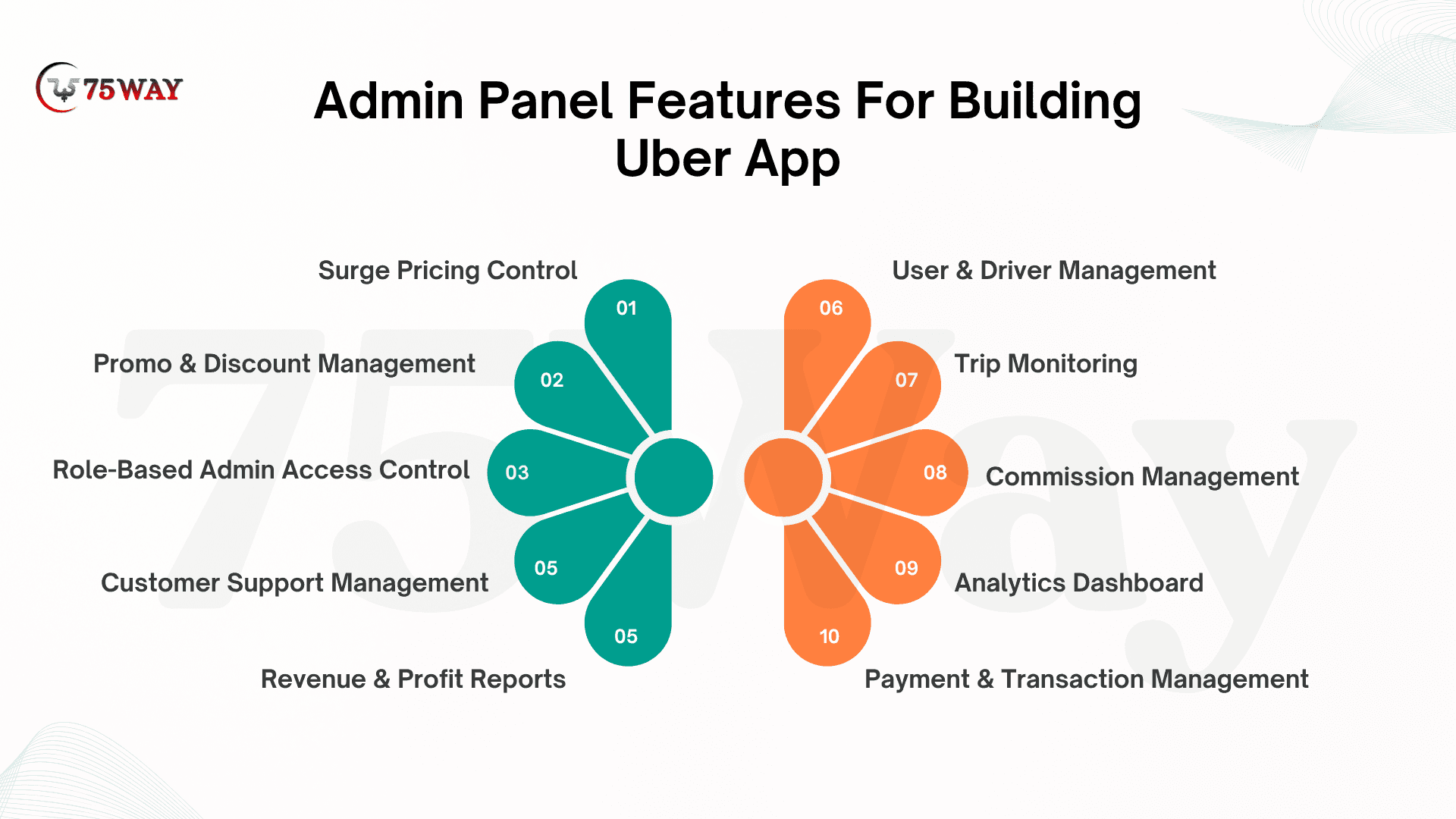
- User & Driver Management: Manage user and driver accounts, verify profiles, and control access to platform services efficiently.
- Trip Monitoring: Track all ongoing and completed rides in real time to ensure smooth operations and service quality.
- Commission Management: Define and manage commission structures for drivers, rides, and platform revenue distribution accurately.
- Analytics Dashboard: Analyze key business metrics such as bookings, revenue, user activity, and growth performance trends.
- Payment & Transaction Management: Handle all payments, refunds, payroll management, and transaction records securely with complete financial transparency and tracking.
- Surge Pricing Control: Adjust fare rates dynamically based on demand, traffic conditions, and peak time usage.
- Promo & Discount Management: Create and manage promotional offers, discounts, and coupon campaigns to attract and retain users.
- Role-Based Admin Access Control: Assign different access levels to admin users for secure and organized platform management.
- Customer Support Management: Manage user queries, complaints, and support tickets to ensure fast issue resolution and satisfaction.
- Revenue & Profit Reports: Generate detailed financial reports to monitor earnings, expenses, and overall business profitability.
Advanced Features To Stand Out In Market
Advanced features are essential for differentiating an Uber clone app in a highly competitive market. They enhance user experience, improve operational efficiency, and add intelligent automation, helping businesses deliver faster, safer, and more personalized ride-hailing services.
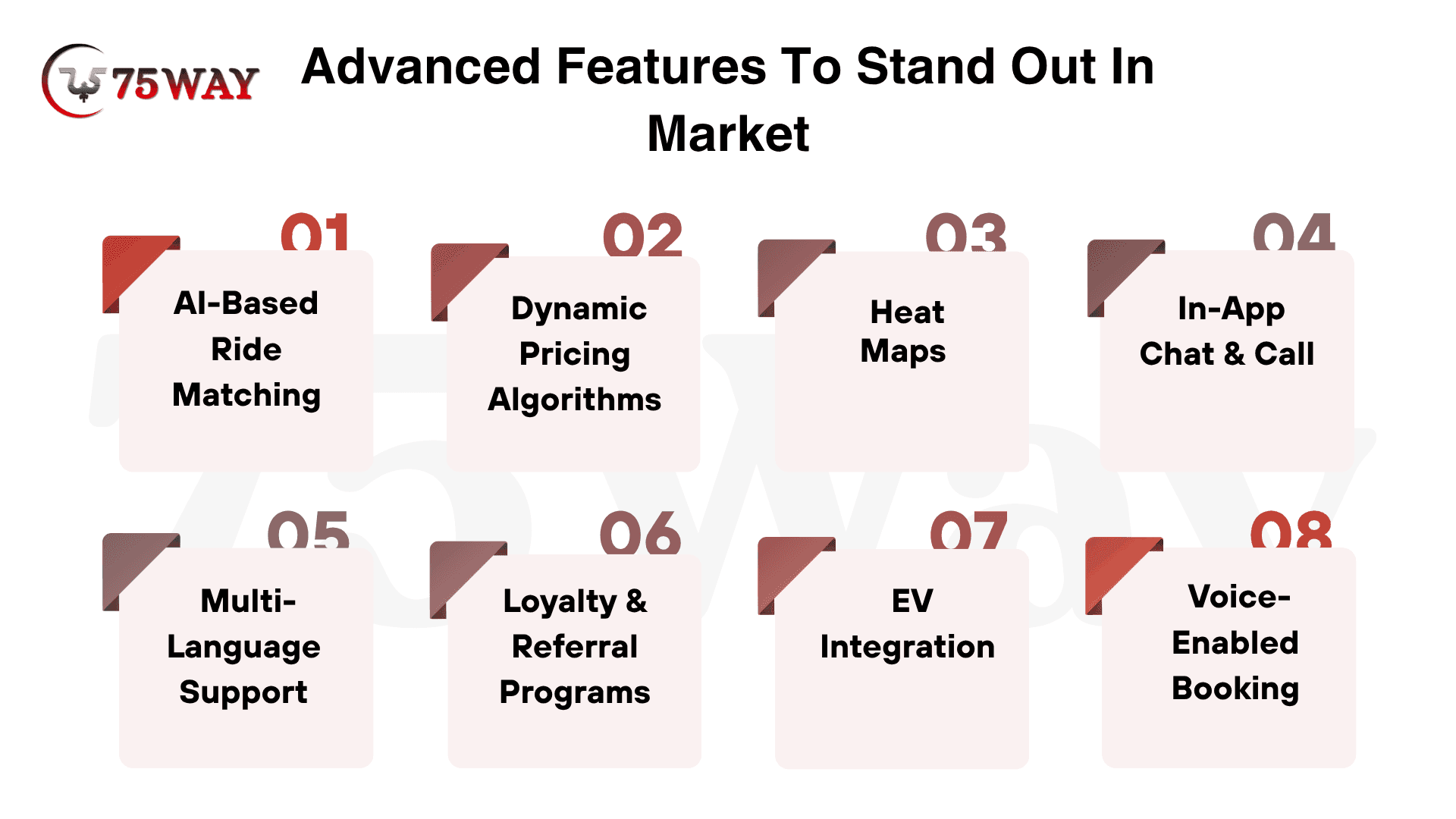
- AI-Based Ride Matching: Assign the nearest and most suitable driver to riders using real-time data, demand patterns, and traffic conditions. It improves efficiency, reduces wait time, and enhances the overall ride experience.
- Dynamic Pricing Algorithms: Adjust fares automatically based on demand, traffic, and time of day. They help maximize revenue for drivers while balancing affordability and passenger availability.
- Heat Maps: Heat maps display high-demand areas in real time, helping drivers move to profitable zones. They increase ride opportunities, reduce idle time, and improve platform efficiency and earnings.
- In-App Chat & Call: In-app chat and call features enable seamless communication between riders and drivers for coordination. They improve clarity, reduce delays, and enhance overall user experience during trips.
- Multi-Language Support: Allow users to interact with the app in their preferred language. It improves accessibility, expands the user base, and enhances usability across diverse regions and audiences.
- Loyalty & Referral Programs: Loyalty and referral programs reward users for repeated bookings and inviting new customers. They increase engagement, improve retention, and drive organic growth for the ride-hailing platform. To launch a referral or loyalty program, you can use dedicated referral tools, such as ReferralCandy.
- EV Integration: Connect users with electric vehicle options for eco-friendly transportation. It supports sustainability, reduces carbon emissions, and promotes green mobility solutions in modern urban environments.
- Voice-Enabled Booking: Allow users to book rides via voice commands. It improves accessibility, speeds up the booking process, and enhances convenience for hands-free ride requests.
Step-by-Step Process to Build an Uber Clone App
Building an Uber clone app requires a structured development approach that moves from idea validation to deployment and continuous optimization. Each step plays a critical role in ensuring scalability, performance, and long-term business success in the competitive ride-hailing market.
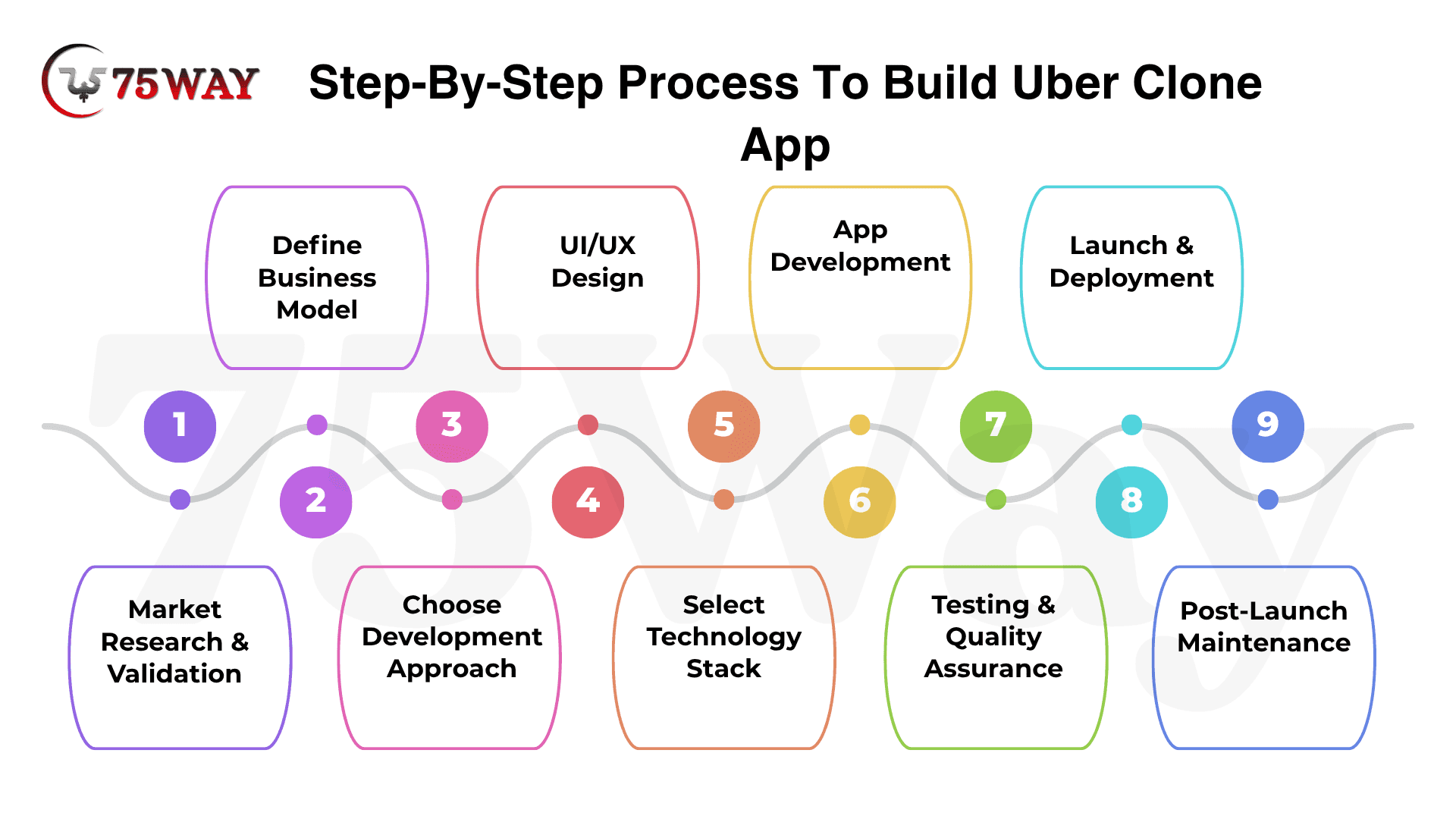
Step 1: Market Research & Validation
In the initial stage of development, it is essential to understand your target audience, analyze competitors, and evaluate regional demand for ride-hailing services. This process helps identify gaps in existing platforms and user needs. Based on these insights, you can define a strong, unique value proposition for your app.
Step 2: Define Business Model
After validating the market and understanding user demand, the next step is to define a clear business model that ensures sustainable revenue generation. This stage builds on earlier research insights and aligns your app strategy with profitability goals.
- Commission per ride
- Subscription plans
- Surge pricing
- Cancellation fees
- Advertising partnerships
Step 3: Choose Development Approach
Following the business model definition, the next step is to select the most suitable development approach based on your budget, timeline, and long-term scalability goals. This stage ensures your Uber clone app is built to support growth, flexibility, and efficient market entry. You have three options:
- Custom Development: Fully tailored solution with scalability and flexibility.
- White-Label Solution: Pre-built app with limited customization.
- MVP Development: Launch quickly with essential features and scale later.
Step 4: UI/UX Design
At this stage, the focus shifts to creating intuitive and user-friendly interfaces for both riders and drivers to ensure seamless interaction with the app. A well-designed UI/UX improves usability, reduces friction, and enhances overall engagement, making the ride-booking experience smooth, fast, and highly efficient for all users.
- Simple navigation
- Fast booking flow
- Clear pricing visibility
- Minimal user friction
Step 5: Select Technology Stack
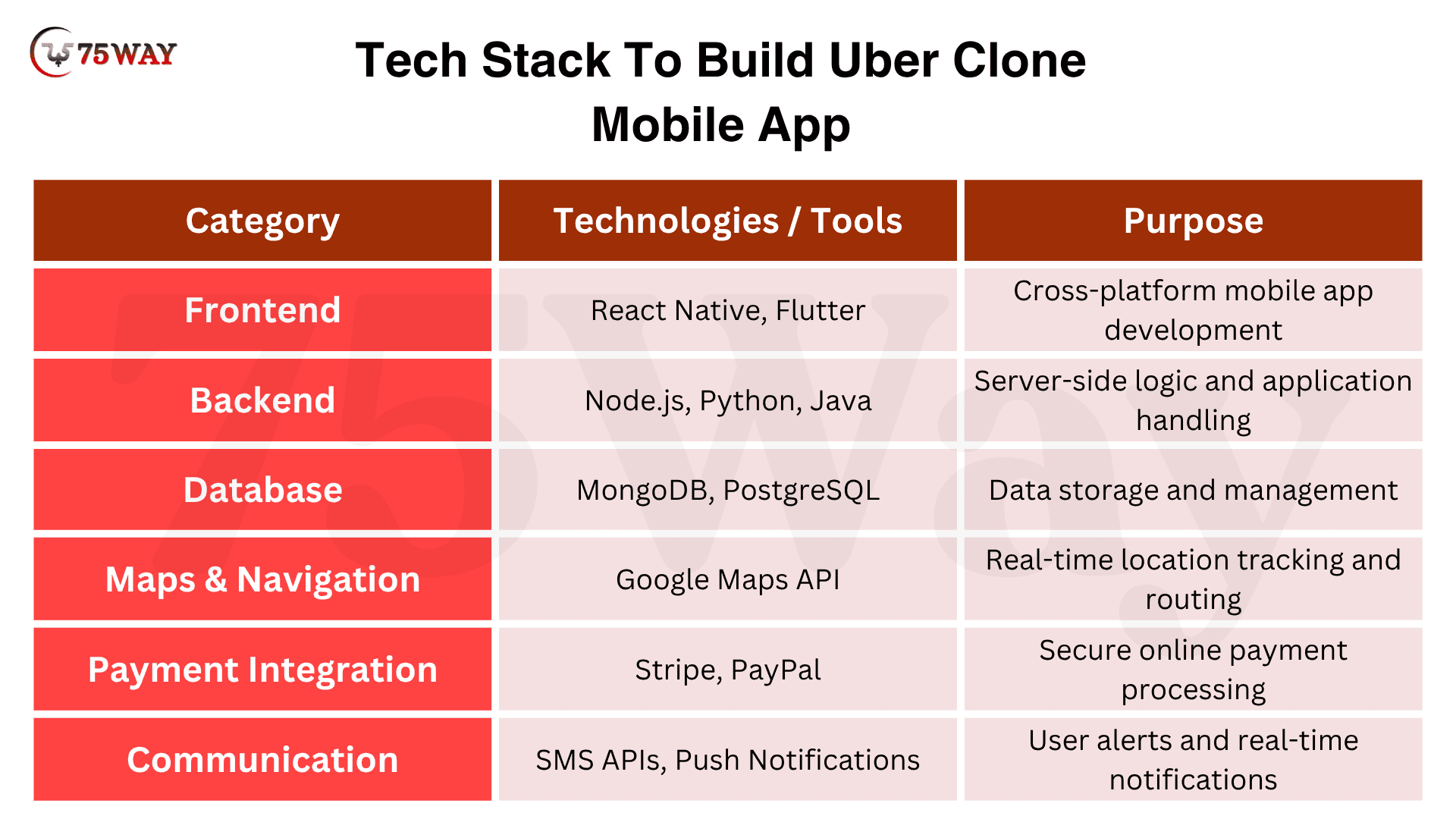
Selecting the right technology stack is crucial for building a scalable and high-performance Uber clone app. It determines app speed, reliability, and future flexibility while supporting real-time features such as tracking, payments, and seamless communication among riders, drivers, and administrators.
- Frontend: Build cross-platform mobile applications using React Native or Flutter to deliver smooth, responsive, and consistent user experiences across both Android and iOS devices efficiently.
- Backend: Develop scalable server-side logic using Node.js, Python, or Java to handle requests, manage data flow, and ensure real-time processing for ride-hailing operations.
- Database: Store and manage structured and unstructured data securely using MongoDB or PostgreSQL, ensuring fast retrieval, scalability, and reliable performance for all application data.
- APIs & Integrations: Connect third-party services like Google Maps for navigation, payment gateways for secure transactions, and SMS or push notifications for real-time updates and user engagement.
Step 6: App Development
App development involves breaking the entire system into smaller functional modules to ensure efficient coding, better organization, and easier scalability. Each module focuses on a specific feature set such as user management, ride booking, payments, tracking, and notifications, allowing developers to build, test, and integrate the application systematically and effectively.
- Authentication system
- Ride booking engine
- Payment integration
- Real-time tracking
- Notification system
Step 7: Testing & Quality Assurance
It is a critical phase in Uber clone app development that ensures the application functions smoothly, securely, and without errors before launch. This stage involves identifying bugs, checking performance, validating features, and ensuring all user interactions work as expected across different devices and platforms for a seamless experience.
- Functional testing
- Performance testing
- Security testing
- Usability testing
Step 8: Launch & Deployment
It is the final stage of Uber clone app development, where the application is made available to users across different platforms. This step ensures that the app is fully tested, optimized, and ready for real-world usage with stable performance and secure functionality.
The app is deployed on major platforms like the App Store and Play Store while ensuring strict compliance with their guidelines and regional regulations. Proper submission, review approval, and configuration are essential to guarantee smooth availability and uninterrupted access for end users.
Step 9: Post-Launch Maintenance
After the app is launched, continuous improvement becomes essential to ensure long-term success and user satisfaction. This stage focuses on monitoring performance, fixing bugs, and enhancing features based on real user feedback and market trends to keep the platform competitive and reliable.
Ongoing maintenance includes regular updates, security enhancements, performance optimization, and the addition of new features. It also involves analyzing user behavior, resolving technical issues quickly, and ensuring the app remains scalable, stable, and aligned with evolving business and customer needs.
What’s The Cost To Build An Uber Clone App?
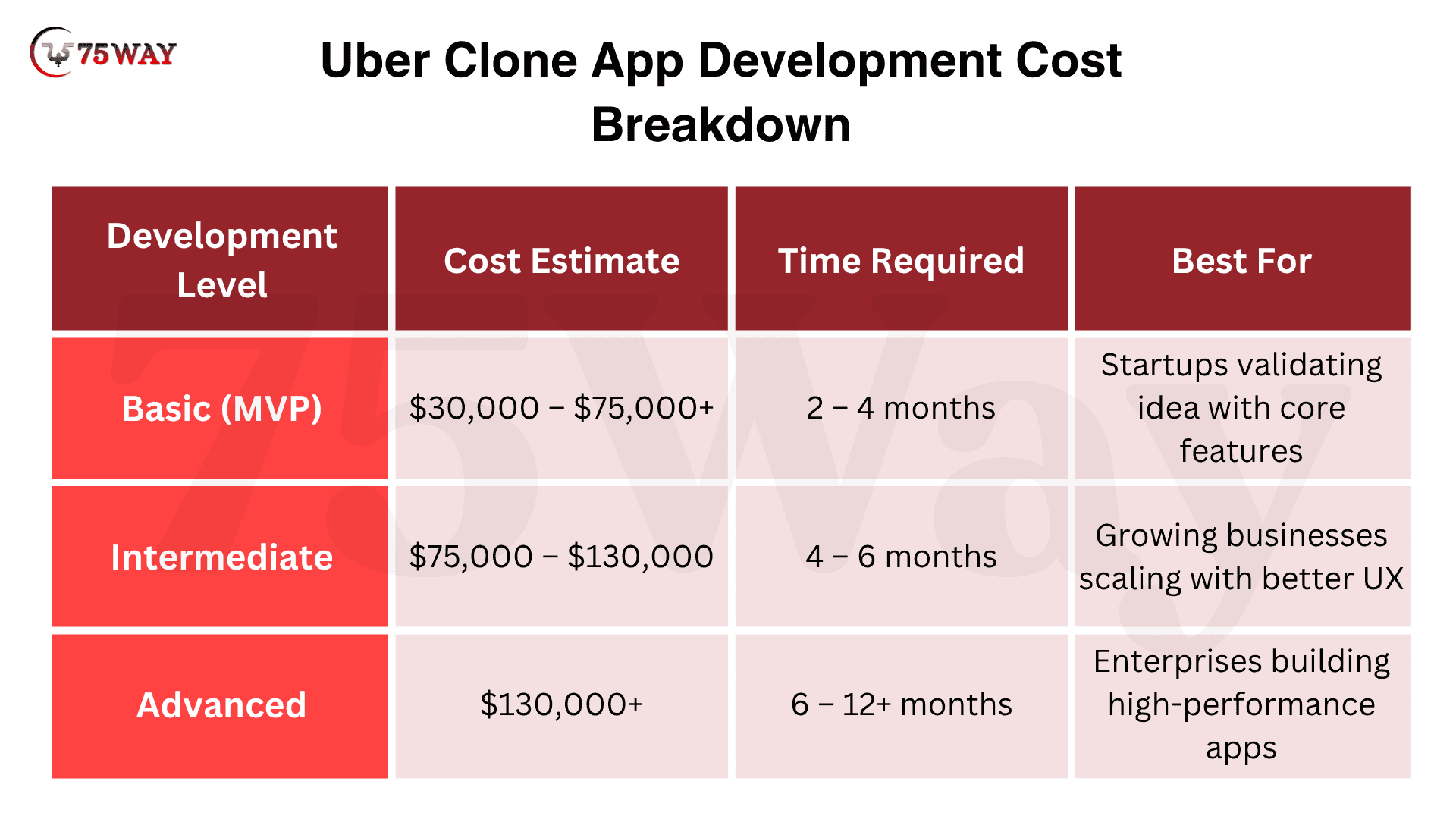
The cost to build an Uber clone app typically depends on the app’s complexity, features, technology stack, and development approach. On average, most ride-hailing apps fall within a broad pricing range because of real-time tracking, GPS integration, payment systems, and multi-panel architecture requirements.
Generally, a basic MVP version costs around $30,000 – $75,000, a mid-level application ranges between $75,000 – $130,000, and an advanced enterprise-grade solution can exceed $130,000+, especially when it includes AI features, dynamic pricing, and advanced security systems.
These costs vary based on factors such as UI/UX design complexity, number of platforms (Android, iOS, web), backend scalability, third-party integrations, and ongoing maintenance requirements. Additional expenses, such as cloud hosting, APIs, and post-launch updates, can also significantly increase the overall investment needed to successfully launch and scale the platform.
Uber Clone App Development Cost Influencing Factors
The cost of building an Uber clone app is influenced by multiple technical and business factors that determine overall investment and development complexity. Understanding these factors helps businesses plan budgets effectively, prioritize features, and choose the right development approach to ensure a scalable and successful ride-hailing platform.
- Features & Complexity: The overall cost increases as more advanced features are added, since complex functionalities require additional development time, testing, and technical expertise for smooth implementation.
- Platform (iOS, Android, Web): Building for multiple platforms raises development effort because each system requires separate optimization, design adjustments, and thorough testing to ensure consistent performance and user experience.
- Development Team Size: Project cost varies depending on team size, as larger teams speed up development but increase total investment, coordination effort, and management requirements during execution.
- Third-Party Integrations: Integration of external services like payment gateways, maps, and notifications adds to cost due to setup complexity, API usage, and ongoing maintenance requirements.
- Maintenance & Updates: Long-term expenses include regular updates, bug fixes, performance improvements, and security enhancements to keep the application stable, secure, and aligned with user expectations.
Challenges In Building Uber Clone App
Building an Uber clone app comes with several technical and operational challenges that must be addressed to ensure smooth performance and scalability. From managing real-time data to handling high user demand, each aspect requires careful planning, strong architecture, and continuous optimization to deliver a reliable ride-hailing experience.
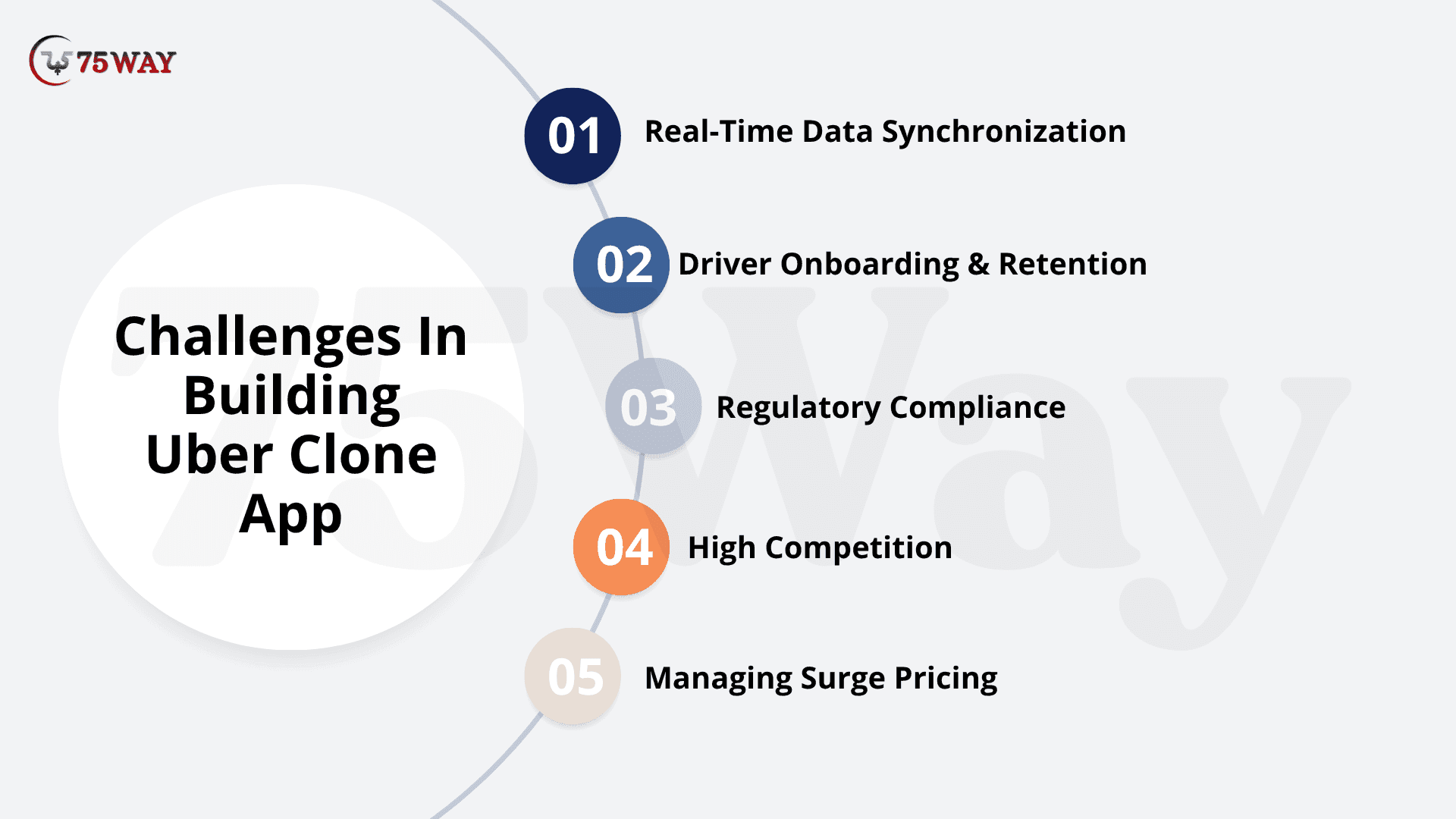
- Real-Time Data Synchronization
Keeping riders, drivers, and servers perfectly synced in real time is difficult when demand increases, and multiple requests happen simultaneously. This is solved by using low-latency backend systems, WebSockets, and real-time data streaming that ensure instant updates across the platform.
- Driver Onboarding & Retention
Attracting drivers and keeping them active is challenging due to competition, verification delays, and inconsistent engagement levels. This is achieved through simplified onboarding flows, faster verification systems, and incentive-based reward programs that encourage long-term participation.
- Regulatory Compliance
Different regions have unique transportation laws, safety standards, and licensing requirements, making compliance complex to manage. This is achieved by using region-specific configurations and continuously updating platform policies to comply with legal and safety regulations.
- High Competition
The ride-hailing market is highly competitive, making it difficult for new platforms to gain visibility and users quickly. This is achieved through strong differentiation strategies, improved user experience, and competitive pricing models to attract and retain customers.
- Managing Surge Pricing
Balancing fare increases during peak demand without frustrating users is a sensitive and complex challenge. This is solved by using AI-powered pricing algorithms that dynamically adjust fares based on demand, traffic conditions, and driver availability.
Monetization Strategies To Generate Revenue From Uber Clone App
Monetization strategies are crucial to turning an Uber clone app into a profitable business. By implementing multiple revenue streams, platform owners can ensure consistent earnings while balancing affordability for users and fair incentives for drivers, creating a sustainable and scalable ride-hailing ecosystem.
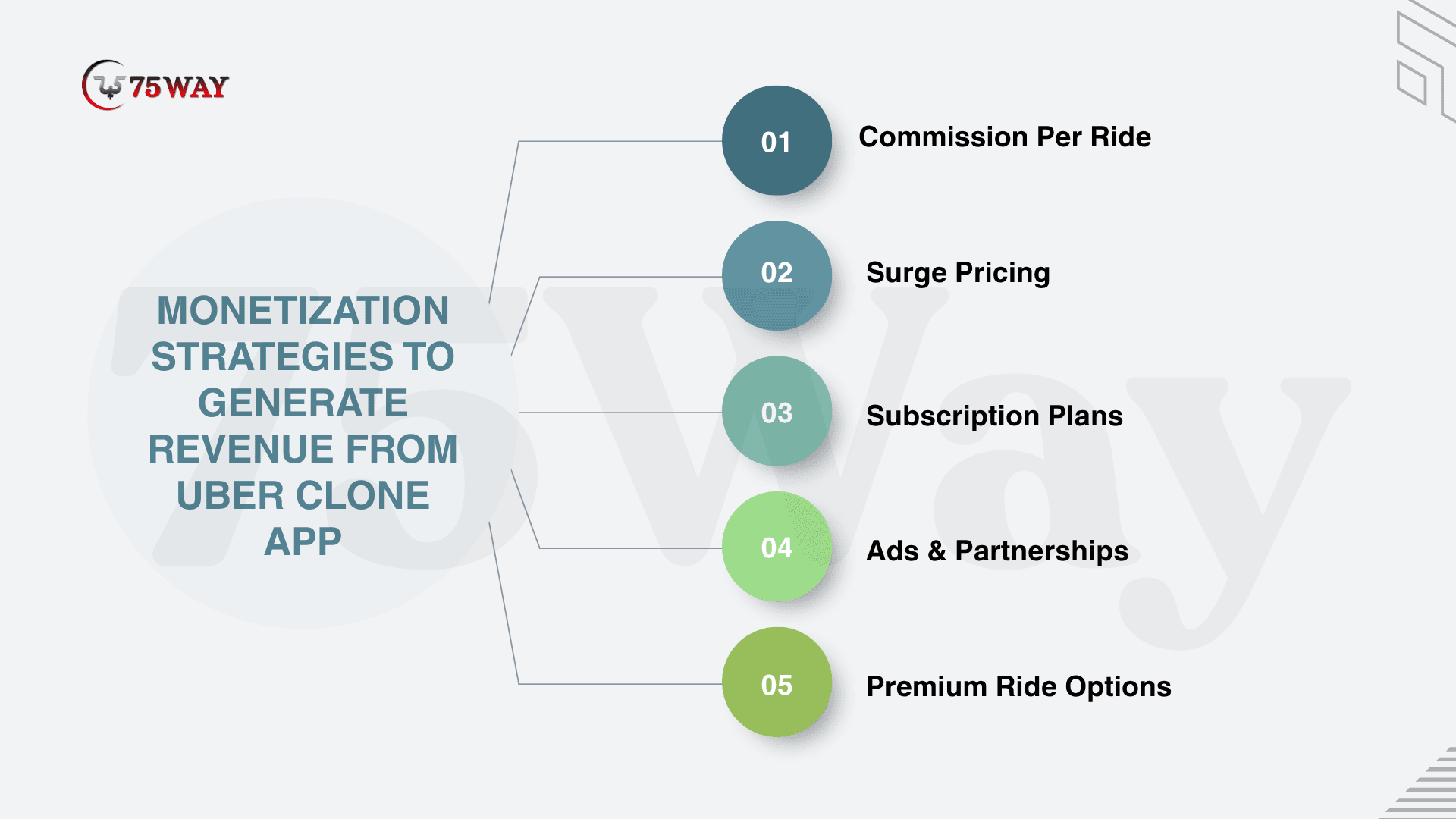
- Commission Per Ride: Platform earns revenue by charging a fixed percentage on every completed ride transaction between rider and driver.
- Surge Pricing: Fares increase dynamically during high-demand periods, helping balance supply and demand while boosting platform earnings.
- Subscription Plans: Users or drivers pay monthly or annual fees for benefits such as reduced commissions and priority access to services.
- Ads & Partnerships: Businesses promote services within the app, generating additional revenue through targeted advertisements and strategic brand collaborations.
- Premium Ride Options: Higher-end vehicles and luxury services charge higher fares, offering enhanced comfort and higher profit margins.
Best Practices To Develop An App Like Uber
Developing a successful ride-hailing app requires a strategic approach that focuses on performance, scalability, and user satisfaction. Following industry best practices ensures smoother development, faster adoption, and long-term business growth in a highly competitive mobility market where user experience plays a critical role in success.
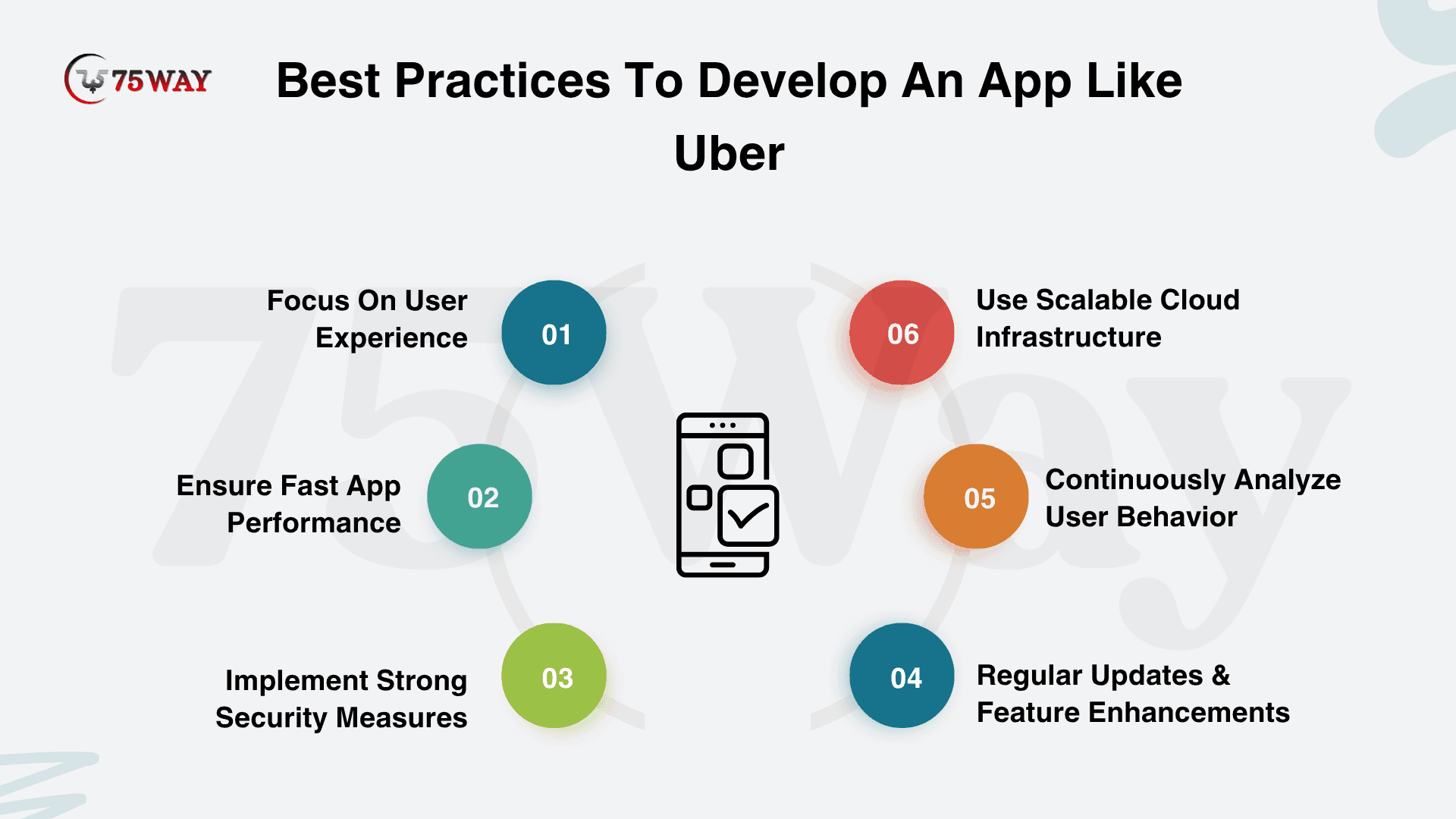
Focus On User Experience: Smooth navigation, simple design, and intuitive interfaces improve user satisfaction, making ride booking faster, easier, and more engaging across all app sections.
- Ensure Fast App Performance: Quick response times and optimized loading speed reduce delays, ensuring seamless booking, tracking, and payment experiences for riders and drivers.
- Implement Strong Security Measures: Data encryption, secure authentication, and fraud prevention systems protect user information and build trust across the ride-hailing platform ecosystem.
- Use Scalable Cloud Infrastructure: Cloud-based systems handle increasing traffic efficiently, ensuring stable performance, reliability, and flexibility during peak usage and business expansion phases.
- Continuously Analyze User Behavior: Monitoring user activity helps identify patterns, improve services, and optimize features for better engagement and retention across the platform.
- Regular Updates & Feature Enhancements: Frequent updates introduce new features, fix bugs, and improve performance, keeping the application competitive and aligned with market expectations.
Future Trends To Build Ride-Hailing Apps Like Uber
The ride-hailing industry is rapidly evolving with new technologies that are reshaping how users book, travel, and experience mobility services. Emerging innovations like AI, automation, and electric mobility are setting new standards, making ride-hailing apps smarter, more efficient, and highly user-centric for the future.
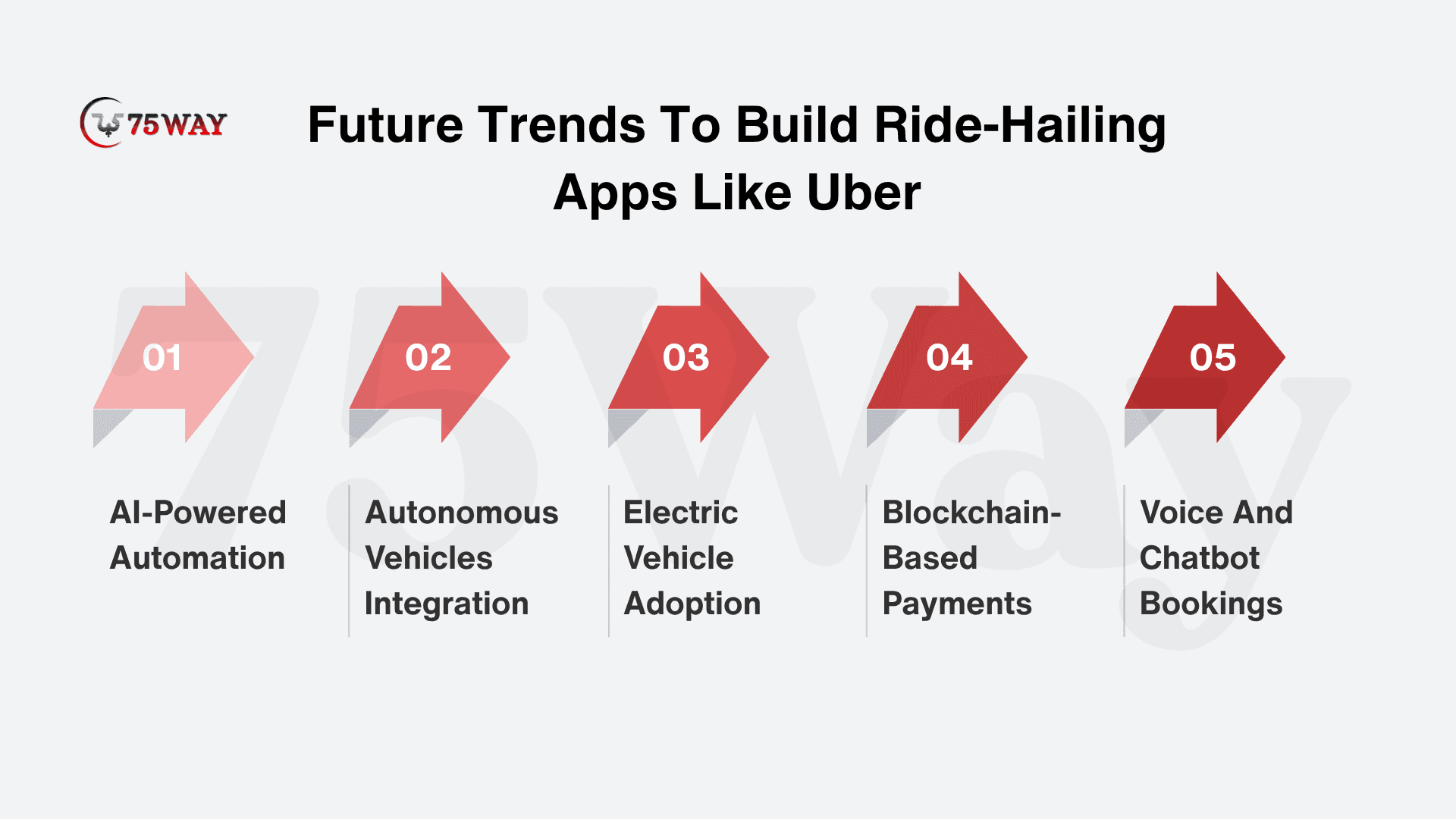
- AI-Powered Automation: AI optimizes ride matching, pricing, and routing processes, improving efficiency, reducing wait times, and enhancing overall user experience across the platform.
- Autonomous Vehicles Integration: Self-driving technology reduces dependency on human drivers, enabling safer, cost-effective, and highly efficient transportation systems in the future mobility ecosystem.
- Electric Vehicle Adoption: EV integration promotes sustainable transportation, reduces carbon emissions, and lowers operational costs while supporting eco-friendly urban mobility solutions globally.
- Blockchain-Based Payments: Blockchain ensures secure, transparent, and tamper-proof transactions, improving trust, reducing fraud risk, and enabling faster cross-border payment processing.
- Voice and Chatbot Bookings: Voice assistants and chatbots simplify ride booking, offering hands-free convenience and faster user interaction through automated conversational interfaces.
Why Choose a Professional Development Company?
Building a scalable ride-hailing platform requires deep technical expertise, industry knowledge, and a strategic approach. Our professional team helps you:
- Reduce development time
- Ensure scalability
- Implement advanced features
- Maintain security standards
- Provide long-term support
Conclusion
Building an Uber clone app is a powerful opportunity to enter the rapidly growing on-demand mobility industry. With the right strategy, features, and development approach, you can create a scalable platform that delivers exceptional user experience and drives long-term revenue.
Success depends on understanding your market, choosing the right technology, and continuously improving your platform based on user needs. If you're planning to launch a high-performance ride-hailing platform, partnering with an experienced Uber clone app development company can give you a competitive edge.
Frequently Asked Questions (FAQs)
What Makes A Ride-Hailing App Successful In Competitive Markets?A successful ride-hailing app focuses on user convenience, fast booking, reliable driver availability, transparent pricing, and strong safety features. Advanced analytics, smooth UI, and efficient customer support further improve retention and help the platform scale effectively in competitive transportation ecosystems.
How Can Ride-Hailing Platforms Improve User Retention Rates?User retention improves through loyalty programs, referral rewards, personalized offers, seamless ride experience, and consistent service quality. Regular updates, faster app performance, and responsive support systems also play a crucial role in keeping users engaged and encouraging repeated bookings over time.
What Role Does Artificial Intelligence Play In Modern Mobility Apps?Artificial intelligence helps optimize route planning, predict demand, match drivers efficiently, and improve pricing strategies. It also enhances safety through behavior analysis and supports better decision-making using real-time data, ultimately improving operational efficiency and customer satisfaction across the platform.
How Do Ride-Hailing Apps Ensure Passenger And Driver Safety?Safety is ensured through driver verification, real-time GPS tracking, SOS features, ride sharing, and in-app communication. Background checks, trip monitoring, and emergency response systems further enhance trust, making the platform safer for both passengers and drivers during every journey.
What Challenges Do New Mobility Startups Commonly Face?New mobility startups often face challenges like driver acquisition, regulatory compliance, high competition, and operational scalability. Maintaining service quality while expanding geographically and managing dynamic pricing effectively are additional hurdles that require strategic planning and strong technological support systems.
How Important Is Scalability In A Ride-Hailing Platform?Scalability is critical because ride-hailing platforms experience rapid growth in users and drivers. A scalable architecture ensures smooth performance, supports high traffic loads, enables feature expansion, and prevents system crashes, allowing the business to grow without compromising user experience or reliability.