Summary
Development of P2P payment apps like Cash App enables instant money transfers, digital wallets, and secure financial transactions. This guide explains the P2P payment app development architecture of Cash App, essential features, cost structure, monetization models, security compliance, and technology stack. It also explores fintech trends driving demand for scalable digital payment platforms across global markets in 2026.
Quick Overview
- P2P apps enable instant and secure digital money transfers globally
- Cash App-like platforms require strong security and compliance systems
- Multi-layer architecture supports wallet, payments, and transactions
- Development cost is $ 40,000-$400,000+, based on features, scale, and integrations
- Monetization includes fees, subscriptions, and financial services revenue
- P2P payment app market projected to reach $16.4 trillion by 2034.
Millions of users rely on mobile payment platforms for everyday financial activities such as splitting bills, transferring money, paying merchants, and even investing in stocks or cryptocurrencies. This shift toward cashless ecosystems has created massive opportunities for startups and enterprises aiming to build scalable fintech mobile apps.
Cash App, in particular, has become a leading example of a successful P2P payment ecosystem. Its ability to combine payments, e-wallet services, investments, and financial tools into a single platform has positioned it as a dominant player in the fintech market.
In 2026, building a Cash App-like application is not just about enabling money transfers. It requires a secure and compliant financial infrastructure that integrates advanced features such as fraud detection, real-time processing, banking APIs, and user-centric design.
This guide explains the complete development process of a P2P payment app like Cash App, including features, architecture, cost breakdown, technology stack, monetization strategies, and industry trends shaping the future of fintech.
What Is A P2P Payment App Like Cash App?
A P2P (peer-to-peer) payment app like Cash App is a digital financial platform that enables users to send and receive money directly between individuals without needing traditional banking intermediaries. These apps use mobile technology and secure payment infrastructure to make instant transfers simple, fast, and accessible.
Core capabilities include instant money transfers, digital wallet management, bank account linking, transaction history tracking, and secure authentication systems. Modern P2P platforms also support additional features such as QR-based payments, request money options, and fraud protection mechanisms to ensure safe financial transactions.
Advanced apps like Cash App go beyond basic transfers by offering integrated financial services such as savings accounts, debit cards, stock trading, Bitcoin and cryptocurrency features, and investment tools. This evolution transforms simple payment apps into full-fledged digital financial ecosystems.
P2P Payment App Market Size & Revenue Insights
The global shift toward digital payments continues to accelerate due to convenience, smartphone penetration, and financial inclusion. Key industry insights:
- The global P2P payment market is projected to grow from $4.28 trillion in 2026 to nearly $18.44 trillion by 2035, at a CAGR of 17.65%.
- Cash App has surpassed millions of installs globally, processing a significant portion of online peer-to-peer transactions.
- Over 52% of users prefer first-party financial apps, while only 27% rely on aggregator-based systems.
- Over 84% of consumers in the U.S. use at least one peer-to-peer (P2P) payment app.
- Mobile P2P transaction value in the U.S. has surpassed $2 trillion.
- P2P payments have significantly reduced cash usage, with cash-based transfers dropping from 75% to below 42%.
- The B2B segment holds the largest share of the P2P payment market at 62%.
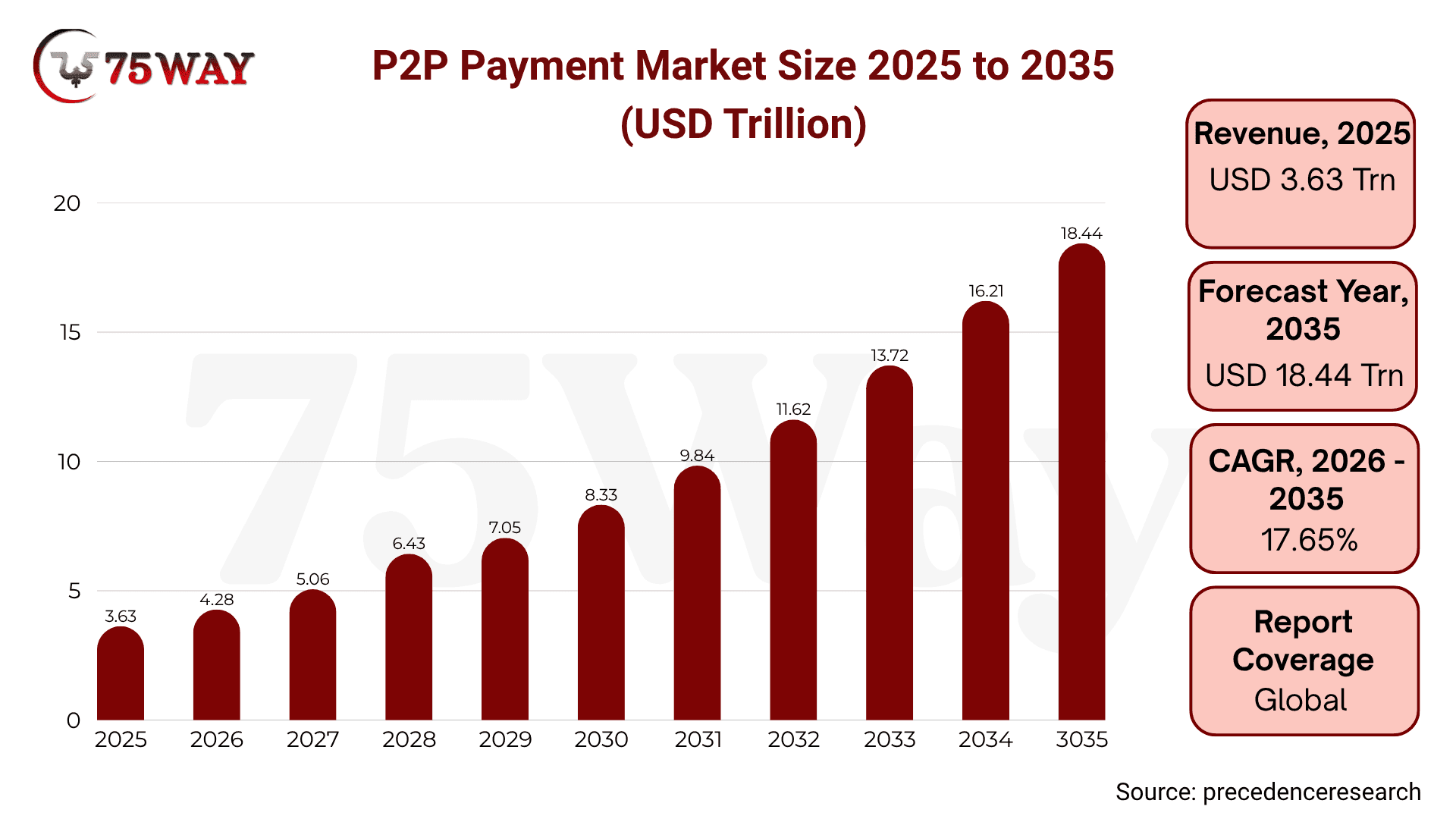
- More than 75% of Americans and over 5.3 billion people worldwide use digital wallets and payment apps such as Cash App.
- The global peer-to-peer (P2P) payment app market is projected to grow from $3.84 trillion in 2026 to $16.4 trillion by 2034, registering a CAGR of 19.9%.
- The peer-to-peer payment industry continues to expand at over 25% annually, driven by real-time account-to-account (A2A) settlements.
Development Process for P2P Payment App Like Cash App
Building a P2P payment app like Cash App requires a structured development approach that combines financial compliance, secure architecture, and scalable technology systems. Each stage plays a critical role in ensuring the platform is reliable, legally compliant, and capable of handling high-volume transactions. The process focuses on defining the business model, building secure infrastructure, integrating banking systems, and launching a scalable fintech product.
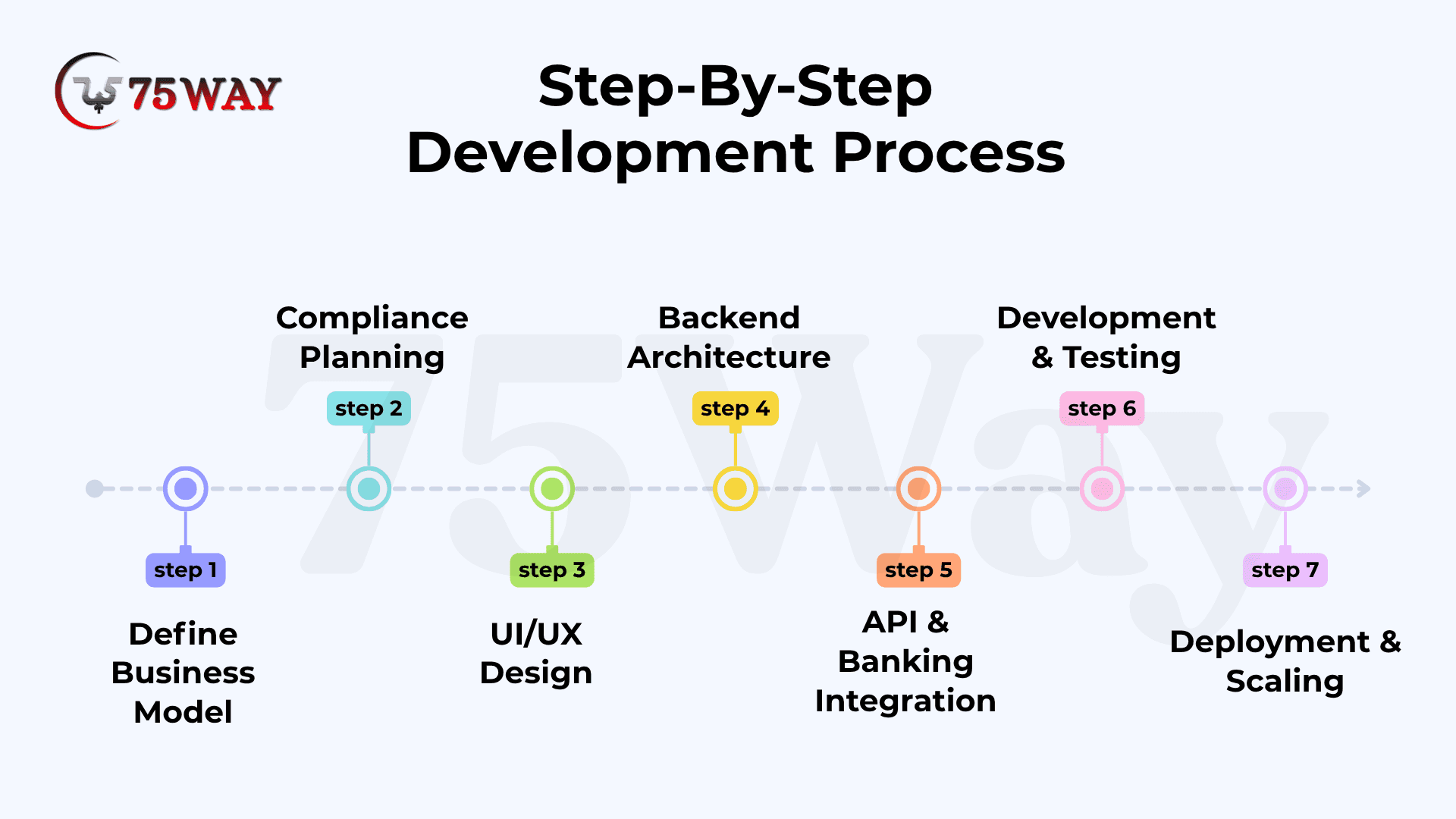
Step 1: Define Business Model
Defining the business model is the foundation of building a successful P2P payment application. It determines the scope of features, regulatory requirements, revenue strategy, and long-term scalability. A clear model also aligns product development with user expectations and market positioning in the competitive fintech landscape.
Decide whether your app will focus on:
- P2P Transfers Only: This model focuses on simple, fast money transfers between users and is ideal for MVP-stage products targeting quick adoption.
- Wallet-Based System: It expands functionality by allowing users to store funds, manage balances, and perform repeated transactions.
- Full Fintech Ecosystem: This modelintegrates advanced services such as savings, cards, investments, and crypto features, making it suitable for long-term scalable financial platforms.
Choosing the right direction early improves compliance planning, reduces development complexity, and ensures stronger product-market fit for sustainable growth.
Step 2: Build Fintech Compliance Framework
Compliance planning ensures a P2P payment app operates legally, securely, and builds trust with users and financial institutions. It also reduces regulatory risks while enabling smooth payment processing and long-term scalability across markets.
Fintech apps require regulatory frameworks such as:
- KYC (Know Your Customer): Verify user identity through official documents, biometric checks, and authentication processes to prevent fraud and unauthorized access.
- AML (Anti-Money Laundering): Monitor financial transactions continuously to detect suspicious activities, prevent illegal fund transfers, and ensure regulatory compliance standards.
- PCI DSS Compliance: Secure payment card data using encryption, secure networks, and strict security protocols during storage and transmission processes.
Step 3: Create Intuitive UI/UX Design
UI/UX design plays a critical role in shaping user trust, engagement, and overall satisfaction in a P2P payment application. A well-structured interface ensures users can complete financial actions quickly without confusion or unnecessary steps. The design must prioritize clarity, speed, and accessibility across all user journeys.
Design intuitive interfaces focused on:
- Fast Transactions: Optimize screens and workflows to enable instant payments, quick confirmations, and reduced processing time for a seamless user experience.
- Simple Onboarding: Create easy registration flows using minimal input fields, social login options, and guided steps for faster user activation.
- Minimal User Friction: Remove unnecessary steps and distractions, ensuring smooth navigation and effortless completion of all financial tasks.
Step 4: Build Scalable Backend Architecture
Backend architecture forms the core foundation of a P2P payment application, ensuring secure data handling, fast processing, and system reliability. A scalable backend is essential to manage high transaction volumes while maintaining performance and security standards across the platform.
Build scalable backend systems using microservices to handle transactions, authentication, and APIs. This approach allows independent deployment of services, improves system flexibility, and ensures better fault isolation during high-load financial operations. It also supports seamless integration with third-party banking systems and payment gateways for uninterrupted money transfers.
Step 5: Integrate Banking APIs And Systems
API and banking integration enables seamless financial connectivity between users, banks, and payment networks. It ensures real-time transactions, secure data exchange, and smooth interoperability across financial ecosystems. Strong integration is essential for enabling deposits, withdrawals, and instant money transfers in a P2P payment application.
- Payment Gateway Integration: Connect secure payment gateways to process transactions, handle card payments, and enable fast digital money transfers.
- Banking API Connectivity: Integrate banking APIs to support direct account linking, balance checks, and fund transfers in real time.
- Financial Network Integration: Connect with payment networks like ACH or UPI for seamless cross-platform money movement.
- Secure Data Exchange: Implement encrypted communication protocols to ensure safe transmission of sensitive financial and user information.
Step 6: Build And Test Secure Applications
Development ensures the P2P payment platform is functional, secure, and ready for real-world financial operations. This stage focuses on building mobile applications, backend systems, and validating system performance under different usage conditions. Rigorous testing helps eliminate vulnerabilities and ensures a smooth user experience across devices.
Develop mobile apps (iOS & Android), backend systems, and conduct rigorous security testing. This includes building responsive interfaces for users, implementing scalable backend services for transaction processing, and performing security audits to detect potential threats. Functional testing, performance testing, and penetration testing ensure the system can handle financial data securely while maintaining reliability and speed.
Step 7: Deploy And Scale Cloud Infrastructure
A successful deployment strategy ensures the P2P payment application performs reliably in real-world environments while supporting rapid user growth. This stage transitions the system from development to a live production setup, focusing on stability, security, and high availability for financial operations.
Launch the app with cloud infrastructure for scalability and uptime reliability. Cloud environments provide elastic computing power, load balancing, and fault tolerance to handle increasing transaction volumes efficiently. Continuous monitoring, automated scaling, and redundancy systems maintain uninterrupted service, while structured deployment pipelines support smooth updates and long-term platform expansion without downtime risks.
Major Features For Building A Cash App-Like Platform
A P2P payment application requires a strong combination of security, speed, and user-friendly financial tools to enable seamless digital transactions. The following capabilities ensure smooth onboarding, secure money movement, and real-time financial visibility for users across devices.
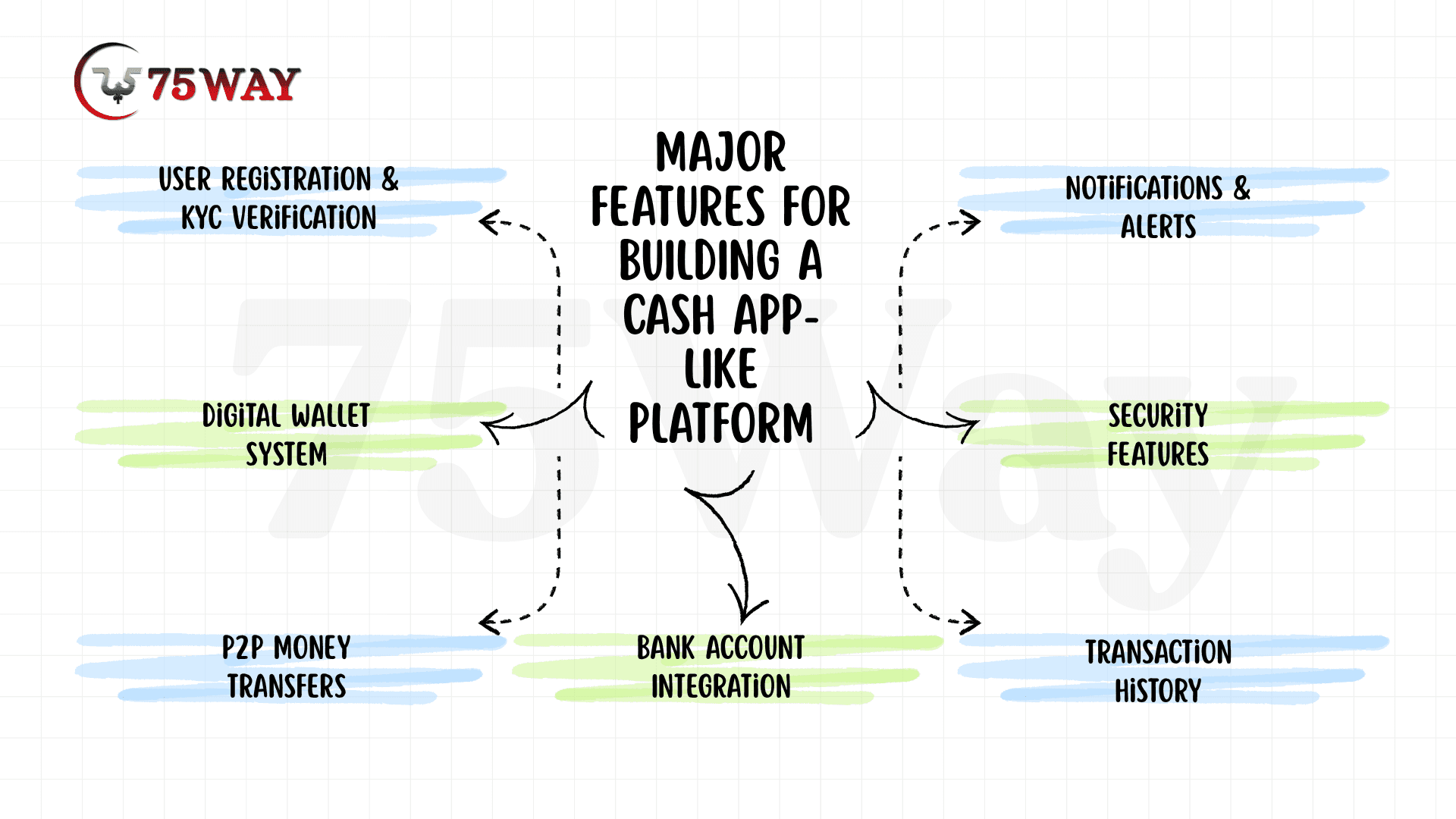
- User Registration & KYC Verification: Secure onboarding using phone, email, and identity verification ensures compliance with financial regulations and builds user trust through validated digital identity systems.
- Digital Wallet System: Enables users to store, receive, and manage funds digitally while maintaining real-time balance updates and transaction readiness.
- P2P Money Transfers: Allows instant money transfers between users using mobile numbers, QR codes, or usernames with fast settlement processing.
- Bank Account Integration: Connects user bank accounts and debit cards to enable seamless deposits, withdrawals, and fund transfers.
- Transaction History: Provides a detailed record of all financial activities, including payments, transfers, and withdrawals, for transparency and tracking.
- Security Features: Protects user data and transactions using encryption, multi-factor authentication, fraud detection, and secure payment protocols.
- Notifications & Alerts: Sends real-time updates for transactions, account activity, and payment confirmations to keep users informed.
Technology Stack To Build A Cash App Clone
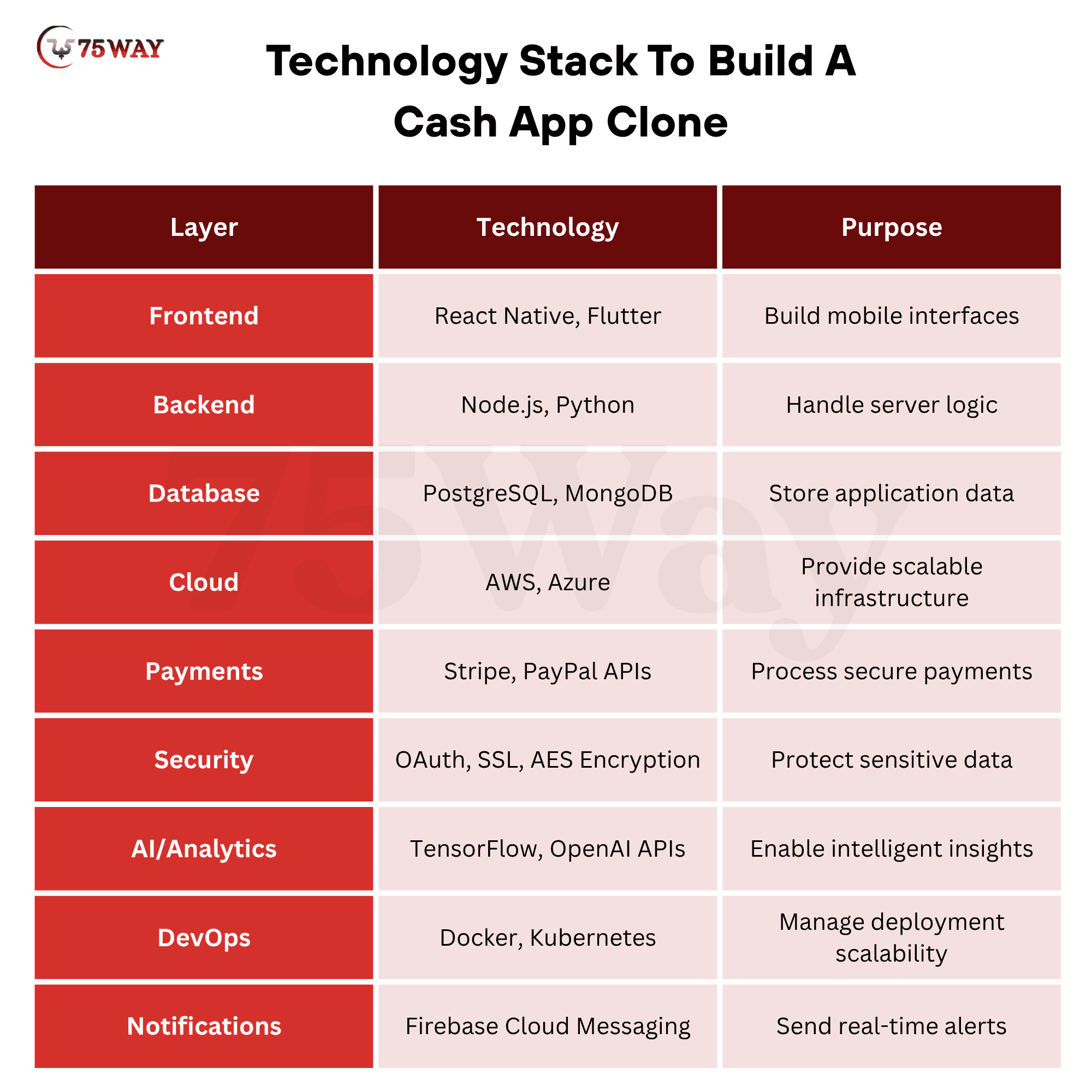
A robust technology stack is essential for building a secure, scalable, and high-performance P2P payment application like Cash App. Each layer of the system plays a specific role in ensuring a smooth user experience, secure transactions, and real-time financial operations across platforms.
- Frontend (React Native, Flutter): Used to build cross-platform mobile applications for iOS and Android with smooth performance and a consistent user experience across devices.
- Backend (Node.js, Python): Handles server-side logic, API communication, authentication, and secure processing of financial transactions in real time.
- Database (PostgreSQL, MongoDB): Stores user data, wallet balances, and transaction history with high reliability and scalable data management.
- Cloud Infrastructure (AWS, Azure): Provides scalable hosting, load balancing, and high availability to ensure uninterrupted application performance globally.
- Payment Integration (Stripe, PayPal APIs): Enables secure payment processing, bank transfers, and seamless digital wallet transactions across platforms.
- Security (OAuth, SSL, AES Encryption): Protects user authentication, encrypts sensitive financial data, and ensures secure communication between systems.
- AI & Analytics (TensorFlow, OpenAI APIs): Supports fraud detection, predictive analysis, and personalized insights to improve financial decision-making and security monitoring.
Cost To Build A P2P Payment App Like Cash App
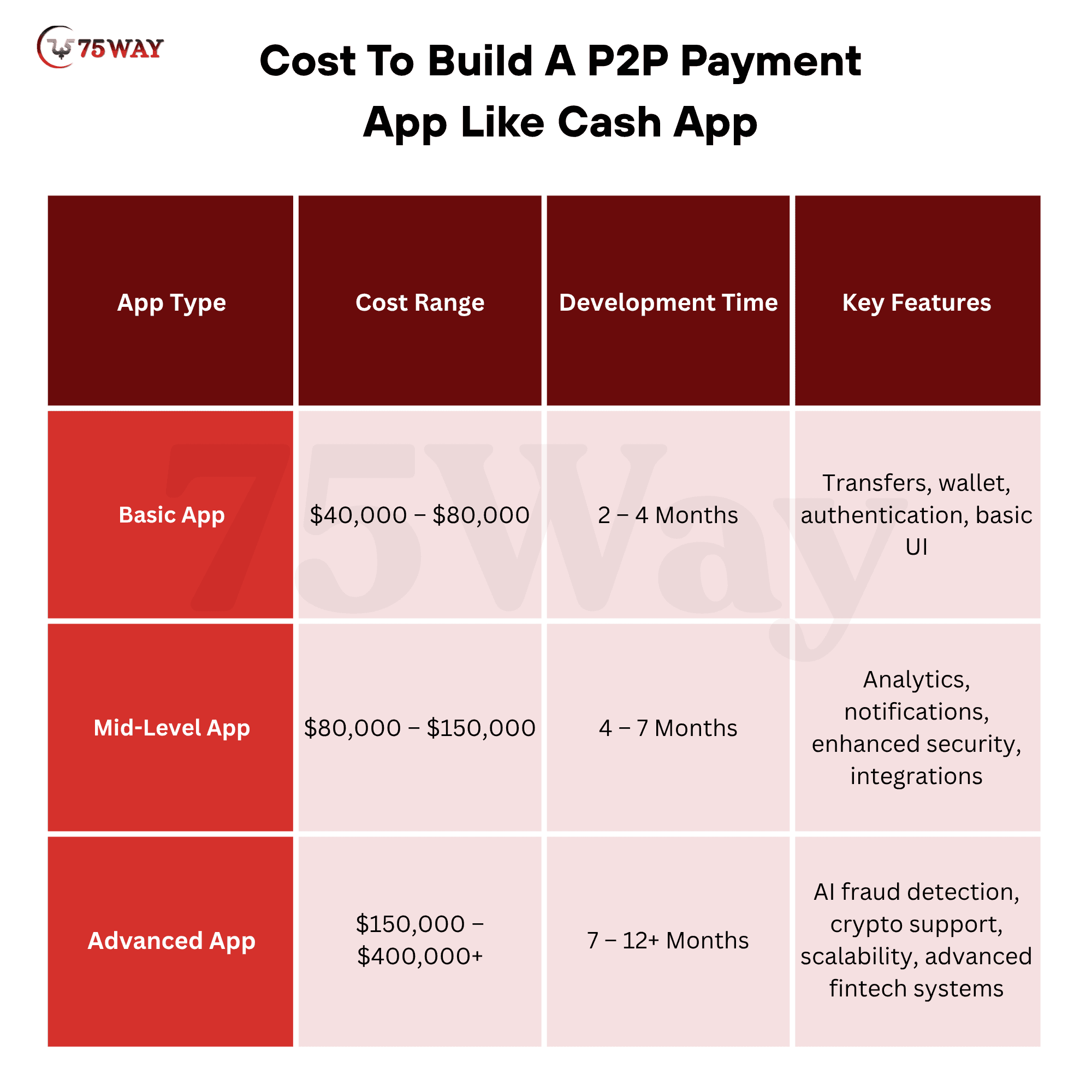
The cost of developing a P2P payment application like Cash App depends on multiple factors such as feature complexity, security requirements, and scalability needs. On average, the cost to build a P2P payment app like Cash App ranges from $40,000 to $400,000+, depending on the level of customization, infrastructure scale, and advanced fintech capabilities required.
Basic App: $40,000 – $80,000
Core features like transfers, wallet, and authentication.
Mid-Level App: $80,000 – $150,000
Includes analytics, notifications, and enhanced security.
Advanced App: $150,000 – $400,000+
Includes AI fraud detection, crypto, and advanced scalability.
Cost To Build Cash App-Like Platform Based On Development Stages
- UI/UX Design: $5,000 – $15,000
- App Development: $30,000 – $80,000
- Backend System: $10,000 – $30,000
- API Integrations: $5,000 – $15,000
- AI Features: $10,000+
Cost of Cash App Clone development Based on Regions
USA: $100–$250/hour
Europe: $50–$100/hour
India: $25–$70/hour
How To Generate Revenue From Fintech App-Like Cash App?
Monetization is a core part of building a sustainable P2P payment platform that goes beyond simple money transfers. It enables long-term revenue generation while maintaining user trust, platform scalability, and competitive positioning in the fintech market.
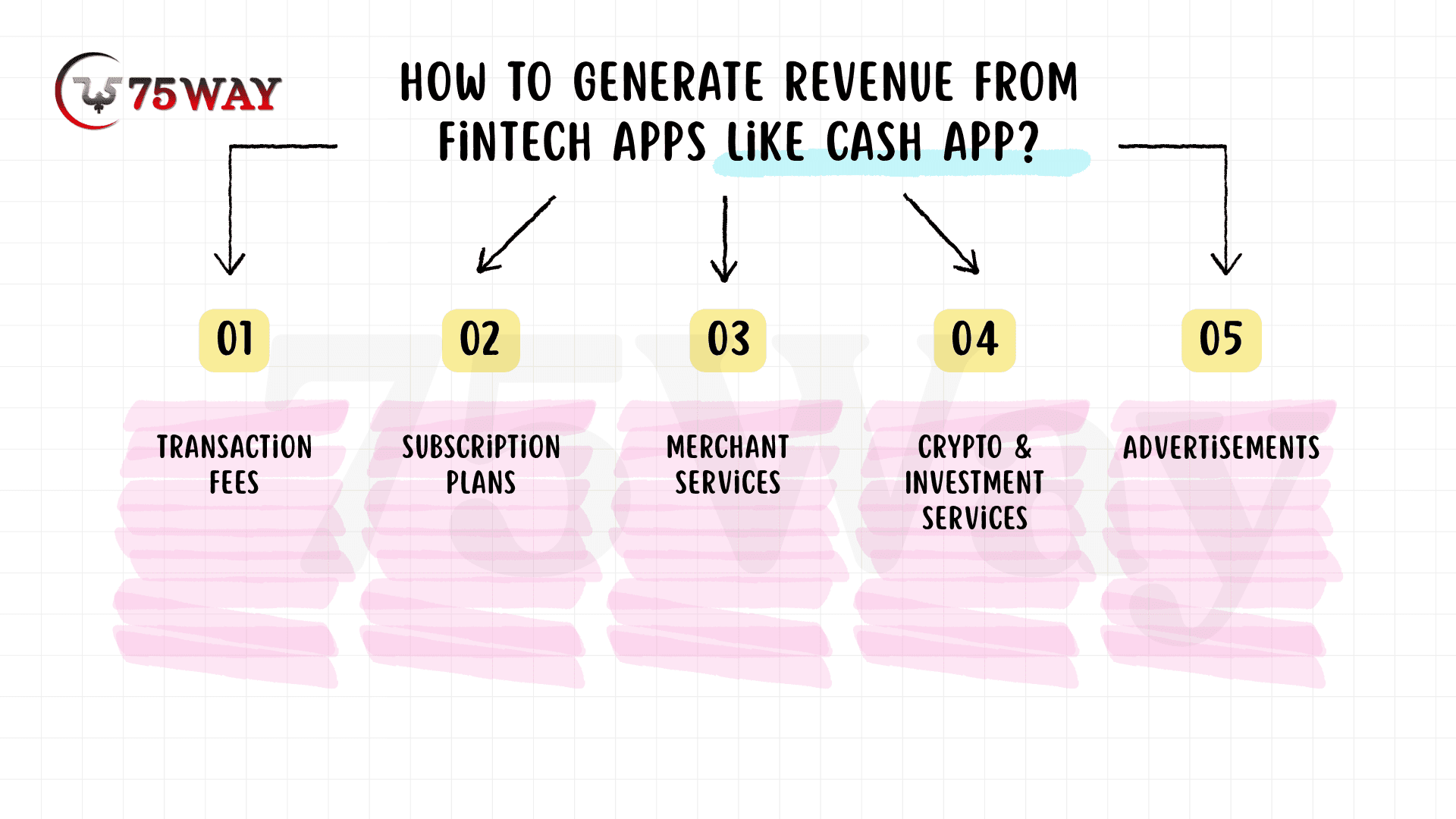
- Transaction Fees: Small charges applied on each transfer or withdrawal help generate consistent revenue while maintaining affordability. Revenue scales directly with increasing transaction volume across the platform.
- Subscription Plans: Premium memberships unlock instant transfers, higher limits, and exclusive financial features. Recurring payments strengthen predictable income and improve user retention rates.
- Merchant Services: Businesses access payment processing tools, APIs, and settlement systems for smooth transactions. This creates a strong B2B revenue stream alongside consumer services.
- Crypto & Investment Services: Trading commissions and digital asset tools generate additional income through financial ecosystem expansion. Users benefit from integrated investment opportunities within the same platform.
- Advertisements: Sponsored listings and brand placements generate revenue through targeted visibility within the app. This model monetizes user engagement without affecting core payment flows.
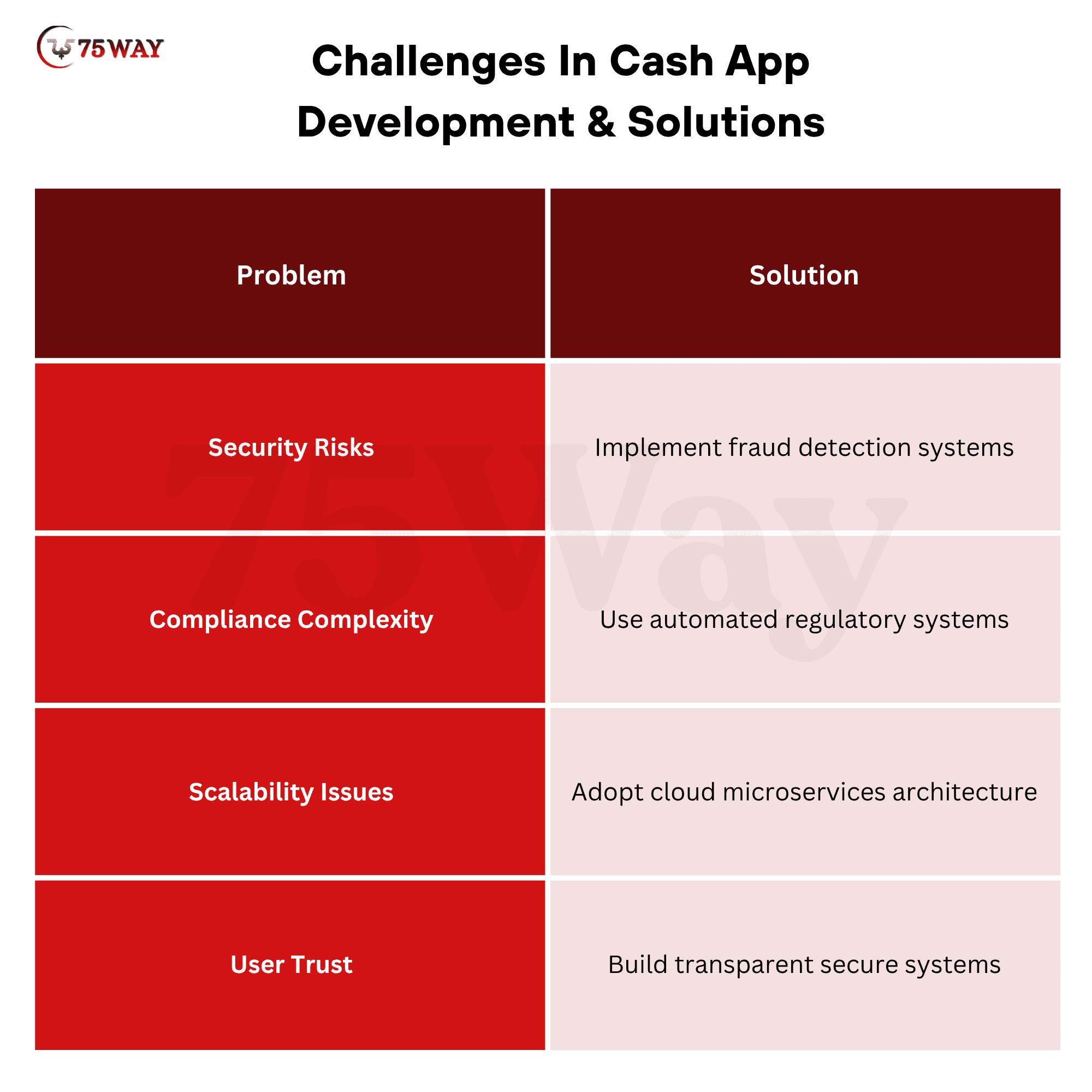
Challenges In Cash App Development & Solutions
Building a P2P payment application like Cash App involves multiple technical, regulatory, and operational challenges that directly impact performance, security, and user adoption. Addressing these challenges early in the development process is essential for creating a reliable and scalable fintech platform that can operate in competitive global markets.
- Security Risks: Financial apps require strong fraud prevention systems. Implement multi-layer encryption, real-time fraud detection, and secure authentication protocols to protect user transactions and sensitive financial data.
- Compliance Complexity: Legal frameworks vary across countries. Adopt automated compliance systems with KYC, AML, and region-specific regulatory modules to ensure legal alignment across markets.
- Scalability Issues: High transaction volume requires robust infrastructure. Use cloud-native architecture, load balancing, and microservices to handle large-scale traffic without performance disruption.
- User Trust: Building trust is critical in fintech adoption. You can enhance trust through transparent policies, secure transactions, verified identities, and consistent platform reliability.
Future Trends In Building Cash App Style P2P Payment Mobile Apps
P2P payment apps are rapidly evolving into advanced financial ecosystems driven by automation, intelligence, and global connectivity. Emerging technologies are reshaping how users send, receive, and manage money, making digital transactions faster, more secure, and highly personalized. These innovations are pushing fintech platforms toward becoming fully integrated digital banking solutions with expanded capabilities and seamless user experiences.
- AI-Powered Fraud Detection Systems: Analyze transactions in real time to detect suspicious activities and prevent financial fraud effectively.
- Voice-Based Financial Transactions: Enable users to send money and manage payments using voice commands for hands-free convenience.
- Cross-Border Instant Payments: Support real-time international money transfers with reduced delays and lower transaction costs globally.
- Blockchain-Based Settlement Systems: Secure transactions using decentralized ledger technology for transparent and tamper-proof financial records.
- Embedded Financial Ecosystems: Integrate payment services directly into apps, platforms, and marketplaces for seamless financial experiences.
- Biometric Authentication Systems: Use fingerprint and facial recognition to enhance security and simplify user login processes.
- Hyper-Personalized Financial Insights: Deliver AI-driven spending analysis and recommendations tailored to individual user behavior and financial habits.
Wrap Up
Building a P2P payment app like Cash App in 2026 requires more than just mobile development. It involves creating a secure, scalable, and compliant financial ecosystem that can handle real-time transactions, user trust, and complex financial operations. With rising digital payment adoption globally, businesses entering this space now have a strong opportunity to build high-revenue fintech platforms. However, success depends on choosing the right technology stack and implementing strong security systems. If you are looking to build a scalable and secure fintech platform, partner with a leading fintech app development company to design and develop a high-performance P2P payment app like Cash App tailored to your business goals.
Frequently Asked Questions (FAQs)
Can A P2P Payment App Work Without A Bank Partnership?
Yes, a basic MVP can work using third-party payment gateways, but full-scale fintech apps require banking or financial institution partnerships. These partnerships ensure compliance, fund settlement, and regulatory approval for secure transactions.
What Security Measures Are Required In A Payment App?
Security measures include end-to-end encryption, multi-factor authentication, fraud detection systems, tokenization, and secure API integrations. These layers protect sensitive financial data and prevent unauthorized access or fraudulent transactions.
Do P2P Apps Need Government Approval Or Licensing?
Yes, most regions require financial licensing and compliance approvals. Regulations like KYC, AML, and PCI DSS are mandatory to legally operate a payment application and handle user funds securely.
What Is The Difference Between Wallet Apps And P2P Payment Apps?
Wallet apps primarily store money digitally, while P2P payment apps focus on instant transfers between users. Many modern platforms combine both features along with banking and investment services.
How Long Does It Take To Build A Cash App-Like Platform?
Development typically takes 3 to 12 months depending on complexity. Basic apps launch faster, while advanced fintech platforms with AI and compliance systems require longer timelines and structured development phases.
Is It Safe To Build A Fintech Payment App?
Yes, if built with proper encryption, compliance, and security protocols. Fintech apps require strict adherence to financial regulations and secure architecture to protect user data and transactions.
Can Small Businesses Build P2P Payment Apps?
Yes, startups can begin with an MVP version focusing on core features like transfers and wallet systems. Later, they can scale into full fintech ecosystems.
Can Cryptocurrency Be Integrated Into A Cash App Clone?
Yes, cryptocurrency integration is possible using blockchain APIs and crypto exchange partnerships. It allows users to buy, sell, and transfer digital assets within the same financial ecosystem.
How Do P2P Payment Apps Handle Transaction Failures?
Transaction failures are managed through retry mechanisms, refund automation, and real-time monitoring systems. Backend logs and alerts ensure transparency and quick resolution for users.