AI Summary
Veterinary app development helps clinics deliver better pet care while improving operational efficiency and customer engagement. This guide explores digital trends, investment reasons, strategic benefits, and business opportunities for veterinary practices, hospitals, and pet healthcare startups that are planning for long-term growth.
Key Takeaways
- Veterinary apps improve patient care and business growth simultaneously.
- Digital experiences strengthen relationships between clinics and pet owners.
- Mobile technology creates new revenue opportunities for veterinary businesses.
- Better workflows help veterinary teams deliver faster, personalized pet healthcare.
- Investing today prepares clinics for tomorrow's digital healthcare expectations.
Why do some veterinary clinics keep attracting loyal clients while others struggle to retain them? The answer isn't always better facilities or larger teams. Often, it comes down to how easy the clinic makes every interaction before, during, and after a visit.
Pet owners increasingly choose clinics that offer digital convenience alongside quality care. Appointment booking, reminders, online consultations, medical history, and instant communication have become expectations rather than premium services.
That is exactly why more businesses are investing in veterinary app development. The business benefits go far beyond technology, helping clinics improve customer satisfaction, streamline operations, and build stronger long-term relationships with pet owners.
Why Veterinary Care Is Becoming More Digital in 2026?
Not long ago, most interactions between pet owners and veterinary clinics happened over the phone or during in-person visits. Today, expectations have changed. People schedule everything from doctor appointments to grocery deliveries through mobile apps, and they now expect the same convenience when caring for their pets.
At the same time, veterinary professionals are managing heavier workloads. Growing pet ownership, increasing demand for preventive care, and the need for ongoing communication make it difficult to rely on traditional processes alone. Digital tools help bridge that gap by making information easier to access and routine tasks easier to manage.
This shift isn't about replacing veterinarians. It's about giving them better tools. From appointment scheduling and digital prescriptions to AI-powered health insights and remote consultations, mobile apps are helping practices deliver a more connected experience while giving pet owners greater confidence in their pet's care.
Why Businesses Are Investing In Veterinary App Development
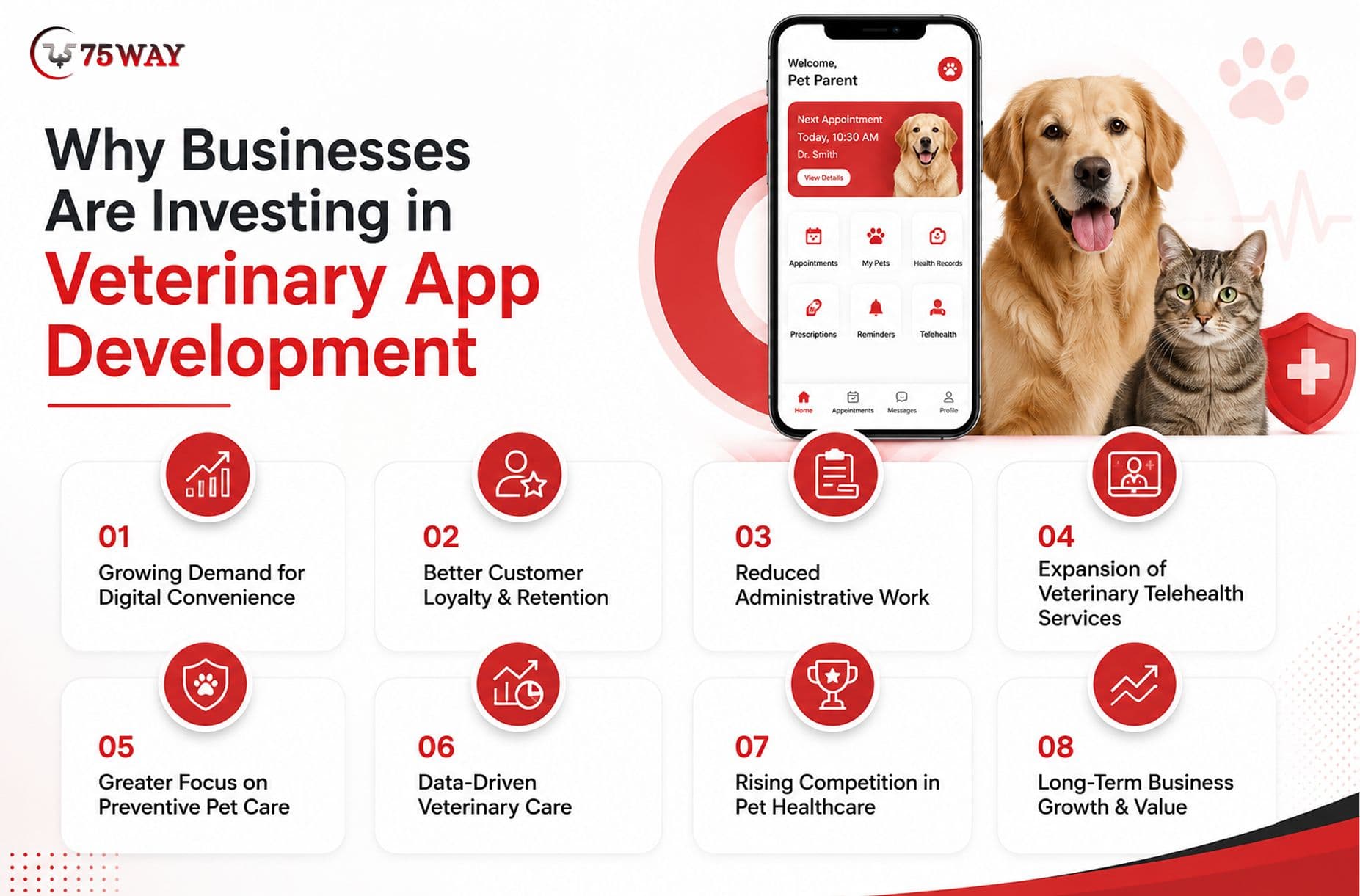
Businesses aren't investing in veterinary apps simply because mobile technology is popular. They're investing because customer expectations have changed, competition has increased, and digital services have become a practical way to improve both operations and client relationships.
1. Pet Owners Expect Digital Convenience
People already use apps to manage banking, shopping, and healthcare. They naturally expect the same convenience when booking appointments, accessing vaccination records, or requesting prescription refills for their pets. Businesses that meet these expectations create a smoother customer experience from the very first interaction.
2. Customer Loyalty Depends On Better Experiences
Pet owners rarely switch clinics when they trust the care their animals receive. A mobile app strengthens that relationship by making communication easier, sending timely reminders, and keeping important health information within easy reach. Small conveniences often become reasons customers stay long-term.
3. Routine Administrative Work Continues To Grow
Front-desk staff spend valuable hours answering repetitive calls, confirming appointments, and updating records. Mobile apps automate many of these everyday tasks, allowing veterinary teams to spend more time supporting patients instead of managing paperwork.
4. Telehealth Is Expanding Veterinary Services
Not every consultation requires an in-clinic visit. Follow-up discussions, behavioral guidance, medication reviews, and post-surgery check-ins can often happen remotely. Mobile apps make virtual veterinary services more accessible while creating additional business opportunities.
5. Preventive Care Is Becoming A Priority
Modern veterinary care focuses on prevention just as much as treatment. Apps help clinics send vaccination reminders, wellness check notifications, parasite prevention schedules, and personalized health recommendations, encouraging owners to stay proactive about their pets' wellbeing.
6. Data Helps Deliver Better Care
Every appointment, prescription, and health update contributes valuable information. Mobile apps organize that data into one place, helping veterinarians identify patterns, monitor long-term health, and make better-informed treatment decisions over time.
7. Competition Is Increasing Across Pet Healthcare
Independent clinics, specialty hospitals, and telehealth providers are all competing for the same customers. Offering a convenient digital experience helps businesses stand out while reinforcing their commitment to modern, accessible pet care.
8. Mobile Apps Create Long-Term Business Value
A veterinary app isn't just another service channel. It becomes a direct connection between the clinic and its clients, supporting stronger engagement, recurring revenue opportunities, and lasting customer relationships as the business grows.
Read Too: Key Features Required For Successful Veterinary App Development
20 Key Benefits of Veterinary App Development For Animal Healthcare
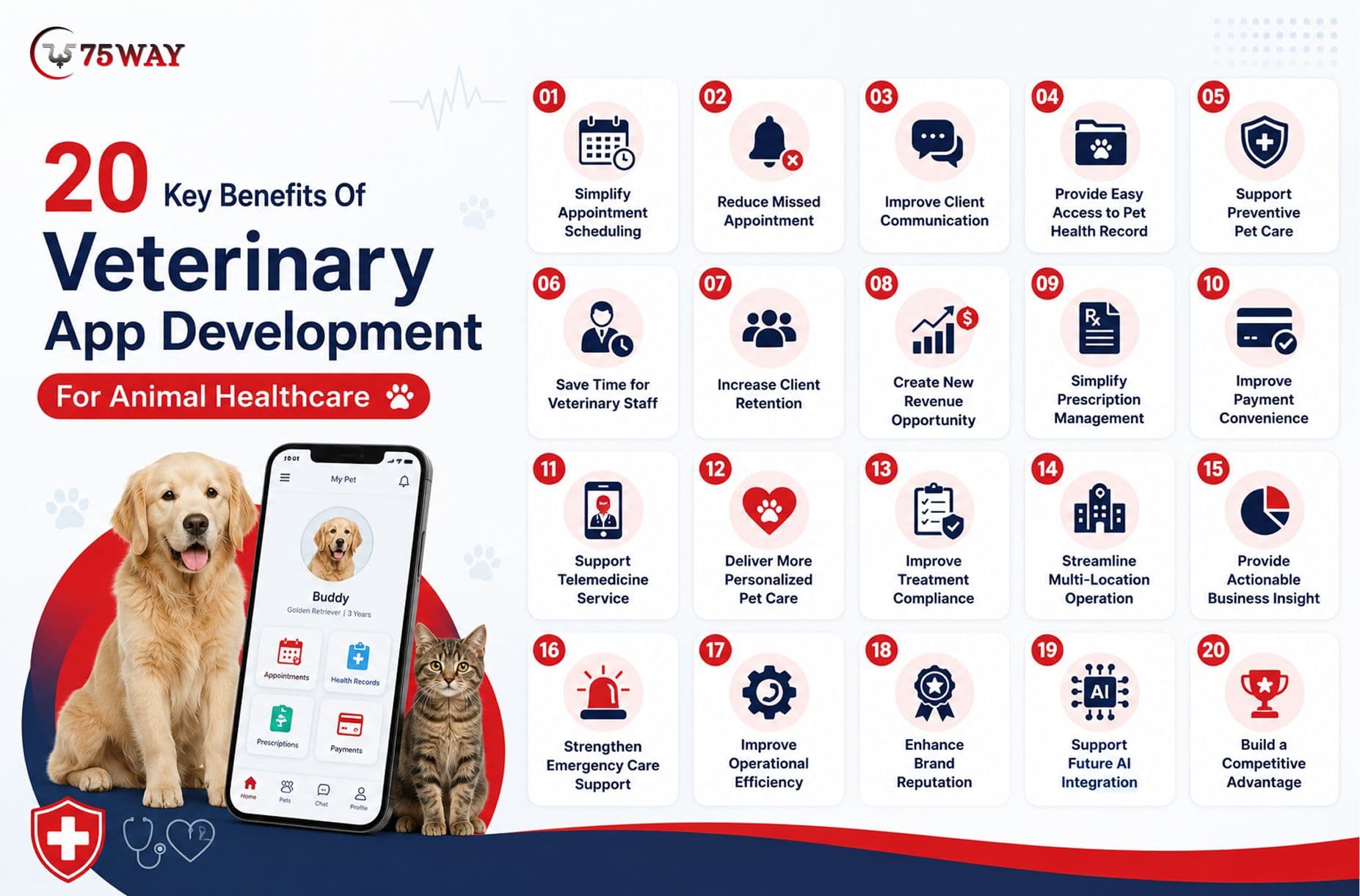
A veterinary app creates value for both clinics and pet owners by making communication faster, care more accessible, and everyday operations easier to manage. Here are 20 key benefits that explain why mobile apps have become an important investment for modern animal healthcare businesses.
1. Appointment Scheduling Becomes More Convenient
Long wait times and manual booking processes can create unnecessary friction for veterinary clinics. A mobile app allows clients to check availability, schedule appointments, receive confirmations, and manage visits without relying on phone calls during business hours.
This convenience creates a better experience from the first interaction while reducing pressure on front-desk teams. Veterinary staff can spend less time handling routine scheduling requests and more time supporting patients, improving daily workflow and client satisfaction.
2. Missed Appointments Become Less Common
Empty appointment slots can affect clinic revenue and disrupt daily planning. Automated reminders through a veterinary app help clients remember upcoming visits, vaccinations, wellness checks, and follow-up appointments without requiring manual calls from staff.
A more reliable appointment system helps clinics maintain organized schedules and serve more patients throughout the day. Better attendance also improves resource planning, allowing veterinary teams to manage their time and services more effectively.
3. Client Communication Becomes Easier
Communication challenges often continue after a pet leaves the clinic. Questions about medication, recovery, or follow-up care may arise when veterinary teams are not immediately available. A mobile app provides a convenient channel for updates, messages, and important health information.
A stronger communication system helps clinics build trust beyond physical visits. Clients feel more supported throughout their pet’s healthcare journey, which encourages loyalty and creates a more connected relationship with the practice.
4. Pet Health Records Stay Organized
Medical records contain important details that influence treatment decisions, including vaccination history, prescriptions, allergies, and previous conditions. A veterinary app keeps this information organized digitally, allowing authorized users to access records whenever needed.
Better record management reduces dependency on paperwork and helps veterinarians review patient history faster during consultations. Clients also gain confidence knowing their pet’s health information is stored securely and available when required.
5. Preventive Care Gets Better Support
Preventive healthcare plays an important role in maintaining long-term pet wellness. Missed vaccinations, delayed checkups, or forgotten medication schedules can affect a pet’s overall health. A veterinary app helps clinics send timely reminders based on individual care requirements.
These regular touchpoints encourage clients to stay involved in preventive care rather than visiting only when problems appear. Veterinary businesses can strengthen customer relationships while creating more opportunities for routine wellness services.
6. Veterinary Staff Save More Time
Administrative responsibilities can take up a large part of a veterinary team’s day. Appointment confirmations, record updates, payment questions, and routine inquiries often require repeated manual effort. A veterinary app reduces these tasks through digital self-service options.
This allows staff members to focus more attention on patient care and customer interactions. Clinics can handle daily responsibilities with better organization while reducing unnecessary workload on reception and administrative teams.
7. Client Retention Improves
Customer loyalty often depends on the overall experience, not just the quality of medical care. A veterinary app keeps essential services easily accessible, including appointments, health updates, prescriptions, and communication options.
A convenient digital experience gives clients more reasons to continue choosing the same veterinary provider. Stronger relationships lead to repeat visits, better engagement, and long-term value for veterinary businesses.
8. New Revenue Opportunities Open Up
Traditional veterinary services are no longer the only source of business growth. A mobile app creates opportunities for additional offerings such as virtual consultations, wellness memberships, online pharmacy services, and premium care packages.
These options allow veterinary practices to expand their services while providing more convenience to clients. A well-planned app can become a valuable revenue channel that supports future business growth.
9. Prescription Management Gets Simpler
Medication management can become complicated when clients need refills, dosage information, or treatment reminders. A veterinary app allows users to request prescriptions, review medication details, and receive alerts without repeated phone conversations.
For clinics, digital prescription handling reduces administrative tasks and creates a clearer process for managing medication requests. This improves convenience while helping ensure pets receive the right care at the right time.
10. Payment Experience Improves
Payment processes can influence how customers remember their overall service experience. A veterinary app allows clients to complete payments for consultations, medications, and other services through a convenient digital platform.
For veterinary businesses, integrated payment options reduce manual billing efforts and create a smoother checkout process. A simple payment experience improves customer satisfaction while making financial transactions easier to manage.
11. Telemedicine Services Expand Access
Not every veterinary concern requires an immediate physical visit. Follow-up discussions, basic health guidance, and post-treatment questions can often be handled remotely through a secure veterinary app.
Telemedicine features help clinics support more clients while extending services beyond their physical location. This provides additional convenience for pet owners and enables veterinary businesses to provide ongoing care between appointments.
12. Pet Care Becomes More Personalized
Every animal has different healthcare needs based on age, breed, lifestyle, and medical history. A veterinary app helps collect and organize this information to deliver relevant reminders, recommendations, and care updates.
Personalized experiences help clients feel that their veterinary provider understands their pet’s unique requirements. This deeper connection builds trust and encourages ongoing engagement with the clinic.
13. Treatment Compliance Improves
Following treatment instructions can sometimes be challenging for pet owners, especially when medications or follow-up care continue for several weeks. A veterinary app helps keep important instructions, reminders, and schedules easily accessible.
Better treatment follow-through supports improved recovery and helps veterinarians achieve better care outcomes. Clients also appreciate having guidance available throughout the treatment process rather than relying solely on memory.
14. Multi-Location Management Becomes Easier
Veterinary groups with multiple locations need consistent systems to manage appointments, records, and customer interactions. A centralized mobile platform helps connect different branches while maintaining a unified experience.
This approach gives business owners better visibility across locations and helps teams coordinate daily activities. Growing veterinary organizations can expand services while maintaining quality standards across every facility.
15. Business Decisions Become Data-Driven
Understanding customer behavior helps veterinary businesses identify what works and where improvements are needed. A veterinary app can provide insights into appointment patterns, service demand, and client engagement.
Access to meaningful data allows clinic owners to make better decisions about operations, marketing, and service improvements. Instead of relying only on assumptions, businesses can use real information to guide future strategies.
16. Emergency Care Support Improves
Emergency situations require quick access to accurate health information. A veterinary app can store important details such as allergies, medical history, vaccination records, and emergency contacts in one accessible location.
Having this information available during urgent situations helps veterinarians respond with greater confidence. It also gives pet owners reassurance that critical details are available when immediate care is needed.
17. Daily Operations Become More Organized
Veterinary clinics manage multiple activities every day, from appointments and records to payments and customer communication. A mobile app brings these processes together within a single digital platform.
Better organization helps teams reduce confusion and manage responsibilities more smoothly. Clients also benefit from faster responses, clearer updates, and a more professional experience throughout their interactions with the clinic.
18. Brand Reputation Gets Stronger
Technology choices often influence how customers view a business. A veterinary clinic with a modern mobile app shows commitment to convenience, accessibility, and improved customer service.
A strong digital presence helps practices stand apart in a competitive market. Clients are more likely to trust businesses that invest in solutions designed around their needs and expectations.
19. Future AI Integration Becomes Possible
Artificial intelligence is introducing new possibilities in veterinary healthcare, including predictive insights, smart recommendations, and automated support. A well-developed veterinary app creates a foundation for adding these advanced capabilities.
Preparing for AI adoption early allows businesses to continue improving their services as technology evolves. The app becomes a long-term investment that can grow alongside future healthcare innovations.
20. Competitive Advantage Becomes Stronger
Customer expectations around convenience and digital services continue to grow across industries, including veterinary care. A mobile app helps practices provide experiences that match modern expectations and create stronger client relationships.
Businesses that adopt digital solutions early can differentiate themselves from competitors. A reliable veterinary app can become a valuable asset for attracting new clients and retaining existing ones over time.
Final Thoughts
Veterinary app development is becoming a valuable investment for businesses looking to deliver better pet care while meeting modern customer expectations. A well-designed app helps clinics improve communication, simplify daily tasks, strengthen client relationships, and create new growth opportunities. As pet healthcare continues moving toward digital solutions, businesses that adopt mobile technology early can build stronger connections with pet owners and stay ahead of the competition. The right strategy, features, and development approach can turn a veterinary app into a long-term business asset that supports both better care and sustainable growth. Partnering with a renowned healthcare app development company can help transform your veterinary app idea into a secure solution built for future growth.
Frequently Asked Questions (FAQs)
How Can A Veterinary App Help Grow A Veterinary Business?
A veterinary app helps attract new clients, retain existing customers, and offer additional services, such as online consultations. It creates more opportunities for engagement beyond traditional clinic visits.
Is Veterinary App Development Useful For Small Veterinary Clinics?
Yes, small clinics can use veterinary apps to compete with larger providers through better digital experiences. Apps help improve service quality without requiring large operational changes.
How Does A Veterinary App Improve Customer Retention?
A veterinary app keeps clients connected through reminders, updates, digital records, and convenient services. These ongoing interactions help build trust and encourage repeat visits.
Can Veterinary Apps Create New Revenue Streams?
Yes, veterinary apps can support revenue through telemedicine, wellness plans, online pharmacy services, and subscription-based care options. These services expand business opportunities beyond physical consultations.
Why Is Digital Transformation Important For Veterinary Practices?
Digital transformation helps veterinary practices meet changing customer expectations and improve daily operations. Modern tools create a more convenient experience for both teams and pet owners.
Should Veterinary Businesses Invest In An App Now Or Later?
Early investment allows businesses to build digital capabilities before competition increases. A well-planned veterinary app can create long-term value as the pet healthcare market continues evolving.