Summary
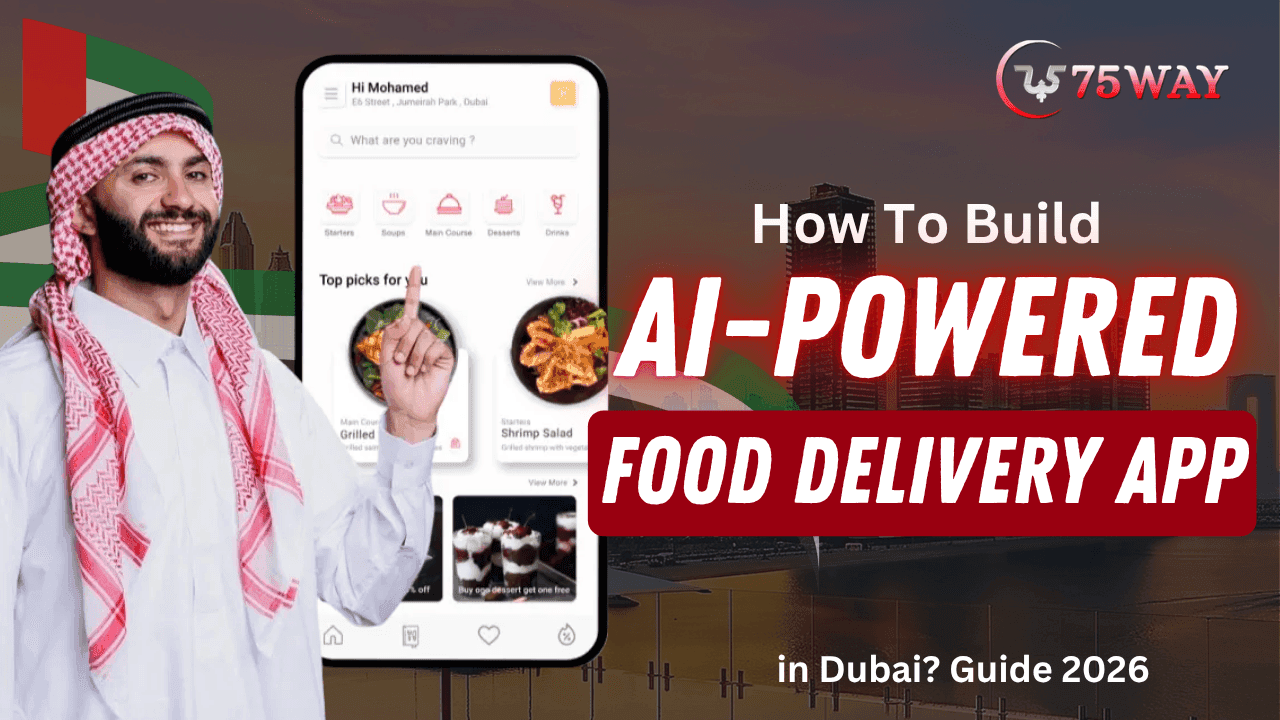
AI-powered food delivery app in Dubai integrates smart automation, real-time tracking, and predictive ordering systems for scalable restaurant ecosystems. The guide highlights architecture, development stages, and monetization strategies. It also explores AI features, compliance needs, and user experience models. Businesses gain clarity on building high-performance delivery platforms for the UAE market growth.
Quick Overview
- Dubai food delivery market demands AI-driven scalable mobile applications
- Successful apps combine real-time tracking, personalization, and automation features
- Multi-vendor ecosystem improves revenue generation across restaurants and customers
- AI enhances delivery speed, routing efficiency, and order accuracy
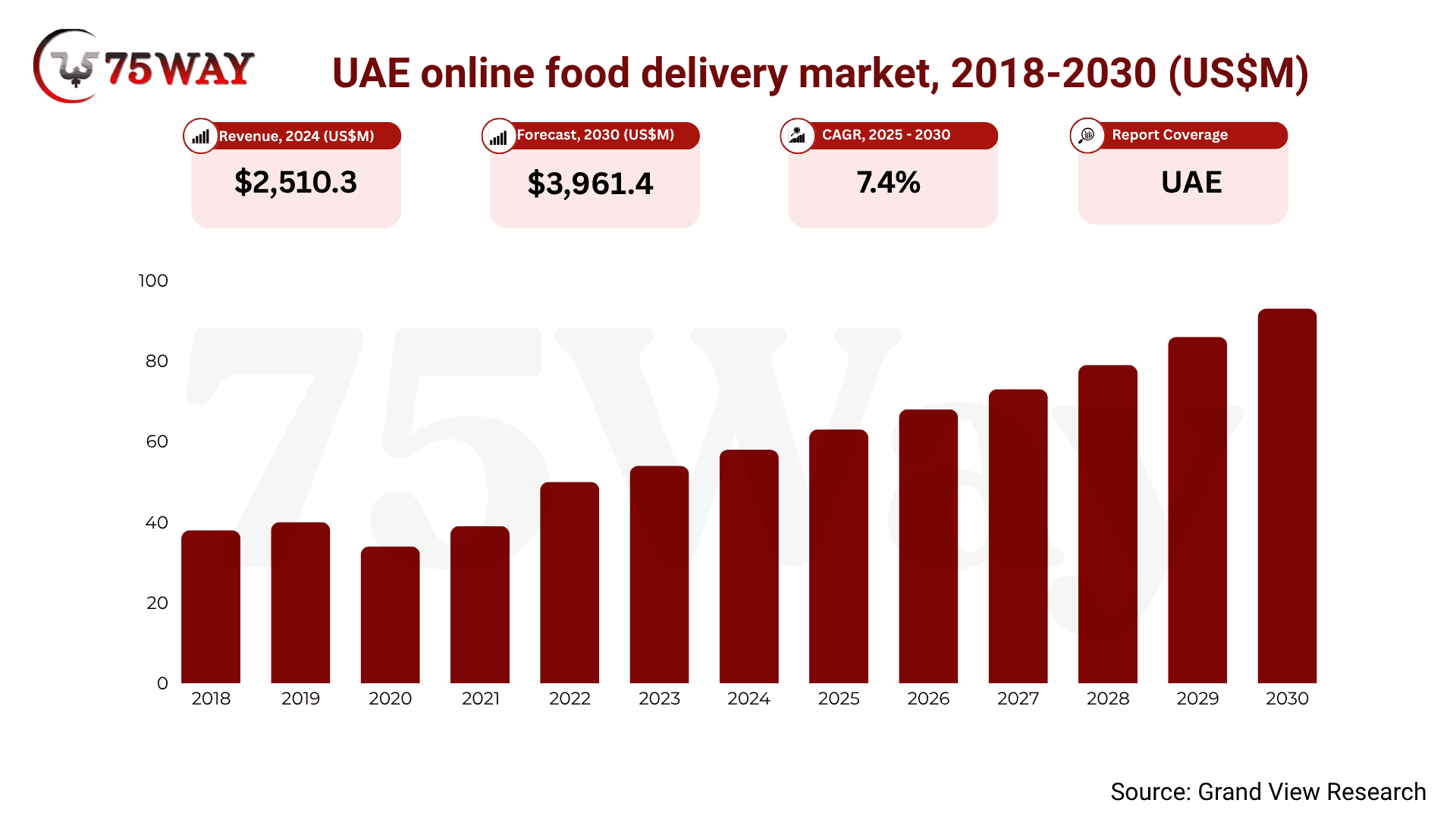
- UAE food delivery market projected to reach $3,961.4 million by 2030.
Dubai’s digital economy continues to expand rapidly, driven by high smartphone usage, urban lifestyle, and demand for instant services. In fact, the UAE food delivery apps market is currently valued at around USD 1.5 billion. This sector is expected to grow significantly, with online food delivery revenue projected to reach approximately US$ 3,961.4 million by 2030, expanding at a CAGR of 7.4%.
Thus, food delivery apps have become central to this ecosystem, connecting restaurants, customers, and delivery partners through unified digital systems. Moreover, AI integration now adds intelligence across ordering, dispatching, and personalization layers, making food delivery operations faster. Businesses entering this space require more than a basic app. They need scalable architecture, real-time logistics, and automated decision systems.
This guide explains the complete process of building a food delivery app in Dubai with artificial intelligence integration. It also explains the app development stages, features, tech stack, cost structure, and revenue models, all designed for 2026 market conditions.
What Is An AI Food Delivery App?
An AI-driven food delivery app is a digital platform that uses artificial intelligence to automate ordering, delivery coordination, customer personalization, and restaurant management. It connects users with nearby restaurants while optimizing logistics through predictive algorithms and smart routing systems.
Unlike traditional apps, AI-powered systems analyze user behavior, demand patterns, and delivery conditions to improve speed, reduce delays, and increase order accuracy. This creates a more efficient ecosystem for restaurants, customers, and delivery partners in competitive markets like Dubai.
Why Invest in AI Food Delivery Apps in UAE 2026?
Investing in AI food delivery apps in the UAE in 2026 delivers strong market potential driven by rapid digital adoption, urban lifestyles, and high smartphone penetration. The country’s food delivery ecosystem is already mature, yet AI integration creates new efficiency layers in logistics, personalization, and customer experience. Dubai food delivery ecosystem is driven by:
- High-income digital-first population
- Strong restaurant and cloud kitchen growth
- Tourism-driven food demand cycles
- Fast adoption of mobile payment systems
- Competitive aggregator platforms like Talabat and Deliveroo
This creates strong demand for AI-driven platforms that offer greater control, reduced commission dependence, and improved customer experience.
Advanced Features You Must Include in Food Delivery Platform Development
Modern AI-powered food delivery apps rely on intelligent features that improve user experience, delivery efficiency, and restaurant operations. These features help businesses streamline logistics, increase customer satisfaction, and optimize revenue generation. In competitive markets like UAE, advanced functionality becomes essential for scaling digital food platforms.
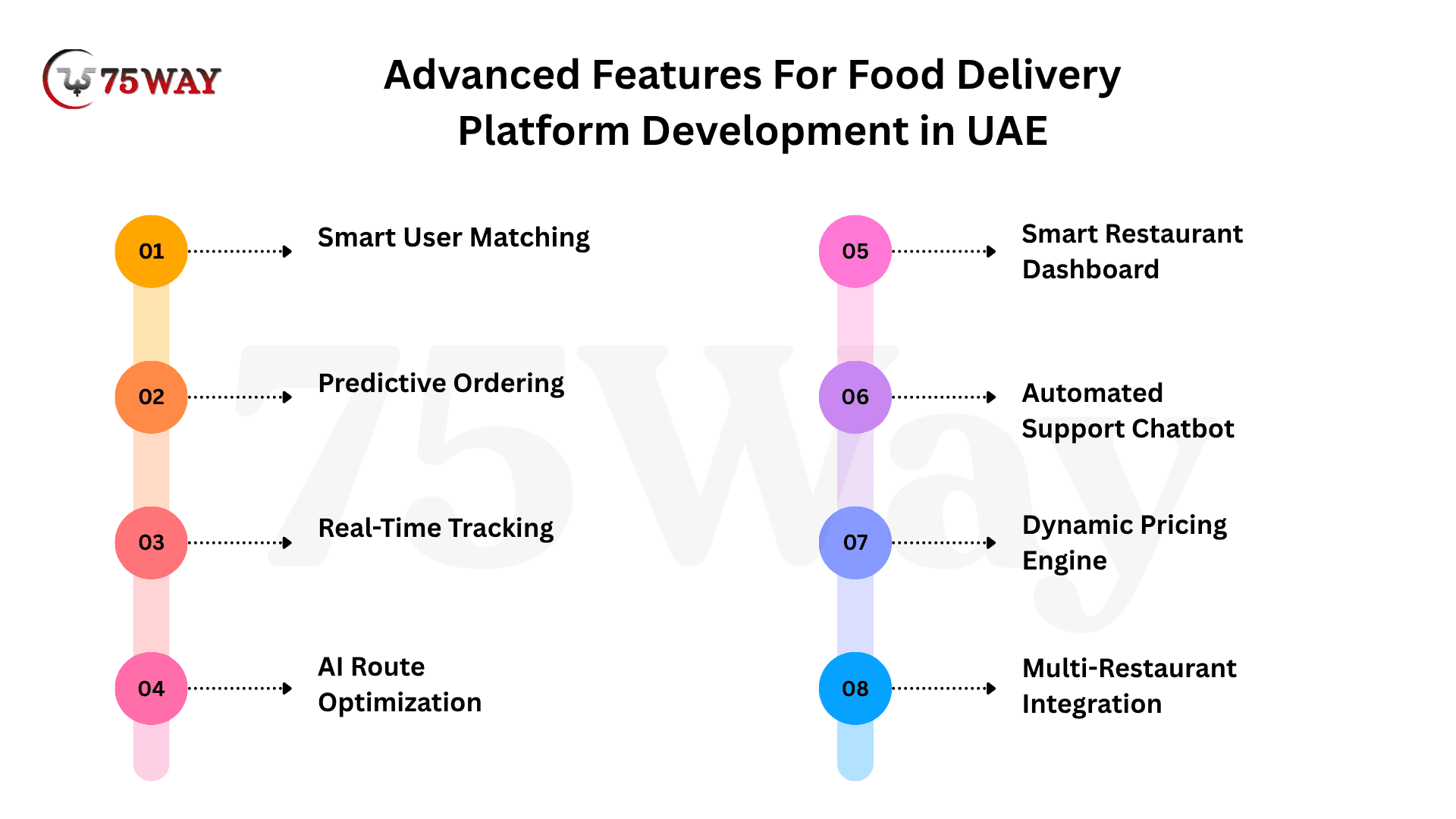
- Smart User Matching: AI connects users with nearby restaurants based on preferences, order history, and behavioral patterns. This improves personalization and increases order conversion rates. It also helps customers discover relevant food options faster.
- Predictive Ordering: An AI-powered food delivery platform analyzes user behavior, time patterns, and past orders to suggest meals automatically. Customers receive relevant food recommendations without searching manually. This enhances convenience and encourages repeat purchases.
- Real-TimeTracking: Live GPS tracking delivers accurate delivery updates from the restaurant to the doorstep. Customers can monitor order progress in real time through mobile interfaces. This improves transparency and builds trust in the platform.
- AI Route Optimization: Delivery routes are dynamically calculated using traffic, distance, and order density data. Drivers reach destinations faster with reduced delays and fuel consumption. This improves operational efficiency and delivery success rates.
- Smart Restaurant Dashboard: Restaurants manage incoming orders, menu updates, and demand analytics through a unified dashboard. Real-time insights help optimize preparation and reduce order delays. It enhances overall operational control and decision-making.
- Automated Support Chatbot: AI chatbots in a food delivery platform handle customer queries instantly across multiple communication channels. It resolves order issues, delivery updates, and refund requests without human support. This reduces response time and operational workload.
- Dynamic Pricing Engine: Pricing adjusts automatically based on demand, distance, and peak usage hours. This helps balance supply-demand fluctuations across the platform. It also increases revenue during high-demand periods.
- Multi-Restaurant Integration: Platform connects multiple restaurants into a single ecosystem for seamless ordering. Users can browse different menus and place combined orders easily. This increases platform engagement and order frequency.
AI Food Delivery App Architecture
AI food delivery app architecture combines multiple interconnected systems that manage users, restaurants, orders, delivery logistics, and AI intelligence layers. It ensures smooth communication between frontend applications, backend services, and data-driven AI engines. This structure supports real-time decision-making, scalability, and efficient food delivery operations across multiple user interactions.
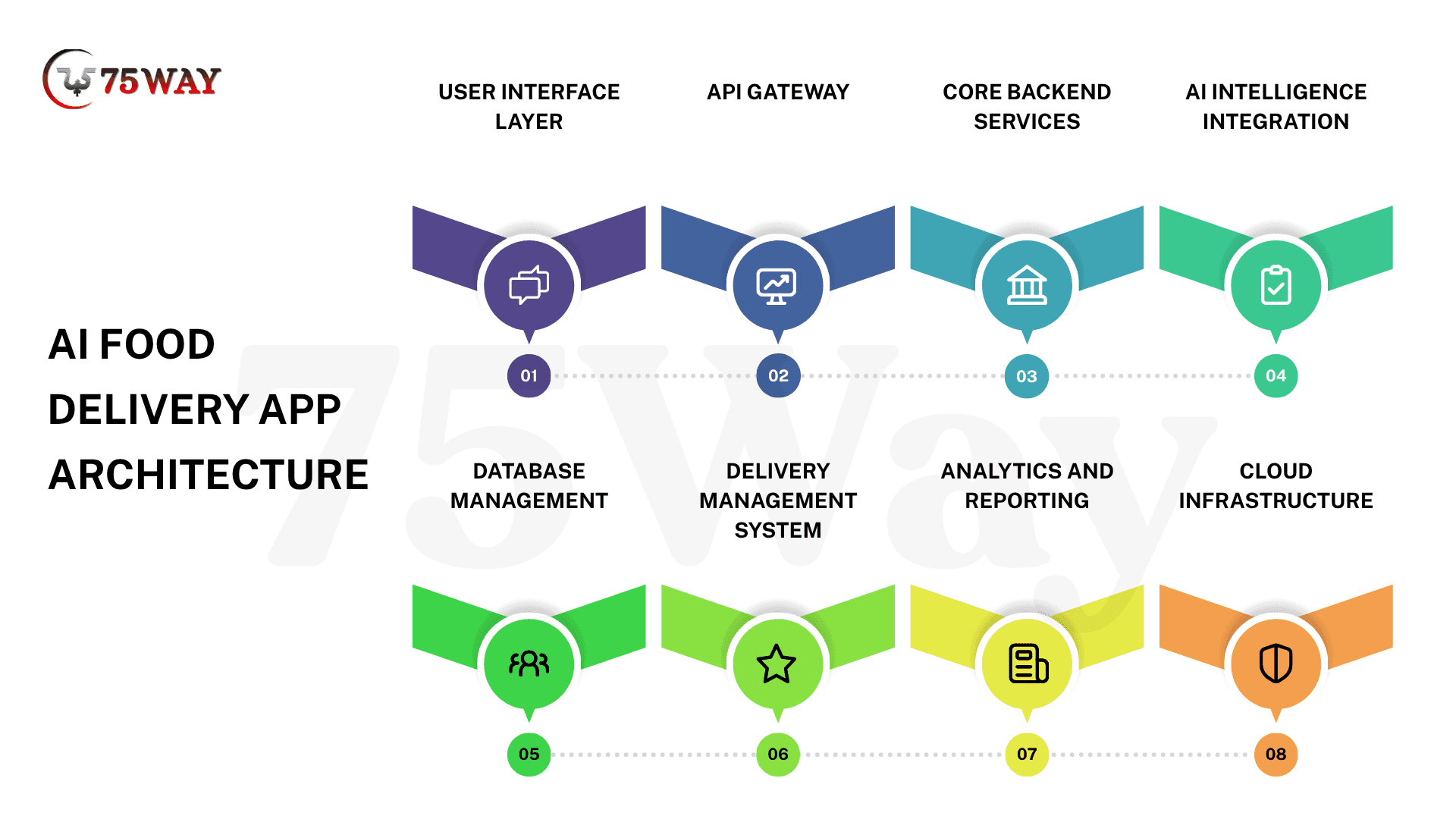
1. User Interface Layer
Customers and restaurants interact through mobile apps and web dashboards. This layer handles browsing menus, placing orders, and tracking deliveries. It ensures a smooth and responsive user experience across devices.
2. API Gateway
All requests from apps are routed through a centralized API gateway. It manages authentication, request routing, and system security. This layer ensures controlled communication between frontend and backend systems.
3. Core Backend Services
Backend services process orders, payments, restaurant data, and delivery coordination. Each service operates independently for scalability and flexibility. This layer forms the operational backbone of the entire system.
4. AI Intelligence Integration
AI modules handle recommendation systems, predictive ordering, route optimization, and dynamic pricing. These systems analyze real-time data for smarter decision-making. It improves personalization and operational efficiency across the platform.
5. Database Management
Databases store user profiles, orders, restaurant details, and delivery history securely. Structured and unstructured data are managed separately for performance optimization. This ensures fast retrieval and reliable data storage.
6. Delivery Management System
This layer assigns delivery agents, tracks routes, and manages order fulfillment. Real-time updates ensure efficient coordination between restaurants and drivers. It reduces delays and improves delivery accuracy.
7. Analytics And Reporting
System collects operational data for performance tracking and business insights. Dashboards provide metrics on orders, revenue, and customer behavior. It supports data-driven decision-making for platform growth.
8. Cloud Infrastructure
Cloud services ensure scalability, uptime, and system reliability across global operations. It supports load balancing and high traffic handling during peak hours. This layer enables continuous platform availability and performance stability.
Step-by-Step Roadmap For Building A Food Delivery App in Dubai in 2026
Building a food delivery app in Dubai requires a structured approach that combines market understanding, user-centric design, AI integration, and scalable technology architecture. Each stage plays a critical role in ensuring the platform performs efficiently under high demand while delivering seamless experiences for customers, restaurants, and delivery partners.
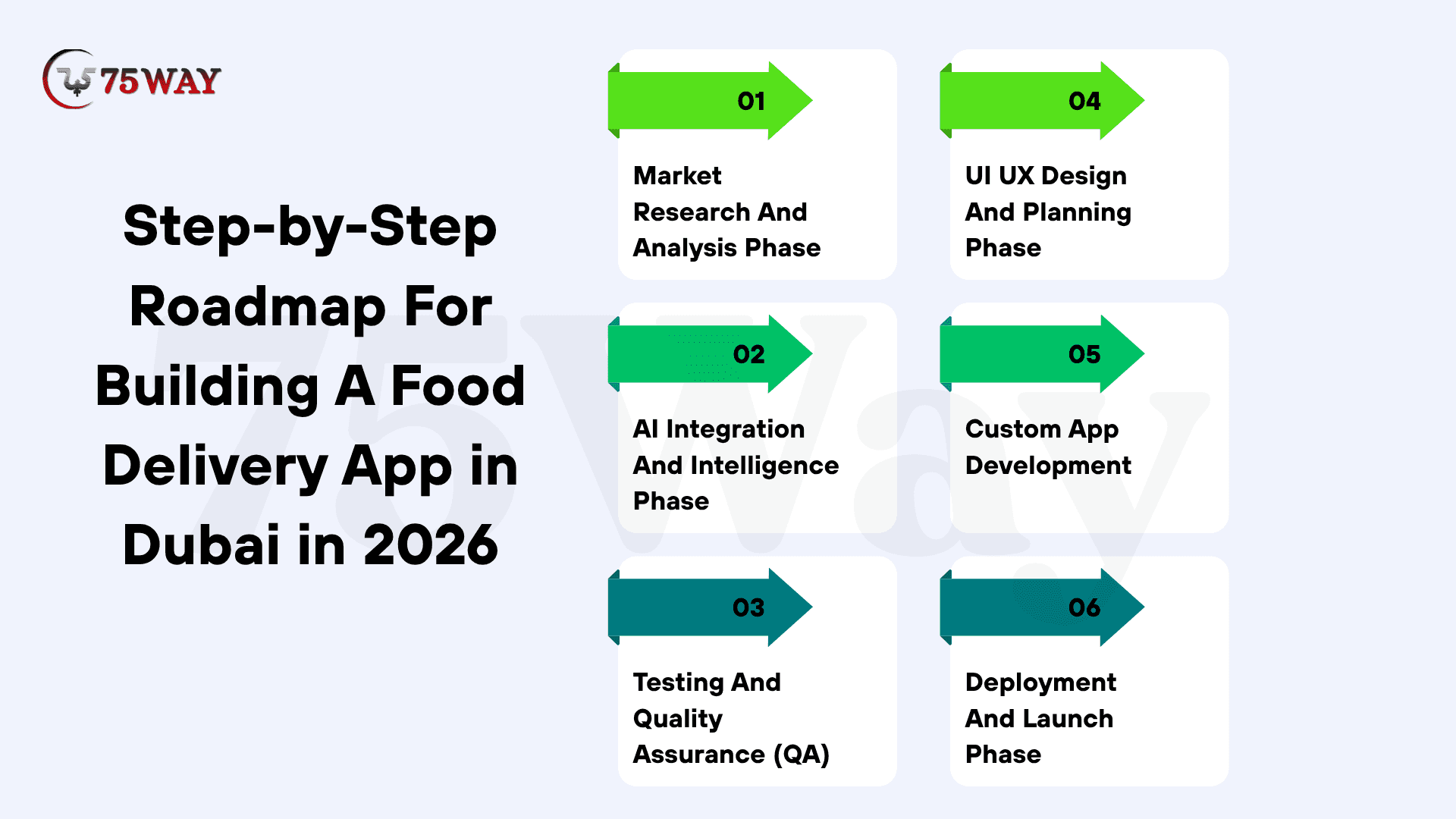
Step 1: Market Research And Analysis Phase
This stage focuses on understanding Dubai’s food delivery landscape, customer expectations, and competitor positioning. Businesses study ordering behavior, peak demand hours, and pricing trends. Strong analysis helps define product strategy and reduces market entry risks.
- Customer Demand Patterns: Analyze ordering habits, peak hours, and user preferences to understand real-time food delivery demand behavior.
- Competitor Benchmarking: Evaluate existing food delivery apps, their features, pricing strategies, and market positioning to identify competitive gaps.
- Cuisine Popularity Trends: Analysis focuses on trending cuisines, seasonal food preferences, and regional taste shifts influencing customer ordering decisions.
- Pricing Model Evaluation: Study delivery fees, discounts, and commission structures to design competitive and profitable pricing strategies.
Step 2: UI UX Design And Planning Phase
Design teams create intuitive layouts for customers, restaurants, and delivery partners across mobile and web platforms. The goal is to simplify navigation and improve order completion flow. Strong UI/UX increases engagement and reduces user drop-off rates.
- User journey mapping
- Wireframe creation
- Mobile-first design approach
- Interface consistency
Step 3: AI Integration And Intelligence Phase
AI capabilities are embedded to improve personalization, logistics, and decision-making across the platform. Food delivery apps handle recommendations, predictive ordering, and route optimization. This enhances speed, accuracy, and customer satisfaction across operations.
- Personalize menu recommendations using customer order history data
- Use predictive analytics to anticipate future food orders
- Optimize delivery routes using real-time traffic and AI
- Forecast demand spikes using seasonal and behavioral data
- Improve customer retention through AI-driven personalized offer campaigns
Step 4: Custom App Development
App developers build frontend interfaces, backend systems, APIs, and real-time communication modules. This stage connects all system components into a unified platform. Scalable architecture ensures smooth performance during high traffic conditions.
- Frontend Development: Frontend builds user interfaces using React, Flutter, or Angular for smooth experiences.
- Backend System Architecture: Backend manages business logic, data flow, and secure system communication efficiently.
- Payment Gateway Integration: Payment systems integrate Stripe, Razorpay, or PayPal for secure transaction processing.
- Real-Time Tracking System: Real-time tracking shows live order status, delivery updates, and GPS location monitoring.
- API Integration Layer: API layer connects the frontend, backend, and third-party services for seamless system communication.
Step 5: Testing And Quality Assurance (QA)
Testing and quality assurance ensure that the entire system performs reliably under real-world conditions by validating functionality, performance, security, and scalability. This phase focuses on identifying issues early and ensuring a smooth user experience across all devices and usage scenarios before the platform goes live.
QA teams simulate real usage environments to detect bugs, delays, and system vulnerabilities across different modules. Each issue is carefully resolved and re-tested to maintain stability, improve system performance, and ensure the application meets expected quality standards.
Step 6: Deployment And Launch Phase
In the last stage, the food delivery app is deployed on cloud infrastructure with monitoring and scaling systems enabled. Continuous tracking ensures uptime and system stability during peak usage. Deployment strategy supports long-term growth and operational reliability.
- Cloud infrastructure is configured using AWS, Azure, or Google Cloud
- Load balancing distributes traffic evenly across multiple active servers
- Monitoring systems track performance, uptime, errors, and system health
- Auto scaling adjusts resources automatically during high traffic demand
- Maintenance support ensures continuous updates, fixes, and system optimization
- Security layers protect data, APIs, and user communication channels
- Disaster recovery systems ensure backup and data restoration readiness
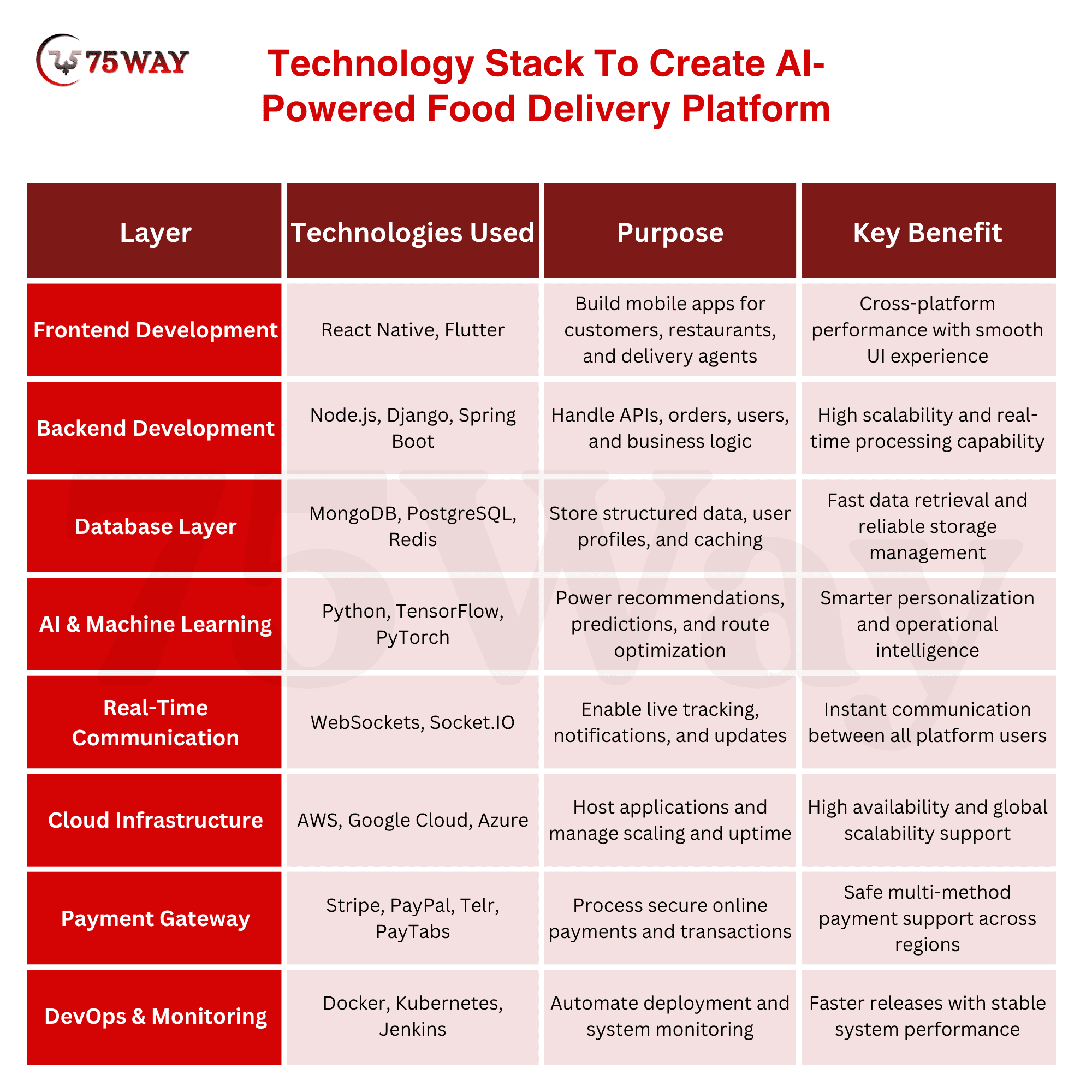
Technology Stack To Create AI-Powered Food Delivery Platform
The tech stack of an AI-driven food delivery platform requires modern tools and models to build mobile apps, web dashboards, backend systems, AI models, and cloud infrastructure. Each layer plays a crucial role in ensuring performance, reliability, and intelligent decision-making across users, restaurants, and delivery operations.
- Frontend: React Native and Flutter enable cross-platform mobile app development for customers, restaurants, and delivery partners. These frameworks ensure fast performance, responsive UI, and consistent user experience across Android and iOS platforms.
- Backend: Node.js, Django, or Spring Boot handles core business logic, APIs, and order management systems. These frameworks support high scalability, secure data processing, and real-time communication between system components.
- Database Layer: MongoDB and PostgreSQL manage structured and unstructured data such as orders, user profiles, and restaurant listings. Redis supports caching for faster response times and improved system performance.
- AI & Machine Learning: Python-based frameworks like TensorFlow and PyTorch power recommendation engines, predictive ordering, and route optimization. These models analyze user behavior and improve personalization across the platform.
- Real Time Communication: WebSockets and Socket.IO enable instant updates for order tracking, delivery status, and notifications. This ensures seamless communication between customers, restaurants, and delivery drivers.
- Cloud Infrastructure: AWS, Google Cloud, or Microsoft Azure provides scalable hosting, load balancing, and storage solutions. Cloud systems ensure high availability, security, and smooth performance during peak traffic.
- Payment Gateways: Stripe, PayPal, and regional gateways, such as Telr or PayTabs handle secure payment processing. These systems support multiple payment methods, including cards, wallets, and online banking.
How To Generate Revenue From AI Food Delivery App in Dubai?
AI food delivery apps generate revenue through multiple streams including commissions, subscriptions, advertising, and dynamic pricing models. These monetization methods help platforms balance profitability while supporting restaurants, customers, and delivery partners across a scalable ecosystem. Strong revenue diversification improves financial stability and long-term growth potential.
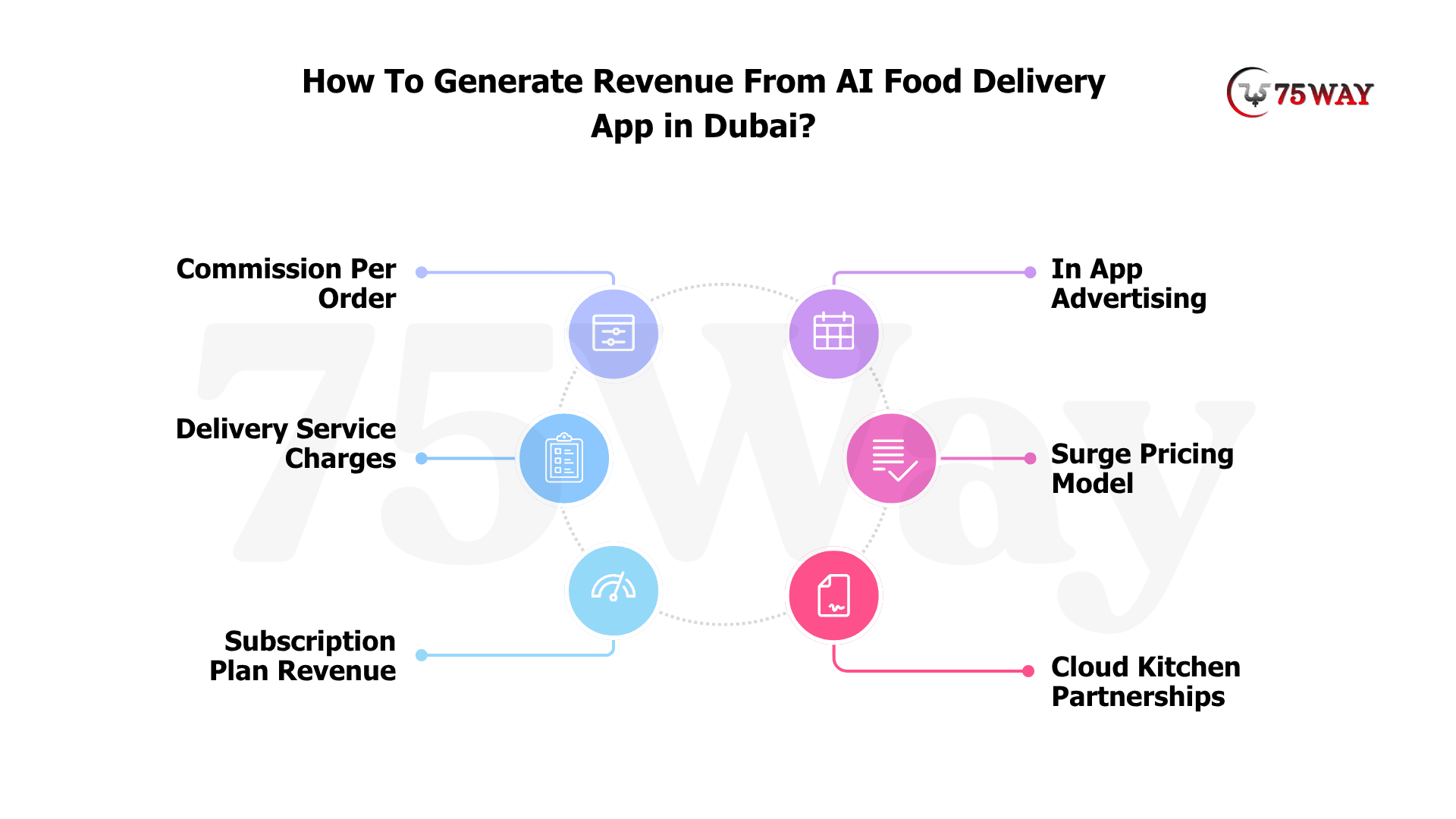
- Commission Per Order: Platform charges restaurants a fixed percentage on every successful order. This creates a consistent revenue stream linked directly to transaction volume. Higher order frequency increases overall platform earnings.
- Delivery Service Charges: Customers pay additional fees for delivery based on distance and order value. This revenue supports logistics operations and driver payouts. It also helps maintain smooth last-mile delivery services.
- Subscription Plan Revenue: Users subscribe to premium plans for benefits like free or discounted delivery. Subscription models improve customer retention and predictable monthly income. They also increase order frequency across active users.
- In App Advertising: Restaurants and brands pay for promoted listings and featured visibility inside the app. This improves product discovery and sales conversion rates. Advertising creates a high-margin revenue stream for the platform.
- Surge Pricing Model: Prices increase during peak demand hours, holidays, or limited driver availability. This balances supply-demand fluctuations effectively. It also improves delivery partner incentives during busy periods.
- Cloud Kitchen Partnerships: Platform collaborates with cloud kitchens to handle high-volume food preparation. These partnerships expand delivery capacity without physical restaurant dependency. It increases order fulfillment efficiency and marketplace scalability.
Cost To Build A Food Delivery App In Dubai in 2026
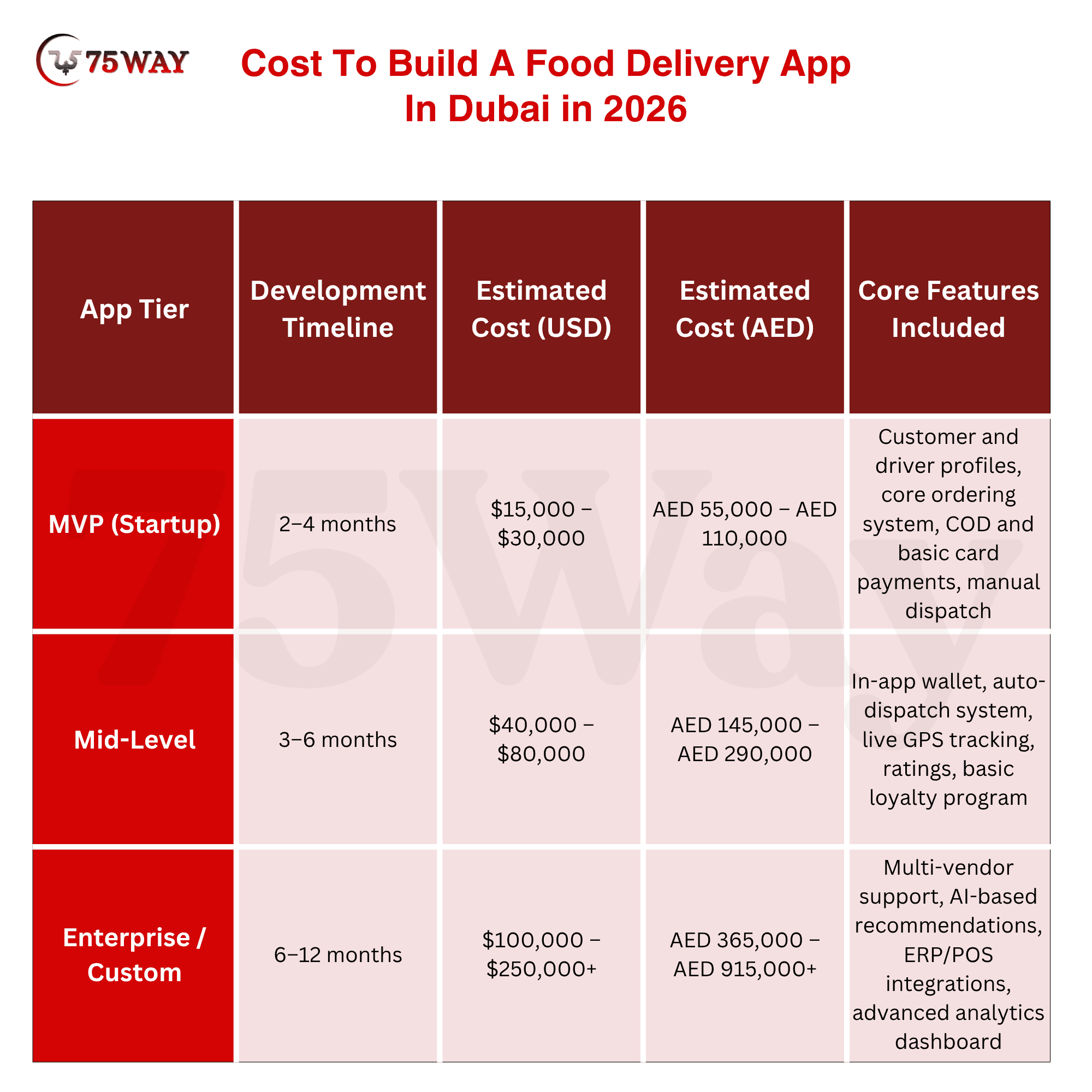
The cost of building a food delivery app in Dubai varies significantly based on complexity, features, and scalability requirements. On average, most businesses investing in a fully functional food delivery platform spend around AED 220,000 to AED 440,000 based on feature depth and integration needs.
- Basic MVP App: AED 55,000 – AED 110,000
- Mid-Level App: AED 145,000 – AED 290,000
- AI-Powered Advanced App: AED 365,000 – AED 915,000+
Challenges in the Dubai Food Delivery App With Solutions
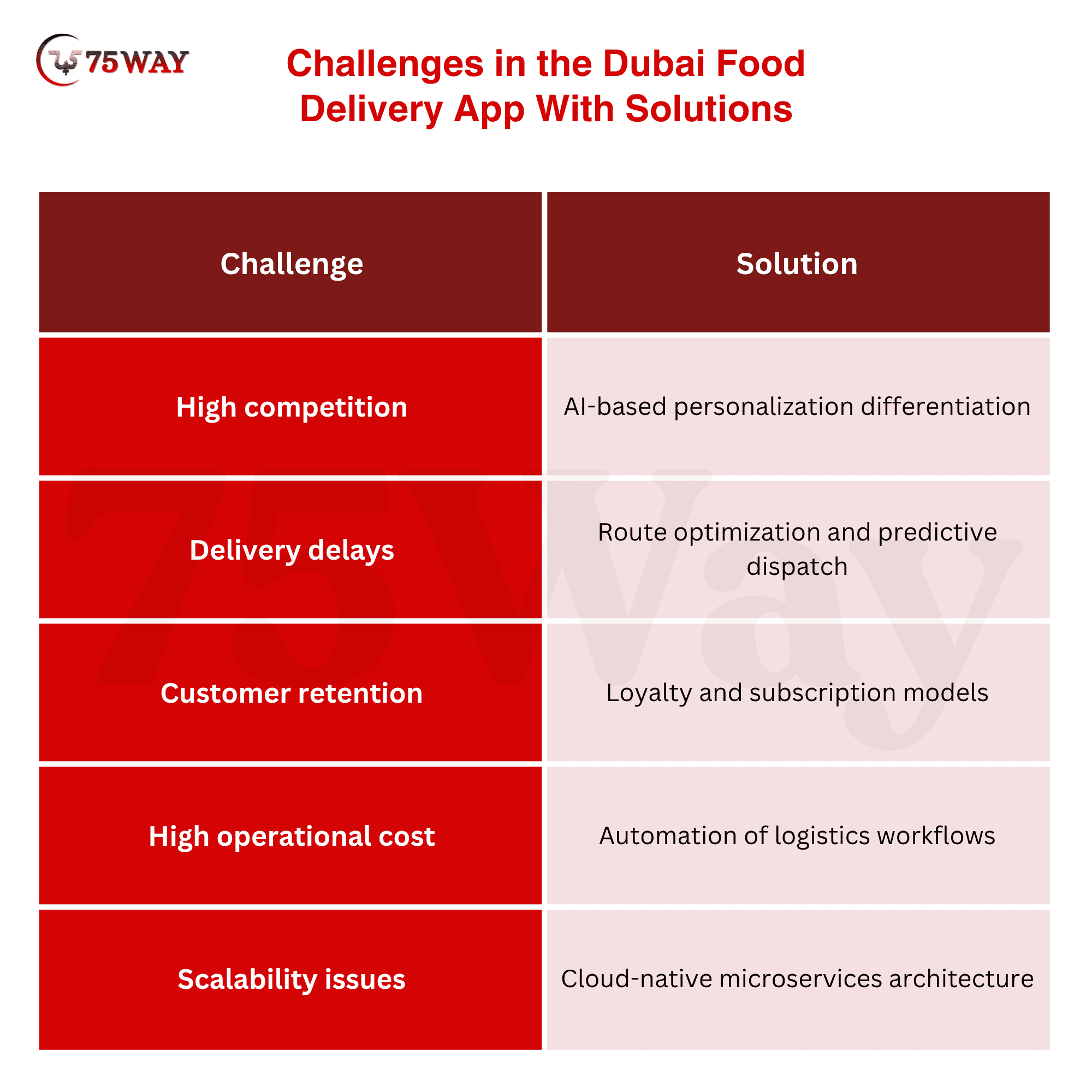
Dubai food delivery apps face strong competition, logistics challenges, and high operational costs. Solutions include AI automation, better partnerships, and optimized delivery systems.
- High Market Competition Pressure
The Dubai food delivery market is highly competitive with multiple global and regional players. This creates pricing pressure and customer acquisition challenges for new platforms. Businesses can solve this by focusing on niche targeting, AI-based personalization, and strong restaurant partnerships to build differentiation.
- Complex Delivery Logistics
Dense urban zones, traffic congestion, and peak-hour delays make last-mile delivery difficult in Dubai. These issues impact delivery time and customer satisfaction levels. AI-powered route optimization, real-time traffic tracking, and dynamic driver allocation help reduce delays and improve efficiency.
- High Operational Costs
Food delivery platforms face high costs related to drivers, promotions, technology infrastructure, and customer acquisition. These expenses reduce profit margins for scaling businesses. Optimizing automation, using cloud infrastructure, and adopting hybrid revenue models can significantly reduce operational burden.
- Customer Retention Challenges
Users often switch platforms due to discounts, faster delivery options, or better offers. Retaining long-term users becomes difficult in a price-sensitive market. Loyalty programs, subscription models, and personalized AI recommendations help improve retention and engagement.
- Restaurant Integration Issues
Onboarding and managing multiple restaurant partners creates technical and operational complexity. Menu updates, inventory mismatches, and order synchronization issues can occur. Standardized APIs, centralized dashboards, and automated sync systems help ensure smooth restaurant integration and accurate order management.
Final Thoughts
AI-powered food delivery apps are becoming a core part of Dubai’s digital commerce ecosystem. Businesses adopting intelligent automation gain stronger scalability, better customer engagement, and improved operational efficiency in a highly competitive market. Looking to build a scalable AI-powered food delivery app in Dubai? Partner with a trusted food delivery app development company to design, develop, and launch a future-ready platform tailored for high-growth markets and AI-driven business success.
Frequently Asked Questions (FAQs)
What Makes AI Important In Food Delivery Applications In Dubai?
AI improves customer experience by enabling smart recommendations, faster delivery routing, and predictive ordering. It also helps restaurants manage demand spikes and reduce operational inefficiencies across high-volume food delivery ecosystems in Dubai markets.
How Long Does It Take To Develop A Food Delivery App In Dubai?
Development timelines vary based on complexity, features, and AI integration level. A basic app may take three months, while advanced AI-powered platforms typically require six to ten months for full-scale production and deployment readiness.
What Features Increase Success Of Food Delivery Platforms In Competitive Markets?
Successful platforms include real-time tracking, AI recommendations, secure payments, multi-vendor support, and loyalty programs. These features improve user engagement, operational efficiency, and long-term customer retention across highly competitive digital food delivery ecosystems.
Why Choose Food Delivery App Development Company In Dubai For Startups?
A food delivery app development company in Dubai understands local market behavior, compliance requirements, and customer expectations. They help startups build scalable platforms with optimized performance, faster deployment, and strong integration with regional payment systems.
What Technologies Are Used In Advanced Food Delivery Applications Today?
Modern food delivery apps use AI, cloud computing, real-time databases, GPS tracking APIs, and machine learning models. These technologies improve personalization, logistics efficiency, system scalability, and overall platform reliability for high-demand environments.
How Do Food Delivery Platforms Generate Revenue In The Dubai Market?
Revenue comes from restaurant commissions, delivery charges, subscription plans, in-app advertising, and surge pricing. Many platforms also monetize data insights and premium visibility services offered to restaurant partners within the ecosystem.
What Are Food Delivery App Development Services In Dubai Offering Today?
Food delivery app development services in Dubai provide end-to-end solutions, including UI design, backend development, AI integration, payment gateway setup, testing, and deployment support. These services help businesses launch scalable and feature-rich platforms efficiently.
How Can Startups Scale Food Delivery Applications?
Startups can scale by adopting cloud infrastructure, AI-based automation, microservices architecture, and data-driven decision systems. These approaches help manage growing user demand, optimize performance, and maintain seamless user experience across expanding markets.