Summary
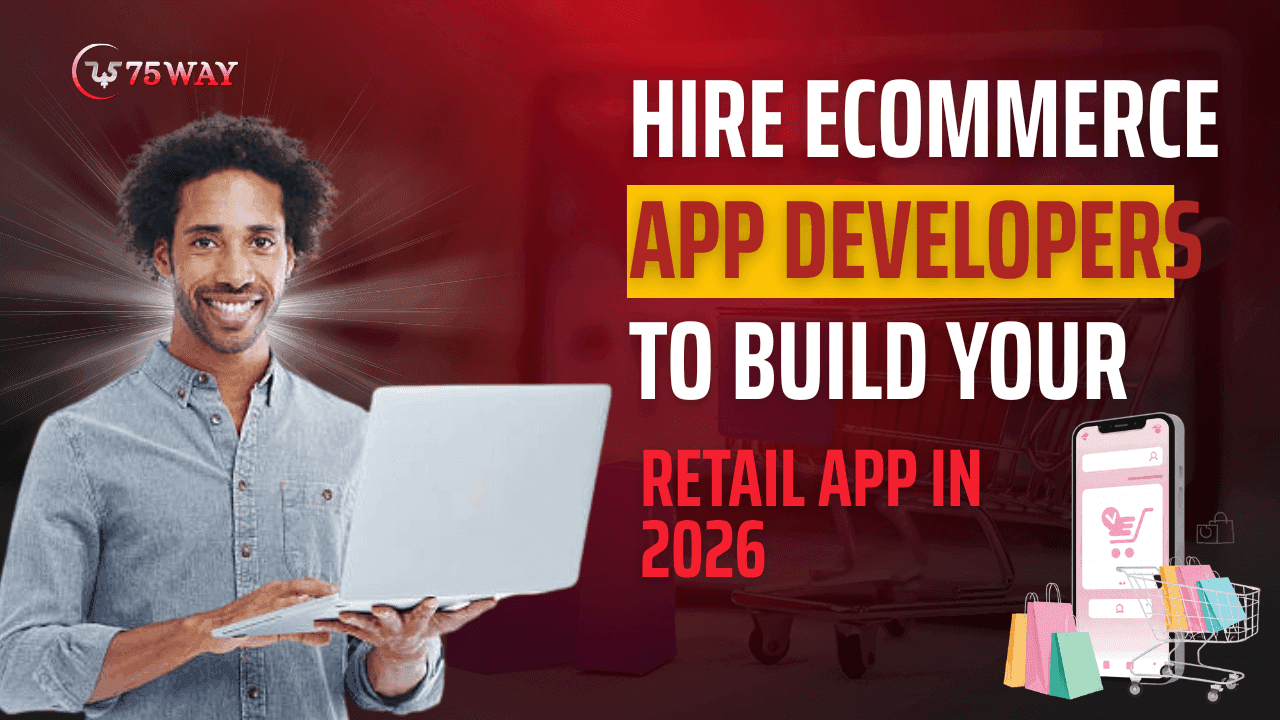
Looking to hire ecommerce app developers to launch a retail commerce application in 2026? This guide explains hiring strategies, development stages, features, technologies, costs, and AI-powered capabilities shaping modern ecommerce app ecosystems. Businesses will discover operational benefits, marketplace opportunities, omnichannel retail workflows, and scalable mobile commerce infrastructure for long-term digital growth.
Quick Overview
- Ecommerce apps improve customer engagement via personalized shopping
- AI-powered retail apps strengthen conversions and customer retention
- Hiring skilled ecommerce app developers reduces scalability and operational risks
- An average cost to hire an ecommerce app engineer lies between $15-$100+/hour
- Secure mobile commerce infrastructure supports enterprise-level retail growth strategies
Did you know? The global ecommerce market is projected to reach nearly $3.88 trillion in 2026 and continue expanding steadily over the next few years. That number alone tells one story. Customer behavior tells another.
People now expect everything instantly. Faster checkouts, personalized product recommendations by artificial intelligence, real-time order tracking, and shopping from mobile apps. And honestly, most businesses are struggling to keep up with these expectations using outdated ecommerce systems. So, they need a scalable AI-powered ecommerce app development solutions.
That is exactly why businesses are increasingly hiring experienced ecommerce app developers in 2026. But, what should businesses really look for before hiring an ecommerce app development company? Which features actually matter? Which technologies are shaping modern ecommerce apps?
In this guide, we’ll break down everything you need to know about hiring ecommerce app developers in 2026, including essential features, development stages, and hiring models.
What Ecommerce App Engineers Actually Build?
Ecommerce app developers create digital commerce ecosystems supporting customer interaction, inventory management, payments, logistics, and operational automation across mobile and web platforms. Modern retail apps now include:
- Customer-facing mobile applications
- Admin dashboards
- Seller management systems
- Warehouse coordination tools
- AI recommendation engines
- CRM integrations
- Analytics infrastructure
- Payment gateways
- Order tracking systems
This transforms ecommerce apps into centralized retail operating ecosystems rather than standalone shopping applications.
Why Hiring Ecommerce App Developers Matters in 2026?
Retail businesses increasingly require scalable, secure, and conversion-focused digital commerce infrastructure. Skilled ecommerce app developers help businesses build modern retail ecosystems supporting customer engagement, operational automation, and long-term scalability across competitive digital commerce markets.
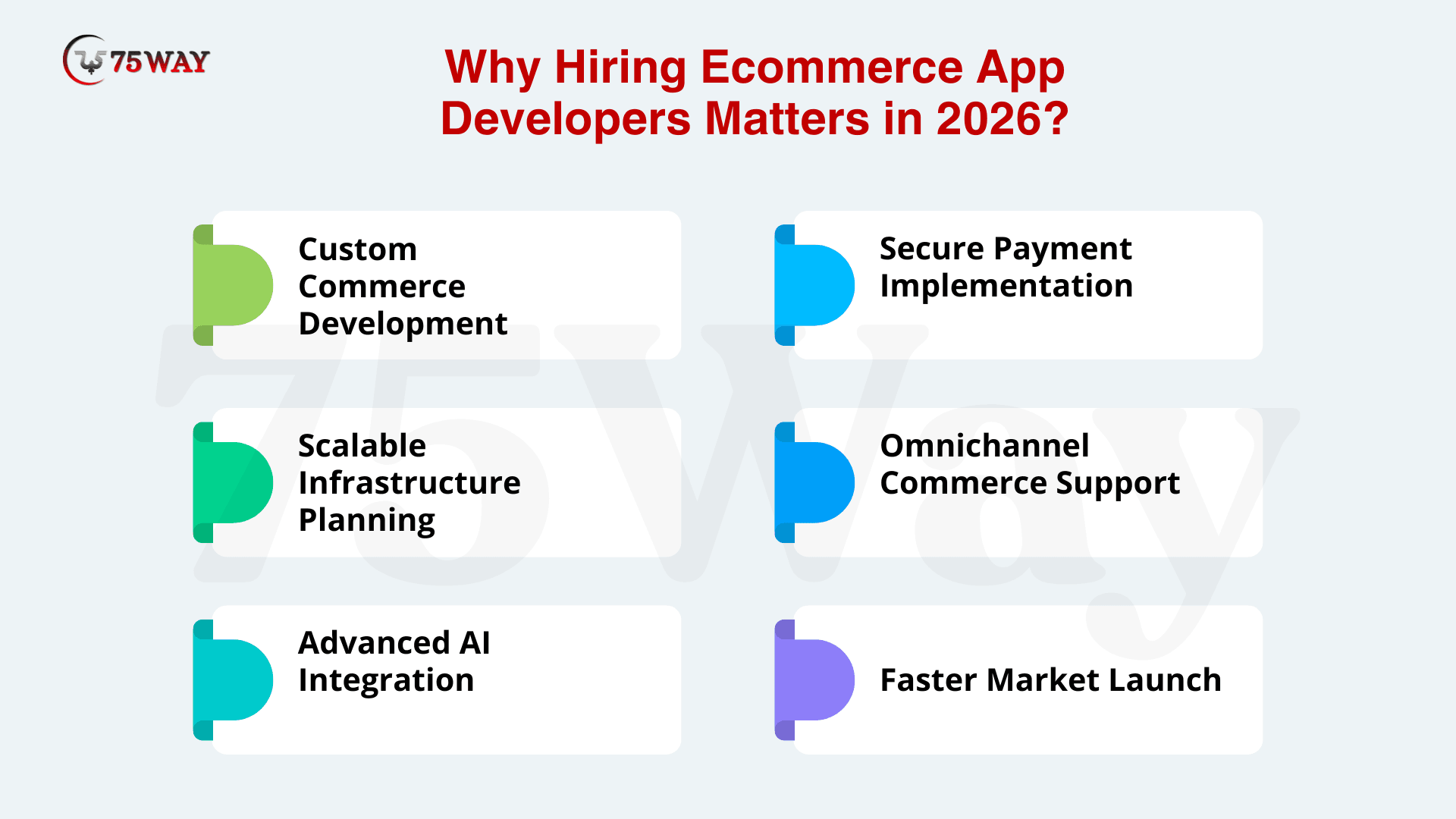
- Custom Commerce Development: Ecommerce developers build tailored retail applications matching specific business models, customer journeys, and operational workflows. This improves platform efficiency and long-term scalability.
- Scalable Infrastructure Planning: Professional developers create scalable architectures supporting growing traffic, expanding product catalogs, and multi-region commerce operations. Therefore, businesses avoid future performance limitations and operational bottlenecks.
- Advanced AI Integration: Ecommerce developers integrate AI-powered recommendations, automation systems, and predictive analytics into retail applications. These intelligent capabilities improve customer engagement and conversion opportunities consistently.
- Secure Payment Implementation: Skilled developers implement secure payment gateways and transaction protection systems across ecommerce platforms. This strengthens customer trust while reducing cybersecurity and fraud-related risks.
- Omnichannel Commerce Support: Ecommerce developers connect mobile apps, websites, inventory systems, and physical stores through centralized infrastructure. Businesses therefore deliver consistent shopping experiences across multiple customer touchpoints.
- Faster Market Launch: Experienced ecommerce app developers streamline development workflows and reduce deployment delays. Businesses can therefore launch retail platforms faster and capture market opportunities earlier.
Skills Businesses Should Look For In Ecommerce App Development Partners
Hiring ecommerce app engineers involves much more than evaluating coding abilities alone. Modern online store applications require expertise across AI integration, mobile commerce, cybersecurity, cloud infrastructure, and marketplace architecture. Businesses should therefore prioritize developers capable of building scalable ecommerce ecosystems supporting long-term digital commerce growth strategies.
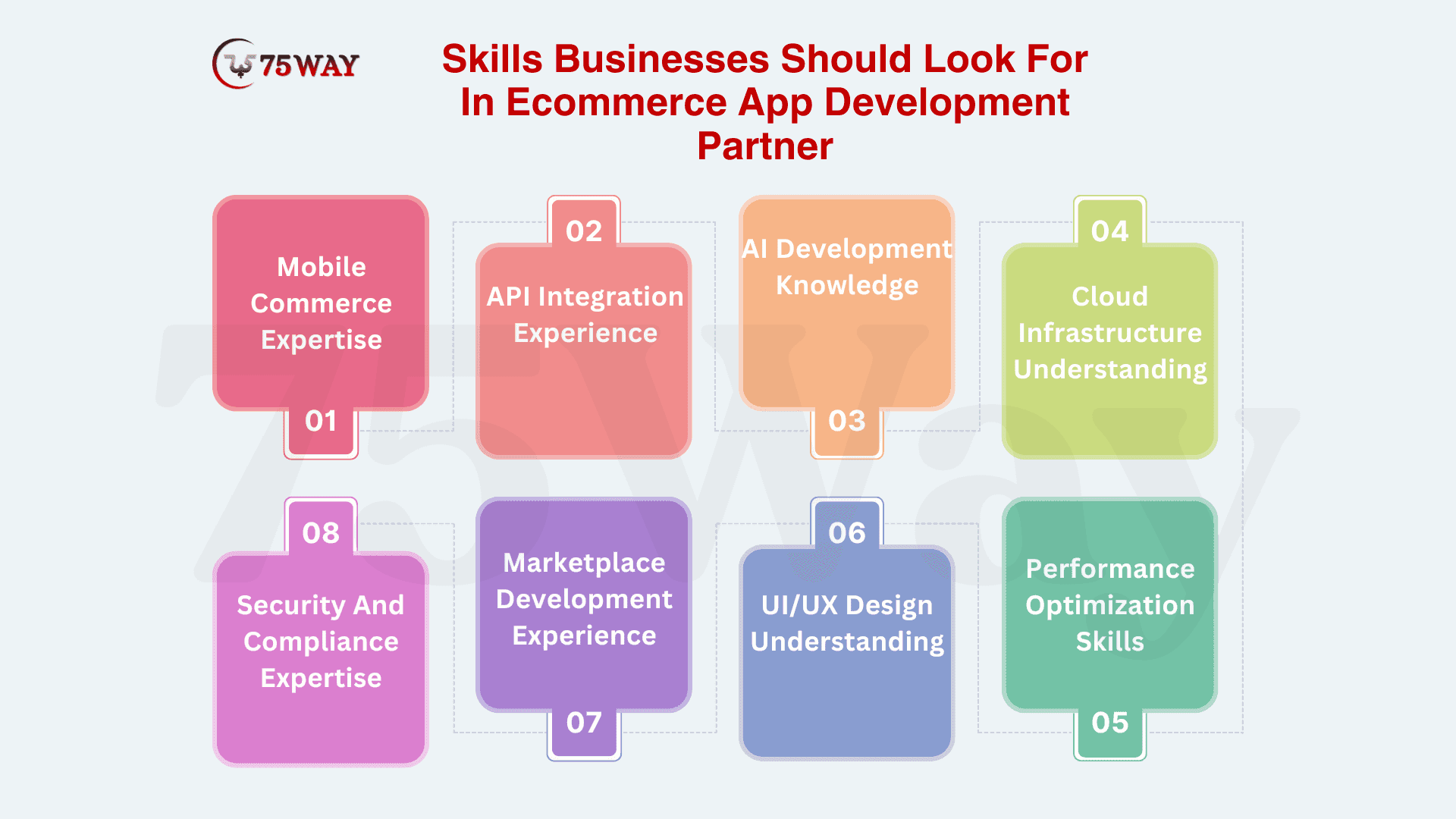
- Mobile Commerce Expertise
Ecommerce developers must understand customer purchasing behavior across smartphones and mobile commerce platforms. They should optimize navigation, checkout experiences, and shopping workflows carefully. Strong mobile commerce expertise improves user engagement, customer retention, and overall conversion performance.
- API Integration Experience
Modern ecommerce applications rely heavily on third-party integrations for payments, logistics, analytics, CRM systems, and inventory management workflows. Developers should manage API connectivity efficiently across platforms. Strong integration expertise improves operational automation and centralized commerce management.
- AI Development Knowledge
AI-powered ecommerce systems increasingly influence personalization, recommendations, customer support, and predictive retail analytics workflows. Developers should understand machine learning integrations and AI automation systems properly. AI expertise helps businesses improve customer engagement and conversion opportunities.
- Cloud Infrastructure Understanding
Scalable ecommerce ecosystems require a reliable cloud-native architecture supporting high traffic volumes and operational scalability continuously. Developers should understand deployment, server optimization, and cloud infrastructure management. Strong cloud expertise improves application performance, scalability, and system reliability.
- Security And Compliance Expertise
Ecommerce applications process customer information, payment credentials, and sensitive transaction data continuously across digital commerce ecosystems. Developers must implement strong security standards and compliance frameworks. Proper cybersecurity practices reduce fraud risks and strengthen customer trust.
- Marketplace Development Experience
Multi-vendor ecommerce platforms involve complex workflows including seller onboarding, commission systems, product coordination, and order management operations. Developers should understand marketplace architecture and operational requirements. Marketplace development expertise improves scalability and vendor management efficiency.
- UI/UX Design Understanding
Ecommerce developers should understand customer-focused UI/UX principles, improving navigation, product discovery, and checkout experiences across retail applications. Well-designed interfaces increase customer engagement and reduce cart abandonment rates. Strong UI/UX design understanding improves conversion performance and customer satisfaction.
- Performance Optimization Skills
Retail applications must maintain fast loading speed and smooth performance during high traffic periods. Developers should enhance databases, APIs, and frontend rendering. Strong performance improvement expertise improves user experiences while reducing operational downtime and scalability issues.
Technology Expertise Ecommerce App Developers Must Have In 2026
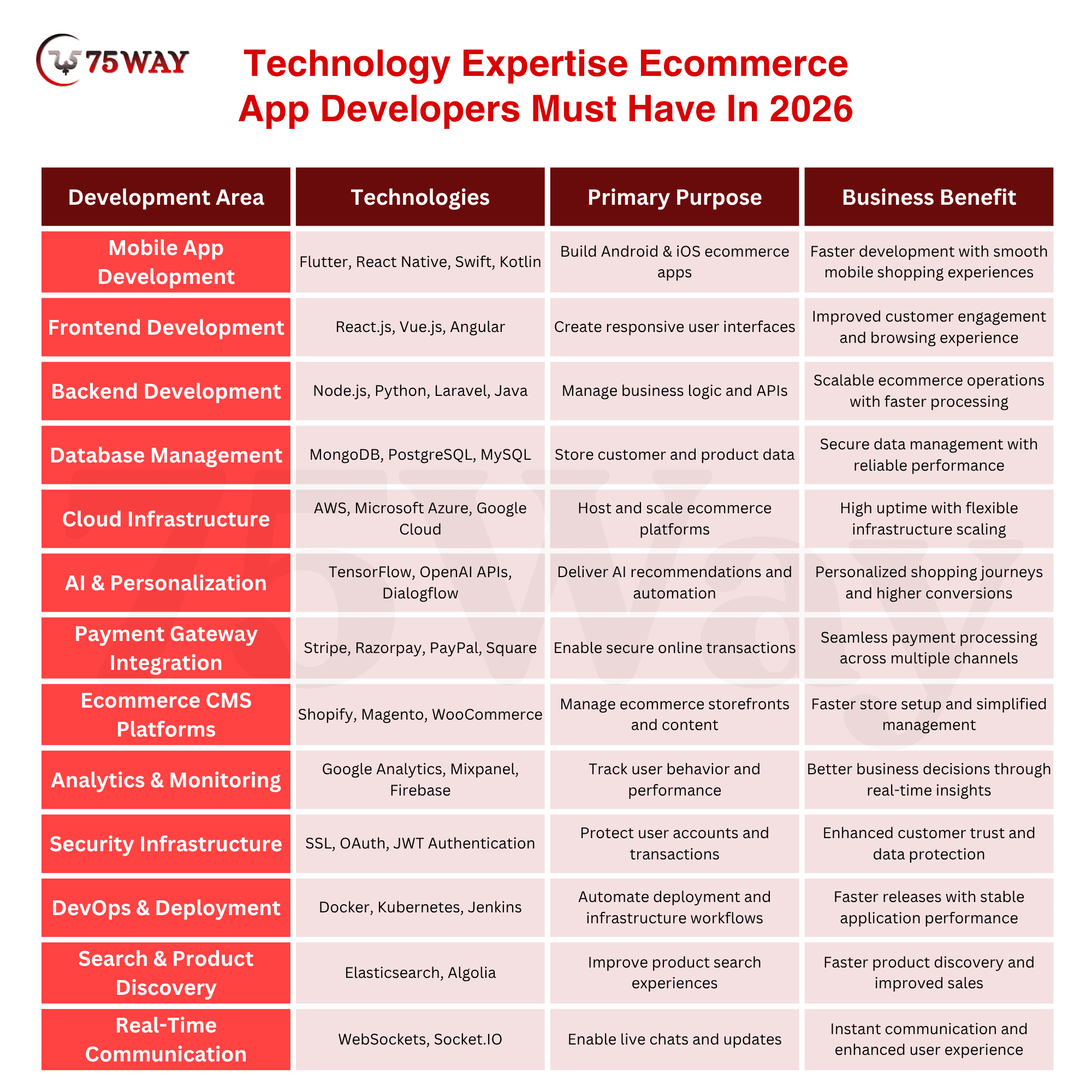
Ecommerce and retail app developer that you hire must have in-depth knowledge of using modern technology stacks to build secure retail commerce applications for iOS and Android. The right technologies help developers improve operational efficiency, AI integration, customer engagement, and long-term scalability for startups, enterprise retailers, and marketplace businesses.
How To Hire Ecommerce App Developers In 2026?
Hiring the right ecommerce app developers directly impacts application scalability, customer experience, operational stability, and long-term business growth. Businesses therefore require structured hiring strategies before starting retail app development projects.
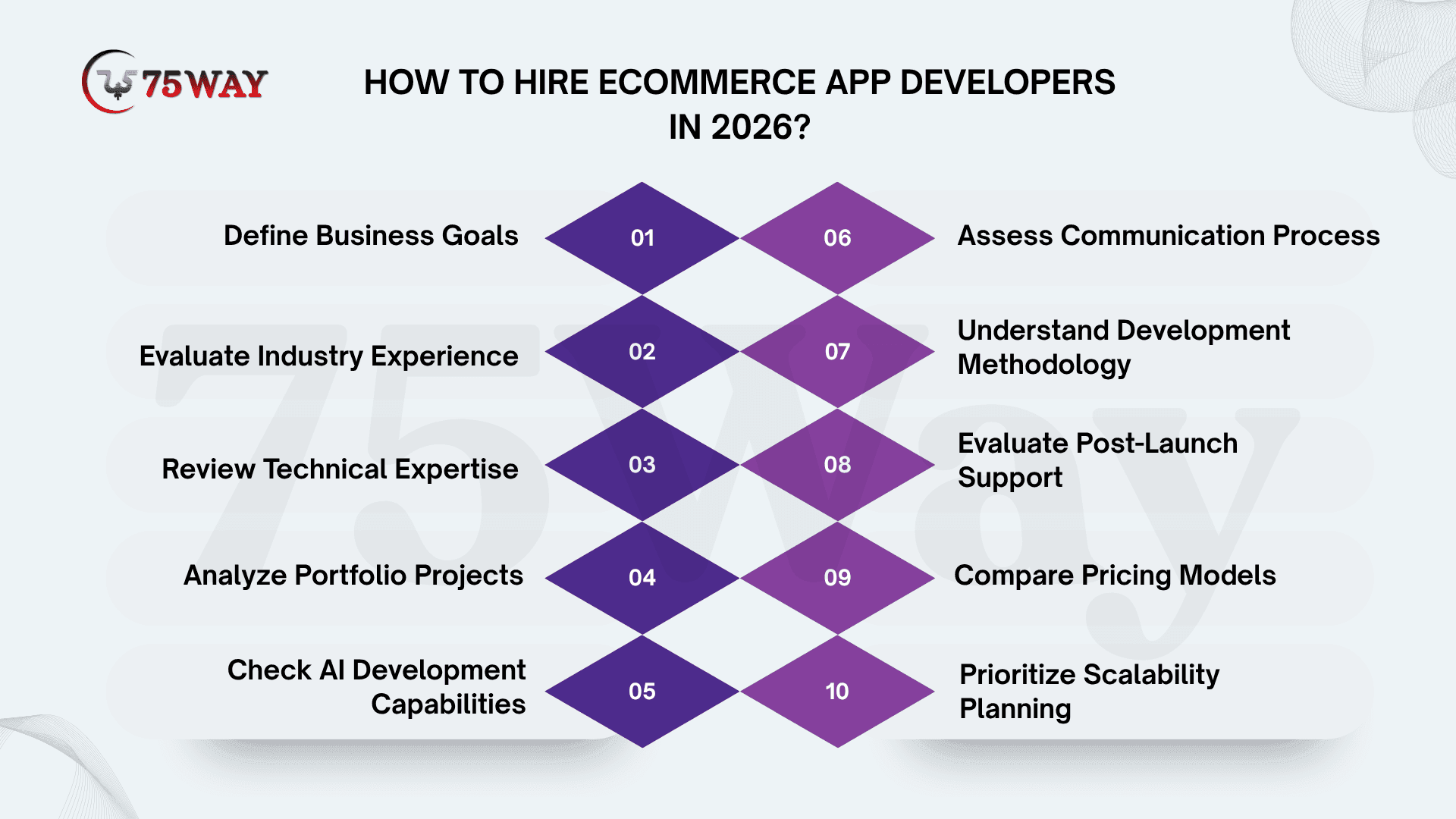
1. Define Business Goals
Start by identifying your ecommerce business model, customer expectations, and operational requirements. This helps developers understand project scope, marketplace workflows, and platform complexity.
2. Evaluate Industry Experience
Choose developers experienced in ecommerce ecosystems, marketplace platforms, and mobile commerce infrastructure. Retail-focused expertise improves development quality.
3. Review Technical Expertise
Strong technical knowledge reduces future scalability issues. Evaluate developer capabilities across:
- Mobile app development
- Cloud infrastructure
- AI integrations
- Payment gateways
- API development
- Security systems
- Marketplace architecture
4. Analyze Portfolio Projects
Review previous ecommerce applications, UI/UX quality, and operational workflows built by development teams. Real project analysis helps businesses evaluate technical capabilities.
5. Check AI Development Capabilities
Modern retail applications increasingly require AI-powered automation and personalization systems. Businesses should therefore hire teams experienced in AI commerce integrations.
6. Assess Communication Process
Transparent communication improves project coordination and development efficiency throughout the application lifecycle.
7. Understand Development Methodology
Professional ecommerce app developers usually follow agile development models supporting iterative improvements and faster deployment cycles.
8. Evaluate Post-Launch Support
Long-term maintenance, updates, security monitoring, and scalability optimization remain essential after deployment.
Businesses should therefore prioritize developers offering continuous technical support services.
9. Compare Pricing Models
Choose pricing structures aligned with project complexity and long-term operational goals. Development companies may offer:
- Fixed pricing models
- Dedicated hiring models
- Hourly engagement plans
- Team augmentation services
10. Prioritize Scalability Planning
Retail ecosystems evolve rapidly due to customer growth and expanding operational requirements. Therefore, skilled ecommerce app developers build cloud-native infrastructure supporting future business expansion.
Types of Ecommerce Apps Businesses Can Build
Modern retail businesses build different kinds of ecommerce applications depending on customer behavior, operational goals, industry requirements, and monetization strategies. Some apps focus on direct customer sales, while others support marketplaces, wholesale commerce, subscriptions, or influencer-driven shopping ecosystems.
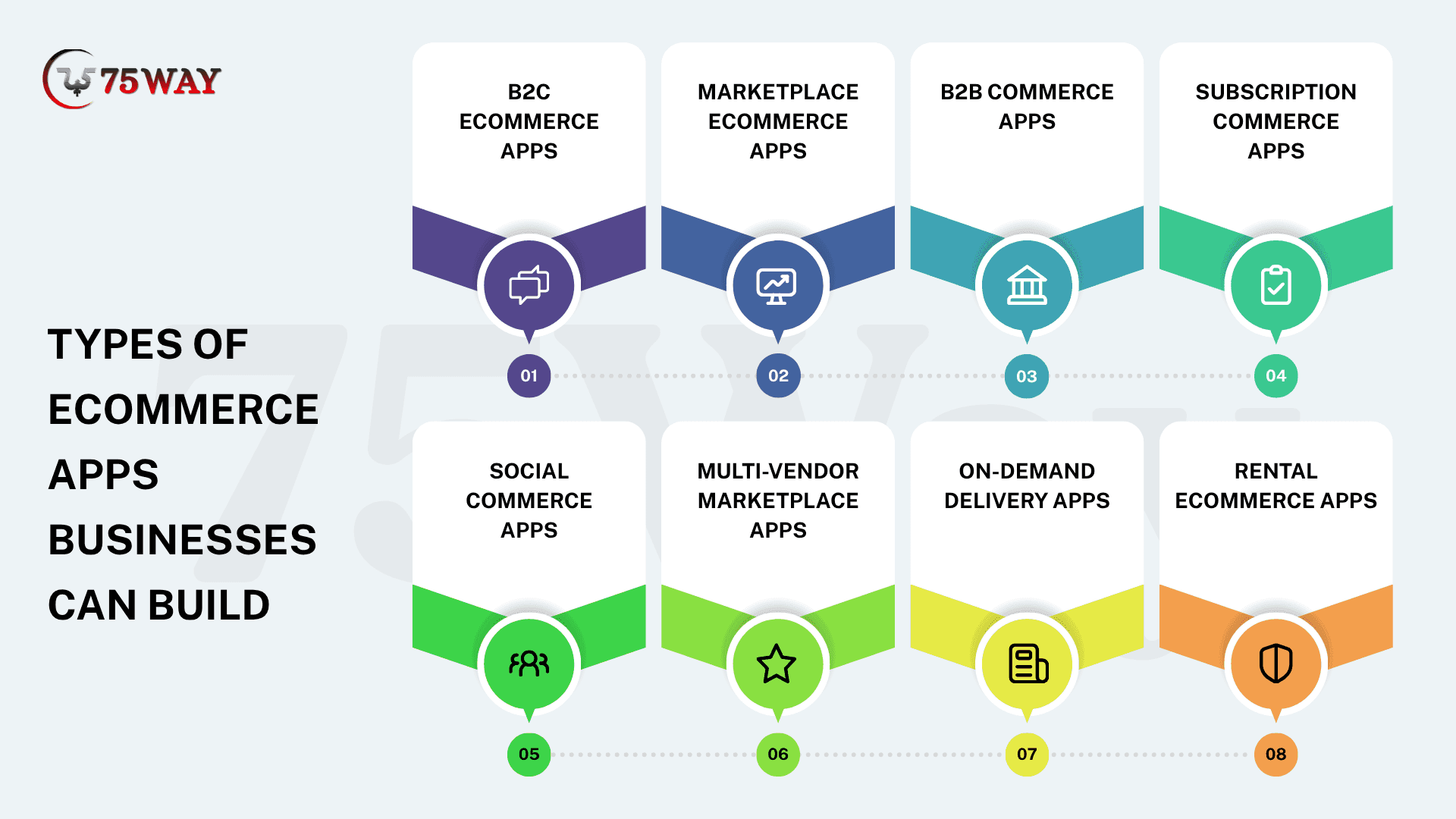
1. B2C Ecommerce Apps
B2C ecommerce applications help businesses sell products directly to consumers through mobile and web platforms. These apps simplify online shopping, payment processing, and order fulfillment workflows. Retail brands increasingly invest in B2C applications to improve customer engagement and mobile commerce accessibility. Personalized shopping experiences also improve customer retention and conversion opportunities. Examples include:
- Fashion retail apps
- Grocery delivery apps and platforms
- Electronics stores
- Beauty commerce applications
2. Marketplace Ecommerce Apps
Marketplace ecommerce apps connect multiple vendors with customers through centralized digital commerce ecosystems. These platforms help businesses scale product catalogs without maintaining internal inventory ownership. Marketplace models generate revenue through commissions, subscriptions, and premium seller services. Multi-vendor commerce ecosystems also improve product diversity and customer purchasing flexibility across categories. These applications support:
- Vendor onboarding
- Multi-store management
- Commission systems
- Seller analytics
3. B2B Commerce Apps
B2B ecommerce applications support wholesale transactions, bulk ordering systems, and enterprise procurement workflows across supply chain ecosystems. Businesses use these platforms to automate purchasing operations and improve distribution management. Advanced B2B commerce apps often integrate inventory coordination, invoicing systems, and customer relationship management infrastructure for enterprise scalability.
- Multi-Vendor Marketplace Apps
- Wholesale product platforms
- Industrial equipment marketplaces
- Manufacturing supply chain apps
- Pharmacy delivery apps and platforms
- Automotive parts procurement apps
- Restaurant supply ordering systems
- Office inventory management apps
- Construction material marketplaces
4. Subscription Commerce Apps
Subscription ecommerce apps help businesses deliver products regularly through recurring payments and automated fulfillment systems. These platforms improve customer retention while creating predictable recurring revenue opportunities for retail brands.
Subscription commerce models are widely used across grocery delivery, wellness products, beauty brands, and household essentials industries globally. These models improve customer retention.
5. Social Commerce Apps
Social commerce applications combine digital shopping with influencer engagement, community interaction, and content-driven purchasing experiences. These platforms encourage customers to discover products directly through videos, livestreams, and creator recommendations. Social commerce ecosystems improve brand visibility and increase customer engagement among mobile-first retail audiences and younger demographics. Examples include:
- Livestream shopping platforms
- Influencer-driven fashion apps
- Video commerce marketplaces
- Creator merchandise platforms
- Social beauty commerce apps
- Community-based shopping apps
- Affiliate product discovery platforms
- Short-video retail marketplaces
6. Multi-Vendor Marketplace Apps
Multi-vendor marketplace applications enable multiple sellers to list and manage products within a single centralized ecommerce ecosystem. These apps simplify seller onboarding, commission management, product catalog expansion, and order coordination workflows. Businesses prefer marketplace models because they scale rapidly without maintaining complete internal inventory across all categories. Examples include:
- Fashion multi-brand marketplaces
- Electronics seller platforms
- Grocery marketplace applications
- Handmade product marketplaces
- Home decor vendor platforms
- Beauty product marketplaces
- Furniture ecommerce marketplaces
- Hyperlocal retail commerce apps
7. On-Demand Delivery Apps
On-demand delivery applications help businesses provide instant product delivery through real-time logistics and digital order management systems. These apps support fast customer fulfillment across groceries, food, medicine, and retail products. Businesses use on-demand delivery platforms to improve customer convenience, operational speed, and hyperlocal commerce accessibility. These on-demand app development solutions include:
- Food delivery applications
- Grocery delivery platforms
- Pharmacy delivery apps
- Flower delivery marketplaces
- Alcohol delivery platforms
- Pet supply delivery apps
- Quick commerce retail apps
- Hyperlocal courier applications
8. Rental Ecommerce Apps
Rental ecommerce applications allow customers to rent products temporarily rather than purchase them permanently through digital booking platforms. These apps support flexible access to products while reducing ownership costs for consumers. Businesses use rental commerce platforms across fashion, vehicles, electronics, furniture, and equipment-sharing marketplaces to generate recurring revenue.
- Car rental applications
- Fashion rental platforms
- Furniture rental marketplaces
- Camera equipment rental apps
- Vacation property booking platforms
- Bike and scooter rental apps
- Electronics rental commerce apps
- Party equipment rental platforms
How Ecommerce Application Developers Build Modern mCommerce Apps?
Building a successful ecommerce application involves multiple interconnected development stages supporting digital commerce growth for online store. Ecommerce app developers follow structured workflows starting from business analysis to long-term scalability planning. Each development phase contributes directly toward building conversion-focused mcommerce apps.
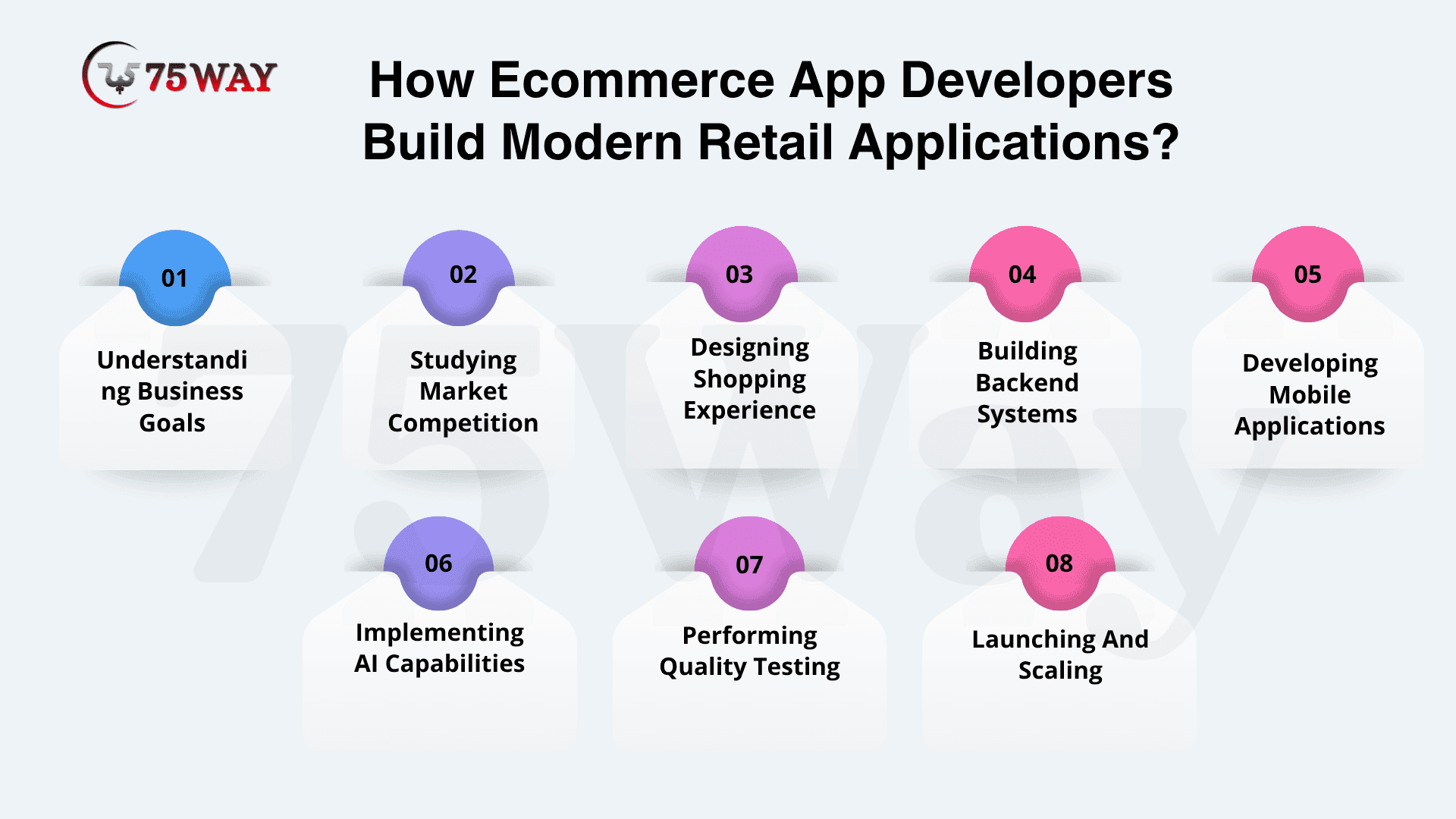
Step 1: Understanding Business Goals
Ecommerce app developers first analyze business objectives, customer expectations, revenue models, and operational challenges carefully before starting development workflows. This discovery phase helps teams identify platform requirements, customer journeys, and technical priorities clearly. A strong strategic foundation ensures the retail application aligns properly with long-term business growth and digital commerce scalability objectives.
Step 2: Studying Market Competition
After defining business goals, developers research competitor platforms, customer behavior trends, and emerging ecommerce technologies across the retail industry. This stage helps businesses identify digital commerce opportunities and feature gaps. Market research also supports better product positioning, pricing strategies, and customer engagement planning before design and development processes begin.
Step 3: UI/UX Designing For Smooth Shopping Experience
Once research insights are finalized, developers and designers create customer-focused interfaces supporting smooth navigation and faster product discovery experiences. UI/UX planning improves shopping convenience, checkout simplicity, and mobile usability. Well-structured ecommerce designs reduce cart abandonment risks while improving customer engagement, retention, and conversion performance across retail applications.
Step 4: Building Backend Systems
After finalizing interface designs, developers build scalable backend infrastructure supporting inventory management, order processing, payment systems, and analytics coordination workflows. Backend architecture acts as the operational foundation for the ecommerce ecosystem. Strong infrastructure planning ensures the retail application handles growing traffic, transactions, and customer interactions without operational performance issues.
Step 5: Developing Ecommerce Mobile Applications
Once backend systems become operational, ecommerce app developers build mobile applications supporting Android and iOS commerce experiences simultaneously across devices. Cross-platform development improves scalability while reducing development timelines. Mobile applications integrate customer accounts, product catalogs, payments, notifications, and order tracking systems into centralized retail commerce workflows for seamless shopping experiences.
Step 6: Implementing AI Capabilities
After mobile commerce infrastructure is completed, developers integrate AI-powered systems improving personalization, automation, recommendations, and customer engagement workflows inside the retail application. Artificial intelligence strengthens operational efficiency while improving shopping experiences continuously. AI integrations also support predictive analytics, intelligent product suggestions, chatbot assistance, and customer behavior analysis across ecommerce ecosystems.
Step 7: Performing Quality Testing
Before launching the ecommerce platform publicly, developers conduct security testing, scalability analysis, and user experience optimization processes carefully across all systems. Testing helps identify technical issues, payment vulnerabilities, and operational bottlenecks early. This stage ensures the ecommerce application delivers stable performance, secure transactions, and reliable customer experiences during high traffic periods.
Step 8: Launching And Scaling
After successful testing completion, developers deploy the ecommerce application using cloud infrastructure supporting operational scalability and future digital expansion requirements. Deployment involves monitoring performance, optimizing infrastructure, and maintaining application stability continuously. Businesses can then scale retail operations, expand into new markets, and introduce advanced commerce features without rebuilding core systems.
Benefits of Hiring Dedicated Retail Mobile App Developers
Dedicated retail app developers help businesses build scalable ecommerce applications. Their expertise improves development speed, customer experiences, and long-term digital commerce performance.
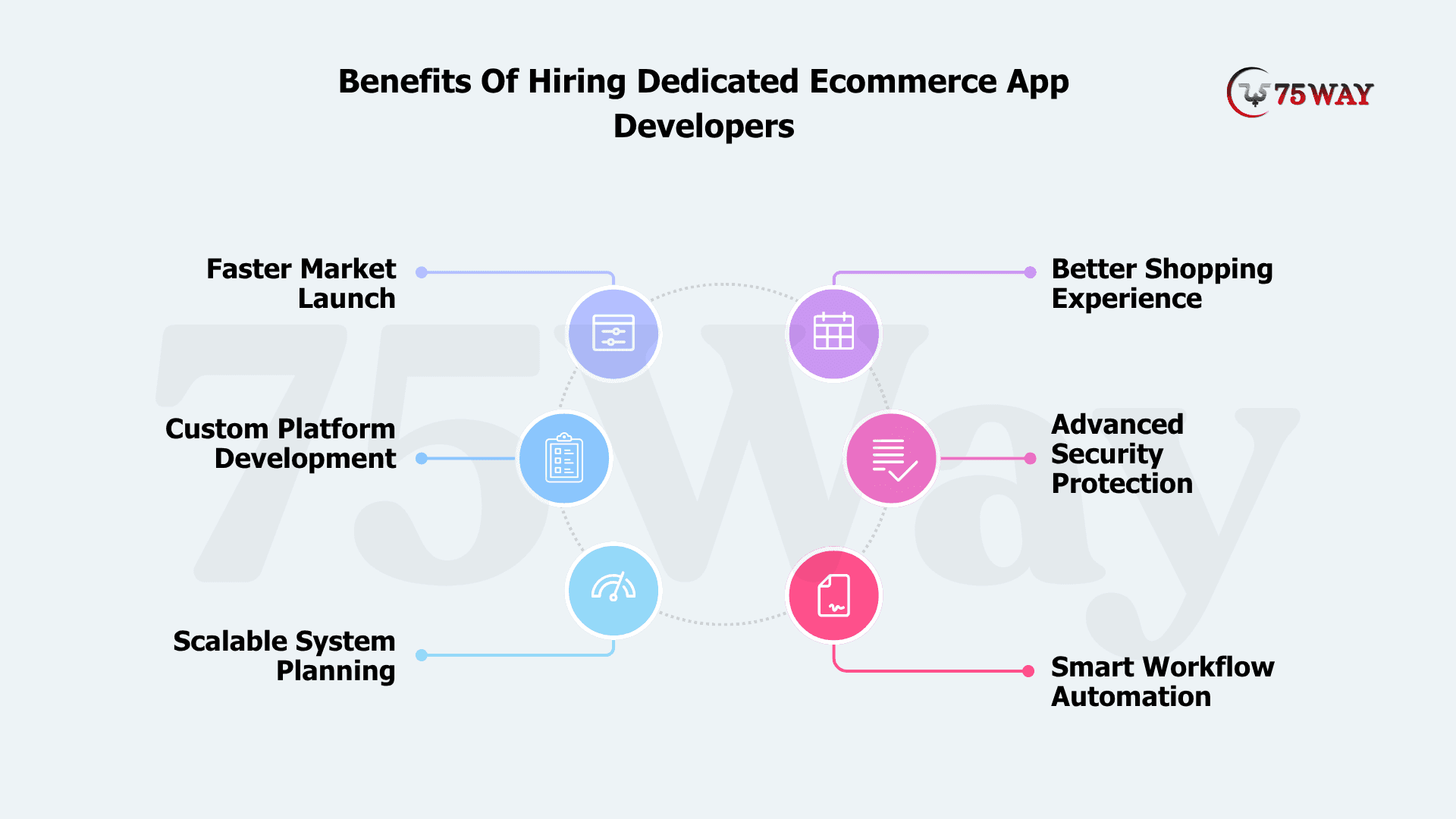
- Faster Market Launch: Experienced developers streamline ecommerce workflows and reduce deployment delays across retail application development projects.
- Custom Platform Development: Dedicated developers build tailored commerce applications aligned with specific business models and customer engagement requirements.
- Scalable System Planning: Professional developers create flexible infrastructure supporting long-term ecommerce growth and expanding operational requirements.
- Better Shopping Experience: Optimized interfaces improve customer engagement, simplify navigation, and strengthen purchasing behavior across ecommerce applications.
- Advanced Security Protection: Ecommerce developers implement strong cybersecurity systems protecting customer information, payments, and sensitive transaction data.
- Smart Workflow Automation: Automation systems reduce manual operations while improving inventory management, customer support, and retail coordination processes.
What’s Cost To Hire Ecommerce App Developers In 2026?
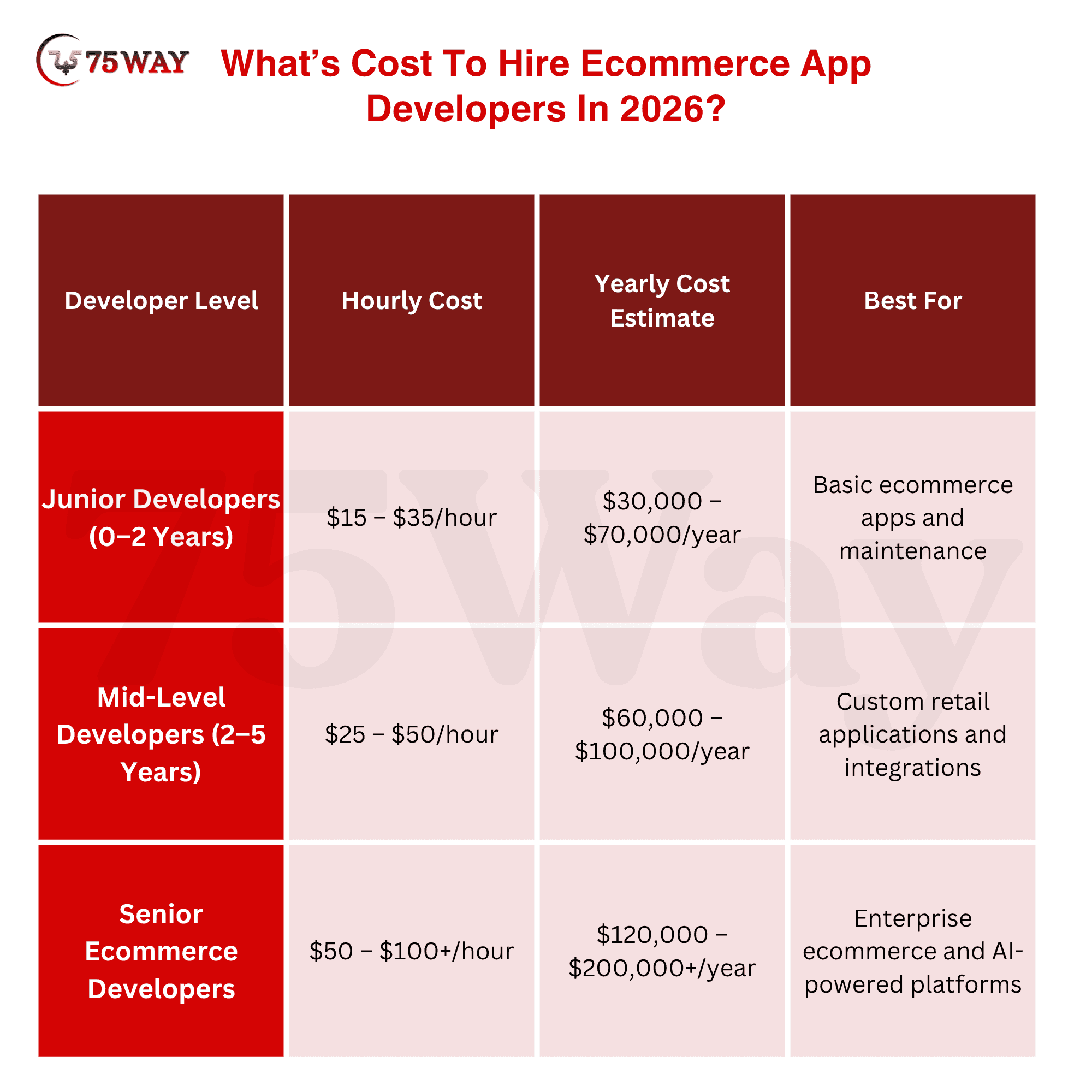
The cost to hire ecommerce app developers in 2026 depends on developer expertise, project complexity, AI integration requirements, technology stack, and scalability expectations.
- Junior developers with 0–2 years of experience typically charge between $15–$35/hour or earn around $30,000–$70,000 annually.
- Mid-level developers with 2–5 years of expertise usually cost $25–$50/hour or $60,000–$100,000/year.
- Senior ecommerce app developers can charge $50–$100+/hour and earn between $120,000–$200,000+ annually for handling advanced scalable ecommerce systems.
Cost To Hire Offshore Ecommerce App Programmers In 2026
Businesses now choose flexible hiring models ranging from hourly ecommerce developers to fully dedicated development teams depending on project scope, scalability goals, and operational budgets.
- Offshore Developers In India And Asia: Businesses hire skilled ecommerce developers from India and Asian countries at approximately $25–$70 per hour.
- Offshore Developers In Eastern Europe: Eastern European ecommerce developers usually charge around $30–$60 per hour while offering strong technical expertise.
- North American Developers: Ecommerce app developers in North America generally charge between $90–$150+ per hour for enterprise-grade retail application development services.
- Dedicated Team Model: Dedicated ecommerce development teams reduce recruitment challenges while providing immediate access to experienced specialists, project managers, designers, and AI integration experts.
Questions Businesses Should Ask Before Hiring Ecommerce Marketplace App Developers
Hiring ecommerce marketplace app developers requires careful evaluation beyond technical coding abilities alone. Asking the right questions helps companies avoid operational risks while ensuring successful retail application development and future digital commerce scalability.
- Do They Understand Retail Workflows?
- Can They Build Scalable Architecture?
- Do They Support AI Integrations?
- Can They Handle Omnichannel Commerce?
- Do They Provide Long-Term Maintenance?
Wrap Up
Businesses investing in digital mcommerce and retail platform require experienced ecommerce app developers capable of building secure, conversion-focused, and scalable commerce platforms aligned with long-term operational growth. From marketplace applications and subscription commerce systems to AI-driven product recommendations and predictive analytics, ecommerce app development continues reshaping the future of global retail industries in 2026. If you are lanning to launch a an online shopping store app, you can hire a trusted ecommerce development company for growth.
Frequently Asked Questions (FAQs)
Can Ecommerce Apps Support International Selling Operations?
Yes, modern ecommerce applications support global commerce operations across multiple countries and customer regions. Businesses can integrate multilingual support and international payment gateways.
Why Should Businesses Partner With Experienced Ecommerce App Developers?
Veteran ecommerce app developers understand retail workflows, scalability planning, and customer engagement strategies deeply. They help businesses avoid technical mistakes during development stages.
How Do Businesses Choose The Right Ecommerce App Development Partner?
Businesses should evaluate technical expertise, ecommerce portfolio, AI integration capabilities, and communication processes carefully before hiring developers. Strong development partners understand long-term business goals clearly.
Do Ecommerce App Development Companies Provide Post-Launch Support?
Yes, most professional ecommerce app development companies provide maintenance, updates, and operational support after application deployment stages.
Can Ecommerce App Developers Build AI-Powered Retail Applications?
Yes, modern ecommerce app developers increasingly build AI-powered retail ecosystems supporting automation and personalized customer engagement workflows. AI integrations improve recommendations, customer support, and predictive analytics capabilities.
Can Ecommerce Development Partners Handle Marketplace Applications?
Professional ecommerce development companies commonly build marketplace applications supporting multiple vendors, commissions, and centralized product management systems.