AI Summary
Launching a casino app in 2026 starts here. Learn the casino game app development process, costs, essential features, AI capabilities, technology stack, legal factors, and expert recommendations before choosing a development partner. Your success depends on strategic planning, regulatory awareness, engaging user experiences, and reliable security.
Quick Overview
- Strategic casino game app development reduces risks and boost launch readiness.
- Modern casino apps require engaging gameplay alongside security and regulatory compliance.
- Artificial intelligence creates personalized gaming experiences that improve player retention and lifetime value.
- Casino app cost lies between $15,000-$300,000, based on complexity and compliance requirements.
- Custom casino app development provides greater flexibility, ownership, scalability, and long-term competitive business advantages.
What makes players keep returning to one casino game app while uninstalling another after just a few minutes? It is rarely about luck. Smooth gameplay, real-time interactions, rewarding experiences, secure transactions, and seamless performance often decide whether an app succeeds or disappears in a crowded market.
Before investing thousands of dollars into casino game app development, ask yourself one question: what keeps players coming back after their first session? The answer goes far beyond attractive graphics or a large collection of games. It depends on the entire user experience behind the platform.
If you're planning to build a casino game app in the USA, understanding what goes into creating a successful casino platform is the first step. This guide explains the complete casino app development process, essential features, estimated costs, and the technology stack required to launch a competitive casino game app in 2026.
Casino Game Development: Market Size & Overview
Interest in mobile casino gaming continues to grow across global markets, creating strong opportunities for new entrants and established gaming brands alike. Understanding the current market landscape helps businesses make informed development and investment decisions.
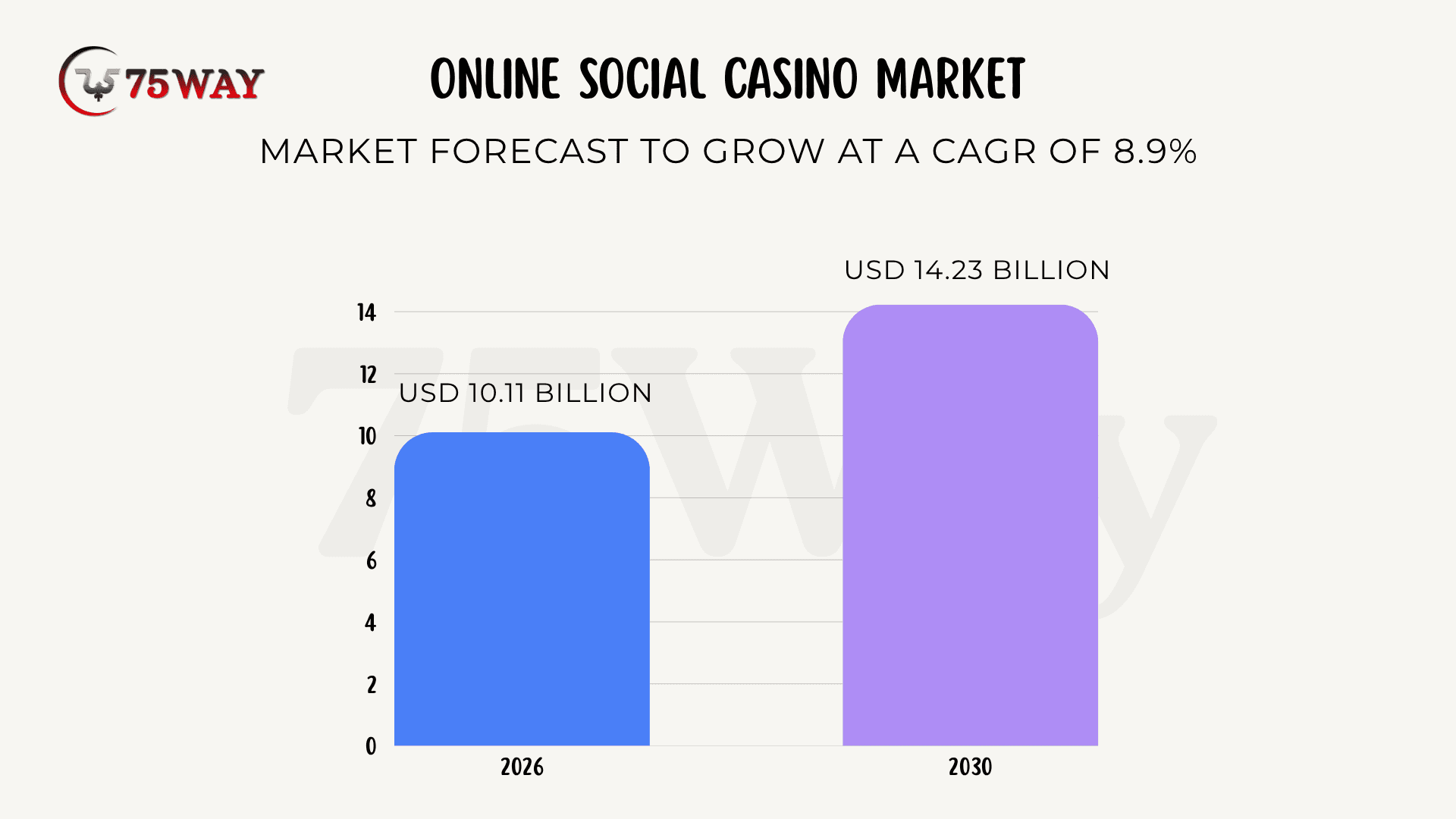
- The global online social casino market is projected to grow from $10.11 billion in 2026 to $14.23 billion by 2030, at a CAGR of 8.9%.
- According to Uswitch Limited, the number of online gamers worldwide is expected to reach 5.7 billion by 2032, fueling demand for online casino games.
- The U.S. online casino market is forecast to grow at a CAGR of 11.7% through 2030.
- According to Statista, global gambling market revenue is expected to reach US$655.31 billion in 2026.
- The gambling market is projected to expand at a 2.28% CAGR, reaching US$717.06 billion by 2030.
- The gambling industry is expected to record an ARPU of US$653.31 in 2026, while the global user base is projected to reach 1.1 billion by 2030.
Read Too: Top 10 Casino Game Development Companies To Hire in 2026
Different Types of Casino Game Apps You Can Build
Casino game apps are not all built for the same audience or business model. Some focus on real-money gambling, while others prioritize entertainment, social interaction, or skill-based competitions. Choosing the right app type at the beginning helps define your development roadmap, licensing requirements, and overall investment. The following are the most common types of casino game apps in 2026.
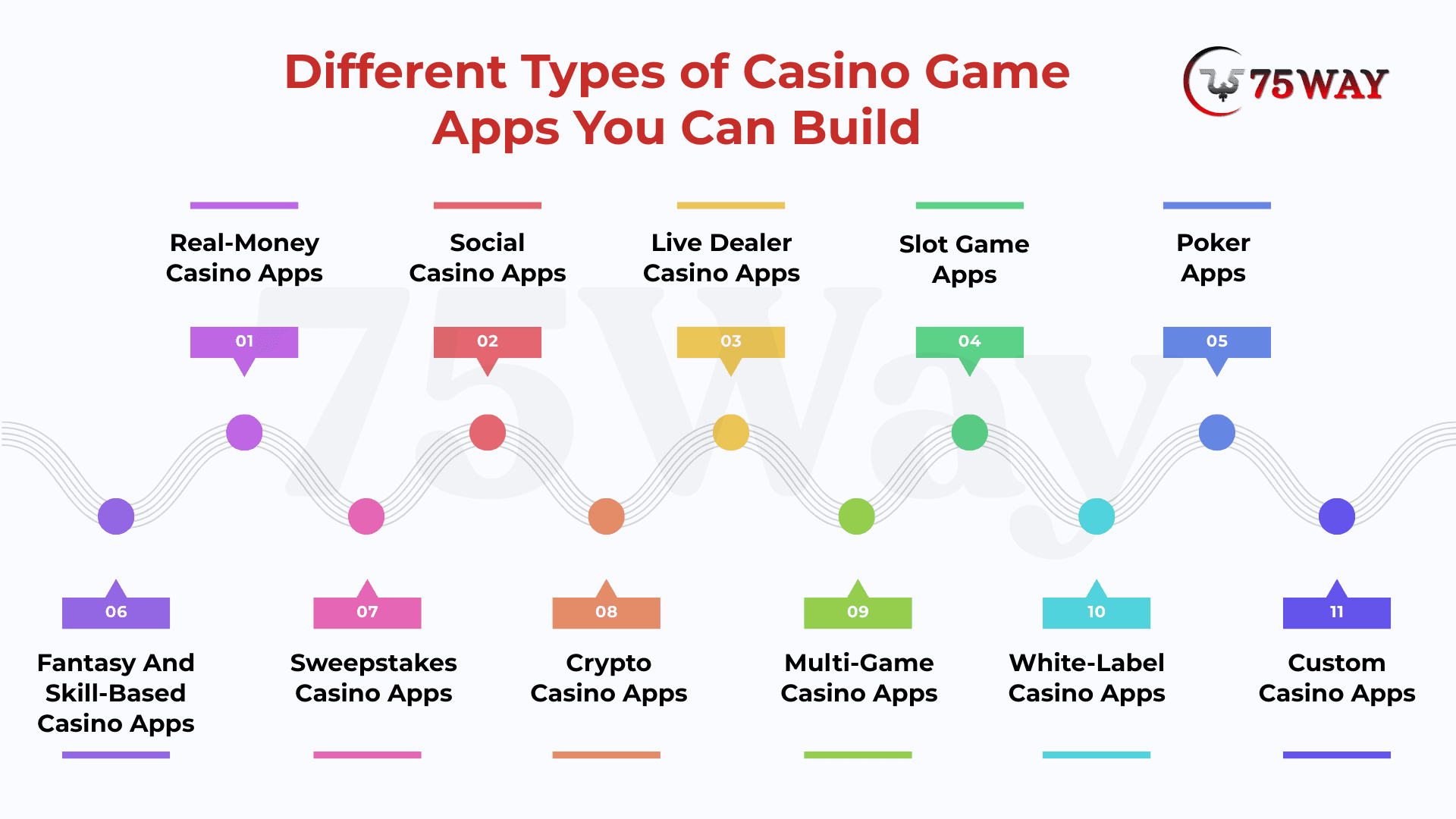
- Real-Money Casino Apps
Real-money casino apps allow players to deposit funds, place wagers, and withdraw winnings. Popular games include slots, poker, blackjack, roulette, baccarat, and live dealer experiences. Since these platforms involve actual money, they must comply with gambling regulations, player verification requirements, and secure payment standards.
- Social Casino Apps
Social casino apps recreate the excitement of casino games without real-money gambling. Players use virtual coins to enjoy games, participate in tournaments, and compete with friends. Revenue typically comes from in-app purchases, advertisements, and premium memberships, making this model attractive for businesses entering the gaming industry.
- Live Dealer Casino Apps
Live dealer apps bring the experience of a physical casino to mobile devices through real-time video streaming. Professional dealers host games such as blackjack, roulette, baccarat, and poker, allowing players to interact during live sessions. This format creates a more immersive experience while increasing player engagement.
- Slot Game Apps
Slot game apps focus primarily on slot machines with different themes, bonus rounds, jackpots, and reward systems. Frequent content updates and new slot releases help maintain player interest and encourage repeat visits.
- Poker Apps
Poker apps cater to players who enjoy strategy-based gameplay. Features such as multiplayer tables, tournaments, rankings, and private rooms create a competitive environment for casual players and experienced enthusiasts alike.
- Fantasy And Skill-Based Casino Apps
Fantasy and skill-based casino apps combine gaming with player expertise. Instead of relying entirely on chance, these platforms reward strategic thinking, decision-making, and competitive performance. This category has gained popularity among users looking for more interactive gameplay.
- Sweepstakes Casino Apps
Sweepstakes casino apps operate under promotional sweepstakes models in eligible jurisdictions. Players use virtual currencies to participate in games and may redeem eligible prizes based on applicable regulations. Since legal requirements vary by region, businesses should evaluate compliance obligations before selecting this model.
- Crypto Casino Apps
Crypto casino apps support digital currencies such as Bitcoin, Ethereum, and USDT for deposits and withdrawals. Blockchain technology improves transaction transparency while providing additional payment flexibility for players in supported markets.
- Multi-Game Casino Apps
Multi-game casino apps combine several casino categories within a single platform. Players can switch between slots, poker, roulette, blackjack, baccarat, live dealer games, and tournaments without downloading separate applications. This approach appeals to businesses targeting a broader audience and aiming to increase player retention.
- White-Label Casino Apps
White-label casino apps offer a ready-made solution for businesses that want to enter the market quickly. The software provider supplies the core platform, while businesses customize branding, game selection, and certain features. This option reduces development time but offers less flexibility than custom development.
- Custom Casino Apps
Custom casino apps are built from the ground up to match specific business requirements. Every feature, design element, game, and integration is developed according to the company's goals. Although this approach requires a higher initial investment, it provides greater scalability, stronger brand identity, and complete ownership of the platform.
How To Build Casino Game App in 2026? Step-By-Step Development Process
Every successful casino game begins with a well-defined development roadmap. Following the right process helps reduce risks, streamline development, and create a gaming platform ready for long-term growth.
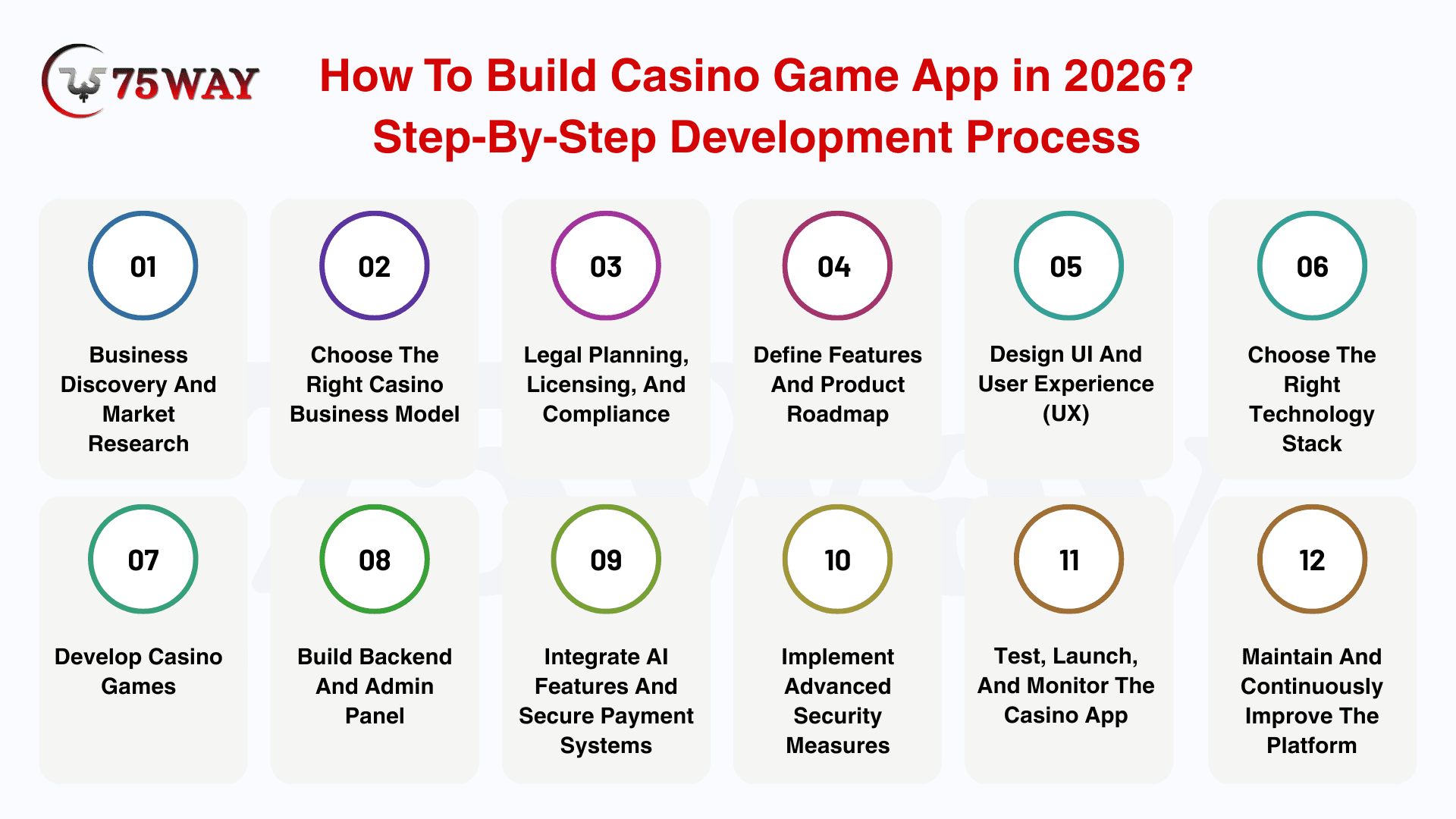
Step 1: Business Discovery And Market Research
Every successful casino platform starts with one simple question: who is this app actually built for?
Many founders become excited about launching a casino app and immediately begin discussing games, features, or design ideas. That excitement is understandable, but skipping the discovery stage often creates bigger challenges later. A beautiful application won't generate revenue if it targets the wrong audience or enters an overcrowded niche without a clear competitive advantage.
Business discovery transforms an idea into a practical development roadmap. This stage helps define project goals, understand player expectations, estimate budgets, and identify opportunities before development begins.
Several important questions shape this phase:
- Will the platform target real-money gaming or social casino players?
- Which countries or regions will become the primary market?
- Which age groups and player preferences deserve the most attention?
- Which competitors already dominate the selected niche?
- Which problems can your platform solve better than existing casino apps?
Clear answers help development teams prioritize features instead of building everything at once. That approach reduces unnecessary development costs while creating a stronger foundation for future updates.
Step 2: Choose The Right Casino Business Model
Every casino app doesn't operate in the same way. Business goals, legal requirements, target markets, and revenue strategies all influence the type of platform you should build.
Choosing the wrong business model can increase operational complexity, create regulatory challenges, or limit future growth. A careful evaluation at this stage saves both time and investment. Several business models like real-money, social casino, sweepstakes, crypto casino, and skill-based casino apps dominate the casino industry today.
Every business model brings different technical, operational, and legal requirements. A clear decision at this stage simplifies technology selection, feature planning, licensing, and overall development.
Business strategy now sets the direction. The next step focuses on the legal framework that determines where and how the casino platform can operate.
Step 3: Legal Planning, Licensing, And Compliance
A brilliant casino app can still fail before attracting its first player if legal requirements receive little attention. Attractive visuals, engaging gameplay, and advanced technology cannot compensate for missing licenses or weak compliance practices. This stage deserves careful planning because it protects your business from unnecessary legal risks while building trust with players and payment providers.
Legal requirements vary across countries and even between states or provinces. A business planning to launch in the United States faces different obligations than one targeting the United Kingdom, Malta, or Canada. Clear legal guidance before development helps avoid expensive changes after the platform is ready.
1. Select The Right Jurisdiction
Your target market determines where your casino business should operate and which regulations apply. Every jurisdiction has its own licensing authority, compliance standards, tax policies, and responsible gaming requirements.
Several factors influence this decision:
- Target audience location
- Local gambling laws
- Tax obligations
- Licensing costs
- Operational restrictions
- Payment provider availability
A business serving multiple countries may also need separate licenses for different markets, depending on regional regulations.
2. Obtain A Gambling License
A gambling license gives your platform legal authorization to operate within approved jurisdictions. Many payment gateways, banking partners, and software providers also require valid licensing before working with casino businesses.
Several licensing authorities maintain strict technical and operational standards. Approval typically involves reviewing financial stability, company ownership, security practices, and responsible gaming measures before granting permission to operate.
Early licensing discussions also help developers understand technical requirements that must be incorporated during development rather than after launch.
3. Implement KYC And Player Verification
Player registration involves much more than collecting an email address. Real-money casino platforms must verify player identities before allowing deposits or withdrawals.
Know Your Customer (KYC) procedures generally include identity verification, age verification, address verification, document authentication, and risk assessment. These measures reduce fraud while preventing underage gambling and identity misuse.
4. Build Anti-Money Laundering (AML) Controls
Financial transactions attract additional regulatory responsibilities. Anti-Money Laundering (AML) systems help identify suspicious activities before they become serious compliance issues.
Modern casino platforms often monitor:
- Unusual deposit patterns
- High-value transactions
- Multiple account activity
- Rapid withdrawals
- Suspicious betting behavior
Automated monitoring combined with manual reviews strengthens financial security and supports regulatory compliance.
5. Integrate Certified RNG Technology
Fair gameplay remains one of the strongest trust signals in the online casino industry. Players expect every spin, card, or dice roll to produce unpredictable results.
Random Number Generator (RNG) technology creates that fairness by generating independent outcomes for every game session. Independent testing laboratories certify RNG systems to confirm that results remain unbiased and comply with regulatory standards.
Displaying certified fair-play credentials also improves player confidence, especially for new platforms entering competitive markets.
6. Prioritize Responsible Gaming
Long-term success depends on creating a safe gaming environment, not simply increasing player activity. Responsible gaming features demonstrate that the platform values player well-being alongside business growth. Common responsible gaming tools include:
- Deposit limits
- Spending limits
- Session reminders
- Cooling-off periods
- Self-exclusion options
- Reality checks
- Access to responsible gaming resources
Many jurisdictions require these features as part of their licensing framework.
7. Strengthen Data Privacy And Payment Security
Casino applications process sensitive personal and financial information every day. Strong security practices protect both players and the business from cyber threats.
Depending on the target market, compliance may include standards and regulations such as:
- PCI DSS for secure payment processing
- GDPR for users in applicable European markets
- CCPA or other regional privacy requirements where applicable
- Data encryption for information in transit and at rest
- Secure authentication and access controls
Security planning should begin during architecture design instead of becoming a post-launch addition.
Step 4: Define Features And Build The Product Roadmap
A common misconception surrounds casino app development. Many businesses believe that adding more features automatically creates a better product. Real-world results often tell a different story.
Players don't judge a casino app by the number of features listed on its website. Fast navigation, smooth gameplay, quick deposits, personalized rewards, and a hassle-free experience usually matter much more. A well-planned product roadmap helps development teams focus on the features that deliver genuine value instead of overwhelming users with unnecessary complexity.
This stage connects business goals with technical execution. Every feature should support a clear objective, whether that involves attracting new players, improving retention, increasing average revenue per user, or simplifying platform management.
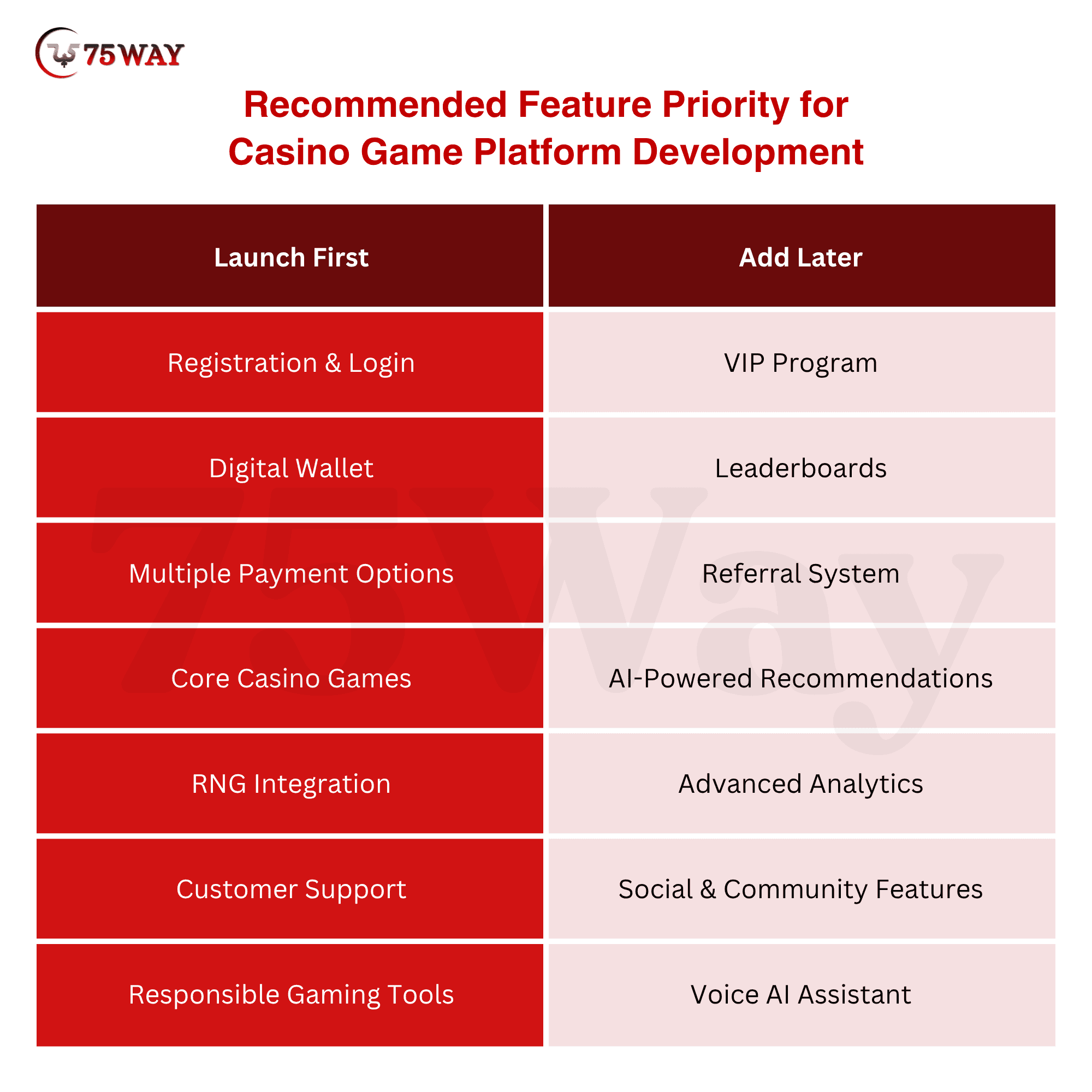
- Start With The Core Player Journey: Every interaction inside the app follows a sequence. Mapping that journey before development helps eliminate friction and creates a smoother user experience. A typical player journey has account registration, identity verification, profile creation, wallet setup, game discovery, deposits, gameplay, rewards and bonuses, withdrawals, and customer support.
Every step should feel simple and intuitive. Even a small delay during registration or payments can increase abandonment rates.
- Separate Essential Features From Future Enhancements: One mistake appears repeatedly during casino software projects. New ideas keep entering the roadmap until development becomes slower, more expensive, and harder to manage. A phased roadmap solves this problem by dividing features into priorities.
- Design Features Around Business Goals: Every feature should answer a practical business question. For example:
- A loyalty program increases player retention.
- Referral rewards reduce customer acquisition costs.
- Personalized promotions improve conversion rates.
- AI recommendations encourage longer gaming sessions.
- Analytics dashboards support faster business decisions.
Features without measurable business value often increase maintenance costs without delivering meaningful returns.
Step 5: Design An Intuitive UI And User Experience
A casino app gets only one chance to make a first impression. Players decide within seconds whether the platform feels trustworthy, easy to navigate, and enjoyable to use. Flashy animations may catch attention initially, but they rarely convince someone to stay. A thoughtful user experience keeps players engaged long after the excitement of downloading the app fades.
This stage focuses on creating an interface that feels natural from the first tap. Every screen, button, and interaction should help players reach their destination with minimal effort.
- Build The User Journey Before The Interface: Visual design should never come first. A clear user journey creates the foundation for every design decision. Development teams typically map the complete player experience before designing individual screens. This process identifies how users move between registration, wallet setup, game selection, gameplay, rewards, and withdrawals. Questions like these help shape the journey:
- How many steps are required to start playing?
- Can players locate their favorite games quickly?
- Are deposits and withdrawals simple to complete?
- Does the navigation remain consistent across every screen?
A smooth journey reduces confusion and encourages players to spend more time exploring the platform.
- Create Wireframes And Interactive Prototypes: Wireframes provide a visual blueprint before detailed design begins. They define the placement of menus, buttons, game categories, and essential features without focusing on colors or graphics.
Interactive prototypes take this process one step further. Businesses can experience the application's navigation before development starts, making it easier to identify usability issues early. Addressing design problems at this stage costs far less than redesigning completed software.
- Design For Mobile-First Experiences: Most casino players access gaming platforms through smartphones. A desktop layout simply compressed onto a smaller screen creates frustration instead of convenience. Mobile-first design focuses on:
- Comfortable thumb navigation
- Large, readable buttons
- Simple menus
- Fast-loading screens
- Minimal scrolling
- Clear game categories
- Responsive layouts for different devices
Every interaction should feel effortless whether someone plays for five minutes or several hours.
- Strengthen Brand Recognition Through Design: A casino app should look distinctive instead of resembling dozens of competing platforms. Consistent branding helps players remember the application and builds familiarity over time.
Make Game Discovery Simple: A growing casino platform may offer hundreds of games. Without proper organization, players can quickly become overwhelmed. An effective game lobby usually includes:
- Search functionality
- Game categories
- Trending games
- Recently played titles
- Personalized recommendations
- Favorite lists
- Filter and sorting options
Reducing the time required to find a game often improves overall player satisfaction.
- Balance Entertainment With Performance: Visual effects certainly enhance gameplay, but excessive animations or oversized graphics can slow the application. Players notice performance issues much faster than design details.
A successful UI balances visual appeal with speed by using optimized assets, smooth transitions, and responsive interactions that perform well across different devices.
- Test The Experience Before Development: A polished interface rarely emerges from the first design iteration. User testing reveals friction points that internal teams often overlook. Feedback from real users helps answer practical questions:
- Which screens create confusion?
- Which actions require too many steps?
- Which features receive the most attention?
- Which areas need simplification?
Small improvements discovered during usability testing can significantly improve player satisfaction after launch.
Step 6: Choose The Right Technology Stack
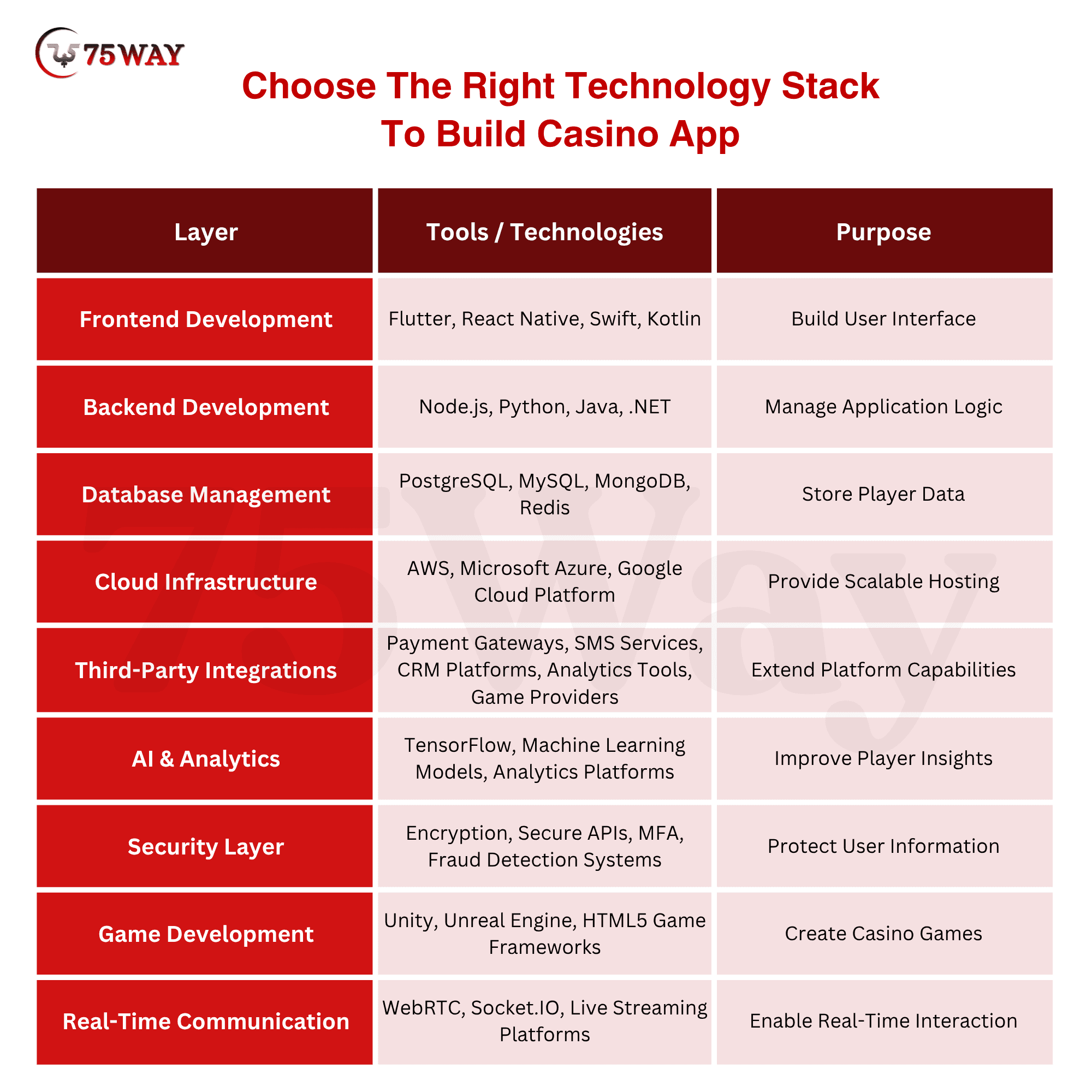
A casino app may look simple on the surface, but a powerful technology stack keeps everything running behind the scenes. Every game, payment, notification, and player interaction depends on the technologies selected during development. A poor choice can create performance issues as the user base grows, while the right stack supports long-term scalability and faster updates.
Technology selection should align with your business goals, expected traffic, feature requirements, and budget rather than following industry trends.
1. Frontend Development: The frontend represents everything players interact with, from the login screen to game lobbies and payment pages. A responsive and intuitive interface improves user satisfaction across smartphones and tablets. Popular frontend technologies are Flutter, React Native, Swift (iOS), and Kotlin (Android).
Cross-platform frameworks help reduce development time, while native technologies deliver higher performance for feature-rich casino apps.
2. Backend Development: The backend manages business logic, user accounts, game sessions, wallets, rewards, and transactions. A stable backend keeps the platform responsive even during peak traffic. Common backend technologies include Node.js, Python, Java, and .NET.
The final choice depends on project complexity, scalability needs, and integration requirements.
3. Database
Every casino platform stores player profiles, transaction records, game history, rewards, and analytics. A reliable database protects this information while delivering fast performance. Popular options are PostgreSQL, MySQL, MongoDB, and Redis.
Many enterprise platforms combine multiple databases to balance speed and scalability.
4. Cloud Infrastructure
Traffic can increase dramatically during tournaments, promotional campaigns, or seasonal events. Cloud infrastructure allows the platform to scale resources without disrupting gameplay. Businesses commonly use AWS, Microsoft Azure, and Google Cloud platform.
Cloud hosting also improves availability, disaster recovery, and global performance.
5. Third-Party Integrations
Modern casino apps depend on several external services to expand functionality without building everything from scratch. Common integrations are payment gateways, SMS and email services, push notifications, live chat, analytics tools, CRM platforms, and game content providers.
Reliable integrations reduce development effort while improving the overall player experience.
6. AI And Analytics
Artificial intelligence has become an important part of modern casino platforms. AI analyzes player behavior, recommends games, identifies suspicious activity, and supports personalized promotions.
Analytics tools also provide valuable insights into player retention, revenue, and platform performance, helping businesses make data-driven decisions.
7. Security Technologies
Security should be built into the platform from the beginning. Encryption, secure APIs, multi-factor authentication, and fraud detection systems help protect sensitive player and financial information.
The right technology stack creates a strong technical foundation, but the platform still needs engaging games that players genuinely enjoy. The next step focuses on developing those games while maintaining performance, fairness, and scalability.
Step 7: Develop The Casino Games
Game development marks the stage where the platform begins to take shape. Every game should deliver smooth gameplay, realistic animations, quick loading times, and fair outcomes. At the same time, the experience should remain consistent across different devices and screen sizes.
The choice of games depends on your target audience and business model. Some platforms focus on classic casino games, while others combine traditional titles with modern social gaming experiences.
Popular game options include:
- Slot games
- Poker
- Blackjack
- Roulette
- Baccarat
- Bingo
- Teen Patti
- Rummy
- Crash games
- Live dealer games
Every game should undergo extensive balancing and testing before launch. Fair gameplay, responsive controls, and stable performance encourage players to return.
Step 8: Develop The Backend And Admin Panel
Players only see the front end, but the backend controls almost everything happening inside the platform. User management, wallets, rewards, transactions, and game sessions all operate through this layer.
A powerful admin panel also simplifies daily operations by allowing administrators to monitor player activity, manage bonuses, and generate reports without technical assistance.
A complete backend generally includes:
- User management
- Wallet management
- Payment management
- Bonus engine
- Loyalty program controls
- Reporting dashboard
- Game management
- Customer support tools
- Notification management
- Content management
A scalable backend allows new games, features, and markets to be added without rebuilding the platform.
Step 9: Integrate AI Features And Secure Payment Systems
Core development may be complete at this stage, but the platform still needs two essential capabilities before it is ready for real players. Artificial intelligence creates personalized gaming experiences, while secure payment systems make deposits and withdrawals fast, reliable, and protected. Together, these integrations improve player satisfaction and support long-term business growth.
Step 10: Implement Advanced Security Measures
Casino platforms manage personal information, financial transactions, and sensitive business data every day. Strong security protects the platform from fraud, cyberattacks, and unauthorized access. Security planning should begin during development rather than after deployment. Important security measures are:
- End-to-end encryption
- Multi-factor authentication
- Secure APIs
- Token-based authentication
- Fraud detection systems
- DDoS protection
- Device verification
- Data backup
- Activity monitoring
- Audit logs
Regular security updates also help address emerging threats and maintain player confidence.
Step 11: Test, Launch, And Monitor The Casino App
Development may be complete, but the platform isn't ready for players until every feature performs as expected. Even minor issues with gameplay, payments, or user accounts can affect player confidence and result in negative reviews. A structured testing and launch strategy helps identify potential problems before they impact real users.
- Comprehensive Quality Testing
Every feature should be tested across different devices, operating systems, and network conditions to confirm that the platform delivers a consistent experience. A complete testing process typically includes functional testing, UI and UX testing, performance testing, load and stress testing, security testing, compatibility testing, payment gateway testing, game testing, compliance validation, and bug fixing
Several rounds of testing help improve platform stability while reducing the chances of unexpected issues after launch.
- Prepare For A Successful Launch
Once testing is complete, the focus shifts to deployment. This stage involves more than publishing the app on the App Store or Google Play. Development teams verify server performance, payment systems, analytics, and monitoring tools to support a smooth launch.
The final launch checklist generally includes:
- Final quality review
- App Store submission
- Google Play submission
- Server deployment
- Analytics configuration
- Performance monitoring
- User feedback collection
- Initial marketing activities
Many businesses also prefer a soft launch, releasing the app to a limited audience before expanding into larger markets. This approach provides valuable user feedback, identifies any remaining issues, and allows the team to make improvements before a full-scale launch.
Step 12: Maintain And Improve The Platform
A casino app continues evolving after launch. Player expectations change, new technologies emerge, and regulations receive regular updates. Continuous improvement keeps the platform competitive while maintaining player satisfaction.
Post-launch support typically includes:
- Bug fixes
- Performance optimization
- New game additions
- Feature enhancements
- Security updates
- Compliance updates
- Marketing campaigns
- AI model improvements
- Customer feedback implementation
- Infrastructure scaling
Regular updates demonstrate that the platform remains active and reliable, encouraging players to stay engaged over the long term.
Native Or Cross-Platform Development for Casion App: Which Is Better?
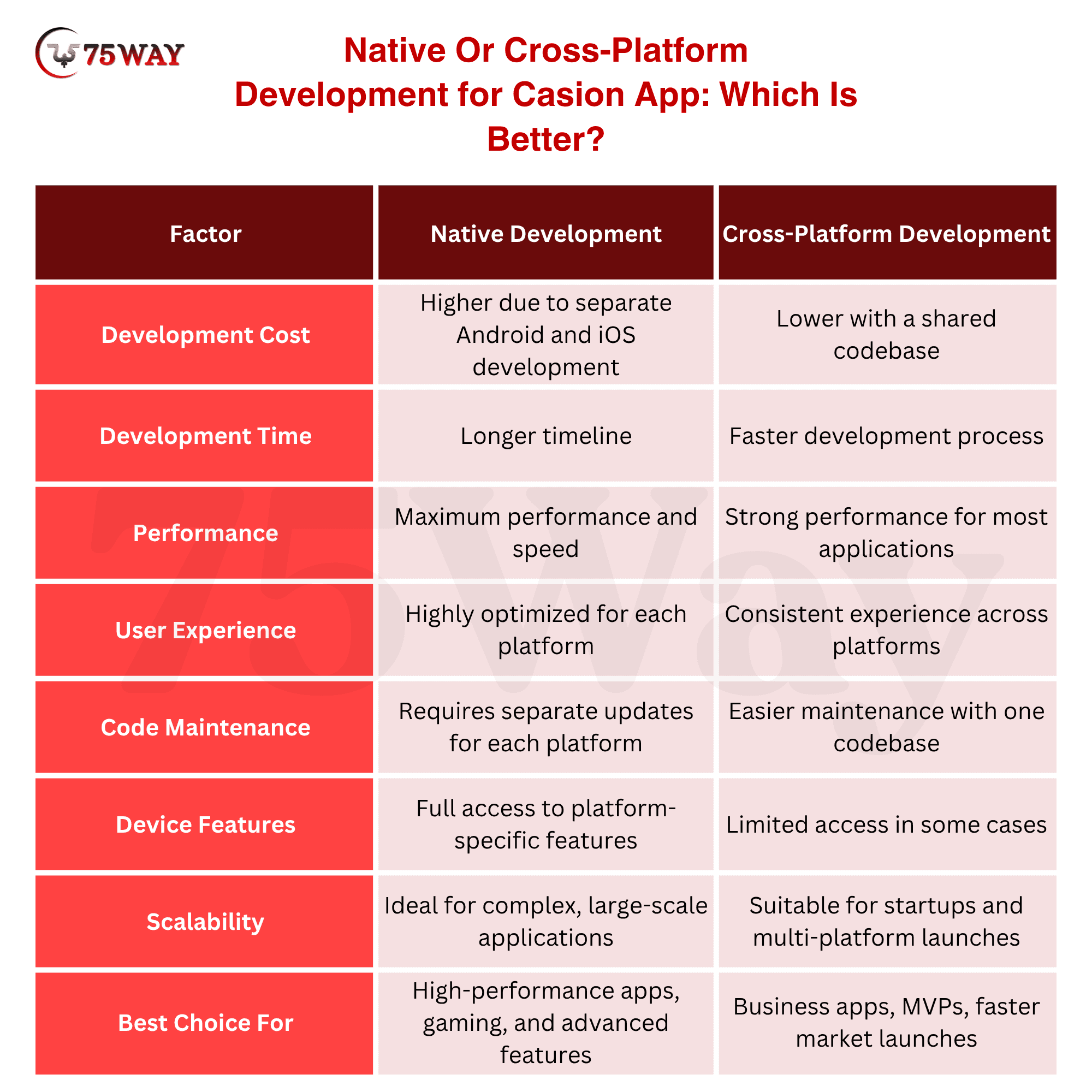
Neither native nor cross-platform development is universally better. The right choice depends on your app goals, budget, performance requirements, development timeline, and future expansion plans. Native development delivers maximum performance and deeper device integration, while cross-platform development helps businesses launch faster with reduced development costs.
For applications that require advanced graphics, complex animations, high-performance gaming, or extensive device-specific features, native development is often the preferred option. On the other hand, businesses that want to build an app for both Android and iOS quickly with a single codebase may find cross-platform development more practical.
Many startups begin with Flutter or React Native before moving to native development as the platform grows.
Which One Should Businesses Choose?
The final decision depends on your casino application's purpose. A gaming app with advanced graphics, real-time features, and intensive performance requirements may benefit from native development. A business application focused on faster deployment and broader reach can often achieve better results with cross-platform development.
Many companies also follow a hybrid approach by launching with cross-platform technology and adding native features where advanced performance is required. This approach balances development speed, cost efficiency, and long-term flexibility.
Must-Have Features To Build A Successful Casino Game Mobile Application
A successful casino game app offers much more than an attractive collection of games. Every feature should improve the player experience, simplify platform management, or support long-term business growth. The right combination of features keeps players engaged while helping your platform remain secure, scalable, and competitive. Below are the essential features every modern casino game app should include.
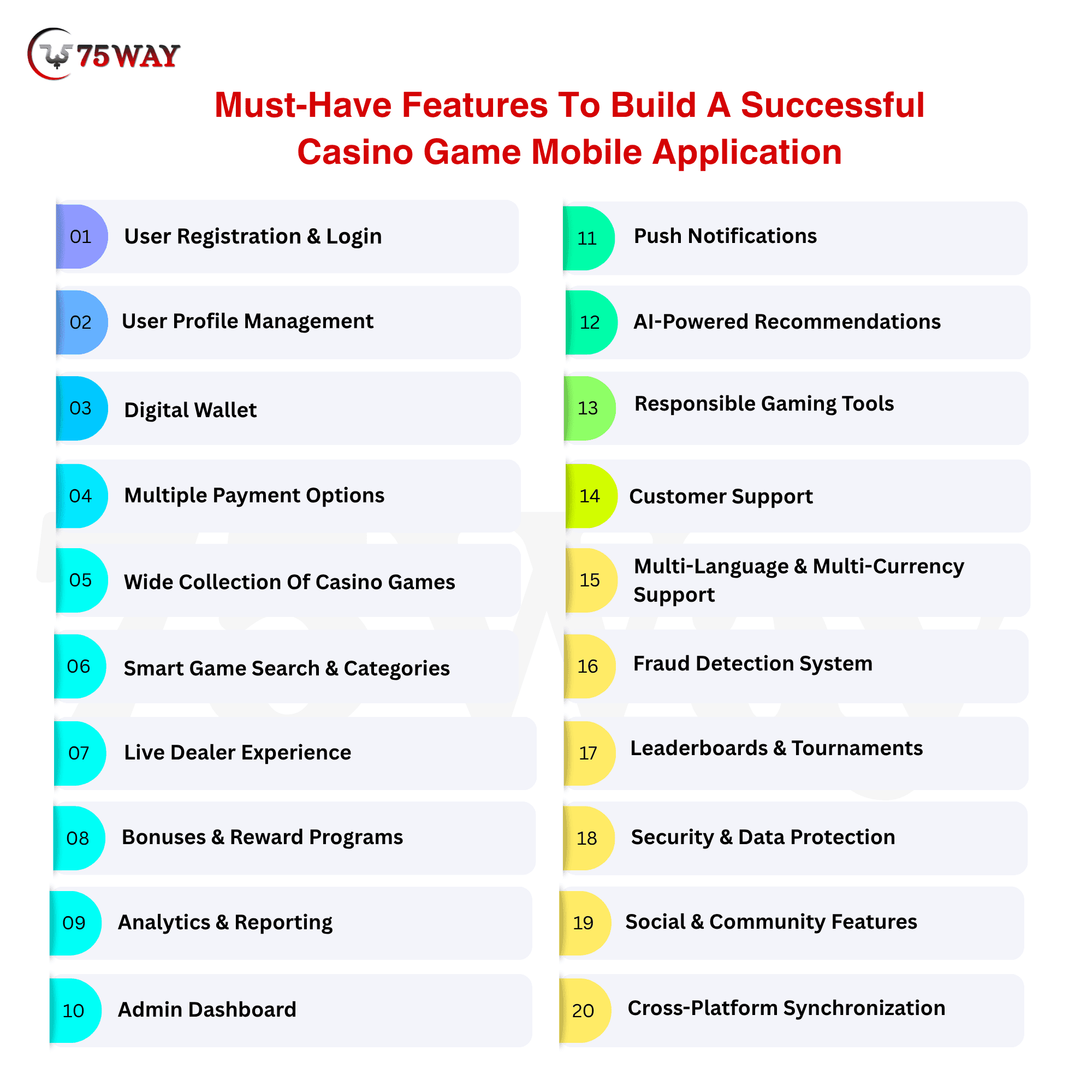
- User Registration & Login: The registration process should be simple, secure, and quick to complete. Players should have the option to sign up using an email address, mobile number, or social media accounts. Additional authentication methods such as OTP verification or biometric login strengthen account security while making future logins more convenient.
- User Profile Management: A dedicated profile allows players to manage personal information, payment methods, gaming preferences, and account settings from one place. This section also displays transaction history, game activity, rewards, and account verification status, giving users complete control over their accounts.
- Digital Wallet: A built-in wallet enables players to deposit funds, place bets, claim rewards, and withdraw winnings without leaving the application. Real-time balance updates and transaction records improve transparency while creating a smoother gaming experience.
- Multiple Payment Options: Payment flexibility has become a standard expectation. Supporting credit cards, debit cards, digital wallets, bank transfers, and cryptocurrency payments allows businesses to serve players across different regions while reducing payment friction.
- Wide Collection of Casino Games: Game variety plays a major role in player retention. A modern casino platform should include popular options such as slots, poker, blackjack, roulette, baccarat, bingo, and live dealer games. Regularly introducing new titles also keeps the platform fresh and encourages repeat visits.
- Smart Game Search & Categories: Players should never struggle to find their favorite games. Categories, filters, search functionality, and personalized recommendations make game discovery faster while improving the overall user experience.
- Live Dealer Experience: Live dealer games recreate the atmosphere of a physical casino through real-time video streaming. Interactive gameplay and professional dealers increase player confidence while providing a more immersive gaming experience.
- Bonuses And Reward Programs: Welcome bonuses, cashback offers, free spins, loyalty points, referral rewards, and VIP memberships encourage players to remain active. A well-designed reward system improves retention while increasing customer lifetime value.
- Push Notifications: Push notifications keep players informed about tournaments, jackpot updates, exclusive promotions, and new game launches. Personalized notifications generally perform better than generic promotional messages because they match individual player interests.
- AI-Powered Recommendations: Artificial intelligence analyzes player behavior to recommend games, bonuses, and promotional offers that match individual preferences. Personalized experiences often increase engagement because players receive suggestions relevant to their interests instead of random promotions.
- Responsible Gaming Tools: Responsible gaming features help players manage their gaming habits while supporting regulatory compliance. Deposit limits, spending limits, session reminders, cooling-off periods, and self-exclusion options demonstrate that the platform prioritizes player well-being.
- Customer Support: Questions and technical issues can arise at any stage of the gaming journey. Live chat, AI-powered chatbots, email support, and ticket management systems allow players to receive assistance quickly without interrupting their experience.
- Multi-Language & Multi-Currency Support: Businesses planning to serve international audiences should support multiple languages and currencies. Localized experiences improve accessibility while making the platform more comfortable for players from different regions.
- Leaderboards & Tournaments: Competitive features encourage players to participate more frequently. Leaderboards, scheduled tournaments, seasonal competitions, and achievement badges create excitement while strengthening community engagement.
- Analytics & Reporting: Analytics provide valuable insights into player behavior, revenue trends, popular games, and platform performance. These reports help businesses make informed decisions about promotions, feature updates, and future investments.
- Admin Dashboard: An admin dashboard allows operators to manage users, monitor transactions, approve withdrawals, launch promotional campaigns, configure bonuses, and track overall platform performance from a centralized interface.
- Fraud Detection System: Casino platforms process thousands of transactions and player activities every day. Fraud detection systems identify suspicious behavior, unusual betting patterns, duplicate accounts, and potential financial risks before they affect the business.
- Security & Data Protection: Strong security protects player information, payment details, and business data against cyber threats. Data encryption, secure APIs, multi-factor authentication, and continuous monitoring help maintain a safe gaming environment while building player trust.
- Social & Community Features: Social features such as friend lists, multiplayer tables, in-game chat, and community tournaments make casino gaming more interactive. These capabilities encourage player engagement beyond individual game sessions and help build a loyal user community.
- Cross-Platform Synchronization: Many players switch between smartphones, tablets, and desktops throughout the day. Cross-platform synchronization allows game progress, wallet balances, achievements, and account information to remain consistent across every device.
Recommended Feature Priority for iGaming App Development
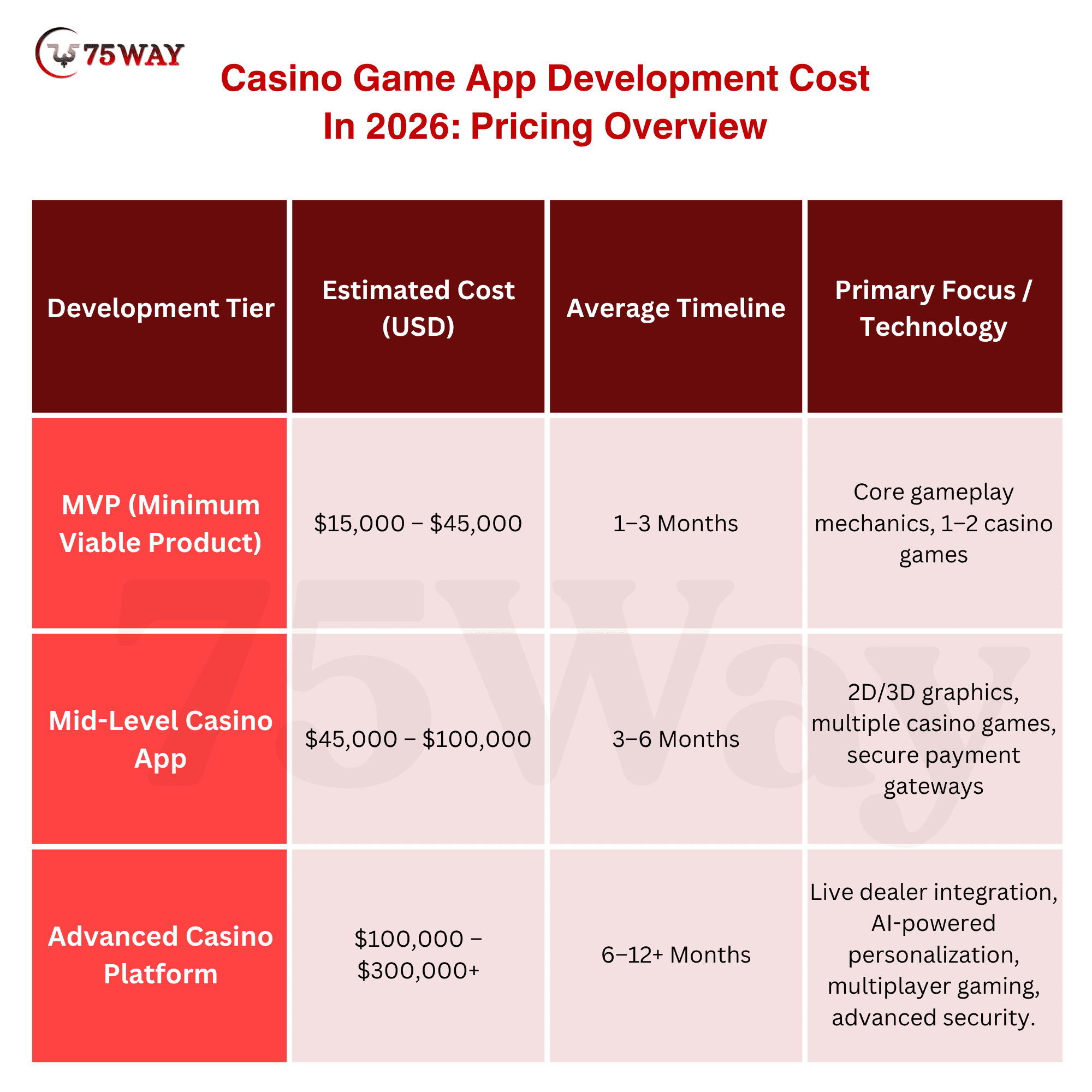
Casino Game App Development Cost In 2026: Pricing Overview
One of the first questions businesses ask before starting a casino app project is, "How much will it cost?" The answer isn't as straightforward as assigning a fixed price because every casino platform has different business goals, features, compliance requirements, and technical complexity.
A simple social casino app with a few games requires a much smaller investment, from $15,000 to $45,000, than a real-money casino platform supporting live dealers, AI-powered personalization, multiple payment methods, and advanced security.
Moreover, a mid-level casino app development costs around $45,000 – $100,000, while an advanced casino platform development ranges between $100,000 – $300,000+ as it uses AI integration, multiplayer gaming, and enterprise-grade security.
Development costs also increase when businesses target multiple platforms, integrate third-party services, or build custom features instead of using ready-made solutions.
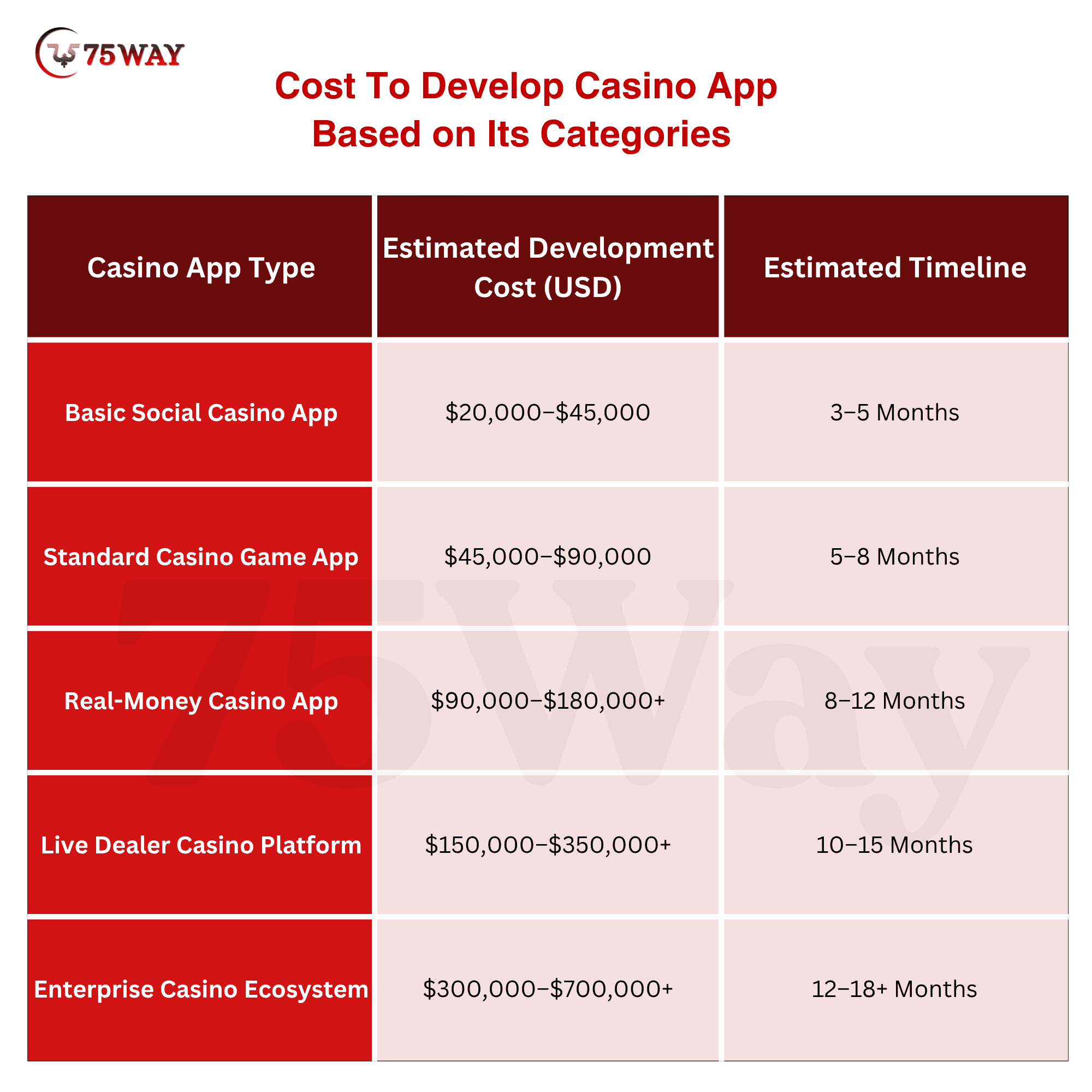
Cost To Develop Casino App Based on Its Categories
The cost to develop a casino app depends heavily on the type of platform, number of games, required features, security level, and technology complexity.
A basic social casino app with virtual gameplay and limited features may cost around $20,000–$45,000, while a standard casino game app with multiple games, payments, and advanced functionality generally requires $45,000–$90,000.
Real-money casino apps demand higher investment, usually ranging from $90,000–$180,000+, due to compliance, security, and transaction requirements.
Live dealer platforms can cost around $150,000–$350,000+ because of real-time streaming and complex infrastructure.
Enterprise-level casino ecosystems with multiple products, AI capabilities, advanced analytics, and global scalability may require an investment of $300,000–$700,000+.
Factors That Affect iGaming Platform Development Cost
Several factors influence the final investment. Understanding them early helps businesses prioritize features and plan realistic budgets.
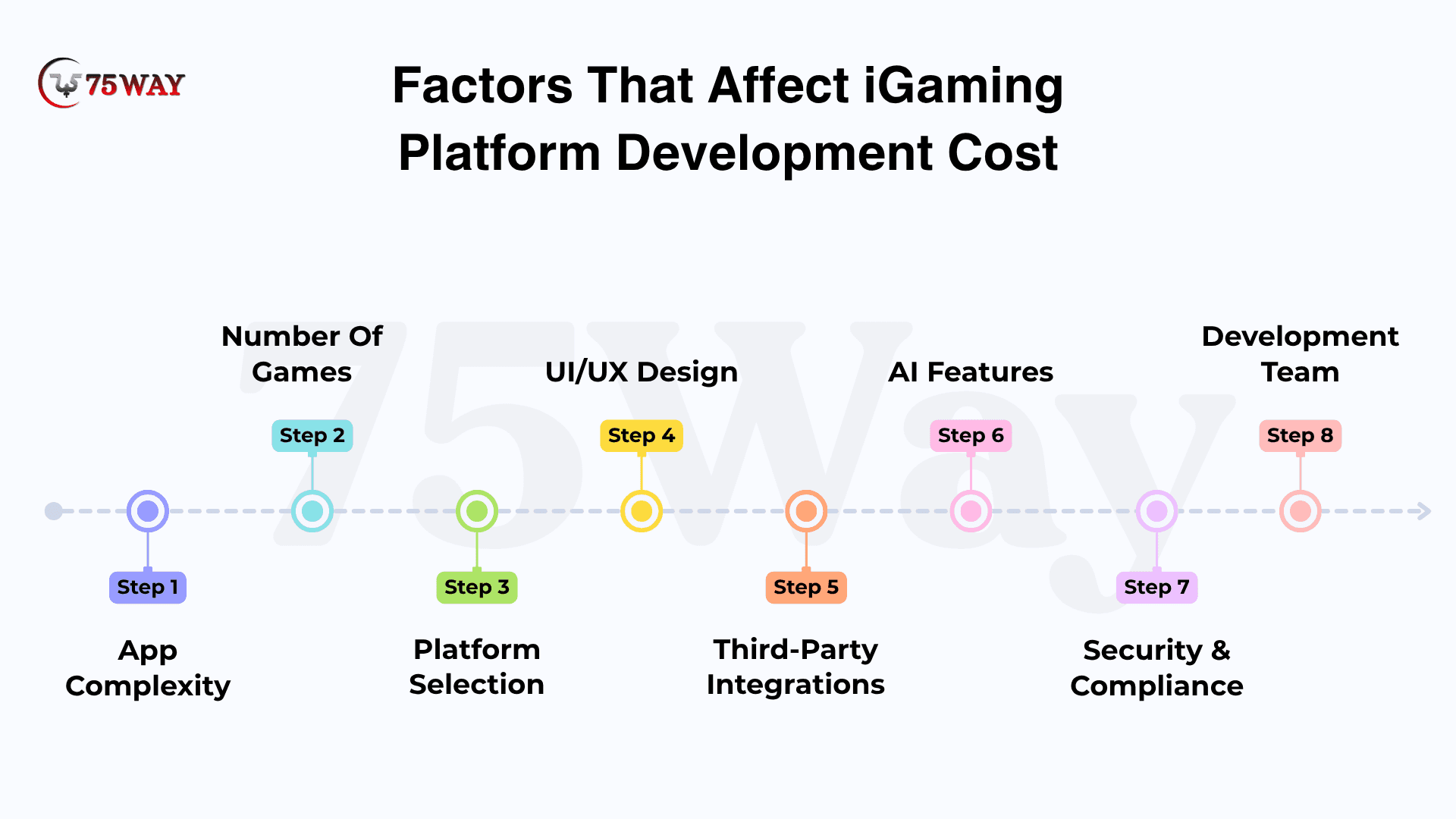
- App Complexity: The overall complexity of the platform has the greatest impact on development costs. A casino app with a handful of games and standard payment methods requires far less effort than a platform offering live streaming, multiplayer gaming, AI recommendations, and enterprise-level reporting.
- Number of Games: Each game requires separate design, development, testing, and optimization. Building five high-quality games generally costs less than developing twenty unique titles with custom mechanics and animations.
- Platform Selection: Developing for Android, iOS, and the web simultaneously increases the project scope. Many startups launch on one or two platforms first before expanding to additional devices.
- UI/UX Design: Custom interfaces, animations, branded visuals, and interactive experiences require additional design resources. While template-based designs reduce upfront costs, custom designs often create a stronger brand identity.
- Third-Party Integrations: Payment gateways, live chat, CRM systems, identity verification, analytics tools, and game providers all require integration work. The more external services your platform depends on, the higher the development effort.
- AI Features: Artificial intelligence has become a valuable addition to modern casino platforms. Features such as personalized recommendations, fraud detection, player segmentation, and predictive analytics improve engagement but also increase development costs.
- Security & Compliance: Real-money casino platforms require advanced security measures, encryption, identity verification, payment compliance, and responsible gaming features. These requirements add development time but are essential for protecting the business and its players.
- Development Team: Project costs also depend on the experience and location of the development company. Experienced teams may charge higher hourly rates, but they often deliver better architecture, stronger security, and fewer post-launch issues.
Tips To Optimize Development Costs of Building Casino Gaming App
Reducing costs doesn't always mean reducing quality. Smart planning can help businesses maximize their investment.
- Start with an MVP instead of a feature-heavy platform.
- Prioritize essential features for the first release.
- Choose scalable technologies from the beginning.
- Reuse reliable third-party integrations where appropriate.
- Build additional games and features after launch based on player feedback.
- Partner with an experienced development company to minimize costly rework.
A realistic budget is only one part of a successful casino project. Choosing the right development partner can have an even greater impact on quality, timelines, and long-term success. The next section explains what to look for before hiring a casino game app development company.
Custom Casino-Game App Development Vs White-Label Solution: Complete Comparison
Businesses entering the iGaming industry often face an important decision before development begins: Should you build a custom casino app or choose a white-label solution? The right choice depends on your budget, launch timeline, business objectives, and long-term growth strategy.
A white-label casino gaming app development solution offers a ready-to-launch platform with pre-built features, making it suitable for businesses that want to enter the market quickly with a lower upfront investment. Custom casino app development, on the other hand, provides complete control over design, features, technology, and scalability. Although it requires more time and investment, it creates stronger opportunities for brand differentiation and long-term expansion.
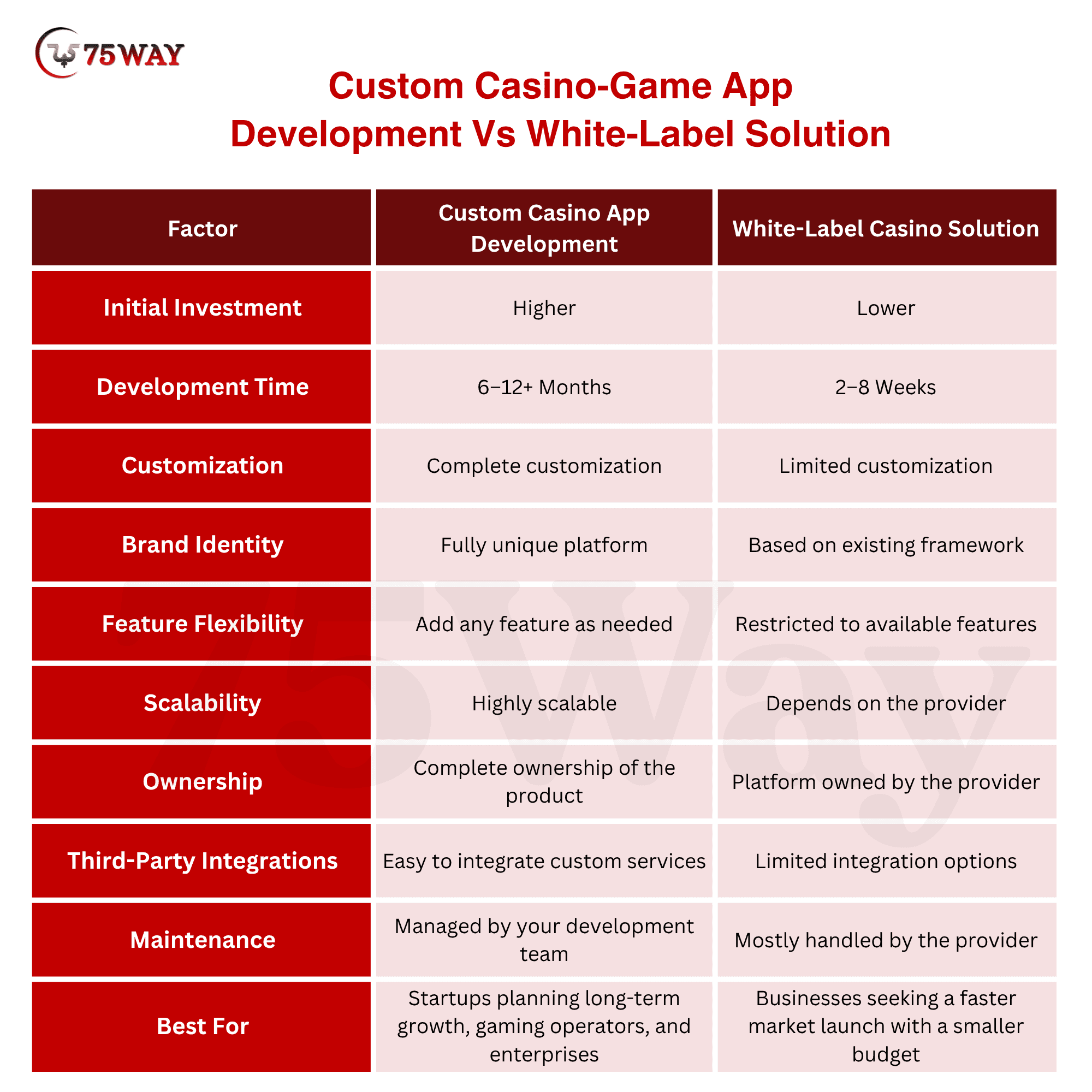
For businesses testing a new market or validating an idea, a white-label solution offers a practical way to launch quickly. However, companies aiming to build a distinctive brand, introduce innovative features, or expand globally often benefit more from custom casino app development because it provides greater flexibility, complete ownership, and the ability to scale without platform limitations.
The development approach shapes both the project timeline and investment. Another equally important decision involves selecting the right development partner, as the expertise of your team directly influences product quality, security, and long-term success.
How To Choose The Right Casino Game App Development Company?
The development partner you select influences everything from platform security and game quality to scalability, compliance readiness, and future upgrades. A low-cost provider may appear attractive at first, but casino applications involve complex requirements that go beyond regular mobile app development. Before signing a development agreement, consider these important factors.
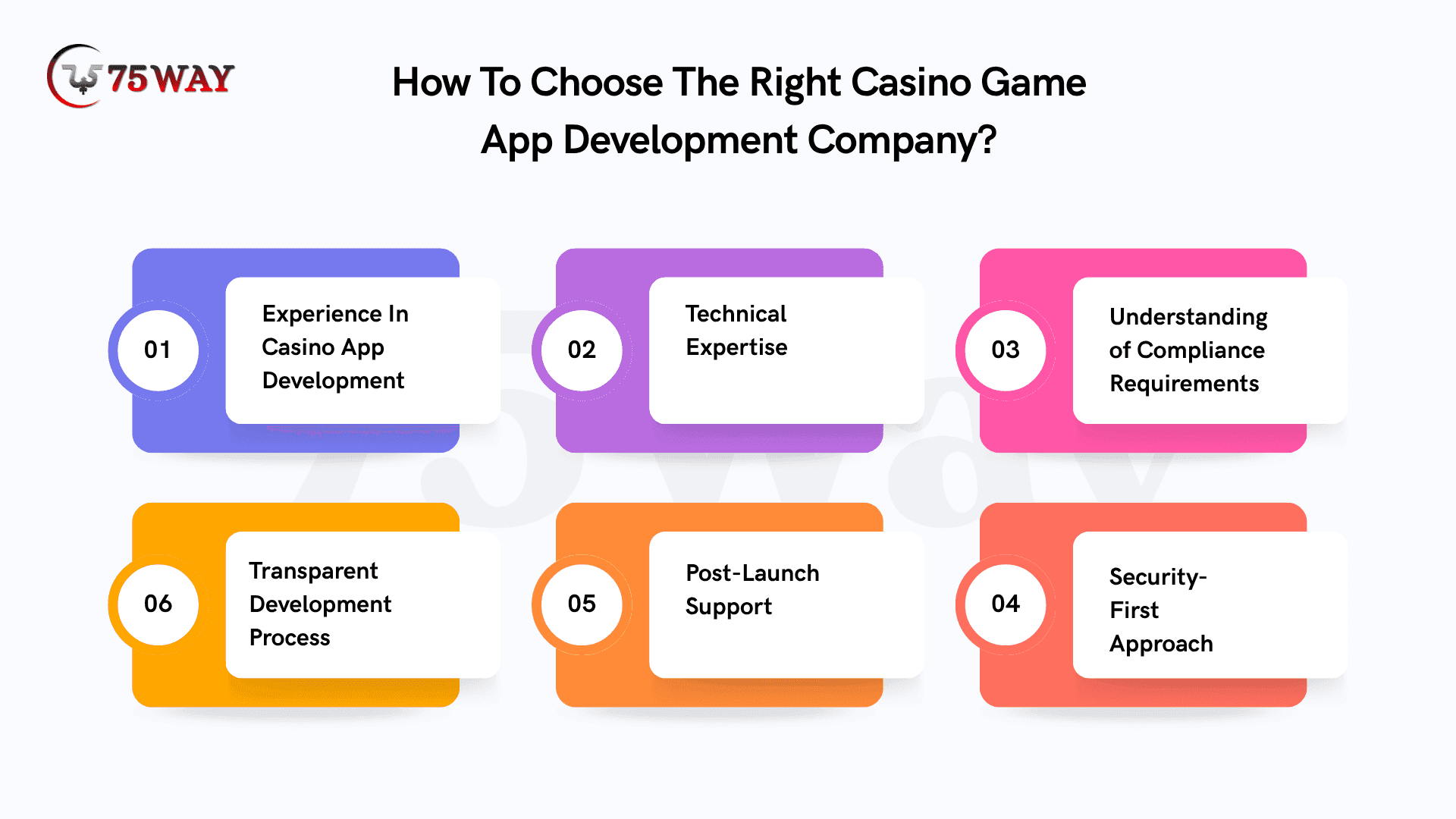
- Experience In Casino App Development
A company with experience in casino software understands the challenges involved in building gaming platforms. Review their previous projects, technical expertise, and experience with different casino formats such as slots, poker, live dealer games, and multiplayer platforms.
A proven portfolio provides better confidence than general app development experience alone.
- Technical Expertise
Casino apps require a strong technical foundation. The development company should have expertise in mobile technologies, backend architecture, cloud infrastructure, APIs, security systems, and game development engines. A capable team should understand:
- Real-time gaming systems
- Payment gateway integration
- Database management
- AI implementation
- Cloud scalability
- Security architecture
- Understanding of Compliance Requirements
A reliable development partner should understand the importance of licensing, KYC, AML, responsible gaming, data protection, and regional regulations.
Compliance should be considered during development planning instead of being added after the platform is complete.
- Transparent Development Process
Clear communication prevents misunderstandings throughout the project. A professional company should provide details about development stages, timelines, milestones, testing procedures, and project updates.
Regular communication helps businesses track progress and make decisions at the right time.
- Post-Launch Support
Casino platforms require continuous improvements after launch. New games, security updates, performance optimization, and feature enhancements become necessary as the user base grows.
A development partner offering long-term maintenance and support can help keep the platform stable and competitive.
- Security-First Approach
Security should be one of the first questions you ask before hiring a development company. The team should have experience implementing encryption, secure authentication, fraud prevention, payment security, and data protection practices.
A secure platform protects your business reputation while building player trust.
Questions To Ask Before Hiring A Development Partner
Before finalizing a company, consider asking:
- Have you developed casino or gaming applications before?
- Which technologies do you recommend for my project?
- How do you handle security and compliance?
- Can you provide a complete development roadmap?
- What support do you offer after launch?
- How do you manage future updates and scaling?
The right development partner does more than write code. They help transform an idea into a secure, scalable, and market-ready casino platform.
With the development process, features, costs, and partner selection covered, the next section explores the future of casino game apps and the trends shaping the iGaming industry in 2026.
Future Trends Shaping Casino Gaming Software Development In 2026
New technologies are changing how players discover games, interact with platforms, make payments, and engage with casino brands. Businesses planning a casino app in 2026 need to look beyond current features and understand where the industry is heading.
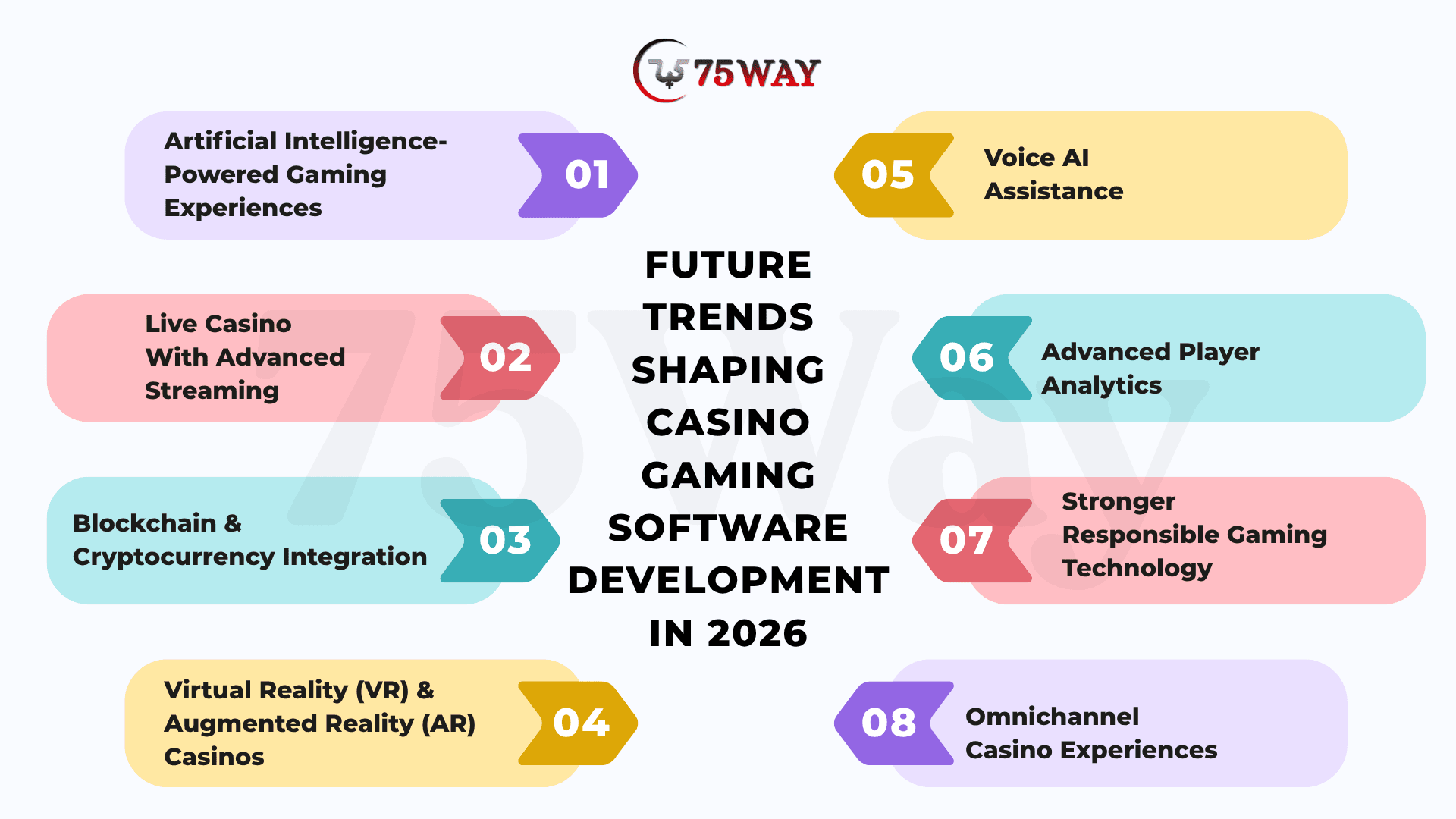
1. Artificial Intelligence-Powered Gaming Experiences
Artificial intelligence has become one of the biggest technology shifts in casino app development. Modern platforms are using AI to understand player behavior, improve recommendations, automate support, and strengthen security. AI capabilities include:
- Personalized game suggestions
- Smart bonus recommendations
- Player behavior analysis
- Fraud detection
- Automated customer support
- Churn prediction
Instead of offering the same experience to every user, AI allows casino platforms to create more relevant interactions based on individual preferences.
2. Live Casino With Advanced Streaming
Live dealer gaming continues gaining popularity because it combines digital convenience with the atmosphere of a physical casino. Improvements in video streaming, cloud technology, and real-time communication are making live casino experiences smoother and more interactive. Future platforms are expected to include:
- Multiple camera angles
- Interactive dealer communication
- Real-time statistics
- Personalized tables
- Faster streaming performance
These improvements create a more engaging experience for players who prefer real-world casino interaction.
3. Blockchain And Cryptocurrency Integration
Blockchain technology continues influencing online casino platforms, especially in markets where digital payments are gaining adoption. Cryptocurrency payments provide additional transaction flexibility while blockchain-based systems can improve transparency.
Potential applications include:
- Crypto deposits and withdrawals
- Transparent transaction records
- Smart contract-based rewards
- Digital asset management
Businesses considering blockchain integration must still evaluate regional regulations and compliance requirements before implementation.
4. Virtual Reality And Augmented Reality Casinos
Immersive technologies are opening new possibilities for casino experiences. Virtual reality can create digital casino environments where players interact with games, tables, and other users in a more realistic way.
Although VR adoption is still developing, future casino platforms may use these technologies for:
- Virtual casino rooms
- Interactive gaming environments
- 3D game experiences
- Social interactions
5. Voice AI Assistance
Voice technology is becoming another useful addition to casino applications. Voice AI assistants can help users navigate the platform, answer common questions, explain promotions, and provide account information.
Voice-based features may improve accessibility while reducing pressure on customer support teams.
6. Advanced Player Analytics
Data-driven decision-making will continue shaping casino operations. Analytics platforms help businesses understand player behavior, identify trends, and improve marketing strategies. Advanced analytics can reveal:
- Popular games
- Player retention patterns
- Revenue opportunities
- Promotion performance
- User engagement trends
These insights help operators make smarter product decisions.
7. Stronger Responsible Gaming Technology
Responsible gaming will remain a major focus as regulations and customer expectations continue evolving. Technology will play a larger role in helping operators create safer gaming environments.
Future platforms may include:
- AI-based risk detection
- Personalized spending alerts
- Automated intervention systems
- Improved player monitoring
Responsible gaming tools will become an important part of building trust and maintaining compliance.
8. Omnichannel Casino Experiences
Players increasingly expect consistent experiences across multiple devices. Future casino platforms will focus on connecting mobile apps, websites, tablets, and other digital touchpoints into one unified ecosystem.
A seamless experience allows players to switch devices without losing progress, preferences, or account information.
The future of casino game app development will be shaped by personalization, automation, security, and immersive technology. Businesses that adopt these trends strategically can create platforms that remain competitive in a rapidly changing market.
How 75way Technologies Helps Businesses Build Casino Game Apps
A successful platform needs the right combination of gaming expertise, scalable technology, secure architecture, and a clear understanding of user behavior. 75way Technologies helps businesses transform casino app ideas into reliable digital platforms by managing the complete development journey, from planning and design to deployment and ongoing improvements.
This tech solution provider builds customized casino platforms based on specific business goals, whether it is a social casino app, real-money gaming platform, live dealer solution, or multiplayer casino experience. The team integrates essential capabilities such as secure payment systems, AI-powered recommendations, player analytics, fraud detection, and scalable cloud architecture to create smooth and engaging gaming experiences.
Beyond the initial launch, 75way Technologies focuses on long-term platform growth through continuous improvements, security updates, feature enhancements, and emerging technology integration. With expertise in AI, mobile applications, and advanced software development, the company helps businesses create secure, scalable, and future-ready casino game apps designed to compete in the evolving iGaming market.
Wrap Up
To conclude, a successful casino game platform requires more than attractive games. It needs reliable payments, engaging features, compliance planning, scalable architecture, and continuous improvements to compete in the growing iGaming market.
The right casino game app development approach depends on your goals, budget, target audience, and long-term vision. Whether you choose custom development or a white-label solution, careful planning and an experienced technology partner can help transform your idea into a secure and profitable casino platform.
Businesses looking to build advanced gaming solutions can hire a reliable app creation agency in USA to integrate intelligent features, scalable technologies, and future-ready capabilities into their casino applications. With the right expertise, your casino app can deliver better player experiences while creating sustainable business growth.
Frequently Asked Questions (FAQs)
How Much Does It Cost To Develop A Casino Game App In 2026?
Casino game app development costs usually range from $15,000 to $300,000+, depending on features, games, platforms, and complexity. Advanced platforms require higher investments.
How Long Does It Take To Build A Casino Game App?
Development timelines typically range from one month to over twelve months based on project requirements. Custom platforms with advanced features require more planning and testing.
What Features Should A Casino App Include?
A casino app should include secure login, wallet integration, payment options, games, rewards, analytics, and responsible gaming tools. Advanced platforms can add AI features and live gaming.
Is A License Required For A Real-Money Casino App?
Real-money casino applications generally require licenses based on target markets and regulations. Compliance includes KYC, AML, security standards, and responsible gaming practices.
Should I Build A Custom Casino App Or Choose White-Label Software?
Custom development offers complete control and scalability, while white-label solutions provide faster launches with lower costs. The right choice depends on business goals.
Can AI Be Integrated Into Casino Game Apps?
Yes,AI can enhance casino platforms through personalized recommendations, fraud detection, player analytics, and automated support. These capabilities improve engagement and operational efficiency.
Which Technologies Are Used For Casino App Development?
Casino apps commonly use technologies like Flutter, React Native, Node.js, cloud platforms, databases, AI tools, and gaming engines. The technology choice depends on platform requirements.
8. How Can A Casino App Generate Revenue? Casino apps generate revenue through gameplay transactions, subscriptions, virtual purchases, advertisements, commissions, and premium memberships. The monetization model depends on the selected casino business type.