Summary
Building and maintaining a sellable AI chat application from scratch requires a structured, step-by-step approach focused on solving real problems and ensuring long-term scalability. It covers problem identification, product-market fit validation, technology stack selection, MVP development, AI integration, analytics, security, launch strategy, monetization, and continuous maintenance. The approach emphasizes scalability, user experience, and sustainable revenue generation for startups and founders.
Key Takeaways
- Building a sellable AI chat app requires solving real user problems strategically.
- Market validation ensures product demand before investing in the full development process.
- Technology stack choice directly impacts scalability, performance, and long-term costs.
- AI chat app development costs range from $3K to $1M+ globally.
- Security, compliance, and analytics improve trust, retention, and conversion performance.
- The AI chatbot market is expected to surpass $35B by 2030 with rapid growth.
Artificial intelligence has fundamentally changed how businesses interact with users. Among its many applications, AI-powered chat applications have emerged as one of the most commercially viable and scalable digital products.
For startups and founders, an AI chat app development is not just a technical endeavor. It is a strategic business opportunity that, when executed correctly, can generate recurring revenue, improve customer experience, and create a strong market position.
However, most AI chat applications fail to gain traction. The reasons are consistent: lack of clear product-market fit, poor architecture decisions, weak monetization models, and inadequate long-term maintenance planning.
This guide provides a complete, structured approach to building and maintaining a sellable AI chat application from scratch. It is designed to help you create a product that is not only functional but also scalable, market-ready, and capable of generating consistent business value.
What Is an AI Chat App?
An AI chat app is an intelligent software solution designed to simulate human-like conversations using advanced artificial intelligence technologies, including natural language processing (NLP) and machine learning (ML). Unlike traditional rule-based chat systems, modern AI-powered chat applications understand user intent, context, and conversational nuances, enabling them to deliver accurate, real-time responses through both text and voice interfaces. These chatbot development solutions continuously learn from interactions, improving their performance over time and offering increasingly personalized and context-aware communication experiences. This makes AI chat apps a critical component in building scalable, user-centric digital products.
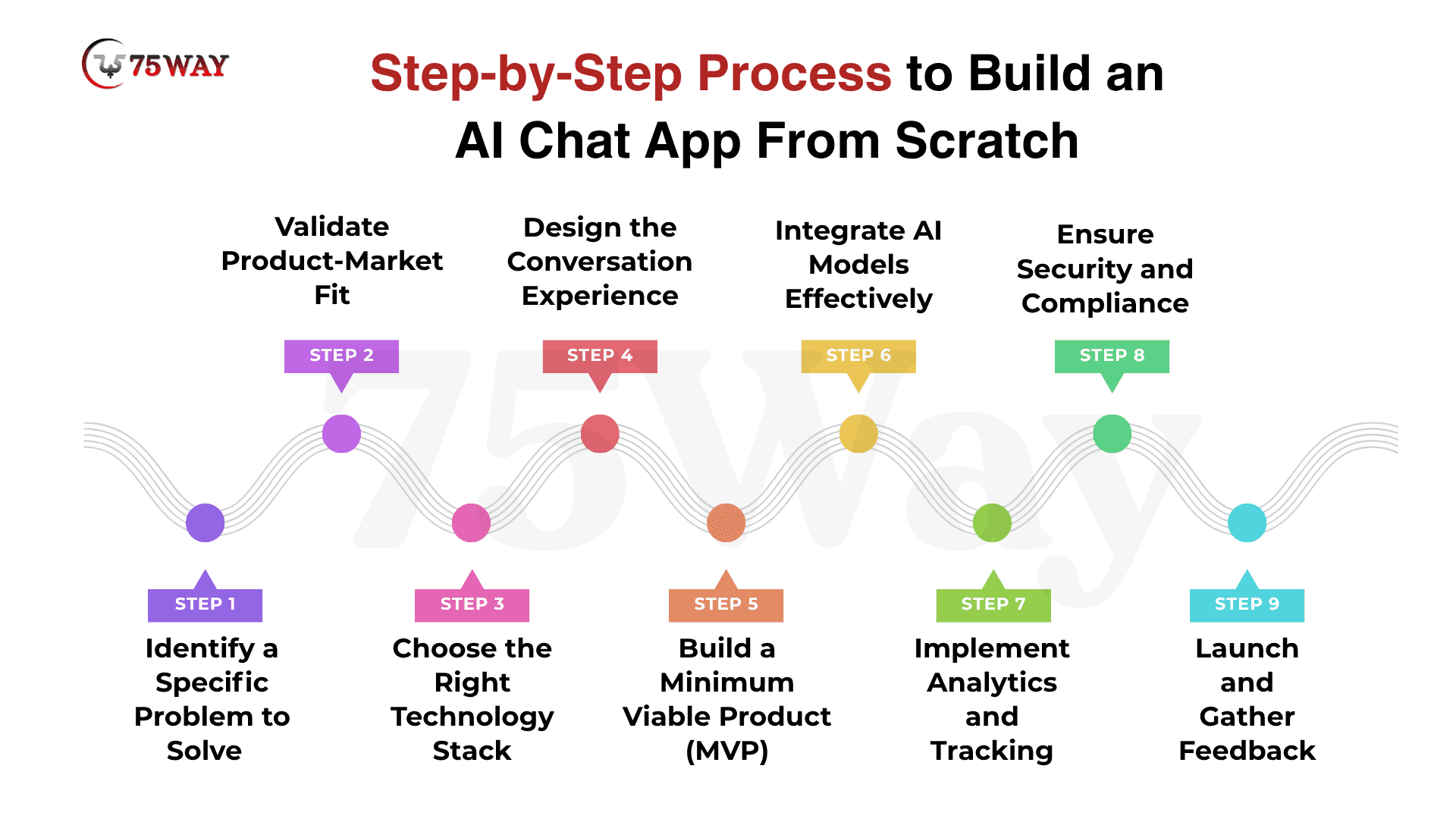
Step-by-Step Process to Build an AI Chat App From Scratch
A structured approach is required to develop an AI chat mobile app from scratch, which involves diverse stages from identifying a clear use case and validating market demand to integrating AI models and continuously optimizing performance based on user feedback and evolving business requirements. These stages are defined below.
Step 1: Identify a Specific Problem to Solve
It is the foundation of building an advanced AI chatbot app. Instead of targeting broad, undefined use cases, focusing on a niche ensures higher user relevance, faster adoption, and better conversion outcomes by delivering precise, value-driven solutions aligned with real business needs.
- User Painpoints Analysis: User frustrations often reveal where an AI chat app can deliver the most value. Issues like slow responses, repeated queries, or inconsistent support indicate gaps. You can use these insights to shape a solution that directly improves user experience and interaction efficiency.
- Industry Gap Assessment: Market gaps highlight opportunities for differentiation. Many existing solutions lack accuracy, personalization, or scalability. A clear understanding of these gaps helps you position your AI chat app as a more advanced and reliable alternative that meets evolving business expectations.
- Repetitive Task Identification: Routine business tasks consume time and resources. Processes such as answering FAQs, managing onboarding queries, or handling internal requests are common examples. You can automate these using an AI chat app to improve productivity, reduce manual effort, and ensure consistent responses.
- Market Demand Validation: Market demand confirms whether the problem is worth solving. Data from surveys, user feedback, and competitor analysis provides clarity. You can rely on this validation to reduce risk, refine your approach, and ensure that your AI chat app addresses a genuine and scalable need.
Step 2: Validate Product-Market Fit
Before investing in app development, validate whether your idea has demand. A clear validation process helps reduce uncertainty, refine your concept, and ensure you are building something users actually need, which ultimately improves adoption, engagement, and long-term business success.
- User Surveys: User surveys and interviews create a direct connection with your target audience, allowing you to understand their expectations and daily challenges. These insights naturally reveal whether your AI chat app idea addresses a meaningful problem, helping you shape a solution that feels relevant and valuable.
- Competitor Analysis: Insights gathered from users can be further strengthened by analyzing competitors in the same space. This step highlights what existing solutions offer and where they fall short, allowing you to identify gaps and position your AI chat app as a more refined and competitive alternative.
- Prototype Launch: Once gaps and opportunities become clear, a basic prototype or landing page helps bring your idea into a tangible form. This stage allows potential users to interact with your concept, making it easier to collect feedback and validate whether your approach resonates with real expectations.
- Signup Tracking: User interaction with your prototype leads to measurable signals such as early sign-ups and engagement. These indicators provide concrete evidence of demand, helping you assess market potential and confidently move forward with development while refining your strategy based on real user behavior.
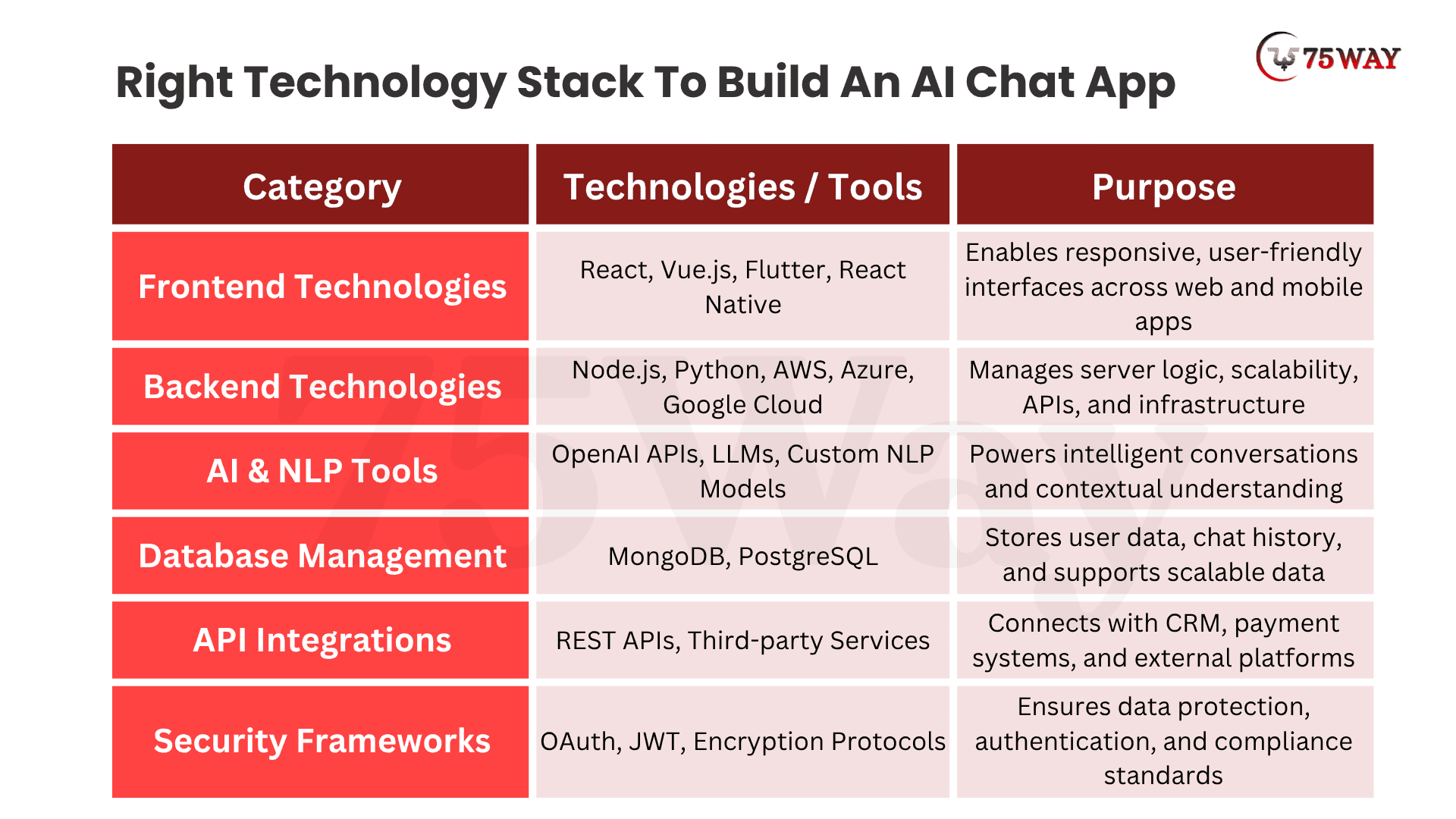
Step 3: Choose the Right Technology Stack
Your technology decisions will impact scalability, cost, and performance. A well-balanced stack ensures seamless development, faster deployment, and easier integration. The right combination of tools allows you to build a flexible, future-ready solution that adapts as your business grows.
- Frontend Technologies: User interface technologies define how users interact with your AI chat app across platforms. Frameworks like React or Vue.js support dynamic web experiences, while Flutter and React Native enable smooth cross-platform mobile development with consistent performance and responsive design.
- Backend Technologies: Backend systems manage data processing, APIs, and application logic. Technologies such as Node.js or Python offer strong scalability and performance. Cloud platforms like AWS, Azure, or Google Cloud further support infrastructure needs with reliability, storage, and global deployment capabilities.
- AI NLP Tools: AI, machine learning, natural language processing, and agentic AI tools power the intelligence of your chat app. APIs like OpenAI or similar large language models enable contextual understanding, while custom NLP models help address specific business needs, improving accuracy and delivering more relevant responses.
- Database Management: Data storage systems ensure efficient handling of user interactions, chat history, and analytics. Scalable databases such as MongoDB or PostgreSQL help maintain performance under high loads while supporting structured and unstructured data required for AI-driven applications.
- API Integrations: Integration capabilities allow your AI chat app to connect with external tools like CRM systems, payment gateways, and analytics platforms. Strong API architecture ensures smooth data exchange, enhances functionality, and helps create a more connected and efficient ecosystem.
- Security Frameworks: Security technologies protect user data and ensure compliance with global standards. Implementation of authentication systems, encryption protocols, and secure access controls helps build trust, prevent data breaches, and maintain the integrity of your AI chat application.
Step 4: Design the Conversation Experience
User experience is one of the most critical factors in determining success. A well-structured conversational flow of UI/UX design ensures clarity, reduces friction, and builds trust. When interactions feel natural and purposeful, users are more likely to continue using the app and convert.
- Clarity and Simplicity: Clear and concise messaging improves understanding and keeps users engaged throughout the interaction. Simple responses reduce confusion and help users reach their goals faster. You should ensure that every message delivers value without unnecessary complexity or information overload.
- Fallback Handling: Unrecognized inputs are a common part of AI interactions, and proper fallback responses maintain user trust. Instead of generic errors, guided replies or suggestions help users continue the conversation smoothly. This approach prevents frustration and improves overall user experience.
- Consistent Brand Tone: A consistent tone across all interactions strengthens brand identity and builds familiarity. Whether formal or conversational, the tone should align with your brand voice. This consistency helps create a cohesive experience, making the AI chat app feel more reliable and human-like.
Step 5: Build a Minimum Viable Product (MVP)
A minimum viable product (MVP) allows your AI chat app to enter the market quickly while focusing on essential functionality. A lean approach for MVP development helps you test real user behavior, gather feedback, and refine the product without investing excessive time or resources in features that may not deliver immediate value.
- Core Chat System: The foundation of your MVP should include a stable and responsive chat interface that enables seamless communication between the user and the system. A reliable chat flow ensures smooth interaction and forms the base for all future enhancements and features.
- Basic AI Engine: An initial AI response system should handle simple queries with reasonable accuracy. This setup does not need to be highly advanced, but must deliver relevant responses. A functional AI layer helps validate whether your solution effectively addresses user needs.
- Simple Interface Design: A clean and intuitive user interface improves accessibility and usability. Users should be able to interact with the chat app without confusion or learning barriers. A straightforward design ensures better engagement and allows you to focus on functionality over aesthetics.
- Focused Use Cases: A limited number of well-defined use cases keeps the MVP practical and goal-oriented. Instead of covering multiple scenarios, you should concentrate on solving a specific problem effectively, which helps demonstrate value and gather targeted feedback.
- Rapid Feedback Loop: User feedback plays a critical role in improving the MVP. Early insights from real users help identify gaps, refine features, and guide future development. A continuous feedback loop ensures that your product evolves based on actual user expectations and behavior.
Step 6: Integrate AI Models Effectively
AI model integration plays a crucial role in determining the performance and reliability of your AI chatbot application. A strategic approach ensures that the system delivers meaningful, fast, and context-aware responses without unnecessary complexity. Balanced implementation helps you maintain control while improving user experience and operational efficiency.
- Response Accuracy Control: Accurate and relevant responses build trust and improve user satisfaction. The AI model should be fine-tuned to understand intent clearly and deliver precise answers. You can enhance accuracy by using quality training data and continuously refining outputs based on user interactions.
- Context Management System: Conversation continuity depends on how well the system retains context across interactions. A strong context management layer ensures that previous inputs are considered, allowing responses to feel natural and connected rather than isolated or repetitive.
- Latency Optimization Layer: Response speed directly affects user experience and engagement. Optimized AI processing and efficient infrastructure reduce delays, ensuring faster replies. You should focus on minimizing latency to maintain smooth, real-time conversations without interruptions.
- Hybrid Model Approach: A combination of rule-based logic and AI models provides better control and consistency. Rule-based systems handle structured queries, while AI manages complex interactions. This hybrid approach improves reliability, reduces errors, and ensures predictable outcomes in critical scenarios.
Step 7: Implement Analytics and Tracking
To build a sellable product, you must track user behavior and performance metrics. These insights help you identify strengths, detect issues, and continuously optimize the product for better engagement, accuracy, and conversions. A data-driven approach ensures your app evolves based on real user behavior.
User Engagement Rate: User engagement rate indicates how actively users interact with your AI chat app over a defined period. Higher engagement reflects strong user interest and product relevance.
User Engagement Rate = (Total Active Users ÷ Total Registered Users) × 100
Conversation Completion Rate: Conversation completion rate measures how many users successfully complete interactions without leaving midway. It reflects the clarity and effectiveness of your conversational design.
Completion Rate = (Completed Conversations ÷ Total Conversations Started) × 100
Drop-off Rate: This factor shows the percentage of users who exit conversations before reaching completion. It helps identify friction points and areas where users lose interest or face confusion.
Drop-off Rate = (Abandoned Conversations ÷ Total Conversations Started) × 100
Response Accuracy Rate: Response accuracy rate evaluates how correctly the AI understands and responds to user queries. Higher accuracy builds trust and improves overall user satisfaction.
Response Accuracy Rate = (Correct Responses ÷ Total Responses) × 100
Conversion Rate: This metric tracks how many users take desired actions after interacting with the chat app. It reflects how effectively your AI drives business outcomes and user decisions.
Conversion Rate = (Total Conversions ÷ Total Users Interacted) × 100
Step 8: Ensure Security and Compliance
Security plays a critical role in the success and credibility of an AI chat app, especially when sensitive user data is involved. A well-structured security framework not only protects information but also strengthens user trust, ensures compliance, and reduces potential legal and operational risks.
- Data Encryption: Data encryption protects sensitive information by converting it into secure formats that cannot be easily accessed by unauthorized users. Strong encryption methods ensure that user data remains safe during storage and transmission across systems.
- Secure Authentication: Secure authentication mechanisms verify user identity before granting access to the system. Techniques such as multi-factor authentication and token-based access help prevent unauthorized entry and strengthen overall application security.
- Regulatory Compliance: Compliance with data protection regulations ensures that your AI chat app follows legal standards for handling user information. Adhering to frameworks like GDPR helps maintain transparency, protect user rights, and build long-term trust with your audience.
Step 9: Launch and Gather Feedback
Once your MVP is ready, launch it to a controlled audience. The launch phase allows you to introduce your AI chat app MVP to a controlled audience and observe real user interactions. This stage provides valuable insights that help refine functionality, improve user experience, and ensure the product is ready for scalable growth and wider adoption.
- User Feedback Collection: It provides direct insights into how your AI chat app performs in real scenarios. Responses, suggestions, and concerns help you understand user expectations, validate features, and identify areas that require improvement for better satisfaction.
- Usability Issue Detection: These issues highlight where users face difficulty while interacting with the app. Observing navigation challenges, confusion points, or incomplete actions helps you refine the interface and conversation flow to create a smoother and more intuitive experience.
- Performance Measurement: This step evaluates how efficiently your AI chat app operates under real usage conditions. Metrics such as response time, system stability, and interaction success rates help you identify technical gaps and optimize the app before scaling further.
Why AI Chat Apps Are a Strong Business Opportunity in 2026?
The rise of AI-driven communication is not temporary. Businesses are actively replacing traditional support systems with intelligent automation to improve efficiency and reduce operational costs. The global demand for AI chat solutions continues to grow due to increasing digital adoption and the need for real-time user engagement. Organizations are prioritizing solutions that can operate continuously without human intervention.
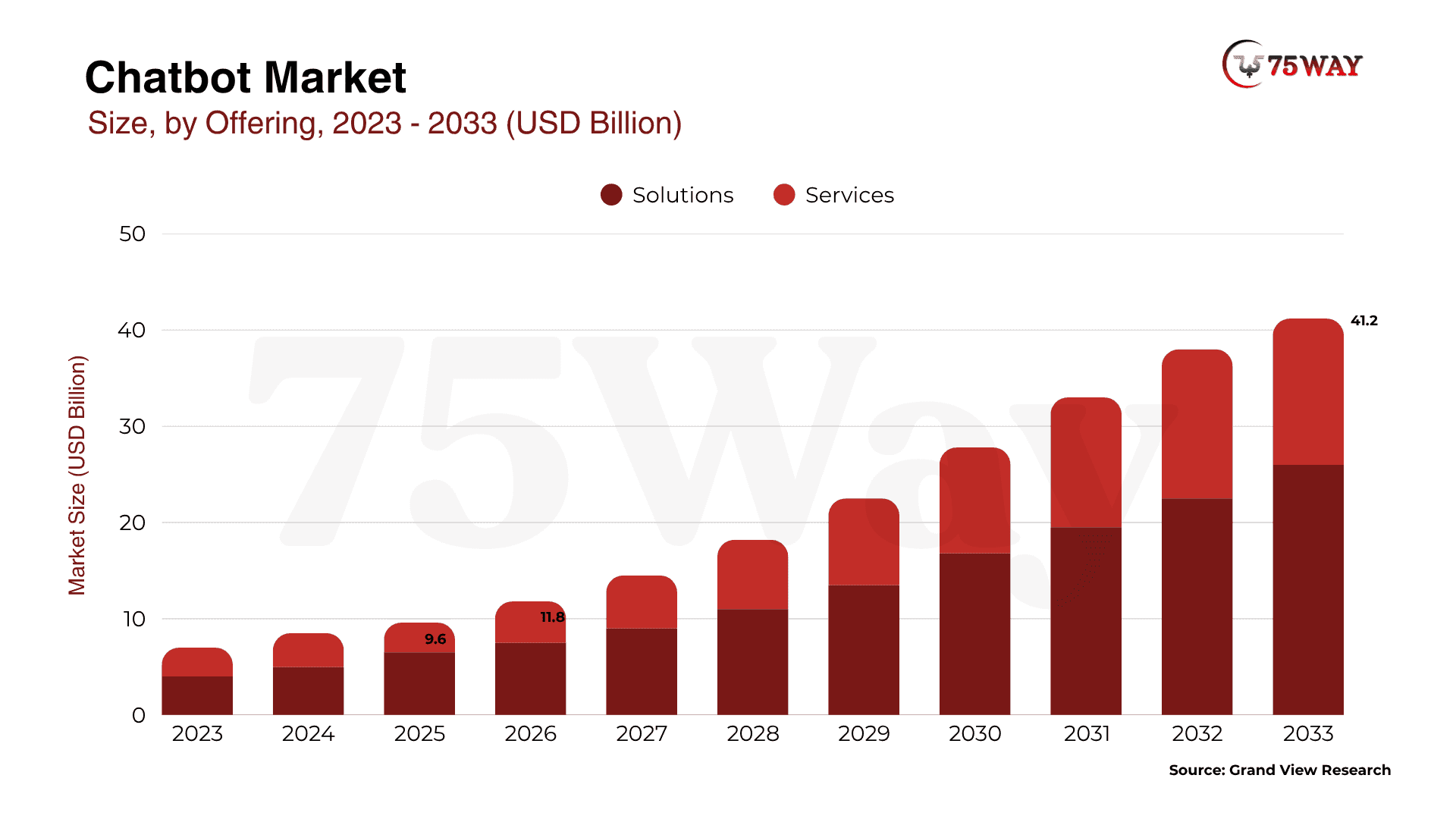
- The chatbot market is projected to exceed $27 billion by 2030, expanding at a 23.3% compound annual growth rate.
- According to The Business Research report, the AI chatbot market is expected to reach $35.71 billion by 2030, growing at a 25.7% CAGR.
- The global chatbot industry is forecasted to attain approximately $41,244.2 million by 2033, progressing at a CAGR of 19.6% between 2026 and 2033.
AI chat applications have become essential tools for modern businesses aiming to improve efficiency, enhance user experience, and scale operations without significantly increasing costs or manual effort. Several strategic advantages of AI-powered messaging apps are:
- Continuous availability without dependency on human teams
- Reduction in operational and support costs
- Ability to handle large volumes of interactions simultaneously
- Improved response accuracy through learning models
- Enhanced user engagement and retention
For startups, these advantages translate into faster scaling and improved unit economics.
Core Components Required for Building A Sellable AI Chat App
To build a product that is commercially viable, it is essential to understand the foundational components that define a high-quality AI chat application.
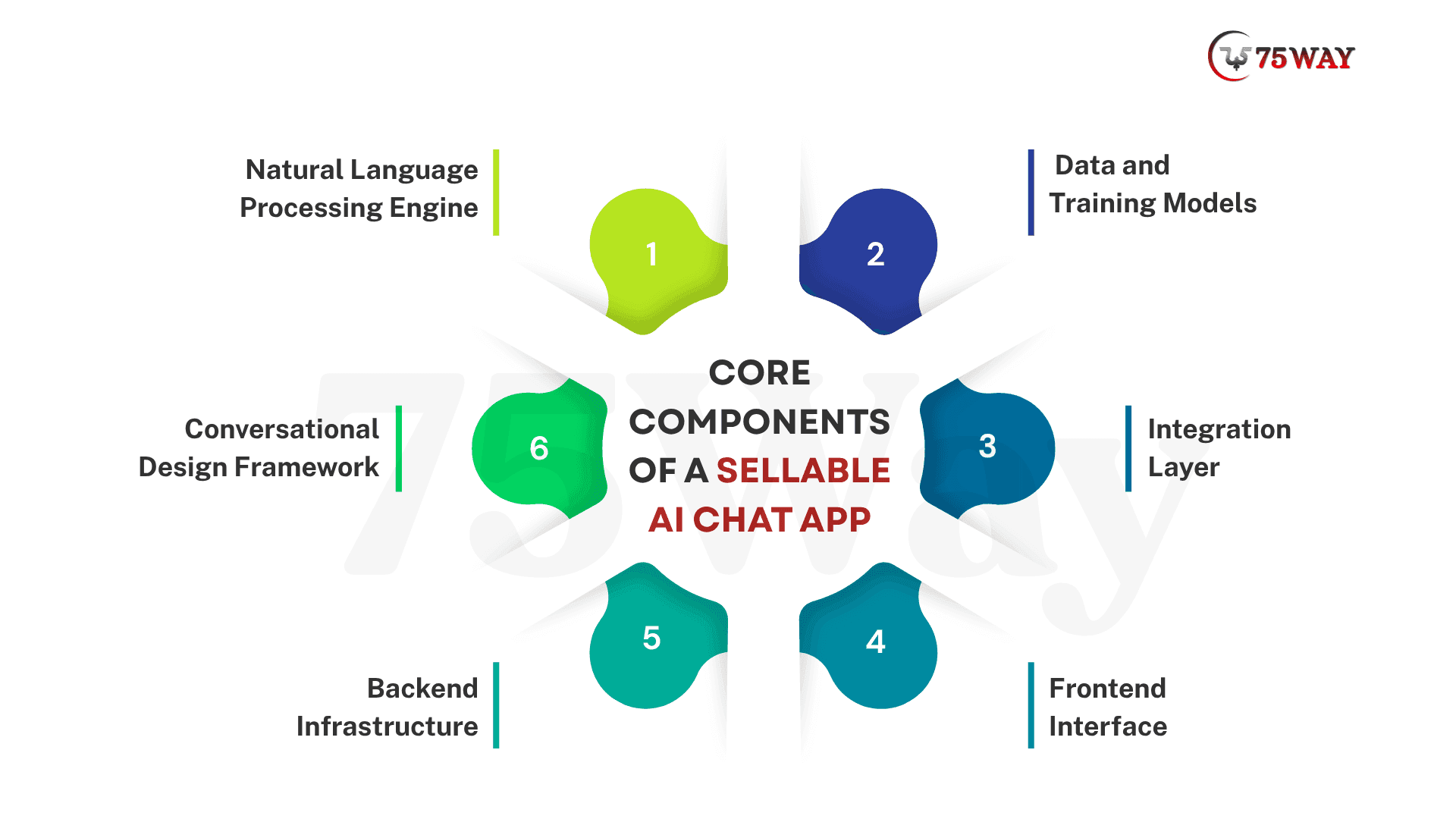
Natural Language Processing Engine: This component enables the system to understand user queries, detect intent, and generate meaningful responses. Strong language processing capabilities ensure accurate communication, making interactions more human-like, context-aware, and effective across different user inputs and scenarios.
Conversational Design Framework: A structured conversation flow ensures that interactions remain smooth, logical, and easy to follow. Well-designed dialogues guide users toward desired outcomes, while poorly planned flows often create confusion, reduce engagement, and negatively impact overall user experience.
Backend Infrastructure: All core operations, such as data handling, session management, and API communication, are managed through the backend. A scalable and secure infrastructure ensures consistent performance, supports high user traffic, and allows seamless expansion as the application grows.
Frontend Interface: User interaction depends heavily on how the interface is designed and presented. An intuitive and responsive layout ensures users can easily navigate the application, improving accessibility, reducing friction, and enhancing overall satisfaction during interactions.
Integration Layer: External connectivity allows the chat app to function as part of a larger ecosystem. Integration with systems like CRM platforms, payment solutions, and analytics tools enhances capabilities, streamlines workflows, and improves data synchronization across different business operations.
Data and Training Models: System intelligence improves through continuous learning from high-quality data. Well-trained models ensure better response accuracy, adaptability, and relevance, enabling the AI chat app to evolve over time and deliver more personalized and context-driven user experiences.
How to Make Your AI Chat App Sellable?
Building the app is only part of the process. Long-term success depends on how well the product is positioned, monetized, and scaled in the market. A strategic approach ensures your AI chat app attracts users, generates revenue, and appeals to investors or buyers.
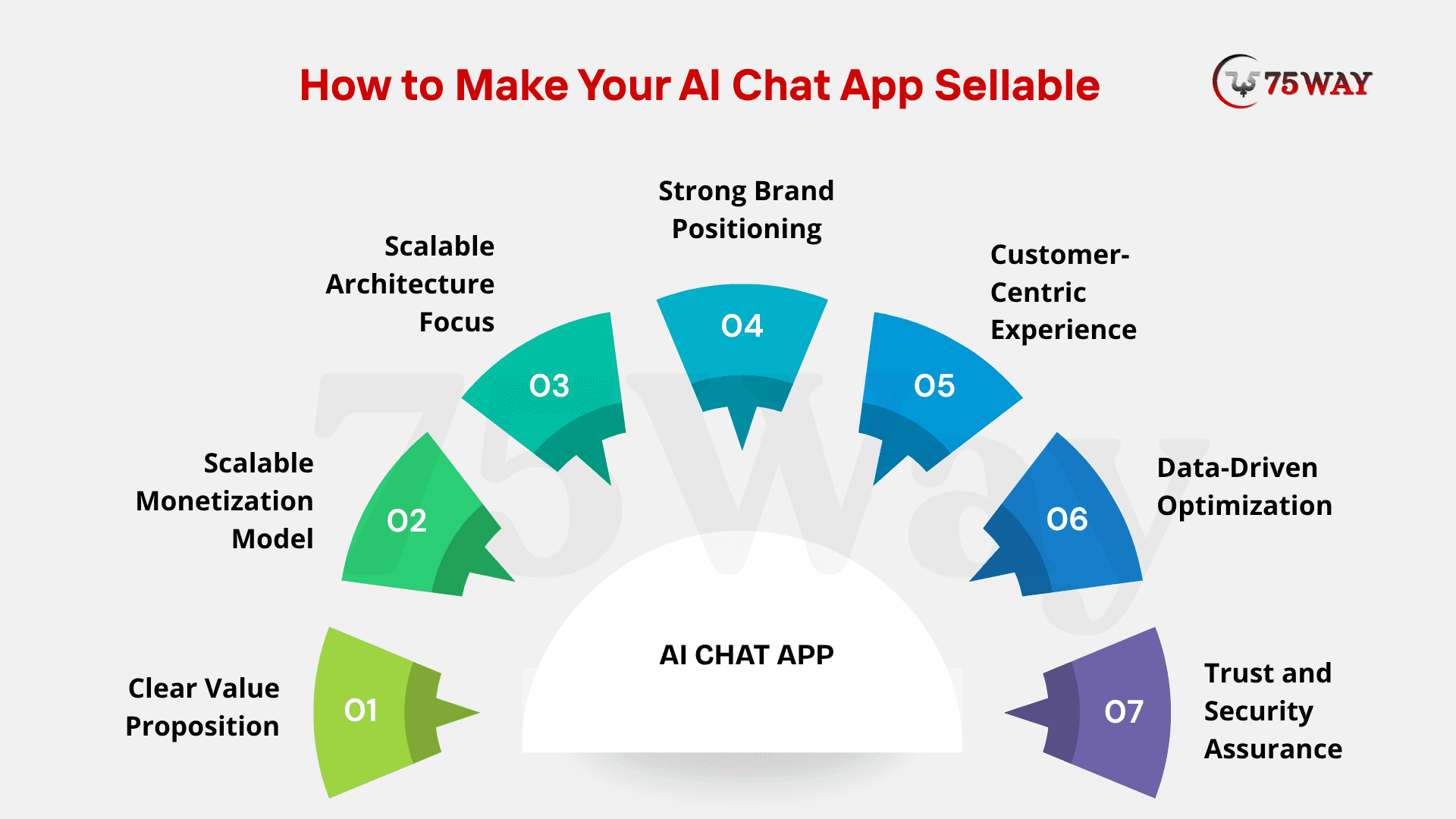
Clear Value Proposition: A strong value proposition clearly defines what problem your AI chat app solves, who it is designed for, and why it stands out from alternatives. This clarity helps users quickly understand its relevance, builds trust, and significantly improves acquisition, engagement, and investor interest.
Scalable Monetization Model: Revenue generation depends on choosing the right monetization approach. Models such as subscriptions, usage-based pricing, enterprise licensing, or freemium tiers should align with your audience and product value. A scalable model ensures predictable income while supporting growth and long-term sustainability.
Scalable Architecture Focus: System scalability determines how well your app performs under increasing demand. A scalable architecture ensures smooth handling of growing user loads, supports expansion into new markets, and allows integration with additional services, making your product more attractive to investors and enterprise buyers.
Strong Brand Positioning: Effective positioning presents your AI chat app as a complete solution rather than just a tool. A professional website, consistent messaging, and real-world case studies build credibility. Strong branding helps establish authority, increases trust, and improves conversion rates across different audience segments.
Customer-Centric Experience: User experience plays a major role in making your product sellable. A seamless, intuitive, and reliable interaction builds satisfaction and retention. When users find consistent value and ease of use, they are more likely to convert, recommend the product, and contribute to long-term growth.
Data-Driven Optimization: Continuous improvement based on analytics strengthens product performance and market fit. Insights from user behavior, engagement metrics, and feedback help refine features, improve accuracy, and enhance usability. A data-driven approach ensures your AI chat app evolves according to real user needs.
Trust and Security Assurance: User trust is essential for adoption and retention. Strong security practices, transparent data handling, and compliance with regulations build confidence. When users feel their data is protected, they are more willing to engage, share information, and rely on your AI chat app consistently.
How To Maintain an AI Chat App for Long-Term Success?
Long-term success of an AI chat app depends on consistent maintenance, performance monitoring, and continuous improvement. A proactive approach ensures the application remains accurate, reliable, and aligned with evolving user expectations, helping sustain engagement, retention, and overall business growth.
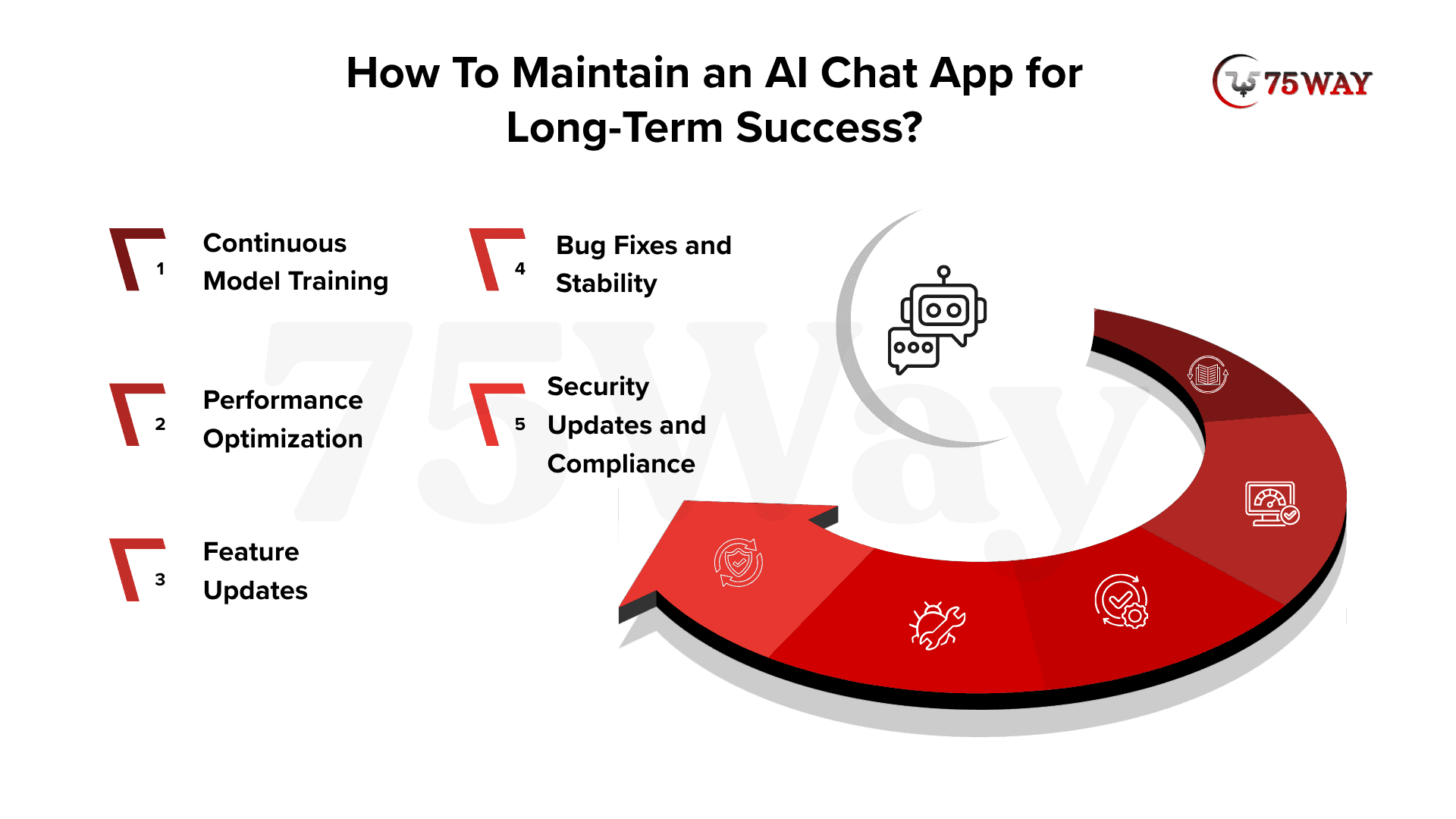
Continuous Model Training: AI models require regular updates to stay relevant and accurate as user behavior and language patterns evolve. Ongoing training with fresh data improves response quality, enhances contextual understanding, and ensures the system continues to deliver meaningful and reliable interactions over time.
Performance Optimization: System performance directly affects user experience and satisfaction. Continuous monitoring of response time, server load, and processing efficiency helps identify bottlenecks. Optimizing these factors reduces latency, ensures faster interactions, and maintains a smooth and responsive user experience.
Feature Updates: User expectations and market trends change over time, making regular feature updates essential. Introducing new functionalities based on user feedback keeps the application competitive, improves usability, and ensures the product continues to meet evolving business and customer needs effectively.
Bug Fixes and Stability: Application stability is critical for maintaining user trust and reliability. Regular identification and resolution of bugs prevent disruptions, improve performance consistency, and ensure smooth operation. A stable system enhances user confidence and supports long-term adoption and scalability.
Security Updates and Compliance: Security requirements evolve continuously, making regular updates essential to protect user data and system integrity. Implementing security patches, monitoring vulnerabilities, and ensuring compliance with regulations helps prevent risks, builds user trust, and maintains the credibility of your AI chat application over time.
Common Mistakes to Avoid While Creating An AI Chat App
Many founders make avoidable mistakes when building AI chat apps, often focusing more on technology than strategy. Identifying these pitfalls early helps you reduce risk, optimize development efforts, and build a product that is both user-centric and commercially successful.
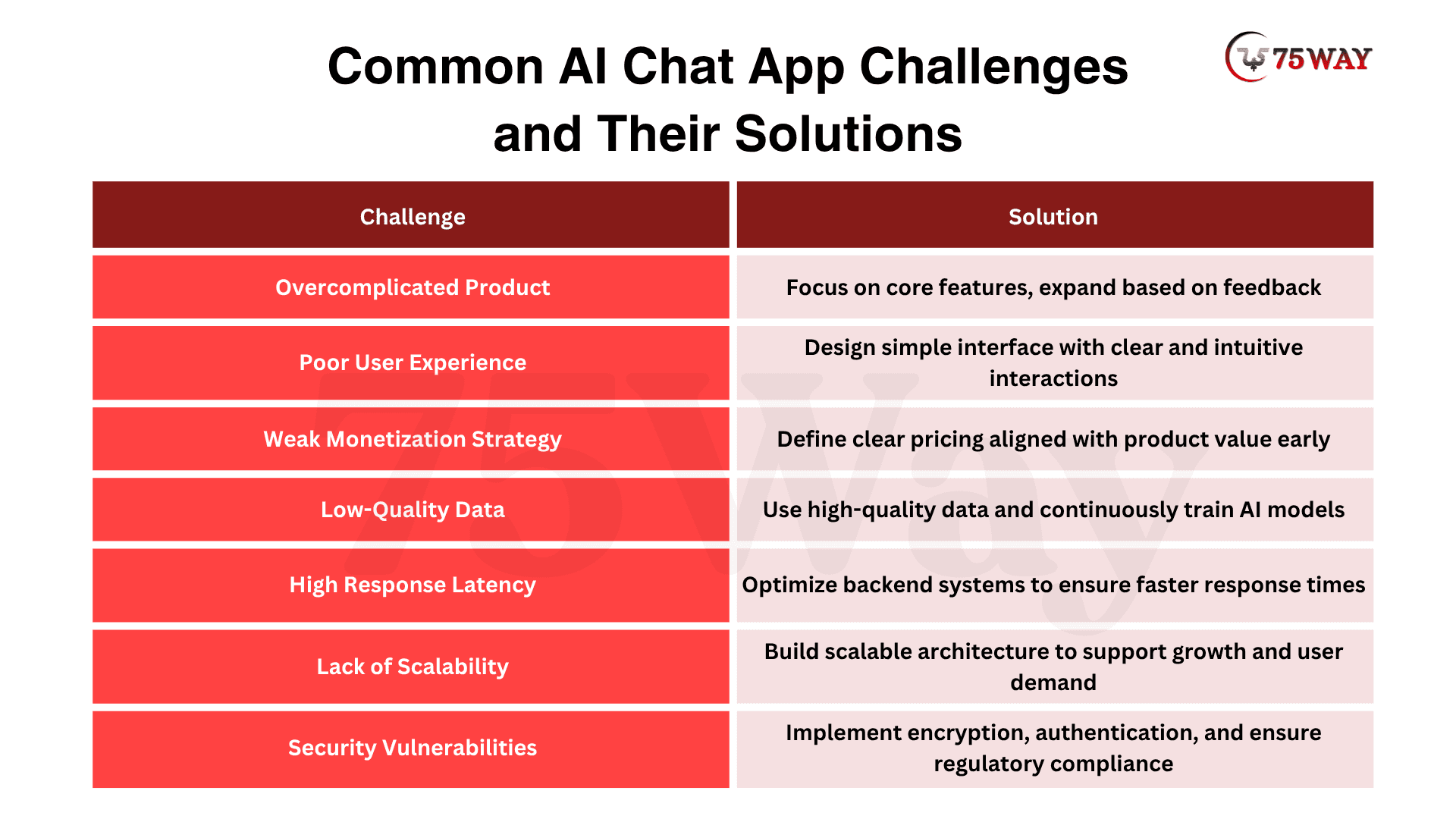
Overcomplicated Product Scope: Excessive features in the initial phase increase development time, cost, and complexity. A cluttered product often confuses users and delays market entry. A focused approach with essential features helps you launch faster, validate ideas, and improve based on real feedback.
Neglected User Experience: User experience directly influences adoption and retention. Even with strong technical capabilities, a poorly designed interface or confusing conversation flow can drive users away. A simple, intuitive, and engaging experience ensures better interaction and long-term usage.
Weak Monetization Strategy: Revenue planning is essential for sustainability. Without a clear monetization model, your AI chat app may struggle to generate consistent income. Defining pricing strategies early helps align product value with business goals and supports long-term growth.
Ineffective Data Management: Data quality determines the accuracy and reliability of AI responses. Poor data handling leads to incorrect outputs, reduced trust, and lower user satisfaction. Structured data collection and continuous refinement are necessary to maintain performance and relevance.
What’s The Cost to Build an AI Chat App?
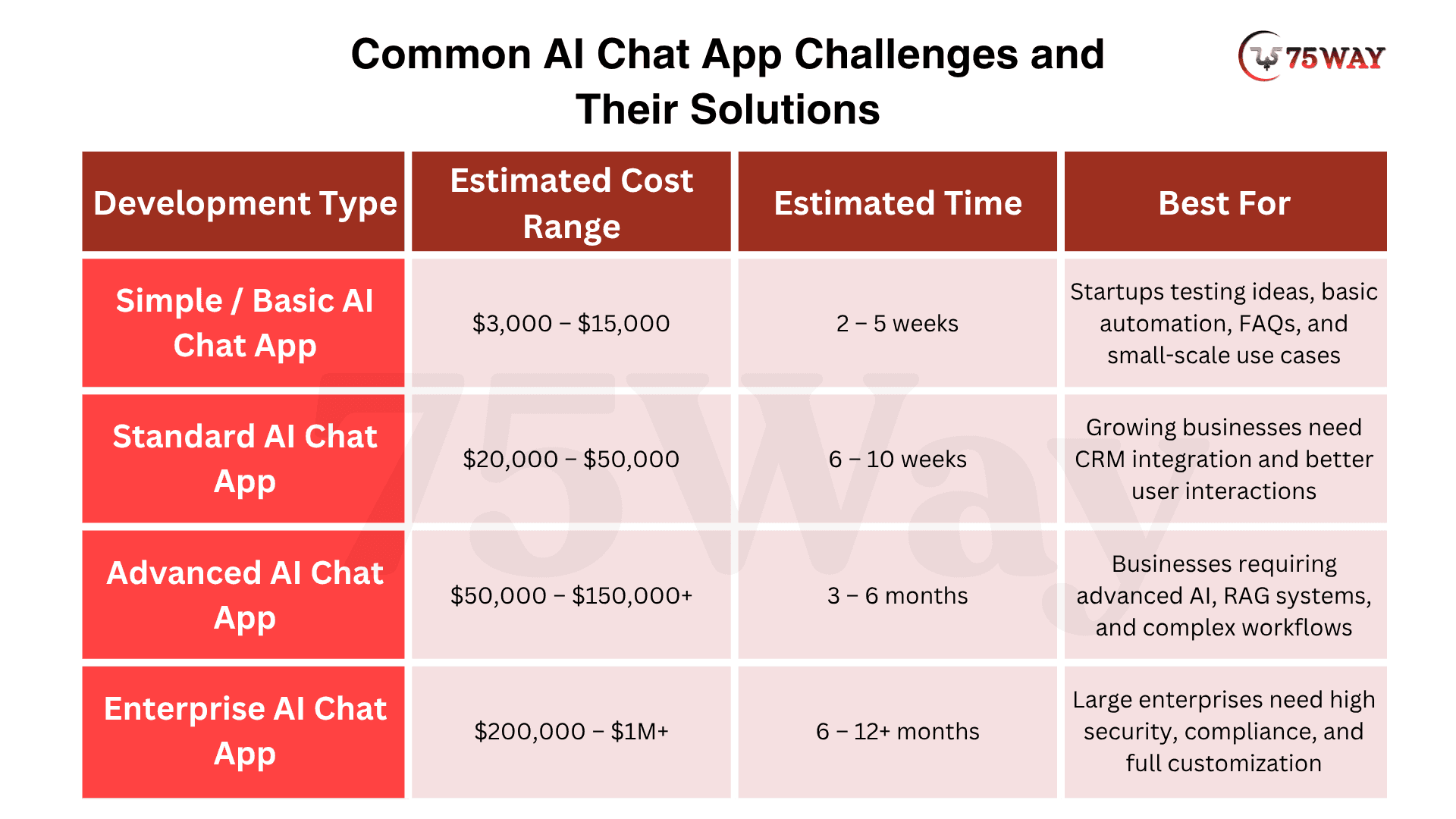
The cost of building an AI chat app depends on multiple factors, including features, complexity, technology stack, and development approach. A clear understanding of cost components helps you plan your budget effectively and avoid unexpected expenses during development and scaling.
Simple/Basic AI Chat App: A simple AI chat app focuses on core functionality with basic natural language processing, predefined responses, and limited integrations. It is ideal for startups validating ideas or automating FAQs. With a development timeline of 2 to 5 weeks and a cost range of $3,000 to $15,000, it offers a quick and cost-effective entry into the market.
Standard AI Chat App: A standard AI chat app includes enhanced features such as custom design, CRM integrations, and improved contextual understanding. It supports better user engagement and more dynamic interactions. Typically developed within 6 to 10 weeks, the cost ranges from $20,000 to $50,000, making it suitable for growing businesses aiming to scale operations.
Advanced AI Chat App: An advanced AI chat app incorporates sophisticated capabilities like custom AI models, retrieval-augmented generation, and complex workflows. It is designed for businesses requiring high accuracy, scalability, and tailored solutions. Development usually takes 3 to 6 months, with costs ranging from $50,000 to $150,000 or more, depending on complexity.
Enterprise AI Chat App: An enterprise AI chat app is built for large-scale organizations with strict security, compliance, and customization requirements. It supports high user volumes, advanced integrations, and industry-specific use cases such as banking or healthcare. Development spans 6 to 12+ months, with costs ranging from $200,000 to over $1 million.
Key Cost Factors Impacting the Cost of the AI Chat App
Feature Complexity: The number and sophistication of features directly impact development cost. Basic chat functionality costs less, while advanced capabilities like AI personalization, voice integration, and multi-platform support increase overall investment.
AI Model Integration: Using third-party AI APIs may involve usage-based pricing, while custom AI model development requires a higher upfront investment. The choice depends on your need for customization, control, and long-term scalability.
Development Team Structure: Costs vary based on whether you hire in-house developers, freelancers, or an experienced development company. Skilled teams may cost more initially but ensure better quality, faster delivery, and reduced long-term risks.
Platform Selection: Building for web, mobile, or both affects the overall cost. Cross-platform solutions may reduce expenses, while native development for multiple platforms increases development time and budget.
Maintenance and Scaling: Ongoing costs include server hosting, performance optimization, updates, and security. As your user base grows, infrastructure and AI processing costs also increase, making scalability planning essential.
Future Trends in AI Chat Applications
The AI chat landscape continues to evolve rapidly as technology advances and user expectations grow. Staying aligned with emerging trends helps ensure your application remains competitive, relevant, and capable of delivering enhanced user experiences in a dynamic digital environment.
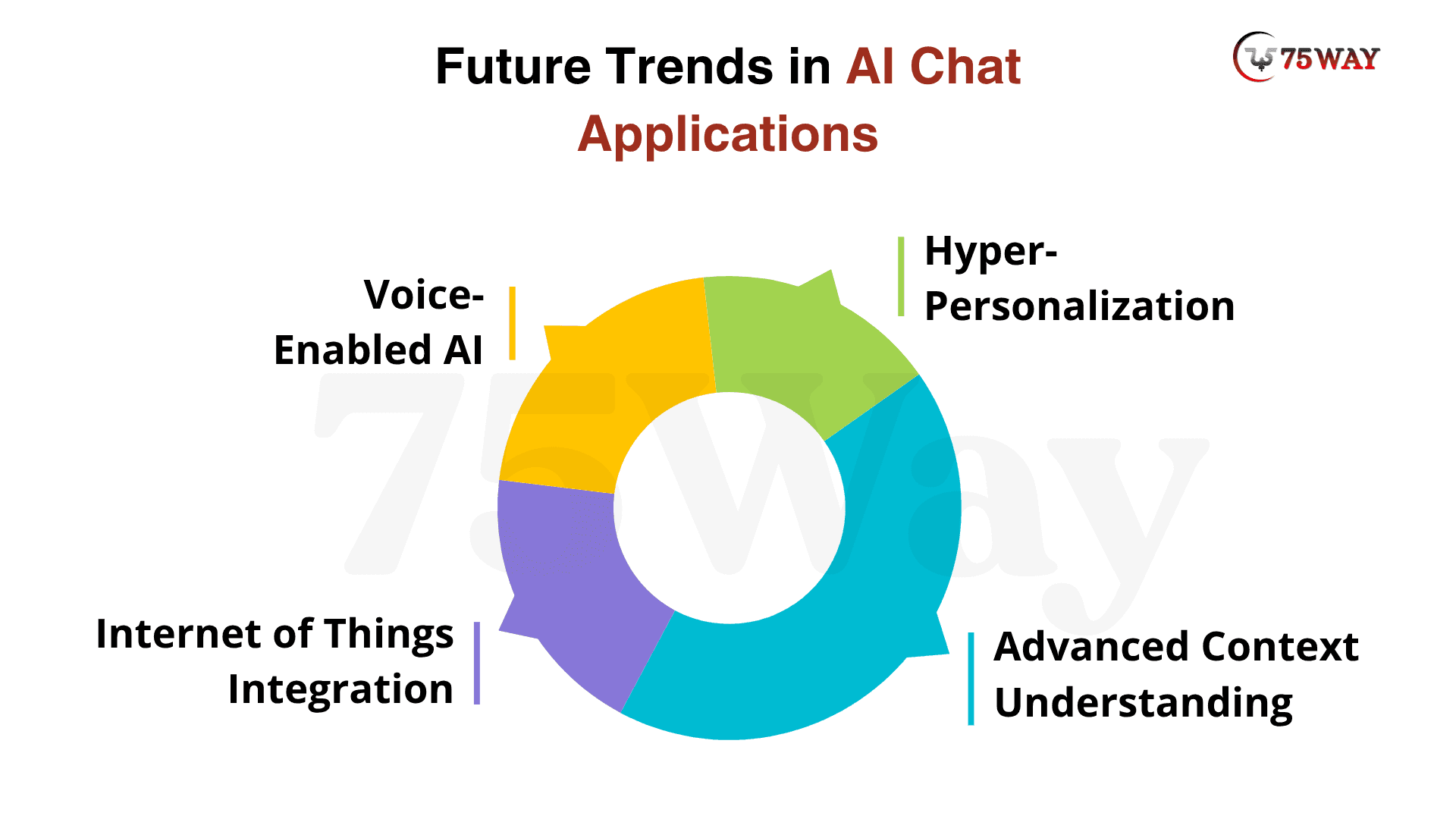
Voice-Enabled AI: Voice-based interactions are becoming increasingly important as users prefer hands-free and natural communication. AI chat apps with voice AI agent capabilities enhance accessibility, improve user convenience, and expand usability across devices, making interactions faster and more intuitive in real-world scenarios.
Hyper-Personalization: Personalized experiences driven by user data allow AI chat apps to deliver highly relevant responses and recommendations. By analyzing behavior, preferences, and past interactions, systems can create tailored conversations that improve engagement, satisfaction, and overall user retention.
Internet of Things Integration: The IoT apps with AI chatbots can control and interact with connected environments. This expands functionality beyond conversations, allowing users to manage smart devices, automate tasks, and create a more connected and efficient digital ecosystem.
Advanced Context Understanding: Improved contextual awareness allows AI chat apps to understand complex queries and maintain conversation continuity. Enhanced context handling leads to more accurate, human-like responses, reducing misunderstandings and significantly improving the quality of user interactions.
Final Thoughts
Building a sellable AI chat app requires a strategic combination of technical execution, market understanding, and continuous optimization. A strong foundation built on solving real problems, delivering seamless user experiences, and ensuring scalability positions your product for long-term success. Every stage, from validation to deployment and maintenance, plays a critical role in shaping a solution that is both valuable and competitive. For startups and founders, the opportunity within AI chat applications is substantial, but sustainable growth depends on disciplined execution and data-driven decisions. A well-developed AI chat app not only enhances operational efficiency and user engagement but also creates a scalable revenue stream that evolves with market demands. If you are planning to build a scalable and revenue-driven AI chat app, the right strategy and execution can make all the difference. Connect with a reliable chatbot development company to turn your idea into a high-performing, market-ready solution.
Frequently Asked Questions (FAQs)
What Is An AI Chat Application Used For?An AI chat application is used for automating conversations between businesses and users. It supports customer service, lead generation, onboarding, support workflows, and internal business communication through intelligent text or voice-based interactions.
How Does An AI Chat App Understand User Queries?An AI chat app uses natural language processing and machine learning models to interpret user intent. It analyzes input context, identifies patterns, and generates relevant responses based on trained data and conversational logic.
Can An AI Chat App Be Customized For Specific Industries?Yes, an AI chat app can be fully customized for industries such as healthcare, eCommerce, SaaS, and finance. Industry-specific training data and workflows improve accuracy and make the system more relevant to business needs.
Is It Necessary To Train An AI Model From Scratch?No, it is not always necessary. Many applications use pre-trained models like OpenAI APIs, while some businesses choose custom training when they require specialized performance, control, or domain-specific accuracy.
How Secure Is An AI Chat Application For Business Use?An AI chat application can be highly secure when built with encryption, authentication protocols, and compliance standards such as GDPR. Security depends on architectural design and implementation practices.
Can An AI Chat App Improve Business Conversions?Yes, an AI chat app can improve conversions by providing instant responses, guiding users through the sales funnel, and reducing drop-offs. It enhances engagement and helps businesses capture and qualify leads efficiently.