AI Summary
Solar monitoring apps have become essential tools for businesses seeking better energy visibility, operational efficiency, and long-term cost savings. This guide explores the key advantages of solar panel monitoring apps, practical applications, must-have features, development considerations, emerging technologies, and investment value, helping organizations understand why digital solar management solutions continue gaining momentum across industries in 2026.
Quick Overview
- Solar monitoring apps provide real-time visibility into energy generation and system performance.
- Businesses reduce maintenance costs through predictive insights.
- Remote access simplifies solar asset management across multiple installations from one dashboard.
- AI-powered analytics improve operational decisions using historical and real-time energy performance data.
- Accurate performance monitoring helps businesses maximize returns from long-term solar energy investments
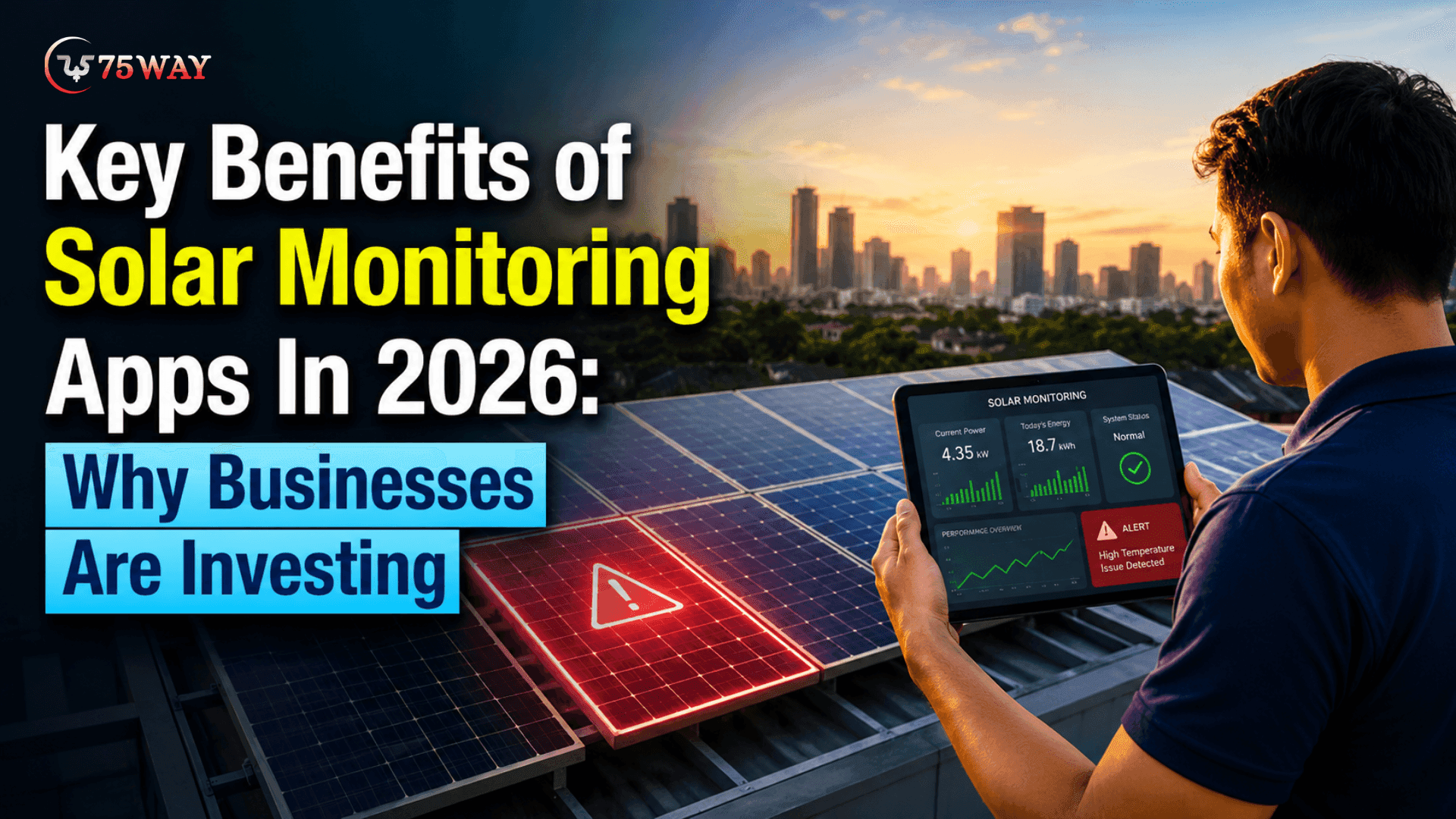
Modern solar monitoring applications go far beyond displaying electricity generation. They provide real-time dashboards, automated alerts, predictive maintenance, weather integration, historical performance reports, and AI-powered analytics that help organizations maximize the value of their solar infrastructure. Whether managing a single commercial installation or hundreds of distributed solar assets, businesses rely on solar mobile app development solutions to simplify operations and reduce unnecessary downtime.
In this guide, we'll explore the key benefits of solar monitoring apps in 2026, explain why organizations across multiple industries continue investing in them, examine essential features, development costs, emerging technology trends, and the business value these applications deliver. By the end, you'll have a clear understanding of how solar monitoring software supports smarter energy management and long-term operational success.
Why Businesses Are Investing in Solar App Development in 2026?
As more businesses invest in solar energy, simply installing solar panels is no longer enough. The real value comes from knowing how your system is performing every hour of the day. Is it generating the expected power? Is an inverter underperforming? Is a small issue about to become an expensive repair? A solar monitoring app answers these questions with real-time insights, helping businesses maximize the return on their solar investment.
The need becomes even greater for organizations managing multiple solar installations. Keeping track of dozens of sites manually is time-consuming and often leads to missed issues. With a centralized solar monitoring platform, businesses can monitor every location from a single dashboard, receive instant alerts when something goes wrong, and access detailed performance reports whenever needed.
Modern solar monitoring apps go a step further by combining AI, IoT, cloud computing, and predictive analytics. Instead of only showing current energy production, they can forecast generation, detect equipment issues before failures occur, and recommend timely maintenance. The result is lower operating costs, improved system performance, longer equipment lifespan, and smarter decisions backed by real-time data.
Major Benefits of Solar Monitoring Apps: How They Deliver Value in 2026
Solar monitoring applications offer much more than performance tracking. They provide businesses with the insights needed to improve operational efficiency, lower maintenance costs, and maximize energy production. Below are some of the most valuable benefits driving investment in solar applications.

1. Real-Time Solar Performance Monitoring
One of the biggest advantages of a solar monitoring app is the ability to track your solar system's performance as it happens. Instead of relying on manual inspections or waiting for periodic reports, businesses can monitor energy generation, panel output, inverter status, and overall system efficiency through a centralized dashboard. This provides a clear picture of how every component is performing throughout the day.
Having access to live performance data helps businesses respond quickly when production drops or equipment behaves unexpectedly. Faster visibility reduces downtime, supports timely maintenance decisions, and keeps solar systems operating at their expected capacity. For organizations managing multiple installations, real-time monitoring also simplifies oversight by bringing all performance data into one place, making daily operations easier to manage.
2. Remote Monitoring and Control
Managing solar installations across different locations can be challenging without the right technology. A solar monitoring app allows businesses to access system data from anywhere using a smartphone, tablet, or computer. Whether monitoring a single rooftop installation or a nationwide network of solar assets, operators can stay connected without visiting every site.
Remote access saves valuable time while giving maintenance teams the flexibility to monitor system performance whenever needed. If an issue arises, operators can review system data immediately, identify the possible cause, and schedule maintenance without unnecessary delays. This level of accessibility improves operational efficiency while reducing travel costs and simplifying the management of distributed solar infrastructure.
3. Early Fault Detection
Even a small issue within a solar system can reduce energy production if it goes unnoticed. A solar monitoring app continuously analyzes system performance and detects irregularities such as declining panel output, inverter failures, communication errors, or unexpected voltage fluctuations. Instead of discovering problems during routine inspections, businesses receive timely notifications as soon as unusual activity is identified.
Detecting faults at an early stage helps maintenance teams resolve issues before they affect overall system performance. This proactive approach minimizes unexpected downtime, prevents minor problems from developing into expensive repairs, and keeps solar installations operating more reliably. Over time, early fault detection also contributes to consistent energy generation and better financial returns.
4. Predictive Maintenance
Traditional maintenance schedules often rely on fixed inspection intervals, regardless of the actual condition of the equipment. A solar monitoring app changes this approach by using performance data, historical trends, and intelligent analytics to identify components that may require attention before a failure occurs. This allows businesses to maintain equipment based on its condition rather than following a routine schedule.
Predictive maintenance helps reduce unexpected breakdowns, lower emergency repair costs, and minimize disruptions to energy production. It also allows maintenance teams to plan service activities more efficiently, order replacement parts in advance, and extend the operational life of solar assets. As a result, businesses spend less time responding to failures and more time maintaining optimal system performance.
5. Improved Energy Efficiency
Generating solar energy is only part of the equation. Businesses also need to understand whether their systems are operating at maximum efficiency throughout the day. A solar monitoring app provides detailed insights into energy production patterns, equipment performance, and environmental factors that may influence output. These insights help identify areas where efficiency can be improved.
By continuously monitoring system performance, businesses can quickly recognize underperforming panels, shading issues, or equipment limitations that reduce energy generation. Addressing these factors improves overall system efficiency, increases electricity production, and helps organizations make better use of their renewable energy investments without adding unnecessary infrastructure.
6. Lower Operational and Maintenance Costs
Managing solar installations manually requires regular inspections, site visits, and reactive repairs, all of which increase operational expenses over time. A solar monitoring app reduces these costs by providing continuous visibility into system performance and allowing maintenance teams to identify exactly where attention is needed instead of inspecting every component.
With fewer emergency repairs, reduced travel requirements, and better maintenance planning, businesses can optimize resource allocation and lower overall operating costs. Automated monitoring also decreases administrative effort by generating reports and alerts automatically, allowing technical teams to focus on improving system performance rather than spending time collecting operational data manually.
11. Longer Equipment Lifespan
Solar panels, inverters, batteries, and other system components are built to operate for many years, but their lifespan depends on regular monitoring and timely maintenance. A solar monitoring app helps businesses track the health of every major component by continuously analyzing performance data and identifying signs of wear before they become serious problems.
Addressing minor issues early reduces unnecessary strain on equipment and prevents small faults from causing permanent damage. As a result, businesses can extend the operational life of their solar assets, reduce replacement costs, and protect the long-term value of their renewable energy investment.
12. Improved System Reliability
Businesses depend on consistent solar energy production to support daily operations and reduce electricity costs. Unexpected system failures or performance fluctuations can disrupt these goals and impact overall efficiency. A solar monitoring app continuously tracks system performance, helping operators maintain stable and reliable energy generation throughout the year.
By providing instant alerts, historical performance data, and continuous system visibility, the app enables businesses to resolve issues before they affect production. This proactive approach improves system reliability, minimizes operational disruptions, and gives organizations greater confidence in the performance of their solar infrastructure.
13. Seamless Integration with Smart Energy Systems
Modern businesses often use multiple technologies to manage energy consumption, including battery storage systems, smart meters, electric vehicle chargers, IoT devices, and energy management platforms. A solar monitoring app can integrate with these systems to create a connected energy ecosystem where data flows seamlessly between different technologies.
Having all energy-related information available through a single platform simplifies monitoring and improves operational efficiency. Businesses gain a complete view of energy production, storage, and consumption, allowing them to optimize resources, improve automation, and make better decisions based on accurate, centralized data.
14. Better Energy Consumption Management
Generating clean energy is only one part of effective energy management. Businesses also need to understand when, where, and how that energy is being consumed. A solar monitoring app provides detailed insights into consumption patterns, helping organizations identify inefficient equipment, peak usage periods, and opportunities to reduce unnecessary energy waste.
These insights support smarter energy planning by allowing businesses to balance solar generation with electricity demand more effectively. Improved consumption management reduces dependence on grid power, lowers electricity expenses, and helps organizations make better use of the energy their solar systems produce every day.
15. Enhanced Grid Management
Several commercial solar installations operate alongside the electrical grid, making it important to balance energy generation, storage, and consumption efficiently. A solar monitoring app provides real-time information about power flow between the solar system and the grid, helping businesses understand when energy is being imported or exported.
This visibility allows organizations to optimize energy usage during peak demand periods, reduce unnecessary grid dependence, and improve overall energy planning. Businesses participating in net metering or similar energy programs also benefit from more accurate tracking of electricity supplied back to the grid, supporting better financial and operational outcomes.
16. Support for Sustainability Goals
Many organizations have established sustainability targets aimed at reducing carbon emissions and increasing the use of renewable energy. A solar monitoring app helps measure the environmental impact of solar installations by tracking clean energy generation, carbon savings, and overall system performance through accurate, real-time data.
These insights make it easier to monitor progress toward sustainability objectives and communicate environmental achievements to customers, investors, and regulatory bodies. Reliable reporting also strengthens corporate sustainability initiatives while demonstrating a measurable commitment to responsible energy management.
17. Scalable Solar Asset Management
As businesses grow, they often expand their renewable energy infrastructure by installing additional solar systems across new facilities and locations. Managing this growing network manually becomes increasingly difficult without the right technology. A solar monitoring app provides a scalable platform capable of supporting expanding solar operations without increasing administrative complexity.
New installations can be added to the existing monitoring platform, allowing businesses to manage all assets through a single interface. This centralized approach simplifies expansion, improves operational consistency, and supports long-term growth without requiring separate monitoring solutions for each location.
18. Better Customer and Stakeholder Reporting
Businesses often need to share solar performance data with investors, facility managers, clients, executives, or sustainability teams. Collecting this information manually can be time-consuming and may lead to inconsistent reporting. A solar monitoring app simplifies this process by generating accurate reports based on real-time operational data.
Clear dashboards, performance summaries, and historical reports make it easier to communicate energy production, system efficiency, maintenance activities, and environmental impact. Providing reliable information strengthens transparency, supports informed decision-making, and builds greater confidence among stakeholders.
19. AI-Powered Performance Optimization
Artificial intelligence is transforming the way businesses manage renewable energy systems. Modern solar monitoring apps use AI to analyze historical data, weather conditions, equipment performance, and energy production patterns to identify opportunities for improving system efficiency.
Instead of simply displaying operational data, AI helps businesses predict energy output, identify hidden performance issues, recommend maintenance activities, and optimize system settings. These intelligent insights enable organizations to improve operational performance while reducing manual analysis and supporting more informed decision-making.
20. Competitive Business Advantage
Businesses that actively monitor and optimize their solar infrastructure are better positioned to reduce operating costs, improve energy efficiency, and achieve sustainability objectives. A solar monitoring app provides the visibility and operational insights needed to make faster, more informed decisions while maintaining high system performance.
As renewable energy adoption continues to grow, organizations that invest in intelligent monitoring solutions can respond more quickly to operational challenges, improve resource utilization, and demonstrate stronger environmental responsibility. These advantages not only strengthen day-to-day operations but also help businesses remain competitive in an increasingly sustainability-focused marketplace.
Industries That Benefit Most From Solar Monitoring Apps
Solar monitoring apps are no longer limited to utility companies and large solar farms. Businesses across multiple industries are adopting these solutions to improve energy visibility, reduce operational costs, and manage renewable energy assets more effectively. The ability to monitor performance in real time has made solar management an important part of modern business operations.
- Commercial Real Estate
Office buildings, shopping centers, and commercial complexes use solar monitoring apps to track energy production, optimize electricity usage, and manage multiple properties from a centralized dashboard.
- Manufacturing
Manufacturing facilities consume large amounts of electricity. Solar monitoring apps help plant managers monitor energy generation, identify efficiency issues, and reduce dependence on grid power.
- Retail Chains
Retail businesses with multiple locations can monitor solar performance across stores, compare energy savings, and improve operational consistency through centralized reporting.
- Healthcare Facilities
Hospitals and healthcare centers require reliable energy management. Monitoring apps provide visibility into solar performance while supporting sustainability initiatives and operational planning.
- Warehouses and Logistics
Large warehouses often have significant rooftop solar installations. Monitoring platforms help operators track production, manage multiple sites, and improve overall energy efficiency.
- Educational Institutions
Schools, colleges, and universities use solar monitoring apps to reduce electricity costs, track sustainability goals, and provide transparent energy reporting.
- Agriculture
Farms and agricultural businesses use solar systems for irrigation, storage, and processing operations. Monitoring apps help ensure reliable energy generation and better resource management.
- Hospitality
Hotels and resorts use solar monitoring solutions to manage energy consumption, reduce utility expenses, and support environmentally responsible operations.
- Utility-Scale Solar Operators
Large solar farms rely on advanced monitoring platforms to track performance across thousands of panels, detect faults quickly, and optimize energy production.
- Government and Public Infrastructure
Municipal buildings, public facilities, and government projects use solar monitoring apps to improve transparency, track renewable energy performance, and support long-term sustainability programs.
Final Thoughts
Throughout this guide, we've explored the 20 key benefits of solar monitoring apps, from real-time monitoring and predictive maintenance to AI-driven analytics, centralized asset management, and sustainability reporting. Together, these capabilities help businesses reduce operational costs, improve equipment reliability, and make faster, data-backed decisions while gaining greater control over their solar infrastructure.
Solar monitoring apps have become an essential investment for businesses looking to improve energy management, increase operational efficiency, and maximize the return on their renewable energy assets. As solar technology continues to evolve, adopting a solution that supports your current requirements while remaining scalable for future growth can provide lasting business value and a stronger competitive position. To build a custom solar monitoring app, partner with a reliable app development company that turns your idea into a high-performing solar monitoring solution.
Frequently Asked Questions (FAQs)
Can a Solar Monitoring App Support Multiple Solar Installations?
Yes. Most enterprise-grade solar monitoring apps are designed to manage multiple solar sites from a centralized dashboard. Businesses can monitor energy production, compare performance across locations, receive alerts, and generate reports without switching between different systems.
How Do Solar Monitoring Apps Help Reduce Maintenance Costs?
Solar monitoring apps continuously analyze system performance and notify operators when abnormalities occur. Early fault detection and predictive maintenance help businesses address issues before they become major failures, reducing emergency repairs, equipment downtime, and unnecessary maintenance expenses.
Which Businesses Benefit the Most From Solar Monitoring Apps?
Commercial buildings, manufacturing companies, retail chains, logistics providers, healthcare facilities, educational institutions, agricultural businesses, hospitality companies, utility-scale operators, and government organizations can all benefit from using solar monitoring applications.
Can Solar Monitoring Apps Integrate With Existing Solar Equipment?
Yes. Modern solar monitoring apps can integrate with inverters, smart meters, battery storage systems, IoT sensors, weather platforms, and energy management software. Integration capabilities depend on the hardware and communication protocols used by the existing solar infrastructure.
How Long Does It Take to Develop a Custom Solar Monitoring App?
Development timelines depend on the application's complexity, required features, third-party integrations, and platform selection. A basic solution may take a few months, while an enterprise-grade solar monitoring platform with AI capabilities and IoT integration generally requires a longer development cycle.
Are Solar Monitoring Apps Secure for Business Use?
Yes. Custom solar monitoring applications typically include secure user authentication, encrypted data transmission, role-based access controls, cloud security measures, and regular backups to protect operational data and maintain business continuity.