Summary
AI real estate agents are reshaping property sales by supporting faster lead responses, smarter qualification, and consistent buyer engagement. This guide explains how real estate AI agents manage inquiries, streamline communication, and improve conversion rates. These systems improve workflows by optimizing timing, structuring processes, and enhancing the customer experience throughout the entire buying journey.
Quick Overview
- AI real estate agents improve lead response speed and buyer engagement quality.
- Automated systems help prioritize high-intent property buyers.
- Consistent follow-ups reduce missed opportunities in property sales cycles.
- AI tools for real estate agents support lead tracking and communication management.
- Real estate teams achieve higher conversions through structured workflows.
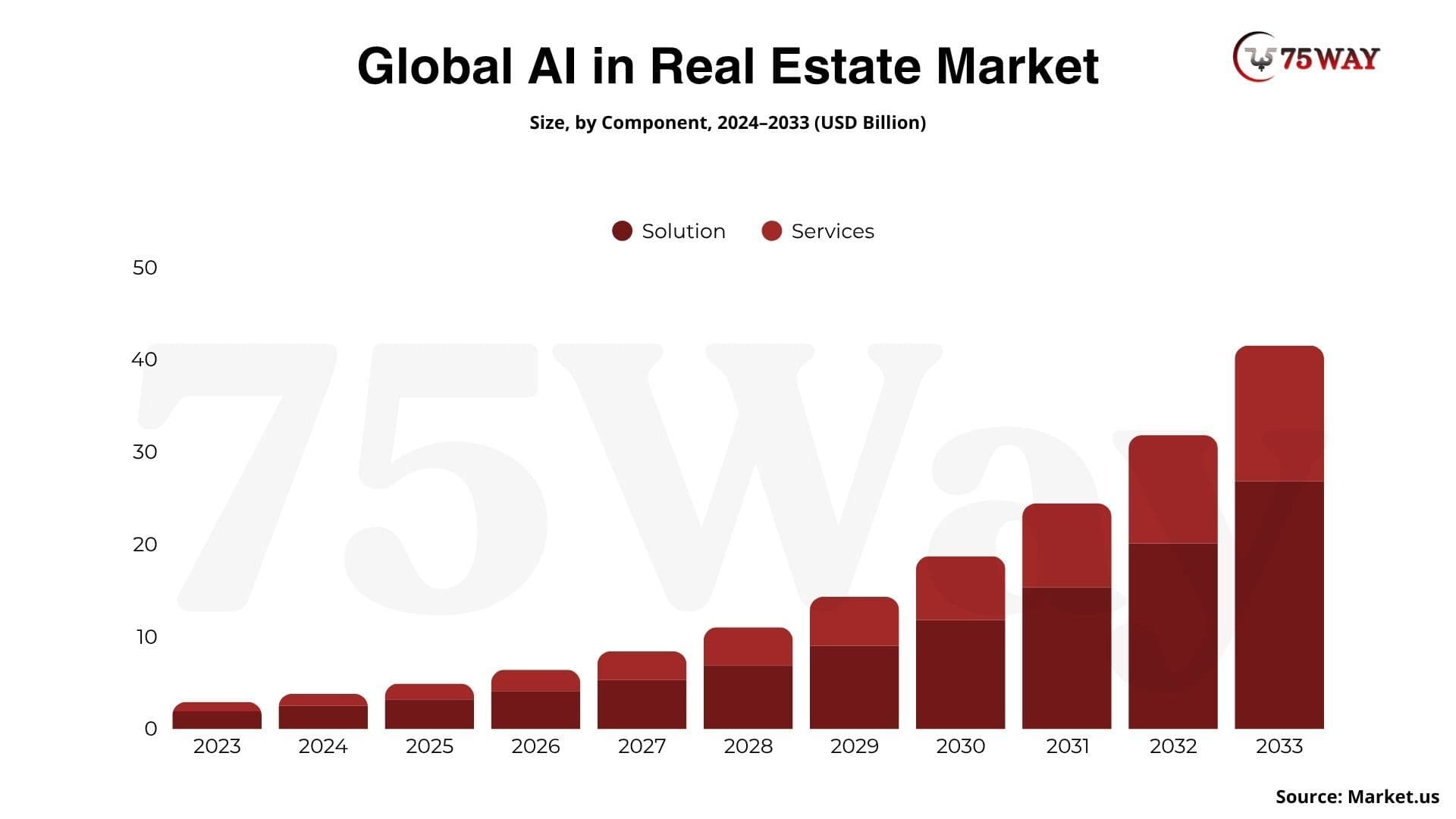
The global AI in real estate market size is expected to reach around $41.5 Billion by 2033, growing at a CAGR of 30.5%. Hence, there is a massive opportunity right now to launch and scale AI real estate agent solutions in modern property markets.
And honestly, the timing feels perfect. Real estate is already moving fast, listings are going digital with real estate apps and software, and buyers are making decisions quicker than ever.
So, imagine combining that speed with artificial intelligence-powered systems that can respond instantly, qualify leads, and manage communication without delay.
That is exactly where AI real estate agents are stepping in.
The AI agents for real estate handle inquiries, improve engagement, organize follow-ups, and guide buyers through smoother property journeys. Instead of missing leads or losing time in repetitive communication, agents can now focus more on negotiations and closing deals.
This blog will highlight how AI real estate agents increase property sales and conversions in 2026, and why this change is creating a strong competitive advantage.
What Is An AI Real Estate Agent?
An AI real estate agent is a smart software system that automates property sales activities and uses data-driven decision-making. It helps real estate professionals manage leads, respond to inquiries instantly, and guide potential buyers through property listings more.
Instead of replacing human agents, it works alongside them by handling repetitive tasks. It handles repetitive tasks like answering questions, qualifying leads, and scheduling follow-ups. The AI tools for real estate agents study buyer behavior and engagement patterns to prioritize better leads. In simple terms, it acts like a digital assistant that speeds up property sales and keeps them more organized.
How Real Estate AI Agent Works?
Real estate AI agents work through a connected flow that starts from capturing leads and gradually moves toward qualification, engagement, and conversion, ensuring no opportunity is missed along the way.
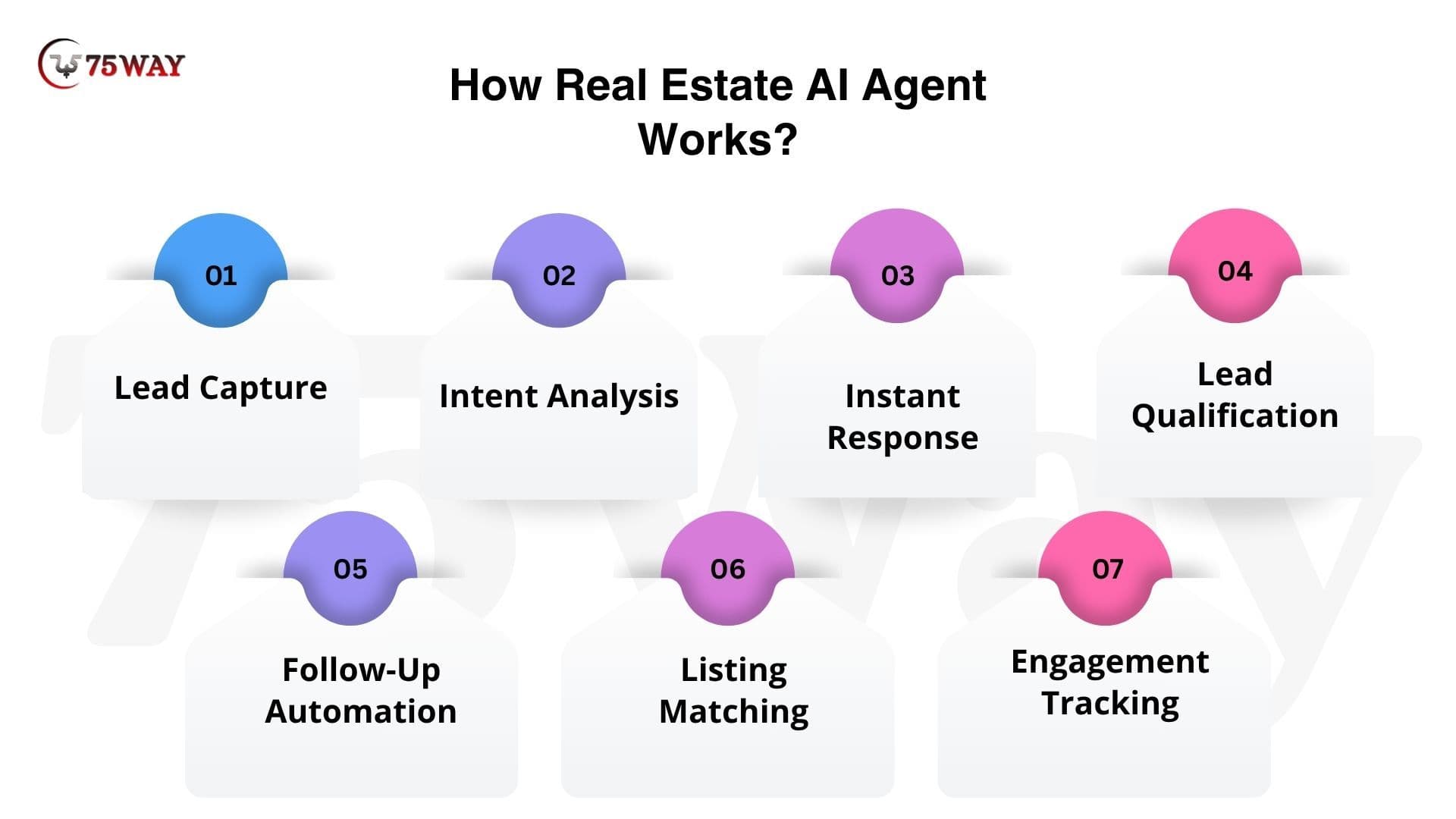
- Lead Capture: AI agent collects property inquiries from websites, listings, and social media platforms, ensuring every potential buyer interaction enters the system for further processing and continuity.
- Intent Analysis: Once captured, the system studies buyer behavior, search patterns, and engagement signals to understand interest level and prepare context for the next interaction stage.
- Instant Response: Based on that understanding, the AI immediately responds with relevant property details, keeping the conversation active and guiding the buyer forward without delay.
- Lead Qualification: After initial engagement, the system evaluates budget, preferences, and seriousness to filter and prioritize leads that are more likely to convert.
- Follow-Up Automation: Qualified leads are then nurtured through scheduled follow-ups, ensuring consistent communication and keeping buyer interest alive across multiple touchpoints.
- Listing Matching: As engagement continues, the AI connects buyers with the most relevant property options, refining suggestions based on earlier responses and preferences.
- Engagement Tracking: Finally, all interactions are continuously monitored, helping agents understand buyer intent trends and improve future responses for stronger conversions.
Why Businesses Are Investing in AI Agents for Real Estate?
Businesses are adopting AI voice agents for real estate because they improve speed, lead handling, and buyer communication. They help real estate teams manage high inquiry volumes and respond instantly. This creates smoother operations and better conversion outcomes.
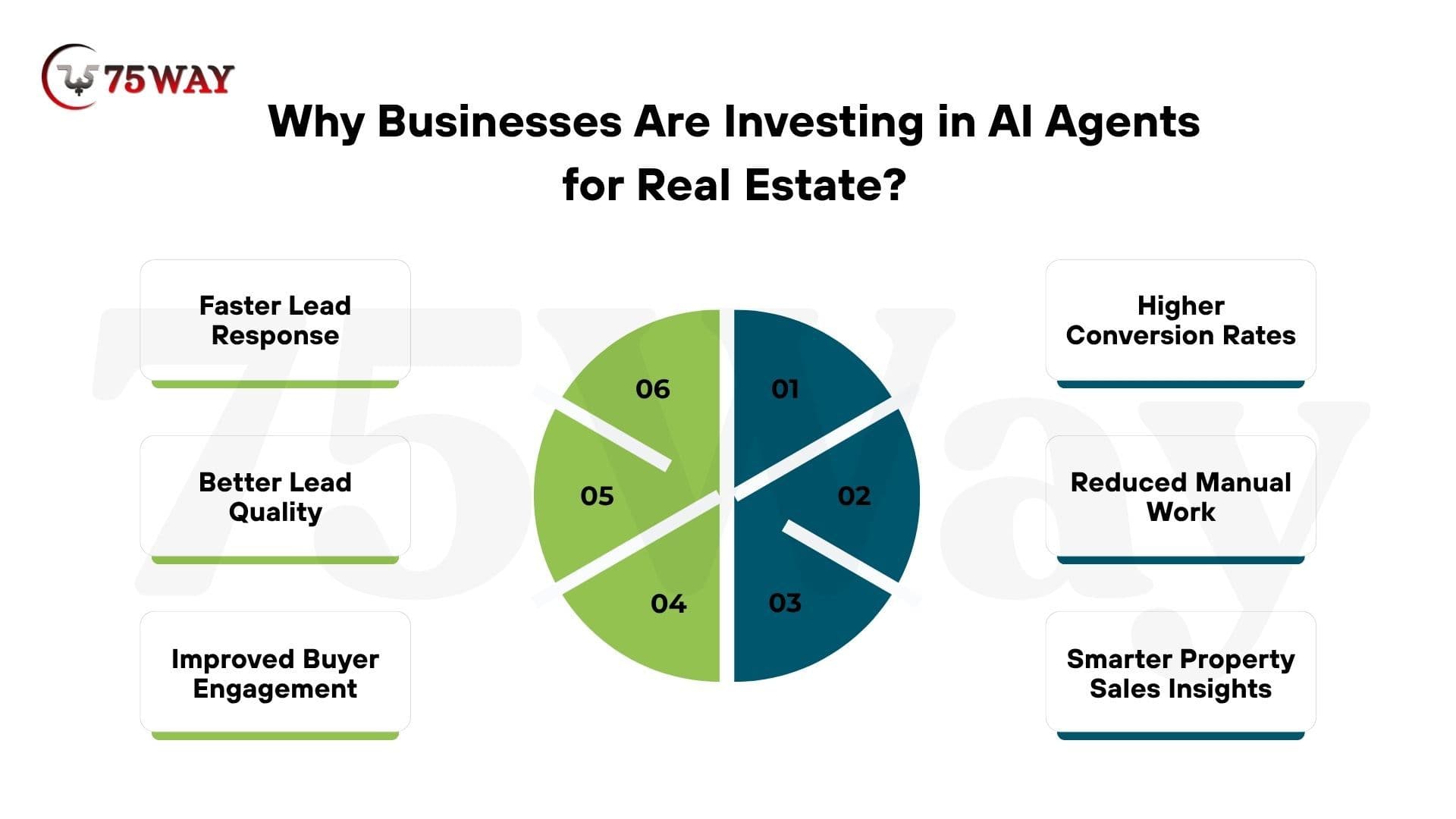
- Faster Lead Response: Property inquiries are handled instantly across platforms without delays. This keeps potential buyers engaged and improves the chance of conversion early in the journey.
- Better Lead Quality: Buyer intent is analyzed using behavior signals and engagement patterns. Sales teams can then focus on prospects who show real purchasing interest.
- Improved Buyer Engagement: Continuous follow-ups and timely updates keep buyers connected. This creates a smoother communication experience throughout the property search process.
- Higher Conversion Rates: Relevant recommendations and quick responses guide faster decision-making. This increases the likelihood of closing deals successfully.
- Reduced Manual Work: Routine tasks like inquiry sorting and scheduling are automated. Agents gain more time for negotiations and client relationships.
- Smarter Property Sales Insights: Buyer behavior and market trends are analyzed in real time. These insights help improve pricing, targeting, and overall sales strategy.
Benefits of Real Estate AI Agents For Property Dealers & Agencies
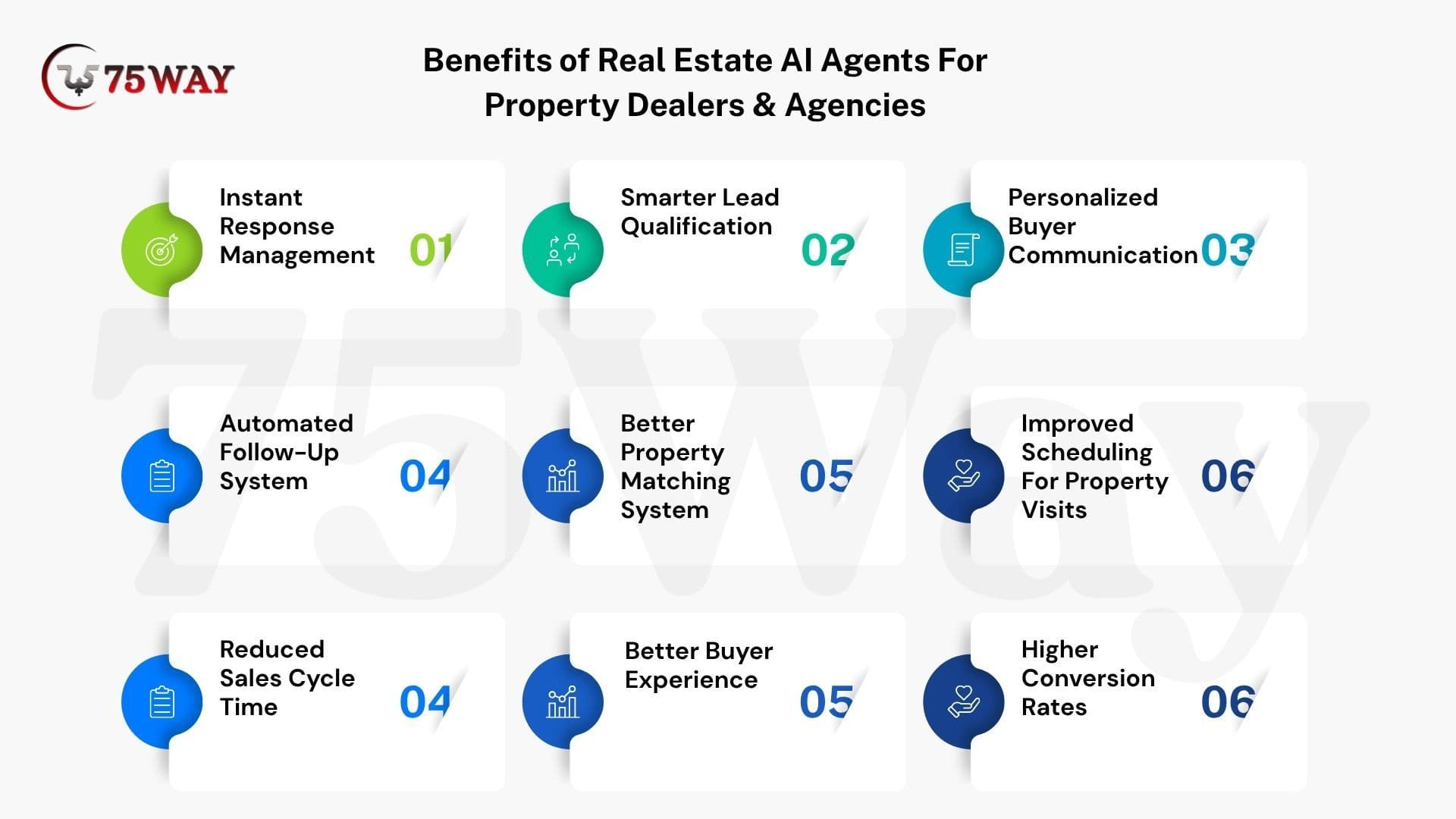
Real estate AI agents are becoming a practical advantage for property dealers and agencies looking to streamline operations. They help handle inquiries faster, improve lead quality, and keep communication consistent across multiple platforms.
1. Instant Response Management
Speed is one of the most important factors in real estate conversion. When a buyer shows interest in a property, they usually contact multiple listings at the same time. The first agent to respond often gains the highest chance of conversion. AI real estate agents handle this by responding instantly to inquiries across channels. Instead of waiting for human availability, the system:
- Replies within seconds
- Shares property details
- Collects buyer requirements
- Suggests relevant listings
- Initiates conversation flow
This immediate engagement keeps buyers active and reduces drop-off rates. In real estate, timing often decides whether a lead becomes a deal.
2. Smarter Lead Qualification
Not every inquiry leads to a sale. Some buyers are exploring budgets. Some are collecting market information. Others may not be ready to purchase immediately. AI real estate agents analyze buyer behavior and separate serious prospects from general inquiries. They evaluate:
- Budget range
- Location preference
- Property type interest
- Engagement frequency
- Response behavior
- Search activity
Based on this, leads are categorized into priority levels. This helps agents focus energy on buyers who are more likely to convert, improving productivity and reducing wasted effort.
3. Personalized Buyer Communication
Buyers do not respond well to generic messages. A message that feels irrelevant is often ignored. AI real estate agents improve communication by analyzing buyer preferences and tailoring responses accordingly. For example:
- A family looking for a 3BHK receives relevant listings
- An investor sees ROI-focused properties
- A first-time buyer gets simplified explanations
4. Automated Follow-Up System
Follow-ups are one of the most important parts of real estate sales. Many deals are lost not because of price or property issues, but because follow-ups were inconsistent. AI real estate agents manage follow-ups automatically. They:
- Send reminders after inquiries
- Share updated listings
- Re-engage inactive leads
- Notify about price changes
- Maintain long-term communication
This keeps potential buyers connected without manual effort from agents. Consistent follow-ups often decide final conversions in property sales.
5. Better Property Matching System
One of the strongest capabilities of AI real estate agents is matching buyers with suitable properties. This improves buyer satisfaction and reduces decision confusion. It considers:
- Budget compatibility
- Location proximity
- Amenities preference
- Investment goals
- Lifestyle requirements
6. Improved Scheduling For Property Visits
Coordinating property visits manually can be time-consuming. Multiple buyers, changing availability, and communication delays often slow down the process. AI real estate agents simplify scheduling by:
- Checking availability automatically
- Booking visits instantly
- Sending reminders
- Updating calendars
- Coordinating multiple visits
7. Reduced Sales Cycle Time
Real estate deals often take weeks or months to close. Delays usually occur due to communication gaps, missed follow-ups, or lack of clarity in buyer interest. AI real estate agents reduce these delays by:
- Keeping conversations active
- Providing instant answers
- Removing waiting time
- Supporting faster decision cycles
This shortens the overall sales journey and increases transaction speed.
8. Better Buyer Experience
Buyers interact with real estate listings through multiple platforms. They may start on a website, continue on WhatsApp, and complete conversations via calls or emails. AI real estate agents maintain continuity across all channels. This means:
- No repeated explanations
- Consistent information
- Unified conversation history
- Smooth interaction flow
This creates a more professional and reliable experience for buyers.
9. Higher Conversion Rates
Conversions depend on timing, relevance, and consistency. AI real estate agents improve all three areas. By ensuring:
- Fast response times
- Better lead qualification
- Personalized messaging
- Consistent follow-ups
- Relevant property suggestions
Top Use Cases of Implementing AI Agents for Real Estate
AI agents are increasingly used in real estate to improve lead management, automate communication, and streamline property sales processes. They help agencies respond faster, qualify buyers, and manage listings more. These use cases are shaping smarter and more organized real estate operations.
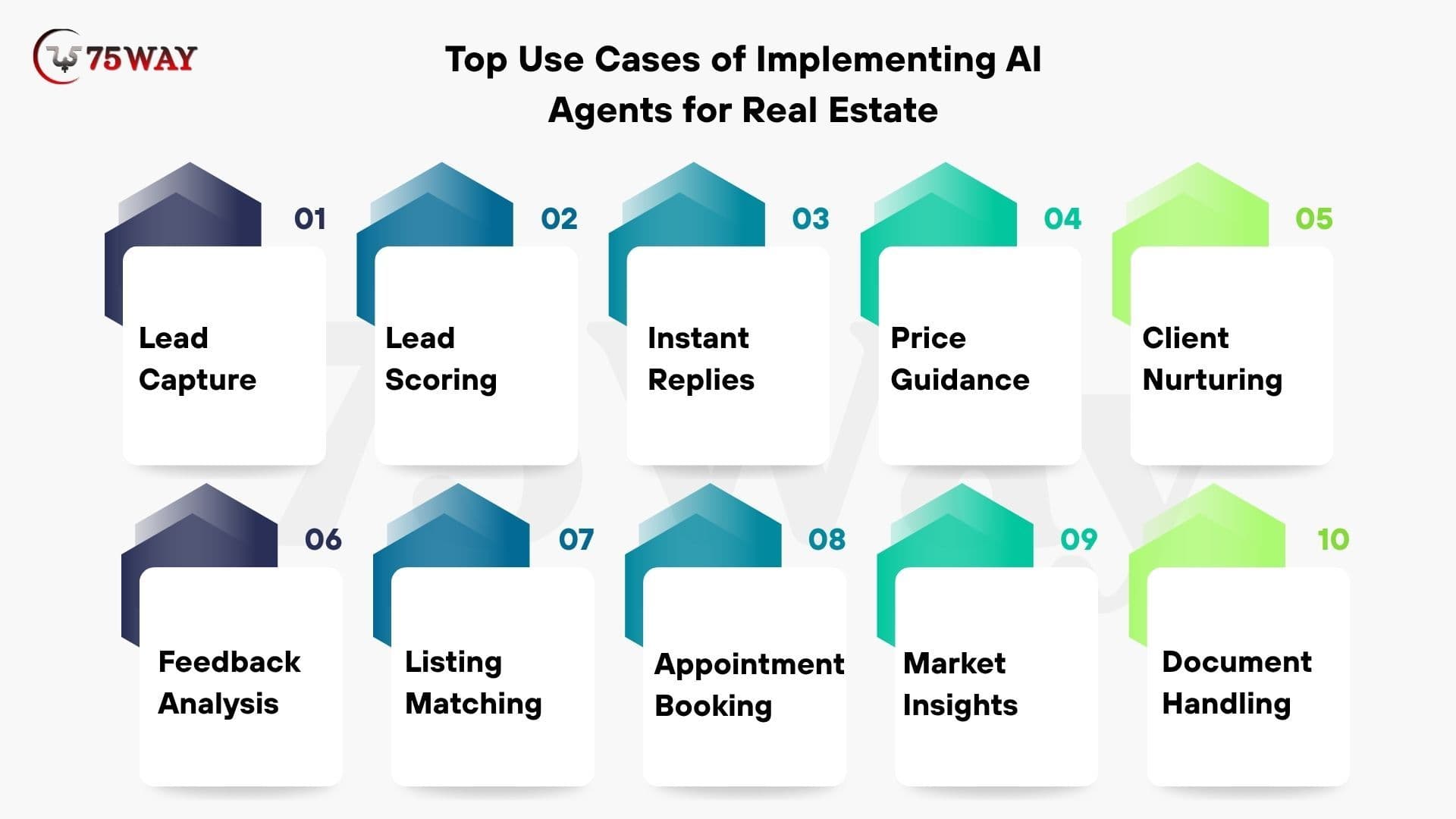
- Lead Capture: Collect inquiries from multiple channels and organize them into structured databases for further engagement and follow-ups.
- Lead Scoring: Analyze buyer intent signals and rank prospects based on engagement level, budget, and purchase readiness.
- Instant Replies: Provide immediate responses to property inquiries with relevant details, keeping potential buyers engaged without delay.
- Price Guidance: Analyze market trends and comparable listings to suggest accurate property pricing for better buyer attraction and faster deal closures.
- Client Nurturing: Maintain continuous engagement with potential buyers through personalized updates, reminders, and relevant property suggestions across their journey.
- Feedback Analysis: Collect and evaluate buyer feedback to understand preferences, improve listings, and enhance overall service quality for agencies.
- Listing Matching: Match buyer preferences with suitable property listings based on location, budget, and search behavior patterns.
- Appointment Booking: Automate scheduling of property visits and meetings between agents and interested buyers across different time zones.
- Market Insights: Analyze property trends, pricing data, and buyer behavior to support smarter real estate decision-making strategies.
- Document Handling: Organize and manage property documents, agreements, and verification files for faster and more secure processing workflows.
How to Build & Launch an AI Real Estate Agent?
Building and launching an AI real estate agent follows a connected workflow where each stage feeds into the next, ensuring smooth development from planning to deployment and optimization.
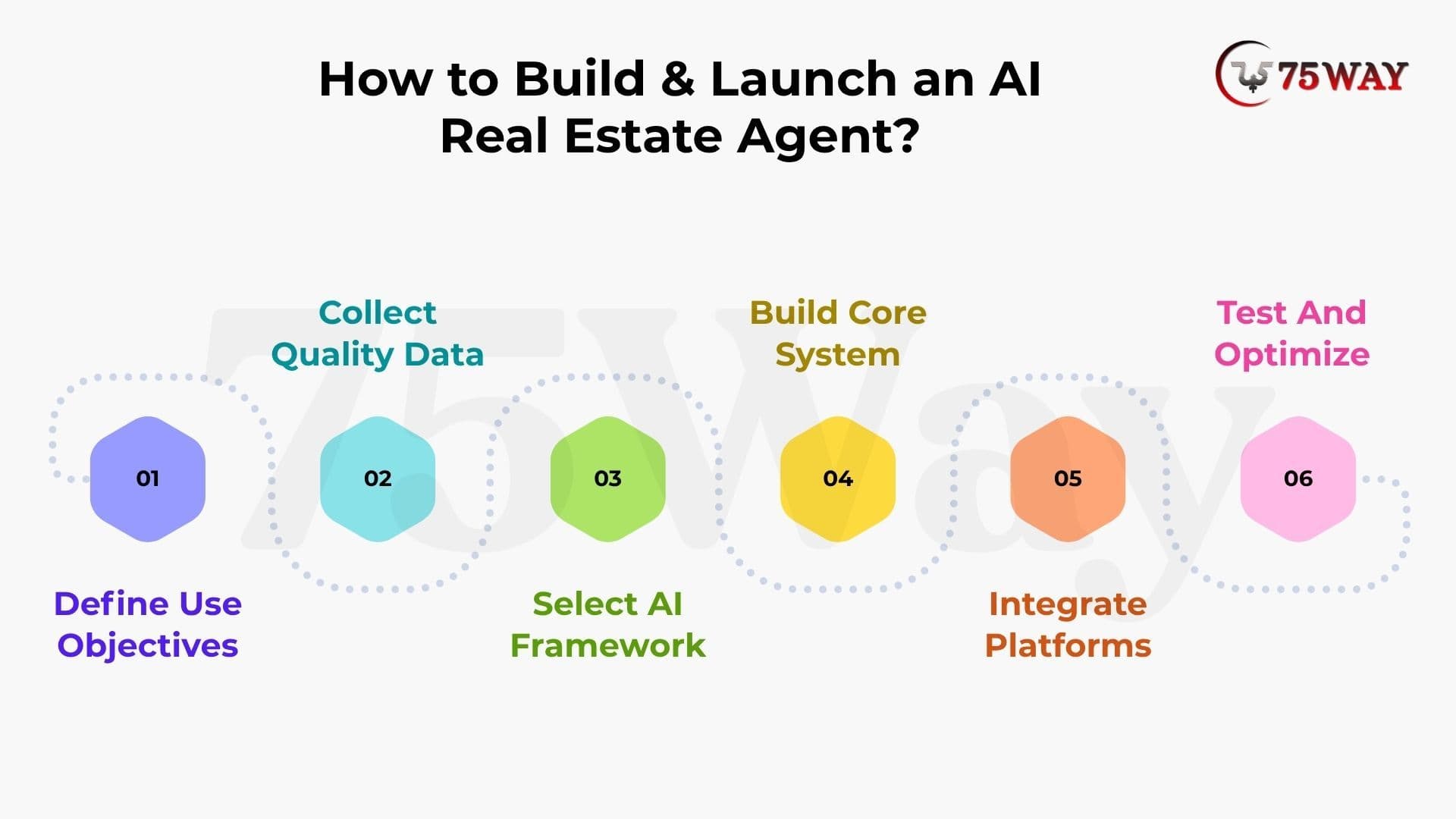
Step 1: Define Use Objectives
Start by setting clear real estate goals like lead handling, inquiry automation, and buyer engagement, which guide every later development decision.
Step 2: Collect Quality Data
Based on defined goals, gather structured property listings, buyer behavior data, and past interactions to prepare a strong foundation for training.
Step 3: Select AI Framework
Using prepared data, choose suitable AI tools and platforms that can effectively process real estate workflows and support system scalability.
Step 4: Build Core System
With the framework in place, develop AI workflows for lead capture, responses, and property recommendations that form the operational backbone.
Step 5: Integrate Platforms
Once core system is built, connect CRM tools, listing databases, and communication channels for smooth and continuous data flow.
Step 6: Test And Optimize
After integration, test system performance, refine outputs, and improve accuracy to ensure reliable real estate agent behavior before launch.
Future of AI Agents in Real Estate Sales
AI will continue to play a stronger role in property markets. Future systems may include:
- Voice-based property assistants
- Predictive buying behavior analysis
- Virtual property walkthrough assistance
- Fully automated lead nurturing systems
- Smarter pricing recommendations
Real estate professionals using AI early will likely gain stronger competitive advantages in crowded markets.
Final Remarks
AI real estate agents are reshaping property sales by improving speed, communication quality, and lead management efficiency. In a market where buyers expect instant responses and personalized attention, traditional methods are no longer sufficient on their own. AI systems help real estate professionals manage inquiries, prioritize serious buyers, maintain consistent follow-ups, and reduce missed opportunities. This leads to smoother operations and stronger conversion potential across listings. If you are planning to adopt this approach, partnering with an experienced AI development company can help you build tailored real estate solutions.
Frequently Asked Questions (FAQs)
How Does An AI Real Estate Agent Help With Property Sales?
AI real estate agents manage inquiries, respond instantly, and qualify leads efficiently. They organize follow-ups and keep communication active across platforms. This improves engagement speed and increases conversion potential across property listings.
Can AI Real Estate Agents Replace Human Agents Completely?
No, AI real estate agents support repetitive tasks like lead handling and communication. Human agents remain essential for negotiation, trust-building, and closing deals. Both work together for better sales outcomes.
Do AI Real Estate Systems Work For Small Agencies?
Yes, small agencies benefit from AI real estate systems. They automate inquiries, lead responses, and follow-ups effectively. This helps teams manage more clients without increasing workload or resources.
How Fast Do AI Real Estate Agents Respond To Leads?
AI real estate agents respond within seconds of receiving inquiries. Quick responses increase buyer engagement and interest levels. This reduces lead drop-off and improves conversion chances.
Are AI Real Estate Agents Expensive To Use?
No, costs depend on features and platform selection. Many systems are scalable for different budgets. Higher efficiency often results in a strong return on investment.
Can AI Improve Property Listing Visibility?
Yes, AI improves visibility by analyzing buyer behavior and targeting relevant audiences. It ensures listings reach interested buyers more effectively. This increases engagement and strengthens overall sales performance.