AI Summary
Explore the best astrology apps in the USA and discover what makes them popular. Compare their features, pricing, and personalized experiences. Understand emerging AI capabilities and business models. Find opportunities to build innovative astrology applications with 75way Technologies.
Key Takeaways
- Explore leading astrology apps transforming personalized astrological experiences across the US.
- Compare astrology app features, pricing, subscriptions, and user experiences.
- Discover how AI transforms horoscope predictions and personalized astrology consultations.
- The global astrology app market is projected to reach $46.6 billion by 2035.
- Understand development opportunities for launching AI-powered astrology applications.
Let's say you've just met someone and want to check your zodiac compatibility, or you're curious about why your horoscope keeps mentioning a major career change. Instead of searching through different websites, you can open an astrology app and explore these questions in one place.
That's what makes astrology apps interesting for anyone who enjoys understanding the connection between astrology and everyday life.
Of course, you might not need the same app as someone else. Perhaps you prefer detailed birth chart readings, or maybe you want daily predictions without paying for a consultation. Some platforms even offer AI astrology chats, where you can ask questions and receive personalized responses based on your birth information.
In this guide, you will learn about the best astrology apps in the USA to help you find the right match. Here's what each app brings to the table, including its standout features and pricing. In the end, you will learn how to build an AI astrology app in the USA in 2027.
Astrology App Market Growth in USA: Trends, Statistics & Future Potential
A growing number of astrology enthusiasts want more than a quick prediction about how their day will go. They want astrology app development solutions that can explain their birth charts, answer personal questions, and offer readings that feel relevant to their lives. This changing demand is creating new possibilities for astrology businesses, and the US market trends and future outlook help explain why.
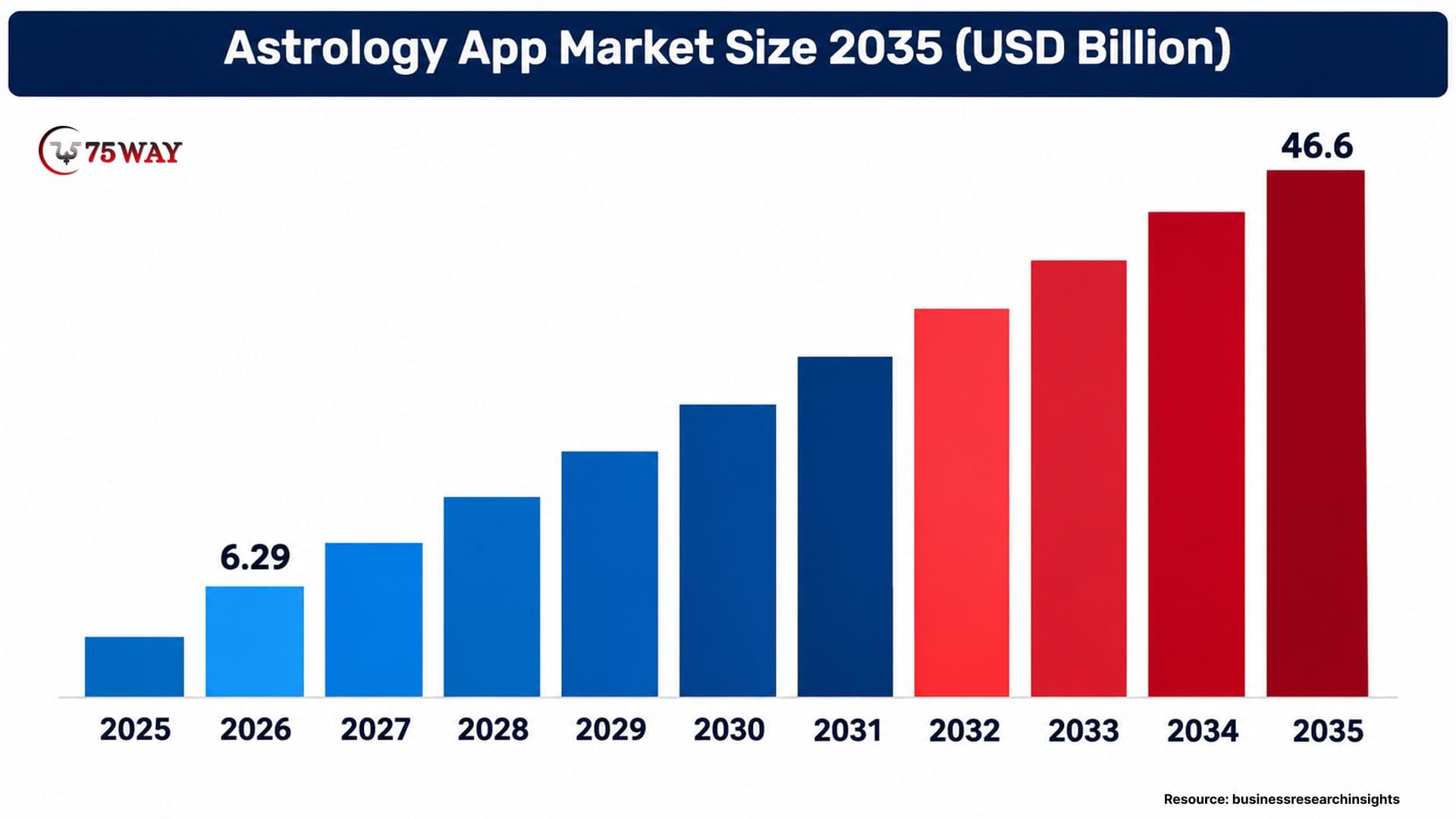
- The global astrology app market is forecast to rise from $6.29 billion in 2026 to $46.6 billion by 2035, registering a 24.93% CAGR.
- Data from the U.S. National Telecommunications and Information Administration indicates that astrology apps attracted more than 15 million monthly active users in 2023, reflecting growing interest in digital astrology services.
- Western astrology apps are expected to dominate the market by type, accounting for approximately 50% of the market share in 2026.
- Freemium monetization models are projected to contribute around 45% of industry revenue in 2026.
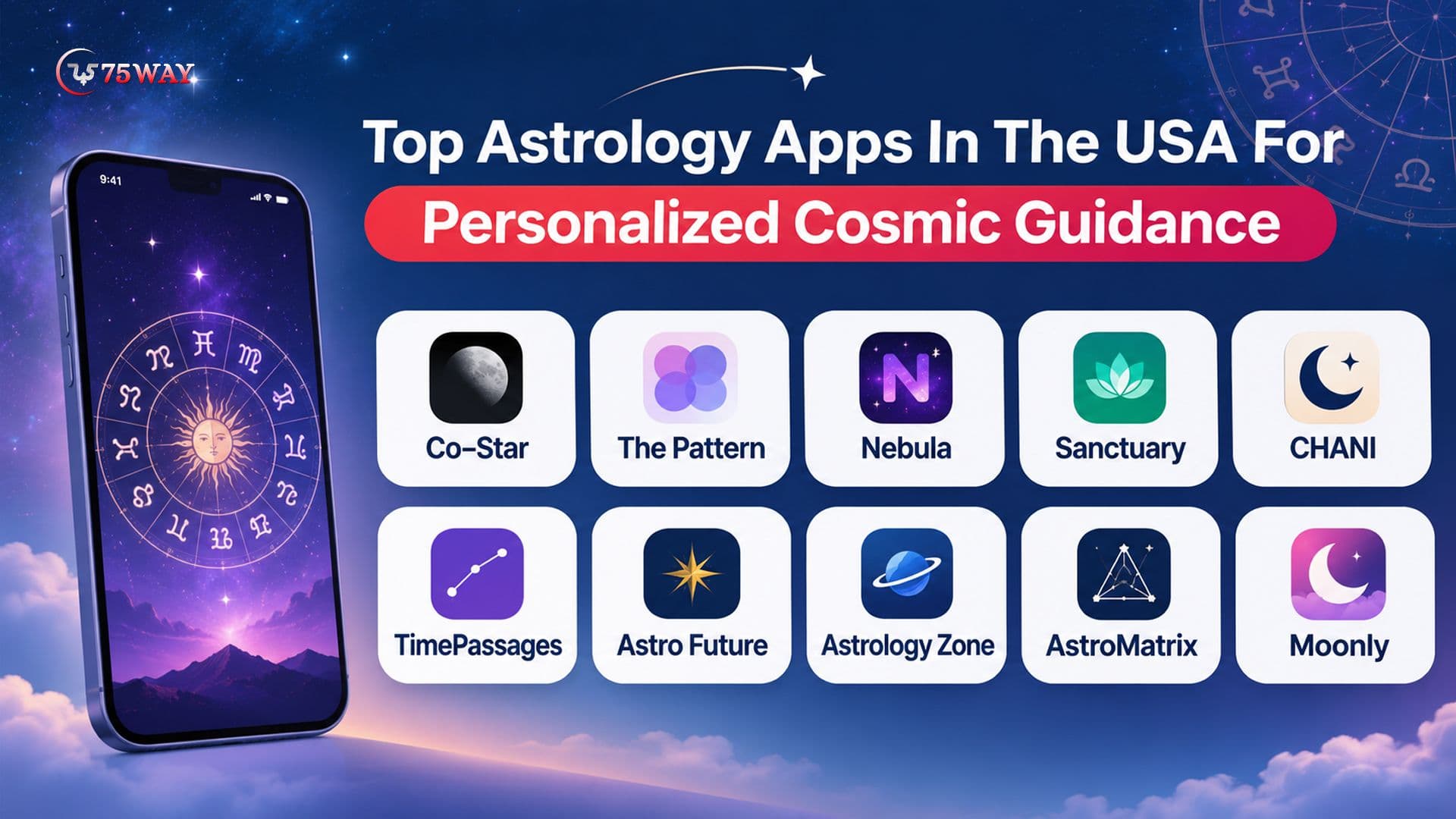
Top Astrology Apps In The USA For Personalized Cosmic Guidance
Your birth chart, moon sign, and planetary placements can tell a much more detailed story than a daily horoscope alone. If you're curious about these aspects of astrology, several apps in the USA offer personalized readings, compatibility insights, and AI-powered guidance right from your phone. Let's explore the platforms that make these experiences possible and what sets each one apart.
1. Co–Star
Best For: Personalized Horoscopes And Social Astrology
Co–Star is a popular astrology application that combines personalized birth charts with short, direct daily readings. It uses astronomical data and interpretations developed by human astrologers working with AI technology to create individualized experiences. Its social features also allow users to compare birth charts with friends, making astrology part of everyday conversations and relationships.
- Platform Availability: iOS and Android
- Active Users: 4.3 million
- App Rating: 4.8/5
- Free Version: Yes
- Launch Year: 2017
Key Features
- Daily Horoscopes: Generates daily readings using individual birth chart placements and planetary movements.
- Natal Charts: Maps planetary positions using users' exact birth details.
- Friend Compatibility: Compares birth charts to explore relationship dynamics between friends.
- AI Assistance: Combines an artificial intelligence assistant with human astrologer interpretations for personalized guidance.
- Push Notifications: Sends daily astrological updates directly to users' smartphones.
What Businesses Can Learn From Co–Star
Co–Star demonstrates how personalization and social engagement can become central parts of an astrology product.
Its friend compatibility feature gives users a reason to invite others, creating opportunities for organic user acquisition. Personalized notifications and recurring horoscope content also encourage users to return.
For founders, this is a useful example of building an astrology application where users have reasons to engage beyond a single daily reading.
2. The Pattern
Best For: Personality Insights And Relationship Patterns
The Pattern takes a different approach to astrology by focusing on personality, emotional experiences, and relationships. It translates birth chart information into readable insights that help users explore their behavior and personal connections. Its compatibility tools and personalized content make the application particularly interesting for people who want to understand themselves and their relationships without learning complicated astrological terminology.
- Platform Availability: iOS; check current regional Android availability.
- Active Users: 15 million
- App Rating: 4.0/5
- Free Version: Yes
- Launch Year: 2017
Key Features
- Personality Insights: Explores individual personality traits through personalized birth chart interpretations.
- Relationship Patterns: Examines personal connections through detailed astrological compatibility insights.
- Life Cycles: Explains personal timing cycles using individual birth chart information.
- AI Conversations: Offers deeper AI conversations through its personalized Your Pattern experience.
- Shared Experiences: Helps users explore relatable experiences through personalized community content.
What Businesses Can Learn From The Pattern
The Pattern shows that astrology applications do not need to depend entirely on daily horoscope notifications.
Its focus on self-discovery and relationships creates opportunities for deeper user engagement. Instead of simply reading a prediction, users can explore personal experiences and return for additional insights.
For startups, this is a useful example of developing an astrology product around emotional engagement and personalized content.
3. Nebula
Best For: Astrology, Tarot, And Professional Guidance
Nebula brings astrology and other spiritual services together in one digital platform. Users can explore birth charts, daily horoscopes, tarot readings, numerology, and personalized guidance from spiritual advisors. Its combination of automated digital experiences and human consultations creates multiple ways for users to interact with the application.
- Platform Availability: iOS, Android, and Web.
- Active Users: 70 million+
- App Rating: 4.6/5 on the US Apple App Store.
- Free Version: Yes
- Launch Year: 2019
Key Features
- Birth Charts: Generates personalized natal charts using users' birth information.
- Daily Horoscopes: Provides zodiac predictions and personalized astrological insights every day.
- Tarot Readings: Offers tarot interpretations for different personal questions and situations.
- Psychic Consultations: Connects users with spiritual advisors through online consultation services.
- Compatibility Analysis: Evaluates relationship compatibility using zodiac signs and birthdates.
What Businesses Can Learn From Nebula
Nebula provides an interesting example of combining multiple spiritual services within one digital platform.
Instead of depending on a single horoscope feature, it creates several opportunities for users to engage and spend. Its advisor marketplace also introduces a service-based revenue stream alongside digital subscriptions.
Founders can explore a similar approach by combining AI-generated astrology interpretations with optional consultations from verified human astrologers.
4. Sanctuary
Best For: Live Astrologer Consultations
Sanctuary is designed for people who prefer personal guidance over automated horoscope content. The application combines daily astrology updates, interactive birth charts, tarot experiences, and live consultations with professional astrologers and spiritual advisors. Its emphasis on human-led readings differentiates it from applications that primarily depend on automated interpretations and personalized content.
- Platform Availability: iOS and Android
- Monthly Active Users: 7 million+
- App Rating: 4.8/5 on the US Apple App Store
- Free Version: Yes
- Launch Year: 2019
Key Features
- Daily Horoscopes: Delivers daily zodiac readings and personalized astrological updates.
- Birth Charts: Creates interactive natal charts using personal birth information.
- Live Readings: Provides access to professional astrologers through live consultations.
- Tarot Sessions: Offers personalized tarot readings through experienced spiritual practitioners.
- Expert Guidance: Connects users with specialists for individual spiritual questions.
What Businesses Can Learn From Sanctuary
Sanctuary demonstrates the commercial potential of connecting digital experiences with real professionals.
Users can explore free astrology content before deciding whether they want a personalized consultation. This creates a natural path from free engagement to paid services.
An AI-powered astrology application can explore a similar hybrid model by offering instant AI responses for common questions and professional astrologer consultations for more detailed guidance.
5. CHANI
Best For: Astrology Education And Mindfulness
CHANI combines professional astrological interpretations with mindfulness and personal development. Created by astrologer Chani Nicholas and her team, the application offers detailed birth chart readings, daily and weekly forecasts, guided meditations, and personalized rituals. Unlike platforms that promote automated readings, CHANI specifically emphasizes content written by real astrologers rather than AI-generated interpretations.
- Platform Availability: iOS and Android
- Active Users: 2 million+
- App Rating: 4.9/5 on the US Apple App Store
- Free Version: Yes
- Launch Year: 2020
Key Features
- Birth Charts: Explains natal chart placements through professional astrological interpretations.
- Weekly Forecasts: Provides personalized weekly readings and upcoming planetary updates.
- Moon Readings: Tracks lunar movements with personalized interpretations and guidance.
- Guided Meditations: Combines astrology with meditation practices for everyday mindfulness.
- Personal Rituals: Offers reflective exercises aligned with significant astrological events.
What Businesses Can Learn From CHANI
CHANI highlights the importance of editorial quality and a recognizable brand identity.
Its approach shows that users may value meaningful interpretations more than automatically generated content. Its subscription model also demonstrates how exclusive readings, guided experiences, and regular content releases can support recurring revenue.
For businesses developing AI astrology applications, the lesson is to use automation to improve personalization without removing the expertise and credibility that make astrology content valuable.
6. TimePassages
Best For: Detailed Birth Charts And Astrological Analysis
TimePassages is particularly useful for users who want to understand astrology beyond their sun sign and daily horoscope. The application offers detailed natal charts, planetary transits, progressions, and relationship comparisons, with interpretations written by experienced astrologers. Its combination of accessible explanations and professional-level charting tools makes it suitable for beginners as well as serious astrology enthusiasts.
- Platform Availability: iOS; desktop astrology software is also available
- Active Users: 1 million+
- App Rating: 4.8/5 on the US Apple App Store
- Free Version: Yes, with paid reports and in-app purchases
- Launch Year: 2012
Key Features
- Natal Charts: Generates detailed birth charts with comprehensive planetary interpretations.
- Planetary Transits: Tracks planetary movements affecting individual natal chart placements.
- Relationship Charts: Compares two birth charts for compatibility and relationship insights.
- Future Forecasts: Explores upcoming astrological cycles through advanced forecasting techniques.
- Astrology Glossary: Explains technical astrological concepts through accessible educational descriptions.
What Businesses Can Learn From TimePassages
TimePassages shows how an astrology application can serve both casual users and people with advanced knowledge.
Its detailed charting capabilities create opportunities for premium reports, advanced tools, and recurring purchases.
For founders, this highlights the importance of developing different product experiences for beginners, experienced astrology enthusiasts, and professional astrologers.
7. Astro Future
Best For: Interactive Charts And Relationship Compatibility
Astro Future makes astrology more interactive by allowing users to explore planetary movements and understand how they relate to personal birth charts. Its interface includes animated charts, detailed interpretations, and compatibility analysis for different relationships. Users can also explore upcoming transits and access personalized horoscope information without limiting their experience to basic zodiac predictions.
- Platform Availability: iOS, iPadOS, and Apple Watch
- Active Users: 1 million+
- App Rating: 4.8/5 on the US Apple App Store.
- Free Version: Yes, with premium subscriptions and in-app purchases.
- Launch Year: 2016
Key Features
- Animated Charts: Displays planetary movements through interactive and visually engaging astrology charts.
- Love Compatibility: Compares two individuals' birth charts for relationship insights.
- Daily Horoscopes: Provides personalized horoscope readings based on individual astrological placements.
- Transit Analysis: Explains planetary movements and their potential astrological influences.
- PDF Reports: Generates shareable astrology reports containing detailed personal chart interpretations.
What Businesses Can Learn From Astro Future
Astro Future demonstrates how interactive product experiences can make complex astrology information easier to understand.
Its animated charts and visual representations provide more engagement than static horoscope descriptions.
Businesses can apply this concept by developing interactive birth chart dashboards, visual planetary timelines, and AI-generated explanations that make technical astrological information accessible to everyday users.
8. Astrology Zone
Best For: Detailed Daily And Monthly Horoscopes
Astrology Zone is a well-established astrology platform built around the work of astrologer Susan Miller. Its application provides detailed daily and monthly horoscope content, relationship insights, and important astrological dates for all 12 zodiac signs. Rather than focusing on interactive AI experiences, the platform builds its identity around recognizable astrological expertise and regularly updated editorial content.
- Platform Availability: iOS and Android
- Active Users: 1 million+
- App Rating: 4.7/5 on the US Apple App Store
- Free Version: Yes, with advertisements and premium subscription options.
- Launch Year: 2013
Key Features
- Daily Horoscopes: Offers daily zodiac predictions written by professional astrologers.
- Monthly Forecasts: Provides detailed monthly astrological guidance for all zodiac signs.
- Relationship Insights: Explores compatibility through personalized zodiac and astrological interpretations.
- Important Dates: Highlights significant astrological dates and upcoming planetary movements.
- Premium Content: Unlocks exclusive readings and additional horoscope content through subscriptions.
What Businesses Can Learn From Astrology Zone
Astrology Zone demonstrates how consistent publishing and a recognizable expert identity can support long-term audience engagement.
Its business model also highlights the potential of offering free horoscope content alongside premium editorial experiences.
For startups, this is a useful example of building a content-driven astrology application with recurring subscriptions and a clearly defined editorial identity.
9. AstroMatrix
Best For: Advanced Astrology Reports And Chart Interpretation
AstroMatrix is designed for users who want access to detailed astrological information in one application. It brings together natal chart interpretations, planetary transits, relationship compatibility, lunar updates, and additional spiritual tools. Its extensive collection of astrology resources makes it particularly interesting for people who prefer exploring multiple chart systems and interpretations rather than relying on short daily readings.
- Platform Availability: iOS and Android
- Active Users: 1 million+
- App Rating: 4.6/5 on the US Apple App Store
- Free Version: Yes, with advertisements and optional paid features
- Launch Year: 2015
Key Features
- Natal Interpretations: Explains planetary placements through detailed, personalized birth chart reports.
- Transit Readings: Tracks current planetary movements and their astrological interpretations.
- Compatibility Reports: Analyzes relationship dynamics through comparative astrological chart readings.
- Lunar Updates: Provides daily lunar information and personalized moon phase interpretations.
- Tarot Guidance: Combines tarot readings with additional numerology-based spiritual insights.
What Businesses Can Learn From AstroMatrix
AstroMatrix demonstrates how offering multiple specialized tools can increase the perceived value of an astrology application.
Its extensive chart interpretations and different purchasing options provide flexibility for users with different levels of interest.
For founders, the takeaway is to organize advanced features carefully. A comprehensive astrology application should not overwhelm beginners with too many tools on its main screen.
10. Moonly
Best For: Lunar Guidance And Spiritual Wellness
Moonly approaches astrology through lunar cycles, spiritual practices, and personalized wellness experiences. Its platform combines birth chart information with moon phases, daily horoscopes, guided meditations, affirmations, and rituals. This broader approach makes the application interesting for users who want to combine astrology with everyday mindfulness and spiritual activities.
- Platform Availability: iOS and Android
- Monthly Active Users: 6 million+
- App Rating: 4.6/5 on the US Apple App Store.
- Free Version: Yes, with premium subscriptions and in-app purchases
- Launch Year: 2019
Key Features
- Birth Charts: Provides personalized birth chart information through astrological calculations.
- Moon Phases: Tracks lunar cycles using relevant astronomical information and dates.
- Daily Horoscopes: Delivers personalized astrological guidance based on individual birth information.
- Guided Meditations: Provides meditation sessions designed around spiritual wellness practices.
- Lunar Rituals: Offers reflective activities aligned with significant moon phases.
What Businesses Can Learn From Moonly
Moonly demonstrates the potential of targeting specific user interests and combining astrology with broader wellness experiences.
Its product is not limited to horoscope consumption. Meditation, rituals, lunar tracking, and personalized astrology create multiple engagement opportunities.
For startups, this highlights the importance of identifying a clear audience segment before developing an astrology application.
Best Astrology & Horoscope Apps In United States: Quick List
Choosing an astrology app depends on what users want from the experience. Some prefer quick daily horoscopes, while others look for advanced chart interpretations, personalized consultations, or AI-powered conversations. The following comparison summarizes the primary strengths of these applications.
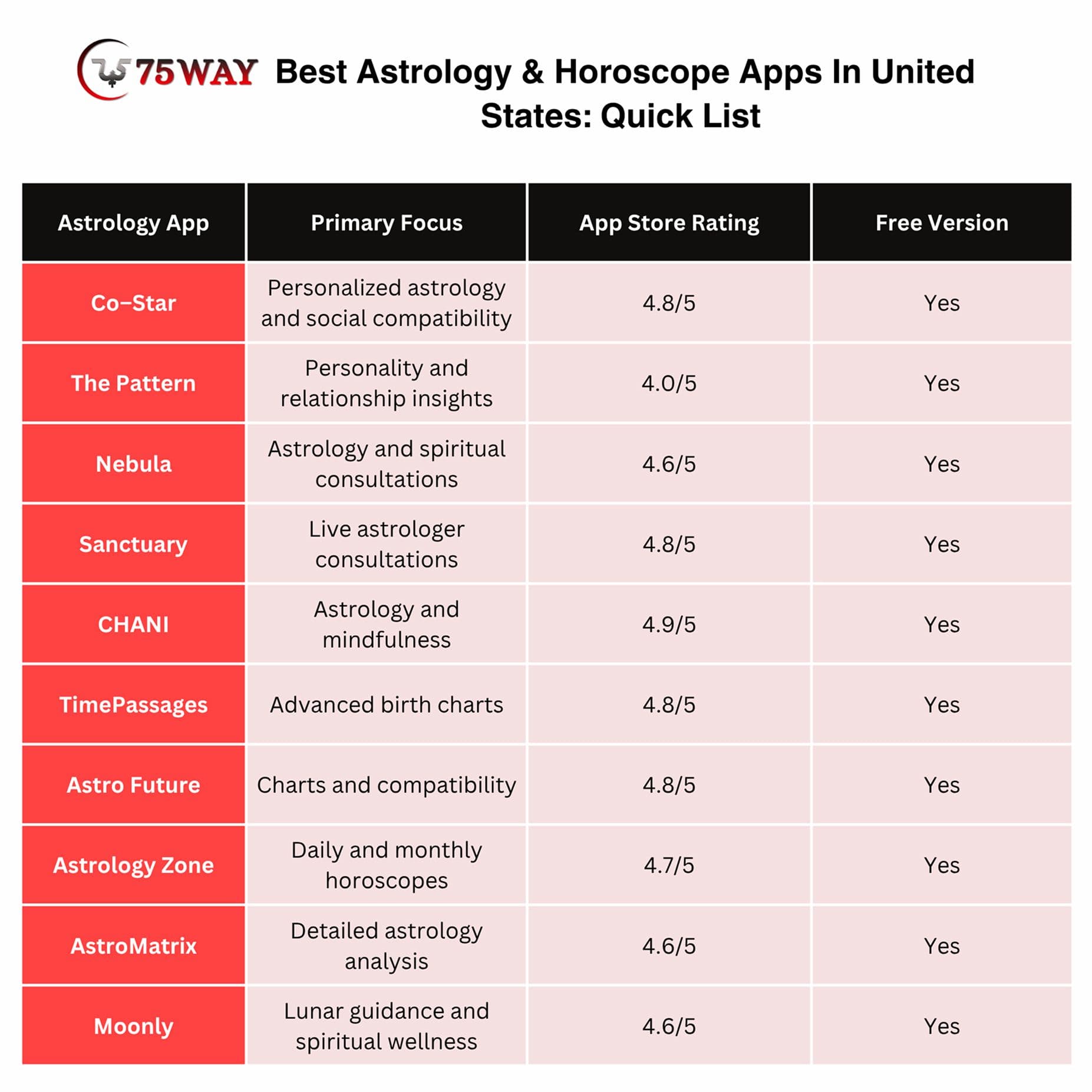
Ratings are approximate US Apple App Store snapshots from November 2026. They are not a measure of astrological accuracy and may change over time.
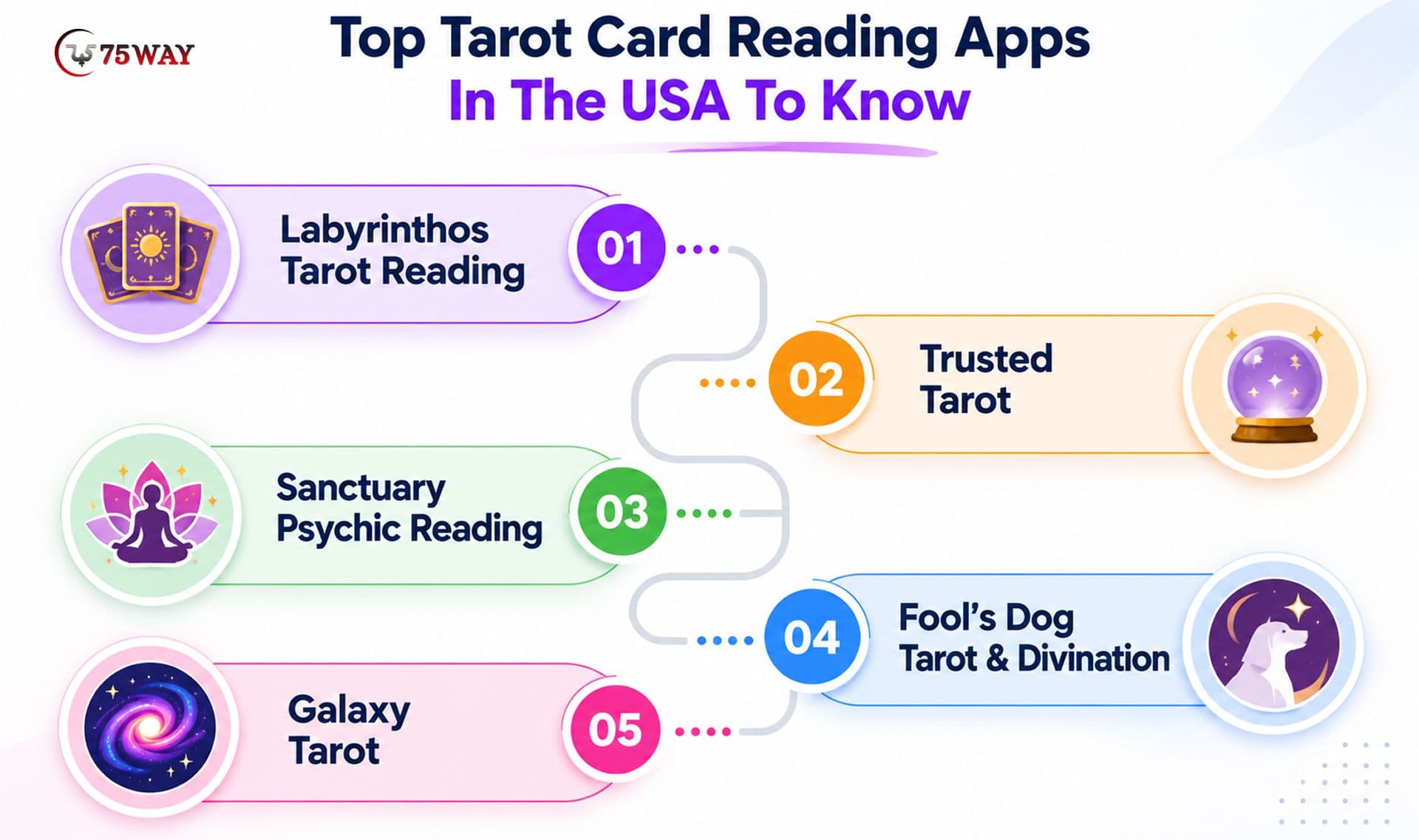
Top Tarot Card Reading Apps Gaining Popularity Across The USA
Not everyone who enjoys tarot has a deck nearby or knows how to interpret every card, especially when trying a new spread. Tarot reading apps make it easier to explore card meanings, practice daily draws, and get guided interpretations whenever curiosity strikes. Here are some popular tarot apps in the USA that offer different ways to experience tarot on your phone.
1. Labyrinthos Tarot Reading
Best For Learning Tarot
For beginners interested in understanding tarot, this app offers guided lessons and interactive learning experiences. Users can explore all 78 tarot cards, practice different spreads, and discover traditional card interpretations. Its journaling and progress-tracking tools also encourage regular practice and personal reflection.
- Learn tarot through guided interactive lessons
- Explore all seventy-eight traditional tarot cards
- Practice readings with customizable card spreads
- Record personal insights inside reading journals
- Track progress through gamified learning activities
2. Trusted Tarot
Best For Traditional Tarot Readings
This app offers traditional tarot readings for everyday questions, with a strong focus on familiar spreads and card meanings. Users can explore daily and weekly readings, including the detailed Celtic Cross format. It also provides a library for understanding upright and reversed card interpretations.
- Explore daily and weekly tarot readings
- Access detailed Celtic Cross card spreads
- Understand upright and reversed card meanings
- Discover guidance for love and careers
- Receive personalized answers through premium readings
3. Sanctuary Psychic Reading
Best For Professional Tarot Consultations
This app brings tarot readings and spiritual consultations together through access to professional readers. Users can explore personalized tarot insights or connect with experts through live conversations. Its combination of astrology, psychic guidance, and tarot makes it suitable for people seeking human-led readings.
- Connect with professional tarot reading experts
- Access personalized psychic and tarot insights
- Explore astrology charts and zodiac compatibility
- Chat with readers through live messaging
- Receive guidance through convenient voice calls
4. Fool’s Dog Tarot & Divination
Best For Exploring Different Tarot Decks
Designed for tarot enthusiasts and experienced readers, this app provides access to a diverse digital deck collection. Users can explore card artwork, read interpretations, and experiment with different reading layouts. Its journaling and customization options also support a more personal tarot practice.
- Explore diverse digital tarot card decks
- Read detailed meanings and card interpretations
- Choose from twenty built-in reading layouts
- Customize readings with optional card reversals
- Maintain journals and share reading reports
5. Galaxy Tarot
Best For Traditional Tarot Practice
This Android-focused tarot app is designed for people who prefer traditional card interpretations and straightforward daily readings. Its classic tarot approach helps users understand individual cards and their symbolism. It is another option for readers who want a dedicated tarot experience without live psychic consultations.
- Explore traditional Rider-Waite tarot card imagery
- Discover meanings behind individual tarot cards
- Draw daily cards for personal reflection
- Practice readings using different card spreads
- Learn tarot symbolism through reference explanations
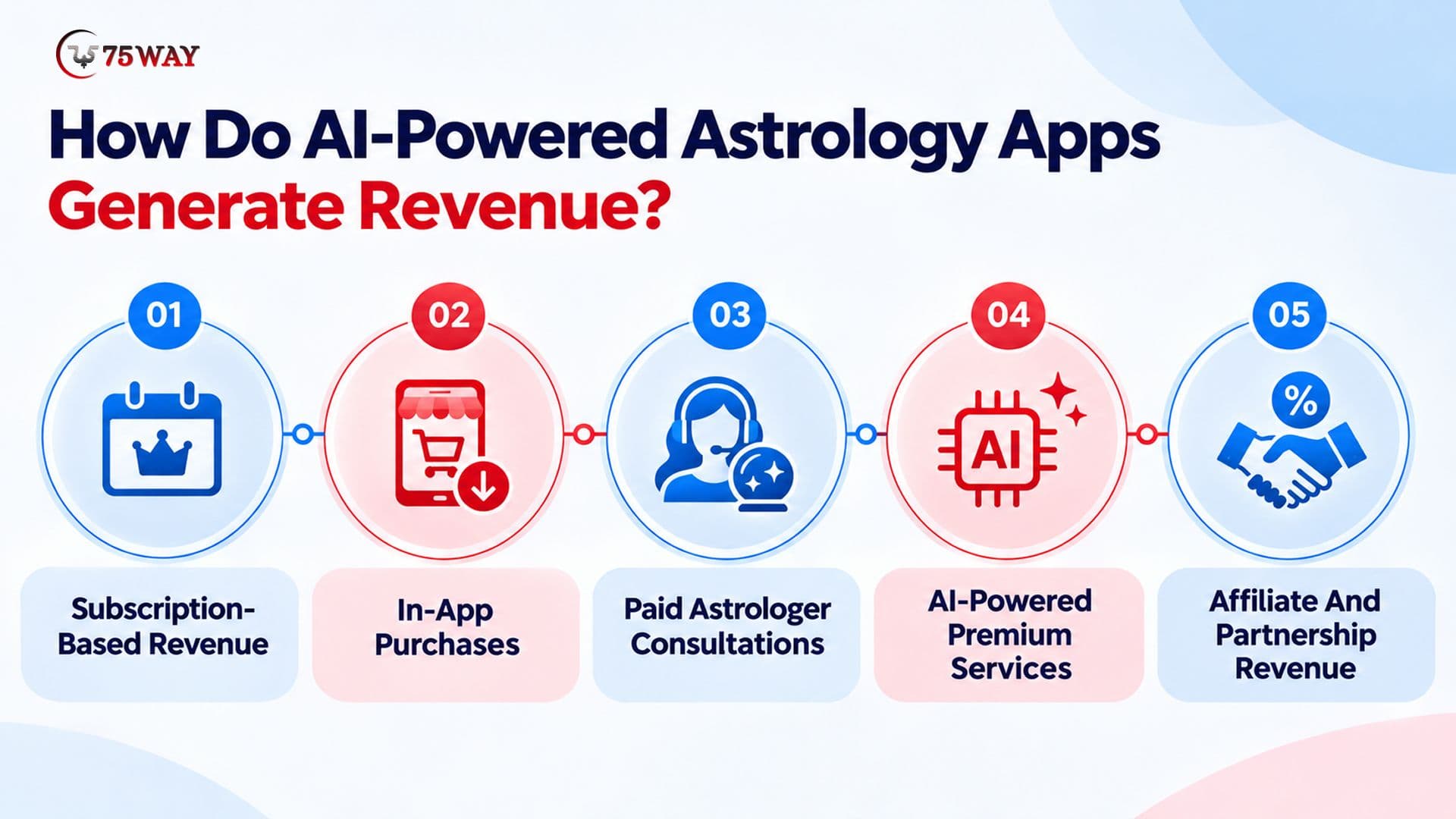
How Do AI-Powered Astrology Apps Generate Revenue?
An astrology application can attract users through free daily horoscopes, birth charts, and compatibility tools. However, building a sustainable business requires more than downloads. Businesses need monetization strategies that encourage users to purchase additional features while maintaining a useful free experience. Here are revenue models commonly suited to digital astrology platforms.
1. Subscription-Based Revenue
Subscriptions allow users to access premium astrology features through recurring monthly or annual payments.
For example, an application can offer free daily horoscopes while charging for detailed birth chart interpretations, advanced predictions, and personalized reports.
Potential premium features include:
- Unlimited personalized astrology readings.
- Advanced relationship compatibility reports.
- Exclusive weekly and monthly predictions.
- Personalized AI astrology conversations.
- Detailed planetary transit analysis.
This model can create recurring revenue when users find enough ongoing value to maintain their subscriptions.
2. In-App Purchases
Not every user wants a monthly subscription. Some prefer purchasing individual reports or specific astrology services whenever needed.
An application can introduce one-time purchases for specialized readings, downloadable reports, compatibility analysis, and personalized predictions.
For example, a user might purchase a detailed relationship report without subscribing to the entire application.
This approach gives businesses another monetization opportunity without making every premium feature subscription-dependent.
3. Paid Astrologer Consultations
Astrology applications can connect users with professional astrologers through live chat, voice calls, or video consultations.
The business can charge users per minute, per session, or through prepaid consultation packages.
Platforms such as Sanctuary and Nebula demonstrate how digital astrology products can combine automated features with human-led services.
4. AI-Powered Premium Services
AI creates opportunities to introduce interactive astrology experiences that go beyond static horoscope content.
For example, users could ask questions about their birth charts, explore relationship compatibility, or receive explanations of planetary movements through conversational interfaces.
Businesses can monetize these capabilities through premium AI access, usage-based credits, or subscription packages.
The important consideration is that AI-generated interpretations should be grounded in properly calculated astrological information rather than generic chatbot responses.
5. Affiliate And Partnership Revenue
Astrology applications can also generate revenue through carefully selected partnerships.
Potential opportunities include:
- Astrology books and educational courses.
- Meditation and wellness subscriptions.
- Spiritual products and merchandise.
- Astrology workshops and online events.
- Related lifestyle services.
Partnerships should complement the application rather than distract users from its primary purpose.
How Is AI Transforming Astrology Apps?
Ever asked an astrology app a question and wished it could give you an answer that actually relates to your birth chart instead of repeating a general horoscope? That's where AI is changing the experience, making it possible for apps to interpret astrological data, respond to personal questions, and offer more tailored readings. Let's look at how AI is changing the way people use astrology apps.
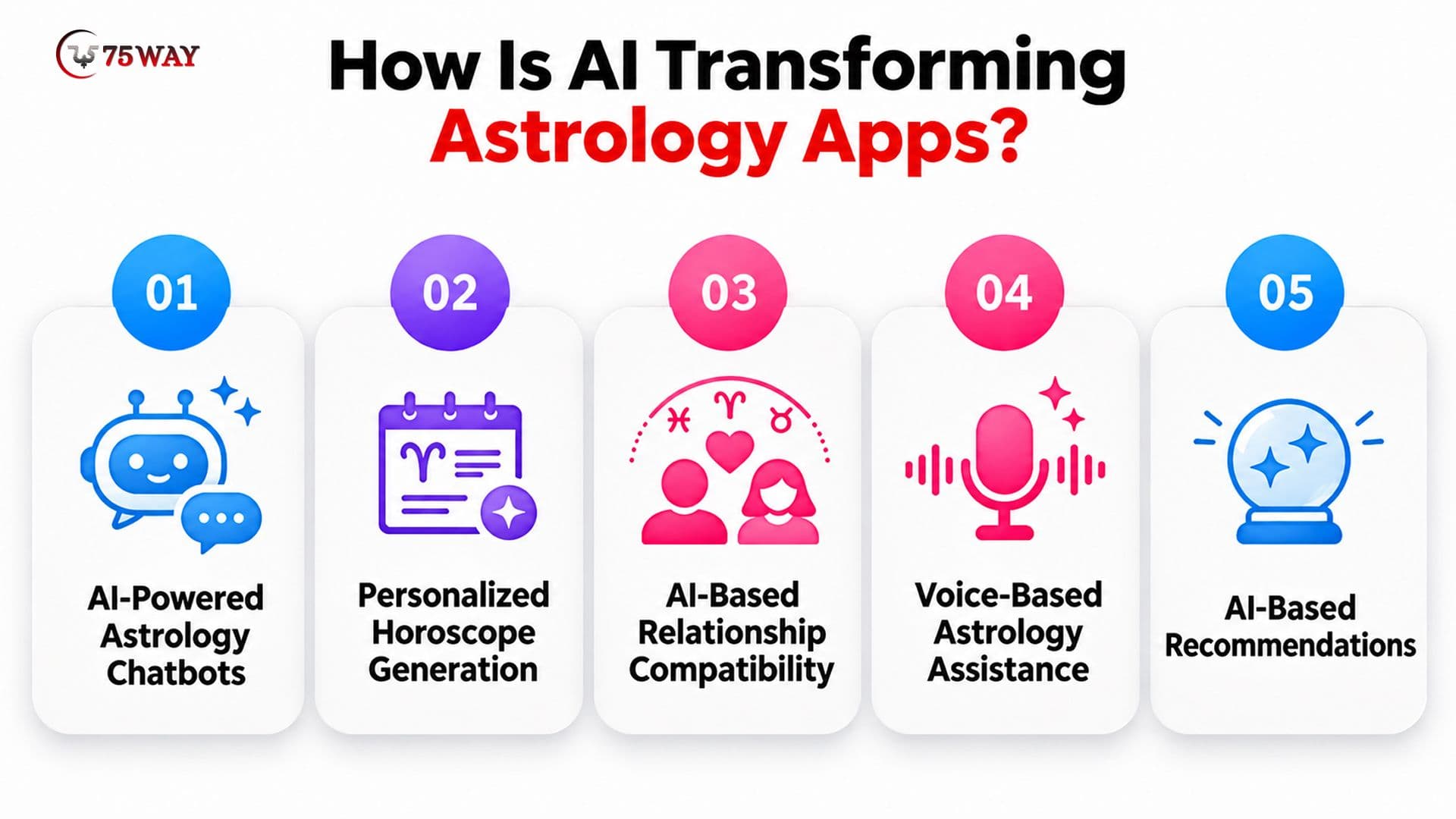
1. AI-Powered Astrology Chatbots
An AI astrology chatbot allows users to ask questions about zodiac signs, planetary placements, birth charts, and relationship compatibility.
For example, a user might ask, "What does Venus in my seventh house mean for relationships?"
The application can retrieve the relevant chart information and generate an explanation using an AI language model.
The chatbot should use verified astrological calculations as its foundation instead of allowing the language model to invent planetary placements.
2. Personalized Horoscope Generation
AI can help generate personalized horoscope content by combining birth chart information with current planetary positions.
Rather than providing identical daily predictions to everyone with the same sun sign, an application can consider additional astrological placements.
A personalized reading could incorporate:
- Sun, Moon, and Rising signs.
- Planetary positions.
- Astrological houses.
- Current transits.
- Relevant aspects between planets.
This approach allows businesses to offer more individualized content.
3. AI-Based Relationship Compatibility
Relationship compatibility is another opportunity for AI-powered astrology applications.
A platform can compare two natal charts, identify relevant planetary placements, and generate understandable explanations about relationship dynamics.
For example, users could explore romantic compatibility, friendship connections, communication patterns, and emotional tendencies.
The AI layer can turn technical chart comparisons into conversational explanations that users can understand without advanced astrology knowledge.
4. Voice-Based Astrology Assistance
Voice interfaces can make astrology applications more interactive.
Instead of typing questions, users can speak with an AI astrology assistant and receive spoken responses.
This feature could support:
- Voice-based birth chart explanations.
- Daily horoscope conversations.
- Spoken relationship compatibility reports.
- Follow-up questions about planetary movements.
- Personalized audio astrology summaries.
For founders, voice interaction can become a product differentiator when designed around genuine user needs.
5. AI-Based Recommendations
AI recommendation systems can help astrology applications understand which features users find most valuable.
For example, users who frequently explore relationship compatibility might receive recommendations for relevant birth chart reports or relationship readings.
Similarly, users interested in lunar cycles could receive personalized moon phase updates.
Recommendations should remain relevant and transparent rather than pushing unnecessary paid features.
How To Develop An AI-Powered Astrology App: Complete Process
If you're planning to launch an AI astrology app, one question deserves attention early: how will your app deliver readings that feel personal rather than sound like generic chatbot answers? The answer involves combining accurate birth chart calculations with astrology knowledge, AI-powered conversations, and a user-friendly experience. Let's break down the development process, from choosing your app concept to testing and launch.
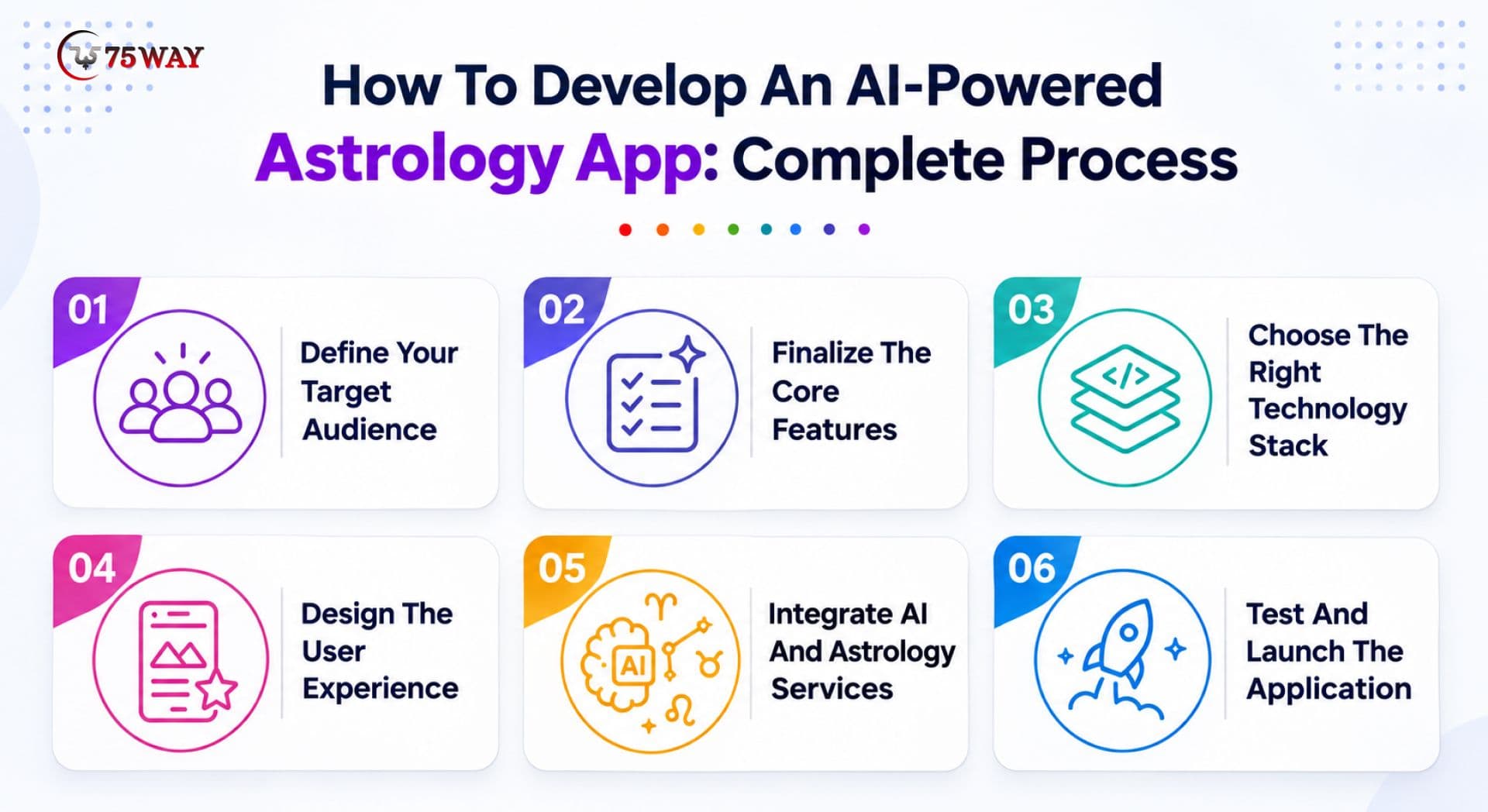
1. Define Your Target Audience
Start by identifying the users your application will serve. Some people want basic daily horoscopes, while others prefer advanced birth chart analysis, relationship compatibility, tarot readings, or professional consultations.
Your target audience will influence the features, content, interface, and pricing strategy.
2. Finalize The Core Features
Avoid introducing every possible astrology feature in the first version. Focus on the capabilities that solve the primary user requirement.
An initial product could include:
- User registration and birth profile creation.
- Personalized birth chart generation.
- Daily and weekly horoscope readings.
- AI-powered astrology conversations.
- Relationship compatibility analysis.
- Subscription and payment management.
Additional features can be introduced as the application grows.
3. Choose The Right Technology Stack
Select the technologies based on the product's functionality and expected scale.
For example, Flutter can support cross-platform mobile development, while Python or Node.js can handle backend operations. Astrology calculation services can generate planetary positions, and an LLM can translate structured information into understandable explanations.
The technology choices should support accuracy, performance, security, and future expansion.
4. Design The User Experience
Astrology applications often contain complex information, including planetary placements, houses, aspects, and transits.
The challenge is presenting this information without making the application difficult to navigate.
Use clear dashboards, readable explanations, interactive chart views, and simple onboarding. Users should be able to enter their birth details and understand their first reading without unnecessary steps.
5. Integrate AI And Astrology Services
Connect the AI system with reliable astrological calculation data and a structured knowledge base.
The AI layer should interpret the available information, generate personalized explanations, and respond to follow-up questions.
Testing is important at this stage. The system should avoid unsupported predictions, inconsistent interpretations, and fabricated astrological placements.
6. Test And Launch The Application
Before launch, test the application across different devices and operating systems.
Check birth chart calculations, payment workflows, notification delivery, AI response quality, data protection, and application performance.
Once the product is ready, publish it through the relevant app distribution channels and monitor user feedback to identify improvements.
How 75way Technologies Can Help Build An AI-Powered Astrology App
Developing an astrology application requires the right combination of product planning, mobile engineering, backend infrastructure, AI integration, and user experience design.
For businesses planning to enter this market, 75way Technologies offers an opportunity to turn an astrology app concept into a scalable digital product.
The development approach can be tailored to the business model, target audience, and features required for the application.
Our Astrology App Development Capabilities Include:
- Custom Astrology App Development: Building iOS and Android applications around specific business requirements and user expectations.
- AI Integration: Incorporating conversational AI, personalized content generation, and intelligent recommendation capabilities.
- Birth Chart Integration: Connecting astrological calculation systems for natal charts, planetary positions, and compatibility analysis.
- Astrology App UI/UX Design: Creating intuitive interfaces that make complex astrological information easier to explore.
- Third-Party API Integration: Connecting relevant services for notifications, analytics, authentication, and astrology-related functionality.
Whether you are a startup exploring an astrology business or an established company planning to expand into AI-powered spiritual services, the development strategy should begin with a clear product vision.
The goal is not simply to replicate existing applications. It is to identify what users still need and create a more useful, personalized, and engaging experience.
Final Thoughts
The best astrology apps in the USA demonstrate how traditional astrological practices can become engaging digital experiences through personalization, interactive features, professional consultations, and subscription-based services.
Applications such as Co–Star, CHANI, Nebula, and The Pattern also show that there is no single formula for building a successful astrology product. Each platform attracts users through a different combination of content, technology, and user experience.
For entrepreneurs, the opportunity lies in developing an application that addresses a specific audience need while using AI to make astrology more accessible and interactive. Accurate chart calculations, meaningful personalization, thoughtful monetization, and a simple interface can help create a stronger product.
Planning to launch your own AI-powered astrology application? Partner with an astrology app development company to turn your idea into a scalable, feature-rich digital product.
Frequently Asked Questions
What Are The Best Astrology Apps In The USA?
Co–Star, CHANI, The Pattern, Nebula, Sanctuary, and TimePassages are among the popular astrology apps available to US users. Each offers different experiences, including personalized horoscopes, birth charts, relationship compatibility, and professional consultations.
Which Astrology App Is Best For Personalized Horoscopes?
Co–Star is a popular choice for personalized daily horoscopes based on birth chart information. CHANI and TimePassages also offer personalized readings using individual astrological placements.
Are There Any Free Astrology Apps Available In The USA?
Yes. Co–Star, The Pattern, Nebula, CHANI, TimePassages, and several other astrology applications offer free versions. However, advanced reports, additional readings, and premium services may require subscriptions or individual purchases.
How Do Astrology Apps Make Money?
Astrology applications generate revenue through monthly and annual subscriptions, in-app purchases, personalized reports, paid astrologer consultations, and premium digital services. Some platforms also explore affiliate partnerships and related wellness offerings.
How Much Does It Cost To Develop An Astrology App?
The development cost depends on the application's complexity, platform requirements, design, AI integrations, astrology calculation services, and backend infrastructure. A basic horoscope application generally requires fewer resources than a platform offering AI conversations, live consultations, advanced birth charts, and subscription management.
Can AI Generate Personalized Astrology Predictions?
Yes. AI can generate personalized explanations by using structured birth chart information, planetary positions, and relevant astrological knowledge. Accurate chart calculations should come from dedicated calculation systems rather than relying on an AI language model alone.