Summary
AI agent development for dental clinics enables automation of administrative workflows such as scheduling, billing, patient communication, and record management. These systems reduce manual workload, improve accuracy, and enhance operational efficiency. This guide explores architecture, use cases, implementation strategy, and business value, helping clinics transition into intelligent, automated practice management systems.
Quick Overview
- AI agents streamline complex dental clinic administrative workflows
- Automation reduces human workload and improves operational accuracy
- Patient experience improves through faster response and scheduling systems
- The AI in dentistry market is projected to grow with 22.50% CAGR through 2035.
- On average, dental AI agent development costs range between $20,000 and $150,000+.
Dental clinics usually start with simple, manageable systems. Appointments are booked manually, records are updated by staff, and patient communication happens through calls or basic messaging. For a while, this setup works smoothly.
But as the clinic grows, something changes.
Patient volume increases, yet the administrative workload grows even faster. Even well-trained staff find themselves juggling systems instead of focusing on patients.
At this stage, the real challenge is no longer clinical. It is operational. And when operations start breaking down, patient experience is the first thing to feel it.
AI agent development introduces a different way of running dental clinics. Instead of relying on manual coordination across multiple touchpoints, intelligent systems handle scheduling, patient communication, billing, and documentation in a consistent, structured flow.
This guide explains how dental AI agents transform clinic administration into an automated operational system. It also highlights how dentists can improve efficiency, reduce errors, and enhance overall patient experience through intelligent automation.
What Are AI Agents For Dental Clinic?
AI agents are intelligent software systems designed to perform specific administrative functions autonomously or semi-autonomously. Unlike basic automation tools, AI agents can understand context, make decisions, and execute workflows across multiple systems.
In dental clinics, AI agents act as operational assistants capable of handling:
- Appointment scheduling and rescheduling
- Patient reminders and follow-ups
- Billing and invoice processing
- Insurance claim coordination
- Record updates and retrieval
- Internal staff coordination
These systems do not replace human staff. Instead, they reduce repetitive workload and allow teams to focus on patient care and decision-making.
Operational Challenges in Modern Dental Clinics
Dental clinics today operate in a highly demanding environment where patient care quality must be balanced with efficient administrative processes. However, increasing operational complexity often creates inefficiencies that affect scheduling, communication, and overall clinic performance.
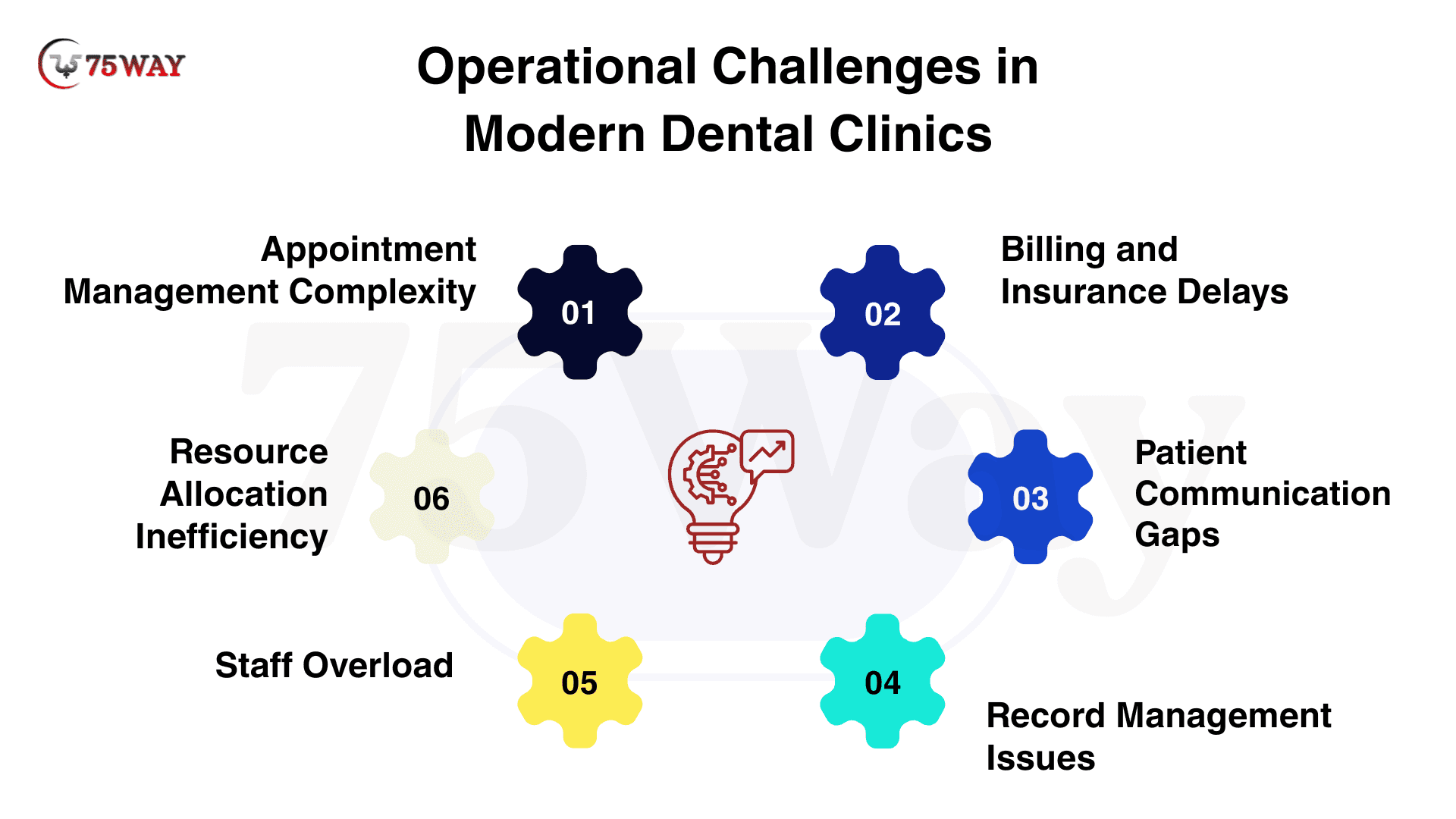
- Appointment Management Complexity: Manual scheduling leads to overlaps, missed bookings, and inefficient time allocation that disrupt daily clinic operations and patient flow.
- Billing and Insurance Delays: Processing insurance claims and invoices manually increases turnaround time, introduces errors, and slows down revenue collection cycles.
- Patient Communication Gaps: Follow-ups, reminders, and updates remain inconsistent or delayed, resulting in reduced patient engagement and missed treatment continuity.
- Record Management Issues: Patient histories, treatment notes, and documentation become difficult to organize and retrieve efficiently at scale in growing clinics.
- Staff Overload: Administrative teams spend excessive time on repetitive tasks, diverting them from patient assistance and in-clinic support activities.
- Resource Allocation Inefficiency: Poor scheduling and manual coordination often lead to underutilized equipment, uneven workload distribution, and reduced operational productivity.
Dental AI Agent Development Process: A Complete Roadmap
For the successful development and deployment of dental AI agents, a strategic process is needed where each stage builds on the previous one. This ensures smooth integration into clinic workflows, minimizes operational disruption, and maximizes efficiency, accuracy, and long-term system performance across administrative and patient-facing processes.
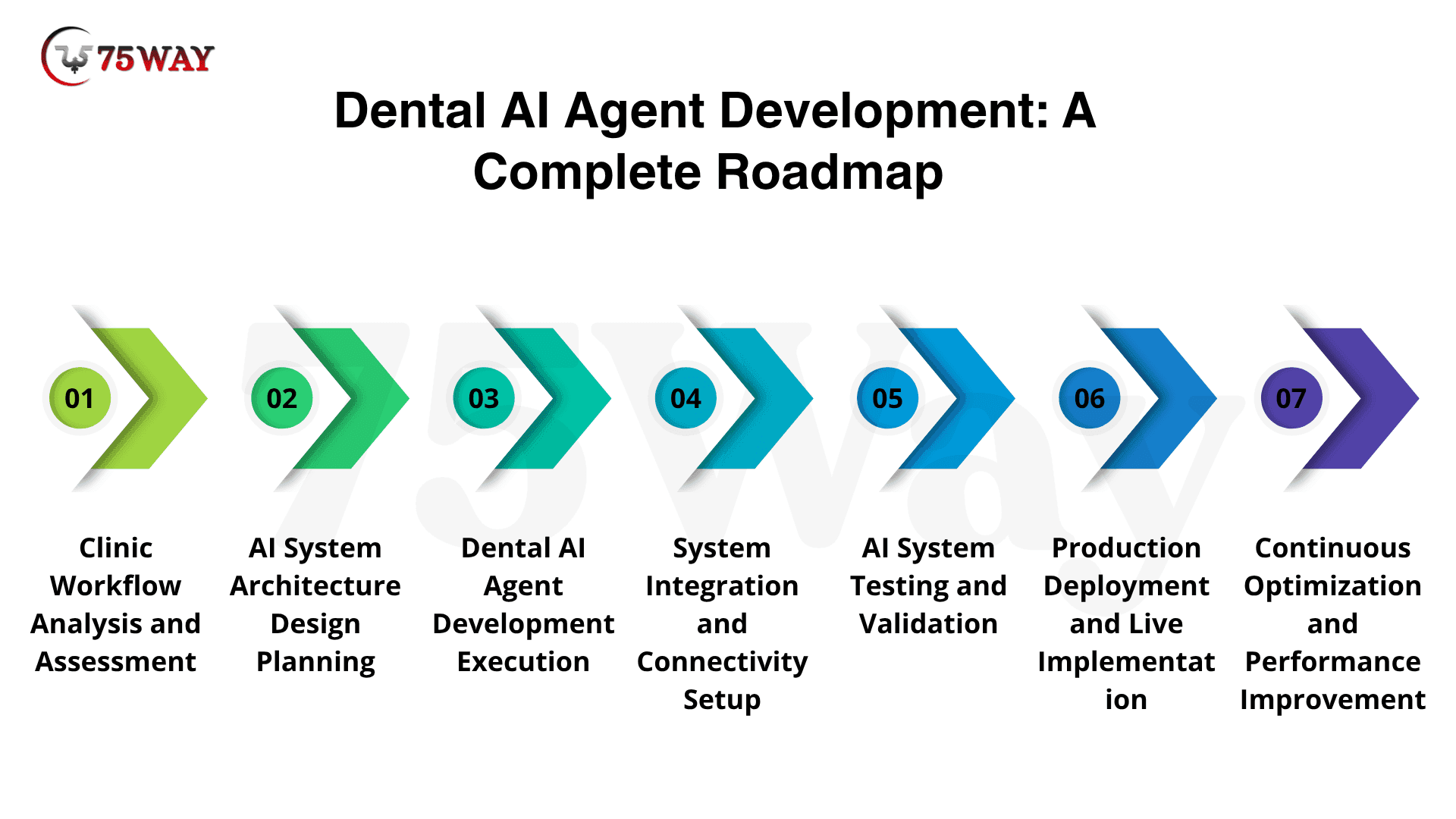
Stage 1: Clinic Workflow Analysis and Assessment
This stage focuses on understanding existing clinic operations, identifying inefficiencies, and mapping current administrative workflows. It establishes a clear baseline for designing AI-driven improvements in scheduling, communication, billing, and patient management systems.
- Analyze the current appointment booking process
- Identify gaps in patient communication flow
- Study billing and insurance handling methods
- Evaluate staff workload distribution patterns
- Map the patient journey across touchpoints
Stage 2: AI System Architecture Design Planning
This phase defines how the AI agent will function within the clinic ecosystem. It includes designing workflows, assigning agent responsibilities, and planning integration with existing clinic management systems and communication platforms.
- Define AI agent functional responsibilities clearly
- Design an automated workflow for appointment handling
- Plan integration with clinic management software systems
- Structure patient interaction and communication logic
- Establish data flow between all modules
- Design role-based access and control systems
Stage 3: Dental AI Agent Development
During development, the AI agent is built using backend systems, AI logic, and user interfaces. This stage transforms design plans into a functional system capable of handling real clinic operations.
- Build AI logic for appointment scheduling tasks
- Develop backend systems for data processing operations
- Create user interfaces for staff interaction usage
- Implement communication modules for patient engagement
- Integrate database systems for record management storage
- Develop automation workflows for routine clinic tasks
Stage 4: System Integration and Connectivity Setup
This stage connects the AI agent with existing clinic tools such as management software, billing systems, and communication platforms. It ensures seamless data exchange and unified operational flow across systems.
- Connect the clinic management software with the AI agent system
- Integrate billing platforms for automated invoice processing
- Link communication tools like SMS and email systems
- Enable real-time data synchronization across all systems
- Configure API connections for external software tools
- Ensure smooth interoperability between all connected platforms
Stage 5: AI Agent System Testing and Validation
Testing validates system performance across real-world scenarios, ensuring reliability, accuracy, and stability. It helps identify errors, optimize workflows, and confirm that the AI agent meets clinic operational requirements.
- Test appointment scheduling under high patient load
- Validate the accuracy of automated billing and invoicing
- Check the communication system response across channels
- Evaluate system performance in real-time scenarios
- Identify and fix workflow execution errors
- Ensure stable integration across all modules
Stage 6: Production Deployment & Live Implementation
This phase involves launching the AI agent in controlled environments before full-scale implementation. It ensures smooth adoption, minimal disruption, and proper system functioning within live clinic operations.
- Deploy the system in a limited clinic environment initially
- Monitor real-time performance during the initial usage phase
- Train staff for effective system adoption and usage
- Gradually expand deployment across full clinic operations
- Ensure system stability under live conditions
- Address early-stage issues before full rollout
Stage 7: Continuous Optimization and Performance Improvement
Post-deployment, continuous optimization ensures the system evolves based on usage patterns, feedback, and performance data. This improves efficiency, accuracy, and long-term reliability of the AI agent system.
- Analyze usage data for performance improvement insights
- Refine AI models based on patient interactions
- Optimize workflow efficiency for faster processing speed
- Enhance system accuracy using feedback data analysis
- Update features based on operational requirements changes
- Continuously improve overall system performance quality
Why Dental Clinics Invest in Dentistry AI Agents in 2026?
Dentistry AI agents deliver measurable improvements in both operational efficiency and financial performance for dental clinics. By automating repetitive administrative tasks and optimizing patient workflows, clinics can reduce costs, increase capacity, and improve overall service quality.
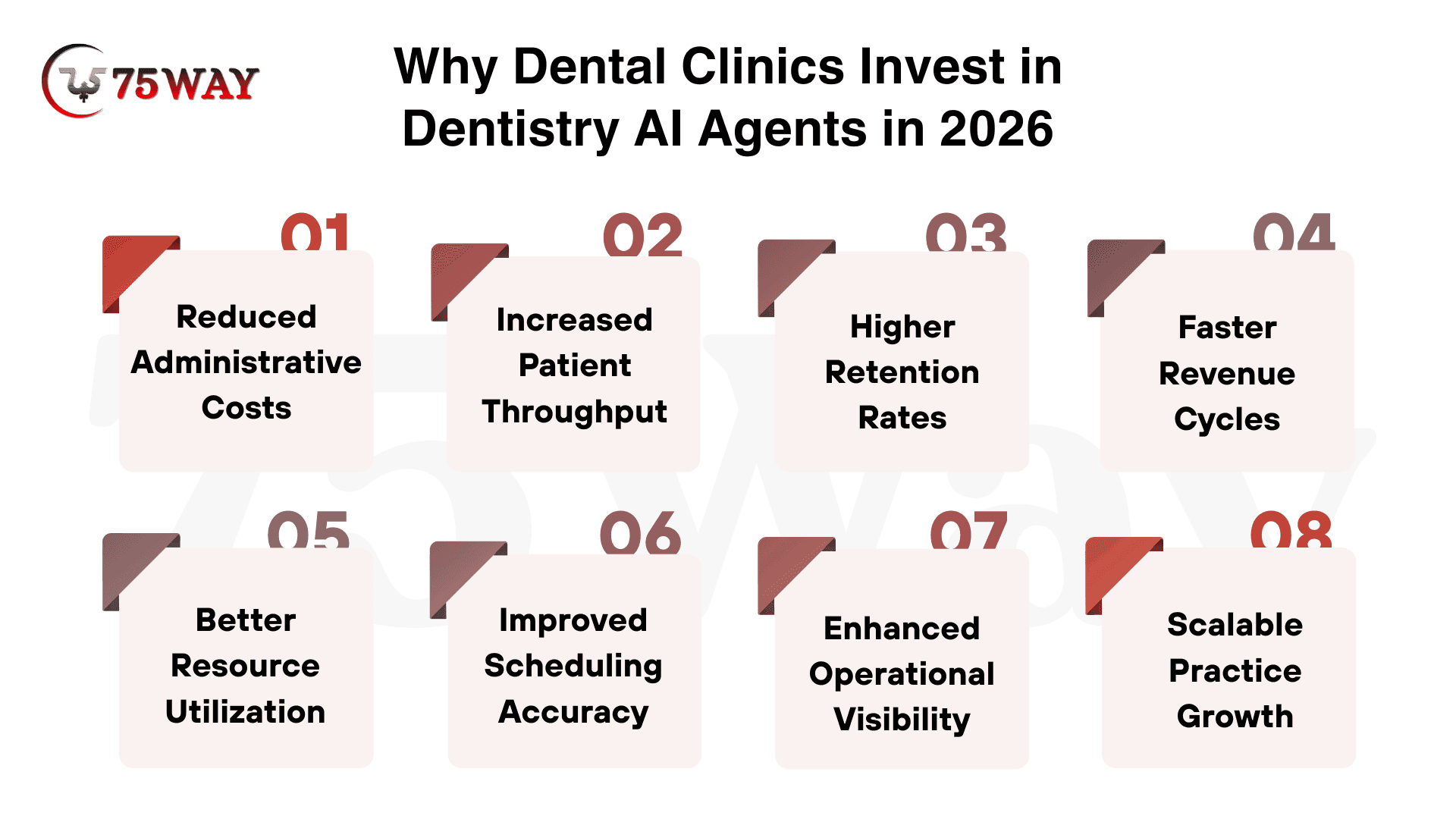
- Reduced Administrative Costs: Less manual work reduces staffing pressure and lowers overall operational expenses across daily clinic functions.
- Increased Patient Throughput: Efficient scheduling allows more patients per day by minimizing gaps, delays, and appointment conflicts.
- Higher Retention Rates: Improved communication and timely follow-ups increase patient satisfaction and long-term loyalty toward the clinic.
- Faster Revenue Cycles: Automated billing and insurance processing reduce payment delays and improve cash flow consistency for clinics.
- Better Resource Utilization: Staff focus shifts from repetitive tasks to patient care, improving productivity and service quality.
- Improved Scheduling Accuracy: AI-based systems reduce booking errors and ensure optimal use of doctor availability and clinic time.
- Enhanced Operational Visibility: Centralized dashboards provide real-time insights into clinic performance, helping improve decision-making efficiency.
- Scalable Practice Growth: Clinics can handle increasing patient demand without proportionally increasing administrative workforce or operational complexity.
Market Insights & Revenue Growth of Dental AI Agents
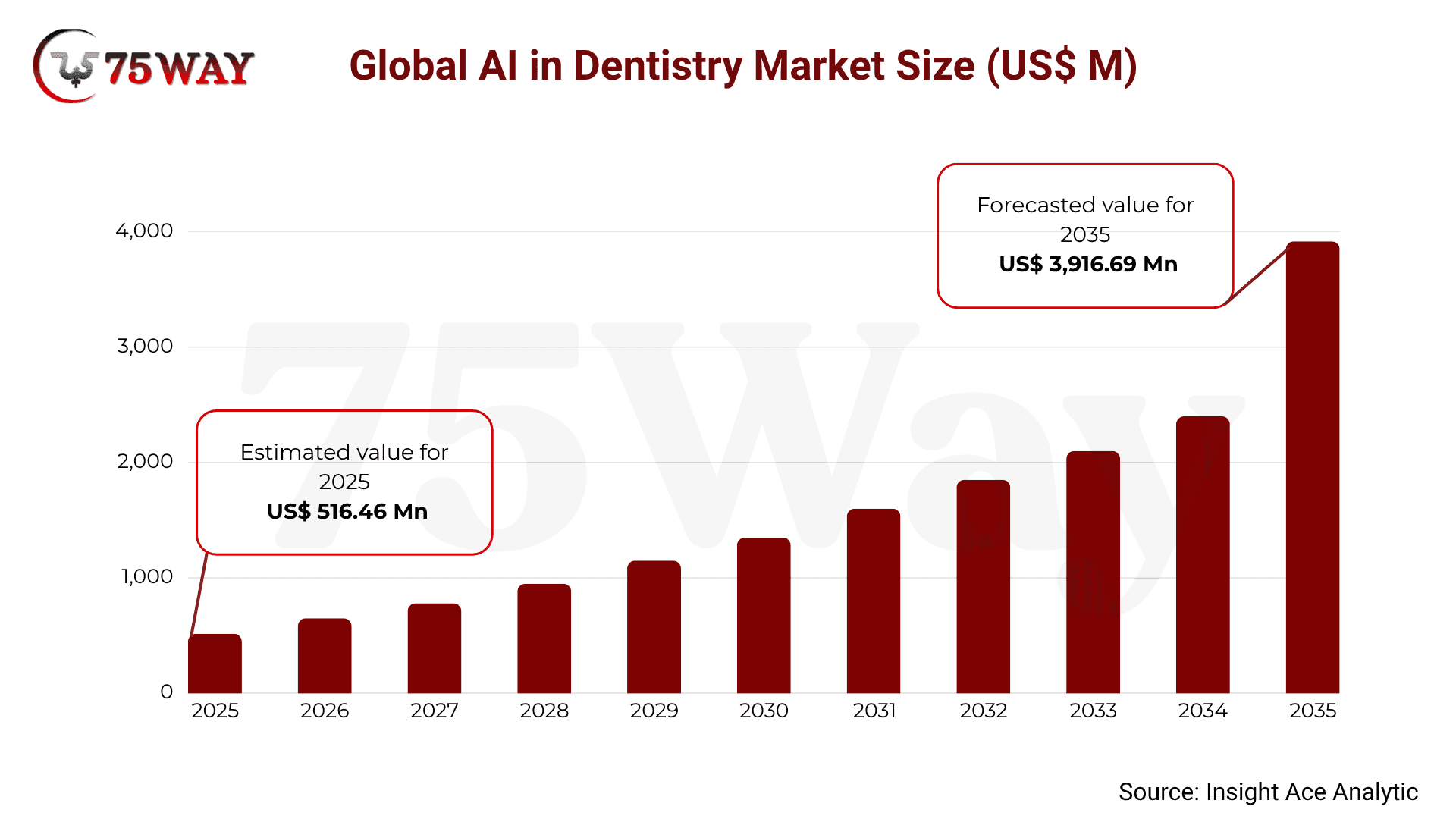
The dental AI agent market is expanding rapidly as clinics adopt automation for efficiency and patient management. Growing demand for digital healthcare solutions is driving revenue growth, with AI agents improving scalability, reducing costs, and enhancing overall clinic profitability.
- 77% of dentists using AI report improved outcomes, while 59% of patients express trust in AI-driven care.
- The AI in dentistry market is expected to grow at a CAGR of 22.50% through 2035, driven by advancements in imaging, diagnostics, and patient management tools.
- The global AI in dentistry market is valued at USD 516.46 million in 2025 and is projected to reach $3,916.69 million by 2035.
- The AI dental imaging segment is set to expand significantly, with projections reaching $2.8 billion by 2029.
Key Functions of AI Agents in Dental Clinics
AI agents in dental clinics are designed to streamline administrative workflows, reduce manual effort, and improve operational accuracy. By automating repetitive but essential tasks, they allow clinic staff to focus more on patient care and less on routine administrative work.
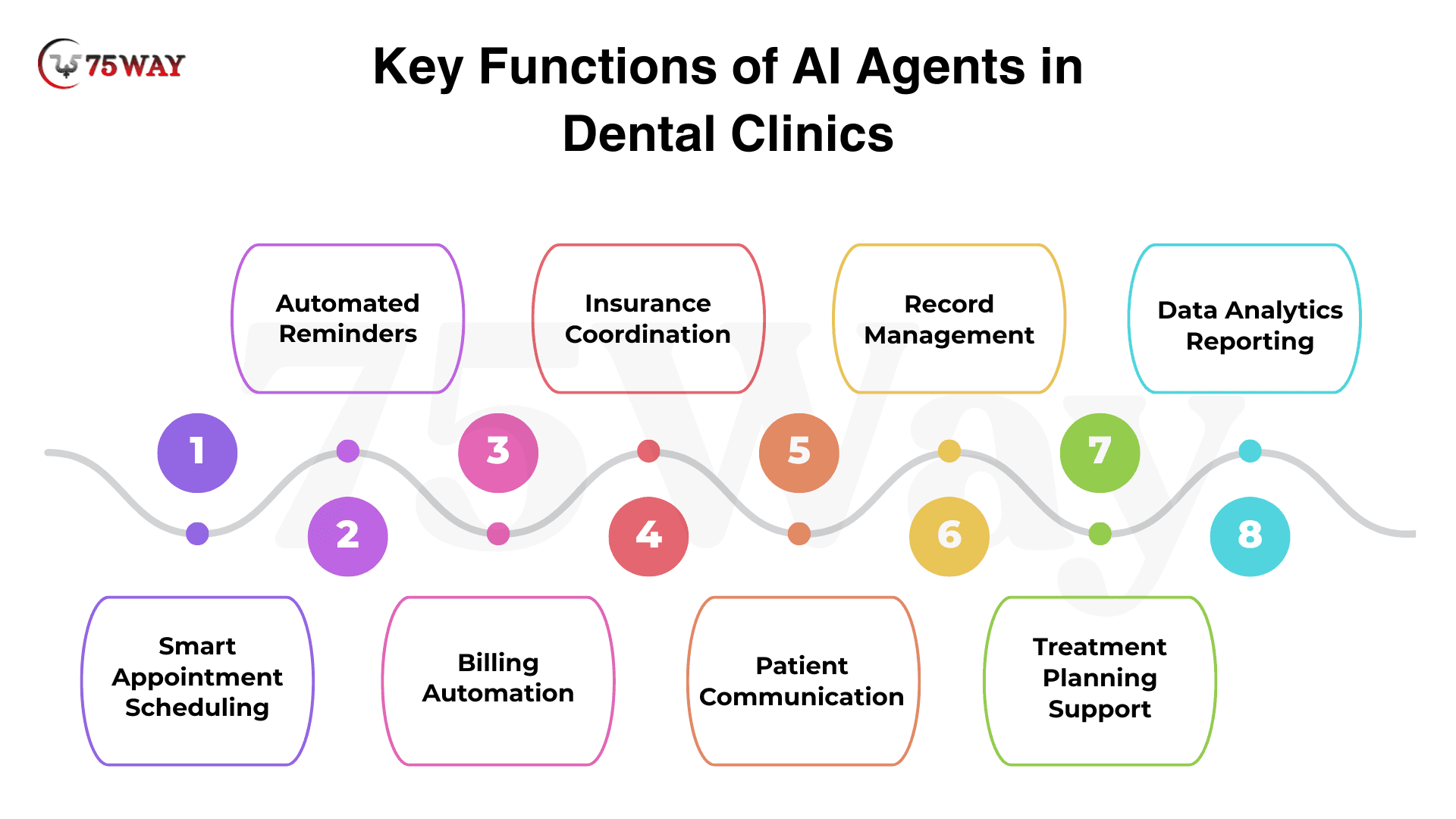
- Smart Appointment Scheduling: AI agents automatically manage bookings based on doctor availability and patient preferences, ensuring optimized scheduling and reduced appointment conflicts.
- Automated Reminders: Patients receive timely reminders via SMS, email, or messaging platforms to reduce no-shows and improve appointment adherence.
- Billing Automation: Invoices are generated, processed, and tracked without manual intervention. Combining AI agents with dental membership plan software allows clinics to automate recurring monthly subscription fees and member renewals alongside standard patient billing.
- Insurance Coordination: Agents assist in claim submission, verification, and tracking, reducing delays and improving reimbursement efficiency for clinics.
- Patient Communication: Handles queries, updates, and post-treatment follow-ups to maintain consistent engagement and improve patient satisfaction levels.
- Record Management: Automatically updates patient records after each visit or interaction, ensuring accurate and up-to-date medical documentation.
- Treatment Planning Support: Assists dentists by organizing patient history and suggesting structured treatment workflows based on previous records and clinical data.
- Data Analytics Reporting: Generates insights from clinic operations, helping administrators understand performance trends and improve decision-making efficiency.
How the Dental AI Agent Works?
A dental AI agent automates the entire patient journey from booking to follow-up by connecting communication, scheduling, and clinic management systems in real time. This reduces manual coordination and ensures smooth, error-free operations across the clinic workflow.
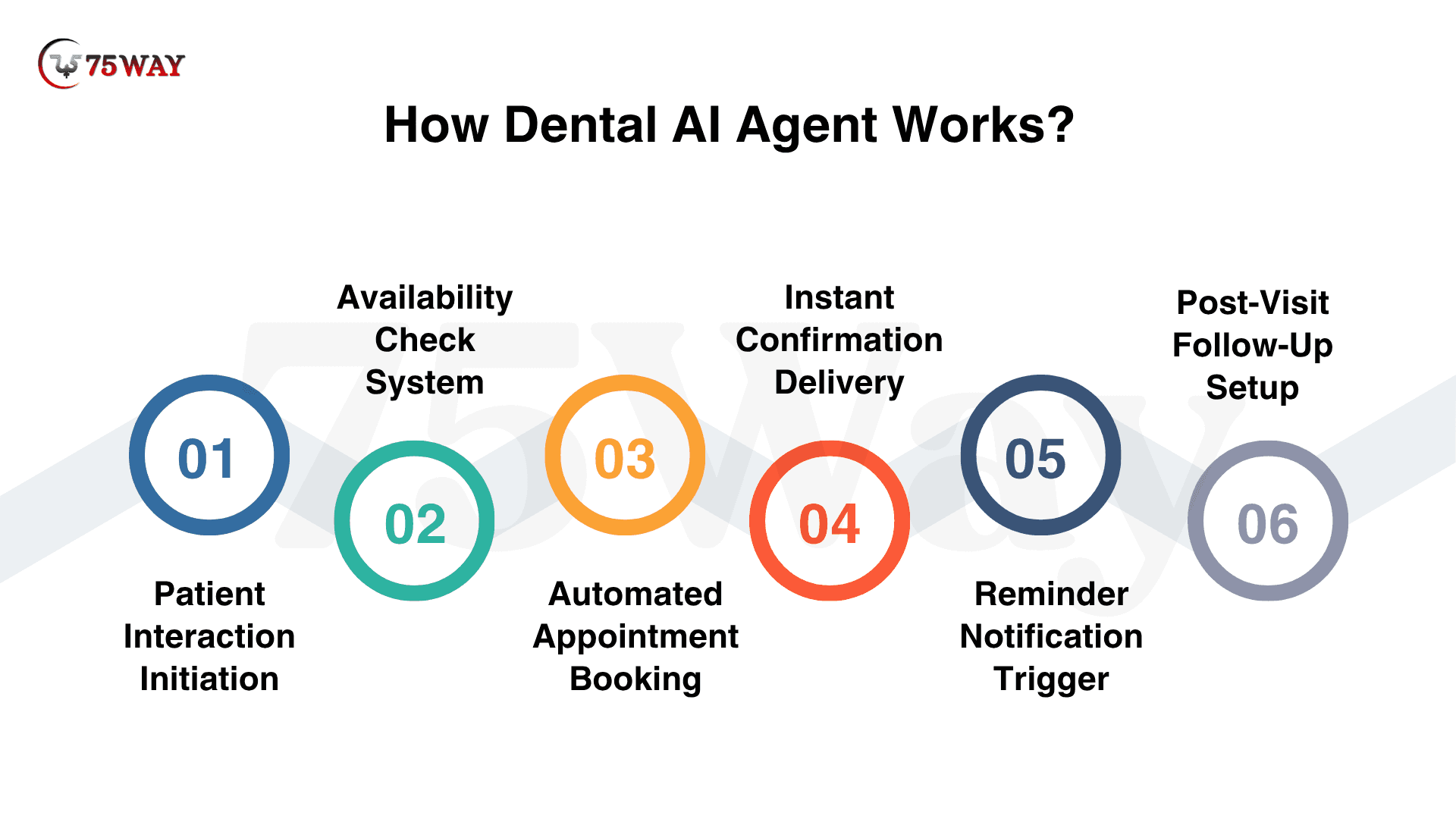
- Patient Interaction Initiation: Patient interacts with the AI agent through chat or voice to request an appointment and share preferred timing instantly.
- Availability Check System: The system checks doctor schedules in real time to automatically identify available appointment slots.
- Automated Appointment Booking: Appointment gets scheduled instantly after confirmation and syncs with the clinic management system without manual effort.
- Instant Confirmation Delivery: Confirmation details are sent to both the patient and the clinic system to ensure accurate scheduling information.
- Reminder Notification Trigger: Automated reminders are sent before appointments via SMS, email, or messaging platforms to reduce no-shows.
- Post-Visit Follow-Up Setup: System schedules follow-up communication based on treatment requirements to maintain continuous patient engagement.
Benefits of Dentistry AI Agent Development for Dental Clinics
AI agent development significantly transforms dental clinic operations by introducing automation, intelligence, and structured workflows. Beyond simple task automation, it enhances efficiency, improves patient experience, and enables scalable growth while reducing operational burden on staff.
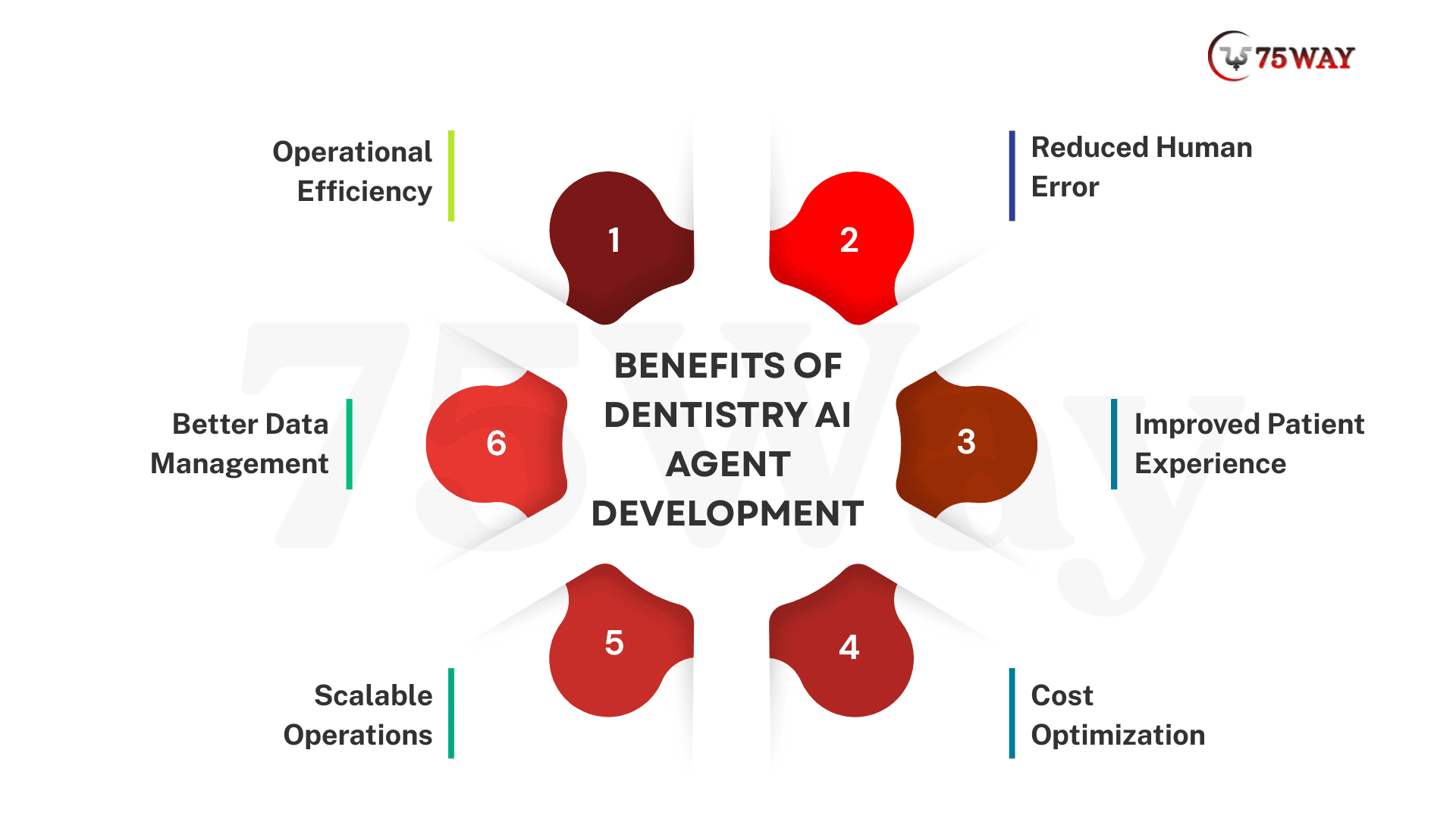
- Operational Efficiency: Administrative processes become faster and more structured, allowing clinics to manage appointments, billing, and communication with greater speed and accuracy.
- Reduced Human Error: Automation minimizes mistakes in scheduling and billing by removing manual intervention from repetitive and detail-sensitive tasks.
- Improved Patient Experience: Faster responses and smoother interactions increase satisfaction by ensuring patients receive timely communication and seamless service coordination.
- Cost Optimization: Reduced dependency on large administrative teams helps clinics lower operational costs while maintaining high service quality standards.
- Scalable Operations: Clinics can handle more patients without increasing staff proportionally, enabling sustainable growth and improved resource utilization.
- Better Data Management: Centralized systems improve decision-making and reporting by organizing patient records, treatment history, and operational data.
Security and Compliance Considerations
Healthcare systems handle highly sensitive patient information, making security and compliance a critical foundation for any AI-driven dental solution. Strong safeguards ensure data integrity, privacy protection, and adherence to industry regulations while maintaining trust between clinics and patients.
- Data Protection: Patient data must be encrypted and securely stored to prevent unauthorized access and ensure confidentiality across all digital interactions.
- Access Control: Role-based permissions ensure only authorized staff can access specific patient records and system functionalities based on responsibilities.
- Compliance Standards: Systems must align with healthcare data regulations to ensure legal compliance and maintain ethical handling of patient information.
- Audit Trails: Every action must be traceable for accountability, enabling transparent monitoring of system usage and data modifications.
- Secure Communication Channels: All patient interactions and data exchanges must use encrypted channels to prevent interception and unauthorized data exposure.
Cost To Develop AI Agent for Dental Clinic
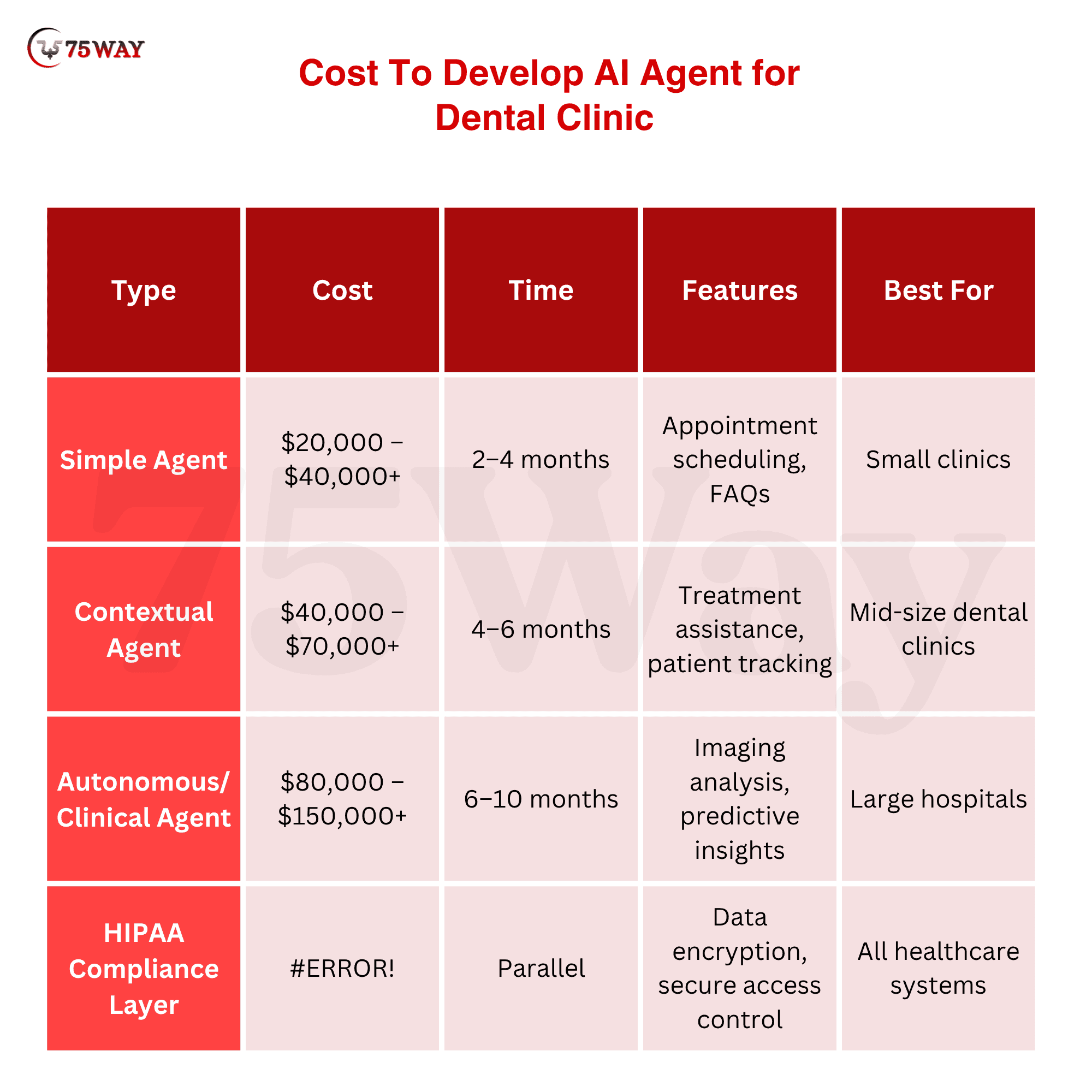
The cost of dental AI agents varies based on intelligence level, integration depth, compliance requirements, and functionality scope. On average, the cost to build a dentistry AI agent ranges from $20,000 – $150,000+. Simple automation tools are more affordable, while advanced clinical-grade systems with imaging, diagnostics, and secure patient data handling require significantly higher investment. Additional compliance layers for healthcare data protection also increase overall development cost.
- Simple Agent Cost: $20,000 – $40,000+
Handles basic automation tasks with predefined logic and limited intelligence.
- Contextual Agent Cost: $40,000 – $70,000+
Understands context, processes dynamic inputs, and delivers more accurate responses.
- Autonomous / Clinical Agent Cost: $80,000 – $150,000+
Performs advanced decision-making with minimal human intervention in complex environments.
- HIPAA Compliance Layer Cost: +$25,000 – $75,000
Adds data security, privacy controls, and regulatory compliance for healthcare applications.
Future Trends of Building AI Agents in Dental Practice Management
The future of dental operations is moving toward fully autonomous clinic systems.
Emerging trends include:
- Predictive appointment scheduling
- AI-driven treatment reminders
- Voice-based clinic assistants
- Automated diagnosis support systems
- Fully integrated patient lifecycle management
Dental clinics adopting these systems early will operate with significantly higher efficiency and competitiveness.
Final Thoughts
AI agent development is reshaping how dental clinics manage their administrative operations. What was once a fragmented and manual process is now evolving into a structured, intelligent, and automated ecosystem. Clinics adopting these systems are not only improving efficiency but also redefining patient experience and operational consistency.
As dental practices grow more competitive and patient expectations continue to rise, automation is no longer optional. It is becoming a core operational requirement for sustainable growth, improved service quality, and long-term scalability in modern dental healthcare systems.
To implement these capabilities effectively, partnering with a trusted AI agent development company can help clinics build scalable, secure, and intelligent automation solutions tailored to their operational needs.
Frequently Asked Questions (FAQs)
How Do AI Agents Handle Multiple Patient Requests Simultaneously?
AI agents process multiple patient requests in parallel using cloud-based infrastructure. This allows them to manage appointments, queries, and reminders simultaneously without delay, ensuring every patient receives timely responses and consistent service quality across all communication channels.
Can AI Agents Be Customized For Different Dental Clinic Sizes?
Yes, AI agents can be fully customized to each clinic's size and operational complexity. Small clinics may use basic scheduling automation, while larger practices can integrate advanced features like billing, analytics, and multi-branch coordination for improved efficiency and scalability.
Do AI Agents Work Without Internet Connectivity?
Yes, most AI agents require internet connectivity to function effectively because they rely on cloud servers and real-time data processing. However, limited offline functionality may be available for basic tasks, but full operational capabilities depend on continuous internet access for synchronization and updates.
How Do AI Agents Improve Decision-Making In Clinics?
AI agents improve decision-making by analyzing patient data, appointment trends, and operational patterns. They provide actionable insights that help clinic administrators optimize scheduling, resource allocation, and patient management, leading to more informed, efficient business decisions.
What Is The Learning Capability Of AI Agents In Healthcare?
AI agents continuously improve through machine learning by analyzing past interactions and outcomes. This allows them to refine responses, improve accuracy, and adapt to changing patient behavior, ensuring better performance and more personalized interactions over time in healthcare environments.
Are AI Agents Suitable For Multi-Location Dental Practices?
Yes, AI agents are highly suitable for multi-location dental practices. They centralize data, synchronize appointments, and provide unified dashboards, allowing administrators to manage operations across multiple branches while maintaining consistency in patient experience and operational workflows.