Summary
This blog explains how agentic AI is transforming modern enterprises by enabling intelligent automation, autonomous decision making, and improved operational efficiency. It explores key use cases such as customer support, sales assistants, workflow optimisation, and predictive analytics while addressing common misconceptions. The article also highlights how businesses can leverage agentic AI to improve productivity and enhance customer experiences.
Key Takeaways:
- Agentic AI enables autonomous decision making systems that adapt to changing business environments.
- Businesses use agentic AI to automate workflows, reduce manual work, and increase productivity.
- AI agents analyse large datasets to deliver insights, forecasts, and smarter decisions.
- Agentic AI improves customer support through personalised, fast, and intelligent automated interactions.
- Companies adopt agentic AI to optimise operations, supply chains, and enterprise workflows.
- Human oversight remains essential to guide AI systems and ensure responsible outcomes.
Agentic AI is rapidly transforming how modern businesses operate. Unlike traditional automation that relies on fixed rules and rigid workflows, agentic AI systems are capable of making decisions, adapting to changing environments, and executing complex tasks with minimal human intervention. These intelligent systems analyse data, reason through problems, and take action based on real-time information. As a result, organisations across multiple industries are increasingly exploring this technology to improve efficiency, reduce manual effort, and respond faster to evolving business needs.
The growing demand for Agentic AI Development reflects how businesses are moving beyond simple automation towards more intelligent, autonomous systems. Companies are adopting agentic AI to optimise operations, enhance customer experiences, and manage complex workflows with greater accuracy. These AI agents can continuously learn from outcomes and improve their performance over time. Rather than replacing human talent, agentic AI supports professionals by automating repetitive processes and allowing teams to focus on strategic thinking, innovation, and higher-value business activities. In this blog, we will explore what agentic AI is, its key business use cases, benefits, and common misconceptions organisations should understand before adopting this technology
What is Agentic AI?
AI agents represent a fundamental shift from traditional automation—they don't just follow pre-programmed rules, they actually make decisions. Think of them as digital employees that can perceive their environment, reason through problems, and take action without constant human oversight.
The key difference? Agency. Traditional automation handles "if this, then that" scenarios. Agentic AI handles "figure out how to achieve this outcome", even when the path isn't clearly defined. It's why businesses are increasingly leveraging autonomous AI systems to handle everything from customer support to complex operational workflows.
This autonomy is powered by three core capabilities: perception, reasoning, and action. The result? Systems that adapt, improve, and tackle ambiguous challenges that previously required human judgment.
Top Business Use Cases of Agentic AI Solutions
Agentic AI is transforming business automation across virtually every department and industry vertical. According to BCG research, companies are deploying these autonomous systems in three primary categories: customer-facing operations, internal productivity tools, and specialized decision-making workflows.
Autonomous Customer Support
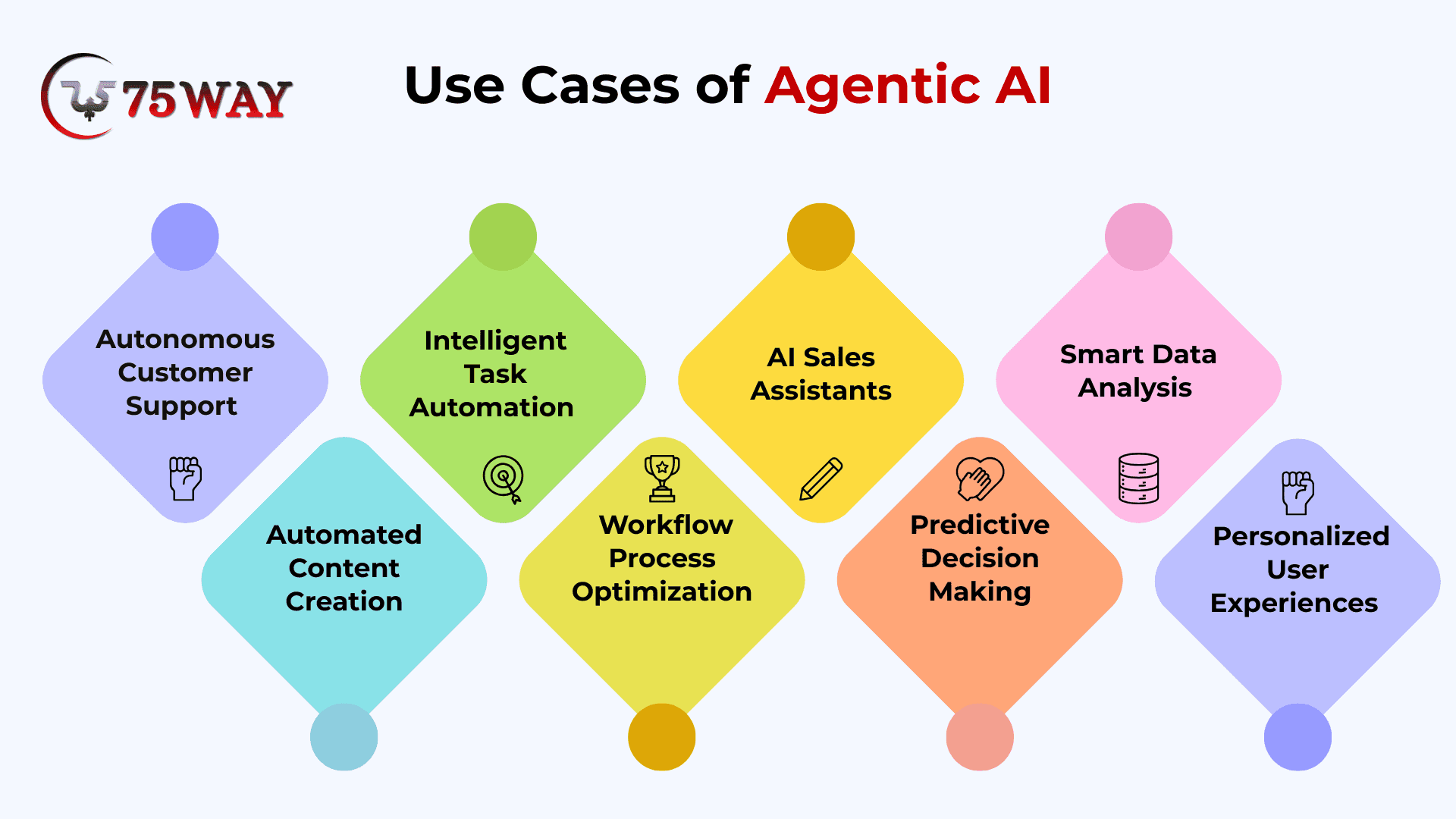
Agentic AI can power intelligent customer support systems that handle queries, troubleshoot issues, and provide instant responses without constant human intervention. These AI agents understand context, learn from previous interactions, and deliver personalised assistance. Businesses benefit from faster response times, 24/7 availability, reduced support costs, and improved customer satisfaction through consistent and accurate service
Intelligent Task Automation
Agentic AI goes beyond basic automation by understanding tasks, adapting to changes, and executing multistep workflows independently. It can manage scheduling, data processing, reporting, and routine operational tasks. This intelligent automation reduces manual workload, minimises human errors, and allows employees to focus on strategic work that requires creativity and critical thinking
AI Sales Assistants
AI powered sales assistants help businesses manage leads, qualify prospects, and guide customers through the buying journey. These systems analyse user behaviour, recommend products, and provide personalised responses. By supporting sales teams with insights and automated communication, AI agents can automate sales, increase conversion rates, and help businesses engage potential customers more effectively.
Smart Data Analysis
Agentic AI can process massive datasets and identify patterns that humans might overlook. It helps businesses perform advanced analytics, generate insights, forecast trends, and make data-driven decisions faster. By continuously learning from new information, these AI systems improve data analytical accuracy and help organisations optimize strategies, reduce risks, and uncover new opportunities
Automated Content Creation
Agentic AI tools can generate marketing content, product descriptions, emails, and social media posts based on business goals and audience preferences. These AI assistants analyse trends, keywords, and user engagement to produce relevant content quickly. This helps businesses maintain consistent communication, improve marketing efficiency, and scale content production without increasing resources.
Workflow Process Optimisation
Businesses use agentic AI to analyse existing workflows and identify inefficiencies. The AI workflow automation can automatically adjust processes, allocate resources, and streamline operations. By continuously monitoring performance and outcomes, agentic AI helps organisations improve productivity, reduce operational delays, and ensure smoother coordination between different departments.
Predictive Decision Making
Agentic AI can analyse historical and real time data to predict outcomes and recommend actions. Businesses use it for demand forecasting, risk management, and strategic planning. By anticipating trends and potential challenges, organisations can make proactive decisions that improve efficiency, reduce uncertainty, and enhance overall business performance.
Personalised User Experiences
Agentic AI enables businesses to deliver highly personalised experiences by analysing customer behaviour, preferences, and interactions. It can recommend products, customise content, and adapt services in real time. This level of personalisation improves customer engagement, strengthens brand loyalty, and helps businesses build stronger relationships with their users.
End to End Invoice Processing: Financial Efficiency Redefined
Agentic AI revolutionises accounts payable by autonomously handling invoice processing from receipt to payment approval. These systems extract data from various invoice formats, cross-reference purchase orders, flag discrepancies, and route exceptions to relevant stakeholders—all without human intervention. A pattern emerging across industries shows AI agents reducing invoice processing costs by up to 80% whilst simultaneously improving accuracy.
What makes this approach transformative is the continuous learning loop. The AI models adapt to vendor-specific quirks, recognize anomalies that signal fraud, and learns approval workflows unique to each organisation. In highly regulated environments like agentic AI-powered apps in healthcare, where financial compliance is critical, these systems maintain audit trails and ensure regulatory adherence while processing thousands of invoices monthly. The technology doesn't just speed up existing workflows—it eliminates entire categories of manual tasks, freeing finance teams to focus on strategic analysis rather than data entry and reconciliation
Proactive Supply Chain Management: Anticipating Challenges
Agentic AI transforms supply chains from reactive systems into predictive ecosystems that anticipate disruptions before they occur. These intelligent agents continuously monitor global logistics networks, weather patterns, geopolitical events, and supplier performance data to identify potential bottlenecks weeks in advance. When a shipping delay or material shortage is detected, the system autonomously reroutes orders, adjusts inventory levels, and alerts stakeholders—all without human intervention. AI Agents highlight how autonomous systems optimise complex logistics decisions in real-time. Unlike traditional forecasting tools that require manual analysis, multi agent systems learn from historical disruption patterns and adapt strategies dynamically, reducing supply chain costs whilst maintaining service levels even during volatile market conditions.
How Agentic AI is Beneficial for Businesses?
Agentic AI delivers transformative benefits that extend far beyond simple automation. Businesses implementing these autonomous systems report significant competitive advantages across multiple dimensions
Automated Decision Making
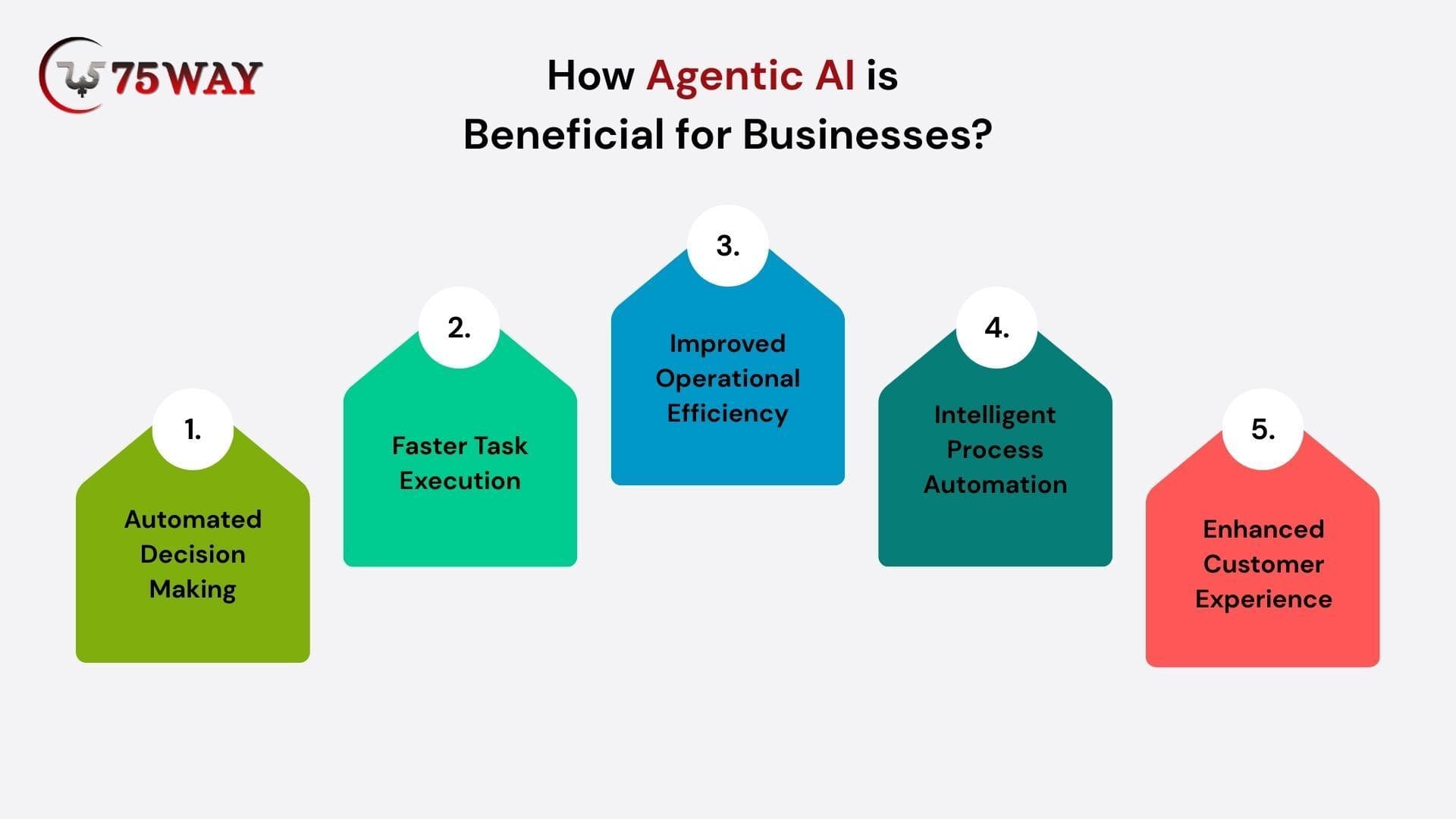
Agentic AI analyses data, identifies patterns, and makes informed decisions without constant human intervention. This helps businesses respond quickly to changing conditions, reduce manual effort, and improve overall decision accuracy.
Faster Task Execution
AI agents can perform repetitive and complex tasks much faster than traditional systems. By automating workflows and processing large amounts of information instantly, businesses save time and increase productivity.
Improved Operational Efficiency
Agentic AI streamlines business operations by reducing manual processes and minimising errors. It helps organisations optimise resources, manage workflows effectively, and improve overall performance across multiple departments.
Intelligent Process Automation
Unlike traditional automation, agentic AI adapts to changing scenarios and handles multi-step processes intelligently. It can monitor tasks, adjust actions when needed, and ensure smoother business operations.
Enhanced Customer Experience
Agentic AI helps businesses deliver faster responses, personalized recommendations, and seamless service. By understanding customer behaviour and preferences, AI systems create more engaging and satisfying user experiences.
Common Misconceptions About Agentic AI
Traditional automation follows fixed rules, whilst agentic AI adapts to changing contexts and makes nuanced decisions. The distinction lies in learning capability—these agents improve through experience rather than simply executing predetermined workflows
Replaces Human Jobs
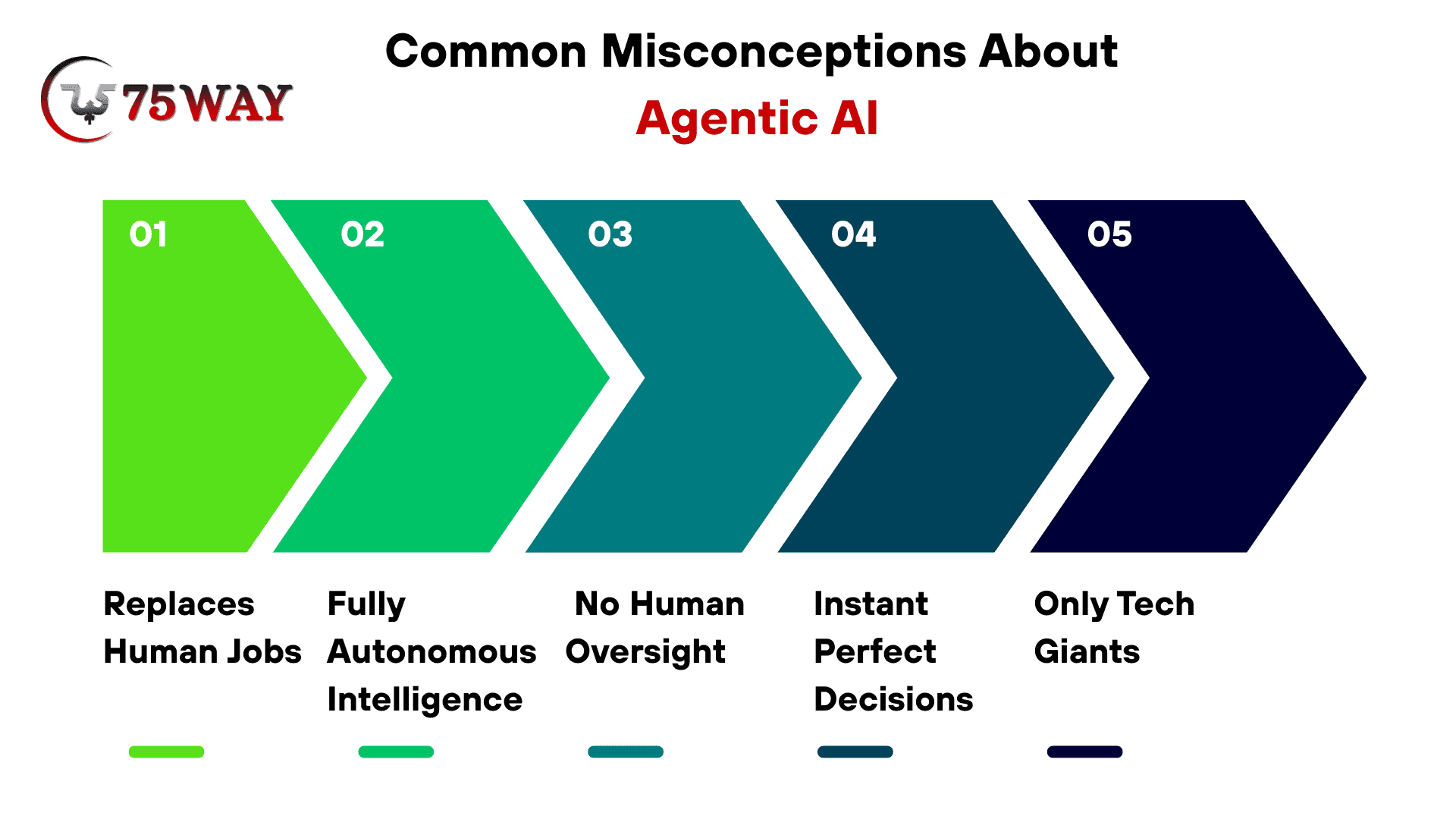
Many believe agentic AI will eliminate human jobs completely. In reality, it mainly automates repetitive tasks and supports employees, allowing them to focus on creative thinking, strategic planning, and complex problem-solving, activities.
Fully Autonomous Intelligence
Agentic AI is often seen as completely independent. However, it still relies on human-defined goals, training data, and system boundaries. Human guidance and monitoring remain essential to ensure responsible and accurate outcomes.
No Human Oversight
Agentic AI is often seen as completely independent. However, it still relies on human-defined goals, training data, and system boundaries. Human guidance and monitoring remain essential to ensure responsible and accurate outcomes.
Instant Perfect Decisions
Some assume AI always makes flawless decisions instantly. While it can analyse large datasets quickly, its results depend on data quality, algorithms, and proper configuration, meaning human validation is still important.
Only Tech Giants
Many think agentic AI is only accessible to large technology companies. Today, cloud platforms, AI tools, and development frameworks allow startups and mid-sized businesses to implement agentic AI solutions as well.
Key Takeaways
Agentic AI is reshaping business automation across every function—from customer service to supply chain management. Whether you're streamlining support workflows, automating procurement decisions, or enhancing cybersecurity response, these systems deliver measurable efficiency gains whilst reducing operational overhead.
Successful implementations focus on well-defined use cases with clear metrics, starting small and expanding iteratively. Businesses that embrace this technology now—regardless of size—position themselves to respond faster, operate leaner, and deliver superior customer experiences in an increasingly competitive landscape.
Conclusion:
Agentic AI is redefining how enterprises approach automation, decision-making, and operational efficiency. Unlike traditional automation systems, agentic AI can analyse complex data, adapt to changing conditions, and execute multi-step tasks with minimal human intervention. From intelligent customer support and predictive decision-making to workflow optimisation and personalised user experiences, businesses across industries are leveraging these systems to gain a competitive advantage. As organisations continue to digitise their operations, adopting agentic AI will become a key strategy for improving productivity, reducing costs, and enabling smarter business processes. Companies that start integrating these intelligent systems today will be better positioned to innovate, scale faster, and respond to evolving market demands.
Looking to implement intelligent automation in your business? Partner with a trusted agentic AI development company to build scalable and future-ready AI solutions
FAQs
What's the difference between agentic AI and traditional automation?
Traditional automation follows rigid, pre-programmed rules,it breaks when situations change. Agentic AI adapts independently, learns from context, and makes autonomous decisions without constant human intervention. Think of it as the difference between a thermostat (rule-based) and a personal assistant (adaptive).
How quickly can businesses implement agentic AI solutions?
Implementation timelines vary dramatically. Simple customer service agents can deploy in weeks, whilst complex supply chain systems might require months. According to BCG research, most organisations see initial results within 60–90 days when starting with focused use cases.
Do I need a data science team to use agentic AI?
Not necessarily. Many platforms now offer no code or low code options that business users can configure independently. However, sophisticated implementations—particularly those involving custom workflows or sensitive data—benefit significantly from technical expertise.
What's the typical ROI timeline for agentic AI projects?
Most businesses report positive ROI within 6–12 months. The 327% adoption surge reflects how quickly organisations recognise value, particularly in customer service and operations where labour cost savings materialise immediately.
Can agentic AI integrate with existing business systems?
Yes,modern agentic platforms are specifically designed for integration. They connect via APIs to CRMs, ERPs, communication tools, and databases, pulling data and executing actions across your existing tech stack without requiring wholesale system replacement.