Have you ever noticed? Everything becomes more interconnected by the minute in 2026. Every machine or device seems to talk to one another, and sensors predict issues before they occur. What do you think, is there any magic behind it? Well not! It's the power of the Internet of Things (IoT) behind it. This technology transforms not only our daily lives but businesses too.
The IoT market is projected to reach several trillion dollars by the early 2030s. This brings significant opportunities for startups, enterprises, and industry giants. However, the right IoT development partner is required to do so, which feels like looking for a needle in a haystack in USA.
Hundreds of companies promise innovation, but only a few can deliver secure, scalable, and business-focused solutions. Don't worry! We prepared this guide to make that choice easier. Our detailed guide highlights the top 10 IoT development companies in the USA, along with a clear roadmap for selecting a company that aligns with your needs, budget, and growth plans.
What Is IoT Development?
Before we continue, it is helpful to understand exactly what IoT development is. This term sounds technical, right? But it is simpler than it appears. Essentially, IoT development is a method for creating systems that connect physical devices to apps, software, and networks via the internet. These systems collect data, communicate with each other, and even take action automatically.
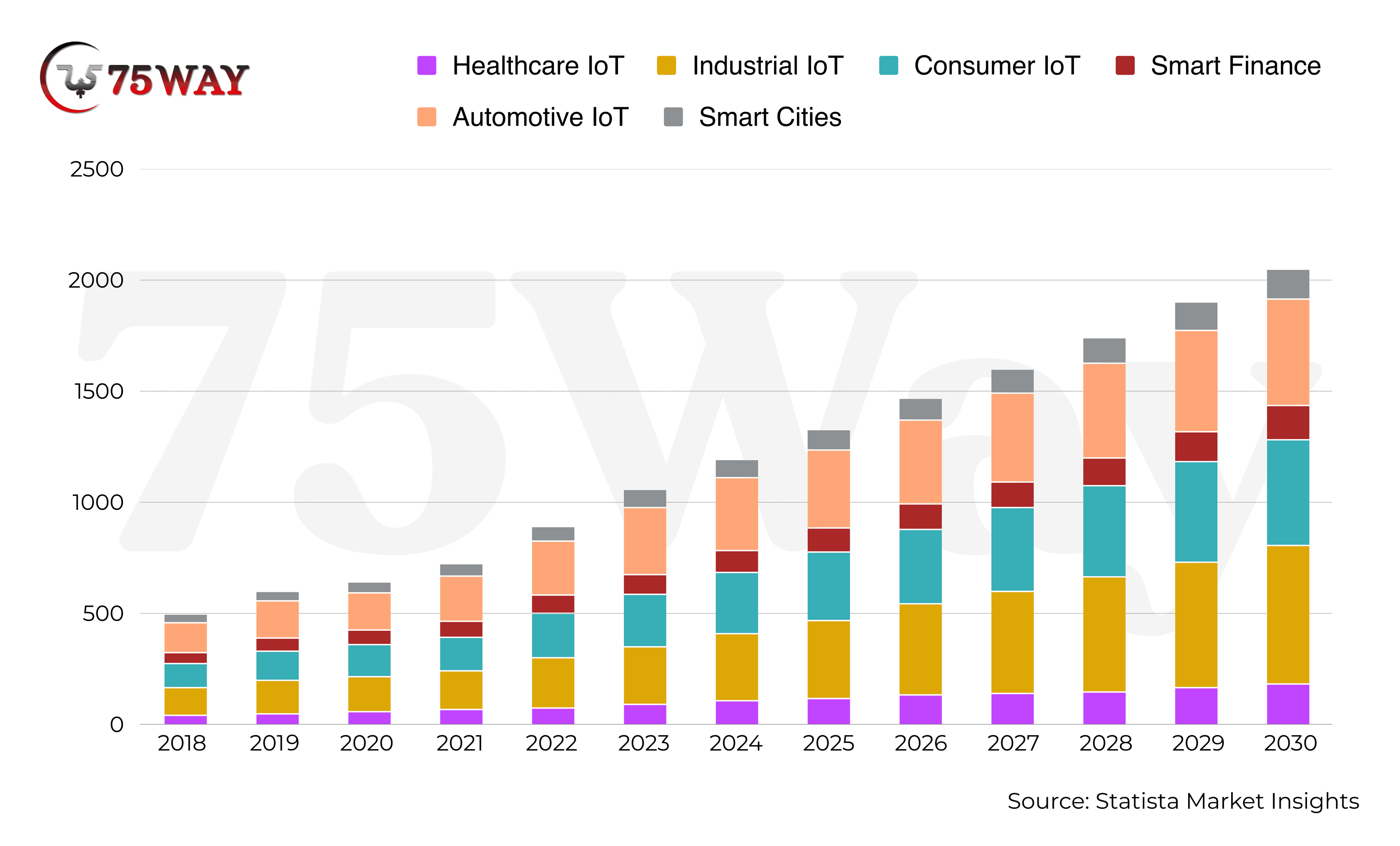
For instance, a smart thermostat adjusts itself based on your behavior, and we can control lights and devices from our phones in real time. This process involves hardware integration, cloud platforms, analytics, AI/ML algorithms, and dashboards to help businesses make smarter decisions. It becomes a strategic tool for efficiency, customer engagement, and new revenue streams. Here are some market insights into IoT development in 2026.
The global IoT market is projected to reach $667 billion by 2030, with an estimated CAGR of approximately 7.6%.
The U.S. IoT market is expected to surpass $545 billion by 2029.
The global count of IoT-connected devices is anticipated to more than double to over 40.6 billion by 2034, as stated in Statista.
Top 10 IoT Development Companies in USA in 2026
Now comes the most-awaited part of this guide. Let's know the best Internet of Things (IoT) development companies across USA that businesses can choose in 2026. However, to select a leading company is quite a significant task to develop any IoT solution. It is about trust, scalability, and long-term growth. The following companies stand out in 2026 for their proven expertise, innovation mindset, and ability to deliver real business value.
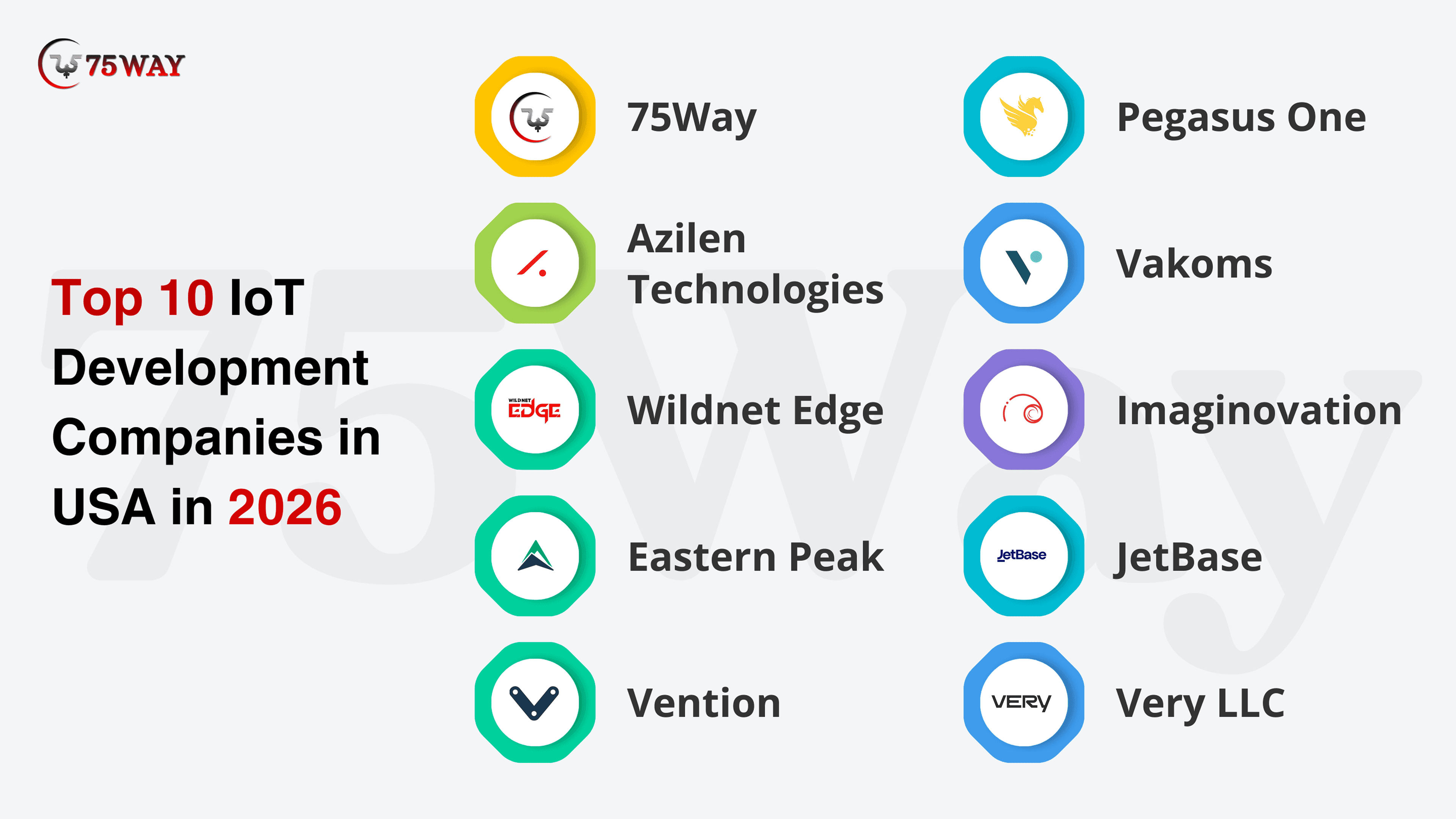
75way
Location: San Jacinto, California, USA
Established: 2015
75way is a prominent IoT development company in USA for businesses that feel stuck between ideas and execution. A clear understanding of connected ecosystems enables the team to design IoT systems that are practical from day one. They provide end-to-end IoT app development solutions from IoT consulting and MVP development to full-fledged products. Furthermore, their team assists with smooth device connectivity, cloud integration, and ongoing support. This company develops scalable IoT systems that remain stable as usage grows. In addition to IoT, the company offers wearable apps, on-demand applications, and innovative softwares, CRMs, and SaaS solutions.
A strong emphasis on automation and AI-powered analytics adds another layer of value over time. Patterns in data begin to reveal trends, delays, and opportunities that are usually hidden. Long-term scalability remains a priority, which protects businesses from rebuilding systems as operations expand. Their consistent communication, transparent commercial models, and post-launch support help companies stay confident long after deployment and create partnerships that grow alongside the product.
Azilen Technologies
Location: San Francisco, California and Irving, Texas, USA
Established: 2009
Azilen Technologies typically attracts organizations that prioritize clarity over speed. Their strong consulting foundation enables teams to align IoT strategy with business goals rather than chasing random features. IoT architecture planning, device management, and custom application development come together through structured workflows. Their cloud and edge integration supports steady data movement across systems to keep operations reliable as usage increases across regions.
Data pipelines and predictive analytics add long-term value once systems go live. It helps business teams access insights to support planning, maintenance, and risk reduction. They follow enterprise security standards and compliance awareness, and serve regulated industries operating across the USA markets. Their ongoing support and transparent delivery models help leadership stay informed at every stage. Confidence grows as systems mature, which explains Azilen’s long-standing relationships with mid-sized and enterprise clients.
Wildnet Edge
Location: United States with Remote Teams
Established: 2016
Wildnet Edge is a leading IoT development company in the USA, delivers scalable systems for businesses. They specialize in building complete IoT ecosystems that integrate devices, edge layers, and cloud platforms into a unified, manageable environment. Their real-time monitoring capabilities keep operations visible and controlled, even in high-demand or remote settings. They also ensure smooth data flow and connectivity to keep every system running consistently as usage grows.
They place strong emphasis on security and long-term system continuity. Their edge computing solutions reduce latency by processing data closer to devices, improving performance across applications. Their post-launch support and transparent delivery models help businesses maintain confidence as they scale operations. This focus on reliability and integration explains why Wildnet Edge is trusted for mission-critical IoT deployments.
Iomico
Location: Sunnyvale, California, USA
Established: 2012
Iomico is a specialized IoT development company, excels at creating highly integrated hardware and software solutions. They offer services in embedded firmware, electronics design, sensor integration, and secure device communication. Their edge AI capabilities enable devices to process data locally and improve speed and reliability across operations. They also provide OTA update support to keep devices updated and functional long after deployment.
Their team works closely with industrial and product-focused businesses that require precision and consistent performance. This company follows an engineering-driven approach that aligns hardware and software perfectly to reduce errors and improve system longevity. Their long-term support and transparent processes give businesses confidence in scaling operations. This attention to detail and reliability explains why Iomico is trusted for smart industrial and connected product solutions.
Vention
Location: North America (USA & Canada)
Established: 2002
Vention is a leading IoT development company that offers industrial automation and smart manufacturing solutions. They offer services in connected platforms, AI-driven analytics, digital twin implementations, and cloud operational systems. Their expertise allows manufacturers to monitor machinery, track processes, and optimize production in real time. Data flows seamlessly across systems, giving teams the insights needed to reduce downtime and improve efficiency.
They work closely with manufacturing, robotics, and industrial businesses that need scalable, reliable solutions. Their predictive insights help teams anticipate maintenance issues and plan resources effectively. They maintain strong support and integration practices to ensure smooth adoption across operations. With Vention, companies gain a partner that transforms factory data into actionable improvements, turning technology into measurable productivity gains.
Pegasus One
Location: Fullerton, California, USA
Established: 2010
Pegasus One is a versatile IoT development company, dedicated to creating custom applications and connected systems for mid-sized enterprises. They provide services in cloud integration, AI-powered analytics, DevOps, hybrid US and nearshore delivery models, and data management. Their collaborative approach ensures that every solution aligns with business goals while remaining scalable and secure. Device connectivity, data pipelines, and real-time insights form the core of their offerings, helping companies stay agile in fast-moving markets.
They support businesses that value flexibility and strategic guidance throughout the development process. Their hybrid delivery model allows teams to scale quickly without compromising quality. Ongoing support and structured workflows make deployments predictable and manageable. Pegasus One stands out as a partner that combines technical depth with collaborative business insight, helping organizations turn IoT ideas into operational reality.
Imaginovation
Location: Raleigh, North Carolina, USA
Established: 2007
Imaginovation is a creative IoT development company that focuses on helping startups and small businesses bring connected products to life. They provide services in custom software development, mobile and web applications, predictive analytics, API integrations, and IoT backend systems. Their solutions ensure devices and applications communicate and deliver accurate, actionable insights while remaining easy to use.
They work closely with teams that need companion apps or cloud-connected IoT products. Their approach balances technical depth with usability, making complex systems intuitive for end users. Long-term support and clear communication help projects run smoothly from concept to deployment. Imaginovation stands out as a partner that merges innovation with practicality, turning smart ideas into reliable, user-friendly solutions.
JetBase
Location: United States
Established: 2014
JetBase is an IoT development company specializing in API-driven solutions and robust data management. They offer services in API-first IoT backends, real-time control APIs, data storage, analytics, and enterprise support. Their approach allows businesses to manage complex device ecosystems with clarity and speed. Systems built by JetBase ensure data flows smoothly and remains accessible for operational and strategic decisions.
They partner with companies that need efficient, scalable, and flexible IoT architectures. Their solutions simplify connectivity and accelerate development timelines without compromising reliability. Continuous support and transparent processes make adoption straightforward. JetBase is recognized as a partner that empowers developers and businesses to build connected, flexible, future-ready systems.
Very LLC
Location: Bozeman, Montana, USA
Established: 2010
Very LLC is a reliable IoT development company that excels at enterprise-grade systems for large-scale connected operations. They provide services in IoT platform engineering, device management, cloud analytics, AI/ML pipelines, and scalable edge solutions. Their solutions allow businesses to manage complex IoT ecosystems while maintaining performance, security, and seamless data flow across multiple devices.
They often work with organizations that require high scalability and advanced AI integration. Their approach ensures systems remain robust as businesses grow, while supporting real-time insights and predictive analytics. Transparent collaboration and long-term support help companies maximize technology investment. Very LLC stands out as a partner capable of transforming large IoT networks into intelligent, manageable, and future-ready platforms.
CitrusBits
Location: Los Angeles, California, USA
Established: 2010
CitrusBits is a creative technology company that blends design thinking with connected solutions to build impactful IoT experiences. They offer services in IoT strategy, product design, mobile and web applications, cloud integration, user experience design, and data analytics. Their focus on design and usability helps businesses build IoT systems that not only perform well but also feel intuitive to users. Their team often bridges the gap between complex systems and simple, meaningful digital experiences.
They partner with startups and forward‑thinking organizations that value both aesthetics and technical performance. Their workflow supports seamless communication among designers, engineers, and business teams, helping every release better align with goals. Ongoing support and design‑led development keep systems engaging and easy to adopt. CitrusBits stands out as a partner that brings creativity into IoT so technology feels personal and powerful for users.
Read More: How to Build IoT Apps in 2026: A Guide for Startups, Founders & Business Owners
Why IoT Matters for USA Businesses in 2026?
IoT development solutions now help businesses stay competitive in a fast-moving market. Companies that integrate IoT solutions enhance efficiency, intelligence, and growth potential that others often miss. For startups, mid-sized companies, and enterprises across the USA, IoT is more than devices and sensors. It becomes a way to understand operations, connect teams, and respond to opportunities in real time.
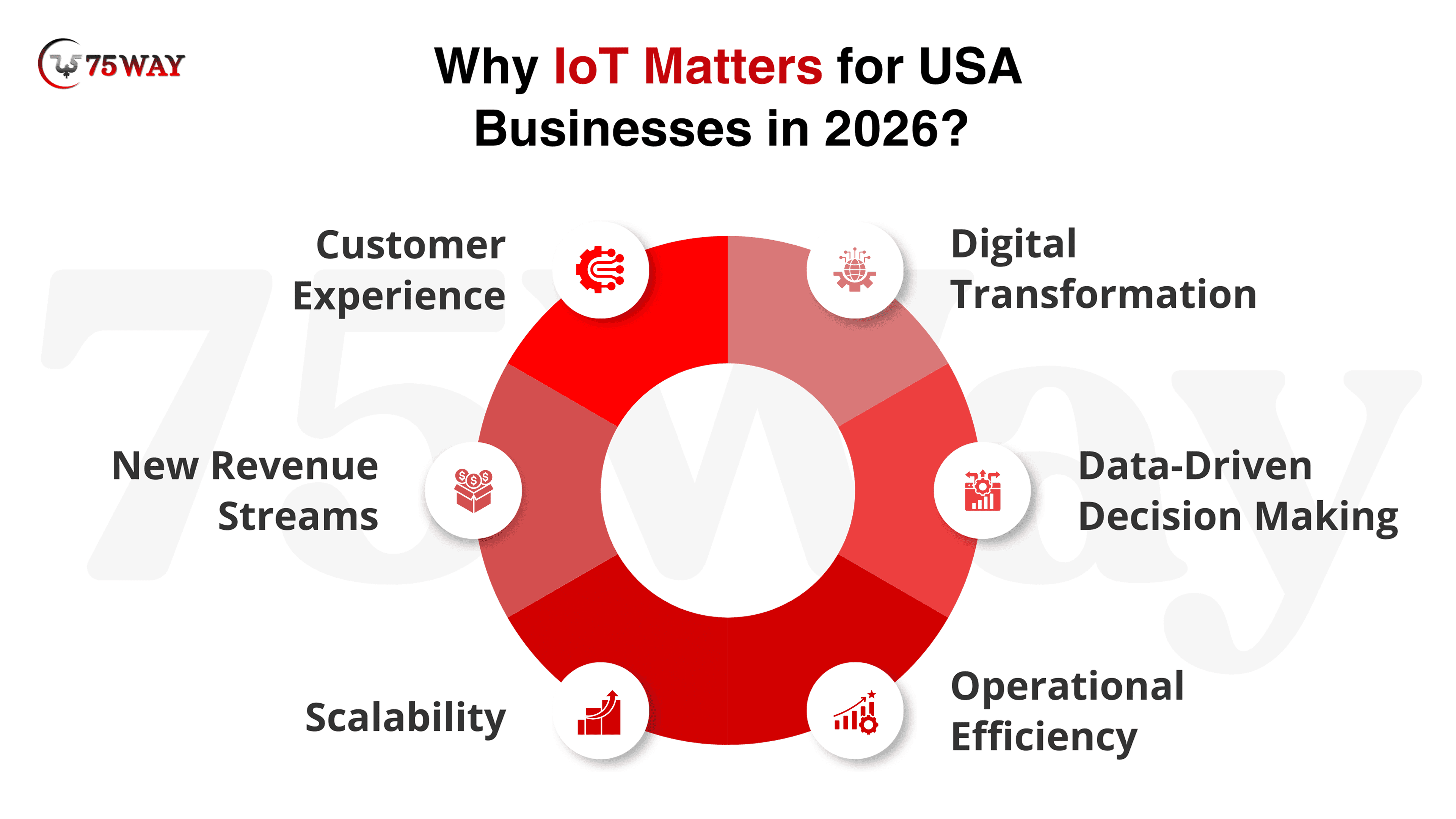
Digital Transformation: IoT apps enable businesses to modernize operations in ways that were impossible just a few years ago. Connected devices and integrated systems automate repetitive tasks, reduce manual errors, and provide visibility into processes across departments. Businesses can experiment, adapt, and innovate without being slowed down by outdated systems.
Data-Driven Decision Making: Real-time insights from IoT solutions help businesses identify trends, detect bottlenecks, and respond to inefficiencies immediately. Now, they no longer have to wait for weekly or monthly reports to see what works, as data is available instantly. This shift transforms decision-making from reactive to proactive, giving organizations the confidence to plan strategies that truly drive results.
Operational Efficiency: IoT applications make processes smarter and more efficient. These solutions monitor performance, predict maintenance needs, and reduce downtime, saving both time and money. Hence, your teams can deliver high-impact work, and resources are used more effectively. Less waste and consistent reliability make IoT a tangible driver of operational excellence for companies of all sizes.
Customer Experience: Businesses can personalize interactions and deliver services that feel intuitive. From smart apps to connected products, organizations can anticipate customer needs, offer relevant recommendations, and respond faster to requests or issues. It creates engagement that builds loyalty and trust. Customers feel seen and understood, which strengthens the relationship and encourages repeat business.
New Revenue Streams: Embedded IoT systems open doors to new business models. Subscription services, predictive maintenance, product-as-a-service offerings, and real-time analytics-based services create new sources of recurring revenue. It also allows companies to deliver added value, differentiate themselves in crowded markets, and explore monetization opportunities beyond traditional product sales.
Scalability: IoT systems are designed to grow alongside your business. Businesses can start with a small pilot, test effectiveness, and expand quickly without disrupting operations. Adding new devices, integrating additional data streams, or deploying advanced analytics becomes seamless. This flexibility ensures that as your business evolves, IoT remains a partner in growth, not a limiting factor.
Quick Read: How to Build an Astrology App Like Co-Star? A Strategic Guide 2026
How to Choose the Right IoT Development Partner
You now have complete information on the major IoT development companies. But here, another complex question arises, “How to select the IoT development company?” It can make or break your project. The wrong choice may lead to wasting time, money, and effort. We outline the process for choosing the right partner to develop IoT solutions.
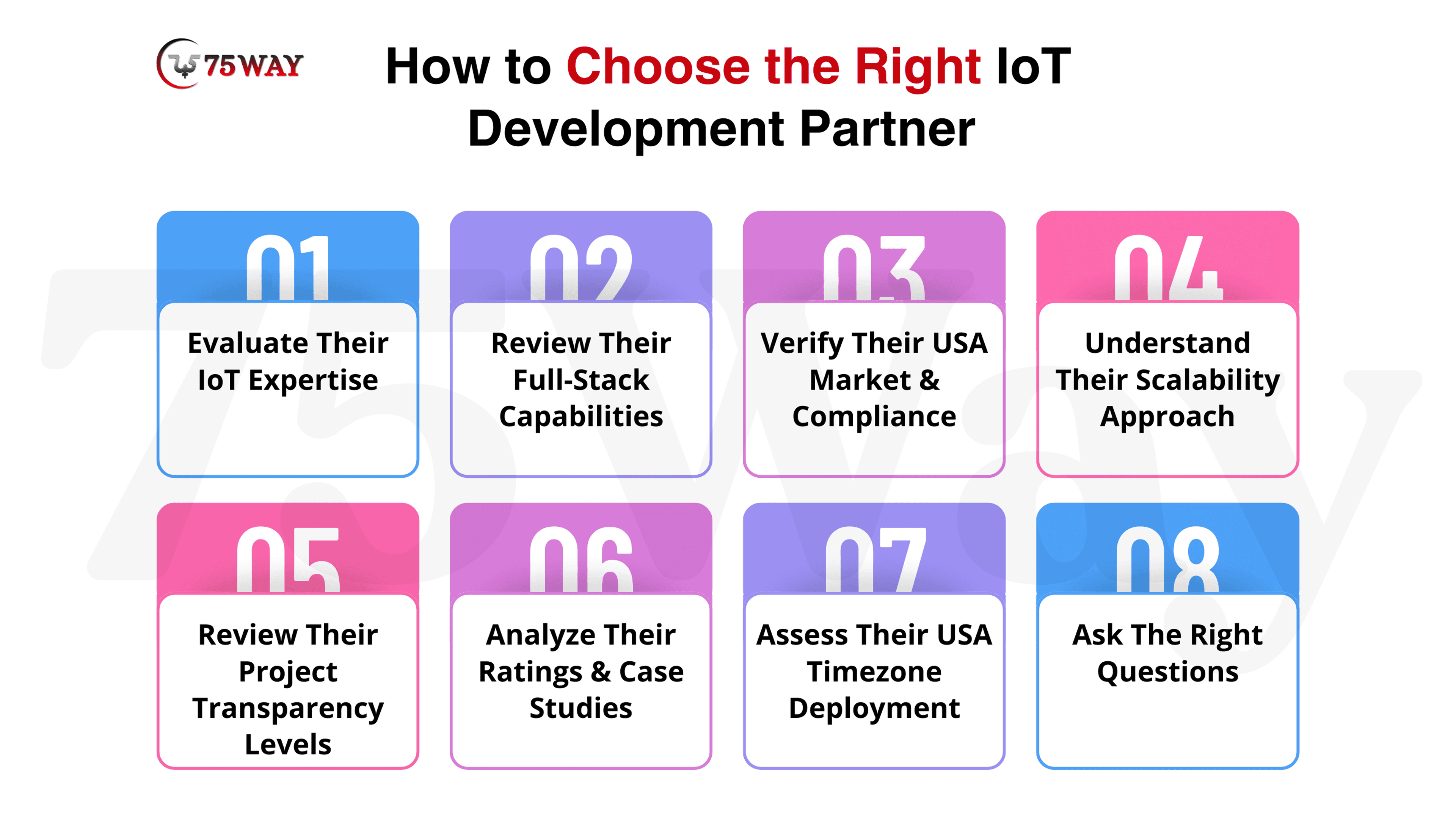
Evaluate Their IoT Expertise: A strong partner shows a track record of real projects and practical skills. Knowledge of IoT systems, experience across different industries, and strong problem-solving skills demonstrate their capabilities.
Review Full-Stack Capabilities: Afterward, you can review their complete list of services. A precise IoT development partner handles consulting, firmware, cloud pipelines, dashboards, AI analytics, and ongoing maintenance. They ensure all components work together smoothly, whether in system integration or system reliability.
Verify Their USA Market & Compliance: Your IoT product must comply with applicable local regulations and data security laws. So, your tech partner must be familiar with USA standards to protect business operations and secure customer data for smooth interaction with domestic industries.
Understand Scalability Approach: While creating an IoT solution, strategic planning for growth is critical. This approach to expanding devices, cloud infrastructure, and analytics keeps operations steady as business needs grow. This remains flexible and future-ready.
Review Project Transparency Levels: Open communication builds trust. IoT development partners who share workflows, timelines, and updates keep stakeholders informed. Their visibility reduces errors, miscommunication, and delays while keeping projects aligned with expectations.
Analyze Ratings & Case Studies: Past results speak clearly. You can request client testimonials, reviews, and documented projects to assess reliability, quality, and long-term performance. Real-world examples show whether the partner consistently delivers on promises.
Assess Timezone Deployment: Time zone alignment improves cross-team collaboration. IoT development teams that work within United States hours reduce delays, respond quickly, and maintain smooth communication. Faster problem-solving keeps projects on track.
Ask The Right Questions: Clarity on costs, support, integration, platforms, and maintenance ensures no surprises. Detailed discussions reveal readiness to meet current and future business needs. Full understanding prevents gaps or misalignment.
Quick Read: Top 10 Dating Apps in USA in 2026: A Complete Guide
Industries Transforming With Internet of Things (IoT)
IoT applications impact nearly every sector, but some industries see the most significant benefits. From improving operational efficiency to creating smarter consumer experiences, these solutions transform how businesses and people operate across the United States.
Smart Manufacturing: The U.S. IIoT market is projected at $99.75 billion in 2025 and is expected to grow at a 12.11% CAGR, reaching $176.65 billion by 2030. Efficiency and cost savings drive adoption. Industrial IoT solutions optimize production, monitor machinery, and predict maintenance needs.
Healthcare: IoT spending in the U.S. healthcare sector is growing 14.5% annually, helping hospitals and clinics provide better, safer, and more timely care. IoMT solutions improve patient care, remotely track vital signs, and enhance hospital efficiency.
Smart Homes: Smart homes use connected devices to make daily life easier. IoT-based applications, sensors, smart appliances, and automated systems work together to control lighting, security, climate, and entertainment, and manage their homes from anywhere.
Agriculture: IoT in agriculture supports precision irrigation, crop monitoring, and livestock tracking. Connected wearable apps and IoT solutions allow farmers to improve yields, reduce waste, respond quickly to changing conditions, and make agriculture more sustainable.
Retail: IoT in retail and ecommerce tracks inventory, manages supply chains, and enhances the personalized shopping experience. Businesses use connected systems to predict demand, reduce stockouts, and improve customer experiences. It helps retailers stay competitive in the rapidly evolving U.S. consumer market.
Transportation: Smart mobility can benefit from IoT solutions for fleet management, route optimization, and real-time tracking. IoT-based transport systems reduce fuel costs, improve delivery efficiency, and make urban mobility smarter and more reliable.
Smart Cities: IoT system development enables cities to manage traffic, public safety, energy, and utilities efficiently. Connected urban infrastructure promotes sustainability, reduces congestion, and improves the quality of life for residents.
Automotive & Connected Vehicles: IoT enhances vehicle safety, diagnostics, telematics, and autonomous mobility solutions. IoT-enabled mobile applications deliver real-time performance data, predictive maintenance, and enhanced driver assistance, shaping the future of transportation and mobility.
Read More: Top AI Trends Businesses Must Follow in 2026
What Is The Cost & Timeline To Develop IoT Solutions?
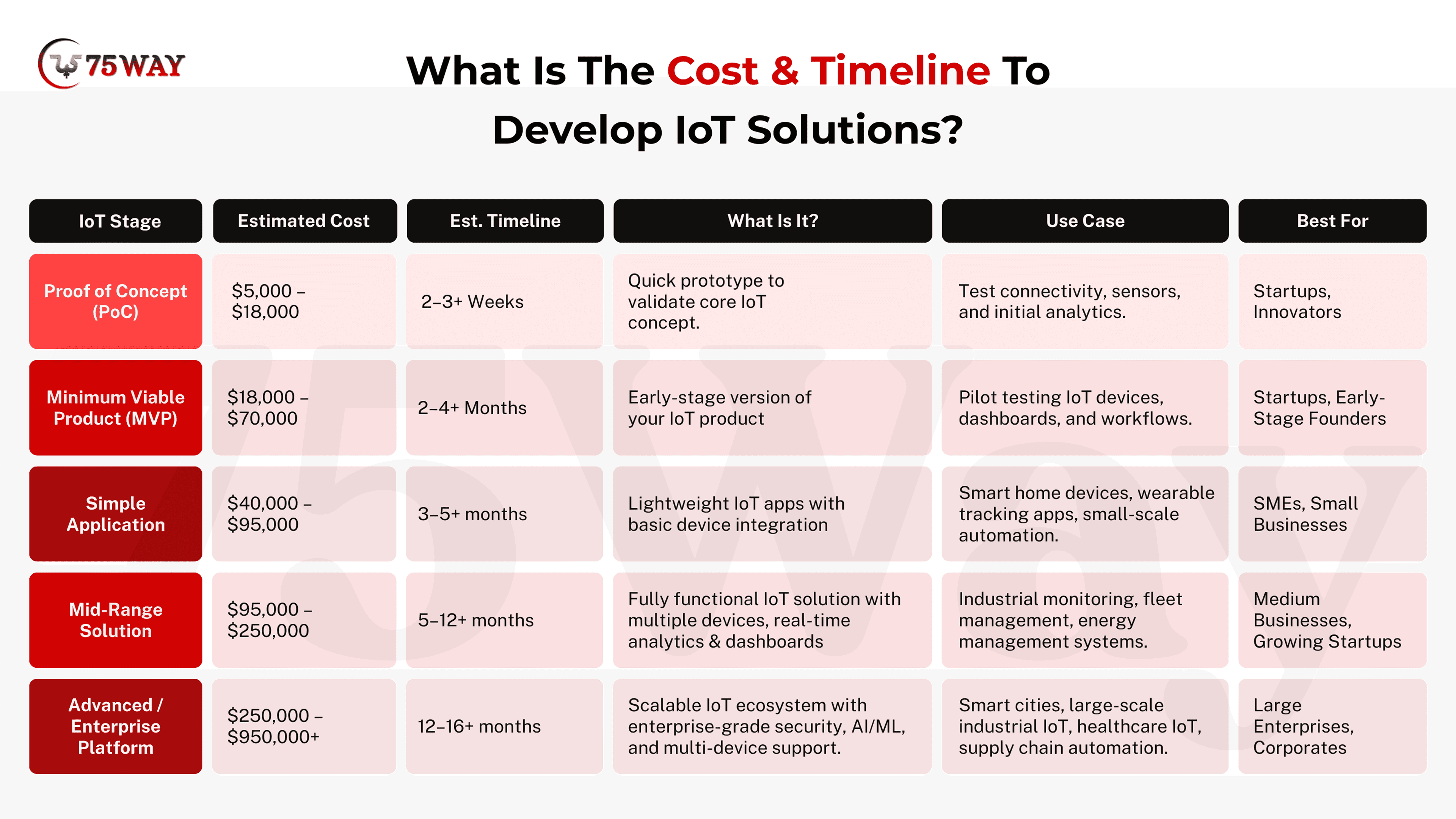
The time and cost of developing IoT solutions vary depending on complexity, scale, and the technologies involved. Simple projects can be completed quickly to test concepts, while more advanced systems require longer planning, design, and integration. Here’s a complete breakdown of cost and timeline to create IoT solutions.
Proof of Concept (PoC): A Proof of Concept costs between $5,000 and $18,000 and takes around 2–3 weeks. It provides a small-scale prototype to validate the core IoT concept, test connectivity and sensors, and evaluate initial analytics before committing to full development.
Minimum Viable Product (MVP): An MVP ranges from $18,000 to $70,000, with a timeline of 2–4 months. It delivers an early-stage IoT product with essential device integration, basic dashboards, and workflows, enabling businesses to test functionality and gather feedback efficiently.
Simple IoT Solutions: The cost to develop a simple IoT product ranges from $40,000 to $95,000 and takes 3–5 months. These lightweight apps support basic device connectivity and user interfaces, suitable for smart home gadgets, wearable tracking, or small-scale automation projects.
Mid-Level IoT Solution: The development of moderate IoT solutions falls between $95,000 and $250,000 and requires 5–12 months to build. They include multiple device integrations, real-time analytics, dashboards, and operational monitoring, and are suitable for industrial IoT, fleet management, and energy management systems.
Advanced/Enterprise IoT Platform: Advanced IoT platforms typically start at $250,000 and can exceed $950,000, with implementation taking 12–16 months or more. They provide scalable ecosystems with enterprise-grade security, AI/ML analytics, multi-device support, and robust infrastructure.
Final Remarks
To conclude, IoT has become a key driver for businesses that want to remain competitive and efficient in the USA. Companies that adopt IoT solutions experience smarter operations, better decision-making, and growth opportunities that others often miss. However, selecting the right IoT development company is essential to launching scalable IoT applications aligned with long-term business goals. These solutions help organizations save time and resources while unlocking new revenue possibilities. You can partner with a trusted IoT app development company in the USA to turn your ideas into a connected, data-driven IoT ecosystem for steady growth.
FAQs
What Companies Are Developing IoT?
Many technology companies offer IoT development solutions across industries such as healthcare, manufacturing, retail, and smart cities. These companies design connected systems that include devices, software platforms, cloud infrastructure, and analytics to support real business use cases.
What Are The 4 Types of IoT?
The four primary types of IoT are consumer IoT (CIoT), commercial IoT, Industrial IoT (IIoT), and Infrastructure IoT, grouped by where and how they are used.
Consumer IoT supports everyday personal needs, such as smart homes and wearables.
Commercial IoT serves business environments like retail and healthcare.
Industrial IoT focuses on factories, automation, and equipment monitoring.
Infrastructure IoT powers public systems, including smart cities, energy networks, and large-scale utilities, each with distinct scales, settings, and operational goals.
What Are The 7 Levels of IoT?
The seven levels of IoT explain how raw signals from devices turn into real business outcomes.
1. Physical / Perception Layer: This layer includes sensors, devices, and machines placed in real environments. These components observe temperature, motion, pressure, or other conditions and send raw signals from the physical world.
2. Connectivity/Transport Layer: This layer carries information from devices to systems. Networks such as Wi-Fi, Bluetooth, cellular, or low-power networks ensure data moves reliably between hardware and platforms.
3. Edge/Fog Computing Layer: Processing is executed on devices at this stage. Early filtering and basic analysis reduce delay and limit unnecessary data from reaching central systems.
4. Data Accumulation/Processing Layer: Collected information reaches storage systems where it is organized and analyzed. This layer supports large data volumes and helps identify patterns, trends, and operational insights.
5. Data Abstraction/Information Layer: Raw readings become meaningful information here. Data is cleaned, structured, and converted into understandable formats that applications and teams can easily use.
6. Application Layer: User interfaces operate at this level. Dashboards, mobile apps, and control panels display insights, alerts, and device status for monitoring and interaction.
7. Business/Collaboration Layer: In this layer, insights connect with business systems and workflows. Decisions, automation rules, and reports support planning, optimization, and long-term operational improvement.
Are US IoT Companies Better Than Offshore Firms?
The selection between USA IoT companies and offshore firms depends on your business needs, but many USA organizations find clear advantages when working with domestic teams. USA companies usually understand local markets, customer expectations, and regulatory requirements better, which can make planning and compliance easier. Communication tends to feel more natural for teams operating in the same time zones, which helps reduce delays and keep everyone aligned on goals.
Offshore partners can offer competitive pricing and bring valuable technical skills, but time zone differences and cultural gaps can slow collaboration. For businesses focused on fast decision-making, tighter coordination, and long-term support, working with an IoT partner in USA often leads to smoother project execution and stronger results. Ultimately, the best fit depends on your priorities for quality, timeline, and ongoing support.
What Technologies Are Used In IoT App Development?
IoT app development integrates multiple technologies to enable connected experiences. Mobile and web frameworks shape user interfaces that display device data. Backend platforms manage devices, users, and data flow across systems. Cloud services support storage, scalability, and remote access. APIs enable smooth communication between applications and connected devices. Edge processing tools enable faster responses by processing data near the device. Data analytics and visualization tools turn incoming information into readable insights. Security technologies help protect access, communication, and sensitive data throughout the application lifecycle.