Summary
Real estate businesses increasingly rely on AI voice agents to manage inquiries, qualify prospects, schedule appointments, and support customers around the clock. Conversational AI voice agents for real estate improve lead response speed, reduce operational costs, and help property dealers to capture more opportunities while scaling communication capabilities without increasing staffing requirements.
Quick Overview
- Real Estate AI voice agents answer property inquiries 24/7 without delays.
- Automated lead qualification reduces manual screening and administrative workloads.
- Faster response times improve conversion rates and customer satisfaction.
- Appointment scheduling becomes seamless through calendar and CRM integrations.
- Property management teams handle tenant communications more using automation.
A potential buyer discovers a property listing at 9:30 PM to ask about a 3BHK listing they saw online. No one answers. They leave a voicemail, continue browsing online, contact another agency, and schedule a property viewing before your team returns the call the next morning.
This scenario happens 1000s of times every day across the real estate industry. Yet many real estate agencies still rely on limited office hours, small administrative teams, and manual lead management processes.
To overcome such challenges, real estate AI voice agents come to light. These conversational AI agent development solutions assist real estate agencies, brokers, developers, and property management companies in automating customer interactions, qualifying prospects, scheduling appointments, and managing inquiries 24 hours a day without adding additional staff.
In this guide, we'll explore how AI voice agents work in real estate, the business problems they solve, the workflows they automate, and why many forward-thinking organizations are adopting voice AI in real estate as a core growth strategy.
What Is an AI Voice Agent for Real Estate?
An AI voice agent for real estate is a software-based assistant that communicates with callers using natural, human-like speech. Unlike IVR systems that force callers through menu options, AI voice agents understand context, respond conversationally, ask follow-up questions, and complete business tasks.
- Understand natural language
- Handle multi-turn conversations with context
- Perform actions like scheduling and CRM updates
- Escalate to human agents when needed
For real estate, they handle queries like pricing, availability, and site visit scheduling.
How Does a Voice AI Agent for Real Estate Work?
AI real estate voice agents help businesses answer inquiries, qualify leads, and schedule appointments without human intervention. Here's a step-by-step breakdown of how these intelligent systems manage real estate conversations from initial contact to follow-up actions.
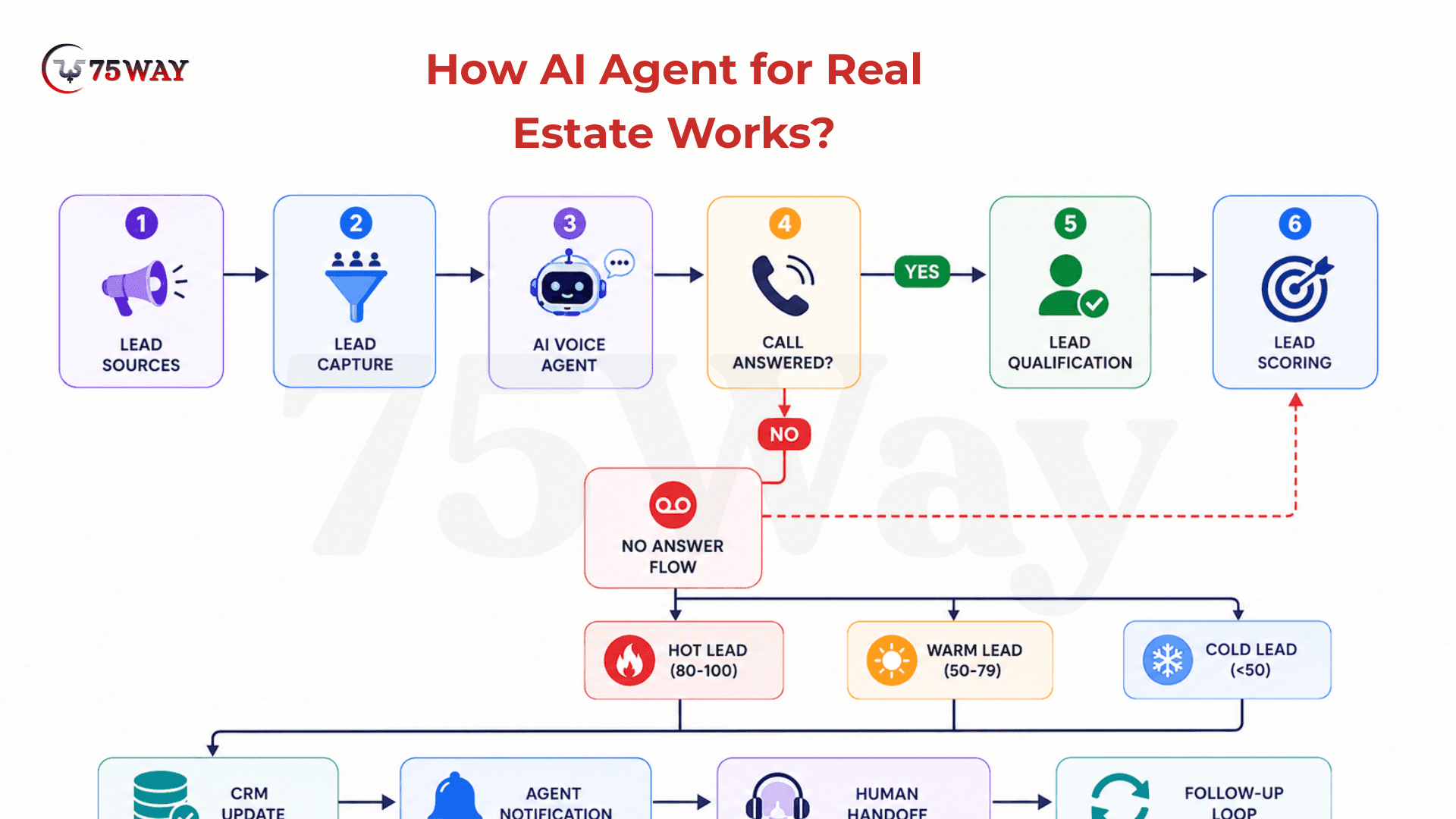
Step 1: Lead Sources
Potential buyers enter the system through multiple channels, including Facebook Ads, Google Ads, property portals, website forms, WhatsApp inquiries, missed calls, referrals, and walk-in visits. Every inquiry is automatically captured for immediate follow-up.
Step 2: Lead Capture
The system collects essential information such as name, phone number, email address, inquiry source, and property interest. All lead details are automatically stored in the CRM for centralized management.
Step 3: AI Voice Agent
The AI voice agent automatically calls the lead within approximately 30 seconds of inquiry submission. This rapid response helps improve contact rates and reduces the chances of losing potential buyers.
Step 4: Call Answer Decision
The conversational AI system determines whether the lead answers the call. Based on the outcome, the workflow either proceeds to qualification or triggers an automated re-engagement sequence.
- No Answer Flow: If the lead does not answer, the system automatically sends a voicemail, SMS, or WhatsApp message and schedules retries after 30 minutes, 4 hours, and the next day to maximize connection opportunities.
Step 5: Lead Qualification
The AI asks predefined questions regarding budget, preferred location, property type, purchase timeline, financing requirements, and loan status. This information helps identify genuine buying intent.
Step 6: Lead Scoring
Based on qualification responses, the AI assigns a lead score between 0 and 100. Scoring evaluates purchase readiness, budget alignment, urgency, financing status, and engagement level.
- Hot Lead (80–100): Leads with strong buying intent are automatically moved toward conversion activities, including property visits, consultations, appointment scheduling, and confirmation messages through SMS, email, or WhatsApp.
- Warm Lead (50–79): Moderately interested prospects enter a nurturing workflow where the AI shares property information, pricing updates, relevant listings, and follow-up communications to encourage future engagement.
- Cold Lead (<50): Leads not currently ready to buy are enrolled in a long-term nurturing process. The system periodically shares new listings, market updates, and re-engagement campaigns to maintain interest.
Step 7: CRM Update
Every interaction, qualification response, lead score, note, and appointment detail is automatically recorded in the CRM, creating a complete history for sales teams.
Step 8: Agent Notification
Once a lead reaches a predefined qualification threshold, the assigned real estate agent receives an instant notification containing lead details, scores, and scheduled appointment information.
Step 9: Human Handoff
When prospects require detailed discussions, negotiation support, or assistance with complex questions, the AI seamlessly transfers the conversation to a human agent.
Step 10: Follow-Up Loop
The AI continues nurturing leads through automated follow-ups, reminders, property recommendations, and engagement campaigns until the lead either converts or becomes inactive.
How Does Conversational AI in Real Estate Handle Property Inquiries?
Every property inquiry represents a potential revenue opportunity, but delayed responses and manual processes often cause businesses to lose qualified prospects. Conversational AI in real estate streamline the entire journey, from answering initial inquiries and qualifying leads to scheduling viewings and supporting follow-ups, helping real estate teams engage prospects faster and move them closer to a successful transaction.
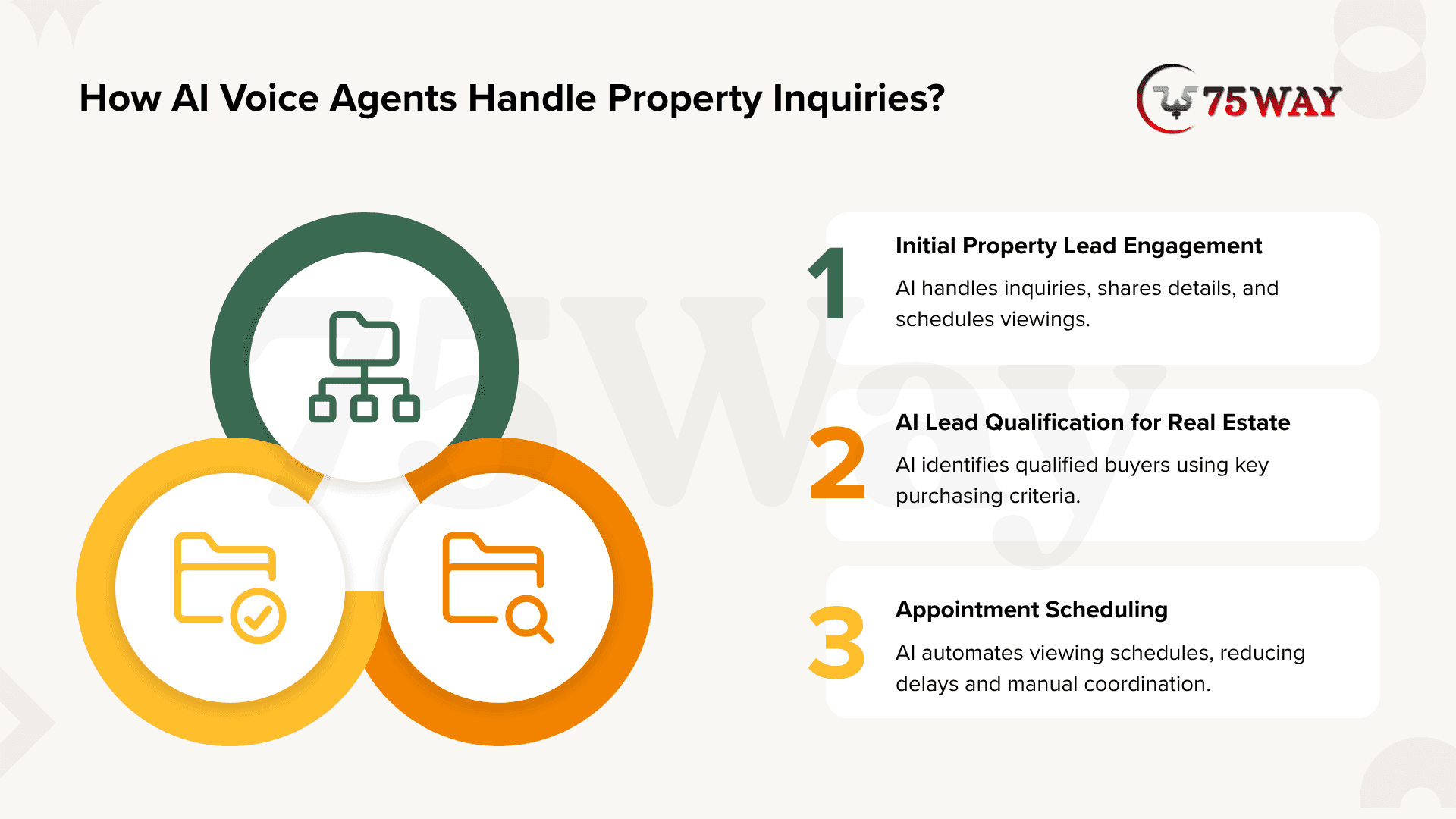
1. Initial Property Lead Engagement
A buyer calls about a listing. The AI voice agent can:
- Confirm the property being discussed
- Share key property details
- Explain pricing information
- Discuss property features
- Answer common questions
- Collect buyer requirements
- Schedule a property viewing
The conversation feels natural while eliminating administrative effort.
2. AI Lead Qualification for Real Estate
Not every inquiry represents a qualified opportunity. Sales teams spend substantial time speaking with prospects who are not ready to purchase, rent, or invest. AI voice agents help identify high-intent leads before they reach agents. These real estate AI agents collect information regarding:
- Budget Range: Understanding financial expectations helps determine property fit.
- Preferred Location: Location preferences narrow available inventory.
- Property Type: The system identifies buyer interests, including residential, luxury, commercial, rental, or investment properties.
- Purchase Timeline: Prospects actively searching often receive higher priority.
- Financing Status: Mortgage pre-approval and financing readiness influence qualification.
The AI captures important buying criteria for future follow-up. This information automatically enters CRM systems, providing agents with qualified lead profiles before conversations begin.
3. Appointment Scheduling Without Administrative Bottlenecks
Scheduling property viewings consumes significant administrative resources. A typical process often involves:
- Multiple phone calls
- Calendar checks
- Confirmation messages
- Rescheduling requests
AI voice agents simplify this workflow.
- Scheduling Capabilities
- Calendar synchronization
- Automatic booking
- Availability management
- Confirmation delivery
- Reminder notifications
- Rescheduling support
Prospects can book appointments instantly without waiting for office staff.
AI Voice Agents for Property Management Companies
Property management organizations handle large communication volumes daily. These interactions often include:
- Maintenance requests
- Tenant questions
- Rent-related inquiries
- Lease information requests
- Emergency issue reporting
AI voice agents can automate a large percentage of these conversations.
- Reduced Administrative Burden: Routine inquiries no longer require staff intervention.
- Faster Tenant Support: Residents receive immediate responses.
- Improved Service Consistency: Every caller receives the same quality of information.
- Better Resource Allocation: Property managers focus on higher-value activities.
Benefits of AI Voice Agents for Real Estate Businesses
AI voice agents create real business value. Rather than acting as a simple answering system, they help agencies engage prospects faster, qualify leads automatically, schedule appointments, and maintain consistent communication around the clock. The result is a smoother experience for customers and a more productive workflow for real estate teams.
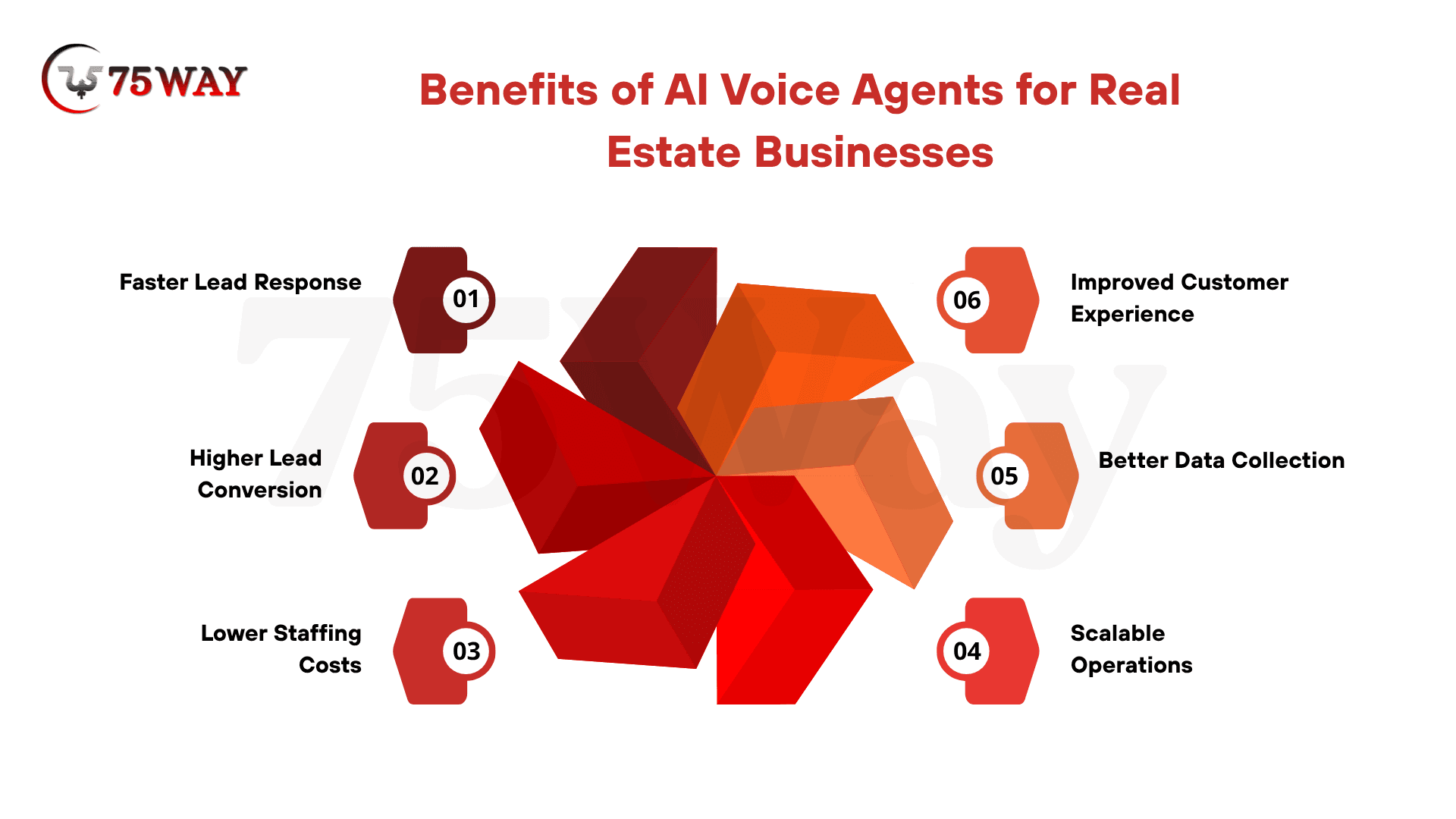
- Faster Lead Response: Imagine a potential buyer finding a property listing at 10 PM and calling for more information. Instead of reaching voicemail, they receive an immediate response from a virtual property assistant. That instant engagement keeps the conversation alive and significantly reduces the chances of the prospect contacting another agency.
- Higher Lead Conversion: Many real estate leads go cold simply because follow-up takes too long. A conversational real estate AI assistant starts the interaction immediately, gathers important details, and keeps prospects engaged from the first call. Better conversations at the right time often lead to more appointments and stronger conversion opportunities.
- Lower Staffing Costs: Daily inquiries about listings, availability, pricing, and appointments can consume hours of administrative time. An automated real estate communication system manages these repetitive conversations without additional staffing requirements. This allows teams to focus more attention on negotiations, property showings, and client relationships.
- Improved Customer Experience: Property buyers and renters rarely limit their searches to office hours. A digital real estate assistant remains available day and night, providing answers whenever customers need them. Consistent availability creates a more convenient experience and helps businesses build trust from the very first interaction.
- Better Data Collection: Every conversation reveals useful information about customer preferences and intentions. An AI-powered property inquiry assistant automatically captures details such as budgets, preferred locations, timelines, and property interests. These insights help agents prepare for conversations and deliver more personalized follow-up experiences.
- Scalable Operations: Growth brings more inquiries, more appointments, and more communication demands. A real estate voice automation platform can handle hundreds of conversations simultaneously without affecting service quality. This allows agencies to support increasing demand without expanding administrative teams at the same pace.
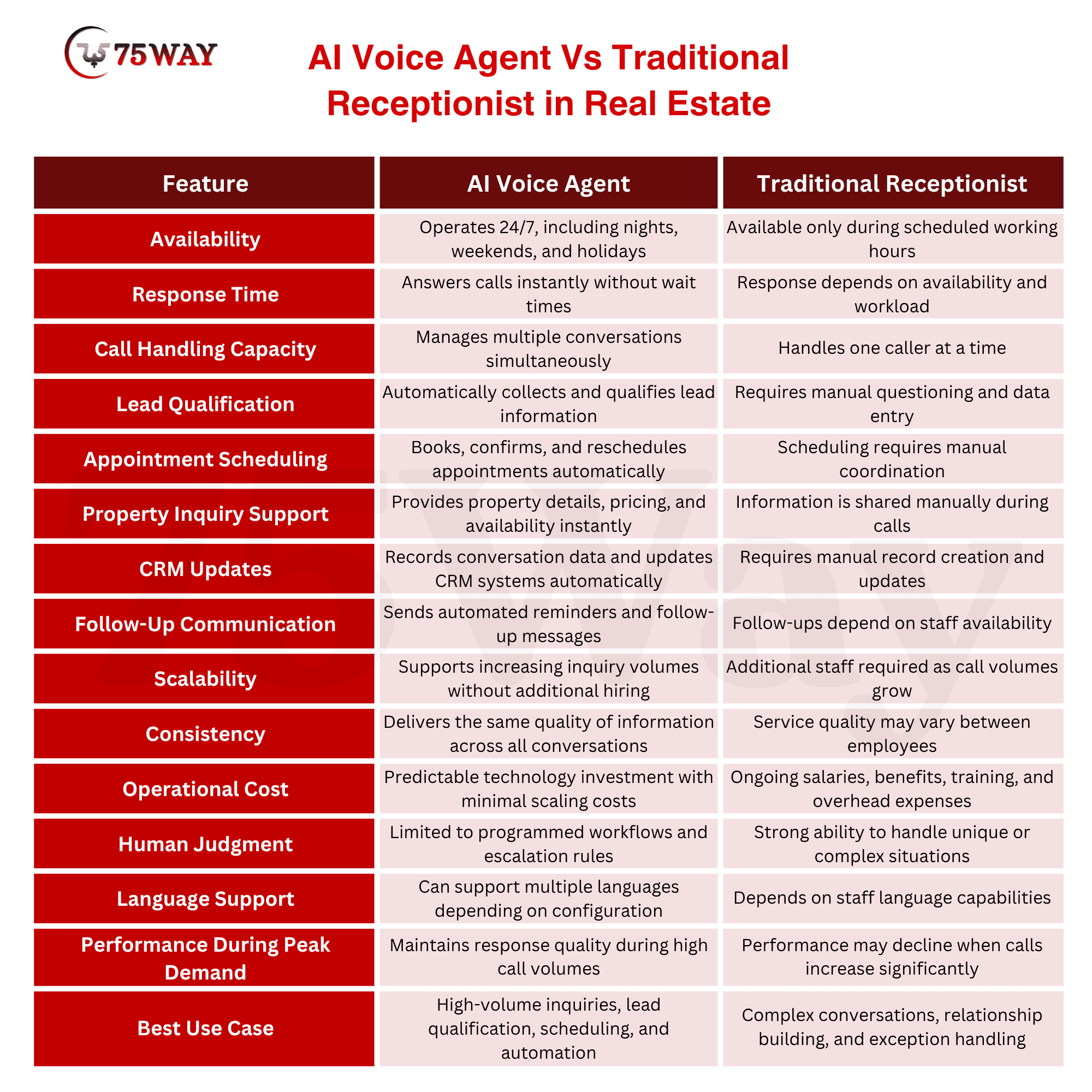
AI Voice Agent Vs Traditional Receptionist in Real Estate: What's The Difference?
The primary difference between an AI voice agent and a traditional receptionist is availability and scalability. A receptionist can manage calls during working hours and handle one conversation at a time, while an AI voice agent can answer inquiries 24/7 and engage with multiple callers simultaneously. Both can support customer communication, but they approach the task in very different ways.
For real estate businesses, the choice often depends on communication needs and inquiry volume. A traditional receptionist brings human judgment and personal interaction to complex situations, whereas a real estate AI voice agent excels at handling repetitive inquiries, qualifying leads, scheduling appointments, and providing instant responses at any time of day. Many agencies now use both together, allowing staff to focus on high-value conversations while automation manages routine requests.
Real Estate AI Voice Agent Vs AI Chatbot: Which Is Better?
The key difference between an AI voice agent and a chatbot is the way they interact with customers. An AI voice agent communicates through natural voice conversations, while a chatbot relies on text-based messaging. For most real estate businesses, AI voice agents provide a more engaging and effective experience because they allow prospects to speak naturally, ask questions in real time, and receive immediate responses without typing.
Both solutions can automate customer interactions, but they serve different purposes. A chatbot is useful for handling basic website inquiries and quick support requests. A real estate AI voice agent, on the other hand, can manage property inquiries, qualify leads, schedule viewings, answer detailed questions, and maintain human-like conversations that help move prospects closer to a purchase, rental, or investment decision.
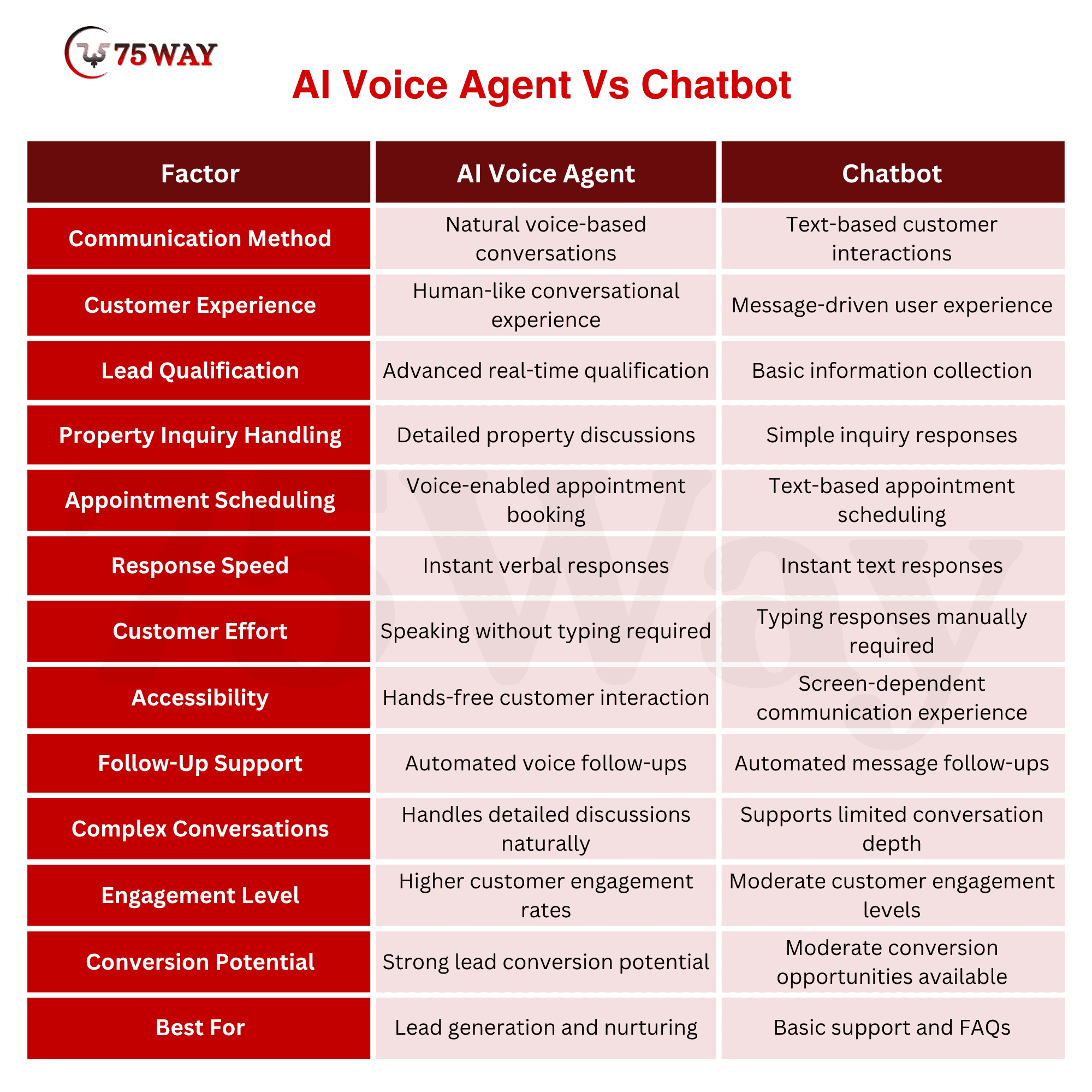
For real estate businesses, an AI voice agent is typically the stronger option when the goal is to capture leads, answer property inquiries, and book appointments through natural conversations. A chatbot remains valuable for handling basic website interactions, but voice AI often delivers a more engaging experience and stronger conversion opportunities.
How To Build a Real Estate AI Voice Agent in 2026?
Building a real estate AI voice agent involves much more than connecting a language model to a phone system. The real estate voice AI agent development process requires careful planning to create conversations that feel natural while supporting real-world real estate workflows.
Whether you're building a voice agent for a real estate agency, brokerage, property management company, or property developer, the goal remains the same: automate repetitive conversations while delivering a smooth customer experience. Below is a step-by-step process used by many businesses to develop and deploy real estate AI voice solutions.
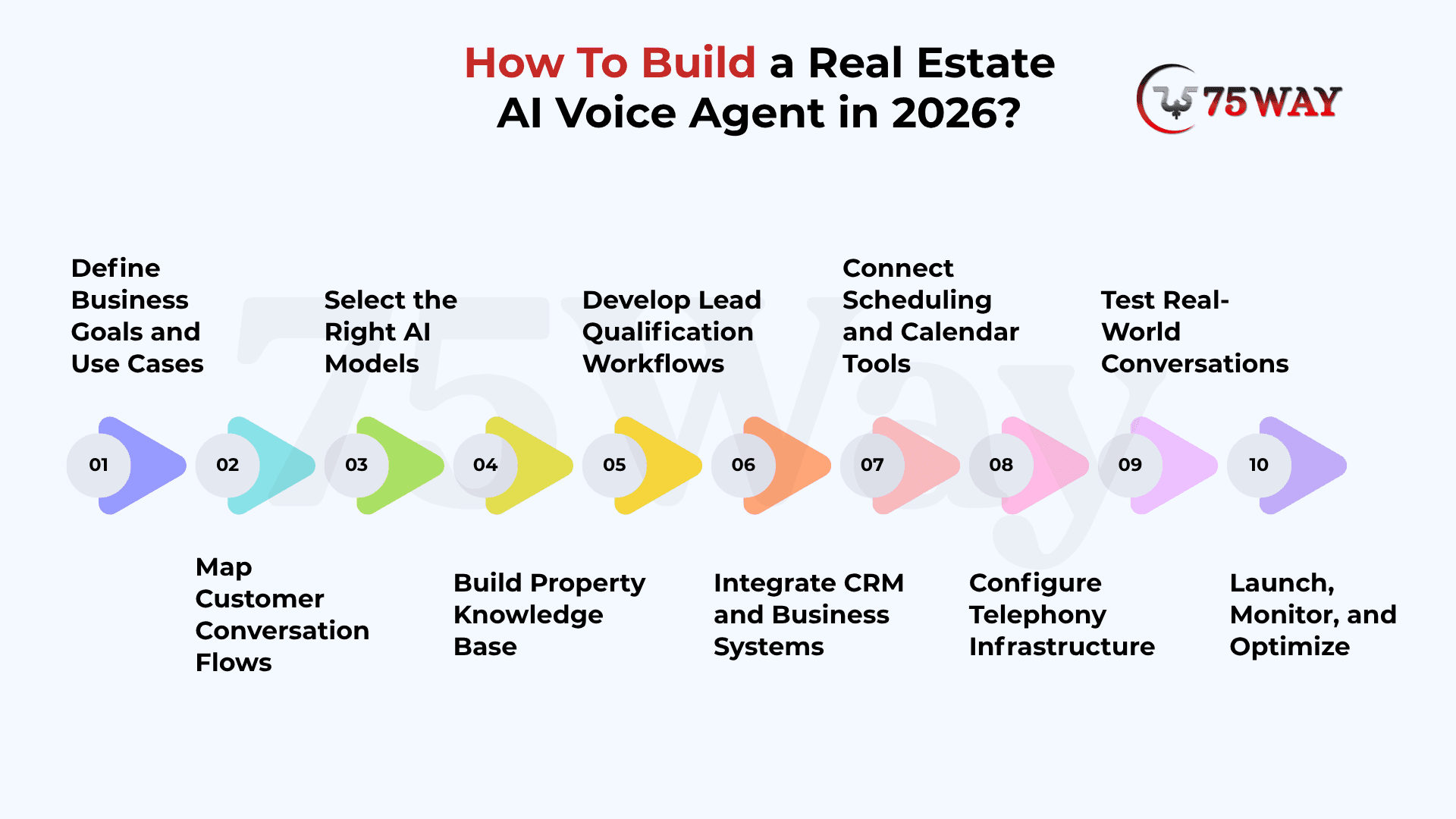
Phase 1: Define Business Goals and Use Cases
The foundation of every successful real estate AI voice agent begins with identifying clear business objectives. Some companies want to automate property inquiries, while others focus on lead qualification, appointment scheduling, tenant support, or follow-up calls. Clearly defined goals help determine required features, integrations, conversation flows, and success metrics before development begins.
Phase 2: Map Customer Conversation Flows
Before development starts, businesses must design how conversations should progress. This includes common customer questions, possible responses, qualification criteria, escalation scenarios, and appointment booking processes. Well-structured conversation flows help the voice agent deliver natural interactions while maintaining consistency across every customer conversation and inquiry type.
Phase 3: Select the Right AI Models
The performance of a voice agent depends heavily on the technologies behind it. Development teams select speech recognition models, language processing systems, and text-to-speech engines capable of understanding customer intent and generating natural responses. The right technology stack directly influences accuracy, response quality, and overall customer experience.
Phase 4: Build Property Knowledge Base
A voice agent can only provide accurate information when it has access to reliable data. The knowledge base typically includes property listings, pricing details, amenities, floor plans, availability status, project specifications, and frequently asked questions. This centralized information source enables the system to answer inquiries confidently and accurately.
Phase 5: Develop Lead Qualification Workflows
Lead qualification helps sales teams focus on prospects with genuine buying or renting intent. Businesses define criteria such as budget range, preferred location, property type, timeline, financing status, and specific requirements. During conversations, the AI gathers this information automatically and determines whether a lead meets qualification standards.
Phase 6: Integrate CRM and Business Systems
CRM integration transforms conversations into actionable business data. Every interaction, customer detail, qualification response, and appointment request is automatically recorded within existing systems. This eliminates manual data entry, improves lead management accuracy, and ensures agents have complete prospect information before initiating further communication.
Phase 7: Connect Scheduling and Calendar Tools
Appointment scheduling represents one of the most valuable automation opportunities in real estate. Calendar integrations allow the voice agent to access availability, book property viewings, send confirmations, manage cancellations, and support rescheduling requests. This removes administrative bottlenecks and creates a more convenient experience for prospective clients.
Phase 8: Configure Telephony Infrastructure
A robust telephony system connects the AI voice agent with incoming and outgoing calls. Cloud-based communication platforms manage call routing, call handling, number provisioning, and voice connectivity. Proper telephony configuration ensures reliable performance, clear communication quality, and uninterrupted customer interactions regardless of inquiry volume.
Phase 9: Test Real-World Conversations
Testing helps identify weaknesses before customers interact with the system. Development teams simulate buyer inquiries, seller inquiries, appointment requests, tenant questions, and support scenarios to evaluate performance. Comprehensive testing improves conversation accuracy, identifies edge cases, and helps deliver a smoother customer experience after deployment.
Phase 10: Launch, Monitor, and Optimize
Successful implementation does not end after deployment. Businesses continuously monitor conversations, customer feedback, response accuracy, qualification performance, and appointment booking rates. Ongoing optimization allows the voice agent to adapt to changing customer behavior, improve efficiency, and deliver stronger business outcomes over time.
Technology Stack Behind Real Estate AI Voice Agents
Modern AI voice agents combine multiple technologies to create seamless customer interactions. These systems are far more sophisticated than traditional call automation solutions.
- Speech Recognition Technology: Speech recognition converts spoken language into text that the AI system can understand and process.
- Large Language Models (LLMs): LLMs analyze caller intent, understand context, and generate conversational responses that feel natural and relevant.
- Text-to-Speech Systems: Advanced voice synthesis technology transforms AI-generated responses into human-like speech.
- Workflow Automation Platforms: Automation engines trigger actions such as scheduling appointments, sending follow-ups, updating CRMs, and routing inquiries.
- CRM Integrations: Voice agents connect with customer relationship management platforms to store lead information and interaction histories automatically.
- Calendar Integrations: Scheduling tools allow AI systems to check availability and book appointments without human intervention.
- Telephony Infrastructure: Cloud telephony platforms manage inbound and outbound calls, ensuring reliable communication across multiple channels.
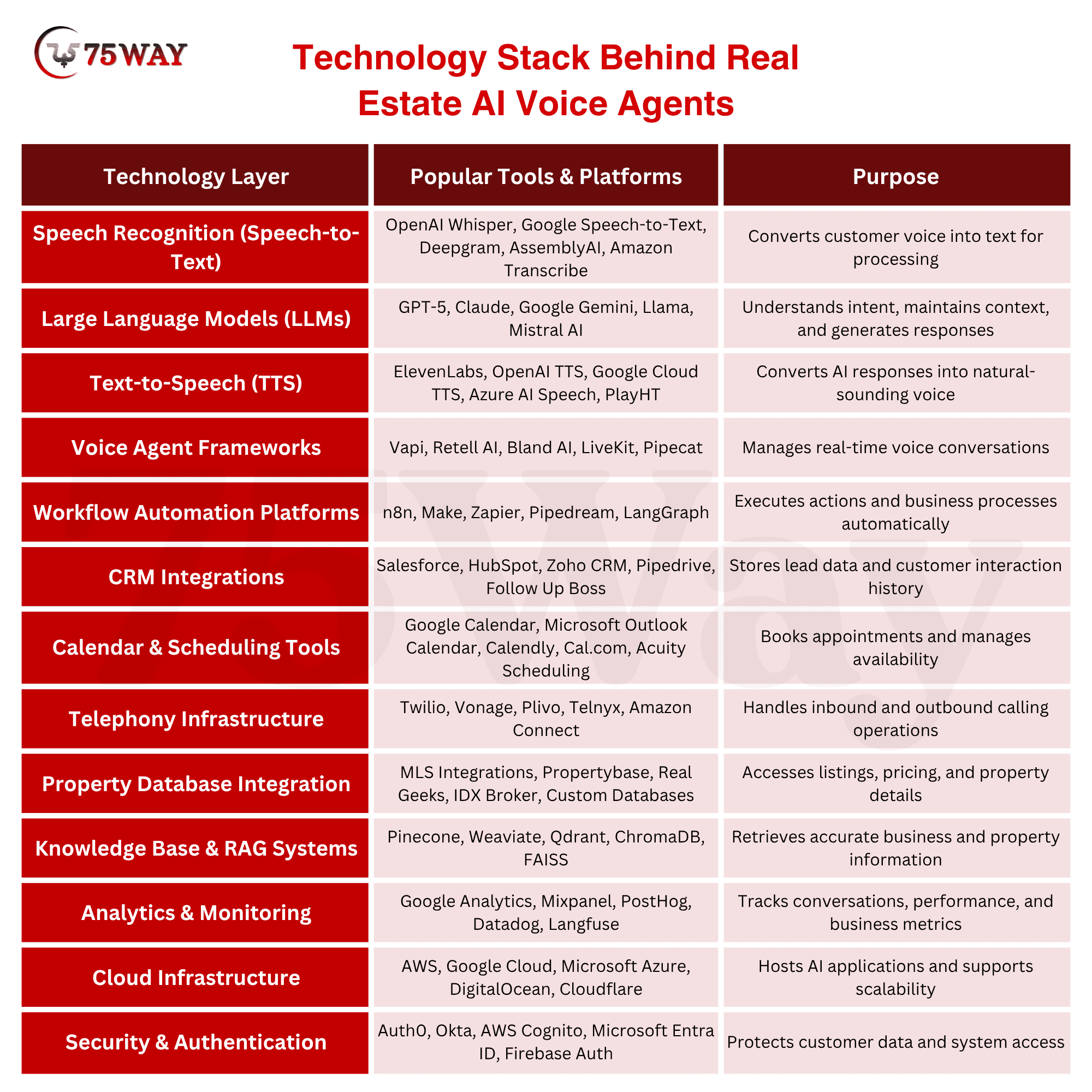
Together, these technologies create an intelligent communication ecosystem capable of supporting thousands of conversations simultaneously.
Common Property Workflows That Can Be Automated With AI In Real Estate
Most real estate teams spend a significant amount of time managing repetitive conversations, scheduling appointments, updating records, and following up with prospects. As inquiry volumes increase, these manual tasks can slow response times and reduce productivity. AI voice agents help streamline these operations by handling routine workflows automatically, allowing agents and sales teams to focus on client relationships, negotiations, and closing deals. Below are some of the most common real estate workflows that businesses can automate using voice AI.
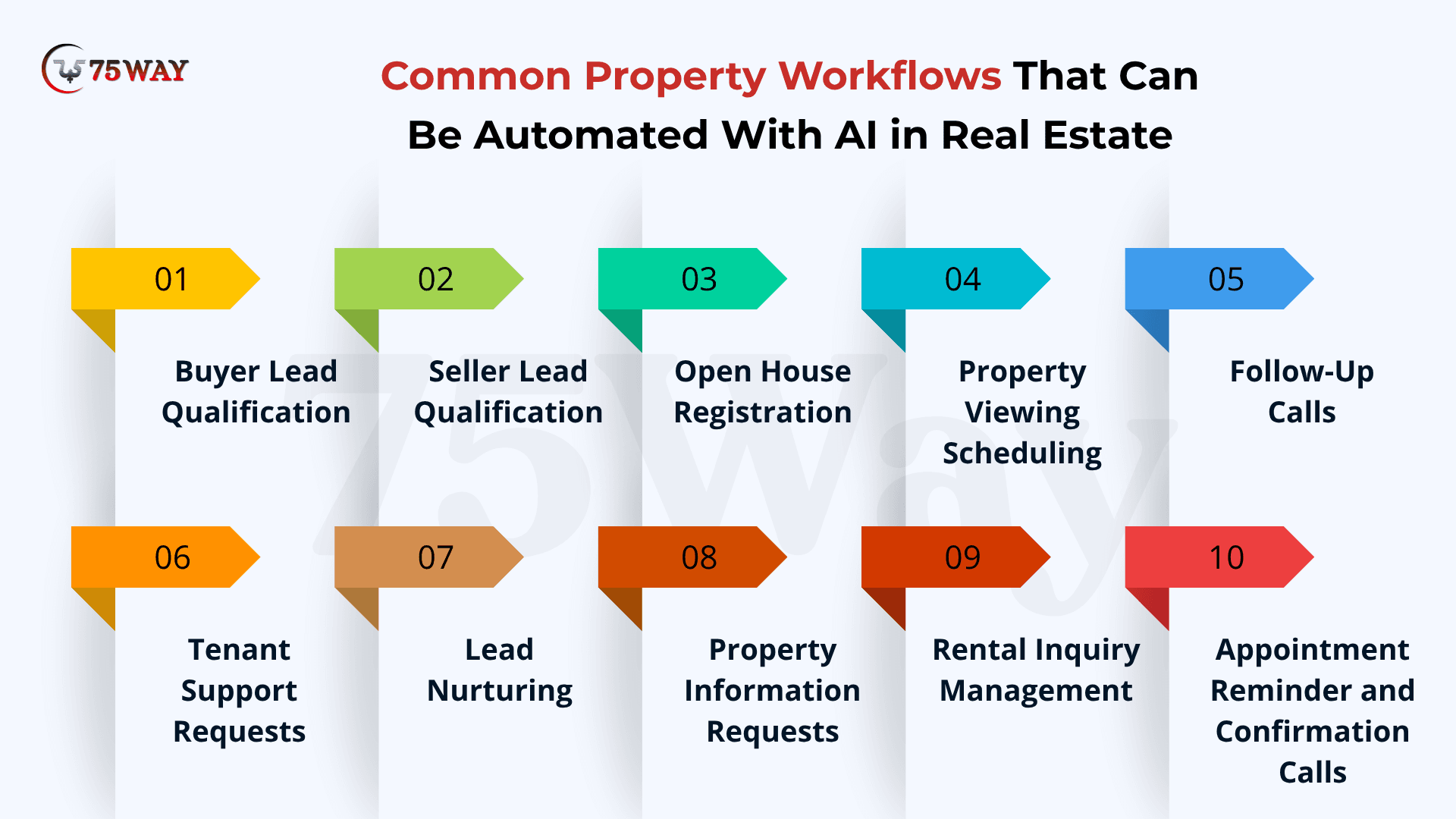
- Property Buyer Lead Qualification
Not every property inquiry comes from a serious buyer. A real estate AI voice agent can ask qualifying questions about budget, preferred location, property type, financing status, and purchase timeline before transferring the prospect to an agent. This process helps sales teams prioritize high-intent buyers and spend more time on opportunities with stronger conversion potential.
- Property Seller Lead Qualification
Property owners often contact agencies to inquire about selling their homes or requesting property valuations. A virtual real estate assistant can gather details such as property type, location, estimated value, selling timeline, and ownership status. This information helps agents assess opportunities more quickly and prepare for productive conversations with potential sellers.
- Open House Registration
Managing open house registrations manually can create unnecessary administrative work. A conversational AI system can register attendees, collect contact information, confirm attendance, answer event-related questions, and send reminders before the scheduled event. This creates a smoother experience for prospective buyers while reducing coordination efforts for real estate teams.
- Property Viewing Scheduling
Property viewings often require multiple calls, availability checks, and confirmation messages. An automated voice assistant can access agent calendars, identify available time slots, schedule appointments, send confirmations, and manage rescheduling requests. This reduces scheduling delays and allows prospects to book viewings whenever it is convenient for them.
- Follow-Up Calls
Many prospects request additional information before making a decision. An AI-powered calling assistant can automatically follow up with interested buyers or sellers, share requested details, answer common questions, and maintain engagement. Consistent follow-up communication helps businesses stay connected with prospects without increasing staff workloads.
- Tenant Support Requests
Property management companies receive frequent inquiries regarding maintenance issues, lease information, rent payments, and community policies. A voice-enabled support assistant can answer common questions, collect maintenance requests, route urgent issues to the appropriate teams, and provide tenants with immediate assistance at any time.
- Property Lead Nurturing
Many real estate leads require weeks or months before they are ready to make a purchase or rental decision. A real estate voice AI platform can maintain communication through scheduled follow-ups, market updates, property recommendations, and appointment reminders. Ongoing engagement helps keep prospects interested until they are ready to move forward.
- Property Information Requests
Prospective buyers frequently call to ask about pricing, amenities, availability, floor plans, and neighborhood details. An intelligent voice assistant can provide accurate property information instantly, helping prospects receive answers without waiting for an agent while reducing the number of routine calls handled by sales teams.
- Rental Inquiry Management
Rental properties generate a high volume of inquiries regarding availability, lease terms, monthly rent, deposits, and move-in requirements. A voice AI solution can answer these questions, pre-qualify renters, collect application details, and schedule property tours, creating a faster and more organized rental process.
- Appointment Reminder and Confirmation Calls
Missed appointments can result in wasted time and lost opportunities. A real estate AI calling system can automatically send reminders, confirm upcoming viewings, notify clients about schedule changes, and reduce no-show rates. Better appointment management helps maximize agent productivity and improve customer experiences.
Challenges to Consider Before Implementing Voice AI in Real Estate
AI voice agents can transform real estate operations, but successful implementation requires more than simply deploying new technology. Many businesses focus on the benefits while overlooking the factors that influence long-term performance. A well-planned strategy helps organizations avoid common obstacles, improve adoption rates, and maximize return on investment. Before implementing a real estate AI voice agent, businesses should understand the following challenges and the best ways to address them.
- Data Quality
A voice AI system relies heavily on accurate business and customer data. Incomplete property records, outdated listings, duplicate contacts, and inaccurate CRM information can lead to poor customer experiences and incorrect responses during conversations.
Solution:
A data audit should take place before deployment. Clean property databases, updated CRM records, and standardized information help the system deliver accurate responses and improve lead qualification performance.
- Workflow Design
Many real estate businesses have unique sales processes, lead management methods, and customer service workflows. A poorly designed conversation flow can create confusion, frustrate callers, and reduce automation effectiveness.
Solution:
Clear workflow mapping before development helps define conversation paths, qualification criteria, escalation scenarios, and appointment scheduling processes. Proper planning creates smoother customer interactions and stronger business outcomes.
- Integration Complexity
Most real estate organizations already use CRM systems, scheduling tools, property databases, and marketing platforms. Connecting a voice AI solution to multiple systems can become technically challenging, especially when custom workflows are involved.
Solution:
An experienced development team can evaluate existing infrastructure, identify integration requirements, and create a scalable architecture that connects business systems without disrupting current operations.
- Compliance Requirements
Real estate businesses often collect sensitive customer information, including financial details, contact information, and property preferences. Privacy regulations and data protection requirements must be considered throughout implementation.
Solution:
Businesses should implement secure data handling practices, encrypted communications, access controls, and compliance-focused workflows. Legal and compliance reviews before deployment can help reduce potential risks.
- Customer Adoption Concerns
Some organizations worry that customers may prefer speaking with human agents instead of automated systems. Resistance to new technology can affect adoption if expectations are not managed properly.
Solution:
Natural conversational design, clear communication, and seamless escalation to human representatives help create positive customer experiences. A hybrid approach often provides the best balance between automation and human support.
- Conversation Accuracy
Voice AI systems may occasionally misunderstand customer requests, accents, property names, or location-specific terminology. These inaccuracies can affect customer satisfaction if left unresolved.
Solution:
Comprehensive testing across different conversation scenarios helps identify potential issues before launch. Continuous monitoring and model optimization improve accuracy over time and strengthen overall performance.
- Ongoing Optimization
A voice AI solution is not a one-time project. Customer expectations, property inventories, and business processes evolve constantly, which means conversation workflows require regular updates and improvements.
Solution:
Performance reviews, conversation analysis, customer feedback, and ongoing system refinement help maintain effectiveness. Businesses that continuously optimize their voice AI platforms typically achieve stronger long-term results.
- Measuring Success
Many organizations struggle to determine whether their AI investment is delivering meaningful business value. Without clear performance metrics, optimization opportunities can be difficult to identify.
Solution:
Key performance indicators such as lead response time, appointment booking rate, call resolution rate, conversion rate, customer satisfaction, and operational cost savings should be tracked from the beginning to measure impact.
Why Businesses Need A Trusted Real Estate AI Voice Agent Development Partner?
Implementing voice AI involves much more than deploying software. Success depends on creating workflows that align with business objectives, customer expectations, and operational requirements. An experienced AI voice agent development partner helps organizations design, build, integrate, and optimize AI voice systems that generate measurable business outcomes.
- Technical Expertise: Voice AI requires expertise across conversational design, automation, telephony systems, integrations, and artificial intelligence technologies.
- Custom Workflow Development: Every real estate organization operates differently. Development partners build solutions tailored to specific business processes.
- Faster Deployment: Proven implementation frameworks accelerate launch timelines and reduce project risks.
- Scalable Architecture: Solutions are designed to support future growth and increasing communication volumes.
- Ongoing Optimization: Voice AI continuously improves through monitoring, testing, and refinement.
- Long-Term Competitive Advantage: Businesses gain automation capabilities that support growth while improving customer experiences.
How 75way Technologies Helps You Build an AI Agent for Real Estate
At 75way Technologies, we help real estate companies build AI agents that handle these conversations automatically while keeping the customer experience smooth and natural. Our team works closely with agencies, brokers, property managers, and developers to understand their workflows before recommending any technology. This allows us to build solutions that fit the business instead of forcing businesses to adapt to the technology.
We recently developed an AI agent named VitaAI for a real estate platform that wanted to improve lead response times and automate repetitive customer interactions. The solution combined voice AI, large language models, CRM integrations, workflow automation, and scheduling systems into a single platform. As a result, prospects could receive property information instantly, qualify themselves through conversation, and book appointments without waiting for a team member to respond.
From planning and development to integrations, testing, and ongoing improvements, our focus remains the same: helping real estate businesses capture more opportunities, reduce manual work, and create better experiences for buyers, sellers, tenants, and investors.
Conclusion
AI voice agents help real estate businesses meet these expectations by automating property inquiries, lead qualification, appointment scheduling, follow-up communications, and customer support operations around the clock. Beyond operational efficiency, these systems improve lead capture, accelerate response times, enhance customer satisfaction, and create scalable communication frameworks that support long-term growth.
Organizations that adopt AI voice technology today position themselves to compete more effectively in an increasingly digital and customer-centric marketplace. To automate property inquiries and capture more real estate leads, contact a trusted AI voice agent development company that builds a custom real estate voice solution that answers calls 24/7.
Frequently Asked Questions (FAQs)
Can AI Voice Agents Handle Multiple Property Inquiries?
Yes, real estate AI voice agents can manage multiple conversations at the same time without affecting response quality. Unlike human staff, they do not become overwhelmed during peak inquiry periods. This capability helps businesses scale communication without increasing support headcount.
Can AI Voice Agents Integrate With Real Estate CRM Platforms?
Most AI voice solutions integrate with popular CRM systems used by real estate organizations. These integrations automatically store lead information, call records, and qualification data. This eliminates manual data entry and improves lead management processes.
Are AI Voice Agents Suitable For Small Real Estate Agencies?
Yes, small agencies often benefit significantly because automation helps them compete with larger organizations. Voice AI provides round-the-clock availability without requiring additional staffing. This allows smaller teams to deliver enterprise-level customer service experiences.
Can AI Voice Agents Support Rental Property Businesses?
Yes, AI voice agents are highly effective for rental property operations. They can answer tenant inquiries, discuss availability, schedule viewings, and collect applicant information. This reduces administrative workloads while improving tenant communication experiences.
Can AI Voice Agents Make Outbound Calls?
Yes, many solutions support outbound calling campaigns for lead nurturing, appointment reminders, follow-ups, and customer engagement. Automated outreach helps businesses maintain communication consistency while reducing manual effort from sales teams.
What Metrics Should Businesses Track After Implementation?
Organizations should monitor lead response times, appointment booking rates, call resolution rates, conversion rates, customer satisfaction, and operational cost reductions. These metrics provide valuable insights into performance improvements and overall return on investment.