AI Summary
Successful veterinary app development requires more than digital appointment booking. A well-designed application should simplify clinic operations, improve pet healthcare management, and deliver convenient experiences for pet owners. This guide explores twenty essential veterinary app features to build a veterinary app.
Quick Overview
- Veterinary apps improve pet healthcare through convenient digital services and communication.
- Smart features simplify appointments, records, payments, and clinic management operations.
- AI capabilities enhance diagnosis, automation, and personalized pet healthcare experiences.
- Telemedicine expands veterinary consultations beyond traditional clinic visits.
- Secure integrations improve operational efficiency for veterinary hospitals and clinics.
A successful veterinary app is much more than an online appointment scheduler. It serves as a complete digital platform where pet owners, veterinarians, and clinic staff can stay connected throughout a pet's healthcare journey. The right combination of features helps reduce administrative work, improves communication, organizes medical records, and creates a more convenient experience for everyone involved.
This guide explores the 20 essential features every veterinary app development should include, followed by AI-powered features that are redefining modern veterinary mobile applications. Whether you are planning a new veterinary app or enhancing an existing platform, these features can help create a mobile app that meets the evolving needs of clinics and pet owners.
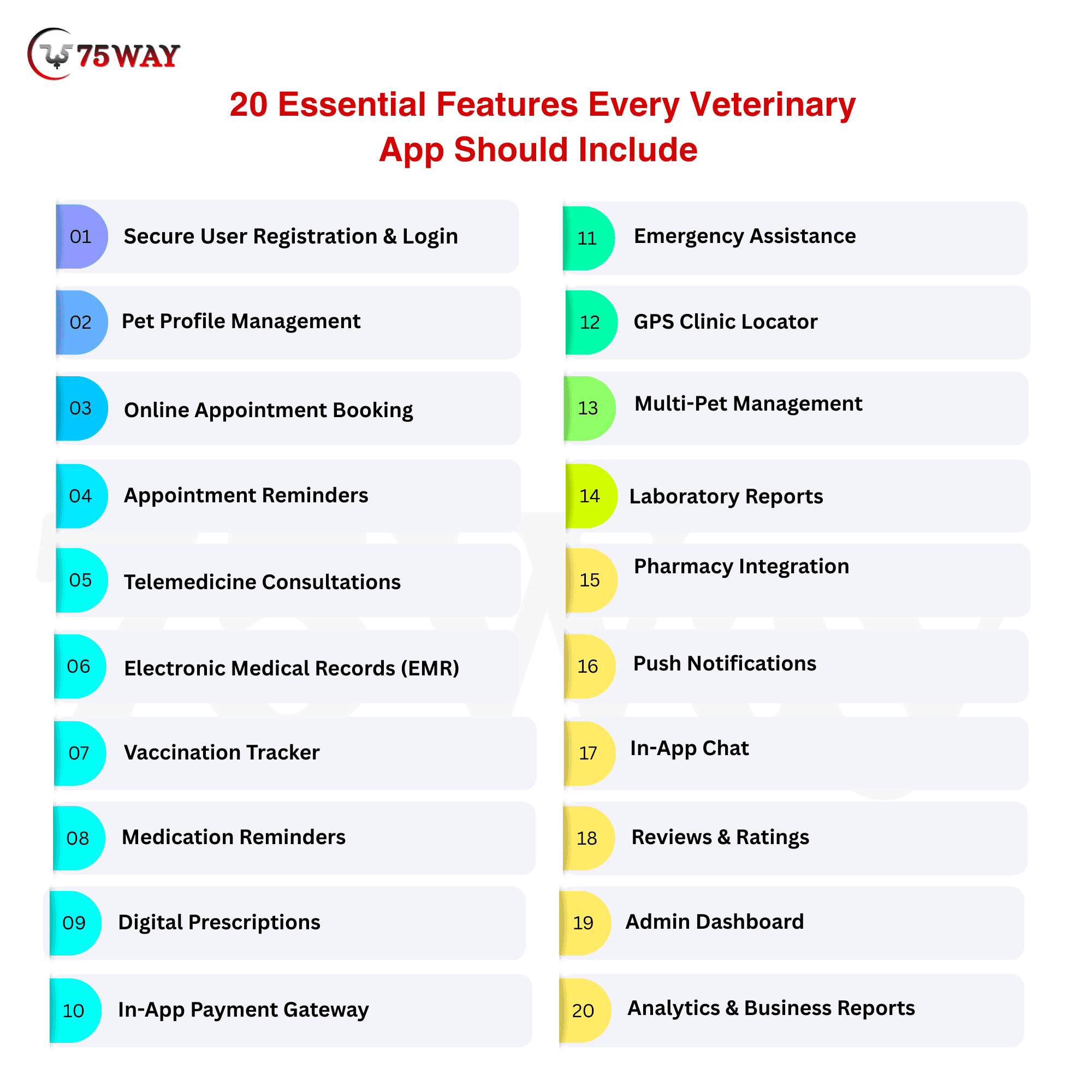
20 Essential Features Every Veterinary App Should Include
A successful veterinary app should simplify everyday tasks for both pet owners and veterinary professionals while improving the overall care experience. The following features create a strong foundation for a reliable, user-friendly, and scalable veterinary mobile application.
1. Secure User Registration
A secure registration system is the first step toward protecting user accounts and sensitive pet healthcare information. It should provide a simple onboarding experience while maintaining strong authentication and privacy standards for pet owners, veterinarians, and clinic staff.
- Multiple Sign-ins: Support email, phone, and social authentication.
- Password Security: Encrypt credentials using secure authentication protocols.
- User Verification: Confirm identities through OTP or email.
- Profile Protection: Safeguard personal and medical information securely.
- Role Management: Separate permissions for owners and staff.
- Biometric Access: Enable fingerprint and facial recognition login.
- Session Control: Prevent unauthorized account access automatically.
2. Pet Profile Management
A comprehensive pet profile helps owners and veterinarians access important medical information anytime. Centralized records reduce paperwork, improve diagnosis accuracy, and simplify long-term healthcare management for every pet.
- Basic Details: Store breed, age, and gender.
- Medical History: Maintain complete treatment and illness records.
- Vaccination Records: Track completed and upcoming vaccinations.
- Allergy Information: Record food and medicine allergies.
- Health Documents: Upload prescriptions and medical reports.
- Multiple Pets: Manage several pets within one account.
- Quick Updates: Modify records whenever healthcare changes.
3. Online Appointment Booking
Digital appointment scheduling makes booking faster and more convenient for pet owners while reducing administrative work for veterinary clinics. Users can select suitable dates and available veterinarians without making phone calls.
- Live Availability: Display real-time appointment slots instantly.
- Doctor Selection: Choose your preferred veterinarian easily online.
- Flexible Scheduling: Book appointments anytime without assistance.
- Easy Rescheduling: Modify appointments within a few taps.
- Instant Confirmation: Send booking confirmations immediately afterward.
- Calendar Sync: Integrate with personal calendar applications.
- Waiting Lists: Fill canceled appointments automatically.
4. Appointment Reminders
Missed appointments can affect pet health and clinic schedules. Automated reminders notify pet owners before upcoming visits, helping them arrive on time while reducing no-shows and improving appointment management for veterinary practices.
- Push Notifications: Alert users before scheduled appointments.
- SMS Alerts: Send timely appointment reminder messages.
- Email Updates: Deliver detailed booking confirmation emails.
- Custom Timing: Schedule reminders at preferred intervals.
- Recurring Visits: Remind regular health checkups automatically.
- Reschedule Option: Modify appointments directly from reminders.
- Attendance Tracking: Monitor completed and missed appointments.
5. Telemedicine Consultations
Virtual consultations allow veterinarians to provide medical guidance without requiring every pet visit to happen in person. This feature improves accessibility, saves travel time, and supports follow-up care for non-emergency cases.
- Video Calling: Conduct secure virtual veterinary consultations.
- Voice Consultations: Offer convenient audio appointment options.
- Chat Support: Answer medical concerns through messaging.
- File Sharing: Exchange reports, images, and prescriptions.
- Follow-up Care: Schedule post-treatment virtual consultations easily.
- Remote Monitoring: Review ongoing pet health progress.
- Secure Communication: Protect every consultation with encryption.
6. Electronic Medical Records
Digital medical records organize every pet's healthcare history in one place, making it easier for veterinarians to review previous treatments, diagnose conditions, and provide personalized care during future appointments.
- Treatment History: Store previous consultation and diagnosis details.
- Prescription Records: Maintain a complete medication history digitally.
- Diagnostic Reports: Save laboratory and imaging results.
- Medical Timeline: Display healthcare history chronologically.
- Document Access: Retrieve records within seconds anytime.
- Cloud Storage: Secure records across multiple devices.
- Easy Sharing: Share records between authorized veterinarians.
7. Vaccination Tracker
Keeping vaccination schedules organized helps protect pets from preventable diseases. A vaccination tracker automatically records completed vaccines and reminds owners before future doses become due.
- Vaccine Schedule: Maintain complete vaccination timelines accurately.
- Due Notifications: Alert owners before upcoming vaccinations.
- Vaccination History: View previous vaccine records instantly.
- Certificate Storage: Save digital vaccination certificates securely.
- Booster Tracking: Monitor booster shot schedules easily.
- Health Alerts: Prevent missed vaccination appointments automatically.
- Clinic Updates: Synchronize records after every vaccination.
8. Medication Reminders
Many pets require medications at specific times. Automated reminders help owners administer medicines correctly, reducing missed doses and improving treatment outcomes throughout the recovery process.
- Dose Alerts: Notify of medication timings every day.
- Prescription Tracking: Monitor active prescribed medications easily.
- Refill Reminders: Alert before medicines run out.
- Custom Schedule: Set personalized medication frequencies conveniently.
- Treatment Progress: Track completed medication schedules accurately.
- Caregiver Access: Share reminders with family members.
- Health Compliance: Improve medication adherence consistently daily.
9. Digital Prescriptions
Digital prescriptions eliminate paper-based processes while making it easier for pet owners to access medications. Veterinarians can generate, manage, and share prescriptions instantly through the mobile application.
- Instant Prescriptions: Generate prescriptions digitally within seconds.
- Doctor Authorization: Allow verified veterinarians' prescription approvals.
- Digital Storage: Preserve prescriptions for future reference.
- Medicine Details: Include dosage and usage instructions.
- Pharmacy Sharing: Send prescriptions directly to pharmacies.
- Prescription History: Access previous medication records anytime.
- Download Option: Save prescriptions as PDF files.
10. In-App Payment Gateway
A secure payment system simplifies billing by allowing pet owners to pay consultation fees, treatments, medications, and other veterinary services without leaving the application.
- Online Payments: Accept secure digital payment methods.
- Multiple Gateways: Support various trusted payment providers.
- Digital Receipts: Generate invoices immediately after payment.
- Payment History: View previous transaction records anytime.
- Refund Management: Process eligible refunds securely online.
- Subscription Billing: Handle recurring healthcare payment plans.
- Secure Transactions: Protect payments using encrypted processing.
11. Emergency Assistance
Emergency situations require immediate action, especially when pets experience accidents or sudden health complications. An emergency assistance feature helps owners quickly connect with nearby veterinary services, improving response time during critical situations.
- Emergency Contacts: Save important emergency numbers securely.
- One-Tap Calling: Contact veterinarians instantly during emergencies.
- Nearby Clinics: Locate emergency hospitals using GPS.
- Quick Directions: Navigate clinics through integrated maps.
- Emergency Instructions: Display immediate first-aid guidance clearly.
- Priority Support: Connect urgent cases without delays.
- Location Sharing: Send your live location during emergencies.
12. GPS Clinic Locator
Finding the nearest veterinary clinic becomes easier with GPS integration. Pet owners can quickly search for nearby hospitals, emergency centers, pharmacies, and specialty clinics based on their current location.
- Nearby Search: Locate surrounding veterinary clinics instantly.
- Interactive Maps: Display clinics with navigation support.
- Distance Information: Show clinic distance accurately nearby.
- Operating Hours: Display available clinic timings clearly.
- Emergency Clinics: Highlight nearby emergency care centers.
- Direction Guidance: Navigate using integrated mapping services.
- Location Filters: Search clinics by preferred services.
13. Multi-Pet Management
Many households own multiple pets, making separate healthcare tracking difficult. Multi-pet management allows users to organize records, appointments, medications, and vaccination schedules for every pet within one account.
- Multiple Profiles: Manage several pets simultaneously online.
- Individual Records: Maintain separate healthcare information securely.
- Shared Calendar: Track appointments for every pet.
- Medication Tracking: Monitor treatments individually for pets.
- Vaccination Alerts: Receive reminders for each pet.
- Easy Switching: Move between pet profiles quickly.
- Family Access: Share pet information securely together.
14. Laboratory Reports
Digital laboratory reports provide instant access to diagnostic results without requiring additional clinic visits. Veterinarians and pet owners can review reports anytime, supporting faster treatment decisions and improved healthcare management.
- Digital Reports: Access laboratory results instantly online.
- Medical Imaging: View X-rays and scan reports.
- Cloud Storage: Preserve reports securely for the future.
- Quick Downloads: Download reports with a single click.
- Doctor Sharing: Share reports before consultations easily.
- Result Notifications: Receive alerts after report availability.
- Historical Records: Compare previous diagnostic reports easily.
15. Pharmacy Integration
Connecting the application with veterinary pharmacies simplifies medication ordering and prescription fulfillment. Pet owners can purchase prescribed medicines directly while reducing unnecessary clinic visits.
- Medicine Ordering: Purchase medications directly through the application.
- Prescription Verification: Validate prescriptions before processing orders.
- Inventory Updates: Display medicine availability in real time.
- Home Delivery: Deliver medicines directly to customers.
- Refill Requests: Submit refill orders conveniently online.
- Secure Payments: Complete purchases safely through the application.
- Order Tracking: Monitor medicine delivery status instantly.
16. Push Notifications
Push notifications keep users informed about important healthcare updates, appointments, promotions, and clinic announcements. Timely alerts encourage better engagement while improving communication between clinics and pet owners.
- Appointment Alerts: Notify users before scheduled visits.
- Vaccination Updates: Reminder of upcoming vaccine due dates.
- Medication Notices: Send daily medicine reminder alerts.
- Health Tips: Share pet wellness recommendations regularly.
- Promotional Offers: Announce discounts and special services.
- Emergency Updates: Deliver urgent healthcare notifications instantly.
- Custom Preferences: Personalize notification settings easily.
17. In-App Chat
Real-time messaging improves communication between veterinary clinics and pet owners. Users can ask general questions, request appointment updates, and receive quick assistance without making phone calls.
- Instant Messaging: Communicate directly with veterinary staff.
- Quick Responses: Resolve common questions faster online.
- File Sharing: Exchange reports and medical images.
- Appointment Queries: Discuss booking-related concerns instantly.
- Secure Conversations: Protect chat data through encryption.
- Conversation History: Review previous messages anytime later.
- Multi-Agent Support: Connect with available staff members.
18. Reviews And Ratings
Customer feedback helps veterinary clinics improve their services while assisting new users in selecting trusted healthcare providers based on genuine experiences.
- Service Reviews: Collect valuable customer feedback regularly.
- Star Ratings: Rate veterinary services conveniently online.
- Experience Sharing: Publish honest pet care experiences.
- Doctor Feedback: Review the veterinarian consultation quality objectively.
- Response Management: Reply professionally to customer reviews.
- Reputation Building: Strengthen clinic credibility through feedback.
- Quality Insights: Identify opportunities for service improvements.
19. Admin Dashboard
A centralized admin dashboard gives veterinary clinics complete control over appointments, users, payments, reports, and operational activities from a single interface.
- User Management: Manage owners and staff efficiently.
- Appointment Control: Monitor bookings through the dashboard interface.
- Payment Reports: Review financial transactions easily online.
- Analytics Access: Track application performance continuously.
- Content Management: Update application information quickly anytime.
- Role Permissions: Control staff access securely always.
- Operational Overview: View clinic activities in real time.
20. Analytics And Business Reports
Analytics and business reports help veterinary clinics make informed decisions by transforming operational data into meaningful insights. From appointment trends to revenue performance and client engagement, these reports help identify growth opportunities, improve services, and support long-term business planning.
- Revenue Insights: Track income and financial performance.
- Appointment Trends: Analyze booking patterns over time.
- Client Analytics: Understand pet owner engagement.
- Service Performance: Measure popular veterinary services.
- Operational Reports: Monitor daily clinic activities.
- Growth Metrics: Evaluate business progress regularly.
- Visual Dashboards: Present insights through clear charts.
AI-Powered Features For Building Modern Veterinary App
Instead of simply managing appointments or storing records, modern apps can analyze health data, automate routine tasks, and deliver faster, more personalized care. The AI-powered features below are helping shape the next generation of veterinary applications.
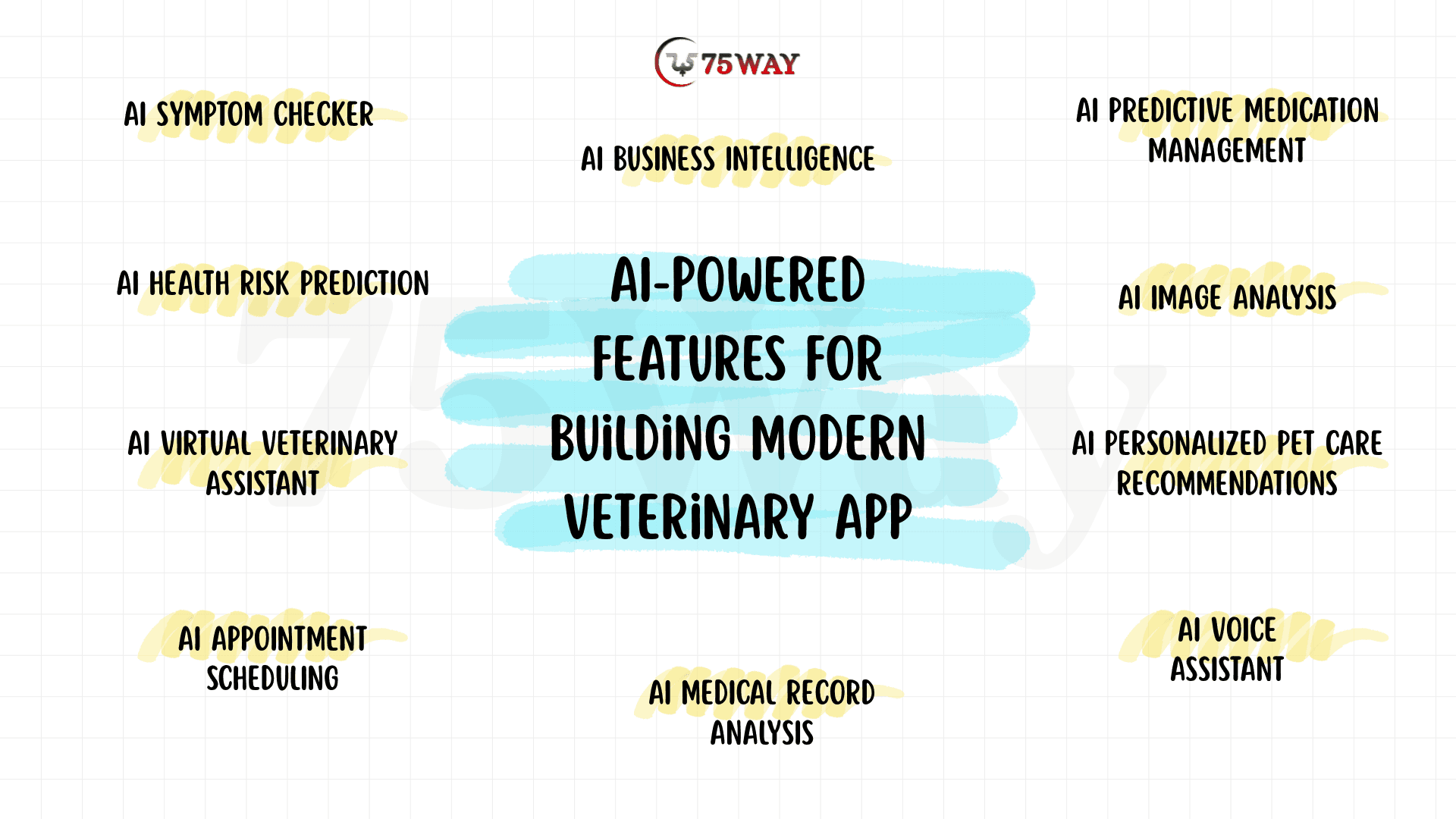
- AI Symptom Checker: Pet owners often notice unusual changes but may not know whether they require immediate veterinary care. By analyzing the symptoms entered into the app, the feature provides possible health insights that help owners decide when professional veterinary attention may be necessary. Although it does not replace a diagnosis, it supports more informed decisions before a clinic visit.
- AI Health Risk Prediction: Some health conditions develop quietly before obvious symptoms appear. Factors such as breed, age, lifestyle, medical history, and previous treatments are analyzed to identify potential risks at an early stage. This gives veterinarians more opportunities to recommend preventive care before problems become serious.
- AI Virtual Veterinary Assistant: Questions about pet care can arise at any hour of the day. Instead of waiting for clinic hours, pet owners can receive instant guidance on appointments, vaccinations, medications, pet care, and app-related queries whenever assistance is needed.
- AI Appointment Scheduling: Finding a convenient appointment time can sometimes be frustrating for both clinics and pet owners. Available time slots, veterinarian schedules, emergency cases, and customer preferences are considered to recommend the most suitable booking options without unnecessary back-and-forth communication.
- AI Medical Record Analysis: A pet's medical history often contains valuable information that influences treatment decisions. Previous diagnoses, prescriptions, laboratory reports, and health records are reviewed to highlight patterns that help veterinarians prepare more effectively before consultations.
- AI Voice Assistant: Busy pet owners appreciate faster ways to access veterinary services. Simple voice commands make it possible to schedule appointments, request medication reminders, check medical records, or ask healthcare questions without navigating multiple menus.
- AI Personalized Pet Care Recommendations: Every pet has unique healthcare needs based on its breed, age, activity level, and medical history. Personalized recommendations for nutrition, wellness plans, vaccinations, and preventive care are generated to better match each pet's individual requirements.
- AI Image Analysis: A clear photograph can often provide useful information before a veterinary appointment. Uploaded images of skin conditions, wounds, ears, eyes, or other visible concerns are analyzed to support preliminary assessments and help clinics prioritize urgent cases.
- AI Predictive Medication Management: Keeping track of long-term medications becomes much easier with intelligent reminders. Prescription history, refill schedules, and treatment progress are monitored to reduce missed doses and support better continuity of care throughout the treatment plan.
- AI Business Intelligence: Every veterinary practice generates valuable operational data that often goes unused. Appointment trends, customer behavior, treatment outcomes, clinic performance, and financial metrics can reveal insights that support better planning, stronger decision-making, and sustainable business growth.
Tips To Choose The Right Features For AI-Powered Veterinary App
Adding every available feature does not always create a better veterinary application. The most successful apps focus on solving real challenges for pet owners, veterinarians, and clinic staff while remaining easy to use. These practical tips can help businesses prioritize the right functionality during veterinary app development.
- Understand Your Target Users: Identify whether your application is designed for pet owners, veterinary clinics, hospitals, or multi-location practices. Understanding user expectations helps prioritize features that deliver real value.
- Prioritize Core Functionality: Start with essential features such as appointment booking, pet profiles, medical records, payments, and reminders before investing in advanced capabilities.
- Consider AI Where It Adds Value: Implement AI features that genuinely improve healthcare experiences, such as symptom analysis, appointment automation, personalized recommendations, and virtual assistants, rather than adding AI only for marketing purposes.
- Focus On User Experience: Keep the interface simple, intuitive, and accessible. A clean design encourages higher adoption rates among pet owners and reduces the learning curve for clinic staff.
- Plan For Future Growth: Choose a scalable architecture that allows additional features, third-party integrations, and AI capabilities as your veterinary practice expands.
- Prioritize Security: Protect sensitive customer and medical information through strong authentication, encrypted data storage, secure APIs, and regular security updates.
- Integrate With Existing Systems: Ensure the application connects smoothly with clinic management software, payment gateways, pharmacies, laboratories, and communication platforms.
Final Thoughts
A successful veterinary app combines user-friendly features such as appointment scheduling, digital medical records, telemedicine, payment integration, and communication tools with intelligent AI capabilities that support faster decisions and personalized pet care. By selecting features that address real user needs and planning for future scalability, veterinary businesses can build applications that enhance client satisfaction, improve operational productivity, and deliver better healthcare experiences. Investing in the right feature set today creates a strong foundation for long-term growth in an increasingly digital veterinary industry.
Frequently Asked Questions (FAQs)
Which Features Are Most Important For A Veterinary Mobile App?
Appointment scheduling, pet profile management, digital medical records, telemedicine, payment integration, medication reminders, and secure communication are considered the most valuable features for delivering a complete veterinary healthcare experience.
Should Every Veterinary App Include Artificial Intelligence?
Not necessarily. AI should be implemented where it improves user experience, supports veterinarians, automates repetitive tasks, or provides meaningful health insights instead of increasing unnecessary complexity.
Can Veterinary Apps Support Multiple Clinic Locations?
Yes. Multi-location support allows veterinary businesses to manage appointments, veterinarians, patient records, staff, and services across different branches through one centralized platform.
Is Telemedicine Suitable For Veterinary Mobile Applications?
Yes. Telemedicine is useful for follow-up consultations, general health advice, medication reviews, and non-emergency cases, helping improve accessibility for pet owners.
How do AI-Powered Veterinary Apps Improve Pet Healthcare?
AI analyzes health data, predicts potential risks, automates routine processes, assists with symptom assessment, and delivers personalized care recommendations that support better clinical decision-making.
Can Veterinary Apps Integrate With Third-Party Services?
Yes. Modern veterinary applications can integrate with payment gateways, pharmacies, laboratory systems, wearable devices, cloud platforms, and clinic management software.