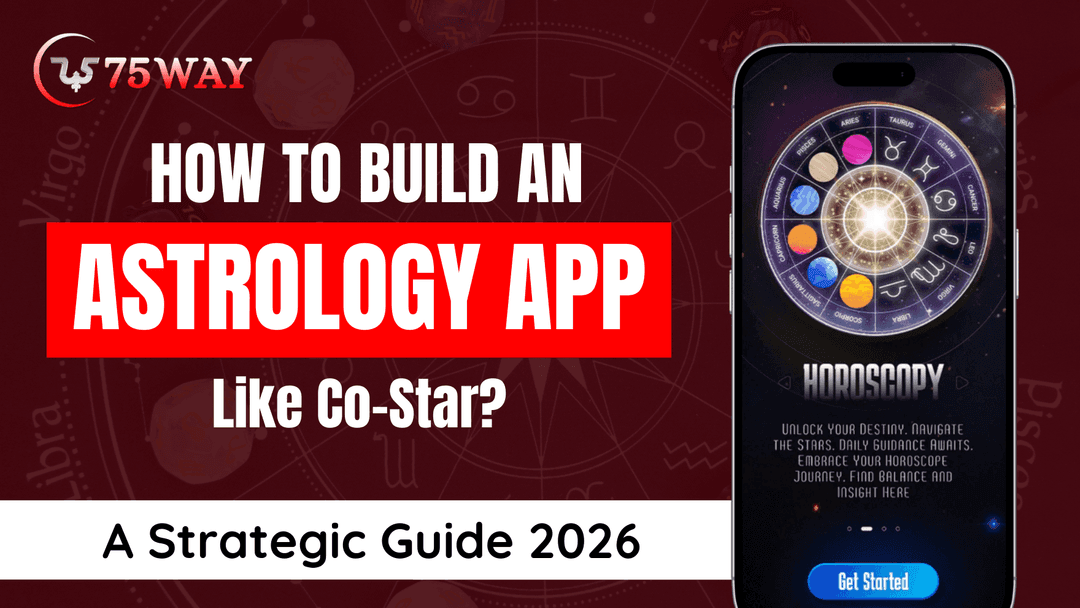
In 2026, astrology has moved far beyond newspaper columns and traditional apps. Now, users want an app that could tell why their day feels off, when to act, and how their relationships align using nothing more than birth data and planetary science. Thus, modern astrology apps like Co-Star require artificial intelligence (AI), real-time astronomical data, and kundli matching features to provide personalized experiences.
For startups and founders, it is the perfect moment to develop AI-powered astrology apps like Co-Star. But, how to create an astrology app like Co-Star? Whether it is beneficial for business growth. This guide will cover the entire journey from understanding the reasons to develop an astrology app to selecting the right technology, features, monetization models, and growth strategies.
Understanding Astrology App-Like Co-Star: What Makes It Viral
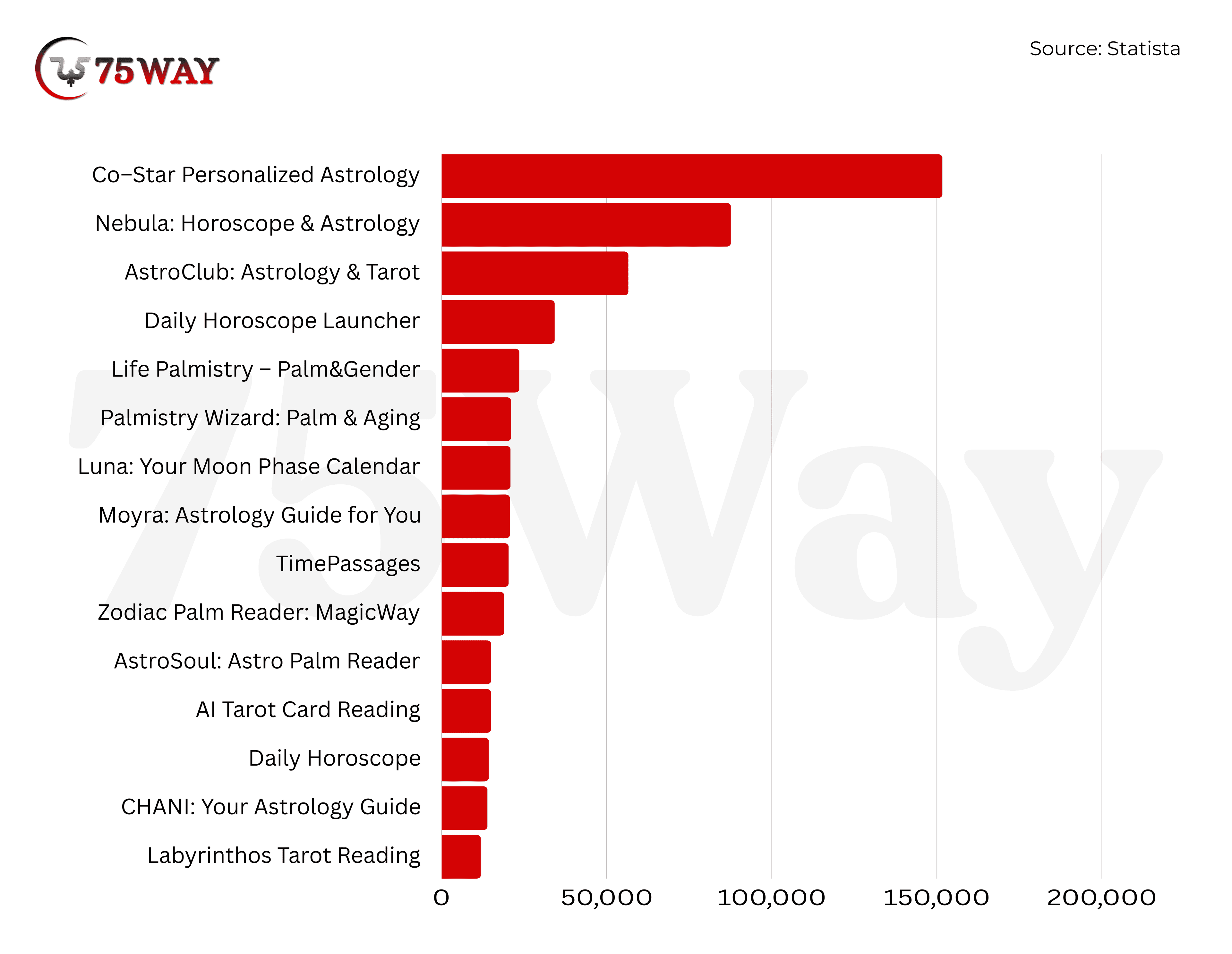
An astrology app like Co-Star is a platform that utilizes The Pattern or CHANI and delivers personalized, real-time astrological insights and birth chart analyses. These apps support social features to compare charts with friends that offer daily horoscopes, compatibility scores, and cosmic updates. Unlike traditional astrology websites, these kinds of astrology apps focus on social connection and interactive content that keeps users engaged.
The key factor in its virality is social and compatibility features. Integrated with smart notifications timed to planetary events or personalized alerts, the app maintains high daily engagement. In essence, Co-Star’s viral success is driven by the fusion of accurate astrology data, AI personalization, and social interaction. For businesses, this demonstrates that building an astrology app is not only about predictions, but about delivering reliable experiences.
Why Invest in Astrology Apps in 2026? Market Growth Insights
Astrology apps are booming in 2026 because people want more than entertainment. They want guidance, self-awareness, and daily routines. With strong adoption among Millennials and Gen Z, interest in diverse astrology systems, and unexplored niches like career or wellness astrology. The AI-powered astrology apps like Co-Star offer businesses a scalable, engaging, and high-retention opportunity.
- Markntel Advisors report, “Global astrology apps grow from ~$3B (2024) to $9B by 2030, driven by AI and wellness trends.”
- Another report indicates, “Around 80% of U.S. Millennials and Gen Z rely on personalized horoscopes for guidance and community.”
- According to Statista, “The astrology app market is rapidly expanding, projected to reach $9–$12 billion by 2030–2031.
Step-by-Step Roadmap To Develop An Astrology App Like Co-Star
The process to create an astrology app like Co-Star initially aims to create a simple design and deep personalization using AI. It utilizes precise astronomical data from the NASA ephemeris, a robust backend, and social features. A structured development roadmap to build an astrology app includes market research, astrology logic, scalable tech, and continuous optimization for long-term success.
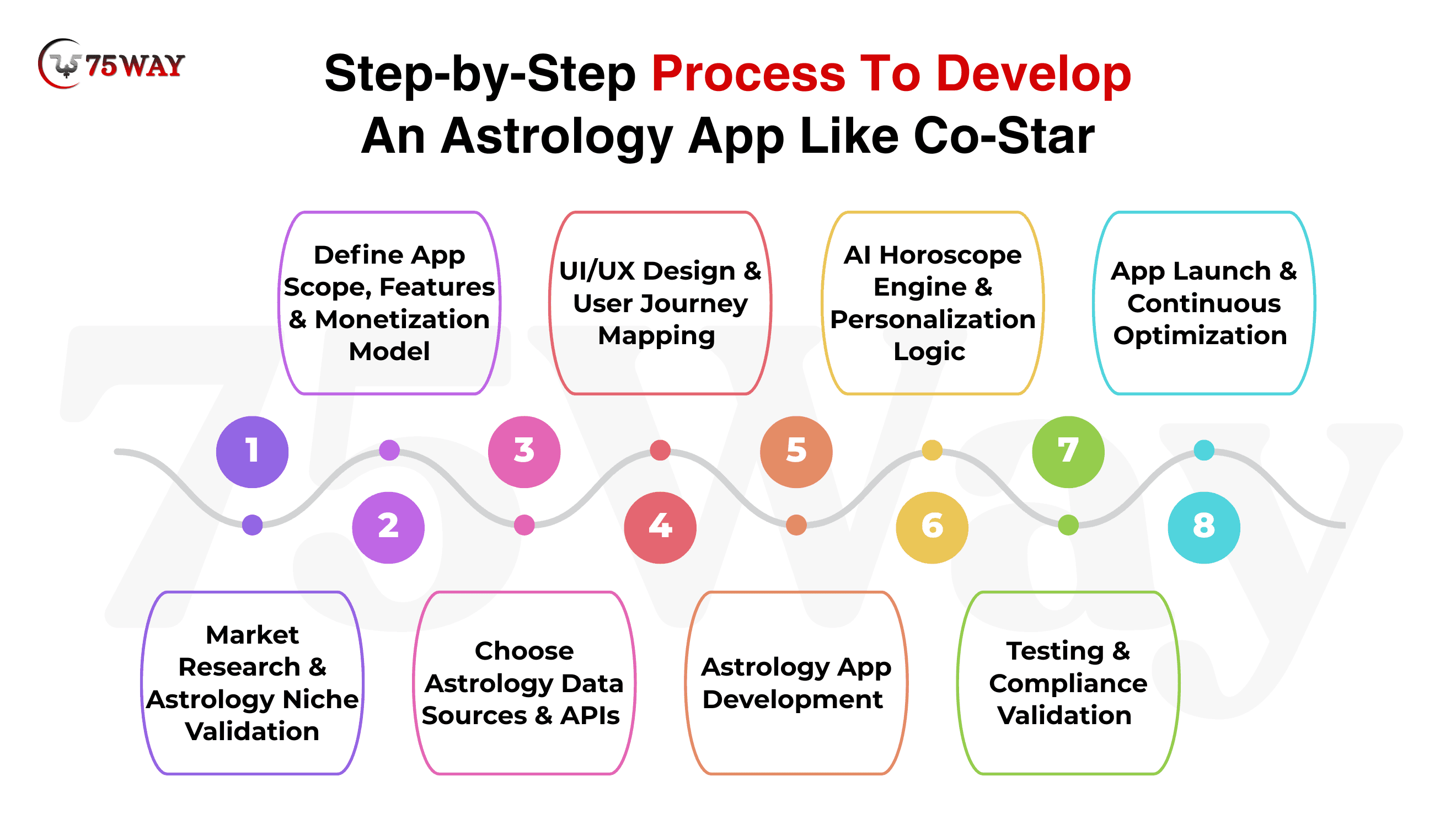
Market Research & Astrology Niche Validation :
Every successful astrology app begins with understanding the market it plans to serve. Astrology users today look for emotional relevance, accuracy, and daily engagement rather than generic predictions. This phase focuses on validating demand, identifying gaps, and reducing risk before development begins.Competitor Analysis: First of all, businesses must analyze leading astrology apps like Co–Star to understand feature sets, content depth, UI patterns, and user retention strategies. Studying strengths and weaknesses helps identify differentiation opportunities.
User Expectations: Modern users expect hyper-personalized horoscopes, compatibility insights, real-time cosmic updates, and visually engaging experiences. You must understand that these expectations help define feature priorities early.
Astrology Trends & Systems: Different regions prefer different astrology systems, such as Western, Vedic, or Chinese astrology. You must identify which system resonates with your target audience to ensure cultural relevance and higher adoption.
Market Demand Validation: At last, you must evaluate user behavior, app reviews, and engagement patterns. It confirms whether the selected niche and feature set can achieve product-market fit before investing in development.
Define App Scope, Features & Monetization Model:
Clear boundaries during early planning help maintain focus throughout development. This phase establishes essential features, future expansion plans, and monetization paths that support business sustainability without disrupting the user experience or increasing technical complexity.Feature Prioritization: Core functionality, such as horoscope delivery, birth chart generation, and compatibility analysis, forms the initial release. Additional features remain reserved for later stages to maintain development efficiency and product stability.
User Journey Structure: A structured journey outlines how users move from onboarding to daily engagement. Logical transitions reduce confusion and encourage habitual usage without overwhelming users with excessive options.
Revenue Strategy: Monetization planning includes subscriptions, premium reports, or expert consultations. Early definition ensures revenue mechanisms integrate naturally without affecting content accessibility or emotional trust.
Choose Astrology Data Sources & APIs:
Data accuracy plays a decisive role in building trust within astrology applications. This phase focuses on selecting dependable ephemeris data and stable APIs that deliver precise planetary positions. Consistent data handling ensures reliable horoscope generation, accurate chart calculations, and long-term credibility among users who rely on astrological insights.Ephemeris Accuracy: High-quality ephemeris data ensures precise planetary movements and chart calculations. Accurate positioning reduces interpretation errors, strengthens predictive consistency, and builds confidence among users who expect dependable astrological insights.
API Reliability: Stable astrology APIs provide uninterrupted access to planetary and chart data. Reliable performance supports real-time horoscope delivery, smooth chart rendering, and consistent functionality across different devices and user locations.
Scalability Support: Robust data services support increasing traffic without latency issues. Scalable infrastructure maintains system responsiveness during peak usage periods, ensuring a smooth experience as the user base expands.
UI/UX Design & User Journey Mapping:
The design stage of developing an astrology app determines how users perceive and interact with the astrology app. Thoughtful onboarding, visually appealing charts, and simple astrology explanations turn complex planetary data into daily guidance. A seamless journey encourages repeated engagement, builds trust, and makes content emotionally relatable. Early design testing identifies friction points, streamlines navigation, and ensures intuitive flows across horoscopes, compatibility insights, and premium features, reducing confusion and boosting adoption.Onboarding Flow: Step-by-step guidance introduces core features, explains chart interpretations clearly, and establishes immediate trust. Personalized tips and welcome screens ensure users feel confident exploring the app regularly.
Visual Hierarchy: Readable charts, icons, and color cues emphasize essential insights while minimizing clutter. Effective hierarchy directs attention, helping users quickly grasp planetary positions, trends, and daily recommendations.
Interaction Design: Navigation patterns, gestures, and button placement allow smooth movement between daily horoscopes, compatibility tools, and premium content. Clear cues reduce errors and enhance overall app satisfaction.
Content Layout: Astrology explanations, tooltips, and infographics simplify complex terms, making interpretations understandable. Consistent formatting ensures users of all experience levels can access insights effortlessly.
Feedback Mechanisms: Animations, progress indicators, and subtle micro-interactions provide reassurance during interactions. Timely prompts for personalization or daily insights increase confidence and foster regular engagement.
Astrology App Development:
This stage of creating an astrology app requires a strong foundation in both frontend and backend systems. These systems manage birth chart calculations, AI-powered horoscopes, user profiles, notifications, and content delivery. Scalable architecture ensures consistent performance even as users increases. Seamless integration between the frontend interface and backend logic guarantees accurate predictions, fast loading, and smooth experiences across devices, laying the groundwork for high retention and long-term growth.Frontend Architecture: Intuitive layouts, responsive design, and dynamic charts create a visually engaging interface. Smooth interactions and optimized performance keep users engaged while navigating daily horoscopes, compatibility tools, and premium content seamlessly.
Backend Infrastructure: Robust servers handle complex planetary calculations, user data management, and content updates. Scalable design allows the system to accommodate growing user volumes without latency or downtime.
Astrology Logic: Accurate birth chart calculations, planetary positions, and compatibility algorithms form the core of the app. Reliable astrology logic builds credibility and keeps users returning for precise insights.
User Management: Profiles, preferences, and personalized dashboards track activity, customize notifications, and store subscription or premium access securely, enhancing engagement and user loyalty.
Notifications & Content Delivery: Push notifications, alerts, and in-app messages deliver timely horoscopes, planetary updates, and personalized recommendations. Consistent content delivery ensures daily engagement and strengthens habit formation.
AI Horoscope Engine & Personalization Logic
The AI horoscope engine powers deeply personalized astrology experiences. By combining planetary data with user behavior and preferences, the system generates predictions that feel relevant, timely, and emotionally engaging. Intelligent personalization ensures each user receives content that resonates, increasing daily app visits and long-term loyalty. This phase bridges technical AI capabilities with human-centered insights, making the app feel intuitive, trustworthy, and indispensable for daily guidance.
AI Prediction: Machine learning models analyze planetary positions, birth charts, and historical user data to produce daily and monthly horoscopes with high accuracy and relevance for each individual.
Behavioral Insights: User activity patterns, preferences, and interaction history guide content delivery, ensuring the app adapts to individual routines and maximizes engagement.
Personalized Recommendations: Horoscopes, compatibility alerts, and lifestyle suggestions are tailored to user interests, boosting emotional resonance and strengthening daily app usage habits.
Content Refinement: Dynamic AI adjusts tone, style, and context to match user personality, creating a natural, human-like reading experience that encourages trust and repeated use.
Engagement Optimization: Timely notifications, adaptive recommendations, and interactive elements ensure users return regularly, reinforcing loyalty and habit formation while maintaining long-term satisfaction.
Testing & Compliance Validation:
When you develop your astrology app and integrate advanced features, it becomes essential to check its performance. This testing stage evaluates the reliability and legal compliance of astrology apps. Thorough testing identifies functional issues, performance bottlenecks, and potential security gaps. Compliance with privacy regulations protects users and builds trust. Structured validation of calculations, notifications, and AI personalization ensures the app delivers accurate results while meeting industry standards. This stage reduces future risks, improves retention, and creates a stable foundation for launch.Functional Testing: All app features, including birth chart calculations, compatibility tools, and notifications, are tested for accuracy and reliability, ensuring smooth operations across devices. Regular checks simulate real user behavior to detect and resolve potential errors early.
Performance Testing: App speed, server response, and scalability are evaluated to maintain fast loading times and prevent crashes. Stress and load testing reveal performance bottlenecks, ensuring the platform can handle growing user volumes without disruption.
Security Compliance: Data encryption, secure storage, and access protocols protect sensitive birth details and user preferences. Continuous monitoring and vulnerability assessments safeguard against breaches while meeting GDPR, CCPA, and global privacy standards.
Accuracy Verification: Planetary calculations, AI predictions, and horoscope content are cross-checked with reliable ephemeris sources. Regular validation ensures that the app’s recommendations remain precise, credible, and consistent, building long-term user trust.
Regulatory Adherence: Legal requirements for personal data, subscription management, and push notifications are thoroughly evaluated. Compliance ensures the app avoids fines, maintains its reputation, and demonstrates professionalism to users and stakeholders alike.
App Launch & Continuous Optimization:
The launch phase marks the app’s entry into real-world use, where analytics, user feedback, and monitoring tools guide decision-making. Continuous optimization ensures the astrology app evolves with user behavior, improves engagement, and maintains high retention. Regular updates refine features, enhance personalization, and sustain relevance, building loyalty while reducing churn. This stage transforms initial release into a scalable, trusted, and growth-oriented digital product.Analytics Tracking: User activity, session duration, and feature usage are monitored to understand engagement patterns. Data insights guide prioritization of updates and identify features requiring refinement for better adoption.
Feedback Integration: Direct feedback, reviews, and surveys inform iterative improvements. This stage focuses on listening to users to strengthen trust, uncover pain points, and align future updates with real expectations and needs.
Performance Monitoring: App stability, load times, and server performance are continuously checked. Ongoing monitoring ensures smooth user experiences and identifies technical issues before they impact engagement or retention.
Content Optimization: Horoscopes, compatibility results, and educational material are reviewed regularly. Refining language, AI tone, and relevance keeps content personalized, credible, and emotionally engaging for every user.
Feature Enhancement: New tools, personalization settings, and interactive elements are rolled out gradually. Regular improvements based on analytics and user behavior maintain loyalty and support long-term growth strategies.
Read More: How to Build IoT Apps in 2026: A Guide for Startups, Founders & Business Owners
Architecture & Tech Stack for Creating Astrology Mobile Apps
A robust tech stack ensures accuracy, scalability, and performance for astrology apps. Choosing the right frontend, backend, databases, and AI tools enables seamless personalization and real-time astrological calculations.
Frontend Selection: React Native and Flutter enable fast cross-platform development, allowing a single codebase for both iOS and Android. Native development provides smoother performance for complex charts, animations, and real-time horoscope visualizations, enhancing user engagement.
Backend & Server Logic: Node.js or Django provides robust, scalable backend infrastructure for astrology apps. These frameworks support real-time data updates, high user concurrency, and seamless integration with AI, horoscope engines, and planetary APIs, ensuring stable app performance.
Astrology Data Sources & Libraries: Swiss Ephemeris and authoritative astronomical datasets supply precise planetary positions. Accurate calculations maintain credibility, trust, and user confidence, which is essential for long-term engagement and adoption of astrology insights.
Database & API Structure: MongoDB or PostgreSQL efficiently stores user profiles, birth details, and preferences. Proper timezone and geolocation handling ensure astrological calculations are accurate, consistent, and meaningful across different regions and devices.
AI & ML Integration: GPT APIs and machine learning models generate personalized horoscopes, recommendations, and conversational astrology experiences. Adaptive AI ensures content relevance, improves user engagement, and creates a dynamic, emotionally resonant app environment at scale.
Must-Have Features For Creating An Astrology App-Like Co-Star
To compete with Co-Star, an astrology app must combine precision, personalization, and engagement. The features should support daily routines, emotional insights, social sharing, and premium experiences. A thoughtful feature design directly impacts retention, adoption, and long-term business success.

Birth Chart Generation: Precise natal charts using exact birth date, time, and location form the core of personalization. Accuracy here establishes credibility, builds trust, and ensures users return for consistent, reliable insights.
Daily & Monthly Horoscopes: AI-powered daily and monthly horoscopes encourage habitual engagement. Timely, relevant predictions help users form routines, increasing session frequency and long-term retention of the app.
Planetary & Ephemeris Data: Integration with real-time planetary and ephemeris data keeps predictions current and scientifically accurate. Reliability of this information strengthens user confidence in the app’s insights.
Zodiac Compatibility: Compatibility insights enable users to explore relationship dynamics, share results socially, and foster interaction. Engaging, accurate matches increase app virality and emotional connection.
Astrology Push Notifications: Alerts for planetary events, daily horoscopes, and personalized reminders drive higher engagement. Timely notifications keep users returning and increase the chances of app habit formation.
Social Sharing Tools: Shareable charts, insights, and daily predictions encourage organic growth. Users become brand advocates, helping expand community and generate word-of-mouth traction.
In-App Astrology Glossary: Educational content explains key astrology concepts, enhancing understanding. A glossary increases long-term engagement by helping users learn while interacting with daily insights.
Premium Reports & Subscriptions: Exclusive reports, detailed charts, and premium features provide deeper insights. Subscriptions create recurring revenue streams while incentivizing users to engage regularly.
User Profile Customization: Personal settings, preferences, and interests refine predictions and notifications. Tailored experiences increase relevance, user satisfaction, and long-term loyalty.
Multi-Astrology System Support: Support for Western, Vedic, Chinese, and hybrid astrology broadens appeal. Cultural relevance and global reach help attract diverse user bases and expand market opportunities.
Quick Read: Top AI Trends Businesses Must Follow in 2026
Monetization Models Powering Astrology App Success
Astrology apps generate revenue by inetgarting free engagement with premium offerings. Multiple monetization models support recurring income, user retention, and long-term growth. Strategic monetization planning keeps the app profitable while maintaining emotional relevance and user satisfaction.
Subscription-Based Model: Monthly or yearly subscriptions unlock premium features, advanced horoscopes, and detailed reports. Subscriptions create predictable revenue and encourage consistent daily engagement while offering users ongoing value and personalized guidance.
In-App Purchases: Personalized reports, tarot readings, and compatibility analyses are available for one-time purchases. Offering on-demand content allows users to pay for what they value most, generating flexible income alongside recurring subscriptions.
Paid Exclusive Horoscope: Specialized forecasts focused on career, relationships, or wellness provide high-margin offerings. Exclusive content motivates users to upgrade, deepening engagement and strengthening the app’s reputation for expertise and accuracy.
Live Astrologer Consultations: Video or one-on-one consultations give users premium experiences and personal attention. This model increases trust, encourages loyalty, and opens high-value revenue channels for specialized services.
Brand Partnerships: Collaborations with wellness, lifestyle, or educational brands create sponsorship and promotional opportunities. Integrating partner content adds value for users while generating additional monetization without compromising app experience.
Read More: Top 10 Dating Apps in USA in 2026: A Complete Guide
What is The Cost to Develop an Astrology App Like Co-Star?
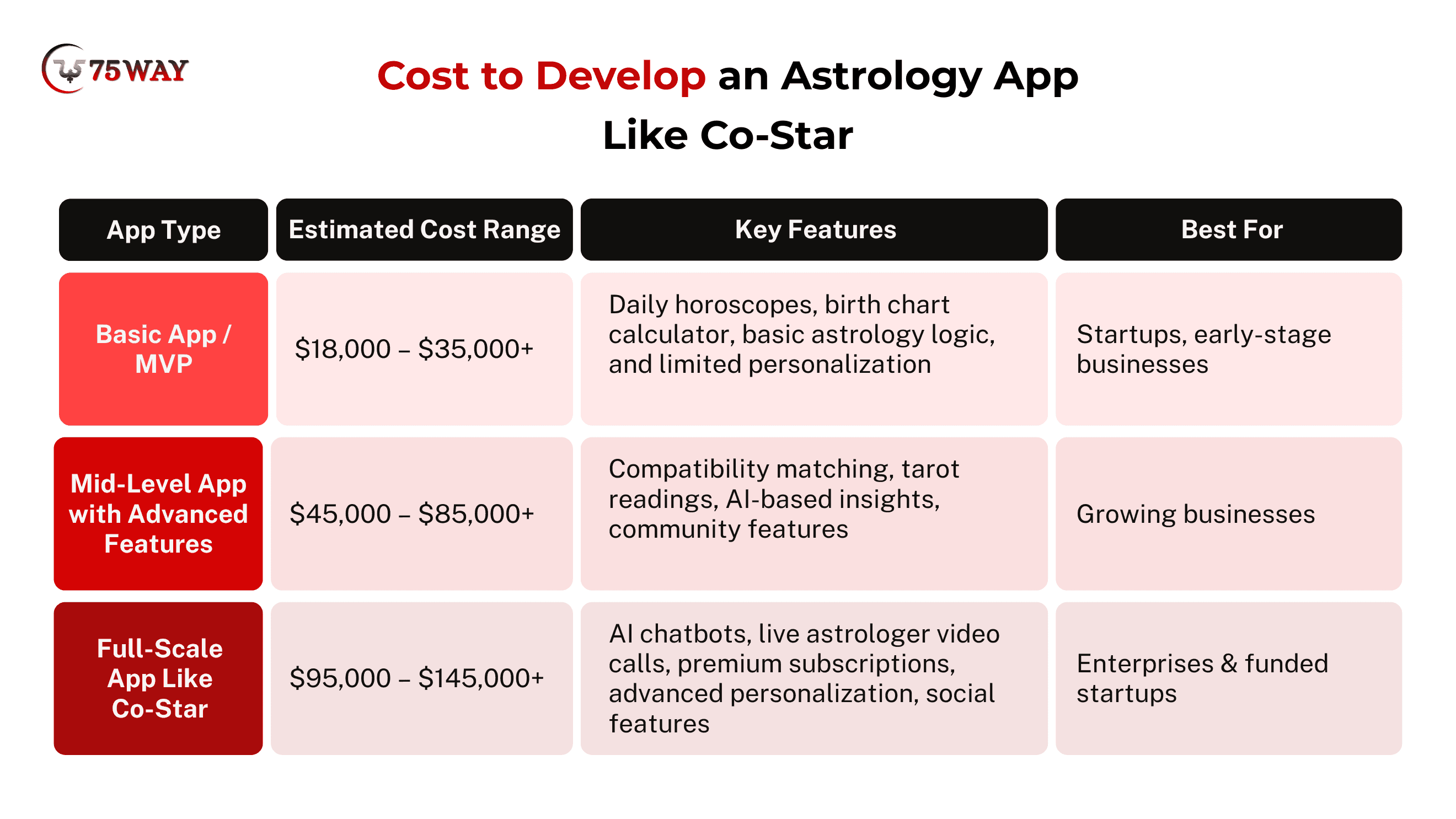
The cost to develop an astrology app like Co-Star depends on feature depth, AI integration, and scalability. A basic MVP ranges from $18,000–$35,000+, while advanced apps cost $45,000–$85,000+. A full-scale, AI-powered astrology platform can reach $95,000–$145,000+, ideal for funded startups and enterprises. Startups with limited budgets can launch a basic MVP, while established or funded ventures may invest in advanced features, AI-driven horoscopes, and social integrations. Here’s complete cost breakdown of developing an astrology app.
Growth & Marketing Strategies To Promote Astrology Apps
Effective growth strategies combine app visibility, community engagement, and strategic partnerships to attract and retain astrology app users. A well-rounded approach ensures discovery, trust, and long-term loyalty. Leveraging ASO, social communities, influencer collaborations, and referral incentives builds a sustainable user base, drives daily engagement, and amplifies brand credibility.
App Store Optimization (ASO): You can optimize keywords, visuals, descriptions, and ratings to improve organic app downloads. Regular A/B testing and performance monitoring ensure the app ranks higher, attracts relevant users, and maximizes visibility in crowded app marketplaces.
Social Media Community Building: The daily horoscopes, astrology tips, and interactive content on social platforms encourages engagement. Active communities foster brand loyalty, user conversations, and organic growth while strengthening emotional connections with the app.
Partnerships With Astrologers & Influencers: You can collaborate with recognized astrologers and niche influencers to enhance credibility and expand reach. Their endorsements and educational content help target highly engaged audiences, improving adoption rates and brand trust.
Referral Programs: Incentivized referral programs encourage users to invite friends and family. Rewarding successful referrals amplifies organic user acquisition, increases app virality, and builds a loyal community around the app experience.
Wrap Up
To conclude, building an astrology app like Co-Star goes beyond coding and design—it is about creating a meaningful, personalized digital experience. For founders, a thoughtfully developed astrology app can foster user trust, inspire daily engagement, and deliver long-term business growth. Combining accurate insights, AI-driven personalization, and engaging features ensures the app stands out in a competitive market. Partnering with an experienced astrology app development company can turn this vision into a scalable reality.
FAQs
What System of Astrology Does Co-Star Use?
Co-Star primarily uses Western astrology based on precise birth time, date, and location. It combines planetary positions, ephemeris data, and AI-generated insights to provide personalized horoscopes, daily guidance, and compatibility predictions while maintaining high credibility and engagement for its users.
How To Develop An Astrology App?
The process to create an astrology app requires clear market research, accurate data sources, intuitive UI/UX, and scalable backend architecture.
The process begins with thorough market research to identify target users, understand preferences, and analyze competitors. Selecting accurate astrology data sources, such as Swiss Ephemeris or authoritative astronomical datasets, ensures that horoscopes, birth charts, and compatibility results are precise and trustworthy.
A smooth UI/UX design is essential to simplify complex astrology concepts, visually represent planetary positions, and provide an intuitive onboarding experience. On the backend, scalable architecture and cloud infrastructure must handle calculations, AI-driven personalization, notifications, and user profiles efficiently.
After that, AI and ML models are integrated to generate personalized daily horoscopes, compatibility predictions, and recommendations that adapt to user behavior over time. Social features and shareable content encourage organic growth and community engagement.
Finally, rigorous testing, including functional, performance, and security checks, ensures reliability. Compliance with privacy laws like GDPR and CCPA safeguards sensitive birth data. A comprehensive growth strategy involving ASO, influencer partnerships, and referral programs ensures visibility and sustained engagement.
How Much Do Astrology Apps Make?
The revenue potential of astrology apps varies widely depending on features, monetization strategy, and user base. Basic apps with daily horoscopes and birth chart calculators can earn modestly, typically a few thousand dollars per month through ads or small in-app purchases.
Advanced apps with AI-powered personalization, compatibility insights, premium subscriptions, and live consultations can generate significant revenue. Successful platforms like Co-Star or similar full-feature apps have the potential to earn hundreds of thousands of dollars monthly, especially with global reach and diversified income streams such as subscription models, in-app purchases, exclusive reports, and brand partnerships.
How Much Does It Cost To Develop An Astrology App?
The cost of building an astrology app like Co-Star depends on the complexity of features, AI integration, and platform scalability. A basic MVP with core horoscopes and birth chart calculations ranges from $5,000–$20,000+. A mid-level app with compatibility, AI insights, and community features costs around $20,000–$75,000+. A full-scale, AI-powered app with live consultations, premium subscriptions, and advanced personalization can reach $70,000–$145,000+, suitable for funded startups and enterprises aiming for global reach.