Summary
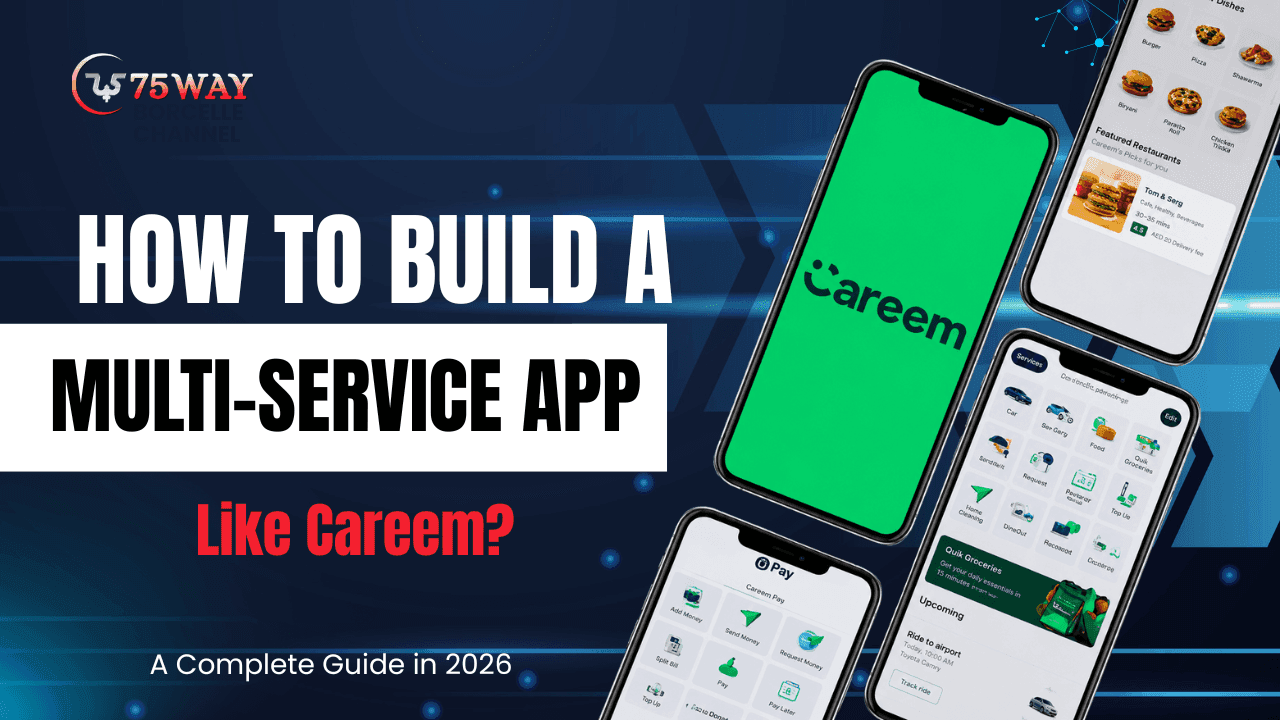
Building an app like Careem requires a strategic combination of ride-hailing, food delivery, payments, logistics, and on-demand services. This guide covers market size, feature planning, technology architecture, AI-powered capabilities, development phases, monetization models, and costs required for long-term platform growth in 2026.
Quick Overview
- The global ride-hailing industry is forecasted to generate $229.98 billion in revenue by 2030.
- The Careem platform supports over 50 million users across 80+ cities in 10 countries and operates with a network of more than 2 million captains.
- Multi-service platforms increase customer retention through diverse everyday digital experiences.
- AI-powered personalization significantly improves engagement, recommendations, and platform revenue generation.
- Modular architecture supports rapid service expansion without disrupting existing operations.
- The Cost to build an app like Careem is $30,000-$300,000+ based in requirements.
Think about the last time you booked a ride, ordered food, paid a bill, and sent a package. Chances are, you used four different mobile apps to get those things done.
Now imagine doing all of that from a single platform called a super app. Sounds convenient, right?
That is exactly why multi-service app development solutions are exploding in popularity. People are getting tired of switching between dozens of applications for everyday tasks. They want one place where they can book a cab, order groceries, buy food, make payments, and manage daily services without constantly logging in and out of different platforms.
Instead of building separate platforms like food delivery apps, ride-hailing apps, and AI-driven grocery delivery platforms, companies are now creating digital ecosystems that keep users engaged inside a single platform.
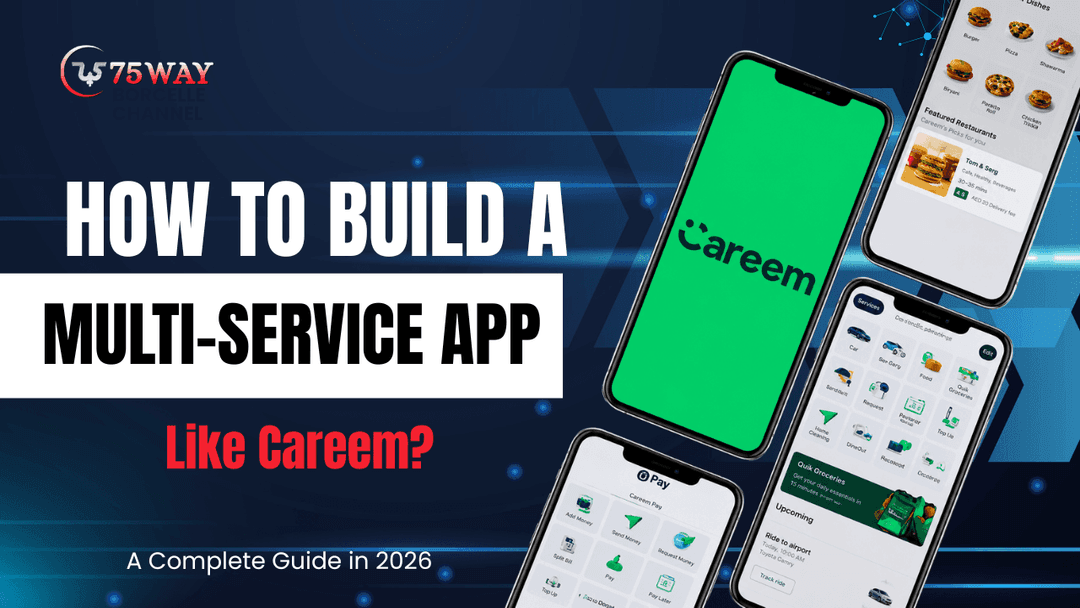
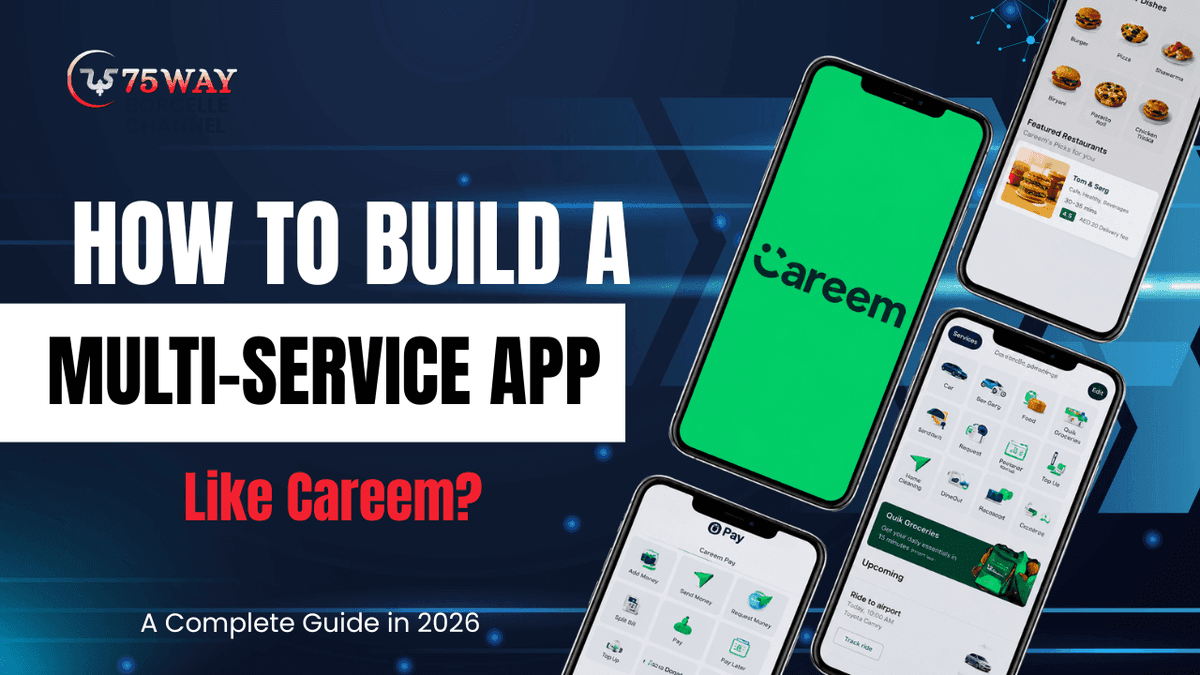
Careem is one of the best examples of this strategy. What started as a ride-hailing app gradually expanded into food delivery, grocery delivery, payments, courier services, and several other everyday solutions.
Today, millions of users rely on Careem for much more than transportation, turning it into one of the most successful super apps in the region. Naturally, entrepreneurs and startups are asking the same question:
Can we build a multi-service platform like Careem in 2026?
The answer is yes, but building a successful super app involves much more than combining multiple services into one interface. So, what does it actually take to build a multi-service app like Careem in 2026? Let us break it down step by step.
What Is The Careem App?
Careem is a multi-service digital platform that enables users to access transportation, food delivery, grocery delivery, package delivery, digital payments, bill payments, bike rentals, and other everyday services through a single mobile application.
The platform is widely recognized as one of the pioneers of the "super app" model in the Middle East, North Africa, and South Asia. Instead of requiring users to download separate applications for transportation, food ordering, payments, and delivery services, Careem consolidates these services into a unified ecosystem.
If we deep dive, Careem was founded by Mudassir Sheikha, Magnus Olsson, and Abdullah Elyas. It was officially launched in Dubai in 2012 as a chauffeur-booking service focused on corporate transportation and airport transfers.
Moreover, a major milestone occurred in 2019 when Uber Technologies acquired Careem for approximately $3.1 billion, one of the largest technology acquisitions in the Middle East. Following the acquisition, Careem continued operating as an independent brand while accelerating its super app strategy.
After establishing a strong transportation network, Careem expanded beyond ride-hailing into additional high-frequency services that users needed regularly. The platform gradually introduced:
- Ride-hailing
- Food delivery
- Grocery delivery
- Package delivery
- Digital wallet services
- Bill payments
- Bike rentals
- Subscription programs
- Merchant services
This expansion transformed Careem from a transportation platform into a comprehensive super app serving multiple daily consumer needs.
Why Is Careem's Business Model Successful?
Careem's success comes from creating a single digital ecosystem where users can fulfill multiple daily needs without switching between applications. Key advantages include:
- Higher customer retention
- Increased transaction frequency
- Lower customer acquisition costs
- Multiple revenue streams
- Strong cross-selling opportunities
- Greater user lifetime value
- Enhanced platform loyalty
This super app approach has become a blueprint for businesses seeking to build multi-service platforms that combine transportation, delivery, commerce, and fintech services within one scalable application.
Market Size & Revenue Growth of Ride-Hailing App Like Careem
- According to Statista, ride-hailing market revenue is expected to reach $188.60 billion by 2026.
- The market is projected to grow at an annual rate of 5.08%, reaching $229.98 billion globally by 2030.
- The number of ride-hailing users is expected to climb to 2.34 billion by 2030.
- User penetration is forecasted to increase from 24.6% in 2026 to 28.7% by 2030.
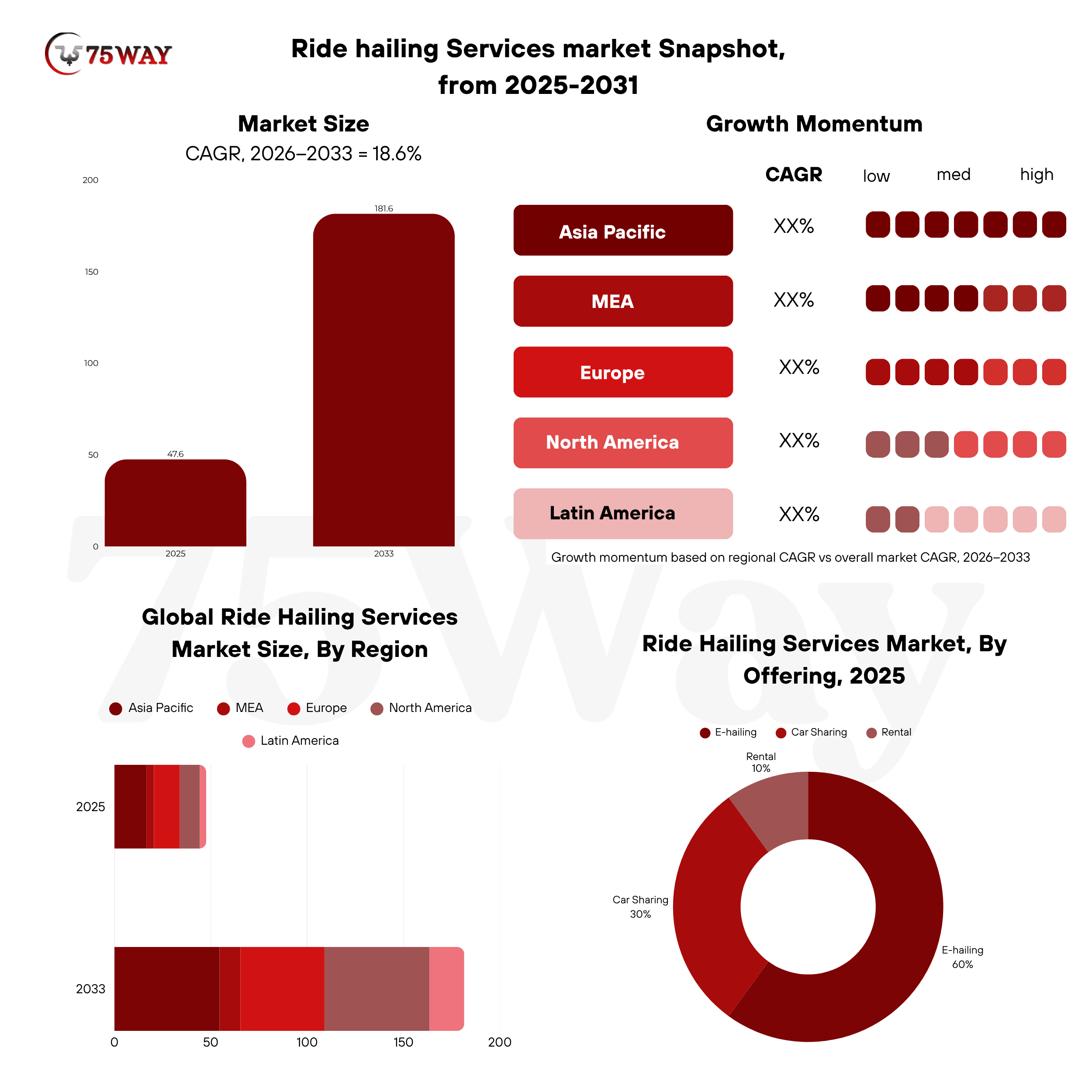
- The global ride-hailing services market is projected to expand from $55.1 billion in 2026 to $181.5 billion by 2033, growing at a CAGR of 18.6%.
Why Multi-Service Apps Are Dominating In 2026?
Several factors are driving the growth of multi-service applications worldwide. This shift is encouraging businesses to invest in super app ecosystems that increase engagement, retention, and long-term profitability.
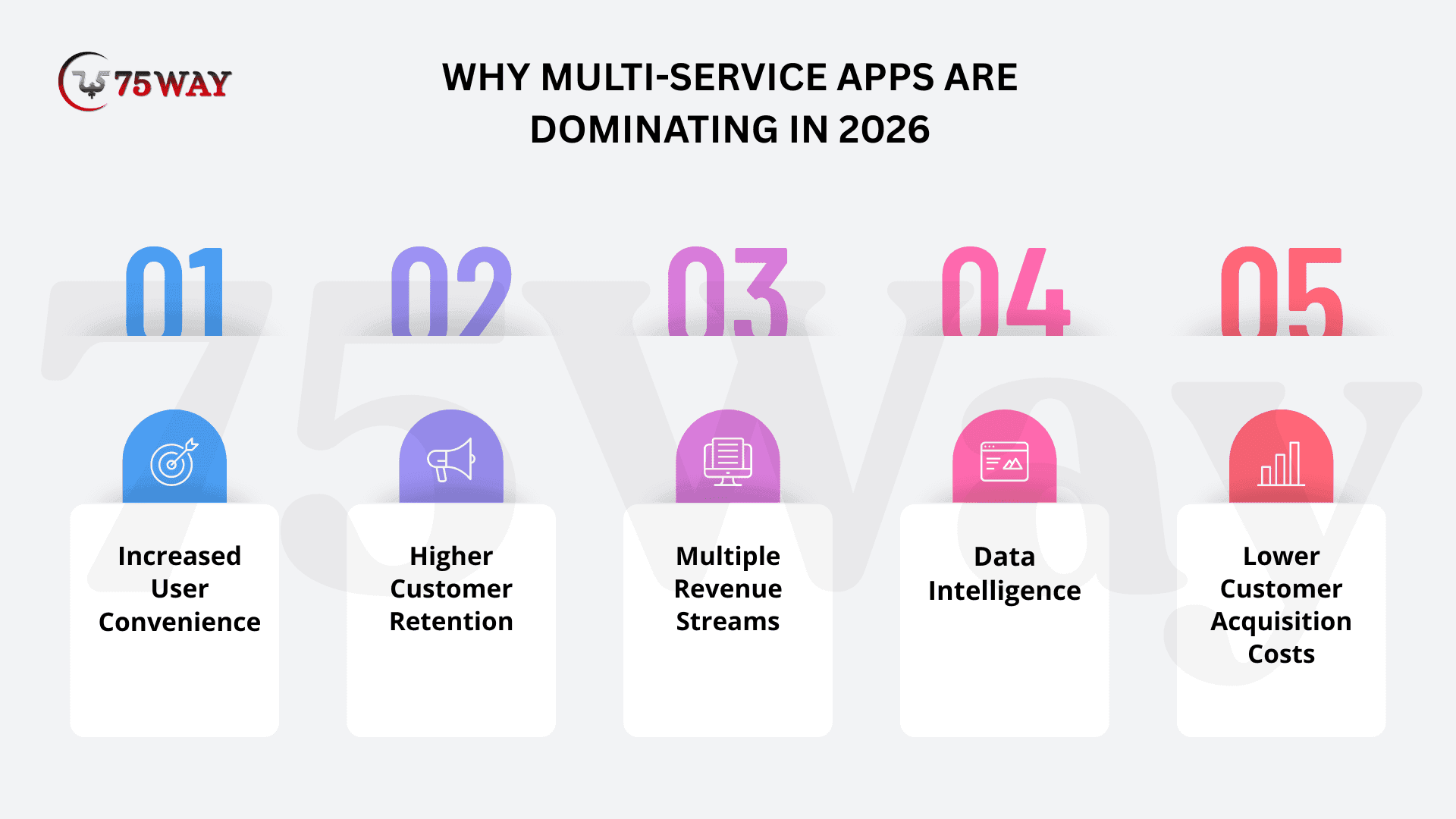
- Increased User Convenience: Users can access transportation, food delivery, grocery shopping, payments, and other daily services through one application. This eliminates the need to download and manage multiple apps. A unified experience saves time, reduces friction, and creates smoother customer journeys across various service categories.
- Higher Customer Retention: When users depend on a platform for multiple daily activities, they interact with it more frequently. Regular engagement strengthens customer loyalty and increases platform stickiness. Businesses benefit from longer customer relationships, higher lifetime value, and stronger retention compared to single-service applications.
- Multiple Revenue Streams: Multi-service platforms generate income from various business channels rather than relying on one source. Revenue opportunities include commissions, delivery fees, subscriptions, advertising placements, financial services, and merchant partnerships. This diversified approach improves financial stability and supports sustainable business growth over time.
- Data Intelligence: Every transaction and interaction generates valuable behavioral insights across different services. Businesses can analyze user preferences, purchasing patterns, and engagement trends to improve personalization. These insights help optimize recommendations, enhance customer experiences, and support smarter operational and marketing decisions.
- Lower Customer Acquisition Costs: Acquiring new customers often requires significant marketing investments. Multi-service platforms reduce these expenses by promoting additional services to existing users. Cross-selling increases revenue without proportionally increasing acquisition spending, making customer growth strategies more cost-effective and scalable for businesses.
Essential Services To Include While Building A Careem-Like App
Modern super apps succeed by offering multiple high-demand services through a single platform. This approach increases customer engagement, creates recurring usage patterns, and unlocks diverse revenue streams. Businesses can build a scalable digital ecosystem that supports long-term growth and stronger customer retention. Here are major services that must be included in Careem-style app development.
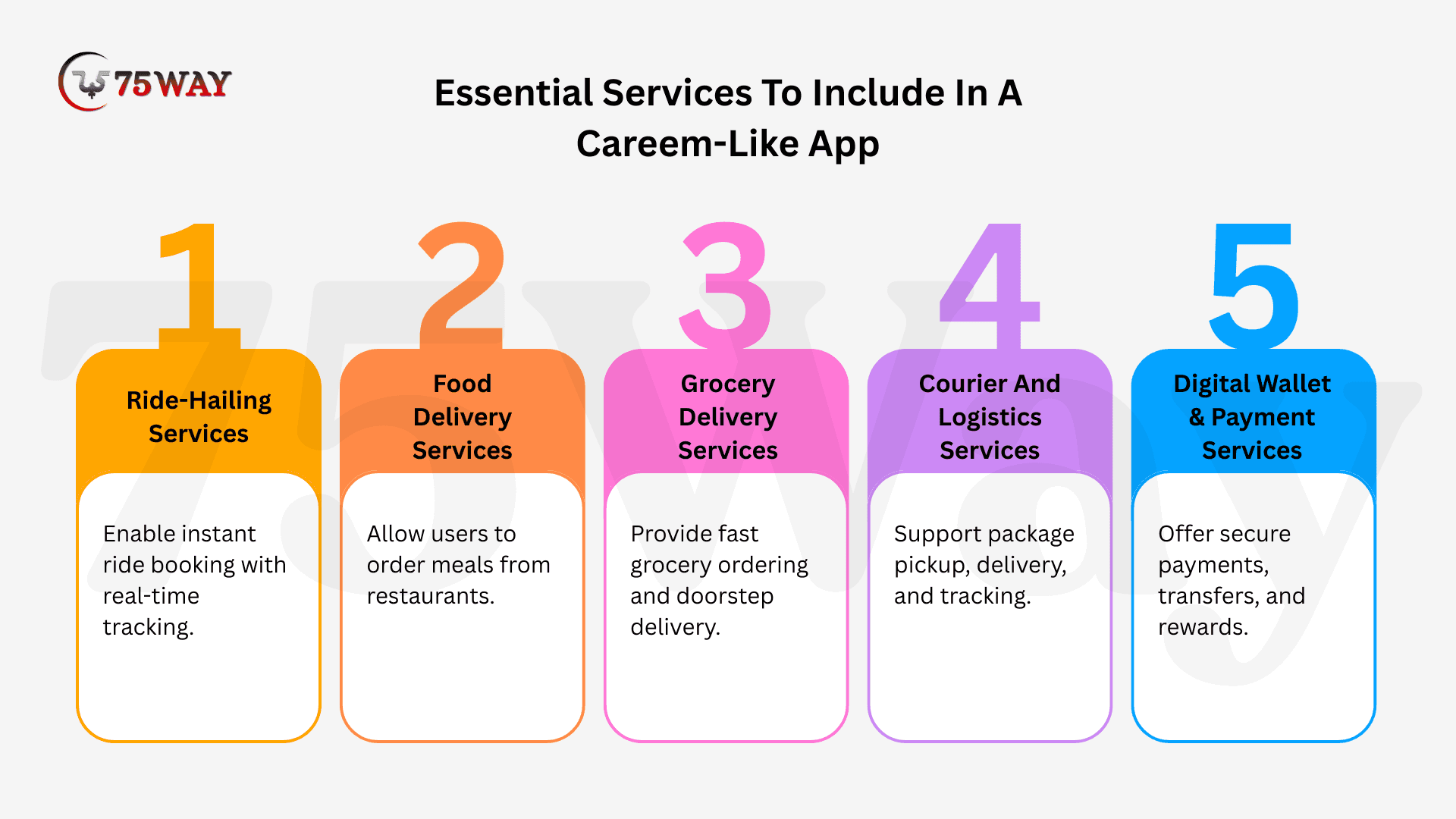
1. Ride-Hailing Services
Ride-hailing serves as the foundation of most successful super app ecosystems. It attracts users frequently and creates opportunities to introduce additional services. Strong transportation networks increase platform adoption and support long-term customer retention. Reliable mobility solutions often become the primary driver of ecosystem growth.
Core capabilities include:
- Instant Ride Booking & Confirmation: Enables users to request rides immediately with quick driver assignment and updates.
- Advanced Ride Scheduling Options: Allows passengers to pre-book rides for future travel requirements conveniently ahead.
- Accurate Fare Estimation System: Displays expected trip costs before booking, improving pricing transparency for users.
- Real-Time GPS Navigation Support: Provides navigation assistance for drivers while improving route accuracy significantly.
- Live Driver Location Tracking: Shows driver movement continuously, helping users monitor arrival progress easily.
- Driver Reviews and Ratings: Collects passenger feedback to maintain service quality and accountability standards.
- Emergency SOS Assistance Feature: Provides immediate emergency support access during rides for enhanced safety.
- Smart Route Optimization Engine: Identifies optimal travel routes to reduce delays and fuel consumption.
2. Food Delivery Services
Food delivery increases daily user engagement and transaction frequency. Customers often order meals multiple times each week, creating recurring platform activity. This service strengthens retention while generating additional revenue streams. Restaurant partnerships also expand local market reach and business visibility.
Key features include:
- Comprehensive Restaurant Listing Management: Organizes restaurant profiles, categories, cuisines, and operational details effectively online.
- Digital Menu Display System: Presents food items, pricing, descriptions, and images for ordering convenience.
- Real-Time Order Tracking Feature: Enables customers to monitor preparation and delivery progress continuously online.
- Multiple Secure Payment Options: Supports various payment methods, enhancing checkout flexibility and customer convenience.
- Flexible Delivery Scheduling Tools: Allows users to select preferred delivery times based on availability.
- Customer Reviews & Ratings: Helps customers evaluate restaurants through authentic feedback and experiences shared.
3. Grocery Delivery Services
Grocery delivery has become a high-demand convenience service across urban markets. Consumers value quick access to daily essentials without visiting physical stores. Frequent grocery purchases create recurring engagement opportunities. The service also strengthens the platform’s position as an everyday lifestyle solution.
Features include:
- Organized Product Catalog Structure: Categorizes products systematically for easier browsing and faster purchasing decisions.
- Real-Time Inventory Management System: Updates stock availability instantly to prevent ordering unavailable products online.
- Advanced Product Search Functionality: Helps users locate products quickly using keywords and filtering options.
- Promotional Discounts And Offers: Encourages purchases through limited-time deals, coupons, and special promotions.
- Flexible Delivery Scheduling Options: Provides delivery time selection based on customer preferences and convenience.
- Live Delivery Status Tracking: Displays delivery progress continuously from dispatch until final order completion.
4. Courier And Logistics Services
Courier and logistics services diversify revenue opportunities beyond consumer transportation. Businesses and individuals regularly require document, parcel, and package delivery solutions. This service expands platform utility while increasing transaction volume. Reliable logistics capabilities help attract both consumers and commercial customers.
Capabilities include:
- Easy Package Pickup Requests: Allows users to schedule parcel pickups directly through mobile applications.
- Flexible Delivery Scheduling Management: Supports customized delivery timings according to customer and business requirements.
- End-To-End Shipment Tracking: Provides complete visibility throughout package movement from pickup to delivery.
- Digital Proof of Delivery: Confirms successful deliveries using signatures, images, or digital verification methods.
- Automated Delivery Status Notifications: Sends real-time updates regarding shipment progress and delivery milestones.
5. Digital Wallet And Payments
Integrated payment systems strengthen ecosystem engagement by keeping transactions within the platform. Users gain convenient access to financial services while businesses benefit from increased transaction activity. Digital wallets support recurring usage patterns and improve customer loyalty. Fintech capabilities also open additional monetization opportunities.
Payment features may include:
- Secure Wallet Top-Up System: Enables users to add funds securely for future transactions seamlessly.
- Peer-To-Peer Money Transfers: Facilitates direct fund transfers between users without banking complications efficiently.
- Utility Bill Payment Services: Allows payment of recurring utility expenses directly within the application.
- Cashback Rewards Management Program: Incentivizes spending through rewards, discounts, and cashback earning opportunities.
- Subscription Plan Management Tools: Helps users manage memberships, renewals, and recurring payment preferences.
- Loyalty Points Reward System: Encourages continued platform usage through redeemable rewards and benefits programs.
How To Build An App Like Careem? A Comprehensive Process
To build a Careem-style multi-service platform in 2026 is less about writing code and more about orchestrating a living digital ecosystem. Every stage of development must align speed with stability, while also preparing the system to handle real-time decisions at scale. From initial concept to full deployment, each step contributes to shaping a platform that can grow, adapt, and sustain long-term commercial performance in a highly competitive market.
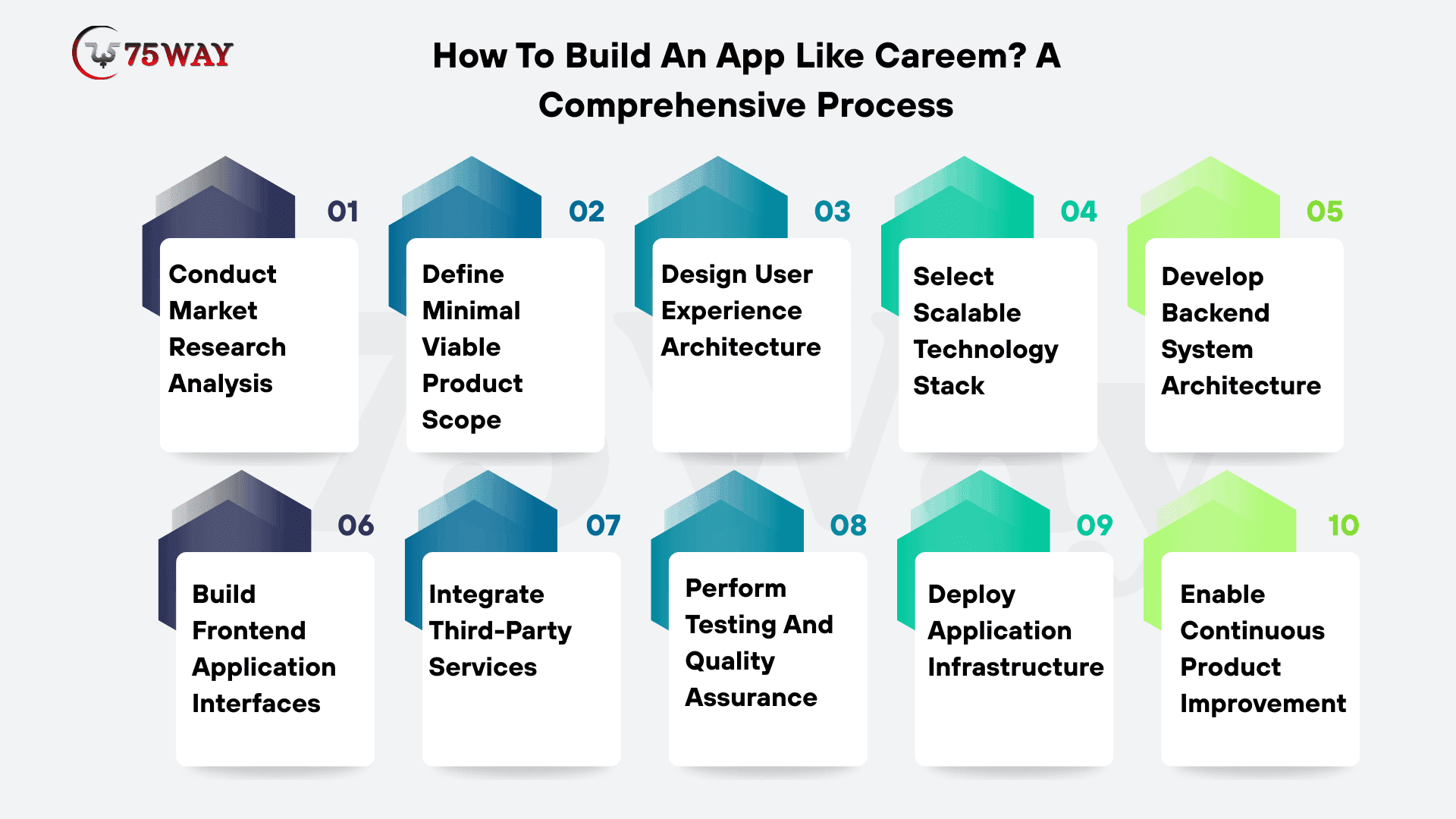
Step 1: Conduct Market Research Analysis
Market research defines the foundation of the entire product by identifying competitor strengths, user expectations, and regional service gaps. Tools like Google Trends, SimilarWeb, App Annie, and survey platforms help analyze demand patterns. This stage uses data analytics to understand real customer pain points, ensuring the product is built for actual market needs rather than imitation.
Step 2: Define Minimal Viable Product (MVP) Scope
Once insights are collected, the MVP scope is defined to launch quickly with core services such as ride-hailing, delivery, and payments. Product managers use Jira, Trello, and agile frameworks to prioritize features. This MVP development step ensures faster market entry while reducing development complexity and validating real user behavior before scaling.
Step 3: Design User Experience Architecture
UX design transforms research insights into intuitive user journeys using tools like Figma, Adobe XD, and Sketch. Designers focus on navigation flow, accessibility, and service discovery. A well-structured UI increases engagement and reduces drop-off rates, while directly influencing how users interact with rides, orders, and payments.
Step 4: Select Scalable Technology Stack
Technology selection determines system scalability, performance, and long-term flexibility. Developers typically use Flutter or React Native for cross-platform apps, Node.js or Java for backend systems, and AWS or Google Cloud for infrastructure. These technologies are chosen because they support microservices, real-time processing, and high traffic handling.
Step 5: Develop Backend System Architecture
Backend development builds the core engine of the platform, including APIs, authentication systems, databases, payment gateways, and notification services. Technologies like Node.js, Spring Boot, Python Django, PostgreSQL, and MongoDB are used to ensure secure data handling, fast processing, and real-time service coordination across all modules.
Step 6: Build Frontend Application Interfaces
Frontend development focuses on creating user-facing applications for Android, iOS, and web admin panels. Frameworks like Flutter, Swift, Kotlin, and ReactJS are used because they deliver high performance and a native-like experience. This layer connects users, drivers, and merchants to backend systems through APIs.
Step 7: Integrate Third-Party Services
Third-party integrations extend platform capabilities by connecting external APIs such as Google Maps, Stripe, Razorpay, Twilio, and Firebase. These services enable real-time tracking, secure payments, messaging, and analytics. Integration ensures the platform does not reinvent core infrastructure and remains scalable and cost-efficient.
Step 8: Perform Testing And Quality Assurance
Testing ensures reliability, security, and performance before launch. QA engineers use tools like Selenium, JMeter, Appium, and Postman to perform functional, load, and security testing. This stage identifies system bottlenecks early, ensuring the app performs smoothly under high traffic and real-world conditions.
Step 9: Deploy Application Infrastructure
Deployment involves launching backend systems on cloud platforms like AWS, Azure, or Google Cloud while publishing mobile apps on the Google Play Store and Apple App Store. DevOps tools like Docker, Kubernetes, and CI/CD pipelines ensure smooth deployment, scalability, and continuous delivery without downtime.
Step 10: Enable Continuous Product Improvement
After launch, continuous improvement is driven by analytics tools such as Firebase, Mixpanel, and Amplitude. AI-driven insights help optimize user experience, introduce new features, and fix performance issues. This stage ensures the platform evolves based on real user behavior and market demand, maintaining long-term competitiveness.
Core Modules in On-Demand Multi-Service App Development Like Careem
A successful app like Careem is built around four interconnected modules that power the entire ecosystem. Each module serves a specific user group while sharing data in real time across the platform. Together, these components create seamless service delivery, operational visibility, and scalable business management across multiple on-demand services.
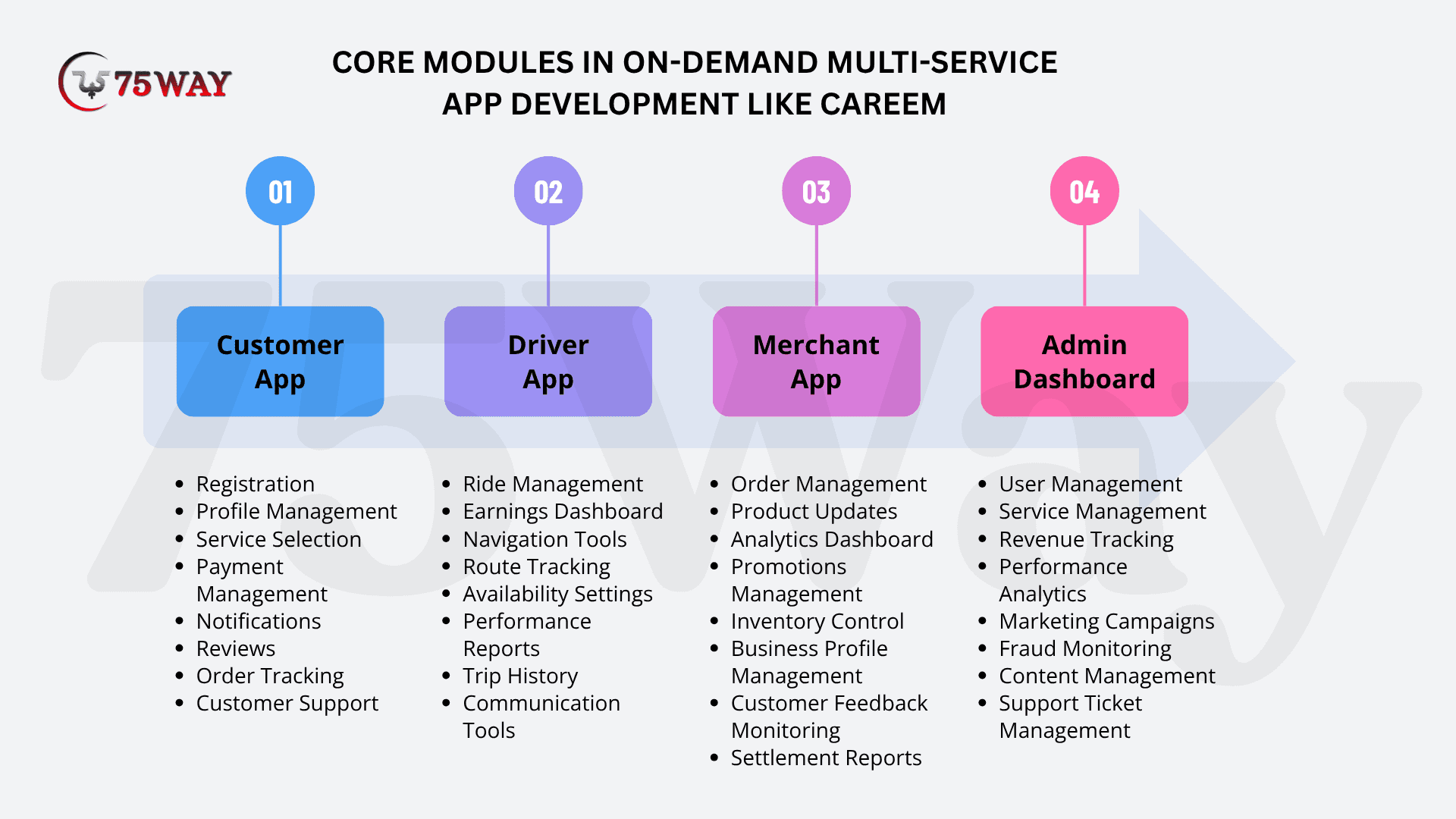
Module 1: Customer App
The customer app is the primary interface where users access all available services. It simplifies booking, ordering, payments, communication, and service tracking through a single digital experience.
- Registration: Allows users to create accounts using mobile numbers, email addresses, or social logins. A simple onboarding process encourages faster adoption and improves initial user engagement.
- Profile Management: Enables users to update personal information, delivery addresses, payment preferences, and account settings. Personalized profiles support customized experiences across different services available within the platform.
- Service Selection: Allows customers to choose between rides, food delivery, grocery shopping, logistics, and payments. Clear categorization helps users access desired services without navigation difficulties.
- Payment Management: Supports secure transactions through cards, digital wallets, banking integrations, and alternative payment methods. Centralized payment controls simplify financial management for customers.
- Notifications: Delivers instant updates regarding bookings, deliveries, offers, payments, and service status changes. Timely alerts improve communication and enhance overall user experience.
- Reviews: Enables customers to share feedback based on service quality and experiences. User-generated reviews support transparency and help maintain service standards.
- Order Tracking: Provides real-time visibility into ride progress, delivery locations, and estimated arrival times. Continuous tracking improves customer confidence throughout the service journey.
- Customer Support: Offers assistance through chat, call support, FAQs, and issue resolution systems. Quick support access helps address concerns and improve customer satisfaction.
Module 2: Driver App
The driver app empowers service providers to manage daily operations and customer requests. It serves as a productivity tool supporting transportation, delivery, and logistics activities.
- Ride Management: Allows drivers to accept, reject, and manage incoming service requests efficiently. Organized workflows help maximize completed trips and delivery opportunities.
- Earnings Dashboard: Displays daily, weekly, and monthly earnings through detailed financial summaries. Transparent reporting helps drivers monitor performance and income growth.
- Navigation Tools: Provides turn-by-turn navigation for pickups, deliveries, and destination routing. Accurate directions help reduce travel delays and improve service quality.
- Route Tracking: Tracks journeys continuously to provide operational visibility and location monitoring. Real-time tracking improves accountability and supports customer communication.
- Availability Settings: Enables drivers to control working hours and service availability preferences. Flexible scheduling helps accommodate different work patterns and commitments.
- Performance Reports: Presents metrics related to ratings, completed services, cancellations, and response times. Performance visibility encourages service improvements and operational consistency.
- Trip History: Maintains records of completed rides, deliveries, earnings, and customer interactions. Historical data supports financial tracking and performance evaluation.
- Communication Tools: Facilitates direct communication between drivers and customers when necessary. Effective communication helps resolve service-related concerns quickly and professionally.
Module 3: Merchant App
The merchant app helps restaurants, grocery stores, and service vendors manage operations digitally. It acts as a centralized hub for orders, inventory, promotions, and business insights.
- Order Management: Allows merchants to receive, process, and fulfill customer orders systematically. Organized workflows help maintain service quality during high-demand periods.
- Product Updates: Enables vendors to modify product details, descriptions, availability, and pricing. Real-time updates maintain catalog accuracy across the platform.
- Analytics Dashboard: Provides insights into sales performance, customer behavior, and order trends. Data visibility supports informed business decisions and growth planning.
- Promotions Management: Allows merchants to create discounts, offers, and seasonal marketing campaigns. Promotional activities help attract customers and increase order volumes.
- Inventory Control: Tracks stock levels continuously to prevent overselling and product shortages. Inventory visibility improves operational planning and fulfillment accuracy.
- Business Profile Management: Enables vendors to manage store information, operating hours, and branding elements. Accurate profiles improve customer trust and discoverability.
- Customer Feedback Monitoring: Provides access to ratings and reviews submitted by customers. Feedback analysis helps merchants identify improvement opportunities and service gaps.
- Settlement Reports: Displays earnings, commissions, transaction histories, and payout summaries. Financial transparency supports business management and accounting activities.
Module 4: Admin Dashboard
The admin dashboard acts as the command center of the entire multi-service ecosystem. It provides complete visibility into users, services, transactions, and platform performance.
- User Management: Allows administrators to manage customers, drivers, merchants, and support staff accounts. Centralized controls simplify account monitoring and platform governance.
- Service Management: Enables configuration and supervision of transportation, delivery, payment, and logistics services. Flexible controls support business expansion across multiple categories.
- Revenue Tracking: Monitors earnings generated from commissions, subscriptions, delivery fees, and partnerships. Comprehensive financial visibility supports strategic planning and forecasting.
- Performance Analytics: Provides insights into service demand, user engagement, operational efficiency, and growth metrics. Data-driven analysis supports continuous platform optimization.
- Marketing Campaigns: Allows businesses to launch targeted promotions, loyalty programs, and customer acquisition initiatives. Campaign management helps increase engagement and retention.
- Fraud Monitoring: Identifies suspicious transactions, unusual behavior patterns, and security risks proactively. Continuous monitoring helps protect users and platform integrity.
- Content Management: Enables administrators to manage banners, announcements, offers, and informational content. Dynamic content updates improve communication across the ecosystem.
- Support Ticket Management: Centralizes customer and partner issues for faster resolution and tracking. Structured support workflows improve operational responsiveness and service quality.
Advanced Features To Create Careem-Like Super App That Differentiate Market Leaders
Modern multi-service applications compete on far more than basic functionality. Market leaders like Careem invest heavily in artificial intelligence, automation, predictive analytics, and personalization technologies that improve user experiences while strengthening operational performance. The following advanced features are becoming essential for businesses aiming to build a next-generation Careem-like super app in 2026.
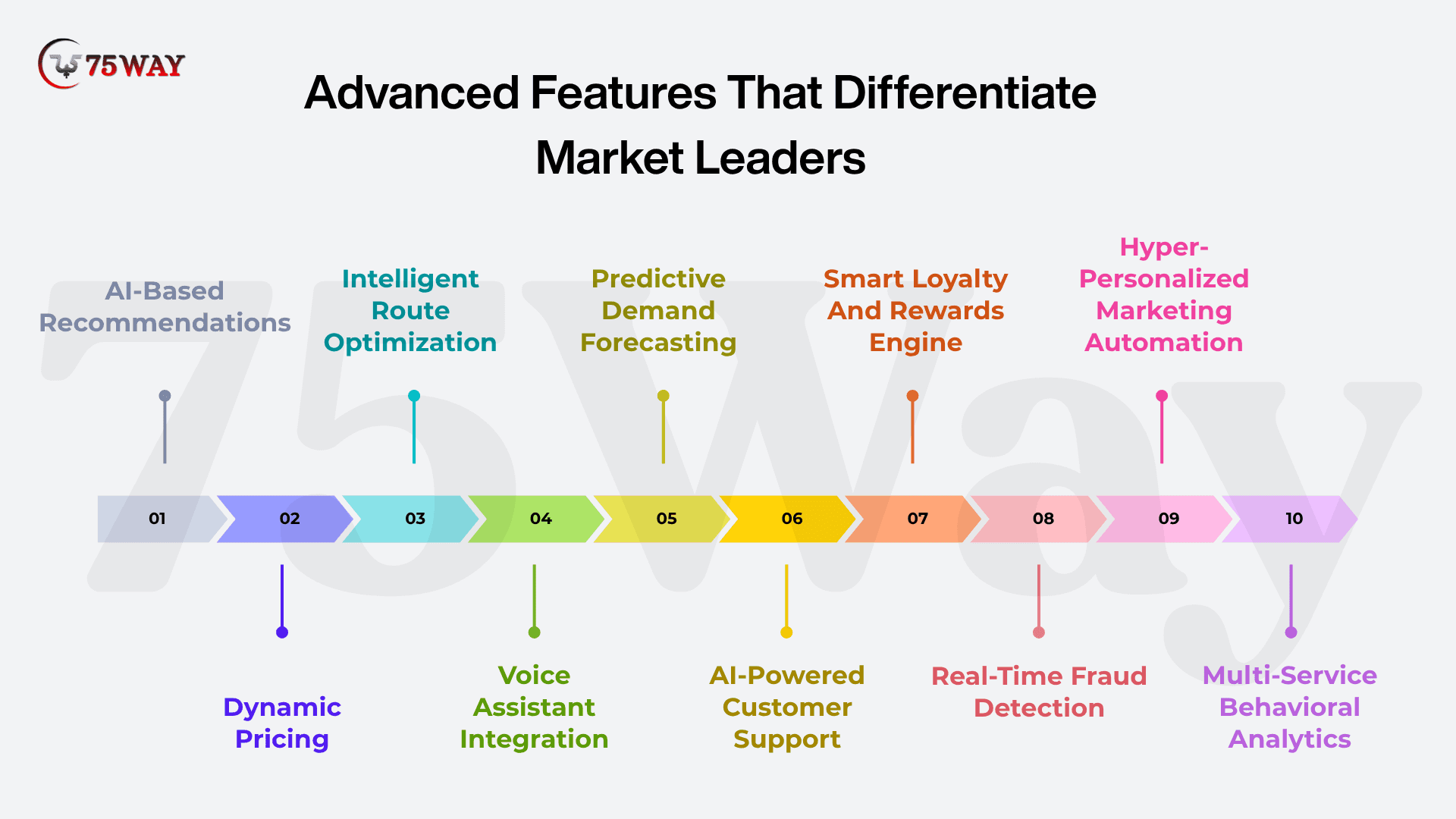
- AI-Based Recommendations
Artificial intelligence analyzes user preferences, booking history, spending patterns, and behavioral signals continuously. It delivers highly personalized suggestions across services. Relevant recommendations increase engagement and conversions. Users discover services matching their interests more frequently.
- Dynamic Pricing
Dynamic pricing algorithms evaluate demand levels, driver availability, traffic conditions, and weather patterns. Prices adjust automatically according to market conditions. This approach balances supply and demand effectively. Businesses can maximize revenue during peak periods.
- Intelligent Route Optimization
Machine learning identifies the most effective travel and delivery routes automatically. Route optimization reduces unnecessary travel distances. Faster journeys improve customer satisfaction significantly. Businesses benefit from lower operational and fuel expenses.
- Voice Assistant Integration
Voice-enabled interactions allow users to access services through spoken commands conveniently. Customers can book rides without typing. Food ordering becomes quicker and more accessible. Voice assistance improves convenience for diverse user groups.
- Predictive Demand Forecasting
Predictive analytics evaluates historical patterns, seasonal trends, and user behavior data. Demand fluctuations become easier to anticipate. Businesses can allocate resources proactively. Better planning supports smoother service delivery and profitability.
- AI-Powered Customer Support
Artificial intelligence automates customer service through intelligent chatbots and virtual assistants. Common inquiries receive immediate responses. Support teams can focus on complex issues. Faster resolutions improve overall customer experiences.
- Smart Loyalty And Rewards Engine
Advanced loyalty systems personalize rewards based on user behavior and spending activity. Customers receive relevant incentives and offers. Personalized rewards increase retention and engagement. Businesses strengthen long-term customer relationships through targeted benefits.
- Real-Time Fraud Detection
AI-driven fraud detection systems continuously monitor transactions and platform activities. Suspicious behavior is identified instantly. Potential security threats can be addressed proactively. Strong fraud prevention protects users and business operations.
- Hyper-Personalized Marketing Automation
Marketing automation platforms analyze customer preferences and engagement patterns continuously. Campaigns are customized for individual users. Personalized promotions increase conversion opportunities. Businesses achieve stronger marketing performance with optimized targeting.
- Multi-Service Behavioral Analytics
Behavioral analytics combines insights from transportation, delivery, payments, and commerce services. Businesses gain a complete customer view. Cross-service trends reveal growth opportunities. Data-driven decisions support platform expansion and strategic planning.
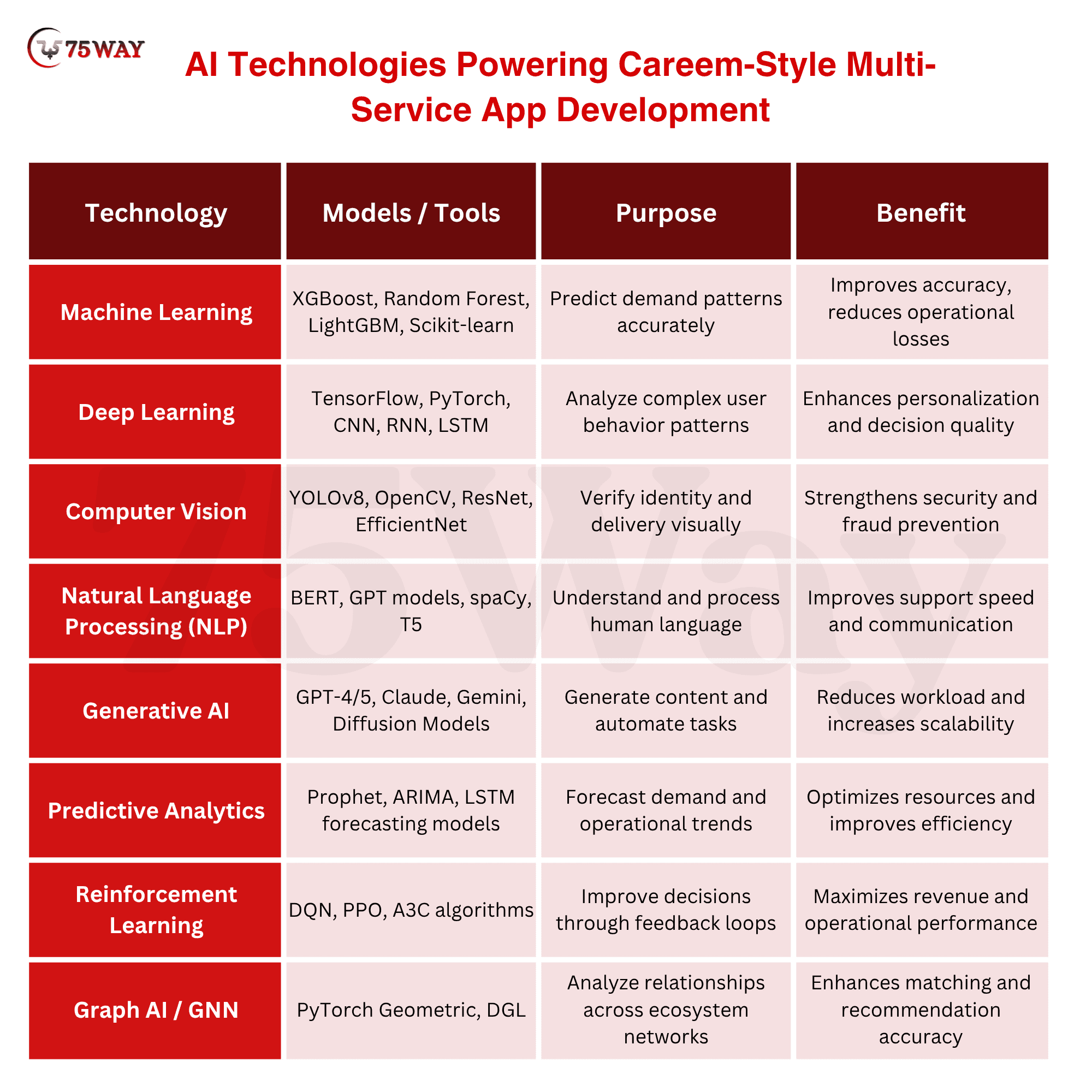
AI Technologies Powering Careem-Style Multi-Service App Development In 2026
Artificial intelligence has become a competitive necessity rather than an optional enhancement. Modern multi-service applications rely on AI to improve customer experiences, automate operations, strengthen security, and optimize decision-making. From personalized recommendations to predictive analytics, AI technologies help businesses scale faster while delivering smarter and more responsive services across their digital ecosystems.
- Machine Learning
Machine learning models enable multi-service platforms to analyze massive volumes of user and operational data continuously. By identifying behavioral patterns and market trends, machine learning helps businesses improve customer engagement, optimize resource allocation, and increase profitability.
- Computer Vision
Computer vision allows applications to interpret and analyze visual information automatically. This technology supports driver verification, identity authentication, delivery confirmation, and vehicle inspection processes. By reducing manual verification efforts, computer vision enhances platform security.
- Natural Language Processing (NLP)
NLP enables applications to understand, interpret, and respond to human language. It powers AI chatbots, voice search capabilities, voice AI agents, automated customer support systems, and multilingual communication features. NLP helps businesses improve customer interactions while reducing support workloads and operational costs.
- Generative AI
Generative AI automates content creation and knowledge-based processes across multi-service ecosystems. It supports customer support automation, marketing content generation, merchant onboarding assistance, and knowledge management systems.
- Predictive Analytics
Predictive analytics uses historical and real-time data to forecast future outcomes and trends. Multi-service platforms utilize this technology to anticipate demand fluctuations, optimize inventory levels, and allocate drivers strategically. Accurate forecasting helps businesses make proactive decisions and improve operational performance.
- Recommendation Engines
Recommendation models analyze customer preferences, transaction histories, browsing patterns, and behavioral signals. These systems deliver personalized suggestions for rides, food orders, grocery purchases, promotions, and other services to improve conversions and platform loyalty over time.
- Reinforcement Learning
Reinforcement learning enables AI systems to improve decisions through continuous learning and feedback. Multi-service applications use this technology for route optimization, dynamic pricing strategies, driver allocation, and service matching processes.
Recommended Technology Stack Used To Develop Careem Clone App
At 75way Technologies, we don’t treat the technology stack as a checklist of tools. We design it as a complete system where every layer connects naturally to performance, scalability, and cost efficiency. The goal is simple: build a Careem-like super app that runs smoothly, scales fast, and stays cost-effective even as users grow.
On the frontend side, we usually go with Flutter or React Native because they allow us to build one codebase that works across Android and iOS. This significantly reduces development time and cost while still delivering a smooth, app-like experience. When a project demands deeper native performance, especially for high-traffic modules, we use Swift for iOS and Kotlin for Android to get maximum speed and device-level optimization.
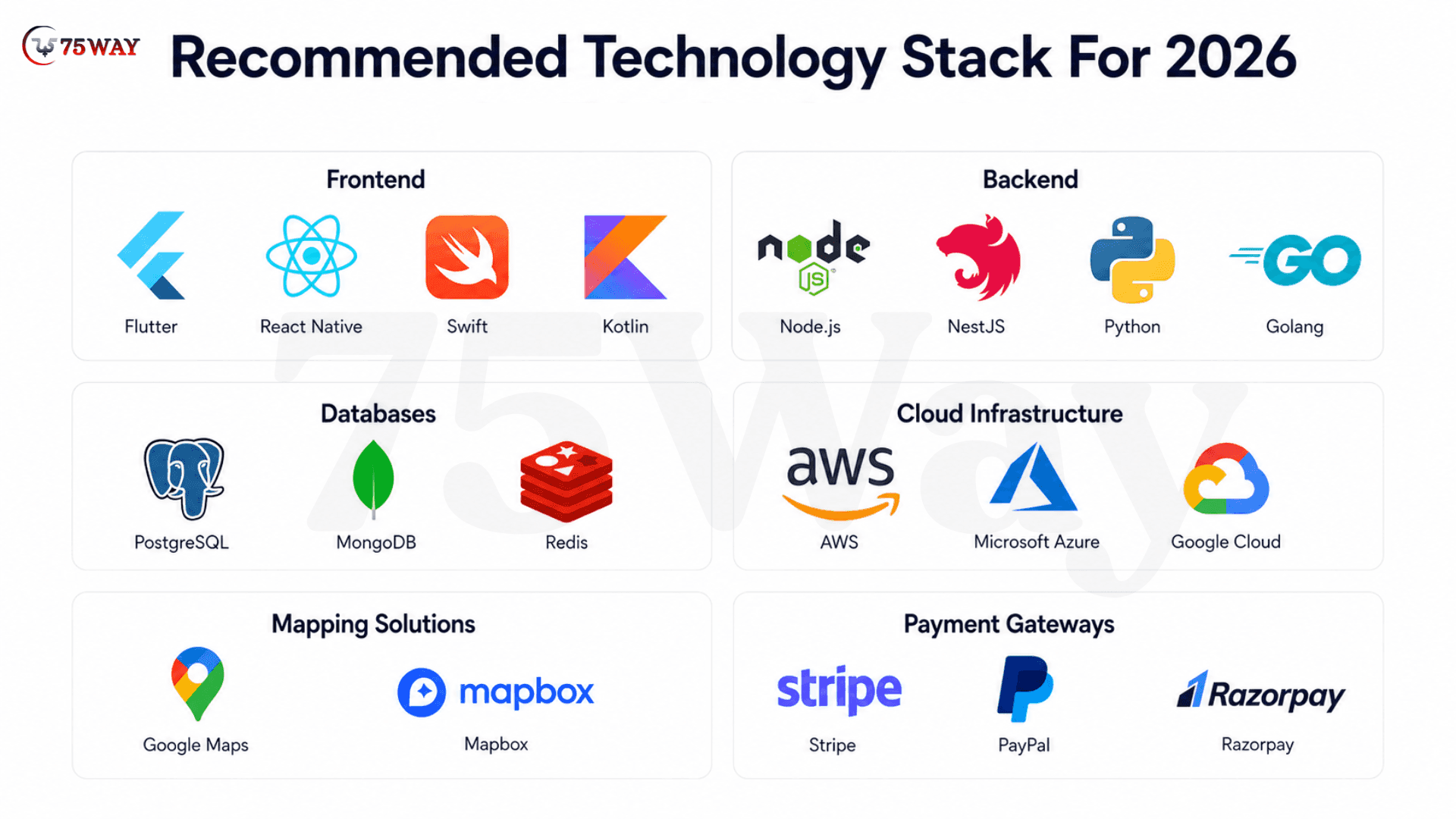
The backend is where the real power of a super app comes together. We use Node.js and NestJS to build fast, scalable APIs that can handle large volumes of real-time requests. For AI-driven features like demand prediction, personalization, and recommendations, Python plays a key role. In performance-heavy areas such as ride matching or live dispatch systems, we rely on Golang because it handles concurrency extremely well and keeps response times low even under pressure.
For data handling, we combine PostgreSQL for structured transactional data, MongoDB for flexible service data, and Redis for real-time caching to keep the app fast and responsive.
Everything is deployed on cloud platforms like AWS, Microsoft Azure, or Google Cloud, depending on scalability needs and regional performance. For navigation, we integrate Google Maps or Mapbox, and for payments, we use trusted gateways like Stripe, PayPal, or Razorpay to ensure secure and seamless transactions.
At the core, our approach is not just about using modern tools. It’s about making every technology work together as a unified ecosystem that keeps the app fast, reliable, and ready for scale.
Revenue Model of A Careem-Like App: Detailed Overview
A Careem-like super app doesn’t rely on a single income source. It grows through multiple revenue streams working together inside one ecosystem. Every ride, order, delivery, or payment becomes an earning opportunity, which is why these platforms scale so aggressively once user adoption increases. The real strength lies in combining high-frequency services with monetization models that activate at different points of the user journey.
1. Commission-Based Model
Apps earn a percentage from every completed transaction across rides, food orders, grocery deliveries, and merchant services. For example, a $10 ride may generate a 15–25% platform commission depending on region and service type. This becomes the core revenue engine due to high daily transaction volume.
2. Delivery Fee Model
Every completed order generates a delivery charge paid by the customer or shared with the merchant. For example, a $5 delivery fee per order can scale into thousands of daily transactions. This model becomes highly profitable in food, grocery, and courier services where repeat usage is high.
3. Surge Pricing Model
During peak demand hours, pricing increases dynamically based on availability, traffic, and demand intensity. A $10 ride may increase to $15–$18 during rush hours. This model balances supply-demand gaps while maximizing revenue during high-traffic periods.
4. Subscription Model
Users pay monthly or yearly fees for premium benefits such as free deliveries, discounted rides, and priority services. For example, a $9.99/month subscription can significantly increase user retention while generating predictable recurring revenue for the platform.
5. Advertising & Sponsored Listings
Businesses pay to appear at the top of search results or featured sections. For example, a restaurant might pay $50–$500 per campaign depending on visibility. This model turns the platform into a high-value digital marketplace for merchants.
6. Financial Services Revenue
Super apps integrate wallets, payments, lending, and remittance systems. For example, transaction fees of $0.30–$1 per payment or percentage-based charges on transfers create steady financial income. This also increases user lock-in within the ecosystem.
7. Data Monetization & Insights Model
Aggregated behavioral data is used to generate insights for businesses, logistics partners, and advertisers. For example, anonymized demand trends or peak ordering data can be packaged as analytics services worth thousands of dollars monthly to enterprise clients.
Development Cost of A Multi-Service App Like Careem
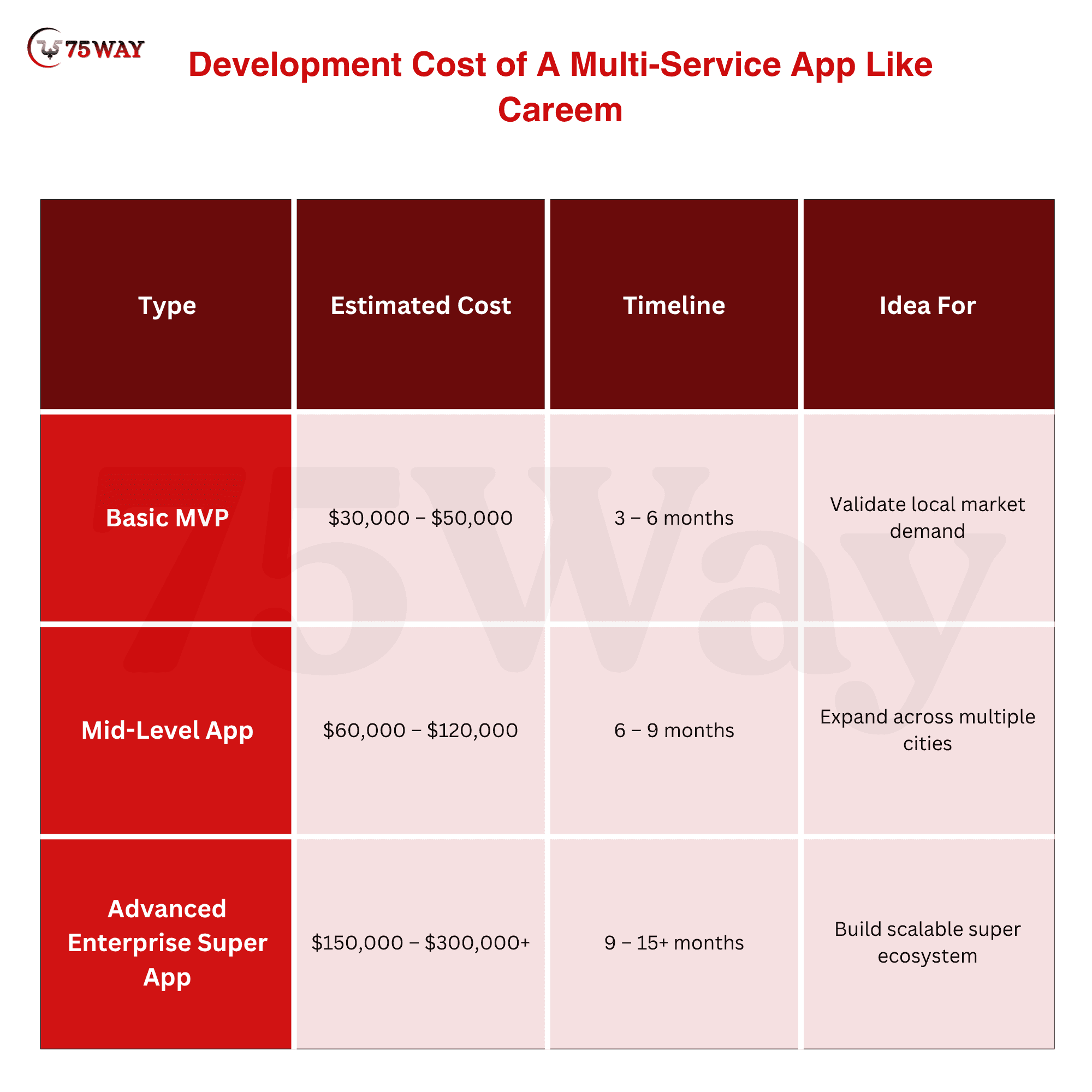
The cost of building a Careem-like multi-service super app in 2026 depends on features, scalability, design complexity, and technology depth. On average, development ranges between $30,000 – $300,000+, depending on requirements.
1. Basic MVP
- Estimated Cost: $30,000 – $50,000
- Timeline: 3 – 6 months
This app focuses on launching a simplified version of the platform with essential ride-hailing and booking features. It typically includes user registration, driver onboarding, basic GPS tracking, simple payment integration, and trip history. The goal is to validate the business idea in a limited market before scaling.
2. Mid-Level App (Market Expansion)
- Estimated Cost: $60,000 – $120,000
- Timeline: 6 – 9 months
This kind of app introduces stronger user engagement features and better scalability. It includes real-time chat, multiple payment gateways, digital wallets, push notifications, and improved UI/UX design. Surge pricing and analytics modules are also added to support operational growth.
3. Advanced Enterprise Super App
- Estimated Cost: $150,000 – $300,000+
- Timeline: 9 – 15+ months
This app includes a fully scalable super app ecosystem with ride-hailing, food delivery, grocery, logistics, payments, and AI-driven personalization. It also integrates microservices architecture, advanced analytics, and real-time optimization systems for large-scale operations.
Stage-Wise Development Cost Breakdown For App Like Careem
- UI/UX Design Cost: $5,000 – $25,000
Creates intuitive passenger and driver interfaces focusing on usability, navigation simplicity, and a smooth interactive user experience.
- Frontend Development Cost: $30,000 – $60,000
Builds responsive customer, driver, and merchant applications ensuring smooth performance across Android, iOS, and web platforms.
- Backend & APIs Cost: $40,000 – $80,000
Develops core system logic, real-time tracking, payments, authentication, and scalable APIs supporting high-traffic platform operations.
- Admin Panel Cost: $5,000 – $15,000
Provides centralized dashboard for managing users, services, analytics, payouts, and monitoring complete platform operations efficiently.
- Testing & QA Cost: $5,000+
Ensures application stability through device testing, performance checks, security validation, and bug-free production deployment readiness.
Security Requirements For Creating Ride-Hailing App Like Careem 2026
Security is the foundation of trust in any multi-service or Careem-like super app. As platforms handle payments, personal data, and real-time location tracking, strong protection layers are essential to prevent fraud, data leaks, and unauthorized access while maintaining user confidence and regulatory compliance.
- Multi-Factor Authentication: Add extra login verification layers beyond passwords. Users confirm identity through OTP, biometrics, or device-based authentication. This reduces unauthorized access risks and strengthens account protection across sensitive user operations.
- Data Encryption: Protect user data by converting it into unreadable formats during storage and transmission. Even if data is intercepted, encryption ensures information remains secure and inaccessible without proper decryption keys.
- Secure APIs: Ensure communication between app components and servers remains protected from external attacks. Secure APIs use authentication tokens, rate limiting, and encryption to prevent data breaches and unauthorized system access.
- Fraud Detection: Use AI-based monitoring systems to identify suspicious activities in real time. It detects unusual transactions, fake accounts, and abnormal behavior patterns to prevent financial losses and platform misuse.
- PCI DSS Compliance: Securely handle credit and debit card information within the platform. It follows strict global security standards to protect payment data and reduce risks of financial fraud.
- GDPR Compliance: Protect user privacy by regulating how personal data is collected, stored, and processed. It gives users control over their data and ensures transparency in data handling practices.
- Role-Based Access Control: Restrict system access based on user roles such as admin, driver, or customer. This prevents unauthorized access to sensitive features and ensures operational security across different platform levels.
Biggest Challenges In Multi-Service App Development
Building a Careem-like multi-service application in 2026 is not just a development task. It is an ecosystem challenge where multiple services, users, and real-time systems must work together without interruption. Despite these challenges, businesses that design with modular architecture and scalable systems are able to sustain long-term growth and platform stability.
- Operational Complexity
When rides, food delivery, courier services, and payments operate together, the system quickly becomes layered and difficult to manage. Microservices architecture helps here by separating each function into independent modules so one service doesn’t slow down the entire platform, even during high traffic.
- Service Quality Management
As more services are added, maintaining the same level of speed, accuracy, and reliability across all categories becomes harder. Real-time monitoring systems, AI-based performance tracking, and automated alerts help teams quickly identify issues before they impact user experience.
- Regulatory Compliance
Every region brings its own rules for transport, digital payments, taxation, and data privacy, which makes scaling across countries complex. Platforms usually adopt region-based rule engines that adjust compliance logic automatically depending on where the service is operating.
- User Retention
Users today move quickly between apps if expectations are not met in terms of pricing, speed, or convenience. Strong retention comes from personalized recommendations, loyalty rewards, and continuously improving the app based on real user behavior and feedback.
- Scaling Infrastructure
As user demand increases, sudden traffic spikes can slow down bookings, payments, and tracking systems. Cloud-based auto-scaling combined with distributed infrastructure helps the platform adjust resources instantly so performance stays stable even during peak hours.
Why Start With An MVP Instead Of Building Everything At Once?
One of the most common mistakes founders make when building a Careem-like super app is trying to launch every possible service from day one. While it may look impressive on paper, it usually leads to delays, higher costs, and a product that is too complex to test in real market conditions.
A more practical approach is starting with an MVP that focuses on one strong core service, usually ride-hailing. Once the platform gains users, stable operations, and real feedback, additional services are introduced step by step. This phased expansion typically moves from ride-hailing to food delivery, then grocery, payments, subscriptions, and finally broader lifestyle services.
This gradual rollout reduces business risk and allows continuous validation at every stage. Instead of guessing what users need, each phase is shaped by real usage data, helping the platform grow in a controlled, scalable, and financially sustainable way.
Why Choose 75way Technologies To Build A Careem-Like App?
At 75way Technologies, we specialize in building high-performance on-demand multi-service applications that mirror platforms like Careem, Grab, and Gojek. Our focus is not just on development, but on creating scalable digital ecosystems that support long-term business growth. From ride-hailing to delivery, payments, and super app architecture, we design systems that are built for real-world demand and high-traffic performance.
As a dedicated on-demand app development company, we understand the complexity behind managing multiple services within a single platform. Our team builds modular, cloud-native, and API-driven architectures that allow businesses to scale services independently without disrupting the entire system. This ensures faster performance, easier maintenance, and seamless expansion into new markets or service categories.
We also provide white-label solutions for businesses that want to launch quickly with reduced investment. These solutions come with pre-built core modules like ride booking, delivery systems, and payment integration, which can be customized based on brand requirements. Whether you are a startup validating an idea or an enterprise scaling globally, 75way Technologies delivers both custom development and ready-to-launch white-label platforms to accelerate your time-to-market.
Final Remarks
Multi-service applications are redefining the future of digital commerce, transportation, logistics, and financial services. The success of Careem demonstrates the immense potential of consolidating everyday services into a single ecosystem that simplifies user experiences while creating multiple revenue opportunities.
Building a successful multi-service platform in 2026 requires far more than combining ride-hailing and delivery features. Businesses must focus on scalable architecture, AI-powered personalization, secure payment infrastructure, data intelligence, operational excellence, and long-term ecosystem expansion. Whether you are a transportation company, logistics provider, or startup, investing in a Careem-inspired super app can unlock new growth opportunities. Hire a reliable on-demand delivery app development company to launch a multi-service app-like Careem quickly.
Frequently Asked Questions (FAQs)
1. Can A Multi-Service App Operate In Multiple Countries Simultaneously?
Yes, multi-service apps can operate globally using localization, cloud infrastructure, and regional compliance systems. Businesses adapt languages, currencies, and payment methods for each market. This ensures a consistent experience across countries while maintaining centralized control.
Is White-Label Development Suitable For Multi-Service Apps?
White-label solutions help launch faster and reduce initial costs for startups. However, they limit flexibility for advanced features and scalability. Custom development is preferred for long-term growth, AI integration, and unique business requirements.
Which Business Industries Benefit Most From Multi-Service Platforms?
Industries like transportation, logistics, healthcare, food delivery, retail, and finance benefit the most. These sectors rely on frequent customer interactions and on-demand services. A unified platform increases engagement, retention, and overall customer lifetime value.
Do Multi-Service Apps Require Separate Teams For Each Service Category?
Not always, as core systems like backend, analytics, and support can be shared. However, specialized teams may handle individual services for better performance. This hybrid model reduces cost while maintaining service quality.
How Important Is Localization For International Expansion?
Localization is critical for global success because users expect regional relevance. Apps must support local languages, currencies, and payment systems. Strong localization improves trust, engagement, and long-term customer retention in new markets.
Can Blockchain Technology Improve Multi-Service Applications?
Blockchain improves transparency in payments, loyalty programs, and identity verification systems. It ensures secure and traceable transactions across platforms. However, it is mainly useful for specific financial and trust-based use cases.
Which Metrics Should Founders Monitor After Launch?
Important metrics include user retention, acquisition cost, lifetime value, and conversion rates. These indicators show how users interact with the platform over time. Tracking them helps improve performance and increase revenue growth.
Why Do Some Multi-Service Platforms Fail Despite Strong Funding?
Most failures come from weak planning, poor user experience, and unclear monetization strategies. Some also expand too quickly without market validation. Success depends on solving real problems with controlled, sustainable growth.