AI Summary
AI astrology apps combine traditional astrology calculations with artificial intelligence to deliver personalized readings and interactive experiences. This guide explains the development process, features, technology, costs, monetization, and market opportunity. It also covers considerations for launching in the U.S.
Key Takeaways
- AI astrology app development can cost $7,000 to $150,000+ depending on complexity.
- AI enables personalized readings, conversational guidance, compatibility insights, and automated astrology experiences.
- Accurate birth-chart calculations should remain separate from AI-generated interpretations and conversations.
- Development costs increase with advanced AI, APIs, consultations, payments, and personalization.
- The U.S. opportunity can support scalable astrology products across subscriptions, consultations, and premium features.
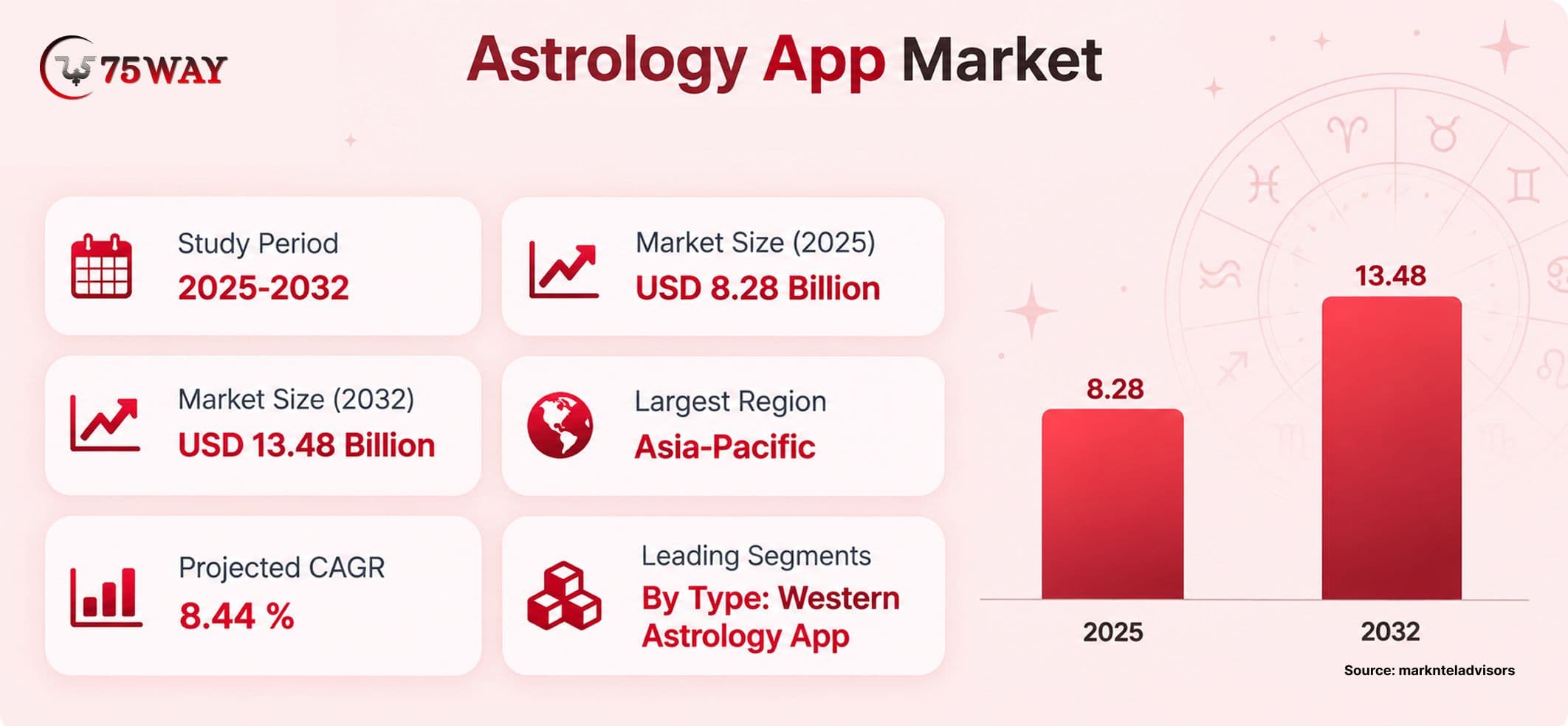
An AI astrology app can turn a traditional horoscope experience into a personalized digital product that users return to for guidance, compatibility insights, and interactive readings. The opportunity is also attracting serious attention, with the U.S. online astrology market estimated at $5.69 billion in 2026 and projected to reach $11.71 billion by 2030.
But building an AI-powered astrology app involves more than connecting an AI model to astrology content. The product needs accurate astrology calculations, meaningful personalization, a reliable user experience, monetization, and technology that can support growing usage without making the app feel repetitive or generic.
So, how do you build an AI astrology app, what does development cost, and where does the $3B+ market opportunity come from? This guide covers the process, astrology app development costs involved, revenue potential, and key considerations for turning the idea into a scalable astrology platform.
What Is an AI Astrology App?
An AI astrology app is a mobile or web application that uses astrology data and artificial intelligence to provide personalized experiences.
Traditional astrology applications generally provide predefined horoscopes, zodiac information, birth charts, compatibility reports, or access to astrologers. An AI-powered product can add a conversational layer that interprets structured astrology data and adapts responses to individual users.
For example, a user could enter:
- Birth date
- Exact birth time
- Birth location
- Relationship status
- Career interests
- Personal questions
The application can then calculate the relevant astrological information and use an AI system to explain it in natural language.
The important architectural distinction is that AI should interpret structured astrological inputs rather than invent the underlying calculations. Current development guidance similarly separates the chart-calculation layer from AI personalization and content generation.
How Does AI Work in an Astrology App?
A user asking an astrology app a personal question expects more than a recycled horoscope paragraph. AI can help turn stored astrological information into responses that feel more relevant to the individual interaction. The connection between AI technology and astrology applications is worth understanding before planning the product.
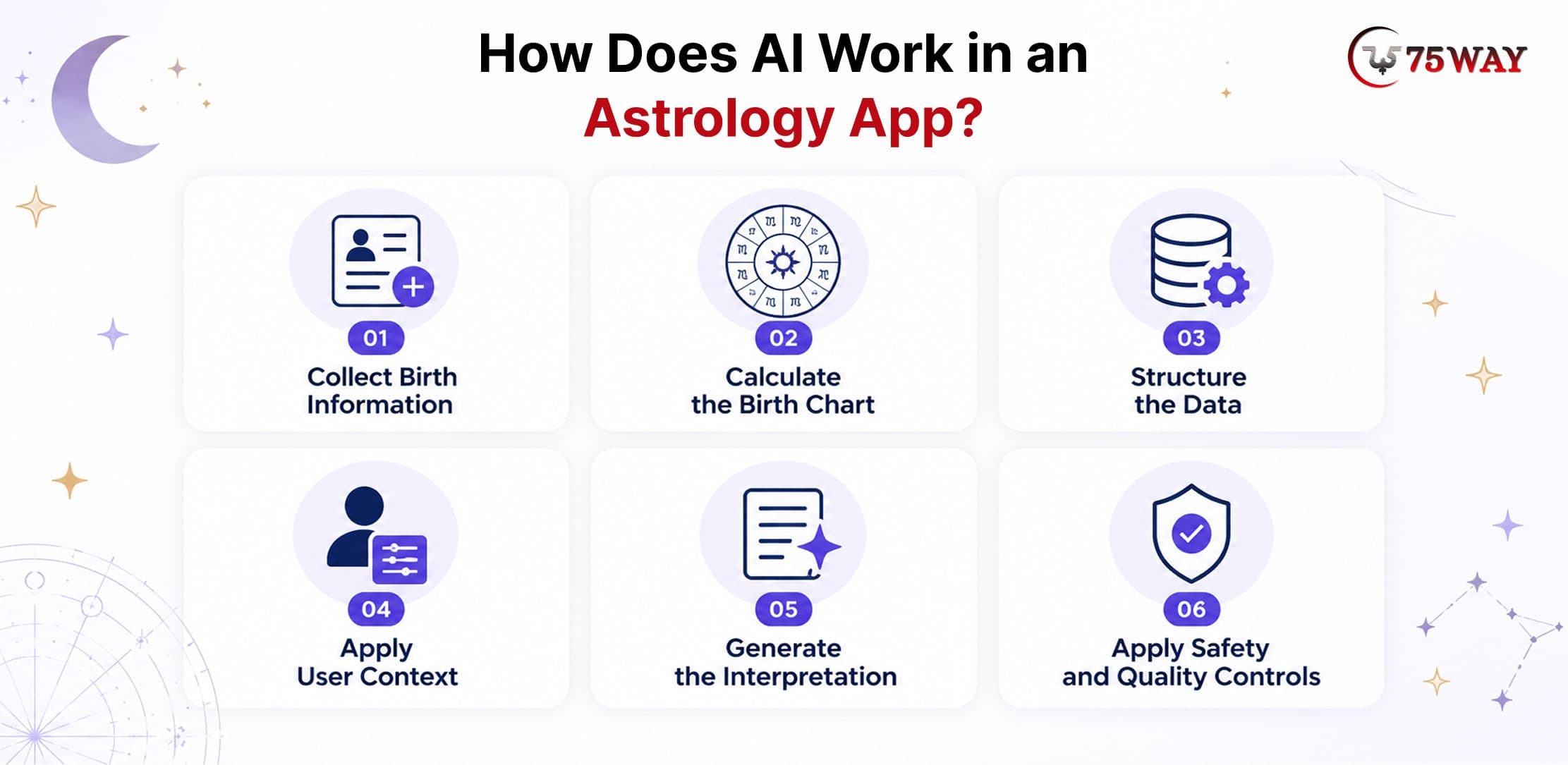
Step 1: Collect Birth Information
The user provides their birth date, birth time, and birthplace.
The application should clearly explain why accurate information matters, particularly birth time and location.
Step 2: Calculate the Birth Chart
The astrology engine calculates relevant information such as planetary positions, houses, signs, and aspects according to the selected astrology system.
Step 3: Structure the Data
The backend converts the calculated information into structured data that the AI system can process.
Step 4: Apply User Context
The system can combine astrology data with permitted user preferences and conversation context.
Step 5: Generate the Interpretation
The AI produces a natural-language response based on the supplied structured information.
Step 6: Apply Safety and Quality Controls
The response should pass through rules designed to prevent inappropriate or overly definitive outputs, particularly around sensitive areas such as health, financial decisions, or other high-impact decisions.
This architecture is more reliable than asking a general-purpose language model to calculate planetary positions itself.
Why Build an AI-Powered Astrology App in United States?
What if your astrology app could move beyond generic horoscopes and give users personalized answers whenever they need them? AI-powered experiences can create more interactive ways for astrology businesses to engage users and develop paid digital services. The key business reasons for entering the American astrology market are explored through the opportunities ahead.
- Rising Digital Astrology Demand
Astrology is becoming easier to explore through mobile platforms offering horoscopes, birth charts, compatibility readings, and personalized guidance. A well-designed app can turn this interest into an engaging digital experience.
- Highly Personalized Readings
Personalized astrology experiences can interpret birth details, preferences, and user interactions to deliver relevant insights. Tailored recommendations can make each session feel more meaningful while encouraging users to revisit the platform.
- Conversational Astrology Experiences
Smart conversational features can let users ask astrology-related questions and receive instant interpretations in natural language. This interactive approach can make traditional astrology concepts easier to explore for modern mobile users.
- Multiple Revenue Streams
Astrology platforms can combine subscriptions, premium readings, personalized reports, consultations, advertisements, and paid content. This flexible model creates several opportunities to generate revenue from different user preferences.
- Scalable User Engagement
Automated personalization and content delivery can support a growing user base without requiring every interaction to involve an astrologer. Businesses can expand services, introduce new features, and serve more users through one platform.
Moreover, the commercial opportunity is also supported by established consumer engagement. CBS News reported that astrology app Co-Star had 30 million registered users in 2025 and described the U.S. online astrology industry as a roughly $3 billion market.
The opportunity for a new product, however, is not simply to reproduce an existing horoscope application.
A stronger product proposition could focus on a specific experience such as:
- AI-powered birth-chart conversations
- Relationship astrology
- Career-focused astrology
- Personalized daily guidance
- Astrology and journaling
- Astrology for couples
- AI-assisted astrologer consultations
- Astrology combined with wellness content
A clearly defined niche can make product positioning, user acquisition, feature prioritization, and monetization easier.
How To Develop an AI Astrology App: Complete Process
An AI astrology app becomes valuable when technology can support a genuinely personalized astrology experience. A strong foundation across product strategy, data, AI, interface design, and testing is essential before the app reaches users. The complete development journey explains each stage involved in bringing the concept to life.
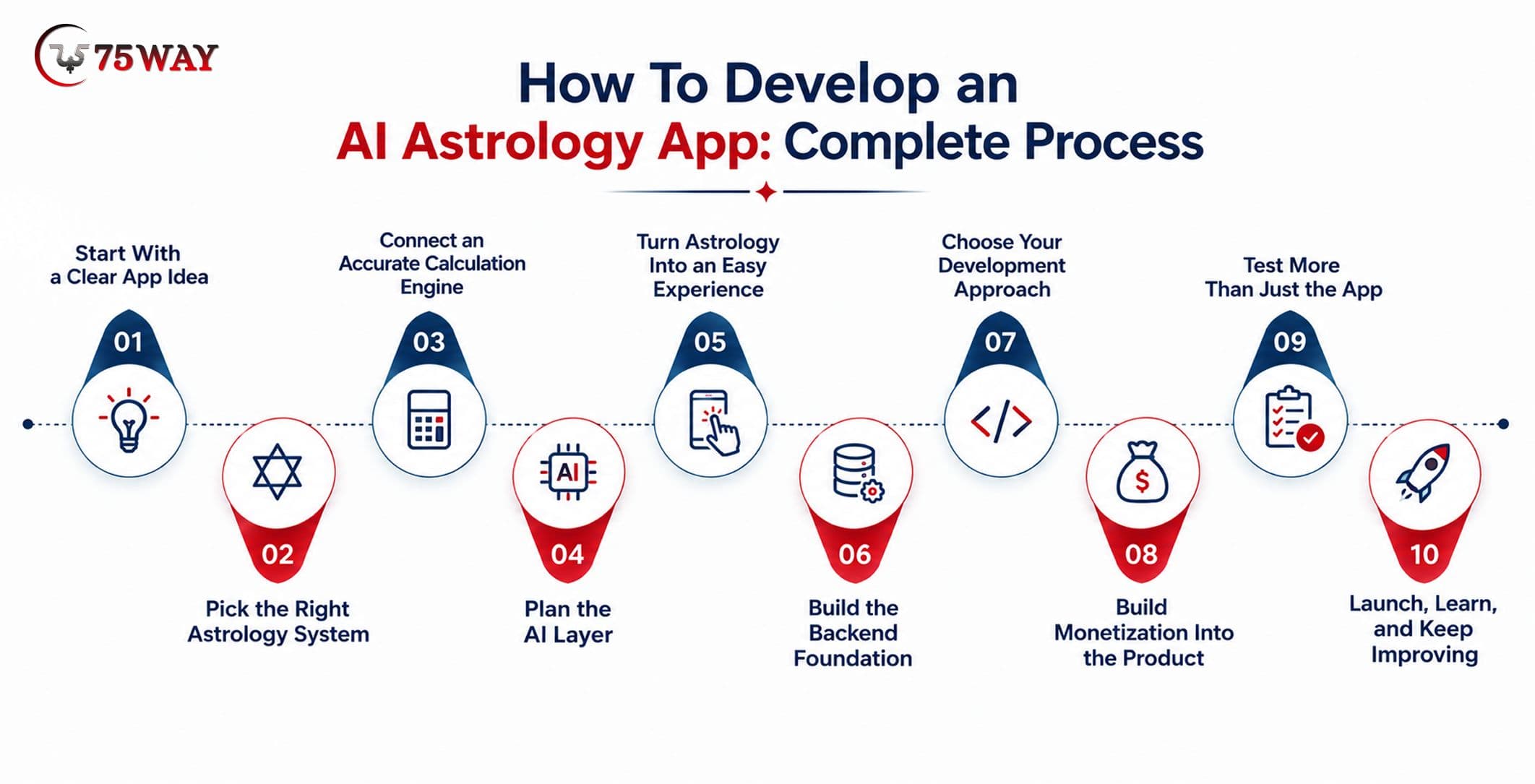
Step 1: Start With a Clear App Idea
Before thinking about code, decide what your astrology app should actually help users accomplish. A daily horoscope product will need a very different experience from an app built around birth-chart analysis, relationship compatibility, or consultations with professional astrologers.
At this stage, define:
- Target audience: Beginners, astrology enthusiasts, couples, or users seeking personalized guidance
- Core offering: Horoscopes, birth charts, compatibility, AI conversations, reports, or consultations
- Launch platforms: iOS, Android, web, or a combination
- Revenue model: Subscriptions, paid readings, reports, consultations, or premium content
A focused concept makes it easier to build an MVP around one strong user experience instead of spending heavily on features that may not matter initially.
Step 2: Pick the Right Astrology System
The next decision is surprisingly important because astrology is not one universal system. Your application could be based on Western astrology, Vedic astrology, Chinese astrology, numerology, or several systems together.
Each system can require different calculations, terminology, interpretations, and content structures. If you are validating the product for the first time, starting with one system can keep development simpler and give you a clearer understanding of what your audience actually wants.
Step 3: Connect an Accurate Calculation Engine
The AI should not be responsible for calculating planetary positions from scratch. Instead, use a dedicated astrology calculation engine or API to generate the underlying chart information and let the AI turn that structured information into understandable insights.
You could integrate an astrology API or use a library such as Swiss Ephemeris, depending on your technical requirements and licensing needs.
The basic flow can look like:
Birth Details → Astrology Calculations → Structured Chart Data → AI Interpretation → User Response
This separation gives the development team greater control over the factual inputs being used to generate readings.
Step 4: Plan the AI Layer
Now comes the part that can make your app feel genuinely different from a traditional horoscope application. Decide how users will interact with the AI and, more importantly, what information it should use when generating responses.
Your AI architecture may include:
- LLM integration for generating natural-language readings
- Prompt design for controlling tone and response structure
- Context management for maintaining relevant conversation details
- Retrieval systems for accessing approved astrology content
- Response validation for checking generated outputs
- Safety controls for sensitive or inappropriate questions
- Usage limits for managing model costs
For instance, instead of giving users another static horoscope, the app could let them ask, “What does my birth chart suggest about my career?” and generate a response using their actual chart data.
Step 5: Turn Astrology Into an Easy Experience
A powerful astrology engine will not help much if users struggle to understand the application. Design the experience around the questions users naturally have rather than around technical astrology terminology.
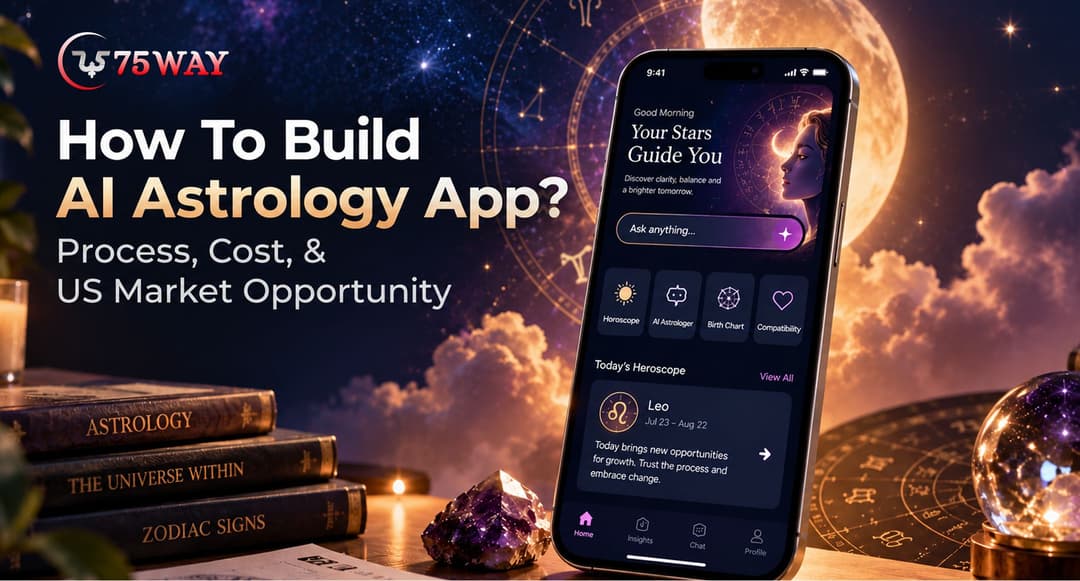
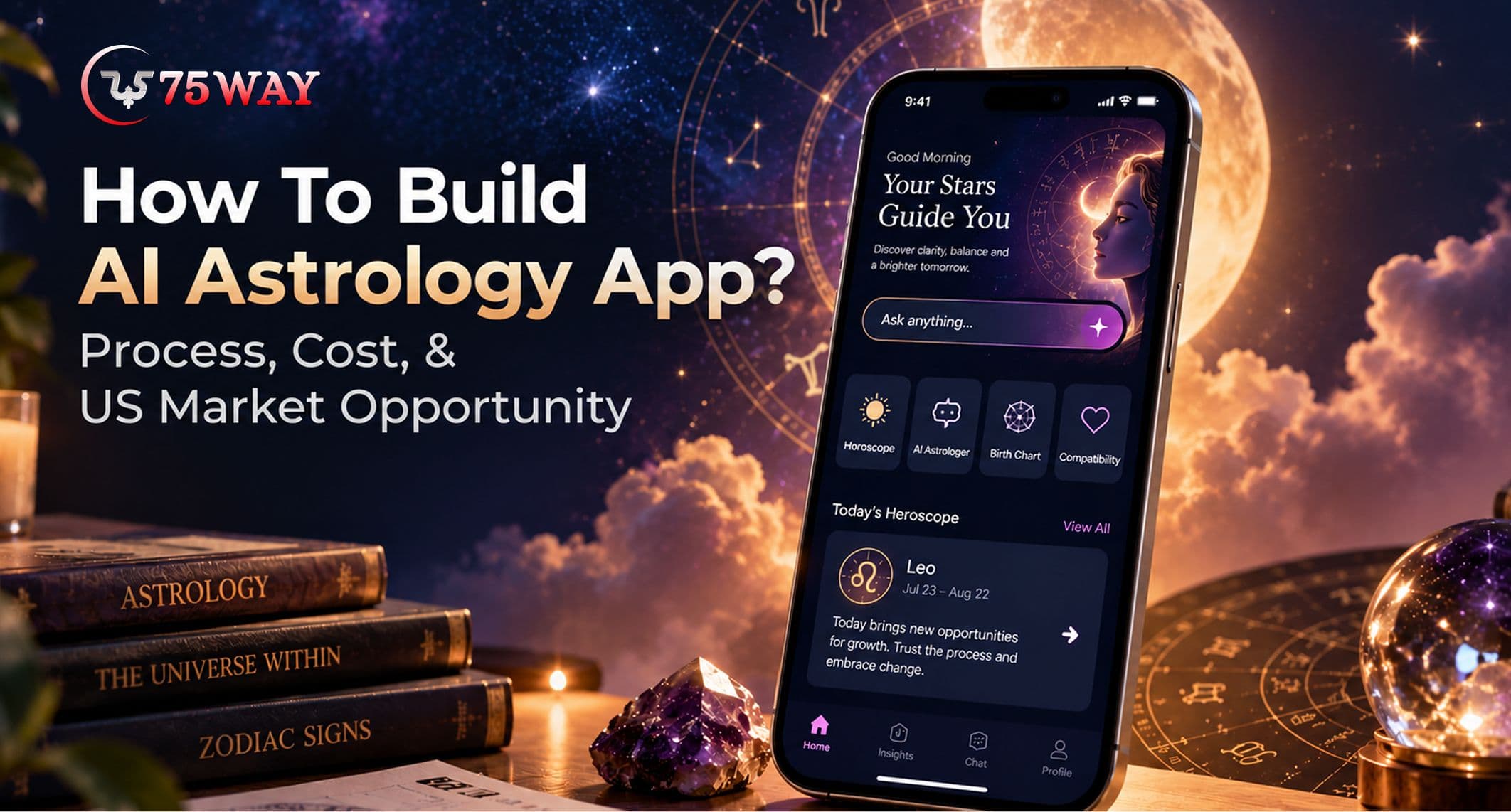
Depending on the product, the interface could include a home dashboard, birth-chart screen, daily horoscope, compatibility section, saved readings, subscription area, profile, and settings. Keep the first release uncluttered so users can reach their first useful insight quickly.
Step 6: Build the Backend Foundation
Behind the simple interface sits the infrastructure responsible for keeping the entire experience connected. The backend can manage user accounts, birth information, chart calculations, AI conversations, subscriptions, notifications, analytics, and administrative controls.
For a growing product, the architecture should also account for increasing users and AI requests. Planning this early can reduce the need for major backend changes when the application starts receiving significant traffic.
Step 7: Choose Your Development Approach
Your technology choice can affect development time, cost, performance, and future maintenance. If you want applications for both iOS and Android, Flutter or React Native can be considered when the product's requirements are suitable for cross-platform development.
Native development may make more sense when the application requires platform-specific capabilities or highly customized experiences. The decision should therefore follow the product requirements rather than simply choosing the technology with the lowest initial cost.
Step 8: Build Monetization Into the Product
Do not leave monetization until after the application has been built. If premium readings or subscriptions are part of the business model, those experiences should be considered while designing onboarding, navigation, content access, and backend functionality.
Common options include:
- Freemium Access: Basic readings remain free while advanced insights require payment.
- Subscriptions: Users receive ongoing premium readings and features through monthly or annual plans.
- One-Time Purchases: Detailed birth-chart reports or personalized readings can be sold individually.
- Consultations: Users can pay to connect with professional astrologers.
The goal is to make the paid offering feel like a natural extension of the free experience rather than an interruption.
Step 9: Test More Than Just the App
An astrology application needs two layers of testing: traditional software testing and AI-content testing. A button working correctly does not mean the reading generated behind it is reliable or useful.
The QA process should cover:
- Birth-chart and planetary calculations
- Date, time, and location handling
- AI response quality
- Prompt and context behavior
- Hallucination checks
- Payment and subscription flows
- API failures
- Privacy and authentication
- Different screen sizes and devices
Create realistic user scenarios before launch, including unusual birth times, incomplete information, repeated questions, and unexpected conversational inputs.
Step 10: Launch, Learn, and Keep Improving
The first version should be treated as the beginning of product learning. Once real users arrive, their behavior can reveal which parts of the experience deserve further investment.
Pay attention to metrics such as:
- Onboarding Completion: Are users finishing birth-data setup?
- First-reading Engagement: Do they actually consume the first personalized reading?
- AI Chat Usage: Are users returning to ask additional questions?
- Subscription Conversion: Which features persuade free users to upgrade?
- Retention & Churn: Do users continue using the app after the first week or month?
These insights can guide future releases, helping you improve the product based on actual user behavior rather than assumptions.
Types of AI Astrology & Horoscope Apps You Can Build
A daily horoscope app and an AI astrologer may belong to the same category, but the experience they offer users can be completely different. Your chosen concept will shape the features, technology, monetization model, and overall development effort. The different AI astrology and horoscope app types are explained through the models below.
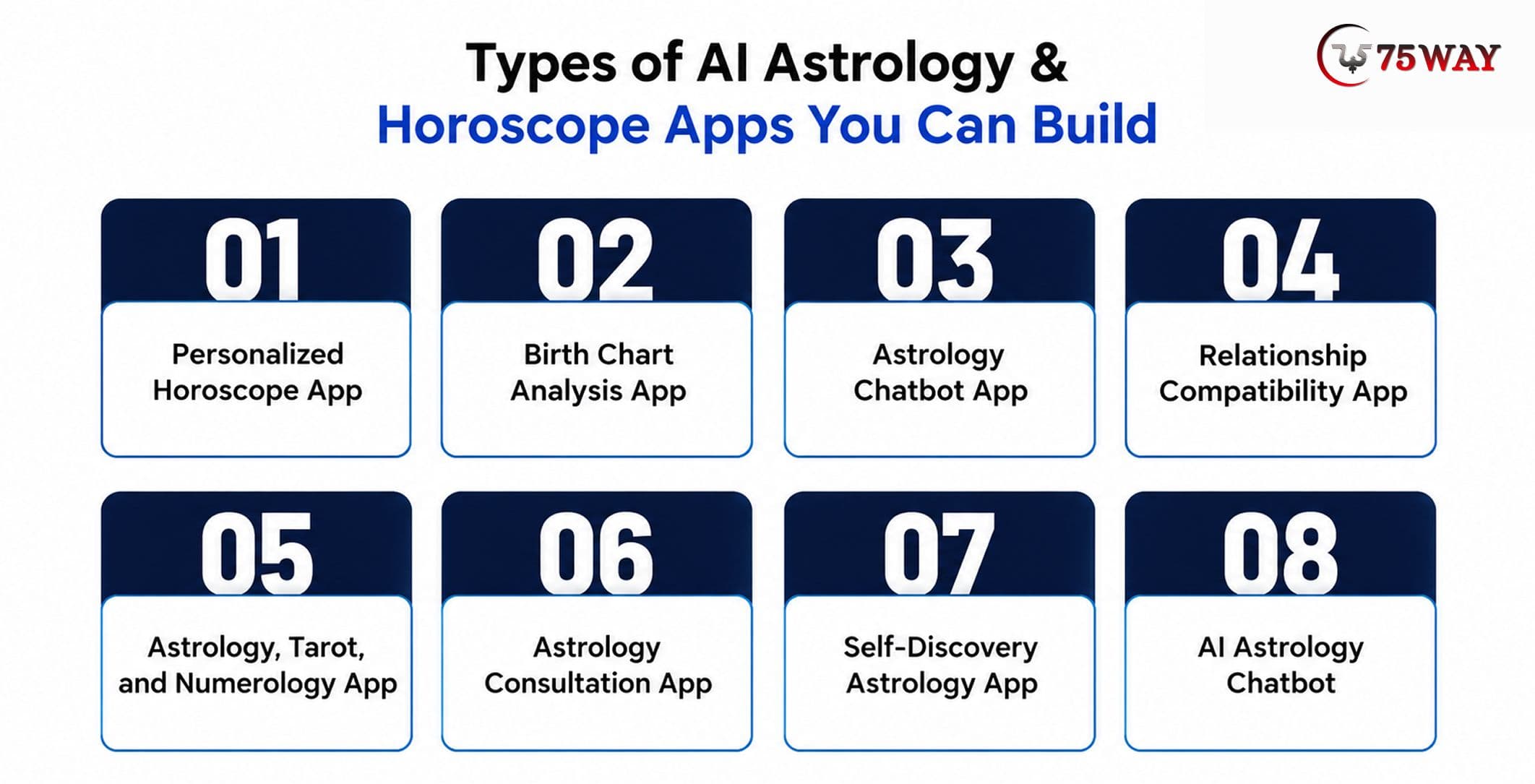
1. Personalized Horoscope App
A horoscope app can go beyond generic zodiac predictions by creating daily or weekly readings from a user's birth details. Co–Star has popularized personalized daily astrology content, while your app could add conversational readings, reminders, and premium predictions.
Estimated Cost: $15,000–$35,000
2. Birth Chart Analysis App
Birth-chart apps appeal to users who want more than a daily horoscope. They can enter their date, time, and birthplace, then explore planetary positions, houses, personality traits, and personalized interpretations, similar to the detailed chart experience offered by TimePassages.
Estimated Cost: $20,000–$50,000
3. Astrology Chatbot App
Instead of making users browse through different astrology sections, a chatbot lets them simply ask questions such as, “What does my chart say about my career?” The system can interpret relevant chart information and respond through a natural conversation.
Estimated Cost: $25,000–$60,000
4. Relationship Compatibility App
Relationship-focused astrology can compare two people's birth information and turn the results into compatibility insights. The Pattern is well known for its relationship- and personality-oriented experience, giving this category a strong direction for building personalized couple-focused features.
Estimated Cost: $25,000–$55,000
5. Astrology, Tarot, and Numerology App
Some users prefer having several spiritual tools in one place rather than downloading separate apps. Nebula combines astrology with tarot, numerology, readings, and other services, offering a useful direction for a broader spiritual guidance platform.
Estimated Cost: $30,000–$75,000
6. Astrology Consultation App
You can combine automated readings with access to professional astrologers when users want deeper guidance. Sanctuary follows a similar hybrid model, bringing astrology content and human consultations together within one digital experience.
Estimated Cost: $40,000–$90,000
7. Self-Discovery Astrology App
This format uses astrology as a tool for understanding personality, relationships, behavioral patterns, and personal interests. The Pattern demonstrates how an astrology product can focus more on self-discovery and relationship insights than traditional horoscope-style predictions.
Estimated Cost: $30,000–$70,000
8. AI Astrology Chatbot
Users can ask questions conversationally instead of searching through static content.
For example:
"What does my current relationship cycle indicate?"
The application retrieves the user's relevant astrological information and generates an appropriate interpretation.
Essential Features Your Custom AI Astrology App Must Have
Personalization should sit at the heart of a custom AI astrology app, with features designed around the way users explore their charts, predictions, and astrology insights. A strong feature set can also create more opportunities for engagement and paid experiences without making the app unnecessarily complicated. The core functionality for building this kind of platform is explained in detail here.
- User Registration & Profiles: Allow users to create secure accounts, manage personal details, and save their astrology preferences in one place.
- Birth Data Management: Let users enter and update their birth date, exact time, and birthplace for accurate personalized astrology calculations.
- Personalized Birth Chart: Generate interactive birth charts showing planetary positions, houses, zodiac signs, and easy-to-understand interpretations.
- Daily Horoscope: Provide personalized daily, weekly, and monthly horoscope insights based on each user's birth information and chart.
- AI Astrology Chat: Let users ask natural-language questions about career, relationships, personality, and other astrology topics through an interactive chat.
- Compatibility Analysis: Compare two users' birth charts to generate personalized insights about relationship dynamics, compatibility, and potential areas of connection.
- Personalized AI Readings: Use chart information and relevant user context to create detailed readings that feel more specific than generic horoscope content.
- Real-Time Notifications: Send timely alerts for new horoscopes, planetary events, personalized insights, reminders, and other relevant app updates.
- Premium Reports & Subscriptions: Offer detailed birth-chart reports, advanced readings, exclusive content, and subscription plans to create recurring monetization opportunities.
- Astrologer Consultation: Add live or scheduled consultations with professional astrologers for users who want human guidance alongside automated readings.
What AI Features Can Make an Astrology App More Valuable?
AI-powered capabilities can help deliver richer readings, more relevant suggestions, and engaging conversations based on individual user inputs. The most valuable AI capabilities for an astrology app are explored in the discussion ahead.
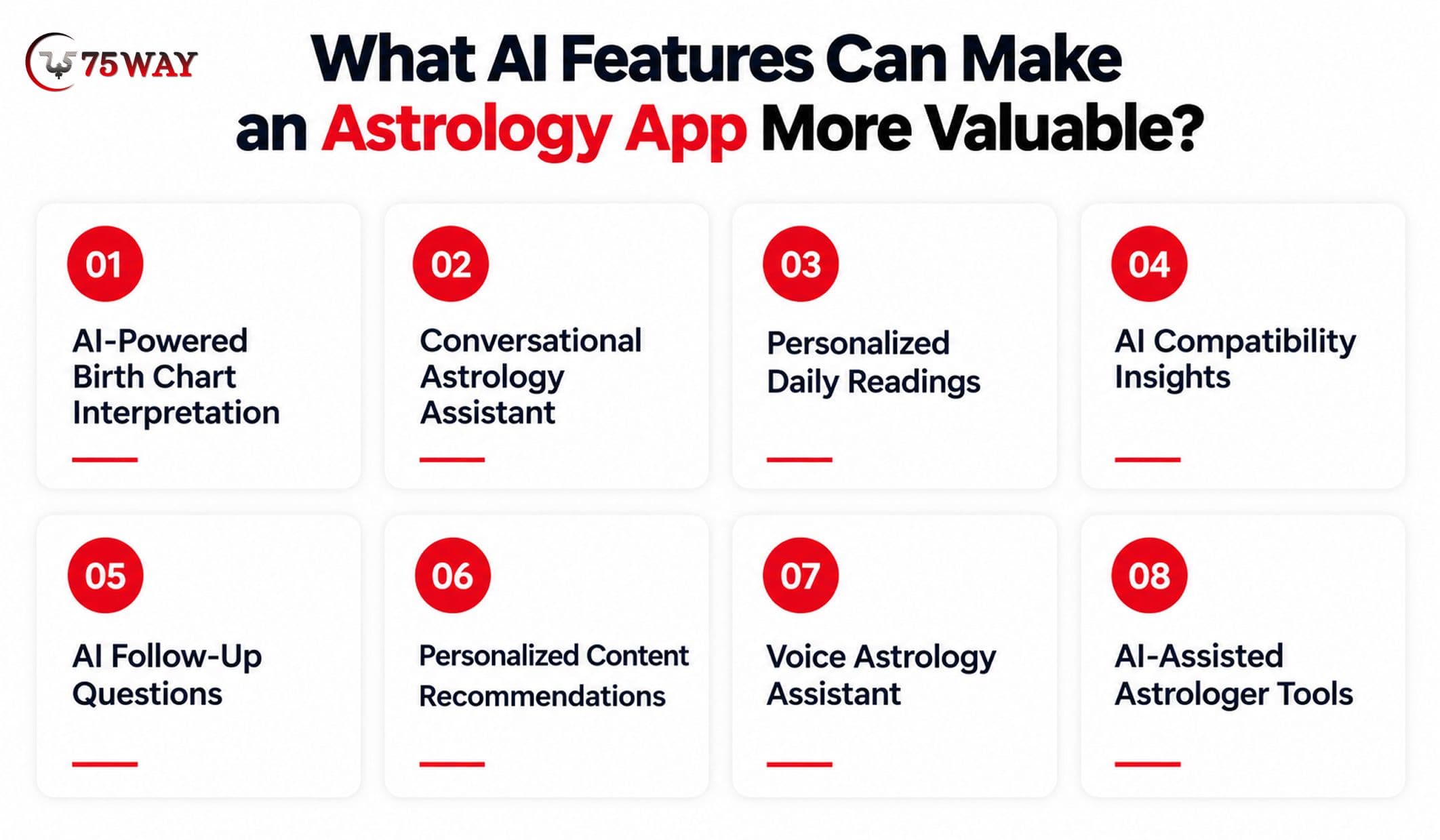
- AI-Powered Birth Chart Interpretation
The system can translate complex chart information into readable explanations.
- Conversational Astrology Assistant
Users can ask follow-up questions about their readings instead of consuming one static report.
- Personalized Daily Readings
The application can generate readings using individual chart information rather than providing the same horoscope to every user in a zodiac category.
- AI Compatibility Insights
The system can interpret structured information from two charts and generate a personalized compatibility explanation.
- AI Follow-Up Questions
After a reading, the app can suggest relevant questions that encourage deeper interaction.
- Personalized Content Recommendations
The system can recommend reports, readings, educational content, or consultations based on permitted user behavior.
- Voice Astrology Assistant
A voice AI agent in a horoscope app interface can make the experience feel more conversational and accessible.
- AI-Assisted Astrologer Tools
For consultation marketplaces, AI can summarize conversations, organize client information, or help astrologers prepare reports.
How Much Does It Cost To Build an AI Astrology App?
The cost to build an AI astrology app can range from approximately $7,000 to $150,000+, depending on scope. The AI-powered astrology development estimates vary widely based on the app’s features, technology stack, AI capabilities, integrations, and overall business objectives.
1. Basic MVP / Simple App: $7,000–$25,000
This version covers essential functionality such as daily horoscopes, basic user profiles, simple sign-ups, push notifications, and limited AI-generated astrology content through third-party services. It is suitable for startups validating an astrology app idea before investing in advanced capabilities.
2. Mid-Level AI Astrology App: $25,000–$60,000
A mid-level application can provide personalized birth-chart calculations, compatibility analysis, interactive AI chat, premium readings, and secure payment integration. This option works well for businesses looking to offer a more personalized experience while keeping the initial development budget manageable.
3. Advanced/Enterprise AI Platform: $60,000–$150,000+
An advanced platform can combine sophisticated AI conversations, detailed birth-chart analysis, real-time planetary insights, compatibility reports, multilingual support, astrologer consultations, subscriptions, advanced analytics, and customized administration.
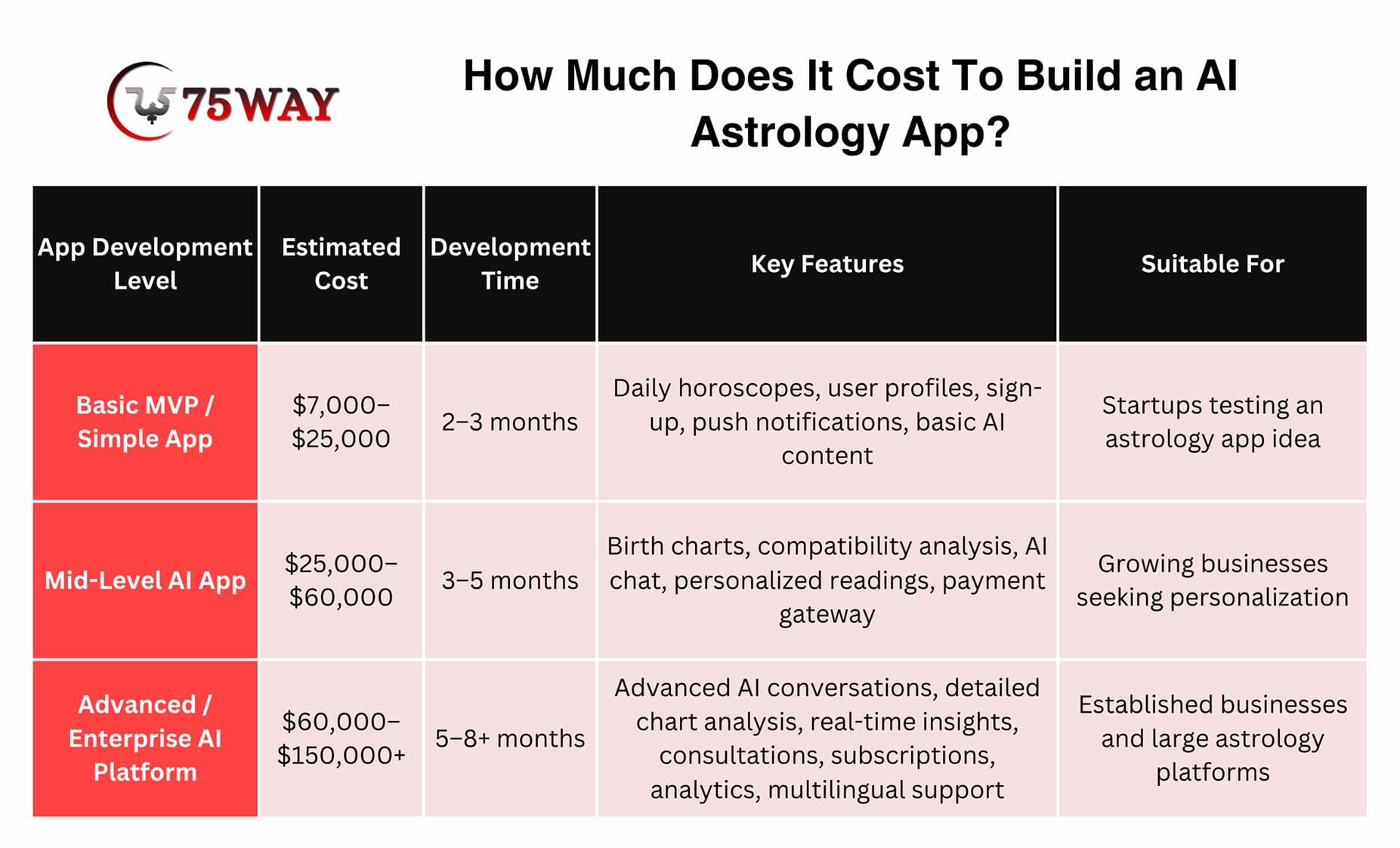
These are planning ranges rather than fixed market prices. A simple horoscope application and an AI-powered consultation marketplace have completely different technical requirements, which explains the wide range across current industry estimates.
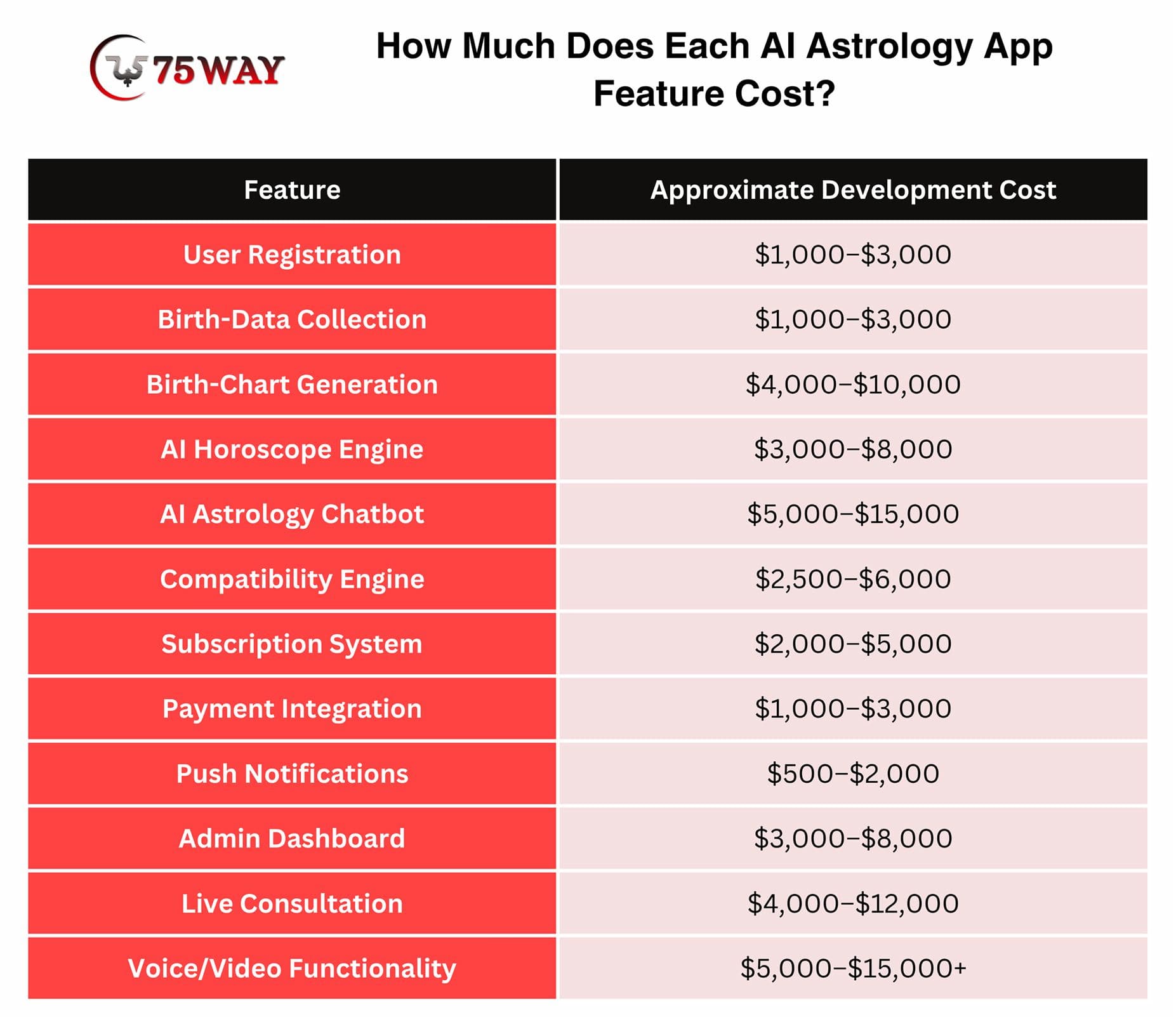
How Much Does Each AI Astrology App Feature Cost?
Feature selection can make a noticeable difference to the final cost of an AI astrology app. A simple AI-powered prediction and an advanced conversational astrologer require very different development effort, infrastructure, and testing. The cost of individual AI astrology features is explained in detail through the breakdown ahead.
What Factors Affect AI Astrology App Development Cost?
The final cost of an AI astrology app can change dramatically as the product becomes more personalized, intelligent, and feature-rich. A basic horoscope platform may require a modest investment, while advanced AI capabilities and complex integrations can push the budget much higher. The key cost drivers behind these differences are explained in detail here.
- AI Complexity
A basic API connection is less expensive than building a sophisticated conversational system with retrieval, persistent context, personalization, evaluation, and guardrails.
- Astrology Engine
Using an existing calculation API can reduce development effort compared with building and validating an entire calculation layer.
- Number of Platforms
iOS, Android, and web support require additional design, testing, deployment, and maintenance considerations.
- Real-Time Communication
Chat is relatively straightforward compared with voice and video consultations.
- Personalization
The more user context the application processes, the more backend logic, data architecture, AI orchestration, and testing are required.
- Third-Party Integrations
Payment, astrology, analytics, maps, messaging, authentication, and communication services all add implementation and recurring costs.
- Security and Privacy
Birth date, term, location, conversations, account information, and payment information require appropriate security controls.
- Development Team
Development rates vary based on geography, expertise, team composition, project complexity, and engagement model.
Should You Build or Buy the Astrology Calculation Engine?
This is an important product decision.
Use an Existing Engine When:
- You need faster MVP development.
- Standard astrology calculations meet your requirements.
- You want to reduce initial engineering effort.
- You do not need proprietary calculation logic.
Build More of the Calculation Layer When:
- You need unique calculation rules.
- You require extensive customization.
- The calculation system itself is part of your competitive advantage.
- You need greater control over long-term architecture.
Existing astrology APIs and calculation tools can accelerate development, but licensing, accuracy, supported systems, customization, API limits, and long-term availability should be evaluated before selecting one.
What Privacy Considerations Matter for Building an AI Astrology App?
An astrology application can collect highly personal information even when the business does not consider it sensitive in the traditional sense.
Potential data can include:
- Birth date
- Birth time
- Birth location
- Account information
- Conversations
- Preferences
- Subscription information
- Usage behavior
The product should clearly explain what information it collects, why it collects it, how long it is retained, and how users can manage their information.
If AI services process user conversations or profile information, the application should also define how that data is transmitted, stored, retained, and used.
Privacy requirements should be considered during architecture rather than added immediately before launch.
Common Mistakes When Building an AI Astrology App & Solutions
Building an AI astrology app involves more than adding a chatbot to an existing horoscope platform. These common mistakes can increase development costs, weaken user trust, and create problems after launch.
1. Treating the LLM as the Astrology Engine
A language model should not be responsible for precise astronomical calculations. It can interpret structured chart data, but planetary positions and other calculations should come from a reliable astrology engine or ephemeris-based system.
Solution: Keep calculations separate from the AI layer. Feed verified chart data into the model and use it primarily for interpretation, conversation, and personalized content generation.
2. Building Too Many Features Initially
Launching with AI chat, live video, e-commerce, multiple astrology systems, social features, and a marketplace can make the first release unnecessarily expensive.
Solution: Start with a focused MVP containing the features most important to your target users. Add advanced functionality after analyzing engagement, retention, and customer feedback.
3. Ignoring AI Operating Costs
Development budgets often focus on building AI features while overlooking recurring inference, API, hosting, and storage expenses.
Solution: Estimate expected AI usage before launch. Set usage limits, choose models according to task complexity, cache reusable information where appropriate, and monitor cost per active user.
4. Using Generic Horoscope Content
If every user receives nearly identical content, AI personalization adds little meaningful value. Users may quickly notice that the readings feel repetitive or disconnected from their actual chart.
Solution: Ground readings in relevant birth-chart information, user preferences, conversation context, and approved astrology content. Personalization should change the substance of the reading, not simply its wording.
5. Collecting More Data Than Necessary
Astrology apps may request birth dates, birth times, locations, relationship information, and other personal details. Collecting unnecessary information can create additional privacy and security responsibilities.
Solution: Follow data-minimization principles. Collect only information required for specific features, explain why it is needed, protect stored data, and give users appropriate controls over their information.
6. Designing Monetization Too Late
Subscription and premium-report flows affect product architecture and should be considered during planning. Adding them after development can require changes to navigation, backend permissions, payment handling, and content access.
Solution: Decide the monetization model early and map free versus paid functionality before development begins. This allows the product team to build the required payment and entitlement structure from the start.
7. Skipping AI Evaluation
A demo can look impressive while producing inconsistent, unsupported, or unsuitable responses during real-world conversations.
Solution: Create an AI evaluation process using representative user questions, expected response criteria, factual checks, safety scenarios, and recurring quality reviews. Test the system before launch and continue evaluating it as prompts, models, and features change.
How To Choose an AI Astrology App Development Company
Before hiring an AI astrology app development partner, evaluate more than the quoted price.
Ask about:
- Previous AI application development experience
- Astrology or wellness product experience
- LLM integration capabilities
- API and third-party integration experience
- Mobile development expertise
- Backend architecture
- AI testing and evaluation
- Data-security practices
- Post-launch maintenance
- Source-code ownership
- Development methodology
- Scalability planning
Ask the development company to explain how it will separate astrology calculations from AI interpretation.
That answer can reveal much more about the team's technical understanding than a generic feature list.
Final Thoughts
To conclude, an AI astrology app requires a balance between accurate astrology data, useful AI personalization, intuitive UX, sustainable monetization, and responsible product design. The technology can support everything from personalized daily readings and birth-chart interpretation to conversational AI and human astrologer marketplaces.
Larger marketplace or enterprise products can move beyond that range depending on real-time communication, multiple astrology systems, AI complexity, integrations, and scalability requirements. Current industry estimates show similarly wide ranges because "astrology app" can describe products with radically different architectures and business models.
To build an AI astrology app, you can hire an eminent astrology mobile app development firm to turn your concept into a scalable product with the right features, architecture, budget, and roadmap.
Frequently Asked Questions (FAQs)
How Much Does It Cost To Build An AI Astrology App?
AI astrology app development can cost approximately $7,000–$150,000+, depending on features, AI complexity, platforms, integrations, personalization, and backend requirements. Larger consultation marketplaces and enterprise platforms can exceed $150,000.
How Long Does It Take To Build An AI Astrology App?
A focused MVP can take approximately 2–4 months, while a standard product may require 4–6 months. Advanced applications with consultations, AI personalization, multiple platforms, and complex integrations can take 6–12 months or longer.
Can ChatGPT Be Used In An Astrology App?
An LLM can be integrated as part of an AI astrology application, particularly for natural-language interpretation and conversational experiences. However, precise astrology calculations should come from a dedicated calculation engine or validated data source rather than relying entirely on the language model.
Can AI Astrology App Generate Birth Charts?
Yes. A birth-chart system can collect a user's birth date, time, and location and use an astrology calculation engine to generate structured chart information. The AI can then interpret that information in natural language.
Is An AI Astrology App Profitable?
An AI astrology app can use subscriptions, premium reports, consultations, in-app purchases, advertising, and other revenue models. Profitability depends on customer acquisition, retention, conversion, pricing, operating costs, AI usage, and the overall business model.
What Is The US Astrology Market Size?
CBS News reported in July 2025 that the U.S. online astrology industry was estimated at approximately $3 billion, citing Allied Market Research. The figure refers to the online astrology industry rather than specifically to mobile AI astrology applications.
What Is The Affordable Way To Build An AI Astrology App?
A focused MVP using cross-platform development, an established astrology calculation service, a managed AI API, and essential features can reduce the initial investment. A narrow product is generally more practical than building a full consultation marketplace immediately.
Should I Build A Custom AI Model For An Astrology App?
Not necessarily. Many products can begin with an established LLM API and build a custom orchestration, prompt, retrieval, personalization, and evaluation layer around it. A custom model may become relevant later if the product has sufficient data, scale, and a clear technical reason for model customization.
Can An Astrology App Support Both AI And Human Astrologers?
Yes. A hybrid model can provide automated AI readings for everyday use while offering paid access to human astrologers for users seeking personal consultations.