If business growth feels slower despite working harder, something is broken. In 2026, a myriad of companies struggle to scale in USA due to new customers, rising demand, and expanding teams. The founders reach a point at which their efforts no longer yield results. That gap usually signals a scalability problem. However, Artificial Intelligence (AI) changes that equation.
Innovative AI development solutions enable companies to automate decisions, understand customers deeply, and respond to market changes in real time. But how do these AI solutions help businesses in scaling? Why do businesses adopt this technology? This guide outlines the reasons to adopt AI as a primary growth engine for US businesses in 2026. It also elaborates on the ways AI supports sustainable and scalable operations, and the concrete actions that transform AI investments into measurable results.
How AI Technologies Enable Sustainable Business Scale
AI solutions now assist every business, from corporate to real estate, and replace linear growth models with intelligent systems for scalability. Thus, automation, prediction, and AI-driven personalization allow US companies to grow faster without any increase in cost, risk, or headcount. Now, it is time to know the factors that help businesses attain scalability.
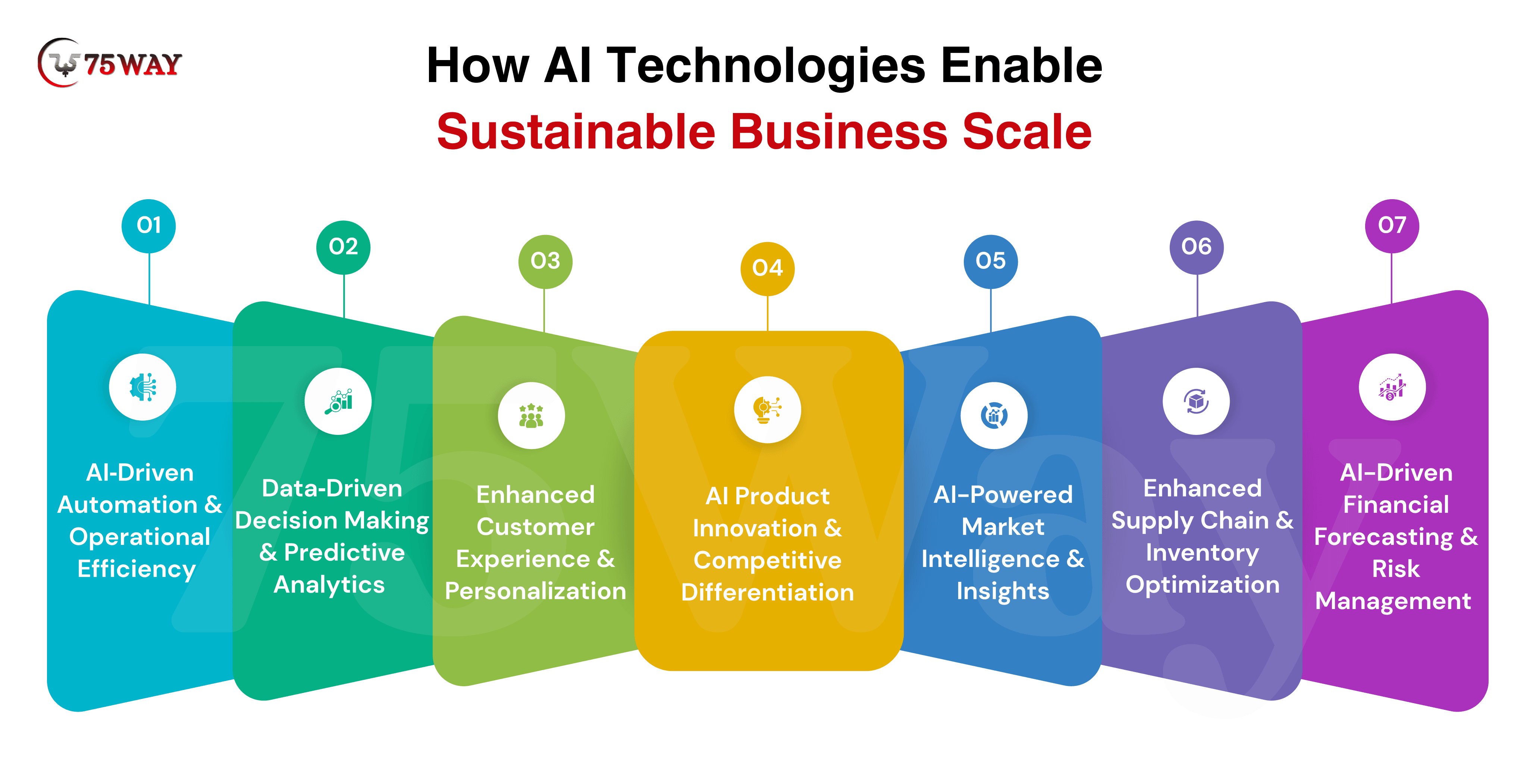
AI‑Driven Automation & Operational Efficiency
Let’s start with the biggest growth killer, which is operational efficacy. If you are still using the manual processes that slow your teams down more than competitors ever could. AI-driven automation removes that challenge by handling repetitive tasks across departments. It automates your workflows and manages data entry, invoicing, and lead scoring with precision.
AI chatbots and virtual assistants now deliver round-the-clock customer support across industries. These smart solutions streamline CRM operations and HR onboarding. Hence, businesses experience lower operational costs and their teams become free to focus on strategy, innovation, and revenue growth.
Data‑Driven Decision Making & Predictive Analytics
When operations are smooth and processes are automated, the next bottleneck is decision-making. AI-powered analytics works through huge data sets in minutes rather than weeks. Companies also use predictive analytics and machine learning solutions to forecast demand, predict customer churn, and refine pricing strategies. Real-time data signals drive inventory planning efficiencies. Thus, business scaling plans shift from reactive to proactive approaches to enable growth rather than risk.
Enhanced Customer Experience & Personalization
But growth is sustainable only if you keep customers engaged and retained. Customers expect more year after year, and it is no longer optional to provide real-time responses and hyper-personalized interactions. AI technology provides a solution to this problem, too. NLP-powered chatbots, Agentic AI, sentiment analysis, and dynamic personalization engines are now being adopted to improve the customer experience with AI. Their every interaction is so interactive, just like a real human. It enhances your business's credibility and trust and maximizes conversion rates. Hence, the value of your businesses is enhanced over time with smart, consistent engagement.
AI Product Innovation & Competitive Differentiation
Staying relevant in the market depends heavily on how quickly products evolve. AI product development solutions speed up research, testing, and iteration by spotting patterns and opportunities that humans often overlook. This enables faster, smarter feature optimization, reducing traditional innovation timelines. Instead of relying on costly trial-and-error methods, companies can enhance products intelligently, creating clear competitive differentiation. As a result, market expansion becomes achievable without unnecessary experimentation or wasted resources. It allows USA businesses to innovate confidently while staying ahead of competitors.
AI-Powered Market Intelligence & Competitive Insights
Market signals change faster than most teams can respond. Artificial intelligence (AI) tools monitor competitor movement, price changes, campaign performance, and consumers’ behavior in digital channels at all times. These tools detect them early, while trends are still obscure. Competitive gaps become visible instead of being buried in delayed reports. Now, marketing and sales teams can target smarter with real-time insights, not a stab in the dark. Strategic decisions are made with greater confidence because the data is always current. For US businesses, this trend suggests they should act faster, position more strategically, and stay ahead of competitors.
Enhanced Supply Chain & Inventory Optimization
As companies grow, small inefficiencies in the supply chain can quietly eat into profits, turning manageable operations into costly bottlenecks. AI-powered logistics software and app solutions help predict demand patterns by combining historical data, seasonal trends, and real-time market signals. These solutions keep inventory levels balanced and prevent both overstock and sudden shortages. This predictive power extends to logistics planning, where intelligent route optimization and automated scheduling streamline deliveries and reduce delays. Moreover, warehouse operations run more smoothly with accurate forecasts that guide resource allocation. For startups and mid-sized US businesses, these AI-driven insights make scaling feel controlled rather than chaotic, even when unexpected demand spikes or market disruptions occur.
AI-Driven Financial Forecasting & Risk Management
Scaling a business often depends on financial clarity, and uncertainty can slow growth or create costly mistakes. AI-powered fintech software and products address this by analyzing years of financial history alongside real-time data. AI solutions provide accurate forecasts for revenue, expenses, and cash flow scenarios. Potential risks surface early through anomaly detection, helping teams spot fraud, errors, or inefficiencies before they impact operations. With these insights, budget planning becomes precise rather than guesswork, while investment decisions gain confidence thanks to data-backed projections. For US businesses, this approach transforms financial management into a stable foundation for growth, allowing expansion strategies to proceed with confidence rather than relying on instinct alone.
Also Read: How to Build IoT Apps in 2026: A Guide for Startups, Founders & Business Owners
Why AI Solutions Are Critical for Scaling Businesses in 2026?
Things changed fast, didn’t they? If you are running a business, you have probably felt this already. AI solutions have become essential for scaling businesses due to their speed, accuracy, and adaptability. Now, markets adapt faster with AI than human teams can react. Thus, customer expectations demand personalization, and competition grows globally from day one. AI development solutions are widely adopted around the globe, especially in USA. Let's explore the growth opportunities of AI in today's markets.
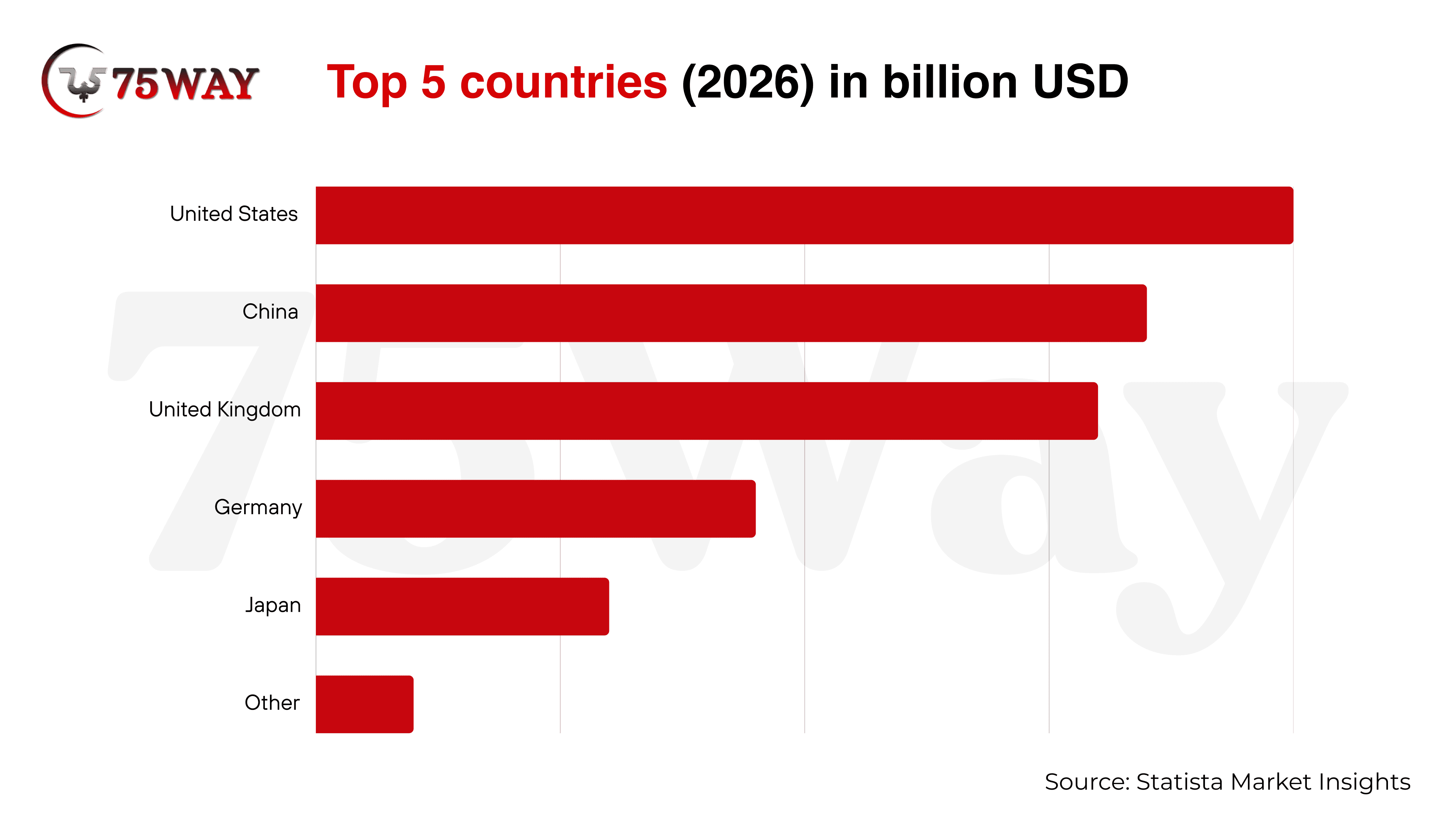
- According to UNCTAD report, “The artificial intelligence sector is expected to grow rapidly, potentially reaching $4.8 trillion by 2033.”
- MarketsandMarkets report indicates, “the global AI market could achieve a value of USD 2,407.02 billion by 2032, expanding at an estimated CAGR of 30.6%.”
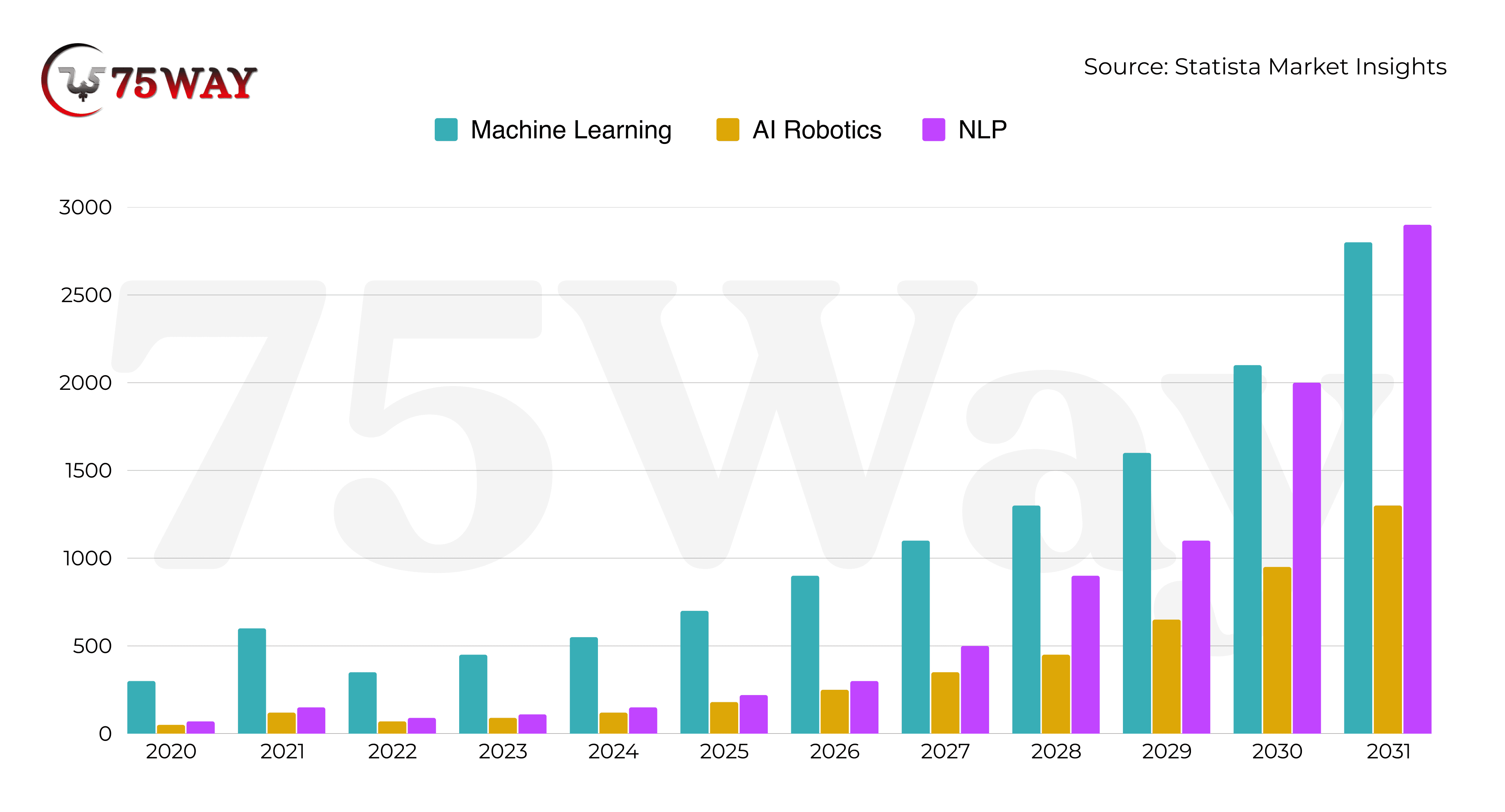
- Statista Market Insights states, “The artificial intelligence market is anticipated to reach approximately $$1.68T with an annual growth rate of CAGR of 37.00%by 2031.”
Strategic AI Adoption Framework for US Companies
Growth often falters when technology decisions happen without a plan. Scaling succeeds when AI adoption follows a structured approach that aligns tools and investments with measurable business outcomes. Random experiments rarely deliver lasting results, while a clear framework ensures each initiative moves the company closer to growth goals.
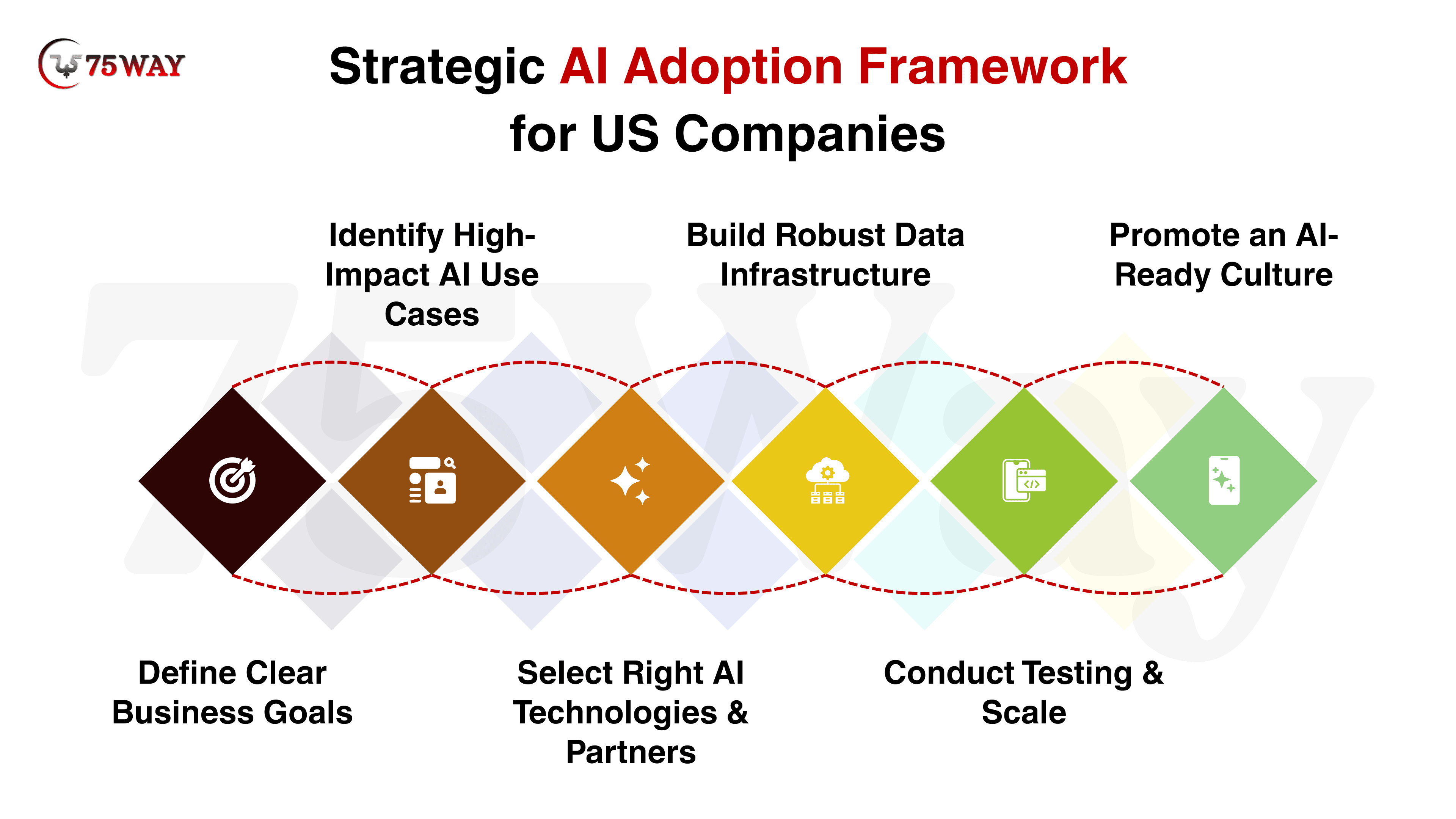
Define Clear Business Goals: Business objectives create direction for every AI initiative. Goals such as increasing revenue, lowering costs, retaining customers, or improving operational speed must be defined before choosing technology. With clear targets, teams measure success accurately and focus efforts on initiatives that matter most.
Identify High-Impact AI Use Cases: The next stage is to identify AI tools with significant impact, deliver early returns, and visible results. Areas like customer support automation, advanced analytics, and workflow optimization often deliver immediate benefits. Businesses must prioritize these applications to drive growth while demonstrating the value of AI to stakeholders.
Select Right AI Technologies & Partners: The selection of a technology stack and AI development partner is required to create long-term success. These are major factors in the adoption of AI to minimize risk and shorten deployment time. Businesses must align technology with high-impact use cases to ensure smooth implementation and attain higher returns from every investment.
Build Robust Data Infrastructure: Reliable AI outcomes depend on clean, organized data. Structured pipelines, security standards, and compliance practices create a foundation for accurate predictions and trustworthy insights. Strong data governance prevents errors and delivers long-term business value as operations expand with AI solutions.
Conduct Testing & Scale: When your AI product is developed, the next step is to test and validate AI performance before full deployment. Scalable launch leads to providing consistent results across departments while minimizing disruption. This stage allows teams to refine processes based on evidence rather than assumptions, and supports sustainable business growth.
Promote an AI-Ready Culture: Your teams can adopt developed AI tools easily when they understand their benefits and potential earlier. A workforce prepared for change encourages faster acceptance, smarter use of technology, and cross-department collaboration. You must define the benefits of these tools and give training. When employees see value in AI, every initiative gains traction more quickly and delivers measurable impact.
Quick Snapshot: Top AI Trends Businesses Must Follow in 2026
Major Metrics To Measure AI ROI
Now you know about the scalability factors, growth opportunities, and strategic approach to adopt AI products in your business. The next crucial stage is to evaluate the ROI after implementing AI in your daily workflow. This stage determines that scaling initiatives remain profitable and aligned with strategic goals. Without clear indicators, businesses risk investing heavily in technology without understanding its real impact. Thus, it is essential to track the right metrics to directly link AI performance to growth, efficiency, and customer outcomes.
Cost Reduction: Cost savings from automation and process optimization show how AI reduces operational burden. You can compute key cost parameters, such as operational cost per department, manual task hours saved, and error reduction rates, to analyze the performance of your AI tool. These factors highlight how AI eliminates repetitive work, decreases mistakes, and enables teams to focus on strategic priorities and improve profitability.
Revenue Growth: Revenue-focused metrics reveal the way AI tools drive business expansion. Metrics such as sales conversion rate, average order value, and customer lifetime value (CLV) are used to evaluate the effectiveness of AI-driven tools. These factors are helpful to understand the value of personalization, targeted marketing, and predictive recommendations. These insights demonstrate tangible returns on AI investment through increased sales and higher customer engagement.
Customer Experience: The impact of AI apps and tools on engagement and satisfaction can be quantified with average response time, Net Promoter Score (NPS), and customer retention rate. Faster responses, personalized support, and improved service quality lead to stronger relationships, repeat business, and measurable improvements in overall customer experience.
Productivity Efficiency: These metrics show how AI enhances operational workflows. Productivity metrics, such as tasks completed per employee, project throughput, and process cycle time reduction, are evaluated to improve efficiency. For businesses in USA, AI-enabled tools reduce bottlenecks, help teams accomplish more in less time, and support scalable growth without adding headcount.
Time-to-Market: AI-powered tool accelerates the development and deployment of products or services. Metrics such as average product development cycle, release frequency, and deployment lead time are used to assess the product launch time. Shorter timelines allow USA-based businesses to respond quickly to market changes, stay competitive, and capture opportunities before competitors react.
AI sage Metrics: Long-term AI success depends on adoption and system reliability. Metrics like model accuracy, system uptime, and user adoption rate reflect how effectively teams integrate AI into daily operations. High adoption and consistent performance indicate sustained ROI and the ability to scale AI solutions confidently.
Read More: How to Build an Astrology App Like Co-Star? A Strategic Guide 2026
How to Compute ROI of AI Solutions?
ROI measurement for Artificial Intelligence tools combines cost savings, revenue growth, productivity gains, and risk reduction into a single performance view. Now, let’s move further to know how to measure the ROI of AI products using the provided metrics.
Define Objectives: The initial step is to set measurable business goals, such as revenue growth, cost reduction, or customer retention, before implementing AI tools.
Identify Metrics: The next stage aims to select specific indicators like conversion rate, operational cost, or response time to evaluate AI performance across different areas.
Baseline Measurement: Establish pre-AI performance levels to compare results and ensure ROI reflects actual improvements rather than external factors.
Track Performance: Now, it’s time to continuously monitor the chosen metrics during AI deployment, capturing data trends and insights that demonstrate the real-time effectiveness of AI initiatives.
Analyze Impact: This phase compares current performance with prior performance to identify gains in revenue, customer satisfaction, and other strategic outcomes.
Calculate ROI: Here, you must use financial formulas to quantify AI returns, validating both short-term and long-term benefits.
ROI = (Gain – Investment) ÷ Investment
Optimize Strategy: The final stage is to refine AI models, processes, and usage based on insights to improve results and increase ROI for future scaling.
Read More: Top 10 IoT Development Companies in USA
AI Trends That Will Influence Markets 2026 and Beyond
Artificial intelligence continues to redefine the way businesses operate and grow. Emerging AI trends are reshaping not only scalability but also strategy, customer experience, and operational efficiency across industries. Companies that understand and adopt these trends gain a clear advantage in fast-moving markets.
Generative AI: Content creation, product design, and even code generation benefit from generative AI tools. These technologies enhance development cycles, reduce repetitive tasks, and allow teams to focus on creativity and innovation. Businesses can launch products faster, test ideas more efficiently, and stay ahead of competitors with gen AI solutions.
AI-Native Automation: Automation moves beyond isolated tools and enters a fully integrated ecosystem. End-to-end platforms streamline workflows, connect departments, and orchestrate complex processes without constant manual oversight. This approach eliminates bottlenecks, improves consistency, and frees teams to work on high-value tasks that drive growth.
Real-Time Predictive Analytics: Instant forecasting of demand, pricing, and customer behavior enables companies to make precise decisions. Predictive data analytics highlights emerging trends, identifies risks, and helps teams respond faster to market changes. For USA businesses, this capability improves agility and ensures that opportunities are captured before competitors react.
AI Integration Into Core Product: Existing systems can gain intelligence when AI is integrated into their design. Embedded features, like smart recommendations, adaptive interfaces, or predictive functionality, enhance user experience and differentiate offerings in crowded markets. Companies can increase engagement, retention, and overall product value through seamless AI integration.
Hybrid of AI & Human Collaboration: In 2026, human insight is integrated with AI precision to produce better outcomes than either alone. Businesses can leverage AI for data analysis, forecasting, and optimization while applying human judgment to creativity, strategy, and relationship-building. This collaboration improves decisions, balances efficiency with nuance, and strengthens operational performance.
AI-Driven Personalization: Customer experiences now demand hyper-personalized experience rather than generic ones. AI analyzes behavior, preferences, and past interactions to tailor content, recommendations, and services. This level of personalization drives loyalty, increases lifetime customer value, and makes businesses more competitive in an environment where tailored experiences are expected.
Final Remarks
To conclude, AI development now feels less like an experiment and more like a requirement for growth across USA businesses. AI automation reduces costs while maintaining quality. On the other hand, predictive analytics brings clarity where uncertainty once slowed decisions. Personalization builds stronger customer relationships, even at scale. A strategic adoption framework lowers risk and keeps ROI on track. Companies that align AI initiatives with real business goals gain speed, resilience, and a lasting competitive edge in 2026 and beyond. Real growth opportunities already exist for businesses ready to act now. Partner with 75way, your right AI app development company in USA to avail a free strategic session on AI and roadmap.
FAQs
How Can Startups In The USA Use AI to Grow Their Business?
Startups in the USA use AI to grow their business by gaining efficiency and clarity early in their journey. Automation reduces manual workload across operations, customer support, and marketing, allowing small teams to perform at a much higher level. Data intelligence uncovers customer behavior patterns that guide smarter decisions, improve targeting, and support accurate forecasting without relying on guesswork.
Growth also accelerates through personalization and scalability. AI tailors user experiences, recommendations, and communication at scale, increasing conversion rates and customer retention. Predictive insights help startups allocate resources wisely, manage risk, and adapt quickly to market changes, creating a strong foundation for sustainable growth.
What Are The Biggest Benefits Of AI for Business Growth?
AI supports business growth by improving efficiency, decision clarity, and customer engagement. Smarter systems reduce costs, enhance experiences, and enable scalable operations without increasing operational complexity.
Operational Efficiency: AI automation reduces manual workload, minimizes errors, and allows teams to focus on higher-value business priorities.
Data Intelligence: Advanced analytics transforms large datasets into actionable insights that enable faster, more accurate decisions.
Customer Personalization: Tailored interactions improve engagement, satisfaction, and long-term loyalty across multiple customer touchpoints.
Scalable Growth: AI-powered systems support expansion without proportional increases in staff, infrastructure, or operational expenses.
What Are The Risks of Implementing AI in Business?
No doubt, AI tools offer significant benefits for businesses. But certain risks require careful attention to avoid setbacks during growth and implementation.
Data Quality: Inaccurate or incomplete data leads to unreliable outputs, affecting decisions, predictions, and overall system performance.
Security Exposure: Sensitive business data is at greater risk without robust protection, governance standards, and regulatory compliance.
Adoption Resistance: Limited understanding among teams slows acceptance, reducing effectiveness and overall value from AI initiatives.
Cost Overruns: Unclear objectives and poor planning increase investment without delivering measurable or sustainable business returns.
Is AI Development Suitable for Small and Mid-Sized US Businesses?
AI development fits well for small and mid-sized US businesses when aligned with clear goals and practical use cases. Automation reduces manual workload, improves efficiency, and lowers operational costs without large teams or infrastructure. Data insights support smarter decisions, helping businesses compete with larger players. Scalable AI solutions allow gradual adoption, making growth manageable, controlled, and sustainable as business needs evolve.