More than 60% of a typical sales or support team’s time is lost to repetitive tasks, including manual follow-ups, CRM updates, internal coordination, and ticket sorting. For startups and growing companies in USA, that time loss leads to missed revenue, slower growth, and frustrated teams.
If we talk about the early 90s, there was no solution or alternative for manual tasks. Fortunately, we are living in the digital era, characterized by artificial intelligence, Web 3.0, and robotics. Where the automation of everything from sales to customer support is possible.
Unlike basic automation, agentic AI now handles a wide range of sales, support, and operations tasks with decision-making capabilities. AI agents now enable sales conversations to move quickly, support requests to reach the right resolution faster, and automate operations.
This guide explains how AI agents work and how AI agents for sales in the USA deliver measurable impact. Moreover, by the end of the guide, you will learn a complete strategy for integrating AI agents into your daily workflow, backed by real-world enterprise patterns already visible across US companies.
What Exactly Is An AI Agent?
An AI agent refers to an autonomous software entity that observes data, understands intent, makes decisions, and takes actions to achieve specific business goals. Different from the traditional tools, AI agents adapt based on context, think for themselves, and give personalized responses. These agentic AI solutions connect machine learning, natural language processing, and system integrations to complete tasks across multiple platforms.
How Does an AI Agent Work?:
An AI agent operates in a continuous “observe–plan–act” cycle to execute any task. This working process completes any task without constant human oversight. AI agents understand situations, make decisions, and complete tasks independently with minimal human involvement.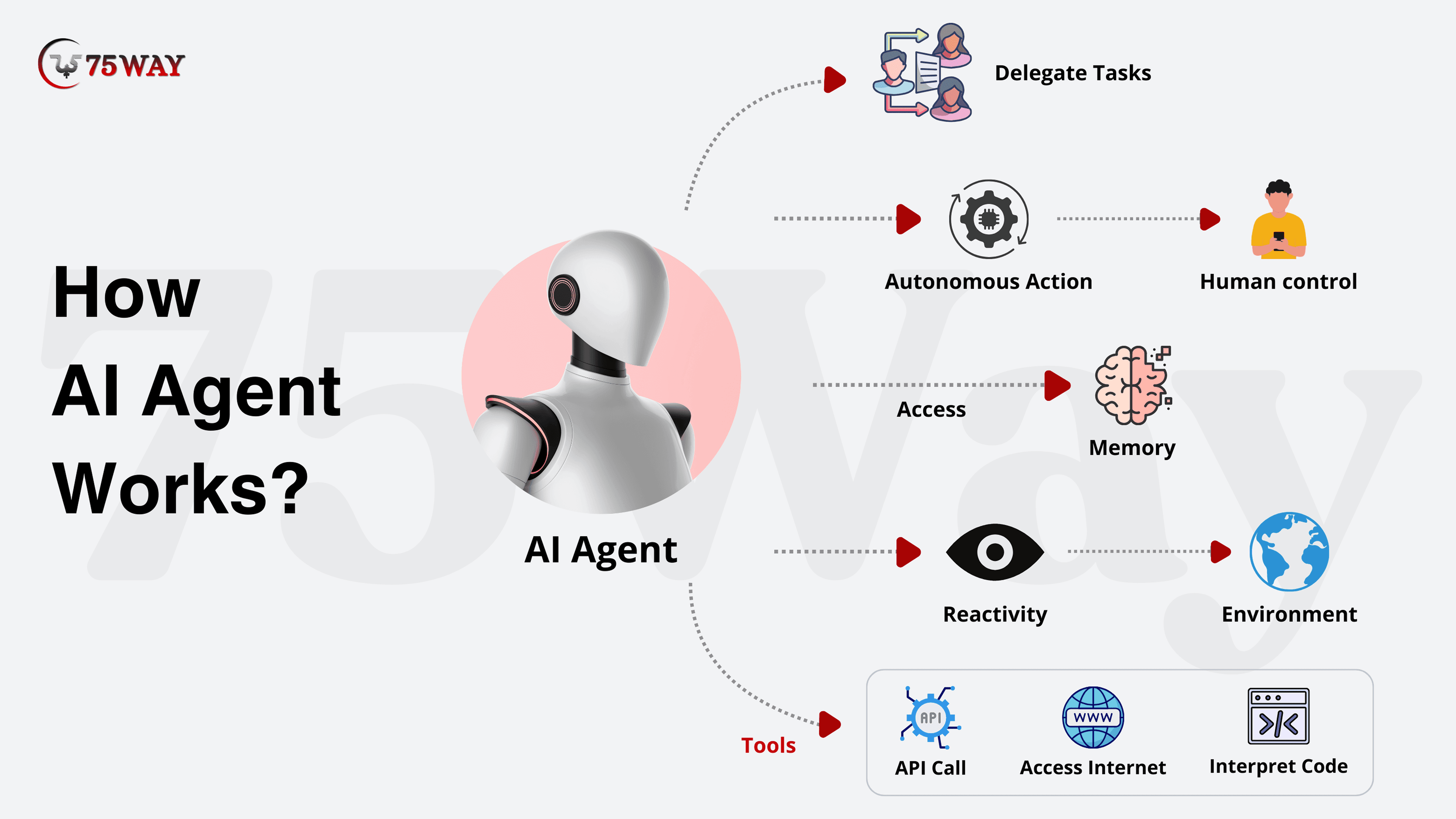
Perception: First of all, an AI agent gathers data from user inputs, documents, applications, APIs, and digital environments. Then, it understands context, detects intent, and recognizes the current state. Reasoning & Planning: In the next stage, Large Language Models (LLMs) analyze collected data and interpret intent. They break goals into structured steps, evaluate possible actions, and select the most effective path forward. Action: At this stage, an AI agent interacts with connected tools, software systems, APIs, or databases to make decisions. Then, it completes tasks and triggers required workflows. Memory: When an AI agent makes a decision, its short-term memory maintains ongoing context, while long-term memory stores learned knowledge, preferences, and past outcomes. This stage aims to support consistency and smarter decisions. Learning & Adaptation: In the last stage, performance improves over time as feedback and results refine decision logic. Hence, an AI agent can adapt strategies, reduce errors, and optimize future actions. Quick Read: How to Build AI Agents From Scratch? Step-By-Step Guide
How AI Agents Drive Scalable Sales Automation?
AI agents for sales automation remove confusion across the entire revenue journey. Every interaction, insight, and follow-up occurs at the right time without delay. With these AI tools, sales teams can focus on closing deals rather than managing systems. These tools allow sales growth without hiring pressure. That balance explains why AI agents for sales in the USA already sit at the center of modern revenue engines.
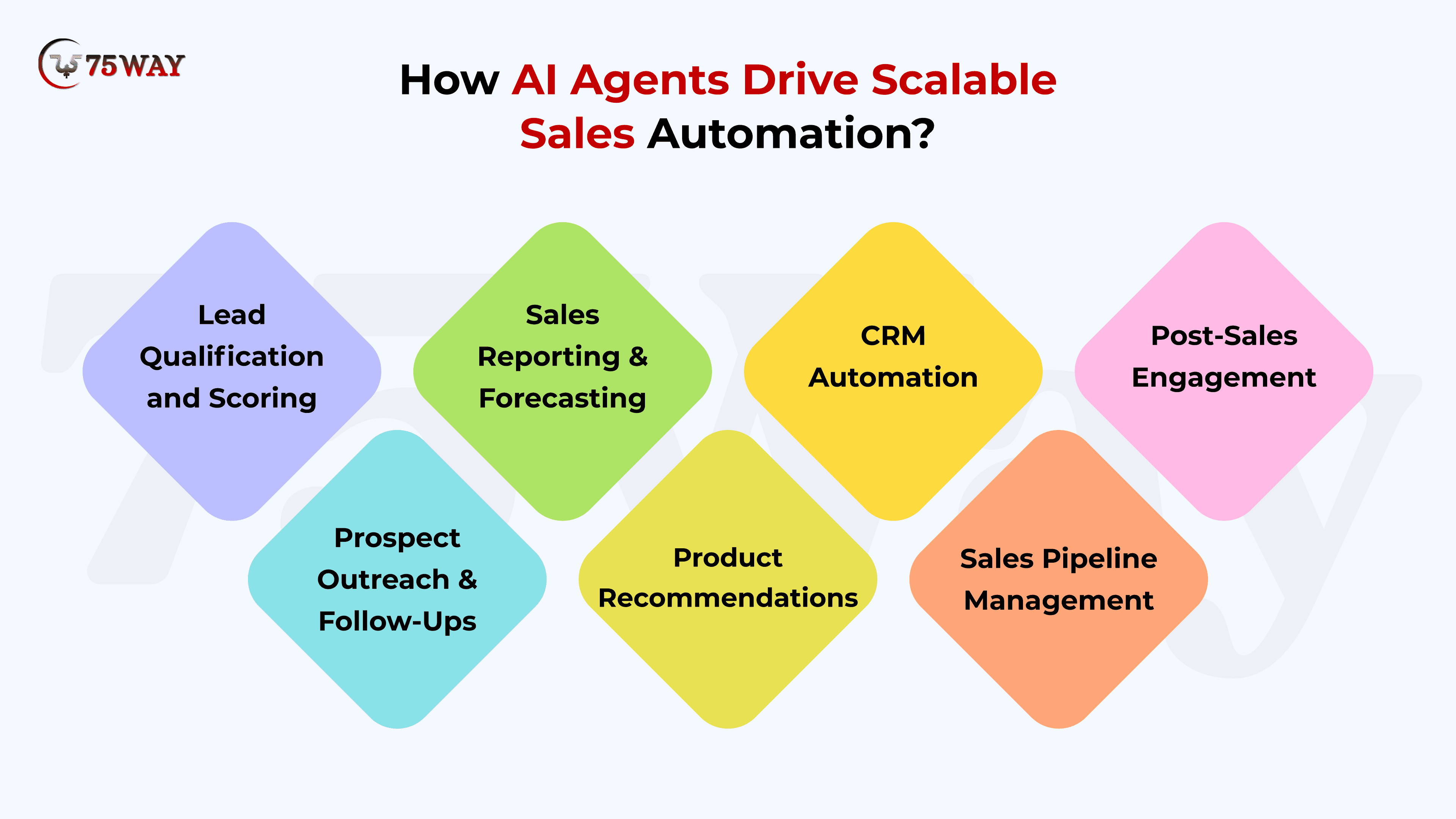
Lead Qualification and Scoring: AI agents analyze behavior, intent, demographics, and engagement signals in real time to qualify leads. These tools analyze high-value prospects automatically and nurture low-intent leads. Hence, sales representatives receive prioritized opportunities instead of raw lists. This enhances conversion rates by aligning outreach with readiness rather than relying on guesswork.
Prospect Outreach & Follow-Ups: When AI agents analyze outreach across email, chat, and messaging platforms, follow-ups no longer depend on rigid schedules. Engagement data reshapes timing and tone as prospects interact, pause, or re-engage. Communication stays relevant without constant manual intervention. This continuity keeps prospects responsive even while sales teams prioritize active negotiations.
Sales Insights & Deal Forecasting: Sales forecasting improves as AI agents observe how deals actually move through the sales pipeline rather than how teams expect them to move. These agents measure engagement depth, velocity shifts, and past deal closure behavior and inform projections in the background. They predict observable patterns and plan conversations to enhance results.
Product Recommendations: AI agents utilize NLPs and sentiment analysis to offer more natural suggestions after analyzing what customers explore, purchase, and revisit over time. Context replaces assumptions and enables recommendations to surface in ongoing conversations rather than in scripted pitches. When buyers recognize relevance immediately, they are more likely to buy. Hence, AI agents help drive growth and revenue.
CRM Automation: CRM systems stabilize when AI agents record interactions from calls, emails, and messages as they occur. That immediate engagement prevents gaps as conversations move quickly across channels. With fewer gaps, accuracy stops depending on individual follow-through. Leadership, therefore, evaluates performance using data that reflects reality rather than approximation.
Sales Pipeline Management: The sales pipeline becomes clearer when AI agents continuously track deal progression. Continuous visibility exposes friction while outcomes are still influenceable. Managers respond with informed adjustments rather than last-minute escalation. In this way, with sales AI agents, teams can preserve momentum because intervention happens before disruption.
Post-Sales Engagement: After contracts are signed, communication often becomes inconsistent. AI agents maintain contact through onboarding sequences, usage checkpoints, and renewal indicators. Customers receive timely engagement without excessive outreach. Long-term value grows as trust develops through reliability, not persuasion.
Read More: How AI Development Helps US Companies Scale Faster
How AI Agents Transform Customer Support
Most of the time, customer support reaches a breaking point when volume increases. AI agents change that equation by handling intent detection, urgency assessment, and resolution flow at the first point of contact. As a result, response delays are reduced without adding pressure on teams. Customer satisfaction improves when issues are resolved promptly. Human agents remain focused on cases that require judgment, not repetition.
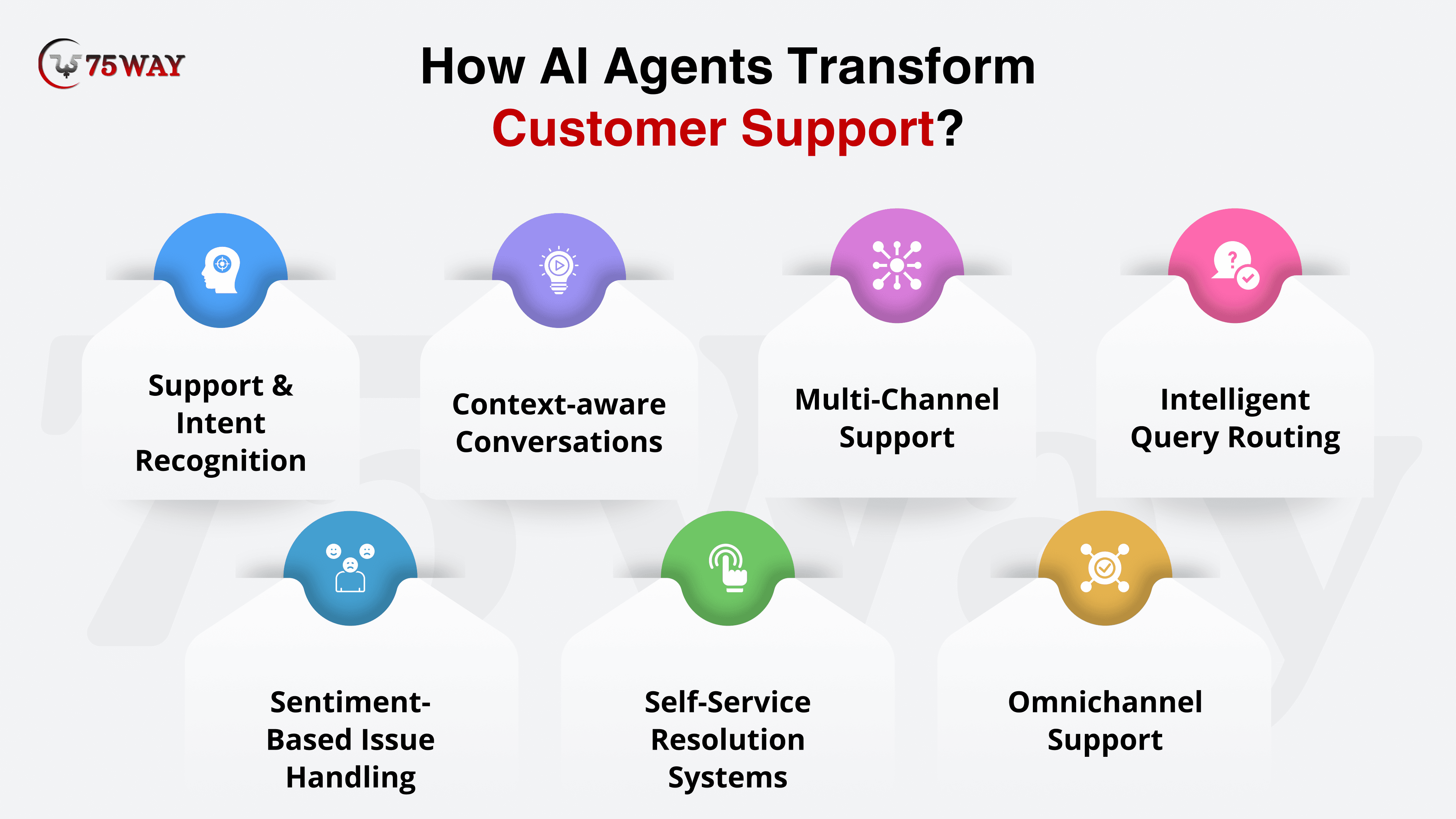
Support & Intent Recognition: Every support request carries a purpose, even when phrased poorly. AI agents identify that purpose by evaluating language structure, recurring terms, and contextual cues within the first interaction. Requests no longer enter generic queues. Each issue follows a predefined resolution track from the beginning. Customers experience faster outcomes because misrouting is eliminated.
Context-aware Conversations: AI agents maintain continuity by automatically referencing prior tickets, account status, and transaction history. Responses align with the customer’s situation rather than generic scripts. Communication feels informed because it is built on existing data, not assumptions. Confidence grows when customers realize they are understood without having to repeat details.
Multi-Channel Support: Modern customers prioritize convenience over diverse channel choice. AI agents support that behavior by operating across chat, email, voice, and social platforms simultaneously. Their every interaction follows the same resolution logic, regardless of the entry point. Brand perception improves because reliability remains consistent across channels.
Intelligent Query Routing: Customer support delays often result from incorrect prioritization. However, AI agents resolve this issue by assessing issue complexity, account value, and urgency before routing begins. Critical cases reach experienced agents immediately. Straightforward requests resolve without escalation. Hence, support teams spend less time sorting requests and more time solving meaningful problems.
Sentiment-Based Issue Handling: AI agents evaluate tone, phrasing, and interaction patterns to identify frustration or dissatisfaction early. They detect frustration hidden in phrasing and repeated questions. When tension rises, urgent cases are flagged so experienced agents step in immediately. Customers feel heard before small frustrations turn into complaints. As a result, resolutions happen faster and with greater confidence on both sides.
Self-Service Resolution Systems: Every customer prefers to resolve issues independently when guidance is clear. AI agents deliver contextual help by recommending relevant articles, walkthroughs, or next steps based on the user’s specific issue. Customers receive solutions faster without abandoning the process. With AI agents, support teams benefit from reduced inbound volume.
Omnichannel Support: Customer journeys often span multiple channels before resolution. AI agents automatically preserve context across transitions and conversations resume without resets or duplication. In this way, customers maintain progress regardless of channel changes. Customer support AI agents maximize long-term loyalty by providing personalized support.
Read More: How to Build an Astrology App Like Co-Star? A Strategic Guide 2026
How AI Agents Improve Operations?
Most teams spend hours manually tracking tasks, approvals, and reports, which delays project completion. AI agents automatically record task progress, complete routine approvals, and verify data entries across systems. Teams meet deadlines, and updates reflect the latest information in every department. Daily operations run according to schedule, and errors that previously required repeated corrections are minimized.
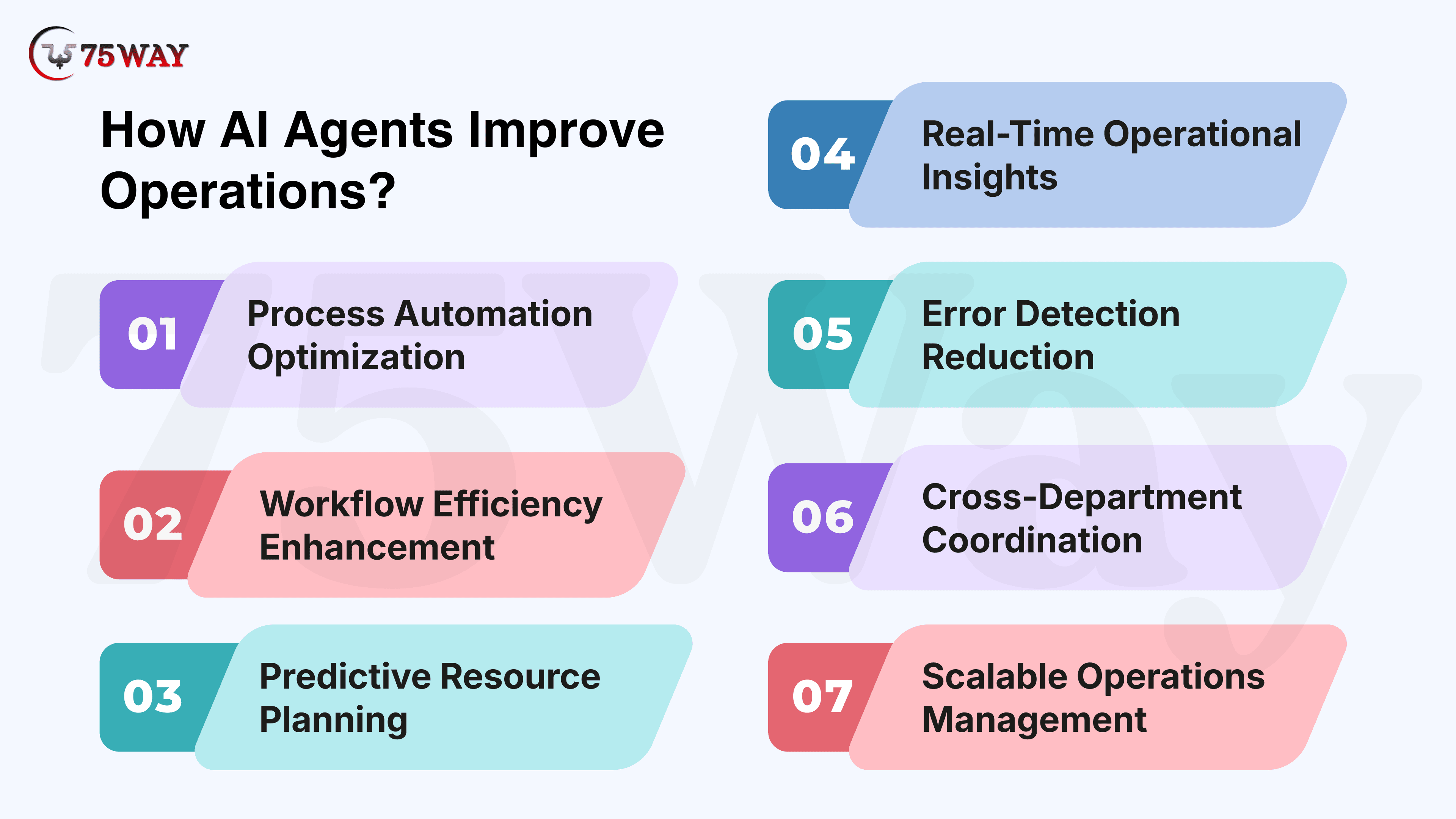
Process Automation Optimization: AI agents handle repetitive tasks such as approvals, data entry, and report generation without human intervention. Teams no longer need to check each step manually, which reduces missed actions and inconsistencies. Completed outputs consistently meet standards, freeing staff to focus on tasks that require analysis or judgment.
Workflow Efficiency Enhancement: When multiple teams collaborate, delays often occur due to unclear task dependencies. Thus, role-based AI agents coordinate assignments across teams and execute each task from beginning to end in sequence. Managers see which items are pending, which are complete, and which require attention. These virtual assistants identify challenges before they delay overall project timelines.
Predictive Resource Planning: Staffing and resource allocation often lag behind actual demand. AI agents track workload patterns and forecast upcoming needs for personnel, equipment, or materials. Teams avoid unnecessary overtime during busy periods and idle time during slow periods. Planning decisions are based on actual expected workload rather than estimates.
Real-Time Operational Insights: Manually monitoring operational performance across multiple systems is difficult. AI agents track key performance indicators and identify deviations from standard operating ranges. Managers receive immediate information on issues such as late tasks, missing approvals, or capacity overload. Decisions about task assignment or resource allocation are made with up-to-date information.
Error Detection Reduction: AI agents verify data automatically at every step, checking for missing fields, duplicate entries, or conflicting information. When inconsistencies are found, the system flags them instantly. With smart AI agents, teams no longer need to manually cross-check records, saving time. Historical records are maintained to enable managers to track changes, identify recurring issues, and implement preventive measures as needed.
Cross-Department Coordination: Departments such as sales, support, finance, and operations rely on different systems, which often results in misaligned information. AI agents synchronize records automatically so that every department sees the same data. Teams execute tasks using accurate, consistent information, and handoffs occur without missing details.
Scalable Operations Management: As project volume increases, manual tracking slows progress. AI agents maintain consistent task oversight across teams without additional staff. Processes remain on schedule, deadlines are met, and outputs maintain expected quality levels. Teams can handle higher workloads without errors accumulating.
Also Read: Top 10 Dating Apps in USA in 2026: A Complete Guide
Why AI Agents Matter for USA-based Businesses in 2026?
Business competitiveness in the USA depends on speed, accuracy, and experience. AI agents support 24/7 engagement, reduce repetitive work, minimize human error, and ensure data consistency across platforms. Teams refocus on growth instead of maintenance.
- According to Statista Market Insights, “The total market value of AI agents expected to approach $200 billion within the next decade, with compound annual growth rates above 40%.”
- MarketsandMarkets report indicates, “The AI agents market is expected to expand rapidly to USD 52.62 billion by 2030, driven by a strong 46.3% CAGR.”
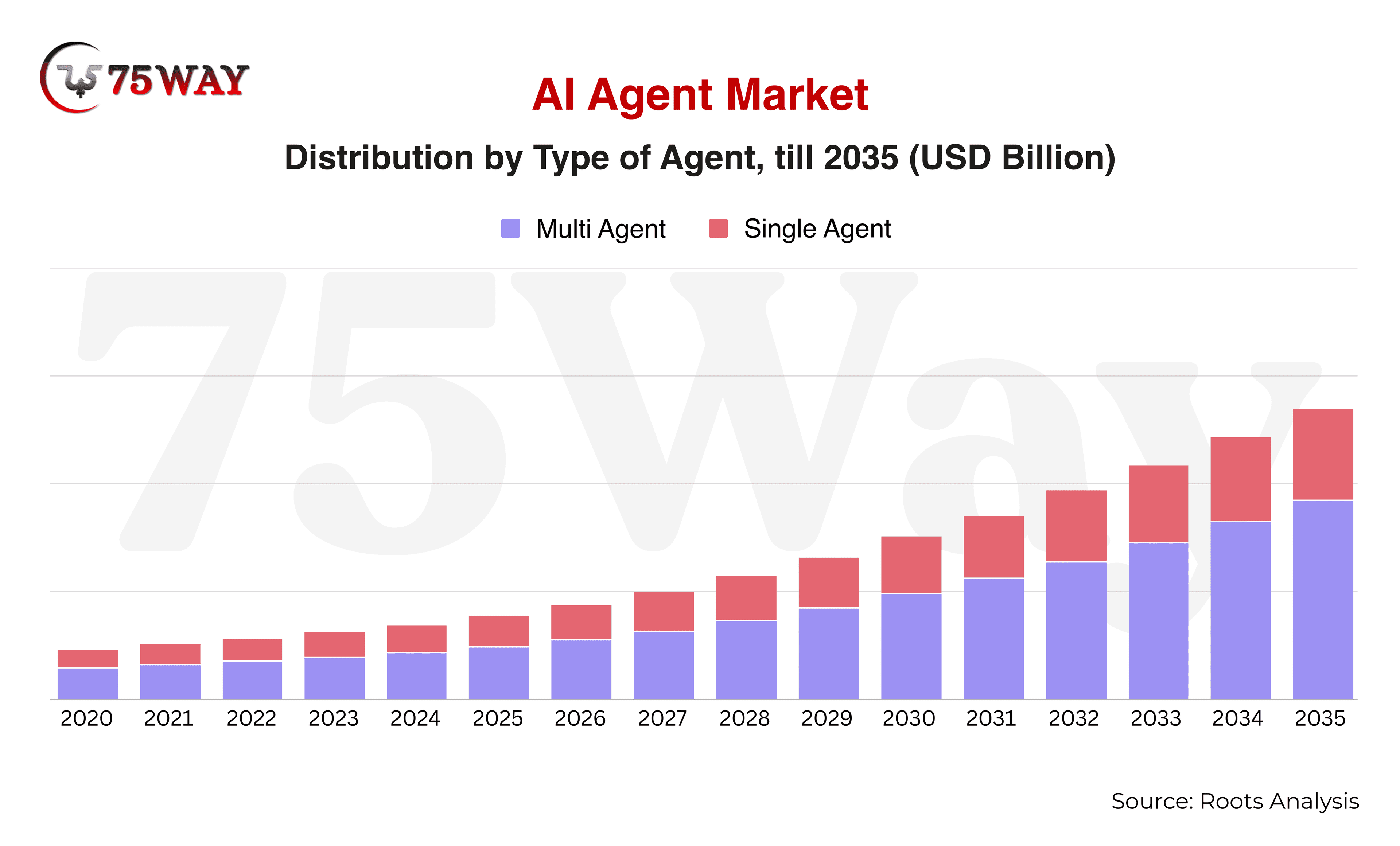
- The Roots Analysis report states, “The AI agents market could grow to around $220.9 billion by 2035, with growth accelerating at a strong 36.55% CAGR.”
How Founders Can Deploy AI Agents: Step-by-Step Process:
Deploying AI agents does not have to be overwhelming. Founders can achieve measurable results by following a structured approach that identifies high-impact areas, minimizes risk, and ensures every system works together efficiently. A clear, methodical process allows teams to adopt AI without disruption, making the technology a practical extension of daily operations.Step 1: Map Your Current Business Workflows
Before introducing an AI agent, document all recurring tasks, decision points, and dependencies across teams. Identify which tasks consume the most time or create bottlenecks. Mapping workflows highlights high-impact areas where AI can deliver measurable results first, ensuring implementation targets processes that truly matter.
Step 2: Choose the Right AI Agent Tools
Selecting tools requires evaluating integration capabilities, scalability, and compliance with security standards. Consider flexibility for customization and alignment with long-term business goals. The right AI agent supports multiple channels, connects with existing systems, and adapts to evolving operational requirements without creating additional complexity.
Step 3: Integrate AI Agents with Existing System
Seamless integration is critical for consistent performance. AI agents must integrate with CRMs, helpdesks, ERP platforms, and communication tools to ensure data flows accurately between systems. Proper integration prevents silos, ensures records remain up to date, and enables AI agents to act on real-time information without manual intervention.
Step 4: Train and Customize AI Agents
AI agents perform best when trained to follow specific workflows, policies, and brand tone. Customization ensures responses, approvals, and automation align with company standards. Continuous feedback from human teams helps the AI learn and adapt, gradually increasing accuracy and operational effectiveness across all tasks.
Step 5: Start with a Minimal Scope and Scale
When AI agents are trained, it is time to begin deployment with a limited scope, such as a single department, process, or task type. You must validate performance carefully and adjust configurations based on real-world results. A gradual launch reduces operational risk and allows teams to build trust in the AI agent before expanding its responsibilities across the organization.
Step 6: Monitor KPIs and Optimize
After deployment, the final stage is to track key performance indicators, including task completion rates, error reduction, response times, and workload distribution. U.S. businesses must utilize these metrics to refine AI agent behavior and adjust workflows. Moreover, regular monitoring ensures AI agents deliver consistent results to improve operational efficiency over time.
Quick Snapshot: Top 10 IoT Development Companies in USA
Conclusion
To summarize, modern growth requires automation that operates independently while aligning with business processes. AI agents handle tasks across sales, support, and operations without adding extra workload for teams. Revenue tracking becomes faster, operational costs remain predictable, and customer interactions stay accurate. Founders can achieve efficiency, scalability, and reliability by selecting the right AI agent development company and implementing solutions carefully. Opportunities for measurable improvements exist across industries, making early adoption a practical advantage.
FAQs
What Tasks Can AI Agents Automate?
AI agents can take over repetitive and high-volume tasks across multiple departments. In sales, they handle lead qualification by analyzing behavioral and engagement signals, manage follow-ups, and automatically update CRM records. In support, they route tickets, provide context-aware responses, and suggest solutions from knowledge bases. Across operations, they coordinate workflows, generate reports, and forecast resource needs. This allows human teams to focus on strategic decisions, customer relationships, and complex problem-solving while ensuring routine processes are executed reliably.
How Much Does AI Agent Automation Cost?
The cost of AI agent automation varies based on factors such as the number of processes automated, system integrations, and customization requirements. Simple AI agents, such as chatbots handling rule-based tasks, typically cost $1000 to $13000+. Mid-level agents with natural language processing for customer support cost between $15000 and $65,000+. Moreover, the cost to create an advanced AI agent ranges from $75,000 to $110,000+. Enterprise AI agents can cost $90,000 or more to develop.
Simple AI Agents: These AI agents cost between $1,000 to $13,000 and handle basic rule-based tasks.
Mid-Level AI Agents: The cost of moderate AI agents ranges from $15,000 to $65,000, and they manage customer queries.
Advanced AI Agents: These AI agents cost $75,000 to $110,000 and automate complex workflows and integrations.
Enterprise AI Agents: The cost to create enterprise-grade AI agents lies between $90,000 or more due to advanced automation and customization.
Do AI Agents Replace Human Staff?
No, AI agents are not a replacement of human workforce. AI agents are designed to augment human teams, not replace them. They handle repetitive, predictable tasks, freeing employees to focus on activities that require judgment, creativity, and relationship-building. For example, sales AI agents qualify leads, so human representatives can spend more time on high-value prospects. Customer support AI agents handle routine inquiries, while human agents handle complex cases. These agents improve overall productivity, reduce burnout, and allow employees to contribute to strategic initiatives.
Are AI Agents Secure And Compliant With USA Privacy Rules?
Enterprise-grade AI agents adhere to strict security and compliance standards aligned with US and international regulations. They are often SOC 2 certified and adhere to privacy laws such as HIPAA (for healthcare), CCPA (California Consumer Privacy Act), GDPR (for EU interactions), and industry-specific standards. Data encryption, role-based access controls, and audit logging ensure sensitive customer and business data remains protected. Organizations can implement AI agents confidently while maintaining compliance with federal and state privacy requirements and mitigating regulatory risks.
Which Industries Benefit Most From AI Agents?
AI agents provide measurable value across industries where repetitive workflows, high-volume interactions, or data coordination are critical.
SaaS: Automate lead scoring, onboarding tasks, and subscription management.
eCommerce: Handle order tracking, customer queries, and product recommendations.
Healthcare: Support patient intake, appointment scheduling, and medical record updates.
Finance: Streamline account management, transaction monitoring, and reporting.
Logistics: Coordinate shipment tracking, route updates, and inventory management.
Professional Services: Manage client communications, project updates, and administrative tasks.
These industries see rapid efficiency gains, faster decision-making, and fewer operational errors, making AI agents a practical investment for scaling without increasing staff in proportion.