Summary
Uber clone apps are on-demand ride-hailing solutions that connect passengers with nearby drivers through real-time GPS, booking, and payment systems. This blog explains their working model, features, development process, cost, challenges, and monetization strategies, helping businesses build scalable, competitive, and profitable transportation platforms efficiently.
Quick Overview
- Global ride-sharing market hit $42.9B in 2024, rising strongly to $96.9B 2030
- Uber clone apps enable fast, scalable ride-hailing business launch with worldwide success potential
- Cost efficiency and reduced development time make clone apps attractive to startups today
- Challenges include driver supply competition, performance, and security concerns, overall industry-wide
- Scalable cloud infrastructure ensures real-time tracking and a smooth user experience, performance, and reliability
- Monetization includes commissions, surge pricing, subscriptions, and in-app advertising growth strategies that scale
The way people commute has transformed dramatically over the past decade. Traditional taxi systems have been replaced by seamless, app-based ride-hailing solutions that offer convenience, transparency, and speed. This shift has opened massive opportunities for entrepreneurs and businesses to launch their own ride-hailing platforms using Uber clone apps.
An Uber clone app is not just a copy of a popular platform. It’s a customizable, scalable, and feature-rich solution that enables businesses to build a competitive ride-sharing service. Whether you're a startup founder or an established enterprise, understanding how these apps work is critical before investing in development.
In this complete guide, you’ll learn everything, from architecture and workflow to features, cost, and monetization strategies.
What Is an Uber Clone App?
An Uber clone app is a ready-made ride-hailing software solution designed to replicate the core functionalities of popular taxi-booking platforms while allowing customization based on business needs.
It typically includes three main components:
- Passenger App for users to book rides
- Driver App for drivers to accept and manage rides
- Admin Panel for managing operations, analytics, and users
Instead of building everything from scratch, businesses use clone apps to reduce development time, cost, and risk.
How Uber Clone Apps Work: Step-by-Step Process
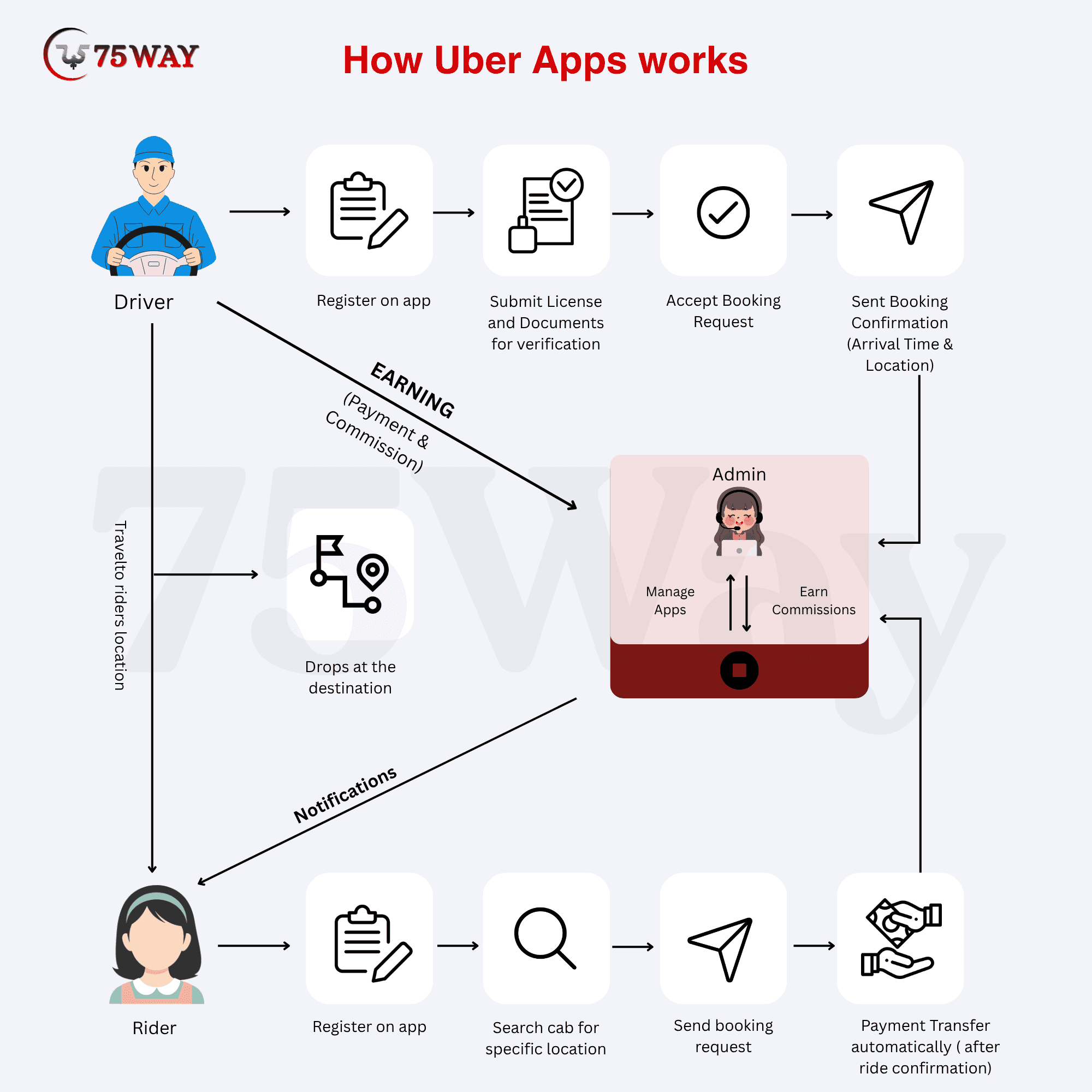
Understanding the workflow is key to building a successful platform. Here's how the system operates:

1. User Registration & Profile Setup
Users download the app, sign up using email, phone number, or social login, and create a profile. They can save preferred payment methods and frequently visited locations.
2. Ride Request
Passengers enter pickup and drop-off locations. The app calculates fare estimates using distance, time, and demand.
3. Driver Matching
The system uses GPS and algorithms to match the nearest available driver. Drivers receive ride requests and can accept or reject them.
4. Ride Tracking & Navigation
Once accepted, users can track the driver in real time. Drivers use integrated navigation to reach the pickup point and destination efficiently.
5. Trip Completion & Payment
After the ride ends, the fare is automatically calculated. Payments can be made via card, wallet, or cash.
6. Ratings & Feedback
Both driver and passenger rate each other, ensuring quality and accountability across the platform.
Core Components of an Uber Clone App
To build a scalable and high-performing ride-hailing platform, understanding its core components is essential. These components work together to deliver a seamless user experience, real-time operations, and efficient business management.

1. Passenger Application
The passenger app is the customer-facing interface that allows users to book rides quickly and conveniently. It plays a crucial role in user acquisition and retention.
Key functionalities include:
- User registration and profile management
- Ride booking with real-time location tracking
- Fare estimation before confirming rides
- Multiple payment options (card, wallet, cash)
- Ride history and trip details
- Ratings and feedback system
- Emergency SOS feature for safety
A well-designed passenger app ensures smooth navigation, fast booking, and a frictionless experience that keeps users coming back.
2. Driver Application
The driver app enables drivers to manage ride requests, track earnings, and navigate efficiently. It directly impacts driver satisfaction and platform reliability.
Key functionalities include:
- Driver registration and document verification
- Real-time ride request notifications
- Accept/decline ride options
- GPS-based navigation and route optimization
- Earnings dashboard and payment tracking
- Availability status toggle (online/offline)
- Trip history and performance insights
A powerful driver app ensures better driver engagement, reduced cancellations, and improved service quality.
3. Admin Panel (Control Dashboard)
The admin panel acts as the backbone of the entire system, allowing business owners to monitor, control, and optimize operations in real time.
Key functionalities include:
- User and driver management
- Ride monitoring and tracking
- Commission and pricing control
- Payment and transaction management
- Reports and analytics dashboard
- Surge pricing configuration
- Dispute and support management
This centralized dashboard helps businesses make data-driven decisions and maintain platform efficiency.
4. Backend Server & Database
The backend infrastructure is responsible for handling all core operations, including data processing, real-time communication, and system logic.
Key functionalities include:
- Managing ride requests and driver matching algorithms
- Storing user, driver, and trip data securely
- Processing payments and transactions
- Handling API integrations (maps, notifications, payments)
- Ensuring scalability and performance under high traffic
A strong backend ensures your platform runs smoothly, even during peak demand.
5. Real-Time GPS & Mapping System
Location tracking is the foundation of any ride-hailing app. Accurate GPS integration ensures efficient driver-passenger matching and route optimization.
Key functionalities include:
- Real-time driver location tracking
- Route mapping and navigation
- Distance and time estimation
- Traffic-aware route optimization
- Live trip tracking for passengers
This component enhances transparency, reduces wait times, and improves overall ride efficiency.
6. Payment Gateway Integration
A secure and flexible payment system is critical for user trust and smooth transactions.
Key functionalities include:
- Multiple payment options (cards, wallets, cash)
- Automated fare calculation
- Secure payment processing
- Invoice generation and receipts
- Refund and cancellation handling
Reliable payment integration ensures seamless financial transactions and enhances user confidence.
7. Notification System
Real-time communication keeps both drivers and passengers informed throughout the journey.
Key functionalities include:
- Push notifications for ride updates
- SMS/email alerts for confirmations
- Driver arrival notifications
- Payment confirmations
- Promotional and marketing messages
An effective notification system improves engagement and keeps users informed at every stage. Each component plays a critical role in ensuring your Uber clone app operates smoothly. When combined effectively, they create a robust, scalable, and user-friendly ecosystem that drives growth, retention, and revenue.
Advanced Features Of Uber Clone App That Boost Competitiveness
Advanced Uber clone apps include AI route optimization, dynamic pricing, in-app chat, multilingual support, loyalty programs, and real-time analytics, enhancing user experience, operational efficiency, and overall platform competitiveness significantly in market growth.
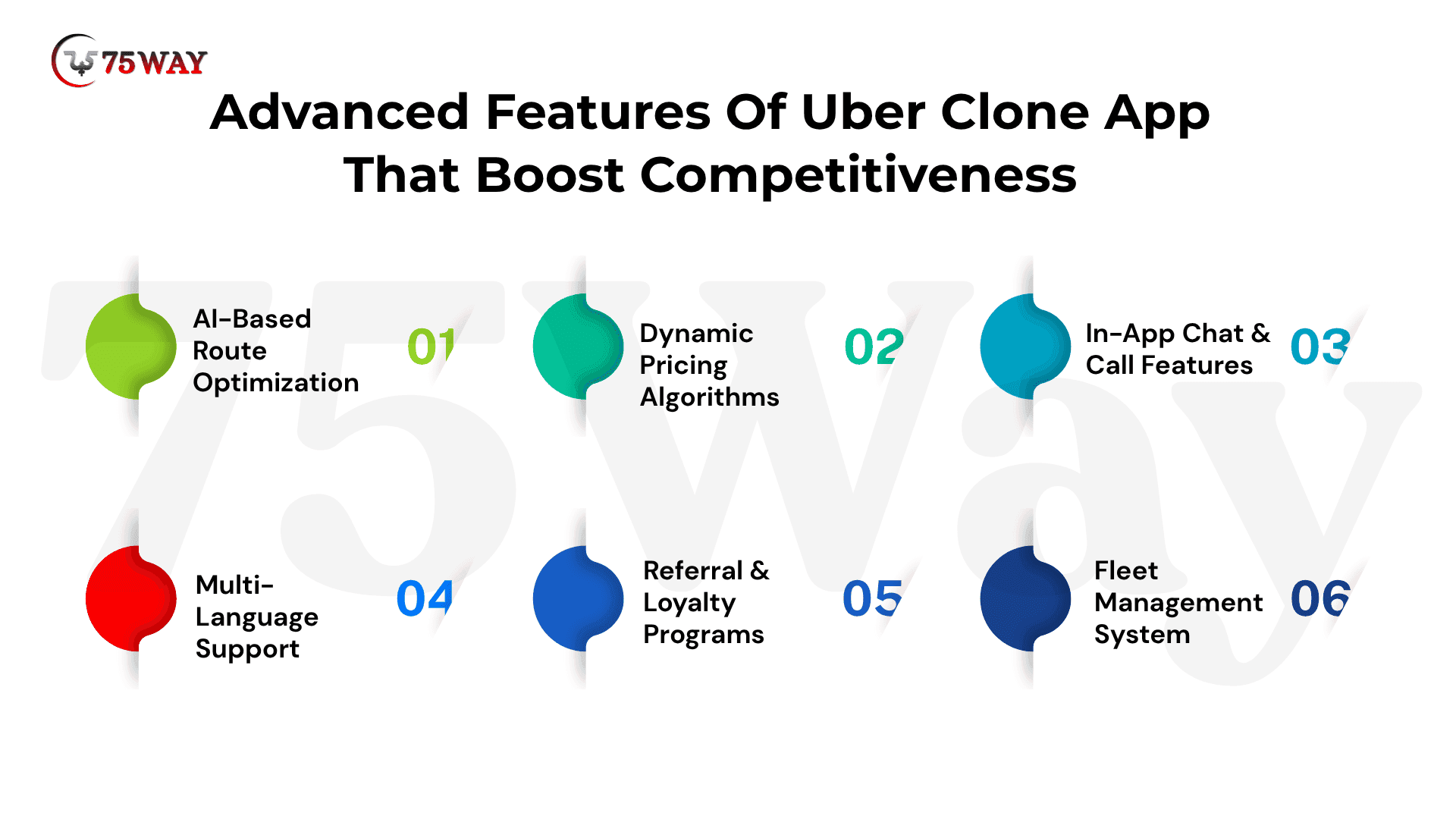
- AI-Based Route Optimization: Improves travel efficiency by selecting the fastest routes using real-time traffic data, reducing delays and enhancing the overall ride experience significantly.
- Dynamic Pricing Algorithms: Automatically adjust fares based on demand, traffic, and time, ensuring optimized revenue generation and balanced supply-demand across platform operations.
- In-App Chat & Call Features: Enables seamless communication between drivers and passengers, improving coordination, safety, and overall user experience during ride journeys.
- Multi-Language Support: Allows users from different regions to use the app easily, increasing accessibility, engagement, and global adoption of the platform.
- Referral & Loyalty Programs: Encourage user engagement with rewards, discounts, and incentives, boosting retention and driving long-term platform growth.
- Fleet Management System: Helps businesses track, manage, and optimize vehicle operations efficiently, improving operational performance, cost control, and overall service reliability.
Technology Stack Behind Uber Clone Apps
A robust tech stack ensures performance, scalability, and security.
- Frontend: React Native and Flutter power responsive interfaces, ensuring smooth navigation, fast performance, and a consistent experience across mobile platforms for passengers and drivers.
- Backend: Node.js, Python, and Java handle server logic, authentication, ride matching, and secure, efficient real-time communication between system components.
- Database: PostgreSQL, MySQL, and MongoDB store user profiles, ride history, payments, and driver data with high scalability, speed, and reliability.
- APIs & Integrations: Google Maps, Stripe, PayPal, SMS gateways, and push notifications enable real-time tracking, payments, alerts, and seamless connectivity with third-party services.
- AWS / Google Cloud for scalability: AWS and Google Cloud provide hosting, load balancing, storage, and infrastructure scaling to ensure high availability and smooth performance under heavy traffic.
Build vs Buy: What’s the Better Option For Uber Clone App Development?
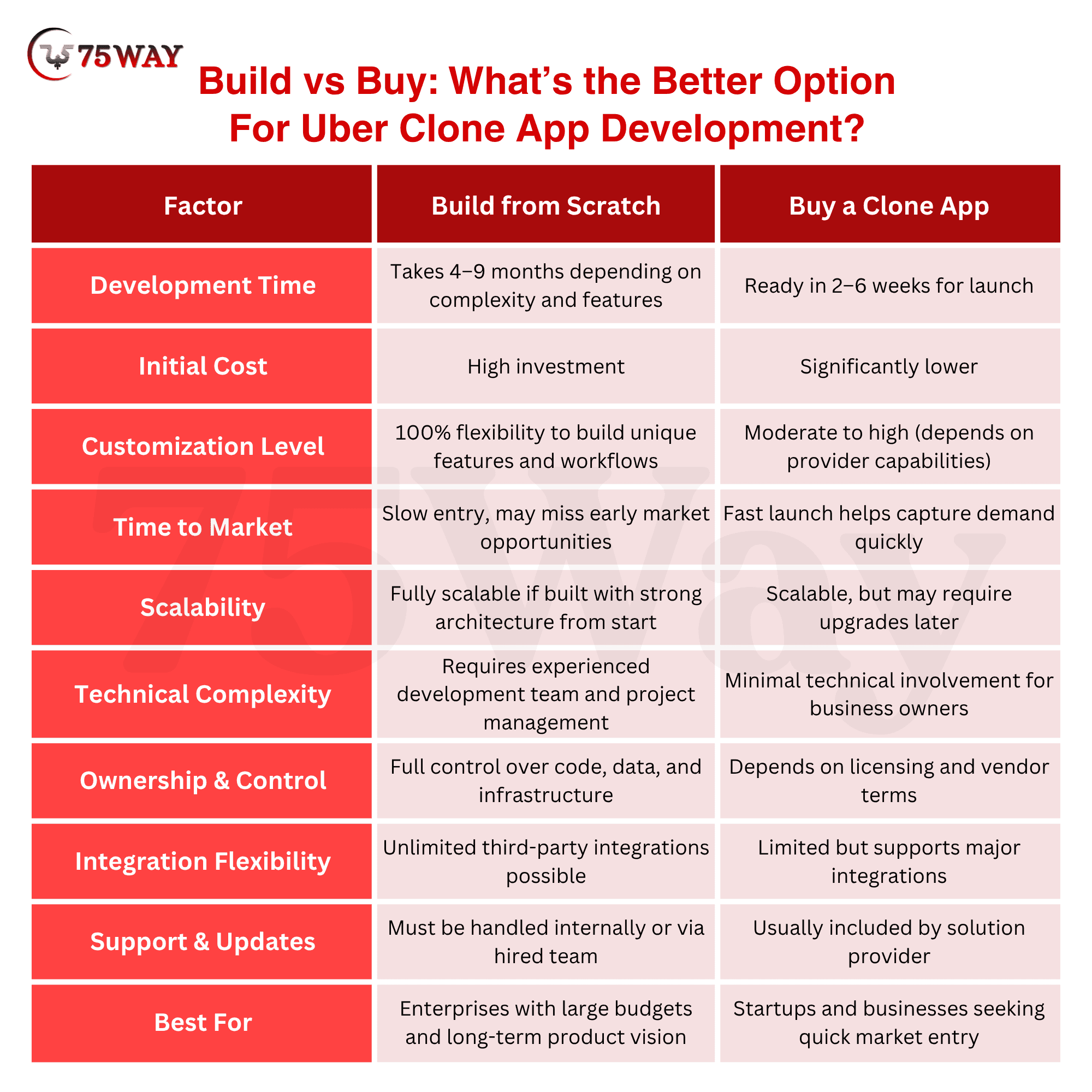
Building an Uber clone app from scratch offers complete control over design, features, and architecture. It allows businesses to create a fully customized solution tailored to unique requirements, branding, and long-term scalability. However, this approach demands significant investment in time, development resources, and technical expertise. The process includes designing UI/UX, developing backend systems, integrating APIs, and ensuring security and performance optimization. While it offers full ownership and innovation potential, it also entails higher risks, longer time-to-market, and greater maintenance responsibilities.
On the other hand, buying a pre-built Uber clone app is a faster, more cost-effective option for businesses looking to enter the market quickly. It comes with ready-made features like ride booking, GPS tracking, payment integration, and admin dashboards, significantly reducing development time. Although customization may be limited compared to building from scratch, it still allows for branding and feature enhancements tailored to business needs. For most startups, starting with a clone solution and scaling gradually is the smarter approach, as it balances speed, cost, and proven functionality.
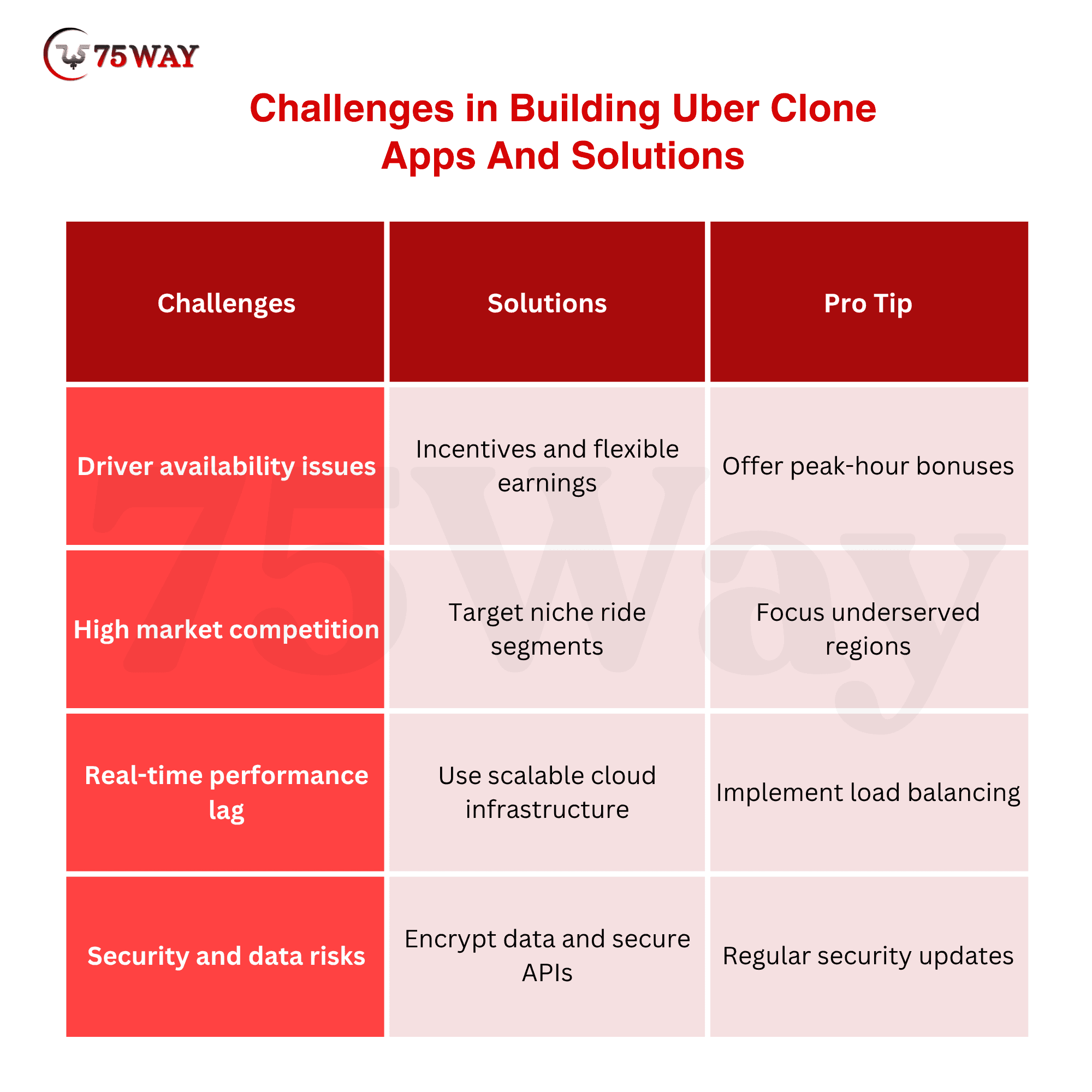
Challenges in Building Uber Clone Apps And Solutions
Uber clone apps are transforming the ride-hailing industry by enabling businesses to launch scalable, on-demand transportation platforms with advanced digital capabilities. These applications connect passengers and drivers in real time through GPS tracking, automated fare calculation, secure payment systems, and seamless communication tools. By leveraging modern technologies such as cloud computing, AI-driven optimization, and integrated APIs, businesses can deliver efficient, reliable, and user-friendly mobility solutions. However, building such platforms requires careful planning, strong technical architecture, and continuous optimization to ensure smooth performance, security, and long-term scalability in a competitive market.
Why Businesses Are Investing in Uber Clone Apps?
The growing demand for on-demand services has made ride-hailing and delivery platforms one of the fastest-expanding digital business models worldwide. Their scalable structure allows businesses to easily expand operations, add new users, and enter multiple markets without major infrastructure changes. With recurring revenue potential through commissions, subscriptions, and service fees, these platforms ensure consistent income generation over time. Additionally, their global adaptability enables businesses to operate across different regions with localized features and services.
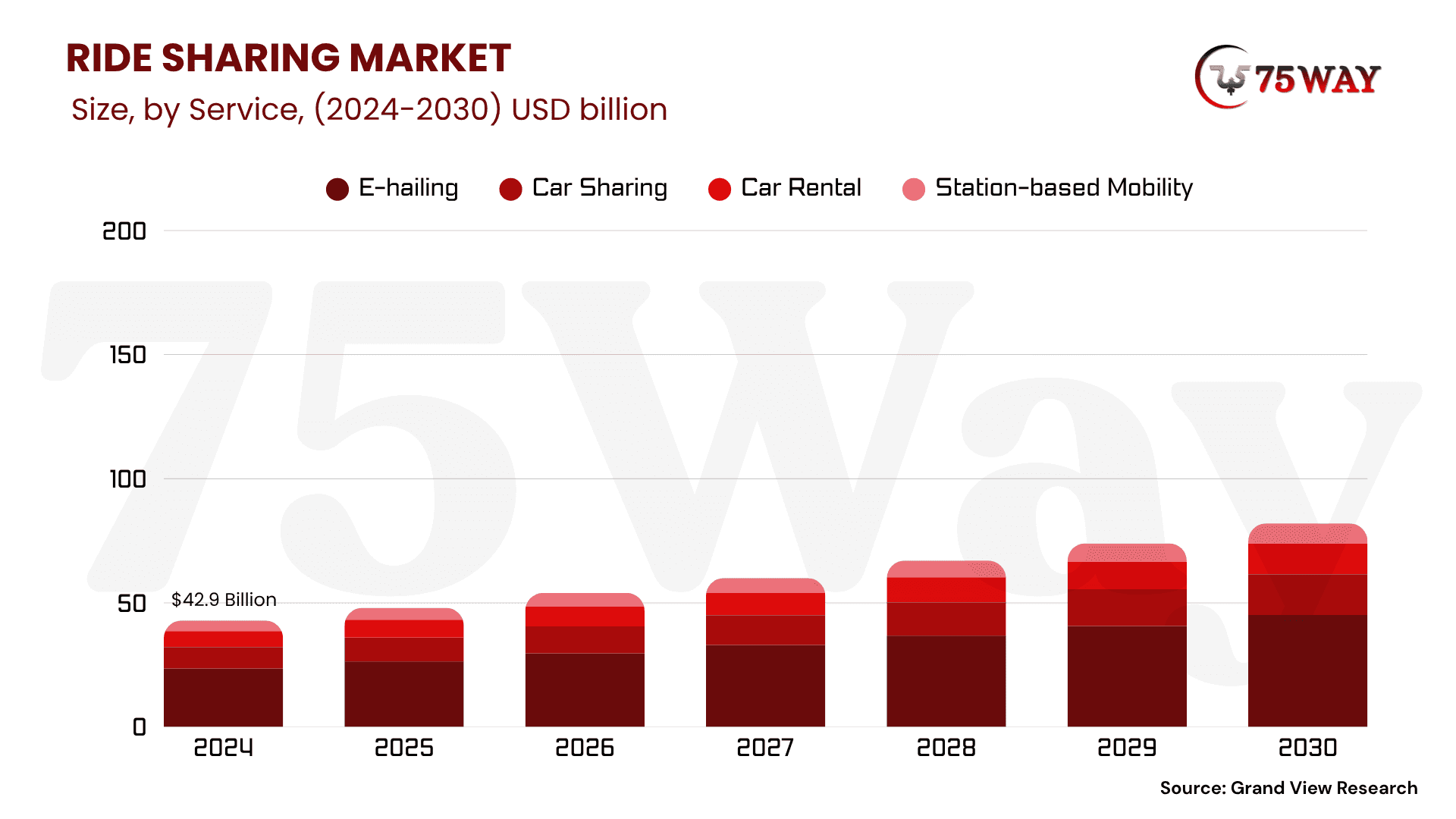
- The global ride-sharing market was valued at $42.9 billion in 2024 and is projected to reach $96.9 billion by 2030, growing at a CAGR of 13.7%.
- According to HTF Market Intelligence, the global ridesharing app market is projected to grow at a CAGR of 14.5% with $115 billion by 2033, up from approximately $45 billion at present.
- The number of ride-hailing users worldwide is set to rise significantly, with projections indicating approximately 2.34 billion users by 2030.
- North America accounted for nearly 44.52% of the market share in 2025, supported by early adoption and well-established platforms like Uber.
- Based on service type, the e-hailing segment dominated the market, contributing about 57.9% of the total global revenue.
Why Choose 75way Technologies for Uber Clone App Development?
If you're planning to launch a ride-hailing platform, 75way Technologies offers fully customizable Uber clone solutions with scalable architecture, advanced feature integration, faster deployment, and ongoing support. We ensure high-performance applications built for growth, reliability, and seamless user experience, helping businesses launch quickly and scale efficiently in competitive markets. Our team focuses on building high-performance, secure, and user-friendly applications tailored to your business goals. We offer:
- Fully customizable Uber clone solutions
- Scalable architecture
- Advanced feature integration
- Faster deployment
- Ongoing support & maintenance
Conclusion
Uber clone apps have revolutionized the way transportation businesses operate. With the right features, technology, and strategy, you can build a scalable and profitable ride-hailing platform. Instead of starting from scratch, leveraging a ready-made solution allows you to enter the market faster, reduce costs, and focus on growth. The key lies in understanding how the system works, choosing the right features, and executing with a clear business strategy. Ready to Build Your Uber Clone App? Launch your ride-hailing business with a powerful, scalable, and fully customized solution. Get in touch with our Uber app development company to turn your idea into a high-performing app.
Frequently Asked Questions (FAQs)
What features are essential in an Uber clone app?Key features include real-time ride booking, GPS tracking, fare estimation, payment integration, driver management, and rating systems. Advanced features such as AI-based pricing, route optimization, and in-app communication significantly enhance the user experience and operational efficiency.
Can I customize an Uber clone app for my business?Yes, most Uber clone apps are highly customizable. You can modify features, design, pricing models, and functionalities to meet your business needs, enabling you to target specific markets, enhance the user experience, and build a unique brand identity.
Is it better to build or buy an Uber clone app?Buying a clone app is faster and more cost-effective, making it ideal for startups. Building from scratch offers complete control but requires a higher investment of time and resources. Many businesses start with a clone solution and scale with custom features later.
How do Uber clone apps make money?Revenue is generated through commissions on rides, surge pricing, subscription plans for drivers, cancellation fees, and in-app advertising. These monetization strategies ensure consistent income while maintaining affordability and flexibility for users and drivers on the platform.
What are the biggest challenges in launching a ride-hailing app?Major challenges include driver acquisition, market competition, real-time performance, and user trust. These can be overcome by offering incentives, targeting niche markets, using scalable technology, and ensuring strong security measures for safe and reliable operations.
How long does it take to develop an Uber clone app?
Development timelines depend on features and customization levels. A basic version can take four to eight weeks, while advanced solutions may require three to six months, including testing, deployment, and optimization for performance, scalability, and seamless user experience across platforms.