Summary
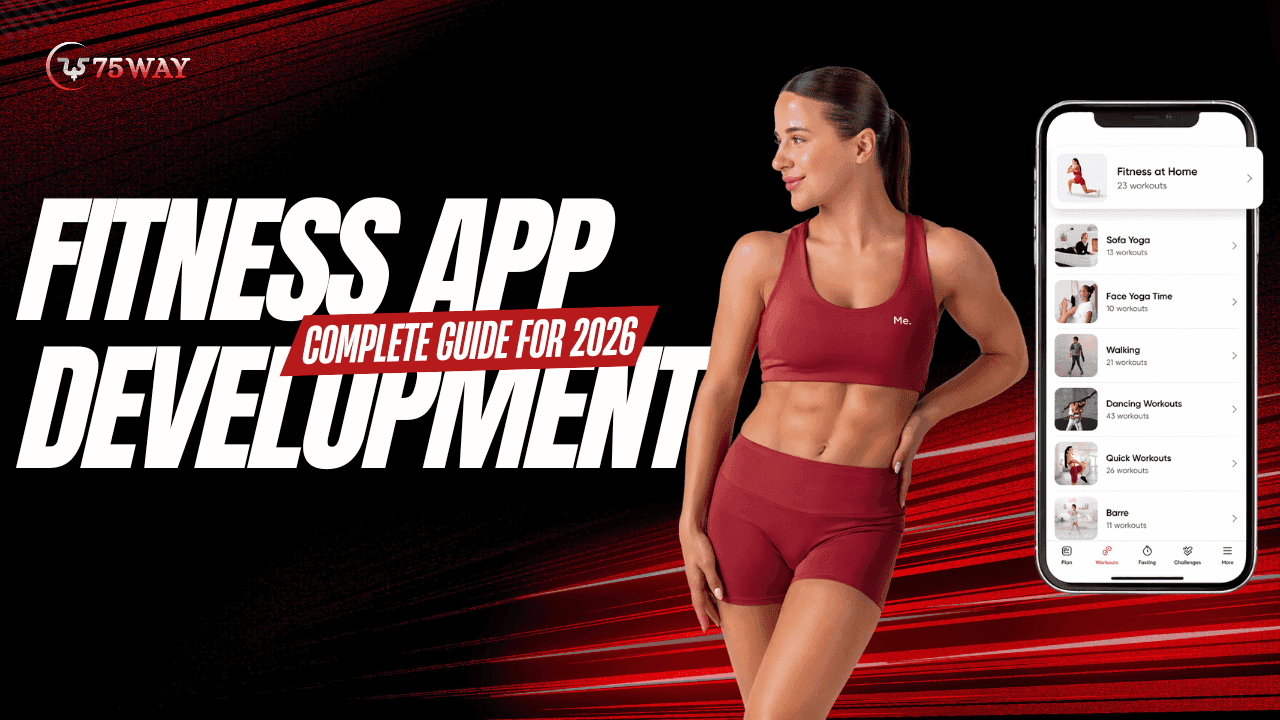
Fitness app development in 2026 is evolving rapidly with AI, wearable integration, and personalized health tracking. It enables businesses to create scalable digital fitness solutions. This guide covers features, development process, cost factors, monetization strategies, and emerging trends, helping startups build engaging user-focused fitness applications for global audiences in the competitive digital health market successfully worldwide.
Quick Overview
- Fitness apps combine AI, wearables, and personalization for better engagement results
- Market growth in the fitness app industry continues to expand rapidly worldwide due to demand
- Monetization includes subscriptions, ads, in-app purchases, and premium coaching services models
- User experience and personalization are key success factors for app growth
- Future fitness apps will rely heavily on AI-driven health insights systems
Fitness has evolved far beyond traditional workouts and gym memberships, becoming a fully digital experience powered by smart mobile applications. In 2026, fitness app development is reshaping how individuals approach health, fitness, and lifestyle management with greater convenience and personalization.
Modern fitness apps now integrate advanced technologies such as artificial intelligence, wearable devices, and real-time health tracking to deliver highly personalized user experiences. These innovations help users stay motivated, track progress accurately, and achieve fitness goals more efficiently than ever before.
For businesses, this growing demand creates a massive opportunity to enter the digital health space. Whether you are a startup or an established enterprise, investing in fitness app development allows you to build scalable, revenue-driven solutions that meet evolving user expectations in a competitive global market.
Why Invest In Fitness App Development in 2026?
Investing in fitness app development in 2026 is highly valuable due to rising global health awareness, increasing smartphone usage, and demand for personalized digital wellness solutions. Businesses can leverage AI, wearables, and subscription models to generate consistent revenue while building scalable, future-ready health platforms for long-term market growth.
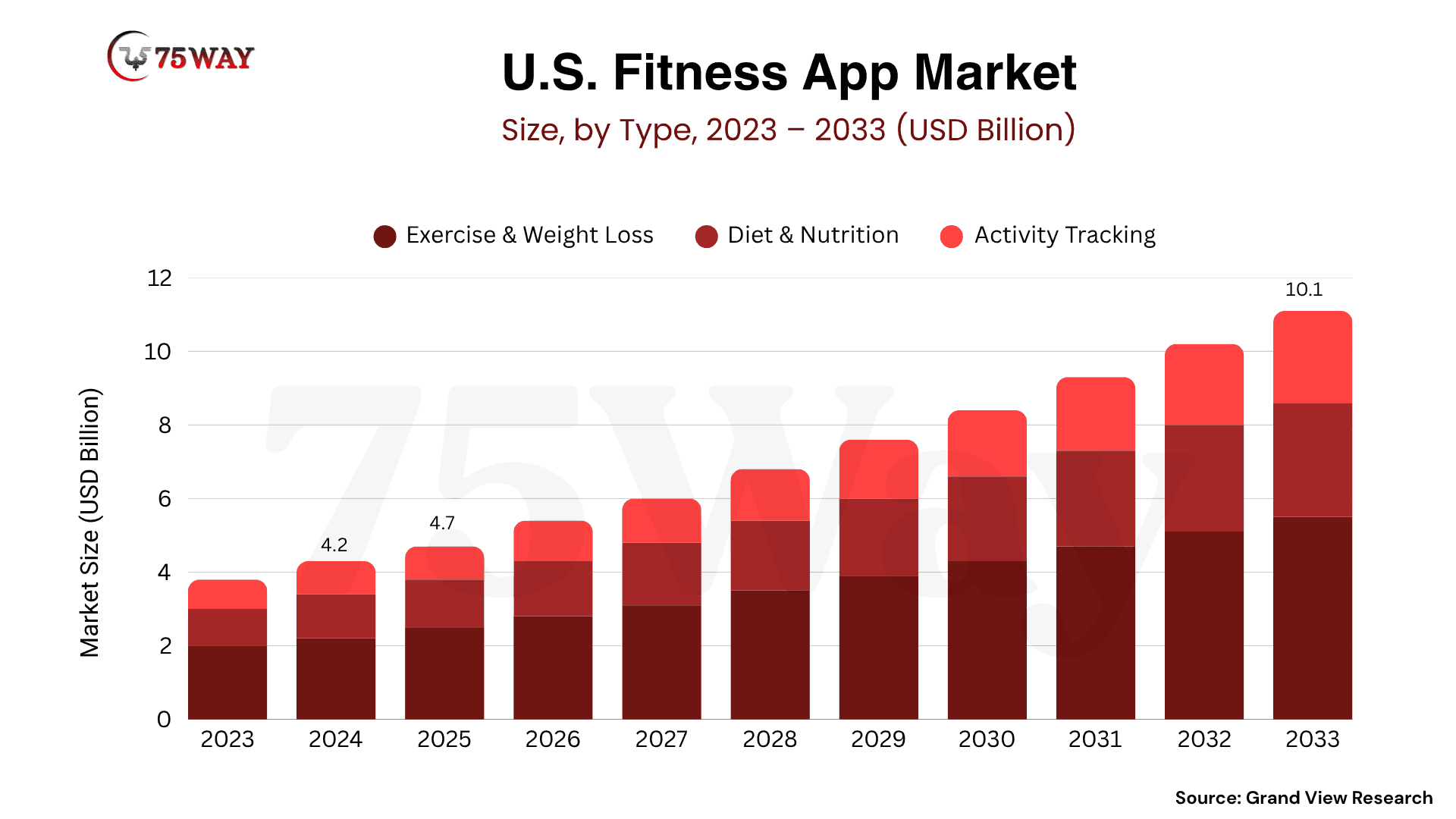
- The U.S. fitness app market is on a steady growth path, with projections estimating it will reach $10.10 billion by 2033, expanding at a CAGR of 10.0%.
- The market has already generated around $4.1 billion in revenue, reflecting strong adoption.
- Developers are increasingly integrating AI-powered personalization features, boosting user retention rates by up to 50% and making apps more engaging and tailored to individual needs.
- Additionally, more than 27% of U.S. internet users actively use health and fitness apps.
- In terms of demographics, the majority of users fall within the young to middle-aged range, with approximately 39% to 41% aged 20 to 39, highlighting a strong preference among this age group for digital fitness solutions.
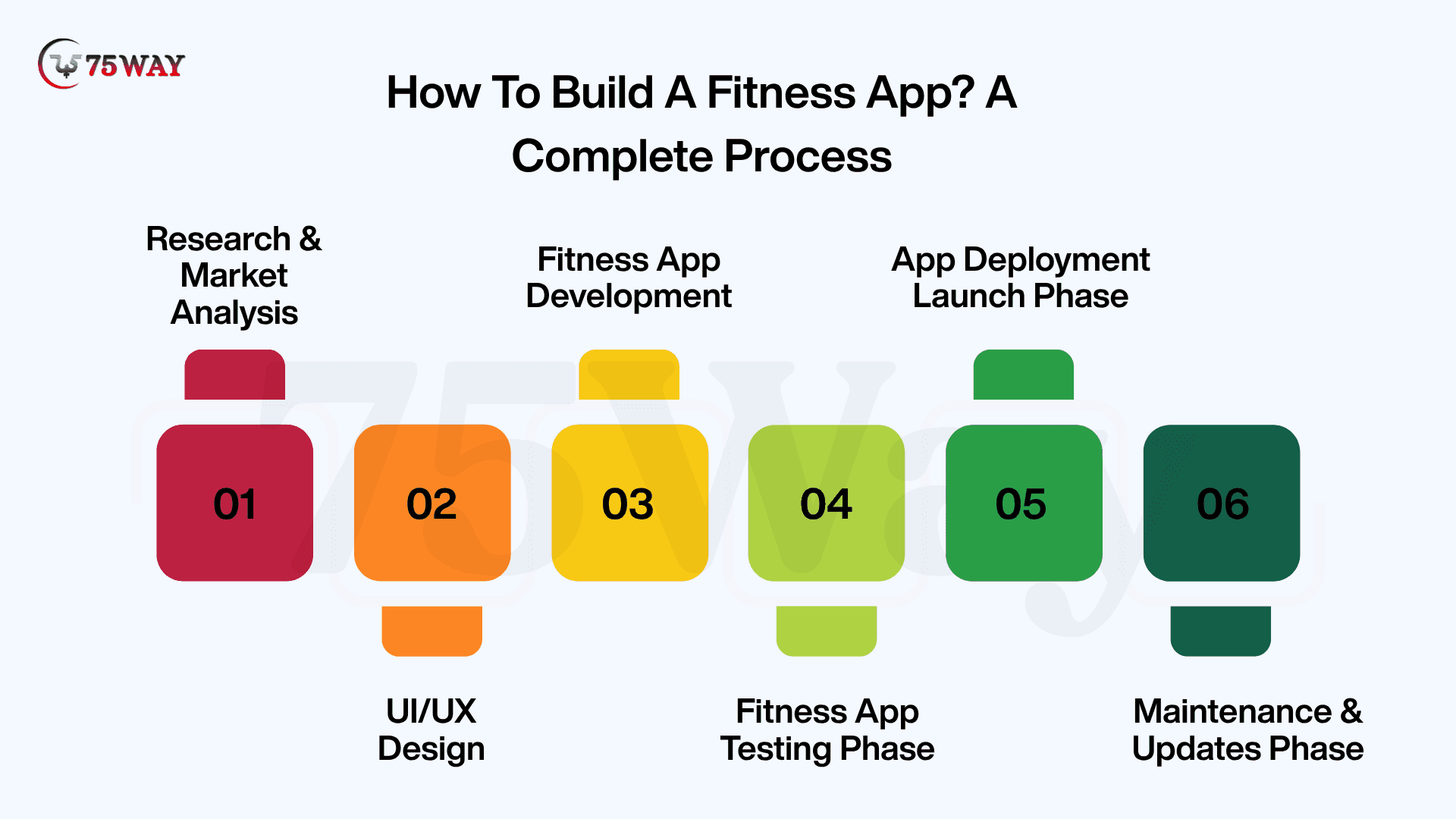
How To Build A Fitness App? A Complete Process
Developing a fitness app requires a structured process including research, design, development, testing, and deployment. Each stage ensures the final product is functional, scalable, and user-friendly, while meeting business objectives and delivering high-quality digital fitness experiences to users worldwide.
Step 1: Research & Market Analysis
Research and market analysis are the foundations of fitness app development, helping businesses understand user needs, industry gaps, competitor strategies, and growth opportunities. It ensures clear positioning, better feature selection, and stronger decision-making before starting actual development for long-term success.
- Identify target users and their fitness goals clearly
- Analyze competitor apps and feature benchmarking in detail
- Study market trends and emerging fitness technology innovations
- Define the app value proposition and the unique selling advantage
- Evaluate monetization models suitable for the target audience type
- Collect user feedback through surveys and interviews consistently
Step 2: UI/UX Design
After completing research and planning, the next crucial step is UI/UX design, where strategic ideas are translated into a visual, interactive product structure. This stage ensures the fitness app becomes user-friendly, engaging, and visually aligned with user expectations and business goals.
UI UX design focuses on creating intuitive, visually appealing, and easy-to-navigate interfaces that enhance user satisfaction. It ensures smooth interaction, better engagement, and a seamless fitness-tracking experience across mobile and wearable devices, improving usability and retention.
Step 3: Fitness App Development
App development transforms the designed UI/UX and planned features into a fully functional digital product. This stage involves building backend architecture, frontend interfaces, API integrations, and core functionalities. It ensures the fitness app is secure, scalable, high-performing, and capable of delivering seamless user experiences across different devices and platforms.
- Backend Setup: Develop backend systems for secure data storage, user authentication, and efficient processing of real-time fitness data.
- Frontend Build: Create a responsive frontend interface ensuring smooth navigation, engaging visuals, and seamless user interaction across all screens.
- API Integration: Integrate third-party APIs, including wearable devices, health trackers, and payment systems for enhanced app functionality.
- Feature Coding: Implement core features such as workout tracking, goal setting, nutrition planning, and progress monitoring tools effectively.
- Security Layer: Apply strong encryption, authentication protocols, and privacy controls to protect sensitive user health and personal data.
Step 4: Fitness App Testing & QA
Testing is a critical stage that ensures the fitness app functions smoothly without errors, bugs, or performance issues. It validates features, security, usability, and device compatibility. This phase helps improve stability, enhance the user experience, and ensure the application meets quality standards before successful final deployment to app stores.
- Function Testing: Validate all features, including tracking, login, and workouts, to ensure they work correctly without system errors.
- Performance Check: Test app speed, responsiveness, and stability under high user traffic and heavy data processing conditions.
- Security Testing: Identify vulnerabilities and ensure user data protection through encryption and secure authentication mechanisms implementation.
- Device Testing: Check app compatibility across multiple smartphones, tablets, and wearable devices for a higher performance experience.
- Bug Fixing: Detect issues, resolve errors, and optimize features to improve overall application stability and usability experience.
Step 5: App Deployment & Launch
Deployment is the final stage in which the fully tested fitness app is released to users on platforms like the Google Play Store and the Apple App Store. It ensures proper configuration, monitoring setup, and smooth availability, making the app accessible to a global audience with stable performance and real-time updates support.
- Prepare app store listings with descriptions, screenshots, and compliance requirements for publishing approval.
- Launch stable version of app, ensuring all features are functional and properly optimized for users.
- Deploy backend systems on cloud servers for scalability, uptime, and efficient real-time data handling.
- Implement analytics tools to track user behavior, performance metrics, and system health.
- Gather user reviews and feedback to identify opportunities for improvement and plan future updates.
Step 6: Maintenance & Updates Phase
Maintenance ensures the fitness app remains updated, secure, and fully functional after launch. It includes bug fixes, performance improvements, feature enhancements, and compatibility updates. This stage helps retain users, improve engagement, and ensure long-term success in the competitive fitness app market.
Issues after launch are resolved, including errors and glitches, to maintain smooth application performance and stability. New feature additions are guided by user demand and evolving fitness industry trends continuously. App speed, responsiveness, and resource usage are improved, resulting in a better user experience and greater efficiency. Encryption, authentication, and privacy systems are regularly updated to protect user data effectively. Technical assistance is provided, user queries are resolved, and a smooth app experience is ensured continuously.
Types of Fitness Apps You Can Build
Fitness applications come in various categories, each addressing specific health and wellness needs. Understanding these types helps businesses design targeted solutions that improve user engagement and retention.
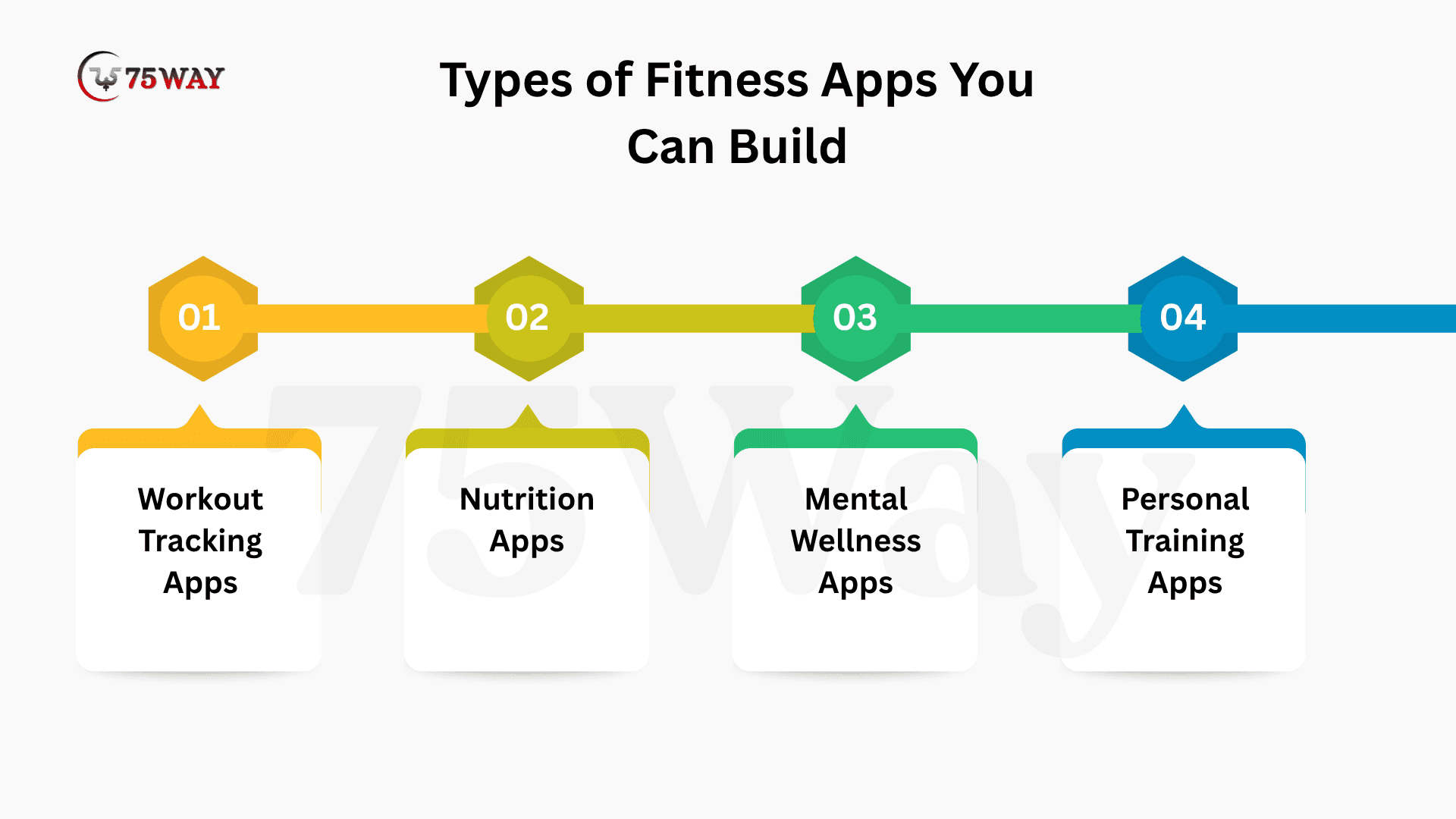
Workout Tracking Apps: These apps track physical activities, calories, steps, and performance metrics, helping users monitor fitness progress effectively daily.
Nutrition Apps: Nutrition apps help users plan diets, track calories, and maintain healthy eating habits through personalized meal suggestions.
Mental Wellness Apps: These applications focus on mental health, offering meditation, stress management, and tracking of emotional wellbeing for users.
Personal Training Apps: Personal training apps connect users with virtual trainers, providing customized workout plans, real-time guidance, and progress monitoring.
Key Features of Fitness Apps
Key features define the success of any fitness app by enhancing usability, engagement, and personalization. Modern fitness applications integrate advanced tools such as AI coaching, wearable sync, and progress tracking, ensuring users receive a seamless and motivating health experience overall.
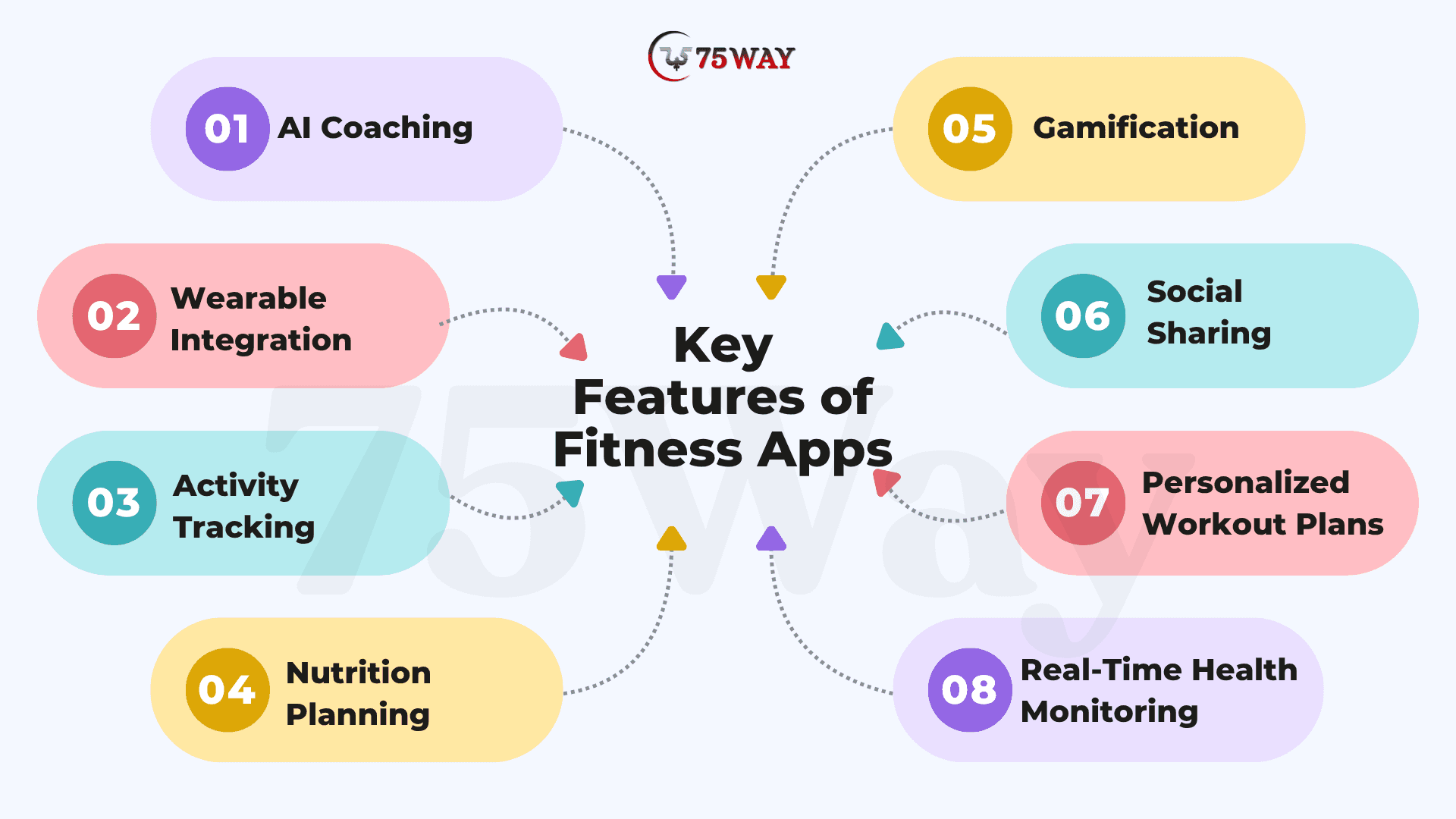
- AI Coaching: AI coaching provides personalized workout recommendations, adapting exercises based on user performance goals and a real-time feedback system.
- Wearable Integration: Connects fitness apps with smart devices, enabling real-time health data monitoring and analytics.
- Activity Tracking: Activity tracking records steps, workouts, calories burned, and provides insights into daily physical performance improvement analysis reports.
- Nutrition Planning: Nutrition planning helps users create balanced meal plans, track calorie intake, and maintain a healthy diet consistency.
- Gamification: Gamification increases user engagement through rewards, challenges, badges, and competitive fitness goals, enhancing motivation and daily active use.
- Social Sharing: Social sharing allows users to share fitness achievements, compete with friends, and build supportive health communities online.
- Personalized Workout Plans: Adapt exercises to user goals, fitness level, body type, and progress, ensuring continuous improvement and greater effectiveness.
- Real-Time Health Monitoring: Tracks heart rate, sleep patterns, oxygen levels, and stress indicators using connected devices for immediate health insights and better decision-making.
What’s The Cost To Develop Fitness App?
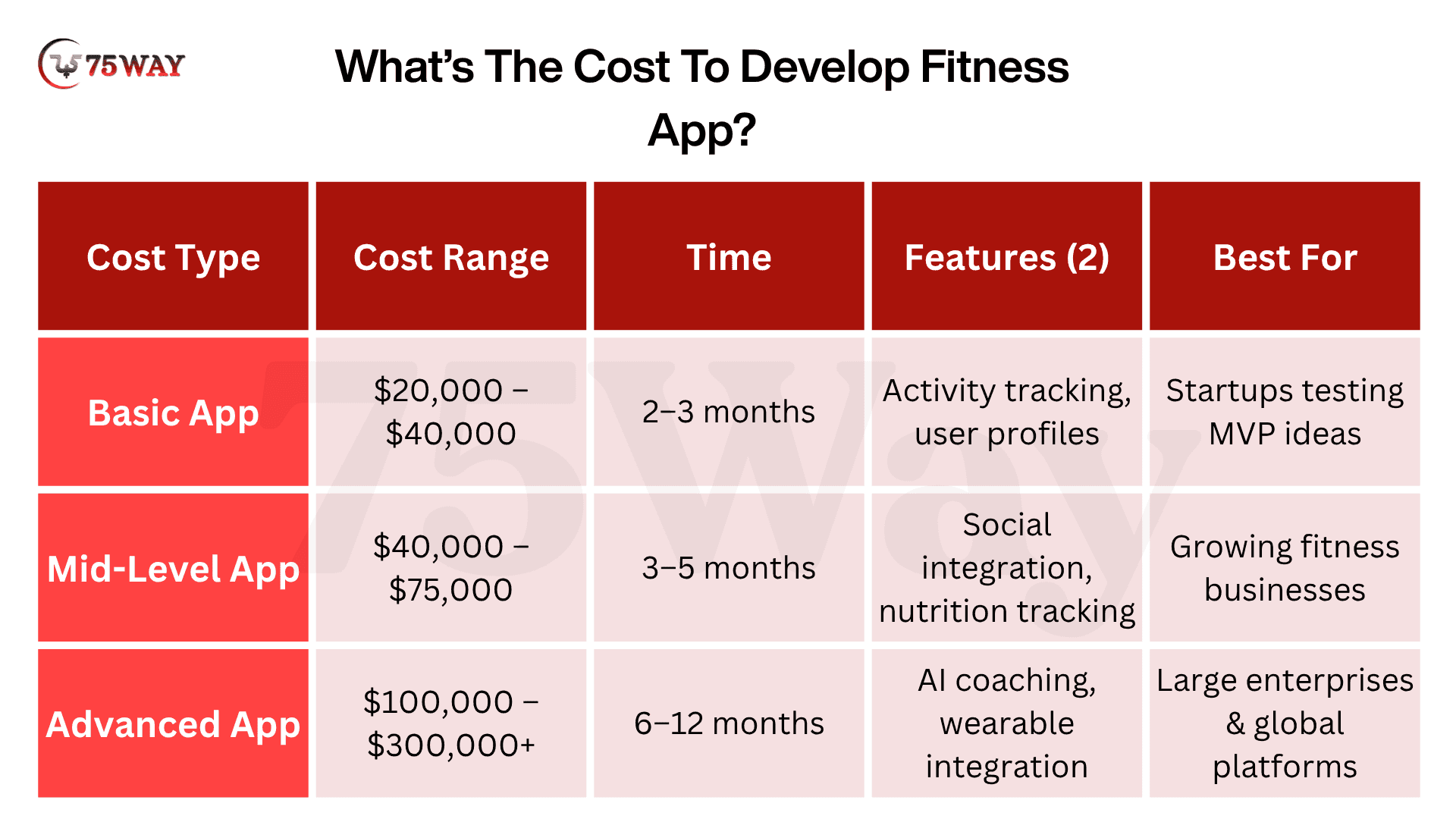
The cost to develop a fitness app varies significantly depending on features, complexity, design quality, platform choice, and technology integrations such as AI and wearables. On average, the cost to develop a fitness app ranges from $20,000 – $300,000+, depending on the scope of the project. Simple apps with basic tracking features require lower investment, while advanced applications with real-time analytics, personalized coaching, and third-party integrations demand higher budgets due to increased development time and technical expertise.
- Basic App Cost: $20,000 – $40,000Create a simple, efficient app with essential features for a smooth user experience.
- Mid-Level App Cost: $40,000 – $75,000Upgrade with advanced functionalities, better design, and seamless integrations.
- Advanced App Cost: $100,000 – $300,000+Build a high-end, scalable app packed with powerful features for complex needs.
Cost Factors in Fitness App Development
The cost of fitness app development varies based on multiple technical and business elements such as complexity, feature set, platform selection, and technology stack. Advanced features such as AI integration, wearable connectivity, and real-time analytics significantly increase overall development costs, while simpler apps remain more affordable for startups entering the market.
- App Complexity: Higher complexity, involving advanced features, multiple user roles, and real-time processing, increases development time, resource requirements, and overall project cost.
- Feature Set: Extensive features such as AI coaching, gamification, and live tracking require greater development effort, resulting in higher budget requirements for complete implementation.
- Platform Choice: Developing for both Android and iOS increases cost compared to single-platform development due to additional coding, testing, and optimization needs.
- Technology Stack: Advanced stacks using AI frameworks, cloud infrastructure, and wearable APIs increase cost due to specialized expertise and infrastructure requirements.
- UI/UX Design: Highly interactive and visually rich designs demand more design hours, prototyping efforts, and user testing, increasing overall project investment.
Monetization Strategies To Generate Revenue From Fitness Apps
Fitness apps generate revenue through multiple scalable and sustainable models designed to maximize user engagement while ensuring long-term profitability. The right monetization strategy depends on the target audience, app features, and market positioning, allowing businesses to balance user value with consistent income generation effectively in the competitive digital fitness industry.
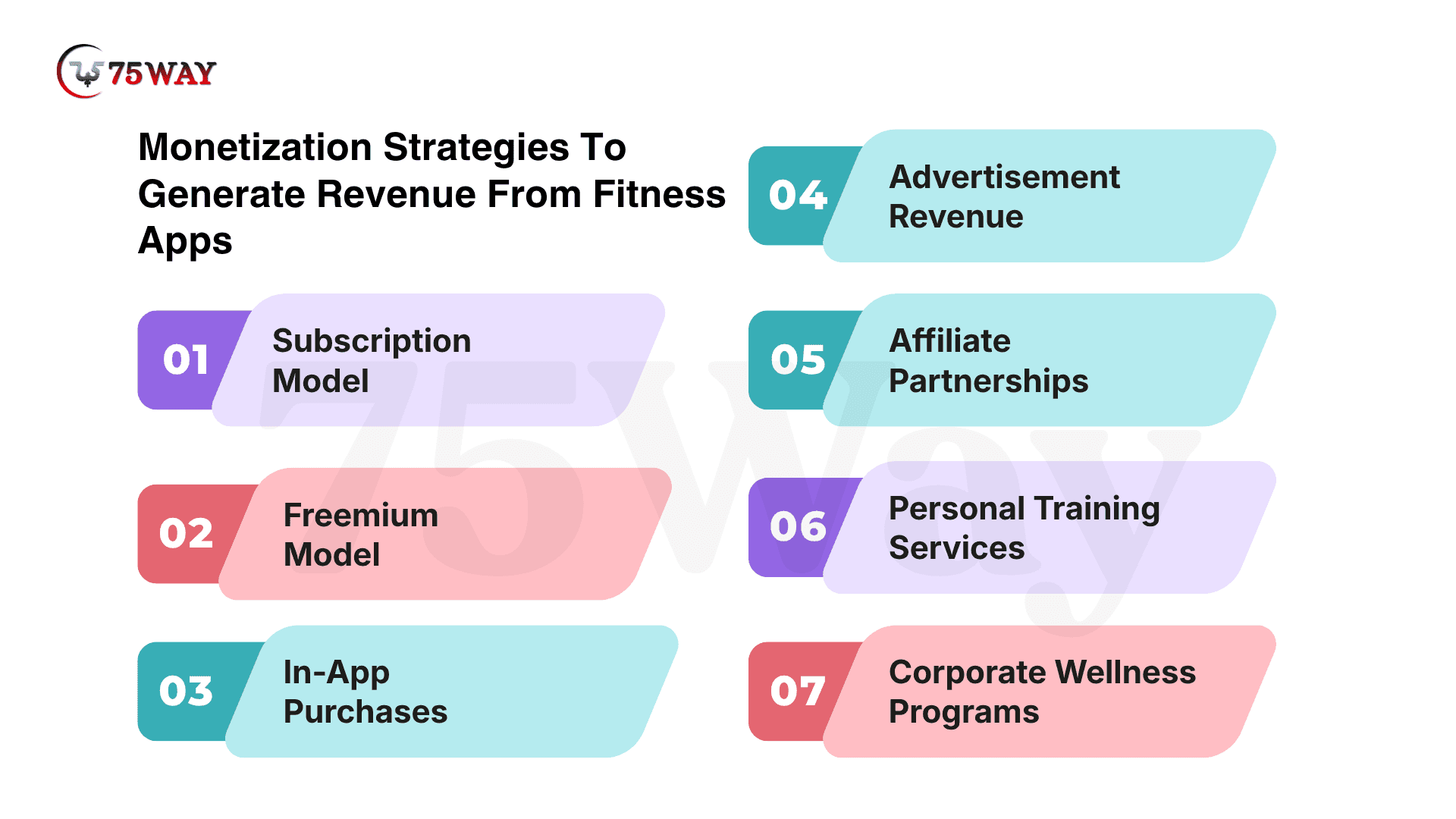
- Subscription Model: Monthly or yearly subscription plans provide users with premium features, personalized workouts, and exclusive fitness content for consistent recurring revenue.
- Freemium Model: Basic features are free, while advanced tools like AI coaching and analytics are locked behind paid upgrades for monetization.
- In-App Purchases: Users can buy workout plans, diet charts, and training programs individually based on personal fitness goals and preferences.
- Advertisement Revenue: Fitness apps display targeted ads from health brands and fitness companies to generate passive income streams consistently.
- Affiliate Partnerships: Apps earn commissions by promoting fitness products, supplements, and wearable devices through integrated affiliate marketing programs effectively.
- Personal Training Services: Users can pay for live coaching sessions, personalized training plans, and expert consultations through the app platform.
- Corporate Wellness Programs: Fitness apps partner with companies to offer employee wellness solutions, generating bulk subscription-based enterprise revenue opportunities.
Future Trends in Fitness Apps 2026
The future of fitness apps in 2026 is driven by advanced technologies like AI, automation, and immersive experiences. These innovations are transforming how users track health, train, and stay motivated, making fitness apps more personalized, predictive, and deeply integrated into everyday lifestyle routines globally.
- AI-Powered Coaching: AI-driven systems will deliver hyper-personalized workout plans, adaptive training feedback, and real-time corrections based on user performance, making virtual coaching more accurate and human-like.
- Wearable Ecosystem Expansion: Fitness apps will integrate deeply with advanced wearables, smart rings, and health sensors for continuous biometric tracking and real-time health monitoring.
- AR/VR Workouts: Augmented and virtual reality workouts will create immersive fitness environments, allowing users to train at home with interactive and gamified experiences.
- Predictive Health Analytics: Apps will analyze user data to predict potential health risks, fitness plateaus, and recovery needs using advanced machine learning models.
- Hyper-Personalization Engines: Fitness platforms will deliver fully customized workouts, diets, and recovery plans based on genetics, lifestyle, and behavioral data insights.
- Voice and AI Assistants: Voice-enabled fitness assistants will guide workouts, track progress, and provide hands-free coaching for improved convenience and accessibility.
Final Remarks
Fitness apps are rapidly evolving into a highly intelligent and user-centric ecosystem driven by AI, wearable technology, real-time analytics, and personalized experiences. Businesses entering this space must focus on innovation, seamless user experience, and scalable architecture to stay competitive. From basic tracking apps to advanced AI-powered fitness platforms, the industry offers wide opportunities for startups and enterprises to build impactful digital health solutions. Success depends on choosing the right features, technology stack, monetization model, and continuous updates aligned with user needs and market trends. With growing global demand for health and wellness solutions, investing in fitness app development can deliver strong long-term growth and engagement. If you are planning to build a high-performing solution, partner with a trusted fitness app development company to turn your idea into a scalable and market-ready fitness product.
Frequently Asked Questions (FAQs)
How Do Fitness Apps Improve User Motivation?Fitness apps improve motivation through goal tracking, reminders, challenges, and reward systems. These features encourage users to stay consistent, build healthy habits, and monitor progress regularly, making fitness routines more engaging, structured, and results-driven over time for better long-term adherence.
What Technologies Are Used In Fitness Apps?Fitness apps use technologies like AI, machine learning, cloud computing, APIs, and wearable integrations. These tools enable real-time data processing, personalized recommendations, secure storage, and seamless connectivity with smart devices, ensuring accurate health tracking and improved user experience across platforms efficiently.
Can Fitness Apps Work Without an Internet Connection?Yes, many fitness apps offer offline functionality for tracking workouts, steps, and basic data logging. However, advanced features like cloud sync, real-time analytics, and social sharing require internet connectivity to update progress and access personalized insights effectively across devices.
How Do Fitness Apps Handle User Data Privacy?Fitness apps handle data privacy through encryption, secure authentication, and compliance with data protection regulations. They ensure sensitive health information remains protected, restrict unauthorized access, and provide users control over their personal data sharing preferences within the application environment.
Why Is Personalization Important In Fitness Apps?Personalization is important because it tailors workouts, diet plans, and goals according to individual user needs. This increases engagement, improves results, and ensures users receive relevant guidance based on fitness level, preferences, and health conditions for better long-term consistency.
What Makes A Fitness App Successful In Market?A successful fitness app combines user-friendly design, accurate tracking, engaging features, and strong performance. Continuous updates, personalized experiences, and integration with modern technologies also play a crucial role in attracting and retaining users in a competitive digital fitness market.
How Do Fitness Apps Integrate With Smart Devices? Fitness apps integrate with smart devices using APIs and Bluetooth connectivity. This allows real-time syncing of health data such as heart rate, steps, and sleep patterns, enabling users to monitor overall wellness accurately through connected ecosystems and wearable technology platforms.
What Challenges Do Fitness Apps Commonly Face?Fitness apps often face challenges like user retention, data accuracy, device compatibility, and market competition. Ensuring continuous engagement, maintaining app performance, and adapting to evolving user expectations are key factors required to overcome these challenges successfully in the industry.