


Did you know? The ride-hailing market continues to grow, with global users projected to reach 2.34 billion by 2030. Quite enormous! Right? These numbers indicate a clear signal of rising user interest in on-demand transportation for commuting, travel, and vehicle access.
Across the USA, growing urban populations, airport traffic, and corporate mobility needs demand organized taxi services. The more shocking is that several founders and business owners already understood this opportunity and decided to grow their business with taxi app development solutions to grow digitally. However, uncertainty around regulations, costs, and competition often slows down their progress.
The decision around how to start a taxi business in the USA requires more than buying vehicles and hiring drivers. But what are those needs? How to grow quickly in the transportation industry in 2026? This guide covers every essential step, from starting a taxi business to adopting technology and developing growth strategies.
How to Begin a Taxi Business in the USA: A Complete Roadmap
A structured approach, compliance, and informed decision-making are required to start a successful taxi business. Each stage builds logically on the previous one to enhance operational stability, financial sustainability, and long-term growth. Here, we suggest a strategic approach that helps you launch a revenue-driven taxi business across the United States market.
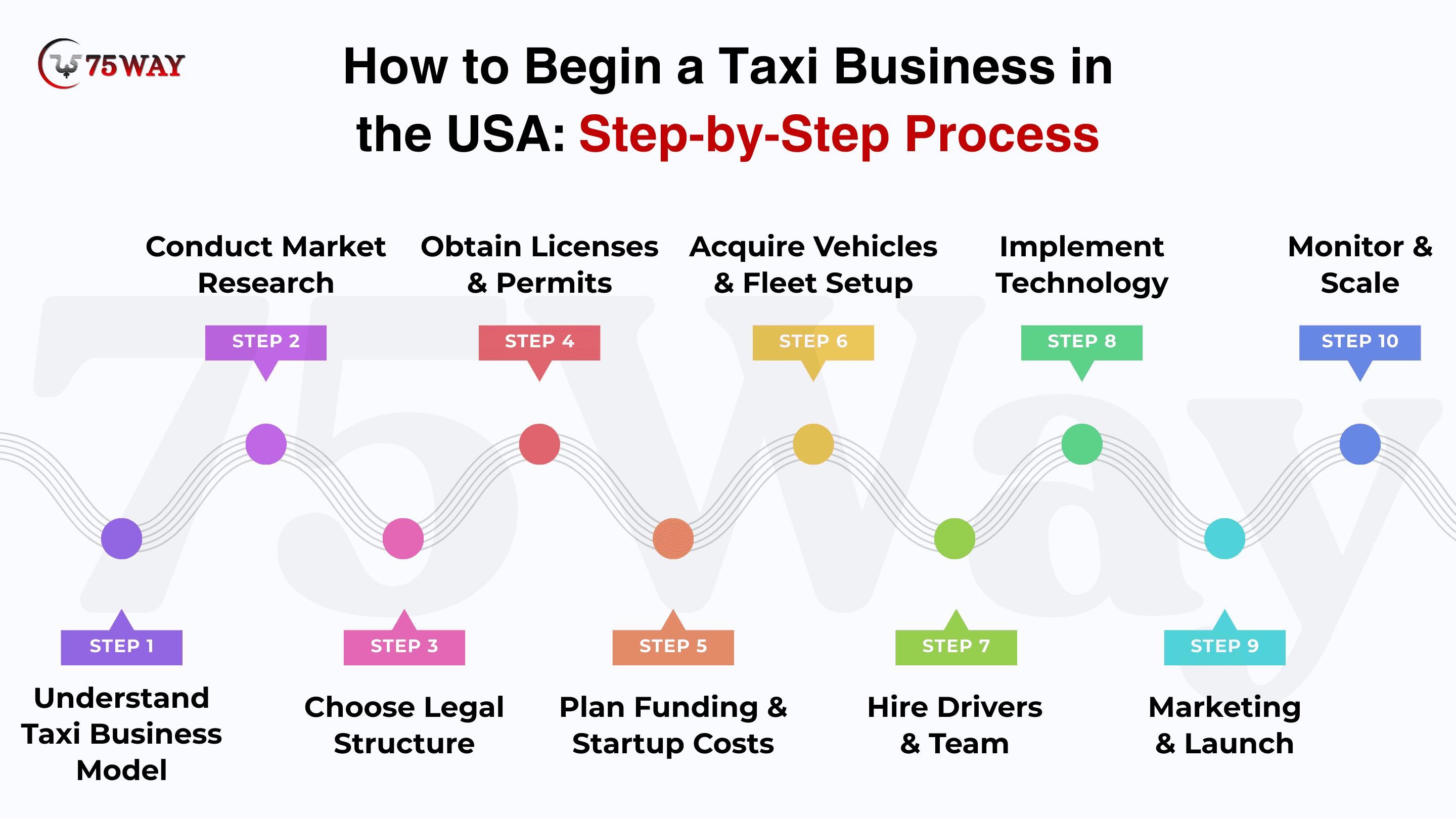
Step 1: Understand Taxi Business Model
Most of the founders have a question at the start, “What type of taxi business should I start?” And, “Is the taxi business profitable in USA?” To resolve their confusion, three proven taxi operating models are defined to grow your taxi business in the USA. Each model directly influences cost structure, scalability, and long-term profitability.
Traditional Taxi Model: The conventional taxi model works best in regulated city environments where street pickups, taxi stands, and airport queues drive consistent demand. Fare structures remain stable due to local regulations, which support predictable revenue but limit pricing flexibility. However, operational success depends heavily on coverage of locations, driver availability, and compliance with municipal rules.
App-Based Ride-Hailing Model: The next model is based on ride-hailing app solutions that focus on convenience and scalability. This approach allows customers to book rides through mobile apps, enjoy cashless payments, and receive live tracking and instant dispatch. The pricing under this taxi business model adjusts to demand patterns to increase earnings during peak hours. Moreover, data ownership also offers smarter decision-making and customer retention.
Hybrid Taxi Model: The next one is a hybrid taxi business model that integrates offline and online channels to reduce dependency on a single demand source. Walk-in customers provide a steady baseline revenue, while app bookings expand reach during non-peak hours. Many growing taxi businesses in the US adopt this model to stay competitive without fully abandoning traditional operations.
Market demand often centers around airports, corporate travel corridors, hospitals, and tourism hotspots. Airport transfers generate high-value, repeat rides, while corporate and medical transport contracts offer predictable income. Tourism hubs contribute seasonal spikes that provide higher fleet utilization. Furthermore, revenue extends beyond standard fares. Surge pricing during peak hours improves margins, while long-term corporate agreements stabilize cash flow. Scheduled medical transport services add consistency, especially in suburban and healthcare-focused regions.
The decision on which type of taxi business to start always comes down to how well the selected model aligns with the local demand of the US market, regulatory conditions, and growth expectations.
Step 2: Conduct Market Research
The next stage in launching a ride-hailing business is to analyze the market demand. Market research lays the foundation for whether a taxi business gains traction or faces early resistance. Thus, a deep understanding of customer behavior, local mobility patterns, and competitive pressure is required to replace assumptions with data-backed decisions. Every piece of data and information gathered at this stage directly influences pricing, fleet planning, service areas, and long-term sustainability.
Customer Demand Analysis: Local demand patterns reveal how people actually commute within a specific city or region. You can conduct surveys, online reviews, and informal interviews to identify peak travel times, preferred pickup locations, and common service complaints. Urban markets usually show high-frequency, short-distance rides, while suburban areas often favor pre-booked airport transfers or scheduled services.
Research Tools & Data Sources: Tools such as Google Trends highlight search interest for taxi services across locations and seasons. Businesses can execute online surveys to capture customer expectations around pricing, safety, and convenience. They can analyze competitor websites, app reviews, and social platforms to find the service gaps that existing operators fail to address. This process creates a room for differentiation.
Competitive Landscape Evaluation: In addition to market research, you can analyze Uber, Lyft, and local cab operators. It helps you find their pricing models, wait times, coverage limitations, and customer dissatisfaction points. Ride-hailing giants often dominate app usage, yet local taxis retain advantages in regulated zones, specialized transport, and contractual services.
Urban Vs. Suburban Demand: Urban regions support consistent, on-demand rides driven by office hubs, nightlife, and gaps in public transit. On the other hand, suburban regions prioritize reliability over speed, with demand concentrated around airports, hospitals, and business parks. Service design, vehicle allocation, and operating hours should align with these location-specific patterns.
Strategic Business Impact: The insights you gathered from market research assist you in creating fleet size, driver hiring plans, service focus, and marketing channels. Decisions rooted in real demand data help the business launch with realistic expectations, controlled costs, and a clearer path to profitability rather than trial-and-error execution.
Step 3: Choose Legal Structure
After you are done with business model selection and market analysis, the next stage is to select a legal model. The legal structure of a taxi business decides how taxes are paid, how risk is managed, and how easily the company can grow over time. The right structure protects personal assets, simplifies compliance, and creates a stable foundation for long-term operations. Early decisions in this area often determine how smoothly your taxi business handles financial and legal responsibilities later.
Sole Proprietorship: This structure suits small, single-owner taxi operations with limited scale. Setup remains simple and inexpensive, yet personal assets stay exposed to business liabilities. Legal or financial disputes directly affect the owner, which increases risk as the business expands.
Limited Liability Company (LLC): LLCs balance protection and flexibility, making them a preferred choice for taxi startups in the USA. Personal assets remain separate from business obligations, while taxation stays relatively straightforward. This structure also supports adding partners or scaling operations without a heavy administrative burden.
Corporation: Corporations are best for taxi businesses that are planning rapid expansion or involving investors. Strong liability protection and credibility come with stricter reporting, higher compliance costs, and formal governance requirements. This model suits multi-city or franchise-level growth strategies.
From the above given structures, each model carries different tax obligations and liability exposure. Sole proprietors report income personally, LLCs allow pass-through taxation, and corporations follow corporate tax rules. Understanding these differences helps control costs and manage financial risk effectively.
Subsequently, an Employer Identification Number (EIN) remains essential for tax filing, hiring employees, and opening business bank accounts. Federal registration ensures compliance with IRS standards, while state-specific reporting rules define ongoing legal responsibilities. Early legal clarity prevents costly adjustments as your ride-sharing business scales.
Step 4: Obtain Licenses & Permits
Licensing and permits form the legal backbone of any taxi business in the USA, and compliance at this stage prevents operational shutdowns later. Regulations apply at multiple levels, and each layer adds specific obligations that must align with the service area and business model. A clear understanding of these requirements allows uninterrupted operations and builds trust with local authorities and customers.
Federal-Level Requirements: Federal guidelines focus on commercial transportation standards, especially when services involve interstate travel. Compliance with Department of Transportation regulations, vehicle safety standards, and federal insurance norms supports lawful operations across jurisdictions.
State Licensing & Insurance Rules: State governments mandate vehicle inspections, commercial auto insurance minimums, and business registrations. Moreover, insurance coverage typically includes liability, passenger protection, and driver coverage. State-specific rules also define how frequently inspections occur and what documentation remains mandatory.
City Permits & Taxi Medallions: City authorities often control taxi operations through permits or medallion systems, particularly in large metropolitan areas. These permits regulate the number of active taxis, approved service zones, and fare structures. Availability and cost vary widely by city that makes local research essential.
Driver Eligibility & Background Checks: Driver qualification standards commonly include background verification, driving record reviews, and health checks. Some cities require chauffeur or commercial driver licenses depending on vehicle type and passenger capacity. These checks protect passenger safety and reduce operational risk.
Compliance Clarity: Now, you might have a question, “Do taxi drivers need special licenses?” A “What permits are required for a taxi business?” These questions always depend on the local jurisdiction. Thorough compliance research at the city and state level remains non-negotiable for legal stability and long-term growth.
Step 5: Plan Funding & Startup Costs
Financial planning determines whether a taxi business launches with confidence or struggles under early pressure. Cost estimation at this stage must reflect real-world operating conditions rather than optimistic assumptions. Every expense, from vehicles to marketing, connects directly to cash flow stability and long-term viability.
Primary Cost Components: Vehicle acquisition usually represents the largest upfront investment, whether through outright purchase or long-term leasing. Commercial insurance premiums, licensing fees, and city permits add mandatory costs that vary significantly by state and municipality. Dispatch systems, GPS tracking, and initial branding efforts further shape the startup budget.
Technology & Infrastructure Spending: Technology expenses influence both operational efficiency and customer experience. Taxi booking systems, digital payment gateways, and driver management tools enable smoother operations while reducing manual errors. Investment decisions should balance immediate usability with future scalability to avoid frequent system replacements.
Working Capital Requirements: Operational continuity during the early months depends heavily on sufficient working capital. Fuel costs, vehicle maintenance, driver payouts, and administrative expenses continue regardless of ride volume. A cash buffer protects the business while demand builds and customer acquisition stabilizes.
Funding Sources & Financing Options: Personal capital offers flexibility and full control, while bank loans and SBA-backed programs provide structured funding with predictable terms. Strategic partnerships or investors may reduce upfront burden, though they often involve shared decision-making and ownership considerations.
A structured financial plan at this stage reduces the risk of undercapitalization, limits cash-flow stress, and positions the taxi business for steady growth rather than reactive decision-making.
Step 6: Acquire Vehicles & Fleet Setup
The next step in starting and launching a ride-hailing business is to choose a fleet mode. Fleet selection directly impacts operating costs, regulatory compliance, customer satisfaction, and profit margins. The right vehicles support efficiency and reliability, while poor choices increase maintenance expenses and reduce service quality. This step bridges strategic planning with real-world execution.
Choosing the Right Vehicle Types: Sedans remain the most common choice for urban and airport-focused taxi services due to fuel efficiency and lower acquisition costs. SUVs and minivans cater to group travel, luggage-heavy airport rides, and premium service segments. In cities with sustainability incentives, hybrid or electric vehicles reduce long-term fuel expenses and align with evolving regulatory standards.
Buy vs Lease Decision: Buying vehicles provides full ownership and long-term cost advantages, but requires a higher upfront capital investment. Leasing lowers the initial investment and simplifies fleet upgrades, but it involves recurring payments. Founders must align this decision with cash flow forecasts, expansion goals, and financing availability.
Fleet Size Planning: The initial fleet size depends on realistic demand estimates derived from market research rather than growth assumptions. Starting lean allows for operational optimization before scaling, while early overexpansion often leads to idle assets and a cash drain. Fleet growth should follow demand validation, not speculation.
Compliance & Vehicle Readiness: Each vehicle must meet state and city regulations, including commercial registration, emissions standards, safety inspections, and branding requirements. Proper documentation ensures uninterrupted operations and avoids penalties during inspections or audits.
Maintenance & Asset Management: Preventive maintenance schedules reduce downtime and extend vehicle lifespan. GPS tracking, fuel monitoring, and telematics systems improve oversight, support route optimization, and reduce misuse. Well-maintained fleets enhance customer trust and driver efficiency simultaneously.
Fleet setup is not a one-time decision but an operational system that must adapt to demand patterns, regulatory changes, and growth plans.
Step 7: Hire Drivers & Team
Human resources form the operational backbone of a taxi business, directly influencing service quality, safety standards, brand perception, and customer retention. Even with advanced technology and a modern fleet, inconsistent or untrained personnel can undermine business credibility and growth potential.
Driver Recruitment & Eligibility Standards: Driver hiring begins with strict eligibility screening to meet both regulatory and service expectations. Driving records, verified work authorization, and comprehensive background checks are mandatory in most U.S. states. Many cities also require medical fitness certificates and prior commercial driving experience. Beyond compliance, customer-facing behavior matters equally. Drivers should demonstrate professionalism, communication skills, and familiarity with local routes.
Employment Models & Compensation: Taxi businesses typically operate under employee-based, independent contractor, or hybrid employment models. Fixed salary structures offer income stability and operational control, while commission-based or per-ride earnings motivate performance and reduce fixed payroll costs. You can choose the hybrid models to balance driver incentives with predictable expenses. Transparent compensation reduces disputes and improves driver retention, thereby lowering recruitment and training costs over time.
Training & Onboarding Programs: Structured training programs ensure consistency across the service experience. Safety protocols, defensive driving techniques, customer interaction standards, and platform usage training allow drivers to handle real-world scenarios efficiently. Training also reduces accident risk, insurance claims, and customer complaints. Moreover, drivers must understand navigation systems of taxi booking apps, digital payments, ride acceptance workflows, and customer support escalation processes to avoid operational friction.
Support & Administrative Team Setup: Beyond drivers, a reliable support team ensures smooth daily operations. A well-structured team allows founders to focus on growth strategy rather than daily firefighting. Dispatch coordinators manage ride allocation and peak-hour optimization, while compliance officers track licensing, renewals, and regulatory updates. Customer support representatives handle inquiries, lost items, and dispute resolution, preserving brand trust.
Retention & Performance Management: Driver retention stabilizes service quality and reduces recruitment overhead. Incentives for high ratings, fuel efficiency bonuses, flexible scheduling, and performance-based rewards foster long-term engagement. Regular performance reviews and feedback loops help maintain service standards while identifying opportunities for improvement.
Step 8: Implement Technology
Technology defines whether a taxi business operates reactively or scales with control and predictability. Manual dispatching, phone-based bookings, and paper logs can lead to delays, errors, and customer dissatisfaction. A technology-first foundation instead enables real-time decision-making, cost optimization, and consistent service delivery.
Smart Ride Management Systems: Taxi dispatch apps form the core of modern taxi operations. Automated ride allocation assigns trips based on proximity, availability, and driver performance, reducing idle time and passenger wait periods. Real-time GPS tracking ensures visibility across the fleet and allows operators to monitor routes, delays, and service coverage. This connectivity improves both operational efficiency and customer trust, as riders receive accurate ETAs and trip updates.
Route Optimization Tools: These tools analyze traffic conditions, road closures, and historical travel data to suggest the fastest routes. Reduced fuel consumption directly lowers operating costs, while shorter ride durations increase daily trip capacity per vehicle. Over time, these efficiencies translate into higher margins without increasing fleet size. Predictable routing also supports better driver scheduling and shift planning.
Branded Taxi App: An on-demand taxi app shifts customer dependency away from third-party platforms. Direct bookings eliminate commission fees, while integrated payment gateways support cards, wallets, and contactless transactions. Live driver tracking, ride history, and in-app support improve user confidence and repeat usage. Brand ownership through a dedicated app also strengthens long-term customer relationships and data control.
AI-Driven Optimization: AI-powered tools elevate taxi operations from reactive to predictive. Demand forecasting anticipates peak hours and high-demand zones, enabling proactive driver allocation. Dynamic pricing models adjust fares based on real-time demand, traffic, and availability while remaining compliant with local regulations. Advanced analytics evaluate driver performance, customer behavior, and revenue patterns, and guide smarter operational and marketing decisions.
Security & System Integration: Secure data handling protects payment information and user privacy, which is essential for regulatory compliance and customer trust. Seamless integration between dispatch software, accounting tools, and CRM systems reduces manual workload and reporting errors. When implemented correctly, technology becomes a growth engine rather than a cost center, positioning the taxi business for scalable expansion across cities and service categories.
Step 9: Marketing & Launch
Your presence in the market decides whether a taxi business succeeds or stays invisible despite solid operations. Strong marketing bridges the gap between readiness and revenue, especially in competitive US cities where multiple ride options already exist. A clear launch strategy ensures the business enters the market with clarity, trust, and measurable traction.
Local Search: Google Business Profile acts as the primary discovery channel for local taxi searches. Accurate business details, service areas, operating hours, and high-quality vehicle images improve local map visibility. City-specific keywords such as “Taxi service in New York, USA” or “Airport taxi in Dallas” strengthen local intent signals and drive booking-ready traffic. Structured data and schema markup further enhance search listings by improving visibility in rich results and AI-powered search responses.
Paid Ads & Social Media Presence: Paid search ads reach high-intent users actively who seek immediate rides or airport transfers. Geo-targeted campaigns reduce wasted spend while increasing conversion rates. Social media platforms build familiarity and credibility through customer reviews, service highlights, and local updates. Consistent messaging across platforms creates recognition before the first ride even happens.
Referral Partnerships & Offline Visibility: Strategic partnerships accelerate early adoption. Hotels, airports, travel agencies, hospitals, and corporate offices provide steady demand through referrals and contracts. Referral incentive programs motivate drivers, partners, and customers to promote the service organically. Offline visibility through vehicle branding and local signage reinforces trust and recall.
Soft Launch vs Full Launch Strategy: A soft launch allows controlled testing of operations, pricing, and customer experience. Early feedback highlights service gaps before large-scale promotion begins. On the contrary, a full launch follows with expanded advertising, loyalty programs, and broader service coverage, ensuring the business scales with confidence rather than guesswork.
Customer Feedback: Feedback loops through ratings, reviews, and in-app surveys guide continuous improvement. Loyalty rewards, referral bonuses, and subscription ride plans encourage repeat usage and predictable revenue. Strong retention reduces dependency on constant ad spending.
A well-executed marketing and launch phase turns operational readiness into consistent demand, positioning the taxi business for sustainable growth across multiple locations and service categories.
Step 10: Monitor & Scale
When you successfully launch your taxi business, it is time to track its performance and scale it. Sustainable growth depends on continuous monitoring rather than assumptions. Real performance data reveals what works, what drains resources, and where expansion makes sense. A taxi business that measures outcomes consistently gains control over profitability and customer experience at scale.
Key Performance Metrics: Ride frequency highlights demand consistency across locations and time slots. Customer satisfaction scores reflect service quality, driver behavior, and reliability. Furthermore, driver retention rates define compensation fairness and operational efficiency, while operating cost analysis ensures margins remain healthy as volume increases. Each metric connects directly to decision-making rather than surface-level reporting.
Operational Optimization: Data-driven adjustments improve dispatch efficiency, reduce idle time, and balance supply with demand. Route performance insights lower fuel costs and improve arrival accuracy. Continuous feedback loops between drivers, customers, and support teams strengthen service consistency over time. Optimization keeps the business competitive without increasing operational complexity.
Scaling With Geographic Expansion: Market-tested operations enable confident expansion into new cities or service zones. Demand validation through pilot programs minimizes risk before full entry. Local regulations, licensing requirements, and pricing models must align with regional expectations to maintain compliance and trust. Your taxi business expansion succeeds when replication follows proven systems rather than rushed execution.
Service Diversification: Premium offerings such as airport transfers, corporate subscriptions, luxury vehicles, or medical transport increase average ride value. Service diversification reduces dependency on a single customer segment and sustains revenue during seasonal demand shifts. Each new service strengthens brand positioning and revenue resilience.
Consistent monitoring combined with structured expansion transforms a local taxi operation into a scalable, data-backed mobility business prepared for long-term growth across competitive US markets.
Read More: How to Build IoT Apps in 2026: A Guide for Startups, Founders & Business Owners
Is a Taxi Business Profitable in the USA in 2026?
Yes, a taxi business can be profitable in the USA in 2026 when operations align with local demand, cost control, and smart technology use. The urban e-mobility solutions need airport traffic, and corporate travel continues to generate consistent ride volume. Profit margins improve further when app-based bookings, optimized routes, and data-backed pricing replace manual operations, allowing businesses to scale predictably rather than rely on chance.
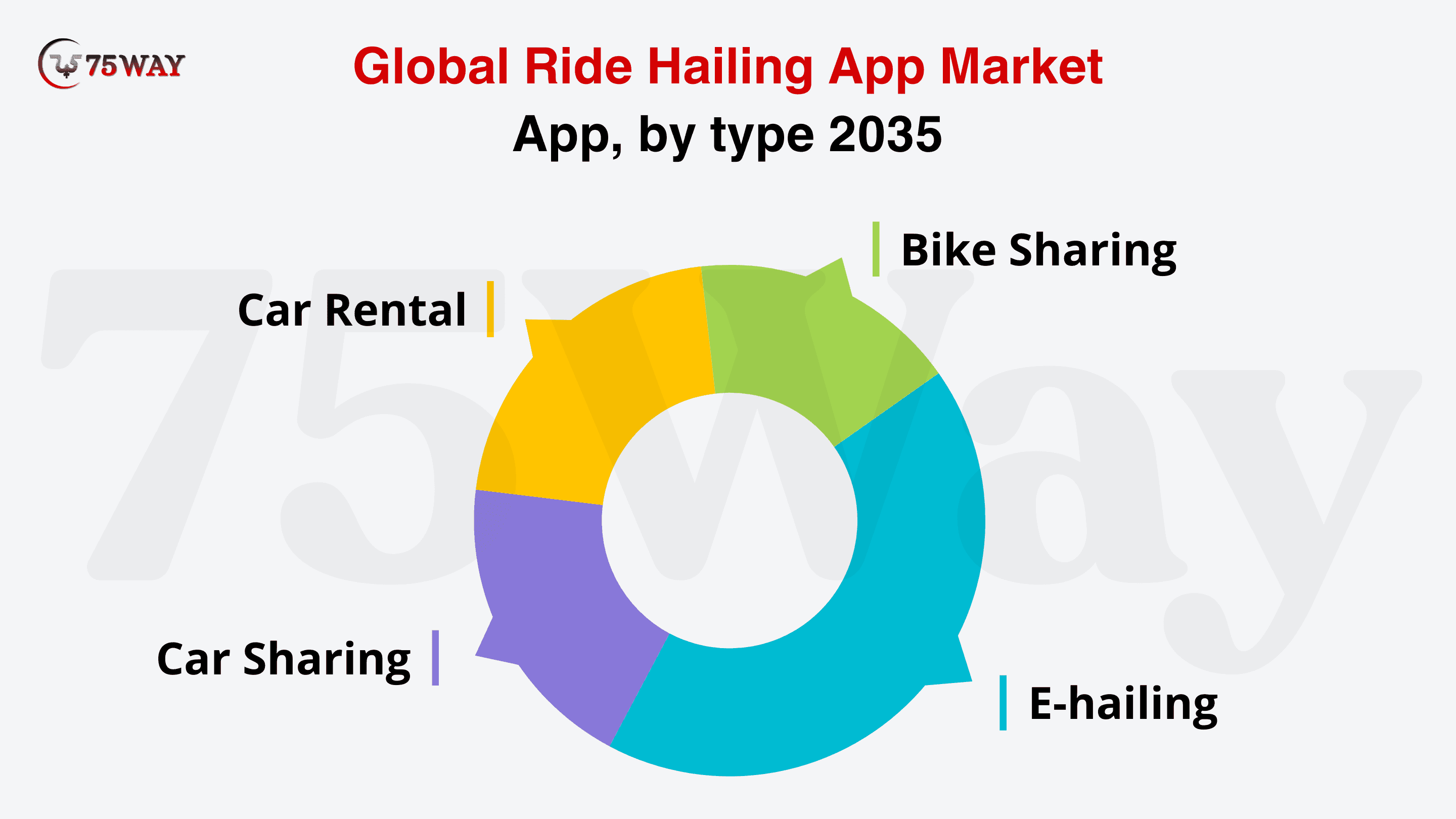
- The ride-hailing app market is expected to reach USD 93.79 million in 2026, with projections reaching USD 227.38 million by 2035, reflecting a 10.34% CAGR over the forecast period, as stated by Market Growth Reports
- According to the Grand View Research report, “the global ride-hailing services market is expected to grow to $181.54 billion by 2033, driven by a strong 18.6% CAGR.”
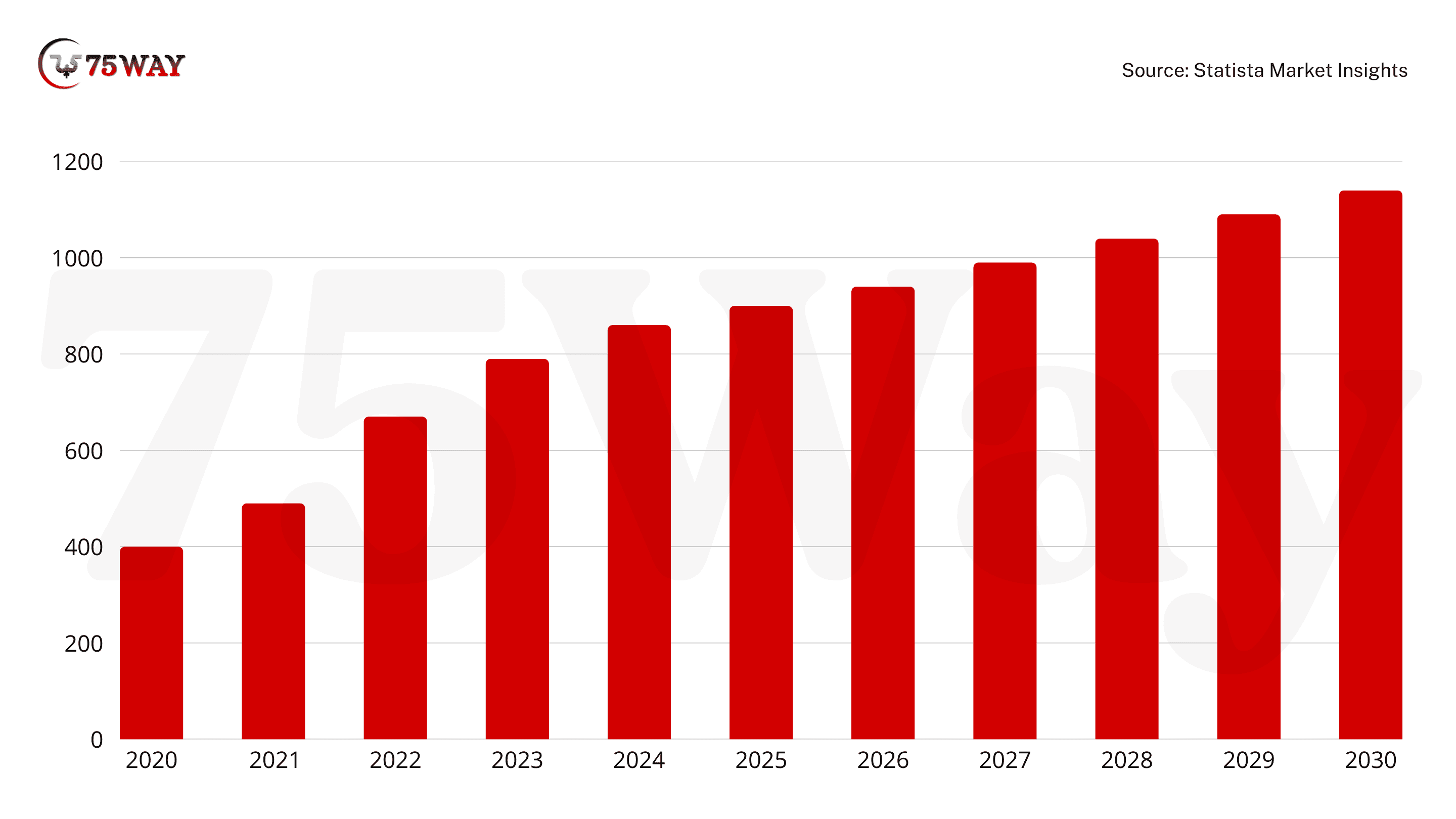
- The ride-hailing platforms are expected to reach 2.34 billion users by 2030, with user penetration rising to 28.7%, supported by a 5.08% annual growth rate, as demonstrated in Statista Market Insights
In 2026, investment in a taxi business with AI-powered taxi app solutions offers stable demand driven by daily commuting, airport travel, healthcare transport, and corporate mobility needs across US cities. Consistent cash flow, scalable operations enabled by technology, and growing digital adoption create opportunities for predictable returns and long-term growth.
Quick Read: How AI Agents Automate Sales, Support & Operations in US Companies
How Much Does It Cost To Start A Taxi Business?
To start a taxi business in the USA can vary widely in cost depending on the scale and technology involved. A single-car operation can begin at around $1,000 to $28,000+. It includes a used vehicle, essential permits, and basic or low-cost booking software. Moreover, a small fleet with a few vehicles typically requires $20,000 to $50,000 or more.
For a larger or modern fleet, especially one integrated with a custom taxi app and premium vehicles, startup costs can easily exceed $100,000. It requires advanced AI-powered solutions, regulatory compliance, and a professional, scalable operation.
Read More: How to Build an App Like SpicyChat AI From Scratch
Key Factors to Consider Before Starting a Taxi Business
Success in the US taxi market starts with a clear evaluation of foundational factors. You must require a transparent cost planning with major factor considerations to scale sustainably in a competitive environment.
Initial Cost Planning: Accurate budgeting prevents early financial setbacks by accounting for vehicle acquisition, licensing fees, insurance, technology platforms, and marketing campaigns. Forecasting costs based on local market conditions ensures sufficient working capital for the first months of operation and avoids cash-flow crises.
Required Skill Sets: Founders need operational management, financial oversight, and customer service expertise to maintain service quality, manage driver performance, and optimize daily operations. These skills enable strategic decision-making and support consistent growth while mitigating common startup challenges.
Demand & Competition: You must find local demand and understand competitive dynamics reveal market gaps and saturation levels. This insight informs pricing strategies, service positioning, and fleet size decisions, allowing operators to capture profitable routes and differentiate from Uber, Lyft, and local taxi providers.
Location Strategy: Another major factor is to choose the service areas strategically that impact revenue predictability. Airports, business districts, and healthcare hubs generate steady demand, reduce idle time, and support higher ride frequency, whereas poorly planned zones can lead to inconsistent trips and lower profitability.
Operating Schedule Expectations: Decisions on peak-hour coverage, seasonal demand adjustments, and 24/7 availability directly influence staffing, driver scheduling, and revenue stability. Proper planning ensures resources align with customer needs without overextending operational costs.
Also Read: How to Build an Astrology App Like Co-Star? A Strategic Guide 2026
Common Mistakes New Taxi Business Owners Make (And How to Avoid Them)
Several taxi startups fail not because of a lack of demand, but due to preventable planning and operational mistakes. You must understand these common pitfalls to protect investments, maintain service quality, and establish long-term profitability in competitive urban markets.
Underestimating Insurance Costs: Insurance expenses can vary significantly depending on vehicle type, location, and service model. So, accurate forecasting and consultation with industry-savvy insurance providers prevent costly surprises.
Ignoring Local SEO: Local search visibility drives most online bookings. Without optimized Google Business Profiles, accurate listings, and positive reviews, customers may never find your service. You must utilize city-specific keywords and maintain active review management to increase discoverability and revenue.
Relying Only On Offline Bookings: Traditional street-hail or phone-based bookings limit customer reach and reduce operational predictability. Thus, you can build taxi dispatch apps or web bookings to expand market access with real-time ride tracking. These ride-hailing app solutions deliver a smooth customer experience and increase revenue consistency.
No Driver Retention Strategy <H3>: High driver turnover disrupts service quality and increases recruitment and training costs. You can implement fair compensation models, performance incentives, and recognition programs to enhance loyalty, stabilize operations, and improve consistent passenger satisfaction.
Final Remarks
To conclude, if you plan to start a taxi business in the USA in 2026, you will need clarity, compliance, and adaptability. Market demand in the transportation and mobility industry continues to grow, yet success depends on strategic planning, technology adoption, and customer-centric execution. Each stage we defined above, from legal setup to AI integration, plays a significant role in creating long-term profitability. Founders who align operations with digital trends and regulatory frameworks position themselves for sustainable growth. If you have any difficulties or need expert advice to enhance your online business presence, you can partner with an experienced taxi app development company. Their AI-driven ride-hailing app development solutions can accelerate your taxi business at zero operational risks.
FAQs
What Licenses Do I Need To Operate A Taxi Company?
License requirements depend heavily on both city and state regulations, creating a multi-layered compliance framework. Most operations require a vehicle permit or taxi medallion, business registration, and proof of commercial insurance. Drivers often need special certifications or chauffeur licenses, along with background checks. You must secure all required licenses to execute legal operations, avoid fines, and build trust with passengers, regulators, and corporate partners.
Can I Start Without Owning Vehicles?
Yes, you can launch a taxi business without owning vehicles. Full fleet ownership is not mandatory at the startup stage. You can lease vehicles, which provides flexibility and reduces upfront capital needs, and partnering with owner-drivers expands service capacity without large investments. Both approaches allow early market entry, maintain control over pricing, standards, and operational consistency, and support sustainable growth before investing heavily in assets.
How Do I Research If A Taxi Business Will Succeed?
The success of the taxi business begins with data-driven market analysis. You can conduct local demand research, including surveys and traffic pattern assessments, to identify high-demand routes and customer segments. Competitor analysis highlights gaps in pricing, service quality, and coverage areas. A detailed cost prediction helps you cover operating expenses while remaining profitable. Combining these insights provides realistic expectations and guides strategic decision-making.
Should I Build A Taxi App Or Partner With Uber/Lyft?
Yes, you can create a branded taxi app that gives full control over operations, pricing, and customer experience, and maximize profit margins. It allows direct engagement with riders, reducing reliance on third-party commissions. On the other hand, you can partner with platforms like Uber or Lyft, which lowers initial investment and leverages their large user base, though margins remain limited. Strategic choice depends on budget, growth ambitions, and desired operational independence.
What Insurance Coverage Do I Need?
Insurance is critical for risk mitigation and compliance. Commercial auto liability covers accidents and property damage, while driver-specific coverage protects both employees and passengers. General business insurance safeguards against legal claims, property damage, or business interruptions. Maintaining comprehensive insurance not only ensures legal operation but also enhances credibility with clients, corporate partners, and regulatory authorities.